



AICPA SOC 2 Controls List - 2025 Version


Join thousands of professionals and get the latest insight on Compliance & Cybersecurity.
You've been tasked with implementing SOC 2 compliance for your organization, and the sheer volume of controls, documentation requirements, and technical specifications feels overwhelming. Every time you look at another SOC 2 resource, it seems like a never-ending list of security measures that your team simply doesn't have the bandwidth to implement.
Understanding SOC 2 Controls in 2025
The American Institute of Certified Public Accountants (AICPA) SOC 2 framework has evolved significantly since its inception, with the 2025 version reflecting the changing landscape of data security, privacy concerns, and emerging technologies. At its core, SOC 2 remains focused on the five Trust Services Criteria (TSC):
- Security (also known as "Common Criteria")
- Availability
- Processing Integrity
- Confidentiality
- Privacy
For organizations, especially startups and growing businesses, understanding these controls is essential not just for compliance, but for building trust with customers, partners, and investors. As one Reddit user aptly noted, "Without it, you can literally lose business due to a technicality."

The Fundamental SOC 2 Controls Structure
The AICPA SOC 2 controls are organized around the Trust Services Criteria, with each category containing specific controls designed to address different aspects of information security and management. Here's a breakdown of the core components:
1. Security Controls (Common Criteria)
The security category forms the backbone of SOC 2 compliance and includes controls that protect against unauthorized access. These controls are mandatory for all SOC 2 reports.
Key Controls Include:
- Access control policies and procedures
- Authentication mechanisms (including multi-factor authentication)
- Network security monitoring
- Vulnerability management
- Incident response planning
- Security awareness training
- System hardening standards
- Encryption protocols
2. Availability Controls
These controls ensure systems are operational and accessible according to commitments and requirements.
Key Controls Include:
- Performance monitoring systems
- Capacity management procedures
- Disaster recovery planning
- Business continuity procedures
- Backup and restoration testing
- Environmental safeguards
- High availability configurations
- System maintenance procedures
3. Processing Integrity Controls
These focus on ensuring system processing is complete, accurate, timely, and authorized.
Key Controls Include:
- Input validation procedures
- Data processing monitoring
- Error handling protocols
- Output reconciliation processes
- Quality assurance procedures
- Data integrity verification
- Processing completeness checks
- Transactional accuracy monitoring
4. Confidentiality Controls
These protect information designated as confidential.
Key Controls Include:
- Data classification policies
- Confidentiality agreements
- Secure disposal procedures
- Encryption for data at rest and in transit
- Access restrictions to confidential information
- Vendor management for confidentiality
- Confidential data retention policies
- Data leakage prevention
5. Privacy Controls
These address the collection, use, retention, disclosure, and disposal of personal information.
Key Controls Include:
- Privacy notice requirements
- Choice and consent mechanisms
- Personal information collection limitations
- Data usage monitoring
- Privacy impact assessments
- Third-party privacy requirements
- Privacy incident response
- Individual rights management procedures
Tailoring SOC 2 Controls to Your Organization
One of the most significant challenges with SOC 2 implementation is determining which controls apply to your specific organization. As one Reddit user shared: "There are plenty of controls lists out there, but it's worth the time getting the right list to fit your company. If you're a simple SaaS startup, vs. a global enterprise outsourcing business, the controls and number of controls looks fairly different."
This observation highlights a crucial aspect of SOC 2 compliance: it's not a one-size-fits-all approach. The scope of your SOC 2 audit should be determined based on:
- Your business model: SaaS companies may focus heavily on application security, while data processing companies may emphasize privacy controls.
- Customer requirements: Some clients may require specific controls or coverage of particular TSCs beyond the mandatory Security category.
- Industry standards: Different sectors may have additional expectations or regulatory requirements that influence your control selection.
- Risk assessment results: Your organization's unique risk profile should inform which controls need more emphasis.
Common Implementation Challenges and Solutions
Implementing SOC 2 controls comes with several challenges that organizations frequently encounter:
1. Documentation Overload
"The security controls, non-stop documentation, and proving every little thing are a lot," notes one Reddit user. This sentiment reflects the significant documentation burden associated with SOC 2 compliance.
Solution: Implement a dedicated GRC (Governance, Risk, and Compliance) platform like Sprinto, Vanta, or Drata to streamline documentation management. These tools can automate evidence collection, maintain version control, and organize documentation efficiently.
2. Resource Constraints
Many organizations, especially startups, struggle with limited resources for compliance efforts.
Solution: Prioritize controls based on risk assessment results and implement them incrementally. Consider outsourcing certain aspects of compliance to specialized consultants or using compliance automation tools to reduce the internal resource burden.
3. Leadership Buy-in
"If they are trying tell you to just figure out how to get it done but not providing the budget and the support for the process changes that are going to come and will affect the entire company then just walk away now," warns a Reddit user.
Solution: Present SOC 2 compliance as a business enabler rather than just a cost center. Highlight potential revenue opportunities from new clients who require SOC 2 certification and the reduced risk of data breaches.
4. Audit Readiness
"First time, un-prepared, should be excruciating," shares another user regarding their SOC 2 audit experience.
Solution: Conduct a thorough readiness assessment before engaging with auditors. Many CPA firms offer pre-audit assessments to identify gaps and provide remediation guidance.
Cost Considerations for SOC 2 Compliance in 2025
The cost of implementing and maintaining SOC 2 compliance varies widely depending on organization size, complexity, and existing security posture. However, here's a general breakdown of expected costs in 2025:
- Readiness Assessment: $7,000 - $20,000
- Compliance Software: $15,000 - $60,000 annually
- Consulting Services: $20,000 - $75,000
- Audit Fees:
- Type 1 (point-in-time): $15,000 - $40,000
- Type 2 (over period of time): $30,000 - $80,000
- Internal Resource Allocation: $50,000 - $150,000 annually
Preparing for Your SOC 2 Audit in 2025
To streamline your SOC 2 audit process:
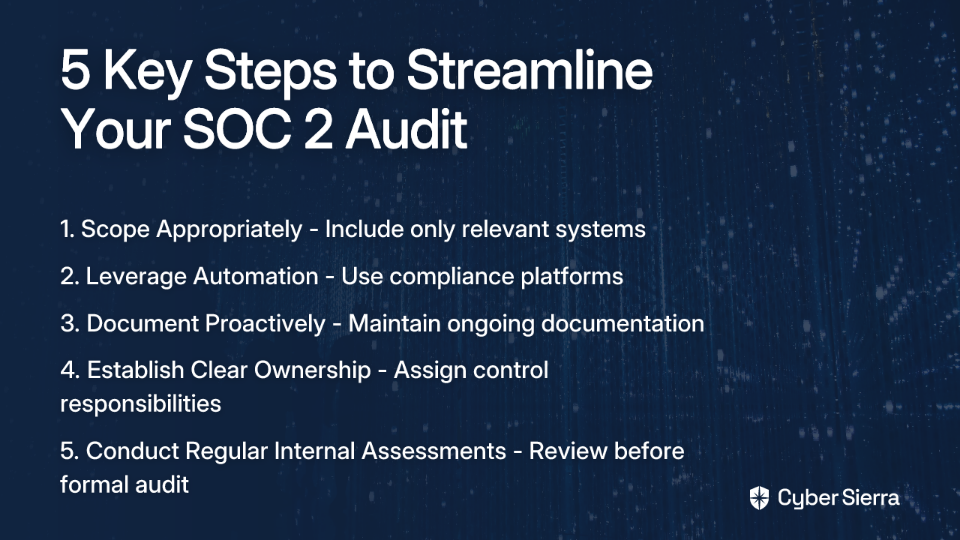
- Scope Appropriately: Only include relevant systems and processes in your audit scope. Limiting scope can significantly reduce complexity and cost.
- Leverage Automation: As recommended by many practitioners, "Investing in one of the automation platforms (Drata, Vanta, Secureframe) might keep things organized and moving."
- Document Proactively: Maintain ongoing documentation of security practices rather than scrambling to create evidence during audit preparation.
- Establish Clear Ownership: Assign specific responsibility for each control to ensure accountability and consistent implementation.
- Conduct Regular Internal Assessments: Perform periodic reviews of your controls to identify and address deficiencies before the formal audit.
Conclusion
The AICPA SOC 2 controls framework continues to be a critical benchmark for demonstrating trustworthiness in handling sensitive data. While the compliance journey can be challenging, especially for smaller organizations and startups, understanding the controls structure and implementing a tailored approach can transform it from an overwhelming burden to a strategic business advantage.
By focusing on the specific controls relevant to your organization and leveraging automation where possible, you can navigate the SOC 2 landscape efficiently and effectively. Remember that SOC 2 compliance is not just about checking boxes—it's about building a culture of security and trust that resonates throughout your organization and with your customers.
Frequently Asked Questions
What are SOC 2 controls?
SOC 2 controls are a set of standards developed by the American Institute of Certified Public Accountants (AICPA) to manage customer data based on five Trust Services Criteria: Security, Availability, Processing Integrity, Confidentiality, and Privacy. These controls provide a framework for organizations to demonstrate they can securely manage and protect client data and information systems. The Security criterion, also known as Common Criteria, is foundational and mandatory for all SOC 2 reports.
Why is SOC 2 compliance important for my business?
SOC 2 compliance is important because it demonstrates your organization's commitment to data security and operational reliability, which builds trust with customers, partners, and investors. Achieving SOC 2 compliance can be a key differentiator, helping you win new business, meet contractual obligations, and reduce the risk of data breaches and associated reputational damage. It shows you have robust systems and processes in place to protect sensitive information.
Which SOC 2 Trust Services Criteria must I include in my audit?
The Security criterion (also known as Common Criteria) is mandatory for all SOC 2 audits. While Security is always required, you can choose to include Availability, Processing Integrity, Confidentiality, and/or Privacy criteria based on your business model, customer commitments, and specific risks identified through your risk assessment. Tailoring the scope to your organization's specific needs and services is crucial.
How can I simplify the SOC 2 implementation process?
You can simplify SOC 2 implementation by clearly defining your audit scope, leveraging compliance automation platforms, and starting with a readiness assessment. Focusing only on relevant systems and processes reduces complexity. Automation tools like Drata, Vanta, or Sprinto help streamline documentation and evidence collection. A readiness assessment identifies gaps early, allowing for a more structured and less overwhelming approach to remediation and preparation.
What is the difference between a SOC 2 Type 1 and Type 2 report?
A SOC 2 Type 1 report assesses the design of your organization's controls at a specific point in time, essentially evaluating whether the controls are suitably designed to meet the relevant Trust Services Criteria. A SOC 2 Type 2 report, on the other hand, assesses both the design and the operational effectiveness of your controls over a period, typically ranging from 3 to 12 months. Many customers prefer or require a Type 2 report as it provides greater assurance.
How long does it typically take to achieve SOC 2 compliance?
Achieving SOC 2 compliance can take anywhere from 3 to 12 months, or even longer. The exact timeline depends significantly on your organization's current security posture, its size and complexity, the specific Trust Services Criteria included in the scope, and the resources dedicated to the effort. The process generally involves a readiness assessment, gap remediation, control implementation, an evidence collection period (for Type 2), and finally, the audit itself.
For more detailed guidance, refer to the AICPA's Trust Services Criteria and consider consulting with a qualified CPA firm that specializes in SOC 2 audits.
