



GRC vs IAM Careers: Key Differences Explained


Join thousands of professionals and get the latest insight on Compliance & Cybersecurity.
You've seen job postings for both Governance, Risk, and Compliance (GRC) and Identity and Access Management (IAM) roles, and they seem frustratingly similar. "Seems like there's a lot of overlap between the two fields," as one Reddit user put it. You're not alone in your confusion.
Perhaps you've noticed, "I see tons of IAM analyst but not much GRC analyst" positions, making you wonder which path offers better career prospects. Or maybe you've heard conflicting descriptions about what each role actually entails.
This comprehensive guide will demystify these two critical cybersecurity domains, explain their relationship with a clear analogy, and help you decide which career path aligns with your skills and interests.
What is GRC (Governance, Risk, and Compliance)? The Big Picture Strategists
GRC is an organization's integrated strategy for managing three interdependent areas: corporate governance policies, enterprise risk management, and regulatory compliance. The term was coined in 2007 by the Open Compliance & Ethics Group (OCEG) to describe how coordinating these functions enhances efficiency and ethical conduct.
The Three Pillars of GRC

- Governance: The framework of rules and ethical practices for managing an organization in line with its business strategy.
- Risk Management: The processes for identifying, assessing, categorizing, and mitigating risks that could hinder operations.
- Compliance: The act of adhering to all relevant laws (e.g., GDPR, HIPAA, SOX Compliance), regulations, and internal policies.
Organizations invest in GRC to reduce costs by eliminating redundant processes, improve operational efficiency, enhance security visibility, and build stakeholder trust through transparency and accountability.
What is IAM (Identity and Access Management)? The Digital Gatekeepers
IAM is the security discipline and technology framework that "ensures the right individuals have access to the right IT resources, at the right time, for the right reasons." It's a fundamental part of a modern defense-in-depth strategy.
Key IAM Features & Technologies

- Single Sign-On (SSO): Allows users to access all authorized applications with a single set of credentials, improving user experience and reducing the attack surface.
- Adaptive Multi-Factor Authentication (MFA): Protects against credential theft by requiring multiple forms of verification (e.g., password + SMS code), often using context to adjust the challenge level.
- User Provisioning and Lifecycle Management: Automates the processes for onboarding new users, managing their access privileges over time, and revoking access upon departure (offboarding).
- Identity as a Service (IDaaS): Cloud-based IAM solutions that simplify operations, reduce capital expenses, and accelerate deployment for cloud and on-premise applications.
Related Terminology
- Privileged Access Management (PAM): A subset of IAM focused on controlling and monitoring access for privileged users (e.g., system administrators).
- Identity Governance and Administration (IGA): The policy and process layer that governs identity management and access controls.
- Identity Threat Detection and Response (ITDR): Emerging capabilities that detect and respond to identity-based threats.
The Relationship Explained: City Planners vs. Building Security
To understand how GRC and IAM interact, consider this analogy:
GRC as the City Planner: The GRC team designs the master plan for the "city" (the organization). They establish zoning laws (governance policies), assess risks like floods or earthquakes (risk management), and ensure every structure adheres to building codes (compliance). They don't pour the concrete, but they create the blueprint that ensures the city is safe, functional, and legal. This reflects the observation that GRC is "not as techy, more legal."
IAM as the Building Security Manager: The IAM team is responsible for securing individual buildings within that city. They install locks on doors, issue key cards (access controls), check IDs at the front desk (authentication), and keep a log of who enters and exits (auditing). They are the hands-on implementers of the city planner's rules.
As one practitioner succinctly put it, "IAM are technical controls the GRC folks push down or you'd never get the funding." This top-down relationship shows how GRC provides the mandate and justification for IAM initiatives.
IAM directly supports GRC by:
- Enforcing governance by ensuring access management aligns with organizational goals
- Mitigating risk of unauthorized access and data breaches
- Enabling compliance by providing auditable evidence (access logs) needed to prove adherence to regulations
A Tale of Two Careers: GRC vs. IAM Roles and Responsibilities
The Life of a GRC Professional: Diverse, Strategic, and Collaborative
As one industry professional noted, "GRC duties typically much more diverse compared to some other functions that are laser focused on one piece of the puzzle."
Typical Job Titles: GRC Analyst, GRC Specialist, GRC Manager, Director of GRC, Security Consultant, Auditor
Key Responsibilities:
- Serve as a subject-matter expert on compliance frameworks like HIPAA, ISO standards, PCI, SOC 2, GDPR, CCPA
- Conduct internal and external compliance audits and monitor cybersecurity metrics
- Manage Disaster Recovery (DR) and Business Continuity Planning (BCP)
- Implement Third-Party Risk Management (TPRM) programs
- Develop and deliver security awareness training to staff
- Prepare detailed reports on compliance status and security gaps for leadership
- Facilitate cross-departmental collaborations to ensure security program effectiveness
Salary Insights: The average salary for a GRC analyst is $112,000 per year, while GRC Managers average $179,000, with top earners exceeding $200,000.
The Life of an IAM Professional: Technical, Focused, and Hands-On
As noted in the research, "IAM is laser-focused technical on IAM tech."
Typical Job Titles: IAM Analyst, IAM Engineer, IAM Architect, Identity Specialist
Key Responsibilities:
- Deploy, configure, and manage IAM solutions (e.g., CyberArk, Okta, SailPoint, Ping Identity)
- Implement and maintain SSO and Adaptive MFA systems across the enterprise
- Automate user lifecycle management through self-service portals and workflows
- Manage and secure privileged accounts using PAM tools
- Troubleshoot user access issues and act as an escalation point
- Work with cloud identity providers and IDaaS platforms to support digital transformation
- Implement and maintain technical controls for access management
Building Your Career: Essential Skills and Certifications
Skills and Certifications for GRC
Essential Soft Skills:
- Communication: Must be able to articulate complex technical risks and compliance needs to non-technical audiences like legal and finance
- Teamwork & Collaboration: Success depends on working effectively with diverse teams across the organization
- Critical Thinking & Problem-Solving: Required to analyze intricate regulations and develop effective control strategies
Key Certifications:
- Foundational: CompTIA Security+, ISC2 Certified in Cybersecurity (CC)
- Core GRC Certs:
- CISA (Certified Information Systems Auditor): Validates expertise in IT auditing
- CRISC (Certified in Risk and Information Systems Control): Focuses on managing enterprise IT risk
- Advanced Certs: CISSP (Certified Information Systems Security Professional), CISM (Certified Information Security Manager)
- Specialized: CCAK (Certificate of Cloud Auditing Knowledge) for cloud environments
Skills and Certifications for IAM
Essential Technical Skills:
- Deep knowledge of IAM platforms (Okta, CyberArk, SailPoint)
- Proficiency with authentication/authorization protocols (SAML, OAuth, OIDC)
- Experience with directory services (Active Directory, Azure AD)
- Scripting skills (e.g., PowerShell, Python) for automation
Key Certifications:
- Vendor-Specific: Okta Certified Professional, CyberArk Certified Delivery Engineer
- Vendor-Neutral: CIAM (Certified Identity and Access Manager) from the Identity Management Institute
- Broad Security: CompTIA Security+, CISSP (demonstrates a holistic understanding of security principles)
Which Path Is Right for You?
Choose GRC if you...
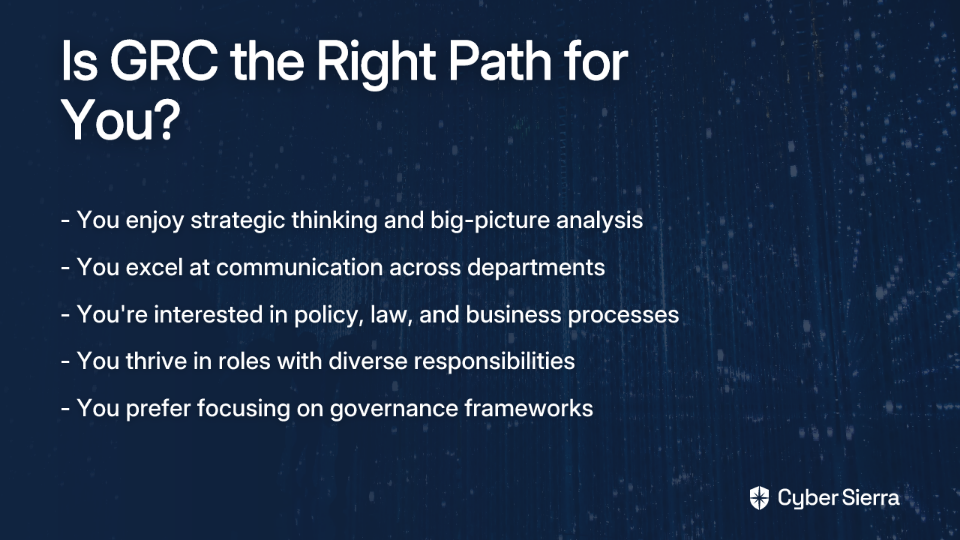
- Enjoy strategic thinking and seeing the "big picture"
- Are a natural communicator and bridge-builder between technical and business units
- Are interested in policy, law, and business processes
- Thrive in a role with diverse responsibilities that spans the entire organization
- Prefer focusing on governance frameworks and risk management approaches
Choose IAM if you...
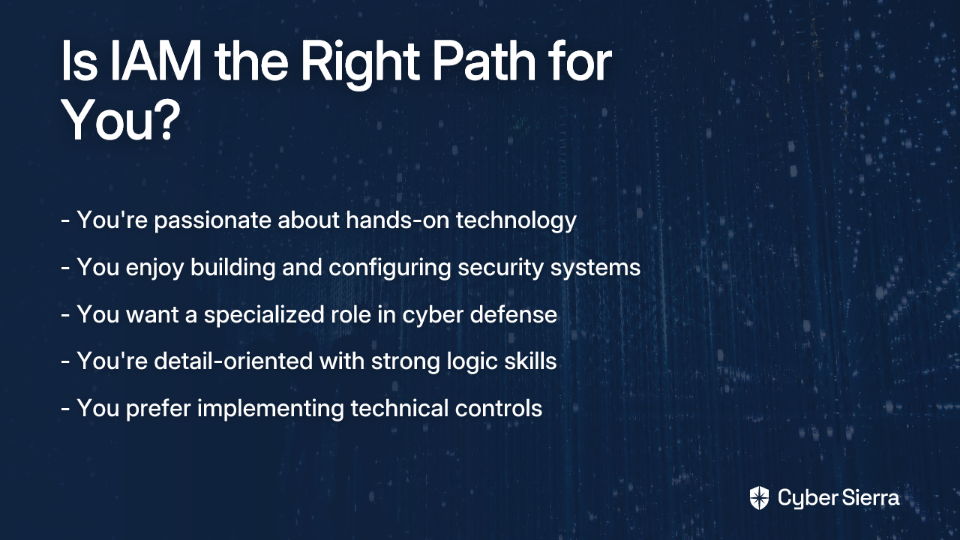
- Are passionate about hands-on technology and solving complex technical challenges
- Enjoy building, configuring, and maintaining security systems
- Want a deeply specialized role on the front lines of cyber defense
- Are detail-oriented and enjoy the logic of access control systems
- Prefer focusing on implementing and maintaining siloed functions like identity management
Conclusion: Two Sides of the Same Security Coin
GRC and IAM are not competitors but partners in an effective security program. GRC is the strategic "why," defining the policies and managing risk, while IAM is the technical "how," implementing the controls that bring those policies to life. As one industry professional put it, "GRC has a much larger scope. Identity is a small subset of a series of controls and control families."
Both career paths offer excellent opportunities for growth, competitive salaries, and the satisfaction of protecting organizations from threats. Your choice should depend on whether you're drawn to the strategic, people-oriented nature of GRC or the deeply technical, specialized focus of IAM.
Getting Started
- Educate Yourself: Engage with online courses like the Pluralsight Governance, Risk, and Compliance path
- Earn Relevant Certifications: Start with a foundational cert like Security+ and then pursue specialized credentials
- Gain Practical Experience: Seek internships or entry-level analyst roles
- Network: Join professional associations (e.g., ISACA) and attend industry events
Remember: Both fields need professionals who can bridge the gap between them. Understanding both GRC and IAM, even if you specialize in one, will make you an invaluable asset to any cybersecurity team.
Frequently Asked Questions
What is the primary difference between GRC and IAM?
The primary difference is that GRC is a strategic function focused on setting policies and managing overall organizational risk, while IAM is a technical function focused on implementing and managing who has access to digital resources. Think of GRC as the city planners who design the city's rules and safety codes, and IAM as the building security managers who install the locks and check IDs to enforce those rules. GRC defines the "why," and IAM provides the "how."
Which career path is better for a beginner, GRC or IAM?
Both GRC and IAM offer excellent entry-level opportunities, and the "better" path depends on your skills and interests. IAM can be more accessible for those with a technical background, while GRC may appeal to those with strong communication and analytical skills. If you enjoy hands-on technical work and configuring systems, an IAM Analyst role is a great fit. If you prefer policy, auditing, and solving strategic problems, a GRC Analyst role is more suitable.
Can you have a career in GRC without a deep technical background?
Yes, it is possible to build a successful career in GRC without being a technical expert, as the role heavily emphasizes communication, analysis, and business process skills. While understanding technology concepts is important, GRC professionals often act as translators between technical teams and business leadership. Your ability to understand legal frameworks, conduct audits, and communicate risk effectively is often more critical than hands-on engineering skills.
How do GRC and IAM work together in a real-world scenario?
GRC and IAM work together in a top-down relationship where GRC sets the access control policies, and the IAM team implements the technical solutions to enforce them. For example, a GRC team might create a policy based on the principle of least privilege. The IAM team then uses tools like Okta or SailPoint to configure user roles, set up approval workflows, and automate access removal, providing auditable proof that GRC's policies are being followed.
Which field generally offers a higher salary, GRC or IAM?
Both GRC and IAM offer competitive and often overlapping salary ranges, with high earning potential in senior roles. However, GRC management and director-level positions can sometimes reach higher average salaries due to their broad strategic scope. While an entry-level GRC Analyst and an IAM Analyst may have similar starting salaries, the GRC career path can lead to executive roles like Chief Risk Officer, which are among the highest-paying in the industry.
What are the most important certifications for starting a career in GRC or IAM?
For both fields, a foundational certification like CompTIA Security+ is an excellent starting point. For GRC, key certifications to pursue next include CISA (for auditing) and CRISC (for risk). For IAM, vendor-specific certifications from platforms like Okta or CyberArk, or the vendor-neutral CIAM (Certified Identity and Access Manager), are highly valued for demonstrating practical skills.
