



Shadow AI: The Security Risk Hiding in Plain Sight


Join thousands of professionals and get the latest insight on Compliance & Cybersecurity.
Your employee just copied a sensitive meeting transcript from Microsoft Teams and pasted it into ChatGPT to generate a summary and action items. This productivity hack, while efficient, has just created a compliance nightmare that's hiding in plain sight.
This isn't just Shadow IT anymore. As one security professional put it, "It's shadow AI. And it's growing faster than any policy can keep up." Employees are using these tools to boost productivity, but they're creating massive security blind spots and exposing sensitive company information without any security oversight.
The explosion of AI in both new and existing tools is undeniable. Every vendor is racing to add AI capabilities, often with vague explanations about data usage practices. Meanwhile, traditional governance tools remain blind to this new threat landscape, leaving security leaders scrambling for solutions.
What is Shadow AI? Unmasking the Invisible Threat
Shadow AI refers to the adoption and use of AI applications, models, and technologies by employees or departments without formal approval or organizational oversight from IT, security, or AI Governance teams. This includes standalone AI tools like ChatGPT, AI features integrated into existing SaaS applications, and custom automation scripts built with AI components.
How Shadow AI Differs from Traditional Shadow IT
While Shadow IT traditionally involves unauthorized software and devices, often used by tech-savvy employees, Shadow AI presents a far broader attack surface. It's being adopted by employees across all roles and technical skill levels. The difference is profound: Shadow IT concerns unauthorized apps and devices, while Shadow AI involves services that autonomously process, analyze, and learn from your data.
The challenge is compounded by vendors rapidly adding AI to their tools, often without clear consent. As one frustrated security professional noted, "We went through the struggle of asking ALL of our vendors to tell us if and how they use our data for ML or AI. And ALL came back with a 'yes, but we......'."
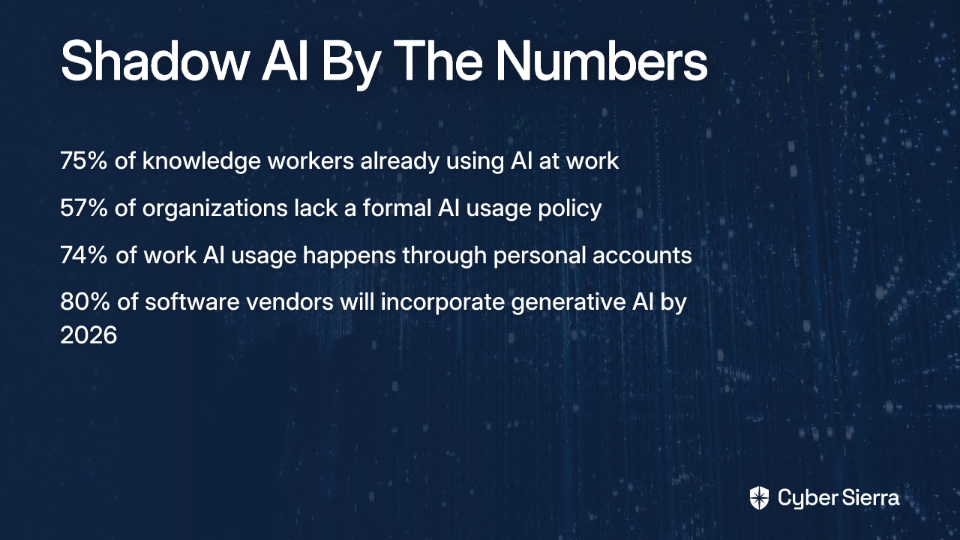
The Alarming Scale of the Problem
The numbers paint a concerning picture:
The Amplified Dangers: Why Shadow AI is a Greater Risk
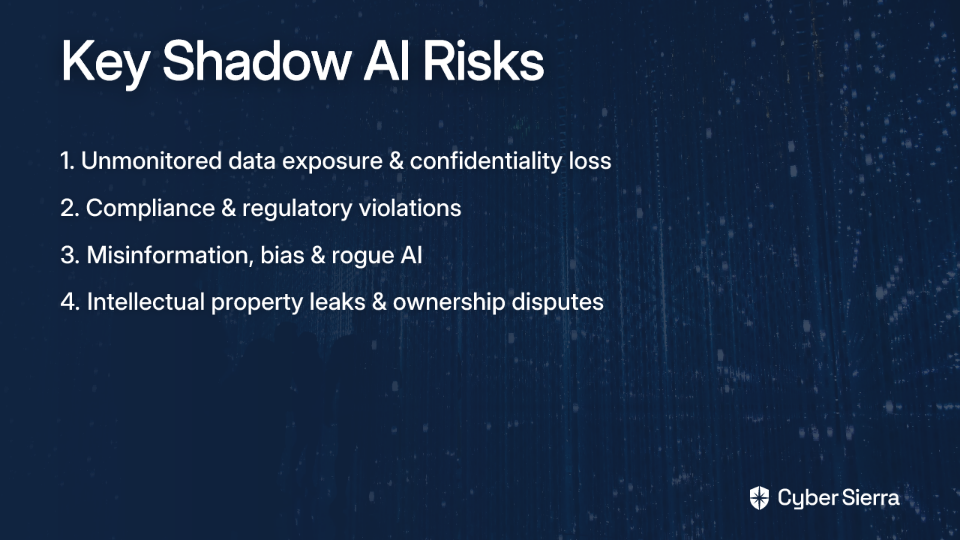
Unmonitored Data Exposure and Confidentiality Loss
Shadow AI dramatically increases the risk of data exposure. A recent study found that as of March 2024, 27.4% of all data inputted into generative AI tools is sensitive, a sharp rise from 10.7% the previous year. This creates a perfect storm for data leaks.
Consider the infamous case where Samsung employees shared proprietary source code and confidential meeting notes on ChatGPT, risking its inclusion in future model training data. This reflects a broader concern about "people's willingness to blindly rely on AI...and the fact that they just dump data into it like it's nothing."
Traditional Data Loss Prevention (DLP) tools often fail to stop this bleeding of information, as they're not designed to monitor text copied from one application and pasted into an AI service. As one security expert bluntly put it, "DLP won't stop the majority of SaaS platforms from using anyone's data."
The Compliance and Regulatory Minefield
Unvetted AI tools typically lack the necessary controls to ensure compliance with regulations like GDPR and the EU AI Act. This creates significant legal and financial risks, especially in highly regulated sectors like finance and healthcare.
"Are we not sleepwalking into a serious compliance and data governance issue here?" This question from a concerned IT professional captures the uncertainty many organizations face as employees freely use AI tools without understanding the regulatory implications.
The Risk of Misinformation, Bias, and Rogue AI
AI models can "hallucinate" and generate false information. In a notable case, two New York lawyers were fined over $5,000 for submitting a legal brief with fictitious case citations generated by ChatGPT. Such misinformation can damage reputations, lead to poor business decisions, or even create legal liability.
Unvetted models can also perpetuate harmful racial and gender biases, potentially exposing organizations to discrimination claims. Moreover, the risk of AI systems operating outside of controlled parameters—referred to as "rogue AI"—presents a new frontier of security concerns.
Intellectual Property (IP) Leaks and Ownership Disputes
When employees use unsanctioned AI to create code, designs, or other proprietary work, it can create complex disputes over ownership. Many AI tools' terms of service grant the provider certain rights to user inputs, potentially putting your intellectual property at risk.
A Starter Framework for Taming Shadow AI
Many AI governance platforms are "dead on arrival" because "they assume a world where employees actually ask for permission before using AI tools." Traditional governance is broken, and outright bans only push usage further into the shadows. Instead, security leaders need a pragmatic approach focused on enablement with guardrails.
Step 1: Achieve Visibility – You Can't Manage What You Can't See
Traditional tools can't see this activity. "None of this gets logged. None of it gets approved," as one security professional noted. To address Shadow AI, you must first understand its scope in your organization.
Action: Implement discovery processes to identify all AI tools in use. This can include:
- Network traffic analysis to identify connections to known AI providers
- SaaS Security Posture Management (SSPM) solutions to discover cloud-based AI tools
- Surveys and amnesty programs to encourage employees to disclose their AI usage without fear of punishment
- Web content filtering to monitor access to public AI platforms
Look beyond just standalone AI tools to also identify AI capabilities embedded within existing SaaS applications through user management APIs and inter-process communication channels.
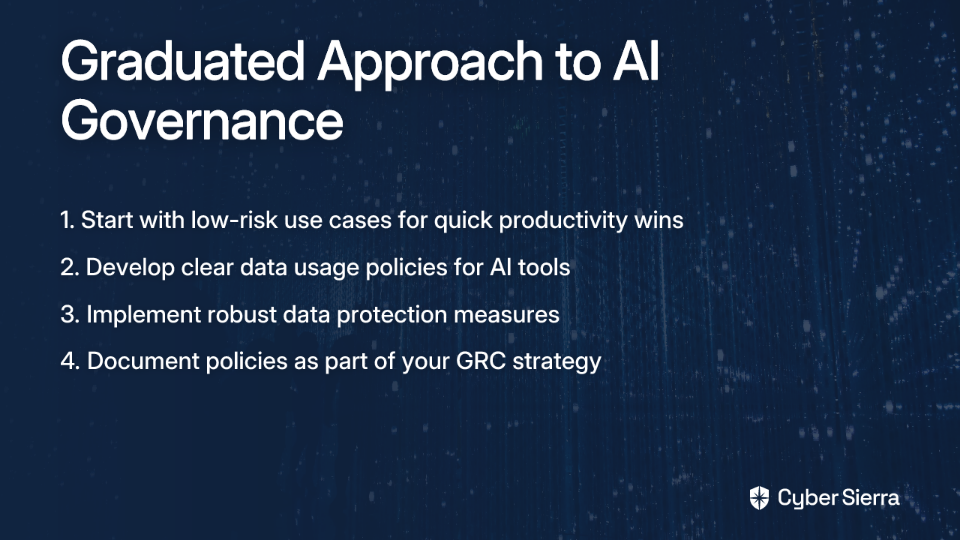
Step 2: Establish Clear, Incremental Policies
Rather than implementing blanket restrictions, develop a graduated approach to AI governance:
Step 3: Engage and Educate Your Workforce
Don't just dictate—collaborate. Employees are using these tools to solve real problems, and punitive approaches will only drive usage underground.
Actions:
- Conduct training on the safe use of approved AI tools
- Educate on specific risks like prompt injection attacks or data leakage
- Create clear guidelines on what types of data should never be shared with AI tools
- Establish a feedback loop for employees to report AI-related concerns or suggest new tools for approval
Step 4: Foster Cross-Department Collaboration and Continuous Auditing
Shadow AI isn't just an IT or security problem—it requires coordination across the organization:
- Break down silos: IT, security, legal, and compliance teams must collaborate to create and enforce standardized AI usage policies
- Executive sponsorship: Senior management must provide visible support and resources for AI governance initiatives
- Regular audits: Continuously assess AI tools for privacy, compliance, and security risks, and audit usage against established policies
From Shadow Risk to Strategic Advantage
Shadow AI represents a significant and rapidly growing security risk, distinct from traditional Shadow IT due to its broad accessibility and data-hungry nature. The primary dangers—unmonitored data exposure, compliance breaches, and intellectual property loss—require immediate attention from security leaders.
But an outright ban is a losing strategy. The only viable path forward is through proactive, collaborative, and incremental AI Governance that acknowledges the productivity benefits of these tools while mitigating their risks.
The security leaders who will thrive in this new landscape won't be those who simply restrict AI, but those who enable its safe and compliant use. Start today with discovery, engage with employees to understand their needs, and build a flexible governance framework that evolves alongside this transformative technology.
The shadow is only dangerous when you refuse to shine a light on it.
Frequently Asked Questions
What is Shadow AI and how does it happen?
Shadow AI is the use of artificial intelligence applications and tools by employees without the company's formal approval or oversight from IT and security teams. It happens when employees, seeking to improve productivity, use readily available tools like ChatGPT or AI features within existing software to perform work tasks, often through personal accounts that bypass corporate security.
Why is Shadow AI considered a bigger risk than traditional Shadow IT?
Shadow AI is considered a bigger risk because it involves services that not only exist outside of IT control but also actively process, analyze, and learn from the sensitive corporate data they are fed. Unlike Shadow IT, which is often limited to specific apps or devices, Shadow AI has a much broader attack surface and can lead to irreversible data exposure when models are trained on confidential company information.
What are the main dangers of unmonitored AI use in the workplace?
The main dangers include unmonitored sensitive data exposure, violations of compliance regulations like GDPR and the EU AI Act, the creation of misinformation or biased content, and the potential loss of valuable intellectual property. When employees input confidential information into unvetted AI tools, that data can be leaked or used for model training, creating significant security and legal risks.
How can an organization discover which AI tools employees are using?
An organization can discover Shadow AI usage by implementing modern discovery tools and processes, as traditional security solutions often cannot see this activity. Key methods include using SaaS Security Posture Management (SSPM) to find cloud-based AI tools, analyzing network traffic for connections to AI providers, monitoring web content filtering logs, and conducting employee surveys to encourage disclosure.
Should my company just ban all generative AI tools?
No, banning all AI tools is an ineffective strategy that pushes usage further into the shadows and causes the company to miss out on significant productivity benefits. A complete ban is difficult to enforce and often fails. A more effective approach is to enable the safe use of AI with clear guardrails, establishing policies and educating the workforce to turn a potential risk into a strategic advantage.
What is the first step to creating an effective AI usage policy?
The first step is to focus on low-risk use cases by identifying and formally approving a small number of AI tools for specific, non-sensitive tasks. This "enablement with guardrails" approach allows you to establish a governance process and build momentum. From there, you can develop a more comprehensive policy that defines what data is permissible in AI tools and outlines necessary data protection measures.
