



Why Your IR Plan Needs an Incident Commander



Join thousands of professionals and get the latest insight on Compliance & Cybersecurity.
You've been there: an alert fires at 2 AM. Teams scramble. Engineers work in silos, duplicating efforts. The CIO demands updates, but no one has the full picture. It's what battle-hardened IT professionals call "panic hours" — a period of high stress, burnout risk, and a feeling of having "tons of mandate but not much real power."
This chaos isn't just stressful; it's expensive. It prolongs downtime, increases the risk of mistakes, and erodes trust. Many breaches stem from simple "human error" or a "lack of a plan," where documentation isn't specific enough, leading to panic when teams get stuck.
The antidote to this chaos is clear, designated leadership. This is the role of the Incident Commander (IC) — the orchestrator who transforms a high-pressure situation into a managed process.
What is an Incident Commander? The Single Source of Truth
An Incident Commander is the individual responsible for managing all phases of an incident response, from detection to resolution. They serve as the single point of accountability and the primary source of truth during an IT or cybersecurity incident. They don't necessarily fix the technical issue themselves but manage resources, plan the strategy, and facilitate clear communication.
Think of the IC as the conductor of an orchestra. Each musician is an expert, but without the conductor, they play their own tune. The IC ensures everyone is playing from the same sheet music, creating a harmonized, powerful response.
The Cost of Chaos: Why Leaderless Incident Response Fails

Siloed Efforts & Duplication
Without a central commander, teams work in isolation. The network team might be investigating RDP issues while the application team is restarting services, unaware of each other's actions. This leads to wasted time and potentially conflicting changes.
Communication Breakdown
In the absence of an IC, communication becomes a free-for-all. C-suite executives get conflicting updates, engineers are pulled into distracting side conversations, and critical information gets lost in the noise.
Decision Paralysis and Panic
A common pain point is that when teams get stuck, they panic due to a "lack of a plan." Without a designated decision-maker, teams can get stuck in analysis paralysis or make rushed, poor decisions under pressure. Research confirms that stressed individuals make worse decisions, highlighting the need for a calm leader.
Lack of Clear Ownership
Who declares the incident over? Who communicates with legal? A frequent pain point is that "dealing with lawyers is the worst" because they can "convolute everything." An IC provides a clear point of contact for these external teams, streamlining complex interactions with vendor management and cyber insurance providers.
The Anatomy of Command: Core Responsibilities of an IC
Before the Incident: Preparation and Planning
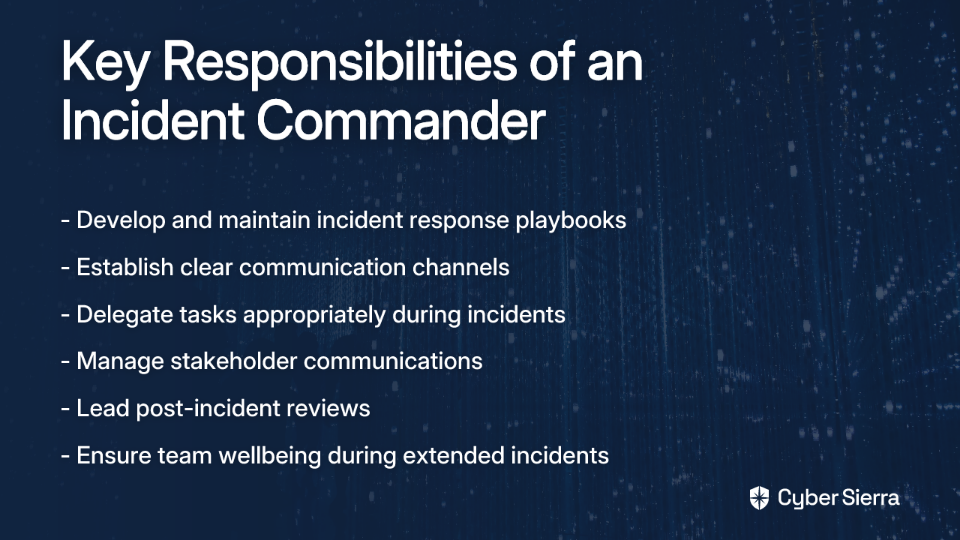
- Develop the Playbook: The IC ensures a solid, well-documented Incident Response Plan (IRP) exists. This directly addresses the need for reliable templates and plans.
- Establish Communication Channels: Proactively set up dedicated communication channels to be used during an incident. This prevents scrambling when an emergency hits.
- Train the Team: The IC is responsible for training team members in IR best practices and running drills like tabletop exercises that simulate phishing attacks or lateral movement scenarios.
During the Incident: Command and Control
- Assess and Take Command: Quickly assess the incident's severity and formally declare command, initiating the response plan.
- Maintain Situational Awareness: The IC keeps a "big-picture" view, monitoring the incident status, gathering real-time information, and adapting the strategy as new details emerge.
- Delegate, Don't Dictate: An effective IC knows their team's strengths. They delegate tasks to the right people, empowering them to solve problems. This is crucial as one person "cannot be an expert in each and every domain." Example Delegation: "Sarah, you're our database expert. Please investigate potential data exfiltration. John, coordinate with the remediation team; ensure our immutable backups are ready for recovery."
- Manage Communication: The IC acts as the central hub for all communication, providing regular updates to stakeholders while ensuring the technical team stays focused.
- Manage Panic and Fatigue: A key role is to keep the team calm and focused. This includes managing burnout during extended incidents by ensuring "that people don't work more than 10 hours a day during the response" and addressing "the health and well-being of the team during response. Food, rest, shift length, etc."
- Resource and Escalate: The IC manages the escalation path, bringing in senior developers or other teams when needed.
After the Incident: Learning and Improvement
- Lead Blameless Post-Mortems: The IC facilitates a post-incident review, focusing not on blaming individuals but on understanding process failures and improving for the future. This approach helps counter the sentiment that "the company will not reward or remember heroes" by institutionalizing the lessons learned.
- Document and Follow Up: Ensure that action items from the post-mortem are documented, assigned, and tracked to completion, strengthening proactive security hygiene against future threats.
The Makings of a Great Incident Commander: Essential Skills and Traits
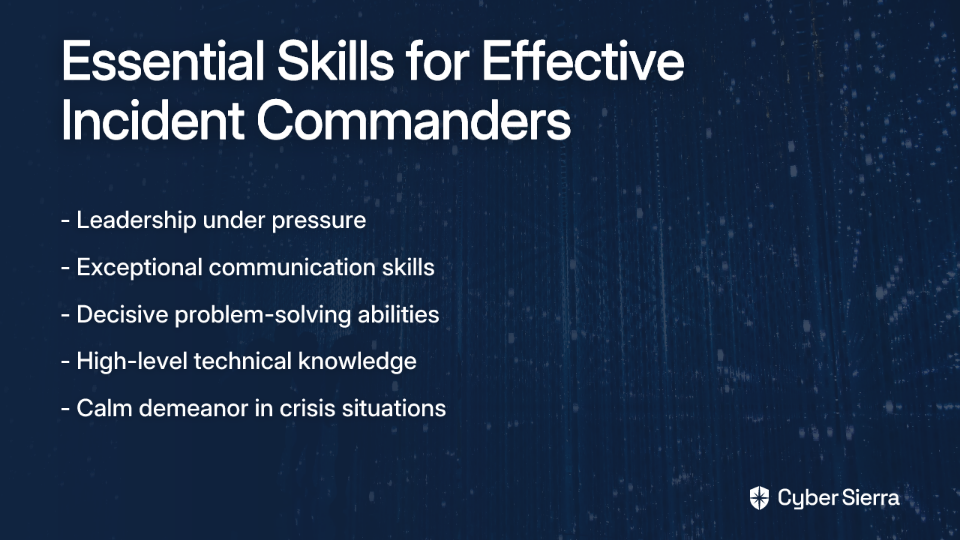
- Leadership Under Pressure: The ability to command respect and inspire confidence in a crisis is paramount. This is especially important when dealing with age and experience disparities, as one practitioner noted: "When you are 22 y.o with 0 leadership and managerial skills it's hard to manage some 50/60 y.o. guys."
- Exceptional Communication: Must be able to clearly articulate directives, synthesize complex information for different audiences (technical vs. executive), and actively listen.
- Decisive Problem-Solving: Ability to make quick, confident decisions with incomplete information, while considering different perspectives.
- High-Level Technical Knowledge: While not necessarily the deepest technical expert, the IC must understand systems and security concepts like MFA, asset management, and phishing prevention to make credible strategic decisions.
- Calm Demeanor: The IC sets the emotional tone. A calm commander cultivates a focused team, leading to better outcomes.
Putting Command into Practice: How to Designate and Empower Your IC
Identify Your Commander
Organizations can designate ICs in several ways:
- Dedicated IC: A manager or senior team member specifically assigned to oversee incidents.
- Volunteer IC: Incentivize individuals who are passionate about incident management to volunteer for the role.
- De facto IC: Recognize individuals who naturally step up during crises and formalize their role.
Train Everyone for Command
Best practice suggests that all members of the IR team should be capable of stepping into the IC role if needed. This builds resilience and a deep bench of leaders. Regular training through tabletop exercises that simulate security incidents is essential.
Empower the Role
The IC must have explicit authority from leadership to make decisions, allocate resources, and direct personnel during an incident. This authority should be documented in both your IRP and Disaster Recovery Plan (DRP).
Provide Psychological Aftercare
Remember that incident response is stressful not just technically but emotionally. Ensure your organization provides psychological aftercare for team members who may experience stress reactions after intense incidents.
Conclusion: The Commander in Your Corner
An unled incident response is a recipe for chaos, prolonged outages, and team burnout. By contrast, an empowered Incident Commander brings order, focus, and strategic direction to the most stressful situations.
The IC transforms the response process from a reactive scramble into a proactive, managed effort. They ensure clear communication, effective delegation, and continuous improvement while maintaining connections with vendors, cyber insurance providers, and legal teams.
Don't wait for your next major incident to realize the need for leadership. Review your IR plan today. Designate, train, and empower an Incident Commander. It's the most critical step you can take to ensure your organization can navigate any crisis with confidence and control.
Frequently Asked Questions (FAQ)
What is the primary role of an Incident Commander (IC)?
The primary role of an Incident Commander is to provide centralized leadership and coordination during an IT or cybersecurity incident. They act as the single source of truth, managing resources, setting the response strategy, and facilitating clear communication among all teams and stakeholders. The IC doesn't necessarily perform the hands-on technical fixes but orchestrates the entire response to ensure it's efficient and effective.
Why is having an Incident Commander crucial for managing incidents?
Having an Incident Commander is crucial because it prevents the chaos, duplicated effort, and communication breakdowns that are common in leaderless responses. Without an IC, teams often work in silos, leading to wasted time and conflicting actions. An IC provides clear direction, prevents decision paralysis under pressure, and ensures that all stakeholders, from engineers to executives, receive consistent and accurate information, ultimately reducing downtime and business impact.
Who in an organization can be an Incident Commander?
An Incident Commander can be a dedicated manager, a senior team member, or even a passionate volunteer who has been trained for the role. The key is not a specific job title but the right skill set and designated authority. Organizations can appoint a dedicated IC, create a rotation, or formalize the role for individuals who naturally take charge. Best practices suggest training multiple team members to be capable of stepping into the IC role to build resilience.
What are the most important skills for an effective Incident Commander?
The most important skills for an effective Incident Commander are strong leadership under pressure, exceptional communication, decisive problem-solving, and a calm demeanor. An IC must be able to command respect, articulate complex information clearly to both technical and executive audiences, make confident decisions with incomplete data, and set a calm emotional tone for the entire response team. While deep technical expertise isn't required, a high-level understanding of the systems is necessary to make credible strategic choices.
How does an Incident Commander prevent team burnout during a crisis?
An Incident Commander actively manages team well-being by monitoring for signs of stress and fatigue, enforcing breaks, and managing shift lengths. A key responsibility of the IC is to protect the human element of the response team. This includes ensuring responders get adequate food and rest, preventing individuals from working excessively long hours, and setting a calm, focused tone. This focus on the team's health is critical for maintaining performance during prolonged incidents.
What happens after an incident is resolved?
After an incident is resolved, the Incident Commander leads a blameless post-mortem to analyze the response and identify opportunities for improvement. The goal of the post-mortem is not to assign blame but to understand systemic weaknesses in processes, tools, or documentation. The IC ensures that lessons learned are documented and that actionable follow-up items are assigned and tracked to completion, which strengthens the organization's defenses against future incidents.
