How to Govern MCPs with an Effective Security Policy



Join thousands of professionals and get the latest insight on Compliance & Cybersecurity.
You've embraced Model Context Protocol (MCP) technology to supercharge your AI capabilities. But now, you're waking up in the middle of the night worried about security risks. MCPs have been found to have serious security holes that malicious actors could exploit to steal or corrupt your data. You feel unprepared to mitigate these inevitable risks, and the standard MCP implementation demands concerning levels of system access.
The reality is even more alarming: according to BytePlus research, there's been a 327% increase in attack vectors targeting these systems in recent years. Without proper governance, your organization's MCPs are essentially an unlocked door to your most sensitive data and systems.
But there's good news. A comprehensive security policy isn't just a document—it's the framework that transforms MCPs from a security liability into a powerful, controlled asset. This article will guide you through creating a robust governance structure with granular permissions and centralized control over all MCPs in your organization.
The Threat Landscape: Why MCP Security is a Ticking Time Bomb
Many security professionals share a common concern: "The key difference with MCP is that it by default wants access to local filesystem and can run commands as root? If true, how is anyone ok with this? How is any enterprise able to use this?"
This question highlights the fundamental security challenge with MCPs. To understand the risks, let's examine the top MCP security threats identified by Prompt.Security:
- Prompt Injection: Malicious inputs that manipulate AI behavior, potentially revealing sensitive data or bypassing security controls.
- Tool Poisoning: Harmful commands embedded in trusted tool metadata that can compromise your systems.
- Privilege Abuse: Excessive permissions leading to unauthorized data access across your infrastructure.
- Tool Shadowing: Rogue tools mimicking trusted ones to gain unauthorized access.
- Sensitive Data Exposure: Leaking API keys and credentials through improper configuration.
- Command Injection: Unvalidated inputs passed to shells that can execute malicious code.
- Rug Pull Attacks: Malicious tools changing behavior after gaining trust, leading to severe security breaches.
- Denial of Wallet/Service: Tools consuming excessive resources, potentially disrupting operations.

- Authentication Bypass: Weak authentication allowing user impersonation and unauthorized access.
- The Confused Deputy Problem: A critical authorization risk where an entity with legitimate access is tricked into misusing its authority—particularly dangerous in MCP authentication scenarios.
As one Reddit user pessimistically noted, "Most people will start tackling the question only once we see a panic caused by a couple very public and very devastating examples." Don't wait for your organization to become that example.
Building Your Governance Fortress: A Strategic Roadmap
Creating an effective MCP security policy requires a phased approach that makes the process manageable even for those who don't feel "qualified to enforce, let alone create" such policies.
Phase 1: Assessment and Planning
Start by conducting a comprehensive security audit using specialized tools like the Backslash Open tool to identify security gaps in your existing MCP implementations. This tool is specifically designed to assess vulnerabilities in MCP deployments.
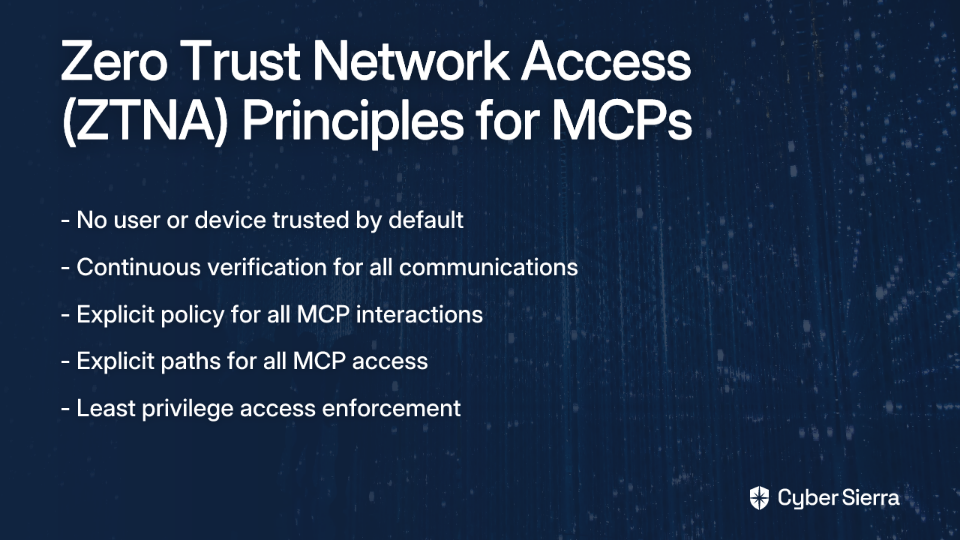
Next, establish a Zero Trust Network Access (ZTNA) foundation. This security model assumes no user or device is trusted by default, requiring continuous verification for all communications. As one security professional recommended, implement "explicit policy, explicit paths" for all MCP interactions.
Finally, define supply chain security standards. Mandate that all MCP servers have their code signed by developers and undergo Static Application Security Testing (SAST) to mitigate vulnerabilities before deployment.
Phase 2: Crafting the Policy with Granular Permissions
One common source of confusion is whether permissions should be role-based (RBAC) or attribute-based (ABAC). The answer depends on your organization's needs:
- Role-Based Access Control (RBAC): Simpler to implement, permissions are tied to roles like "admin" or "user."
- Attribute-Based Access Control (ABAC): More flexible, using attributes such as department, resource value, or time of day for fine-grained control.
For most organizations, a hybrid approach works best. Here's an example policy structure for an expense approval MCP tool:
# mcp_expenses.yaml policy file
roles:
  - admin: can list, create, approve any expense, and delete expenses
  - manager: can list expenses, approve expenses < $500
  - user: can list and create expenses only
This demonstrates both RBAC (role definitions) and ABAC (conditional approval based on expense amount) principles working together.
Phase 3: Implementing Centralized Control
Effective governance requires centralized monitoring and control. Implement the following:
- Centralized Logging: Configure all MCP servers to send logs to a Security Information and Event Management (SIEM) system for monitoring and investigation.
- Automated Response: Integrate with Security Orchestration, Automation and Response (SOAR) platforms to automatically detect and respond to suspicious MCP activities.
- MCP Manager: Deploy a centralized MCP manager like Syncado that provides visibility and control over all MCP instances across your organization.
- Canary Tokens: Place canary tokens within your MCP environment to detect unauthorized access and receive immediate alerts.
Technical Implementation: Bringing Your Policy to Life
Now it's time to put your policy into action with concrete technical measures.
1. Strengthen Authentication
Move beyond basic passwords to multi-factor dynamic authentication. For enterprise integration, address the known conflicts with OAuth in the MCP specification, as detailed by Red Hat.
# Example code for implementing MFA with Claude Desktop-MCP
from mcp_auth import require_mfa

@require_mfa
def access_sensitive_tool(user_id, tool_id):
    # Implementation with MFA protection
2. Isolate Execution Environments
As one developer noted, it took "solid 3 months to get to the point where I have reliable, isolated environments (firecracker VMs)" for MCPs. While implementation can be challenging, sandboxing is essential for high-risk MCPs.
For security-focused apps, consider using containerization with Docker or Podman to isolate MCPs from your main systems:
docker run --rm -it \
  -v "$(pwd)/policies:/policies" \
  --security-opt=no-new-privileges \
  --cap-drop ALL \
  mcp-server:latest
3. Implement Decoupled Authorization
Deploy a separate authorization service that MCPs must consult before executing sensitive operations. This decoupling allows for centralized policy enforcement and easier auditing.
4. Deploy Threat Monitoring
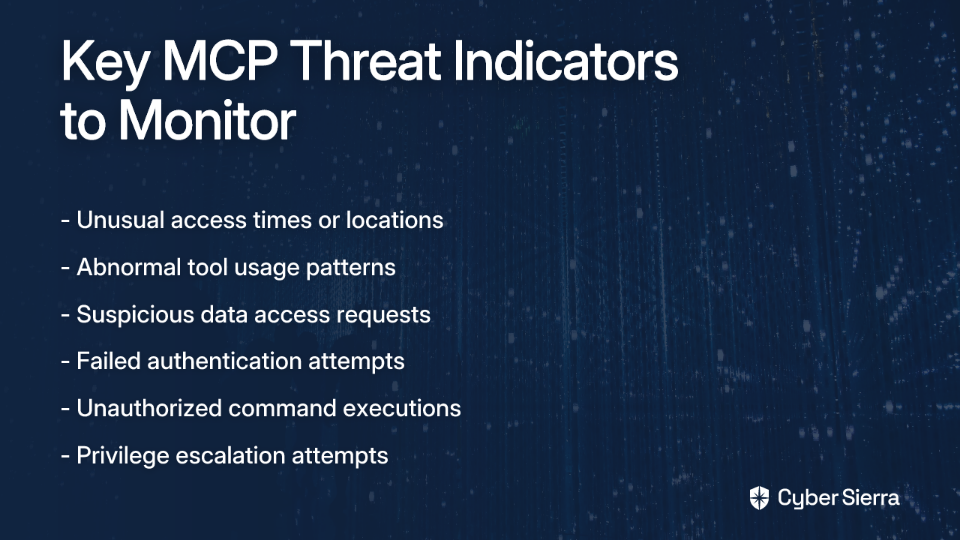
Configure your SIEM system to specifically monitor MCP activities, looking for patterns that might indicate compromise:
- Unusual access times or locations
- Abnormal tool usage patterns
- Suspicious data access requests
- Failed authentication attempts
Integrate Claude Code or other AI-powered security tools to analyze MCP logs and identify potential threats that traditional rule-based systems might miss.
Evolving from Reactive Policy to Proactive Governance
MCP governance is not a "set it and forget it" task. It requires continuous vigilance and adaptation as threats evolve. Here's your action plan:
- Audit Now: Conduct a comprehensive MCP security audit using tools like Backslash Open to identify security gaps.
- Assemble Your Team: Form a cross-functional security task force including security professionals, developers, and business stakeholders.
- Invest Wisely: Allocate resources to advanced monitoring (SIEM/SOAR) and dynamic authorization technologies.
- Train Continuously: Keep your team updated on emerging MCP security trends and threats.
By implementing a robust security policy with granular permissions and centralized control, you'll transform MCPs from a security liability into a powerful, governed asset. Don't wait for a devastating breach to take action—the time to secure your MCPs is now.
Remember that as BytePlus notes, effective governance is what transforms potential risks into powerful tools. With the right security policy in place, you can confidently leverage MCPs to drive innovation while maintaining data integrity and protecting your organization's most valuable assets.