



AI in Enterprise GRC: Balancing Data Privacy and Personalization



Join thousands of professionals and get the latest insight on Compliance & Cybersecurity.
You've set up an AI-powered recommendation engine to drive customer engagement across your enterprise platforms. But when your GRC team reviews the initiative, they uncover alarming gaps: customer data flowing through unvetted third-party AI services, no clear consent mechanisms, and potential violations of multiple privacy regulations. Your promising project is now at risk of being shelved—or worse, deployed with significant compliance liabilities.
Sound familiar? You're not alone. Most GRC and security teams are "barely keeping their heads above water" trying to balance innovation with compliance in the AI era. The promise of personalization is compelling, but the privacy risks are substantial.
The Double-Edged Sword: AI's Promise and Peril
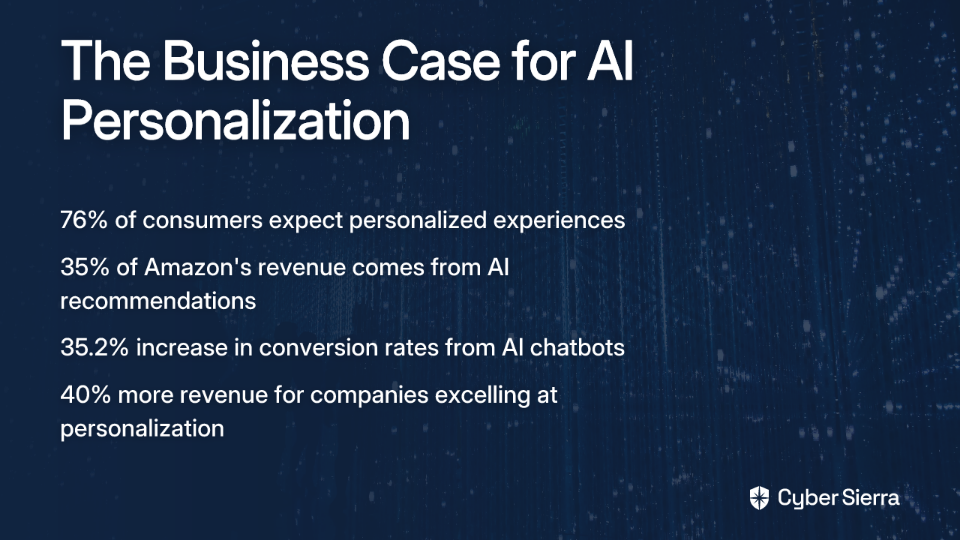
The business case for AI-powered personalization is undeniable. Consider these statistics:
For GRC teams, AI offers similar efficiency gains. AI agents can automate evidence collection and identify compliance gaps in real-time, allowing professionals to "spend more time digging into problem areas vs the bare minimum."
However, these benefits come with significant risks:
Data Privacy and IP Loss Nearly 10% of employee prompts in Generative AI include sensitive data, according to CSO Online. Tools like "ask your PDF" are "literally designed to process and analyze your documents on external servers," exposing confidential information to potential breaches.
Inaccuracy and Algorithmic Bias As one skeptical professional put it: "One of the biggest things that will forever stop me from really using LLMs is that you can never trust the output. If I have to check and proof every output then what's the point in it?" This concern is valid, with historical examples like Amazon's AI hiring tool discriminating against female candidates and biased facial recognition leading to false arrests.
Shadow AI and TPRM Challenges The rise of "Shadow AI"—employees using unapproved AI tools—creates significant Third-Party Risk Management (TPRM) challenges, as these tools may not align with organizational compliance requirements.
The GRC Imperative: Why a Specialized AI Framework is Non-Negotiable
The governance gap in AI is alarming. According to a Lenovo/IDC survey cited by CIO.com, only 24% of organizations have a fully enforced, enterprise-wide AI GRC policy. This leaves a dangerous void as regulations rapidly evolve.
The regulatory landscape is becoming increasingly complex:
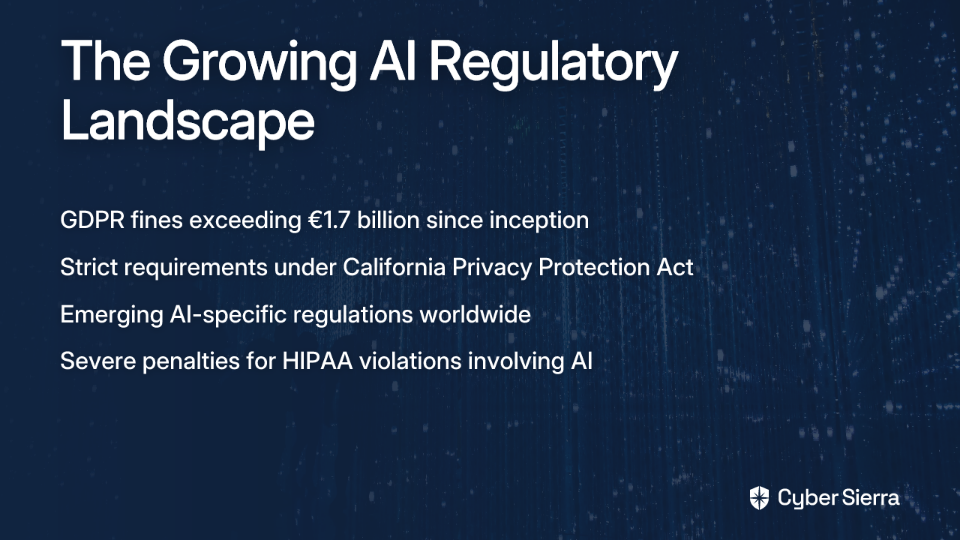
The cost of failure is exemplified by the Facebook-Cambridge Analytica scandal, which resulted in a $5 billion FTC fine and severe reputational damage. Consumer trust is fragile—only 51% of customers believe organizations will handle their data ethically and securely.

Building a Robust AI GRC Framework: A Step-by-Step Guide
To move beyond the "pretty superficial" frameworks often seen in the industry, here's a comprehensive approach:
1. Establish a Cross-Functional Governance Structure
Define clear roles, responsibilities, and accountability for AI Governance. This is crucial because, as one practitioner noted, "if an AI bot causes harm, someone is legally responsible." Involve stakeholders from IT, legal, HR, compliance, and business units to create a holistic framework.
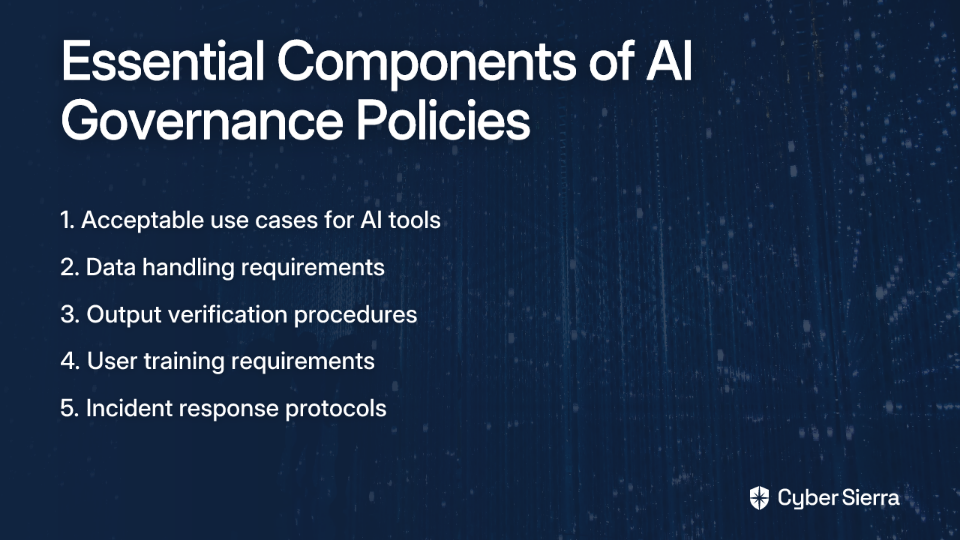
2. Define Your AI Risk Profile and Enforceable Policies
Develop documented and enforceable policies that clarify responsibilities. These should cover:
3. Embed "Privacy-by-Design" and Ethical Principles
Adopt principles of fairness, transparency, accountability, and human oversight in all AI projects. Champion a Privacy-by-Design approach, using Apple's proactive privacy measures as a best-practice example.
4. Implement AI Model Governance
Establish processes for lifecycle management of all AI models, from development and training to deployment and retirement. This ensures ongoing reliability, accuracy, and fairness.
5. Leverage Authoritative Risk Management Frameworks
To avoid superficiality, use established frameworks as a foundation. The NIST AI Risk Management Framework and the newer ISO 42001 standard provide structured approaches for AI-related risk assessment.
Practical Strategies for Balancing Privacy and Personalization
1. Mandate Transparency and Shift to "Opt-In" Consent
Research shows that 92% of consumers are more likely to trust brands that are transparent about their data practices. Advocate for a paradigm shift from "opt-out" to "opt-in" data collection models, giving users explicit control. This directly addresses the fundamental question: "Have I given my permission for my data to be used?"
Apple's App Tracking Transparency feature demonstrates how this approach can be implemented effectively while maintaining a positive user experience.
2. Deploy Privacy-Enhancing Technologies (PETs)
Data Anonymization and Federated Learning Leverage AI-based anonymization to improve personalization accuracy while maintaining privacy compliance. Federated Learning, a privacy-preserving machine learning technique, allows AI models to be trained on decentralized data, minimizing raw data transfers and protecting user information.
3. Capitalize on Zero-Party Data
Zero-party data—information customers willingly and proactively share—is the gold standard for achieving personalization without compromising trust. This includes preferences, purchase intentions, and profile information explicitly provided for personalization purposes.
4. Implement Continuous Compliance Monitoring
Promote a shift to proactive GRC with AI-powered tools that automate evidence collection and provide continuous monitoring, as offered by platforms like Anecdotes.ai.
The Future of GRC is Proactive and AI-Enabled
Balancing personalization and privacy is not simply a compliance task but a core strategic driver for sustainable growth and customer loyalty. Looking ahead:
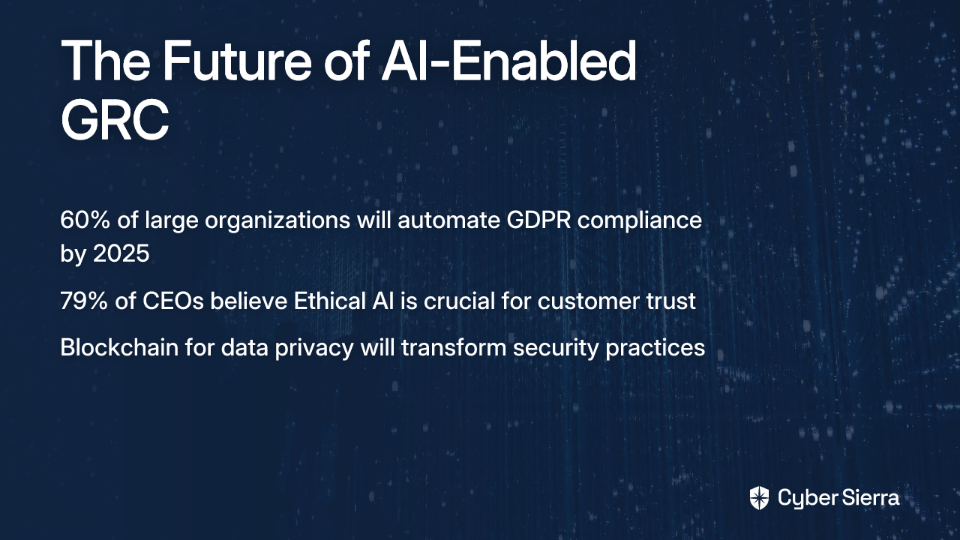
For GRC professionals concerned about job security in the age of AI, take heart: AI is not a threat but an empowerment tool. It automates mundane work, allowing you to become the indispensable strategic guardians of trust and ethics—the people who ensure the organization's "ducks are all in a row" in the AI era.
The most successful enterprises will be those that view privacy not as a constraint on personalization but as its essential foundation. By implementing robust AI GRC frameworks and privacy-preserving technologies, organizations can deliver the personalized experiences customers crave while building the trust that sustains long-term relationships.
The question is no longer whether you can afford to invest in AI governance—it's whether you can afford not to.

Frequently Asked Questions
What is an AI GRC framework and why is it important?
An AI GRC (Governance, Risk, and Compliance) framework is a structured system of rules, policies, and processes for governing the use of artificial intelligence. It is critically important because it provides a systematic way to manage the significant risks associated with AI, such as data privacy violations, algorithmic bias, and non-compliance with regulations, ensuring that innovation happens responsibly and securely.
How can a company personalize customer experiences without violating privacy?
A company can achieve effective personalization without violating privacy by adopting several key strategies. These include leveraging Privacy-Enhancing Technologies (PETs) like federated learning to train models on decentralized data, prioritizing the use of zero-party data that customers willingly share, and shifting to a transparent "opt-in" consent model that gives users explicit control.
What are the main risks of using unapproved third-party AI tools?
The main risks of using unapproved third-party AI tools, often called "Shadow AI," are data privacy breaches and intellectual property loss. When employees use unvetted platforms, they may inadvertently upload sensitive customer or company data to external servers, creating significant compliance gaps and exposing the organization to security threats without proper oversight.
What are the first steps to building an AI GRC framework?
The first step to building an AI GRC framework is to establish a cross-functional governance committee with clear roles and accountability across IT, legal, compliance, and business units. This team should then define the organization's AI risk appetite and develop documented, enforceable policies covering acceptable use, data handling, and incident response protocols.
How do regulations like GDPR affect the use of AI?
Regulations like GDPR significantly affect AI by imposing strict rules on how personal data—the fuel for many AI models—is collected, processed, and stored. They require organizations to have a lawful basis for data processing, such as explicit user consent, and mandate transparency about how data is used, with severe financial penalties for non-compliance.
Will AI replace the jobs of GRC professionals?
No, AI is poised to empower GRC professionals, not replace them. By automating routine and time-consuming tasks like evidence collection and continuous monitoring, AI allows GRC experts to shift their focus to higher-value strategic work. This includes advising on ethical AI implementation, interpreting complex regulations, and ensuring the organization builds and maintains customer trust.
