The Psychology of Phishing: Why Smart People Still Click


Join thousands of professionals and get the latest insight on Compliance & Cybersecurity.
You've just completed your company's mandatory cybersecurity training, aced the quiz, and feel confident you can spot a phishing attempt from miles away. Yet three weeks later, you find yourself staring at your screen in disbelief—you've just clicked on a spoofed email that bypassed your company's email filter and downloaded malware onto your system.
Sound familiar? You're not alone.
"They're all so braindead obviously fake that it's astonishing anyone actually falls for it," says one frustrated professional about phishing training simulations. Meanwhile, real attacks are "often annoyingly difficult to catch" with sophisticated tactics like "spoofed internal email addresses" that can fool even the most vigilant employees.
The truth is, susceptibility to phishing isn't about intelligence—it's about human psychology. Even the most cybersecurity-aware individuals can fall victim to well-crafted attacks that exploit fundamental aspects of how our brains work.
The Evolution of Deception: Beyond "Braindead" Scams
Remember the notorious "Nigerian Prince" emails riddled with typos and grammatical errors? Those days are long gone. Today's phishing attacks have evolved into sophisticated social engineering operations designed to bypass both technical defenses and human skepticism.
Modern phishing tactics include:
- Spear phishing: Highly personalized attacks targeting specific individuals using data gathered from social media and other public sources
- MFA fatigue attacks: Overwhelming users with authentication requests until they approve one out of frustration
- Business email compromise (BEC): Impersonating executives to authorize fraudulent transfers
- HR and IT impersonation: Exploiting trusted internal functions to extract sensitive information
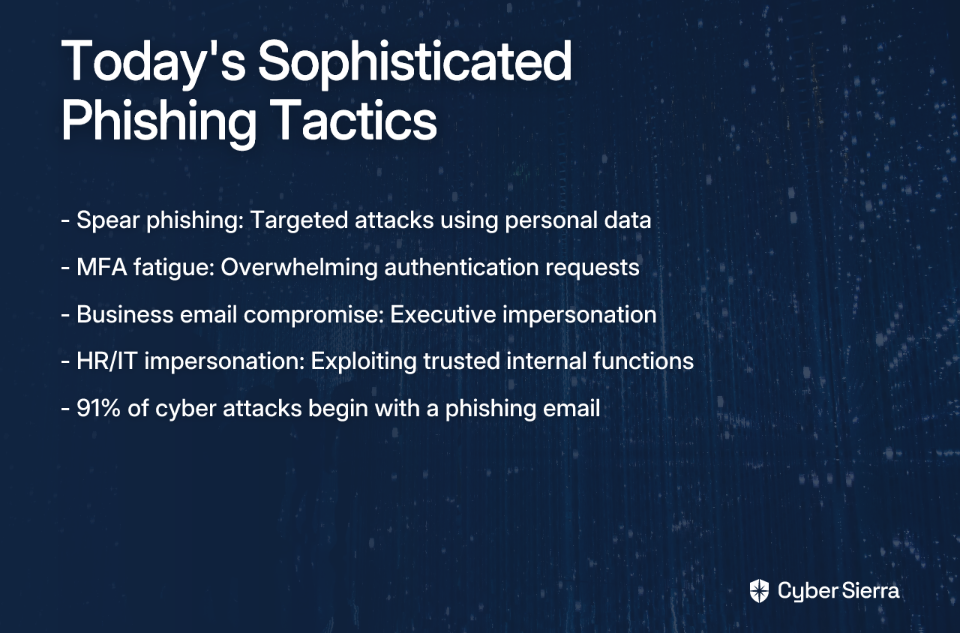
According to PwC, 83% of successful cyber attacks stem from social engineering, malware, or software vulnerabilities—with human behavior being the critical factor in most breaches. The statistics are sobering: 91% of all cyber attacks begin with a phishing email, and human failures (not technical glitches) are responsible for 77% of cyber attacks.
The Hacker in Your Head: Core Psychological Triggers
Sophisticated phishing attacks work because they target fundamental human emotions and tendencies that often override our rational thought processes. Hackers aren't just exploiting software vulnerabilities—they're hacking your brain.
Here are the key psychological triggers that cybercriminals exploit:
Trust
We're naturally inclined to trust communications that appear to come from authorities or familiar entities. When you receive what looks like an email from your HR department about "Important Benefit Changes," your brain's first reaction is to trust it, not scrutinize it.
Fear
Fear is a powerful motivator that can short-circuit critical thinking. Messages warning about "Unauthorized Access to Your Account" or "Security Breach Detected" trigger an immediate stress response, making you more likely to act quickly rather than carefully.
Urgency
Creating artificial time pressure ("Your account will be locked in 1 hour") reduces the likelihood that you'll pause to verify the message's legitimacy. When we feel rushed, we make mistakes.
Curiosity
Human beings have an innate need to fill knowledge gaps. That's why subject lines like "Your appearance in this photo" or "Your package delivery status" are so effective at generating clicks.
Helpfulness
Most people have a natural desire to be helpful. When an email appears to come from a colleague or executive asking for assistance, our instinct to help can override security protocols.
Cognitive Biases: The Brain's Dangerous Shortcuts
Beyond these emotional triggers, cybercriminals exploit cognitive biases—mental shortcuts our brains use to make quick decisions—that affect even the most technically knowledgeable individuals:
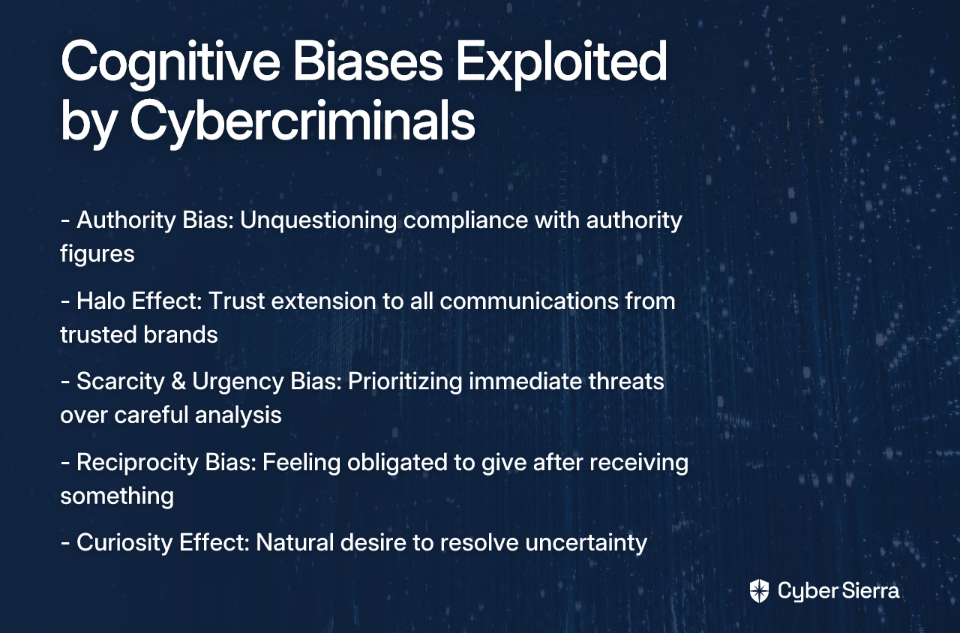
Authority Bias
We tend to comply with requests from authority figures without questioning them. This is why phishing emails impersonating executives or IT administrators are so effective. According to Ridge Security, this bias is frequently exploited in Business Email Compromise (BEC) scams.
Halo Effect
When we trust an organization (like Microsoft or our bank), that positive impression extends to all communications that appear to come from them. SC World notes this bias makes us less likely to scrutinize emails bearing familiar logos or formats.
Scarcity & Urgency Bias (Hyperbolic Discounting)
We prioritize immediate rewards or avoiding immediate losses over long-term benefits. Phrases like "limited time offer" or "urgent action required" trigger this bias, preventing careful consideration of the message's authenticity.
Reciprocity Bias
When someone offers us something, we feel obligated to give something in return. Phishers exploit this by offering "free" resources that make victims feel compelled to provide information in exchange.
Curiosity Effect
Our natural desire to resolve uncertainty makes us vulnerable to clickbait-style headlines. This is why vague but intriguing subject lines like "Your recent invoice" or "Important update" are so effective.
Why Security Training Fails: A Crisis of Engagement and Realism
Despite organizations investing billions in cybersecurity awareness programs, many training initiatives fail to adequately prepare employees for real-world threats. User research reveals several critical disconnects:
The Simulation Gap
"They don't look anything like the real ones we've gotten," notes one employee about phishing simulations. When training scenarios are obviously fake or overly simplistic, they don't prepare staff for sophisticated real-world attacks.
The Compliance Checkbox
Many employees perceive cybersecurity training as a regulatory formality rather than a crucial skill. "They're worthless... I'm almost certain they are only doing this for regulatory or legal reasons," says one professional, highlighting how this perception undermines engagement.
The Mixed-Message Problem
"My company outsources a lot of its HR functions to firms who then flood our inboxes with pushy emails... that have all the hallmarks of spam or phishing attempts," explains one employee. When legitimate corporate communications mirror phishing tactics, it creates dangerous confusion.
The Consequence Vacuum
"The fake emails to catch people who aren't careful don't have any consequences," observes another employee. Without meaningful feedback or consequences, training fails to create lasting behavioral change.
Building a Resilient Human Firewall: Psychology-Informed Training
Effective security training must address the psychological factors that make us vulnerable. Here's how organizations can build more effective programs:
Make It Continuous, Not One-Off
Single training sessions quickly fade from memory. Replace annual compliance exercises with ongoing, bite-sized learning moments that keep security awareness fresh.
Create Realistic Simulations
Training must reflect the sophistication of actual threats. Use examples of real-world phishing attempts relevant to your industry and employee roles to prepare staff for what they'll actually encounter.
Foster a Positive Security Culture
Shift from punishment to positive reinforcement. Create recognition programs for reporting phishing attempts and get leadership visibly involved in security initiatives. As one IT professional notes: "Fear just doesn't work anymore (never did). Our clients love the positive reinforcement and I like the boost to customer retention and fewer security threats."
Provide Practical, Psychology-Based Strategies
Give employees specific techniques to counteract the psychological triggers exploited by attackers:
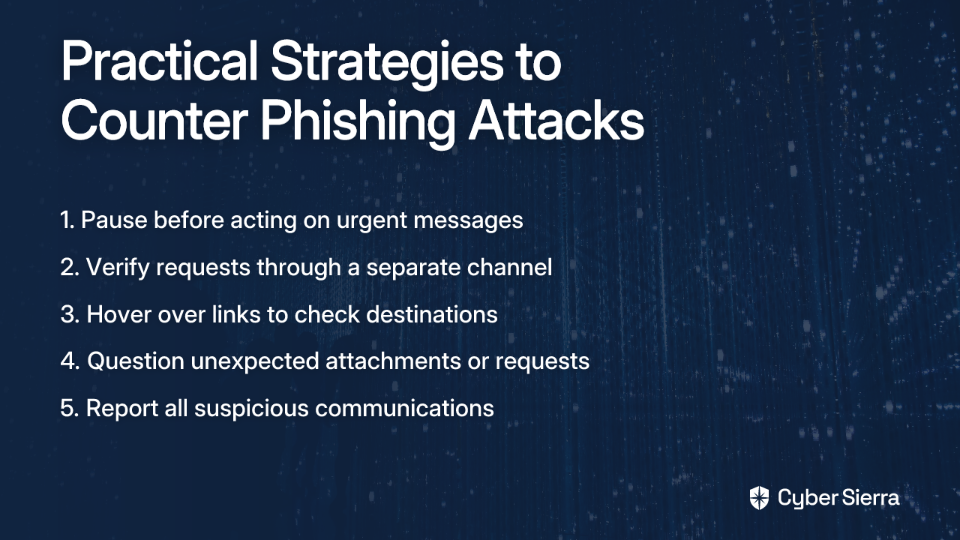
- Pause before acting: Take a moment to evaluate any message creating urgency or fear
- Verify through another channel: Confirm unusual requests via phone or separate messaging platform
- Hover before clicking: Check link destinations before clicking
- Question the unexpected: Be skeptical of unsolicited attachments or requests, even from seemingly trusted sources
- Report suspicious communications: Create easy reporting mechanisms that reinforce vigilance
From Vulnerability to Vigilance
Susceptibility to phishing isn't a sign of low intelligence—it's a reflection of our shared human psychology. Sophisticated phishing attacks are designed to bypass our rational defenses by triggering emotional responses and exploiting cognitive biases.
By understanding the psychological mechanisms that make us vulnerable, we can build more effective defenses. The most powerful protection against phishing isn't just technical knowledge or security tools like email filters—it's psychological awareness.
For organizations, this means developing training programs that address the human element of cybersecurity rather than treating compliance as a checkbox exercise. For individuals, it means cultivating a healthy skepticism and understanding that even the smartest, most security-conscious people can be vulnerable to well-crafted attacks.
The most effective protection against phishing lies at the intersection of technology and psychology—where robust security tools meet psychologically informed human vigilance.
Frequently Asked Questions
Why do intelligent people still fall for phishing scams?
Intelligent people fall for phishing scams because these attacks are not designed to test intelligence, but to exploit fundamental human psychology and cognitive biases. Even the most security-aware individuals can be tricked by well-crafted attacks that trigger emotional responses like fear, urgency, and curiosity, which bypass our rational thought processes.
What are the most common psychological triggers used in phishing attacks?
The most common psychological triggers are trust, fear, urgency, curiosity, and the desire to be helpful. Attackers exploit these by impersonating trusted authorities (like HR or IT), creating a false sense of urgency (e.g., "account will be locked"), provoking fear (e.g., "unauthorized login detected"), or piquing curiosity with vague but intriguing subject lines.
How can I spot a sophisticated phishing email?
To spot a sophisticated phishing email, you should pause to evaluate any message that creates a sense of urgency, verify unexpected requests through a separate communication channel, and always hover over links to check their true destination before clicking. Creating a habit of questioning the unexpected is a powerful defense against attacks designed to look legitimate.
Why is most corporate cybersecurity training ineffective?
Most corporate cybersecurity training is ineffective because it often feels like a compliance checkbox exercise with unrealistic simulations that don't resemble real-world attacks. When training is infrequent and there is no meaningful feedback, employees don't develop the lasting behavioral changes needed to resist sophisticated phishing attempts.
What makes a security awareness program successful?
A successful security awareness program is continuous, uses realistic simulations, and fosters a positive security culture that encourages reporting rather than assigning blame. Effective programs focus on positive reinforcement and provide practical, psychology-based strategies to help staff counteract the emotional triggers used by attackers.
What should I do if I think I've clicked on a phishing link?
If you think you've clicked on a phishing link, you should immediately disconnect your device from the internet and report the incident to your IT or security department. Do not enter any passwords or personal information. Reporting the incident quickly is crucial, as it allows security teams to contain any potential damage and protect the organization.