



Top AI-Powered GRC Trends to Watch in 2026

Join thousands of professionals and get the latest insight on Compliance & Cybersecurity.
You've heard the whispers in conference rooms and seen the debates in professional forums: "Will AI take my job in GRC?" The reality is more nuanced than the headlines suggest. As one cybersecurity professional aptly put it, "AI won't replace GRC workers. GRC workers using AI will replace GRC workers who don't."
By 2026, artificial intelligence won't just be an add-on feature to governance, risk, and compliance tools—it will be their beating heart. This fundamental shift reflects a broader trend of rapid AI adoption, with 72% of companies reporting its use by early 2024. It comes at a critical time as organizations face mounting pressure from complex regulations, expanding digital ecosystems, and increasingly sophisticated threats.
But this evolution doesn't spell the end for GRC professionals. Rather, it marks the beginning of a powerful partnership where AI handles the scale and speed, while humans provide the judgment, context, and accountability that machines simply cannot replicate.
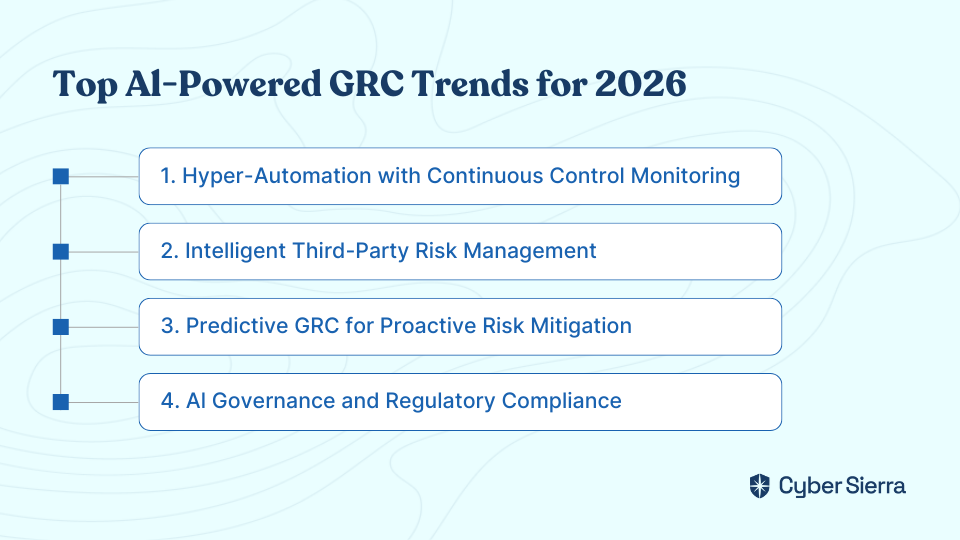
Let's explore the top AI-powered GRC trends that will define the landscape by 2026, and how forward-thinking organizations are already preparing for this transformation.
Trend 1: The Dawn of Hyper-Automation with Continuous Control Monitoring (CCM)
Traditional GRC approaches rely on point-in-time snapshots—periodic audits and assessments that create significant visibility gaps where risks can emerge undetected. This "check the box" approach is not only ineffective against modern threats but also creates the audit fatigue that plagues compliance teams.
By 2026, AI-powered Continuous Control Monitoring (CCM) will have transformed this landscape entirely.
The Evolution of Control Monitoring
CCM represents the shift from periodic checks to ongoing visibility into security controls, allowing teams to proactively fix gaps rather than reactively address failures. AI supercharges this approach by:
- Automating Control Testing: AI algorithms can continuously monitor controls, detect exceptions, and flag potential compliance issues in real-time without human intervention.
- Providing Predictive Analytics: By analyzing historical control performance data, AI can forecast future compliance risks, helping teams prioritize their efforts on the most critical areas.
- Improving Accuracy: Machine learning models reduce false positives by learning the normal operational baseline and adapting to changing conditions.
- Enabling Dynamic Regulatory Adaptation: AI tools can interpret new regulatory updates and automatically adjust monitoring parameters to ensure continuous compliance.
Implementation Framework for AI-Enhanced CCM
For organizations looking to implement this trend:
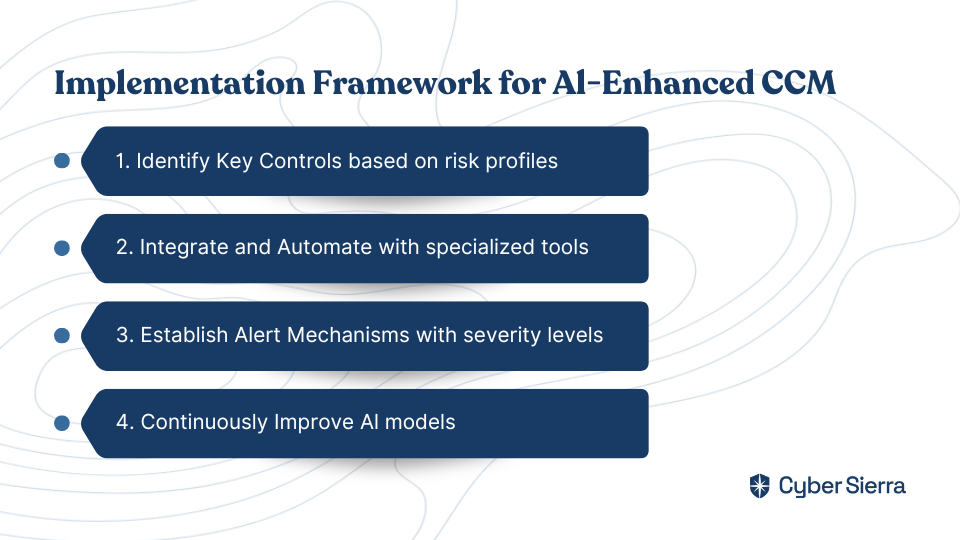
- Identify Key Controls: Focus on critical controls based on risk profiles and regulatory requirements (e.g., access controls for GDPR, payment processing for PCI DSS).
- Integrate and Automate: Leverage specialized tools to build a central controls repository and develop automated tests that run continuously.
- Establish Alert Mechanisms: Create a structured response plan for control failures with defined alert severity levels to ensure timely remediation.
- Continuously Improve: Regularly refine AI models based on feedback and emerging threats to maintain their effectiveness.
Platforms like Cyber Sierra are already pioneering this approach with their Continuous Control Monitoring module that automates data collection and control testing across frameworks like NIST, ISO 27001, and PCI DSS, providing a single source of truth for compliance teams.
Trend 2: Intelligent Third-Party Risk Management (TPRM) Beyond the Questionnaire
The modern enterprise isn't an island—it's an interconnected ecosystem of vendors, suppliers, and partners. This complexity dramatically increases operational and cybersecurity risks, with cyberattack losses having more than doubled since the pandemic.
GRC professionals know the pain all too well: "GRC is 80% getting the vendor to do the required tasks and 20% actual assessment." This manual follow-up is inefficient, error-prone, and leaves organizations vulnerable to risks that emerge between assessments.
AI's Transformation of TPRM
By 2026, AI will have transformed TPRM from static, point-in-time questionnaires to dynamic, continuous monitoring. According to the 2025 EY Global Third-Party Risk Management Survey, 57% of organizations are centralizing TPRM to gain a holistic view of risk. AI accelerates this transition through:
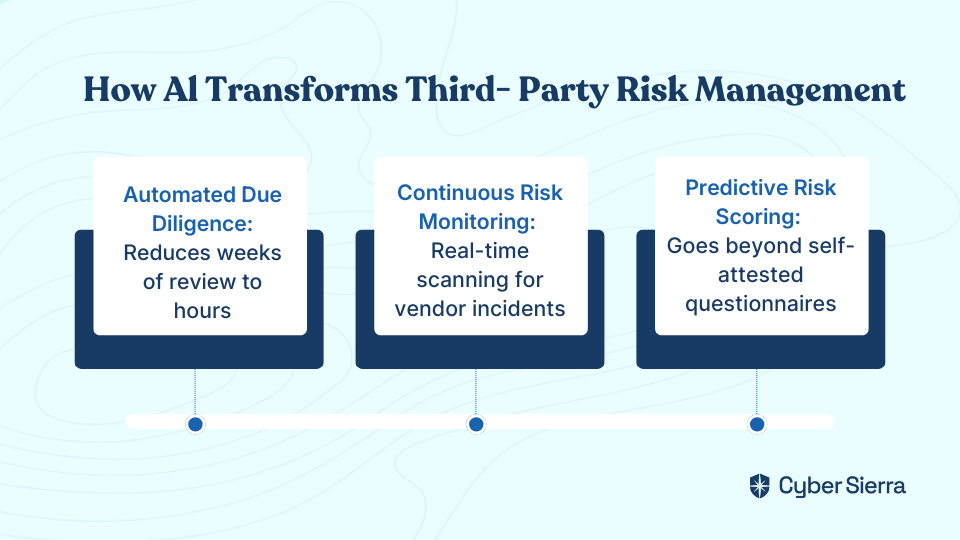
- Automated Due Diligence: Rapidly analyzing vendor documents (SOC 2 reports, security policies) to extract key information and flag risks, reducing weeks of manual review to hours.
- Continuous Risk Monitoring: Scanning news, financial data, dark web mentions, and security ratings in real-time to provide predictive warnings of potential vendor incidents.
- Predictive Risk Scoring: Using predictive analytics to score vendors based on a wide range of data points, going far beyond self-attested answers to identify genuine risks.
This approach allows organizations to focus resources on genuine risks rather than chasing paperwork. Cyber Sierra's TPRM platform embodies this trend by simplifying vendor risk management through automation and providing near real-time visibility into vendor security posture.
Trend 3: Predictive GRC - From Reactive Reporting to Proactive Risk Mitigation
Traditional GRC is reactive—it reports on what has already happened. By 2026, AI-powered predictive GRC will flip this paradigm, allowing organizations to forecast and mitigate risks before incidents occur.
How AI Enables Predictive GRC
AI analyzes vast datasets—internal control data, external threat feeds, vulnerability scans, and regulatory changes—to identify patterns and precursors to risk. This enables organizations to:
- Forecast Compliance Issues: Predict potential compliance gaps before they become audit findings.
- Prioritize Remediation Efforts: Direct limited resources to the most critical vulnerabilities based on exploitation likelihood and business impact.
- Simulate Risk Scenarios: Run "what-if" analyses to understand the potential impact of emerging threats or regulatory changes.
This trend is closely linked to proactive threat management. AI can correlate vulnerabilities found on the attack surface with active threats in the wild to prioritize patching efforts. Cyber Sierra's Threat Intelligence module exemplifies this approach by providing a security scorecard, conducting network and cloud infrastructure vulnerability scanning, and helping teams manage vulnerabilities with an outside-in approach.
Trend 4: The Rise of AI Governance and Navigating the New Regulatory Maze
AI is a double-edged sword for GRC. While it's a powerful tool for defense, it's also being used by attackers to create sophisticated threats like deepfakes and AI-powered malware. This necessitates strong governance over how AI is used internally.
The Regulatory Wave is Coming
By 2026, the EU Artificial Intelligence Act will be fully enforced, categorizing AI systems by risk level and imposing fines of up to €35 million or 7% of global revenue for non-compliance. Other global frameworks like Canada's AIDA and sector-specific guidelines are emerging, creating a complex and inconsistent regulatory landscape.
Organizations that proactively establish robust AI governance frameworks—including clear usage policies, oversight committees, and transparency in AI decision-making—will not only ensure compliance but also build trust with customers and partners. As noted in industry analyses, those who treat compliance proactively will stand out in the AI economy.
The Unchanged Core: The Human-in-the-Loop Remains Critical
Despite these technological advances, certain aspects of GRC remain stubbornly human. As one GRC professional emphatically stated, "The G in GRC requires a LOT of building relationships and buy in at executive leadership levels. This cannot be done by an AI."
This sentiment reflects a broader truth about the limits of AI in GRC:
- Legal Accountability: "A machine cannot be held legally liable. A human must be responsible for this." AI can provide recommendations, but accountability must ultimately rest with human decision-makers.
- Understanding Organizational Context: Each organization has a unique "risk appetite" that requires human judgment to interpret and apply appropriately. AI cannot fully grasp the nuances of organizational culture and strategic priorities.
- Distinguishing Compliance from Security: "You need a human to figure out if someone had done something to 'pass the test' vs 'actually secure'." AI struggles with intent and can be fooled by superficial compliance.
- Building Relationships and Trust: The "governance" in GRC is fundamentally about human relationships—convincing executives to invest in security, negotiating with business units, and fostering a culture of compliance.
The GRC Professional as a Strategic Co-pilot
Rather than replacing GRC professionals, AI will elevate their role. AI automates the "what" (data collection, control testing, risk identification), allowing the human expert to focus on the "so what" and "now what" (interpreting the data, contextualizing risk, and defining the strategic response).
By 2026, the role of GRC professionals will evolve from data gatherers to strategic risk advisors, Business Information Security Officers (BISOs), or compliance strategists. This evolution makes the job "less boring" by eliminating rote tasks and emphasizing high-value activities.
Preparing for the Future of GRC
To thrive in this AI-augmented future of GRC, organizations and professionals should:
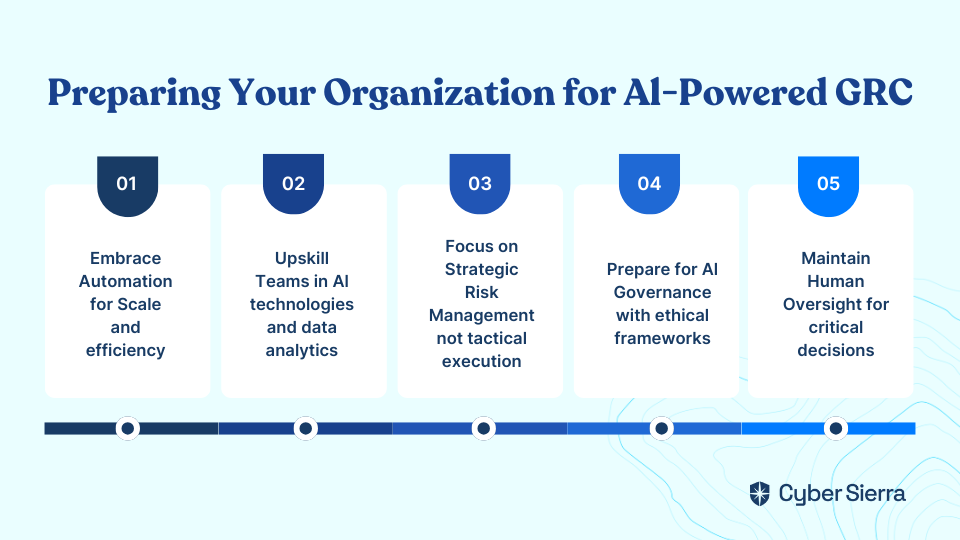
- Embrace Automation for Scale: Adopt platforms that automate routine GRC tasks, like Cyber Sierra's integrated GRC tools that streamline data collection, risk assessments, and reporting.
- Upskill for the AI Era: Develop expertise in AI technologies, data analytics, and risk modeling to effectively leverage and oversee AI-powered GRC tools.
- Focus on Strategic Value: Shift focus from tactical execution to strategic risk management, emphasizing the uniquely human aspects of GRC that AI cannot replicate.
- Prepare for AI Governance: Establish frameworks for responsible AI use, ensuring that AI deployments align with ethical principles and emerging regulations.
- Maintain the Human Element: Remember that "at the end of the day someone has to make decisions." Keep humans in the loop for critical risk judgments and final accountability.
Conclusion
The future of GRC lies not in replacing human expertise but in augmenting it with AI's speed, scale, and analytical power. By 2026, the most successful GRC programs will be those that effectively blend AI-driven automation with irreplaceable human judgment.
As we navigate this transformation, one thing remains clear: AI won't replace GRC workers. GRC workers using AI will replace GRC workers who don't. The time to prepare for this future is now.
Frequently Asked Questions
How is AI changing the future of GRC?
AI is changing the future of GRC by shifting the focus from manual, reactive tasks to automated, proactive risk management. Instead of replacing GRC professionals, AI acts as a powerful partner, automating routine work like control testing and data collection. This allows human experts to concentrate on strategic activities such as interpreting data, providing contextual judgment, and building relationships, ultimately making GRC more efficient and forward-looking.
What is Continuous Control Monitoring (CCM) in GRC?
Continuous Control Monitoring (CCM) is an automated approach that provides ongoing, real-time visibility into the effectiveness of security and compliance controls. Unlike traditional audits that offer only a point-in-time snapshot, AI-powered CCM continuously tests controls against frameworks like NIST or ISO 27001. This allows organizations to detect and remediate compliance gaps as they happen, rather than discovering them months later during an audit.
How does AI improve Third-Party Risk Management (TPRM)?
AI improves Third-Party Risk Management (TPRM) by automating due diligence and enabling continuous monitoring of vendor risks beyond static questionnaires. AI algorithms can rapidly analyze vendor security documents, scan for negative news or data breach mentions, and monitor security ratings in real-time. This provides a dynamic and predictive view of vendor risk, allowing teams to focus on high-risk partners instead of manually chasing paperwork from every vendor.
Will AI replace GRC professionals?
No, AI is not expected to replace GRC professionals. Instead, it will augment their capabilities and automate repetitive tasks. The consensus is that GRC professionals who leverage AI will replace those who do not. Core human skills like strategic decision-making, interpreting organizational context, building executive buy-in, and bearing legal accountability cannot be replicated by machines. AI handles the scale and speed of data analysis, freeing up humans to focus on these high-value strategic functions.
Why is AI Governance important for organizations?
AI Governance is important because it establishes the necessary rules, policies, and frameworks to ensure that artificial intelligence is used responsibly, ethically, and in compliance with emerging regulations. With powerful new laws like the EU AI Act imposing significant fines for non-compliance, a strong governance framework is essential for mitigating legal and financial risks. It also builds trust with customers and partners by demonstrating a commitment to transparency and accountability in how AI systems make decisions.
What skills should a GRC professional develop for an AI-driven future?
GRC professionals should develop skills in data analytics, AI technology fundamentals, and strategic risk communication. To thrive, professionals need to understand how to interpret AI-driven insights, oversee the performance of GRC tools, and communicate complex risks to executive leadership. The focus will shift from manual data gathering to becoming a strategic advisor who can translate data into actionable business strategy.
Cyber Sierra provides an AI-enabled cybersecurity platform that embodies these trends through its integrated suite of GRC tools. From Continuous Control Monitoring to Third-Party Risk Management and predictive threat intelligence, Cyber Sierra helps organizations automate routine GRC tasks while empowering human experts to focus on strategic risk management. Learn more at cybersierra.co.
