



Top 10 GRC Platforms for Organizations with Distributed Security Teams

Join thousands of professionals and get the latest insight on Compliance & Cybersecurity.
Summary
- Distributed security teams struggle with fragmented visibility and inconsistent processes, making manual GRC management ineffective.
- When selecting a GRC platform, prioritize features like a centralized dashboard, continuous monitoring, and automation to create a single source of truth.
- Your GRC tool's success depends on a well-defined process; map your workflows, secure buy-in, and run a pilot program before a full rollout.
- A unified platform like Cyber Sierra's GRC module can help automate compliance and provide real-time visibility for distributed teams.
You've set up a robust security program with teams spread across different locations. But when you check in on compliance efforts, you're shocked to see fragmented processes, inconsistent control implementations, and a nightmare of spreadsheets being passed around for evidence collection. Your distributed security teams are struggling to maintain a unified risk posture, and audit season feels like herding cats.
In an era of increasing cyber threats, complex regulatory demands, and distributed workforces, managing Governance, Risk, and Compliance (GRC) through manual processes is no longer viable. The right GRC platform can transform this chaos into clarity by providing a central source of truth, automating tedious tasks, and enabling real-time collaboration regardless of where your teams are located.
This guide will help you navigate the top GRC platforms specifically suited for organizations with distributed security teams and provide a framework for selecting the right one for your unique needs.
The Unique GRC Challenges of a Distributed Workforce
Before diving into solutions, let's examine the specific challenges that distributed security teams face:
Fragmented Visibility: Without a central hub, CISOs and compliance managers struggle to get a clear, real-time view of the organization's security posture across different locations and teams.
Inefficient Evidence Management: As one security professional noted on Reddit, "A key feature missing in all of these platforms is rights management around evidence sharing." Coordinating evidence generation and sharing for audits becomes a logistical nightmare when teams are geographically dispersed.
Inconsistent Processes: Different teams might follow slightly different procedures for risk assessments or control implementations, leading to compliance gaps and security vulnerabilities.
Third-Party Risk Complexity: Managing vendor relationships becomes harder when different regional teams handle different vendors. A centralized platform is crucial for standardized onboarding and continuous monitoring.
How to Choose the Right GRC Platform for Your Distributed Team
Before examining specific platforms, let's establish a framework for evaluation. A Reddit user wisely advised, "Make sure you really know what you want before buying any of them," highlighting that "inadequate understanding of organizational needs can lead to poor GRC platform selection."
Consider these key factors when evaluating GRC platforms for your distributed team:
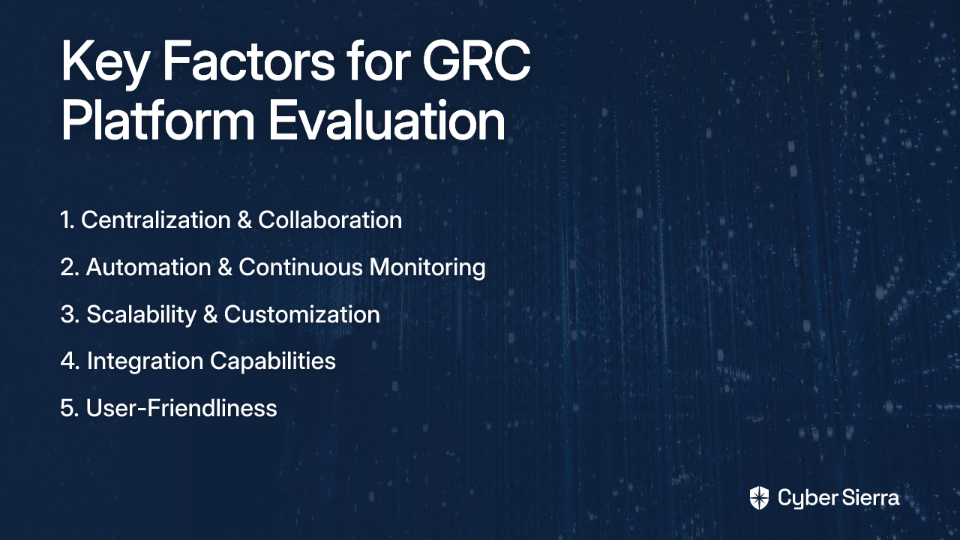
Centralization & Collaboration: Does the platform offer a unified dashboard and central repository for all controls, risks, and evidence? This eliminates data silos and provides a single source of truth.
Automation & Continuous Monitoring: Look for platforms that automate data collection, control testing, and reporting. This is critical for moving from periodic checks to proactive, near real-time risk management.
Scalability & Customization: The platform should grow with your company and be flexible enough to adapt to your unique workflow and processes. As one user noted, "GRC platforms may not scale well for growing organizations," so look for low-code/no-code customization options.
Integration Capabilities: Ensure the tool can integrate with your existing tech stack (cloud providers, security tools, HR systems) to streamline operations and avoid duplicate data entry.
User-Friendliness: An intuitive interface is key for user adoption across different teams and technical skill levels. Poor UX with "ineffective search functionalities" can create headaches during audits.
Top 10 GRC Platforms for Distributed Security Teams
1. Cyber Sierra
Best for: AI-driven automation and a unified platform for holistic risk management
Key Features: Cyber Sierra provides an AI-enabled cybersecurity platform that simplifies and automates security compliance for enterprises with distributed teams. Its integrated suite is designed for continuity and intelligence:
- Continuous Control Monitoring (CCM): Builds a central controls repository with near real-time updates and automates control testing across multiple frameworks (NIST, ISO 27001, PCI DSS, GDPR).
- Third-Party Risk Management (TPRM): Automates vendor assessments, provides 24/7 visibility into vendor compliance, and streamlines onboarding.
- Governance, Risk & Compliance (GRC): Automates data collection, risk assessments, and reporting for audits (SOC2, ISO 27001, HIPAA), reducing compliance fatigue.
- Threat Intelligence: Offers network and cloud vulnerability scanning for proactive defense.
- Employee Security Training: Includes interactive training and simulated phishing campaigns to build a security-conscious culture.
- Cyber Insurance: Helps organizations meet insurer requirements and streamline the application process.
Why it's good for Distributed Teams: The unified platform provides a single source of truth, crucial for teams spread across different locations. The high degree of automation in CCM and TPRM reduces the manual coordination required for evidence collection and vendor management, allowing distributed teams to operate efficiently and consistently.
2. MetricStream
Best for: Large enterprises seeking a comprehensive and highly configurable GRC suite
Key Features: A market leader recognized by Forrester and Gartner, MetricStream integrates risk, compliance, audit, and cybersecurity.
- AI-based capabilities (AiSPIRE) for regulatory change management and continuous control monitoring
- Low-code/no-code platform for easy customization
- Supports ESG compliance and risk quantification
Why it's good for Distributed Teams: Its centralized platform provides a holistic governance view necessary for large, complex organizations with disparate teams. The AI-driven alerts on regulatory changes ensure all global teams stay aligned.
3. AuditBoard
Best for: Audit, risk, and compliance teams looking for a user-friendly and collaborative platform
Key Features: Designed by former auditors, it features an intuitive interface for managing audits, risk assessments, and compliance.
- Centralized communication and collaboration tools for different lines of defense
- Automated workflows and reporting capabilities
- Strong document management for evidence collection
Why it's good for Distributed Teams: The strong emphasis on collaboration and centralized communication directly addresses the challenges of coordinating audit and compliance activities across a distributed workforce.
4. LogicGate Risk Cloud
Best for: Organizations needing a flexible, no-code platform to build custom GRC applications
Key Features: A user-centric design with a drag-and-drop interface for creating tailored workflows.
- Modular approach for managing third-party risk, cyber risk, and compliance
- Advanced analytics and compliance automation
- Highly customizable with no coding required
Why it's good for Distributed Teams: Its extreme flexibility allows organizations to build processes that fit their unique distributed structure, rather than forcing teams into a rigid template—a common user complaint.
5. ServiceNow GRC
Best for: Companies already invested in the ServiceNow ecosystem looking to integrate GRC with IT service management
Key Features: Integrates GRC functions with existing IT and incident response workflows.
- No-code playbooks for workflow management
- Real-time monitoring and continuous control validation
- Seamless integration with other ServiceNow modules
Why it's good for Distributed Teams: By connecting GRC to a single data source used by IT, it eliminates silos and ensures that risk and compliance data is consistent and accessible across the entire organization.
6. Archer (formerly RSA Archer)
Best for: Mature organizations focused on integrated risk management and proactive monitoring
Key Features: An integrated risk management solution focusing on proactive risk monitoring across all business functions.
- Intuitive dashboards for data interpretation
- Flexible assessment modules that are easy to integrate
- Streamlined onboarding processes for third parties
Why it's good for Distributed Teams: Provides a unified view of risk across the enterprise, enabling leadership to make informed strategic decisions based on data aggregated from various business units and locations.
7. Drata
Best for: Startups and cloud-native companies needing rapid compliance automation for frameworks like SOC 2 and ISO 27001
Key Features: Purpose-built for compliance automation, Drata automates evidence gathering and control checks.
- Seamless integration with cloud infrastructure
- Continuous monitoring and audit readiness
- Pre-built compliance templates for common frameworks
Why it's good for Distributed Teams: Its deep integrations with cloud services automate much of the evidence collection process, which is ideal for remote-first companies with a distributed, cloud-based infrastructure.
8. IBM OpenPages
Best for: Large, highly regulated enterprises requiring a flexible, AI-powered GRC solution
Key Features: A flexible solution with AI-backed features for monitoring and issue detection.
- Flexible data model to support various compliance regulations
- Robust reporting and analytics tools
- Advanced AI capabilities for risk prediction
Why it's good for Distributed Teams: The AI capabilities can help large, distributed organizations sift through vast amounts of data to identify potential risks and compliance issues that might otherwise be missed.
9. Diligent HighBond
Best for: Organizations looking to connect board-level governance with operational risk and compliance
Key Features: Integrates governance, audit, and risk with strong data-driven decision-making capabilities.
- Boardroom dashboards for real-time insights
- Strong data analytics and visualization
- Comprehensive risk management framework
Why it's good for Distributed Teams: Provides leadership with a clear, consolidated view of risk and compliance status, rolling up data from distributed teams into actionable insights for strategic planning.
10. OneTrust
Best for: Companies with a strong focus on privacy management alongside broader GRC needs
Key Features: A mature platform with a strong focus on privacy, security, and operational compliance.
- Integrates well for privacy management (e.g., GDPR, CCPA)
- User-recommended for being a mature, easy-to-use platform
- Comprehensive suite covering privacy, security, ESG, and ethics
Why it's good for Distributed Teams: Its strong framework for privacy regulations is essential for global companies operating across different legal jurisdictions, helping ensure consistent compliance everywhere.
Beyond the Tool: Why Your Process Matters Most
As the cybersecurity community wisely notes, "A poorly defined process can make any GRC tool ineffective." No matter how sophisticated your GRC platform is, its success depends on the processes you build around it.
Here are actionable steps for successful implementation:
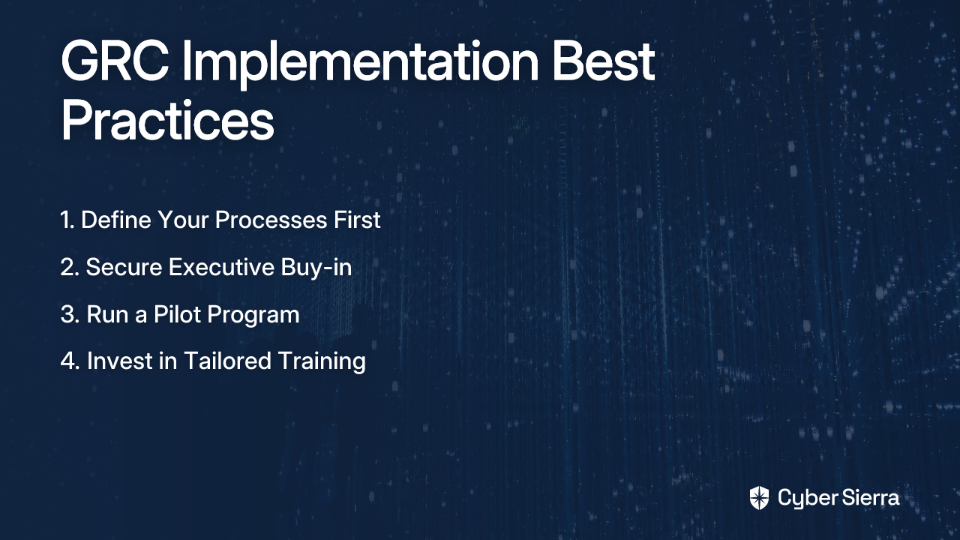
1. Define Your Processes First: Before you shop for a tool, map out your current GRC workflows. Identify bottlenecks and clarify roles and responsibilities. The tool should support your process, not the other way around. This reflects good process maturity.
2. Secure Executive Buy-in: Ensure management understands the value and supports the adoption of the GRC platform. Without leadership support, even the best platform will struggle to gain traction.
3. Run a Pilot Program: Start with a small, focused implementation to test the platform and refine your processes before a full-scale rollout. This allows you to identify and address issues before they affect the entire organization.
4. Invest in Tailored Training: Develop training programs specific to your organization's use cases and workflows to ensure effective adoption. As one Reddit user noted, there's often a "lack of standardized training" for GRC platforms, so creating custom training is essential.
Conclusion
For distributed security teams, the right GRC platform is a force multiplier. It breaks down silos, automates manual work, and provides a unified view of risk and compliance across the entire organization.
The platforms listed here offer a powerful starting point. The best choice will be the one that not only has the right features but also aligns perfectly with your organization's unique processes, culture, and scale.
By prioritizing centralization, automation, and a strong process foundation, organizations can transform their GRC program from a reactive chore into a strategic advantage. Platforms like Cyber Sierra are built from the ground up to provide this unified, intelligent approach to modern cybersecurity management, particularly valuable for organizations with distributed security teams navigating today's complex risk landscape.
