



12 Financial Data Compliance Tools For Modern Finance Teams (2026)

Join thousands of professionals and get the latest insight on Compliance & Cybersecurity.
Summary
- A 2025 PwC survey found that 59% of organizations lack the resources for effective compliance, making manual, periodic audits a significant business risk.
- The key to avoiding last-minute audit stress is shifting from reactive, checklist-based tasks to a proactive strategy of continuous, automated monitoring.
- Start your transition by conducting a comprehensive risk assessment to identify and prioritize high-impact areas for automation.
- A unified platform integrating Governance, Risk & Compliance (GRC) with Continuous Control Monitoring (CCM) automates evidence gathering and keeps you audit-ready. Explore how Cyber Sierra transforms compliance into a strategic advantage.
You've set up your financial systems, implemented security protocols, and trained your team on best practices. But when an audit rolls around, you're still scrambling to gather evidence, document processes, and address compliance gaps that have been accumulating as technical debt for months.
This last-minute chaos isn't just stressful—it's a significant business risk in today's hyper-regulated financial environment.
The Evolving Financial Compliance Landscape
Financial data compliance has never been more demanding. While the SEC reported a 26% drop in enforcement actions to 583 cases in fiscal 2024, organizations faced record penalties, highlighting a zero-tolerance environment for non-compliance.
Technology is now the top priority for compliance risk management, according to a 2025 PwC survey. Yet, the same survey reveals that 59% of organizations cite a lack of resources as a major barrier to achieving compliance ROI.
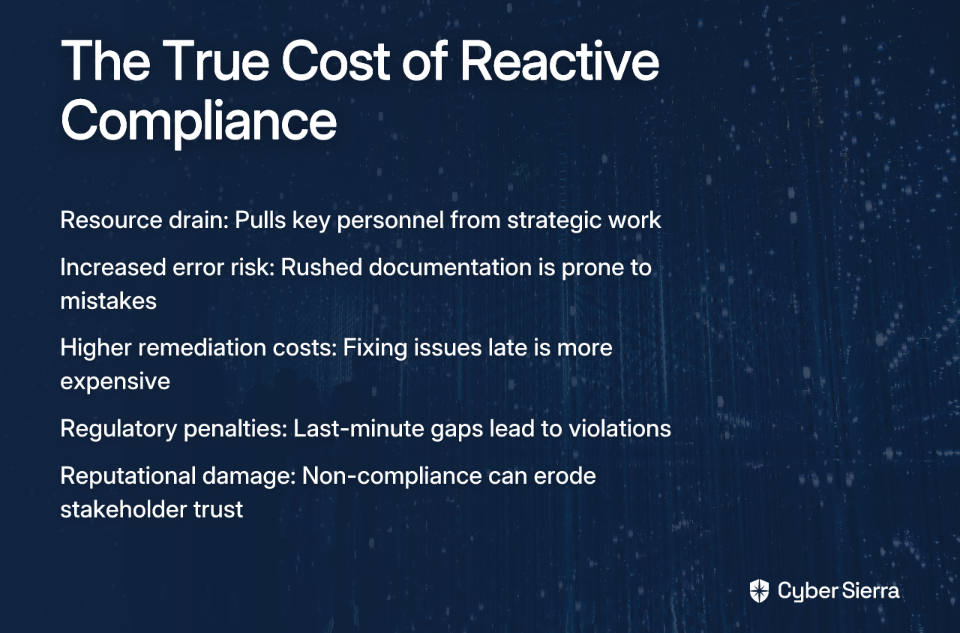
The traditional approach of manual, periodic compliance checks is increasingly risky:

- They're time-consuming and drain valuable resources
- They're prone to human error and inconsistency
- They fail to provide the real-time visibility needed to manage modern threats
- They create a reactive culture where compliance is a "fire drill" rather than a business function
The solution? Automation and continuous monitoring that transform compliance from a reactive, stressful event into a proactive, ongoing business function that provides value beyond just avoiding penalties.
This article guides you through 12 of the best financial data compliance tools for 2026, categorized to help you find the right fit for your team's specific needs.
Category 1: Comprehensive GRC & Continuous Control Monitoring Platforms
These platforms offer a unified approach to managing governance, risk, and compliance, serving as the command center for your compliance program.
1. Cyber Sierra (GRC & CCM Modules)
Overview: Cyber Sierra provides an AI-enabled cybersecurity platform with integrated Governance, Risk & Compliance (GRC) and Continuous Control Monitoring (CCM) modules. It's designed to eliminate manual evidence gathering and provide a single source of truth, making you audit-ready every day.
How It Solves Key Pains: Directly addresses the "last-minute chaos" before audits by shifting compliance from a point-in-time event to a continuous, automated process. It helps manage "technical debt" by providing actionable risk intelligence to prioritize remediation.
Key Features & Modules:
- Governance, Risk & Compliance (GRC): Automates the entire GRC lifecycle:
- Automates data collection, risk assessments, and control monitoring
- Manages multiple compliance frameworks like SOC 2, ISO 27001, GDPR, HIPAA, and PCI DSS from a single dashboard
- Generates comprehensive reports and maintains detailed audit trails, simplifying audit preparation
- Learn more about the GRC Platform
- Continuous Control Monitoring (CCM): Provides ongoing, real-time visibility into your security controls:
- Builds a central controls repository with near real-time updates
- Automates control testing and validation, detecting exceptions and anomalies as they happen
- Provides specific monitoring for frameworks like GDPR (access controls) and PCI DSS (payment processing controls)
- Learn more about the CCM Platform
Unique Selling Point: Cyber Sierra simplifies complex GRC requirements by unifying automation and continuous monitoring, transforming security from periodic checks into a proactive, data-driven function.
2. Centraleyes
Overview: Centraleyes is a GRC platform that excels at connecting compliance requirements to live operational evidence.
Key Features:
- Offers Continuous Control Monitoring (CCM) to automate testing and provide real-time visibility
- Centralizes control repositories for easier management across frameworks
- Supports key financial regulations like GDPR and PCI-DSS
Where it shines: Its "evidence layer" approach provides a clear link between compliance statements and actual, real-time security actions.
3. VComply
Overview: A cloud-based GRC management platform designed to automate and track compliance tasks.
Key Features:
- Automated task assignment and workflows for compliance activities
- Real-time progress tracking across various frameworks
- Detailed reporting capabilities for management and auditors
Category 2: Regulatory Reporting Solutions
These tools specialize in the complex and highly-regulated world of financial reporting, ensuring data is accurate, timely, and formatted for regulatory submission.
4. AxiomSL (from Adenza)
Overview: A high-fidelity regulatory reporting solution trusted by many Tier 1 banks.
Key Features:
- Specializes in complex calculations for regulations like Basel III/IV
- Provides localized reporting templates for a wide range of global regulators
- Engineered for precision and speed in high-volume environments
5. Finastra
Overview: A cloud-based, "Regulatory Reporting as a Service" platform that simplifies compliance for multiple regimes.
Key Features:
- Manages reporting for regulations including SFTR, EMIR, and MiFID II
- Automates the entire transaction reporting workflow: data collection, enrichment, and validation
- Offers a single extraction workflow to save time and reduce operational risk
- As a SaaS solution, it has no heavy upfront IT infrastructure costs and allows for fast deployment
6. Wolters Kluwer OneSumX
Overview: A comprehensive solution that combines global regulatory intelligence with workflow automation.
Key Features:
- Integrates regulatory updates from over 200 regulators worldwide
- Provides a unified platform for managing finance, risk, and reporting
Learn more about Wolters Kluwer
Category 3: Data Protection & Risk Management Platforms
These platforms focus on identifying, assessing, and mitigating risks related to data security and governance.
7. IBM OpenPages
Overview: An AI-driven risk management platform that provides predictive insights into compliance.
Key Features:
- Uses AI to automate workflows and identify potential compliance issues before they occur
- Offers a highly scalable solution for managing a wide range of regulatory frameworks
- Emphasizes proactive compliance monitoring over reactive checks
Learn more about IBM OpenPages
8. LogicGate Risk Cloud
Overview: A flexible platform that allows firms to build custom GRC applications and workflows without coding.
Key Features:
- Highly customizable workflows for managing specific regulatory tasks
- Dynamic dashboards provide real-time visibility into risk and compliance status
- Automates task assignments and evidence collection
9. Vanta / Drata
Overview: These platforms are leaders in compliance automation, particularly for tech companies needing to achieve certifications like SOC 2 and ISO 27001.
How They Solve Pains: Highly popular in online forums for their ability to "just kick out the report for your audit." They directly address the desire for simplified, streamlined audit reporting.
Key Features:
- Continuous monitoring of cloud environments and controls
- Automated evidence collection and organization
- Pre-built templates and policies for dozens of security frameworks
Category 4: AI-Powered Compliance Assistants
This emerging category leverages AI and machine learning to predict risks, automate complex analysis, and enhance the efficiency of compliance teams.
10. Atlan
Overview: While not a direct compliance tool, Atlan is a foundational "active metadata" platform that enables effective AI governance. For AI in compliance to work, the data must be reliable, and Atlan ensures this.
How it helps: It tackles key barriers to AI adoption, like model bias and explainability. It helps organizations build a unified control plane for data and AI.
Case in Point: Using active metadata management, the fintech company Tide reduced the effort for GDPR compliance from 50 days to just a few hours.
11. BNY Mellon's Predictive AI (Example)
Overview: A powerful example of applied AI in finance. BNY Mellon developed an AI model that can predict up to 40% of settlement failures with 90% accuracy.
Implication for Compliance: This demonstrates the shift from reactive problem-solving to proactive risk mitigation, a core principle of modern compliance. It shows how AI can anticipate and prevent compliance breaches.
12. Mastercard's Generative AI for Fraud (Example)
Overview: Mastercard is using generative AI to enhance its fraud detection models, leading to a 200% reduction in false positives.
Implication for Compliance: This highlights the immense efficiency gains possible with AI. By reducing noise and false alarms, AI frees up compliance teams to focus on genuine threats, a sentiment echoed by users tired of time-consuming manual tasks.
From Reactive Audits to Proactive Resilience: Your Next Steps
The message is clear: the era of manual, checklist-based compliance is over. To thrive in 2026 and beyond, finance teams must embrace automation, continuous monitoring, and AI-driven insights. The goal isn't just to pass an audit; it's to build a resilient, secure, and continuously compliant organization.
Practical Implementation Tips:
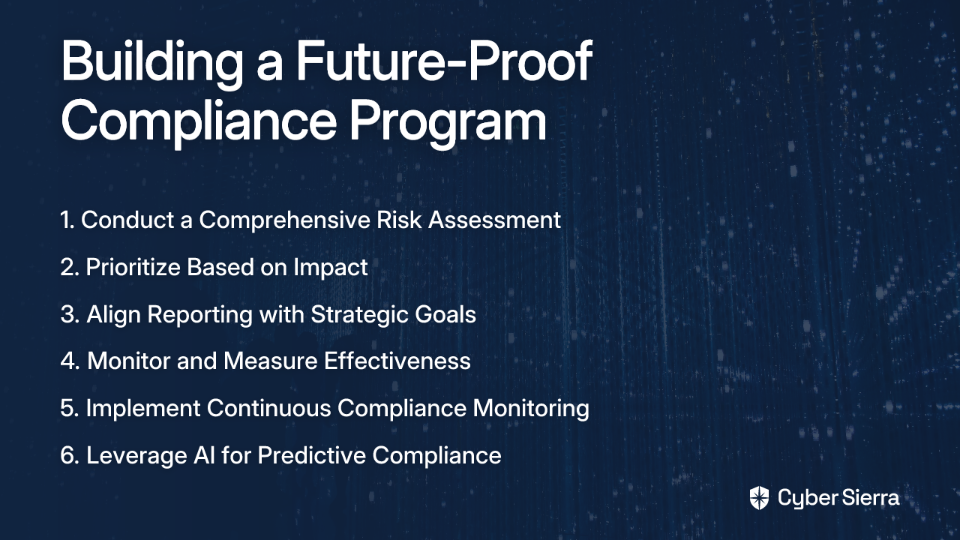
- Conduct a Comprehensive Risk Assessment: Start by evaluating compliance risks across all your operations. You can't protect what you don't know.
- Prioritize Based on Impact: Not all compliance obligations carry the same weight. Use a risk-based approach to focus on high-priority areas first.
- Align Reporting with Strategic Goals: Ensure your compliance reports provide actionable insights that support business objectives, not just satisfy auditors. This helps get crucial management buy-in.
- Monitor and Measure Effectiveness: Use Key Performance Indicators (KPIs) to track the impact and ROI of your compliance program.
Measuring the ROI of Compliance Automation:
- Cost Savings: Automation drastically reduces manual hours spent on evidence collection and reporting. It also minimizes the risk of costly fines and penalties. McKinsey estimates that AI alone could unlock $1 trillion in value for the global banking industry.
- Operational Efficiency: As users have noted, tasks that once "took days now take minutes." This frees up your most valuable resource—your people—to focus on strategic initiatives.
- Enhanced Security: Proactive, real-time monitoring means you can detect and remediate vulnerabilities before they are exploited, reducing your overall risk profile.
Ready to transform your compliance program from a cost center into a strategic advantage? A unified platform like Cyber Sierra integrates Continuous Control Monitoring, GRC automation, and AI-driven intelligence to put you in control.
Stop scrambling before audits and start building a culture of continuous compliance.
Frequently Asked Questions
What is a GRC platform and why is it important for financial compliance?
A GRC (Governance, Risk, and Compliance) platform is a centralized software solution that helps organizations manage their overall governance, enterprise risk management, and compliance with regulations. For financial institutions, it's crucial because it automates manual tasks like evidence gathering, provides a single source of truth for audits, and helps manage multiple complex frameworks (like SOC 2, ISO 27001, and PCI DSS) from one dashboard.
How does Continuous Control Monitoring (CCM) differ from traditional compliance audits?
Continuous Control Monitoring (CCM) is a proactive, automated process that provides real-time visibility into security controls, while traditional audits are periodic, manual "point-in-time" assessments. The key difference is that CCM detects compliance gaps and anomalies as they happen, allowing for immediate remediation. In contrast, traditional audits often uncover issues months after they've occurred, leading to stressful, last-minute fire drills.
What are the most critical compliance frameworks for financial data?
The most critical compliance frameworks for financial data typically include SOC 2, for ensuring the security and privacy of client data; ISO 27001, for information security management; PCI DSS, for protecting cardholder data; and GDPR, for protecting the data of EU citizens. The right frameworks depend on your specific services, customers, and geographical operations.
How can automation improve the ROI of our compliance program?
Automation improves compliance ROI by significantly reducing the manual hours spent on evidence collection and reporting, minimizing the risk of costly regulatory fines, and increasing operational efficiency. By transforming time-consuming tasks that once took days into processes that take minutes, automation frees up skilled personnel to focus on strategic initiatives rather than administrative work.
What is the first step to moving from reactive to proactive compliance?
The first step to shifting from a reactive to a proactive compliance model is to conduct a comprehensive risk assessment. This initial evaluation helps you identify and understand all compliance risks across your operations. Once you know where your vulnerabilities are, you can use a risk-based approach to prioritize the most critical areas for implementing automation and continuous monitoring.
How is AI changing financial data compliance?
AI is transforming financial compliance by enabling predictive risk analysis, automating complex decisions, and dramatically enhancing the efficiency of monitoring systems. For example, AI models can now predict settlement failures before they happen or significantly reduce false positives in fraud detection. This allows compliance teams to move from reactive problem-solving to proactively preventing breaches and focusing on genuine threats.
See how you can become audit-ready, every day. Book a personalized demo of Cyber Sierra today.
