



7 Ways Small Businesses Can Achieve ISO 27001 Compliance Without Breaking the Bank

Join thousands of professionals and get the latest insight on Compliance & Cybersecurity.
Summary
- Many small businesses fear ISO 27001 certification costs tens of thousands, but strategic planning can significantly reduce this expense.
- Adopt a phased, risk-based approach and use a Statement of Applicability (SoA) to implement only the security controls relevant to your business.
- Save thousands in consulting fees by creating documentation in-house with templates and conducting a thorough internal audit before paying an external auditor.
- Reduce compliance workload by up to 50% and streamline the audit process with an automation platform like Cyber Sierra.
Does the thought of ISO 27001 certification bring to mind fears of an overwhelming implementation burden? You're not alone. Many small business owners hear "ISO 27001" and immediately think of a "five figure sum and a year to get it sorted," as one business owner put it.
The concerns are valid: consultancy fees, hardware upgrades, software investments, and dedicated personnel can quickly add up. When you're running a small business with limited resources, the standard can feel like it "encompasses virtually everything the company does."
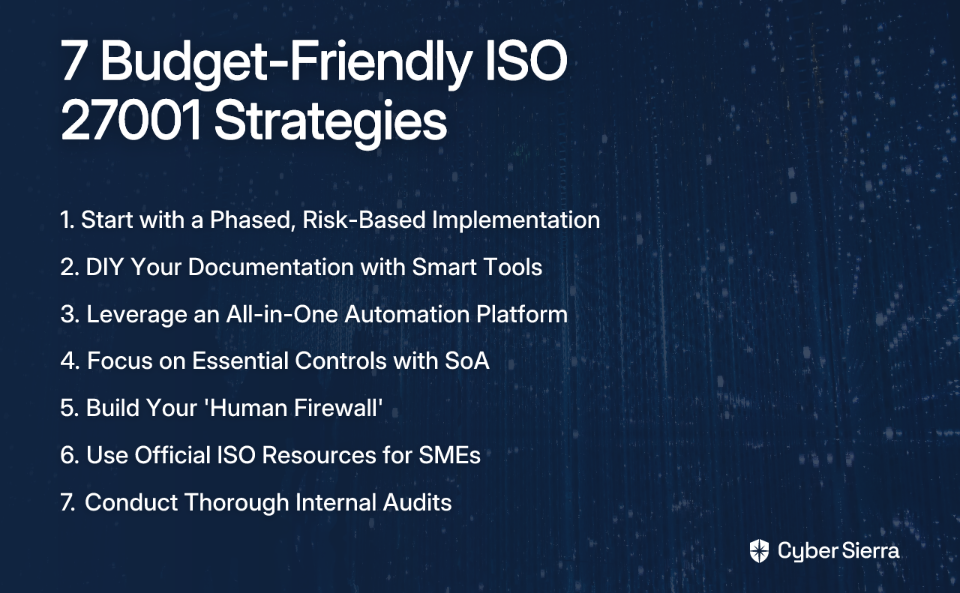
But here's the good news: ISO 27001 compliance is achievable for small businesses without draining your finances. This guide will demystify the process and provide seven practical, budget-friendly strategies to make ISO 27001 certification an attainable goal that provides a competitive edge, rather than a financial drain.
1. Start with a Phased, Risk-Based Implementation
Instead of tackling the entire framework at once, break the project into manageable phases based on risk. This spreads costs over time and reduces initial overwhelm. As one experienced implementer noted, "It will be much easier to do it now and get everyone in the right frame of mind than when you are larger."
Step-by-Step Approach:
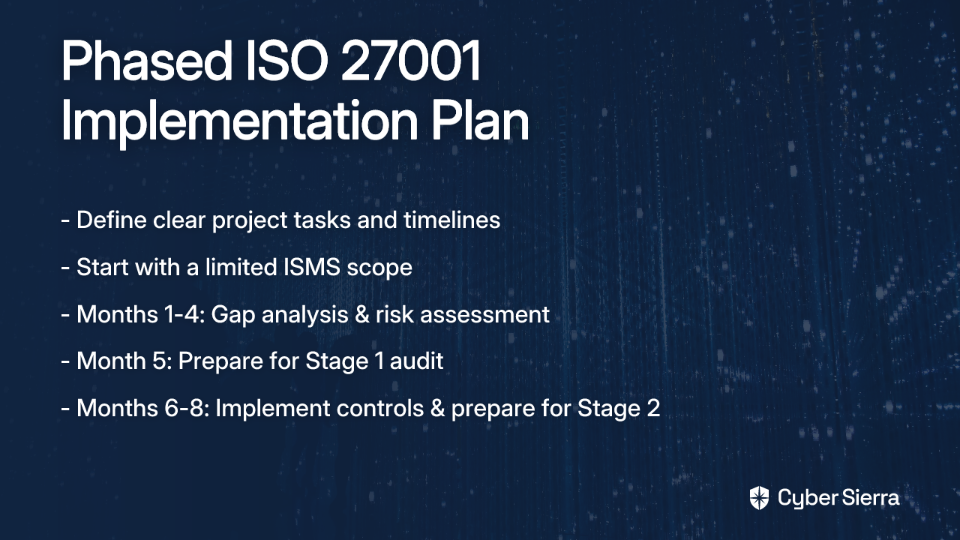
- Treat it as a project: Define clear tasks, responsibilities, and timelines
- Define a limited ISMS scope: Start with the most critical part of your business, like a specific product line or department
- Follow a structured timeline:
- Months 1-4: Focus on defining scope, conducting gap analysis, performing risk assessment, and drafting core policies
- Month 5: Prepare for Stage 1 audit where the certification body reviews documentation
- Months 6-8: Implement controls and prepare for Stage 2 audit
Potential Savings: A full-scale implementation might require hiring a consultant for several months at around $15,000 or more. By phasing the project and using internal resources for initial stages, you can defer or reduce this cost, potentially saving $5,000 - $10,000 in upfront consulting fees.
2. DIY Your Documentation with Smart Tools and Templates
Documentation is often cited as a major hurdle, with many small business owners stating, "Getting proper formal policies in place is hard." You can drastically cut costs by creating documentation in-house instead of outsourcing it.
Smart Documentation Approach:
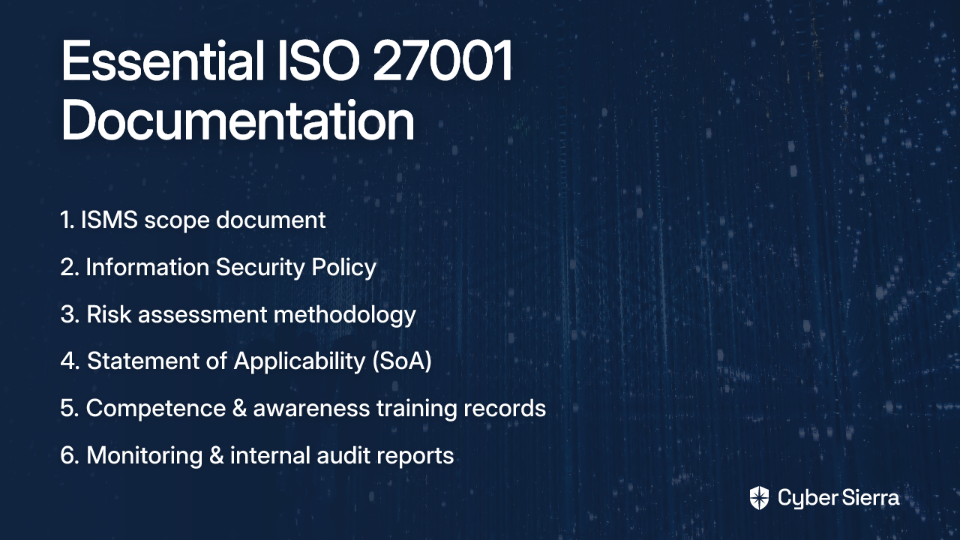
- Focus on mandatory documents first:
- ISMS scope
- Information Security Policy and objectives
- Risk assessment and risk treatment methodology
- Statement of Applicability (SoA)
- Evidence of competence and awareness training
- Records of monitoring, internal audits, and management reviews
- Use modern version control: Instead of clunky Word documents, adopt a more agile approach. As one IT professional suggested, "You could just use a Git repo of markdown files." This provides excellent version history and is familiar to technical teams.
- Leverage templates: Don't start from scratch. Use templates from reputable sources or compliance platforms to provide a structured starting point.
Potential Savings: Hiring a consultant specifically for documentation can cost $5,000 - $8,000. By using templates and internal resources, you reduce this cost significantly, potentially saving the full amount while building valuable internal knowledge.
3. Leverage an All-in-One Automation Platform like Cyber Sierra
Manual evidence collection and control monitoring are massive time sinks for small teams. An automation platform acts as a force multiplier, streamlining compliance without needing a dedicated GRC manager. This moves security from periodic checks to proactive, continuous management.
How Cyber Sierra Helps Small Businesses:
- Automated Evidence Collection: Cyber Sierra's Governance, Risk & Compliance (GRC) platform automates data collection from your cloud environments, HR systems, and more. This saves hundreds of hours of manual work preparing for an audit. Similar automation solutions claim to reduce the time to achieve ISO 27001 by up to 50%.
- Continuous Control Monitoring (CCM): Instead of point-in-time snapshots, the CCM module provides near real-time visibility into your security posture. It automatically tests controls, detects misconfigurations, and alerts you to gaps before an auditor finds them.
- Simplified Management for Small Teams: The platform centralizes all controls, policies, and evidence into a single source of truth, allowing IT managers in small businesses to handle compliance efficiently without being GRC experts.
Potential Savings: A GRC analyst or compliance manager can cost $70,000 - $100,000+ annually. A platform like Cyber Sierra provides similar functionality for a fraction of the cost. Additionally, if 2 employees spend 10 hours/week on manual evidence collection for 3 months, that's 240 hours. At a blended rate of $60/hour, that's $14,400 in saved productivity.
4. Focus on Essential Controls with a Statement of Applicability (SoA)
You don't need to implement all 93 controls in Annex A. The key is to justify which controls you do and don't implement based on your risk assessment. This prevents over-engineering your security program and wasting money on irrelevant controls.
Smart Control Selection:
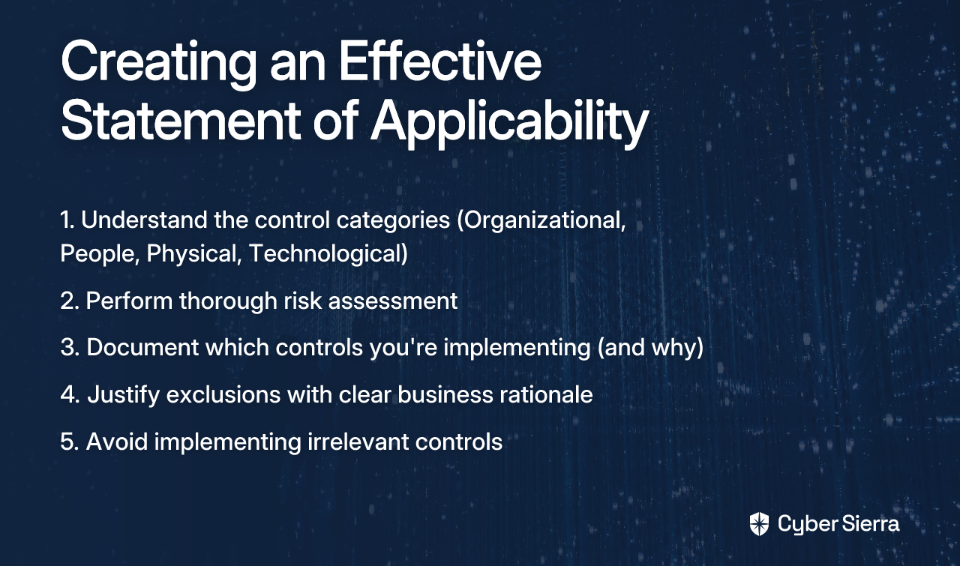
- Understand the control categories: The 93 controls in ISO 27001:2022 are divided into 4 themes: Organizational, People, Physical, and Technological.
- Perform a thorough risk assessment: This critical step determines which Annex A controls are actually necessary for your business.
- Create a detailed Statement of Applicability (SoA): This mandatory document lists every control from Annex A and clearly states:
- If you are implementing it
- A justification for implementation (which risk it mitigates)
- If you're not implementing it, a clear justification for exclusion
- Avoid irrelevant practices: As one security professional noted, "A one-person dev shop with no office shouldn't be writing a physical access control policy about front desk visitor logs." The SoA is your formal tool to avoid this trap.
Potential Savings: Implementing a single unnecessary control (e.g., an expensive physical security system for a fully remote company) could cost $5,000 - $20,000+. A proper risk assessment and SoA can prevent multiple such expenditures, saving tens of thousands of dollars.
5. Build Your "Human Firewall" with Cost-Effective Employee Training
Human error remains a leading cause of security breaches. Investing in effective, ongoing security awareness training is one of the highest-ROI security measures you can take. It's also a mandatory part of ISO 27001 and strengthens your overall posture.
Effective Training Approach:
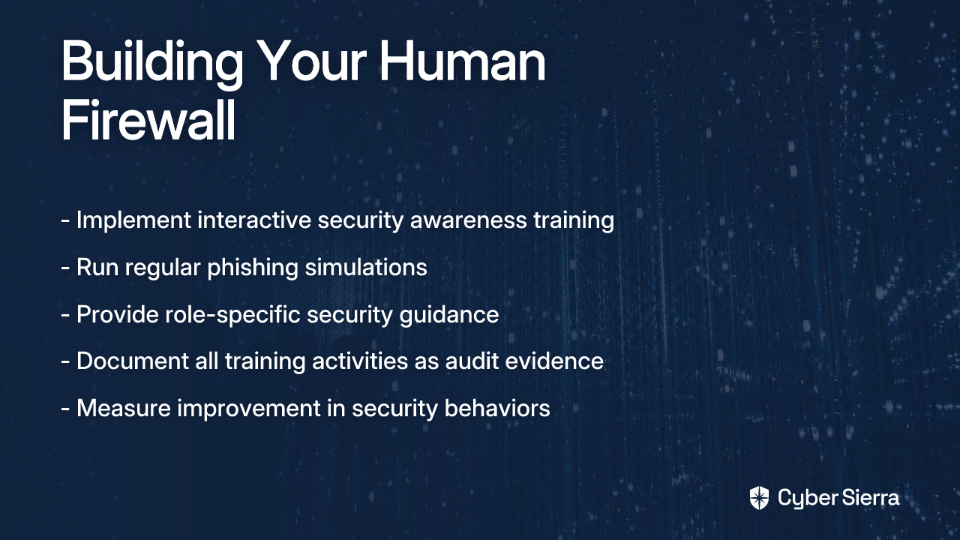
- Go beyond annual videos: Implement engaging, interactive training that employees will actually remember.
- Run phishing simulations: Regularly test employees with simulated phishing campaigns to reinforce learning and measure their security awareness.
- Document everything: Keep detailed records of all training activities as evidence for your ISO 27001 audit.
Potential Savings: The cost of a single data breach can be catastrophic for a small business. While hard to quantify precisely, preventing one phishing-related incident that leads to a ransomware attack can save a business from $50,000 to over $1,000,000 in recovery costs, fines, and reputational damage.
6. Use Official ISO Resources Tailored for SMEs
You don't have to navigate the standard alone. The ISO organization itself provides resources specifically designed to help small businesses implement the framework without needing expensive external expertise.
Key Resource for Small Businesses:
The ISO/IEC 27001:2022 Practical Handbook for SMEs is the single best starting point. This handbook provides:
- A simplified summary of the standard's requirements
- Practical examples and case studies from small businesses
- Guidance tailored to organizations with limited budgets and staff
- FAQs and clear information on the certification process
Potential Savings: The cost of the ISO standard itself is about $100. The handbook provides guidance that might otherwise require several hours of a consultant's time. At a consultant rate of $200/hour, spending 5-10 hours with the handbook instead of a consultant saves $1,000 - $2,000.
7. Conduct Thorough Internal Audits Before Paying for the Real Thing
An internal audit is a mandatory dress rehearsal before the main event. It allows you to find and fix non-conformities on your own time and dime, rather than paying an external auditor to find them for you.
Internal Audit Approach:
- Schedule an independent review: The internal audit must be objective. You can use a trained internal employee (from a different department), hire a freelance auditor for a short engagement, or use features within a compliance platform.
- Be thorough: Systematically check if your ISMS is operating as designed and meeting the requirements of the ISO 27001 standard.
- Implement corrective actions: Document and implement corrective actions to fix any issues before the Stage 1 external audit.
Potential Savings: The certification audit for a small company costs around $7,500. If you fail the audit due to major non-conformities that an internal audit would have caught, you may need to pay for a significant portion of the audit again. A successful internal audit can save you $3,000 - $7,500 in re-audit fees.
Turn ISO 27001 Compliance into Your Competitive Advantage
Achieving ISO 27001 compliance doesn't have to break the bank for small businesses. By adopting a smart, phased strategy, focusing on real risks, empowering your team, and leveraging powerful automation, you can turn what seems like a daunting requirement into a streamlined process that builds customer trust and unlocks new business opportunities.
The key is to approach ISO 27001 with a risk-based mindset. The standard isn't about ticking every box – it's about implementing controls that make sense for your business and your specific risks.
Frequently Asked Questions (FAQ)
How much does ISO 27001 certification cost for a small business?
The total cost for ISO 27001 certification for a small business can range from $15,000 to $40,000, but this can be significantly reduced by using the budget-friendly strategies outlined in this guide. This estimate typically includes audit fees, potential software or platform subscriptions, and internal resource time. By phasing the implementation, handling documentation in-house, and leveraging automation tools, you can stay on the lower end of this range and spread the costs over several months.
How long does it take to get ISO 27001 certified?
For a small business, achieving ISO 27001 certification typically takes between 6 to 12 months. The timeline can be shorter if you have existing security practices or use an automation platform, which can accelerate processes like evidence collection and control monitoring. A phased approach, as recommended in this article, allows you to follow a structured timeline without overwhelming your team.
What is the first step to starting an ISO 27001 project?
The first step is to define the scope of your Information Security Management System (ISMS). This means deciding which parts of your business—such as a specific product, department, or office location—will be covered by the certification. Starting with a limited, well-defined scope makes the project much more manageable and is a core part of a phased, risk-based implementation.
Can a small business achieve ISO 27001 certification without a consultant?
Yes, a small business can achieve ISO 27001 certification without a full-time consultant, especially when using modern tools and resources. While consultants offer valuable expertise, you can significantly reduce costs by leveraging automation platforms like Cyber Sierra for guidance, using official ISO handbooks for SMEs, and utilizing templates for documentation. This DIY approach also helps build crucial security knowledge within your own team.
What are the main benefits of ISO 27001 for a small business?
The main benefits for a small business are enhanced customer trust, a significant competitive advantage, and improved internal security posture. Certification opens doors to enterprise clients who require it, reduces the risk of costly data breaches, and streamlines your security operations. It transforms security from a reactive cost center into a proactive business enabler.
Why is the Statement of Applicability (SoA) important for saving money?
The Statement of Applicability (SoA) is crucial for saving money because it allows you to formally justify which of the 93 Annex A controls you will not implement. Instead of spending resources on irrelevant controls, the SoA ensures your security efforts are focused only on mitigating the specific risks your business actually faces, preventing unnecessary expenditure on over-engineered security solutions.
Stop seeing compliance as a cost center. It's time to make it your strategic advantage. Ready to automate the manual work, get continuous visibility into your security posture, and become audit-ready in record time?
See how Cyber Sierra's all-in-one platform helps small businesses like yours achieve ISO 27001 compliance with confidence and clarity. Book a demo today and let us show you the affordable path to certification.
