



How to Plan Your Cybersecurity Budget?



Join thousands of professionals and get the latest insight on Compliance & Cybersecurity.
You've been tasked with planning your organization's cybersecurity budget, but you're confronted with a frustrating reality: leadership views security as a cost center rather than an investment, and you're fighting for even the most basic resources. If you're struggling to secure adequate funding while watching other departments receive seemingly unlimited budgets, you're not alone.
"Most organizations I have managed have been a fight to get to 5% [of IT budget for security]," shares one security professional on Reddit. Another laments that "the office coffee and milk budget is possibly more than the actual cyber budget." This resource allocation disparity is a common pain point across industries.
The Current Cybersecurity Funding Reality
The cybersecurity landscape has never been more challenging. Recent data reveals alarming trends:
- Global data breaches have exceeded 8 billion records in the past year
- The annual cost of cybercrime is projected to surpass $23 trillion by 2027
- 77% of executives expect cybersecurity budget increases in 2025, yet actual allocations often fall short
Despite these concerning statistics, many organizations—particularly enterprise-level companies—allocate a mere 1-2% of their IT budget to cybersecurity. This disconnect between recognized threats and actual investment creates significant vulnerabilities.
"Small to medium sized [companies allocate little] as their revenue is small. But enterprise sized companies? 1-2% AT BEST," notes one cybersecurity professional, highlighting the concerning gap between risk and resource allocation.
Understanding Your Organization's Cybersecurity Needs

Before you can effectively plan a budget, you need to thoroughly assess your organization's unique security requirements. This assessment should consider:
1. Organizational Size and Complexity
The scale and complexity of your organization significantly impact budget requirements:
- Enterprise organizations typically need comprehensive security programs but often allocate proportionally smaller percentages of their overall IT budget
- SMBs may allocate a higher percentage of their IT budget to security (10-15%) but have smaller absolute amounts to work with
- Organizational structure impacts how security resources are distributed across business units
2. Industry-Specific Considerations
Different industries face varying regulatory requirements and threat landscapes:
- Healthcare: Averages 13.3% of IT budget for security, driven by strict HIPAA requirements and sensitive patient data
- Financial Services: Allocates approximately 9.6% due to regulatory demands and high-value assets
- Technology: Typically invests 13.3% to protect intellectual property and customer data
- Retail: Often allocates around 6.0%, balancing customer data protection with tight operational margins
- Business Services: Averages 13.2% to safeguard client information and maintain trust
3. Current Security Posture
Evaluate your existing security measures:
- Gap analysis: Identify discrepancies between your current security controls and industry requirements
- Tool inventory: Assess the effectiveness and relevance of existing security tools
- Technical debt: Calculate the cost of maintaining legacy systems versus upgrading
- Capability maturity: Determine where your organization falls on the security maturity spectrum
"Cyber 'Maturity' is a wild thing. Budget can be nothing, or it can be almost an open chequebook," explains a security professional, emphasizing how organizational maturity influences budget allocations.
4. Risk Profile Assessment
Understanding your organization's specific risk factors is crucial:
- Data sensitivity: Evaluate the types and volume of sensitive data your organization handles
- Regulatory landscape: Identify applicable compliance requirements (GDPR, PCI DSS, HIPAA, etc.)
- Threat landscape: Assess industry-specific threats and their potential impact
- Geographic considerations: Account for regional regulatory differences
Developing a Comprehensive Budget Strategy
Once you've assessed your organization's needs, it's time to develop a structured budget plan. Here's how to approach this process systematically:
1. Key Investment Areas
Based on industry benchmarks, consider the following allocation model for your cybersecurity budget:

- Technology and Software: Approximately 30% of budget
- Cloud security solutions (21%)
- On-premises security tools (9%)
- Human Resources: About 38% of budget
- Internal security team salaries
- Training and certification
- New security hires
- Managed Services: Around 17% of budget
- Outsourced security operations
- Penetration testing
- Managed detection and response
- Compliance and Governance: Approximately 15% of budget
- Audits and assessments
- Documentation and reporting
- Governance frameworks implementation
2. Prioritize Critical Assets and Risks
Not all assets require equal protection. Allocate resources based on criticality:
- Identify crown jewels: Determine which systems and data are most crucial to operations
- Risk-based approach: Allocate larger portions of your budget to mitigate your highest risks
- Defense-in-depth strategy: Layer security controls to protect the most critical assets
"Having to beg, borrow and steal for the bare minimum (like at least pentesting fast moving products handling critical data once a year)" is a common frustration. By clearly identifying critical assets, you can make a stronger case for essential security measures like regular penetration testing.
3. Balance Operational vs. Capital Expenses
Modern cybersecurity budgets increasingly shift toward operational expenses:
- Capital expenses (CapEx): One-time purchases like hardware security appliances
- Operational expenses (OpEx): Subscription-based security services, managed services, and cloud security tools
Consider the financial implications of each approach:
- OpEx models offer flexibility and scalability
- CapEx may be preferable for organizations with specific accounting preferences
- Many organizations are transitioning to SaaS security solutions to reduce upfront costs
4. Build in Contingency Planning
Security incidents are inevitable. Your budget should account for response capabilities:
- Incident response: Allocate 5-10% for incident response planning and execution
- Disaster recovery: Budget for backup systems and recovery processes
- Business continuity: Include costs for maintaining operations during incidents
"If it's cheaper to accept the risk than to mitigate it, leadership will always choose the cheaper option," notes one security professional. Counter this by demonstrating the full cost of incidents, including operational disruption, reputational damage, and recovery expenses.
Maximizing ROI and Securing Leadership Buy-In
One of the biggest challenges in cybersecurity budgeting is demonstrating value to leadership. Here's how to make a compelling case:
1. Speak the Language of Business
Translate security investments into business terms:
- Risk reduction metrics: Quantify how investments reduce the likelihood and impact of breaches
- Compliance requirements: Highlight regulatory obligations and the costs of non-compliance
- Competitive advantage: Demonstrate how strong security posture can differentiate your organization
- Customer trust: Connect security investments to customer retention and acquisition
"Quantify. How much does it cost to wipe x$ of annualized risk off the table," advises one security leader. This approach resonates with executives who need to see clear business value.
2. Leverage Industry Benchmarks
Use authoritative data to support your budget requests:
- IAN Research's Security Budget Benchmark Report: Provides industry-specific security budget insights
- Gartner's security spending forecasts: Projects 15% growth in global information security spending for 2025
- IBM's Cost of Data Breach Report: Offers detailed metrics on breach costs by industry
These resources help contextualize your budget requests within industry standards, making them more compelling to leadership.
3. Prioritize High-Impact Investments
Focus on security measures with demonstrable returns:
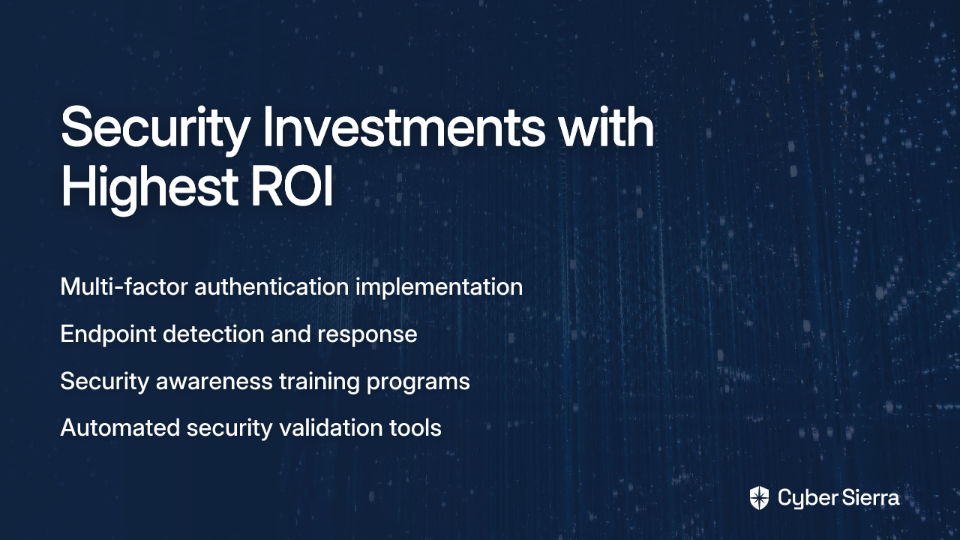
- Multi-factor authentication: Low cost with high impact on preventing account compromises
- Endpoint detection and response: Provides visibility and rapid response capabilities
- Security awareness training: Addresses the human element, often the weakest link
- Automated security validation: Continuously tests security controls for effectiveness
4. Consider Automation and Integration
Modern security teams can do more with less through:
- Security orchestration and automation: Reduces manual effort and accelerates response
- Integrated security platforms: Consolidates tools to reduce complexity and cost
- Continuous validation solutions: Automatically tests controls to identify gaps
This approach is particularly valuable for organizations struggling with limited resources. As one Reddit user notes, "Most orgs you're lucky if it's 10% of the overall IT budget" for security, making efficiency crucial.
Implementing and Monitoring Your Cybersecurity Budget
A well-planned budget requires ongoing management and adjustment:
1. Establish Clear Metrics and KPIs
Track budget effectiveness through:
- Security posture improvements: Measured through vulnerability remediation rates
- Incident frequency and severity: Monitored for reduction over time
- Mean time to detect/respond: Tracked to demonstrate improved capabilities
- Compliance status: Maintained against relevant frameworks
2. Implement a Governance Framework
Formalize your approach to security management:
- Security steering committee: Establish cross-functional oversight
- Regular risk assessments: Conduct quarterly reviews of your security posture
- Budget reviews: Assess spending effectiveness semi-annually
- Documentation: Maintain detailed records of security investments and outcomes
3. Plan for the Unexpected
Security landscapes change rapidly—your budget should accommodate this reality:
- Reserve fund: Set aside 10-15% for emerging threats or unexpected needs
- Flexible allocations: Allow for shifting resources as priorities change
- Cyber insurance: Consider as part of your risk management strategy
"Defining a scope and getting two quotes on that same scope is the usual way to make sure the pricing is reasonable," suggests one security professional regarding assessments. Apply this approach to all security expenditures to ensure fair pricing.
Leveraging Technology to Streamline Security Operations
Modern security programs increasingly rely on integrated platforms to maximize efficiency and effectiveness.
1. Continuous Control Monitoring
Implementing continuous control monitoring can significantly enhance security while optimizing resources:
- Automation reduces manual effort: Shifts from periodic, manual checks to continuous, automated monitoring
- Real-time visibility: Provides immediate awareness of control failures
- Compliance efficiency: Streamlines evidence collection for audits
Platforms like Cyber Sierra's Continuous Control Monitoring (CCM) module can help organizations build a central repository of controls with near real-time updates, delivering actionable risk intelligence and managing controls across multiple compliance frameworks simultaneously.
2. Integrated GRC Approach
A unified Governance, Risk, and Compliance (GRC) approach can reduce redundant expenses:
- Consolidated tooling: Reduces the need for multiple point solutions
- Streamlined processes: Eliminates duplicate efforts across teams
- Comprehensive reporting: Provides holistic view of security posture
This approach directly addresses the budget frustration expressed by security professionals who struggle with "having to beg, borrow and steal for the bare minimum."
3. Third-Party Risk Management
Vendor security poses significant risks but can be managed efficiently:
- Automated assessments: Reduces manual questionnaire processes
- Continuous monitoring: Provides ongoing visibility into vendor security
- Prioritized approach: Focuses resources on highest-risk vendors
For organizations dealing with complex supply chains, dedicated tools for Third-Party Risk Management (TPRM) can simplify vendor risk assessment and monitoring, helping to manage limited security budgets more effectively.
Conclusion: Strategic Budgeting for Effective Security
Planning a cybersecurity budget is undoubtedly challenging, especially when facing leadership reluctance to invest adequately in security measures. However, by taking a strategic, data-driven approach, security leaders can develop compelling budget proposals that align with business objectives while providing robust protection.
Key takeaways for effective cybersecurity budget planning:
- Base your budget on risk: Align spending with your organization's specific risk profile
- Use industry benchmarks: Leverage research from sources like IAN Research and Gartner
- Speak the language of business: Quantify risks and translate security investments into business value
- Focus on efficiency: Invest in automation and integration to maximize limited resources
- Monitor and adjust: Continuously evaluate spending effectiveness and adjust as needed
Remember that cybersecurity is not a one-time investment but an ongoing process. As one security professional aptly notes, "Cyber 'Maturity' is a wild thing" – your budget should evolve as your organization's security maturity develops.
By implementing these strategies, you can develop a cybersecurity budget that effectively protects your organization's critical assets while demonstrating clear value to leadership, even when resources are constrained.
Frequently Asked Questions
What percentage of IT budget should be allocated to cybersecurity?
There's no one-size-fits-all percentage, but typical cybersecurity budget allocations range from 5% to 15% of the total IT budget, varying significantly by industry and organizational maturity. For instance, healthcare and financial services often allocate higher percentages (around 9-13%) due to regulatory requirements and data sensitivity, while some large enterprises might allocate as low as 1-2%. It's crucial to base your budget on a thorough risk assessment rather than a fixed percentage.
How can I justify cybersecurity spending to leadership?
Justify cybersecurity spending by translating technical risks into tangible business impacts, such as potential financial losses from breaches, reputational damage, and non-compliance penalties. Focus on demonstrating how security investments reduce overall business risk, support business objectives, provide a competitive advantage, and protect customer trust. Use industry benchmarks and ROI metrics for high-impact investments to strengthen your case.
What are the key areas to prioritize in a cybersecurity budget?
Prioritize cybersecurity budget allocations based on a comprehensive risk assessment, focusing on protecting your most critical assets and mitigating the highest risks. Key investment areas generally include technology and software (e.g., cloud security, Endpoint Detection and Response - EDR), human resources (skilled personnel, training), managed services (e.g., Managed Security Service Providers - MSSPs, penetration testing), and compliance/governance.
How do I measure the return on investment (ROI) for cybersecurity?
Measure cybersecurity ROI by focusing on risk reduction and cost avoidance, such as the reduced likelihood and impact of breaches, decreased incident response costs, and avoided regulatory fines. Track metrics like improvements in security posture (e.g., vulnerability remediation rates), reductions in incident frequency and severity, and faster mean time to detect/respond (MTTD/MTTR).
How often should a cybersecurity budget be reviewed and updated?
A cybersecurity budget should be reviewed at least semi-annually and updated annually, or more frequently if significant changes occur in the threat landscape, business operations, or regulatory environment. Regular reviews ensure the budget remains aligned with evolving risks and organizational priorities, allowing for adjustments and reallocation of funds as needed.
What are effective cybersecurity strategies for Small to Medium-sized Businesses (SMBs) with limited budgets?
SMBs with limited budgets can implement effective cybersecurity by prioritizing high-impact, low-cost measures like multi-factor authentication (MFA), regular security awareness training, and robust data backup strategies. Leveraging managed security services (MSSPs) for expertise, focusing on essential compliance requirements, and considering SaaS-based security solutions can also provide cost-effective protection. Automation and integrated security platforms can help SMBs do more with less.
