



Vendor Qualification and Risk Mitigation: A Critical Step in the Pre-Contract Phase of the Vendor Lifecycle


Join thousands of professionals and get the latest insight on Compliance & Cybersecurity.
You've been tasked with managing your organization's growing vendor relationships. But as you dive into the process, you realize there's no real "system" in place—just the owner's experience and intuition guiding supplier decisions. You're constantly wondering: "Is this the right way to evaluate vendors? Are we missing critical risk factors? Where does qualification even fit in the vendor management lifecycle?"
This ad-hoc approach might have worked when your company was smaller, but as operations expand and supplier relationships grow more complex, the lack of structure becomes increasingly concerning. All it takes is one bad audit, and the growth your company has experienced could be severely compromised.
Understanding Where Vendor Qualification Belongs in the Vendor Lifecycle
Vendor qualification and risk mitigation are foundational elements that belong specifically in the pre-contract phase of the vendor lifecycle. This positioning is critical because it represents your organization's first line of defense against potential supplier-related issues.
The vendor lifecycle typically consists of four main phases:

- Pre-contract phase (where qualification and risk assessment happen)
- Contracting phase
- Performance management phase
- Renewal or termination phase
By placing rigorous qualification processes at the beginning of this lifecycle, you establish a critical filter that prevents problematic vendors from entering your supply chain in the first place. This proactive approach is far more effective than trying to manage issues after contracts are signed and dependencies are established.
The Current State of Vendor Qualification in Many Organizations
The reality in many growing businesses mirrors what one procurement professional described on Reddit: "The current system isn't really a system, and is basically the owner's experience and intuition in dealing with suppliers." This reliance on "tribal knowledge" rather than documented processes creates significant vulnerabilities.
As another industry expert noted, "We need to systematize things." This sentiment reflects the growing recognition that as organizations scale, their approach to vendor qualification must evolve from intuitive to systematic.
The consequences of maintaining an informal approach can be severe. As one manufacturing professional warned, "All it takes is one bad audit and all the growth and expansion your company has experienced may be ruined or stunted."
What Exactly Is Vendor Qualification?
Vendor qualification is a systematic evaluation process that assesses potential suppliers against predefined criteria to determine their capability, reliability, and compatibility with your organization's requirements and standards. It serves as a quality control mechanism defined by the client organization.
During qualification, vendors are thoroughly evaluated through:
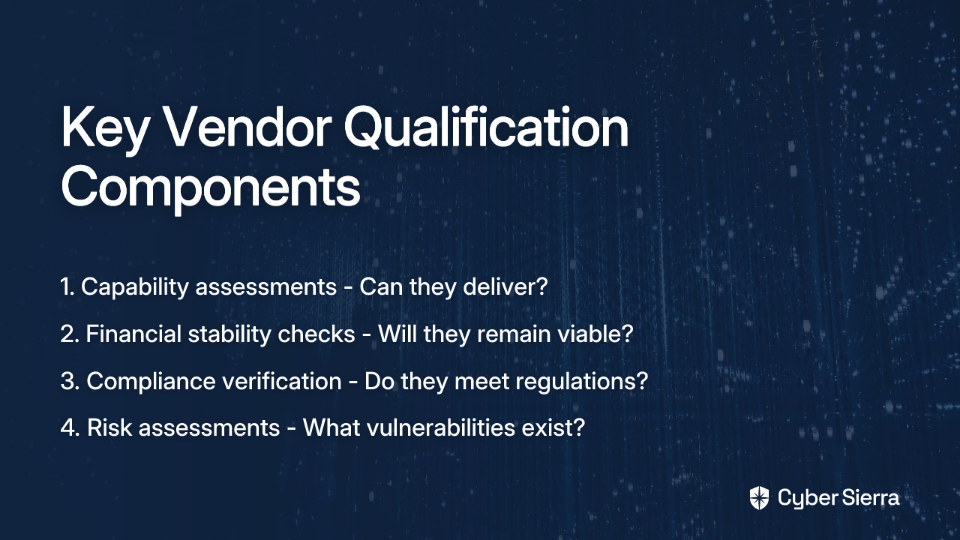
- Capability assessments - Can they deliver what they promise?
- Financial stability checks - Will they remain viable throughout the contract?
- Compliance verification - Do they meet industry regulations and standards?
- Risk assessments - What potential vulnerabilities might they introduce?
The output of this process is typically an evaluation report that classifies suppliers into appropriate categories based on their performance against these criteria.
Why Qualification Must Happen Before Contracting
Placing qualification in the pre-contract phase is not arbitrary—it's strategically essential. Here's why:
Risk Mitigation Starts Early
When qualification occurs before contracts are signed, organizations can identify potential risks and implement mitigation strategies from the outset. This proactive approach prevents the costly and complex process of addressing issues after dependencies have been established.
As one cybersecurity expert explains, "Risk Mitigation is when we put controls in place to reduce or eliminate a risk." In the context of vendor management, these controls must be established before contractual commitments are made.
Legal Protection
The pre-contract qualification process provides an opportunity to ensure that all legal requirements and protections are in place. As one engineering professional noted, "you went through our legal department for approval, and then we (engineers) built out individual contracts for different work that also went through legal to get the company to agree to terms etc."
This multi-layered approval process is essential for protecting your organization from legal vulnerabilities that could arise from vendor relationships.
Resource Efficiency
Qualifying vendors before contracting saves significant resources by preventing investments in relationships that may ultimately fail. By filtering out unsuitable vendors early, organizations avoid the costs associated with contract negotiations, onboarding, and potential contract terminations for vendors who cannot meet requirements.
Key Activities in the Pre-Contract Qualification Process
The pre-contract qualification phase consists of several critical activities that help organizations thoroughly assess potential vendors:
1. Assessing Vendor Capabilities and Reliability
This involves evaluating what vendors can provide and their track record in delivering similar products or services. Methods include:
- Reviewing vendor portfolios and case studies
- Examining technical specifications and capabilities
- Requesting and checking customer references
- Conducting capability demonstrations or trials
These assessments help determine if vendors can realistically meet your organization's requirements and expectations.
2. Financial Stability Checks
Financial health is a critical indicator of a vendor's long-term viability. Organizations should:
- Review financial statements and annual reports
- Check credit ratings and history
- Evaluate business longevity and stability
- Assess the vendor's client portfolio diversity
Financial instability in a vendor can lead to service disruptions, quality issues, or even complete failure to deliver, making this assessment crucial for risk management.
3. Regulatory Compliance Verification
Ensuring vendors meet all relevant regulatory requirements protects your organization from compliance risks. This includes:
- Verifying industry-specific certifications (e.g., ISO standards)
- Confirming adherence to data protection regulations (e.g., GDPR, HIPAA)
- Checking for appropriate licensing and permits
- Reviewing environmental compliance records
For regulated industries, this step is particularly critical. As noted in FDA guidelines for supplier qualification, "Supplier qualification is required for FDA compliance," with specific steps including "defining requirements, compiling candidates, evaluating candidates, performing audits, and routine re-qualification."
4. Comprehensive Risk Assessments
This activity identifies potential vulnerabilities in the vendor relationship through:
- Security assessments (particularly for IT vendors)
- Business continuity and disaster recovery planning
- Geographic and geopolitical risk analysis
- Supply chain vulnerability assessments
- On-site audits where necessary
A comprehensive vendor management process includes qualification in the pre-contract phase
The Essential Vendor Qualification Checklist
Based on industry best practices and expert recommendations, here's a checklist for the pre-contract qualification process:
- Insurance verification: Confirm vendors have appropriate coverage for liability, errors and omissions, cyber security, and other relevant areas
- Background checks: Assess vendor integrity, including leadership history and past performance
- Intellectual property protection: Ensure vendors have appropriate measures to protect your IP
- Business licenses and certifications: Verify all required credentials are current and valid
- Worker payment practices: Review to ensure fair compensation and avoid co-employment risks
- Information security controls: Assess data protection measures, especially for vendors handling sensitive information
- Business continuity plans: Evaluate disaster recovery capabilities and backup systems
- Subcontractor management: Understand how vendors manage their own suppliers
- Environmental and social responsibility: Review sustainability practices and corporate responsibility standards
Risk Mitigation Strategies in the Pre-Contract Phase
Once potential vendors have been qualified, the next critical step in the pre-contract phase is implementing effective risk mitigation strategies. Risk mitigation involves taking concrete actions to reduce the likelihood and impact of identified risks.
Common Vendor-Related Risks Requiring Mitigation
1. Operational Risks
These include disruptions in vendor services that could compromise your supply chain efficiency or service delivery. As organizations become increasingly dependent on vendors, operational failures can have cascading effects throughout the business.
Mitigation strategies include:
- Developing contingency plans for critical vendor services
- Establishing clear performance metrics and expectations
- Creating backup vendor relationships for essential services
2. Compliance Risks
Non-compliance with industry regulations or standards can lead to costly legal ramifications, penalties, and reputational damage.
Mitigation strategies include:
- Regular compliance audits of vendor operations
- Contractual clauses requiring ongoing compliance reporting
- Clear documentation of all compliance requirements
3. Reputational Risks
A vendor's actions or failures can directly impact your organization's reputation in the market. This is particularly true for customer-facing services or products.
Mitigation strategies include:
- Thorough vetting of vendor public relations history
- Clear brand guidelines and expectations
- Escalation protocols for potential reputational issues
Implementing Effective Risk Mitigation
Continuous Monitoring
Risk mitigation isn't a one-time activity but requires ongoing assessment throughout the vendor relationship. As noted by the Prevalent blog on vendor risk management, "Continuous monitoring and intelligent automation are key strategies for enhancing risk management."
Regular assessments of vendor performance ensure alignment with contractual obligations and help identify emerging risks before they become significant problems.
Intelligent Automation
Automating risk assessments can enhance the efficiency of evaluations and ensure timely updates of vendor statuses. This is particularly valuable for organizations managing large numbers of vendors.
Automation tools can:
- Schedule regular risk assessments
- Flag vendors that fall below defined thresholds
- Track remediation efforts
- Document compliance activities
Clear Communication of Roles and Responsibilities
One significant challenge in vendor management is confusion about roles. As one procurement professional noted on Reddit, "I get that procurement is probably about sourcing and buying goods or services but what exactly does vendor management include?"
This confusion can lead to gaps in oversight and accountability. To address this:
- Clearly define who is responsible for vendor qualification and risk management
- Document these responsibilities in organizational procedures
- Provide training on vendor qualification processes
- Establish cross-functional teams for vendor oversight when necessary
The Benefits of Effective Pre-Contract Qualification and Risk Mitigation
Organizations that implement robust vendor qualification and risk mitigation in the pre-contract phase experience significant benefits:
1. Reduced Operational Disruptions
By identifying potential issues before they arise, organizations can maintain smoother operations with fewer vendor-related disruptions.
2. Stronger Compliance Posture
Thorough pre-contract qualification ensures vendors meet all necessary regulatory requirements, reducing compliance risks for the organization.
3. Cost Savings
Although qualification requires upfront investment, it prevents the much larger costs associated with vendor failures, contract disputes, and emergency vendor replacement.
4. Enhanced Decision-Making
The structured data gathered during qualification provides valuable insights that inform better vendor selection and management decisions.
5. Competitive Advantage
Organizations with strong vendor qualification processes can leverage more reliable supplier networks, potentially gaining advantages in quality, innovation, and market responsiveness.

Moving Beyond the Pre-Contract Phase
While qualification and risk mitigation are centered in the pre-contract phase, they lay the groundwork for all subsequent stages of the vendor lifecycle:
- Contracting phase: Qualification findings inform contract terms, service level agreements, and performance metrics.
- Performance management phase: The baseline established during qualification becomes the standard against which ongoing performance is measured.
- Renewal or termination phase: Historical qualification data informs decisions about continuing or ending vendor relationships.
Conclusion: Establishing Your Qualification System
As your organization grows, transitioning from ad-hoc vendor management to a structured qualification system becomes increasingly important. As one Reddit user advised, "Create a supplier qualification system document with procedures and supplier classification methods to formalize the vendor qualification process."
For organizations lacking internal expertise, external support may be valuable. Another industry professional suggested to "hire a consultant to audit and implement a proper quality management system to enhance vendor qualification."
Organizations might also consider:
- Adopting vendor management software to streamline the qualification process
- Implementing third-party vendor risk management (TPRM) frameworks
- Engaging with managed service providers (MSPs) for vendor qualification support
- Developing industry-specific qualification criteria that address unique sector requirements
By prioritizing vendor qualification and risk mitigation in the pre-contract phase, organizations establish a solid foundation for successful vendor relationships. This proactive approach not only protects against potential risks but also creates opportunities for more strategic and valuable vendor partnerships.
Remember: The strength of your vendor network is determined largely by how well you qualify and mitigate risks at the beginning of the relationship. Investing in robust pre-contract processes pays dividends throughout the entire vendor lifecycle.
Frequently Asked Questions
What is vendor qualification?
Vendor qualification is a systematic evaluation process organizations use to assess potential suppliers against predefined criteria. This process determines a vendor's capability, reliability, financial stability, and compliance with your organization's specific requirements and industry standards before entering into a contract.
Why is vendor qualification crucial in the pre-contract phase?
Performing vendor qualification in the pre-contract phase is crucial because it acts as a primary defense mechanism against potential supplier-related risks. It allows organizations to identify and mitigate risks, ensure legal protections are in place, and prevent investment in relationships that may ultimately fail, thus saving resources and avoiding future complications.
What are the main activities in pre-contract vendor qualification?
The main activities include assessing vendor capabilities and reliability (e.g., reviewing portfolios, checking references), conducting financial stability checks (e.g., reviewing financial statements, credit ratings), verifying regulatory compliance (e.g., industry certifications, data protection adherence), and performing comprehensive risk assessments (e.g., security assessments, business continuity planning).
What are the risks of neglecting vendor qualification?
Neglecting vendor qualification can lead to severe consequences such as operational disruptions from unreliable suppliers, financial losses due to vendor instability or non-performance, compliance breaches resulting in legal penalties, and reputational damage if a vendor's actions negatively impact your organization. It can also lead to wasted resources on managing problematic vendor relationships.
How can an organization start or improve its vendor qualification process?
Organizations can start or improve their vendor qualification by first documenting their current processes (or lack thereof) and then establishing a formal system. This includes defining clear qualification criteria, creating a standardized checklist, assigning responsibilities, and potentially leveraging vendor management software or consulting services to implement best practices and ensure consistency.
Who is typically responsible for vendor qualification?
Responsibility for vendor qualification can vary but often involves a collaborative effort. Procurement or sourcing departments usually lead the process. However, input from legal, finance, IT (especially for technology vendors), and the specific departments that will use the vendor's services is crucial for a comprehensive evaluation. Clearly defining these roles is key to an effective system.
References:
