



How to Conduct an ISO 27001 Gap Assessment


Join thousands of professionals and get the latest insight on Compliance & Cybersecurity.
You've been tasked with achieving ISO 27001 certification for your organization. You've heard it's a rigorous process, but clients are demanding it, and management wants it done yesterday. The problem? You have limited experience with information security management systems, uncertain where to start, and leadership thinks it's just "a couple of forms and you're done."
Sound familiar?
The reality is that ISO 27001 certification requires methodical preparation, especially for organizations without dedicated security expertise. The good news? A properly conducted gap assessment provides a clear roadmap to certification, helping you identify exactly where you stand and what needs to be done.
This guide will walk you through conducting an ISO 27001 gap assessment that works for organizations of all sizes – even those with limited security resources.
What is an ISO 27001 Gap Assessment?
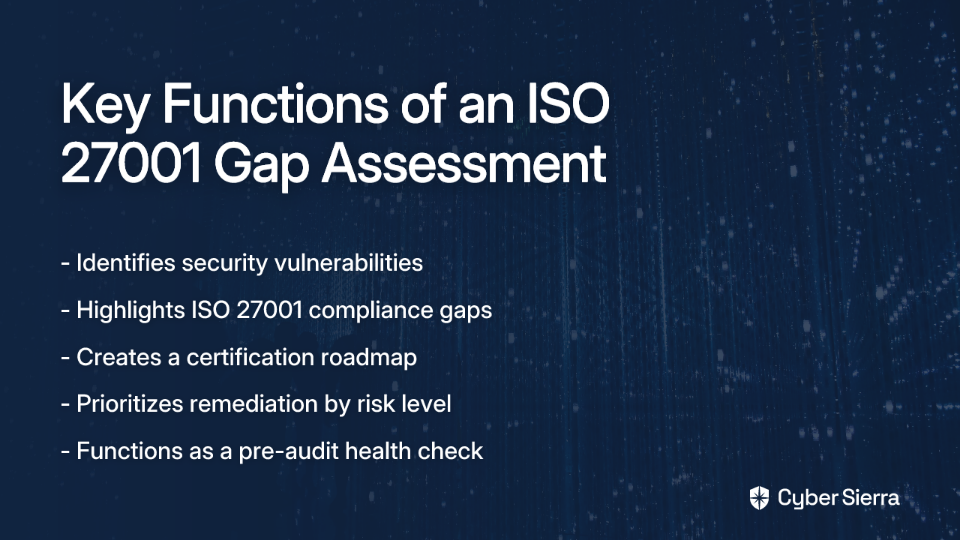
A gap assessment evaluates your organization's current information security practices against ISO 27001 requirements. It's essentially a diagnostic tool that:
- Identifies vulnerabilities in your security management systems
- Highlights discrepancies between current practices and ISO requirements
- Provides a clear roadmap for achieving compliance
- Helps prioritize remediation efforts based on risk levels
Think of it as a pre-audit health check that prevents surprises during your actual certification audit.
Why Conduct a Gap Assessment?
Many organizations underestimate the complexity of ISO 27001 compliance. As one frustrated security professional noted: "Leadership above me is clueless and has people around them that they trust keep telling them it is no big deal – a couple forms, and you are done."
In reality, ISO 27001 certification is a comprehensive process that typically costs upwards of $50,000 (even on the "extreme cheap") and requires significant time investment.
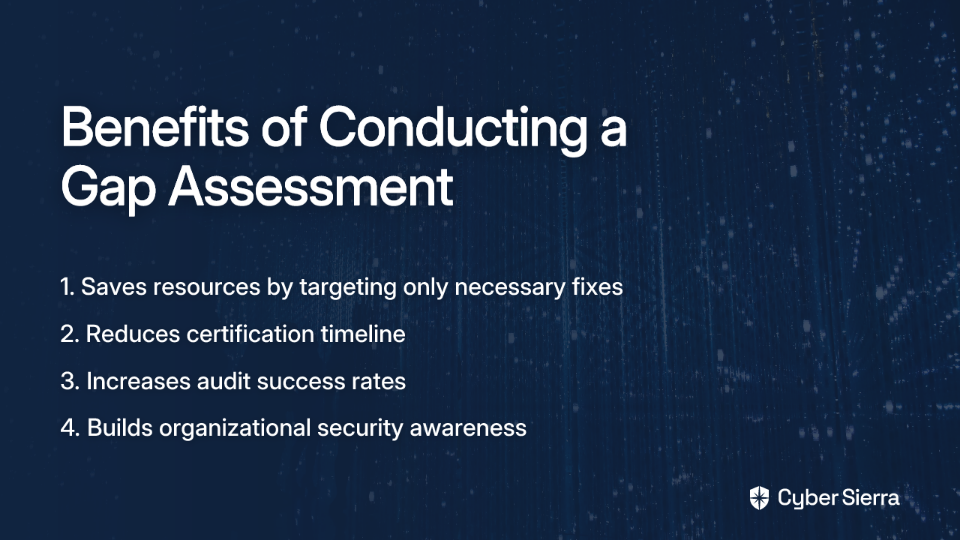
A proper gap assessment:
- Saves resources: By identifying only what needs to be fixed rather than rebuilding everything
- Reduces certification time: By creating a focused remediation plan
- Increases certification success rates: By addressing issues before formal audits
- Builds organizational security awareness: By involving key stakeholders in the assessment process
Steps to Conduct an ISO 27001 Gap Assessment
Step 1: Obtain the ISO 27001 Standard
The foundation of any gap assessment is understanding what you're measuring against. Purchase the official ISO/IEC 27001:2022 standard document from the International Organization for Standardization.
As one ISO implementer advises: "Buy the official document with the ISO/IEC 27001:2022 requirements. This is the first thing to complete."
While the cost (approximately $200) might seem high for a document, it's an essential investment that provides the authoritative requirements against which your organization will be assessed.
Step 2: Understand ISO 27001's Structure
Before conducting your assessment, familiarize yourself with the structure of ISO 27001:
- Clauses 4-10: These contain the mandatory requirements for an Information Security Management System (ISMS)
- Annex A: Contains 93 security controls organized into 14 sections (with ISO/IEC 27002 providing implementation guidance)
Pay particular attention to the "shall" statements within clauses 4-10, as these indicate mandatory requirements. For example, clause 6.1.2 mandates that organizations "shall define and apply an information security risk assessment process."
Step 3: Create Your Assessment Framework
Develop a structured assessment framework that includes:
- Control identification: List all applicable ISO 27001 requirements
- Assessment criteria: Define how you'll evaluate compliance (typically using a scale such as: Compliant, Partially Compliant, Non-Compliant, Not Applicable)
- Evidence requirements: Specify what documentation or demonstration will satisfy each control
- Gap documentation: Create a method to record findings and required remediation steps
Many organizations use a spreadsheet with separate tabs for clauses 4-10 and Annex A controls. For a more user-friendly approach, consider using a question-based format that mirrors what an auditor would ask.
"Both templates are totally free and fully customizable. I also share my views on when to use a gap assessment vs. a maturity assessment and why I used a questions-based approach," notes one security practitioner who created templates for community use.
Step 4: Form Your Assessment Team
Assemble a cross-functional team that includes:
- Information security specialists (if available)
- IT personnel familiar with systems and infrastructure
- Business process owners who understand operational requirements
- Legal/compliance representatives to address regulatory considerations
If your organization lacks internal expertise, consider bringing in an external consultant for this phase. As one professional advises: "Too many companies think they can do it by themselves, but I always recommend reaching out to an expert."
Step 5: Conduct the Assessment
With your team and framework in place, begin the assessment process:
- Review documentation: Examine existing policies, procedures, and records
- Interview key personnel: Discuss current practices with staff responsible for security controls
- Observe operations: Verify that documented procedures match actual practices
- Test controls: Where possible, verify that technical controls function as intended
Document both conformities and non-conformities, collecting evidence for each finding. Be particularly thorough with the mandatory documentation requirements of ISO 27001, which include:
- Scope of the ISMS
- Information security policy and objectives
- Risk assessment and treatment methodology
- Statement of Applicability (SoA)
- Risk treatment plan
One auditor emphasizes documentation's importance with a stark scenario: "What if the person responsible for the process gets hit by a bus, how are they going to be able to train their replacement?"
Step 6: Analyze Findings and Create a Gap Closure Plan
After completing your assessment:
- Categorize findings: Group gaps by severity and type (policy, procedural, technical)
- Prioritize remediation: Focus first on mandatory requirements in clauses 4-10 before addressing Annex A controls
- Assign responsibility: Determine who will address each gap
- Establish timelines: Create realistic deadlines for remediation activities
- Allocate resources: Ensure sufficient budget and staffing for implementation
Your gap closure plan should be a living document that tracks progress and adjusts as implementation proceeds.
Step 7: Implement Risk Assessment and Treatment
A robust risk assessment process is foundational to ISO 27001 compliance. As one security professional explains: "Risk Assessment helps us recognize potential threats, gauge their likelihood, and determine their impact on our organization."
Your risk assessment should:
- Identify information assets within your ISMS scope
- Identify threats and vulnerabilities to those assets
- Assess likelihood and impact of potential security breaches
- Calculate risk levels based on your assessment methodology
- Determine risk treatments (accept, mitigate, transfer, or avoid)
The risk assessment directly informs your Statement of Applicability (SoA), which documents which Annex A controls you're implementing and why.
Step 8: Leverage Technology Wisely
While technology can't replace human judgment in gap assessments, compliance platforms can streamline the process. Solutions like Drata, Vanta, Secureframe, or Cybersierra's Continuous Control Monitoring (CCM) module can help:
- Automate evidence collection
- Track control implementation
- Maintain documentation repositories
- Monitor ongoing compliance
However, remember that "the tools don't do the compliance for you. The tools simply try to help you find your compliance gaps." One organization even reported they "decided to go back to 'human' preparation" after finding automated tools inadequate for their needs.
For organizations with complex third-party relationships, Cybersierra's Third-Party Risk Management (TPRM) module can also help assess vendor security compliance, which is often a blind spot in ISO 27001 implementations.
Step 9: Prepare for Internal and External Audits
After implementing your gap closure plan, conduct an internal audit to verify remediation effectiveness before proceeding to certification. This should:
- Verify control implementation: Confirm that all identified gaps have been addressed
- Test ISMS operation: Ensure that security processes are functioning as designed
- Review documentation: Confirm all required documents are complete and approved
- Identify remaining issues: Address any outstanding non-conformities
Once your internal audit confirms readiness, engage an accredited certification body for the formal audit process, which typically includes:
- Stage 1 Audit: Documentation review and preliminary assessment
- Stage 2 Audit: In-depth evaluation of ISMS implementation and effectiveness
Common Challenges in ISO 27001 Gap Assessments
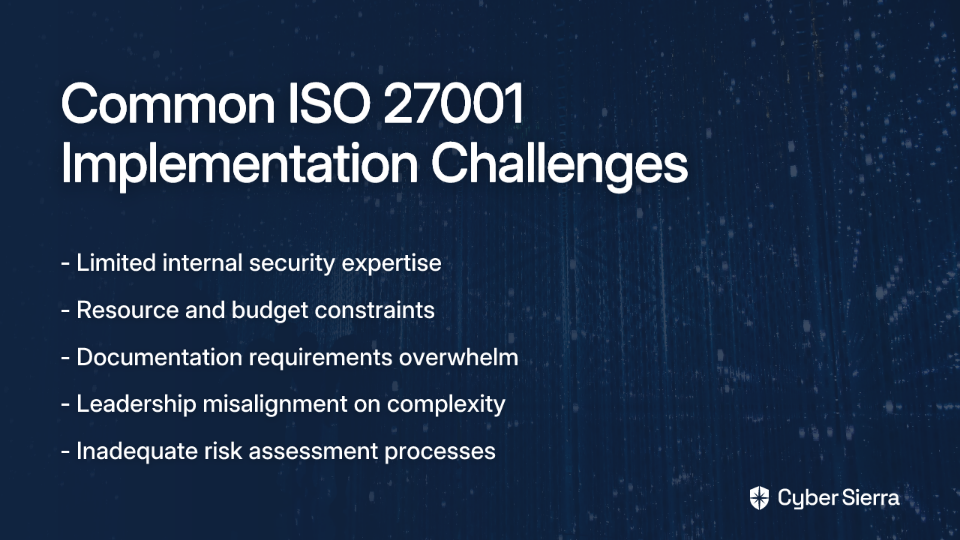
Limited Internal Expertise
Many organizations, especially smaller ones, lack dedicated information security specialists. As one professional admitted: "I'm from the company's business side, and I have a tech background but no prior ISM experience."
Solution: Consider ISO 27001 professional certification training for key personnel to build internal capabilities. External consultants can also provide targeted guidance without taking over the entire project.
Resource Constraints
ISO 27001 implementation requires significant time and budget commitments. "It appears to be a time-consuming process to obtain the certificate," notes one implementer.
Solution:
- Use your gap assessment to focus resources on critical areas
- Implement a phased approach rather than attempting everything simultaneously
- Leverage existing security investments where possible
- Consider compliance automation tools to reduce manual effort
Documentation Overload
The documentation requirements of ISO 27001 often overwhelm organizations. "I find that it makes life a lot easier if you have something documented," advises one security professional.
Solution:
- Start with templates to reduce the burden of creating documents from scratch
- Focus on quality over quantity – documents should be usable, not just audit artifacts
- Implement a document management system to maintain version control
- Include documentation in regular business processes rather than treating it as a separate activity
Leadership Misalignment
When leadership doesn't understand the complexity of ISO 27001, they may set unrealistic expectations. "The leadership above me is clueless," laments one security professional.
Solution:
- Use your gap assessment results to educate leadership on the actual state of compliance
- Provide clear cost and resource estimates based on identified gaps
- Highlight business benefits beyond certification (improved security, competitive advantage)
- Secure executive sponsorship to ensure adequate support throughout the project
Beyond the Gap Assessment: Building a Sustainable ISMS
While certification is often the primary goal, remember that ISO 27001 is about establishing an effective Information Security Management System that continues to protect your organization. A successful implementation should:
- Integrate security into business processes rather than treating it as an add-on
- Build a security-aware culture across the organization
- Establish continuous monitoring of security controls
- Implement regular reviews and improvements to adapt to changing threats
Conclusion
An ISO 27001 gap assessment is not merely a compliance exercise but a valuable tool for understanding and improving your organization's security posture. By methodically identifying discrepancies between your current practices and ISO requirements, you create a clear roadmap for certification and enhanced security.
Remember that while tools and templates can assist, successful implementation ultimately depends on building internal capabilities and fostering a security-conscious culture. As one practitioner wisely noted about automation tools: "It's still up to you to implement the controls to become compliant, and a big part of the ISO audits is showing the proof that you're following your processes and proof that your technical controls are in place."
Whether you're a small business just beginning your ISO 27001 journey or a larger organization seeking to streamline your certification process, a well-executed gap assessment provides the foundation for success.
Frequently Asked Questions
What is the primary purpose of an ISO 27001 gap assessment?
The primary purpose is to identify discrepancies between your organization's current information security practices and the requirements of the ISO 27001 standard. This assessment acts as a diagnostic tool, highlighting vulnerabilities and providing a clear roadmap to help you prepare for certification by showing exactly what needs to be addressed.
Why should my organization conduct an ISO 27001 gap assessment before seeking certification?
Conducting a gap assessment before seeking certification is crucial because it saves resources, reduces certification time, and increases success rates. It allows you to proactively identify and fix issues, preventing costly surprises during the formal audit and ensuring your efforts are focused on areas that genuinely require improvement.
How long does it typically take to conduct an ISO 27001 gap assessment?
The time it takes can vary significantly depending on the size and complexity of your organization, the scope of your ISMS, and the resources available; however, for many small to medium-sized businesses, it can range from a few weeks to a couple of months. A thorough assessment involves document review, interviews, and potentially some control testing, so allocating sufficient time is essential for accuracy.
Who needs to be involved in conducting an effective ISO 27001 gap assessment?
An effective gap assessment requires a cross-functional team, including IT personnel, business process owners, information security specialists (if available), and legal/compliance representatives. Involving diverse stakeholders ensures a comprehensive understanding of current practices and helps build organizational buy-in for the subsequent remediation efforts.
What are the most common challenges organizations face when performing an ISO 27001 gap assessment?
Common challenges include limited internal security expertise, resource and budget constraints, the overwhelming nature of documentation requirements, and misalignment with leadership on the complexity and importance of the process. Addressing these challenges often involves training, strategic resource allocation, using templates, and clear communication with leadership about the assessment's findings and value.
Can we use software tools for an ISO 27001 gap assessment?
Yes, software tools and compliance platforms can significantly streamline an ISO 27001 gap assessment by automating evidence collection, tracking control implementation, and managing documentation. However, it's important to remember that these tools assist the process; they don't replace the human judgment and effort required to interpret findings and implement controls effectively.
What is the immediate next step after completing an ISO 27001 gap assessment?
The immediate next step is to analyze the findings and create a detailed gap closure plan. This plan should prioritize remediation activities based on risk, assign responsibilities for addressing each identified gap, establish realistic timelines, and allocate the necessary resources to implement the required changes.
Need help automating your ISO 27001 compliance journey? Cybersierra's Continuous Control Monitoring platform provides automated control testing, validation, and reporting that simplifies gap assessments and ongoing compliance management. With features designed for organizations of all security maturity levels, Cybersierra helps transform security from periodic checks to continuous, automated monitoring – making your ISO 27001 implementation more efficient and sustainable.
