Top 5 AI-Based Vulnerability Management Tools for Enterprises

Join thousands of professionals and get the latest insight on Compliance & Cybersecurity.
Summary
- With 69% of businesses now viewing AI as critical to their security strategy, traditional vulnerability management is no longer sufficient for complex, modern attack surfaces.
- Effective AI tools go beyond basic scanning by providing intelligent, risk-based prioritization that considers asset criticality, threat intelligence, and business impact.
- Adopt a 'Human-in-the-Loop' approach where AI proposes remediation, but security experts provide final approval to ensure control and prevent system disruptions.
- Bridge the gap between security and compliance by choosing a platform that connects vulnerability data directly to your GRC framework, like Cybersierra's Threat Intelligence, to gain a unified view of risk.
In today's rapidly evolving threat landscape, security teams find themselves drowning in vulnerability alerts. You've set up scanning tools, only to be bombarded with endless lists of CVEs, most labeled "critical," with no clear path to remediation. Your team is exhausted from the alert fatigue, and despite all the tools at your disposal, you still worry about what's being missed.
"I want a tool that does more than just flags me constantly," is a sentiment echoed across security forums, as professionals seek solutions that provide actionable insights rather than just another dashboard of problems.
The modern enterprise attack surface has become too vast and complex for traditional vulnerability management approaches. With environments spanning on-premise infrastructure, multi-cloud deployments, containerized applications, and an expanding ecosystem of third-party vendors, manual vulnerability assessment and remediation simply cannot scale.
This is where AI-powered vulnerability management tools are transforming the landscape—not by removing humans from the equation, but by augmenting human expertise with intelligent automation that prioritizes, contextualizes, and proposes solutions.
According to the Cloud Security Alliance, 69% of businesses now believe AI is critical to their security strategy due to rising cyber threats. But not all AI-powered tools are created equal, and many security professionals remain skeptical about the "black box" nature of AI systems, especially when it comes to remediation.
Let's explore what you should look for in an AI-powered vulnerability management tool, and then dive into the top 5 solutions that are getting it right.
What to Look For in an AI-Powered Vulnerability Management Tool
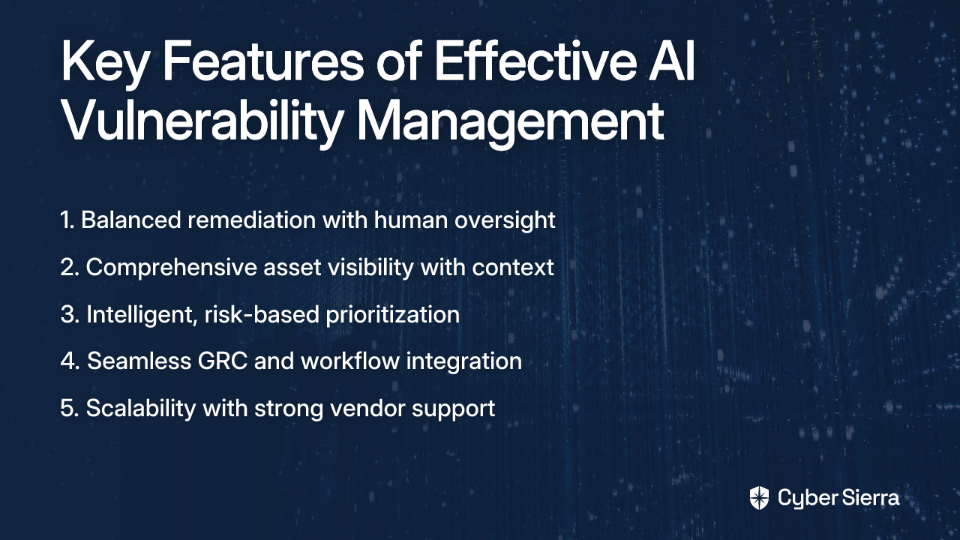
Before jumping into specific solutions, it's important to understand the key criteria that separate truly effective AI-based vulnerability management tools from those that simply add to your alert fatigue:
Actionable Remediation with Human Oversight
The most common demand from security professionals is for tools that "actually, accurately remediate." However, there's legitimate concern about AI making autonomous decisions in critical environments. The ideal solution strikes a balance by detecting vulnerabilities, flagging them, and proposing fixes in a dashboard that uses "Human-In-The-Loop" approvals. This ensures control and prevents AI from making potentially catastrophic changes to critical systems.
Comprehensive Asset Visibility & Context
You can't protect what you don't know you have. An effective tool must provide continuous discovery and visibility across your entire digital footprint—including cloud environments, containers, IoT devices, and third-party assets. AI should then enrich this data with context about asset criticality, data sensitivity, and business impact to inform risk calculations.
Intelligent, Risk-Based Prioritization
When everything is critical, nothing is. Advanced AI tools go beyond basic CVSS scores, analyzing threat intelligence feeds, asset context, exploit availability, and attacker behavior to provide truly risk-based prioritization. This ensures your team focuses first on vulnerabilities that pose the greatest immediate threat to your business.
Seamless Integration with GRC and Workflows
Vulnerability management doesn't exist in a vacuum. The best tools integrate with your existing security stack, CI/CD pipeline, and IT service management systems to streamline the entire process from detection to remediation. They also feed data into your broader Governance, Risk, and Compliance (GRC) framework, automating evidence collection for standards like SOC2, ISO 27001, and PCI DSS.
Scalability and Vendor Support
As your enterprise grows, your vulnerability management solution must scale accordingly. Look for vendors with strong support systems, regular updates, and a proven track record of responding to customer needs.
Now that we've established what makes a truly effective AI-powered vulnerability management tool, let's examine the top 5 solutions for enterprises.
The Top 5 AI-Based Vulnerability Management Tools
1. Cybersierra
Description: Cybersierra stands out as an integrated, AI-enabled cybersecurity platform that moves beyond traditional vulnerability scanning. It unifies threat intelligence with continuous compliance monitoring and risk management, providing a holistic view of an organization's security posture. Rather than treating vulnerabilities as isolated technical issues, Cybersierra connects them to their impact on business-critical assets and compliance controls.
Key AI-Powered Features:
- Threat Intelligence: Provides proactive defense by combining a comprehensive security scorecard with network and cloud infrastructure vulnerability scanning. Its "outside-in" scanning approach identifies vulnerabilities and prioritizes remediation efforts before threats can be exploited. This gives security teams the ability to see their environment through the eyes of an attacker.
- Continuous Control Monitoring (CCM): A key differentiator that provides near real-time visibility into security controls. This context-aware approach helps teams understand not just that a vulnerability exists, but its relationship to critical business systems and compliance requirements. This transforms security from periodic checks to continuous risk management.
- Governance, Risk & Compliance (GRC): Automatically links vulnerability data to relevant compliance frameworks (SOC2, ISO 27001, HIPAA, etc.). By automating data collection, risk assessments, and reporting, Cybersierra makes organizations audit-ready while reducing compliance fatigue.
Best For: Enterprises seeking a unified platform that connects vulnerability management with broader risk, compliance, and governance processes. Particularly valuable for organizations managing multiple compliance frameworks or preparing for audits.
2. SentinelOne
Description: SentinelOne offers an AI-driven extended detection and response (XDR) platform that integrates vulnerability management into its broader security operations framework. It focuses on speed and automation to reduce threat dwell times.
Key AI-Powered Features:
- Real-Time Detection and Analysis: Uses AI to process logs, code repositories, and network data to identify threats and vulnerabilities with minimal latency.
- Automated Remediation Workflows: Provides capabilities for automated patch management and configuration tasks with appropriate approval workflows, helping to close vulnerability windows faster.
- XDR Integration: Enhances vulnerability detection by correlating with active threat intelligence and endpoint activity, providing context about which vulnerabilities are being actively exploited.
Best For: Organizations looking for a tightly integrated endpoint protection and vulnerability management solution that prioritizes rapid response within a broader security operations context.
3. Tenable.io
Description: Tenable is a longstanding leader in the vulnerability management space, offering a cloud-based platform that provides comprehensive visibility across IT, cloud, and IoT assets.
Key AI-Powered Features:
- Predictive Prioritization: Uses machine learning to correlate vulnerability data with threat intelligence and asset criticality, predicting which vulnerabilities are most likely to be exploited.
- Comprehensive Asset Discovery: Combines scanning and agent-based methods to provide a complete and continuously updated inventory of assets and vulnerabilities.
- Lumin Exposure View: Provides an AI-driven risk-based view of your entire attack surface, helping to focus remediation efforts where they'll have the most impact.
Best For: Organizations with mature security programs that require deep vulnerability analysis capabilities and advanced, risk-based prioritization across complex environments.
4. Qualys VMDR (Vulnerability Management, Detection, and Response)
Description: Qualys offers a comprehensive, cloud-native platform that integrates vulnerability management with threat detection, response, and compliance in a single application.
Key AI-Powered Features:
- AI-Powered Risk Prioritization: Leverages machine learning to automatically prioritize vulnerabilities based on threat indicators, exploitability, and asset context.
- Continuous Monitoring: Provides real-time threat detection across the entire IT environment to identify vulnerabilities and misconfigurations as they appear.
- Automated Workflows: Streamlines the entire vulnerability management lifecycle from discovery to remediation with built-in orchestration capabilities.
Best For: Large enterprises seeking an all-in-one, highly scalable cloud platform that combines vulnerability management with other essential security and compliance functions.
5. Rapid7 InsightVM
Description: Rapid7's InsightVM is a vulnerability management solution that excels at providing actionable insights through intuitive dashboards and detailed reporting.
Key AI-Powered Features:
- Real-Time Risk Scoring: Uses a proprietary risk scoring system that is more nuanced than standard CVSS, with live dashboards showing risk trends and remediation progress.
- Remediation Workflow Integration: Seamlessly connects with IT ticketing systems, patching solutions, and CI/CD pipelines to automate remediation processes.
- Attacker-Centric Analysis: Analyzes vulnerabilities from an attacker's perspective, helping teams understand potential attack paths and prioritize defenses accordingly.
Best For: Organizations that need powerful visualization and reporting capabilities to effectively communicate risk to stakeholders and drive cross-functional remediation efforts.
Beyond the Tools: Building a Mature, AI-Enhanced Strategy
While selecting the right tool is crucial, implementing a mature vulnerability management strategy requires more than just technology. Here are key considerations for leveraging AI-powered tools effectively:
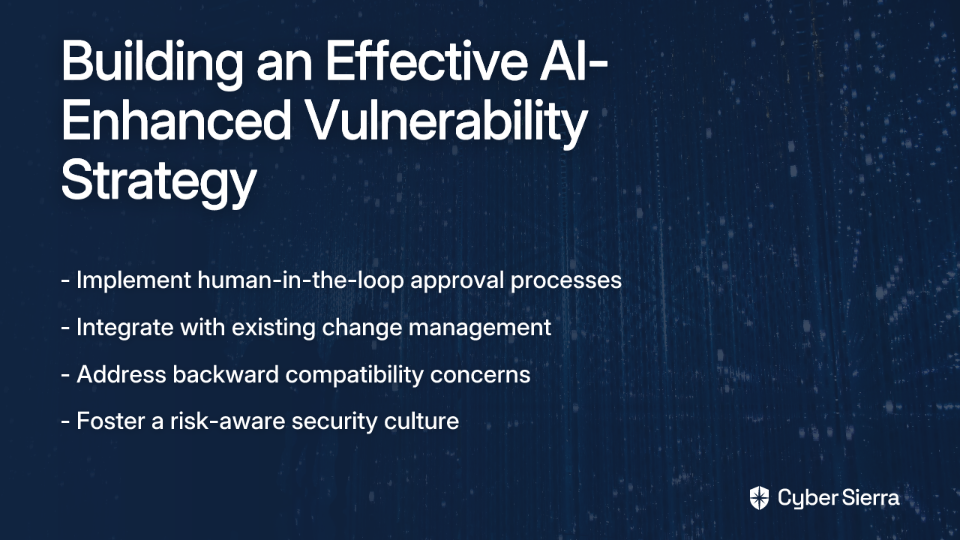
Embrace the Human-in-the-Loop Approach
A common concern in security forums is the question: "Would you actually trust an AI tool to do system administration on your behalf?" For most enterprises, the answer is a resounding no. The most effective approach uses AI to augment human expertise rather than replace it.
Implement a "Human-in-the-Loop" approval process where AI identifies vulnerabilities, proposes remediation steps with supporting data, but human experts make the final call. This builds trust in the system and prevents potentially catastrophic errors, especially in complex environments.
Integrate with Change Management
One of the most significant challenges in vulnerability remediation is expressed by a security professional on Reddit: "If you upgrade the Apache server to get rid of the vulnerability, the web app you depend on that's 12 years old now stops working because it's not compatible with the newest version of Apache."
This highlights why AI-powered vulnerability management must integrate with your existing change management processes. Remediation plans proposed by AI should be routed through established testing frameworks and change control boards before deployment, especially when dealing with legacy systems that may have complex dependencies.
Address Backward Compatibility Concerns
The fear that "just applying the patch may not just remediate it but in many cases could pose backward compatibility issues" is valid. Your vulnerability management strategy should include:
- Pre-deployment testing environments that mirror production
- Rollback capabilities for failed patches
- Staged deployment processes for critical systems
- Alternative mitigation strategies when patching isn't immediately viable
Foster a Risk-Aware Security Culture
A tool is only one piece of the puzzle. Use the data and insights from your AI platform to drive a broader security culture. Platforms that include modules for employee security training can help strengthen the "human firewall," while clear GRC reporting helps align security efforts with business objectives, fostering organization-wide commitment to proactive defense.
Conclusion
The era of manual vulnerability management is over. With attack surfaces expanding exponentially and threats evolving constantly, AI-powered tools have become essential for enterprises to maintain an effective security posture.
However, the most effective solutions aren't those that promise full, unchecked automation. They are integrated platforms that provide deep visibility, use AI for intelligent, risk-based prioritization, and empower security teams with actionable remediation plans—all within a framework of human oversight and robust governance.
As you evaluate your current vulnerability management processes, consider whether you're simply collecting alerts or proactively managing risk. Look for solutions like Cybersierra that connect technical vulnerabilities to business context and compliance requirements, providing a unified view of your security posture.
By combining cutting-edge AI technology with thoughtful human oversight and established change management processes, you can transform vulnerability management from a reactive, overwhelming task into a strategic, risk-aware function that truly protects your business.
Remember, the goal isn't just to find vulnerabilities faster—it's to build a more resilient organization that can adapt to evolving threats while maintaining business continuity and regulatory compliance.
Frequently Asked Questions
What is AI-powered vulnerability management?
AI-powered vulnerability management is an advanced approach that uses artificial intelligence and machine learning to automate and enhance the process of identifying, prioritizing, and remediating security weaknesses. Unlike traditional scanners that simply generate lists of vulnerabilities, AI-powered tools provide context by analyzing threat intelligence, asset criticality, and potential business impact to help security teams focus on the most significant risks first.
Why is risk-based prioritization better than using CVSS scores alone?
Risk-based prioritization is superior to relying on CVSS scores alone because it provides a more accurate, real-world assessment of threats. While a CVSS score is a static, technical severity rating, an AI-driven risk-based approach is dynamic. It considers factors like the availability of an exploit, evidence of active attacks, the importance of the affected asset to your business, and existing security controls to determine the true risk a vulnerability poses to your organization.
How do AI vulnerability management tools handle remediation?
Modern AI vulnerability management tools handle remediation by suggesting or automating fixes within a "Human-in-the-Loop" framework. The AI identifies a vulnerability and proposes a specific solution, such as a patch, configuration change, or compensating control. This recommendation is then presented to a human expert for review and approval, ensuring that changes are tested and deployed safely without disrupting critical business operations.
Can AI vulnerability management tools help with compliance?
Yes, AI-powered tools significantly streamline compliance and auditing processes. They can automatically map identified vulnerabilities to specific controls required by frameworks like SOC2, ISO 27001, HIPAA, and PCI DSS. By continuously monitoring your environment and automating evidence collection, these platforms make it easier to demonstrate compliance, reduce manual effort, and ensure you are always audit-ready.
What is the first step to implementing an AI-powered vulnerability management tool?
The first step is to achieve comprehensive asset discovery and visibility across your entire digital environment. An effective AI tool cannot protect what it cannot see, so it must begin by creating a complete and continuously updated inventory of all assets, including on-premise servers, cloud instances, containers, and IoT devices. This foundational visibility is essential for the AI to accurately assess context and prioritize risks.
Do AI tools replace the need for a security team?
No, AI tools are designed to augment and empower security teams, not replace them. They automate the time-consuming, data-intensive tasks of scanning, correlation, and initial prioritization, which helps combat alert fatigue. This frees up human analysts to focus on higher-value activities like strategic planning, complex threat hunting, and making critical decisions about remediation and risk acceptance.