



How to Automate HIPAA Security Rule Compliance for Healthcare Providers


Join thousands of professionals and get the latest insight on Compliance & Cybersecurity.
Summary
- Healthcare data breaches rose 8.4% in early 2024, showing that traditional "checkbox" HIPAA compliance fails to provide genuine security against modern threats.
- Manual compliance processes are resource-intensive, error-prone, and provide only a point-in-time snapshot, leaving patient data vulnerable between audits.
- To truly protect patient data, healthcare organizations must automate key areas like continuous risk assessments, evidence collection, user access controls, and vendor management.
- A unified Governance, Risk, and Compliance (GRC) platform can streamline this transition by automating data collection and providing real-time visibility into your HIPAA compliance posture.
In an industry where security breaches can literally cost lives, healthcare providers face unique cybersecurity challenges. As one healthcare security professional bluntly puts it, "Nobody is going to play chicken with bad actors when your risk metric is measured in lives lost or even just disclosure of patient data." With people having "already died in hospitals supposedly due to ransomware," the stakes couldn't be higher.
Yet a dangerous misconception persists across the healthcare landscape: "most hospitals/healthcare networks conflate compliance for security." This checkbox mentality creates a false sense of security while leaving patient data vulnerable. In the first half of 2024 alone, healthcare data breaches rose by 8.4% compared to the same period in 2023, according to CyberArrow.io.
The solution? Automation—transforming HIPAA compliance from a periodic, manual exercise into a continuous, proactive security posture that genuinely protects electronic Protected Health Information (ePHI). This guide will show you how to implement automation that moves beyond "checking boxes" toward meaningful security that safeguards what matters most: patient data and lives.
What is the HIPAA Security Rule? (A Quick Refresher)
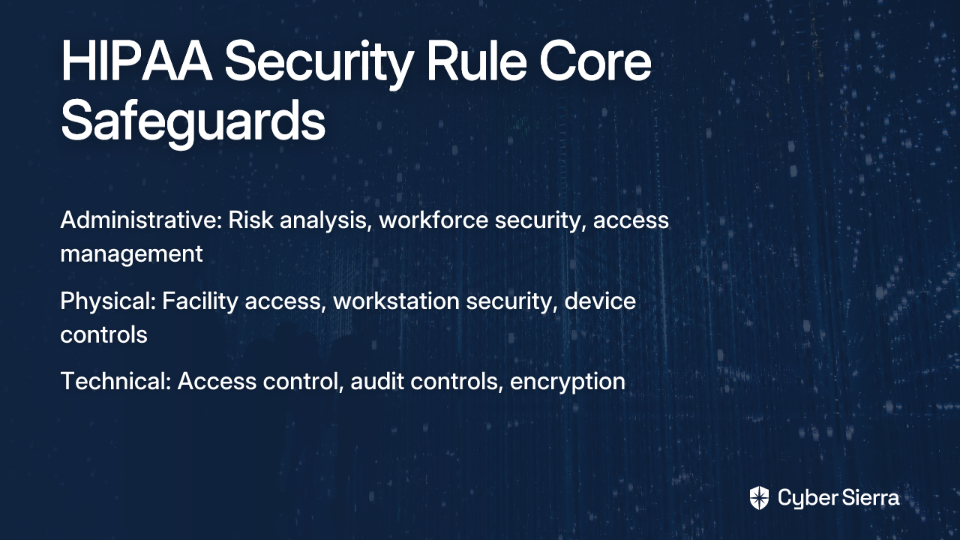
The Health Insurance Portability and Accountability Act (HIPAA) Security Rule specifically focuses on protecting electronic Protected Health Information (ePHI). According to Sprinto, the rule breaks down into three core safeguard categories:
- Administrative Safeguards: These include risk analysis, workforce security procedures, information access management, security awareness training, and incident response planning.
- Physical Safeguards: These involve facility access controls, workstation security, and device and media controls to protect physical systems containing ePHI.
- Technical Safeguards: These include access control, audit controls, data integrity measures, and transmission security (encryption) for ePHI.
The rule is designed to be "technology-neutral," meaning it doesn't mandate specific technologies but rather focuses on the outcomes of protecting ePHI, allowing for flexibility in implementation.
The Cracks in Manual Compliance: Why 'Checking Boxes' Isn't Enough
Many healthcare organizations approach HIPAA compliance as a periodic checklist exercise—a dangerous mindset that creates significant security gaps:
Resource Drain
Manual compliance processes consume valuable time and resources. For smaller clinics where staff are "wearing a lot of hats," gathering evidence, maintaining documentation, and preparing for audits can become overwhelming alongside clinical responsibilities.
Prone to Human Error
Manual tracking and documentation inevitably lead to mistakes, oversights, and inconsistencies. One missing document or overlooked control could result in a compliance violation or, worse, a security vulnerability.
Point-in-Time, Not Continuous
Traditional manual audits provide only a snapshot of compliance at a specific moment. As one security professional described it, "Hospitals are like the Titanic chasing after icebergs at night," blindly sailing between periodic assessments while new threats emerge daily.
Complexity at Scale
Managing multiple regulations (HIPAA, GDPR, etc.) across various systems and third-party vendors quickly becomes unmanageable without automation. The complexity multiplies when considering the integration of "new 'old' technologies" like SCADA protocols in hospital environments.
Legacy Systems
Healthcare organizations often rely on outdated systems that were "basically one poorly placed thumb drive away from an infection they had no way of identifying or fixing." These legacy technologies create unique security challenges that manual processes struggle to address effectively.
The Blueprint for Automation: Key Areas to Streamline HIPAA Compliance
Moving beyond manual processes requires a strategic approach to automation across several critical areas:
Continuous Risk Assessments
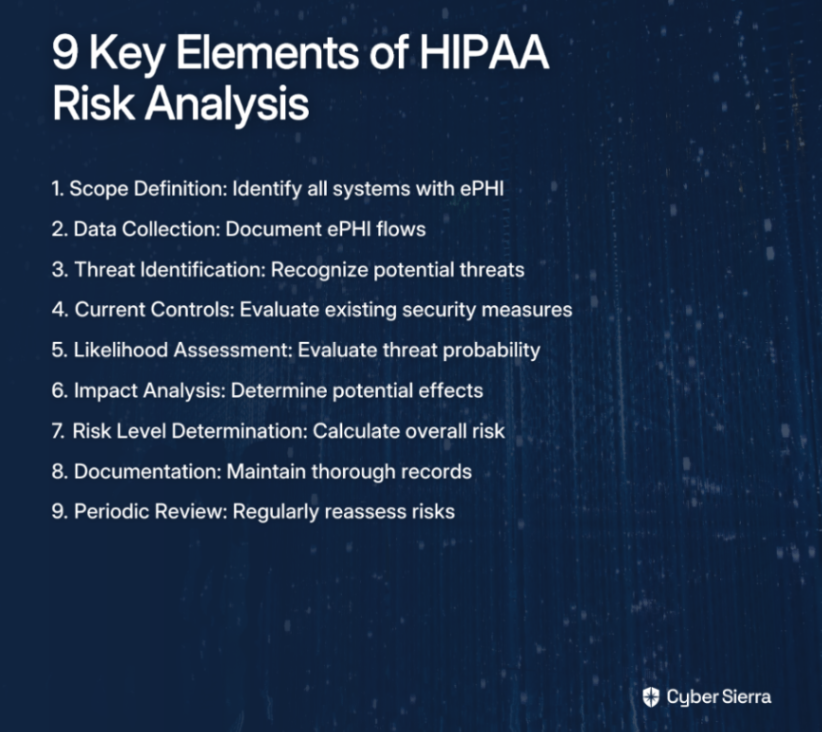
The SAFE.security blog outlines nine key elements of a comprehensive HIPAA risk analysis:
- Scope Definition: Identify all systems, applications, and processes that create, receive, maintain, or transmit ePHI.
- Data Collection: Gather and document information about ePHI flows throughout your organization.
- Threat Identification: Identify potential threats to ePHI security and privacy.
- Current Security Measures: Document existing security controls and their effectiveness.
- Likelihood Assessment: Evaluate the probability of potential threat occurrences.
- Impact Analysis: Determine the potential effects of threats on operations.
- Risk Level Determination: Calculate overall risk based on likelihood and impact.
- Documentation: Maintain thorough records of your risk analysis process.
- Periodic Review: Regularly reassess risks as systems and threats evolve.
Automation tools can continuously scan systems for vulnerabilities, configuration issues, and emerging threats, providing real-time risk insights rather than point-in-time assessments.
Real-Time Monitoring and Evidence Collection
According to Secureframe, one of the most powerful benefits of automation is eliminating the manual scramble to gather evidence before an audit. Automated systems can:
- Continuously collect and organize compliance evidence
- Monitor control effectiveness in real-time
- Flag control failures immediately for rapid remediation
- Generate audit-ready documentation on demand
This transforms the audit process from a stressful, resource-intensive event into a streamlined verification of your ongoing compliance posture.
Automated User Access Controls
Protecting ePHI requires strict control over who can access sensitive data. Automation can:
- Implement role-based access controls that automatically adjust permissions based on job functions
- Create automated workflows for access requests and approvals
- Monitor for unusual access patterns that might indicate a breach
- Automatically provision/de-provision accounts when staff join, change roles, or leave the organization
These automated controls significantly reduce the risk of unauthorized access while maintaining detailed logs for compliance documentation.
Policy and Training Management
Automation can transform how you manage HIPAA-required policies and training:
- Automatically distribute updated policies to the appropriate staff
- Track policy acknowledgments and training completion
- Deliver personalized security training based on job roles
- Send automatic reminders for required refresher training
- Generate compliance reports for training requirements
This ensures consistent policy implementation and training completion across your organization.
Third-Party (Business Associate) Risk Management
Healthcare providers rely heavily on vendors who may access ePHI, making Business Associate Agreement (BAA) management crucial. Automation platforms can:
- Streamline vendor onboarding and risk assessment processes
- Monitor vendor security posture continuously
- Track BAA status, renewals, and compliance
- Provide real-time visibility into your entire supply chain's security posture
This continuous monitoring is vastly superior to periodic vendor questionnaires that provide only limited snapshots of compliance.
Automated Incident Response
When security incidents occur, rapid, compliant response is essential. Automated incident response can:
- Detect potential security incidents in real-time
- Trigger predefined response workflows automatically
- Document all response actions for compliance reporting
- Generate required breach notifications according to HIPAA timelines
- Support post-incident analysis to prevent future occurrences
Choosing Your Automation Engine: What to Look for in a GRC Platform
Governance, Risk, and Compliance (GRC) platforms form the backbone of effective HIPAA compliance automation. When evaluating solutions, look for these essential features:
Pre-built Compliance Frameworks
Seek platforms with ready-to-use HIPAA templates and controls. For instance, platforms like Cyber Sierra provide a unified GRC module that automates data collection, manages multiple frameworks like HIPAA, and generates audit-ready reports without requiring deep compliance expertise.
Automated Risk Assessment Tools
Look for solutions that automatically identify, score, and prioritize risks based on their potential impact on ePHI and critical systems.
Centralized Document & Evidence Management
Choose platforms that create a single, secure repository for all compliance documentation and evidence, eliminating scattered spreadsheets and file shares.
Continuous Control Monitoring
To address the need for real-time visibility, solutions with Continuous Control Monitoring (CCM) are essential. They automatically test and validate controls, moving security from periodic checks to an always-on function.
Simplified Reporting & Audit Support
Select tools that generate comprehensive, audit-ready reports with minimal manual effort, demonstrating your compliance posture to regulators, leadership, and business associates.
Vendor Risk Management
For managing vendors, a robust Third-Party Risk Management (TPRM) module automates assessments and provides continuous insight into your supply chain's security, a critical part of HIPAA compliance.
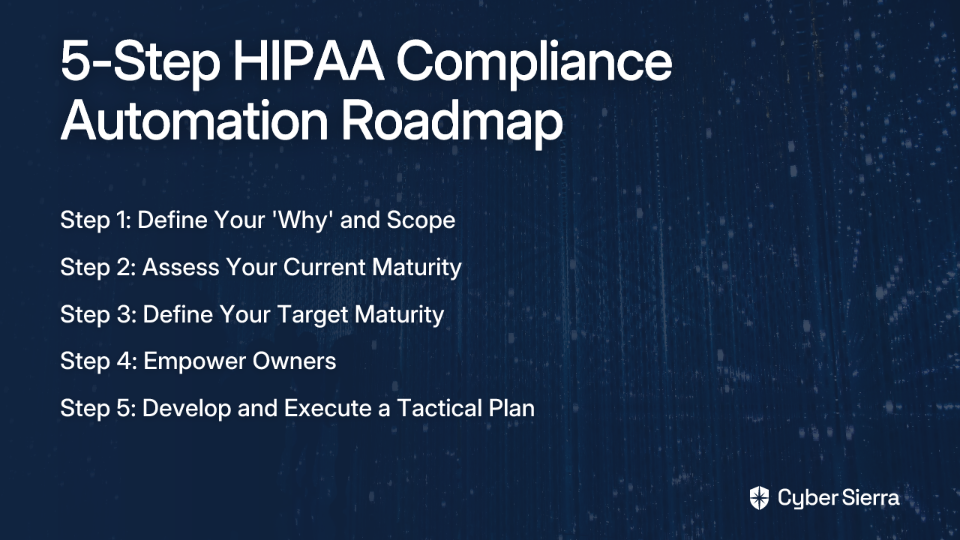
A 5-Step Roadmap to Implementing HIPAA Compliance Automation
Based on the implementation strategy outlined by SAFE.security, here's a practical roadmap for automating your HIPAA compliance:
Step 1: Define Your "Why" and Scope
Clearly articulate your goals for HIPAA compliance automation. Is it reducing audit preparation time? Improving security posture? Reducing human error? Then identify all systems, assets, and processes that create, receive, maintain, or transmit ePHI to establish your automation scope.
Step 2: Assess Your Current Maturity
Use your initial risk analysis to benchmark your current ePHI protection measures. Identify manual processes that are consuming excessive resources or creating compliance gaps. This assessment establishes your baseline for improvement.
Step 3: Define Your Target Maturity
Set clear, measurable goals for each HIPAA requirement. Prioritize automating the highest-risk areas first, such as access controls for ePHI or vulnerability management for critical systems.
Step 4: Empower Owners
Assign clear ownership for specific HIPAA compliance controls and automation initiatives. Ensure these individuals have the authority, resources, and accountability to drive implementation forward.
Step 5: Develop and Execute a Tactical Plan
Create a project plan with clear milestones, timelines, and specific automation tools you'll deploy. Begin with quick wins to build momentum while laying the groundwork for more complex automation initiatives.
Conclusion: Beyond Box-Checking to True Security
Automating HIPAA compliance isn't just about efficiency—it's about fundamentally transforming your approach to security. By implementing continuous monitoring, automated controls, and real-time risk management, healthcare providers can move beyond the dangerous "compliance equals security" mindset that leaves patient data vulnerable.
The benefits extend beyond avoiding HIPAA penalties (though the steep financial penalties for non-compliance certainly justify the investment). Automation delivers enhanced security beyond "checking boxes," significant time and cost savings, reduced risk of breaches, and ultimately, better protection for patient safety.
As one healthcare security professional put it, "It's HIPAA guys. HIPAA not HIPPA." Getting compliance right matters—but getting security right matters even more. Stop chasing compliance and start building a resilient security program. Explore how a unified GRC platform can transform your approach to the HIPAA Security Rule and safeguard what matters most: your patients and their data.
Frequently Asked Questions
What is the main difference between HIPAA compliance and security?
The main difference is that HIPAA compliance is about meeting a set of regulatory requirements, while security is the actual practice of protecting patient data from threats. The article highlights that many organizations mistake "checking the box" for compliance as being secure. True security involves continuous, proactive measures to defend against evolving threats, which goes beyond the periodic nature of traditional compliance audits. Automation helps bridge this gap by making security a continuous process.
Why is manual HIPAA compliance no longer effective?
Manual HIPAA compliance is no longer effective because it is resource-intensive, prone to human error, provides only a point-in-time snapshot of security, and cannot scale to manage modern complexities. Manual processes drain valuable staff time, lead to inconsistencies, and leave organizations vulnerable between audits. As healthcare environments grow more complex, manual tracking becomes unmanageable and fails to provide the real-time visibility needed to counter modern cyber threats.
How does automation improve HIPAA compliance?
Automation improves HIPAA compliance by transforming it from a periodic, manual task into a continuous, proactive process. It enables real-time risk assessment, continuous monitoring of security controls, automated evidence collection, and streamlined management of user access and policies. Instead of scrambling for evidence before an audit, automation tools continuously gather it, flag issues immediately, and manage vendor risks, creating a much stronger, always-on security posture.
What are the first steps to automating HIPAA compliance?
The first step is to define your scope by identifying all systems and processes that handle electronic Protected Health Information (ePHI). Following that, you should assess your current manual processes to find gaps and then prioritize the highest-risk areas for automation, such as access controls and risk assessments. Starting with a clear understanding of where ePHI exists and which processes are weakest is crucial for a successful implementation.
What should I look for in a HIPAA compliance automation tool?
Look for a Governance, Risk, and Compliance (GRC) platform with pre-built HIPAA frameworks, automated risk assessment tools, continuous control monitoring (CCM), and centralized evidence management. An effective tool should simplify your workflow with features like ready-to-use HIPAA templates, real-time dashboards for monitoring security controls, and automated reporting for audits. It should also include modules for managing third-party vendor risk, a critical part of HIPAA compliance.
Who is responsible for HIPAA compliance in a healthcare organization?
While a designated Privacy Officer and Security Officer are typically required to oversee the program, HIPAA compliance is a shared responsibility across the entire organization. Everyone from clinical staff who handle patient data daily to IT professionals who manage the systems and leadership who provide resources plays a role. Automation helps empower these different roles by providing clear ownership of controls and making it easier for everyone to follow security procedures consistently.
