



Top 5 Alternatives to ServiceNow for Automated Compliance Management

Join thousands of professionals and get the latest insight on Compliance & Cybersecurity.
Summary
- Many organizations find ServiceNow's GRC module complex, costly, and overly reliant on specialized developers, leading to significant inefficiency.
- Modern alternatives focus on automation, continuous control monitoring, and intuitive interfaces to transform compliance from a reactive burden to a strategic asset.
- When evaluating new tools, prioritize features like multi-framework support, integrated risk management, and automated, audit-ready reporting.
- Unified platforms like Cyber Sierra combine GRC, continuous monitoring, and third-party risk management to reduce manual effort and ensure you're always audit-ready.
You've set up ServiceNow for your organization's IT Service Management needs, and your team suggested leveraging its GRC module for compliance management. But after months of struggling with its complex interface, dependency on specialized developers for basic changes, and exorbitant costs, you're ready to explore alternatives.
"ServiceNow is such a colossal piece of shit and I cannot wrap my head around why it is so heavily used," one frustrated security professional vented on Reddit. Another added, "The UI was developed by a blind person, the search functionality was developed by a guy in his garage, and nothing in the tool is simple."
If these sentiments resonate with you, you're not alone. While ServiceNow dominates enterprise IT for strategic business operations reasons, its GRC module often falls short when it comes to user experience, cost-effectiveness, and the agility needed for modern compliance management.
The good news? The market has responded with specialized compliance solutions that offer superior automation, intuitive interfaces, and more transparent pricing models. This article explores five powerful alternatives that can transform your compliance program from a reactive burden into a proactive, strategic asset.
Why Teams Are Moving Beyond ServiceNow for GRC
Before diving into alternatives, let's understand why organizations are increasingly dissatisfied with ServiceNow's GRC module:
Overly Complex and Unintuitive User Experience
ServiceNow's GRC interface is notoriously difficult to navigate. Users consistently report that even basic tasks require extensive training, and the overall experience feels disconnected from modern software design principles. As one user put it, "We found the GRC module to be cumbersome." This complexity leads to poor adoption and undermines the effectiveness of your compliance program.
High Dependency on Specialized Developers
"You need ServiceNow developers to make basic changes in the tool," is a common complaint among users. This dependency creates bottlenecks, slows down adaptability, and removes control from compliance teams who need to respond quickly to evolving regulatory requirements.
Prohibitive Costs and Vendor Lock-In
ServiceNow's pricing model often comes as a shock to organizations. "ServiceNow seems to have a firm grip so they can charge what they want," one IT manager noted. Many companies adopt the GRC module simply because it's bundled with other ServiceNow products, not because it's the best tool for compliance management. This creates an uncomfortable vendor lock-in situation where organizations feel trapped despite their dissatisfaction.
Key Features to Look for in a Modern Compliance Management System
As you evaluate alternatives to ServiceNow's GRC module, here are the essential capabilities that should be on your checklist:
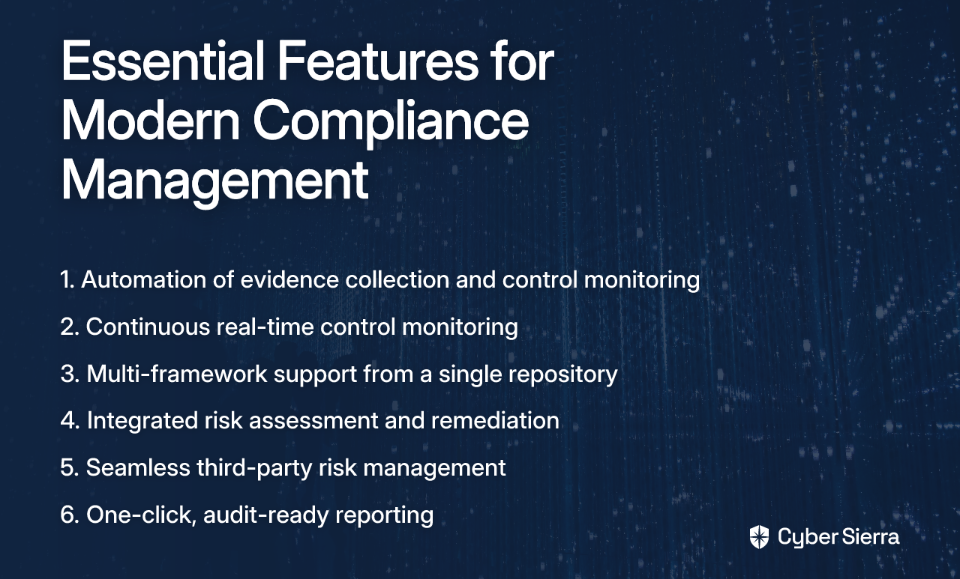
- Automation Capabilities: Look for platforms that automate evidence collection, control mapping, and monitoring to eliminate manual toil.
- Continuous Control Monitoring: Move beyond point-in-time assessments with systems that provide real-time visibility into your security posture.
- Multi-Framework Support: Ensure the tool efficiently manages controls across multiple frameworks (SOC 2, ISO 27001, GDPR, PCI DSS) from a single repository.
- Integrated Risk Management: Seek platforms with built-in functionalities for risk assessment, tracking, and remediation.
- Third-Party Risk Management: Vendor risk management capabilities should be seamlessly integrated.
- Audit-Ready Reporting: Pre-configured dashboards and one-click reports should provide stakeholders and auditors with clear compliance visibility.
Top 5 Alternatives for Automated Compliance Management
1. Cyber Sierra: The AI-Enabled, Unified Compliance Platform
Overview: Cyber Sierra offers an AI-enabled cybersecurity platform specifically designed to simplify and automate security compliance. It transforms compliance from periodic, manual checks into a proactive, near real-time risk management system.
Key Features:
- Continuous Control Monitoring (CCM): Builds a central controls repository with automated testing across frameworks like NIST, ISO 27001, and PCI DSS, providing a single source of truth for your security posture.
- Governance, Risk & Compliance (GRC): Automates data collection, risk assessments, and reporting to make enterprises audit-ready faster while reducing compliance fatigue.
- Third-Party Risk Management (TPRM): Streamlines vendor risk assessment with continuous monitoring that moves beyond static questionnaires.
- Comprehensive Security Suite: Includes additional modules for Threat Intelligence, Employee Security Training, and Cyber Insurance to provide a 360-degree security view.
Why It's a Good ServiceNow Alternative: Cyber Sierra directly addresses ServiceNow's pain points with an affordable, scalable, and intuitive solution purpose-built for security and compliance teams. Its automation capabilities significantly reduce the need for specialized developers, while its unified approach eliminates the siloed activities that plague many compliance programs.
Ideal For: CISOs and Compliance Managers in regulated industries seeking a unified, modern platform to automate compliance, manage vendor risk, and reduce audit-related stress.
2. Drata: The Trust Platform for Continuous Compliance
Overview: Drata provides an AI-native platform that automates compliance processes, manages risk, and helps businesses prove their security posture to stakeholders and customers.
Key Features:
- Continuous Compliance: Automates control monitoring and evidence collection for frameworks like SOC 2, ISO 27001, HIPAA, and GDPR.
- Proven Efficiency: Drata states that it fully automates 71% of manual compliance tasks and provides a 9x reduction in time spent on security questionnaires.
- Integrated Risk Management: Centralizes vendor, internal, and external risks with AI-driven workflows.
Why It's a Good ServiceNow Alternative: Drata offers a hyper-focused, automation-first approach that integrates seamlessly with the modern cloud stack. Its intuitive UI and proven efficiency metrics directly counter the cumbersome nature of ServiceNow's GRC module.
Ideal For: Fast-growing technology companies and enterprises that need to build and maintain trust through continuous, provable compliance.
3. Vanta: Automated Security and Compliance for Fast-Growing Companies
Overview: Vanta is a compliance automation platform known for helping companies, especially startups, achieve and maintain compliance certifications like SOC 2 and ISO 27001 quickly and efficiently.
Key Features:
- Continuous Monitoring: Connects to over 75 cloud services and infrastructure tools to continuously monitor for compliance gaps.
- Automated Evidence Collection: Drastically simplifies the audit preparation process by automatically gathering the necessary evidence.
- Vendor Management: Includes features to ensure the entire supply chain and third-party risk is managed effectively.
Why It's a Good ServiceNow Alternative: Vanta prioritizes speed and efficiency for achieving certifications, which contrasts sharply with the lengthy implementation and customization cycles typical of ServiceNow. Its focus on rapid time-to-value is particularly appealing for organizations facing tight compliance deadlines.
Ideal For: Startups and SMBs looking to get audit-ready for their first compliance framework quickly and efficiently.
4. Hyperproof: Streamlined Compliance Operations for Lean Teams
Overview: Hyperproof is a compliance operations platform designed to help organizations manage multiple frameworks efficiently, even with limited compliance staffing.
Key Features:
- Pre-built Templates: Offers over 100 pre-built templates for various compliance frameworks.
- Automated Evidence Collection: Integrates with over 70 third-party apps to pull in evidence automatically.
- Custom Frameworks: Provides the flexibility to manage custom internal compliance frameworks beyond standard regulations.
Why It's a Good ServiceNow Alternative: Hyperproof's template-driven approach and user-friendly dashboards provide a structured, easy-to-navigate experience, reducing the steep learning curve and dependency on experts associated with ServiceNow.
Ideal For: Organizations with lean compliance teams that need to manage multiple frameworks without getting bogged down in complex configurations.
5. AuditBoard: The Integrated Risk Platform for Auditors
Overview: AuditBoard is a comprehensive, cloud-based platform that unifies audit, risk, and compliance management in a single system.
Key Features:
- Dedicated Modules: Offers specific modules for SOX compliance, operational audits, IT risk, and third-party risk management.
- Strong Audit Trail: Provides robust document control and audit trail capabilities, which are critical for regulated enterprises.
- Integrated Platform: Connects risks to controls and audits, providing a holistic view for the CISO and internal audit teams.
Why It's a Good ServiceNow Alternative: While still an enterprise-grade platform, AuditBoard is purpose-built for audit and risk professionals. Its workflows and features are tailored to their specific needs, offering a more intuitive experience than ServiceNow's GRC module, which often feels like an afterthought to its core ITSM functions.
Ideal For: Larger enterprises with dedicated internal audit and GRC teams, especially those with stringent SOX compliance requirements.
Making the Switch: Implementation Best Practices
Moving from ServiceNow to a specialized compliance platform requires careful planning. Here are five best practices to ensure a successful transition:
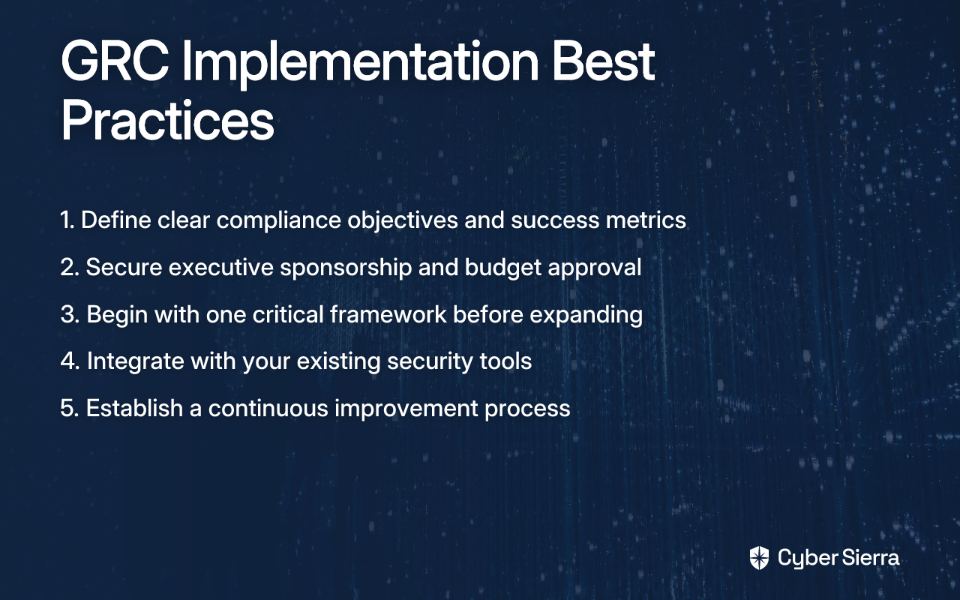
- Define Clear Objectives: Identify your primary compliance requirements and define what success looks like before selecting a new tool.
- Secure Executive Sponsorship: Ensure you have the necessary budget and buy-in from leadership (CISO, CIO) by demonstrating the ROI of making the switch.
- Start with a Focused Scope: Begin by implementing the tool for one critical framework (e.g., SOC 2) before expanding to others.
- Integrate with Existing Security Tools: Maximize value by connecting your new platform to your existing security stack (e.g., vulnerability scanners, cloud providers).
- Develop a Continuous Improvement Process: Use the insights from the tool to regularly review and strengthen your compliance controls.

Conclusion: Choosing the Right GRC Tool for a More Secure Future
Moving away from ServiceNow's GRC module doesn't mean compromising on power. In fact, modern, specialized platforms offer superior automation, better user experiences, and more transparent pricing – addressing the very pain points that make ServiceNow users so frustrated.
The best alternative for your organization depends on your specific needs – whether it's the speed-to-compliance offered by Vanta, the audit-centric approach of AuditBoard, or the unified security vision of Cyber Sierra.
For organizations looking for a single, AI-driven platform that holistically integrates Continuous Control Monitoring, GRC, and Third-Party Risk Management, Cyber Sierra offers a compelling solution to reduce manual effort and build a proactive, audit-ready security program.
The days of being held hostage by cumbersome, overpriced GRC tools are over. With these modern alternatives, compliance can finally become the strategic enabler it was always meant to be – not the burden it often becomes with ill-suited tools like ServiceNow's GRC module.
