



How to Build a Human Firewall That Actually Works



Join thousands of professionals and get the latest insight on Compliance & Cybersecurity.
You've sat through the annual security awareness training. You've watched the generic videos about phishing. You've even clicked through those dreaded multiple-choice quizzes. Yet somehow, your organization's phishing simulation numbers still show alarming failure rates. Sound familiar?
The term "human firewall" has become one of cybersecurity's most overused buzzwords—promising to transform employees into an impenetrable defense against social engineering attacks. But let's face it: most attempts to build this defense fall flat.
Why? Because traditional approaches treat security awareness as a checkbox exercise rather than what it truly needs to be: a fundamental cultural shift in how your organization thinks about and practices security.
The Sobering Reality of the Human Element
The stakes couldn't be higher:
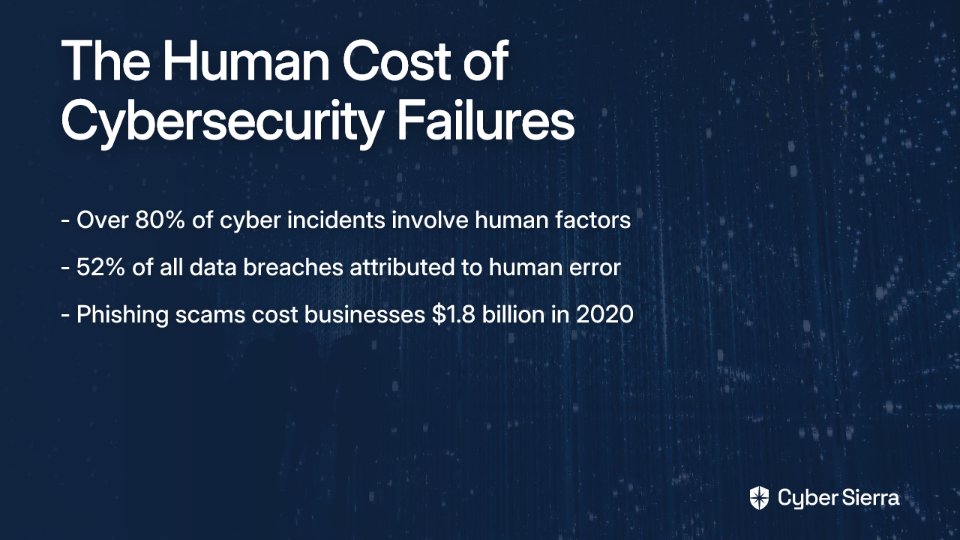
- More than 80% of cyber incidents involve a human factor (Risk Strategies)
- 52% of all data breaches are attributed to human error (CybeReady)
- Phishing scams cost businesses an estimated $1.8 billion in 2020 alone
These statistics highlight an uncomfortable truth: despite robust technical controls, people remain your largest attack surface—and potentially your strongest defense.
Redefining the Human Firewall: From Blame Game to Shared Defense
What a Human Firewall Should Be
A true human firewall isn't just a group of employees who can spot phishing emails. It's a collective effort by an engaged workforce actively identifying, reporting, and defending against the full spectrum of cybersecurity threats.
Debunking Common, Failed Approaches
Myth 1: It's Only About Phishing. Reality: While phishing is critical, an effective human firewall protects against a wide range of threats including social engineering, impersonation, vishing, malware, and physical access breaches.
Myth 2: Annual Training is Enough. Reality: Threats evolve constantly. One-and-done training approaches create a false sense of security. Effective programs require continuous learning and frequent reinforcement—Hoxhunt recommends phishing simulations as often as every 10 days.
Myth 3: It's a Punitive System. Reality: The all-too-common approach of "if they fail, make them take more training" creates resentment, not engagement. As one security professional noted, "I hate punitive products... if they fail make them take more training." This stick-without-carrot approach destroys motivation and creates adversarial relationships between security teams and employees.
The Critical Culture Shift: From User Fault to Organizational Responsibility
When a security incident happens, the knee-jerk reaction is often to blame the user. As one practitioner pointedly observed, "When an incident happens and a user gets breached... they shrug that responsibility onto the user" (Reddit discussion).
This blame culture misses a crucial point: if a single phished user leads to a major breach, the organization's technical and procedural controls have also failed. A successful human firewall is built on shared responsibility, not finger-pointing.
The Blueprint: Designing Training That Actually Changes Behavior
Principle 1: Focus on Engagement and Storytelling, Not Just Information
Humans struggle with abstract risk but connect deeply with narratives. As one cybersecurity professional insightfully stated, "Make it about stories. We (humans) are HORRIBLE at thinking about risk... But we can relate to stories" (Reddit discussion).
Real-World Example: The Royal Bank of Scotland (RBS) successfully reduced phishing incidents by 78% through a comprehensive employee training program focused on storytelling and engagement rather than technical jargon.
Principle 2: Customize, Don't Commoditize
Generic Commercial Off-The-Shelf (COTS) training fails because vendors "shill the same exact stuff to everyone" (Reddit discussion). This one-size-fits-all approach can't address your organization's unique culture, threats, and needs.
Actionable Steps for Customization:
- Tailor to Roles: Create tiered content for executives, operators, finance teams, and temporary workers.
- Use Real Examples: Don't just use generic templates. "Make your own, using current, real attacks against your own company."
- Diversify Activities: Move beyond click-through modules. Use a mix of interactive quizzes, gamification tools like Kahoot, workshops, and even "meme-based training" or TikTok-style videos to keep content fresh.
Principle 3: Reinforce Positively, Not Punitively
Shift the focus from "click rates" (how many people fall for phishing tests) to "report rates" (how many people actively report suspicious activities). The goal is to encourage employees to be active participants.
Implement Positive Reinforcement:
- Recognize and reward employees who report suspicious activity through shout-outs, small bonuses, or team celebrations.
- Share success stories of how vigilant employees prevented real attacks.
- Create a security champions program to empower interested employees to become advocates within their departments.
Hoxhunt's case study with AES, a Fortune 500 company, demonstrated how this positive reinforcement approach led to measurable increases in security vigilance and reporting rates (Hoxhunt AES Case Study).
The 7-Step Action Plan to Build Your Human Firewall

Step 1: Get Leadership Buy-In and Establish Clear Policies
A strong security culture starts at the top. Secure executive support to ensure security is treated as a priority, not an afterthought.
Policy Creation Process:
- Conduct a risk assessment to understand your specific vulnerabilities
- Define policy objectives (e.g., protect sensitive data, ensure compliance)
- Choose a security framework like ISO 27001 or NIST to guide your policies
- Draft and communicate clear procedures for password management, data handling, incident response, and device security
Step 2: Onboard with Security in Mind
Integrate cybersecurity awareness into recruitment and onboarding. Make security a core value from day one, not something employees learn about months into their tenure.
Step 3: Launch Continuous, Engaging Training
Implement quarterly campaigns, monthly newsletters, and frequent simulations. Remember that engagement is the key to retention.
"You might have developed the perfect online training, but if you aren't able to 'sell it' through engaging messaging, fewer people will be motivated to click on it," warns one security awareness professional (Reddit discussion).
Step 4: Equip Employees with the Right Tools
A human firewall is not a substitute for technology. Empower employees with tools that make security easier:
- Password managers to encourage strong, unique passwords
- Easy-to-use Multi-Factor Authentication (MFA)
- Simple, one-click buttons to report suspicious emails
Step 5: Conduct Frequent and Realistic Security Tests
Use phishing tests as a training tool, not a "gotcha" exercise. Simulate a variety of modern threats, including Business Email Compromises (BEC), spear phishing, and pretexting attacks.
"Social Engineering is this most effective training tool in my opinion. That feeling of actually doing something they shouldn't have and being identified for it sticks with you way more than some multiple choice question," notes a security practitioner (Reddit discussion).
Step 6: Foster Open Communication and Reporting
Create dedicated, blameless channels for employees to report potential threats or ask questions. Celebrate those who report suspicious activities, creating a culture where vigilance is rewarded, not punished.
Step 7: Measure, Adapt, and Hold the Organization Accountable
Track metrics that matter: user reporting rates, time-to-report, and employee participation/feedback.
While user accountability is important, organizational accountability is paramount. Consider integrating security culture metrics into managerial performance reviews. As one security professional suggested, "Ensure managers are held accountable for their repeat offenders" (Reddit discussion).
Your People Are Your Greatest Security Asset
An effective human firewall is not a product or a single training module. It's the outcome of a continuous commitment to building a positive security culture. It requires moving from passive awareness to active defense, focusing on measurable behavior change, positive reinforcement, and shared responsibility.
Remember: even the best-trained employees can fall victim to sophisticated attacks. That's why a true human firewall isn't about eliminating human error—it's about creating a resilient security culture that can detect, report, and recover from incidents quickly.
By investing in your people with engaging, relevant, and supportive training, you transform your biggest risk into your strongest defense. After all, technology alone can't protect your organization—but technology backed by vigilant, engaged humans can.
Frequently Asked Questions
What is a human firewall in cybersecurity?
A human firewall is a collective security culture where employees are not just aware of threats but are actively engaged in identifying, reporting, and defending against them. It goes beyond simply spotting phishing emails and encompasses a shared responsibility for protecting the organization against a wide range of cyber threats.
Why do most security awareness programs fail?
Most security awareness programs fail because they are treated as a compliance checkbox rather than a cultural initiative. Common pitfalls include using generic, one-size-fits-all content, conducting training too infrequently (e.g., annually), and adopting a punitive approach that punishes failure instead of rewarding vigilance.
How often should we conduct security training and phishing simulations?
For maximum effectiveness, security training should be continuous, not a one-time event. Experts recommend frequent phishing simulations—as often as every 10 days to once a month—to keep skills sharp and security top-of-mind. The goal is consistent reinforcement, not just an annual test.
How can we measure the effectiveness of our human firewall?
The most effective way to measure a human firewall is to shift from negative metrics to positive ones. Instead of focusing on "click rates" (how many people failed a test), track "report rates" (how many people actively report suspicious emails) and the "time-to-report." These metrics indicate an engaged workforce that is actively participating in security defense.
What is the first step to building an effective human firewall?
The first and most critical step is to get genuine buy-in from leadership. A strong security culture starts at the top. When executives champion and invest in security as a core business priority, it empowers the entire organization to adopt the principles of shared responsibility.
What should happen if an employee fails a phishing test?
If an employee fails a phishing test, it should be treated as a valuable and private learning opportunity, not a cause for punishment. Punitive actions create fear and discourage reporting. Instead, provide immediate, constructive feedback that reinforces the training and encourages them to be more vigilant in the future, fostering a blameless security culture.
Start building your human firewall today. Not with fear, blame, or generic training—but with culture, engagement, and shared responsibility.
