blog-hero-background-image
Cyber Security

NIST Risk Management Framework: Addressing CISO Needs and Pain Points

backdrop
Table of Contents

Join thousands of professionals and get the latest insight on Compliance & Cybersecurity.


You've been tasked with implementing robust cybersecurity measures across your organization. The board is demanding better security posture reporting, compliance teams are citing regulatory requirements, and your technical teams are overwhelmed by the seemingly endless security frameworks available. As you sift through various methodologies, one name keeps appearing: the NIST Risk Management Framework (RMF). But is this just another bureaucratic checkbox exercise, or can it actually solve your most pressing security challenges?

For many Chief Information Security Officers (CISOs), the struggle to implement effective risk management while balancing limited resources, stakeholder expectations, and evolving threats feels like an impossible task. The confusion between general risk management practices and specific frameworks only adds to the complexity.

Understanding the NIST Risk Management Framework

The NIST Risk Management Framework provides a structured, systematic approach to managing organizational risk related to information systems. Developed by the National Institute of Standards and Technology, the RMF integrates security, privacy, and cyber supply chain risk management activities into the system development lifecycle.

What distinguishes the RMF from general risk management practices is its comprehensive, step-by-step methodology specifically designed for information security contexts. This distinction is crucial, as many security professionals express confusion about the difference:

"Risk management is what it says. Risk management framework is a method used in the Federal Government to assess a system for its risk with the end result of obtaining an Authority to Operate (ATO)."

The RMF consists of seven fundamental steps:

  1. Prepare - Essential activities to prepare the organization for managing security and privacy risks
  2. Categorize - Categorize the system and information based on impact analysis
  3. Select - Select the applicable security control baselines based on categorization results
  4. Implement - Implement the security controls and document how they are deployed
  5. Assess - Assess whether the controls are implemented correctly and producing desired outcomes
  6. Authorize - Provide a senior official decision that authorizes a system based on risk determination
  7. Monitor - Continuously monitor control implementation and risks to the system
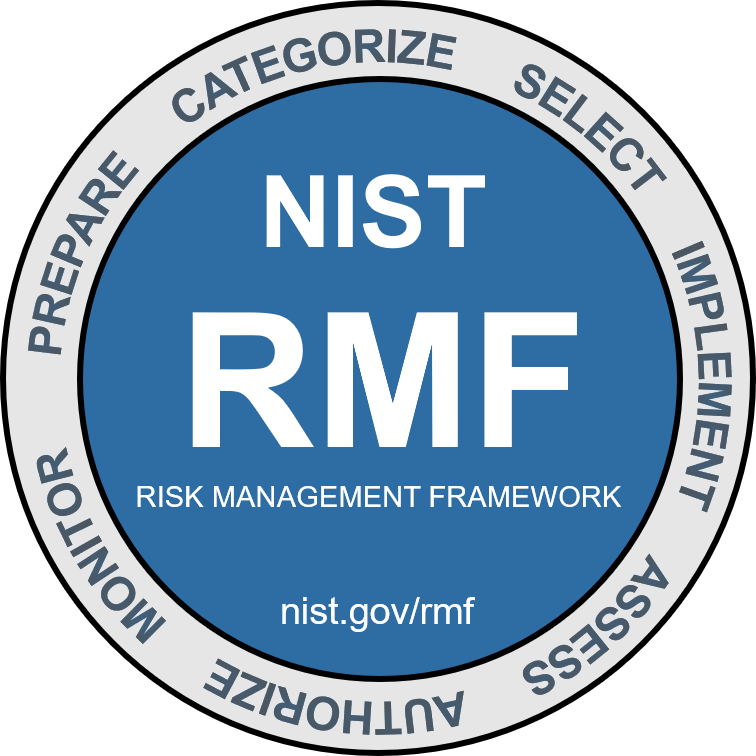
NIST RMF Steps Graphic

CISO Pain Points When Implementing the NIST RMF

1. Framework Confusion and Complexity

Many CISOs struggle with distinguishing between general risk management principles and the specific methodology outlined by NIST RMF. This confusion is particularly evident when attempting to integrate multiple frameworks:

"I'm struggling to understand the difference between risk management and the Risk Management Framework. I'm studying for CISSP and I see the two terms used interchangeably at times."

The challenge is compounded when organizations must comply with multiple frameworks simultaneously (NIST RMF, ISO 27001, GDPR, etc.), creating a complex web of overlapping requirements that can overwhelm security teams.

2. Lack of Practical Guidance for Risk Assessment

While the NIST RMF provides a comprehensive structure, many CISOs and security teams lack experience in developing practical risk assessment methodologies that align with the framework:

"Does anyone have a risk assessment methodology they are willing to share? I was put in charge of creating one, and this is not my expertise, so I'm looking for any insight or advice."

The gap between theoretical knowledge and practical implementation creates significant challenges, particularly for organizations with limited security resources or expertise.

3. Team Burnout and Sustainability Concerns

The implementation of comprehensive frameworks like the NIST RMF can place substantial burdens on already-stretched security teams:

"How are you addressing and/or preventing burnout in your team?"

This question, posed by a CISO in an online forum, highlights a growing concern about sustainability in cybersecurity operations. The detailed documentation, continuous monitoring, and regular assessments required by the RMF can contribute to workload challenges and potential burnout if not managed effectively.

4. Communicating Security Value to Leadership

CISOs often struggle to position security investments as value-generating rather than purely cost centers:

"If you can find a way to sell security as more than a cost center, then that's another focal point."

The technical nature of the NIST RMF can make it difficult to translate its benefits into business language that resonates with C-suite executives and board members. Without effective communication, gaining buy-in for necessary resources becomes challenging.

Strategies to Address CISO Challenges with the NIST RMF

1. Simplify and Contextualize the Framework

Rather than attempting to implement the entire RMF at once, successful CISOs recommend starting with a simplified approach:

"Start by keeping it simple. Adapt the process suggested in the publication to something simpler so you can engage the main stakeholders to begin with, from the different levels of the org."

This phased implementation allows organizations to demonstrate early wins, build momentum, and gradually introduce more sophisticated elements of the framework as the security program matures.

For organizations struggling with framework confusion, it's helpful to view the NIST RMF as a structured methodology for applying general risk management principles to information systems. The RMF provides the "how" for implementing effective risk management practices.

2. Leverage Existing Resources for Risk Assessment

CISOs seeking practical guidance for risk assessment methodologies should familiarize themselves with NIST Special Publication 800-30, which provides comprehensive guidance on conducting risk assessments:

"800-30 is all about conducting risk assessment. Start there to understand the process."

Additionally, there are numerous resources available that can help bridge the gap between theory and practice:

  • NIST provides templates and examples on their website
  • Industry-specific adaptations of the RMF can provide more relevant guidance
  • Online communities and forums where practitioners share experiences
  • Consulting with experienced practitioners who have implemented the framework

3. Automate and Integrate to Reduce Burden

To address team burnout and resource constraints, leading CISOs are turning to automation and integration tools:

"Explore automation tools to assist with security measures and reduce manual workloads."

Modern GRC (Governance, Risk, and Compliance) platforms like Cyber Sierra can significantly reduce the manual effort associated with implementing the NIST RMF. Cyber Sierra's Continuous Control Monitoring (CCM) module, for instance, automates control testing and validation, provides real-time visibility into security posture, and manages controls across multiple compliance frameworks, including NIST.

By automating evidence collection, control validation, and monitoring activities, security teams can focus on higher-value risk management activities rather than administrative tasks. This not only improves efficiency but also helps prevent burnout by eliminating tedious manual processes.

4. Translate Technical Risk into Business Impact

To overcome communication challenges with leadership, successful CISOs translate technical aspects of the NIST RMF into business terms:

  • Link security controls to specific business objectives
  • Quantify risk in financial terms where possible
  • Demonstrate how the RMF helps protect revenue and reputation
  • Use risk scenarios that illustrate potential business impacts
  • Develop executive dashboards that visualize security posture in business terms

For example, rather than discussing technical control implementations, focus on how the RMF helps protect critical business processes, maintain customer trust, and ensure regulatory compliance—all of which have direct business value.

Implementing NIST RMF: A Practical Approach

Based on the collective wisdom of successful CISOs, here's a practical approach to implementing the NIST RMF that addresses common pain points:

Phase 1: Preparation and Planning

  1. Gain Executive Support: Present the business case for implementing the RMF, focusing on risk reduction and business enablement
  2. Establish Governance: Define roles, responsibilities, and decision-making authorities
  3. Inventory Systems: Identify and categorize information systems based on business impact
  4. Assess Current State: Evaluate existing security controls against RMF requirements

Phase 2: Implementation and Assessment

  1. Prioritize Critical Systems: Begin with high-impact systems to demonstrate value quickly
  2. Select and Implement Controls: Choose appropriate security controls based on system categorization
  3. Document Control Implementation: Create clear documentation that will facilitate assessment
  4. Conduct Control Assessments: Evaluate the effectiveness of implemented controls

Phase 3: Authorization and Continuous Monitoring

  1. Prepare Risk Assessment Reports: Document findings, recommendations, and residual risks
  2. Obtain Authorization: Present to senior officials for risk acceptance and authorization decisions
  3. Implement Continuous Monitoring: Establish automated processes for ongoing control validation
  4. Regular Reporting: Provide stakeholders with visibility into security posture and risk trends

How Technology Can Enhance NIST RMF Implementation

Modern GRC platforms can significantly streamline RMF implementation while addressing key CISO pain points. Cyber Sierra, for example, offers specific capabilities that align with NIST RMF requirements:

  • Continuous Control Monitoring: Automates the monitoring step of the RMF, providing near real-time visibility into control effectiveness across multiple frameworks, including NIST
  • Third-Party Risk Management: Extends the RMF approach to vendor ecosystems, addressing supply chain risks
  • Governance, Risk & Compliance: Simplifies management of multiple compliance frameworks, reducing duplication of effort and documentation burden
  • Threat Intelligence: Enhances the monitoring phase by providing actionable insights into emerging threats

These technological solutions can transform the RMF from a labor-intensive manual process to a streamlined, automated approach that provides better visibility while reducing team burnout.

Conclusion: Making NIST RMF Work for Your Organization

The NIST Risk Management Framework provides a comprehensive approach to managing information security risks, but implementing it successfully requires addressing the common pain points that CISOs face:

  1. Simplify and adapt the framework to your organization's specific context
  2. Leverage existing resources and guidance to develop practical risk assessment methodologies
  3. Automate repetitive tasks to reduce manual effort and prevent team burnout
  4. Translate technical aspects into business language to gain leadership support
  5. Implement in phases, starting with critical systems and gradually expanding scope

By taking this approach, CISOs can transform the NIST RMF from a compliance burden into a valuable tool that genuinely enhances their organization's security posture and risk management capabilities.

As cyber threats continue to evolve, and regulatory requirements become more stringent, the structured approach provided by the NIST RMF becomes increasingly valuable. With the right implementation strategy and supporting technologies, CISOs can leverage this framework to build more resilient security programs that align with business objectives while effectively managing information security risks.

For organizations looking to enhance their implementation of the NIST RMF, platforms like Cyber Sierra provide integrated solutions that automate key aspects of the framework while providing the visibility and reporting capabilities needed to demonstrate value to leadership. By combining sound methodology with modern technology, CISOs can overcome the traditional challenges associated with comprehensive risk management frameworks and deliver measurable security improvements.


For more information on implementing the NIST Risk Management Framework or to explore how automation can streamline your security compliance efforts, visit NIST's official RMF resource page or Cyber Sierra's platform overview.
blog-hero-background-image
Cyber Security

The Complete Audit Checklist for CISO

backdrop
Table of Contents

Join thousands of professionals and get the latest insight on Compliance & Cybersecurity.


You've been tasked with overseeing your organization's security audit, and you're feeling that familiar knot in your stomach. The pressure is mounting as executives expect flawless compliance, while your technical teams view the upcoming audit with a mix of dread and annoyance. Without a structured approach, you risk missing critical vulnerabilities or failing to demonstrate compliance with key regulations—potentially exposing your organization to significant risks and damaging your professional credibility.

As one security professional confessed on Reddit, "I'm feeling unprepared and lacking knowledge about the cyber security audit process. How should I prepare myself for this?" This sentiment echoes across many organizations where security leaders face the daunting task of ensuring comprehensive security posture validation.

Why CISOs Need a Comprehensive Audit Checklist

The role of the Chief Information Security Officer has evolved dramatically in recent years, with 100% of Fortune 500 companies now employing a CISO or equivalent, up from 70% in 2018 according to Forbes. With cyber threats growing in sophistication and regulatory requirements becoming increasingly complex, a structured audit approach isn't just helpful—it's essential.

A well-designed audit checklist provides several key benefits:

  • Creates a systematic approach to identifying security gaps and vulnerabilities
  • Ensures consistent evaluation across different security domains
  • Provides documentation that demonstrates due diligence to stakeholders and regulators
  • Reduces audit anxiety by making the process predictable and manageable
  • Serves as a communication tool when working with technical teams and executives

By implementing a comprehensive audit checklist, you transform what could be a chaotic, stressful process into a methodical evaluation that builds confidence in your security program.

The Complete CISO Audit Checklist

1. Governance and Security Policies

Your security program begins with strong governance and well-defined policies. These documents establish the foundation for all security activities and set expectations across the organization.

  •  Security Policy Framework: Verify the existence and currency of a comprehensive security policy framework
  •  Policy Approval: Confirm that all security policies have received appropriate executive approval
  •  Policy Awareness: Assess employee awareness of and access to security policies
  •  Roles and Responsibilities: Verify clear definition of security roles and responsibilities
  •  Security Committee: Confirm the existence and effectiveness of a security governance committee
  •  Executive Support: Evaluate the level of executive support for security initiatives
  •  Security Strategy: Review alignment between security strategy and business objectives
  •  Policy Review Cycle: Verify the existence of a regular policy review and update process

2. Risk Management

Effective risk management forms the cornerstone of a successful security program. This section evaluates your organization's ability to identify, assess, and mitigate security risks.

  •  Risk Assessment Methodology: Verify the existence of a formal risk assessment methodology
  •  Risk Register: Confirm maintenance of a comprehensive risk register
  •  Risk Scoring: Review the risk scoring and prioritization approach
  •  Risk Treatment: Evaluate risk treatment plans for high-priority risks
  •  Risk Acceptance Process: Verify the formal risk acceptance process and authority levels
  •  Residual Risk Monitoring: Confirm processes for monitoring residual risks
  •  Emerging Risk Identification: Assess capabilities for identifying emerging security risks
  •  Risk Reporting: Review risk reporting to executive management and board

3. Regulatory Compliance

With the proliferation of data privacy and security regulations, compliance management has become increasingly complex for CISOs.

  •  Compliance Inventory: Verify inventory of all applicable laws, regulations, and standards
  •  Compliance Mapping: Confirm mapping of controls to compliance requirements
  •  Compliance Monitoring: Assess processes for monitoring ongoing compliance
  •  Compliance Reporting: Review compliance reporting mechanisms
  •  Regulatory Changes: Evaluate process for tracking regulatory changes
  •  Compliance Documentation: Verify documentation maintained for compliance evidence
  •  Non-compliance Management: Assess process for addressing compliance gaps
  •  Industry-Specific Requirements: Confirm adherence to industry-specific requirements (e.g., HIPAA, PCI DSS, GDPR)

4. Security Operations

The day-to-day operations of your security program are critical for maintaining an effective security posture.

  •  Security Monitoring: Verify comprehensive security monitoring capabilities
  •  Alert Management: Assess processes for alert triage and management
  •  Security Metrics: Confirm use of meaningful security metrics
  •  Vulnerability Management: Evaluate vulnerability scanning and remediation processes
  •  Patch Management: Review patch management processes and compliance
  •  Configuration Management: Assess security configuration management practices
  •  Change Management: Verify security involvement in change management
  •  Security Testing: Confirm regular security testing activities (penetration testing, etc.)

As one cybersecurity professional noted on Reddit, "Concerns about vulnerabilities arising from misconfigurations in firewalls and account permissions" are common pain points that effective security operations must address.

5. Identity and Access Management

Controlling who can access your systems and data is fundamental to information security.

  •  Access Control Policy: Verify existence of comprehensive access control policies
  •  Identity Lifecycle: Assess identity lifecycle management processes
  •  Privileged Access: Evaluate privileged access management controls
  •  Authentication Controls: Review authentication mechanisms and policies
  •  Access Reviews: Confirm regular access reviews and certification processes
  •  Segregation of Duties: Verify controls for segregation of duties
  •  Remote Access: Assess security of remote access solutions
  •  Third-Party Access: Evaluate controls for third-party access to systems

6. Incident Response and Business Continuity

Your organization's ability to detect, respond to, and recover from security incidents is crucial for maintaining business operations and minimizing impact.

  •  Incident Response Plan: Verify existence and currency of incident response plans
  •  IR Roles and Responsibilities: Confirm clearly defined incident response roles
  •  Incident Detection: Assess capabilities for incident detection
  •  Incident Classification: Review incident classification and prioritization approach
  •  Response Procedures: Evaluate documented response procedures for different incident types
  •  Communication Plans: Verify internal and external communication plans for incidents
  •  Incident Exercises: Confirm regular testing of incident response plans
  •  Post-Incident Analysis: Assess process for post-incident review and improvement
  •  Business Continuity Plan: Verify existence of business continuity plans
  •  Disaster Recovery: Review IT disaster recovery capabilities and testing
  •  Business Impact Analysis: Confirm current business impact analysis
  •  Recovery Time Objectives: Assess alignment of recovery capabilities with business requirements

As one Reddit user shared about audit preparation: "Make sure you have a good line of communication to every part of your organization that they'll need access to," highlighting the importance of cross-departmental coordination during incidents and audits.

7. Data Protection

Protecting sensitive data is at the heart of information security. This section evaluates your controls for securing data throughout its lifecycle.

  •  Data Classification: Verify data classification scheme and implementation
  •  Data Inventory: Confirm inventory of sensitive data locations
  •  Data Protection Controls: Assess controls for protecting data at rest, in transit, and in use
  •  Encryption: Review encryption standards and implementation
  •  Data Loss Prevention: Evaluate data loss prevention controls
  •  Data Retention: Verify data retention and disposal processes
  •  Privacy Controls: Assess controls for privacy protection
  •  Data Access Controls: Review controls for data access and authorization

8. Application Security

Applications often process sensitive data and can introduce significant security risks if not properly secured.

  •  Secure Development: Verify secure software development lifecycle processes
  •  Application Inventory: Confirm inventory of applications and risk ratings
  •  Security Requirements: Review security requirements definition process
  •  Code Reviews: Assess security code review practices
  •  Application Testing: Verify security testing during development
  •  Vulnerability Management: Evaluate application vulnerability management
  •  API Security: Review security of application programming interfaces
  •  Web Application Security: Assess security of web applications

9. Infrastructure Security

The security of your IT infrastructure provides the foundation for your overall security posture.

  •  Network Security: Verify network security architecture and controls
  •  Endpoint Security: Assess endpoint protection measures
  •  Server Security: Review server hardening standards and compliance
  •  Cloud Security: Evaluate security controls for cloud environments
  •  Mobile Device Security: Assess security of mobile devices
  •  Wireless Security: Review security of wireless networks
  •  IoT Security: Verify security controls for Internet of Things devices
  •  Physical Security: Assess physical security of IT infrastructure

10. Third-Party Risk Management

Organizations increasingly rely on third parties, creating additional security risks that must be managed.

  •  Vendor Risk Assessment: Verify vendor risk assessment methodology
  •  Vendor Inventory: Confirm inventory of vendors with risk ratings
  •  Contract Requirements: Review security and privacy requirements in contracts
  •  Vendor Monitoring: Assess ongoing monitoring of vendor security
  •  Vendor Access Controls: Verify controls for vendor access to systems and data
  •  Vendor Incident Management: Review process for managing vendor security incidents
  •  Cloud Provider Security: Evaluate security controls specific to cloud service providers
  •  Fourth-Party Risk: Assess management of fourth-party (vendors' vendors) risk

Many organizations struggle with this area. As one security professional noted on Reddit, "Challenges in getting policy approval and ensuring compliance within the organization" can be particularly difficult when dealing with external parties.

11. Security Awareness and Training

The human element remains one of the greatest security vulnerabilities. This section evaluates your program for building a security-conscious workforce.

  •  Security Awareness Program: Verify comprehensive security awareness program
  •  Training Curriculum: Review security training curriculum and coverage
  •  Role-Based Training: Assess specialized training for high-risk roles
  •  Training Frequency: Confirm appropriate frequency of security training
  •  Training Effectiveness: Evaluate measurement of training effectiveness
  •  Phishing Simulations: Verify use of phishing simulations and results tracking
  •  Security Culture: Assess efforts to build a positive security culture
  •  Executive Awareness: Review security awareness at executive level

12. Security Monitoring and Analytics

Effective security monitoring is essential for detecting and responding to threats promptly.

  •  Monitoring Coverage: Verify comprehensive monitoring coverage
  •  Log Management: Review log collection, retention, and protection
  •  SIEM Implementation: Assess Security Information and Event Management capabilities
  •  Use Case Development: Evaluate security monitoring use case development
  •  Alert Tuning: Review process for alert tuning and false positive reduction
  •  Threat Intelligence: Assess integration of threat intelligence
  •  User Behavior Analytics: Verify capabilities for detecting anomalous user behavior
  •  Monitoring Effectiveness: Evaluate effectiveness of security monitoring program

Streamlining Your Audit Process with Technology

Modern security organizations can leverage technology to make the audit process more efficient and effective. Platforms like Cyber Sierra provide capabilities that can transform what was once a manual, point-in-time exercise into an ongoing, automated process.

Cyber Sierra's Continuous Control Monitoring (CCM) module helps security leaders:

  • Build a central controls repository with near real-time updates
  • Automate control testing and validation
  • Detect exceptions and anomalies in real-time
  • Manage controls across multiple compliance frameworks (NIST, ISO 27001, PCI DSS, etc.)

For third-party risk management, Cyber Sierra's TPRM module streamlines vendor assessments and provides continuous monitoring of vendor security compliance, addressing the common challenge of managing numerous vendor questionnaires and tracking remediation.

Best Practices for Conducting an Effective Security Audit

To maximize the value of your security audit, consider these best practices:

1. Prepare Thoroughly

  • Schedule the audit well in advance
  • Communicate the purpose and scope to all stakeholders
  • Gather necessary documentation ahead of time
  • Brief key personnel on their roles in the audit process

2. Take a Risk-Based Approach

  • Focus more attention on high-risk areas
  • Tailor the depth of the audit based on risk levels
  • Consider business impact when evaluating control effectiveness

3. Document Everything

  • Maintain detailed evidence of control implementation
  • Document findings clearly and objectively
  • Track remediation plans and progress

4. Foster a Positive Audit Culture

  • Position audits as improvement opportunities, not punitive exercises
  • Recognize and reward good security practices
  • Create a blame-free environment for identifying issues

5. Close the Loop

  • Develop clear remediation plans for identified gaps
  • Establish realistic timelines for addressing findings
  • Follow up to verify that remediation is completed effectively

Conclusion: From Audit Anxiety to Security Confidence

Implementing a comprehensive audit checklist transforms what many security leaders experience as a stressful, reactive process into a proactive, value-adding exercise. Rather than scrambling to gather evidence and hoping nothing significant is missed, you can methodically evaluate your security program and demonstrate its effectiveness to stakeholders.

As cyber threats continue to evolve and regulatory requirements grow, having a structured approach to security audits becomes increasingly valuable. By systematically addressing each area in this checklist, you'll not only improve your audit readiness but also enhance your overall security posture.

Remember that security is not a destination but a journey. Use your audit findings as stepping stones toward continuous improvement, gradually building a more resilient security program that protects your organization's most valuable assets.

[For a customizable version of this audit checklist template, contact Cyber Sierra to learn how their Governance, Risk & Compliance (GRC) platform can automate your audit processes and help you maintain continuous compliance.]

blog-hero-background-image
Cyber Security

Top 5 Software for Enterprise Risk Management: A CISO's Guide to Cybersecurity Excellence

backdrop
Table of Contents

Join thousands of professionals and get the latest insight on Compliance & Cybersecurity.


You've implemented dozens of security controls and spent countless hours preparing for audits. Yet, when the board asks about your organization's actual risk posture, you're left scrambling through spreadsheets and siloed reports, trying to piece together a coherent picture. Meanwhile, the growing web of vendors, compliance frameworks, and security threats continues to expand, creating dangerous blind spots across your enterprise.

Enterprise Risk Management (ERM) is meant to solve this problem, but too often it feels like "90% buzzwords, 10% making sure someone doesn't wreck the company with a bad decision," as one risk professional candidly put it. The reality is that without the right tools to provide an enterprise-level view, separate divisions can become exposed to correlated risks that threaten the entire organization.

In today's complex threat landscape, CISOs and senior leaders need more than just theoretical frameworks - they need powerful, integrated software solutions that can transform abstract risk concepts into actionable intelligence. The right ERM platform not only centralizes your risk management efforts but also provides real-time visibility into your security posture, automates compliance processes, and helps you communicate risk effectively to stakeholders.

Why Enterprise Risk Management Matters for Cybersecurity Leaders

Before diving into specific solutions, let's clarify what effective ERM looks like in a cybersecurity context:

  • Unified Visibility: Breaking down siloed approaches to provide a comprehensive view of risks across the organization
  • Proactive Identification: Moving beyond reactive measures to anticipate threats before they materialize
  • Quantifiable Metrics: Translating technical vulnerabilities into business impact and risk exposure
  • Continuous Monitoring: Shifting from periodic assessments to real-time risk intelligence
  • Strategic Alignment: Ensuring security initiatives directly support business objectives

Organizations with mature ERM programs experience 63% fewer risk events and reduce operational losses by up to 35%, according to MetricStream research. However, achieving these results requires more than spreadsheets - it demands purpose-built tools designed for today's complex risk landscape.

Key Features to Look for in ERM Software

When evaluating ERM solutions for cybersecurity applications, CISOs should prioritize these essential capabilities:

  1. Comprehensive Risk Assessment: The ability to identify, assess, and prioritize risks across multiple domains (cyber, operational, regulatory, third-party)
  2. Integration Capabilities: Seamless connection with existing security tools, vulnerability scanners, SIEM solutions, and GRC platforms
  3. Automation: Workflow automation for risk assessments, control testing, evidence collection, and remediation tracking
  4. Regulatory Compliance: Support for multiple frameworks (NIST, ISO 27001, SOC2, GDPR, etc.) with built-in control mapping
  5. Real-time Monitoring: Continuous visibility into control effectiveness and security posture
  6. Advanced Analytics: Risk scoring, trend analysis, and predictive capabilities to support informed decision-making
  7. Vendor Risk Management: Assessment and monitoring of third-party security risks
  8. User Experience: Intuitive interfaces that make complex risk concepts accessible to technical and non-technical stakeholders
  9. Scalability: The ability to grow with your organization and adapt to evolving risk landscapes

Now, let's explore the top five ERM software solutions that deliver these capabilities for cybersecurity leaders.

Top 5 Enterprise Risk Management Software for Cybersecurity

1. Cyber Sierra

Overview: Recognized in the Gartner® Hype Cycle™ for Cyber Risk Management, Cyber Sierra stands out as an AI-enabled cybersecurity platform specifically designed to simplify and automate security compliance for enterprises. Unlike general-purpose GRC tools, Cyber Sierra focuses on the unique challenges facing modern security teams.

Key Strengths:

  • Continuous Control Monitoring: Provides near real-time visibility into security controls, centralizes control repositories, and delivers actionable risk intelligence - addressing the critical pain point of manual evidence gathering and lack of real-time posture visibility.
  • Automated Compliance Management: Streamlines data collection, risk assessments, and reporting across multiple frameworks (SOC2, ISO 27001, HIPAA, etc.), significantly reducing audit fatigue.
  • Comprehensive Third-Party Risk Management: Simplifies vendor risk assessment, onboarding, and continuous monitoring, helping security teams evaluate and mitigate supply chain risks without drowning in questionnaires.
  • Proactive Threat Intelligence: Provides insights into the attack surface, performs vulnerability scanning, and helps prioritize remediation efforts based on business impact.
  • Unified Security View: Integrates governance, risk, and compliance functions into a single platform, eliminating the siloed approach that plagues many security programs.

Ideal For: CISOs and security teams seeking to move from reactive, manual security checks to a proactive, automated approach with continuous visibility across their security ecosystem.

WebsiteCyber Sierra

2. RSA Archer

Overview: RSA Archer is a well-established player in the GRC market, offering a comprehensive suite for managing enterprise, operational, IT, and regulatory compliance risks.

Key Strengths:

  • Extensive Customization: Highly configurable platform that can be tailored to specific organizational needs and processes
  • Policy Management: Robust capabilities for creating, managing, and enforcing security policies
  • Business Resiliency: Integrated tools for business continuity, disaster recovery, and crisis management
  • Issue Management: Structured workflows for tracking and resolving risks, findings, and control deficiencies
  • Enterprise View: Consolidated risk reporting across the organization

Limitations:

  • The extensive customization options can make implementation complex and time-consuming
  • User interface is less intuitive than more modern solutions
  • Can require significant resources to maintain and operate effectively

Ideal For: Large enterprises with dedicated GRC teams and complex regulatory requirements that need extensive customization.

WebsiteRSA Archer

3. AuditBoard

Overview: AuditBoard provides a modern, cloud-based platform that emphasizes collaboration and ease of use, with strong capabilities for IT risk management and compliance.

Key Strengths:

  • Collaborative Workflows: Facilitates teamwork between security, audit, and compliance teams
  • Intuitive Interface: User-friendly design that reduces training requirements and improves adoption
  • Audit Management: Streamlined processes for internal audit planning, execution, and reporting
  • Control Testing: Efficient mechanisms for testing and validating control effectiveness
  • Visual Reporting: Clear dashboards and reports that communicate risk status to stakeholders

Limitations:

  • Less robust in advanced threat intelligence and technical vulnerability management
  • More focused on compliance than proactive risk management
  • May not integrate as deeply with technical security tools

Ideal For: Organizations that prioritize audit and compliance management with an emphasis on collaboration and user experience.

WebsiteAuditBoard

4. Diligent GRC

Overview: Diligent offers a robust GRC platform with strong analytics capabilities and support for third-party risk management, designed to align governance, risk, and compliance activities.

Key Strengths:

  • Board Governance: Superior capabilities for board-level risk reporting and oversight
  • Risk Analytics: Advanced analytics for identifying trends and emerging risks
  • Policy Management: Comprehensive tools for policy development, distribution, and attestation
  • Due Diligence: Robust modules for third-party due diligence and ongoing monitoring
  • ESG Integration: Incorporates environmental, social, and governance risk factors

Limitations:

  • Less specialized for technical cybersecurity operations
  • May require additional tools for deep technical vulnerability management
  • Higher price point compared to some alternatives

Ideal For: Organizations seeking to strengthen board-level risk governance and integrate ESG factors into their risk management program.

WebsiteDiligent GRC

5. IBM OpenPages with Watson

Overview: IBM OpenPages is an AI-driven platform designed to centralize risk management initiatives across the enterprise, leveraging Watson's cognitive capabilities.

Key Strengths:

  • AI Integration: Utilizes IBM Watson for automated risk identification and analysis
  • Data Integration: Strong capabilities for incorporating data from diverse sources
  • Regulatory Intelligence: Built-in updates on changing regulatory requirements
  • Operational Risk: Comprehensive tools for managing operational risk scenarios
  • Scalability: Enterprise-grade architecture that can support global operations

Limitations:

  • Complex implementation requiring specialized expertise
  • Significant investment in terms of cost and resources
  • May be excessive for smaller organizations with limited IT support

Ideal For: Large enterprises with mature risk management programs seeking to leverage AI for advanced risk analytics and automation.

WebsiteIBM OpenPages

Making the Right Choice for Your Organization

Selecting the optimal ERM software for your cybersecurity program requires balancing several factors:

Organizational Maturity

  • Emerging Programs: Focus on tools that provide clear structure and guidance
  • Maturing Programs: Prioritize automation and integration with existing security tools
  • Advanced Programs: Look for advanced analytics and predictive capabilities

Implementation Considerations

  • Resource Requirements: Assess the internal expertise and bandwidth needed for deployment
  • Time to Value: Consider how quickly the solution can deliver meaningful results
  • Total Cost of Ownership: Look beyond license fees to include implementation, customization, and ongoing maintenance

Common Pitfalls to Avoid

  • Over-complexity: Implementing too many features at once can overwhelm users
  • Under-integration: Failing to connect with existing security tools creates data silos
  • Technology-first Approach: Focusing on technology without addressing processes and people

Why Cyber Sierra Stands Out for Cybersecurity Leaders

While all five solutions offer strong ERM capabilities, Cyber Sierra distinguishes itself for cybersecurity leaders in several key ways:

  1. Purpose-Built for Security: Unlike general-purpose GRC tools, Cyber Sierra is specifically designed for cybersecurity risk management, addressing the unique challenges faced by CISOs and security teams.
  2. Continuous Monitoring Approach: Cyber Sierra moves beyond periodic assessments to provide near real-time visibility into security posture, allowing for proactive risk management.
  3. Automation Focus: The platform's emphasis on automating manual processes like evidence collection and control testing addresses one of the biggest pain points for security teams.
  4. Integrated Vulnerability Management: By combining compliance management with vulnerability scanning and threat intelligence, Cyber Sierra provides a more holistic view of security risks.
  5. Streamlined Implementation: Designed for rapid deployment and time-to-value, without requiring extensive customization or professional services.

As one security professional noted, "Without an enterprise level view of the company, you can get into situations where separate divisions are exposed to correlated risks." Cyber Sierra specifically addresses this challenge by providing that unified visibility across the security ecosystem.

Conclusion: Beyond the Buzzwords

Enterprise Risk Management doesn't have to be "90% buzzwords," as critics suggest. With the right software platform, ERM becomes a powerful, practical approach to managing cybersecurity risks across the enterprise. The key is selecting a solution that cuts through complexity to deliver actionable insights, automates manual processes, and provides continuous visibility into your security posture.

For CISOs and senior leaders looking to transform their approach to cybersecurity risk management, Cyber Sierra offers the most comprehensive, purpose-built solution. By integrating governance, risk, and compliance functions with continuous monitoring and automation, it enables security teams to move from reactive firefighting to proactive risk management.

In today's complex threat landscape, that shift isn't just a competitive advantage—it's becoming an essential requirement for organizational resilience and business continuity.

blog-hero-background-image
Governance & Compliance

Top 5 Governance Risk Compliance Tools in 2025

backdrop
Table of Contents

Join thousands of professionals and get the latest insight on Compliance & Cybersecurity.


You've invested heavily in cybersecurity infrastructure, hired talented security professionals, and implemented best practices across your organization. Yet, when audit season arrives, your team is scrambling to collect evidence, manage compliance requirements across multiple frameworks, and demonstrate your security posture to auditors who want screenshots instead of CSV exports. Sound familiar?

As regulatory requirements grow more complex and cyber insurance demands become increasingly stringent, the right Governance, Risk, and Compliance (GRC) tool is no longer optional—it's essential for maintaining operational resilience and regulatory compliance.

By 2025, the landscape of GRC tools will have evolved significantly to address these challenges. This article examines the top five GRC solutions positioned to dominate the market, highlighting how they can transform compliance from a periodic firefight into a continuous, automated process.

The Evolving GRC Landscape: Challenges and Solutions

Before diving into specific tools, it's important to understand the challenges driving GRC tool adoption:

  • Complexity of regulatory requirements: Organizations must navigate an ever-expanding maze of compliance frameworks (SOC 2, ISO 27001, GDPR, HIPAA, PCI DSS).
  • Evidence management struggles: IT application owners face difficulties providing and maintaining compliance evidence.
  • Auditor expectations: Many auditors prefer screenshots over exported CSV files, creating additional work for compliance teams.
  • Resource constraints: Smaller organizations struggle to meet compliance requirements with limited staff and resources.
  • Rising cyber insurance demands: Insurers are enforcing stricter compliance requirements, adding pressure to security teams.

The most effective GRC tools in 2025 will directly address these pain points through automation, integration capabilities, and continuous monitoring.

1. Cyber Sierra: The Comprehensive GRC Solution

Best for: Organizations of all sizes seeking an integrated approach to governance, risk, and compliance with automation at its core.

Cyber Sierra stands out in the 2025 GRC landscape by offering a unified platform that transforms compliance from periodic, manual checks into continuous, automated monitoring. This addresses one of the most significant pain points for security leaders: the lack of real-time visibility into security posture and compliance status.

Key Features

  • Continuous Control Monitoring (CCM): Unlike traditional GRC tools that rely on point-in-time assessments, Cyber Sierra provides ongoing visibility into security controls across your entire organization. The platform centralizes your control repository, offering actionable risk intelligence and supporting multiple compliance frameworks simultaneously.
  • Third-Party Risk Management (TPRM): With supply chain attacks on the rise, Cyber Sierra's vendor risk management capabilities simplify the assessment, onboarding, and continuous monitoring of third-party vendors. This eliminates the manual questionnaire processes that overwhelm many TPRM managers.
  • Automated Evidence Collection: Cyber Sierra directly addresses the challenge of onboarding IT application owners by automating evidence collection and making it intuitive for technical teams to provide necessary documentation.

Benefits for CISOs and Senior Leadership

  • Reduced Audit Fatigue: Cyber Sierra's continuous monitoring approach means your organization is always audit-ready, eliminating the last-minute scramble to gather evidence.
  • Cost-Effective Compliance: By combining multiple GRC capabilities in a single platform, Cyber Sierra offers excellent value compared to implementing separate solutions for each function.
  • Scalability: The platform grows with your organization, making it suitable for both smaller companies with resource constraints and large enterprises with complex compliance requirements.
  • Automation-First Approach: Cyber Sierra automates routine compliance tasks, allowing your security team to focus on strategic initiatives rather than manual evidence collection.

According to a recent discussion among security professionals on Reddit, "Most GRC tools require a high level of security maturity in the org that we simply didn't have." Cyber Sierra addresses this challenge by providing a platform that guides organizations through maturity development rather than assuming it as a prerequisite.

2. MetricStream ConnectedGRC

Best for: Large enterprises requiring robust risk analytics and ESG reporting capabilities.

MetricStream has established itself as a leader in the GRC space, recognized by Forrester in their evaluation of GRC platforms. By 2025, their ConnectedGRC solution will have evolved to incorporate more advanced AI capabilities.

Key Features

  • AI-Powered Analytics: MetricStream leverages artificial intelligence for regulatory change management and continuous control monitoring, helping organizations stay ahead of evolving compliance requirements.
  • Environmental, Social, Governance (ESG) Framework Support: As ESG reporting becomes increasingly mandatory, MetricStream offers robust capabilities for managing and reporting on ESG metrics.
  • Advanced Risk Quantification: The platform provides sophisticated tools for quantifying and visualizing risk across the organization.

Benefits for CISOs and Senior Leadership

  • Enhanced Decision-Making: Rich analytics and dashboards provide senior leaders with the insights needed to make informed risk-based decisions.
  • Operational Resilience: MetricStream's approach helps organizations build resilience against disruptions by identifying and addressing vulnerabilities proactively.
  • Regulatory Agility: The platform's regulatory change management capabilities help organizations adapt quickly to new compliance requirements.

While MetricStream offers comprehensive capabilities, some users report a steeper learning curve compared to more intuitive platforms like Cyber Sierra. Additionally, the pricing structure may put it out of reach for smaller organizations with limited budgets.

3. RSA Archer

Best for: Enterprises with complex risk management requirements seeking highly customizable solutions.

RSA Archer has long been considered the "Cadillac" of GRC platforms, offering extensive customization capabilities for organizations with complex requirements. By 2025, Archer will have evolved to offer more out-of-the-box solutions while maintaining its flexibility.

Key Features

  • Custom Dashboards and Workflows: Archer allows organizations to build highly tailored GRC processes that align with their specific needs and integrate with other business functions.
  • Comprehensive Risk Library: The platform includes an extensive library of risks, controls, and regulatory requirements that organizations can leverage.
  • Incident Response Management: Built-in tools for managing incidents related to compliance failures help organizations respond effectively to breaches and violations.

Benefits for CISOs and Senior Leadership

  • Enterprise-Wide Risk Visibility: Archer provides a comprehensive view of risks across the organization, helping leaders optimize resource allocation.
  • Mature Compliance Processes: For organizations with established GRC programs, Archer offers the depth and breadth needed to manage complex compliance requirements.
  • Extensive Integration Capabilities: The platform can integrate with a wide range of business systems to provide a unified view of risk and compliance.

As one security professional noted on Reddit, "Archer is expensive, so if you have a large company with a large budget and complex infosec requirements, this might be the tool for you." This remains true in 2025, with Archer continuing to target large enterprises that can justify the investment in both cost and configuration time.

4. ServiceNow GRC

Best for: Organizations already using ServiceNow for IT service management looking to extend that platform to GRC functions.

By 2025, ServiceNow will have further strengthened its position in the GRC market by leveraging its dominance in IT service management and offering tighter integration between security operations and compliance functions.

Key Features

  • Integrated Risk Management: ServiceNow GRC seamlessly integrates with existing IT service management processes, creating a unified approach to managing technology risk.
  • No-Code Playbooks: The platform's no-code capabilities allow teams to create and modify GRC workflows without extensive technical expertise.
  • Vendor Risk Management: ServiceNow offers robust capabilities for assessing and monitoring vendor risk, addressing a key concern for many organizations.

Benefits for CISOs and Senior Leadership

  • Unified Platform: For organizations already using ServiceNow, the GRC module provides a familiar interface and shared data model that reduces integration challenges.
  • Process Automation: ServiceNow's workflow capabilities allow for the automation of complex GRC processes, reducing manual effort.
  • Real-Time Risk Visibility: The platform's dashboards provide up-to-date insights into risk and compliance status.

However, as noted in online discussions, "ServiceNow takes forever to configure and get ready to do the job intended." This remains a consideration in 2025, with implementation timelines typically longer than more focused GRC solutions like Cyber Sierra.

5. LogicGate Risk Cloud

Best for: Mid-sized organizations seeking flexible workflow automation with intuitive user interfaces.

LogicGate has gained momentum in the GRC market by offering a more user-friendly alternative to traditional platforms. By 2025, their Risk Cloud platform will have matured to offer more advanced analytics while maintaining its ease of use.

Key Features

  • Drag-and-Drop Interface: LogicGate's intuitive interface allows for easy customization of GRC processes without extensive technical expertise.
  • Risk Quantification: The platform offers tools for quantifying and visualizing risk to support data-driven decision-making.
  • Templates for Compliance Frameworks: Pre-built templates for common compliance frameworks accelerate implementation and adaptation to new regulations.

Benefits for CISOs and Senior Leadership

  • Rapid Implementation: Compared to more complex platforms, LogicGate typically offers faster time-to-value with less configuration required.
  • Flexible Workflows: The platform adapts easily to changing business requirements and compliance needs.
  • Accessibility for Non-Technical Users: LogicGate's user-friendly interface makes it accessible to stakeholders across the organization, not just technical teams.

While LogicGate offers a more approachable alternative to traditional GRC platforms, it may lack some of the depth and integration capabilities of more established solutions like Cyber Sierra or RSA Archer.

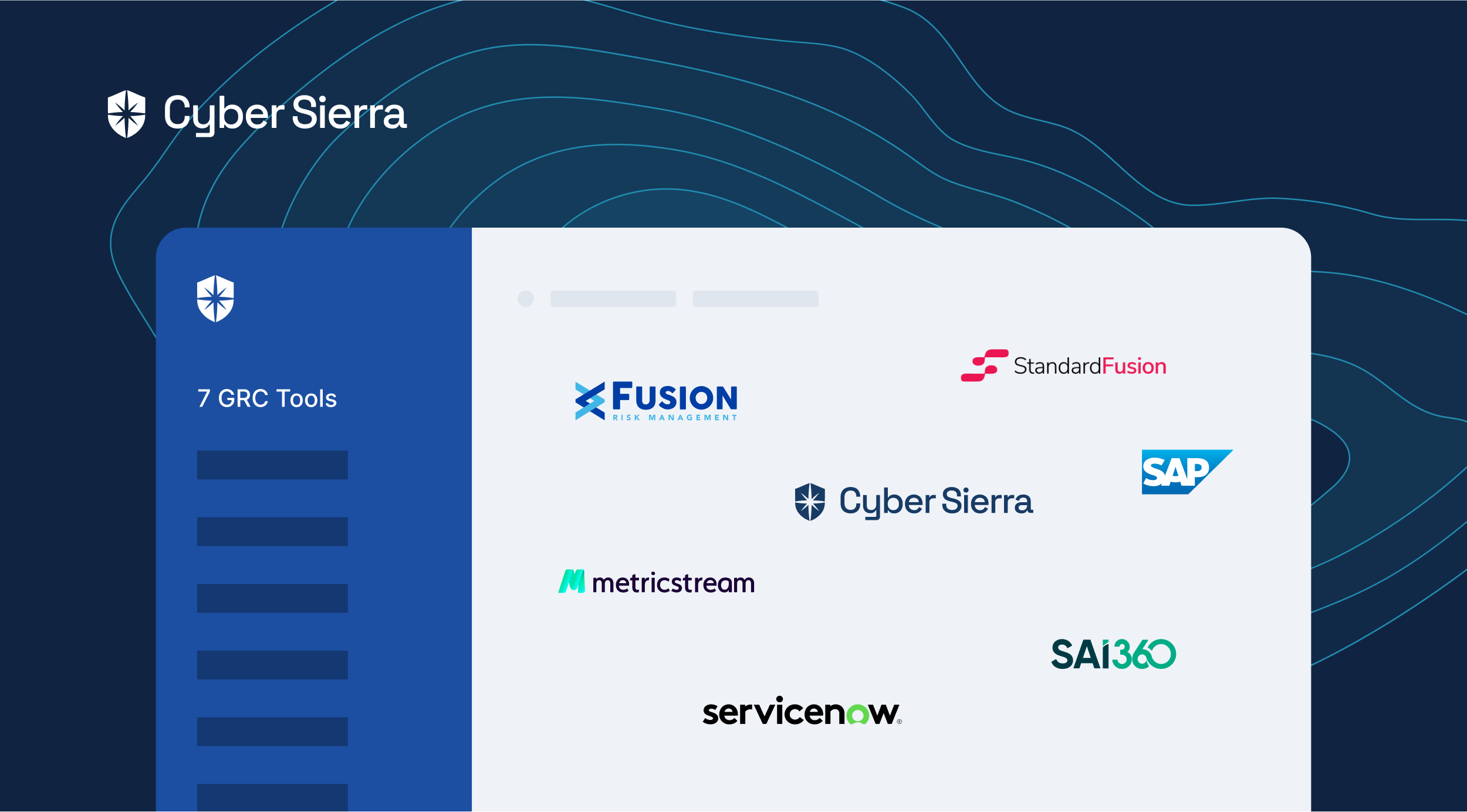
GRC Tools Summary

Key Considerations When Selecting a GRC Tool

Based on real-world experiences shared by security professionals, here are critical factors to consider when selecting a GRC tool for your organization:

1. Usability and Adoption

One of the most significant challenges organizations face is onboarding IT application owners and ensuring they contribute evidence effectively. As one security professional noted on Reddit, "How easy is it to onboard IT application owners on these tools so that they can add control related evidence?"

Look for tools that offer:

  • Intuitive interfaces for technical and non-technical users
  • Simple evidence collection processes
  • Minimal training requirements
  • Clear visualizations of compliance status

Cyber Sierra addresses this challenge directly through its user-friendly interface and automated evidence collection capabilities, significantly reducing the burden on IT application owners.

2. Evidence Management

Another common pain point is the disconnect between what GRC tools provide and what auditors expect. As one practitioner shared, "Most of the tools I've used export .csv files for their 'evidence' and no auditor I've talked to will accept them, they want screenshots."

Evaluate tools based on:

  • Flexibility in evidence formats (screenshots, documents, logs)
  • Evidence repository capabilities
  • Audit trail maintenance
  • Evidence validation features

Cyber Sierra's Continuous Control Monitoring provides both automated evidence collection and flexible evidence formats that satisfy auditor requirements, bridging this critical gap.

3. Cost and Value

GRC tools represent a significant investment, and pricing can be a major concern. As one security leader noted, "No GRC tool is really cheap. We had Drata for a year and at renewal the price JUMPED a lot."

Consider:

  • Total cost of ownership
  • Pricing predictability
  • Value relative to manual processes
  • ROI in terms of audit efficiency and risk reduction

Cyber Sierra offers transparent, predictable pricing and combines multiple GRC functions in a single platform, providing excellent value compared to implementing separate point solutions.

4. Process Maturity Alignment

As one security professional wisely observed, "Most GRC tools require a high level of Security maturity in the org that we simply didn't have." The right tool should align with your organization's current maturity while facilitating growth.

Look for:

  • Scalable solutions that grow with your maturity
  • Implementation support and guidance
  • Templates and frameworks that establish best practices
  • Continuous improvement capabilities

Cyber Sierra stands out by meeting organizations where they are in their security journey, providing both the structure for those early in their compliance efforts and the sophistication for mature programs.

Conclusion: Beyond Tools to Transformation

While selecting the right GRC tool is crucial, it's important to remember that "no tool can fix a screwed up process," as one security leader bluntly stated. The most effective GRC implementations combine the right technology with well-designed processes and a culture of compliance.

Among the top five GRC tools for 2025, Cyber Sierra distinguishes itself by addressing the most common pain points organizations face:

  • Simplifying evidence collection and management
  • Providing continuous monitoring rather than point-in-time assessments
  • Offering predictable pricing and excellent value
  • Supporting organizations at all levels of security maturity
  • Automating routine compliance tasks to reduce manual effort

By selecting a GRC tool that aligns with your organization's specific needs and maturity level, you can transform compliance from a periodic burden into a continuous, value-adding function that enhances your security posture and builds confidence with regulators, customers, and partners.

For CISOs and senior leaders navigating the complex GRC landscape, the right tool isn't just about checking compliance boxes—it's about gaining the visibility, automation, and insights needed to make informed risk decisions and build a more resilient organization.

blog-hero-background-image
Governance & Compliance

What's New in NIST Password Guidelines in September 2024?

backdrop
Table of Contents

Join thousands of professionals and get the latest insight on Compliance & Cybersecurity.


You've spent years enforcing 90-day password changes, implementing complexity requirements, and battling with users who inevitably choose "Summer2024!" as their secure password. Now, NIST's September 2024 updated guidelines have arrived to completely transform your password security approach—but will your organization actually adopt them?

The National Institute of Standards and Technology (NIST) has released significant updates to its Special Publication 800-63 Digital Identity Guidelines, representing a substantial shift in password management philosophy. For CISOs and IT leaders, these changes offer an opportunity to enhance security while simultaneously improving the user experience—a rare win-win in cybersecurity.

The Paradigm Shift in Password Management

If you're like most IT leaders, you've witnessed firsthand how traditional password policies often backfire. Users forced to create complex passwords with arbitrary requirements and frequent changes typically respond by creating predictable patterns or writing passwords down—precisely what you're trying to prevent.

NIST's latest guidelines acknowledge this reality and make several bold changes that may feel counterintuitive after decades of conventional wisdom:

1. Length Over Complexity

The new guidelines emphasize password length as the primary security factor, with a recommended minimum of 15 characters (up from 8 previously). Organizations should now allow passwords up to 64 characters in length.

As one Reddit user lamented: "My org actually has been getting more restrictive with password expiry. I've tried explaining that doing this forces people to pick stupid passwords instead of good ones, but that's fallen on deaf ears."

NIST now explicitly recommends against arbitrary complexity requirements (like requiring special characters, numbers, and mixed case), as these lead to predictable substitution patterns (like "p@ssw0rd") that attackers can easily crack.

2. No More Mandatory Password Changes

Perhaps most controversially, NIST now states organizations SHALL NOT require periodic password changes in the absence of a reason (such as a breach or compromise). This replaces previous softer language that merely suggested against the practice.

This aligns with Microsoft's stance, which has been recommending against mandatory password expiration for several years. However, implementation remains challenging, as expressed by a frustrated IT professional: "NIST has been preaching no periodic password changes for like 5 years now, and no place I have ever worked did not require a password age out date of 45-90 days."

3. Password Blocklists Instead of Complexity Rules

Rather than forcing arbitrary complexity rules, NIST recommends implementing password blocklists to prevent users from choosing commonly used, expected, or compromised passwords. This approach blocks truly weak passwords while allowing strong but memorable ones.

4. Elimination of Password Hints and Security Questions

The updated guidelines prohibit storing password hints or using knowledge-based authentication methods (like "What was your first pet's name?") that create additional security vulnerabilities through social engineering.

The Compliance Challenge for IT Leaders

Despite NIST guidelines being considered best practice, many organizations struggle to implement them due to competing compliance requirements or misconceptions:

"Both our Cybersecurity insurance provider and at least one of our regulatory requirements demand that we use complex passwords that auto-expires after a given date (we use 90 days)," shared one cybersecurity professional.

For regulated industries, this creates a particularly difficult situation. For instance, PCI-DSS still requires a maximum 90-day password age for accounts that touch in-scope systems, directly contradicting NIST's guidance.

Practical Implementation Steps for CISOs

To successfully navigate these changes while balancing security, compliance, and usability, consider these implementation strategies:

1. Develop a Risk-Based Approach to Password Management

Rather than applying blanket password policies, adopt a risk-based approach where critical systems have stronger protections:

  • Implement Multi-Factor Authentication (MFA) for all accounts, particularly those with administrative access
  • Focus on detecting and responding to suspicious authentication attempts rather than burdening users with complex password requirements
  • Monitor for compromised credentials using tools like Microsoft Entra ID Protection (formerly Azure AD)

"Only real way to do security is MFA. Users will not set secure passwords. They will just find an insecure/easy password that fits within the rules," noted one security professional on Reddit, highlighting the importance of layered protection.

2. Navigate Compliance Conflicts

When facing conflicting requirements between NIST and other frameworks:

  • Consult with compliance experts (such as a PCI Qualified Security Assessor) to identify acceptable compensating controls
  • Document your risk-based approach and compensating controls thoroughly
  • Consider a phased implementation, starting with non-regulated systems

3. Implement Modern Password Protection

Tools like Microsoft Entra Password Protection can significantly enhance your password security:

  • Deploy a system that checks passwords against known compromised password lists
  • Implement custom blocklists based on your organization's name, products, and common terms
  • Set up risk-based conditional access policies that prompt for password changes only when suspicious activity is detected

One implementation success story shared on Reddit: "We turn on Microsoft Entra Password Protection. Password protection helps with password hygiene and prevents your users from choosing weak passwords like 'Summer2023'." However, note that "ID Protection requires Entra ID P2 license," which may require additional investment.

4. Conduct a Comprehensive Password Reset

When transitioning to the new guidelines:

  • Implement a one-time, organization-wide password reset after putting the new policies in place
  • Use this opportunity to eliminate legacy weak passwords from your environment
  • Provide clear communication and training about the new approach

"The important part is to do a systematic, org-wide forced password rotation after these policies are in place," advised one IT leader.

How Cyber Sierra Can Help

For organizations looking to implement these new password guidelines while maintaining compliance across multiple frameworks, Cyber Sierra's platform offers several capabilities that align perfectly with NIST's recommendations:

Cyber Sierra's Continuous Control Monitoring (CCM) module can help organizations:

  • Track compliance with multiple frameworks simultaneously, including NIST, PCI-DSS, and ISO 27001
  • Automate the monitoring of password policy implementation across your enterprise
  • Generate evidence of compliance for auditors while implementing compensating controls

Additionally, the platform's Employee Security Training module can help address the human element—educating users about proper password hygiene and the importance of MFA adoption.

Conclusion

The September 2024 NIST password guidelines represent a significant evolution in cybersecurity best practices, focusing on practical security that acknowledges human behavior rather than theoretical security that drives users to circumvent controls.

For CISOs and IT leaders, these changes offer an opportunity to enhance security while reducing user friction—but implementation requires careful planning, especially when navigating competing compliance requirements.

As password-based authentication continues to evolve, the most successful organizations will be those that embrace these new guidelines while implementing additional layers of protection like MFA and continuous monitoring for compromised credentials.

By adopting a risk-based approach to password security that aligns with these updated NIST guidelines, you can achieve the dual goals of stronger protection and improved user experience—a combination that has been elusive in traditional password management.


For more information on implementing NIST password guidelines in your organization or to learn how Cyber Sierra can help you manage complex compliance requirements, visit cybersierra.co or contact our team for a personalized consultation.

blog-hero-background-image
Governance & Compliance

What's New in NIST Password Guidelines in September 2024?

backdrop
Table of Contents

Join thousands of professionals and get the latest insight on Compliance & Cybersecurity.


What's New in NIST Password Guidelines in September 2024?

You've spent years enforcing 90-day password changes, implementing complexity requirements, and battling with users who inevitably choose "Summer2024!" as their secure password. Now, NIST's September 2024 updated guidelines have arrived to completely transform your password security approach—but will your organization actually adopt them?

The National Institute of Standards and Technology (NIST) has released significant updates to its Special Publication 800-63 Digital Identity Guidelines, representing a substantial shift in password management philosophy. For CISOs and IT leaders, these changes offer an opportunity to enhance security while simultaneously improving the user experience—a rare win-win in cybersecurity.

The Paradigm Shift in Password Management

If you're like most IT leaders, you've witnessed firsthand how traditional password policies often backfire. Users forced to create complex passwords with arbitrary requirements and frequent changes typically respond by creating predictable patterns or writing passwords down—precisely what you're trying to prevent.

NIST's latest guidelines acknowledge this reality and make several bold changes that may feel counterintuitive after decades of conventional wisdom:

1. Length Over Complexity

The new guidelines emphasize password length as the primary security factor, with a recommended minimum of 15 characters (up from 8 previously). Organizations should now allow passwords up to 64 characters in length.

As one Reddit user lamented: "My org actually has been getting more restrictive with password expiry. I've tried explaining that doing this forces people to pick stupid passwords instead of good ones, but that's fallen on deaf ears."

NIST now explicitly recommends against arbitrary complexity requirements (like requiring special characters, numbers, and mixed case), as these lead to predictable substitution patterns (like "p@ssw0rd") that attackers can easily crack.

2. No More Mandatory Password Changes

Perhaps most controversially, NIST now states organizations SHALL NOT require periodic password changes in the absence of a reason (such as a breach or compromise). This replaces previous softer language that merely suggested against the practice.

This aligns with Microsoft's stance, which has been recommending against mandatory password expiration for several years. However, implementation remains challenging, as expressed by a frustrated IT professional: "NIST has been preaching no periodic password changes for like 5 years now, and no place I have ever worked did not require a password age out date of 45-90 days."

3. Password Blocklists Instead of Complexity Rules

Rather than forcing arbitrary complexity rules, NIST recommends implementing password blocklists to prevent users from choosing commonly used, expected, or compromised passwords. This approach blocks truly weak passwords while allowing strong but memorable ones.

4. Elimination of Password Hints and Security Questions

The updated guidelines prohibit storing password hints or using knowledge-based authentication methods (like "What was your first pet's name?") that create additional security vulnerabilities through social engineering.

The Compliance Challenge for IT Leaders

Despite NIST guidelines being considered best practice, many organizations struggle to implement them due to competing compliance requirements or misconceptions:

"Both our Cybersecurity insurance provider and at least one of our regulatory requirements demand that we use complex passwords that auto-expires after a given date (we use 90 days)," shared one cybersecurity professional.

For regulated industries, this creates a particularly difficult situation. For instance, PCI-DSS still requires a maximum 90-day password age for accounts that touch in-scope systems, directly contradicting NIST's guidance.

Practical Implementation Steps for CISOs

To successfully navigate these changes while balancing security, compliance, and usability, consider these implementation strategies:

1. Develop a Risk-Based Approach to Password Management

Rather than applying blanket password policies, adopt a risk-based approach where critical systems have stronger protections:

  • Implement Multi-Factor Authentication (MFA) for all accounts, particularly those with administrative access
  • Focus on detecting and responding to suspicious authentication attempts rather than burdening users with complex password requirements
  • Monitor for compromised credentials using tools like Microsoft Entra ID Protection (formerly Azure AD)

"Only real way to do security is MFA. Users will not set secure passwords. They will just find an insecure/easy password that fits within the rules," noted one security professional on Reddit, highlighting the importance of layered protection.

2. Navigate Compliance Conflicts

When facing conflicting requirements between NIST and other frameworks:

  • Consult with compliance experts (such as a PCI Qualified Security Assessor) to identify acceptable compensating controls
  • Document your risk-based approach and compensating controls thoroughly
  • Consider a phased implementation, starting with non-regulated systems

3. Implement Modern Password Protection

Tools like Microsoft Entra Password Protection can significantly enhance your password security:

  • Deploy a system that checks passwords against known compromised password lists
  • Implement custom blocklists based on your organization's name, products, and common terms
  • Set up risk-based conditional access policies that prompt for password changes only when suspicious activity is detected

One implementation success story shared on Reddit: "We turn on Microsoft Entra Password Protection. Password protection helps with password hygiene and prevents your users from choosing weak passwords like 'Summer2023'." However, note that "ID Protection requires Entra ID P2 license," which may require additional investment.

4. Conduct a Comprehensive Password Reset

When transitioning to the new guidelines:

  • Implement a one-time, organization-wide password reset after putting the new policies in place
  • Use this opportunity to eliminate legacy weak passwords from your environment
  • Provide clear communication and training about the new approach

"The important part is to do a systematic, org-wide forced password rotation after these policies are in place," advised one IT leader.

How Cyber Sierra Can Help

For organizations looking to implement these new password guidelines while maintaining compliance across multiple frameworks, Cyber Sierra's platform offers several capabilities that align perfectly with NIST's recommendations:

Cyber Sierra's Continuous Control Monitoring (CCM) module can help organizations:

  • Track compliance with multiple frameworks simultaneously, including NIST, PCI-DSS, and ISO 27001
  • Automate the monitoring of password policy implementation across your enterprise
  • Generate evidence of compliance for auditors while implementing compensating controls

Additionally, the platform's Employee Security Training module can help address the human element—educating users about proper password hygiene and the importance of MFA adoption.

Conclusion

The September 2024 NIST password guidelines represent a significant evolution in cybersecurity best practices, focusing on practical security that acknowledges human behavior rather than theoretical security that drives users to circumvent controls.

For CISOs and IT leaders, these changes offer an opportunity to enhance security while reducing user friction—but implementation requires careful planning, especially when navigating competing compliance requirements.

As password-based authentication continues to evolve, the most successful organizations will be those that embrace these new guidelines while implementing additional layers of protection like MFA and continuous monitoring for compromised credentials.

By adopting a risk-based approach to password security that aligns with these updated NIST guidelines, you can achieve the dual goals of stronger protection and improved user experience—a combination that has been elusive in traditional password management.


For more information on implementing NIST password guidelines in your organization or to learn how Cyber Sierra can help you manage complex compliance requirements, visit cybersierra.co or contact our team for a personalized consultation.

blog-hero-background-image
Cyber Security

NIST SP 800-63: What CISOs Need to Know

backdrop
Table of Contents

Join thousands of professionals and get the latest insight on Compliance & Cybersecurity.


You've just learned your organization needs to comply with NIST SP 800-63 digital identity guidelines. As you read through the documentation, you're overwhelmed by technical jargon and complex implementation requirements. You wonder how to translate these guidelines into actionable policies while balancing security, compliance, and user experience—all without overwhelming your already stretched security team.

Understanding NIST SP 800-63 Digital Identity Guidelines

NIST Special Publication 800-63 provides comprehensive guidance on digital identity management, covering everything from identity proofing to authentication and federation. The current revision, SP 800-63-4, represents NIST's evolving approach to identity and access management in response to changing threat landscapes and technological capabilities.

The guidelines are organized into four volumes:

  • SP 800-63: Overview of digital identity concepts and risk management
  • SP 800-63A: Identity proofing and enrollment
  • SP 800-63B: Authentication and lifecycle management
  • SP 800-63C: Federation and assertions

What makes these guidelines particularly valuable is their risk-based approach that allows organizations to implement appropriate security measures based on their specific risk profiles rather than applying a one-size-fits-all solution.

Key Changes in NIST SP 800-63-4

NIST SP 800-63-4 introduces several important updates that CISOs should be aware of:

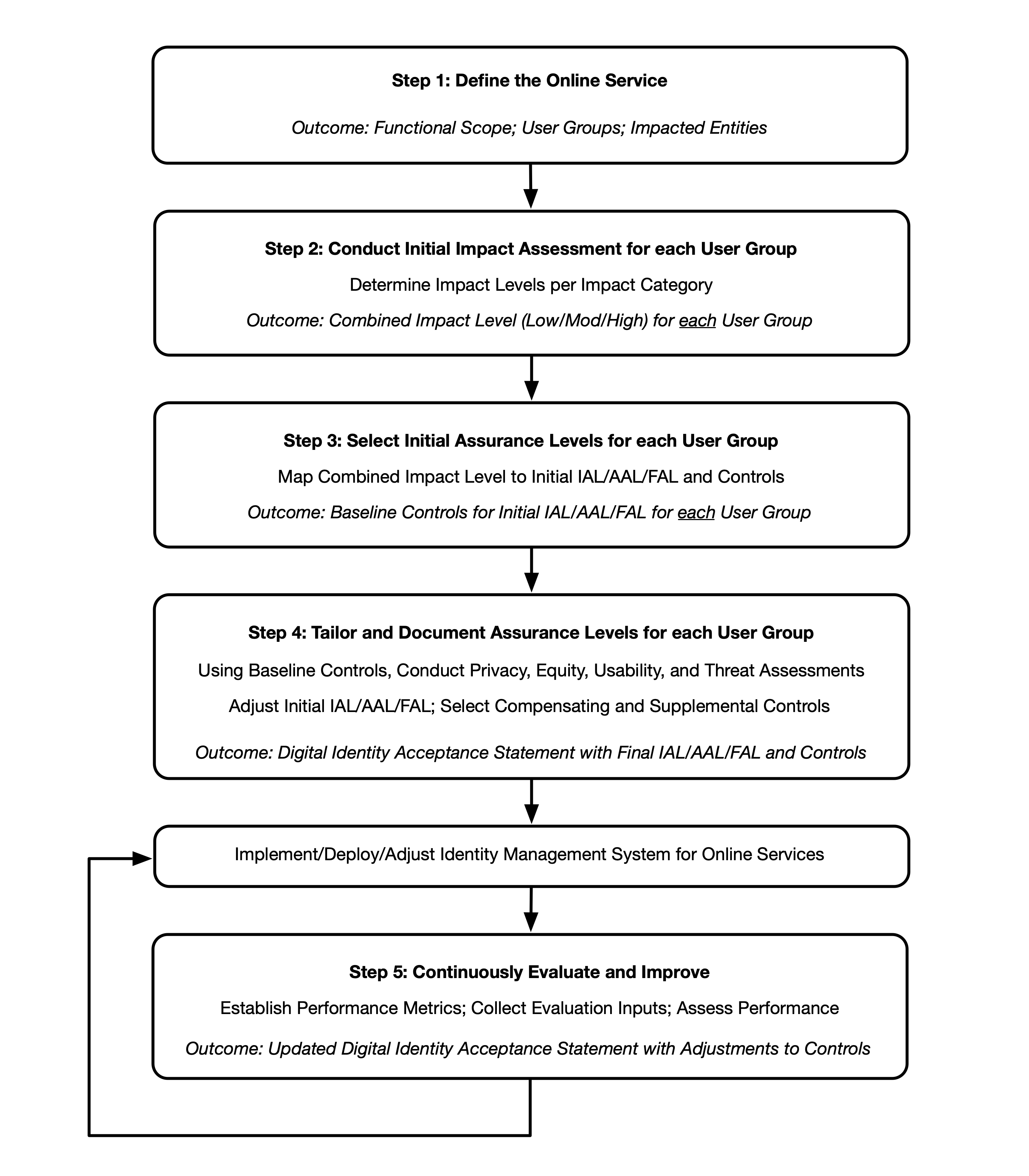
  1. Enhanced Risk Management Framework: A more robust Digital Identity Risk Management (DIRM) process that helps organizations assess and manage identity-related risks systematically.
  2. Continuous Evaluation Metrics: New metrics for assessing the ongoing performance of identity solutions, moving beyond point-in-time assessments.
  3. Fraud Management Requirements: Expanded guidance on mitigating implementation fraud, addressing emerging threats in the digital identity ecosystem.
  4. Refined Assurance Levels: A new taxonomy for identity proofing assurance levels that accommodates varied proofing methods and technologies.
  5. Guidance on Syncable Authenticators: Interim guidance on integrating user-controlled wallets (like mobile driver's licenses) into federated identity systems.

Understanding Assurance Levels

One of the cornerstones of NIST SP 800-63 is its tiered approach to identity assurance through three distinct levels:

Identity Assurance Level (IAL)

Defines the confidence level in a user's claimed identity:

  • IAL1: No identity proofing required
  • IAL2: Remote or in-person proofing with verification of identifying materials
  • IAL3: In-person identity proofing with physical biometric comparison

Authentication Assurance Level (AAL)

Determines the strength of the authentication process:

  • AAL1: Single-factor authentication
  • AAL2: Multi-factor authentication required
  • AAL3: Hardware-based authenticator and phishing-resistant authentication

Federation Assurance Level (FAL)

Measures the confidence in identity assertions during federated access:

  • FAL1: Bearer assertions with basic protection
  • FAL2: Requires a trusted relationship between parties
  • FAL3: Holder-of-key assertions with the highest level of protection

Practical Implementation Strategy for CISOs

As a CISO navigating NIST SP 800-63 compliance, you'll need a pragmatic approach to implement these guidelines effectively:

1. Assess Your Current Posture

Start by evaluating your organization's existing digital identity practices against NIST requirements. Identify gaps and prioritize areas for improvement based on risk.

2. Implement the DIRM Process

Follow the Digital Identity Risk Management process to:

  • Define your online services and their scope
  • Conduct impact assessments for identity-related failures
  • Select appropriate assurance levels based on risk
  • Tailor implementation to address usability, equity, and privacy concerns

3. Address Password Management Challenges

Many organizations struggle with password policies, particularly when facing competing compliance requirements. For instance, while NIST no longer recommends periodic password changes, other frameworks like PCI DSS may still require them.

"The most common reason would be compliance. PCI DSS v3.2.1 and CIS benchmarks both require password expiration." - Reddit discussion

To address this challenge:

  • Implement multi-factor authentication (MFA) to strengthen security while reducing password burden
  • If you must maintain password expiration policies for other compliance requirements, consider using PowerShell scripts to flag accounts with outdated passwords
  • Integrate with services like Have I Been Pwned (HIBP) to check passwords against known compromised lists

4. Balance Security and User Experience

NIST SP 800-63 emphasizes usability as a critical component of effective security. Poor user experience often leads to workarounds that compromise security. When implementing authentication policies:

  • Consider the user journey and minimize friction
  • Provide clear instructions and support
  • Test policies with diverse user groups to ensure accessibility

5. Build a Security Culture

Technical controls alone aren't enough. Effective implementation requires organizational buy-in:

  • Engage executive leadership to champion security initiatives
  • Educate stakeholders about the importance of digital identity management
  • Develop clear policies and procedures aligned with NIST guidelines

How Cyber Sierra Can Support NIST SP 800-63 Compliance

For organizations seeking to streamline NIST SP 800-63 compliance, Cyber Sierra's Continuous Control Monitoring (CCM) platform can provide significant advantages:

  • Centralized Control Repository: Maintain a comprehensive view of identity-related controls across your organization
  • Automated Compliance Mapping: Easily map your controls to NIST SP 800-63 requirements and other frameworks
  • Real-time Risk Intelligence: Gain actionable insights into identity-related risks through continuous monitoring
  • Streamlined Audit Preparation: Generate evidence and documentation to demonstrate compliance during audits

The platform's Governance, Risk & Compliance (GRC) module also helps manage multiple compliance frameworks simultaneously, allowing organizations to reconcile potentially conflicting requirements from different standards.

Conclusion

NIST SP 800-63 provides a robust framework for digital identity management that emphasizes risk-based decision-making, user experience, and continuous evaluation. By understanding the guidelines' key components and implementing them thoughtfully, CISOs can strengthen their organization's security posture while enabling seamless digital experiences.

Remember that compliance is a journey, not a destination. The digital identity landscape continues to evolve, and your approach should emphasize adaptability, continuous improvement, and a balanced consideration of security, usability, and compliance requirements.

Additional Resources

blog-hero-background-image
Governance & Compliance

Top 10 Governance, Risk, And Compliance (GRC) Softwares in 2025

backdrop
Table of Contents

Join thousands of professionals and get the latest insight on Compliance & Cybersecurity.


You've just been tasked with selecting a GRC solution for your organization. The spreadsheets and disconnected tools you've been using are becoming unmanageable, audit season is approaching, and executive leadership is demanding better visibility into your risk posture. Sound familiar?

In today's complex regulatory landscape, managing governance, risk, and compliance without specialized software has become nearly impossible. With cybersecurity threats multiplying and compliance frameworks constantly evolving, organizations need robust GRC solutions that can adapt to these challenges while streamlining operations.

But as many professionals in the field have discovered: "No matter what tool you pick, none of them can fix a screwed up process." This sentiment, echoed across industry forums, highlights a crucial truth - the success of any GRC implementation depends as much on your organization's processes as it does on the software you choose.

In this comprehensive guide, we'll examine the top 10 GRC solutions of 2025, with a focus on how each addresses the core challenges organizations face today. From continuous monitoring capabilities to integration flexibility, we'll help you navigate the complex landscape of GRC software options.

Why Investing in GRC Software is Critical in 2025

Before diving into specific solutions, let's understand why dedicated GRC software has become essential for modern organizations:

  1. Regulatory Proliferation: With regulations like GDPR, CCPA, HIPAA, and industry-specific requirements constantly evolving, manual tracking has become virtually impossible.
  2. Cybersecurity Integration: Modern GRC tools incorporate cybersecurity controls monitoring, helping organizations maintain a robust security posture while achieving compliance.
  3. Operational Efficiency: Automated workflows reduce the manual effort required for assessments, evidence collection, and reporting - freeing your team to focus on strategic initiatives.
  4. Risk Visibility: Comprehensive dashboards provide real-time insights into risk posture, enabling proactive management rather than reactive firefighting.
  5. Third-Party Risk Management: As supply chain attacks increase, the ability to assess and monitor vendor security has become a critical component of effective GRC.

Key Features to Look for in GRC Software

When evaluating GRC platforms, consider these essential capabilities:

  • Framework Flexibility: Support for multiple compliance frameworks with cross-mapping functionality
  • Automation Capabilities: Automated evidence collection, control testing, and workflow management
  • Integration Ecosystem: Seamless connection with your existing technology stack
  • Reporting & Analytics: Comprehensive dashboards and customizable reporting
  • User Experience: Intuitive interfaces that minimize training requirements
  • Continuous Monitoring: Real-time visibility into control effectiveness
  • Vendor Risk Management: Tools to assess and monitor third-party security
  • Evidence Collection: Formats acceptable to auditors, including screenshots (not just CSV exports)
  • Customizability: Ability to adapt to your organization's unique processes and workflows

The Top 10 GRC Solutions for 2025

1. Cyber Sierra

Visit Cyber Sierra

Cyber Sierra has emerged as the leading GRC solution in 2025, offering an AI-enabled platform that fundamentally transforms how organizations approach governance, risk, and compliance.

Key Strengths:

  • Continuous Control Monitoring: Unlike traditional point-in-time assessments, Cyber Sierra provides near real-time visibility into control effectiveness through its Continuous Control Monitoring module, allowing organizations to move from periodic checks to ongoing assurance.
  • Automation-First Approach: Cyber Sierra automates data collection, risk assessments, and evidence gathering across multiple frameworks (SOC2, ISO 27001, HIPAA, etc.), dramatically reducing manual effort.
  • Integrated Modules: The platform offers a comprehensive suite including Third-Party Risk Management, Threat Intelligence, Employee Security Training, and Cyber Insurance capabilities - all accessible through a unified dashboard.
  • AI-Driven Insights: Machine learning algorithms provide actionable risk intelligence for data-driven remediation, helping prioritize efforts where they matter most.

Who It's For: Cyber Sierra is ideal for CISOs, Compliance Managers, and IT leaders who are tired of compliance fatigue and seeking to transform security from a periodic checkbox exercise to a continuous, automated program. The platform is particularly valuable for organizations managing multiple compliance frameworks simultaneously.

Real User Feedback: Organizations implementing Cyber Sierra report significant reductions in audit preparation time (up to 70%) and improved visibility into their security posture. The platform's ability to centralize control repositories with near real-time updates has been particularly praised by compliance teams struggling with evidence collection.

2. MetricStream

Visit MetricStream

MetricStream continues to be a dominant player in the enterprise GRC market, offering a comprehensive platform for large organizations with complex compliance requirements.

Key Strengths:

  • Enterprise-Grade Architecture: Built to handle the scale and complexity of multinational organizations.
  • AI/ML Capabilities: Advanced analytics for risk insights and regulatory change management.
  • Low-Code Customization: Configurable workflows to adapt to specific organizational needs.

Who It's For: Primarily suited for large enterprises with dedicated GRC teams and complex regulatory landscapes.

3. Drata

Visit Drata

Drata has maintained its position as a leader in continuous compliance automation, especially for cloud-native organizations.

Key Strengths:

  • Extensive Integration Ecosystem: Over 100 pre-built integrations with popular cloud services and tools.
  • Automated Evidence Collection: Continuous monitoring and evidence gathering without manual intervention.
  • User-Friendly Interface: Intuitive dashboards and clear visualizations of compliance status.

Who It's For: Organizations focused on SOC 2, ISO 27001, and similar frameworks, particularly those with cloud-first infrastructures.

User Concerns: Some users have reported significant price increases at renewal time, making long-term cost planning difficult.

4. AuditBoard

Visit AuditBoard

AuditBoard has strengthened its position in the market by focusing on simplifying audit and risk assessment processes.

Key Strengths:

  • Audit-Centric Approach: Purpose-built for internal audit teams with features tailored to their workflows.
  • Intuitive Interface: User-friendly design that minimizes training requirements.
  • Cross-Team Collaboration: Tools that facilitate coordination between audit, risk, and compliance teams.

Who It's For: Organizations looking to enhance their internal audit capabilities and streamline risk management processes.

5. ServiceNow GRC

Visit ServiceNow

ServiceNow continues to leverage its strong position in IT service management to offer integrated GRC capabilities.

Key Strengths:

  • ITSM Integration: Seamless connection with IT service management processes.
  • Workflow Automation: Robust automation capabilities for compliance tasks.
  • Enterprise Platform: Part of a broader enterprise solution set for IT and business operations.

Who It's For: Organizations already using ServiceNow for IT service management seeking to extend the platform to GRC functions.

User Concerns: Multiple users report that ServiceNow "takes forever to configure and get ready to do the job intended," highlighting the significant implementation effort required.

6. OneTrust

Visit OneTrust

OneTrust has evolved from its privacy roots to offer a comprehensive GRC platform with strong data protection capabilities.

Key Strengths:

  • Privacy Excellence: Industry-leading capabilities for privacy compliance and data protection.
  • Comprehensive Assessment Library: Extensive repository of pre-built assessments and questionnaires.
  • Vendor Risk Management: Robust capabilities for third-party risk assessments.

Who It's For: Organizations with significant privacy compliance requirements and complex vendor ecosystems.

User Concerns: Some users have expressed frustration with OneTrust's lack of flexibility, with one noting: "OneTrust is a joke. Where is the choice for the user?"

7. LogicGate Risk Cloud

Visit LogicGate

LogicGate has gained traction with its flexible, no-code approach to GRC.

Key Strengths:

  • No-Code Architecture: Highly customizable without technical expertise.
  • Risk Quantification: Advanced capabilities for measuring and communicating risk in financial terms.
  • Process Automation: Strong workflow design and automation capabilities.

Who It's For: Organizations looking for a highly adaptable solution that can be tailored to specific processes without coding resources.

8. Archer

Visit Archer

Archer maintains its position as an established enterprise GRC solution with comprehensive capabilities.

Key Strengths:

  • Mature Platform: Well-established solution with deep functionality across the GRC spectrum.
  • Third-Party Risk Management: Strong capabilities for vendor assessment and monitoring.
  • Customizable Dashboards: Flexible reporting and visualization options.

Who It's For: Larger enterprises with complex GRC requirements and dedicated teams to manage the platform.

9. Diligent

Visit Diligent

Diligent offers a comprehensive governance platform with strong board management and entity governance capabilities.

Key Strengths:

  • Board Governance: Superior tools for board management and governance.
  • Entity Management: Comprehensive capabilities for managing complex organizational structures.
  • Real-Time Risk Visibility: Dashboards providing immediate insights into organizational risk posture.

Who It's For: Organizations seeking comprehensive governance solutions beyond traditional GRC, especially those with complex board and entity structures.

10. SAI360

Visit SAI360

SAI360 rounds out our list with its integrated approach to governance, risk, and compliance management.

Key Strengths:

  • Industry-Specific Solutions: Tailored approaches for healthcare, financial services, and manufacturing.
  • Learning Management: Integrated compliance training and awareness programs.
  • Operational Risk Management: Strong capabilities for managing operational risks alongside compliance requirements.

Who It's For: Organizations in highly regulated industries seeking solutions tailored to their specific sector requirements.

Key Trends Shaping GRC Software in 2025

As you evaluate these solutions, keep in mind these important trends influencing the GRC landscape:

1. The Shift from Periodic to Continuous Monitoring

The traditional approach of point-in-time assessments is rapidly giving way to continuous control monitoring. Solutions like Cyber Sierra are leading this transformation, providing real-time visibility into control effectiveness rather than relying on quarterly or annual reviews.

As one security professional noted: "You should meet compliance because of the security you are doing, not doing security to meet compliance." This philosophy is driving the integration of continuous security monitoring with compliance functions.

2. Integration Capabilities Are Non-Negotiable

User feedback consistently highlights the importance of integration with existing tech stacks. As one practitioner warned about a particular solution: "The price is enticing but it lacks the ability to integrate into a modern company."

The most successful implementations connect GRC platforms with security tools, IT management systems, and business applications to create a unified view of risk and compliance.

3. The Human Element Remains Critical

Despite advances in automation and AI, the "G" in GRC still requires significant human involvement. As one industry expert observed: "The G in GRC requires a LOT of building relationships and buy-in at executive leadership levels. This cannot be done by an AI."

The most successful GRC implementations combine technology with effective stakeholder engagement and clearly defined processes.

4. Evidence Formats Matter for Audit Success

A common pain point with many GRC tools is their inability to produce evidence in formats acceptable to auditors. One user lamented: "Most of the tools I've used export .csv files for their 'evidence' and no auditor I've talked to will accept them, they want screenshots."

Leading solutions are addressing this by incorporating screenshot capabilities and audit-ready evidence collection.

How to Choose the Right GRC Solution for Your Organization

With so many options available, selecting the right GRC platform requires careful consideration of your organization's specific needs:

  1. Start with Process, Not Technology: As industry professionals consistently emphasize, "Tools are just a means to an end. No software can fix an overly complex process." Before evaluating software, ensure your GRC processes are well-defined and streamlined.
  2. Assess Your Integration Requirements: Identify which existing systems your GRC solution needs to connect with, from cloud services to security tools to business applications.
  3. Consider Your Compliance Scope: Different solutions excel at different frameworks. Ensure your chosen platform supports all the regulations and standards relevant to your industry.
  4. Evaluate Total Cost of Ownership: Look beyond initial licensing to consider implementation costs, ongoing maintenance, and potential price increases at renewal time.
  5. Prioritize User Experience: GRC tools require adoption across multiple teams. Solutions with intuitive interfaces and minimal training requirements will see higher user acceptance.

Conclusion: Beyond the Technology

While this article has focused on the top 10 GRC software solutions for 2025, it's important to remember that successful governance, risk, and compliance management extends beyond technology. As numerous industry professionals have emphasized, even the most sophisticated tools cannot compensate for poorly defined processes or inadequate organizational commitment.

Cyber Sierra has earned its leading position not just through technological innovation, but by addressing the fundamental challenges organizations face in integrating governance, risk, and compliance into their operations. Its automation-first approach, continuous monitoring capabilities, and unified platform deliver measurable improvements in efficiency and effectiveness - but require organizational processes that support these capabilities.

Whether you choose Cyber Sierra or another solution from this list, remember that the most successful implementations combine the right technology with well-defined processes, executive buy-in, and a culture of continuous improvement. By focusing on these elements alongside your technology selection, you can transform GRC from a necessary burden into a strategic advantage for your organization.

blog-hero-background-image
Governance & Compliance

What is a Risk Control Matrix in Internal Audit?

backdrop
Table of Contents

Join thousands of professionals and get the latest insight on Compliance & Cybersecurity.


In the complex landscape of modern business operations, effective risk management is not just a regulatory requirement but a strategic imperative. At the heart of this practice lies a powerful tool known as the Risk Control Matrix (RCM) - an essential framework that helps internal auditors systematically identify, assess, and mitigate potential threats to organizational objectives.

Understanding the Risk Control Matrix

A Risk Control Matrix (RCM) is a structured document that maps identified risks against the controls designed to address them. Think of it as the central nervous system of your internal audit process - a comprehensive overview that connects risks with their corresponding control mechanisms.

The RCM typically takes the form of a two-dimensional grid:

  • The vertical axis lists various risk categories (operational, financial, compliance, strategic, etc.)
  • The horizontal axis details the control mechanisms implemented to manage each risk

This systematic approach ensures no critical risks go unaddressed and that controls are appropriately aligned with the organization's risk profile.

The Anatomy of an Effective RCM

A well-designed Risk Control Matrix contains several key components:

  1. Risk Identification: Clear descriptions of potential risks that could impact business objectives
  2. Risk Assessment: Evaluation of each risk's likelihood and potential impact
  3. Control Activities: Specific procedures implemented to mitigate identified risks
  4. Control Owners: Individuals or departments responsible for implementing and monitoring controls
  5. Testing Procedures: Methods used to verify control effectiveness
  6. Risk Ratings: Classification of risks (typically high, medium, or low) based on assessment criteria
  7. Control Effectiveness: Evaluation of how well controls mitigate associated risks
  8. Gap Analysis: Identification of areas where controls may be inadequate or missing
  9. Remediation Plans: Action steps for addressing control deficiencies

Why the RCM is Critical in Internal Audit

The Risk Control Matrix serves as more than just documentation - it's a dynamic tool that provides numerous benefits to the internal audit function and the organization as a whole:

1. Enhanced Risk Assessment

An RCM facilitates a methodical approach to identifying and evaluating risks across the organization. By documenting risks in a structured format, auditors can ensure comprehensive coverage without overlooking critical areas.

As noted in Wolters Kluwer's analysis of risk assessment matrices, this systematic approach helps internal audit teams prioritize their efforts based on risk severity rather than arbitrary factors.

2. Improved Control Environment

The matrix creates clear visibility into the control landscape, helping organizations:

  • Identify control gaps or redundancies
  • Ensure appropriate control coverage for high-risk areas
  • Standardize control activities across different business units
  • Allocate resources efficiently based on risk priorities

3. Regulatory Compliance Facilitation

For heavily regulated industries like banking and healthcare, the RCM provides crucial documentation demonstrating regulatory adherence. When regulatory bodies request evidence of compliance controls, a well-maintained RCM offers immediate, comprehensive documentation.

"Nothing is recession proof. IA, at least in the financial industries, tends to be recession resistant," notes one experienced auditor, highlighting how robust compliance processes can provide stability even during economic downturns.

4. Enhanced Audit Efficiency

With a comprehensive RCM in place, audit teams can:

  • Focus testing efforts on high-risk areas
  • Avoid duplication of testing activities
  • Create standardized testing procedures
  • Maintain consistency across audit cycles
  • Track historical control performance

5. Improved Communication with Stakeholders

The RCM serves as a common reference point for discussions about risk and control with:

  • Executive leadership
  • Audit committees
  • External auditors
  • Regulators
  • Operational management

This standardized framework ensures all parties have a shared understanding of the risk landscape and control environment.

Building an Effective Risk Control Matrix

Creating a comprehensive RCM involves several key steps that ensure all relevant risks and controls are properly documented and assessed:

Step 1: Assemble the Right Team

The first step in creating an effective RCM is bringing together stakeholders from across the organization. This multidisciplinary approach ensures comprehensive risk identification and appropriate control assessment.

Key team members typically include:

  • Internal audit leadership
  • Process owners
  • Subject matter experts
  • IT specialists
  • Compliance officers
  • Risk management professionals

As one internal audit professional emphasizes: "Know who your process owners are. Interview and walk through month-end, quarter-end, year-end procedures, any additional analytics, disclosures, etc." This insight highlights the importance of engaging directly with those who understand operational realities.

Step 2: Identify and Categorize Risks

With your team assembled, begin systematically identifying risks across the organization. Consider using frameworks like:

  • Brainstorming sessions
  • Process walkthroughs
  • Historical incident reviews
  • Industry risk databases
  • Regulatory guidance
  • External audit findings

Once identified, categorize risks into logical groupings such as:

  • Strategic risks
  • Operational risks
  • Financial risks
  • Compliance risks
  • Technology risks
  • Reputational risks

For each risk, document:

  • A clear risk description
  • Potential causes
  • Potential impacts on business objectives
  • Inherent risk rating (before controls)

Step 3: Map Controls to Risks

For each identified risk, document the existing controls designed to mitigate it. According to Hyperproof's guide on risk control matrices, controls typically fall into several categories:

  • Preventive Controls: Design to stop errors or fraud before they occur
  • Detective Controls: Identify issues after they've happened
  • Manual Controls: Require human intervention
  • Automated Controls: Function within systems without human involvement
  • Entity-Level Controls: Apply broadly across the organization
  • Process-Level Controls: Focus on specific operational processes

For each control, specify:

  • Control description
  • Control type (preventive/detective, manual/automated)
  • Control frequency
  • Control owner
  • Evidence of control execution
  • Control testing method

Step 4: Assess Control Effectiveness

Once controls are mapped to risks, evaluate how effectively each control addresses its associated risk. This assessment typically involves:

  1. Design Effectiveness: Does the control, as designed, adequately address the risk?
  2. Operating Effectiveness: Is the control consistently performed as designed?

This assessment helps identify control gaps or weaknesses that require remediation.

Step 5: Document the RCM

With risks and controls identified and assessed, it's time to formally document your RCM. While spreadsheets have traditionally been the default tool, many organizations are now moving toward specialized GRC (Governance, Risk, and Compliance) platforms.

Common documentation formats include:

  1. Spreadsheet-Based RCMs: Using Excel or similar applications
    • Advantages: Familiar, easy to modify, low cost
    • Disadvantages: Limited collaboration features, version control challenges, manual updates
  2. GRC Platform RCMs: Using specialized software like MetricStream, RSA Archer, or Hyperproof
    • Advantages: Automated workflows, real-time updates, enhanced reporting
    • Disadvantages: Implementation costs, learning curve, integration complexity
  3. Database-Driven RCMs: Using custom database applications
    • Advantages: Customizable, scalable, centralized
    • Disadvantages: Development costs, maintenance requirements

According to Scrut.io's guide on risk control matrices, regardless of the format chosen, your RCM should include several standard fields:

  • Risk ID and description
  • Risk category
  • Risk rating (high/medium/low)
  • Control ID and description
  • Control type
  • Control frequency
  • Control owner
  • Testing procedures
  • Test results
  • Remediation plans for deficiencies

Step 6: Implement Regular Review and Updates

The risk and control landscape is not static - it evolves continuously as organizations change, new threats emerge, and regulations evolve. An effective RCM requires regular maintenance:

  • Scheduled Reviews: Conduct formal reviews of the RCM at least annually
  • Event-Triggered Updates: Update the RCM when significant changes occur (e.g., new systems, reorganizations, regulatory changes)
  • Continuous Monitoring: Implement processes to identify emerging risks or control deficiencies

As one internal audit professional notes: "If you're doing recurring audits, you can estimate time requirements but if you're trailblazing new audits, well, you get it when you get it." This observation highlights the iterative nature of risk assessment and the need for flexibility in the audit approach.

Common Challenges in Implementing an RCM

While the benefits of a comprehensive RCM are clear, organizations often face several challenges in implementation:

1. Resource Constraints

Building and maintaining a comprehensive RCM requires significant time and expertise. Many internal audit departments, particularly in smaller organizations, face resource limitations.

"In my (limited) experience the smaller IA departments do not track time, and the larger ones do," explains one audit professional. This observation extends to other aspects of audit practices, including RCM implementation, where smaller teams may struggle with comprehensive documentation.

Potential Solution: Consider a phased implementation approach, focusing initially on high-risk areas before expanding. Leverage technology to automate routine aspects of the process.

2. Siloed Information

Risk and control information often exists in departmental silos, making comprehensive documentation challenging. IT security, compliance, operations, and finance may each maintain separate risk registers with limited cross-functional visibility.

Potential Solution: Establish a cross-functional governance committee to facilitate information sharing and create a unified view of organizational risks and controls.

3. Maintaining Relevance

As business processes evolve, the RCM can quickly become outdated if not regularly maintained. Outdated control documentation reduces the effectiveness of the audit process.

Potential Solution: Implement a formal review schedule with clear ownership for updating each section of the RCM. Consider integrating RCM updates into regular management processes.

4. Technical Implementation

For organizations transitioning from spreadsheet-based approaches to more sophisticated GRC platforms, technical challenges can arise during implementation.

One audit professional shared their experience with system integration: "The issue we are facing is whenever making requests to custom endpoints, no Access-Control-Allow-Origin Headers are being returned." Such technical challenges can delay implementation of automated RCM solutions.

Potential Solution: Ensure IT expertise is part of your implementation team and consider a pilot approach before full-scale deployment.

Best Practices for Risk Control Matrix Excellence

Based on industry research and practitioner experiences, several best practices emerge for maximizing the value of your RCM:

1. Align with Business Objectives

Ensure your RCM clearly connects risks and controls to organizational objectives. This alignment helps demonstrate the value of controls to operational leaders and increases buy-in for the audit process.

2. Prioritize Based on Risk

Not all risks require the same level of attention. Implement a clear risk scoring methodology that allows you to focus resources on the most critical areas. As FloqAst's guide on risk control matrices notes, effective prioritization ensures efficient resource allocation.

3. Leverage Technology

Modern GRC tools can significantly enhance the efficiency and effectiveness of your RCM. Features like automated control testing, real-time dashboard reporting, and integrated workflow management reduce manual effort while improving insight.

Tools commonly used in conjunction with RCMs include:

  • ACL for data analytics
  • PowerBI for visualization
  • MS Visio for process mapping
  • Specialized GRC platforms

4. Focus on Control Rationalization

Periodically review your control environment to identify redundancies, gaps, or inefficiencies. This rationalization process helps optimize the control environment while maintaining appropriate risk coverage.

5. Integrate with Other Risk Frameworks

Many organizations maintain multiple risk-related documents, including:

  • Enterprise Risk Register
  • Risk Management Plans
  • Project Risk Registers
  • Issue Logs
  • Lessons Learned Registers

Look for opportunities to integrate these frameworks with your RCM to reduce duplication and create a more cohesive risk management approach.

RCM Applications in Different Contexts

While the fundamental structure of an RCM remains consistent, its application varies across different organizational contexts:

Internal Control over Financial Reporting (ICFR)

In publicly traded companies subject to Sarbanes-Oxley (SOX) requirements, the RCM plays a crucial role in documenting financial reporting controls. The ICFR Risk Control Matrix typically focuses on:

  • Financial statement assertions (existence, completeness, valuation, etc.)
  • Key accounting processes
  • Segregation of duties
  • System access controls
  • Financial close procedures

One audit professional emphasizes the importance of clarity in financial audits: "What's the objective of the audit? Are you looking at the completeness of reporting or are you looking at the process of how reporting is created?" This distinction guides the structure of the financial reporting RCM.

IT Audit and Cybersecurity

In technology-focused audits, the RCM emphasizes controls related to:

  • System access management
  • Change management procedures
  • Data integrity
  • Business continuity
  • Incident response
  • Vulnerability management

The technical nature of IT controls often requires specialized expertise in both control design and testing methodologies. As one practitioner notes regarding technical challenges: "We are able to override this by using the Next Config to return headers, but would prefer to use the built-in functionality of Payload if that's an option." This illustrates how IT audit requires deeper technical knowledge than other audit domains.

Operational Audits

For audits focused on operational efficiency and effectiveness, the RCM typically addresses:

  • Process design and optimization
  • Resource utilization
  • Performance metrics
  • Quality controls
  • Operational risk factors

Compliance Audits

When examining regulatory compliance, RCMs focus on:

  • Specific regulatory requirements
  • Documentation standards
  • Reporting obligations
  • Monitoring and testing activities
  • Remediation processes for identified issues

The Future of Risk Control Matrices

As audit methodologies and technologies evolve, several trends are shaping the future of RCMs:

1. Continuous Monitoring and Auditing

Rather than point-in-time assessments, organizations are moving toward continuous control monitoring. Advanced analytics and real-time data processing allow for ongoing evaluation of control effectiveness, with the RCM serving as the structural framework for this continuous assessment.

2. Integration with AI and Machine Learning

Emerging technologies are enhancing RCM capabilities through:

  • Automated risk assessment based on historical patterns
  • Predictive analytics to identify emerging risks
  • Natural language processing for control documentation analysis
  • Anomaly detection for identifying control breakdowns

3. Enhanced Visualization and Reporting

Modern RCM implementations are moving beyond tabular formats toward interactive dashboards that provide:

  • Heat maps showing risk concentration
  • Drill-down capabilities for detailed analysis
  • Trend visualization for risk and control metrics
  • Customized reporting for different stakeholder groups

Conclusion

The Risk Control Matrix stands as one of the most powerful tools in the internal auditor's arsenal. By systematically documenting the relationship between risks and controls, the RCM provides a comprehensive framework for risk-based auditing and control evaluation.

While implementation challenges exist, organizations that invest in developing robust RCMs gain significant benefits in terms of risk management effectiveness, audit efficiency, and regulatory compliance. As one practitioner notes, "If you do good work and build relationships you shouldn't worry about losing your job in a recession." This sentiment highlights how a structured, evidence-based approach to risk management creates organizational value regardless of economic conditions.

By following the best practices outlined in this article and leveraging emerging technologies, internal audit teams can transform their RCMs from static documentation into dynamic tools that drive continuous improvement in the control environment.

Whether you're implementing an RCM for the first time or seeking to enhance your existing approach, remember that the ultimate goal extends beyond documentation – it's about creating a robust foundation for organizational resilience in the face of an increasingly complex risk landscape.

blog-hero-background-image
Governance & Compliance

SOC 2 Compliance in Vendor Management: A Guide to Building Trust and Security

backdrop
Table of Contents

Join thousands of professionals and get the latest insight on Compliance & Cybersecurity.


You've just discovered that one of your critical vendors experienced a data breach, potentially exposing your sensitive customer data. Your stomach drops as you realize this could have been prevented with proper SOC 2 compliance verification. This scenario is all too real - just look at the recent LoanDepot ransomware attack that affected 16.9 million customers and cost $27 million in recovery efforts.

In today's interconnected business landscape, your organization's security is only as strong as your weakest vendor. Yet, many businesses struggle with vendors who are reluctant to share their SOC 2 reports or provide transparent compliance documentation. According to recent discussions in the cybersecurity community, this lack of transparency has become a significant red flag that can't be ignored.

The good news? You can protect your organization by mastering the art of SOC 2 compliance verification in your vendor management process. This comprehensive guide will walk you through everything you need to know about navigating SOC 2 compliance, from requesting reports to establishing trust through proper documentation.

Why SOC 2 Compliance Matters in Vendor Selection

When you're evaluating potential vendors, SOC 2 compliance isn't just another checkbox - it's a critical indicator of a vendor's commitment to security and operational maturity. A SOC 2 report, particularly Type 2, provides an unbiased, third-party validation of a vendor's security controls over time.

Consider these compelling reasons why SOC 2 compliance should be at the forefront of your vendor selection process:

  1. Risk Mitigation: SOC 2 compliance helps prevent costly security incidents. The MGM Resorts cyberattack resulted in over $100 million in losses - a stark reminder of what's at stake when vendor security falls short.
  2. Trust Establishment: A vendor's willingness to share their SOC 2 report under an NDA demonstrates transparency and commitment to security. As highlighted in recent community discussions, reluctance to share these reports often signals underlying issues.
  3. Operational Efficiency: Working with SOC 2 compliant vendors streamlines security assessments and reduces the need for extensive custom security questionnaires.
  4. Regulatory Alignment: For organizations in regulated industries, working with SOC 2 compliant vendors helps maintain compliance with broader regulatory requirements.

The impact of choosing non-compliant vendors can be severe. Beyond the immediate financial risks, you're exposing your organization to:

  • Reputational damage
  • Loss of customer trust
  • Regulatory penalties
  • Business disruption
  • Legal liabilities

How to Request and Evaluate SOC 2 Reports

Securing and analyzing SOC 2 reports from vendors requires a structured approach. Here's your step-by-step guide to managing this crucial process:

1. Initiating the Request

Start by formally requesting the vendor's most recent SOC 2 Type 2 report. According to industry experts, this should be one of your first steps in vendor evaluation. Here's how to do it right:

  • Send a formal request specifying the type of report needed (Type 2 is preferred as it covers controls over time)
  • Be prepared to sign an NDA - this is standard practice for accessing these confidential documents
  • Request access to their security portal (like Vanta) if available
  • Set clear expectations for response timeframes

2. Red Flags to Watch For

Based on real-world experiences shared by security professionals, be alert to these warning signs:

  • Reluctance or refusal to share the full report, even under NDA
  • Providing only a summary or attestation letter
  • Excessive delays in responding to requests
  • Claims that their SOC 2 audit is "in progress" for extended periods
  • Unwillingness to discuss specific controls or findings

3. Evaluating the Report

Once you receive the SOC 2 report, focus on these key areas:

Scope and Timeline:

  • Verify the report's date and coverage period
  • Ensure all relevant services and systems are included
  • Check if any critical components are excluded from scope

Controls Assessment:

  • Review the auditor's opinion - look for "unqualified" opinions
  • Examine any noted exceptions or deficiencies
  • Pay special attention to controls relevant to your use case
  • Verify that complementary user entity controls (CUECs) align with your capabilities

Follow-up Actions:

  • Document any concerns or questions
  • Schedule a call with the vendor to discuss findings
  • Request evidence of remediation for any identified issues

Building Trust Through NDAs and Documentation

Establishing trust with vendors requires more than just reviewing their SOC 2 reports - it demands a comprehensive approach to documentation and confidentiality. Here's how to build and maintain that trust effectively:

Creating Robust NDAs

Your NDA should be specifically tailored for SOC 2 report access. Include these critical elements:

  1. Scope of Confidentiality:
    • Explicit coverage of SOC 2 reports and related materials
    • Definition of permitted uses and users
    • Clear handling requirements for sensitive information
  2. Duration and Obligations:
    • Specific timeframes for confidentiality obligations
    • Requirements for destroying or returning confidential information
    • Provisions for breach notification
  3. Special Considerations:
    • Include provisions for subcontractors and professional services
    • Address data deletion requirements upon contract termination
    • Specify audit rights and compliance verification processes

Maintaining Compliance Documentation

Create a systematic approach to managing vendor compliance documentation:

  1. Document Repository:
    • Maintain a centralized location for all vendor compliance documents
    • Include version history and review dates
    • Track expiration dates and renewal requirements
  2. Regular Review Schedule:
    • Set up quarterly or annual review cycles
    • Document any changes in vendor compliance status
    • Keep records of all compliance-related communications
  3. Incident Response Planning:
    • Establish clear procedures for handling vendor security incidents
    • Define escalation paths and communication protocols
    • Maintain templates for incident documentation

Real-World Impact of Proper Documentation

Consider these recent examples that highlight the importance of proper documentation:

  1. LoanDepot Incident (2024):
    • The breach affected 16.9 million customers
    • Proper documentation could have identified security gaps earlier
    • Recovery costs reached $27 million
  2. MGM Resorts Attack:

Best Practices for Ongoing Vendor Management

Success in vendor management requires continuous attention and proactive measures. Here are proven strategies to maintain effective vendor relationships while ensuring compliance:

1. Implement a Vendor Management Program

Create a structured approach to managing vendor relationships:

  • Develop clear policies and procedures for vendor assessment
  • Establish a vendor risk rating system
  • Create a schedule for regular compliance reviews
  • Document all vendor interactions and decisions

2. Leverage Technology Solutions

Utilize modern tools to streamline vendor management:

  • Implement vendor management platforms
  • Use automated compliance monitoring tools
  • Set up alert systems for certification expiration
  • Maintain digital audit trails of all compliance activities

3. Regular Communication and Review

Maintain ongoing dialogue with vendors:

  • Schedule quarterly business reviews
  • Conduct annual compliance assessments
  • Keep open channels for security discussions
  • Document all significant communications

Conclusion: Building a Culture of Compliance

Successfully navigating SOC 2 compliance in vendor management requires a balanced approach of trust and verification. As community discussions show, transparency and proper documentation are crucial for building lasting vendor relationships.

Remember these key takeaways:

  1. Trust but Verify: Always request and thoroughly review SOC 2 reports
  2. Document Everything: Maintain comprehensive records of all compliance-related activities
  3. Stay Proactive: Regular monitoring and communication prevent compliance gaps
  4. Learn from Others: Study real-world incidents to improve your processes

By following these guidelines and maintaining rigorous standards, you can build a robust vendor management program that protects your organization while fostering strong business relationships.

Additional Resources

toaster icon

Thank you for reaching out to us!

We will get back to you soon.