CNAPP vs CSPM: Choosing the Right Cloud Compliance Tool


Join thousands of professionals and get the latest insight on Compliance & Cybersecurity.
You've set up your cloud infrastructure and now you're facing a barrage of compliance requirements. SOC 2, HIPAA, PCI, ISO 27001—the acronyms alone are enough to make your head spin. As you search for solutions, you find yourself torn between Cloud Security Posture Management (CSPM) and Cloud-Native Application Protection Platform (CNAPP) tools.
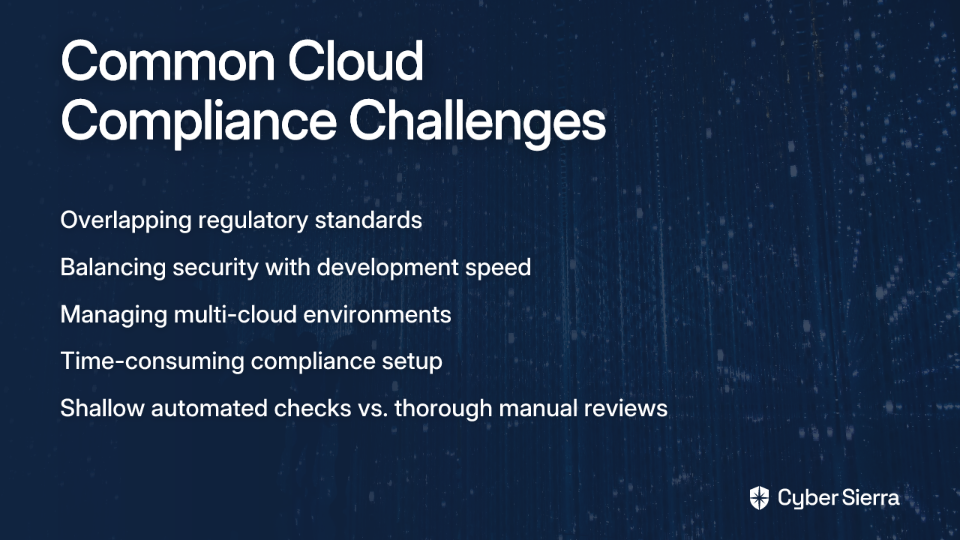
"If we automate, the checks feel shallow. If we go deep, deployments grind to a halt," laments one engineer on Reddit, capturing the central dilemma faced by cloud security teams everywhere. This tension between thorough security and deployment speed is at the heart of choosing between CSPM and CNAPP solutions.
In this article, we'll demystify both approaches and provide a practical framework to help you determine which solution best fits your organization's needs.
The Modern Cloud Compliance Dilemma
Today's cloud environments are increasingly complex. Multi-cloud deployments, containerized applications, and infrastructure-as-code have revolutionized deployment speed but created new security challenges. Simultaneously, regulatory requirements have grown more stringent, with frameworks like SOC 2, HIPAA, and GDPR demanding robust security controls and documentation.
As one cloud architect shared in a recent Reddit discussion: "Honestly, half of compliance headaches come from overlapping standards." This overlap creates confusion about which rules to prioritize and how to efficiently maintain compliance across multiple frameworks.
Another common frustration emerges from teams trying to balance security with development speed: "Not every rule should block." Organizations need compliance tools that provide protection without becoming roadblocks to innovation.
Enter CSPM and CNAPP—two approaches to cloud compliance that aim to solve these challenges, albeit in different ways.
What is Cloud Security Posture Management (CSPM)?
Cloud Security Posture Management (CSPM) is a security practice focused on controlling public cloud infrastructure risk. Its primary function is to identify, alert on, and remediate cloud misconfigurations that could lead to security breaches or compliance failures.
How CSPM Works
CSPM tools operate through agentless integration with your cloud environments. They connect to cloud platforms (AWS, Azure, GCP) using APIs to gain visibility into your infrastructure without requiring agents on individual workloads. This approach allows for:
- Continuous monitoring of cloud resources against security best practices and compliance frameworks
- Automated detection of misconfigurations and policy violations
- Policy-based assessment using established benchmarks like CIS, NIST, and MITRE ATT&CK
According to Palo Alto Networks, a leading provider in this space, "CSPM tools continuously scan for security misconfigurations and enforce compliance across multiple environments." This continuous scanning ensures that your cloud environment stays protected even as it evolves.
Key Benefits of CSPM
CSPM solutions deliver several critical capabilities:
- Centralized visibility across multi-cloud environments, providing a single pane of glass for security teams
- Automated compliance against regulatory standards like PCI-DSS, HIPAA, and SOC 2
- Risk reduction through identifying and remediating misconfigurations, which remain a leading cause of cloud breaches
- Compliance reporting with built-in tools to generate audit-ready documentation
For teams struggling with the challenge that "initial compliance setups are time-consuming," CSPM offers a way to automate much of the compliance burden, allowing security teams to focus on higher-value activities.
Understanding Cloud-Native Application Protection Platforms (CNAPP)
While CSPM focuses primarily on cloud infrastructure posture, CNAPP represents an evolution toward a more comprehensive approach to cloud security. Wiz.io describes CNAPP as the "Swiss Army Knife" of cloud security—a unified platform that consolidates multiple security tools into a single solution.
The Components of CNAPP
A CNAPP typically includes:
- CSPM functionality as its foundation, providing infrastructure posture management
- Cloud Workload Protection Platform (CWPP) capabilities to protect runtime workloads like VMs, containers, and serverless functions
- Infrastructure-as-Code (IaC) scanning to identify misconfigurations in Terraform, CloudFormation, and other IaC templates before deployment
- Kubernetes Security Posture Management (KSPM) for securing container orchestration
- Cloud Infrastructure Entitlement Management (CIEM) to manage identity and access risks
- Secrets scanning to identify exposed API keys, passwords, and other sensitive information
This consolidation aligns with the industry trend toward integration. According to Gartner research cited by Wiz.io, "By 2025, 60% of enterprises will consolidate CWPP and CSPM capabilities under CNAPP platforms."
Strategic Advantages of CNAPP
The integrated approach of CNAPP offers several strategic benefits:
- Lifecycle security coverage from development through production, enabling "shift-left" security practices
- Breaking down silos between development, operations, and security teams
- Reduced alert fatigue through consolidated, context-aware alerting
- Streamlined remediation with clear guidance across the application lifecycle
For organizations struggling with the challenge that "scaling across clouds is tough," CNAPPs provide consistent security controls and visibility across multiple cloud providers from a single interface.
Head-to-Head Comparison: CNAPP vs CSPM
To help clarify the differences between these approaches, here's a side-by-side comparison:
| Key Area | CSPM (The Specialist) | CNAPP (The Generalist) |
|---|---|---|
| Primary Goal | Security and compliance of the cloud environment's posture | Comprehensive protection for cloud infrastructure and applications throughout the lifecycle |
| Scope | Focuses on misconfigurations and compliance in deployed cloud infrastructure (IaaS, PaaS) | Covers the entire lifecycle: from code (IaC scanning) to runtime workloads (CWPP) and infrastructure posture (CSPM) |
| Key Capabilities | Continuous monitoring, misconfiguration identification, compliance reporting against frameworks like PCI, HIPAA, SOC 2 | Integrates CSPM, CWPP, CIEM, IaC scanning, secrets detection, and KSPM in one platform |
| Attack Vectors Covered | Misconfigurations and compliance-related threats | Misconfigurations, runtime threats on workloads, unauthorized access, API vulnerabilities, exposed secrets |
| Integration Point | Connects to cloud provider APIs for post-deployment visibility | Integrates with CI/CD pipelines, code repositories, and runtime environments for end-to-end security |
| Best For... | Organizations focused on establishing foundational cloud security, compliance management, and configuration hygiene | Organizations with mature cloud adoption, dynamic DevOps environments, and a need for a holistic "shift-left" and runtime security strategy |
Making the Right Choice: A Decision Framework
Choosing between CSPM and CNAPP isn't simply about picking the "better" tool—it's about selecting the right tool for your specific needs. Here's a practical framework to guide your decision:
1. Assess Your Cloud Maturity
If you're just starting your cloud journey or have a limited cloud footprint: A standalone CSPM solution might be the ideal starting point. It provides critical visibility and helps establish security guardrails without overwhelming a small team. As one security architect noted in a Reddit discussion, "The first deployment we did with compliance took a long time." CSPM tools can accelerate this process with pre-built policies and automated scanning.
If you're running a mature, multi-cloud environment: A CNAPP's unified approach becomes increasingly valuable as your cloud footprint grows. The ability to manage security and compliance consistently across AWS, Azure, GCP, and other platforms from a single interface helps address the pain that "scaling across clouds is tough."
2. Consider Your Development Practices
If you have traditional operations with slower release cycles: A CSPM tool focused on the production environment may be sufficient, as your deployment velocity doesn't require extensive "shift-left" capabilities.
If you embrace DevOps with CI/CD and IaC: A CNAPP becomes almost essential. The ability to scan Terraform and other IaC templates before deployment provides developers with immediate feedback, preventing security issues from ever reaching production. This directly addresses the insight that "you need both - push the preventive stuff left to devs through automated policy enforcement."
Many teams have found success building "compliance into our IaC templates," making security guardrails an inherent part of the infrastructure from the beginning.
3. Evaluate Your Primary Security Objectives
If your main goal is passing audits and ensuring proper configurations: CSPM tools excel at continuous monitoring against compliance frameworks like SOC 2, HIPAA, and PCI. They provide audit-ready reports and clear remediation steps for misconfigurations.
If you need comprehensive protection across the application lifecycle: CNAPP's broader capabilities address not just configuration issues but also runtime threats, permissions, and vulnerabilities throughout the development and deployment process. For teams concerned that "if we automate, the checks feel shallow," CNAPP offers deeper security coverage without sacrificing automation.
4. Consider Your Resource Constraints
If you're operating with budget limitations: A standalone CSPM solution is generally more cost-effective as a point solution.
If you're pursuing tool consolidation: While CNAPPs typically have a higher upfront cost, they can reduce your total cost of ownership by replacing multiple point solutions. This consolidation addresses the challenge faced by teams who "struggled doing this in house and we just kept getting behind constantly."
Practical Implementation Advice
Regardless of which solution you choose, consider these best practices shared by practitioners:
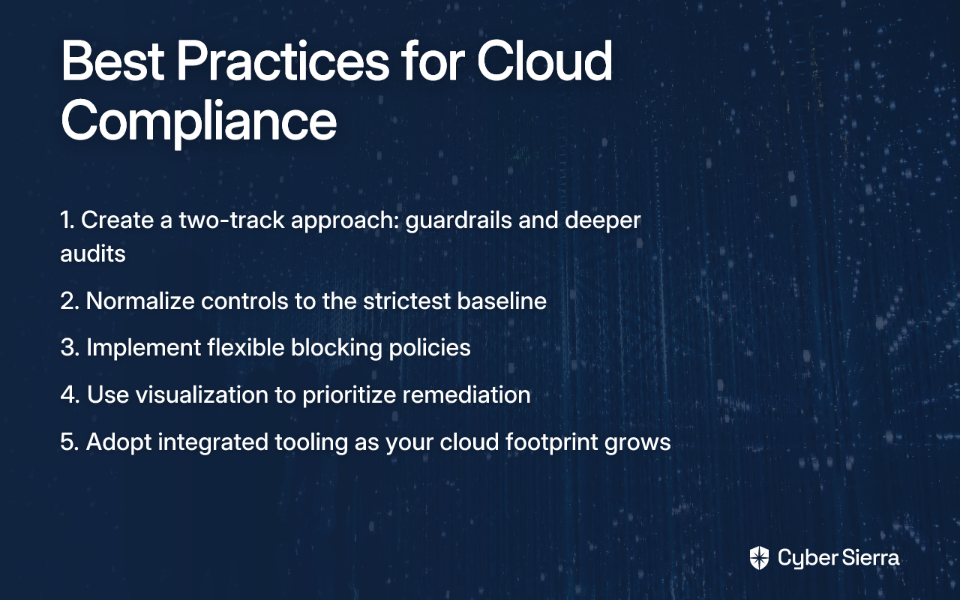
- Create a two-track approach to compliance - As one engineer recommended, "Separate compliance into two tracks: guardrails (fast, automated checks) and audits (deeper, asynchronous scans)" to maintain speed while catching risks.
- Normalize compliance controls - To address the pain of overlapping standards, "normalize your controls to the strictest baseline (PCI, HIPAA, SOC 2)" to streamline compliance efforts.
- Implement flexible blocking policies - Remember that "not every rule should block." Configure your tools to differentiate between critical issues that should block deployments and less severe issues that can be addressed asynchronously.
- Use visualization to prioritize - One team found that "a visualization tool helped us prioritize by linking controls to exposure paths," making it easier to focus remediation efforts on the most critical risks.
Conclusion: The Future is Integrated
CSPM remains a critical component of cloud security, focused on maintaining secure configurations and compliance. CNAPP represents the evolution toward comprehensive, integrated security platforms that protect applications throughout their lifecycle.
The industry is undeniably moving toward consolidation. Gartner predicts that "by 2025, 75% of new CSPM purchases are expected to be part of an integrated CNAPP." This trend reflects the growing recognition that siloed security tools can't keep pace with the complexity of modern cloud environments.
For most organizations, the journey begins with CSPM capabilities and evolves toward a full CNAPP as cloud operations mature. The key is to select tools that can grow with your needs, providing the right balance of security depth and operational efficiency.
By choosing the right cloud compliance tool—whether CSPM, CNAPP, or a combination of both—you can transform compliance from a burden into a competitive advantage, enabling both security and speed in your cloud journey.
Frequently Asked Questions
What is the main difference between CSPM and CNAPP?
The main difference is scope: CSPM focuses specifically on securing the configuration and compliance of your cloud infrastructure, while CNAPP offers a comprehensive, integrated platform that protects the entire cloud application lifecycle from code to runtime. Think of CSPM as a specialist tool for posture management, whereas a CNAPP is a consolidated platform that includes CSPM functionality alongside other tools like Cloud Workload Protection (CWPP) and IaC scanning.
When should I choose a CSPM tool over a CNAPP?
You should choose a standalone CSPM tool if you are early in your cloud journey, have a limited budget, or your primary goal is to manage cloud configuration hygiene and pass compliance audits. A CSPM provides foundational security and visibility, making it an ideal and cost-effective starting point for organizations that do not yet have mature DevOps practices or a need for full lifecycle security.
Why is CNAPP considered the future of cloud security?
CNAPP is considered the future because it consolidates multiple siloed security tools into a single, integrated platform, which is necessary to manage the complexity of modern, multi-cloud DevOps environments. By breaking down silos between development, security, and operations teams, a CNAPP provides context-aware security, reduces alert fatigue, and enables "shift-left" practices that embed security throughout the entire application lifecycle.
How do CSPM and CNAPP help with compliance audits like SOC 2 or HIPAA?
Both CSPM and CNAPP automate the process of checking your cloud environment against the specific controls required by compliance frameworks like SOC 2, HIPAA, and PCI-DSS, and they generate audit-ready reports. These tools continuously scan your infrastructure for policy violations, map your configurations to specific regulatory requirements, identify gaps, and provide guided remediation steps, significantly reducing the manual effort required to prepare for and pass audits.
Can a CNAPP replace all other cloud security tools?
No, while a CNAPP can significantly consolidate your cloud security stack, it is not a complete replacement for all security tools. A CNAPP aims to replace multiple point solutions like standalone CSPM, CWPP, CIEM, and IaC scanners. However, you will still likely need other specialized tools such as Web Application Firewalls (WAF), Security Information and Event Management (SIEM) systems, and Data Loss Prevention (DLP) solutions to achieve a comprehensive security posture.
Do I need a CNAPP if I'm not using DevOps or IaC?
While a CNAPP's full value is realized in a DevOps environment, it can still be beneficial for traditional operations by providing integrated workload protection (CWPP) and identity management (CIEM) alongside its core CSPM features. However, if your organization has slower, traditional release cycles, the additional capabilities of a CNAPP may be unnecessary, and a standalone CSPM would likely be a more sufficient and cost-effective choice.