



PagerDuty vs OpsGenie vs Checkmk: Which Alert System Wins for Sysadmins?

Join thousands of professionals and get the latest insight on Compliance & Cybersecurity.
It's 2:30 AM. Your datacenter just lost power. Somewhere in the darkness of your bedroom, your phone buzzes with an alert—but you don't hear it. You sleep peacefully while your servers run on backup batteries that will only last two hours.
When you finally wake up to your morning alarm, you're greeted by a flurry of missed notifications and an angry message from your boss: "Where were you? The system was down for hours!"
"I did not wake up to address this. My Boss reamed me out today," confessed one sysadmin on Reddit. Another lamented, "I only receive one alert and if it does not wake me I'm SOL."
This nightmare scenario plays out more often than most IT professionals would care to admit. When critical systems fail, the difference between a minor hiccup and a major catastrophe often comes down to one thing: your alert system.
In today's comparison, we're examining three industry-leading contenders—PagerDuty, OpsGenie, and Checkmk—to determine which solution best addresses the challenges faced by modern sysadmins. Whether you're dealing with limited backup power ("we only have enough charge to keep our servers, FW and Switches up for 2 hours"), struggling with alert fatigue, or simply looking for a more reliable notification system, this guide will help you make an informed decision.
The Foundations of Effective Alerting
Before diving into our comparison, let's clarify what makes an alert system truly effective.
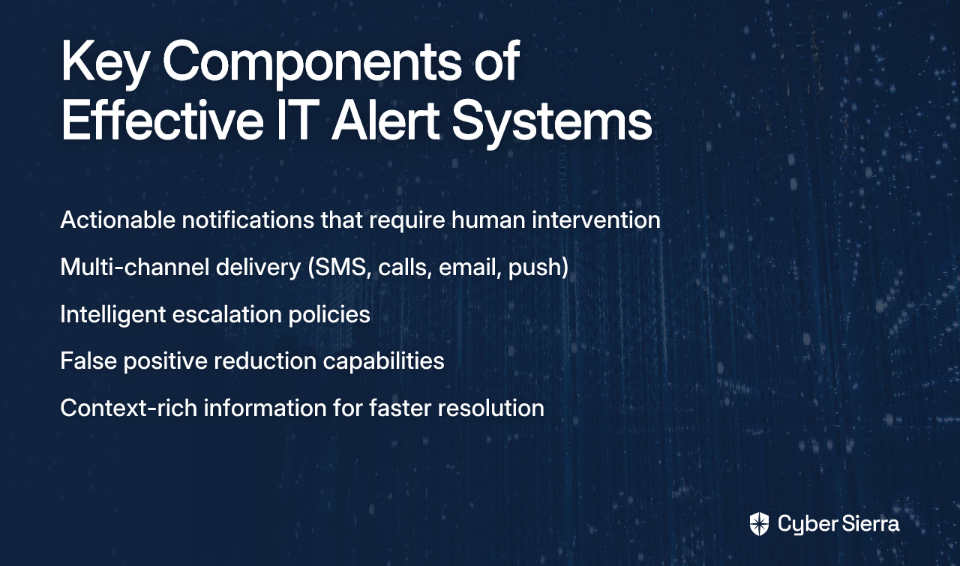
What Is an Alert?
An alert isn't just a notification—it's a "synthesized understanding of a negative system output...meant to convey a problem that requires human intervention," as described by opensource.com. The crucial distinction: effective alerts are actionable, requiring a human response to resolve the underlying issue.
The High Cost of Failure
Missing critical alerts has real consequences beyond the technical realm:
- Business Impact: Every minute of downtime translates to lost revenue, damaged customer trust, and potential SLA violations.
- Personal Consequences: As many Reddit users have shared, missed alerts often lead to uncomfortable conversations with management and damaged professional reputations.
- Cascading Failures: When time-sensitive issues go unaddressed (like power outages with limited battery backup), minor problems can cascade into system-wide disasters.
The Battle Against Alert Fatigue
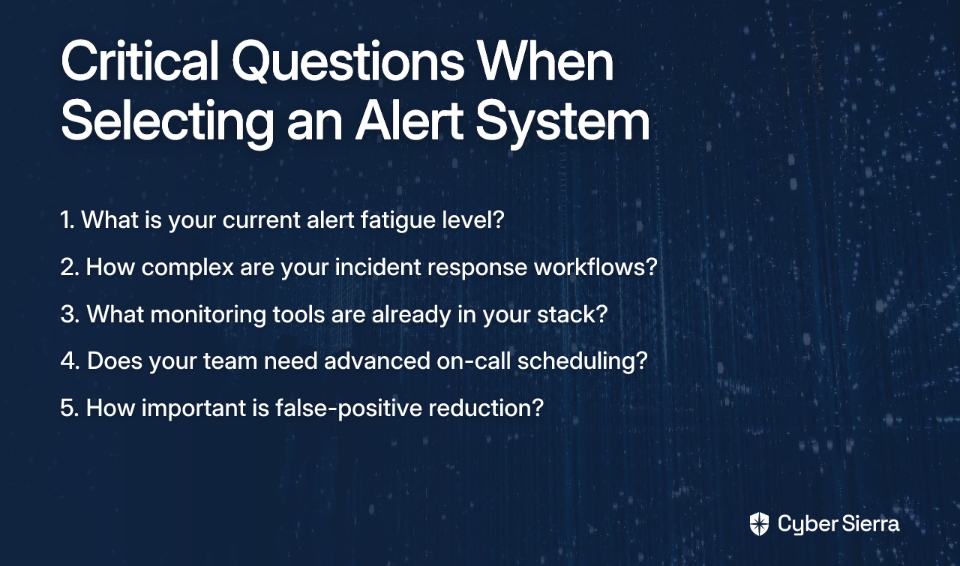
Perhaps the most insidious enemy of effective alerting is alert fatigue—the human tendency to become desensitized to notifications when bombarded with too many low-priority or false-positive alerts. A system that cries wolf too often will eventually be ignored, even when real wolves appear.
With these foundations in mind, let's examine how our three contenders—PagerDuty, OpsGenie, and Checkmk—address these challenges.
PagerDuty: The Enterprise-Grade Incident Management Platform
PagerDuty has established itself as a comprehensive, cloud-based incident management platform designed for SRE, DevOps, and IT teams who need to minimize downtime while managing the full incident lifecycle.
Key Features & Benefits
Incident Response
PagerDuty goes beyond simple alerting by automatically creating detailed incident records upon issue detection. This allows teams to track status, record notes, and document the resolution process from start to finish.
For example, when a payment gateway crashes at midnight, PagerDuty doesn't just send an alert—it creates a structured incident that persists until resolution, capturing all relevant details and actions taken.
Multi-Channel Alerting & Escalation
One of PagerDuty's strongest assets is its robust notification system. Alerts are delivered via multiple channels:
- Phone calls with customizable ringtones
- SMS messages
- Push notifications
- Email alerts
More importantly, PagerDuty features sophisticated escalation policies that ensure critical alerts don't fall through the cracks. If the primary on-call engineer doesn't acknowledge an alert within a specified timeframe, the system automatically escalates to the next person in the chain—addressing the Reddit user's concern about being "SOL" if they miss a notification.
On-Call Management
PagerDuty excels at creating balanced on-call schedules and rotations, helping prevent the burnout that plagues many IT teams. The platform allows for easy schedule creation, shift swaps, and temporary overrides when life inevitably interferes with work.
Automation
To speed up response times, PagerDuty enables teams to automate routine diagnostic and remediation tasks. For instance, when a high CPU alert triggers, you can configure PagerDuty to automatically collect relevant logs and attempt to restart the affected services before human intervention is required.
Getting Started with PagerDuty
- Set Up Services: Create services in PagerDuty that represent the systems you need to monitor.
- Connect Your Monitoring Tools: Integrate PagerDuty with tools like Datadog, New Relic, or Prometheus.
- Create Basic Escalation Policies: Define who gets notified, in what order, and how long to wait before escalating.
OpsGenie: The Atlassian Hub for Customizable Alerting
OpsGenie, now part of Atlassian, has earned a reputation for its flexibility and deep integration capabilities. As one Reddit user noted, "Agree with OpsGenie, work pretty well and you can set the alert as you want."
Key Features & Benefits
Flexible, Multi-Channel Alerting
Like PagerDuty, OpsGenie delivers alerts via multiple channels including email, SMS, mobile push notifications, and voice calls. This redundancy ensures critical notifications reach responders regardless of their situation.
Alert Enrichment
OpsGenie takes alerting a step further by allowing teams to include charts, logs, runbooks, and other contextual information directly within alerts. This empowers responders to make faster, more informed decisions without having to hunt for relevant information across multiple systems.
Powerful Alert & Notification Policies
This is where OpsGenie truly shines. The platform allows you to create sophisticated rules to:
- Suppress non-critical alerts during nighttime hours
- Delay notifications for transient issues that might self-resolve
- Expedite alerts for business-critical systems
- Route different types of alerts to specialized teams
These capabilities directly address the problem of alert fatigue by ensuring that each notification is relevant and actionable for its recipient.
Custom & Automated Actions
OpsGenie enables responders to execute actions directly from the alert interface. For example, an on-call engineer could ping a server, restart a service, or create a Jira ticket without switching applications. This integration with the broader Atlassian ecosystem is particularly valuable for teams already using Jira, Confluence, or other Atlassian products.
Checkmk: The Monitoring-First Solution for High-Fidelity Alerting
Unlike PagerDuty and OpsGenie, which are primarily alerting and incident management platforms, Checkmk approaches the problem from a different angle. It's a comprehensive IT monitoring solution with a sophisticated notification system that focuses on preventing bad alerts from ever being sent in the first place.
Key Features & Benefits
The Notification Hub
Introduced in Checkmk 2.4, the Notification Hub provides a central control panel that dramatically simplifies notification management. It offers:
- A clear, intuitive layout for managing all notification rules
- Sensible defaults based on industry best practices
- Statistical overview of sent and failed notifications
- Guided setup wizard for new users
This addresses a common pain point mentioned in user research: the steep learning curve associated with configuring new monitoring tools.
Superior False Positive Reduction
This is Checkmk's killer feature and directly tackles the problem of alert fatigue:
- Delay Notifications: Configure a "Maximum number of check attempts" to ensure an issue is persistent before sending an alert, preventing notifications for transient problems.
- Average Utilization Metrics: Avoid alerts for momentary spikes by configuring rules to average metrics like CPU usage over a set period.
- Parent-Child Dependencies: Define relationships between infrastructure components. If a core switch goes down, Checkmk intelligently marks dependent servers as "unreachable" instead of flooding you with hundreds of redundant "down" alerts.
- Scheduled Downtimes: Easily suppress notifications during planned maintenance windows.
As detailed in Checkmk's blog, these features ensure that every alert that reaches you is genuinely actionable, addressing the core problem of alert fatigue.
Head-to-Head Comparison: PagerDuty vs. OpsGenie vs. Checkmk
| Feature | PagerDuty | OpsGenie | Checkmk |
|---|---|---|---|
| Primary Focus | Full Incident Management | Customizable Alerting & On-Call | Unified IT Monitoring & Alerting |
| Alerting Channels | Call, SMS, Email, Push | Call, SMS, Email, Push | Email, SMS, Slack, etc. (via plugins) |
| False Positive Control | Good (AI-based noise reduction) | Very Good (Flexible policies) | Excellent (Dependencies, delays, averaging) |
| Automation | Strong (Runbook automation) | Good (Custom actions) | Strong (Integrated with monitoring) |
| On-Call Scheduling | Advanced | Advanced | Basic (via contact groups) |
| Key Differentiator | End-to-end incident management | Deep Atlassian integration | Prevents bad alerts at the source |
The Verdict: Which Alert System Is Right for You?
The "best" alert system depends entirely on your specific needs and existing infrastructure:
Choose PagerDuty if...
You need a robust, all-in-one platform to manage the entire incident lifecycle for a large organization. PagerDuty excels when your focus is on process, collaboration, and automating response from end to end. Its strength lies in ensuring critical alerts reach the right people and facilitating the resolution process once they do.
Choose OpsGenie if...
Your team already lives in the Atlassian ecosystem (Jira, Confluence) and needs maximum flexibility to customize alerting workflows. OpsGenie shines when you need to tailor who gets alerted, when, and with what contextual information. Its integration with other Atlassian products creates a seamless experience for teams already invested in that ecosystem.
Choose Checkmk if...
Your biggest pain is alert fatigue and false positives. If you want a unified tool that combines deep monitoring capabilities with intelligent, high-fidelity alerting, Checkmk delivers. Its strength is ensuring that every alert you receive is genuine, actionable, and important—addressing the core issue that plagues many alerting systems.
Conclusion
There's no one-size-fits-all winner in the alerting system showdown. PagerDuty offers comprehensive incident management, OpsGenie provides unparalleled customization within the Atlassian ecosystem, and Checkmk excels at eliminating false positives through intelligent monitoring.
The good news? All three platforms offer free tiers or trials, allowing you to test them in your environment before committing. Take advantage of these offers to see which solution best addresses your team's most pressing alerting pains.
Whatever you choose, a properly configured alerting system will ensure you never again wake up to an angry message about missed notifications—even if your datacenter only has two hours of battery backup.
Frequently Asked Questions
What is the primary difference between PagerDuty, OpsGenie, and Checkmk?
The primary difference lies in their core focus. PagerDuty is an end-to-end incident management platform, OpsGenie is a highly customizable alerting tool with deep Atlassian integration, and Checkmk is a unified monitoring solution that excels at preventing false-positive alerts at the source.
How do these tools help reduce alert fatigue?
These tools reduce alert fatigue by ensuring only relevant, actionable alerts reach responders. Checkmk is particularly strong here, using features like parent-child dependencies and notification delays to filter out noise. PagerDuty uses AI-based noise reduction, while OpsGenie allows for sophisticated rules to suppress or delay non-critical alerts, ensuring that on-call engineers are not overwhelmed.
Can Checkmk replace PagerDuty or OpsGenie?
It depends on your needs. Checkmk provides robust monitoring and high-fidelity alerting, which can be sufficient for many teams. However, organizations with complex on-call scheduling and advanced incident response workflows may still benefit from integrating Checkmk's superior monitoring with a dedicated incident management platform like PagerDuty or OpsGenie.
Which alerting tool is best for a team already using Atlassian products like Jira?
OpsGenie is the ideal choice for teams heavily invested in the Atlassian ecosystem. Its seamless integration with products like Jira and Confluence allows for a unified workflow where responders can create tickets, access runbooks, and manage incidents without switching between different applications, significantly streamlining the response process.
Why are escalation policies important for on-call teams?
Escalation policies are crucial because they create a safety net for critical alerts. They ensure that if the primary on-call person misses a notification for any reason—be it a weak signal or simply sleeping through it—the alert is automatically routed to the next person in the chain. This redundancy is vital for preventing minor issues from becoming major outages.
What makes an alert different from a simple notification?
An effective alert is more than just a notification; it is an actionable signal that requires human intervention to resolve an issue. While a notification might simply provide information, a true alert signifies a problem that could impact business operations. The tools discussed here focus on delivering these actionable alerts with enough context for responders to act quickly.
