A Day in the Life: SOC Analyst vs. Engineer vs. CISO



Join thousands of professionals and get the latest insight on Compliance & Cybersecurity.
You pull into the parking lot, coffee in hand, ready to face another day of cyber threats. But what exactly does that day look like? It depends entirely on where you sit in the cybersecurity hierarchy.
"Me click scary alert. Me click tools until scary alert normally no longer scary."
While this Reddit user's tongue-in-cheek description of a SOC Analyst's job might make you chuckle, it barely scratches the surface of what these cybersecurity professionals actually do. And it certainly doesn't capture the vastly different experiences of Security Engineers or CISOs.
Let's peek behind the digital curtain and explore what a typical day looks like across these three critical cybersecurity roles—from the frontline defenders to the strategic leaders—to help you decide which path might be right for you.
The Frontline Defender: A Day in the Life of a SOC Analyst
As the first line of defense against cyber attacks, SOC (Security Operations Center) Analysts are the vigilant sentinels monitoring the organization's security posture around the clock.
Morning (8:00 AM - 12:00 PM)
Your day begins with a shift handover meeting where the night team briefs you on any suspicious activities they detected overnight. You immediately log into your SIEM (Security Information and Event Management) dashboard to review a backlog of alerts that need triage.
You notice several alerts flagging unusual login activity from an executive's account. Your instincts kick in—this could be a potential account compromise. You quickly pivot to your EDR (Endpoint Detection and Response) solution to investigate the affected workstation, checking for signs of malware or unauthorized access.
After confirming the legitimacy of the activity (the executive was traveling internationally), you document your findings and close the alert. One down, dozens more to go.
Afternoon (1:00 PM - 5:00 PM)
Post-lunch, your team receives an urgent escalation from the help desk—multiple users are reporting suspicious emails with invoice attachments. This could be a phishing campaign targeting your organization.
You collaborate with your teammates to:
- Collect email samples
- Analyze the malicious attachments in your sandbox environment
- Check if any users have already clicked the links using your DLP (Data Loss Prevention) tools
- Search your SIEM using KQL (Kusto Query Language) to identify potentially compromised systems
When you confirm that several users have indeed fallen victim to the attack, you initiate the incident response protocol, isolating affected machines and notifying the Security Engineer team for remediation support.
The Reality: Alert Fatigue
"Our team is developing alert fatigue because of the pure volume of alerts. We are only generating actionable tickets from around 20 of the machine learning detections."
This candid admission from a SOC professional highlights one of the role's biggest challenges. With hundreds or even thousands of alerts generated daily, distinguishing genuine threats from false positives becomes increasingly difficult. Critical events are starting to get overlooked as analysts become desensitized to the constant bombardment of notifications.
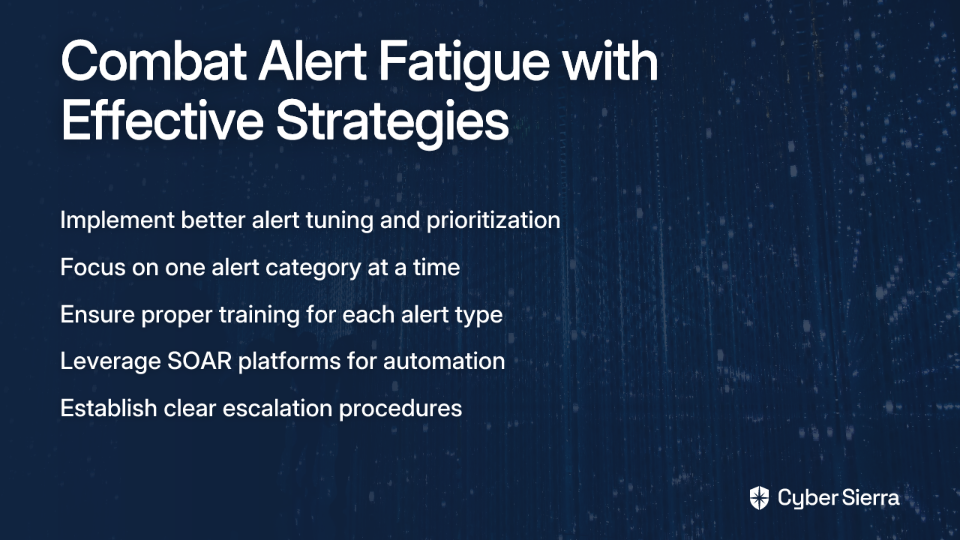
The most effective SOC teams combat this by:
- Implementing better alert tuning and prioritization
- Focusing on one alert category at a time
- Ensuring proper training for each alert type
- Leveraging SOAR (Security Orchestration, Automation, and Response) platforms to automate routine tasks
Career Path and Compensation
SOC Analysts typically progress through three tiers:
- Tier 1: Entry-level position focused on initial alert triage ($65,000-$85,000)
- Tier 2: Deeper investigation and incident handling ($80,000-$100,000)
- Tier 3: Advanced threat hunting and team leadership ($95,000-$120,000)
Many analysts eventually move into specialized roles in threat intelligence, advanced incident response, or purple teaming.
"It's a busy job, often not 8h/day, rotating shifts, work weekends and holidays," notes one Reddit user, highlighting the demanding schedule that comes with the territory.

The Architect and Builder: A Day in the Life of a Security Engineer
While SOC Analysts focus on detecting and responding to immediate threats, Security Engineers design and build the very systems that protect an organization from attacks in the first place.
Morning (9:00 AM - 12:00 PM)
Your day begins by checking emails and addressing any urgent security matters that arose overnight. You review the latest vulnerability management reports and prioritize which systems need immediate patching due to critical EOL (End of Life) issues.
Next, you attend a stand-up meeting with the DevOps team to discuss the implementation of security gates in the CI/CD (Continuous Integration/Continuous Delivery) pipeline. There's some pushback—"Argue with IT. Bang my head on steering wheel during lunch while questioning my life decisions," as one security professional put it—but you're used to this dance of balancing security with operational efficiency.
After the meeting, you spend time working on a Python script to automate the detection of misconfigured cloud resources. As one Security Engineer noted, "automated solutions written in Python are required" in today's complex environments.
Afternoon (1:00 PM - 5:00 PM)
The afternoon is dedicated to a project implementing a new Zero Trust architecture for your organization's cloud infrastructure. You're configuring network segmentation rules and identity verification protocols when an urgent message arrives from the SOC team.
They've detected a potentially compromised server and need your expertise to investigate further. You put your project on hold to assist with the incident, reviewing logs and helping isolate the affected system to prevent lateral movement.
Once the immediate threat is contained, you return to your Zero Trust implementation, making adjustments to your design based on lessons learned from the recent incident.
Before ending the day, you review pull requests from junior engineers who are implementing security controls in a new application, offering guidance on best practices for secure coding.
The Challenge: Finding Focus Time
While SOC Analysts struggle with alert fatigue, Security Engineers battle a different demon: finding uninterrupted time for deep technical work amid constant collaboration requests.
"If you try to work during the day then you'll just get burnt out," shares one Security Engineer. The solution? "I book off all my afternoons, no meetings unless I book them. That's my work time."
This strategy of deliberately blocking calendar time for focused work is essential for Engineers who need to concentrate on complex security architectures, code review, or automation development.
Specializations and Career Path
Security Engineers often specialize in areas like:
- Cloud Security: Securing AWS, Azure, or GCP environments
- Application Security: Securing software development processes
- Network Security: Designing secure network architectures
- Identity and Access Management: Implementing robust authentication systems
Compensation typically ranges from $90,000 for junior positions to $150,000+ for senior specialists, with further advancement opportunities leading to roles like Security Architect or Director of Security Engineering.
The Strategic Leader: A Day in the Life of a Chief Information Security Officer (CISO)
At the executive level, the CISO (Chief Information Security Officer) balances technical understanding with business acumen, translating security needs into language that resonates with the board and other C-suite executives.
Morning (8:30 AM - 12:00 PM)
Your day begins with reviewing overnight security reports and preparing for a packed schedule of meetings. First up is a briefing with your security leadership team, where you get updates on ongoing projects, current incidents, and emerging threats.
At 10:00 AM, you meet with the CFO to discuss budget allocations for next quarter's security initiatives. You've prepared a detailed presentation justifying investments in a new TIP (Threat Intelligence Platform) and expanding the organization's GRC (Governance, Risk, and Compliance) program to meet upcoming ISO standards requirements.
Before lunch, you squeeze in a quick call with the CISO of a partner organization to share intelligence about a new ransomware campaign targeting your industry.
Afternoon (1:00 PM - 6:00 PM)
Your afternoon begins with a board presentation where you summarize the organization's current security posture, recent threats, and mitigation strategies. The board is particularly concerned about a recent high-profile breach at a competitor, and you need to reassure them about your company's preparedness.
Following this, you review and sign off on a new security policy document that your team has prepared to address mobile device management concerns. You then meet with the legal department to discuss potential regulatory implications of a new data-sharing initiative.
Your day ends with an executive committee meeting where you advocate for embedding security professionals into key business units to better align security with business objectives—a strategy you believe will reduce friction and improve overall security posture.
The Challenge: Meeting Overload and High Stakes
The CISO role comes with unique pressures. As one security professional bluntly put it, their job involves "finding fires, putting out fires, governance, telling the CISO all ways I think he is going to get fired."
This highlights the precarious position many CISOs find themselves in—ultimately responsible for security yet often lacking direct control over many of the systems and processes they need to secure.
The meeting burden is particularly challenging. "I would love a meeting-free day once a week, but unfortunately I'm double/triple booked most hours during the day," shares one executive. This constant demand for the CISO's attention can make it difficult to focus on strategic initiatives.
Career Path and Compensation
The road to becoming a CISO typically involves:
- Starting in technical security roles
- Moving into security management
- Developing business and communication skills
- Gaining experience across multiple security domains
CISO compensation varies widely based on company size and industry, ranging from $150,000 at smaller organizations to $500,000+ at major enterprises, often with significant bonus potential tied to security performance metrics.
Choosing Your Position on the Battlefield
| Aspect | SOC Analyst | Security Engineer | CISO |
|---|---|---|---|
| Primary Focus | Detect & Respond | Build & Secure | Strategize & Govern |
| Daily Keywords | SIEM, EDR, Alerts | Automation, Zero Trust, CI/CD | GRC, Risk, Budget |
| Core Challenge | Alert Fatigue | Focus Time vs. Collaboration | Meeting Overload |
| Key Tools | SIEM, SOAR, EDR | Python, Cloud Platforms, IAM | Dashboards, Presentations, Budgets |
| Career Growth | Tier 1 → Tier 3 → Specialized Roles | Junior → Senior → Architect | Manager → Director → CISO |

When considering which cybersecurity path to pursue, reflect on:
- Your technical inclination: SOC Analysts need investigative skills and pattern recognition, Engineers require deep technical knowledge and building ability, while CISOs need a blend of technical understanding and business acumen.
- Your work style preference: Do you thrive on the adrenaline of incident response, the satisfaction of building secure systems, or the strategic challenge of aligning security with business objectives?
- Your desired work-life balance: Consider the SOC Analyst's potential for shift work, the Engineer's need for focus time, and the CISO's meeting-heavy calendar.
Each role is crucial to an organization's security posture. The SOC Analyst defends the front lines, the Security Engineer builds the defenses, and the CISO charts the overall strategy. Together, they form the backbone of modern cybersecurity—a field where, regardless of your position, you'll never be bored and will always be learning.
Whether you're clicking on alerts, architecting solutions, or presenting to the board, your work in cybersecurity directly contributes to protecting your organization's most valuable assets. And in a world of ever-evolving threats, that's something to be proud of—even on days when you find yourself questioning your life decisions during lunch.
Frequently Asked Questions
What is the best entry-level cybersecurity role to start with?
For most newcomers, the SOC Analyst role is the best entry-level position in cybersecurity. It provides a foundational understanding of threat detection, security tools like SIEM and EDR, and incident response processes. Starting as a Tier 1 SOC Analyst allows you to gain hands-on experience by triaging alerts and learning the fundamentals before advancing to more specialized or senior roles.
How do I choose between a SOC Analyst and a Security Engineer career?
The choice depends on your preferred work style: SOC Analysts are frontline responders who detect and react to active threats, a role that is investigative and fast-paced. Security Engineers are builders who design and implement the systems that prevent attacks, a role that is more project-based and requires deep technical knowledge for creating long-term solutions. If you enjoy solving immediate puzzles and threat hunting, consider the SOC Analyst path. If you prefer architecting and building robust defenses, a Security Engineer role is a better fit.
What are the most critical skills needed for a successful cybersecurity career?
Success in cybersecurity requires a blend of technical and soft skills. Technical skills are role-specific: SOC Analysts need expertise in tools like SIEM and EDR, while Security Engineers need scripting (e.g., Python), cloud platform knowledge, and an understanding of secure architecture. However, universal soft skills are just as vital. These include strong analytical and problem-solving abilities, clear communication (especially for CISOs who must translate technical risk into business impact), and an unwavering attention to detail.
Why is alert fatigue such a big challenge in a Security Operations Center (SOC)?
Alert fatigue is a major challenge because of the sheer volume of notifications generated by security tools. A SOC Analyst may face hundreds or thousands of alerts daily, many of which are false positives. This constant flood of information makes it difficult to distinguish real threats from noise, leading to desensitization where critical alerts can be overlooked. Effective SOCs combat this by fine-tuning alert rules, automating routine tasks with SOAR platforms, and providing continuous training to help analysts prioritize effectively.
What does a CISO do beyond attending meetings and managing budgets?
While meetings and budget management are significant parts of the role, a CISO's primary function is to provide strategic leadership for the entire security program. This involves translating technical risks into business-relevant terms for the board, developing and enforcing security policies, ensuring regulatory compliance (GRC), and shaping the organization's security culture. They are the ultimate decision-maker on security strategy, responsible for aligning security initiatives with business objectives to protect the organization from an ever-evolving threat landscape.
How can I advance my career from a technical role to a CISO?
The path from a technical role to a CISO involves a deliberate shift from hands-on implementation to strategic leadership. Key steps include moving into security management to gain experience leading teams and projects, actively developing business acumen to understand how security impacts the bottom line, and honing communication and presentation skills to effectively influence C-suite executives and the board. Gaining broad experience across multiple security domains—like risk management, compliance, and incident response—is also crucial for becoming a well-rounded candidate for a CISO position.