



Hidden GDPR Compliance Expenses



Join thousands of professionals and get the latest insight on Compliance & Cybersecurity.
You've been tasked with implementing GDPR compliance for your organization and now you're staring at your budget spreadsheet, trying to figure out how much to allocate. The numbers you're seeing online range wildly from a few thousand dollars to millions—leaving you confused and concerned about whether you're drastically underestimating the true cost of GDPR compliance.
Even worse, most articles only focus on the obvious expenses like consultancy fees, completely overlooking the hidden costs that often blindside businesses months into their compliance journey.
The True Cost of GDPR Compliance: Beyond the Surface
GDPR compliance isn't just about updating your privacy policy and adding a cookie banner to your website. The real financial impact spans across multiple dimensions of your business operations—from initial implementation to ongoing maintenance and the potential consequences of non-compliance.
According to various industry reports, mid-sized companies spend an average of €1.3 million ($1.4 million) on GDPR compliance, while costs for small businesses typically range from $5,000 to $50,000. However, these figures only tell part of the story.
Let's break down the complete cost structure of GDPR compliance, including those expenses that aren't immediately obvious but can significantly impact your bottom line.
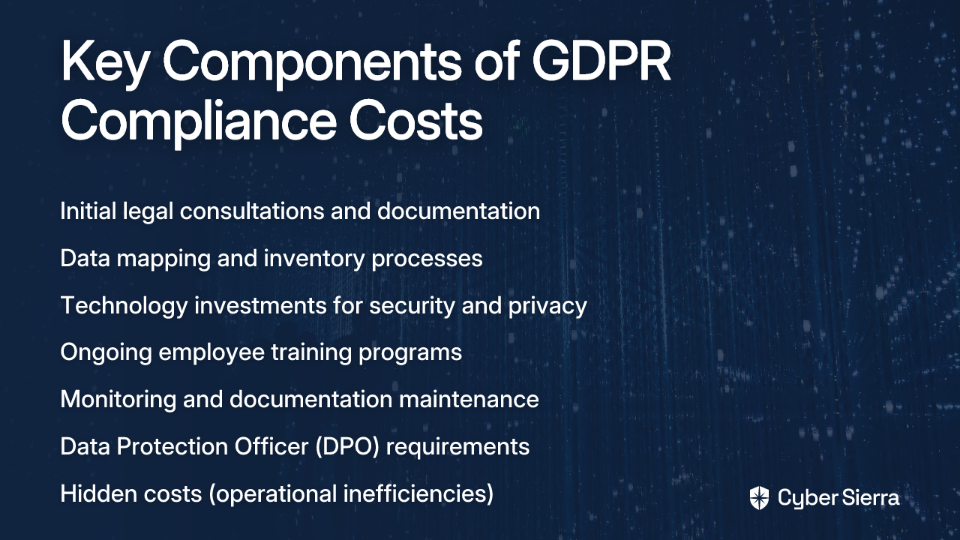
Initial Compliance Costs: Getting Started
The journey toward GDPR compliance begins with substantial upfront investments:
Legal Consultations and Documentation
Legal expertise is crucial for interpreting GDPR requirements correctly. This typically involves:
- Legal consultants: $200-$600 per hour
- Privacy attorneys: $300-$1,000 per hour for specialized expertise
- Documentation preparation: $3,000-$10,000 for comprehensive privacy policies, consent forms, and internal procedures
Many organizations underestimate the complexity of GDPR's legal requirements. As one Reddit user noted: "The demands are overzealous, IMO - should really be targeting the bad guys instead of punishing everyone." This sentiment reflects the frustration many businesses feel about the extensive legal work required.
Data Mapping and Inventory
Before implementing compliance measures, you need to understand what personal data you collect, where it resides, and how it flows throughout your organization:
- Data audit services: $5,000-$20,000 depending on organizational complexity
- Records of Processing Activities (ROPA): $3,000-$7,000 to develop comprehensive documentation
- Third-party vendor assessment: $2,000-$5,000 to evaluate data processors
For large organizations, this process can be particularly challenging. As one compliance professional shared: "Identifying and managing data across large, complex organizations is one of the biggest hurdles we face. It's like trying to map an ever-changing landscape."
Technology Investments
Implementing the technical measures required by GDPR often necessitates significant technology upgrades:
- Security infrastructure: $10,000-$100,000+ for encryption, access controls, and security patches
- Compliance software: $5,000-$50,000 annually for tools that help manage consent, data subject requests, and breach notifications
- Website updates: $2,000-$15,000 for cookie consent mechanisms and privacy preference centers
These technical challenges can be particularly daunting. One IT professional commented on Reddit: "Concern over the technical challenges and potential system failures when trying to comply with data erasure requirements is keeping me up at night. Our legacy systems weren't designed with 'right to be forgotten' in mind."
Ongoing Compliance Costs: The Long-Term Commitment
GDPR compliance isn't a one-time project but an ongoing commitment that requires continuous investment:
Employee Training and Awareness
- Initial training programs: $15-$50 per employee
- Recurring training: $1,000-$3,000 per employee annually, including time away from regular duties
- Awareness campaigns: $2,000-$5,000 annually for materials and activities to maintain a privacy-conscious culture
The cultural aspect of compliance shouldn't be underestimated. As one privacy officer noted: "Resistance to cultural change related to data risk management is often our biggest obstacle. People see compliance as a hindrance to their work rather than a fundamental business requirement."
Monitoring and Documentation
- Regular compliance audits: $15,000-$30,000 annually
- Documentation updates: $5,000-$10,000 annually as regulations and business practices evolve
- Breach response planning: $3,000-$7,000 annually for tabletop exercises and plan updates
Data Protection Officer (DPO)
Organizations that process large amounts of personal data or special categories of data must appoint a DPO:
- Full-time DPO salary: $60,000-$120,000 annually
- Part-time or outsourced DPO: $2,000-$10,000 monthly
- DPO team support: $40,000-$80,000 annually for additional privacy staff in larger organizations
Hidden Costs: The Unexpected Financial Impact
Beyond the direct expenses, GDPR compliance introduces several hidden costs that are often overlooked in budgeting:
Opportunity Costs
- Delayed product launches: Potentially millions in lost revenue when privacy assessments delay time-to-market
- Leadership attention: Executive time devoted to compliance instead of growth strategies
- Development resources: Engineering hours redirected from product development to implementing privacy features
Operational Inefficiencies
- Data subject access requests (DSARs): $1,400-$3,000 per request in staff time and resources
- Consent management: 5-15% reduction in marketing effectiveness due to stricter opt-in requirements
- Data minimization: Additional complexity in analytics and business intelligence when working with limited data
One business owner shared their frustration: "High volume of requests for information that are time-consuming and complex to manage is draining our resources. What started as a few requests per month has grown to dozens, each taking hours to process correctly."
System Complications
- Database restructuring: $20,000-$100,000 to modify systems for data portability and deletion
- Backup management: $5,000-$20,000 additional annual costs to maintain compliant backup systems
- Integration challenges: $10,000-$30,000 for ensuring third-party services comply with your privacy requirements
According to a Reddit user: "Managing data backups while complying with deletion requests is a nightmare. You can't just delete from production systems—you need to purge from backups too, which can compromise your disaster recovery capabilities."

Compliance Failure Costs: The Price of Getting It Wrong
Perhaps the most significant financial risk comes not from compliance itself, but from the consequences of failing to comply adequately:
Regulatory Penalties
- Administrative fines: Up to €20 million or 4% of global annual turnover, whichever is higher
- Remediation orders: Additional costs to implement required changes under regulatory supervision
- Ongoing monitoring: $50,000-$200,000 annually when placed under regulatory scrutiny following violations
The financial impact of these penalties can be devastating. In 2023 alone, GDPR fines totaled over €820 million across the EU, with Meta receiving a record €1.2 billion fine for data transfer violations.
Litigation and Compensation
- Legal defense: $300-$1,000 per hour for specialized data protection attorneys
- Class action settlements: Potentially millions in compensation to affected data subjects
- Court-ordered damages: Varying amounts based on the severity of violations
Reputational Damage
- Customer trust erosion: 60% of consumers say they would stop doing business with a company following a data breach
- Brand value depreciation: Up to 30% loss in brand value following major privacy scandals
- Recovery campaigns: $50,000-$500,000 for crisis management and trust rebuilding initiatives
Strategic Cost Management: Making GDPR Compliance More Affordable
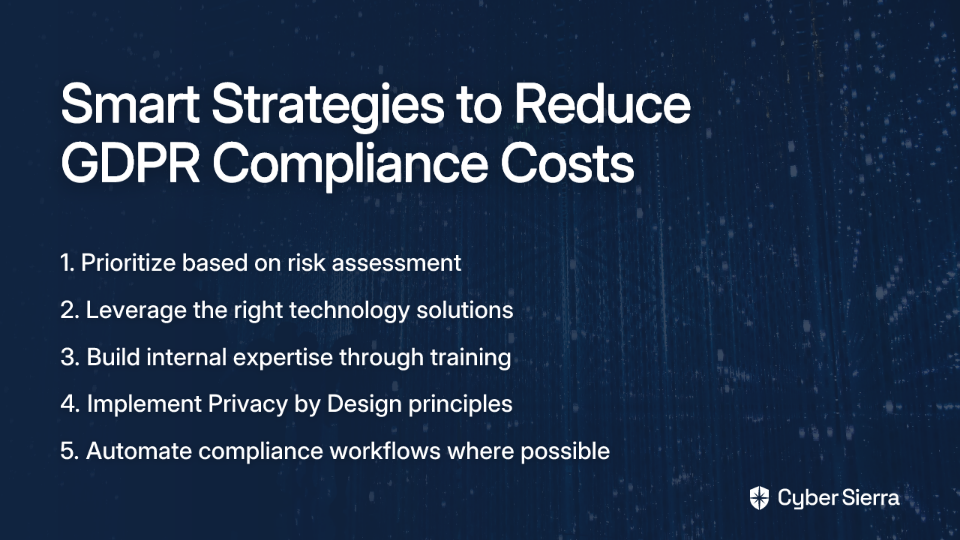
While GDPR compliance represents a significant investment, there are strategies to manage these costs effectively:
1. Prioritize Based on Risk Assessment
Not all compliance measures need to be implemented simultaneously. Start with high-risk areas:
- Focus first on securing sensitive personal data like health information, financial details, and children's data
- Prioritize compliance for high-volume data processing activities that affect many data subjects
- Address obvious compliance gaps that could lead to immediate penalties if discovered
2. Leverage Technology Solutions
The right tools can significantly reduce ongoing compliance costs:
- Compliance automation platforms: Tools like SecureSlate, OneTrust, or DataGrail can streamline DSAR management, consent tracking, and documentation
- Privacy policy generators: Services like Captain Compliance can create customized policies at a fraction of the cost of legal consultation
- Open-source solutions: Free tools for cookie consent management and data mapping can reduce technology costs
A startup founder shared: "Captain Compliance sounds like a fantastic all-in-one option, especially with tools like a cookie scanner and DSAR automation. It's made compliance achievable for our small team."
3. Build Internal Expertise
While external consultants are valuable, developing in-house knowledge can reduce long-term costs:
- Train key staff members to become privacy champions within their departments
- Create standardized processes that non-specialists can follow for routine compliance tasks
- Develop reusable templates for privacy assessments, vendor evaluations, and breach responses
4. Implement Privacy by Design
Incorporating privacy considerations from the beginning is more cost-effective than retrofitting existing systems:
- Include privacy requirements in the initial specifications for new projects
- Conduct privacy impact assessments before launching new products or services
- Design data minimization into systems from the start to reduce compliance scope
Real-World Cost Scenarios: What Companies Actually Pay
To provide a more concrete understanding of GDPR compliance costs, let's examine typical scenarios for different organization types:
Small Business (Under 50 Employees)
Total First-Year Cost: $15,000-$50,000
- Legal consultation: $5,000-$10,000
- Technology updates: $5,000-$15,000
- Staff training: $1,000-$2,500
- Documentation: $2,000-$7,500
- Ongoing annual costs: $10,000-$25,000
A small software business owner shared on Reddit: "We spent about $30,000 in the first year getting compliant, mostly on legal advice and updating our systems. Now we spend about $15,000 annually maintaining compliance, which is manageable but still significant for our size."
Mid-Sized Company (50-500 Employees)
Total First-Year Cost: $100,000-$500,000
- Legal and consulting services: $30,000-$100,000
- Technology implementation: $40,000-$150,000
- Data mapping and inventory: $15,000-$50,000
- Training program development: $10,000-$30,000
- Part-time or outsourced DPO: $24,000-$60,000
- Ongoing annual costs: $50,000-$200,000
Enterprise (500+ Employees)
Total First-Year Cost: $500,000-$3,000,000+
- Comprehensive compliance program: $200,000-$1,000,000
- Enterprise-wide technology solutions: $150,000-$750,000
- Full-time privacy team: $250,000-$500,000
- Global implementation challenges: $100,000-$500,000
- Ongoing annual costs: $250,000-$1,000,000+
According to the Cookieyes blog, "SMEs report spending between €1,000 and €50,000 on compliance, with larger firms potentially spending more." This aligns with our findings, though the upper limit for enterprises can be significantly higher.
Common Cost Pitfalls to Avoid
Many organizations make budget-draining mistakes in their compliance efforts:
1. Underestimating Ongoing Costs
Many businesses focus on initial compliance without budgeting for maintenance. As regulations evolve and your business changes, compliance requires continuous attention and resources.
Solution: Build a three-year compliance budget that includes regular reviews, training refreshes, and technology updates.
2. Taking a One-Size-Fits-All Approach
Implementing generic compliance measures without tailoring them to your specific data processing activities often results in wasted resources.
Solution: Conduct a thorough data mapping exercise to understand your unique compliance requirements before investing in solutions.
3. Neglecting Employee Training
Poorly trained staff can undermine even the most sophisticated compliance programs through simple mistakes.
Solution: Invest in role-specific training that helps employees understand how GDPR applies to their daily responsibilities.
4. Overreliance on Technology
While compliance tools are valuable, they can't replace human judgment and context-specific decision-making.
Solution: Use technology to augment human expertise, not replace it. Ensure you have qualified personnel overseeing your compliance efforts.
Conclusion: Budgeting for Sustainable Compliance
The cost of GDPR compliance extends far beyond the initial implementation expenses. By understanding the full spectrum of potential costs—from direct expenses like legal consultations and technology investments to hidden costs like operational inefficiencies and opportunity costs—organizations can develop more realistic budgets and compliance strategies.
Remember that GDPR compliance isn't just about avoiding fines; it's about building trust with customers and establishing responsible data practices that can become a competitive advantage. When viewed through this lens, the costs of compliance represent an investment in your organization's future sustainability.
For most businesses, the cost of proper compliance will be significantly lower than the potential costs of non-compliance, both in terms of financial penalties and reputational damage. As one privacy professional aptly put it: "GDPR compliance is expensive. GDPR non-compliance is ruinous."
By taking a strategic approach to compliance—prioritizing based on risk, leveraging appropriate technology, building internal expertise, and implementing privacy by design—organizations can manage costs while achieving meaningful compliance with GDPR requirements.

Frequently Asked Questions
What is the average cost of GDPR compliance?
The average cost of GDPR compliance varies significantly based on company size and complexity. For small businesses, first-year costs typically range from $15,000 to $50,000, while mid-sized companies might spend between $100,000 and $500,000. Large enterprises can face costs from $500,000 to over $3 million. These figures include initial setup and ongoing maintenance.
Why is GDPR compliance so expensive?
GDPR compliance is expensive due to several factors, including the need for specialized legal consultations, significant technology investments for data security and management, comprehensive data mapping and inventory processes, and ongoing employee training. Additionally, appointing a Data Protection Officer (DPO) and continuous monitoring contribute to the overall costs.
How can businesses reduce GDPR compliance costs?
Businesses can reduce GDPR compliance costs by prioritizing efforts based on risk assessments, leveraging cost-effective technology solutions like automation platforms and open-source tools, building internal expertise through training, and implementing 'Privacy by Design' principles in new projects. These strategies help streamline processes and avoid unnecessary expenditures.
What are the biggest hidden costs of GDPR?
The biggest hidden costs of GDPR often include opportunity costs, such as delayed product launches due to privacy assessments and executive time diverted to compliance. Operational inefficiencies, like managing Data Subject Access Requests (DSARs) and system complications requiring database restructuring or complex backup management, also contribute significantly.
Is GDPR compliance a one-time project?
No, GDPR compliance is not a one-time project; it is an ongoing commitment. Regulations evolve, business practices change, and new data processing activities may be introduced. Therefore, continuous monitoring, regular training updates, documentation reviews, and potential system adjustments are necessary to maintain compliance.
What happens if a company doesn't comply with GDPR?
Non-compliance with GDPR can lead to severe consequences. These include substantial regulatory penalties, potentially up to €20 million or 4% of global annual turnover, whichever is higher. Additionally, companies may face costly litigation, compensation claims from data subjects, and significant reputational damage that can erode customer trust and brand value.
Additional Resources
For organizations seeking more detailed guidance on GDPR compliance costs:
- GDPR Official Website - Comprehensive information about GDPR regulations
- ICO Guide to Data Protection - Thorough explanation of data protection compliance
- Sprinto's GDPR Compliance Cost Breakdown - Detailed analysis of compliance costs with practical recommendations

By approaching GDPR compliance with a comprehensive understanding of the associated costs, organizations can budget appropriately, avoid unexpected expenses, and develop a sustainable approach to data protection that serves both regulatory requirements and business objectives.
