



Why Your Healthcare Security Training Is Failing (And How to Fix It)


Join thousands of professionals and get the latest insight on Compliance & Cybersecurity.
Imagine a chemo treatment being delayed because of a 2FA prompt, or a defibrillator locking out during an emergency because of an invalid MFA response. These aren't far-fetched scenarios; they are the dangerous reality when cybersecurity policy clashes with patient care. As one healthcare professional bluntly put it: "theoretical security stands no chance against the day-in and day-out of these clinicians."
In an industry where minutes—even seconds—can mean the difference between life and death, the disconnect between security protocols and clinical workflows is putting both patient data and lives at risk.
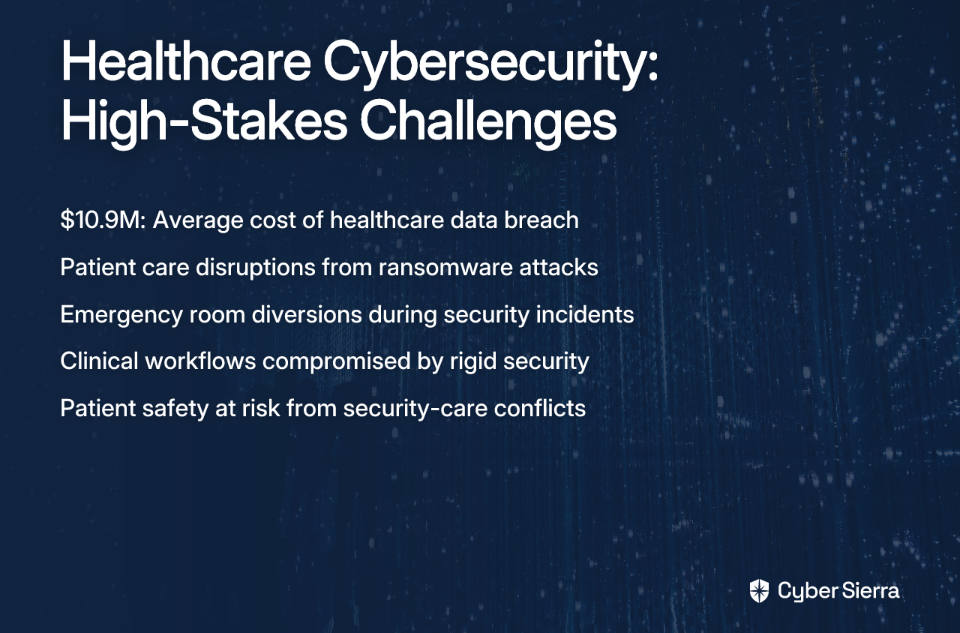
This disconnect is particularly alarming considering that healthcare is a prime target for cybercriminals, with the average cost of a data breach reaching $10.9 million according to Huntress. These aren't just financial costs. Recent ransomware attacks have led to significant operational disruptions, forcing emergency rooms to divert patients, directly impacting patient care.
So why, despite the high stakes, is healthcare security training failing so spectacularly? The answer is simple but troubling: Most healthcare security training is a generic, check-the-box exercise that ignores the unique, high-pressure context of clinical environments. This article will break down why it's failing and provide a practical, step-by-step guide to fix it.
The High Cost of Failure: When Security Clashes with Patient Care
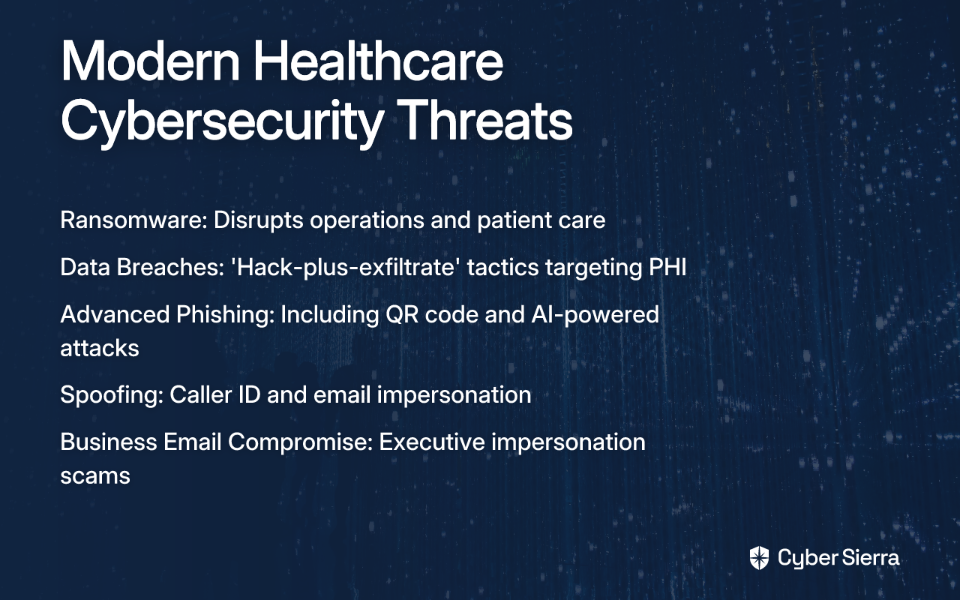
Healthcare organizations face an evolving and relentless threat landscape that goes far beyond basic phishing attempts:
The real problem, however, isn't just these external threats—it's the dangerous disconnect between security policies and clinical reality. As one cybersecurity professional observed in a Reddit discussion: "people that write policies rarely actually have to deal with them in the wild."
This disconnect manifests in dangerous ways:
- Workflow Impediments: Poorly designed EMRs and security protocols create such hindrances that staff resort to keeping "literal binders full of webpages, instructions and logins" just to do their jobs.
- Unsafe Practices: To save time, clinicians engage in "professional courtesy" by offering their logged-in sessions to colleagues, which has led to physicians ordering medications for the wrong patient.
- Hierarchical Pressure: Security protocols are often bypassed when "a Dr doesn't want to do MFA they will escalate until it gets to the c level who in the end will want to please them."
The result? A security culture that exists on paper but crumbles in practice.
Diagnosing the Failure: 5 Reasons Your Training Program Isn't Working
Before we can fix healthcare security training, we need to understand exactly why current approaches are failing:
1. It's Generic and Lacks Context
Many organizations adopt a one-size-fits-all approach, failing to provide role-specific content for nurses, physicians, and administrative staff who have unique responsibilities. According to Accutech Security, this generic approach ignores the specific challenges each role faces.
Research published in ScienceDirect confirms this problem: organizations often lack a comprehensive, contextual understanding of health data breaches. Effective training requires investigations tailored to specific clinical contexts, not generic cybersecurity principles.
2. It's Passive and Unengaging
Standard training often relies on passive methods like videos and quizzes, which are insufficient to build real skills. Without real-world examples, case studies, or personal anecdotes, the training feels theoretical and disconnected from daily work.
One healthcare IT professional noted: "The EMRs are terrible, workflows are bad, and all of it is a hindrance to patient care." When training doesn't acknowledge these real-world challenges, it's quickly dismissed as irrelevant.
3. It's Infrequent and Outdated
Security training is treated as an annual compliance checkbox rather than an ongoing process. This approach fails to combat complacency or address the rapidly evolving threat landscape.
This is especially dangerous when organizations are running on legacy systems. As one Reddit user shared, many healthcare providers are "required to only run legacy AV... Not modern EDR type solutions," creating a perfect storm of outdated systems and outdated training.
4. It Lacks Practical, Hands-On Application
Employees are told what to do but are rarely given the chance to practice in a safe environment. According to Censinet, effective training requires hands-on experience through simulations that mimic real-world events like ransomware attacks, medical device breaches, or EHR outages.
Without this practical application, healthcare staff remain unprepared for actual security incidents, especially when they occur during high-pressure clinical situations.
5. Success Is Measured by Completion, Not Competence
Many programs track completion rates as the sole metric of success. This creates a culture of "checking the box" rather than ensuring actual learning and behavior change.
Effective programs must measure actual behavioral change by tracking metrics like response time, accuracy, and team coordination during drills. There's also often a lack of robust feedback mechanisms to collect input from staff and refine future training content.

The Prescription for Success: A 5-Step Guide to Revamping Your Security Training
Now that we've diagnosed the problems, let's look at how to fix healthcare security training with a practical, step-by-step approach:
Step 1: Map Skills, Gaps, and Context-Specific Risks
Begin by assessing the technical and operational skills of your teams and identifying knowledge gaps. According to Censinet, this foundational step ensures your training addresses actual needs rather than assumed ones.
- Identify risks specific to your organization, such as PHI breaches, vulnerabilities in medical devices, or EHR outages
- Conduct surveys with clinical staff to understand their current knowledge, pain points, and daily security challenges
- Document specific workflows where security and clinical care seem to conflict
Step 2: Create Tailored, Role-Specific Training Plans
Design training around realistic, role-specific scenarios that reflect the actual challenges your staff face:
- For clinical teams: Focus on scenarios like spotting phishing emails disguised as patient record updates or securing mobile workstations (COWs) between patient visits
- For IT staff: Focus on technical responses to ransomware attacks, securing legacy systems, and managing medical device vulnerabilities
- For administrative staff: Focus on protecting PHI during routine administrative tasks and recognizing social engineering attempts
This tailored approach acknowledges that different roles have different security responsibilities and challenges, making training immediately relevant to daily work.
Step 3: Make Training Interactive, Hands-On, and Continuous
Replace passive learning with active engagement:
- Practice Through Simulations: Conduct realistic drills that mimic real-world events. This provides hands-on experience with security tools, communication protocols, and interdepartmental coordination
- Incorporate Gamification: Use leaderboards, scenario challenges, and rewards to enhance engagement. Create timed "urgency challenges" to simulate the pressure of a real emergency
- Schedule Regularly: Implement quarterly refresher sessions and monthly drills to keep skills sharp and adapt to emerging threats
As Huntress points out, continuous training is essential because cyber threats are constantly evolving—your training must evolve too.
Step 4: Use Real-World Examples to Foster a Security Culture
Move beyond theoretical concepts by grounding training in reality:
- Analyze real incidents and case studies from healthcare organizations to drive home the importance of protocols
- Create an environment where staff can share their own experiences and near-misses without fear of punishment
- Highlight the connection between security practices and patient safety to make security personally meaningful
The goal is to create a shared responsibility for cybersecurity among all employees, fostering a proactive culture of security, not just compliance.
Step 5: Track, Measure, and Continuously Improve
Move beyond completion rates to meaningful metrics:
- Measure Performance: During drills, track response time, accuracy, and team coordination
- Monitor Behavior: Look for tangible changes in staff behavior, like improved adherence to protocols or quicker identification of phishing attempts
- Gather Feedback: Use post-training surveys and discussions to identify remaining pain points and refine content
- Iterate: Regularly update training content based on performance metrics, feedback, and analysis of new threats

From Compliance Checkbox to Clinical Cornerstone
Ineffective security training is not just a compliance risk—it's a direct threat to patient safety and operational stability. The path forward requires moving away from generic, infrequent training toward a continuous, practical, and tailored program built on realistic simulations and role-specific content.
Remember the scenarios we opened with? With proper training, that chemo treatment wouldn't be delayed by an authentication issue because staff would be trained on streamlined emergency protocols. The defibrillator wouldn't lock during a critical moment because the system would be designed with clinical workflows in mind.
Investing in a robust Security Awareness Training program isn't an IT expense—it's a critical investment in protecting patients, ensuring continuity of care, and maintaining trust in your organization. Empower your staff to be your strongest line of defense by giving them training that acknowledges the realities of healthcare and equips them for success.
The question isn't whether you can afford better security training. In today's threat landscape, the question is: can you afford not to?

Frequently Asked Questions
Why is cybersecurity training in healthcare so important?
Cybersecurity training in healthcare is critically important because security failures can directly endanger patient safety, disrupt essential clinical operations, and result in costly data breaches. Poorly implemented security can delay treatments or lock out life-saving medical devices, while successful cyberattacks can force hospitals to divert emergency patients, putting lives at risk.
What are the biggest cybersecurity threats facing healthcare?
Healthcare organizations face a range of severe cybersecurity threats, including ransomware that can shut down hospital systems, data breaches targeting sensitive patient health information (PHI), and advanced phishing attacks that trick staff into revealing credentials. Other major threats include caller ID or email spoofing and business email compromise (BEC), where attackers impersonate executives to authorize fraudulent transactions.
How can healthcare organizations make their security training more effective?
To make security training more effective, healthcare organizations should move beyond generic, check-the-box exercises. A successful program involves creating tailored, role-specific training plans, using interactive and hands-on simulations, grounding lessons in real-world incidents, and continuously measuring behavioral change rather than just completion rates.
What is role-specific security training and why is it essential?
Role-specific security training is an approach that tailors content to the unique responsibilities and workflows of different staff members, such as nurses, physicians, and administrative teams. It's essential because a generic, one-size-fits-all program fails to address the specific security challenges each role faces, making the training feel irrelevant and ineffective in high-pressure clinical environments.
How often should healthcare security training be conducted?
Healthcare security training should be an ongoing and continuous process, not a one-time annual event. To effectively combat evolving threats and prevent complacency, organizations should implement regular training activities, such as quarterly refresher sessions and monthly hands-on security drills.
What are the best metrics to measure security training success?
The best metrics for success move beyond simple completion rates and focus on actual competence and behavioral change. During simulated drills, organizations should track key performance indicators like response time, accuracy, and team coordination. In day-to-day operations, success can be seen through improved adherence to security protocols and a reduction in security incidents.
