



Integrating Contextual Data in Security Alerts: A Game Changer for SOC Teams



Join thousands of professionals and get the latest insight on Compliance & Cybersecurity.
In today's increasingly cloud-centric world, Security Operations Center (SOC) teams face mounting pressure to effectively monitor and respond to an ever-growing volume of security alerts. Yet many struggle with a critical gap: security analysts often lack the specialized skills needed to handle cloud security effectively, leading to delayed responses and increased risk.
"Every cloud alert just meant pinging the cloud or DevOps teams," shared one security professional in a recent discussion. This dependency not only creates bottlenecks but also leaves organizations vulnerable during critical security events.
The solution? Integrating rich contextual data into security alerts—essentially transforming raw, often cryptic notifications into actionable intelligence that even less specialized team members can effectively prioritize and address. This approach is revolutionizing how SOC teams operate in cloud-heavy environments.
The Cloud Security Challenge: By the Numbers
The scale of the challenge is significant:
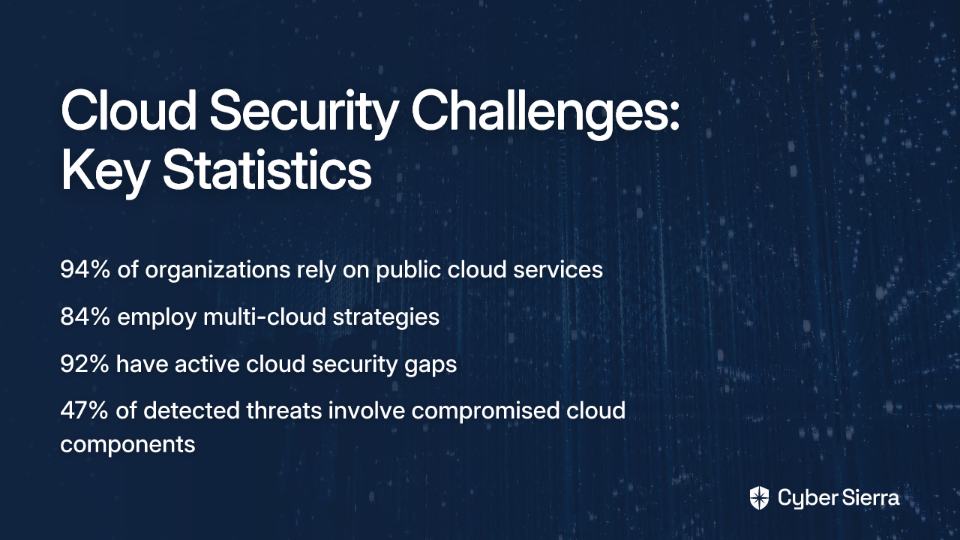
- 94% of organizations now rely on public cloud services, with 84% employing multi-cloud strategies
- A concerning 92% of organizations have active cloud security gaps
- 47% of detected threats involve compromised cloud components
These statistics highlight why effective cloud security monitoring isn't just important—it's essential. Yet SOC teams face significant obstacles in achieving this goal.
Alert Fatigue: The Silent Productivity Killer
"Have you faced the problem of tracking and managing alerts from 10+ scanning tools? It is overwhelming. Things fall through the crack," noted a cybersecurity professional in an online forum. This sentiment reflects a widespread challenge: alert fatigue.
When analysts are bombarded with hundreds or thousands of alerts daily—many of which turn out to be false positives—their ability to identify and respond to genuine threats diminishes dramatically. One skeptical security professional commented, "These numbers seem a bit unrealistic, right? I can't imagine a SOC team handling that unless they've got an army of bots."
The Cloud Skills Gap
Traditional SOC teams often lack specialized knowledge in cloud technologies and security frameworks. As one practitioner bluntly stated, "the SOC just didn't have the skillset." This knowledge gap becomes particularly problematic when dealing with:
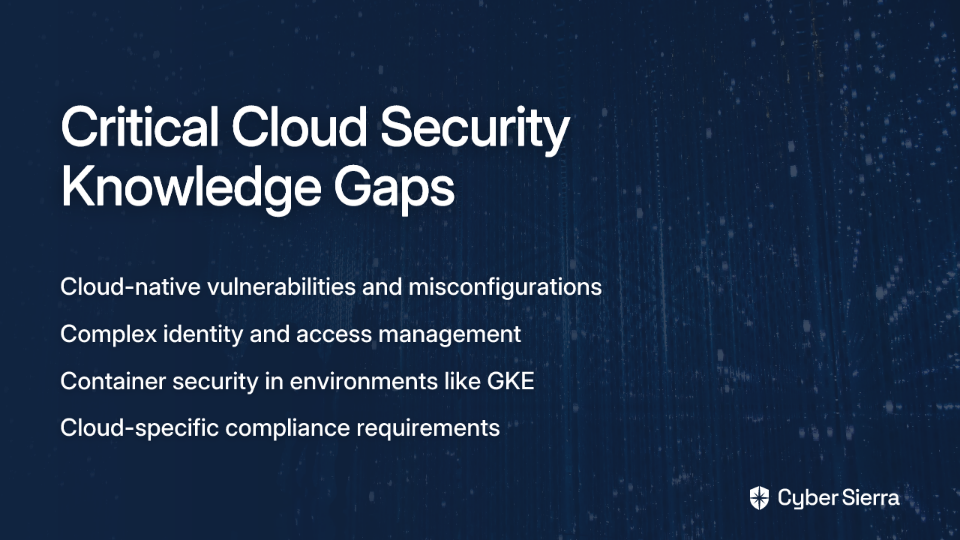
- Cloud-native vulnerabilities and misconfigurations
- Complex identity and access management issues
- Container security concerns in environments like GKE (Google Kubernetes Engine)
- Compliance requirements specific to cloud environments (such as NIST compliance)
The Configuration Complexity Challenge
Cloud environments introduce layers of configuration complexity that can lead to security vulnerabilities. Misconfigurations in RBAC (Role-Based Access Control) or SBAC (Security-Based Access Control) settings can create serious security gaps, while transitive dependencies in cloud applications introduce vulnerabilities that may not be immediately apparent.
"The primary issue is that your identity is your first perimeter," explained one cloud security expert. "If you go into cloud with the idea of 'it's just a data center' and build up security like you do in a data center, you are going to be constantly fighting with your dev teams over rate of change."
The Power of Context: Transforming Alert Management
In the face of these challenges, contextual data emerges as a vital component in modern security operations. But what exactly does "context" mean in cloud security?
Defining Contextual Data in Cloud Security
Contextual data refers to the supplementary information that surrounds a security alert, providing critical details about:
- The affected assets and their business importance
- Existing vulnerabilities and misconfigurations that may impact the severity
- Historical patterns related to the alert
- User behavior analytics that might indicate anomalies
- Potential attack paths and accessibility of vulnerable resources
As one security professional explained: "There's often extra telemetry or context needed to really understand what you're looking at." This additional information transforms isolated alerts into comprehensive intelligence that enables informed decision-making.
How Contextual Data Transforms Alert Response
When properly integrated, contextual data serves as a lens that brings clarity to otherwise ambiguous security signals. For instance, a vulnerability in an internet-facing workload with admin privileges represents a significantly higher risk than the same vulnerability in an isolated internal system.
By incorporating this contextual understanding, security tools can:
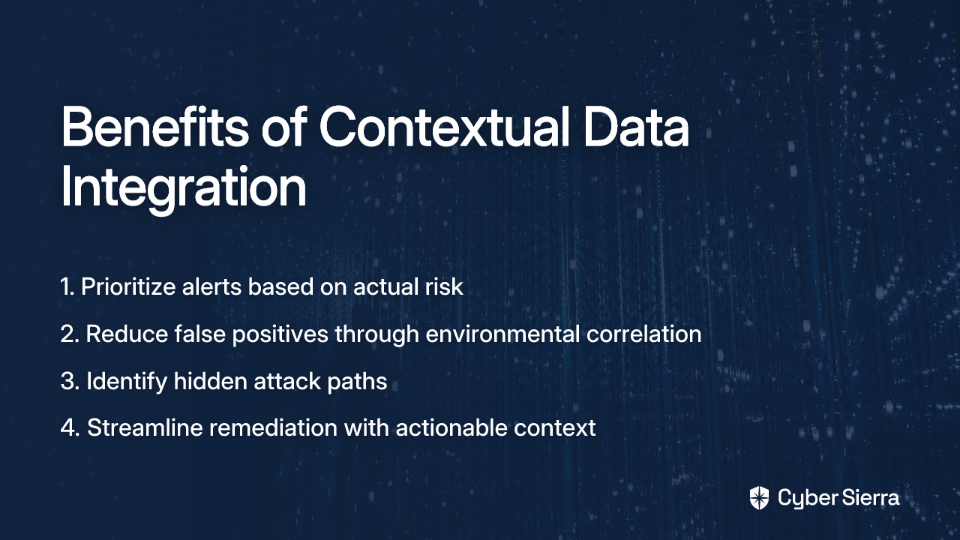
- Prioritize alerts based on actual risk rather than generic severity ratings
- Reduce false positives by correlating alerts with environmental factors
- Identify attack paths that might otherwise remain hidden
- Streamline remediation efforts by providing actionable context
The Game-Changing Benefits of Contextual Integration
Enhanced Prioritization and Reduced Alert Fatigue
Perhaps the most immediate benefit of contextual data is its ability to cut through the noise. By automatically filtering and prioritizing alerts based on actual risk rather than generic severity ratings, SOC teams can focus their attention where it matters most.
"I'd focus more time on identifying what assets, entities, etc. need protecting and developing high fidelity detections for those specific assets," advised one security professional. This focused approach becomes possible when alerts are enriched with contextual data about asset criticality, accessibility, and business impact.
Improved Cross-Team Collaboration
When cloud security alerts include sufficient context, the traditional barriers between SOC, cloud, and DevOps teams begin to dissolve. As one expert noted, "the most important thing is to strictly separate your misconfiguration alerts, vulnerabilities, and active exploits."
This separation, made possible through contextual enrichment, enables:
- Clear ownership of different types of security issues
- More effective handoffs between teams
- Reduced friction in the remediation process
Faster Time to Resolution
Contextual data dramatically reduces the investigation time needed to understand and respond to alerts. Instead of manually gathering information about affected resources, potential impacts, and remediation options, analysts can immediately access this context within the alert itself.
A CNAPP (Cloud Native Application Protection Platform) or CWPP (Cloud Workload Protection Platform) that integrates contextual data can provide SOC analysts with immediate insights into:
- The specific vulnerability or misconfiguration details
- Which workloads are affected and their exposure level
- Recommended remediation steps
- Business impact assessment
Implementing Contextual Data Integration: Practical Strategies
Effectively integrating contextual data into security alerts requires a strategic approach that combines the right technologies, processes, and skills. Here are key strategies that leading organizations are implementing:
1. Unify Telemetry Collection Across Cloud Environments
The foundation of contextual security is comprehensive telemetry collection. This requires deploying solutions that can gather data across multiple dimensions:
- Infrastructure telemetry: Configuration states, access patterns, and resource relationships
- Workload telemetry: Runtime behavior, processes, and network communications
- Identity telemetry: Authentication events, permission changes, and access patterns
- Data telemetry: Sensitive data movements, access attempts, and encryption states
"Figure out how to aggregate logs using cloud native tools," advised one cloud security expert, highlighting the importance of leveraging built-in capabilities of platforms like AWS Security Hub and Azure Sentinel for efficient data collection.
2. Implement Machine Learning for Context-Aware Detection
Machine learning algorithms can significantly enhance contextual understanding by:
- Establishing behavioral baselines for users, workloads, and systems
- Identifying anomalous activities that deviate from these baselines
- Correlating seemingly unrelated events that may indicate attack patterns
- Learning from analyst feedback to continuously improve detection accuracy
These capabilities are particularly valuable in MDR (Managed Detection and Response) services, where automated systems must make intelligent decisions about which alerts warrant human attention.
3. Develop Asset Criticality Frameworks
Not all assets are created equal from a security perspective. Implementing a formal framework for classifying assets based on their business importance allows security tools to appropriately weigh risks. This framework should consider:
- Business criticality of the asset
- Data sensitivity
- Regulatory requirements
- Connectivity and exposure
- Potential blast radius in case of compromise
"I'd focus more time on identifying what assets, entities, etc. need protecting," emphasized one security professional, highlighting the importance of this targeted approach.
4. Integrate Vulnerability Context with Active Threat Intelligence
Vulnerability data becomes significantly more actionable when combined with real-time threat intelligence. This integration helps security teams understand:
- Which vulnerabilities are being actively exploited in the wild
- Whether specific threat actors are targeting your industry or technology stack
- The likelihood of exploitation based on attacker behavior patterns
- Potential attack vectors and techniques
This combined view transforms static vulnerability management into dynamic threat prevention.
5. Create Clear Separation Between Alert Types
"The most important thing is to strictly separate your misconfiguration alerts, vulnerabilities, and active exploits," noted one security expert. This separation helps SOC teams focus on active threats while ensuring that other issues are routed to the appropriate teams for remediation.
An effective classification system might include:
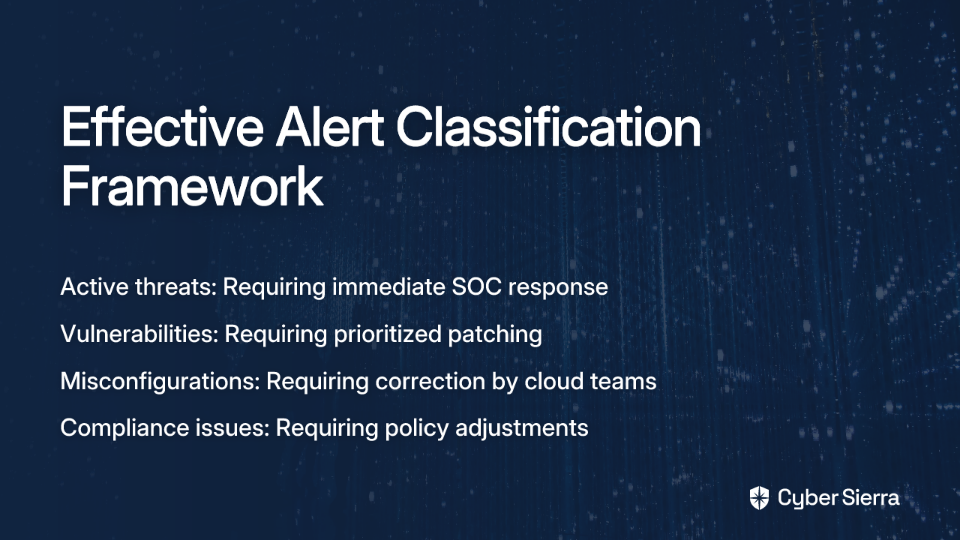
- Active threats: Requiring immediate SOC response
- Vulnerabilities: Requiring prioritized patching by IT or development teams
- Misconfigurations: Requiring correction by cloud or platform teams
- Compliance issues: Requiring policy adjustments or documentation
6. Develop Skills and Processes in Tandem with Technology
While technology enables contextual security, people and processes remain essential. Organizations should:
- Invest in training: "Massively train your SOC on your cloud infra," recommended one expert, emphasizing the importance of cloud-specific security skills
- Establish clear workflows: Define how different types of alerts should be handled, by whom, and with what priority
- Foster collaboration: Break down silos between security, cloud, and development teams
- Measure effectiveness: Track metrics like mean time to detect (MTTD) and mean time to respond (MTTR) to gauge improvement
Real-World Application: Contextual Alert Integration in Action
To illustrate the transformative power of contextual data, consider these practical examples of how organizations are applying these principles:
Case Study: Vulnerability Prioritization with Attack Path Analysis
A financial services company was struggling with thousands of vulnerabilities across their cloud infrastructure. By implementing a CNAPP solution with contextual prioritization, they transformed their approach:
Before: All critical vulnerabilities required investigation, regardless of exposure or exploitability.
After: The security team focused on vulnerabilities that:
- Existed in internet-exposed workloads
- Had exploit code available
- Were part of potential attack paths to critical assets
- Affected applications with sensitive data
This contextual approach reduced their critical vulnerability backlog by 87% while improving their actual security posture.
Case Study: SOC Alert Enrichment
A healthcare organization integrated their SIEM with cloud security telemetry to provide contextual enrichment for security alerts:
Before: SOC analysts received generic alerts about suspicious activities and had to manually investigate the cloud context, often requiring assistance from cloud teams.
After: Alerts automatically included:
- The affected workload's security posture
- Recent configuration changes
- Normal behavior patterns for the resource
- Compliance implications (particularly NIST compliance requirements)
- Recommended response actions
This integration reduced their mean time to respond by 65% and dramatically improved the effectiveness of their SOC team despite limited cloud-specific expertise.
Future Trends in Contextual Security
As cloud environments grow increasingly complex, several emerging trends are shaping the future of contextual security:
1. AI-Driven Context Generation
Advanced AI systems are beginning to generate security context autonomously by:
- Analyzing relationships between different cloud resources
- Predicting potential attack paths based on configuration states
- Automatically assessing the business impact of security findings
- Generating natural language explanations of complex security issues
These capabilities will make security intelligence more accessible to analysts with varying levels of cloud expertise.
2. Shift-Left Context Integration
Rather than waiting for security issues to manifest in production, organizations are integrating contextual security earlier in the development lifecycle:
- Development environments are being monitored for security context
- CI/CD pipelines include contextual vulnerability assessment
- Infrastructure-as-Code templates are evaluated for security implications with full context
This approach addresses the "if you build it, you own it" philosophy mentioned by one expert, ensuring that security context is available throughout the application lifecycle.
3. Cross-Cloud Contextual Correlation
As multi-cloud strategies become the norm (84% of organizations according to recent statistics), security tools are evolving to provide unified contextual understanding across different cloud providers:
- Normalizing security findings across AWS, Azure, GCP, and other platforms
- Identifying cross-cloud attack paths that might otherwise remain hidden
- Providing consistent prioritization regardless of where resources are hosted
Conclusion: The Transformative Impact of Contextual Security
The integration of contextual data into security alerts represents a fundamental shift in how organizations approach cloud security. By moving beyond isolated alerts to comprehensive, context-aware security intelligence, SOC teams can overcome the challenges of alert fatigue, skills gaps, and cross-team collaboration.
As one security professional aptly noted, "you could build a higher order function" on top of basic security data—and that's precisely what contextual integration accomplishes. It creates a higher-order security function that enables more informed, efficient, and effective responses.
Organizations that successfully implement contextual security gain several competitive advantages:
- Reduced security risk through better prioritization and faster response
- More efficient use of limited security resources
- Improved collaboration across security, cloud, and development teams
- Enhanced ability to demonstrate compliance and security posture to stakeholders
In an era where 92% of organizations have active cloud security gaps and 47% of threats involve cloud components, contextual security isn't just a nice-to-have—it's an essential capability for modern security operations.
By investing in the technologies, processes, and skills needed to integrate contextual data effectively, organizations can transform their security operations from reactive alert management to proactive threat prevention, ultimately achieving the resilience needed to thrive in today's complex threat landscape.
Frequently Asked Questions
What is contextual data in cloud security and why is it important?
Contextual data in cloud security is supplementary information that enriches raw security alerts, making them understandable and actionable. It's crucial because it transforms cryptic notifications into clear intelligence, enabling SOC teams to prioritize and respond effectively even without deep cloud specialization. This data includes details about affected assets (and their business importance), existing vulnerabilities, historical alert patterns, user behavior analytics, and potential attack paths. Without this context, alerts are often just noise, leading to delays and increased risk as teams struggle to understand the true significance of a notification.
How does contextual data help reduce alert fatigue for SOC teams?
Contextual data helps reduce alert fatigue by enabling automated and accurate prioritization of alerts based on actual risk, not just generic severity. This allows SOC teams to focus on the most critical threats first. By enriching alerts with information like asset criticality, exploitability, and potential business impact, systems can filter out low-risk notifications or false positives. This significantly cuts down the sheer volume of alerts analysts need to manually review, preventing burnout and ensuring that genuine threats receive timely attention.
What are the main challenges SOC teams face with cloud security alerts?
The main challenges SOC teams face with cloud security alerts include overwhelming alert volume (alert fatigue), a lack of specialized cloud security skills (the cloud skills gap), and the inherent complexity of cloud configurations. These challenges often lead to delayed responses and an increased risk of security breaches. Alert fatigue desensitizes analysts to real threats. The skills gap means SOC teams may not understand the nuances of cloud-native vulnerabilities or misconfigurations, forcing them to rely on other teams. Configuration complexity in areas like IAM and network settings can create hidden vulnerabilities that are hard to detect from raw alerts alone.
How can organizations implement contextual data integration for their security alerts?
Organizations can implement contextual data integration by unifying telemetry collection, leveraging machine learning for context-aware detection, developing asset criticality frameworks, integrating vulnerability data with threat intelligence, clearly separating alert types, and investing in both skills and processes alongside technology. This involves deploying solutions to gather comprehensive data (infrastructure, workload, identity, data telemetry), using ML to identify anomalies and correlate events, classifying assets by business importance, combining vulnerability information with active threat feeds, and categorizing alerts (e.g., active threats, misconfigurations) for proper routing. Crucially, technology alone isn't enough; upskilling teams and refining workflows are essential.
What is the impact of the cloud skills gap on SOC performance?
The cloud skills gap significantly hampers SOC performance by making it difficult for analysts to understand, prioritize, and effectively respond to cloud-specific security alerts. This often leads to dependencies on specialized cloud or DevOps teams, causing delays. Traditional SOC analysts may lack knowledge of cloud-native vulnerabilities, complex IAM structures, container security, or cloud-specific compliance. When an alert arises related to these areas, they may not grasp its severity or know the appropriate remediation steps, leading to bottlenecks as they escalate issues to other teams who possess the necessary cloud expertise. This ultimately increases the Mean Time to Respond (MTTR).
Why is separating alert types (e.g., misconfigurations, vulnerabilities, active threats) crucial for effective cloud security?
Separating alert types is crucial because it allows organizations to route different security issues to the appropriate teams for efficient handling and ensures that SOC teams can focus their immediate attention on active, exploitable threats. Not all security alerts require the same response. Active threats need immediate SOC intervention. Vulnerabilities might need to be patched by IT or development teams. Misconfigurations often fall to cloud or platform engineering teams. By clearly categorizing alerts based on context, organizations can streamline workflows, assign clear ownership, and reduce friction, ensuring each issue is addressed by the team best equipped to handle it, while the SOC maintains focus on imminent dangers.
What are some future trends in contextual security for the cloud?
Future trends in contextual security include more advanced AI-driven context generation, integrating security context earlier in the development lifecycle ("shift-left"), and enhanced cross-cloud contextual correlation for multi-cloud environments. AI will play a larger role in autonomously analyzing resource relationships, predicting attack paths, and even explaining complex issues in natural language. "Shift-left" initiatives will embed contextual security assessments into CI/CD pipelines and infrastructure-as-code. As multi-cloud adoption grows, tools will increasingly need to normalize and correlate security data across different cloud providers to provide a unified view of risk.
