



ISO 27001 Gap Analysis - Questionnaires & Sample Reports



Join thousands of professionals and get the latest insight on Compliance & Cybersecurity.
You've implemented security measures across your organization, but when a potential client asks about your ISO 27001 compliance status, you're not entirely sure where you stand. Or perhaps you've noticed that competitors are flaunting their ISO certification while your team is scrambling to understand what exactly needs to be done to achieve the same level of credibility.
This uncertainty about your compliance posture not only creates internal stress but can directly impact your business opportunities, especially when clients drop vendors from consideration due to a lack of proper security documentation.
What is ISO 27001 Gap Analysis?
ISO 27001 gap analysis is a systematic evaluation that identifies the discrepancies between your organization's current information security practices and the requirements specified by the ISO 27001 standard. It serves as a crucial first step before pursuing formal certification, providing clarity on where your organization stands and what needs improvement.
Think of a gap analysis as a detailed roadmap that highlights:
- What security controls you already have in place
- Which requirements you're currently not meeting
- The specific actions needed to achieve full compliance
The Critical Importance of Gap Analysis
Conducting a thorough gap analysis offers several significant benefits that extend beyond just checking compliance boxes:
- Prevents Certification Surprises: Eliminates unexpected findings during formal audits by identifying issues beforehand
- Optimizes Resource Allocation: Helps you focus investments where they're most needed rather than implementing unnecessary controls
- Builds Stakeholder Confidence: Demonstrates a structured approach to security, enhancing trust with clients and partners
- Provides Implementation Clarity: Creates a clear, prioritized action plan that makes the certification journey manageable
As one security professional noted in a recent discussion, "Documentation is very, very important here." Without a structured gap analysis, organizations often find themselves overwhelmed during actual audits, scrambling to address fundamental issues that could have been identified earlier.
Key Components of an ISO 27001 Gap Analysis
A comprehensive gap analysis consists of several essential elements:
1. Current State Assessment
This initial phase involves documenting your existing information security measures, including:
- Policies and procedures already implemented
- Technical controls currently in place
- Organizational structures related to security
- Risk assessment methodologies being used
2. Requirements Mapping
This step involves comparing your current security practices against ISO 27001 requirements, specifically:
- Clauses 4-10 of the ISO 27001 standard (management system requirements)
- Annex A controls (114 security controls across 14 domains)
3. Gap Identification
Based on the mapping exercise, this phase explicitly identifies:
- Missing controls or documentation
- Partially implemented requirements
- Areas where existing controls don't fully satisfy ISO requirements
4. Recommendations and Action Plan
The final component provides specific guidance on:
- Prioritized remediation steps
- Resource requirements for addressing gaps
- Timeline for implementation
- Responsible parties for each action item
Conducting an Effective ISO 27001 Gap Analysis
Now that we understand the structure, let's explore how to conduct a gap analysis effectively:
Step 1: Form a Qualified Assessment Team
Assemble a team with the right expertise:
- Information security specialists familiar with ISO standards
- IT personnel with knowledge of your systems
- Business representatives who understand operational needs
- Executive sponsor to ensure organizational support
Consider including external consultants if in-house expertise is limited. Their objective perspective and experience with various implementations can provide valuable insights.
Step 2: Define the Scope
Clearly establish what's included in your ISMS (Information Security Management System):
- Systems and networks
- Physical locations
- Departments and functions
- Information assets
- Third-party relationships
As one security professional noted in a recent forum discussion: "Without a defined scope, you can't start doing things." This step is crucial as it determines the boundaries of your certification and analysis.
Step 3: Develop a Comprehensive Questionnaire
A well-structured questionnaire is the backbone of an effective gap analysis. It should systematically address all requirements of the ISO 27001 standard.
Sample Questions for Your ISO 27001 Gap Analysis Questionnaire:
Context of the Organization (Clause 4)
- Has the organization identified internal and external issues relevant to its purpose that could affect ISMS outcomes?
- Have all interested parties and their requirements been identified and documented?
- Is the scope of the ISMS clearly defined and documented?
Leadership (Clause 5)
- Has top management demonstrated leadership and commitment to the ISMS?
- Is there a documented information security policy approved by management?
- Are roles and responsibilities for information security clearly assigned and communicated?
Planning (Clause 6)
- Has the organization established a risk assessment methodology?
- Are information security risks identified, analyzed, and evaluated?
- Are risk treatment plans documented with clear ownership?
Support (Clause 7)
- Are adequate resources provided for ISMS implementation and operation?
- Do personnel have appropriate competence for their information security responsibilities?
- Is there a process for managing ISMS documentation?
Operation (Clause 8)
- Are operational processes planned, implemented, and controlled to meet security requirements?
- Is risk assessment performed at planned intervals?
- Is the risk treatment plan implemented as designed?
Performance Evaluation (Clause 9)
- Are methods established to monitor and measure ISMS effectiveness?
- Is there a documented internal audit program?
- Does management review the ISMS at planned intervals?
Improvement (Clause 10)
- Are nonconformities identified, corrected, and reviewed for effectiveness?
- Is there a process for continual improvement of the ISMS?
Annex A Controls Assessment (Sample Questions)
- Are access rights reviewed at regular intervals? (A.9.2.5)
- Is information classified according to legal requirements, value, and sensitivity? (A.8.2.1)
- Are formal transfer policies, procedures, and controls in place? (A.13.2.1)
Step 4: Gather and Review Documentation
Collect and review all relevant documentation, including:
- Existing security policies and procedures
- Risk assessment records
- Access control documentation
- Business continuity plans
- Previous audit reports
- Incident management procedures
This document review should be supplemented with interviews of key personnel to understand how processes actually work in practice versus how they're documented. Remember, as discussed in recent industry forums: "If in our policy we have documented controls that satisfy the ISO 27001 requirement but one of those isn't actually implemented (but due to other controls, we still meet the requirements) is this marked as a non-conformity?" This highlights the importance of not just having documentation, but ensuring it accurately reflects implemented practices.
Step 5: Analyze Findings and Identify Gaps
Once you've gathered all necessary information, analyze your findings to identify gaps between your current state and ISO 27001 requirements:
- Categorize findings by compliance level:
- Fully Compliant: Requirements are completely satisfied
- Partially Compliant: Some aspects are addressed, but improvements needed
- Non-Compliant: Requirement not addressed at all
- Not Applicable: Requirement doesn't apply (must be justified)
- Use a color-coded system for visual clarity:
- Green: Fully compliant, no action required
- Amber: Partially compliant, minor remediation needed
- Red: Non-compliant, significant remediation required
This approach allows stakeholders to quickly understand the organization's compliance posture and prioritize remediation efforts.
Step 6: Develop Detailed Action Plans
Transform your gap analysis findings into actionable plans:
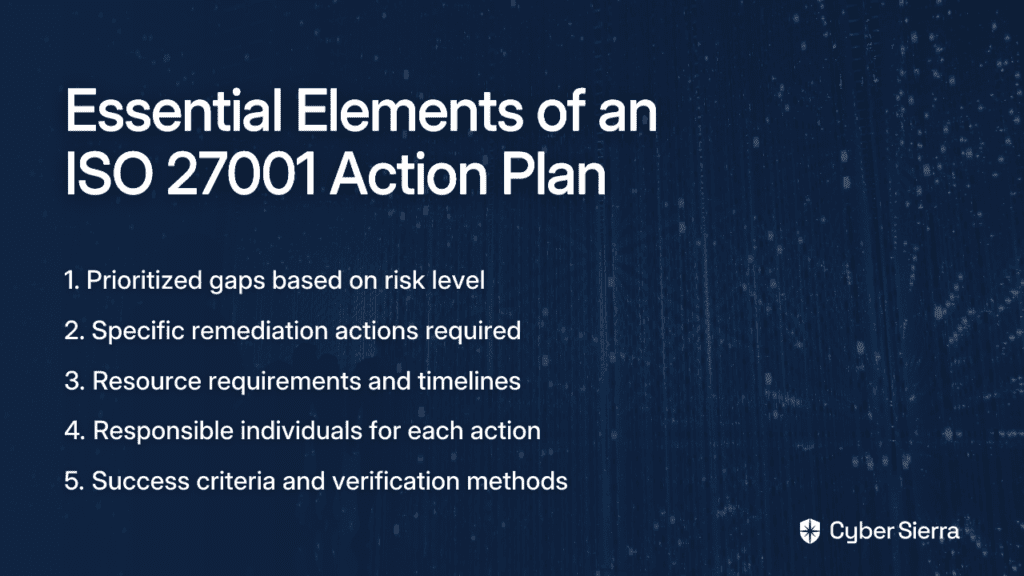
- Prioritize gaps based on:
- Risk level (high/medium/low)
- Implementation complexity
- Resource requirements
- Interdependencies with other controls
- For each gap, document:
- Specific actions required
- Resources needed
- Responsible individuals
- Target completion dates
- Success criteria
- Gain management approval for the remediation plan to ensure appropriate resources and support.
Understanding Sample ISO 27001 Gap Analysis Reports
Let's examine what a professional gap analysis report typically includes, based on industry examples:
Executive Summary
This section provides high-level insights for leadership:
Executive Summary (Sample):
Organization XYZ has undergone an ISO 27001 gap analysis to assess its readiness for certification. The analysis revealed that 45% of requirements are fully compliant, 35% partially compliant, and 20% non-compliant. Key areas requiring immediate attention include risk management processes, access control, and business continuity planning. With appropriate remediation over the next 6 months, the organization can achieve certification readiness.
Methodology Section
This section explains the approach taken:
Methodology (Sample):
The gap analysis was conducted through document reviews, interviews with 15 key personnel across IT, HR, and Operations departments, and observations of security practices. All requirements from ISO 27001:2013 clauses 4-10 and applicable Annex A controls were assessed using a three-tier compliance rating system.
Detailed Findings
This comprehensive section presents the analysis results in a structured format:
Detailed Findings (Sample Extract):

CLAUSE 4 - CONTEXT OF THE ORGANIZATION
4.1 Understanding the organization and its context
Finding: PARTIALLY COMPLIANT (AMBER)
Observation: Organization has documented some internal and external issues in business plans but lacks a structured approach to identifying issues specifically relevant to information security objectives. No formal process exists for regular review of these factors.
Recommendation: Develop and document a formal process for identifying and reviewing internal/external issues relevant to the ISMS, with scheduled reviews at least annually.

4.2 Understanding the needs and expectations of interested parties
Finding: NON-COMPLIANT (RED)
Observation: No formal identification of interested parties or their requirements related to information security.
Recommendation: Create a register of interested parties (e.g., customers, regulators, suppliers) and document their relevant requirements. Establish a process for regular review.
Implementation Roadmap
This section outlines the path to certification:
Implementation Roadmap (Sample):
Phase 1 (Months 1-2): Address high-priority gaps in management system elements
- Develop ISMS scope document
- Establish information security policy
- Create risk assessment methodology

Phase 2 (Months 3-4): Address operational controls
- Implement access control improvements
- Develop security awareness training program
- Enhance incident management procedures

Phase 3 (Months 5-6): Finalize implementation and prepare for audit
- Conduct internal audit
- Management review of ISMS
- Pre-certification assessment
Common Challenges in ISO 27001 Gap Analysis
Organizations frequently encounter these challenges during gap analysis:
1. Scope Definition Issues
Challenge: Defining an appropriate scope that balances comprehensive security with practical manageability.
Solution: Start with a clearly defined, manageable scope focusing on your most critical systems and processes. You can expand the scope in subsequent certification cycles as your ISMS matures.
2. Resource Constraints
Challenge: Limited budget, time, and expertise for conducting a thorough analysis.
Solution: Consider using automation tools like Cybersierra's Continuous Control Monitoring (CCM) platform, which can significantly streamline the assessment process by automatically evaluating your security controls against ISO 27001 requirements and providing real-time visibility into your compliance posture.
3. Organizational Resistance
Challenge: Resistance from staff who perceive ISO implementation as bureaucratic overhead.
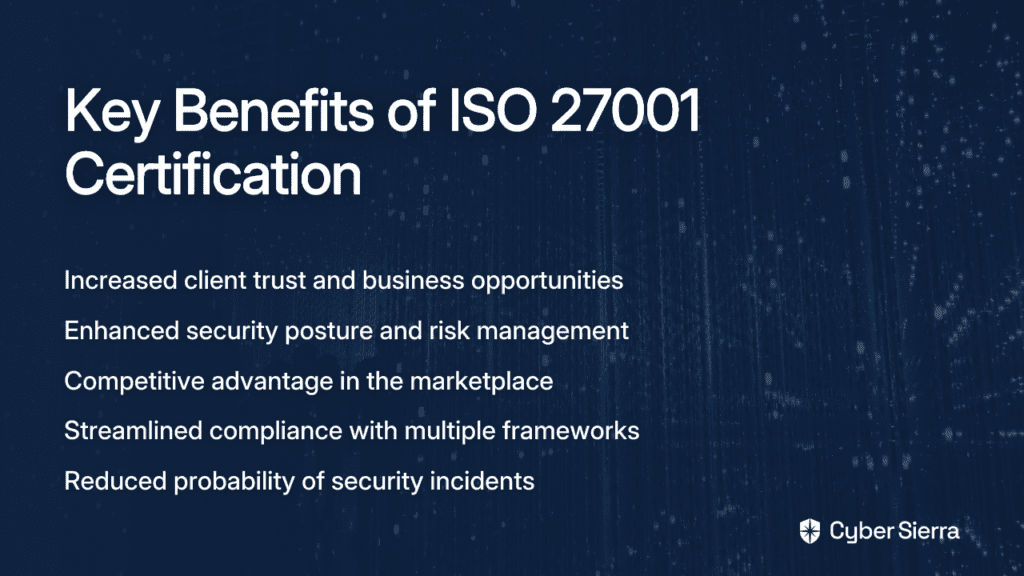
Solution: Emphasize business benefits beyond compliance, including improved security posture, enhanced client trust, competitive advantage, and reduced incident probability.
4. Documentation Overload
Challenge: Overwhelming documentation requirements leading to analysis paralysis.
Solution: Focus on quality over quantity. Ensure documents are practical, usable, and aligned with actual practices. As noted in industry discussions, "Documentation is key here" - but it must reflect reality, not just exist for compliance sake.
Leveraging Technology for ISO 27001 Gap Analysis
Modern compliance efforts can benefit significantly from purpose-built technology solutions:
Automation Benefits
Manual gap analysis can be time-consuming and error-prone. Technology solutions like Cybersierra's Governance, Risk & Compliance (GRC) platform offer significant advantages:
- Streamlined Assessment: Automatically map your existing controls to ISO 27001 requirements
- Real-time Visibility: Maintain an up-to-date view of your compliance posture
- Evidence Collection: Automate the gathering and organizing of compliance evidence
- Centralized Documentation: Store all relevant policies, procedures, and records in one accessible location
- Consistent Methodology: Ensure standardized assessment approaches across the organization
Continuous Monitoring vs. Point-in-Time Assessment
Traditional gap analysis provides a snapshot of compliance at a specific moment. However, modern approaches emphasize continuous compliance monitoring:
- Continuous Control Monitoring: Platforms like Cybersierra CCM provide ongoing visibility into control effectiveness rather than point-in-time assessments
- Automated Alerts: Receive notifications when controls drift out of compliance
- Trend Analysis: Track compliance improvements over time with historical data
As one security professional noted in a recent forum, "ISO just demonstrates they have defined security policies," but continuous monitoring ensures these policies translate into operational effectiveness - addressing a common criticism of certification approaches.
Addressing Transparency in ISO 27001 Compliance
A recurring theme in industry discussions is the challenge of transparency regarding ISO 27001 certifications and audit reports:
The Client Perspective
Clients increasingly expect visibility into vendors' security practices:
- "If a potential vendor refuses to share their latest audit report, they are dropped from consideration."
- "Trust is fundamental in vendor relationships, and lack of transparency can indicate deeper issues."
The Vendor Perspective
Vendors must balance transparency with confidentiality concerns:
- "We have a client whereby they want us to share our ISO report annually - however I do not feel comfortable and feel that it is confidential."
- "If the certificate isn't enough for them, then you need to have a conversation about why."
Balancing Approaches
Organizations can address this tension through several strategies:
- Customer-facing summaries: As recommended by security professionals, "What we have done in the past is have the auditor provide a customer-facing summary that we provided to big/important customers."
- Statement of Applicability: Share your SoA (Statement of Applicability) which outlines which controls you've implemented without revealing sensitive details.
- Third-party attestations: Use trusted third parties to verify compliance without sharing raw audit data.
- Transparency policies: Develop clear policies about what information you will and won't share, and communicate these proactively to clients.
By addressing transparency concerns proactively, organizations can build trust while protecting sensitive information.
ISO 27001 Gap Analysis Tools and Templates
To facilitate your gap analysis process, several tools and templates are available:
Free Templates and Resources
- ISO 27001 Gap Analysis Questionnaire
- ISO27k ISMS Gap Analysis Questionnaire - A comprehensive Excel-based tool covering all ISO 27001 requirements
- Sample Gap Analysis Reports
- ISO 27001 Gap Analysis Sample Report - Provides insight into report structure and findings presentation
- Detailed Gap Analysis Report Example - More comprehensive sample with detailed recommendations
Specialized Software Solutions
For organizations seeking more robust solutions:
- Integrated GRC Platforms like Cybersierra offer:
- Mapping capabilities for multiple frameworks simultaneously
- Automated control testing
- Evidence collection and management
- Customizable dashboards and reports
- Risk management functionality
- Compliance Automation Tools provide:
- Pre-built templates and assessment methodologies
- Workflow management for remediation activities
- Document management and version control
- Audit trail capabilities
Best Practices for ISO 27001 Gap Analysis
Based on industry experience and expert recommendations, consider these best practices:
1. Involve the Right People
Engage stakeholders from across the organization:
- IT and security teams for technical controls
- HR for personnel security aspects
- Legal for compliance requirements
- Operations for business process impacts
- Executive leadership for strategic alignment
As noted in industry forums, "Best practices come from 'what works quite well so far'" - leverage the collective experience of your team.
2. Be Honest in Your Assessment
Resist the temptation to overstate compliance:
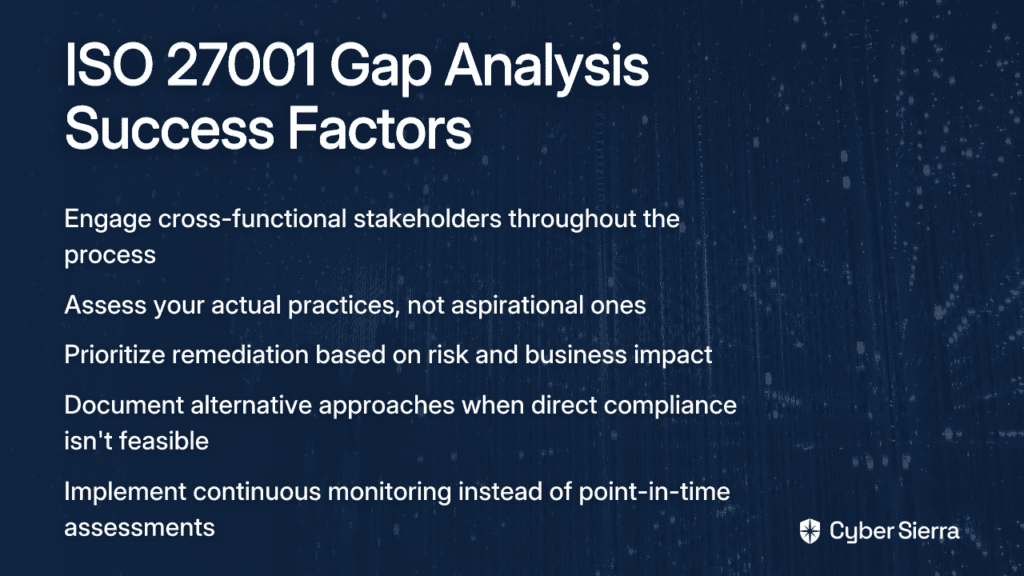
- Document actual practices, not aspirational ones
- Acknowledge deficiencies openly
- Provide context for non-compliances
- Remember that identifying gaps is the goal, not demonstrating perfection
3. Prioritize Based on Risk
Not all gaps carry equal weight:
- Focus first on high-risk areas with significant security impact
- Consider business context when prioritizing remediation
- Address systemic issues before isolated deficiencies
- Balance quick wins with structural improvements
4. Document Compensating Controls
When direct compliance isn't feasible:
- Document alternative approaches that mitigate the same risks
- Explain why the standard control isn't applicable or practical
- Demonstrate how compensating controls provide equivalent protection
- Maintain this documentation for auditors
5. Plan for Continuous Improvement
Gap analysis is not a one-time activity:
- Schedule regular reassessments
- Monitor the effectiveness of implemented controls
- Adjust your approach based on results
- Remember that security and compliance are ongoing journeys
Conclusion
A thorough ISO 27001 gap analysis provides the foundation for a successful certification journey by clearly identifying where your organization stands and what needs improvement. By following a structured approach, using appropriate tools, and addressing transparency concerns proactively, you can transform the compliance process from a daunting challenge into a strategic advantage.
The insights gained through gap analysis extend beyond certification readiness—they provide valuable perspective on your overall security posture and opportunities for meaningful improvement. As one security professional aptly noted, "Not everything will be perfect your first time," but a systematic gap analysis ensures you're making progress in the right direction.
Whether you're just beginning your ISO 27001 journey or looking to enhance an existing compliance program, the gap analysis process offers a critical roadmap for success. By leveraging modern tools like Cybersierra's compliance automation platforms, you can streamline this process, maintain continuous visibility into your compliance posture, and confidently demonstrate your commitment to information security.
Remember that the ultimate goal extends beyond the certificate itself—it's about building a robust security framework that protects your organization and instills confidence in your customers, partners, and stakeholders.
Additional Resources
This comprehensive guide aims to equip you with the knowledge and tools needed to conduct an effective ISO 27001 gap analysis, setting the foundation for successful certification and enhanced information security management.
