



10 Fake Recruiter Phishing Scams Targeting Job Seekers in 2026

Join thousands of professionals and get the latest insight on Compliance & Cybersecurity.
Summary
- Phishing remains the top reported cybercrime, with recruitment scams growing more sophisticated as fraudsters impersonate real companies on platforms like LinkedIn.
- The most critical red flag of a job scam is any request for payment; legitimate employers never ask candidates to pay for training, equipment, or background checks.
- Always independently verify job offers by contacting the company through its official website and scrutinize communications for non-corporate email domains or unprofessional platforms like Telegram.
- For businesses, building a "human firewall" through continuous education is the best defense; Cyber Sierra's Employee Security Training helps protect your team from phishing attacks.
In today's increasingly competitive job market, the pressure to secure employment can be overwhelming. As one job seeker confessed, "I was laid off in February and am getting pretty desperate in my job search." This desperation creates the perfect hunting ground for scammers who have evolved their tactics to exploit vulnerable individuals searching for work opportunities.
Recruitment scams have grown dramatically more sophisticated, especially with the rise of remote work which allows fraudsters to exploit online anonymity. According to the FBI's 2024 Internet Crime Report, phishing remains the most reported cybercrime with over 193,407 complaints filed in the past year alone. Even more concerning, scammers now regularly impersonate well-known companies on legitimate platforms like LinkedIn and Indeed, making it increasingly difficult to distinguish genuine opportunities from elaborate fake recruiter phishing scams.
As one Reddit user aptly warned, "Posting your details on a legitimate job board opens you up to recruitment from any number of not-legitimate scammers." This guide will break down the top 10 recruitment scams you're likely to encounter in 2026, providing clear technical indicators to help you identify fraud and protect your personal and financial information.
The Top 10 Recruitment Scams of 2026

1. The Untrained Employee: An Open Door for Attackers
The most significant vulnerability for many organizations isn't technology—it's the human element. An employee who clicks a malicious link in a fake job inquiry or falls for a social engineering scam can compromise an entire company's security. According to cybersecurity experts, most successful online attacks begin with a single click.
This is where Cyber Sierra's Employee Security Training module becomes invaluable for organizations looking to protect both their employees and their data. This comprehensive solution helps companies build a security-conscious culture through:
- Interactive Learning: Employees gain essential knowledge about password safety, email security, and phishing detection through engaging quizzes and assessments.
- Simulated Phishing Campaigns: Regular counter-phishing simulations train staff to recognize and thwart real-world scams in a controlled environment.
- Continuous Education: Ongoing updates about evolving threats keep the workforce vigilant against new scam variations.
- Compliance and Culture: The training helps meet data protection compliance standards while fostering a company-wide security mindset.
By strengthening what security professionals call the "human firewall," businesses can significantly mitigate risks associated with all forms of phishing, including the sophisticated recruitment scams that might target HR departments or hiring managers.
2. The Fake Job Board Listing
These scams involve posting enticing but non-existent jobs on major job sites. They frequently target popular remote roles like "data entry" or "customer service," which according to user research are "all fake" a majority of the time.
Red Flags:
- Vague job descriptions with generic duties
- Poor grammar and spelling mistakes
- Unrealistically high wages or benefits for the position
- Pressure tactics urging immediate application
3. LinkedIn Recruiter Impersonation
Fraudsters create fake LinkedIn profiles or impersonate real recruiters from well-known companies to gain victims' trust before initiating their scam.
Technical Indicators to Verify a Profile:
- Incomplete Profile: Lacks a personalized summary, banner image, or detailed work history
- Suspicious Connections: Very few connections or connections with other similar-looking, generic profiles
- No Activity: A genuine recruiter's profile shows activity like posting content or commenting, while fake profiles are often static
- Generic Profile Photo: Use a reverse image search (like Google Lens) on their profile picture—scammers often use stock photos
- Unverifiable Company Info: Claims to work for a major company but lacks endorsements from colleagues (Source)
4. The Interview & Training Fee Scam (Advanced-Fee Scam)
After a brief "interview" process, the scammer offers you the job but requires you to pay an upfront fee for training, equipment, software, or a background check.
Red Flags:
- The Golden Rule: Legitimate employers will never ask you to pay for a job or equipment needed to perform your duties, as emphasized by the FTC.
- Payment Methods: Requests for payment via non-reversible methods like Zelle, PayPal Friends & Family, wire transfers, or gift cards.
5. The Fake Check & Equipment Scam
This is one of the most common and financially devastating scams. The "employer" sends you a check (often via email) and instructs you to deposit it. You're then told to use a portion to buy equipment or software from their "preferred vendor," which involves wiring money or sending a digital payment.
The Catch: As one job seeker wisely noted, "As soon as I got to the point where they wanted to 'email me a check'...I had zero faith whatever money they sent would be good." The check is fraudulent and will eventually bounce. The money you sent to the "vendor" (actually the scammer) is your own, and you are liable to the bank for the full amount of the fake check.
Red Flags:
- You receive a check for an amount larger than your first paycheck or equipment cost
- You're asked to return or forward a portion of the money
- Key Indicator: "Emailed checks are always fraudulent. A legit company would buy the equipment directly."
6. The Premature Data Harvesting Scam
Scammers request sensitive personal information—like your Social Security number, bank account details, or copies of your driver's license—very early in the process, often before a formal interview or offer. They use pretexts like needing to "confirm payroll compatibility" or "run a preliminary background check."
User Experience Example: "They did ask who I banked with to 'confirm payroll compatibility' or some such. They did not ask for account details." Even this seemingly innocuous question is a tactic to gather information and build a profile for identity theft.
Red Flags:
- Any request for sensitive financial or personal data before receiving a signed, verifiable job offer
- Being asked to complete direct deposit forms or other "official" HR paperwork before your first day
7. The "Unprofessional" Communication Platform Scam
These scammers insist on conducting interviews and all communication exclusively through messaging apps like Telegram, Signal, or Google Hangouts.
Why it's a Scam: These platforms offer anonymity and are difficult to trace. Legitimate companies conduct interviews via phone, professional video conferencing software (Zoom, Microsoft Teams), or in person.
Red Flags:
- The recruiter refuses to speak on the phone or have a video call
- The entire hiring process is conducted via text or chat. As one user pointed out, "Telegram = red flag. I don't think any legitimate businesses conduct businesses on that platform."
- The recruiter's email address is from a public domain (e.g., @gmail.com, @yahoo.com) rather than a corporate one
8. The Fake Offer Letter Scam
To appear credible, scammers send an official-looking offer letter, often using the real company's logo and letterhead. This is a social engineering tactic designed to lower your guard before they execute the final stage of the scam (requesting money or sensitive data).
Red Flags:
- The offer is made without a proper interview process (no video or phone call with a real person)
- The email containing the offer letter comes from a non-corporate domain
- The salary or benefits seem wildly out of sync with industry standards for the role
9. The Parcel Mule Scam
This scam advertises "shipping manager" or "logistics specialist" jobs where your duty is to receive packages at your home, repackage them, and ship them to another address (often overseas).
The Catch: You are being used as a "parcel mule" to move illegally obtained goods, often purchased with stolen credit cards. This is a crime, and you could be held legally responsible.
Red Flags:
- The job description is vague about the nature of the goods being shipped
- The "employer" is based overseas
- You are asked to use your personal bank account to receive funds for shipping costs
10. The Ghost Job Scam
A "ghost job" is a posting for a position that a company is not actively trying to fill. While not always a direct financial scam, it's a deceptive practice used to collect resumes, gauge the talent market, or give the impression that the company is growing.
The Danger: Your resume and data are collected and stored, potentially for future phishing attempts or to be sold. It also wastes valuable time and energy for genuine job seekers.
Red Flags:
- The same job has been posted for months without being filled
- You apply but never hear back, or you get an automated rejection months later
- The job description is extremely broad and could fit many roles
How to Protect Yourself: A Job Seeker's Verification Checklist
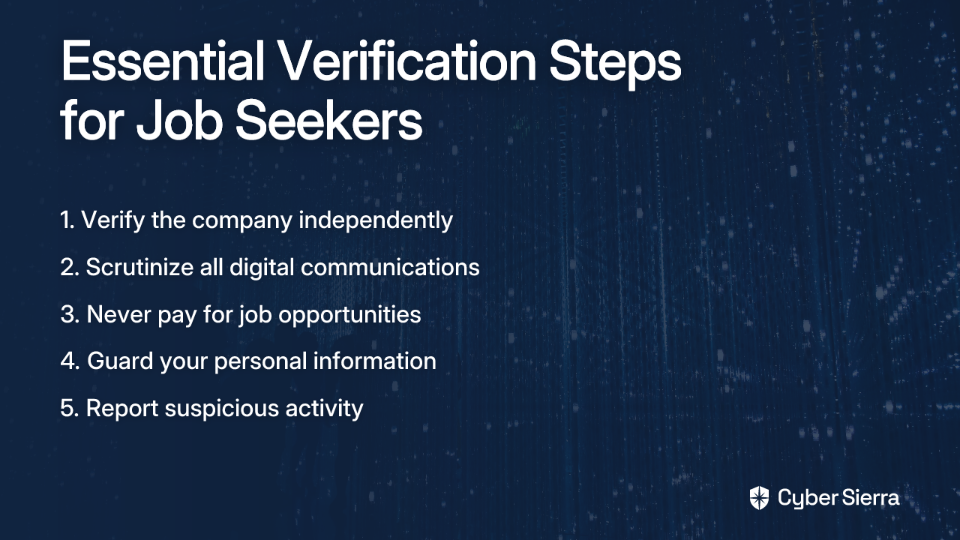
1. Verify the Company and Role Independently
- Never rely on contact information provided in a job posting or email. Find the company's official website through a search engine.
- Call their official HR department or main phone number to verify that the job opening and the recruiter are legitimate. As recommended in user discussions: "If you want to follow up, contact that company directly by carefully getting their real number yourself and calling."
2. Scrutinize Digital Communications
- Hover, Don't Click: Before clicking any link, hover your mouse over it to see the actual destination URL.
- Check Email Domains: Ensure the recruiter's email comes from the company's official domain (e.g.,
[email protected], not[email protected]). - Use Domain Lookups: For suspicious websites, use a
whois domain lookuptool to check when the domain was registered. A brand new domain for a supposedly established company is a major red flag.
3. Never Pay for a Job Opportunity
- There are no legitimate circumstances where you should pay for equipment, training, or background checks.
4. Guard Your Personal Information
- Do not provide your Social Security number, bank details, or copies of government ID until you have a verified, signed employment contract and have independently confirmed the legitimacy of the offer.
What to Do If You Encounter a Fake Recruiter Phishing Scam
- Stop all communication immediately.
- Do not send any money.
- Report the scam to the relevant authorities. This is crucial to help protect others:
- Federal Trade Commission (FTC): Report at ReportFraud.ftc.gov
- FBI's Internet Crime Complaint Center (IC3): ic3.gov
- The Job Platform: Report the fake listing or profile directly on LinkedIn, Indeed, etc.
- Your State's Attorney General's Office
Conclusion
The job market is challenging enough without having to navigate a minefield of sophisticated fake recruiter phishing scams. By staying vigilant and skeptical, you can protect yourself from these increasingly convincing frauds.
Always trust your instincts. If an offer seems too good to be true, it almost certainly is. Remember the verification checklist: verify independently, scrutinize communications, and never pay for a job.
For businesses, protecting your brand and data starts with empowering your people. A well-trained workforce is the best defense against the phishing scams that fuel this fraudulent ecosystem. Solutions like Cyber Sierra's Employee Security Training module can be instrumental in building this human firewall, ensuring your organization doesn't become another unwitting participant in the cycle of recruitment fraud.
Frequently Asked Questions
What is the most common sign of a recruitment scam?
The most common sign is being asked to pay for something. Legitimate employers will never ask you to pay for training, equipment, or a background check. Any request for money, especially via wire transfer or gift cards, is a major red flag.
How can I verify if a recruiter on LinkedIn is real?
Verify a recruiter by checking their profile for completeness and activity, and by contacting the company they claim to represent through its official website. Look for a detailed profile with endorsements and use a reverse image search on their photo.
What should I do if a potential employer sends me a check to deposit?
Do not deposit the check; it is almost certainly part of a fake check scam. The check will bounce, and you will be liable for the full amount. Report the scammer to the FTC and the job platform where you found the listing. Never send money back.
Why do scammers ask to communicate on apps like Telegram or Signal?
Scammers use encrypted messaging apps like Telegram or Signal for anonymity, which makes it difficult for law enforcement to trace them. Legitimate companies typically use professional channels like corporate email, phone calls, or official video conferencing tools.
When is it safe to provide my personal information like my SSN?
Only provide sensitive personal information after you have received and signed a legitimate, verifiable employment contract. You should have gone through a formal interview process and independently verified the company and the job offer.
What are ghost jobs and are they dangerous?
Ghost jobs are postings for roles that a company isn't actively trying to fill. While not always a direct financial scam, they are deceptive. They waste your time and are used to collect resumes, which could expose your data to future phishing attempts.
