



How to Handle Phishing Simulation Backlash Without Losing Your Job


Join thousands of professionals and get the latest insight on Compliance & Cybersecurity.
You've set up a realistic phishing simulation to test your company's security awareness. It's well-crafted, based on current threat intelligence, and designed to help protect your organization. Then it happens – angry emails flood your inbox, HR calls for an urgent meeting, and suddenly you're being questioned about your judgment and methods. Worse yet, your boss is conspicuously silent when you need their support the most.
"I got chewed out by HR again for 'yet another employee bonuses phish'," as one security manager put it. "It's even more aggravating because the target group historically blows off all training attempts and messaging."
Sound familiar? You're not alone. Security awareness professionals across industries find themselves caught in this uncomfortable paradox: the more effective and realistic your phishing simulations, the greater the potential backlash – and the greater the risk to your professional standing.
This is a survival guide for those walking this tightrope. With phishing attacks surging by 150% annually since 2019, and 84% of organizations suffering at least one successful attack in 2022 according to Proofpoint's State of the Phish report, your work is essential. But it shouldn't come at the cost of your job security or workplace relationships.
The Anatomy of a Backlash: Why Good Intentions Go Wrong
Before we can effectively manage backlash, we need to understand what triggers it in the first place.
The Psychology of Being "Tricked"
When employees fail a phishing test, their initial reaction is often anger – not at themselves, but at you. As one security manager observed, "I honestly think most are whining because they know they messed up." Being caught in a vulnerability creates cognitive dissonance, leading to defensive reactions and blame displacement.
Common Backlash Triggers
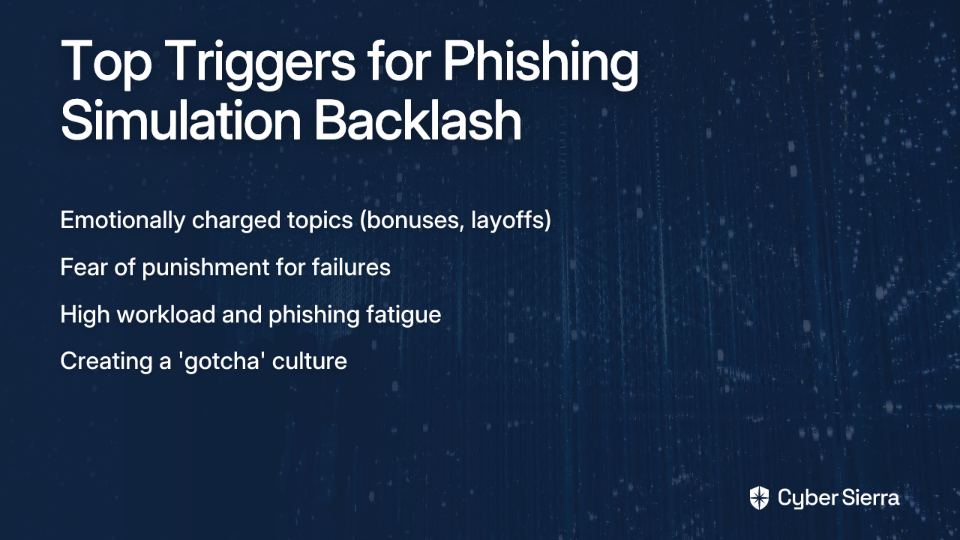
Sensitive & Unethical Scenarios: The number one landmine is using emotionally charged topics. Emails about bonuses, salary reviews, layoffs, or urgent HR notices feel manipulative and erode trust. One security professional admitted, "I've definitely crossed the wrong side of HR a few times in phishing simulations" using such topics.
Fear of Punishment: When employees believe "if you click 3 or more in a row you can be terminated" or that "your bonus/raise are impacted" by test failures, they'll resist the entire program. A punitive approach creates fear rather than learning.
Phishing Fatigue and Workload: Research published in the National Center for Biotechnology Information found that higher workloads directly correlate with increased likelihood of clicking phishing links. Bombarding busy employees with frequent tests only increases failure rates and resentment.
The "Gotcha" Culture: When simulations feel like entrapment rather than education, you're fostering an adversarial relationship between your security team and the rest of the organization.
The Pre-Emptive Strike: Building a Backlash-Proof Phishing Program
Now that we understand what causes backlash, let's create a framework to prevent it before it starts.
Step 1: Secure Ironclad Leadership Buy-In (Non-Negotiable)
This is your professional safety net. Without it, you're operating without a parachute. Consider the contrast between two real scenarios: one security manager whose "CITO didn't have my back on the previous incident and I was forced to remove any and all pay-related email from all present and future phishing simulations," versus another whose CIO "reassured the angry users that it was their responsibility to not click."
Actionable Plan:
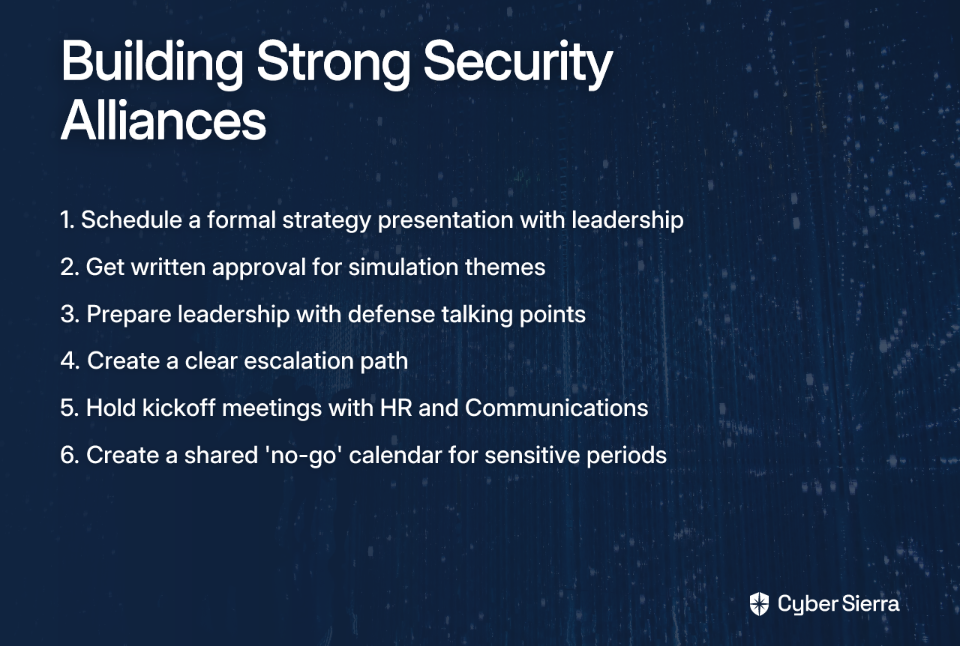
- Schedule a formal presentation of your annual phishing strategy with your CISO/CIO
- Get written approval for your simulation themes and approach
- Prepare your leadership with talking points to defend the program when complaints arise
- Create an escalation path for when (not if) senior stakeholders raise concerns
Step 2: Make Allies, Not Enemies: Involve HR and Communications Early
The same HR department that might reprimand you can become your strongest advocate if involved from the start. Research published by the NCBI explicitly recommends engaging HR in the planning phase.
Actionable Plan:
- Hold a kickoff meeting with HR and Internal Communications representatives
- Frame the collaboration: "We need your expertise to make this training effective without disrupting morale"
- Identify sensitive periods like performance reviews or bonus announcements to avoid
- Create a shared calendar of "no-go" dates and topics
Step 3: Design Smarter, Not Meaner Simulations
According to IBM, effective phishing simulations follow a 5-step process:
- Planning: Define clear objectives and target audience
- Drafting: Create realistic mock emails (use templates from the dark web, sanitized of malicious code)
- Sending: Deploy the emails with proper privacy controls
- Monitoring: Track interactions (clicks, data entry)
- Analyzing: Evaluate the data and provide educational feedback
Customize for Effectiveness, Not Shock Value: Research shows customized phishing emails yield a 55% click rate compared to just 7% for generic ones. This data justifies realism without resorting to cruel scenarios.
Use OSINT Ethically: Build spear-phishing scenarios based on publicly available information, like recent company announcements or events. One security professional successfully defended a simulation by pointing out it was based entirely on public data.
Step 4: Set the Stage with Proactive Communication
Transparency builds trust. According to Hoxhunt's best practices, announcing the existence of your phishing program (without revealing specifics) significantly reduces negative reactions.
Frame the program as skill-building rather than testing. Messaging should emphasize: "It's better to learn from a safe mistake than a real attack."
Damage Control: What to Do When the Backlash Hits
Despite your best preventive efforts, you may still face backlash. Here's how to manage it effectively:
Step 1: Deploy Your Leadership Shield
When complaints escalate, immediately activate your leadership support system. Have your CISO or CIO respond to high-level complaints, reinforcing that the program has executive approval and serves a critical security function. Their authority deflects heat away from you personally.
One security manager shared how their CIO's intervention completely changed the dynamic: "Once people heard it came from the top, the complaints transformed into constructive feedback."
Step 2: Turn Clicks into Teachable Moments
The Instant Feedback Loop: Every simulation should lead to an immediate educational page when users fail. This page should:
- Clearly identify the email as a security training exercise
- Reassure them their machine is not compromised
- Highlight the specific red flags they missed
- Provide guidance on reporting suspicious emails in the future
Empathetic One-on-One Communication: For those who complain directly, acknowledge their feelings while redirecting to the learning opportunity: "I understand why this was frustrating. The goal is to make these mistakes in a safe environment because real attackers use these exact same tactics."
Step 3: Shift the Culture from Punishment to Partnership
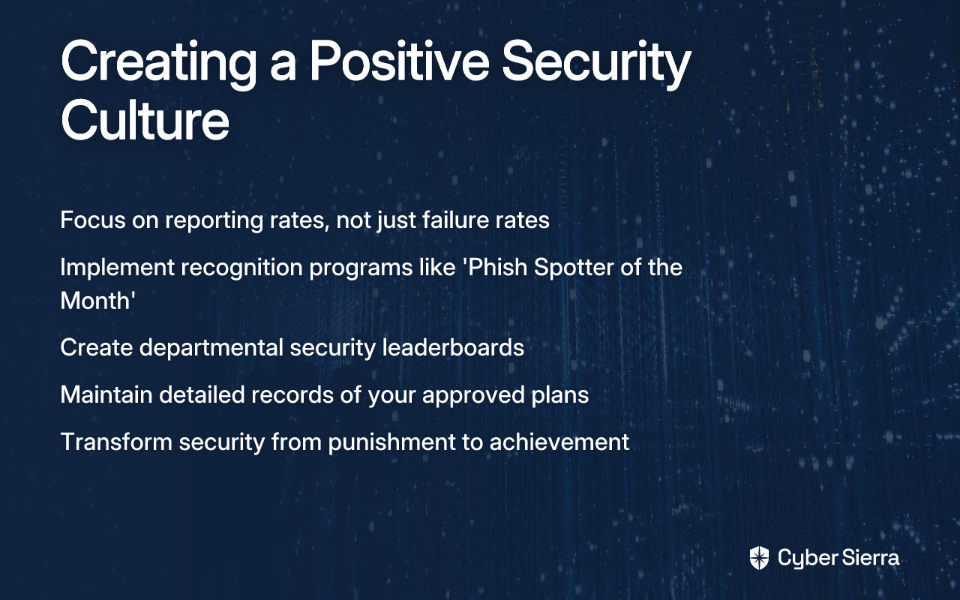
Reward Reporting, Don't Punish Clicking: Follow Hoxhunt's recommendation to track positive metrics like reporting rates and time-to-report, rather than focusing exclusively on failure rates.
Gamify and Incentivize: Create recognition programs like "Phish Spotter of the Month" or departmental leaderboards that celebrate security awareness. This transforms the narrative from punishment to achievement.
Document Everything: Maintain detailed records of your approved plan, communications, and feedback received. This creates a defensible paper trail should your program face serious challenges.
From Target to Trusted Advisor
Building an effective phishing simulation program without becoming a corporate target yourself requires strategic planning, strong alliances, and a focus on education over embarrassment.
Remember that backlash, while stressful, indicates engagement. It's an opportunity to have meaningful conversations about security that might otherwise be ignored. As one security professional put it, "People don't care until they realize they, personally, stand to lose something." Your simulations make that abstract risk concrete.
By implementing this framework, you can transform your phishing program from a source of contention into a cornerstone of your organization's security culture. More importantly, you'll protect not just your company's data but also your professional standing as a security leader who balances effectiveness with empathy.
The most successful security awareness professionals aren't those who catch the most employees in simulated traps – they're the ones who build a culture where security becomes everyone's responsibility, without burning bridges or their own careers in the process.
Frequently Asked Questions
Why do employees get so angry about phishing simulations?
Employees often get angry because being "tricked" can feel embarrassing or manipulative, leading to defensive reactions. This backlash is frequently triggered by the use of emotionally charged topics (like bonuses or layoffs), a fear of punishment for failing, and general fatigue from too many tests, which can make the simulation feel like a "gotcha" exercise rather than a learning opportunity.
What is the most important step to prevent backlash from a phishing test?
The single most important step is to secure ironclad leadership buy-in before you begin. This means getting formal, written approval from your CISO or CIO for your simulation strategy and themes. This leadership support acts as a professional safety net, ensuring that when complaints arise, your executives can defend the program's necessity and deflect criticism away from you.
What phishing simulation topics should be avoided?
You should avoid using emotionally charged or sensitive topics that can feel manipulative and erode employee trust. The most common landmines include fake emails about employee bonuses, salary reviews, potential layoffs, urgent disciplinary notices from HR, or other topics that prey on financial anxiety or job security fears.
How can I make phishing tests realistic but not unethical?
You can create realistic simulations by basing them on real-world threats and public information, a practice known as ethical Open-Source Intelligence (OSINT). For example, use scenarios related to recent company announcements, industry news, or common business interactions. The goal is to mimic the tactics of actual attackers without resorting to cruel or emotionally manipulative scenarios that damage morale.
What should I do when an employee complains about a phishing simulation?
When an employee complains, first acknowledge their frustration to validate their feelings, then immediately pivot to the educational purpose of the exercise. Explain that the simulation was designed to mimic real attacker tactics in a safe environment. Use it as a one-on-one teachable moment to review the red flags. If the complaint is escalated, deploy your pre-arranged leadership support to handle it.
How can I shift our company culture from punishing failure to rewarding security awareness?
Shift the culture by focusing on positive reinforcement and partnership rather than punishment. Instead of tracking only click/failure rates, celebrate positive metrics like how many employees report a suspicious email and how quickly they do it. Implement gamification with recognition programs like a "Phish Spotter of the Month" to make security a shared achievement, not a dreaded test.
