



NIST Risk Management Framework: Addressing CISO Needs and Pain Points



Join thousands of professionals and get the latest insight on Compliance & Cybersecurity.
You've been tasked with implementing robust cybersecurity measures across your organization. The board is demanding better security posture reporting, compliance teams are citing regulatory requirements, and your technical teams are overwhelmed by the seemingly endless security frameworks available. As you sift through various methodologies, one name keeps appearing: the NIST Risk Management Framework (RMF). But is this just another bureaucratic checkbox exercise, or can it actually solve your most pressing security challenges?
For many Chief Information Security Officers (CISOs), the struggle to implement effective risk management while balancing limited resources, stakeholder expectations, and evolving threats feels like an impossible task. The confusion between general risk management practices and specific frameworks only adds to the complexity.
Understanding the NIST Risk Management Framework
The NIST Risk Management Framework provides a structured, systematic approach to managing organizational risk related to information systems. Developed by the National Institute of Standards and Technology, the RMF integrates security, privacy, and cyber supply chain risk management activities into the system development lifecycle.
What distinguishes the RMF from general risk management practices is its comprehensive, step-by-step methodology specifically designed for information security contexts. This distinction is crucial, as many security professionals express confusion about the difference:
"Risk management is what it says. Risk management framework is a method used in the Federal Government to assess a system for its risk with the end result of obtaining an Authority to Operate (ATO)."
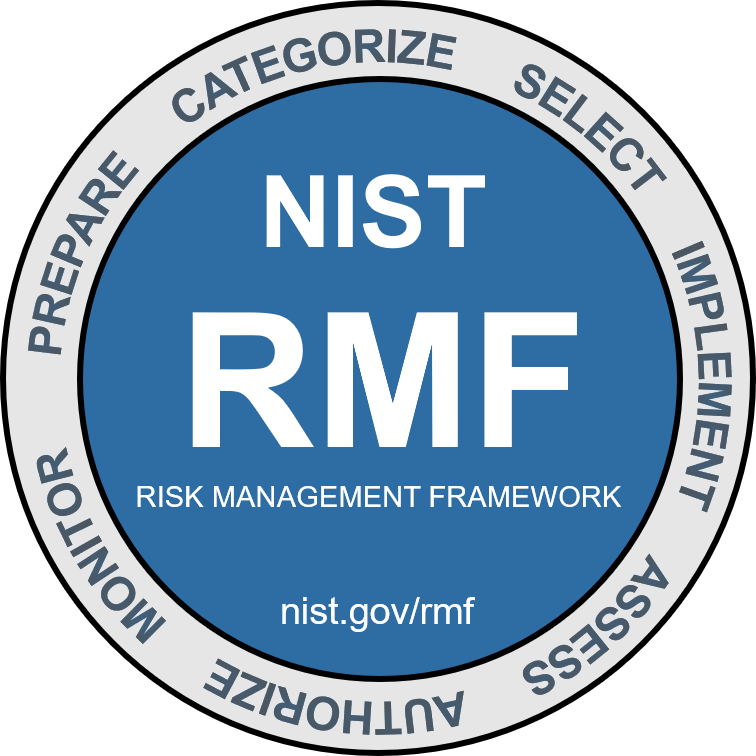
The RMF consists of seven fundamental steps:
- Prepare - Essential activities to prepare the organization for managing security and privacy risks
- Categorize - Categorize the system and information based on impact analysis
- Select - Select the applicable security control baselines based on categorization results
- Implement - Implement the security controls and document how they are deployed
- Assess - Assess whether the controls are implemented correctly and producing desired outcomes
- Authorize - Provide a senior official decision that authorizes a system based on risk determination
- Monitor - Continuously monitor control implementation and risks to the system
CISO Pain Points When Implementing the NIST RMF
1. Framework Confusion and Complexity
Many CISOs struggle with distinguishing between general risk management principles and the specific methodology outlined by NIST RMF. This confusion is particularly evident when attempting to integrate multiple frameworks:
"I'm struggling to understand the difference between risk management and the Risk Management Framework. I'm studying for CISSP and I see the two terms used interchangeably at times."
The challenge is compounded when organizations must comply with multiple frameworks simultaneously (NIST RMF, ISO 27001, GDPR, etc.), creating a complex web of overlapping requirements that can overwhelm security teams.
2. Lack of Practical Guidance for Risk Assessment
While the NIST RMF provides a comprehensive structure, many CISOs and security teams lack experience in developing practical risk assessment methodologies that align with the framework:
"Does anyone have a risk assessment methodology they are willing to share? I was put in charge of creating one, and this is not my expertise, so I'm looking for any insight or advice."
The gap between theoretical knowledge and practical implementation creates significant challenges, particularly for organizations with limited security resources or expertise.
3. Team Burnout and Sustainability Concerns
The implementation of comprehensive frameworks like the NIST RMF can place substantial burdens on already-stretched security teams:
"How are you addressing and/or preventing burnout in your team?"
This question, posed by a CISO in an online forum, highlights a growing concern about sustainability in cybersecurity operations. The detailed documentation, continuous monitoring, and regular assessments required by the RMF can contribute to workload challenges and potential burnout if not managed effectively.
4. Communicating Security Value to Leadership
CISOs often struggle to position security investments as value-generating rather than purely cost centers:
"If you can find a way to sell security as more than a cost center, then that's another focal point."
The technical nature of the NIST RMF can make it difficult to translate its benefits into business language that resonates with C-suite executives and board members. Without effective communication, gaining buy-in for necessary resources becomes challenging.
Strategies to Address CISO Challenges with the NIST RMF
1. Simplify and Contextualize the Framework
Rather than attempting to implement the entire RMF at once, successful CISOs recommend starting with a simplified approach:
"Start by keeping it simple. Adapt the process suggested in the publication to something simpler so you can engage the main stakeholders to begin with, from the different levels of the org."
This phased implementation allows organizations to demonstrate early wins, build momentum, and gradually introduce more sophisticated elements of the framework as the security program matures.
For organizations struggling with framework confusion, it's helpful to view the NIST RMF as a structured methodology for applying general risk management principles to information systems. The RMF provides the "how" for implementing effective risk management practices.
2. Leverage Existing Resources for Risk Assessment
CISOs seeking practical guidance for risk assessment methodologies should familiarize themselves with NIST Special Publication 800-30, which provides comprehensive guidance on conducting risk assessments:
"800-30 is all about conducting risk assessment. Start there to understand the process."
Additionally, there are numerous resources available that can help bridge the gap between theory and practice:
- NIST provides templates and examples on their website
- Industry-specific adaptations of the RMF can provide more relevant guidance
- Online communities and forums where practitioners share experiences
- Consulting with experienced practitioners who have implemented the framework
3. Automate and Integrate to Reduce Burden
To address team burnout and resource constraints, leading CISOs are turning to automation and integration tools:
"Explore automation tools to assist with security measures and reduce manual workloads."
Modern GRC (Governance, Risk, and Compliance) platforms like Cyber Sierra can significantly reduce the manual effort associated with implementing the NIST RMF. Cyber Sierra's Continuous Control Monitoring (CCM) module, for instance, automates control testing and validation, provides real-time visibility into security posture, and manages controls across multiple compliance frameworks, including NIST.
By automating evidence collection, control validation, and monitoring activities, security teams can focus on higher-value risk management activities rather than administrative tasks. This not only improves efficiency but also helps prevent burnout by eliminating tedious manual processes.
4. Translate Technical Risk into Business Impact
To overcome communication challenges with leadership, successful CISOs translate technical aspects of the NIST RMF into business terms:
- Link security controls to specific business objectives
- Quantify risk in financial terms where possible
- Demonstrate how the RMF helps protect revenue and reputation
- Use risk scenarios that illustrate potential business impacts
- Develop executive dashboards that visualize security posture in business terms
For example, rather than discussing technical control implementations, focus on how the RMF helps protect critical business processes, maintain customer trust, and ensure regulatory compliance—all of which have direct business value.
Implementing NIST RMF: A Practical Approach
Based on the collective wisdom of successful CISOs, here's a practical approach to implementing the NIST RMF that addresses common pain points:
Phase 1: Preparation and Planning
- Gain Executive Support: Present the business case for implementing the RMF, focusing on risk reduction and business enablement
- Establish Governance: Define roles, responsibilities, and decision-making authorities
- Inventory Systems: Identify and categorize information systems based on business impact
- Assess Current State: Evaluate existing security controls against RMF requirements
Phase 2: Implementation and Assessment
- Prioritize Critical Systems: Begin with high-impact systems to demonstrate value quickly
- Select and Implement Controls: Choose appropriate security controls based on system categorization
- Document Control Implementation: Create clear documentation that will facilitate assessment
- Conduct Control Assessments: Evaluate the effectiveness of implemented controls
Phase 3: Authorization and Continuous Monitoring
- Prepare Risk Assessment Reports: Document findings, recommendations, and residual risks
- Obtain Authorization: Present to senior officials for risk acceptance and authorization decisions
- Implement Continuous Monitoring: Establish automated processes for ongoing control validation
- Regular Reporting: Provide stakeholders with visibility into security posture and risk trends
How Technology Can Enhance NIST RMF Implementation
Modern GRC platforms can significantly streamline RMF implementation while addressing key CISO pain points. Cyber Sierra, for example, offers specific capabilities that align with NIST RMF requirements:
- Continuous Control Monitoring: Automates the monitoring step of the RMF, providing near real-time visibility into control effectiveness across multiple frameworks, including NIST
- Third-Party Risk Management: Extends the RMF approach to vendor ecosystems, addressing supply chain risks
- Governance, Risk & Compliance: Simplifies management of multiple compliance frameworks, reducing duplication of effort and documentation burden
- Threat Intelligence: Enhances the monitoring phase by providing actionable insights into emerging threats
These technological solutions can transform the RMF from a labor-intensive manual process to a streamlined, automated approach that provides better visibility while reducing team burnout.
Conclusion: Making NIST RMF Work for Your Organization
The NIST Risk Management Framework provides a comprehensive approach to managing information security risks, but implementing it successfully requires addressing the common pain points that CISOs face:
- Simplify and adapt the framework to your organization's specific context
- Leverage existing resources and guidance to develop practical risk assessment methodologies
- Automate repetitive tasks to reduce manual effort and prevent team burnout
- Translate technical aspects into business language to gain leadership support
- Implement in phases, starting with critical systems and gradually expanding scope
By taking this approach, CISOs can transform the NIST RMF from a compliance burden into a valuable tool that genuinely enhances their organization's security posture and risk management capabilities.
As cyber threats continue to evolve, and regulatory requirements become more stringent, the structured approach provided by the NIST RMF becomes increasingly valuable. With the right implementation strategy and supporting technologies, CISOs can leverage this framework to build more resilient security programs that align with business objectives while effectively managing information security risks.
For organizations looking to enhance their implementation of the NIST RMF, platforms like Cyber Sierra provide integrated solutions that automate key aspects of the framework while providing the visibility and reporting capabilities needed to demonstrate value to leadership. By combining sound methodology with modern technology, CISOs can overcome the traditional challenges associated with comprehensive risk management frameworks and deliver measurable security improvements.
For more information on implementing the NIST Risk Management Framework or to explore how automation can streamline your security compliance efforts, visit NIST's official RMF resource page or Cyber Sierra's platform overview.
