



Why Your Cybersecurity Tool Stack Is Making Your Team Miserable



Join thousands of professionals and get the latest insight on Compliance & Cybersecurity.
You've just onboarded a new analyst to your security team. As you walk them through your cybersecurity tools, you find yourself wincing as you say, "Brace yourself for Trellix EDR" or "You'll need to learn Archer, but everyone hates it." Your new hire's enthusiasm visibly deflates as they realize how much of their day will be spent wrestling with clunky interfaces and disjointed systems.
Sound familiar?
Despite the billions spent on cybersecurity tools each year, security professionals across forums like Reddit express a common sentiment: "Using tools that I absolutely hate makes this job feel unbearable." This isn't just casual complaining—it's a symptom of a widespread problem that's undermining your security posture and burning out your team.
The Silent Epidemic: Tool Sprawl and Cybersecurity Fatigue
The modern security stack has ballooned to unsustainable proportions.
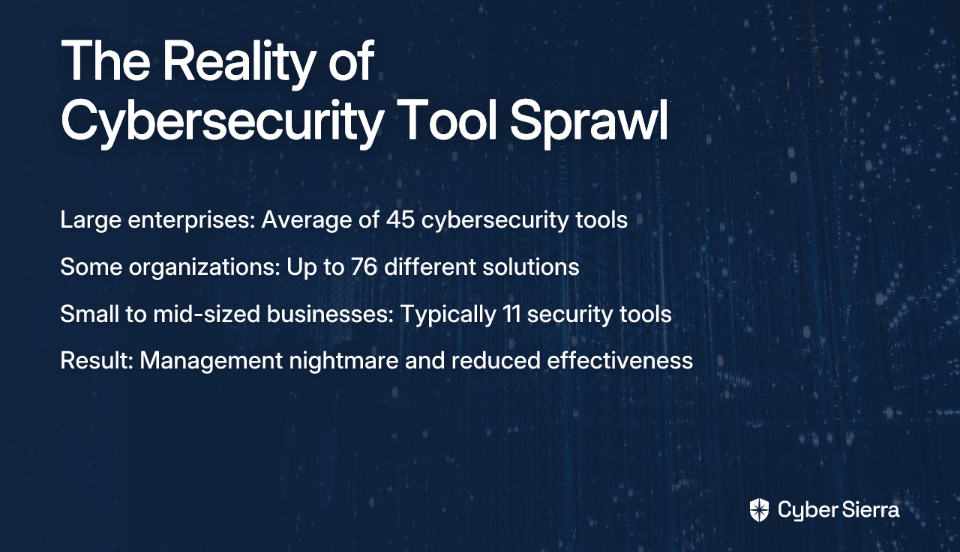
Large enterprises juggle an average of 45 cybersecurity tools, with some reports indicating numbers as high as 76 different solutions. Even small to mid-sized businesses typically manage around 11 security tools.
This proliferation has created two interrelated problems:
- Tool Sprawl: The unchecked accumulation of security solutions, often with overlapping functionalities, creating a management nightmare.
- Cybersecurity Fatigue: A formally recognized condition of mental exhaustion resulting from constant exposure to security alerts, complex protocols, and overwhelming responsibilities.
As one security professional put it: "Tracking and managing alerts from 10+ scanning tools is overwhelming. Things fall through the cracks." The irony? Organizations with larger security stacks often find it harder to detect and respond to attacks due to the noise generated by redundant tools.
The Symptoms of a Broken Tool Stack
Alert Fatigue and Cognitive Overload
The constant barrage of notifications from multiple disconnected systems creates a state of alert desensitization. Security analysts begin to tune out warnings—including potentially critical ones—simply to maintain sanity.
Research published in the PMC NCBI has linked this phenomenon to sustained cognitive overload, where the brain simply cannot process the volume of information it's receiving. This isn't just an annoyance—it's a serious security vulnerability.
Burnout and Team Morale
The same study identified three dimensions of burnout affecting security professionals:
- Emotional Exhaustion: The feeling of being depleted and unable to meet constant demands.
- Depersonalization: A growing detachment and cynicism toward work.
- Reduced Personal Accomplishment: The crushing feeling of ineffectiveness despite endless effort.
A survey of 351 employees confirmed a strong correlation between high levels of cybersecurity fatigue and increased stress, anxiety, and reduced productivity. When your team dreads logging into their tools each morning, their vigilance inevitably suffers.
Operational Inefficiency and Hidden Security Gaps
Fragmented tool stacks lead to siloed data and inefficient workflows. When critical information is trapped in disconnected systems, incident response slows dramatically.
Worse still, the gaps between tools create blind spots where threats can hide. The painful irony: your extensive tool collection might actually be making you less secure.
The Root Cause: How Did We Get Here?
The "More is Better" Fallacy
The cybersecurity industry has long operated under the assumption that more layers equal better protection. While defense-in-depth is a sound concept, it's been corrupted into "collect all the tools."
Each new breach or threat vector triggers a reactive purchase of another point solution, without consideration for how it integrates with existing tools or whether it addresses a genuine gap.
Integration Nightmares and Underutilized Features
Many organizations are paying full price for capabilities they've never fully implemented. According to Discern Security, tools are frequently deployed with default or minimal configurations, leaving their advanced features untapped while still creating alert noise.
Meanwhile, poor integration between tools means data doesn't flow seamlessly, creating both redundant work and dangerous blind spots.
The Human Factor: Skills Gap and Compliance Pressure
The cybersecurity sector faces a massive talent shortage, with over 700,000 job vacancies in the U.S. alone. Finding staff skilled in dozens of complex tools is nearly impossible.
Add to this the relentless pressure of compliance requirements like GDPR, HIPAA, and PCI-DSS, each demanding extensive documentation and monitoring, and you have a perfect storm of overwhelmed teams managing too many tools with too little support.

Reclaiming Sanity: A Four-Step Strategy for Optimization
The good news? You can break this cycle. Here's a practical approach to transforming your tool stack from a source of misery to a strategic asset:
Step 1: Audit and Consolidate – Why Less Is More
Start by creating an inventory of all your security tools and assess each one with these critical questions:
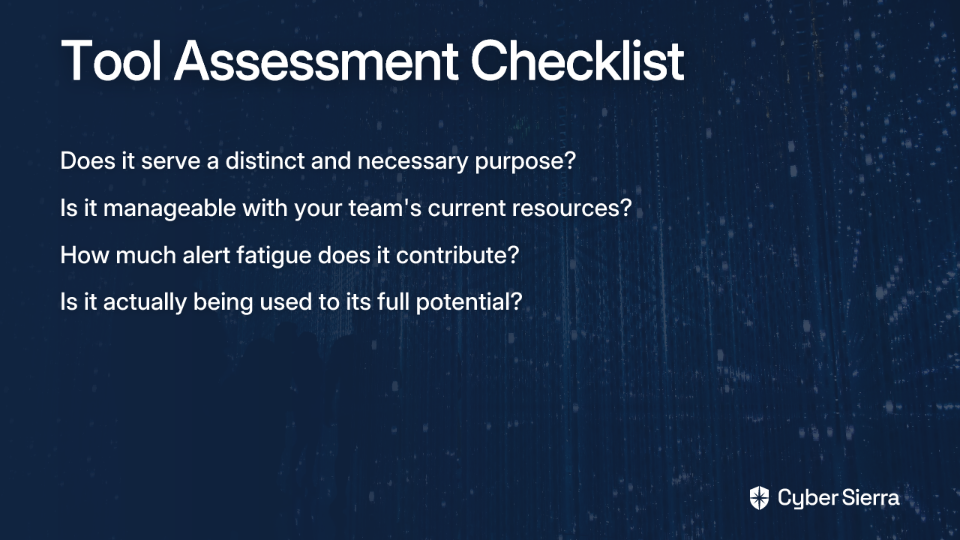
- Does it serve a distinct and necessary purpose?
- Is it manageable with your team's current resources?
- How much alert fatigue does it contribute?
- Is it actually being used to its full potential?
Be ruthless in identifying opportunities for consolidation. Many organizations discover they can eliminate 20-30% of their tools while maintaining or even improving their security posture.
Step 2: Prioritize Integration and Automation
Choose one of two strategic approaches:
- Go Mono: Utilize a single, unified enterprise security platform for a cohesive system.
- Go Integrated: Build around your core tools, using security automation platforms to ensure seamless data flow.
Leverage AI and automation to reduce manual tasks and cognitive load. As suggested by multiple security professionals on Reddit, implement a SIEM or similar platform to centralize alerts from all remaining tools. This allows for better correlation, identification of false positives, and effective alert tuning.
Step 3: Enhance Visibility and Validate Controls
Implement a unified dashboard that provides visibility across all tools. This helps identify redundancies, security gaps, and misconfigurations before they become problems.
Regular assessments ensure your tools are actually delivering value. One organization improved its configuration health score from 45% to 80% and increased EDR coverage from 80% to 95% within a single quarter through focused optimization.
Step 4: Support Your People
Address the human side of the equation:
- Simplify security protocols wherever possible
- Provide mental health support and resources
- Encourage periodic "digital detoxes" from security tasks
- Invest in training for the tools you keep
Frame security investments in terms of business value. With the average data breach costing $4.45 million according to IBM, an efficient, effective stack is a sound financial decision—a point worth emphasizing to leadership that might be resistant to investing in optimization.
From Tool Overload to Strategic Defense
The effectiveness of your security program isn't measured by the number of tools you've accumulated, but by outcomes and team wellbeing. A miserable, burned-out team cannot effectively defend your organization, regardless of how many tools they have at their disposal.
By focusing on consolidation, integration, and people-centric design, you can build a more resilient and effective security posture while dramatically improving the daily experience of your team.
Start the conversation today: What tools are causing the most pain? Where are your biggest redundancies? A healthier stack leads to a healthier—and more secure—organization.
Remember, in cybersecurity, less really can be more.

Frequently Asked Questions
What is cybersecurity tool sprawl?
Cybersecurity tool sprawl is the uncontrolled accumulation of too many security solutions within an organization, often with overlapping functions and poor integration. It typically happens as companies reactively purchase new point solutions to address emerging threats without a strategic plan, leading to a complex and unmanageable security stack.
Why is having too many security tools a bad thing?
Having too many security tools is detrimental because it leads to alert fatigue, operational inefficiency, and hidden security gaps. When analysts are overwhelmed by notifications from dozens of disconnected systems, they are more likely to miss critical threats. This cognitive overload contributes directly to team burnout and makes it harder, not easier, to detect and respond to attacks.
How can you tell if your team is suffering from cybersecurity fatigue?
Key signs of cybersecurity fatigue include emotional exhaustion, a growing sense of cynicism or detachment from the job (depersonalization), and a reduced sense of personal accomplishment. Practically, you might observe increased stress levels, high turnover, and a noticeable dip in productivity and vigilance as team members struggle to manage the overwhelming demands of a fragmented tool stack.
How do you start optimizing a bloated security tool stack?
The first step to optimizing your tool stack is to conduct a complete audit and inventory of every security tool you use. For each tool, ask critical questions: Does it serve a unique and necessary purpose? Is it being used to its full potential? How much alert noise does it create? This process will help you ruthlessly identify redundant or underutilized tools that can be consolidated or eliminated.
What is the ideal number of cybersecurity tools?
There is no single "ideal" number of cybersecurity tools, as the right amount depends on an organization's size, industry, and specific risk profile. The goal is not to hit a magic number but to build a strategic, fully integrated, and manageable tool stack. Success is measured by outcomes—like reduced alert noise and faster incident response—not by the quantity of tools.
How does consolidating security tools improve overall security?
Consolidating security tools improves security by creating a more cohesive and manageable defense system. It reduces the "noise" of excessive alerts, allowing analysts to focus on genuine threats. Furthermore, better integration between fewer tools eliminates the blind spots and security gaps that often exist in a fragmented environment, leading to faster, more effective incident detection and response.
