
The Great Phishing Training Debate: Snake Oil or Security Essential?


Join thousands of professionals and get the latest insight on Compliance & Cybersecurity.
You've spent thousands on phishing awareness training. Your employees have dutifully clicked through dozens of PowerPoint slides. Yet when that next cleverly disguised email lands in someone's inbox, they click anyway—potentially unleashing digital chaos across your organization.
Sound familiar? You're not alone.
"Users are always going to click on shit," laments one security professional in an online forum. "Collectively thousands of hours will be wasted on training and all it takes is one person to click the wrong thing and you'll be in the same place as if you had no training at all."
This frustration sits at the heart of one of cybersecurity's most contentious debates: Is phishing awareness training a vital defense mechanism or expensive snake oil peddled by security vendors and mandated by cyber insurance providers?
The stakes couldn't be higher. Phishing remains the most common cybercrime, costing organizations a staggering $17,700 per minute in losses. Meanwhile, 83% of organizations reported experiencing at least one successful email-based phishing attack in 2022, according to Proofpoint research.
Let's cut through the noise and examine what the data truly tells us about this divisive security measure.
The Argument For: Phishing Training as a Security Essential
The case for phishing training begins with the undeniable scale of the threat.
Phishing serves as the starting point for most online attacks, according to the Cybersecurity & Infrastructure Security Agency (CISA). When successful, these attacks carry devastating financial consequences—the average data breach originating from phishing costs $4.91 million, according to IBM research.
For small and medium businesses, the stakes are even higher, with 60% going out of business within six months of a successful attack.
Proponents point to promising statistics:
- 80% of organizations report measurable reductions in phishing susceptibility after implementing training
- Combined awareness programs and simulations can reduce mistakes by up to 60% after just a few sessions
- Well-designed phishing simulations can double learning retention rates within a year
These numbers suggest that, when done right, training delivers an average 37-fold return on investment—an impressive figure by any standard.
Effective training, according to CISA guidelines, includes:
- Teaching employees to identify suspicious requests and verify sender validity
- Providing continuous education to keep pace with evolving attack methods
- Fostering a culture where employees can report suspicious communications without fear of penalties
The Argument Against: Is It All Just Snake Oil?
Despite these promising statistics, a groundbreaking 2023 study by researchers from the University of Chicago and UC San Diego has thrown cold water on traditional training approaches.
After analyzing 19,789 healthcare personnel over eight months, the researchers reached some disturbing conclusions:
- Embedded, real-time training during simulations only improved employee performance by a mere 1.7%
- Over 50% of participants spent less than 10 seconds reviewing follow-up training materials
- Most alarmingly, each additional training session actually increased an employee's likelihood of failing a future simulation by 18.5%
As Dark Reading reported, the study suggests that repetitive training may create a dangerous psychological backfire effect—employees feel more secure after training, paradoxically making them more vulnerable to increasingly sophisticated attacks.
These findings align with real-world experiences. One security professional shared their frustration: "For our last campaign we had 900 users fail out of ~5.5k users. Miserable." Another noted that despite years of training, "users love to click on links and they're gullible as hell."
The skepticism extends beyond click rates to questioning fundamental motives. As one security professional candidly noted: "It's a requirement for some cyber insurance coverage and from our investors." In other words, organizations often conduct training not because they believe it works, but because they're required to check a compliance box.
Reconciling the Debate: It's Not the "What," It's the "How"
The debate isn't actually about if training works—it's about how it's implemented.
As one expert put it bluntly: "100% Yes if done correctly. This study did not. They used commercial off-the-shelf tooling."

The "anti-training" research has significant limitations:
- It focused only on click rates, ignoring critical post-click behaviors like credential entry or phishing report rates
- The study examined a single healthcare organization, potentially limiting its applicability across industries
- The minimal time participants spent with training materials (less than 10 seconds) suggests the problem was with the specific materials themselves, not the concept of training
So what makes the difference between ineffective "snake oil" training and valuable security education?
Building a Program That Works
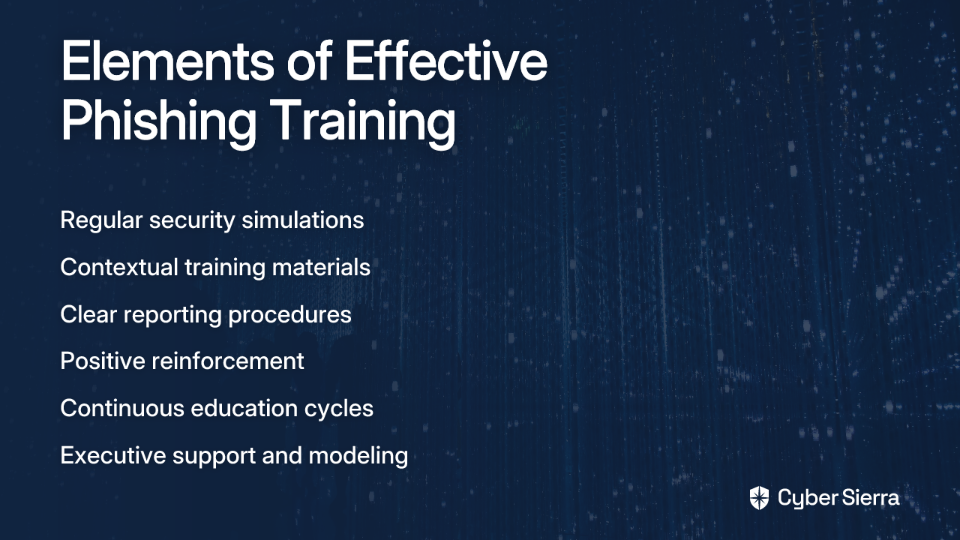
Effective phishing training requires several key elements:
- Contextualization is critical. Generic phishing examples don't resonate. "Make it as contextualized to the department as possible," recommends one security professional. This explains why "HR/PTO/Payroll phishes have high click rates"—they target real-world concerns employees actually care about.
- Engagement is non-negotiable. Static PowerPoints won't cut it. Modern training should incorporate gamification, interactive elements, and adaptive simulations. When half of your users spend less than 10 seconds on training materials, they're clearly not engaging with the content.
- Focus on reporting, not just avoiding clicks. The goal isn't a zero click rate (which is unrealistic) but building a culture where employees confidently report suspicious communications. A high report rate is actually a more valuable metric than a low click rate.
Beyond Training: Building a Multi-Layered Defense
Even the most ardent training advocates acknowledge its limitations. As one security professional bluntly put it: "Users are always going to click on shit. It's about keeping security front of mind and putting controls in place that mitigate the damage they can cause."
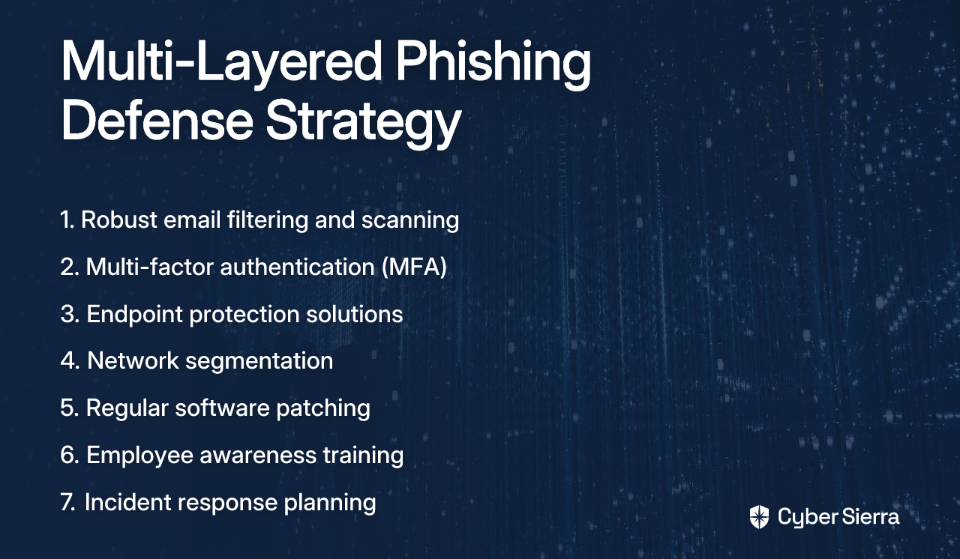
Effective phishing defense requires layered technical controls:
- Multifactor Authentication (MFA): The single most effective control to prevent unauthorized access even when credentials are compromised
- Advanced Email Security Gateways: Filter out malicious messages before they reach employee inboxes
- Endpoint Protection**: Detect and block malware that might execute after a successful phish
- Network Segmentation**: Limit lateral movement if one system is compromised
- Regular Patching**: Eliminate known vulnerabilities that phishing campaigns frequently target
The Final Verdict: Snake Oil or Security Essential?
Generic, check-the-box phishing training that exists solely to satisfy compliance requirements? Absolutely snake oil.
But contextual, engaging, continuous training that focuses on building a reporting culture, measures the right metrics, and operates alongside robust technical controls? That's a security essential.
The difference lies not in whether you train, but in how you approach it. Organizations should stop asking if they should conduct phishing training and start asking how they can implement it effectively—as one component of a comprehensive security program.
After all, as another security professional noted: "If you're not even attempting to train your end users, then you are not fulfilling a cybersecurity role."
The key is balance. Technical controls catch what humans miss. Human awareness identifies threats that technology can't. When both work in concert, you have a fighting chance against the inevitable next phish that lands in someone's inbox.
Frequently Asked Questions
What is the main goal of phishing awareness training?
The primary goal of modern phishing awareness training is not just to prevent employees from clicking on malicious links, but to build a strong security culture where they can confidently identify and report suspicious communications. While reducing click rates is a positive outcome, a more valuable metric for success is a high report rate. This indicates that employees are actively engaged in the organization's defense, serving as a human sensor network that can flag threats that automated systems might miss.
Why do some studies say phishing training doesn't work?
Some studies conclude that phishing training is ineffective because they focus on generic, one-size-fits-all programs that fail to engage employees and may only measure simple click rates. For example, a 2023 study found that repetitive, off-the-shelf training actually increased the likelihood of an employee failing a future simulation. Critics of such studies point out their limitations, such as focusing on a single organization, ignoring post-click behaviors like credential entry, and examining training materials that employees spent less than 10 seconds reviewing.
How can you make phishing training effective?
To be effective, phishing training must be contextual, engaging, and focused on reporting suspicious messages rather than just punishing clicks. Effective programs use simulations that are relevant to an employee's specific department and role (e.g., HR-themed phishes for all staff). They also incorporate interactive and gamified elements to maintain engagement and should be part of a continuous education strategy, not a one-time event.
What are the most important metrics for phishing training success?
The most important metric for phishing training is the report rate—the percentage of employees who report a simulated or real phishing email—rather than just the click rate. A low click rate can be misleading, but a high report rate is a clear indicator of a positive security culture. It shows that employees are vigilant and know the correct procedure for handling suspicious emails, turning them from a potential liability into a crucial part of your defense.
Is phishing training a substitute for technical security controls?
No, phishing training is not a substitute for technical controls; it is one essential layer in a comprehensive, multi-layered security strategy. Even with the best training, some employees will inevitably click on a malicious link. Therefore, robust technical defenses are critical. These include Multi-Factor Authentication (MFA), advanced email security gateways, endpoint protection, and network segmentation to mitigate the damage of a successful phish. Technical controls and human awareness must work together.