



Third Party Risk Management Strategies



Join thousands of professionals and get the latest insight on Compliance & Cybersecurity.
You've carefully vetted your organization's security measures, implemented robust systems, and trained your staff on best practices. But then you discover a data breach has occurred - not through your systems directly, but through a vendor you trusted with access to your data. This scenario has become increasingly common, with studies revealing that 80% of organizations have experienced a data breach caused by a third party, while nearly 31% of third-party vendors could cause significant damage if breached.
Understanding Third-Party Risks
Third-party risk refers to any potential threats posed to your organization by external entities such as vendors, suppliers, contractors, and partners who have access to your systems, data, or facilities. As businesses increasingly outsource operations and integrate third-party solutions into their workflows, the attack surface expands dramatically, creating vulnerabilities that cybercriminals are eager to exploit.
The challenge isn't just about technical vulnerabilities. Many organizations find themselves in a bind: "There is no silver bullet," as one cybersecurity professional put it, highlighting the absence of a one-size-fits-all solution for third-party risk management (TPRM).
Types of Third-Party Risks
Understanding the diverse nature of third-party risks is crucial for developing comprehensive mitigation strategies:
- Financial Risks: When vendors face financial instability, it can directly impact their ability to deliver services, potentially disrupting your operations. A vendor's bankruptcy could leave your organization scrambling to find alternatives on short notice.
- Reputational Risks: Your brand's reputation can be significantly damaged by a third party's actions or failures. If a vendor experiences a public scandal or security breach, your organization might face guilt by association in the public eye.
- Compliance Risks: Regulatory violations by your vendors can result in legal consequences for your organization. Many regulations (like GDPR or HIPAA) hold companies accountable for the actions of their vendors.
- Operational Risks: Service disruptions from vendor failures can severely impact business continuity. These might range from temporary outages to complete failure to deliver critical services.
- Strategic Risks: Poor vendor selection or management can undermine business objectives and growth plans. This is particularly concerning when vendors are integral to core business functions.
- Cybersecurity Risks: Perhaps the most prominent in today's digital landscape, these risks involve data breaches, ransomware attacks, or other security incidents caused by third-party vulnerabilities.

Real-World Examples of Third-Party Risks
Third-party risks aren't merely theoretical concerns. Consider these common scenarios:
- A cloud service provider experiences a significant outage, rendering your customer-facing applications inaccessible for hours.
- A software vendor's product contains vulnerabilities that allow hackers to access your internal systems.
- A supplier fails to implement proper security controls, resulting in a data breach that exposes your customers' personal information.
- A contractor inadvertently posts sensitive company information on social media or public forums.
- A financially troubled vendor suddenly shuts down operations, leaving your supply chain in disarray.
Assessing Third-Party Risks with Vendors
Effective third-party risk management begins with thorough assessment. Here's how to approach this critical process:
Vendor Risk Assessment
Start by categorizing vendors based on the level of risk they pose to your organization. Consider factors such as:
- The sensitivity of data they can access
- Their role in your critical business processes
- The regulatory requirements applicable to their services
- Their access level to your systems and networks
Many organizations use a tiered approach, classifying vendors as high, medium, or low risk to determine the appropriate level of scrutiny.
Essential Security Questions to Ask Vendors
When evaluating vendors, these questions can provide valuable insights into their security posture:
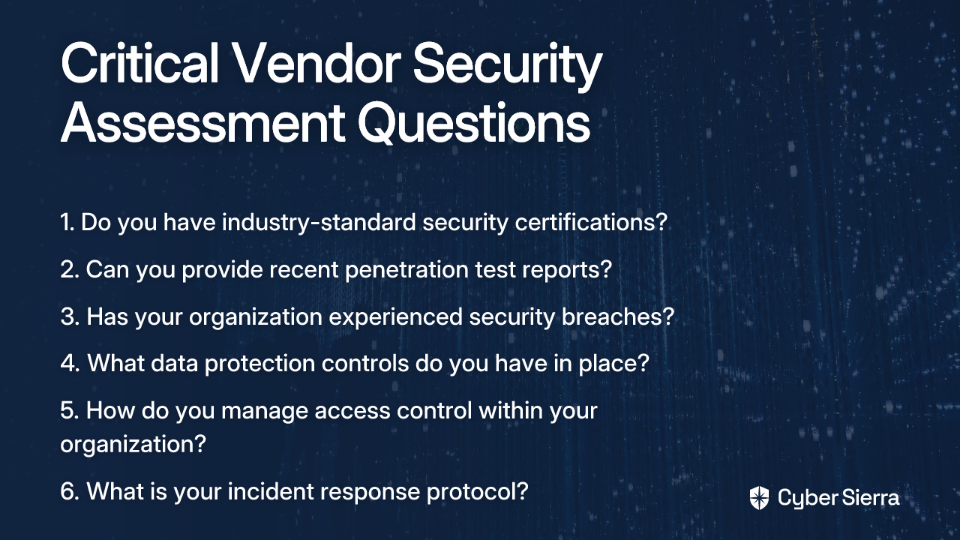
- Do you have any industry-standard security certifications (e.g., SOC2 Type II, ISO 27001)?
- Can you provide a recent penetration test report?
- Has your organization experienced a security breach in the past?
- What security controls do you have in place to protect data?
- How do you manage access control within your organization?
- What is your incident response plan in case of a security breach?
However, there's growing skepticism about the effectiveness of standardized questionnaires. As one security professional noted, "The questionnaire is a relatively trivial and superficial and won't get you where you want to go if you're serious about discovering and managing your third-party risk appetite."
Effective Strategies for Mitigating Third-Party Risks
Implementing a comprehensive third-party risk management framework is essential for protecting your organization:
1. Establish Clear TPRM Policies and Procedures
Start by developing strong, achievable policies that clearly outline:
- Vendor selection criteria
- Due diligence requirements
- Ongoing monitoring expectations
- Incident response procedures
- Contract termination conditions
As one cybersecurity expert emphasized, you need to "have strong and achievable policies and standards in place" as the foundation of your TPRM program.
2. Implement a Rigorous Vendor Onboarding Process
Before engaging with any new vendor:
- Conduct thorough background checks
- Verify security certifications and compliance standards
- Review financial stability
- Assess their security controls and incident response capabilities
The goal is to identify potential issues before entering into a business relationship.
3. Negotiate Strong Contracts
Your contracts should include:
- Clearly defined security requirements
- Data protection obligations
- Right-to-audit clauses
- Service level agreements (SLAs)
- Incident notification requirements
- Provisions for regular security assessments
Many organizations have found that "at best, TPRM is an exercise largely of due diligence," with contracts serving as the primary protection mechanism.
4. Implement Continuous Monitoring
Rather than relying solely on point-in-time assessments, establish ongoing monitoring of your vendors:
- Track security news and breach notifications
- Monitor for changes in vendor ownership or financial status
- Conduct periodic reassessments
- Review compliance certifications upon renewal
"Audit your 3rd party relationships regularly and on-time to ensure they're doing what they've agreed to," advises one TPRM professional. "Keep up with the news on 3rd party breaches."
5. Develop a Vendor Exit Strategy
For each critical vendor, create a contingency plan addressing:
- Alternative providers
- Data retrieval procedures
- Transition timelines
- Business continuity measures
This preparation ensures you're not left vulnerable if a vendor relationship must be terminated quickly.
Special Challenges with Smaller Vendors
A common dilemma in third-party risk management involves smaller vendors that may struggle with compliance requirements. As one professional explained, "The only issue I see with this stance is a case where you may have a vendor who is tiny and the cost of attaining such compliance would be cost prohibitive for them."
When dealing with smaller vendors that cannot meet your standard requirements, consider:
Risk-Based Exceptions
Implement a formal exception process that:
- Documents the specific requirements the vendor cannot meet
- Assesses the actual risk posed to your organization
- Identifies compensating controls that can be implemented
- Requires executive approval for acceptance of higher risk
Phased Compliance Approach
Rather than immediate compliance, consider allowing smaller vendors time to achieve it:
- Set realistic timelines for meeting requirements
- Establish milestones and progress checkpoints
- Implement additional monitoring during the compliance period
However, remember this critical principle: "DO NOT compromise on your security controls if a 3rd Party cannot meet your minimum requirements." Sometimes, the risk simply isn't worth taking, regardless of other business considerations.
Best Practices for Effective TPRM
To enhance your third-party risk management program:
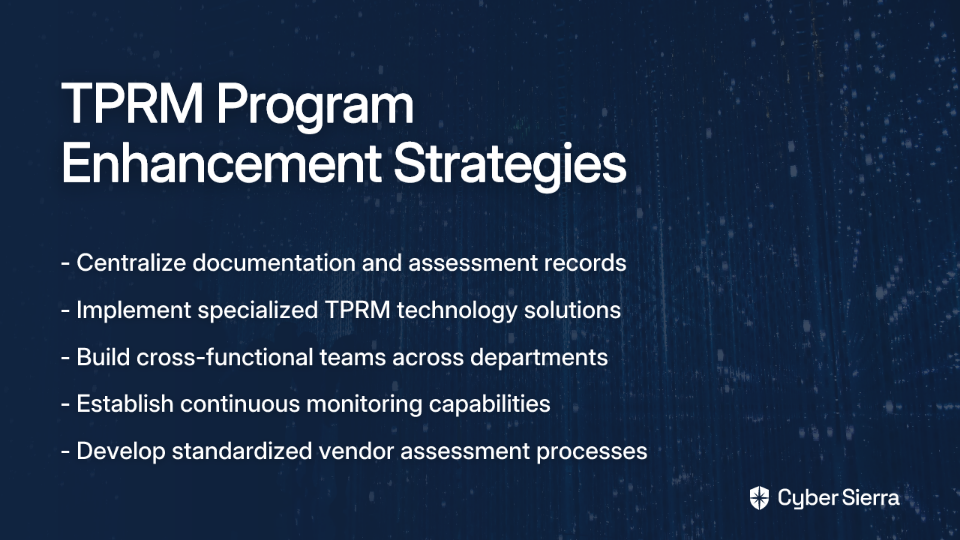
1. Centralize Your TPRM Documentation
Develop a repository of:
- Standard responses to common security questions
- Current certifications and compliance documentation
- Security assessment reports
- Risk acceptance records
This approach can significantly reduce the burden of responding to customer inquiries and streamline your internal processes.
2. Leverage Technology Solutions
Consider implementing specialized TPRM tools that offer:
- Automated vendor risk assessments
- Continuous monitoring capabilities
- Integration with threat intelligence feeds
- Centralized documentation management
- Streamlined workflow for approvals and exceptions
3. Build a Cross-Functional TPRM Team
Effective third-party risk management requires input from various departments:
- Information Security
- Legal
- Procurement
- Compliance
- Business Units
Involving stakeholders from across the organization ensures a balanced approach to risk assessment and management.
Conclusion
In today's interconnected business environment, third-party risks represent a significant vulnerability for organizations of all sizes. The challenge isn't simply identifying these risks but developing a comprehensive approach to managing them effectively.
By implementing a structured TPRM program that includes thorough vendor assessments, strong contractual protections, continuous monitoring, and clear policies for exceptions, you can significantly reduce the likelihood and impact of third-party incidents.
Remember that there is no one-size-fits-all solution for third-party risk management. As one security professional aptly put it, "Risk management is about understanding your organizational risk tolerance, assessing the risks you're facing, and then deciding how to deal with that risk." Your TPRM approach must be tailored to your organization's specific needs, risk appetite, and resources.
With the right strategies in place, you can confidently leverage third-party relationships to enhance your business capabilities while keeping your organization secure.
Frequently Asked Questions (FAQ)
What is third-party risk?
Third-party risk refers to the potential threats introduced to your organization by external entities like vendors, suppliers, contractors, and partners who have access to your systems, data, or facilities. As businesses increasingly rely on third parties, their attack surface expands, creating vulnerabilities that can be exploited if not managed properly.
Why is managing third-party risk important for businesses?
Managing third-party risk is crucial because a significant number of data breaches originate from third-party vendors; studies show 80% of organizations have experienced such a breach. Failure to manage these risks can lead to financial losses, reputational damage, compliance violations, operational disruptions, and cybersecurity incidents.
What are the common types of third-party risks?
The common types of third-party risks include:
- Financial Risks: Arising from a vendor's financial instability.
- Reputational Risks: Damage to your brand due to a vendor's actions.
- Compliance Risks: Legal consequences from a vendor's regulatory violations.
- Operational Risks: Business disruptions due to vendor service failures.
- Strategic Risks: Undermining business objectives due to poor vendor management.
- Cybersecurity Risks: Data breaches or security incidents stemming from third-party vulnerabilities.
How can an organization assess risks associated with its vendors?
Organizations can assess vendor risks by first categorizing vendors based on the level of risk they pose (e.g., high, medium, low) considering factors like data sensitivity, role in critical processes, and system access. Then, they should ask essential security questions about certifications, penetration test results, breach history, security controls, access management, and incident response plans.
What are effective strategies for mitigating third-party risks?
Effective strategies include establishing clear TPRM policies, implementing a rigorous vendor onboarding process, negotiating strong contracts with security clauses, continuously monitoring vendor performance and security posture, and developing a comprehensive vendor exit strategy for critical suppliers.
How should a company handle a small vendor that cannot meet standard compliance requirements?
A company should use a risk-based exception process for small vendors struggling with compliance. This involves documenting unmet requirements, assessing the actual risk, identifying compensating controls, and obtaining executive approval for any risk acceptance. A phased compliance approach, allowing vendors time to meet standards with set milestones, can also be considered, but minimum security controls should not be compromised.
What is the first step to building a Third-Party Risk Management (TPRM) program?
The first step to building a TPRM program is to establish clear and achievable policies and procedures. These policies should outline vendor selection criteria, due diligence requirements, ongoing monitoring expectations, incident response protocols, and contract termination conditions, forming the foundation of the program.
