



Top 8 Cyber Threat Detection Tools in 2025


Join thousands of professionals and get the latest insight on Compliance & Cybersecurity.
Summary
- A key challenge for security teams is demonstrating the value of proactive threat detection, as preventing threats leaves no tangible results to show leadership.
- Modern threat detection has shifted from reactive alerts to proactive hunting using behavioral analysis (TTPs), automation, and deep integration capabilities.
- When selecting a tool, prioritize solutions that provide actionable, context-rich intelligence to reduce alert fatigue and help teams focus on genuine threats.
- To connect security efforts to business value, consider platforms that integrate threat intelligence with GRC frameworks to provide clear, ROI-focused reporting.
You've invested in security tools, trained your team, and built processes. Yet leadership keeps asking, "What are we getting for all this money?" Meanwhile, your security analysts are drowning in alerts, struggling to separate the signal from the noise, and feeling their proactive efforts go unnoticed.
If this sounds familiar, you're not alone. As one security professional recently shared on Reddit, there's a "difficulty in demonstrating the value of threat hunting due to lack of immediate, tangible results." The frustration is real - you know your team is preventing disasters, but how do you prove the value of threats that never materialized?
The answer lies in having the right tools. In 2025, the most effective cyber threat detection tools don't just generate alerts - they provide context, automate investigation, and help you clearly communicate risk to leadership. They transform security from a reactive cost center to a proactive business enabler.
This article will guide you through the top 8 cyber threat detection tools for 2025, focusing on solutions that help you identify threats earlier, respond faster, and most importantly, demonstrate clear value to your organization.
What to Look for in a Modern Threat Detection Tool
Before diving into specific tools, let's establish what makes a threat detection solution truly effective in 2025:
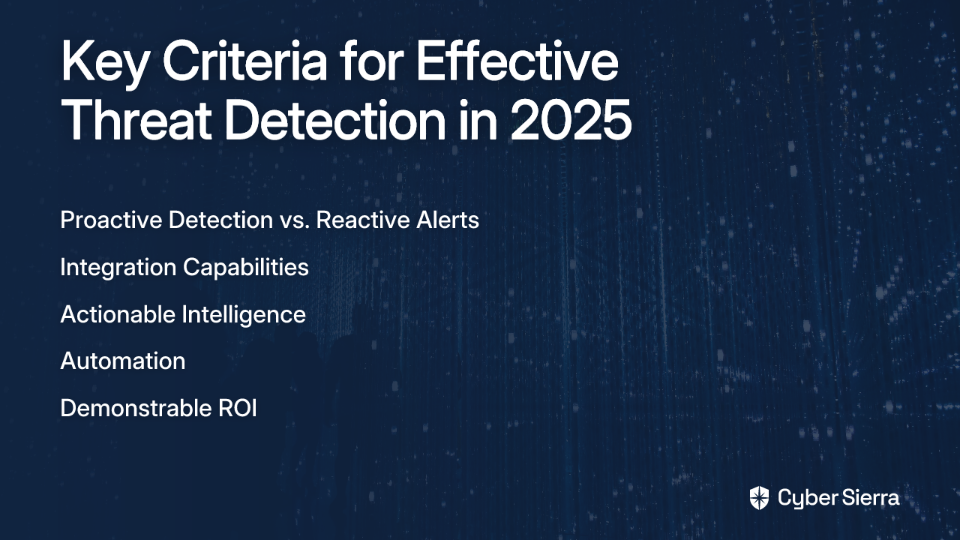
- Proactive Detection vs. Reactive Alerts: Look for tools that hunt for threats based on behavior and TTPs (Tactics, Techniques, and Procedures), not just known signatures.
- Integration Capabilities: The tool should connect seamlessly with your existing security stack to provide unified visibility.
- Actionable Intelligence: Prioritized alerts with context help teams focus on what matters.
- Automation: Capabilities that reduce manual investigation time and accelerate response.
- Demonstrable ROI: Features that help quantify value and justify investment to leadership.
With these criteria in mind, let's explore the top tools that are changing the game in 2025.

The Top 8 Cyber Threat Detection Tools for 2025
1. Cyber Sierra: The Integrated GRC & Threat Intelligence Platform
Overview: Cyber Sierra isn't just a point solution for threat detection; it's an AI-enabled cybersecurity platform that integrates threat intelligence with a comprehensive Governance, Risk, and Compliance (GRC) framework. It helps organizations move from periodic checks to proactive, near real-time risk management.
Key Detection Capabilities:
- Threat Intelligence Module: Provides proactive risk management by identifying vulnerabilities across the attack surface, including network vulnerability scanning and cloud infrastructure scanning for misconfigurations.
- Continuous Control Monitoring (CCM): Automates the ongoing oversight of security controls to detect exceptions and anomalies in real-time.
- Third-Party Risk Management (TPRM): Provides near real-time, 24/7 visibility into vendor security compliance, detecting risks within the supply chain before they become internal threats.
Why It Stands Out in 2025: It directly addresses the user pain of justifying security efforts. By linking threat intelligence and vulnerability data directly to GRC frameworks (SOC2, ISO 27001, etc.), it provides the clear reporting and audit trails needed to demonstrate value and compliance to leadership. It helps answer the "why" behind security activities.
Best For: Organizations looking for a unified platform to manage threats, compliance, and vendor risk holistically, and for CISOs and Compliance Managers who need to make their security programs audit-ready and demonstrate ROI.
2. CrowdStrike Falcon: AI-Powered Endpoint Protection
Overview: A leading endpoint protection platform (EPP) renowned for its ability to prevent advanced cyber threats, from malware to sophisticated nation-state attacks.
Key Detection Capabilities:
- Uses AI-driven Indicators of Attack (IOAs) and deep telemetry analysis to spot active threats in real-time.
- Automated protection for endpoints, identities, and cloud environments.
- Provides real-time risk posture monitoring and contextual threat detection.
Why It Stands Out in 2025: Its powerful AI engine and massive threat graph allow it to detect threats based on behavior (TTPs) rather than just signatures (IOCs), making it highly effective against zero-day exploits. This shift from signature-based to behavior-based detection represents the future of endpoint security.
Best For: Organizations of all sizes that need best-in-class endpoint detection and response (EDR) with strong preventative capabilities.
3. Rapid7 InsightIDR: The Unified SIEM and XDR
Overview: A cloud-native Security Information and Event Management (SIEM) and Extended Detection and Response (XDR) platform that provides unified visibility and analysis across the entire IT environment.
Key Detection Capabilities:
- Combines User and Entity Behavior Analytics (UEBA), machine learning, and curated threat intelligence for high-fidelity anomaly detection.
- Collects and analyzes data from endpoints, logs, and cloud services to provide a single pane of glass for incident response.
- Detects insider threats and compromised credentials.
Why It Stands Out in 2025: InsightIDR excels at simplifying the complexity of a traditional SIEM. Its attacker behavior analytics helps security teams cut through the noise of false positives and focus on genuine threats. The platform is designed to address the common complaint that "there's too many alerts and not enough context."
Best For: Security Operations Centers (SOCs) that need a powerful, yet user-friendly, central platform for log management, threat detection, and incident response.
4. Palo Alto Networks (Cortex XDR & WildFire): Integrated Network and Endpoint Security
Overview: Palo Alto Networks offers a powerful duo: WildFire, a cloud-based malware protection engine, and Cortex XDR, an advanced analytics platform that integrates data across endpoint, network, and cloud.
Key Detection Capabilities:
- WildFire: Intercepts active threats at the firewall level using static and dynamic analysis and machine learning.
- Cortex XDR: Establishes behavioral baselines to detect anomalies and sophisticated attacks. It integrates threat intelligence to add context to alerts.
- Provides deep forensics and root cause analysis for incidents.
Why It Stands Out in 2025: The tight integration between network security (WildFire) and endpoint/cloud data (Cortex XDR) provides unparalleled visibility and allows for automated, coordinated responses across the entire infrastructure. This unified approach helps eliminate the security tooling gaps that attackers often exploit.
Best For: Organizations already invested in the Palo Alto Networks ecosystem or those seeking a comprehensive, integrated security platform spanning network, endpoint, and cloud.
5. Recorded Future: Dedicated Threat Intelligence
Overview: A premier threat intelligence platform that provides real-time insights into risks across cyber, supply chain, and physical security domains.
Key Detection Capabilities:
- Intelligence Cloud: Gathers and analyzes vast amounts of data from open source, dark web, and technical sources to provide actionable intelligence.
- Collective Insights: Consolidates data to help security teams build better remediation and threat hunting strategies.
- Provides detailed vendor risk profiles and context on emerging TTPs.
Why It Stands Out in 2025: Its singular focus on intelligence makes it incredibly powerful. Instead of just generating alerts, it provides the strategic context needed to understand who the attackers are, what their motives are, and how they are likely to attack. This context is invaluable for teams facing the challenge of "justifying the investment in threat intelligence and threat hunting due to perceived lack of effectiveness."
Best For: Mature security teams and enterprises that need high-quality, contextual threat intelligence to fuel their proactive defense and detection engineering efforts.
6. Microsoft Defender: Natively Integrated Security
Overview: A suite of security solutions deeply integrated into the Microsoft ecosystem (Windows, Azure, M365), offering AI-enabled threat detection and response for endpoints, cloud workloads, and identities.
Key Detection Capabilities:
- Automated investigation of alerts to reduce analyst workload.
- AI-led antivirus and EDR to block emerging threats.
- Continuous monitoring of endpoint activities and cloud configurations.
Why It Stands Out in 2025: Its native integration with Microsoft products provides seamless visibility and protection for organizations heavily reliant on the Microsoft stack, reducing friction and eliminating security tooling gaps. For organizations already invested in Microsoft, it offers a compelling cost-to-value ratio.
Best For: Organizations of all sizes, especially SMEs and enterprises deeply invested in the Microsoft Azure and Microsoft 365 ecosystems.
7. Darktrace: Autonomous Cyber AI
Overview: Darktrace uses self-learning AI to understand the "normal" behavior of an organization's network, devices, and users. It then autonomously detects and responds to threats that deviate from that baseline.
Key Detection Capabilities:
- Cyber AI Analyst: Automates threat investigations, triaging alerts and presenting findings in a simple narrative, drastically speeding up incident response.
- Uses machine learning models to predict threat severity.
- Detects subtle, insider threats and novel attacks that other tools might miss.
Why It Stands Out in 2025: Its autonomous response capability is a game-changer, allowing it to surgically neutralize threats in seconds, without disrupting normal business operations. It's a prime example of using AI to augment human security teams, addressing the pain point of "limited understanding of threat hunting as merely reactive searches rather than adopting proactive strategies."
Best For: Organizations with lean security teams that need to automate investigation and response, or any company looking for a defense against fast-moving, sophisticated threats like ransomware.
8. Trustwave: Managed Detection and Response (MDR)
Overview: Trustwave offers a different approach: a service-based solution. Their Managed Detection and Response (MDR) and Managed Security Services (MSS) provide 24/7 monitoring and expertise from their global network of Security Operations Centers.
Key Detection Capabilities:
- 24/7 security monitoring and proactive threat hunting conducted by expert analysts.
- Contextualized threat data gathered from multiple sources.
- Manages and monitors third-party security tools on behalf of the client.
Why It Stands Out in 2025: It addresses the significant cybersecurity skills gap. For organizations that lack the in-house expertise or resources to run a 24/7 SOC, an MDR service provides access to world-class talent and technology. This directly addresses the "lack of appreciation and support for threat hunting efforts" by outsourcing the function to specialists.
Best For: Organizations that want to outsource their security operations to focus on their core business, or those needing to augment their existing security team with 24/7 expert coverage.
How to Choose the Right Cyber Threat Detection Tool
With so many powerful options available, selecting the right tool can be challenging. Here's a structured approach to making an informed decision:
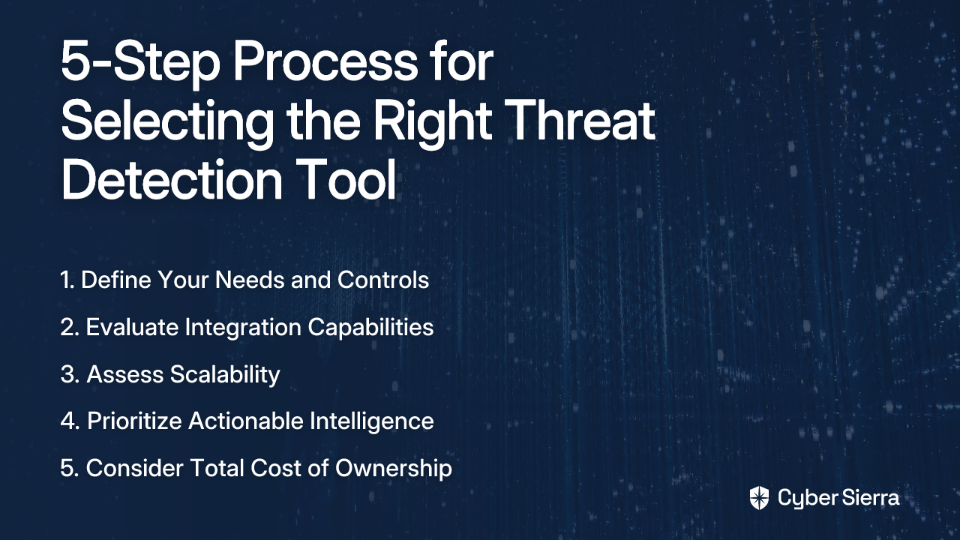
- Define Your Needs and Controls: First, prioritize which risks and controls are most critical to your organization. Are you focused on endpoint security, cloud misconfigurations, or compliance? This aligns with the first step of CCM implementation: "Define Controls to Monitor."
- Evaluate Integration Capabilities: The best tools don't operate in a silo. Ensure the solution can integrate with your existing systems (e.g., ticketing systems, firewalls, identity providers) to avoid creating more security tooling gaps.
- Assess Scalability: Your security needs will grow. Choose a solution that can scale with your organization, whether you're adding more endpoints, expanding to the cloud, or adopting new compliance frameworks.
- Prioritize Actionable Intelligence over Noise: A tool that generates thousands of low-context alerts creates more work. Look for platforms that use AI and analytics to reduce false positives, correlate events, and provide clear, prioritized guidance for remediation.
- Consider the Total Cost of Ownership (TCO): Look beyond the initial license fee. Factor in costs for implementation, training, and ongoing management. A platform that automates manual tasks (like evidence gathering for audits) can offer a lower TCO and higher ROI in the long run.
Conclusion
Selecting the right cyber threat detection tool in 2025 is about more than just finding "evil." It's about choosing a partner that helps you build a proactive, resilient, and defensible security program. As noted in community discussions, "Threat hunts do not always need to find evil to be successful." They succeed when they find misconfigurations, improve processes, and provide data-driven assurance.
The most effective strategy involves integrating threat detection with your broader GRC and risk management functions. Platforms like Cyber Sierra are leading this charge, providing a single source of truth that connects technical vulnerabilities to business risk and compliance obligations. This unified view empowers security leaders to not only protect the organization but also to confidently communicate the value of their efforts to the board.
Remember, the goal isn't just to detect threats—it's to demonstrate how your security program delivers tangible business value. The right tool will help you do both.
