



Top 25 HIPAA Consulting Firms in 2025



Join thousands of professionals and get the latest insight on Compliance & Cybersecurity.
Are you drowning in manual evidence collection for your HIPAA compliance? Struggling to navigate complex regulations without a background in cybersecurity? Finding yourself uncertain about what qualifications to look for in a HIPAA consultant who can actually get things done?
You're not alone. Many healthcare organizations and their business associates find themselves in need of expert guidance but feel overwhelmed by the prospect of finding the right partner to help them achieve and maintain HIPAA compliance.
This comprehensive guide will not only provide you with a curated list of the top HIPAA consulting firms for 2025 but, more importantly, equip you with the knowledge to choose the right consultant for your specific needs—whether you're using GRC software like Drata or building your compliance program from scratch.
Why Your Organization Needs a HIPAA Consultant
What is HIPAA Consulting?
HIPAA consulting involves expert firms helping healthcare organizations (Covered Entities) and their partners (Business Associates) understand and comply with the Health Insurance Portability and Accountability Act regulations. These consultants bridge the gap between complex regulatory requirements and practical implementation.
The High Stakes of Non-Compliance
The consequences of failing to comply with HIPAA regulations extend far beyond financial penalties:
- Financial Impact: Fines can range from $100 to $50,000 per violation, with an annual maximum of $1.5 million per violation category.
- Reputational Damage: Data breaches and compliance failures can severely damage patient trust and your organization's reputation.
- Legal Consequences: Beyond regulatory fines, affected individuals may pursue legal action against your organization.
- Operational Disruptions: Investigations and corrective actions can disrupt normal business operations.
Key Functions of a HIPAA Consultant
A qualified HIPAA consultant should provide comprehensive services including:
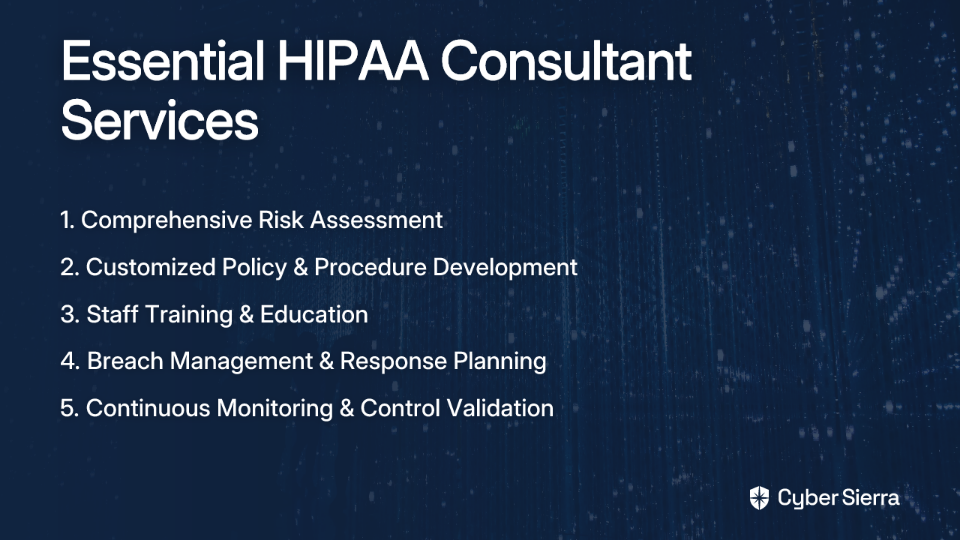
- Risk Assessment: Conducting thorough audits to identify potential vulnerabilities to protected health information (PHI) and electronic PHI (ePHI).
- Policy & Procedure (P&P) Development: Creating and implementing tailored privacy policies, procedures, and a risk register.
- Training and Education: Providing staff training on HIPAA rules, data privacy, and security awareness—a critical component often overlooked.
- Breach Management & Response: Developing robust plans for responding to data breaches and ensuring compliance with the Breach Notification Rule.
- Continuous Monitoring & Control Validation: Establishing ongoing oversight processes to ensure sustained compliance.
The Ultimate Guide to Choosing the Right HIPAA Consultant
Finding the right HIPAA consultant requires careful consideration of several key factors:
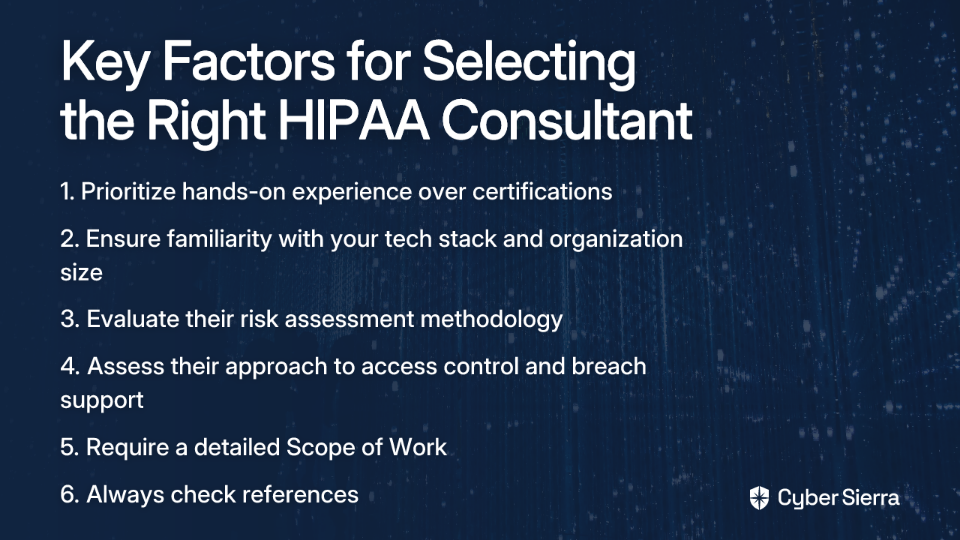
1. Look for Hands-On Experience, Not Just Certifications
While certifications like CISSP or CISA provide a baseline of knowledge (with CISSP often considered "the bare minimum"), there can be an inverse relationship between the number of certifications someone has and their ability to get things done.
Key Question to Ask: "Can you describe a project where you were responsible for the actual evidence collection and implementation, not just providing advice?"
2. Ensure They Understand Your Tech Stack and Size
It's critical to find consultants who are experienced with organizations of similar scale and industry. If you use a GRC platform like Drata, ask specifically about their experience with it.
Key Question to Ask: "What is your experience working with companies of our size and with our specific GRC tools?"
3. Scrutinize Their Risk Assessment Methodology
A thorough risk assessment is the foundation of any strong HIPAA program. The methodology a consultant uses will determine how effectively they identify vulnerabilities in your systems.
Key Question to Ask: "What specific tools and methodologies do you use for risk assessments, and how do you customize them for different types of healthcare organizations?"
4. Evaluate Their Approach to Access Control and Breach Support
Your consultant should have expertise in implementing robust access controls (role-based access, encryption, authentication) and provide clear support in developing a data breach response plan.
Key Question to Ask: "How would you help us develop and test a breach notification and response plan?"
5. Demand a Clear Scope of Work (SOW)
To avoid wasted time and resources, insist on a detailed SOW that outlines deliverables, timelines, and responsibilities. A project might typically take 12-16 weeks, but this should be clearly documented.
Key Question to Ask: "Can you provide a sample SOW that includes specific milestones and deliverables?"
6. Check References
This step is non-negotiable. Ask to speak with previous clients, particularly those from companies similar to yours in size and industry.
Key Question to Ask: "Can you connect me with a past client who had similar compliance challenges to ours?"
Top HIPAA Consulting Firms for 2025 (A Curated List)
Disclaimer: This list is based on industry recognition and specializations. Use the guide in the previous section to conduct your own due diligence.
1. CynergisTek, Inc.
Specialty: Cybersecurity, privacy, and compliance services Why they stand out: Consistently recognized by KLAS as a top-performing firm in cybersecurity, with deep healthcare industry experience.
2. Colington Consulting
Specialty: Tailored compliance programs for all types of healthcare providers Why they stand out: Named a top firm by multiple industry sources, offers a free initial consultation, and has over 60 years of combined experience. They focus on making compliance cost-effective rather than a "one-size-fits-all" solution.
3. ScienceSoft
Specialty: HIPAA compliance consulting with a focus on healthcare software Why they stand out: Over 16 years of experience in healthcare IT and holds multiple ISO certifications.
4. Clearwater Compliance
Specialty: Cyber risk management and compliance Why they stand out: Uses proprietary software for cyber risk management and provides comprehensive assessment and policy development services.
5. Appinventiv
Specialty: Global provider of healthcare software development with a compliance focus Why they stand out: Strong experience in automating health and fitness businesses, making them a good choice for tech-forward organizations.
6. Arka Softwares
Specialty: Healthcare software and mobile application development Why they stand out: An ISO 9001:2015 certified company with a large team of developers and HIPAA compliance expertise.
7. RSM US
Specialty: Comprehensive assessments and training Why they stand out: Offers a broad range of services beyond just HIPAA, providing a holistic view of risk management.
8. Healthicity, LLC.
Specialty: User-friendly compliance software and solutions Why they stand out: Tailors solutions to a client's budget, making compliance accessible to organizations of all sizes.
9. Praetorian Secure
Specialty: Cybersecurity with multi-industry experience Why they stand out: Leverages experience from other regulated industries to strengthen healthcare security protocols.
10. Acevedo Consulting Inc.
Specialty: Coding expertise and tailored compliance solutions Why they stand out: Strong focus on the nuances of medical coding and billing compliance within the HIPAA framework.
11. CompliancePoint
Specialty: Data privacy and security compliance Why they stand out: Offers both technical and legal expertise with a focus on emerging technologies.
12. Compliancy Group
Specialty: Simplified HIPAA compliance for small to mid-sized practices Why they stand out: Their "Guard" compliance solution makes HIPAA manageable for smaller organizations with limited resources.
13. Healthcare Compliance Pros
Specialty: Comprehensive compliance solutions and training Why they stand out: Offers both consulting services and software tools to streamline the compliance process.
14. 24By7Security
Specialty: Security assessments and vCISO services Why they stand out: Provides virtual CISO services for organizations that need executive-level security guidance without a full-time position.
15. HIPAA One
Specialty: Automated HIPAA compliance software Why they stand out: Their software platform simplifies risk analysis and management, particularly for smaller organizations.
Common Pitfalls and Misconceptions in HIPAA Compliance
Common Pitfalls
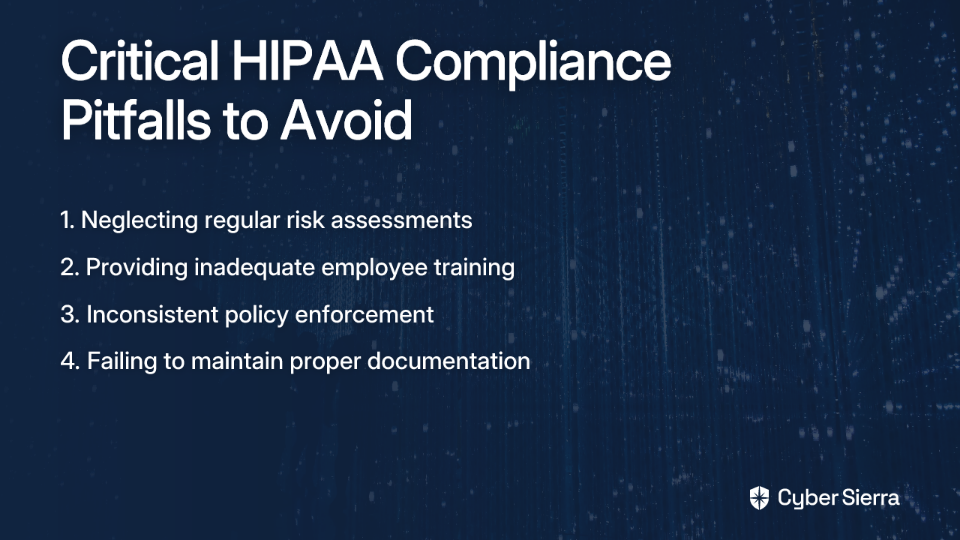
- Ignoring Regular Risk Assessments: Failing to conduct them regularly leaves you vulnerable to new threats and changing regulations.
- Inadequate Employee Training: This is a leading cause of unintentional violations and data breaches. All staff members need regular, comprehensive training.
- Inconsistent Policy Enforcement: Having policies on paper is useless if they aren't consistently followed throughout the organization.
- Ignoring Documentation: Proper documentation is your best defense during an audit or investigation. If it isn't documented, it didn't happen.
Common Misconceptions
- "Compliance is too expensive." The reality is that compliance services are far more cost-effective than the penalties for non-compliance, which can reach into the millions of dollars.
- "My organization is too small to be a target." HIPAA investigations can occur regardless of an organization's size. The perception that HIPAA has "weak enforcement and is largely self-attestation for smaller firms" is a dangerous assumption.
- "If we achieve SOC 2, we are automatically HIPAA compliant." While there is significant overlap, especially for the Security Rule, achieving SOC 2 Type I or Type II does not automatically satisfy all HIPAA requirements, particularly the Privacy and Breach Notification Rules.
- "One-time compliance is sufficient." HIPAA compliance is not a one-and-done project but an ongoing commitment that requires regular updates and assessments.
Conclusion
Choosing a HIPAA consultant is a critical strategic decision that can significantly impact your organization's compliance posture, security stance, and bottom line. The best partner is one with proven, hands-on experience relevant to your organization's size, industry, and technology environment.
As you evaluate potential HIPAA consulting firms, remember to emphasize practical experience over certifications, ensure they understand your specific needs and technologies, and demand clear deliverables and timelines. The right consultant will not just help you check compliance boxes but will serve as a strategic partner in protecting sensitive health information and building trust with your patients and clients.
Don't wait for a data breach or an audit to take compliance seriously. Use this guide to proactively find a consulting partner who can help you build a robust, sustainable HIPAA compliance program. For the most current official information, always refer to the HHS HIPAA website.
Remember: Compliance isn't just about avoiding penalties—it's about protecting patients and building a culture of security and privacy that benefits everyone involved in the healthcare ecosystem.
Frequently Asked Questions
What does a HIPAA consultant do?
A HIPAA consultant helps your organization understand and implement the complex requirements of the Health Insurance Portability and Accountability Act. Their primary role is to bridge the gap between regulatory mandates and your organization's practical operations by conducting risk assessments, developing policies and procedures, providing staff training, and establishing plans for breach management and response.
Why is hands-on experience more important than certifications?
Hands-on experience is crucial because it demonstrates a consultant's ability to implement practical solutions and manage real-world compliance challenges, not just theoretical knowledge. While certifications like CISSP establish a baseline, an experienced consultant can effectively handle evidence collection, tailor programs to your specific tech stack, and navigate the nuances of an actual audit.
If my company is SOC 2 certified, are we also HIPAA compliant?
No, being SOC 2 certified does not automatically make you HIPAA compliant. While SOC 2's security controls have significant overlap with the HIPAA Security Rule, HIPAA includes additional, distinct requirements. These include the Privacy Rule, which governs the use and disclosure of PHI, and the Breach Notification Rule, which has specific reporting mandates not covered by SOC 2.
How long does a typical HIPAA compliance project take?
A typical HIPAA compliance implementation project with a consultant can take around 12 to 16 weeks. However, this timeline can vary significantly depending on your organization's size, the complexity of your systems, and the specific scope of work. It is also important to remember that HIPAA compliance is an ongoing process, not a one-time project.
What is the first step in a HIPAA compliance journey?
The first and most critical step in any HIPAA compliance journey is conducting a thorough risk assessment. This assessment identifies potential vulnerabilities to protected health information (PHI) and electronic PHI (ePHI) within your organization. The findings from this assessment form the foundation for all subsequent policy development, security measures, and risk management strategies.
How much do HIPAA consulting services cost?
The cost of HIPAA consulting varies widely based on your organization's size, complexity, and specific needs, but it is significantly less than the cost of non-compliance. Fines for HIPAA violations can reach up to $1.5 million per violation category annually. Therefore, hiring a consultant should be viewed as a cost-effective investment in risk management that protects you from severe financial penalties, reputational damage, and operational disruptions.
