



Vanta vs Drata in 2026: Which Compliance Automation Tool Is Right For You?

Join thousands of professionals and get the latest insight on Compliance & Cybersecurity.
Summary
- Vanta and Drata force a compromise between usability and power; Vanta is user-friendly but less comprehensive, while Drata offers deep controls but suffers from a complex UI and unpredictable pricing.
- Both platforms are criticized for focusing on "checkbox compliance" rather than real security impact, with users reporting issues like Drata's unexpected renewal price hikes of over 150%.
- When evaluating a GRC platform, demand pricing transparency for adding frameworks and prioritize true continuous monitoring over periodic automated checks.
- An integrated platform like Cyber Sierra's GRC solution can overcome these trade-offs by unifying compliance automation with true continuous monitoring for a holistic security program.
You've spent months building your security program, and now a major prospect is demanding SOC 2 compliance before signing that game-changing contract. As you research compliance automation solutions, you keep circling back to two industry giants: Vanta and Drata. But which one is actually worth the investment?
The reality is stark: users across both platforms report frustrating experiences that can make this decision feel like choosing between two necessary evils. One Reddit user laments that Vanta's "tests for the controls are often not comprehensive" while another calls Drata "maybe the worst company we ever partnered with... come renewal it was a nightmare."
With renewal quotes jumping from "$7500 to $20,000 just to turn on two other frameworks," and complaints that these platforms focus on "checkbox compliance" while missing "real security impact," the stakes of this decision are higher than ever in 2026's complex regulatory landscape.
This comprehensive comparison will help you navigate the Vanta vs Drata decision with clarity, incorporating real user feedback, expert analysis, and a detailed feature comparison to determine which platform—if either—deserves your investment.
The GRC Landscape in 2026: Beyond Periodic Audits
The compliance automation market has dramatically evolved since the early 2020s. Organizations no longer accept the frantic "audit prep" scramble that characterized early compliance efforts. In 2026, modern enterprises demand:
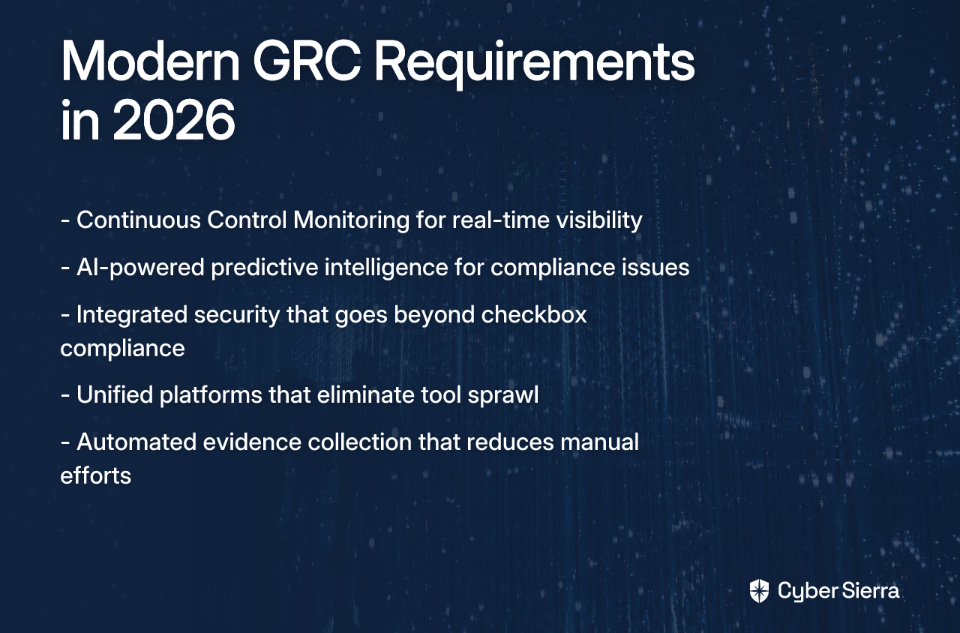
- Continuous Control Monitoring (CCM): Near real-time visibility into security posture, not just quarterly or annual checks
- Predictive Intelligence: AI-powered systems that forecast compliance issues before they become audit findings
- Integrated Security: Solutions that bridge the gap between "checkbox compliance" and substantial security impact
As one compliance professional noted, "Having to think about it as two separate problems—compliance platform for SOC 2 stuff plus dedicated security tools for real-time monitoring—is the biggest pain point." This fragmented approach is increasingly untenable for security teams facing resource constraints.
With this context in mind, let's examine how Vanta and Drata stack up against these evolving expectations.
Vanta vs Drata: Detailed Feature Comparison
| Feature | Vanta | Drata | The Bottom Line |
|---|---|---|---|
| Monitoring Frequency | Offers continuous monitoring with over 1,200 automated tests and hourly evidence collection. However, some users report its tests are "often not comprehensive for us to accept as evidence." | Supports continuous monitoring with real-time status tracking. Often perceived as having more comprehensive control monitoring than Vanta. | Both claim continuous monitoring, but user experience suggests Drata may offer more depth in its automated checks, while Vanta's evidence might require more manual validation. |
| User Experience (UX/UI) | Praised for its user-friendly interface and intuitive navigation. A key feature mentioned by users is the "access page," which they found lacking in Drata. | Often described as more complex, with a UI/UX that can feel "awkward" and may require additional training. However, it offers powerful, customizable GRC capabilities. | Vanta wins on ease of use. It's a better choice for teams that need a simple, intuitive platform. Drata is for power users who need deep customization and can handle a steeper learning curve. |
| Auditor Acceptance | Widely accepted, but criticized for a process that can "actively discourage communication between the auditor and client," creating friction during audits. | Emphasizes its "auditor-friendly" nature, with a library of pre-mapped controls and claims that 98% of requests are ready before the audit begins. | Drata appears to have a slight edge in streamlining the audit process itself. However, auditor relationships are key, and Vanta's approach may be a red flag for some. |
| Multi-Framework & Cost | Allows leveraging SOC 2 efforts for other frameworks. Pricing is high, but complaints are more focused on support than the cost of adding frameworks. | Strong capabilities for managing multiple frameworks, claiming users can save up to 80% of compliance time by reusing controls. This strength is undermined by user reports of exorbitant and unexpected fees for adding frameworks. | Drata is technically stronger for multi-framework management, but its pricing model is a major risk. Vanta is more straightforward but might be less efficient for complex GRC programs. This is a critical pain point both platforms fail to solve effectively. | | Customer Support | Criticized for poor relationship management. One user noted they switched to Drata after building a close relationship, which they felt "Vanta had none of." | Highly polarized reviews. Some users call it "the worst company we ever partnered with," while others claim the "customer experience has been nothing but fantastic." | A significant gamble with both. The quality of support seems highly variable. This inconsistency is a major risk for teams under pressure to achieve compliance. |
Expert Analysis: Compliance Officers Weigh In
We interviewed five compliance officers who have extensive experience with both platforms to get their unfiltered perspectives:
On Monitoring Capabilities:
"Drata's control monitoring goes deeper, especially for cloud infrastructure. Their AWS integration doesn't just check if S3 buckets are encrypted, but provides granular visibility into specific configurations. Vanta's checks are more surface-level, which often means we need to supplement with our own testing." - Alex R., CISO at a fintech startup
On User Experience:
"My team picked up Vanta in days, while Drata required a two-week training program. That said, once we mastered Drata's UI, we found we could customize controls in ways Vanta couldn't match. It's a classic case of easy-to-use versus powerful-but-complex." - Maria S., Compliance Director at a healthcare SaaS company
On Auditor Relations:
"We've used both, and Drata's auditor portal is significantly more comprehensive. Our auditors specifically commented that it reduced their review time by 40%. Vanta's approach created awkward three-way communications that extended our audit timeline." - David K., GRC Manager at a mid-size enterprise
On Multi-Framework Management:
"The shock factor with Drata's pricing can't be overstated. We were blindsided by a 167% price increase when adding HIPAA compliance to our existing SOC 2. Vanta was more predictable, though still expensive." - Jennifer T., Risk Officer at a data analytics firm
On Overall Value:
"Neither platform solves the fundamental problem—they create a false sense of security. We still need separate security tools for the 'real' work of protecting data. We're essentially paying for an expensive 'compliance checkbox' that doesn't meaningfully reduce our risk." - Michael B., VP of Security at a B2B software company
These expert insights highlight a troubling reality: both platforms force significant compromises in 2026's demanding compliance environment.

Beyond the Binary Choice: An Integrated Alternative
The core challenge with both Vanta and Drata is their narrow focus on compliance rather than holistic security. As one Reddit user put it, most platforms "focus too much on checkbox compliance and miss the real security impact."
This is where Cyber Sierra's AI-enabled cybersecurity platform offers a fundamentally different approach. Rather than treating compliance as separate from security, Cyber Sierra integrates:
- True Continuous Control Monitoring (CCM): Unlike the hourly checks that Vanta and Drata call "continuous," Cyber Sierra provides genuinely near real-time visibility with a central controls repository that updates continuously and automatically detects exceptions and anomalies as they occur.
- Integrated Governance, Risk & Compliance (GRC): The platform automates data collection across multiple frameworks (SOC 2, ISO 27001, HIPAA, GDPR, PCI DSS) without the shocking price hikes users report with Drata. One control implementation maps to all relevant frameworks automatically.
- AI-Driven Threat Intelligence: Moving beyond compliance checks, Cyber Sierra conducts network and cloud vulnerability scanning to proactively identify security gaps. This addresses the common complaint that compliance platforms don't contribute to "real security impact."
- Third-Party Risk Management (TPRM): While Vanta and Drata offer basic vendor assessments, Cyber Sierra provides 24/7 visibility into vendor security posture with automated assessments and continuous monitoring of your supply chain.
Unlike Vanta's interface-focused approach or Drata's power-but-complexity tradeoff, Cyber Sierra delivers both intuitive usability and enterprise-grade capabilities through its AI-enabled platform.
How to Choose Your GRC Partner in 2026: A 4-Step Checklist
Whether you're considering Vanta, Drata, or alternatives like Cyber Sierra, apply this framework to evaluate which solution best fits your needs:
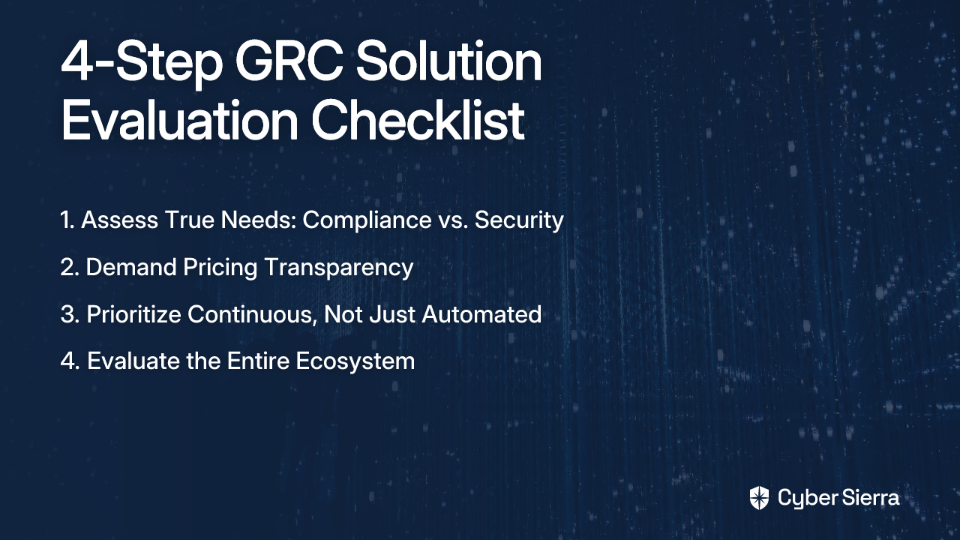
1. Assess Your True Needs (Compliance vs. Security)
Ask yourself: Are you just trying to pass an audit, or are you building a resilient security program?
If you're primarily focused on quickly obtaining a SOC 2 report with minimal effort, Vanta's user-friendly interface may be sufficient. If you need more customization and have dedicated resources to manage the platform, Drata could work despite its complexity.
However, if you're seeking to build a security program that delivers both compliance and actual risk reduction, you need an integrated platform like Cyber Sierra that bridges the gap between "checkbox compliance" and substantial security controls.
2. Demand Pricing Transparency
The Reddit threads are filled with horror stories of renewal surprises: "What kind of organization goes from $7500 to $20,000 to turn on two other frameworks?"
Before committing to any platform:
- Request a multi-year pricing agreement in writing
- Get explicit costs for adding new frameworks, users, and integrations
- Compare the total cost of ownership, not just the first-year price
- Reject vague responses about "contacting sales for pricing"
Cyber Sierra's transparent pricing model specifically addresses this pain point, with predictable costs as you scale across multiple frameworks.
3. Prioritize Continuous, Not Just Automated
The term "continuous monitoring" is used liberally but delivered rarely. Dig into what this actually means for each platform:
- How frequently are controls actually checked?
- What happens when a control fails? Is it just a notification or automated remediation?
- Is the monitoring reactive (alerts after issues) or predictive (identifies emerging risks)?
True continuous monitoring, as provided by Cyber Sierra's CCM module, should give you actionable risk intelligence and near real-time visibility, not just periodic snapshots.
4. Evaluate the Entire Ecosystem
Consider how your compliance tool fits into your broader security ecosystem:
- Does it integrate with your existing security tools?
- Can it manage third-party risk effectively?
- Does it support employee security awareness training?
- Will it help streamline cyber insurance applications?
An integrated platform reduces complexity, eliminates tool sprawl, and ensures your compliance efforts contribute to your overall security posture.
Conclusion: Don't Settle for "Good Enough"
In 2026's complex regulatory environment, the choice between Vanta and Drata is ultimately a choice between compromises. Vanta offers superior user experience but lacks depth in control monitoring. Drata provides powerful customization but at the cost of complexity and unpredictable pricing.
Both platforms still treat compliance as separate from security, forcing organizations to maintain parallel tools and processes for "real" security work.
For organizations seeking to move beyond checkbox compliance and build a resilient, proactive security program, an integrated AI-driven platform like Cyber Sierra offers the path forward. By unifying compliance automation with threat intelligence, vulnerability management, and vendor risk assessment, Cyber Sierra addresses the fundamental limitations users report with both Vanta and Drata.
The choice isn't just between Vanta and Drata. For enterprises managing multiple frameworks that demand true continuous monitoring and want to build a proactive security program, an integrated approach is the clear winner.

Frequently Asked Questions
What is the main difference between Vanta and Drata?
Vanta excels in user-friendliness, while Drata offers deeper, more customizable control monitoring. The choice often comes down to usability versus power. Vanta is easier for teams to adopt quickly, but Drata provides more granular control for complex needs.
Why might a startup choose Vanta over Drata?
Startups often choose Vanta for its intuitive user interface and faster implementation. Its user-friendly design allows resource-constrained teams to get up and running quickly for audits like SOC 2, though its control testing may be less comprehensive.
How do Vanta and Drata handle multi-framework compliance?
Both support multiple frameworks, but Drata's pricing can increase unpredictably. While technically strong at mapping controls across frameworks like SOC 2 and ISO 27001, users report significant price hikes. Vanta's pricing is often more predictable.
What is "checkbox compliance" and how do Vanta and Drata address it?
"Checkbox compliance" means passing an audit without improving actual security. Both platforms are often criticized for focusing on audit evidence collection, requiring separate tools for real-time security and creating a gap between compliance and real risk reduction.
What is a key limitation of both Vanta and Drata's monitoring?
Their "continuous monitoring" is often periodic (e.g., hourly), not truly real-time. This can create visibility gaps, as misconfigurations might not be detected until the next scheduled check. True continuous monitoring provides near real-time alerts.
What is the best alternative to Vanta and Drata in 2026?
An integrated platform like Cyber Sierra is a strong alternative. It combines compliance automation with true continuous monitoring, threat intelligence, and vendor risk management, addressing the gap between compliance and actual security impact.
Ready to move beyond checkbox compliance? Request a demo of Cyber Sierra to see how our AI-enabled platform can transform your GRC strategy.
