



Vendor Security Assessment Framework for IT Professionals



Join thousands of professionals and get the latest insight on Compliance & Cybersecurity.
You receive an urgent Slack message at 11 PM: "SolarWinds compromise confirmed. Emergency patches needed ASAP." Your stomach drops as you realize dozens of critical systems are at risk. Another sleepless night ahead.
Sound familiar? If you've ever felt that wave of anxiety when a trusted vendor becomes your biggest security liability, you're not alone. According to recent discussions among IT professionals, the "frustration with last-minute emergency patches due to vendor negligence" and "anxiety over potential security breaches affecting important systems" are all too common.
The stakes couldn't be higher. Consider these sobering statistics:
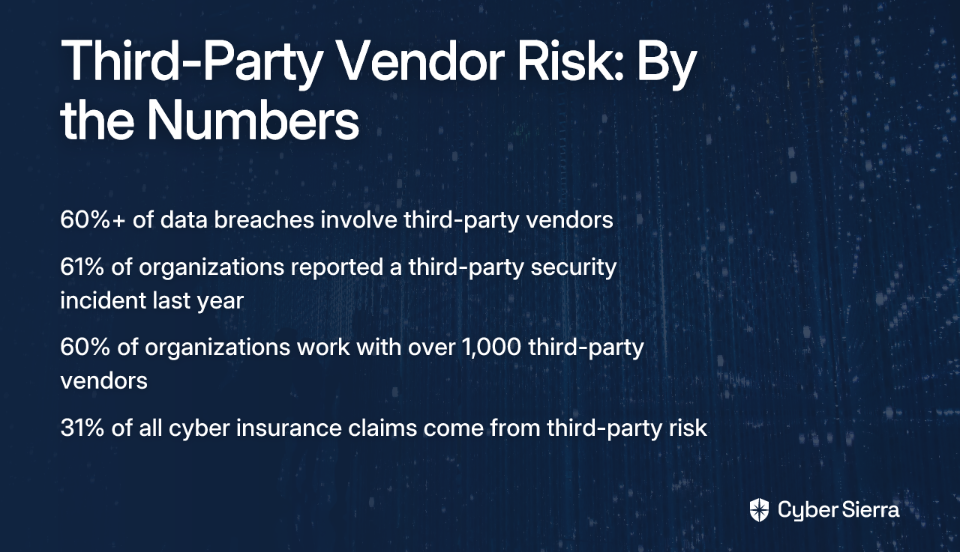
- Over 60% of data breaches involve third-party vendors
- 61% of organizations reported a third-party data breach or security incident in the last year
- 60% of organizations work with over 1,000 third-party vendors
The good news? You can shift from reactive firefighting to proactive control with a structured vendor security assessment framework. This article provides a practical, actionable approach to safeguarding your organization from the weakest links in your vendor ecosystem.
The Modern Threat Landscape: Why a Formal Framework is Non-Negotiable
A Vendor Risk Assessment is the systematic process of identifying and evaluating the cybersecurity, financial, compliance, and operational risks associated with your third-party vendors. But why is a formal framework so critical?
Today's threat landscape extends far beyond your organizational boundaries. Your security is only as strong as your weakest vendor—a reality dramatically illustrated by incidents like the MGM Casinos' $100 million loss from a cyber attack that exploited third-party vulnerabilities.
The spectrum of vendor risks is broader than most realize:
Cybersecurity Risks: Poor access controls, vulnerable code, and inadequate security practices can create backdoors into your network. The SolarWinds breach demonstrated how sophisticated attackers can compromise trusted software update mechanisms, affecting thousands of organizations simultaneously.
Compliance and Regulatory Risks: Under regulations like GDPR, HIPAA, and the DORA Act, your organization remains liable even when a vendor mishandles data. The financial penalties can be devastating.
Operational Risks: When critical vendors experience downtime or security incidents, your services may grind to a halt. The widespread service disruption caused by the recent CrowdStrike outage affecting Microsoft systems is a prime example.
Financial Risks: Third-party risk now accounts for a staggering 31% of all cyber insurance claims in 2024, according to Resilience.
Fourth-Party Risks: This often-overlooked dimension involves the vendors of your vendors. Your meticulously vetted partner might have relationships with high-risk providers that indirectly expose your data.
Without a structured framework to assess these multifaceted risks, IT professionals are left vulnerable, scrambling to respond to incidents rather than preventing them.
Building Your Framework: Core Components and Principles
A robust vendor security assessment framework rests on three fundamental principles:
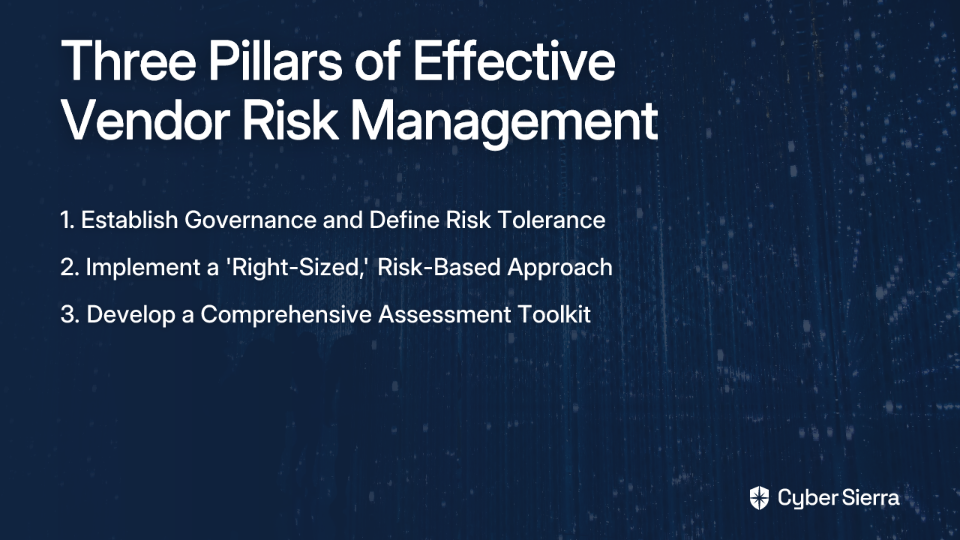
Principle 1: Establish Governance and Define Risk Tolerance
Begin by assembling a cross-functional team including IT security, legal, procurement, and business stakeholders. This team will define security policies, roles, and responsibilities for vendor management.
Next, establish your organization's risk tolerance by distinguishing between:
- Inherent Risk: The baseline risk a vendor poses before any controls are applied
- Residual Risk: The risk that remains after implementing mitigation strategies
Many IT professionals struggle with "creating effective vendor assessment criteria from scratch," as noted in online discussions. Having clear governance and risk tolerance standards provides the foundation for consistent decision-making.
Principle 2: Implement a "Right-Sized," Risk-Based Approach
Not all vendors pose equal risk. A one-size-fits-all assessment process wastes resources and creates unnecessary friction. Instead, implement a tiered approach:
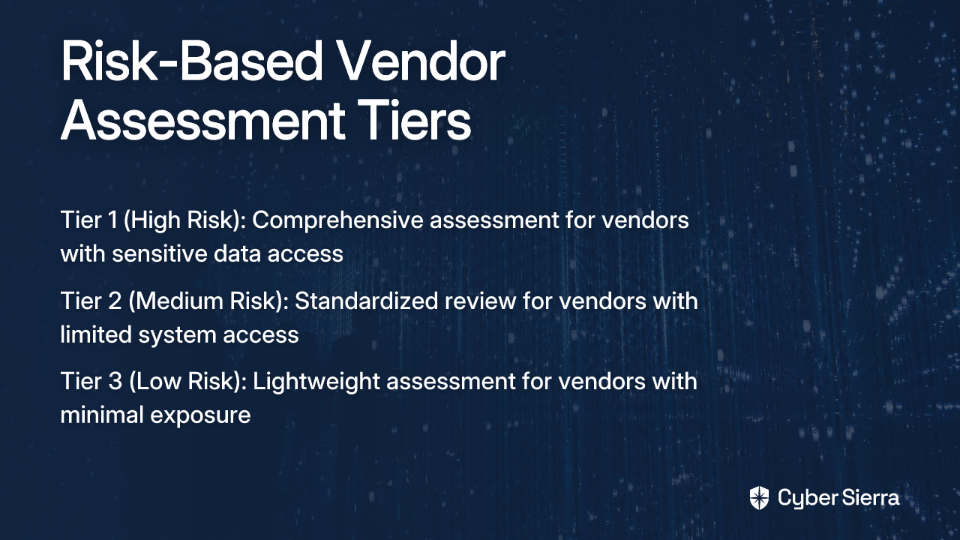
Tier 1 (High Risk): Vendors with access to sensitive data (PII, PHI) or critical systems
- Require comprehensive assessments, on-site audits, and continuous monitoring
- Examples: Cloud providers, managed service providers, financial system vendors
Tier 2 (Medium Risk): Vendors with limited access to non-critical systems
- Require standardized questionnaires and annual reviews
- Examples: Marketing tools, HR platforms, non-critical SaaS applications
Tier 3 (Low Risk): Vendors with minimal exposure and no access to sensitive data
- A lightweight, automated assessment may suffice
- Examples: Office supplies, cleaning services
This tiered approach allows you to focus your most rigorous assessment efforts where they matter most.
Principle 3: Develop a Comprehensive Assessment Toolkit
Your framework requires practical tools to function effectively:
Standardized Questionnaires: Leverage industry-standard frameworks like the SIG Questionnaire or develop custom questionnaires based on NIST CSF or ISO 27001.
Technical Validation & Documentation: Address the common challenge of "difficulties in verifying the vendor's email and data security measures" by requiring concrete evidence:
- SOC 2 reports
- ISO 27001 certifications
- Vulnerability Assessment and Penetration Test (VAPT) results
- Proof of backup and restore testing
Contract Management: Embed security requirements directly into vendor agreements, including:
- Clear security expectations and standards
- Compliance requirements
- Incident response SLAs
- Data handling procedures for offboarding
The Vendor Assessment Lifecycle: A Step-by-Step Process
A vendor relationship is a lifecycle, not a one-time event. Your framework should address each phase:
Phase 1: Onboarding & Due Diligence
- Identify & Inventory: Create a comprehensive inventory of all vendors and map them to the critical assets and data they can access. This addresses the pain point of "confusion over whether to assess the vendor or the solution itself" by documenting both the vendor entity and their specific solutions.
- Define Risk & Scope: Assign each vendor to a risk tier (1, 2, or 3) based on:
- Type and sensitivity of data accessed
- Criticality of systems or services provided
- Regulatory requirements
- Integration depth with your infrastructure
- Collect & Analyze Information: Distribute tailored questionnaires and request security documentation, including SOC 2 reports and penetration test results. Use automated tools to assess their external security posture.
- Identify & Remediate Gaps: Review findings, document risks, and work with the vendor to address critical vulnerabilities before finalizing contracts. This directly addresses the "need for assurance that the vendor has a robust incident response plan" expressed by IT professionals.
Phase 2: Ongoing Monitoring
One of the most common pitfalls is treating vendor assessments as a one-time event. In reality, vendor security postures change constantly.
- Establish Continuous Monitoring: Use Third-Party Risk Management (TPRM) platforms to provide steady monitoring, risk scoring, and alerts for changes in the vendor's security posture or data leaks.
- Schedule Periodic Reviews: Conduct comprehensive reassessments at key moments:
- Every six months for high-risk vendors
- During contract renewals
- After significant changes in the vendor's service or infrastructure
- Immediately following a known security breach involving the vendor
Phase 3: Secure Offboarding
When a vendor relationship ends, security concerns don't. Proper offboarding includes:
- Revoking all access to your systems and data
- Verifying that your data has been securely returned or destroyed per contractual agreements
- Conducting a final security assessment to ensure no lingering vulnerabilities
Best Practices and Common Pitfalls to Avoid
Best Practices to Adopt:
- Leverage Automation: Use TPRM platforms to automate questionnaire delivery, continuous monitoring, and report generation.
- Integrate with Procurement and Legal: Make security a core part of the vendor selection process from the beginning, not an afterthought.
- Foster a Partnership: Treat vendor management as a collaboration rather than an adversarial process.
- Train Your Team: Ensure internal teams understand assessment criteria and escalation procedures.
Common Pitfalls to Avoid:
- Skipping Assessments for "Low-Tier" Vendors: Even vendors with seemingly low-risk profiles can become entry points for attackers.
- Ignoring Fourth-Party Risks: Always ask vendors about their own suppliers' security practices.
- Neglecting SLAs and Contracts: Security requirements must be legally binding, not just verbal agreements.
- Lacking Executive Oversight: Regularly report risk findings to leadership to ensure proper strategic decisions and resource allocation.
Conclusion: From Reactive to Proactive
A structured Vendor Security Assessment Framework isn't bureaucratic overhead—it's your organization's first line of defense in a world built on interconnected services. By implementing this framework, you can transform your approach from reactive firefighting to proactive risk management.
The next time you receive a vendor security alert, instead of that familiar wave of anxiety, you'll have the confidence that comes from having systematically evaluated, monitored, and mitigated the risks in advance.
As regulations continue to tighten and AI-driven risk assessments become more sophisticated, your framework will need to evolve. But the core principles—governance, risk-based assessment, and lifecycle management—will remain the foundation of effective vendor security.
By embedding risk intelligence throughout your vendor relationships, you can finally escape the "stressful environment caused by security vulnerabilities" and focus on strategic initiatives that drive your organization forward.
Frequently Asked Questions
What is a vendor security assessment framework?
A vendor security assessment framework is a systematic process for identifying, evaluating, and mitigating the cybersecurity, compliance, and operational risks associated with third-party vendors. It provides a structured approach to ensure your vendors meet your organization's security standards throughout your entire relationship—from onboarding and continuous monitoring to secure offboarding. This framework helps shift your security posture from reactive to proactive.
Why is managing third-party vendor risk so critical?
Managing third-party vendor risk is critical because your organization's security is only as strong as your weakest vendor. A breach through a third party can lead to significant financial loss, data breaches, regulatory penalties, and operational downtime. With over 60% of data breaches involving third parties, failing to manage this risk exposes your organization to major incidents, and regulations like GDPR and HIPAA hold you accountable for data mishandled by your vendors.
How can I start building a vendor risk assessment program?
You can start building a vendor risk assessment program by first establishing governance. This involves assembling a cross-functional team (including IT, legal, and procurement) and defining your organization's risk tolerance. Once governance is in place, create an inventory of all vendors and classify them into risk tiers (e.g., high, medium, low). This risk-based approach allows you to focus your most intensive assessment efforts on the vendors that pose the greatest threat.
How often should vendors be reassessed?
The frequency of vendor reassessment should be based on their risk level. High-risk vendors should be reviewed more frequently, such as every six months, while lower-risk vendors may only need an annual review. Beyond scheduled reviews, assessments should also be triggered by key events like contract renewals, significant changes in the vendor's services, or immediately after the vendor experiences a known security breach.
What are some essential tools for a vendor security assessment?
Essential tools for a vendor security assessment include standardized security questionnaires, technical validation documents, and legally binding contracts. Questionnaires can be based on industry standards like SIG or NIST. For validation, always request evidence like SOC 2 reports, ISO 27001 certifications, and recent penetration test results. Finally, your contracts should explicitly detail security requirements, incident response SLAs, and data handling procedures.
What is the difference between inherent and residual risk?
Inherent risk is the level of risk a vendor presents before any security controls or mitigation strategies are applied. Residual risk is the risk that remains after those controls have been implemented. The goal of a vendor security assessment is to identify the inherent risk and then apply controls to reduce it to an acceptable level of residual risk that aligns with your organization's risk tolerance.
