Compliance Point Solutions vs Unified GRC Platforms: A Strategic Choice for Modern Risk Management

Join thousands of professionals and get the latest insight on Compliance & Cybersecurity.
Summary
- Using multiple disconnected compliance tools creates dangerous data silos and inefficiencies, a significant risk when a global cybersecurity skills gap of 4.8 million professionals is linked to 80% of data breaches.
- While specialized point solutions solve immediate problems, they lead to long-term strategic debt; a unified GRC platform creates a single source of truth for comprehensive risk visibility.
- Before choosing a tool, assess your GRC process maturity and consider the Total Cost of Ownership (TCO), as the hidden costs of integrating multiple solutions can be substantial.
- AI-enabled platforms like Cybersierra unify GRC, risk, and compliance management to automate evidence collection, centralize controls, and reduce audit preparation time by up to 70%.
You've built a security program with a patchwork of tools—vendor risk questionnaires in one system, policy documentation in another, compliance evidence scattered across shared drives, and audit findings tracked in spreadsheets. When leadership asks for a comprehensive view of your risk posture, you're left scrambling to compile reports from a dozen disconnected systems.
Sound familiar? You're not alone.
Today's security and compliance leaders face mounting pressure from all sides: increasing regulatory requirements across frameworks like SOC 2, ISO 27001, GDPR, and HIPAA; sophisticated cyber threats that evolve daily; and a staggering global cybersecurity skills gap of 4.8 million professionals that leaves teams chronically understaffed. In fact, this skills shortage has been attributed to 80% of data breaches, according to ISC².
In response to these challenges, organizations typically pursue one of two approaches:
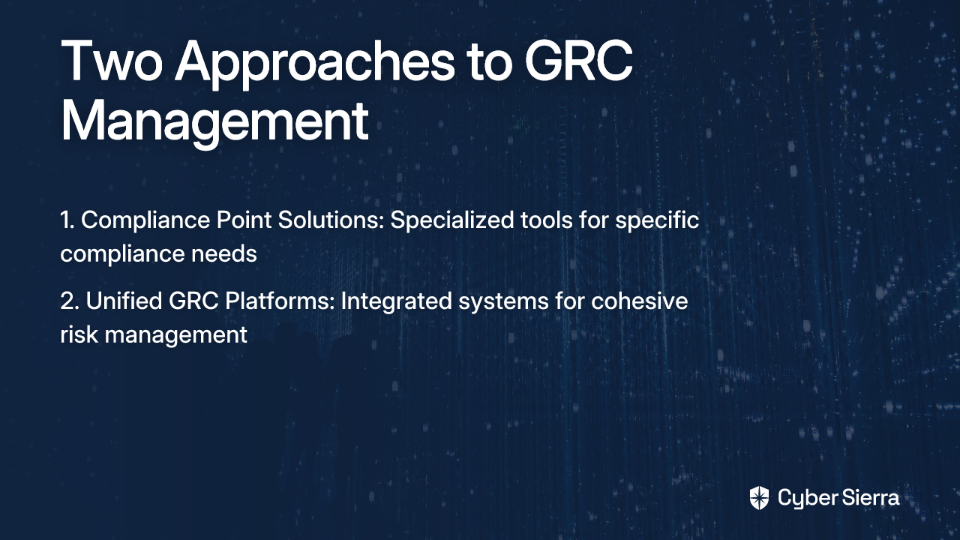
- Compliance Point Solutions: Specialized tools designed to solve specific, isolated compliance or risk problems
- Unified GRC Platforms: Integrated systems that centralize governance, risk, and compliance activities into a cohesive framework
This article examines both approaches, helping you make an informed, strategic choice about which direction best serves your organization's long-term security and compliance objectives.
The Allure and Pitfalls of Compliance Point Solutions
Point solutions are specialized tools that address a single compliance or risk management function. Examples include dedicated third-party risk management platforms, policy management tools, or compliance frameworks specific to a single regulation like GDPR.
The Short-Term Appeal
Point solutions can be attractive for several reasons:
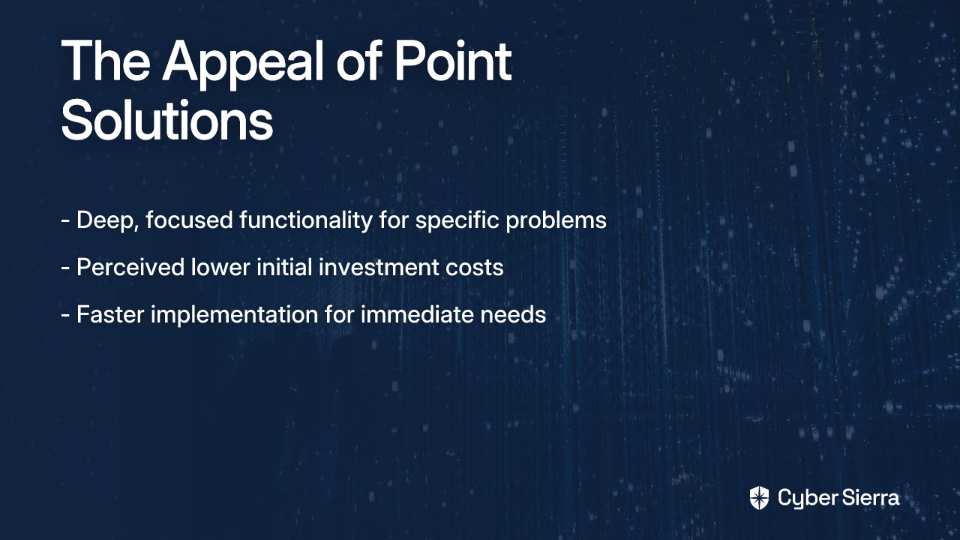
- Deep, focused functionality: They excel at solving the specific problem they were designed for, often with rich feature sets
- Perceived lower initial cost: The upfront investment may seem smaller compared to enterprise platforms
- Faster implementation: You can deploy them quickly to address an immediate need
The Long-Term Strategic Debt
However, this tactical approach creates significant long-term challenges:
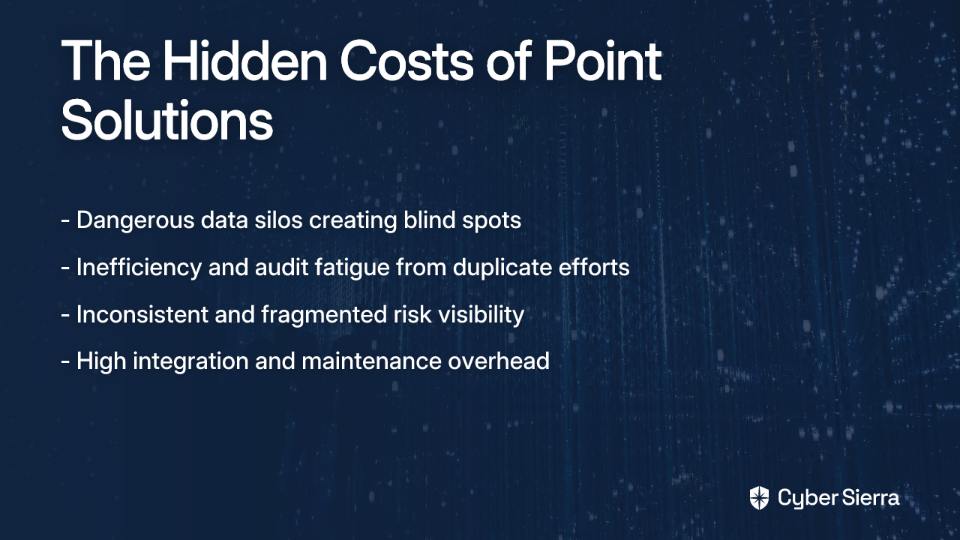
- Dangerous silos: When compliance data lives in disconnected systems, organizations develop blind spots in risk visibility. As Diligent notes, these silos create dangerous risk exposure that remains hidden until it's too late.
- Inefficiency and "audit fatigue": Teams waste countless hours manually entering the same data across multiple systems and conducting redundant testing for different frameworks. According to a Reddit discussion, "users often juggle multiple GRC platforms, leading to confusion and inefficiency."
- Inconsistent risk posture: Without a centralized view, it's virtually impossible to understand your organization's true risk posture. Data fragments across systems are often contradictory, leaving leadership with an incomplete picture.
- Integration and maintenance overhead: The cost and complexity of connecting disparate tools typically exceeds the cost of a unified platform. As one compliance manager noted on Reddit, "high costs of established GRC tools do not translate to added value" when they're poorly integrated.
Ironically, the very appeal of point solutions—their narrow focus—becomes their greatest liability. As regulatory requirements multiply and cybersecurity threats grow more sophisticated, this piecemeal approach becomes increasingly unsustainable.
The Strategic Advantage of a Unified GRC Platform
A unified GRC platform integrates governance, risk management, and compliance activities into a cohesive system. The Open Compliance and Ethics Group (OCEG) defines GRC as an "integrated approach necessary for principled performance" that requires collaboration across departments—a definition that inherently favors unified platforms over disconnected tools.
Core Strategic Benefits
Unified GRC platforms deliver significant strategic advantages:
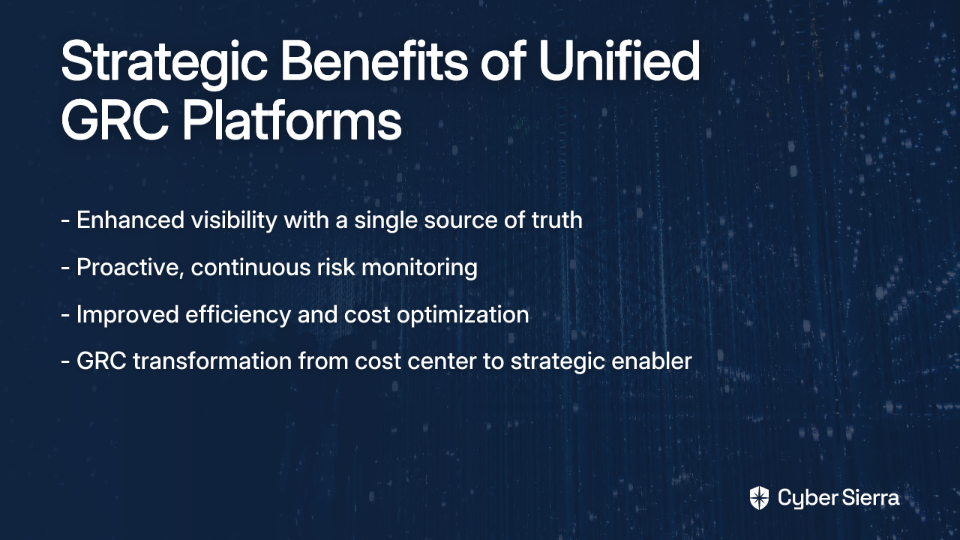
- Enhanced Visibility & A Single Source of Truth: A unified platform eliminates silos, providing leadership with a comprehensive dashboard for enterprise-wide risk and compliance status. This fosters collaboration between departments and creates what Cybersierra describes as a "single source of truth" for all risk-related information.
- Proactive, Continuous Risk Management: Modern GRC platforms enable a shift from periodic, point-in-time assessments to Continuous Control Monitoring (CCM). This approach uses automation and AI to provide real-time risk monitoring and assessment, allowing teams to proactively address vulnerabilities before they become incidents.
- Improved Efficiency and Cost Optimization: Streamlining GRC processes through a unified platform significantly reduces operational costs and resource inefficiencies. Automation of evidence collection and the ability to cross-walk controls across multiple frameworks (SOC 2, ISO 27001, etc.) drastically reduces manual work.
- GRC as a Strategic Enabler: Unified platforms help leadership make informed, data-driven decisions about risk tolerance and resource allocation. This shifts GRC functions "from a cost center to strategic enablers" that help identify growth opportunities while managing risk, according to Diligent.
The urgency of adopting a unified approach is underscored by escalating business risk levels. The Diligent Institute's Q3 2023 GC Risk Index showed risk levels at 7.9 out of 10, representing a 36% increase since early 2023.
Key Factors to Guide Your Decision
When evaluating whether to pursue point solutions or a unified platform approach, consider these crucial factors:
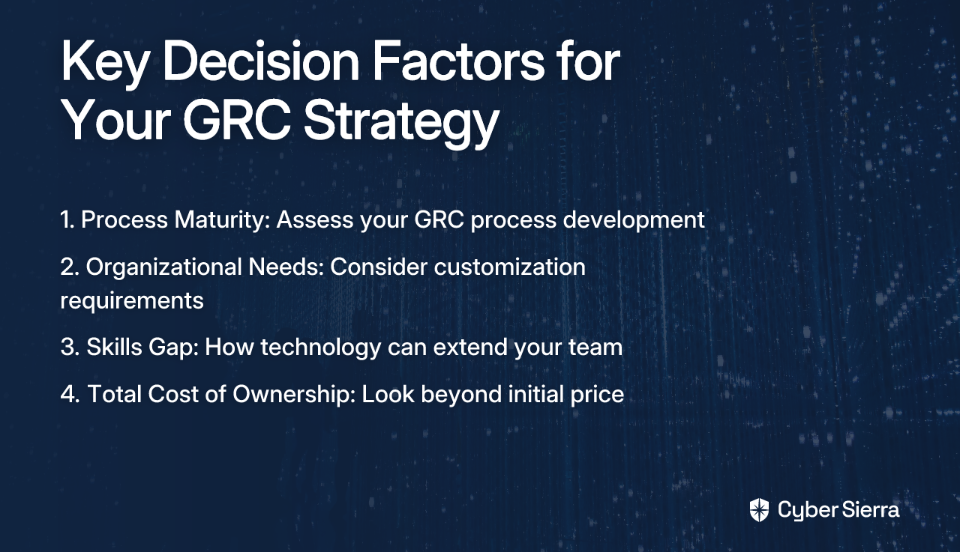
Process Maturity
A common refrain among GRC professionals is that "a poorly defined process can make any GRC tool ineffective," as highlighted in Reddit discussions. No tool—point solution or platform—can fix broken processes.
Before making technology decisions, assess your GRC process maturity using a framework like BMC's:
- LEARN: Understand your organizational culture and stakeholders
- ALIGN: Connect strategy with objectives
- PERFORM: Execute actions to promote good outcomes
- REVIEW: Continuously improve
Organizations with mature processes typically benefit more from unified platforms that can standardize and automate those processes at scale.
Organizational Needs and Customization
Another pain point identified in user research is that "rigid templates from GRC tools can fail to accommodate unique organizational needs." An effective unified platform should manage multiple frameworks (SOC 2, HIPAA, etc.) while also allowing for custom controls and workflows that match your specific requirements.
Look for platforms with robust customization capabilities that don't sacrifice usability or require extensive coding knowledge to adapt.
Addressing the Skills Gap
With most security and compliance teams understaffed, technology must serve as a force multiplier. A unified platform acts as a virtual team extension by:
- Using automation and AI to handle repetitive tasks
- Providing guided workflows for complex compliance processes
- Offering actionable insights to help lean teams prioritize risks without requiring deep expertise
As Cybersierra notes, the right platform can help "maintain robust security and compliance postures despite personnel shortages."
Total Cost of Ownership (TCO)
While point solutions may appear cheaper initially, the true TCO includes:
- Subscription fees across multiple vendors
- Integration costs to connect disparate systems
- Maintenance overhead for multiple tools
- Hidden costs of inefficiency and unmitigated risk from a siloed view
A properly implemented unified platform typically delivers a better return on investment over time by reducing these hidden costs and providing greater strategic value.
Bridging the Gap with an AI-Enabled Unified Platform: The Cybersierra Example
To illustrate how a unified GRC platform addresses these challenges in practice, let's examine Cybersierra's approach.
Cybersierra provides an AI-enabled cybersecurity platform that integrates key security functions into a cohesive system:
- Governance, Risk & Compliance (GRC): Manages multiple compliance frameworks (SOC 2, ISO 27001, HIPAA, etc.) from a central location, automating data collection and risk assessments.
- Continuous Control Monitoring (CCM): Creates a "central controls repository with near real-time updates" to automate evidence gathering and reduce audit fatigue.
- Third-Party Risk Management (TPRM): Integrates vendor risk assessment into the overall GRC posture, providing continuous monitoring of third-party security.
The platform also includes Threat Intelligence, Employee Security Training, and Cyber Insurance modules, creating a truly holistic approach to security and compliance management.
By automating data collection, risk assessments, and reporting, Cybersierra drives significant efficiency gains. Organizations using the platform have reported:
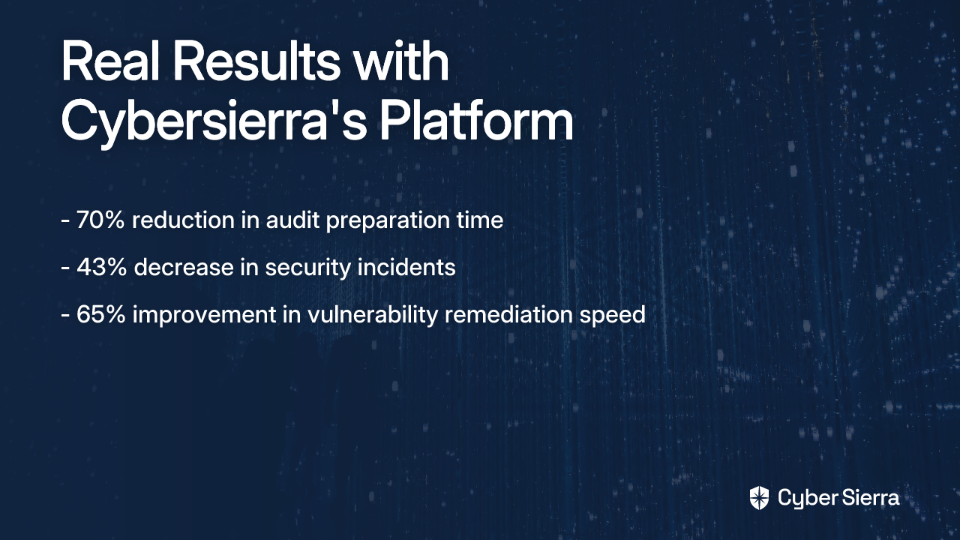
- 70% reduction in audit preparation time
- 43% decrease in security incidents
- 65% improvement in vulnerability remediation speed
These results demonstrate how a unified approach can transform GRC from a burdensome overhead function to a strategic asset.
Conclusion: Making the Strategic Choice
While point solutions offer tactical fixes for immediate problems, a unified GRC platform provides a necessary strategic foundation for resilience in today's complex environment.
The choice between these approaches ultimately depends on your organization's maturity, resource constraints, and long-term objectives. However, as regulatory pressure intensifies and cyber threats grow more sophisticated, the fragmented approach of point solutions becomes increasingly unsustainable for most organizations.
For those committed to building robust, efficient security and compliance programs that serve as strategic enablers rather than cost centers, the path forward is clear: a unified GRC platform that eliminates silos, automates routine tasks, and provides comprehensive visibility into your organization's risk landscape.
Are you tired of managing compliance in spreadsheets and siloed tools? Consider how a unified GRC platform could transform your approach to governance, risk management, and compliance.
Frequently Asked Questions
What is the difference between a compliance point solution and a unified GRC platform?
A compliance point solution is a specialized tool designed to solve a single, specific problem (like vendor risk), while a unified GRC platform is an integrated system that centralizes all governance, risk, and compliance activities into one cohesive framework. Point solutions excel at one function but often create data silos, leading to inefficiencies and blind spots in your overall risk posture. In contrast, a unified GRC platform provides a "single source of truth," offering a comprehensive, enterprise-wide view of risk and compliance, which helps in making strategic, data-driven decisions.
Why is a unified GRC platform better than using multiple point solutions?
A unified GRC platform is generally better because it eliminates dangerous data silos, improves operational efficiency, and provides a complete, real-time view of an organization's risk posture. While a collection of point solutions might seem cheaper initially, they lead to significant long-term costs related to integration, maintenance, and manual, duplicated work. A unified platform reduces "audit fatigue" by automating evidence collection and allowing controls to be mapped across multiple frameworks (like SOC 2 and ISO 27001), ultimately providing a better return on investment and a more strategic approach to risk management.
How does a unified GRC platform help with the cybersecurity skills gap?
A unified GRC platform acts as a force multiplier for understaffed security teams by automating repetitive tasks, providing guided workflows, and delivering actionable insights. With a global shortage of cybersecurity professionals, organizations need technology to extend their team's capabilities. A modern GRC platform uses automation and AI to handle routine evidence collection, risk assessments, and reporting. This frees up skilled professionals to focus on high-priority strategic initiatives instead of manual, administrative work, helping to maintain a robust security posture despite personnel shortages.
What are the hidden costs of using multiple compliance point solutions?
The hidden costs of using multiple point solutions include high integration expenses, ongoing maintenance for each tool, operational inefficiencies from manual data entry, and the unmitigated risk from having a fragmented, incomplete view of your security posture. The initial purchase price of a point solution is often just the beginning. The total cost of ownership (TCO) grows significantly when you factor in the resources needed to connect disparate systems and the countless hours teams spend duplicating work across platforms. Most importantly, the blind spots created by these data silos can lead to costly security incidents that a unified view might have prevented.
Can a GRC platform fix immature or undefined compliance processes?
No, a GRC platform cannot fix broken or poorly defined processes. Technology is a tool to enhance and automate effective processes, but it cannot create them from scratch. Before investing in any GRC tool, it is crucial to first assess and mature your organization's internal GRC processes. A platform is most effective when it is implemented on a solid foundation of well-defined workflows and clear objectives. Implementing a powerful tool over a chaotic process often leads to poor adoption and fails to deliver the expected value.
When might a compliance point solution be the right choice?
A compliance point solution might be the right choice for a small organization with a very narrow, specific, and immediate compliance need, such as managing a single regulatory requirement without plans for significant expansion. If your organization has low process maturity and only faces a single, isolated risk or compliance challenge, a point solution can offer a quick and focused fix. However, it's important to consider this a tactical, short-term decision. As the organization grows and regulatory demands multiply, the limitations of a siloed approach quickly become apparent, often necessitating a future migration to a unified platform.