



5 Automated Risk Mitigation Tools That Eliminate Manual Security Audits
Join thousands of professionals and get the latest insight on Compliance & Cybersecurity.
Summary
- Manual, point-in-time security audits are resource-intensive, prone to costly errors, and create dangerous security gaps between assessments.
- Shifting to a continuous security assurance model allows for real-time visibility, early threat detection, and eliminates the cyclical stress of "audit season."
- When selecting an automation tool, prioritize its integration capabilities, depth of data collection, and scalability to ensure it meets your long-term compliance needs.
- Cyber Sierra's Continuous Control Monitoring platform automates evidence collection and provides a single source of truth to maintain continuous compliance and eliminate audit fatigue.
Are you drowning in spreadsheets, chasing down evidence, and experiencing that recurring nightmare known as "audit season"? You're not alone. Security professionals everywhere are fed up with what we might call "Spreadsheet Security" - that tedious, error-prone approach to compliance where teams manually collect evidence, document controls, and prepare for audits.
"Gathering evidence for audits is tedious and time-consuming, especially with lean teams," laments one security professional in a Reddit discussion. While some still insist that "All you need is a Microsoft Excel Spreadsheet!" the reality is that manual approaches to security and compliance are failing modern organizations.
The traditional point-in-time security assessment - where you scramble to gather evidence, pass an audit, and then breathe a sigh of relief until the next assessment cycle - is becoming obsolete. This approach not only creates audit fatigue but also leaves your organization vulnerable between assessments.
The solution? Automated risk mitigation tools that transform manual, point-in-time security assessments into continuous, real-time monitoring of your security posture.
Why Manual Audits and Point-in-Time Checks Are Failing You
Before we dive into the solutions, let's understand why manual approaches are increasingly problematic:
They're Time-Consuming & Resource-Draining
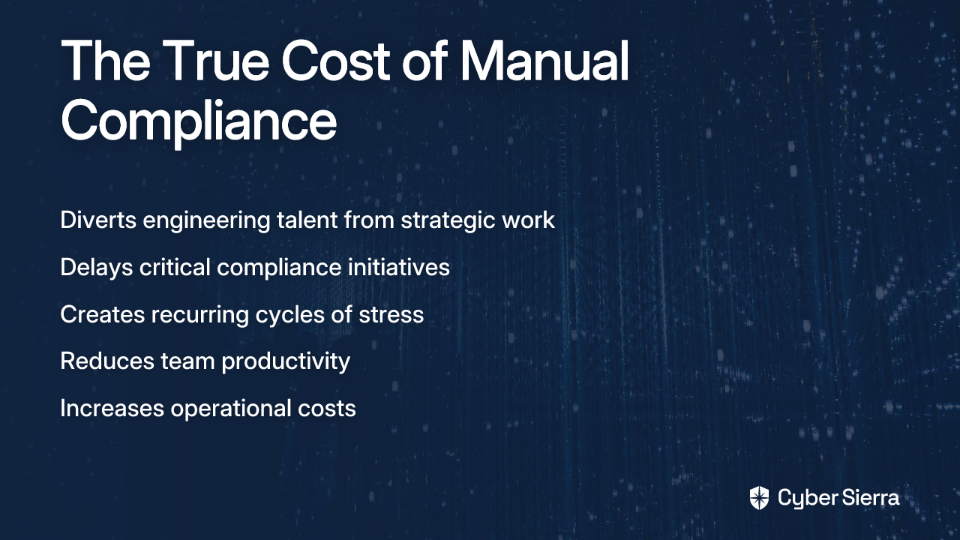
Manual evidence collection isn't just annoying - it's actively harmful to your business. It diverts engineering and security teams from strategic work, delays compliance initiatives, and creates a recurring cycle of stress. Many organizations find themselves simply "tracking things we already do" but struggling to do so efficiently.
They're Prone to Human Error
A single mistake in manual evidence collection can have major consequences. For example, an error during documentation can force organizations to restart lengthy audit periods, such as a 3-month SOC 2 observation period - a costly mistake that automated systems would prevent.
They Lack Real-Time Visibility
Point-in-time checks create dangerous blind spots. According to Vanta, these approaches only provide "a snapshot of security at a single moment," leading to "critical gaps between assessments" where configurations drift and vulnerabilities emerge unnoticed.
They Don't Scale
As your business grows, adds new tools, or enters markets with different regulatory requirements, the complexity of manual compliance management becomes unsustainable. What worked for a small team quickly breaks down at scale.
They Cause Audit Fatigue
The cyclical stress of preparing for audits, chasing down evidence, and managing spreadsheets leads to burnout and a reactive security culture. This fatigue ultimately compromises your security posture and team morale.
Top 5 Automated Tools for Continuous Risk Mitigation & Compliance
Now for the good news: modern risk mitigation tools are transforming how organizations approach security and compliance. Here are five solutions that eliminate the need for manual security audits:
1. Cyber Sierra
Cyber Sierra offers an AI-enabled cybersecurity platform designed to transform security compliance from a manual, periodic chore into an automated, continuous process. It directly addresses the need for "audit readiness" expressed by many security professionals.
Key Features:
- Continuous Control Monitoring (CCM): Transforms security from periodic checks to continuous, automated monitoring by building a central controls repository with near real-time updates.
- Automated Evidence Collection: Eliminates the tedious manual gathering of compliance evidence across your technology stack.
- Multi-Framework Support: Automates control testing and validation across NIST, ISO 27001, PCI DSS, GDPR, HIPAA, and other frameworks from a single platform.
- Real-Time Anomaly Detection: Identifies exceptions and control failures as they happen, allowing for immediate remediation.
Best For: CISOs, Compliance Managers, and IT teams struggling with manual evidence collection, managing multiple compliance frameworks, and seeking a single source of truth for their security posture.
Learn more about Cyber Sierra's Continuous Control Monitoring
2. Vanta
Vanta is a well-known compliance automation platform that helps companies streamline security reviews and achieve certifications like SOC 2 and ISO 27001.
Key Features:
- Automates evidence collection through deep integrations with cloud services and SaaS tools
- Provides a unified platform to manage continuous compliance controls
- Offers real-time monitoring of compliance status to eliminate assessment schedules
Best For: Tech companies and startups needing to quickly become audit-ready to unblock enterprise sales and build customer trust.
3. Drata
Drata is a security and compliance automation platform with a strong focus on continuous monitoring and building trust.
Key Features:
- Focuses on continuous, 24/7 monitoring of security controls
- Provides audit-ready documentation and supports a wide range of compliance frameworks
- Offers real-time visibility into compliance posture through a centralized dashboard
Best For: Organizations that want to embed security and compliance into their daily operations and provide transparency to customers.
4. Secureframe
Secureframe is an all-in-one platform for security, privacy, and compliance that automates the process of getting and staying compliant.
Key Features:
- Boasts over 220 integrations for comprehensive, automated evidence gathering
- Automates continuous scanning and testing of controls to maintain compliance posture
- Manages multiple frameworks like SOC 2, ISO 27001, PCI DSS, and HIPAA from a single platform
Best For: Companies with a diverse tech stack that need broad integration capabilities to automate evidence collection across all their systems.
5. AuditBoard
AuditBoard is an integrated, cloud-based platform for audit, risk, and compliance management.
Key Features:
- Centralizes evidence management and streamlines audit workflows
- Manages multiple compliance frameworks and automates documentation and reporting
- Connects risks to controls, helping teams prioritize mitigation efforts
Best For: Larger enterprises or internal audit teams looking for a comprehensive platform to manage the full spectrum of GRC activities, not just security compliance.
How to Choose the Right Automation Tool for Your Organization
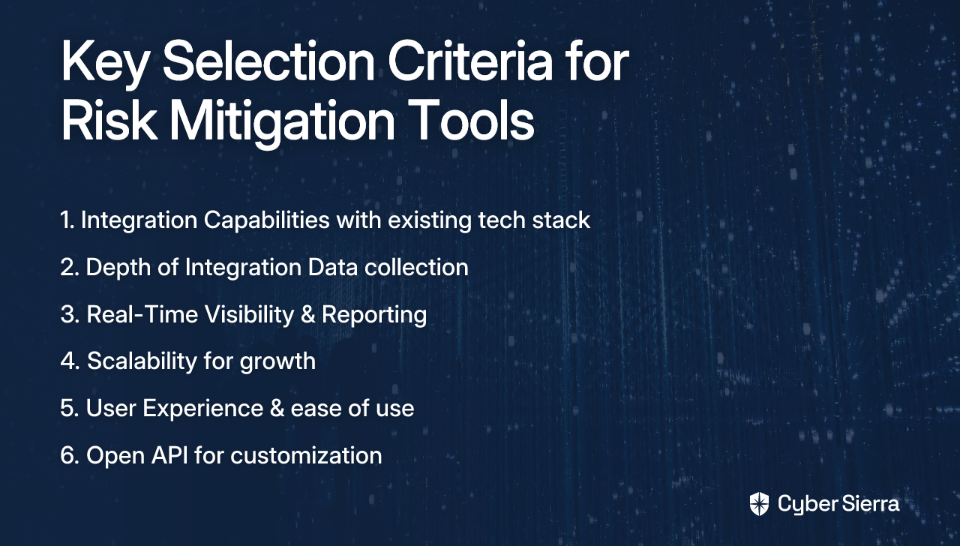
With several strong risk mitigation tools available, how do you select the right one for your specific needs? Here are the key criteria to consider:
Integration Capabilities
The tool must connect seamlessly with your existing tech stack, including cloud providers, identity providers, HR systems, and developer tools. Limited integration capabilities will force you back into manual processes, undermining the whole purpose of automation.
Depth of Integration Data
Not all integrations are created equal. Ensure the tool can pull detailed, compliance-relevant data, not just surface-level information. This depth prevents false positives and eliminates the need for manual verification.
Real-Time Visibility & Reporting
You need a dashboard that gives you an immediate, accurate view of your compliance status. The ability to easily export audit-ready reports is critical for both internal stakeholders and external auditors.
Scalability
The solution should grow with your organization. Can it handle new frameworks as you enter different markets? Will it support more employees, applications, and an expanding cloud environment without performance issues? According to FlowForma, scalability is a key factor in long-term success with automation tools.
User Experience
Even with automation, "you still need someone to configure and maintain these tools." A user-friendly design and self-explanatory modules reduce the learning curve and the total cost of ownership.
Open API
For future-proofing, an open API allows you to integrate with custom-built tools and adapt the platform to unique business processes that may not be covered by out-of-the-box integrations.
Move Beyond Audits: Achieve Continuous Security Assurance
The goal isn't just to pass an audit—it's to build a resilient, continuously compliant security program. Automated risk mitigation tools make this possible by shifting from a reactive, event-driven approach to a proactive, always-on posture.
By implementing continuous monitoring rather than point-in-time assessments, organizations gain several critical advantages:
Improved Compliance & Early Threat Detection
Continuous monitoring allows you to detect control failures, misconfigurations, and security gaps as they emerge—not weeks or months later during an audit. According to Cyber Sierra, this proactive approach significantly reduces the window of vulnerability and strengthens your overall security posture.
Optimized Resource Allocation
When evidence collection and control testing are automated, your security and engineering teams can focus on high-value work instead of chasing down screenshots and documentation. This shift in focus allows for more strategic security initiatives and innovation.
Increased Transparency
Real-time dashboards provide unprecedented visibility into your security posture for leadership, auditors, and customers. This transparency builds trust and demonstrates your commitment to security as a continuous process, not a periodic checkbox.
Perhaps most importantly, automated risk mitigation tools eliminate the dreaded "audit fatigue" that plagues so many security teams. No more last-minute scrambles, no more marathon evidence collection sessions, and no more anxiety about what the auditor might find. Instead, you maintain a state of continuous audit readiness that makes formal assessments a simple verification of what you already know.
Transform Your Security Audits Into Continuous Assurance
The days of "Spreadsheet Security" are numbered. As organizations face increasing regulatory requirements and security challenges, manual approaches to compliance are becoming unsustainable. Automated risk mitigation tools offer a path forward—transforming point-in-time assessments into continuous monitoring and eliminating the need for manual evidence collection.
Stop chasing evidence and start managing risk. Cyber Sierra's Continuous Control Monitoring platform transforms your security audits into a seamless, automated process, giving you a single source of truth for your entire security and compliance posture.
Ready to eliminate audit fatigue? Explore Cyber Sierra's CCM platform and request a demo today!
Frequently Asked Questions
What is an automated risk mitigation tool?
An automated risk mitigation tool is a software platform that replaces manual security and compliance tasks, such as evidence collection and control testing, with a continuous, automated process. These tools integrate with your existing technology stack (like cloud providers, HR systems, and developer tools) to automatically gather evidence, monitor security controls in real-time, and identify compliance gaps as they happen. This transforms security from a periodic, point-in-time assessment into an always-on, proactive program.
Why are manual security audits ineffective for modern businesses?
Manual security audits are ineffective because they are time-consuming, prone to human error, lack real-time visibility, and do not scale as a business grows. This "spreadsheet security" approach creates dangerous blind spots between assessments where vulnerabilities can emerge unnoticed. It also leads to audit fatigue, diverting valuable engineering and security resources from strategic initiatives to tedious, repetitive evidence collection tasks.
How do automated tools help with compliance frameworks like SOC 2 or ISO 27001?
Automated compliance tools help by mapping your internal security controls to the specific requirements of frameworks like SOC 2 and ISO 27001, and then continuously collecting the evidence needed to prove compliance. They eliminate the manual work of gathering screenshots and documents by integrating directly with your systems. The platform automatically tests controls, flags any failures for immediate remediation, and generates audit-ready reports, significantly simplifying the process of achieving and maintaining certifications.
What is the difference between point-in-time assessments and continuous monitoring?
A point-in-time assessment provides a snapshot of your security posture at a single moment, while continuous monitoring provides a real-time, ongoing view of your security and compliance status. Point-in-time checks, typical of manual audits, leave your organization vulnerable to configuration drifts and new threats that arise between assessments. Continuous monitoring, powered by automation tools, detects and alerts you to these issues as they happen, allowing for immediate action and maintaining a constant state of audit readiness.
What are the key benefits of moving to a continuous security assurance model?
The key benefits of continuous security assurance include improved compliance, early threat detection, optimized resource allocation, and increased transparency for stakeholders. By automating routine tasks, you free up your security team to focus on strategic work. Real-time visibility strengthens your security posture by closing the gaps left by periodic audits. Most importantly, it eliminates the cyclical stress and burnout associated with "audit season," fostering a more proactive and resilient security culture.
How do I choose the right compliance automation tool?
To choose the right compliance automation tool, you should evaluate its integration capabilities with your tech stack, the depth of data it can collect, its real-time reporting features, and its ability to scale with your business. Look for a platform with a user-friendly interface to reduce the learning curve and an open API for future customization. The best tool will not only connect to your existing systems but also pull detailed, relevant data to provide a true and accurate picture of your compliance posture without manual verification.
