Join thousands of professionals and get the latest insight on Compliance & Cybersecurity.
Thank you for subscribing us!
Please check your email to confirm your email address.
Share via
You've spent months perfecting your product, fine-tuning your sales pitch, and building a robust pipeline of prospects. But now, as you're getting closer to closing those enterprise deals, you're repeatedly hit with the same question: "Does your organization have ISO 27001 certification?"
This question stops your sales momentum dead in its tracks. Your prospects – especially those large enterprises and government agencies – won't move forward until they're satisfied with your answer. Suddenly, you're wondering if your lack of ISO 27001 certification is costing you valuable deals and revenue.
The Growing Demand for ISO 27001 in Sales Conversations
In today's hyper-connected business environment, data breaches and security incidents have become alarmingly common. High-profile attacks like the Colonial Pipeline ransomware incident have put cybersecurity front and center in business discussions.
As a result, organizations are increasingly cautious about who they trust with their data. Many have implemented strict vendor security assessment processes, with ISO 27001 certification often serving as a key qualification criterion.
"Some of our clients work with much larger businesses or government which require a SOC Type II or equivalent attestation," notes one IT professional in a recent online discussion. This reality is becoming more common across industries, where certification isn't just nice to have – it's becoming a requirement to even get past the initial vendor screening phase.
What Exactly is ISO 27001?
Before diving deeper, let's clarify what ISO 27001 actually is. ISO 27001 is an internationally recognized standard for information security management. It provides a framework for establishing, implementing, maintaining, and continually improving an Information Security Management System (ISMS).
The standard focuses on three core principles:
Confidentiality: Ensuring information is accessible only to authorized individuals
Integrity: Safeguarding the accuracy and completeness of information
Availability: Making information accessible to authorized users when needed
Unlike other security frameworks that might focus on specific technical controls, ISO 27001 takes a comprehensive, risk-based approach to information security that encompasses people, processes, and technology.
When ISO 27001 Can Make or Break Your Sales Process
Enterprise and Government Contracts
If your target market includes large enterprises, financial institutions, healthcare organizations, or government agencies, ISO 27001 certification may be non-negotiable. These organizations often have strict vendor security requirements, and ISO 27001 has become a standard checkbox item in their procurement processes.
"If your main goal is to improve sales, then ISO 27001 has different focuses," explains one cybersecurity professional. Many companies find that having this certification dramatically accelerates the sales cycle with enterprise clients, as it eliminates lengthy security assessments and questionnaires that can delay deals for months.
Competitive Differentiation
In crowded markets where products and services are similar, ISO 27001 certification can be a powerful differentiator. When prospects are comparing multiple vendors with similar offerings, security certifications often become a deciding factor – especially in industries where data protection is paramount.
International Business Expansion
For companies looking to expand globally, ISO 27001 certification provides instant credibility. Since it's an internationally recognized standard, it helps bridge trust gaps when entering new markets where your brand may not be well-known.
When You Might Not Need ISO 27001 Yet
Despite its benefits, ISO 27001 certification isn't always necessary for every business. Here are scenarios where you might reasonably delay pursuing certification:
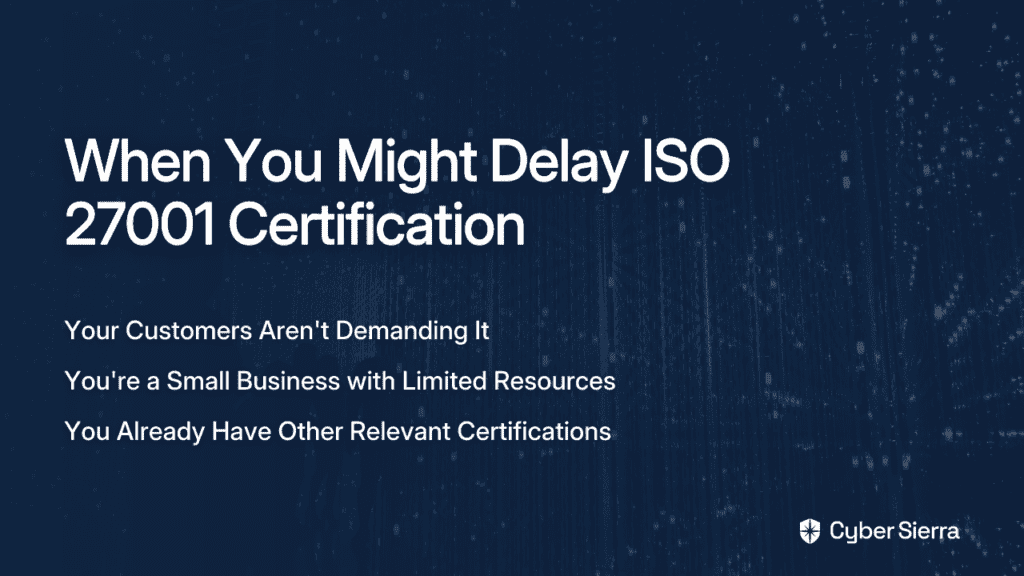
Your Customers Aren't Demanding It
As one expert puts it, "You shouldn't pursue any attestation report unless you have current clients expecting it or you need it for the RFP process." If your typical customers don't ask about ISO 27001 during sales conversations, the investment might not yield immediate returns.
You're a Small Business with Limited Resources
For smaller organizations, the cost and effort required for ISO 27001 certification can be significant. If you're not losing deals due to a lack of certification, it might make more sense to implement security best practices internally without pursuing formal certification right away.
You Already Have Other Relevant Certifications
If you already maintain other security certifications like SOC 2 Type II that satisfy your customers' requirements, ISO 27001 might be redundant in the short term. "If your customers are not asking for it, SOC 2 is enough for many," notes one IT security professional.
The Common Challenges of ISO 27001 Implementation
Lack of Internal Expertise
Many organizations struggle with limited internal expertise to navigate the ISO 27001 certification process. As one professional confessed, "I'm from the company's business side, and I have a tech background but no prior ISM experience. They don't consider hiring a consultant at this point."
This knowledge gap can make the certification process seem daunting, but it's not insurmountable. Solutions like Cyber Sierra's Governance, Risk & Compliance (GRC) module can help bridge this gap by providing guided frameworks and automation tools specifically designed for ISO 27001 implementation.
Administrative Burden
Another common concern is the perceived administrative burden. "We're already dealing with control fatigue after SOC 2," mentions one team considering ISO 27001. "The team's tossing around the idea of going for ISO 27001, and honestly, we're not sure if it's a smart move or just more paperwork."
This is a legitimate concern. ISO 27001 does require documentation, regular reviews, and ongoing monitoring. However, modern GRC platforms can significantly reduce this burden through automation and continuous control monitoring.
Time and Resource Constraints
ISO 27001 certification typically takes 6-12 months, depending on your organization's size and current security posture. As one professional notes, "It appears to be a time-consuming process to obtain the certificate. I'm not even sure if a company without internal expertise can obtain certification this way."
Practical Steps to Determine If You Need ISO 27001
1. Analyze Your Sales Pipeline
Review your recent lost deals and RFP rejections. Are you consistently losing opportunities due to security concerns or certification requirements? If so, ISO 27001 might directly impact your bottom line.
2. Conduct a Gap Assessment
Before committing to full certification, consider conducting a gap assessment using the ISO 27001 framework. This helps you understand your current compliance level and the effort required to achieve certification.
As one expert recommends, "Consider a gap assessment first. You could use the ISO 27001 framework to guide your ISMS without actually doing the audit/getting a cert if your customers are not asking for it."
3. Talk to Your Prospects
Directly ask your prospects if ISO 27001 certification would influence their purchasing decision. This straightforward approach can provide clarity on whether the investment will yield tangible sales benefits.
4. Secure Management Buy-in
ISO 27001 implementation requires organizational commitment. As multiple experts emphasize, "Get management on your side. If this is not sponsored by the board, run." Without executive support, the certification process will likely stall.
Making ISO 27001 Certification More Manageable
If you determine that ISO 27001 is necessary for your sales success, here are strategies to make the process more manageable:
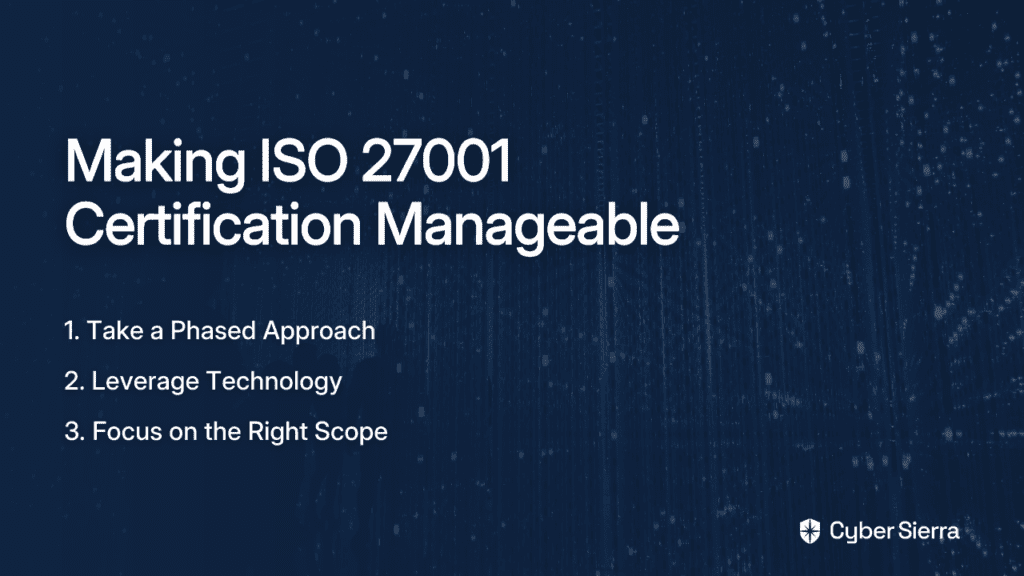
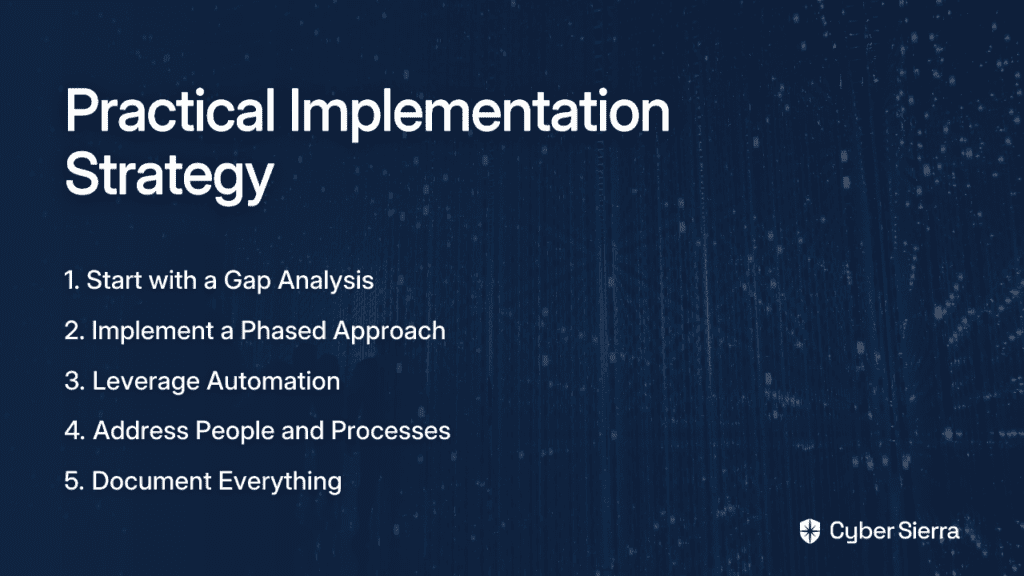
1. Take a Phased Approach
You don't need to tackle everything at once. Break down the implementation into manageable phases, addressing the most critical areas first.
2. Leverage Technology
Modern security and compliance platforms can significantly streamline the certification process. Cyber Sierra's Continuous Control Monitoring (CCM) system, for instance, automates evidence collection and monitoring across multiple frameworks including ISO 27001, reducing the manual effort that often leads to "control fatigue."
3. Focus on the Right Scope
ISO 27001 allows you to define the scope of your certification. Start with the most critical systems and processes relevant to your customers, rather than attempting to certify your entire organization at once.
Conclusion
ISO 27001 certification can be a powerful sales enabler in the right circumstances. For organizations selling to enterprises, government agencies, or regulated industries, it often becomes a necessary credential to close deals.
However, the decision should be driven by tangible business needs rather than simply following industry trends. By carefully assessing your specific customer requirements and sales challenges, you can make an informed decision about whether ISO 27001 certification will deliver meaningful ROI through accelerated sales cycles and expanded market opportunities.
If you determine that ISO 27001 is indeed necessary for your sales success, platforms like Cyber Sierra can help simplify the journey by automating compliance processes, providing continuous control monitoring, and offering the expertise needed to navigate the certification process efficiently.
Remember that ISO 27001 is not just a sales tool but a framework for building a more secure organization. The true value comes not just from the certificate itself, but from the improved security posture and operational discipline it helps establish.
Join thousands of professionals and get the latest insight on Compliance & Cybersecurity.
Thank you for subscribing us!
Please check your email to confirm your email address.
Share via
You've been tasked with ensuring NIST 800-171 and DFARS compliance for your organization, but you're staring at a blank document labeled "Plan of Action and Milestones" with no idea where to start. The deadline for demonstrating compliance is approaching, and the lack of clear guidance has you feeling overwhelmed and uncertain about what constitutes "correct" documentation.
Creating a compliant Plan of Action and Milestones (POAM) doesn't have to be a source of anxiety. With the right templates, examples, and understanding of requirements, you can develop a POAM that not only satisfies regulatory demands but actually improves your organization's security posture.
What is a POAM and Why is it Critical for Compliance?
A Plan of Action and Milestones (POAM) is a formal corrective action plan designed to document and track the remediation of security vulnerabilities or gaps in your cybersecurity implementation. For defense contractors and organizations handling Controlled Unclassified Information (CUI), a well-maintained POAM is not just helpful—it's essential for compliance.
Many organizations express uncertainty about their compliance status. As one contractor noted in a recent forum: "I know previously the DOD stated if you had the SSP and the POAM filled out and you were working towards full deployment, you were technically in compliance with DFARS 7012." This sentiment highlights a common misunderstanding—while having these documents is necessary, they must be actively maintained and followed to achieve true compliance.
The POAM serves multiple critical functions:
Documents identified security gaps or vulnerabilities
Outlines specific remediation actions with timelines
Assigns responsibility for implementation
Provides evidence of your commitment to achieving full compliance
Demonstrates a methodical approach to security improvement
When properly developed and maintained, your POAM effectively communicates to auditors and stakeholders that you understand your security posture and have a concrete plan to address any deficiencies.
Understanding NIST 800-171 and DFARS Requirements
Before diving into POAM templates, it's important to understand the regulatory framework you're working within:
NIST 800-171 Overview
The National Institute of Standards and Technology Special Publication 800-171 (NIST 800-171) establishes security requirements for protecting the confidentiality of CUI when it resides in non-federal systems. It contains 110 security controls across 14 security domains:
Access Control
Awareness and Training
Audit and Accountability
Configuration Management
Identification and Authentication
Incident Response
Maintenance
Media Protection
Personnel Security
Physical Protection
Risk Assessment
Security Assessment
System and Communications Protection
System and Information Integrity
Each control has specific assessment objectives (320 total) detailed in NIST 800-171A that must be addressed.
DFARS Clause 252.204-7012
The Defense Federal Acquisition Regulation Supplement (DFARS) clause 252.204-7012 requires defense contractors and subcontractors to:
Implement NIST 800-171 security requirements
Report cyber incidents within 72 hours
Submit an adequate System Security Plan (SSP) and POAM
For many contractors, there's often confusion about whether having these documents is sufficient. As clarified in the DoD Procurement Toolbox's Cybersecurity FAQ, while having an SSP and POAM demonstrates progress toward compliance, you must be actively working on implementing the plan to be considered compliant with DFARS 7012.
Key Components of an Effective POAM Template
A well-structured POAM template should include several essential components to effectively track and manage security vulnerabilities. The following elements create a comprehensive framework for your remediation efforts:
1. Control Identification
Each entry in your POAM should clearly reference:
Control Number: The specific NIST 800-171 control number (e.g., 3.5.2)
Control Title: A descriptive name of the requirement (e.g., "Authenticate users before allowing access")
Control Description: The full text of the control requirement as stated in NIST 800-171
2. Deficiency Documentation
Clearly articulate the gap between the current state and the required control:
Description of Deficiency: Detailed explanation of how your current implementation falls short of requirements
Vulnerability Severity: Classification of the risk level (High, Moderate, Low)
Status: Current state of remediation (Not Started, In Progress, Completed)
3. Remediation Planning
Map out the path to compliance with specific details:
Corrective Action: Detailed description of steps required to address the deficiency
Resources Required: Personnel, budget, technologies, or other resources needed
Responsible Party: Individual or team accountable for implementation
Milestone Target Date: Specific deadline for completing the remediation
Completion Date: Actual date when remediation was completed
4. Tracking and Update Mechanism
Include fields for ongoing management:
Comments/Status Updates: Space for progress notes and challenges
Evidence: Documentation that demonstrates compliance
Approvals: Signatures or approvals from security officers or management
Sample POAM Entry for NIST 800-171
To illustrate how a completed POAM entry might look, consider this example for a common control deficiency:
Control ID
Control Name
Deficiency Description
Risk Level
Corrective Action
Resources Required
Responsible Party
Target Date
Status
3.5.10
Store and transmit only cryptographically-protected passwords
Current system stores passwords using outdated MD5 hashing algorithm instead of approved methods
High
Implement bcrypt or PBKDF2 hashing for all password storage and ensure all password transmission occurs over encrypted channels
IT Security Team (40 hours), $5,000 for implementation and testing
Jane Smith, IT Security Director
06/30/2024
In Progress
Status Update (04/15/2024): Completed inventory of all password storage locations. Implementation plan approved. Development team has begun code changes.
This example demonstrates the level of specificity and detail that should be included in each POAM entry. By providing comprehensive information about the deficiency and remediation plan, you create a clear roadmap for achieving compliance.
Step-by-Step Guide to Creating Your POAM
Creating a comprehensive POAM involves several key steps:
1. Conduct a Gap Assessment
Before you can create a meaningful POAM, you need to understand where your security gaps exist:
Perform a thorough assessment against all 110 NIST 800-171 controls
Use NIST 800-171A as your guide for assessment objectives
Document all findings, including partial implementations
Many organizations find it helpful to use a self-assessment tool or engage external experts for this initial evaluation. As one IT manager noted, "I'm not sure what 'correct' documentation looks like to prove that we are compliant." This is a common concern, and using standardized assessment methods helps ensure you're capturing the right information.
2. Prioritize Deficiencies
Not all security gaps present equal risk:
Categorize findings by severity (High, Moderate, Low)
Consider factors like potential impact, likelihood of exploitation, and complexity of remediation
Address high-risk items first, particularly those that might expose CUI
Use a standardized template (examples provided below)
Ensure all required fields are completed
Include sufficient detail for each entry
Obtain necessary approvals from leadership
5. Implement and Track Progress
Once your POAM is established:
Hold regular progress review meetings
Update status information as work progresses
Document evidence of completed actions
Adjust timelines if necessary, with appropriate justification
6. Maintain as a Living Document
The POAM is not a one-time exercise:
Update it when new vulnerabilities are discovered
Revise as security requirements evolve
Use it as part of your continuous monitoring process
Include it in regular security reviews
Free POAM Templates and Resources
Finding reliable templates is a common challenge. As one security professional noted, "I am struggling to come up with a good foundation. Would be nice to have something I can build off of." To address this need, here are several valuable resources:
1. StateRAMP POAM Template
The StateRAMP POAM Template is a comprehensive Excel-based tool designed specifically for tracking security control implementation:
The National Defense Information Sharing and Analysis Center (ND-ISAC) offers some of the most comprehensive free resources for NIST 800-171 compliance:
Includes detailed explanations of each control requirement
Common Pitfalls and How to Avoid Them
Many organizations encounter challenges when developing and maintaining their POAMs. Here are common pitfalls and strategies to avoid them:
1. Overly Vague Descriptions
Problem: Deficiency descriptions like "Access control not fully implemented" provide insufficient detail for effective remediation.
Solution: Be specific about exactly what aspect of the control is missing or inadequate. For example: "Multi-factor authentication not implemented for remote access to systems containing CUI."
2. Unrealistic Timelines
Problem: Setting overly ambitious deadlines that cannot realistically be met.
Solution: Consult with the teams responsible for implementation to establish reasonable timeframes. Consider dependencies, resource constraints, and competing priorities.
3. Lack of Regular Updates
Problem: Creating a POAM but failing to maintain it as a living document.
Solution: Schedule regular review meetings (monthly or quarterly) specifically focused on POAM progress. Make updating the POAM part of your regular security processes.
4. Insufficient Resources
Problem: Planning remediation actions without allocating necessary resources.
Solution: Include detailed resource requirements in your POAM, and secure commitment from leadership before finalizing the plan.
5. Missing Evidence
Problem: Completing remediation actions but failing to document evidence.
Solution: Create a systematic process for capturing and storing evidence of compliance. This might include screenshots, configuration files, policy documents, or test results.
Advanced POAM Strategies for Enhanced Compliance
Beyond the basics, implementing these advanced strategies can strengthen your POAM's effectiveness and streamline your path to compliance:
Integrate with Your System Security Plan (SSP)
Your POAM should work in conjunction with your SSP:
Cross-reference SSP sections in your POAM entries
Ensure consistency between documents
Use the same control numbering and naming conventions
Update both documents when changes occur
This integration creates a coherent compliance narrative. When auditors or assessors review your documentation, the relationship between identified gaps (POAM) and your overall security architecture (SSP) should be clear and logical.
Implement a Risk-Based Approach
Not all compliance gaps present equal risk to your organization or to CUI:
Develop a consistent risk scoring methodology
Consider factors beyond just the NIST control family:
Data sensitivity
System exposure (internet-facing vs. internal)
Potential business impact
Likelihood of exploitation
Allocate resources based on risk prioritization
This approach ensures you're addressing the most critical vulnerabilities first, maximizing the security benefit of your remediation efforts.
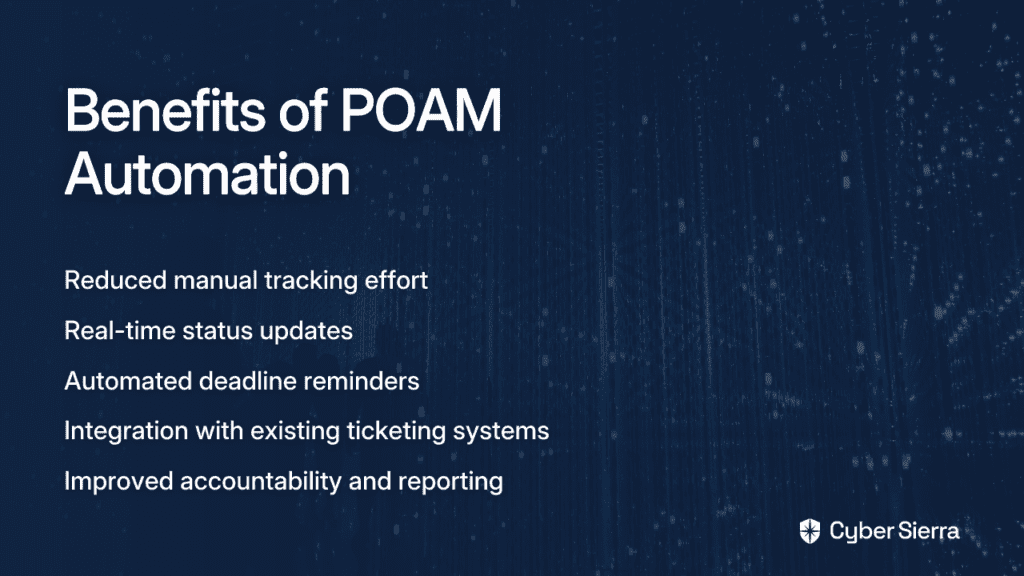
Leverage Automation
Manual tracking becomes increasingly difficult as your POAM grows:
Consider GRC (Governance, Risk, and Compliance) tools that support POAM management
Implement automated status updates where possible
Use ticketing systems that integrate with your POAM
Set up automated reminders for milestone deadlines
As one security professional noted in a forum discussion, "We've linked our POAM to our ticketing system, which has dramatically improved our ability to track progress and hold teams accountable."
Develop Metrics and Reporting
Establish clear metrics to measure progress:
Percentage of controls implemented
Number of high-risk items outstanding
Average time to remediation
Compliance score by control family
Regular reporting using these metrics helps maintain momentum and demonstrates progress to leadership and auditors.
Specialized POAM Examples for Different Scenarios
Different organizational contexts may require tailored approaches to POAM development. Here are examples for common scenarios:
Example 1: Small Contractor with Limited Resources
Scenario: A small manufacturing company with 50 employees has a DoD contract requiring DFARS compliance but has limited IT staff.
POAM Strategy:
Focus on foundational controls first (access control, basic authentication)
Establish longer timelines that account for limited resources
Example 3: Manufacturing Environment with OT/IT Convergence
Scenario: A defense manufacturer with both IT systems and operational technology (OT) containing CUI.
POAM Strategy:
Distinguish between IT and OT environments in the POAM
Account for extended timelines for OT remediation
Document compensating controls where direct compliance is challenging
Include phased approach for legacy systems
Sample Entry:
Control ID
Deficiency
Risk
Action Plan
Resources
Owner
Target Date
3.14.6
Legacy CNC machines cannot support FIPS-validated encryption
Moderate
Phase 1: Implement network segmentation and monitoring for CNC network; Phase 2: Replace machines during scheduled upgrade in Q2 2025
Network Engineer (40 hours); $25,000 for network equipment; $150,000 for scheduled machine upgrades (already budgeted)
Mike Davis, Operations Manager; Tina Wong, IT Director
Phase 1: 07/30/2024; Phase 2: 06/30/2025
POAM as a Competitive Advantage
While many organizations view compliance as a burden, a well-executed POAM can actually provide competitive advantages:
Demonstrating Maturity to Customers
Defense contractors increasingly find that strong cybersecurity documentation helps win contracts. As one contractor mentioned in a forum, "How do I comply with CMMC and NIST 800-171 so that we can get better contracts?"
A comprehensive, well-maintained POAM:
Shows potential customers you take security seriously
Demonstrates transparency about your security posture
Indicates mature risk management processes
Provides evidence of continuous improvement
Several prime contractors now evaluate subcontractors based on cybersecurity maturity, making your POAM a potential differentiator in the bidding process.
Preparing for CMMC Assessment
The Cybersecurity Maturity Model Certification (CMMC) program continues to evolve, but robust documentation remains central to certification readiness:
POAMs created for NIST 800-171 compliance provide a foundation for CMMC preparation
Demonstrates progress toward compliance when "perfect" implementation isn't yet achieved
Helps prioritize investments in security improvements
Facilitates communication with assessors
Organizations with well-maintained POAMs will find themselves better positioned for CMMC assessment when required.
Supporting SPRS Score Improvement
The Supplier Performance Risk System (SPRS) score has become increasingly important for defense contractors:
A detailed POAM helps justify your self-assessment score
Demonstrates progress toward full compliance
Provides documentation to support score updates
Helps identify quick wins to improve scores
Maintaining Your POAM Over Time
The most common POAM failure is treating it as a static document rather than a living tool. Here's how to ensure your POAM remains valuable over time:
Establish a Regular Review Cycle
Set a consistent schedule for POAM reviews:
Monthly reviews for high-priority items
Quarterly comprehensive reviews
Annual reassessment of all controls
Document Progress Consistently
Establish clear standards for status updates:
Use consistent terminology (Not Started, In Process, Complete)
Require evidence for status changes
Document partial progress
Note any blockers or challenges
Integrate with Change Management
Your POAM should be connected to your change management process:
Update the POAM when system changes could affect security controls
Review the POAM before implementing major changes
Consider compliance impact in change approval
Plan for Evolving Requirements
Security requirements continually evolve:
Monitor for updates to NIST 800-171 and related publications
Review DoD guidance and contract requirements regularly
Adjust your POAM to accommodate new or changed requirements
As one security professional noted, "Our POAM has evolved from a compliance checkbox to a central tool in our security program. It drives our security roadmap and helps us communicate priorities to leadership."
Conclusion: From Compliance Burden to Security Asset
A Plan of Action and Milestones doesn't have to be just another compliance document gathering dust on a virtual shelf. When properly developed and maintained, your POAM becomes a valuable security management tool that:
Provides clarity about your current security posture
Creates accountability for security improvements
Demonstrates progress toward compliance goals
Prioritizes resources based on risk
Communicates commitment to security excellence
The journey to full NIST 800-171 and DFARS compliance is ongoing, but a well-structured POAM makes that journey more manageable and transparent. By using the templates, examples, and strategies outlined in this article, you can transform your POAM from a compliance burden into a security asset.
Remember that compliance documentation isn't just about checking boxes—it's about building a security program that effectively protects controlled unclassified information while meeting regulatory requirements. Your POAM is a critical component of that program, deserving of careful attention and ongoing maintenance.
Additional Resources
For more guidance on NIST 800-171 and DFARS compliance:
By leveraging these resources alongside a well-developed POAM, you'll be well-positioned to achieve and maintain compliance with NIST 800-171 and DFARS requirements, protecting both your organization and the sensitive defense information entrusted to your care.
Error: Contact form not found.
Governance & Compliance
ISO 27001 Gap Analysis - Questionnaires & Sample Reports
Join thousands of professionals and get the latest insight on Compliance & Cybersecurity.
Thank you for subscribing us!
Please check your email to confirm your email address.
Share via
You've implemented security measures across your organization, but when a potential client asks about your ISO 27001 compliance status, you're not entirely sure where you stand. Or perhaps you've noticed that competitors are flaunting their ISO certification while your team is scrambling to understand what exactly needs to be done to achieve the same level of credibility.
This uncertainty about your compliance posture not only creates internal stress but can directly impact your business opportunities, especially when clients drop vendors from consideration due to a lack of proper security documentation.
What is ISO 27001 Gap Analysis?
ISO 27001 gap analysis is a systematic evaluation that identifies the discrepancies between your organization's current information security practices and the requirements specified by the ISO 27001 standard. It serves as a crucial first step before pursuing formal certification, providing clarity on where your organization stands and what needs improvement.
Think of a gap analysis as a detailed roadmap that highlights:
What security controls you already have in place
Which requirements you're currently not meeting
The specific actions needed to achieve full compliance
The Critical Importance of Gap Analysis
Conducting a thorough gap analysis offers several significant benefits that extend beyond just checking compliance boxes:
Prevents Certification Surprises: Eliminates unexpected findings during formal audits by identifying issues beforehand
Optimizes Resource Allocation: Helps you focus investments where they're most needed rather than implementing unnecessary controls
Builds Stakeholder Confidence: Demonstrates a structured approach to security, enhancing trust with clients and partners
Provides Implementation Clarity: Creates a clear, prioritized action plan that makes the certification journey manageable
As one security professional noted in a recent discussion, "Documentation is very, very important here." Without a structured gap analysis, organizations often find themselves overwhelmed during actual audits, scrambling to address fundamental issues that could have been identified earlier.
Key Components of an ISO 27001 Gap Analysis
A comprehensive gap analysis consists of several essential elements:
1. Current State Assessment
This initial phase involves documenting your existing information security measures, including:
Policies and procedures already implemented
Technical controls currently in place
Organizational structures related to security
Risk assessment methodologies being used
2. Requirements Mapping
This step involves comparing your current security practices against ISO 27001 requirements, specifically:
Clauses 4-10 of the ISO 27001 standard (management system requirements)
Annex A controls (114 security controls across 14 domains)
3. Gap Identification
Based on the mapping exercise, this phase explicitly identifies:
Missing controls or documentation
Partially implemented requirements
Areas where existing controls don't fully satisfy ISO requirements
4. Recommendations and Action Plan
The final component provides specific guidance on:
Prioritized remediation steps
Resource requirements for addressing gaps
Timeline for implementation
Responsible parties for each action item
Conducting an Effective ISO 27001 Gap Analysis
Now that we understand the structure, let's explore how to conduct a gap analysis effectively:
Step 1: Form a Qualified Assessment Team
Assemble a team with the right expertise:
Information security specialists familiar with ISO standards
IT personnel with knowledge of your systems
Business representatives who understand operational needs
Executive sponsor to ensure organizational support
Consider including external consultants if in-house expertise is limited. Their objective perspective and experience with various implementations can provide valuable insights.
Step 2: Define the Scope
Clearly establish what's included in your ISMS (Information Security Management System):
Systems and networks
Physical locations
Departments and functions
Information assets
Third-party relationships
As one security professional noted in a recent forum discussion: "Without a defined scope, you can't start doing things." This step is crucial as it determines the boundaries of your certification and analysis.
Step 3: Develop a Comprehensive Questionnaire
A well-structured questionnaire is the backbone of an effective gap analysis. It should systematically address all requirements of the ISO 27001 standard.
Sample Questions for Your ISO 27001 Gap Analysis Questionnaire:
Context of the Organization (Clause 4)
Has the organization identified internal and external issues relevant to its purpose that could affect ISMS outcomes?
Have all interested parties and their requirements been identified and documented?
Is the scope of the ISMS clearly defined and documented?
Leadership (Clause 5)
Has top management demonstrated leadership and commitment to the ISMS?
Is there a documented information security policy approved by management?
Are roles and responsibilities for information security clearly assigned and communicated?
Planning (Clause 6)
Has the organization established a risk assessment methodology?
Are information security risks identified, analyzed, and evaluated?
Are risk treatment plans documented with clear ownership?
Support (Clause 7)
Are adequate resources provided for ISMS implementation and operation?
Do personnel have appropriate competence for their information security responsibilities?
Is there a process for managing ISMS documentation?
Operation (Clause 8)
Are operational processes planned, implemented, and controlled to meet security requirements?
Is risk assessment performed at planned intervals?
Is the risk treatment plan implemented as designed?
Performance Evaluation (Clause 9)
Are methods established to monitor and measure ISMS effectiveness?
Is there a documented internal audit program?
Does management review the ISMS at planned intervals?
Improvement (Clause 10)
Are nonconformities identified, corrected, and reviewed for effectiveness?
Is there a process for continual improvement of the ISMS?
Annex A Controls Assessment (Sample Questions)
Are access rights reviewed at regular intervals? (A.9.2.5)
Is information classified according to legal requirements, value, and sensitivity? (A.8.2.1)
Are formal transfer policies, procedures, and controls in place? (A.13.2.1)
Step 4: Gather and Review Documentation
Collect and review all relevant documentation, including:
Existing security policies and procedures
Risk assessment records
Access control documentation
Business continuity plans
Previous audit reports
Incident management procedures
This document review should be supplemented with interviews of key personnel to understand how processes actually work in practice versus how they're documented. Remember, as discussed in recent industry forums: "If in our policy we have documented controls that satisfy the ISO 27001 requirement but one of those isn't actually implemented (but due to other controls, we still meet the requirements) is this marked as a non-conformity?" This highlights the importance of not just having documentation, but ensuring it accurately reflects implemented practices.
Step 5: Analyze Findings and Identify Gaps
Once you've gathered all necessary information, analyze your findings to identify gaps between your current state and ISO 27001 requirements:
Categorize findings by compliance level:
Fully Compliant: Requirements are completely satisfied
Partially Compliant: Some aspects are addressed, but improvements needed
Non-Compliant: Requirement not addressed at all
Not Applicable: Requirement doesn't apply (must be justified)
Use a color-coded system for visual clarity:
Green: Fully compliant, no action required
Amber: Partially compliant, minor remediation needed
This approach allows stakeholders to quickly understand the organization's compliance posture and prioritize remediation efforts.
Step 6: Develop Detailed Action Plans
Transform your gap analysis findings into actionable plans:
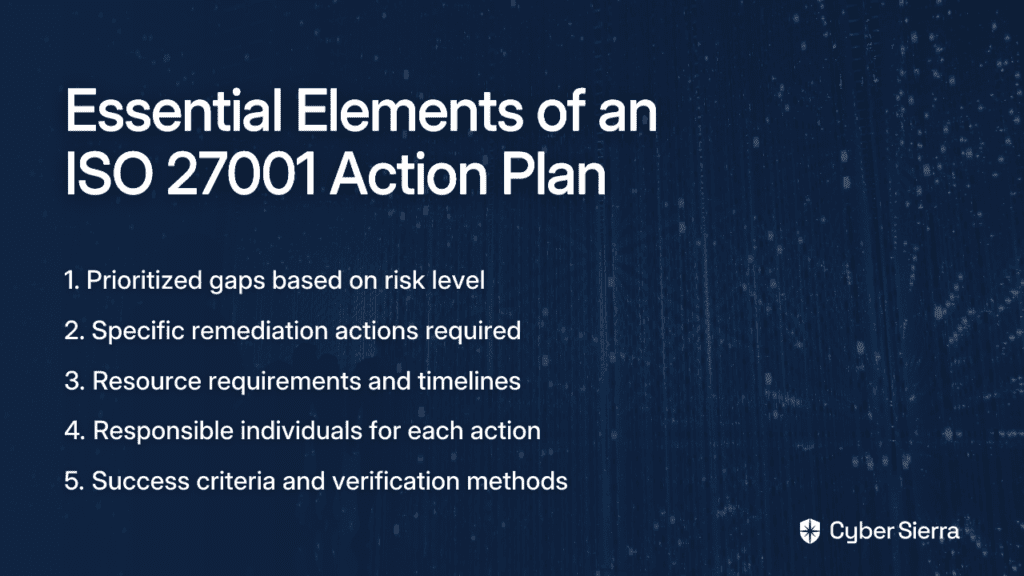
Prioritize gaps based on:
Risk level (high/medium/low)
Implementation complexity
Resource requirements
Interdependencies with other controls
For each gap, document:
Specific actions required
Resources needed
Responsible individuals
Target completion dates
Success criteria
Gain management approval for the remediation plan to ensure appropriate resources and support.
Understanding Sample ISO 27001 Gap Analysis Reports
Let's examine what a professional gap analysis report typically includes, based on industry examples:
Executive Summary
This section provides high-level insights for leadership:
Executive Summary (Sample):
Organization XYZ has undergone an ISO 27001 gap analysis to assess its readiness for certification. The analysis revealed that 45% of requirements are fully compliant, 35% partially compliant, and 20% non-compliant. Key areas requiring immediate attention include risk management processes, access control, and business continuity planning. With appropriate remediation over the next 6 months, the organization can achieve certification readiness.
Methodology Section
This section explains the approach taken:
Methodology (Sample):
The gap analysis was conducted through document reviews, interviews with 15 key personnel across IT, HR, and Operations departments, and observations of security practices. All requirements from ISO 27001:2013 clauses 4-10 and applicable Annex A controls were assessed using a three-tier compliance rating system.
Detailed Findings
This comprehensive section presents the analysis results in a structured format:
Detailed Findings (Sample Extract):

CLAUSE 4 - CONTEXT OF THE ORGANIZATION
4.1 Understanding the organization and its context
Finding: PARTIALLY COMPLIANT (AMBER)
Observation: Organization has documented some internal and external issues in business plans but lacks a structured approach to identifying issues specifically relevant to information security objectives. No formal process exists for regular review of these factors.
Recommendation: Develop and document a formal process for identifying and reviewing internal/external issues relevant to the ISMS, with scheduled reviews at least annually.

4.2 Understanding the needs and expectations of interested parties
Finding: NON-COMPLIANT (RED)
Observation: No formal identification of interested parties or their requirements related to information security.
Recommendation: Create a register of interested parties (e.g., customers, regulators, suppliers) and document their relevant requirements. Establish a process for regular review.
Implementation Roadmap
This section outlines the path to certification:
Implementation Roadmap (Sample):
Phase 1 (Months 1-2): Address high-priority gaps in management system elements
- Develop ISMS scope document
- Establish information security policy
- Create risk assessment methodology

Phase 2 (Months 3-4): Address operational controls
- Implement access control improvements
- Develop security awareness training program
- Enhance incident management procedures

Phase 3 (Months 5-6): Finalize implementation and prepare for audit
- Conduct internal audit
- Management review of ISMS
- Pre-certification assessment
Common Challenges in ISO 27001 Gap Analysis
Organizations frequently encounter these challenges during gap analysis:
1. Scope Definition Issues
Challenge: Defining an appropriate scope that balances comprehensive security with practical manageability.
Solution: Start with a clearly defined, manageable scope focusing on your most critical systems and processes. You can expand the scope in subsequent certification cycles as your ISMS matures.
2. Resource Constraints
Challenge: Limited budget, time, and expertise for conducting a thorough analysis.
Solution: Consider using automation tools like Cybersierra's Continuous Control Monitoring (CCM) platform, which can significantly streamline the assessment process by automatically evaluating your security controls against ISO 27001 requirements and providing real-time visibility into your compliance posture.
3. Organizational Resistance
Challenge: Resistance from staff who perceive ISO implementation as bureaucratic overhead.
Solution: Emphasize business benefits beyond compliance, including improved security posture, enhanced client trust, competitive advantage, and reduced incident probability.
4. Documentation Overload
Challenge: Overwhelming documentation requirements leading to analysis paralysis.
Solution: Focus on quality over quantity. Ensure documents are practical, usable, and aligned with actual practices. As noted in industry discussions, "Documentation is key here" - but it must reflect reality, not just exist for compliance sake.
Leveraging Technology for ISO 27001 Gap Analysis
Modern compliance efforts can benefit significantly from purpose-built technology solutions:
Automation Benefits
Manual gap analysis can be time-consuming and error-prone. Technology solutions like Cybersierra's Governance, Risk & Compliance (GRC) platform offer significant advantages:
Streamlined Assessment: Automatically map your existing controls to ISO 27001 requirements
Real-time Visibility: Maintain an up-to-date view of your compliance posture
Evidence Collection: Automate the gathering and organizing of compliance evidence
Centralized Documentation: Store all relevant policies, procedures, and records in one accessible location
Consistent Methodology: Ensure standardized assessment approaches across the organization
Continuous Monitoring vs. Point-in-Time Assessment
Traditional gap analysis provides a snapshot of compliance at a specific moment. However, modern approaches emphasize continuous compliance monitoring:
Continuous Control Monitoring: Platforms like Cybersierra CCM provide ongoing visibility into control effectiveness rather than point-in-time assessments
Automated Alerts: Receive notifications when controls drift out of compliance
Trend Analysis: Track compliance improvements over time with historical data
As one security professional noted in a recent forum, "ISO just demonstrates they have defined security policies," but continuous monitoring ensures these policies translate into operational effectiveness - addressing a common criticism of certification approaches.
Addressing Transparency in ISO 27001 Compliance
A recurring theme in industry discussions is the challenge of transparency regarding ISO 27001 certifications and audit reports:
The Client Perspective
Clients increasingly expect visibility into vendors' security practices:
"If a potential vendor refuses to share their latest audit report, they are dropped from consideration."
"Trust is fundamental in vendor relationships, and lack of transparency can indicate deeper issues."
The Vendor Perspective
Vendors must balance transparency with confidentiality concerns:
"We have a client whereby they want us to share our ISO report annually - however I do not feel comfortable and feel that it is confidential."
"If the certificate isn't enough for them, then you need to have a conversation about why."
Balancing Approaches
Organizations can address this tension through several strategies:
Customer-facing summaries: As recommended by security professionals, "What we have done in the past is have the auditor provide a customer-facing summary that we provided to big/important customers."
Statement of Applicability: Share your SoA (Statement of Applicability) which outlines which controls you've implemented without revealing sensitive details.
Third-party attestations: Use trusted third parties to verify compliance without sharing raw audit data.
Transparency policies: Develop clear policies about what information you will and won't share, and communicate these proactively to clients.
By addressing transparency concerns proactively, organizations can build trust while protecting sensitive information.
ISO 27001 Gap Analysis Tools and Templates
To facilitate your gap analysis process, several tools and templates are available:
Mapping capabilities for multiple frameworks simultaneously
Automated control testing
Evidence collection and management
Customizable dashboards and reports
Risk management functionality
Compliance Automation Tools provide:
Pre-built templates and assessment methodologies
Workflow management for remediation activities
Document management and version control
Audit trail capabilities
Best Practices for ISO 27001 Gap Analysis
Based on industry experience and expert recommendations, consider these best practices:
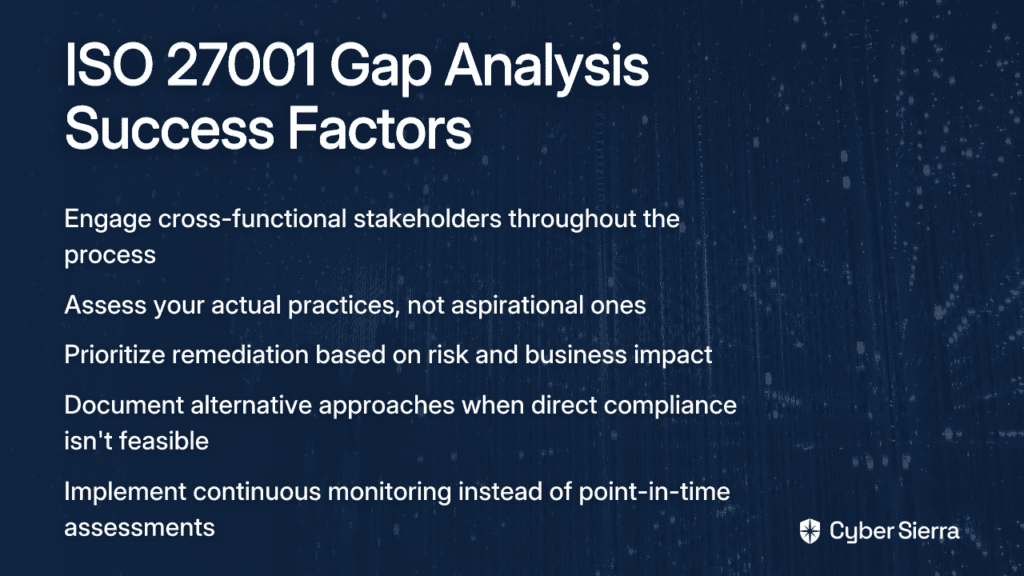
1. Involve the Right People
Engage stakeholders from across the organization:
IT and security teams for technical controls
HR for personnel security aspects
Legal for compliance requirements
Operations for business process impacts
Executive leadership for strategic alignment
As noted in industry forums, "Best practices come from 'what works quite well so far'" - leverage the collective experience of your team.
2. Be Honest in Your Assessment
Resist the temptation to overstate compliance:
Document actual practices, not aspirational ones
Acknowledge deficiencies openly
Provide context for non-compliances
Remember that identifying gaps is the goal, not demonstrating perfection
3. Prioritize Based on Risk
Not all gaps carry equal weight:
Focus first on high-risk areas with significant security impact
Consider business context when prioritizing remediation
Address systemic issues before isolated deficiencies
Balance quick wins with structural improvements
4. Document Compensating Controls
When direct compliance isn't feasible:
Document alternative approaches that mitigate the same risks
Explain why the standard control isn't applicable or practical
Demonstrate how compensating controls provide equivalent protection
Maintain this documentation for auditors
5. Plan for Continuous Improvement
Gap analysis is not a one-time activity:
Schedule regular reassessments
Monitor the effectiveness of implemented controls
Adjust your approach based on results
Remember that security and compliance are ongoing journeys
Conclusion
A thorough ISO 27001 gap analysis provides the foundation for a successful certification journey by clearly identifying where your organization stands and what needs improvement. By following a structured approach, using appropriate tools, and addressing transparency concerns proactively, you can transform the compliance process from a daunting challenge into a strategic advantage.
The insights gained through gap analysis extend beyond certification readiness—they provide valuable perspective on your overall security posture and opportunities for meaningful improvement. As one security professional aptly noted, "Not everything will be perfect your first time," but a systematic gap analysis ensures you're making progress in the right direction.
Whether you're just beginning your ISO 27001 journey or looking to enhance an existing compliance program, the gap analysis process offers a critical roadmap for success. By leveraging modern tools like Cybersierra's compliance automation platforms, you can streamline this process, maintain continuous visibility into your compliance posture, and confidently demonstrate your commitment to information security.
Remember that the ultimate goal extends beyond the certificate itself—it's about building a robust security framework that protects your organization and instills confidence in your customers, partners, and stakeholders.
This comprehensive guide aims to equip you with the knowledge and tools needed to conduct an effective ISO 27001 gap analysis, setting the foundation for successful certification and enhanced information security management.
Join thousands of professionals and get the latest insight on Compliance & Cybersecurity.
Thank you for subscribing us!
Please check your email to confirm your email address.
Share via
You're tasked with managing compliance for your organization, and suddenly "ISO 37301" appears on your radar. Another standard to worry about? Another certification to chase? You're already struggling with limited access to clear information about ISO standards, often hidden behind expensive paywalls, and now there's one more to understand and implement.
Many organizations share your frustration. There's a widespread belief that critical compliance standards should be more accessible, especially when they impact global business operations and safety. Yet despite these challenges, understanding ISO 37301 is becoming increasingly important for organizations of all sizes.
What is ISO 37301?
ISO 37301:2021 is the international standard for Compliance Management Systems (CMS), released by the International Organization for Standardization in April 2021. This standard replaces the previous ISO 19600 guidelines and introduces a significant change: organizations can now become certified against ISO 37301, validating their compliance management practices.
At its core, ISO 37301 provides a structured framework for establishing, developing, implementing, evaluating, maintaining, and improving an effective compliance management system. Unlike its predecessor, ISO 37301 is a certifiable standard, meaning organizations can demonstrate to stakeholders, regulators, and customers that their compliance processes meet international best practices.
The standard is designed for universal application—suitable for organizations of all sectors and sizes, from small businesses to multinational corporations. The primary goal is to help organizations create a culture of compliance that extends across all operations and jurisdictions.
Key Elements of ISO 37301
The standard follows the High-Level Structure (HLS) common to other ISO management system standards, making it easier to integrate with existing systems like ISO 9001 (Quality Management) or ISO 27001 (Information Security Management). The framework encompasses several essential elements:
1. Context of the Organization
This involves understanding the internal and external factors affecting your organization's compliance needs, including stakeholder expectations and the scope of your compliance management system. Organizations must identify relevant compliance obligations and associated risks.
2. Leadership
ISO 37301 emphasizes the importance of leadership commitment to compliance. This means clearly defined roles and responsibilities, with top management demonstrating their commitment to the compliance management system. Compliance officers and managers need defined authority and clear guidance on their duties.
3. Planning
Strategic planning involves setting compliance objectives and determining actions to address risks and opportunities. This element ensures organizations proactively address compliance challenges rather than merely reacting to issues as they arise.
4. Support
For a compliance management system to work effectively, organizations must allocate appropriate resources—financial, human, and technological. This element also covers awareness, competence, and communication aspects, ensuring everyone understands their compliance responsibilities.
5. Operation
This covers the practical implementation of compliance processes, including establishing controls, due diligence procedures, and reporting mechanisms for non-compliance. Operational planning ensures that compliance becomes embedded in day-to-day activities.
6. Performance Evaluation
Regular monitoring, measurement, analysis, and evaluation keep the compliance management system effective. This includes internal audits and management reviews to assess how well the system is working and where improvements are needed.
7. Improvement
Building on evaluation, organizations must continuously improve their compliance management system by addressing non-conformities, taking corrective actions, and fostering a culture of ongoing enhancement.
Why ISO 37301 Compliance Matters
You might be wondering: "With so many standards already, why should my organization care about ISO 37301?" The answer lies in several compelling benefits:
Legal Compliance and Risk Mitigation
In today's complex regulatory environment, organizations face a multitude of laws, regulations, and standards across different jurisdictions. ISO 37301 helps systematically identify, monitor, and comply with these requirements, significantly reducing the risk of legal violations, fines, penalties, and reputational damage.
Many organizations recognize the complex liability issues surrounding compliance and fear legal repercussions. As one compliance professional noted in an online discussion, "Acknowledgment of the complex liability issues surrounding compliance and the fear of legal repercussions" is a major concern for businesses of all sizes.
Competitive Advantage
Organizations that achieve ISO 37301 certification gain a distinct market advantage. The certification serves as objective proof of your commitment to compliance, potentially opening doors to new business opportunities, particularly in highly regulated industries or when dealing with multinational corporations that require vendors to demonstrate robust compliance practices.
Improved Governance and Decision-Making
The systematic approach to compliance management improves organizational governance by providing a clearer understanding of obligations and risks. This leads to better-informed decision-making at all levels, from operational choices to strategic planning.
Enhanced Reputation and Stakeholder Trust
In an era where corporate trust is increasingly valuable, ISO 37301 certification demonstrates your organization's commitment to ethical conduct and good governance. This can strengthen relationships with customers, investors, regulators, and the wider community.
Benefits of Implementing ISO 37301
Beyond the high-level advantages mentioned above, implementing ISO 37301 brings several practical benefits:
Operational Efficiency
Rather than managing compliance in silos, ISO 37301 promotes an integrated approach that streamlines processes, reduces duplication of effort, and minimizes the operational burden of compliance. This allows for:
Quicker responses to compliance issues
More efficient resource allocation
Reduced errors and inconsistencies in compliance practices
Better integration with other management systems
Positive Organizational Culture
A well-implemented compliance management system fosters a culture where ethical behavior is valued and compliance is seen as everyone's responsibility. This cultural shift has far-reaching benefits, including:
Increased employee engagement and morale
Reduced incidents of misconduct
Greater awareness of compliance obligations at all levels
Improved organizational resilience
Proactive Risk Management
Instead of reacting to compliance issues after they occur, ISO 37301 encourages a proactive approach to identifying and addressing compliance risks. This helps organizations:
Anticipate regulatory changes
Prepare for new compliance requirements
Prevent compliance breaches before they happen
Reduce the costs associated with non-compliance
Third-Party Compliance Management
Many compliance failures stem from third-party relationships. ISO 37301 includes provisions for managing compliance risks in your supply chain and with other business partners, ensuring that vendors and partners meet your compliance prerequisites.
Continuous Improvement
The standard's emphasis on monitoring, measurement, and review drives ongoing enhancement of compliance practices, ensuring your organization keeps pace with evolving regulatory requirements and best practices.
Steps to Achieve ISO 37301 Compliance
Now that you understand what ISO 37301 is and why it matters, let's explore how to implement it effectively:
1. Understand the Requirements
The first step is to thoroughly understand ISO 37301's requirements and how they apply to your organization. While the standard itself is behind a paywall (a common frustration expressed by many professionals), various resources can help you understand its core principles:
ISO's official website offers summaries and explanations
Compliance consultants often publish guides and interpretations
Industry associations may provide sector-specific guidance
Many professionals have expressed frustration regarding ISO standards being behind paywalls. According to discussions on Reddit, there's a "desire for ISO standards to be publicly accessible and funded through taxation for better global communication" and "frustration over taxpayer funding not translating to free access to ISO standards."
While these concerns are valid, organizations should view ISO standards as an investment in operational excellence rather than just an expense.
2. Conduct a Gap Analysis
Before implementing ISO 37301, assess your organization's current compliance practices against the standard's requirements. This gap analysis will help you identify:
Existing compliance processes that align with ISO 37301
Areas where your current practices fall short
Resources needed to close identified gaps
Priorities for implementation
This analysis forms the foundation of your implementation plan and helps you allocate resources efficiently.
3. Develop a Compliance Management System
Based on your gap analysis, design a compliance management system that addresses ISO 37301's requirements. This typically involves:
Documenting compliance obligations relevant to your organization
Establishing compliance policies and procedures
Defining roles and responsibilities for compliance management
Creating risk assessment methodologies
Developing reporting and monitoring mechanisms
Setting up internal audit processes
Remember that your CMS should be proportionate to your organization's size, structure, and specific compliance risks. There's no one-size-fits-all approach.
4. Implement the CMS
Once designed, systematically implement your compliance management system throughout the organization. This stage involves:
Communicating new policies and procedures
Training staff on their compliance responsibilities
Implementing operational controls
Establishing reporting channels for compliance concerns
Integrating compliance considerations into business processes
Effective implementation requires careful change management to overcome resistance and ensure buy-in at all levels.
5. Training and Awareness
A compliance management system is only as effective as the people operating within it. Comprehensive training ensures that all employees understand:
The importance of compliance
Their specific compliance responsibilities
How to identify and report compliance issues
The consequences of non-compliance
Training should be tailored to different roles, with more specialized training for those with specific compliance responsibilities.
6. Internal Audit
Regular internal audits assess the effectiveness of your compliance management system and identify areas for improvement. These audits should:
Verify that policies and procedures are being followed
Test the effectiveness of compliance controls
Identify non-conformities and improvement opportunities
Provide objective evidence for management review
Internal audits should be conducted by trained individuals who are independent of the areas being audited.
7. Management Review
Senior leadership should regularly review the performance of the compliance management system to ensure it remains suitable, adequate, and effective. These reviews consider:
Results of internal audits
Status of corrective actions
Changes in external and internal issues affecting compliance
Performance indicators and trends
Improvement opportunities
Management reviews demonstrate leadership commitment to compliance and ensure the CMS continues to serve organizational needs.
8. Continuous Improvement
ISO 37301 emphasizes the importance of continually improving your compliance management system. This involves:
Addressing non-conformities through corrective actions
Adapting to changing compliance obligations
Enhancing processes based on performance data
Staying current with evolving best practices
Regularly updating risk assessments
Continuous improvement ensures your compliance management system remains effective in the face of changing regulatory landscapes and organizational changes.
ISO 37301 Certification Process
If you decide to pursue certification (which is optional but beneficial), you'll need to engage with an accredited certification body. The certification process typically involves these steps:
1. Initial Certification Meeting
This initial meeting allows you to exchange relevant information with your chosen certification body, understand their specific approach, and clarify any questions about the certification process.
2. Pre-Audit Planning Meeting
Before the formal audit, many certification bodies offer a pre-assessment or planning meeting to identify areas that might need improvement before the certification audit. This helps ensure readiness and increases the likelihood of successful certification.
3. Certification Audit
The formal certification audit occurs in two stages:
Stage 1: The auditor reviews your documentation, evaluates your overall compliance status, and determines if your organization is ready for the Stage 2 audit.
Stage 2: This is a comprehensive assessment of your compliance management system implementation, including interviews with staff, observation of processes, and review of records to verify that your system meets ISO 37301 requirements.
4. Audit Report and Certification Decision
Following the audit, the certification body provides a detailed report of findings, including any non-conformities that need to be addressed. Based on the results, they make a certification decision:
If no significant issues are found, certification is granted
If minor non-conformities are identified, certification may be granted contingent on addressing these issues within a specified timeframe
If major non-conformities are found, these must be resolved before certification can be awarded
5. Surveillance Audits
Once certified, your organization will undergo periodic surveillance audits (typically annually) to ensure continued compliance with ISO 37301 requirements. These audits are less comprehensive than the initial certification audit but verify that your system remains effective.
6. Recertification
ISO certifications are valid for three years, after which organizations must undergo a recertification audit to maintain their certified status. This audit is similar to the initial certification audit but focuses particularly on the evolution and improvement of your system over time.
Leveraging Technology for ISO 37301 Compliance
While ISO 37301 doesn't specifically require technology solutions, implementing a robust compliance management system becomes significantly easier with appropriate tools. Modern compliance management platforms can help with:
Centralized Documentation: Maintaining policies, procedures, and compliance records in a single repository
Automated Monitoring: Tracking regulatory changes and alerting relevant stakeholders
Workflow Management: Streamlining compliance processes and approval workflows
Risk Assessment: Facilitating systematic risk identification and evaluation
Reporting and Analytics: Generating insights on compliance performance and trends
Audit Management: Simplifying the preparation and execution of internal audits
Platforms like Cyber Sierra offer comprehensive compliance management capabilities that can significantly streamline ISO 37301 implementation. Cyber Sierra's Governance, Risk & Compliance (GRC) module is particularly relevant, as it automates data collection, risk assessments, control monitoring, and reporting across various frameworks, including ISO standards.
Cyber Sierra's platform helps organizations:
Automate compliance processes to reduce manual effort
Maintain continuous compliance rather than point-in-time assessments
Generate comprehensive reports for management and auditors
By leveraging such technology solutions, organizations can more efficiently implement and maintain compliance with ISO 37301 while reducing the resource burden typically associated with compliance management.
Common Challenges and How to Overcome Them
Implementing ISO 37301 isn't without challenges. Here are some common obstacles organizations face and strategies to overcome them:
Challenge 1: Limited Resources
Many organizations, especially smaller ones, struggle with allocating sufficient resources to compliance management.
Solution: Take an incremental approach, focusing first on high-risk areas. Consider using technology solutions to automate routine compliance tasks and leverage external expertise when needed.
Challenge 2: Resistance to Change
Employees may resist new compliance processes, viewing them as bureaucratic or unnecessary.
Solution: Clearly communicate the benefits of compliance, not just for the organization but for individual employees. Involve staff in the implementation process and address concerns proactively.
Challenge 3: Integration with Existing Systems
Organizations with established management systems may struggle to integrate ISO 37301 requirements.
Solution: Leverage the common High-Level Structure that ISO 37301 shares with other management system standards. Look for synergies and opportunities to streamline rather than duplicate processes.
Challenge 4: Maintaining Momentum
After initial implementation, organizations often struggle to maintain focus on compliance management.
Solution: Establish clear performance indicators, regular review cycles, and accountability mechanisms. Celebrate successes and continuously communicate the value of effective compliance management.
Challenge 5: Keeping Up with Regulatory Changes
The regulatory landscape is constantly evolving, making it challenging to keep compliance management systems current.
Solution: Establish a systematic process for monitoring regulatory developments. Consider subscribing to regulatory update services or utilizing technology solutions that track relevant changes.
ISO 37301 vs. Other Compliance Standards
Organizations often wonder how ISO 37301 relates to other compliance standards they may already follow. Here's a brief comparison:
ISO 37301 vs. ISO 19600: ISO 37301 replaces ISO 19600 and introduces certification capabilities. While ISO 19600 was a guidance standard, ISO 37301 contains requirements against which organizations can be certified.
ISO 37301 vs. ISO 37001 (Anti-bribery): ISO 37001 focuses specifically on anti-bribery management, while ISO 37301 addresses compliance management more broadly. Organizations concerned with anti-bribery can implement both standards, with ISO 37301 providing the broader compliance framework.
ISO 37301 vs. ISO 9001 (Quality Management): Both follow the High-Level Structure, making integration straightforward. ISO 9001 focuses on quality management, while ISO 37301 addresses compliance obligations more comprehensively.
ISO 37301 vs. ISO 27001 (Information Security): Again, both follow the High-Level Structure. ISO 27001 focuses specifically on information security, while ISO 37301 provides a framework for managing all compliance obligations, including those related to information security.
The Distinction Between Compliance and Security
It's important to understand that compliance with ISO 37301 (or any standard) doesn't automatically guarantee security or excellence in all operational areas. As discussed in a Reddit thread on cybersecurity, there's an important distinction: "Compliance is great at setting a standard or 'floor' that can raise overall security for those with little to no controls in place."
The most effective organizations recognize that compliance standards like ISO 37301 provide a baseline—they should aim to "meet compliance because of the security you are doing, not doing security to meet compliance." In other words, good practices should drive compliance, not the other way around.
This perspective aligns with ISO 37301's emphasis on embedding compliance into organizational culture and operations rather than treating it as a separate, checkbox-oriented exercise.
Conclusion: Is ISO 37301 Worth It?
After exploring ISO 37301 in depth, the question remains: Is implementing this standard worth the investment for your organization?
The answer depends on several factors:
Regulatory Environment: Organizations operating in highly regulated industries or across multiple jurisdictions typically benefit more from structured compliance management.
Organizational Size and Complexity: Larger, more complex organizations generally derive greater value from systematic approaches to compliance.
Risk Profile: Organizations facing significant compliance risks stand to gain more from ISO 37301 implementation.
Stakeholder Expectations: If customers, investors, or partners expect demonstrated compliance capabilities, certification may provide tangible benefits.
Even if you decide not to pursue certification, the principles embodied in ISO 37301 provide a valuable framework for enhancing your compliance management practices. Many organizations implement the standard's core concepts without seeking formal certification.
The most successful implementations occur when organizations view ISO 37301 not as a bureaucratic exercise but as a practical framework for embedding compliance into organizational DNA. When approached this way, the standard can drive significant improvements in risk management, operational efficiency, and stakeholder trust.
For organizations navigating complex compliance landscapes, tools like Cyber Sierra's GRC platform can significantly simplify implementation by automating key processes and providing the necessary structure for ongoing compliance management.
In today's complex regulatory environment, a systematic approach to compliance management isn't just good practice—it's increasingly becoming a business necessity. ISO 37301 provides a globally recognized framework for meeting this challenge effectively.
Additional Resources
For more information on ISO 37301 and compliance management:
By implementing a robust compliance management system aligned with ISO 37301, organizations can transform compliance from a burden into a business advantage, driving better decision-making, reducing risks, and building stronger stakeholder relationships.
Join thousands of professionals and get the latest insight on Compliance & Cybersecurity.
Thank you for subscribing us!
Please check your email to confirm your email address.
Share via
You've spent countless hours manually entering patient data, managing lab results from different sources, and navigating disconnected healthcare systems. Your clinic's efficiency suffers while your frustration grows. As Singapore's healthcare landscape evolves with initiatives like Healthier SG, managing your clinic's digital infrastructure has never been more challenging—or more important.
A solution to this fragmented ecosystem is finally on the horizon.
The Singapore Clinic Management Solution (CMS) Tiering Framework, set to take effect in April 2025, aims to revolutionize how clinic management systems operate within Singapore's healthcare environment. This framework isn't just another regulatory hurdle; it's a strategic response to the longstanding challenges faced by healthcare providers in integrating their systems with the broader healthcare network.
Understanding the CMS Tiering Framework
The CMS Tiering Framework establishes clear standards for the integration of clinic management systems with Singapore's public healthcare initiatives. At its core, the framework addresses three critical components:
Integration Requirements: Ensuring seamless data flow between your clinic and national healthcare programs
Cybersecurity Compliance: Protecting sensitive patient information from increasingly sophisticated threats
Data Portability: Giving clinics the freedom to switch vendors without losing valuable patient data
For many clinics, particularly smaller practices, these requirements might seem daunting. However, understanding the framework is the first step toward not just compliance, but leveraging it to enhance your practice's efficiency and patient care.
Key Integration Requirements
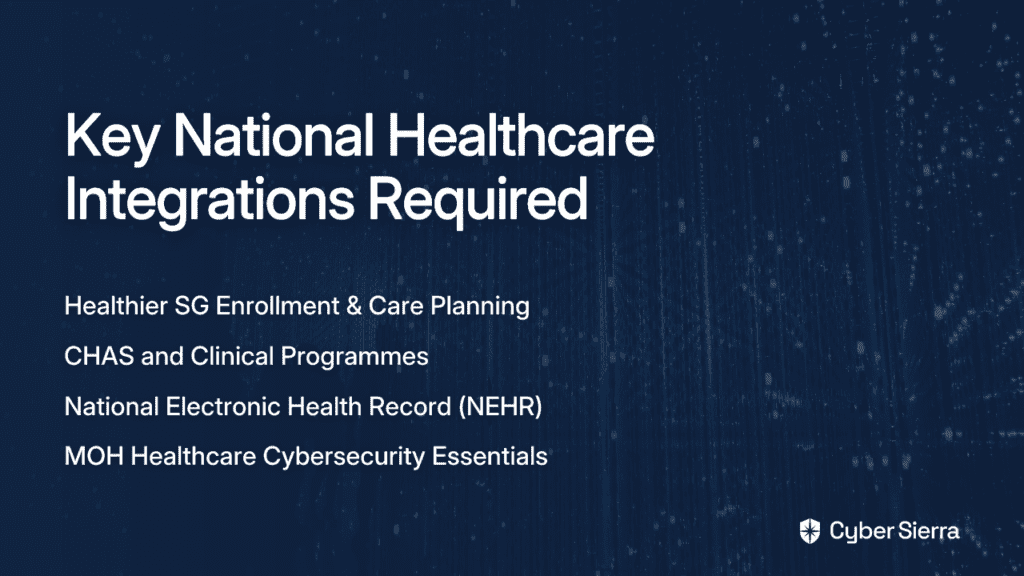
Under the framework, CMS providers must integrate with several key national healthcare initiatives:
Healthier SG Integration
The Healthier SG program sits at the center of this framework, aiming to shift from acute hospital-centric care to preventive community care. For clinics, this means your CMS must seamlessly connect with:
Enrollment Services: Allowing patients to register with your clinic as their primary care provider
Health Planning: Supporting the creation and management of personalized health plans
Care Reporting: Enabling the reporting of care outcomes back to the national system
As one doctor commented in an online forum: "The current lack of integration between healthcare clusters results in frustrating inefficiencies. Having different clusters is fine if the systems can talk to each other."
The CMS framework directly addresses this pain point by mandating interoperability between your clinic systems and the national healthcare infrastructure.
CHAS and Clinical Programmes
Your CMS must also integrate with:
Community Health Assistance Scheme (CHAS): Supporting subsidized care for eligible Singaporeans
Clinical Programmes: Including initiatives like the Diabetes Eye Screening Optimisation Programme (DESOM), National Immunisation Registry (NIR), and Chronic Disease Management System (CDMS)
These integrations eliminate the need for duplicate data entry—a common frustration expressed by healthcare professionals who are "tired of repeatedly entering lab reports and results manually."
National Electronic Health Record (NEHR) Contribution
Perhaps most significantly, your CMS must contribute to the National Electronic Health Record system. This requirement ensures that authorized healthcare providers across Singapore can access relevant patient information, creating a more cohesive patient journey.
Cybersecurity Compliance: Protecting Patient Data
With increasing digitalization comes increased cybersecurity risks. The framework requires adherence to MOH Healthcare Cybersecurity Essentials (HCSE) guidelines, ensuring that patient data remains secure across all integrated systems.
This requirement addresses growing concerns about data security in healthcare. By implementing robust cybersecurity measures, clinics can protect sensitive patient information while building trust with their patients.
Data Portability: Freedom to Choose
One of the most significant aspects of the framework is the Code of Practice on CMS data portability. This provision ensures that clinics aren't locked into a single vendor—your patient data belongs to your practice, not your CMS provider.
This addresses a key frustration expressed by many clinic owners: "Finding a fitting clinic management system is challenging, especially one that meets diverse practice needs." With data portability requirements, you can switch systems if your needs change, without losing your valuable historical patient data.
The SmartCMS Programme: Supporting Your Transition
To support CMS providers in meeting these new requirements, Singapore has introduced the SmartCMS programme. This initiative invites CMS providers to enhance their systems for better integration with public healthcare systems.
Key aspects of SmartCMS include:
No Subscription Fees: Participating vendors incur no costs to utilize SmartCMS services
Smart Services: Digital tools that streamline clinic operations and reduce administrative burdens
Support for Claims Submission: Facilitating submissions under government schemes like CHAS
Benefits of the CMS Tiering Framework
The framework offers numerous benefits for clinics of all sizes:
1. Improved Operational Efficiency
By integrating with national systems, your clinic can:
Reduce duplicate data entry
Streamline appointment scheduling
Automate claims processing
Manage patient records more efficiently
As one healthcare professional noted: "The inconvenience of dealing with lab results from various sources is a major challenge." The framework's integration requirements directly address this pain point by creating standardized data flows.
2. Enhanced Patient Care
With better data integration comes improved patient care:
Comprehensive view of patient health history
Reduced risk of medication errors
More coordinated care across different healthcare providers
Support for preventive care initiatives
3. Cost Savings
While implementing compliant systems may require initial investment, the long-term benefits include:
Reduced administrative overhead
Fewer errors requiring correction
Streamlined claims processing
Potential for better resource allocation
4. Future-Proofing Your Practice
By adopting CMS solutions that meet the framework's requirements, your clinic is positioned to adapt to future healthcare initiatives and technological advancements.
How Cybersecurity Fits Into the Picture
The cybersecurity component of the CMS Tiering Framework deserves special attention. Healthcare organizations are increasingly targeted by cyber threats, with patient data being particularly valuable to malicious actors.
This is where solutions like Cyber Sierra's AI-enabled cybersecurity platform can play a valuable role. While not specifically designed for the CMS Tiering Framework, Cyber Sierra's approach to simplifying and automating security compliance aligns perfectly with the framework's cybersecurity requirements.
Cyber Sierra's Continuous Control Monitoring (CCM) module is particularly relevant, as it:
Provides ongoing visibility into security controls
Centralizes control repositories
Offers actionable risk intelligence
Helps manage multiple compliance frameworks, including those relevant to healthcare
For clinic administrators concerned about meeting the MOH Healthcare Cybersecurity Essentials guidelines, such tools can significantly reduce the complexity and manual effort involved in maintaining compliance.
Preparing Your Clinic for the Framework
As the April 2025 implementation date approaches, here are key steps to prepare your clinic:
Assess Your Current CMS: Determine how well your existing system aligns with the framework requirements
Engage with Your CMS Provider: Ask about their roadmap for compliance with the framework
Review Cybersecurity Measures: Ensure your clinic meets the HCSE guidelines
Plan for Data Migration: If you need to switch systems, start planning for data portability
Train Your Staff: Prepare your team for any changes to workflows or systems
Looking Beyond Compliance
While compliance with the framework is important, forward-thinking clinics should look beyond mere compliance to see how these integrations can transform patient care and practice management.
The framework creates opportunities to:
Develop more personalized care approaches through better data integration
Reduce administrative burden, allowing more focus on patient care
Participate more effectively in national health initiatives
Build stronger relationships with patients through enhanced communication tools
Conclusion
The Singapore CMS Tiering Framework represents a significant step toward a more integrated, efficient healthcare ecosystem. By addressing key pain points like manual data entry, lack of interoperability, and cybersecurity concerns, the framework lays the groundwork for a healthcare system that better serves both providers and patients.
For clinic owners and administrators, the framework presents both challenges and opportunities. Those who embrace the changes and work proactively with their CMS providers to ensure compliance will find themselves well-positioned in Singapore's evolving healthcare landscape.
By understanding and preparing for these requirements today, your clinic can not only meet the regulatory standards but leverage them to enhance patient care, improve operational efficiency, and thrive in an increasingly digital healthcare environment.
Join thousands of professionals and get the latest insight on Compliance & Cybersecurity.
Thank you for subscribing us!
Please check your email to confirm your email address.
Share via
Financial services organizations in New York are facing a critical compliance deadline with the updated New York Department of Financial Services (NYDFS) Cybersecurity Regulation. As CISOs, compliance managers, and risk professionals scramble to prepare, many are discovering gaps in their cybersecurity controls that could lead to regulatory penalties, reputational damage, and increased security risks.
The question isn't just whether your organization will comply—it's whether your cybersecurity program is robust enough to meet these evolving requirements while effectively protecting sensitive financial data from increasingly sophisticated threats.
The Evolving NYDFS Cybersecurity Landscape
The NYDFS Cybersecurity Regulation (23 NYCRR Part 500) was initially enacted on March 1, 2017, to strengthen the cybersecurity posture of financial institutions operating in New York State. Since then, cyber threats have grown more sophisticated, prompting regulators to update the requirements.
Key Updates Effective November 1, 2023
The latest amendments introduce enhanced security standards that significantly raise the bar for cybersecurity preparedness among covered entities. Some of the most notable changes include:
Strengthened governance requirements with increased accountability for senior executives and boards
Enhanced technical safeguards including more robust access controls, encryption standards, and vulnerability management
Extended incident response obligations with broader notification requirements and shorter timelines
Specialized requirements for Class A Companies (organizations with over $20 million in gross annual revenue from New York operations or more than 2,000 employees)
Critical Compliance Deadlines Approaching
Financial institutions must be aware of three critical deadlines:
April 15, 2025: Submission of first annual certification of material compliance (or acknowledgment of non-compliance)
May 1, 2025: Implementation of enhanced cybersecurity measures including vulnerability management and strict access controls
November 1, 2025: Mandatory implementation of multi-factor authentication for all privileged access to systems
As Sarah Chen, a CISO at a mid-sized fintech company, noted during a recent industry roundtable: "The updated NYDFS requirements aren't just another compliance checkbox—they represent a fundamental shift in how regulators expect financial institutions to approach cybersecurity governance and risk management."
Essential Components for NYDFS Compliance
To meet the updated regulatory requirements, organizations must focus on several core components:
1. Comprehensive Risk Assessment
The foundation of NYDFS compliance is a thorough risk assessment that identifies, evaluates, and prioritizes cybersecurity risks specific to your organization. The regulation requires:
Regular, documented risk assessments utilizing frameworks like NIST CSF or ISO 27001
Updates after material changes to the business or IT environment
Evaluation of threats to specific information systems and nonpublic information
"One of the biggest challenges we face is translating technical risk findings into language that resonates with leadership," explains David Lee, IT Compliance Manager at a regional financial services company. "Without effective communication in 'MBA-speak' rather than 'CISO-speak,' it's difficult to secure the necessary resources for compliance initiatives."
2. Robust Cybersecurity Program
NYDFS requires a comprehensive, risk-based cybersecurity program that includes:
Written policies and procedures approved by a senior officer or board
Incident response plans with clear procedures for responding to and recovering from cybersecurity events
Vulnerability management including regular penetration testing and vulnerability assessments
Access controls and authentication with strict management of user privileges and multi-factor authentication
Data protection through encryption and other controls to protect nonpublic information
3. Effective Governance and Oversight
The regulation places significant emphasis on cybersecurity governance:
Designation of a Chief Information Security Officer (CISO) responsible for overseeing and implementing the cybersecurity program
Regular reporting to the board of directors or equivalent governing body
Annual certification of compliance signed by the board or a senior officer
Clear cybersecurity roles and responsibilities throughout the organization
4. Third-Party Risk Management
Given the complex network of vendors and service providers that financial institutions rely on, the NYDFS regulation requires:
Robust vendor risk assessment processes
Minimum cybersecurity practices for third-party service providers
Periodic assessment of third-party risks
Documentation of third-party security practices
Ben Carter, Third-Party Risk Manager at a large financial institution, highlights a common challenge: "We're drowning in vendor questionnaires and assessments. The key is focusing on the risks that matter most to your organization rather than asking every possible question, which only wastes time and frustrates vendors."
Common Compliance Challenges
Organizations face several obstacles when preparing for NYDFS compliance:
1. Manual Evidence Collection
Many financial institutions still rely on manual processes to gather evidence of control effectiveness, leading to inefficiencies and potential gaps.
"I spend weeks manually gathering screenshots, pulling logs from different systems, and trying to prove our controls are working as intended," notes Priya Sharma, Senior Security Analyst at a New York-based bank. "It's tedious, error-prone, and takes time away from actual security improvements."
2. Leadership Buy-In
Securing adequate resources and support from leadership can be a significant hurdle.
"If it's cheaper to accept the risk than to mitigate it, leadership will often choose the cheaper option," explains Michael Rodriguez, IT Manager at a growing fintech startup. "The challenge is quantifying the potential costs of non-compliance and security breaches in terms that resonate with executives."
3. Documentation Gaps
Many organizations struggle with comprehensive documentation, often relying on tribal knowledge rather than formal processes.
Kenichi Tanaka, Internal Audit Manager at a mid-sized financial institution, observes: "Not everything is documented, and there's heavy reliance on tribal knowledge. This creates significant challenges during audits when we need to demonstrate compliance with specific controls."
4. Fragmented Technology Landscape
Financial institutions often use numerous security tools that don't communicate with each other, creating visibility gaps and complicating compliance efforts.
"We have separate systems for vulnerability management, access control, endpoint protection, and cloud security," says Sarah Chen. "Correlating information across these platforms to demonstrate continuous control effectiveness is extremely challenging without automation."
Strategies for Successful NYDFS Compliance
To address these challenges and ensure readiness for the NYDFS deadlines, consider the following strategies:
1. Implement Continuous Control Monitoring (CCM)
Rather than point-in-time assessments, organizations should establish continuous monitoring of security controls to ensure ongoing compliance and early detection of issues.
Effective CCM includes:
Automated testing of controls against defined policies
Real-time alerts for control failures or deviations
Integration with existing security tools
Mapping controls to specific regulatory requirements
"Baselining infrastructure and addressing security debt should begin 8-12 months before major audits to avoid the last-minute scramble," recommends Priya. "Continuous monitoring helps identify issues before they become compliance violations."
2. Adopt a Framework-Based Approach
Leverage established frameworks like NIST CSF, ISO 27001, or CIS Controls to build a solid foundation for NYDFS compliance.
"Start by identifying a framework and work to achieve it," suggests David Lee. "Then implement robust change management processes to maintain compliance over time."
The benefits of a framework-based approach include:
Structured methodology for implementing controls
Clear mapping between framework controls and regulatory requirements
Ability to leverage existing compliance efforts for multiple regulations
More efficient resource allocation
3. Automate Evidence Collection and Reporting
Automation is crucial for efficient compliance management and can significantly reduce the manual burden on security teams.
"We used to spend days manually collecting evidence for audits," notes Michael Rodriguez. "Implementing automated evidence collection has freed up our team to focus on addressing actual security risks rather than documentation."
Key automation opportunities include:
Automated evidence collection from security tools and cloud platforms
Centralized compliance dashboards with real-time status updates
Workflow automation for control testing and remediation
Automated report generation for executive leadership and regulators
Platforms like Cybersierra's Continuous Control Monitoring module can provide this automation, offering ongoing visibility into security controls and centralizing evidence in a single repository. This approach transforms security from periodic point-in-time checks to continuous, automated monitoring, providing a single source of truth for control effectiveness and enabling proactive risk management.
4. Streamline Third-Party Risk Management
Given the NYDFS focus on vendor security, organizations should optimize their third-party risk management processes.
Ben Carter recommends: "Develop clear, concise questionnaires focusing on essential controls rather than asking hundreds of questions that overwhelm vendors and your team. Prioritize vendors based on the sensitivity of data they handle and their integration with your critical systems."
Effective third-party risk management includes:
Risk-based vendor tiering and assessment frequency
Automated questionnaire distribution and tracking
Continuous monitoring of vendor security posture
Integration with broader compliance and risk management processes
Solutions like Cybersierra's Third-Party Risk Management platform can help simplify vendor risk assessment by automating the questionnaire process and providing continuous visibility into vendor security compliance, significantly reducing manual effort while improving risk insights.
5. Speak the Language of Business
To secure leadership support for compliance initiatives, security and compliance professionals must translate technical requirements into business terms.
"You need to use MBA-speak, not CISO-speak," advises Anjali Kumar, Data Protection Officer at a financial services company. "Quantify the risks in financial terms, highlight potential regulatory penalties, and demonstrate how compliance investments can support business objectives like customer trust and competitive advantage."
Effective communication strategies include:
Quantifying cybersecurity risks in financial terms
Highlighting regulatory penalties and business impacts of non-compliance
Demonstrating how compliance efforts support business growth and customer trust
Presenting clear metrics and progress indicators
6. Build a Culture of Compliance
Successful NYDFS compliance requires more than just technology—it demands an organizational culture that values security and compliance.
"People and process are the major hurdles, not tools," observes Kenichi Tanaka. "Creating a culture where compliance is everyone's responsibility, not just the security team's, is essential for long-term success."
Key elements of a compliance culture include:
Regular security awareness training for all employees
Clear communication of compliance requirements and their importance
Recognition of departments that demonstrate strong compliance practices
Integration of security and compliance considerations into business decisions
Specific Requirements for Class A Companies
Organizations qualifying as Class A Companies under the NYDFS regulation face additional requirements that warrant special attention:
Independent Audit of Cybersecurity Programs: Annual evaluation by qualified external auditors
Advanced Endpoint Detection and Response: Implementation of EDR solutions across all systems
Privileged Access Management: Enhanced controls for privileged accounts
Password Vaulting: Secure storage and management of privileged credentials
Automated Vulnerability Scanning: Regular automated scanning of information systems
"For Class A Companies, compliance requires a significantly more mature cybersecurity program," notes Sarah Chen. "The investment in advanced technologies like EDR and privileged access management is substantial but necessary given the heightened regulatory expectations."
How Technology Can Support NYDFS Compliance
Modern technology solutions can significantly streamline compliance efforts while improving security posture. Key capabilities to look for include:
1. Centralized GRC Platform
A comprehensive Governance, Risk, and Compliance (GRC) platform can provide a unified view of your compliance status across multiple frameworks.
Essential features include:
Policy management and distribution
Risk assessment and tracking
Control mapping across multiple frameworks
Automated evidence collection
Compliance reporting and dashboards
Cybersierra's GRC module, for instance, automates data collection and risk assessments while managing multiple compliance frameworks simultaneously, making organizations audit-ready while reducing manual effort.
2. Integrated Security Controls
Rather than managing security tools in silos, look for solutions that integrate across your technology stack to provide a comprehensive view of your security posture.
"We've integrated our SIEM, vulnerability management, and cloud security platforms to provide a holistic view of our security controls," explains Priya Sharma. "This integration is essential for demonstrating continuous compliance with NYDFS requirements."
3. Automated Vulnerability Management
Given the NYDFS focus on vulnerability management, automated scanning and remediation tracking is crucial.
Key capabilities should include:
Regular automated vulnerability scanning
Risk-based prioritization of vulnerabilities
Integration with patch management workflows
Detailed reporting for compliance documentation
4. Real-time Monitoring and Alerting
To meet the continuous monitoring expectations of NYDFS, implement solutions that provide real-time visibility into control effectiveness.
"Real-time monitoring has transformed our approach to compliance," notes David Lee. "Instead of point-in-time assessments, we now have continuous visibility into our control effectiveness and can address issues before they become compliance violations."
The Road to NYDFS Compliance: A Practical Timeline
With key deadlines approaching in 2025, organizations should follow this practical timeline to ensure readiness:
Immediate Actions (Next 3 Months)
Assess current compliance status against updated NYDFS requirements
Identify gaps and develop a remediation roadmap
Begin documenting policies and procedures
Establish a governance structure with clear roles and responsibilities
Medium-Term Priorities (3-9 Months)
Implement technical controls required by the regulation
Develop and test incident response procedures
Establish vendor risk management processes
Begin automation of evidence collection and control testing
Long-Term Preparation (9-18 Months)
Conduct tabletop exercises and penetration tests
Refine and mature continuous monitoring capabilities
Prepare certification documentation
Conduct pre-assessment audits to identify any remaining gaps
"Start early and focus on continuous improvements rather than a last-minute sprint to compliance," advises Kenichi Tanaka. "The organizations that struggle most are those that treat compliance as a periodic project rather than an ongoing program."
Conclusion
The updated NYDFS Cybersecurity Regulation represents a significant evolution in regulatory expectations for financial institutions. Meeting these requirements demands a comprehensive approach that combines robust governance, effective risk management, and modern technology solutions.
By implementing continuous control monitoring, automating evidence collection, streamlining third-party risk management, and building a culture of compliance, organizations can not only meet regulatory requirements but also significantly enhance their cybersecurity posture.
Remember that compliance is not just about checking boxes—it's about implementing meaningful security controls that protect sensitive financial data and maintain customer trust. The investment in compliance today will pay dividends in reduced risk, operational efficiency, and competitive advantage tomorrow.
As you prepare for the 2025 deadlines, consider how integrated platforms like Cybersierra can help automate and streamline your compliance efforts, transforming what could be a burdensome regulatory exercise into an opportunity to strengthen your organization's security foundation.
Join thousands of professionals and get the latest insight on Compliance & Cybersecurity.
Thank you for subscribing us!
Please check your email to confirm your email address.
Share via
You've been tasked with assessing your organization's cybersecurity posture against the NIST Cybersecurity Framework (CSF), but you're not sure where to start. Perhaps you're thinking, "Is this framework even relevant for my non-government organization?" or "How do I translate these complex guidelines into actionable insights?"
Many security professionals feel overwhelmed when approaching a NIST CSF maturity assessment. The framework itself is comprehensive but implementing it effectively requires structured guidance that can be difficult to find. As one frustrated security professional put it, "unfortunately you're right about there being a lack of comprehensive resources."
This guide will walk you through conducting a NIST CSF maturity assessment step-by-step, helping you translate theoretical concepts into practical actions that strengthen your organization's security posture.
Understanding the NIST Cybersecurity Framework
Before diving into assessment methodology, let's establish a clear understanding of what the NIST CSF entails.
The NIST Cybersecurity Framework consists of three main components:
Core: The framework's fundamental elements, organized into Functions, Categories, and Subcategories
Implementation Tiers: Provides context on how an organization views cybersecurity risk
Profiles: Represents the outcomes based on business needs selected from the Framework categories and subcategories
The Five Core Functions
The NIST CSF Core is organized around five key functions that form the backbone of your assessment:
Identify: Develop organizational understanding to manage cybersecurity risk to systems, assets, data, and capabilities
Protect: Develop and implement appropriate safeguards to ensure delivery of critical infrastructure services
Detect: Develop and implement appropriate activities to identify the occurrence of a cybersecurity event
Respond: Develop and implement appropriate activities to take action regarding a detected cybersecurity event
Recover: Develop and implement appropriate activities to maintain plans for resilience and to restore capabilities or services impaired due to a cybersecurity event
Understanding Maturity Levels
NIST CSF maturity is typically assessed across four distinct levels:
Level 1 (Partial): Cybersecurity practices are ad hoc, reactive, and not formalized. Risk management is performed irregularly.
Level 2 (Risk-Informed): Risk management practices are approved but may not be established as organizational-wide policy.
Level 3 (Repeatable): Risk management practices are formally approved and expressed as policy with consistent implementation.
Level 4 (Adaptive): Cybersecurity practices adapt based on lessons learned and predictive indicators, with continuous improvement embedded in the culture.
Understanding these levels is crucial as they provide the framework against which you'll measure your organization's current posture and set targets for improvement.
Steps for Conducting a NIST CSF Maturity Assessment
Now that you understand the framework's structure, let's walk through the process of conducting a maturity assessment:
1. Define Objectives and Scope
Begin by clearly articulating what you aim to achieve with the assessment:
Are you preparing for compliance requirements?
Do you need to identify security gaps for remediation?
Are you establishing a baseline for continuous improvement?
Define the scope of systems, departments, and processes to be included in your assessment. A well-defined scope prevents the assessment from becoming unwieldy while ensuring critical areas aren't overlooked.
2. Assemble a Diverse Assessment Team
A comprehensive assessment requires input from various stakeholders:
IT and security professionals
Business unit representatives
Compliance officers
Executive sponsors
This diversity ensures multiple perspectives are considered and increases the likelihood of organizational buy-in. As one practitioner noted, "Many of the controls will require management support and additional resources so it is important to gather their input to develop a roadmap for implementation."
3. Gather Current Documentation
Collect relevant documentation about your existing security practices:
Security policies and procedures
Risk assessments
Incident response plans
Business continuity plans
Previous audit reports
Network diagrams and asset inventories
These documents provide evidence of your current practices and help establish your baseline maturity level.
4. Create an Organizational Profile
Developing an organizational profile is a crucial step recommended by NIST. As one security professional emphasized, "NIST recommends developing an organizational profile and then using that to analyze the gaps and then developing a plan of action to close the gaps."
Your organizational profile should:
Document your current cybersecurity posture
Define your target state based on business requirements and risk tolerance
Identify applicable regulations and standards
5. Conduct the Assessment
For each category and subcategory within the NIST CSF:
Evaluate your current implementation against the maturity levels
Document evidence supporting your assessment
Note any gaps or areas for improvement
Pro Tip: Use a structured assessment template to maintain consistency and track progress. The NIST CSF 2.0 Maturity Assessment Template is an excellent resource that provides a comprehensive framework for your assessment.
Many security professionals customize these templates by "adding columns for Interpretation Notes, Control Status, Finding Notes, etc." to make them more useful for their specific organizational needs.
6. Analyze Gaps and Prioritize Actions
After completing your assessment:
Identify gaps between your current and target maturity levels
Prioritize gaps based on:
Risk to the organization
Regulatory requirements
Resource availability
Implementation complexity
Develop remediation strategies for each gap
7. Create an Action Plan
Transform your gap analysis into a comprehensive action plan that includes:
Specific actions required to address each gap
Responsible parties for implementation
Timeline for completion
Resources required
Metrics to measure success
This action plan should be presented to leadership to secure necessary resources and support.
8. Implement and Monitor
Execute your action plan and track progress regularly:
Establish regular check-ins to monitor implementation progress
Document completed actions and their effectiveness
Adjust the plan as needed based on challenges encountered
Communicate successes and challenges to stakeholders
9. Reassess Periodically
Cybersecurity is not a one-time effort but a continuous process. Plan to:
Conduct formal reassessments annually
Perform targeted assessments when significant changes occur
Update your organizational profile as your security program matures
Addressing Common Assessment Challenges
Dealing with Subjectivity
One concern frequently expressed by security professionals is the subjective nature of maturity assessments. As one practitioner worried, "My main worry is that for some reason this feels like it's subjective, the final score depends on the person performing the assessment and how they interpret the degree of implementation of security controls."
To minimize subjectivity:
Establish clear assessment criteria before beginning
Use documented evidence rather than opinions to support maturity ratings
Involve multiple assessors and seek consensus
Consider using external assessors for an unbiased perspective
Securing Management Support
Without leadership support, your assessment may not lead to meaningful improvements. To gain executive buy-in:
Connect cybersecurity improvements to business objectives
Quantify risks in business terms (potential financial impact, reputational damage)
Present a clear return on investment for security initiatives
Highlight regulatory requirements and compliance implications
Resource Limitations
Many organizations struggle with limited resources for cybersecurity. To address this:
Prioritize high-risk areas for immediate attention
Implement low-cost, high-impact controls first
Consider managed security services for specialized functions
Leverage automation where possible to maximize efficiency
Tools and Resources to Support Your Assessment
Several tools can streamline your NIST CSF maturity assessment:
How Cyber Sierra Can Support Your NIST CSF Maturity Assessment
While conducting a NIST CSF maturity assessment requires careful planning and execution, technology solutions can significantly streamline the process. Cyber Sierra's platform offers several capabilities that align perfectly with the challenges organizations face during NIST CSF assessments:
Continuous Control Monitoring
Cyber Sierra's Continuous Control Monitoring (CCM) module directly addresses one of the biggest pain points in NIST CSF assessments: gathering evidence and maintaining visibility into control effectiveness. The platform:
Builds a central controls repository that maps directly to NIST CSF requirements
Provides near real-time updates on control performance
Automates control testing and validation, reducing the subjectivity concern many practitioners express about maturity assessments
This automation transforms security from periodic, manual checks to continuous monitoring, giving you confidence in your maturity ratings based on actual data rather than point-in-time assessments.
Simplified Framework Management
Managing multiple compliance frameworks can be overwhelming. Cyber Sierra helps by:
Managing controls across multiple compliance frameworks simultaneously (NIST CSF, ISO 27001, PCI DSS, etc.)
Providing a unified view of your security posture
Detecting exceptions and anomalies that could affect your maturity level
Streamlined Governance, Risk & Compliance
The GRC module within Cyber Sierra directly supports your NIST CSF maturity assessment by:
Automating data collection for evidence gathering
Generating comprehensive reports that can be used to demonstrate compliance
Maintaining detailed audit trails that support your maturity level claims
Conclusion: Moving Beyond Assessment to Continuous Improvement
Conducting a NIST CSF maturity assessment is not merely a compliance exercise—it's a strategic process that helps your organization understand its cybersecurity strengths and weaknesses while providing a roadmap for improvement.
By following the structured approach outlined in this guide, you can:
Gain clarity on your current cybersecurity posture
Identify specific gaps requiring attention
Prioritize security investments based on risk and business impact
Demonstrate due diligence to stakeholders and regulators
Establish a foundation for continuous security improvement
Remember that cybersecurity maturity is a journey, not a destination. The goal isn't to achieve perfect scores across all categories but to continuously improve your security posture in alignment with your business objectives and risk tolerance.
As you embark on your NIST CSF maturity assessment, keep these key principles in mind:
Be honest in your self-assessment—identifying weaknesses is the first step toward addressing them
Document everything—evidence is crucial for defending your maturity ratings
Prioritize improvements based on risk, not just ease of implementation
Communicate progress to maintain stakeholder support
Reassess regularly as threats and your business environment evolve
With a methodical approach and the right supporting tools, your NIST CSF maturity assessment can transform from a daunting compliance task into a valuable driver of your cybersecurity program's continuous improvement.
Additional Resources
For further guidance on conducting NIST CSF maturity assessments:
Join thousands of professionals and get the latest insight on Compliance & Cybersecurity.
Thank you for subscribing us!
Please check your email to confirm your email address.
Share via
In an increasingly digital landscape, organizations face growing cybersecurity challenges as they adopt new technologies and expand their digital footprint. Singapore's Cyber Security Agency (CSA) has responded to these evolving threats by updating its Cyber Essentials mark certification for 2025, creating a more comprehensive framework that addresses modern security challenges.
Introduction to Cyber Essentials 2025
The digital landscape is evolving at an unprecedented rate, offering vast opportunities while simultaneously increasing organizational exposure to cyber risks. Cybersecurity incidents can impact finances, damage reputation, and potentially shake consumer trust. These effects may influence business investments and overall confidence in the digital economy.
The Enhanced Cyber Essentials 2025 certification aims to strengthen the cybersecurity posture of organizations in Singapore, helping them manage cyber risks effectively. Designed especially for resource-constrained organizations with limited cybersecurity expertise, this certification provides a structured approach to implementing essential security measures.
As CSA states in the certification document: "Building organisations' confidence in managing cyber risks is essential to enable them to harness the opportunities presented by digitalisation."
Key Features of the Enhanced Framework
The 2025 edition represents a significant evolution from previous versions, expanding beyond classical IT security to include:
Broader Technology Coverage: The framework now encompasses cloud security, operational technology (OT) security, and artificial intelligence (AI) security alongside traditional IT security.
Tiered Approach: The certification adopts a tiered structure to address diverse business profiles and needs:
The Cyber Essentials mark focuses on baseline controls to protect against common cyberattacks
The Cyber Trust mark emphasizes a risk-based approach for organizations with higher risk profiles
Pareto Principle Application: Following the 80/20 rule, the certification helps organizations prioritize essential cybersecurity measures that provide the most significant protection with minimal resources.
Structured Security Categories: Security measures are organized into five comprehensive categories:
Let's explore each category in detail to understand the core requirements for Cyber Essentials certification:
1. Assets: Know What You Have and Who Uses It
People
The framework recognizes employees as both the first line of defense and potentially the weakest link in the security chain. Organizations must:
Establish cybersecurity awareness training for all employees
Develop cyber hygiene practices and guidelines for daily operations
Tailor training content based on employee roles (senior management, regular employees, data handlers)
Conduct annual refreshers to maintain awareness
For organizations using cloud services, OT systems, or AI tools, additional training requirements address the specific risks associated with these technologies, such as shared responsibility in the cloud and governance of business-critical data when using AI tools.
Hardware and Software
Organizations must maintain comprehensive inventories of all hardware and software assets, including:
Detailed documentation of hardware assets (name, location, owner, classification)
Authorization processes for new hardware and software
Secure disposal procedures for hardware containing sensitive information
Policies for managing end-of-support (EOS) assets
The framework specifically requires documentation of cloud-based assets, OT assets, and AI tools or services to prevent "shadow AI" within the organization.
Data
Data protection requirements include:
Identifying and maintaining an inventory of business-critical data
Establishing processes to protect sensitive information
Implementing measures to prevent data leakage
Ensuring secure destruction of physical media containing confidential data
For organizations using AI tools, additional requirements address data used as input or generated as output from AI services to mitigate risks of data leakage or manipulation.
Organizations must implement comprehensive protection measures:
Install virus and malware protection solutions on endpoints
Configure automatic scanning of files upon access
Enable automatic updates for malware signatures
Deploy firewalls to protect networks, systems, and endpoints
Review firewall configurations annually
For OT environments, special considerations include implementing protection at entry points and using network-based solutions or application whitelisting as compensating controls.
Access Control
Access management requirements include:
Establishing account management processes
Maintaining inventory lists of all user accounts
Implementing approval processes for granting and revoking access
Ensuring employees can access only information required for their job roles
Managing third-party access with appropriate restrictions
Implementing physical access controls
The framework also requires multi-factor authentication (MFA) for administrative access to important systems and databases containing sensitive data.
Secure Configuration
Organizations must:
Enforce security configurations for all assets
Replace insecure configurations and weak protocols
Disable unused features, services, or applications
Enable logging for audit purposes
Implement automatic session timeouts
3. Update: Keep Software Current
Software updates are critical for addressing security vulnerabilities. Organizations must:
Prioritize implementation of critical updates for operating systems and applications
Consider conducting compatibility tests before installation
Enable automatic updates where feasible
Apply special considerations for mobile and IoT devices
For OT environments, organizations must assess the applicability, exposure, and severity of vulnerabilities, as well as the potential impact on operations and safety before implementing updates. Compensating controls should be implemented if patching is not feasible.
4. Backup: Protect Essential Data
Data backup requirements include:
Identifying and backing up business-critical data and systems
Performing backups regularly based on business requirements
Protecting backups from unauthorized access
Storing backups separately and isolated from the operating environment
Testing backups at least bi-annually to ensure effective restoration
For cloud services, organizations must ensure their business-critical data in the cloud is backed up separately, such as in on-premises storage or using alternative cloud service providers.
5. Respond: Be Ready for Incidents
Organizations must establish an incident response plan that includes:
Clear roles and responsibilities for key personnel
Procedures for detecting, responding to, and recovering from common cybersecurity threats
A communication plan for reporting incidents to stakeholders
Regular reviews and updates of the response plan
For organizations using cloud services, OT systems, or AI tools, the incident response plan must include scenarios specific to these technologies.
Certification Process and Requirements
Scope of Certification
Organizations must clearly define the boundary of scope for certification, which can encompass:
The entire organization's IT/OT infrastructure, or
A specific business unit, process, or location
The scope should include critical components for the organization's core business and must be documented with:
Organization chart
System and network diagram
Inventory listings
Self-assessment results
Certification Statement
The scope statement must include at least one of these cybersecurity pillars:
Classical cybersecurity
Cloud security
OT security
AI security
Assessment and Certification Process
Self-Assessment: Organizations must complete a guided self-assessment template before engaging a certification body.
Independent Assessment: A certification body appointed by CSA will evaluate the organization's application, inspecting documents and artifacts to verify implementation of required measures.
Certification: Upon successful assessment, the Cyber Essentials mark certification remains valid for two years.
After this period, organizations can reapply or consider seeking the higher-tier Cyber Trust mark certification if their risk profile has changed.
Key Benefits of Cyber Essentials 2025 Certification
Implementing the Enhanced Cyber Essentials 2025 framework offers several significant benefits for organizations:
1. Structured Approach to Cybersecurity
The framework provides a clear roadmap for implementing essential security measures, making cybersecurity more accessible for resource-constrained organizations. By following the Pareto principle, it helps organizations focus on the 20% of security controls that address 80% of common threats.
2. Risk Reduction
By implementing baseline security measures across all five categories, organizations can significantly reduce their exposure to common cyberattacks. The framework's comprehensive approach ensures protection of critical assets, secure configurations, regular updates, reliable backups, and effective incident response.
3. Business Continuity Enhancement
The backup and incident response requirements help organizations maintain business continuity in the event of a cybersecurity incident. By having tested backups and clear response procedures, organizations can recover more quickly and minimize operational disruptions.
4. Compliance and Trust
The certification demonstrates an organization's commitment to cybersecurity, potentially:
Enhancing trust among clients, partners, and stakeholders
Providing a competitive advantage in tender processes
Possibly reducing cyber insurance premiums through demonstrated security practices
5. Adaptability to Technological Changes
The inclusion of cloud, OT, and AI security makes the framework future-ready, helping organizations address emerging risks as they adopt new technologies. This adaptability ensures the certification remains relevant as organizations undergo digital transformation.
Implementation Challenges and Solutions
While the benefits are clear, organizations may face challenges implementing the Cyber Essentials requirements:
1. Resource Constraints
Challenge: Limited IT staff and budget for implementing security measures.
Solution: The framework is specifically designed for resource-constrained organizations, focusing on essential measures with the highest impact. Organizations can implement requirements incrementally, starting with the most critical areas.
2. Technical Complexity
Challenge: Limited technical expertise to implement security measures, especially for emerging technologies like cloud and AI.
Utilize automated security tools that simplify implementation
Consider platforms like Cyber Sierra's Continuous Control Monitoring that can help track compliance with frameworks like Cyber Essentials
3. Legacy Systems
Challenge: Older systems that cannot support modern security requirements, particularly in OT environments.
Solution: The framework acknowledges these limitations and allows for compensating controls when direct implementation isn't possible, such as network segmentation or physical access controls for OT systems that cannot support modern authentication methods.
4. Maintaining Compliance
Challenge: Ensuring continued adherence to requirements after certification.
Solution:
Integrate security practices into day-to-day operations
Implement continuous monitoring of security controls
Conduct regular internal reviews
Consider automated compliance monitoring tools that provide ongoing visibility into security posture
Practical Implementation Tips
To successfully implement the Cyber Essentials 2025 requirements, organizations should consider the following practical approaches:
1. Start with a Gap Analysis
Begin by conducting a thorough self-assessment using the official self-assessment template to identify gaps between current practices and certification requirements. This will help prioritize implementation efforts.
2. Implement a Phased Approach
Rather than attempting to implement all requirements simultaneously, develop a phased implementation plan:
Phase 1: Focus on asset inventory and critical security controls
Phase 2: Implement secure configurations and access controls
Phase 3: Establish backup and update procedures
Phase 4: Develop incident response capabilities
3. Leverage Automation
Implementing and maintaining cybersecurity controls manually can be resource-intensive. Consider leveraging automation tools to streamline implementation:
Security Control Automation: Platforms like Cyber Sierra's Continuous Control Monitoring (CCM) can help automate control testing and validation, providing near real-time visibility into your security posture.
Asset Management Tools: Automated asset discovery and management tools can help maintain accurate inventories of hardware, software, and data assets.
Patch Management Systems: Automated patch management solutions can streamline the process of identifying and deploying critical updates.
4. Address People and Processes
Remember that cybersecurity is not just about technology – people and processes are equally important:
Develop clear security policies and procedures
Implement regular security awareness training for all employees
Establish clear roles and responsibilities for security tasks
Create a culture of security consciousness
5. Document Everything
Thorough documentation is crucial for both implementation and certification:
Document all security policies and procedures
Maintain detailed asset inventories
Record all security incidents and responses
Keep evidence of control implementation for certification assessment
Looking Beyond Certification
While achieving Cyber Essentials certification is valuable, organizations should view it as a starting point rather than an end goal. Consider these approaches for continuous improvement:
1. Continuous Monitoring
Implement continuous monitoring of security controls to ensure ongoing compliance and quickly identify potential issues. Solutions like Cyber Sierra's CCM can provide ongoing visibility into your security posture, moving beyond point-in-time assessments to continuous assurance.
2. Regular Testing
Conduct regular testing of security controls, including:
Vulnerability assessments
Penetration testing of critical systems
Backup restoration testing
Incident response drills
3. Expanding Security Coverage
As your organization matures, consider expanding security coverage beyond the baseline requirements:
Implement additional controls from frameworks like NIST or ISO 27001
Address industry-specific security requirements
Consider progressing to the higher-tier Cyber Trust mark
4. Addressing Vendor and Supply Chain Risk
Extend your security focus to include third-party vendors and supply chain risk:
Implement vendor security assessment processes
Include security requirements in vendor contracts
Consider third-party risk management solutions like Cyber Sierra's TPRM module to continuously monitor vendor security posture
Conclusion
The Enhanced Cyber Essentials 2025 certification provides a structured framework for organizations to implement essential cybersecurity measures, helping them protect against common cyberattacks while navigating the complexities of modern technologies like cloud, OT, and AI.
By following a phased implementation approach, leveraging automation where possible, and viewing certification as part of a continuous improvement journey, organizations can not only achieve certification but also build genuine cyber resilience.
As digital transformation continues to accelerate, frameworks like Cyber Essentials will become increasingly important in helping organizations manage cybersecurity risks effectively while embracing the opportunities of digitalisation.
For organizations looking to streamline their compliance efforts, automated platforms like Cyber Sierra can provide the visibility, automation, and continuous assurance needed to maintain strong security postures in today's dynamic threat landscape.
Join thousands of professionals and get the latest insight on Compliance & Cybersecurity.
Thank you for subscribing us!
Please check your email to confirm your email address.
Share via
You've just received another email about upcoming regulatory compliance requirements—this time it's DORA. Your team is already stretched thin managing existing frameworks like GDPR, PCI DSS, and ISO 27001. The thought of implementing yet another set of complex regulations by January 2025 feels overwhelming, especially when you're unsure how it differs from your current compliance efforts.
Sound familiar? You're not alone.
The Digital Operational Resilience Act (DORA) represents one of the European Union's most significant regulatory shifts for the financial sector in recent years. While its intentions are sound—creating a more resilient financial ecosystem—many organizations are struggling with the practical implications of implementation.
What Exactly Is DORA?
DORA is a comprehensive EU regulation designed to strengthen the digital operational resilience of the financial sector. Rather than focusing solely on data protection (like GDPR) or payment security (like PCI DSS), DORA takes a holistic approach to ICT risk management across financial services.
At its core, DORA aims to:
Ensure financial entities can withstand, respond to, and recover from ICT-related disruptions
Harmonize digital resilience requirements across the EU, replacing fragmented national regulations
Establish oversight frameworks for critical third-party ICT service providers
Create a consistent incident reporting mechanism
Unlike previous regulations that treated cybersecurity as a technical issue, DORA positions digital resilience as a fundamental organizational capability that requires board-level attention and cultural adoption.
Who Does DORA Apply To?
DORA casts a wide net, covering virtually all regulated financial entities operating within the EU, including:
Banks and credit institutions
Payment service providers
Electronic money institutions
Investment firms and trading venues
Insurance and reinsurance companies
Credit rating agencies
Crypto-asset service providers
Central securities depositories
Central counterparties
Importantly, DORA also extends to critical third-party ICT service providers to these entities, regardless of where they're headquartered. This means cloud providers, software vendors, and other technology partners serving EU financial institutions will also fall under DORA's oversight.
The 5 Key Pillars of DORA Compliance
DORA is built around five fundamental pillars that organizations must address to achieve compliance:
1. ICT Risk Management and Governance
The foundation of DORA is establishing a comprehensive ICT risk management framework that is fully integrated into your overall risk management systems. This means:
The management body must take explicit responsibility for defining, approving, and overseeing the ICT risk management framework
Regular assessment and documentation of all ICT systems and their dependencies
Risk mapping and documentation of critical ICT assets
Implementation of security strategies, policies, and procedures
Adoption of sound security practices including vulnerability management, network segmentation, and encryption
As one frustrated compliance manager shared on Reddit: "Following stupid rules only based on compliancy (reporting) which keeps us away from implementing actual security." This highlights a common challenge—balancing documentation requirements with practical security implementation.
2. Incident Management, Classification, and Reporting
DORA mandates the establishment of robust management systems for monitoring, logging, and classifying ICT-related incidents. Key requirements include:
Implementing processes to detect and monitor anomalous activities
Establishing clear classification procedures for ICT incidents
Reporting major incidents to competent authorities within strict timeframes:
Initial notification: within 24 hours of detection
Intermediate report: within 72 hours
Final report: within one month
One CISO noted on an industry forum: "Adapting to the incident reporting requirements seems complicated and time-consuming. We're working to integrate automated detection and classification to streamline compliance without adding manual overhead."
3. Digital Operational Resilience Testing
Regular testing of ICT systems is a cornerstone of DORA compliance. The regulation requires:
Basic testing of all ICT systems at least annually
Advanced testing, including penetration testing, for critical entities at least every three years
Addressing vulnerabilities discovered during testing
Testing the effectiveness of backup arrangements and recovery procedures
A key pain point reported by organizations is uncertainty around third-party testing: "One thing we are not clear on is whether we will be required to either allow clients to perform a vulnerability assessment/penetration test on our service, or whether we may have to share with them results from our vendor."
4. Information Sharing
DORA encourages the voluntary sharing of cyber threat information among financial entities to strengthen the sector's collective resilience. This includes:
Participating in information-sharing arrangements with trusted counterparts
Exchanging cyber threat intelligence and indicators of compromise
Contributing to industry-wide defense mechanisms
While information sharing is largely voluntary under DORA, participating can help organizations stay ahead of emerging threats and demonstrate a commitment to proactive security.
5. Third-Party Risk Management
Perhaps the most extensive new requirement under DORA is the comprehensive oversight of ICT third-party providers. Financial entities must:
Maintain a register of all contractual arrangements with ICT third-party service providers
Assess the risk of these arrangements before contracting and periodically thereafter
Ensure contracts include comprehensive provisions related to security, data protection, audit rights, and exit strategies
Implement ongoing monitoring of third-party compliance
Develop exit strategies for critical service arrangements
As one compliance professional noted: "We lack clarity on the specific implications of vendor oversight in our operations. With hundreds of vendors, the practicality of implementing such extensive oversight is daunting."
DORA Compliance Timeline and Key Dates
DORA entered into force on January 16, 2023, with a two-year implementation period. All organizations within scope must be fully compliant by January 17, 2025.
Here's a breakdown of the key dates and implementation timelines:
January 16, 2023: DORA entered into force
Throughout 2023-2024: Development of technical standards and implementation guidelines
January 17, 2025: Compliance deadline for all organizations
2025 onwards: Ongoing compliance monitoring and enforcement
Many organizations have expressed concern about the timeline, particularly given that some aspects of the regulation are still being clarified: "European Commission is even still discussing some parts of DORA, yet we would need to comply by the 17th of January."
Common Challenges in DORA Implementation
Based on industry feedback and discussions, several key challenges have emerged as organizations prepare for DORA compliance:
1. Overwhelming Requirements
The comprehensive nature of DORA means organizations must review and potentially overhaul multiple aspects of their operations simultaneously. With penalties for non-compliance potentially reaching up to 2% of total annual turnover, the stakes are high.
"DORA's requirements are overwhelming and can feel like a burden on our existing processes," shared one IT risk manager.
2. Integration with Existing Frameworks
Many organizations already comply with frameworks like ISO 27001, NIST, or industry-specific regulations. A common concern is how to efficiently integrate DORA requirements without duplicating efforts.
"We're unsure how to integrate DORA requirements effectively into our existing IT strategies," noted a security professional on Reddit.
3. Technical Implementation Challenges
DORA includes specific technical requirements that may be challenging to implement, particularly for smaller organizations.
"There are many technical challenging requirements like encryption of data in use or automatic isolation of ICT assets when infected, but nobody talks about these," pointed out one cybersecurity specialist.
4. Documentation and Strategy Development
Creating the necessary documentation to demonstrate compliance is a significant undertaking. As one compliance manager asked: "How to write digital operational resilience strategy, and other documents?"
5. Cultural Shift from Compliance to Resilience
Perhaps the most profound challenge is the mindset shift required. As one industry expert observed: "The challenge will be moving from box-ticking compliance to building a resilient-by-design mindset across the enterprise."
Best Practices for Achieving DORA Compliance
Based on early adopters and industry experts, here are key strategies for successfully navigating DORA implementation:
1. Conduct a Gap Assessment
Start by understanding where your organization stands today relative to DORA requirements. This assessment should:
Map existing controls against DORA requirements
Identify gaps and prioritize remediation efforts
Determine resource and budget requirements
Establish a realistic implementation roadmap
2. Leverage Existing Frameworks
Rather than building compliance from scratch, look for alignment with frameworks you already use. For example:
ISO 27001 provides a solid foundation for many ICT risk management requirements
NIST Cybersecurity Framework offers comprehensive guidance on incident response
Cloud Security Alliance controls can support third-party oversight requirements
3. Prioritize Critical Services First
Focus initial efforts on your most critical services and their supporting ICT systems. This approach allows you to:
Demonstrate progress on high-risk areas quickly
Build implementation experience before tackling less critical systems
Allocate resources efficiently
4. Engage Legal and Compliance Teams Early
As one practitioner advised: "Engage with legal and compliance teams early in the process to understand the implications of DORA and ensure your IT strategies are compliant from the outset."
This collaboration helps ensure technical implementations meet legal requirements and can prevent costly rework.
5. Automate Where Possible
Manual processes for monitoring, testing, and reporting are likely to be unsustainable under DORA. Consider:
Implementing automated control monitoring solutions
Deploying tools that streamline incident detection and classification
Utilizing GRC platforms that can track compliance across multiple frameworks
6. Develop a Third-Party Risk Management Program
Given DORA's emphasis on third-party oversight, developing a comprehensive program is essential:
Create a complete inventory of ICT service providers
Implement risk-based assessment procedures
Develop standardized contractual clauses
Establish ongoing monitoring mechanisms
7. Foster a Culture of Resilience
As one expert noted: "DORA pushes us to view digital resilience not as a technical silo, but as a strategic and cultural capability."
To build this culture:
Secure executive sponsorship and board-level engagement
Provide training on resilience concepts throughout the organization
Incorporate resilience considerations into system design and business processes
Run regular tabletop exercises to test response capabilities
How Cyber Sierra Can Support Your DORA Compliance Journey
While DORA compliance ultimately remains the responsibility of each financial institution, technology solutions can significantly streamline implementation. Cyber Sierra's integrated platform offers several capabilities specifically aligned with DORA requirements:
Continuous Control Monitoring
Cyber Sierra's Continuous Control Monitoring (CCM) module directly addresses DORA's requirements for ongoing visibility into security controls. By providing near real-time updates on control effectiveness, it helps organizations:
Build a centralized controls repository that maps to DORA requirements
Automate control testing and validation
Detect exceptions and anomalies that could indicate security weaknesses
Manage controls across multiple compliance frameworks simultaneously
This capability is particularly valuable for organizations struggling with the "overwhelming requirements" of DORA, as it transforms what would otherwise be manual checks into automated, continuous processes.
Third-Party Risk Management
DORA's extensive third-party oversight requirements align perfectly with Cyber Sierra's Third-Party Risk Management (TPRM) module, which helps organizations:
Identify and assess key risks associated with ICT vendors
Automate vendor assessments and risk management processes
Provide near real-time visibility into vendor security compliance
Prioritize vendor inventory based on risk levels
For organizations facing the challenge of "lack of clarity on the specific implications of vendor oversight," Cyber Sierra's TPRM module provides a structured approach to managing these requirements.
Governance, Risk & Compliance
Cyber Sierra's Governance, Risk & Compliance (GRC) module helps address the documentation and strategy challenges many organizations face with DORA:
Automates data collection and risk assessments
Ensures ongoing compliance through continuous control monitoring
Generates comprehensive reports and maintains detailed audit trails
This is particularly valuable for organizations asking "How to write digital operational resilience strategy and other documents," as the platform provides templates and structures aligned with regulatory expectations.
Threat Intelligence and Testing
To support DORA's testing requirements, Cyber Sierra's Threat Intelligence capabilities include:
Network vulnerability scanning
Cloud infrastructure scanning for misconfigurations
Comprehensive security scorecards for posture insights
Vulnerability management through an outside-in scanning approach
These capabilities help address the "technical challenging requirements" of DORA by providing structured approaches to identifying and remediating vulnerabilities.
Conclusion: Beyond Compliance to True Resilience
While DORA presents significant implementation challenges, it also offers an opportunity to transform how financial institutions approach digital resilience. As one industry leader observed: "The challenge will be moving from box-ticking compliance to building a resilient-by-design mindset across the enterprise."
Successful organizations will view DORA not merely as a regulatory hurdle, but as a framework for building true operational resilience that can:
Protect against increasingly sophisticated cyber threats
Minimize service disruptions and their business impact
Build customer trust through demonstrated resilience
Create competitive advantage through superior risk management
By taking a strategic approach to DORA implementation—leveraging existing frameworks, prioritizing critical services, engaging stakeholders across the organization, and utilizing appropriate technology solutions—financial institutions can turn compliance into an opportunity for meaningful organizational improvement.
The countdown to January 2025 has begun. Is your organization prepared for the digital operational resilience journey ahead?
Error: Contact form not found.
Governance & Compliance
How Much Should Companies Spend on Risk Management & Compliance? Sector by Sector Analysis
Join thousands of professionals and get the latest insight on Compliance & Cybersecurity.
Thank you for subscribing us!
Please check your email to confirm your email address.
Share via
You've just received a mandate from your board to strengthen your company's risk management and compliance program. But as you begin researching solutions, you're immediately hit with sticker shock. "If an audit costs $100K, we simply can't afford it," you think, echoing the sentiment of countless small business leaders facing similar challenges.
The financial burden of compliance is causing what one industry professional describes as an "existential crisis" for many organizations, particularly small and medium-sized businesses. With escalating regulatory requirements and the ever-evolving risk landscape, companies across all sectors are struggling to determine how much they should—or can—allocate toward risk management and compliance initiatives.
This sector-by-sector analysis will help you understand appropriate spending benchmarks, prioritization strategies, and ways to maximize your return on investment in governance, risk, and compliance (GRC) programs.
Why Companies Need to Invest in Risk Management & Compliance
The Rising Stakes of Non-Compliance
The consequences of inadequate risk management and compliance have never been higher:
Financial Penalties: Regulatory fines continue to increase in frequency and severity across industries.
Reputational Damage: Brand trust, once lost through compliance failures, can take years to rebuild.
Business Disruption: From operational shutdowns to litigation, non-compliance can halt business momentum.
Lost Opportunities: Many sectors, especially those working with government contracts, require certification of compliance standards before companies can even bid on projects.
Key Drivers Increasing Compliance Budgets
1. Evolving Regulatory Expectations
Regulators have raised the bar for what constitutes an "adequate" compliance program. According to the Federal Sentencing Guidelines, organizations must ensure their compliance programs are properly resourced relative to their size, industry, and risk profile.
The Department of Justice has also updated its guidance, emphasizing that compliance programs should be equipped with:
Sufficient staff with appropriate expertise
Adequate funding
Access to necessary data and analytics tools
Independence from management
2. Third-Party Risk Management Challenges
A Deloitte survey found that 87% of organizations have experienced incidents with third parties that disrupted their operations. With regulatory frameworks like GDPR and CCPA holding companies accountable for the actions of their vendors and partners, third-party risk management has become a critical component of compliance budgets.
3. Increasing Cybersecurity Maturity Requirements
Programs like the Cybersecurity Maturity Model Certification (CMMC) are establishing minimum security standards for contractors. For many organizations, especially those in the defense industrial base, these certifications are becoming prerequisites for business operations, requiring significant investment in cybersecurity infrastructure and compliance processes.
4. The Hidden Costs of Delayed Investment
Many organizations attempt to minimize compliance spending by maintaining manual processes or outdated tools. However, this approach often leads to:
Higher operational costs due to inefficient processes
Increased risk of non-compliance as requirements evolve
Difficulty scaling compliance activities as the business grows
5. Compliance as a Competitive Advantage
Forward-thinking organizations are discovering that robust compliance frameworks can become competitive differentiators. A PwC report found that 55% of companies with mature risk management programs reported improved profit margins as a result.
Understanding Compliance Budgets: The Basics
What Constitutes a Compliance Budget?
A compliance budget encompasses all financial resources allocated toward meeting regulatory requirements and managing risks. This typically includes:
Personnel: Salaries and training for compliance staff
Technology: Software and tools for monitoring, reporting, and documentation
External Services: Consultants, auditors, and legal counsel
Documentation: Development and maintenance of policies and procedures
Training: Employee awareness and education programs
Factors Influencing Budget Size
Several key factors determine appropriate compliance spending levels:
1. Industry Sector and Regulatory Environment
Some industries face more stringent regulatory requirements than others:
Industry
Key Regulations
Typical Compliance Complexity
Financial Services
GDPR, PCI DSS, AML, KYC, Basel III
Very High
Healthcare
HIPAA, HITECH, FDA regulations
High
Manufacturing
ISO standards, OSHA, environmental regulations
Moderate to High
Technology
GDPR, CCPA, industry-specific standards
Moderate to High
Retail
PCI DSS, consumer protection laws
Moderate
2. Company Size and Complexity
Larger organizations with more complex operations typically require more substantial compliance budgets due to:
More extensive regulatory obligations
Greater number of stakeholders
More complex organizational structures
International operations subject to multiple jurisdictions
3. Risk Profile
Companies with higher inherent risks generally need to invest more in compliance:
Organizations handling sensitive data
Those operating in multiple jurisdictions
Businesses with complex supply chains
Companies in heavily regulated industries
4. Maturity of Existing Compliance Program
Organizations just beginning to build their compliance programs often face higher initial costs compared to those with established frameworks that require only maintenance and updates.
Financial institutions typically allocate 6-10% of their overall operating budget to compliance functions, according to industry benchmarks. This higher allocation reflects the sector's extensive regulatory requirements and the significant risks associated with non-compliance.
Key Spending Areas:
Anti-money laundering (AML) systems
Know Your Customer (KYC) verification processes
Fraud prevention technologies
Regulatory reporting systems
Risk assessment frameworks
Case Study: Following the 2008 financial crisis, major banks increased their compliance spending dramatically. JPMorgan Chase reportedly increased its compliance staff by 30% between 2012 and 2015, adding approximately 13,000 employees dedicated to compliance functions at an estimated annual cost of over $1 billion.
Emerging Trends: Financial institutions are increasingly investing in RegTech (Regulatory Technology) solutions to automate compliance processes. These investments can reduce long-term costs while improving accuracy and efficiency.
Healthcare Sector
Healthcare organizations typically allocate 3-7% of their operating budgets to compliance activities, with larger hospital systems often at the higher end of this range.
Key Spending Areas:
HIPAA compliance infrastructure
Clinical documentation improvement
Billing compliance
Quality reporting systems
Patient privacy protections
Case Study: A mid-sized hospital system with annual revenue of $500 million might typically spend between $15-35 million annually on compliance activities, with approximately 40% allocated to technology solutions and 60% to personnel and processes.
Emerging Trends: Healthcare organizations are increasingly focused on automating compliance monitoring for clinical documentation and billing practices, areas where non-compliance can lead to significant financial penalties.
Manufacturing Sector
Manufacturing companies typically allocate 2-5% of their operating budgets to compliance functions, with the higher percentages applying to those in more heavily regulated segments like pharmaceuticals or food production.
Key Spending Areas:
Environmental compliance
Worker safety programs
Quality management systems
Supply chain compliance verification
Product safety and testing
Case Study: Manufacturers working with Department of Defense contracts face additional compliance burdens with CMMC requirements. Small manufacturers have reported spending between $50,000 to $100,000 preparing for CMMC certification, with ongoing annual costs of $20,000 to $40,000 for maintenance.
Emerging Trends: Manufacturing companies are increasingly investing in IoT sensors and automated monitoring systems to ensure real-time compliance with environmental and safety regulations.
Technology Sector
Technology companies typically allocate 3-6% of their operating budgets to compliance functions, with those handling significant amounts of customer data at the higher end of the spectrum.
Key Spending Areas:
Data privacy compliance (GDPR, CCPA, etc.)
Information security
Intellectual property protection
Export control compliance
Software licensing compliance
Case Study: Large technology companies handling consumer data have significantly increased their compliance spending following the implementation of GDPR. Some major tech firms reported spending upwards of $100 million to achieve initial GDPR compliance.
Emerging Trends: Technology companies are increasingly building "compliance by design" into their product development processes, integrating privacy and security requirements from the earliest stages to reduce remediation costs later.
Water and Wastewater Sector
The water and wastewater sector presents unique compliance challenges due to aging infrastructure and increasing cybersecurity threats. According to industry experts, many utilities are significantly underspending on compliance relative to their risk exposure.
Key Spending Areas:
Environmental compliance monitoring
Infrastructure security
Cybersecurity for operational technology
Water quality testing and reporting
Emergency response planning
Financial Requirements: Upgrading outdated systems to meet modern cybersecurity standards can require budgets of $500,000 to $1 million annually for medium-sized utilities, representing a significant increase from historical spending levels.
Strategies for Optimizing Compliance Spending
1. Risk-Based Prioritization
Not all compliance activities deliver equal value. Organizations should prioritize spending based on:
Severity of potential consequences for non-compliance
Likelihood of compliance failures
Regulatory focus areas and enforcement trends
This approach ensures limited resources are directed toward the most critical compliance risks.
2. Technology Investment for Long-Term Savings
While technology solutions for compliance often require significant upfront investment, they can dramatically reduce long-term costs through:
Automation of routine tasks: Reducing manual effort for documentation, monitoring, and reporting
Improved accuracy: Minimizing costly errors in compliance activities
Enhanced visibility: Providing early warning of potential compliance issues
Scalability: Supporting growth without proportional increases in compliance costs
Solutions like Cyber Sierra's integrated GRC platform can help organizations automate their compliance activities across multiple frameworks, reducing the personnel time required for manual evidence collection and reporting.
3. Integrated Risk Management Approach
Organizations that integrate compliance activities with broader risk management efforts often achieve greater efficiency. This integrated approach:
Eliminates redundant risk assessment activities
Provides a more holistic view of organizational risks
Facilitates more informed decision-making about resource allocation
4. Leveraging External Expertise
For many organizations, especially smaller ones with limited in-house compliance expertise, strategic use of external resources can be cost-effective:
Engaging consultants for specialized compliance projects
Utilizing managed service providers for ongoing compliance monitoring
Partnering with legal experts for regulatory interpretation
Global Spending Trends and Future Outlook
According to Gartner, global spending on security and risk management is predicted to exceed $215 billion in 2024, representing a 14% increase from 2023. This growth is driven by:
Expanding regulatory requirements across jurisdictions
Increasing cybersecurity threats
Growing recognition of compliance as a business enabler rather than just a cost center
The fastest-growing segments within risk and compliance spending include:
Segment
2024 Projected Spending
Growth Rate
Cloud Security
$7.00 billion
24.7%
Data Privacy
$1.67 billion
24.6%
Security Services
$89.99 billion
11.3%
These trends indicate that organizations are increasingly focusing their compliance investments on emerging risk areas and leveraging external expertise.
ROI of Compliance: Making the Business Case
While compliance is often viewed as a cost center, organizations can realize significant returns on their compliance investments:
1. Cost Avoidance
The most obvious return comes from avoiding:
Regulatory fines and penalties
Legal costs associated with compliance failures
Remediation expenses following compliance incidents
Business disruption from regulatory actions
2. Operational Efficiency
Well-designed compliance programs can improve operational efficiency through:
Standardization of processes
Elimination of redundant activities
Improved data quality and availability
Enhanced decision-making capabilities
3. Enhanced Reputation and Customer Trust
Organizations with strong compliance records often benefit from:
Improved customer confidence and loyalty
Enhanced ability to attract and retain talent
Stronger relationships with regulators and other stakeholders
Competitive advantage in highly regulated markets
4. Business Enablement
Increasingly, compliance capabilities are becoming prerequisites for:
Entering certain markets
Securing specific types of contracts (especially government work)
Partnering with larger organizations with strict vendor requirements
Obtaining favorable financing and insurance terms
Practical Recommendations for Organizations
For Small Businesses (Under 100 Employees)
Small businesses often face the greatest challenges in funding compliance activities relative to their overall operating budgets. Recommendations include:
Focus on fundamentals: Prioritize compliance with regulations that carry the highest penalties or business risks.
Leverage technology: Consider compliance management platforms with subscription models that spread costs over time rather than requiring large upfront investments.
Explore external funding: Some jurisdictions offer grants or tax incentives for compliance investments, particularly in cybersecurity.
Consider shared resources: Industry associations sometimes offer shared compliance resources or group purchasing arrangements for compliance tools.
Cyber Sierra's platform is designed to be scalable and cost-effective for small businesses, providing automated compliance capabilities without requiring dedicated compliance staff.
For Mid-Sized Organizations (100-1,000 Employees)
Mid-sized organizations typically need more formalized compliance programs but may still struggle with resource constraints:
Develop a multi-year compliance roadmap: Phase investments to address the most critical risks first while building toward comprehensive compliance.
Invest in automation: Prioritize technology investments that reduce manual compliance activities, particularly for documentation and evidence collection.
Implement integrated GRC approaches: Adopt platforms that support multiple compliance frameworks to avoid duplicative efforts and systems.
Consider managed services: Evaluate whether certain compliance functions can be more cost-effectively managed through external service providers.
For Enterprise Organizations (1,000+ Employees)
Larger organizations typically have more complex compliance requirements spanning multiple jurisdictions and regulatory frameworks:
Centralize governance: Establish a unified governance structure for compliance activities to eliminate redundancies and ensure consistent approaches.
Invest in advanced analytics: Leverage data analytics and AI to identify emerging compliance risks and optimize resource allocation.
Implement continuous monitoring: Move from periodic compliance assessments to real-time monitoring of compliance status.
Develop specialized expertise: Build centers of excellence for key compliance domains while maintaining an integrated overall approach.
Cyber Sierra's Continuous Control Monitoring (CCM) module can help enterprise organizations move from periodic, manual compliance checks to automated, continuous monitoring, providing near real-time visibility into compliance status across multiple frameworks.
Conclusion
There is no one-size-fits-all answer to how much organizations should spend on risk management and compliance. The appropriate investment level depends on a complex interplay of industry, size, risk profile, and regulatory environment.
However, several principles apply across sectors:
Compliance is not optional: The question is not whether to invest in compliance, but how to optimize that investment for maximum protection and value.
Prevention costs less than remediation: Proactive compliance spending is almost always less expensive than addressing the consequences of compliance failures.
Technology can transform the economics of compliance: Strategic investments in compliance automation can dramatically reduce long-term costs while improving effectiveness.
An integrated approach delivers greater value: Organizations that integrate compliance activities with broader risk management efforts achieve better outcomes at lower total costs.
By applying these principles and benchmarking against industry peers, organizations can develop compliance budgets that appropriately balance risk protection with financial constraints.
Organizations seeking to optimize their compliance investments should consider solutions like Cyber Sierra's integrated GRC platform, which provides automated compliance capabilities across multiple frameworks, continuous control monitoring, and streamlined reporting. By reducing manual effort and providing near real-time visibility into compliance status, such platforms can dramatically improve the return on compliance investments while strengthening overall risk management.