blog-hero-background-image
Governance & Compliance

How ISO 27001 Helps You Sell: Turning Compliance into a Competitive Edge

backdrop
Table of Contents

Join thousands of professionals and get the latest insight on Compliance & Cybersecurity.


You've invested time and resources into strengthening your security posture. Your team has implemented robust controls, documented processes, and maintained vigilance against threats. But when prospects ask if you have ISO 27001 certification, you hesitate—is this just another expensive checkbox, or could it actually help you win more business?

Many organizations question the value of pursuing ISO 27001. With concerns about high implementation costs (averaging $25,000 for audits and technology investments) and uncertainty about the return on investment, it's natural to wonder if certification is worth the effort.

The reality? ISO 27001 certification can be a powerful sales enabler when leveraged strategically. Let's explore how.

Building Trust in an Era of Data Breaches

In today's digital landscape, where the average cost of a data breach has reached $4.88 million, customers are increasingly cautious about who they trust with their data. ISO 27001 certification serves as an internationally recognized stamp of approval, demonstrating your commitment to protecting sensitive information.

This matters because:
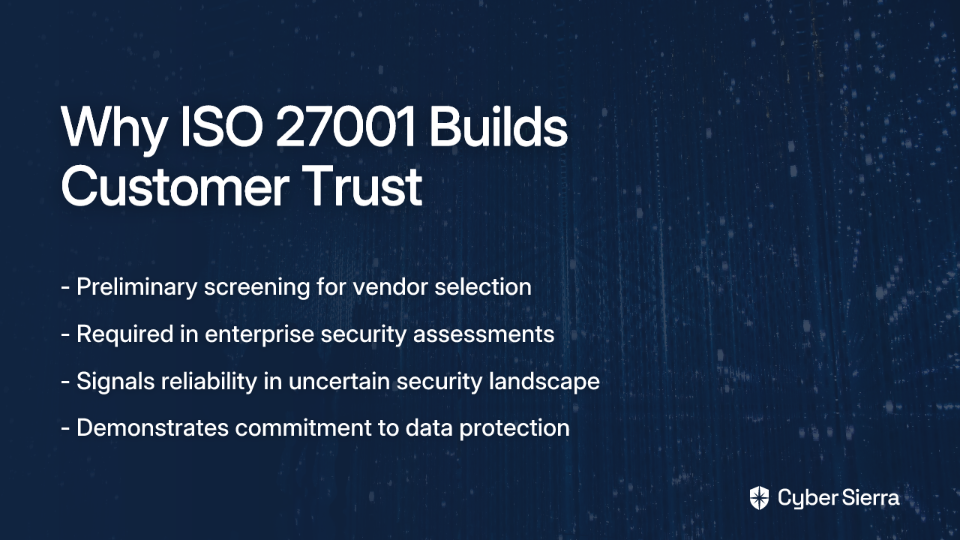
  • Prospects often use compliance certifications as a preliminary screening mechanism
  • Enterprise clients frequently require ISO 27001 in their vendor security assessments
  • Your certification signals reliability in an uncertain security environment

As one security professional noted, "Clients regularly ask if we've got ISO 27001," highlighting how certification has become a baseline expectation in many sales conversations.

Streamlining the Sales Cycle

Without ISO 27001 certification, your sales team likely faces lengthy security questionnaires and custom audits for each prospect. This extends sales cycles and consumes valuable resources.

ISO 27001 certification can dramatically simplify this process:

  1. Reduced Security Questionnaires: Many organizations will accept your ISO 27001 certification as evidence of strong security practices, reducing or eliminating the need for custom questionnaires.
  2. Faster Procurement Approval: Security teams can more quickly approve vendors with recognized certifications, removing bottlenecks in the sales process.
  3. Simplified Due Diligence: Rather than explaining your security practices from scratch with each prospect, your certification provides a standardized framework for discussions.

Companies with ISO certification report an average sales growth of 10% within a year, partly due to these streamlined processes.

Unlocking Access to Regulated Markets

For organizations selling to heavily regulated industries or international markets, ISO 27001 often serves as a market entry requirement rather than just a differentiator.

Key markets where ISO 27001 certification can unlock opportunities include:
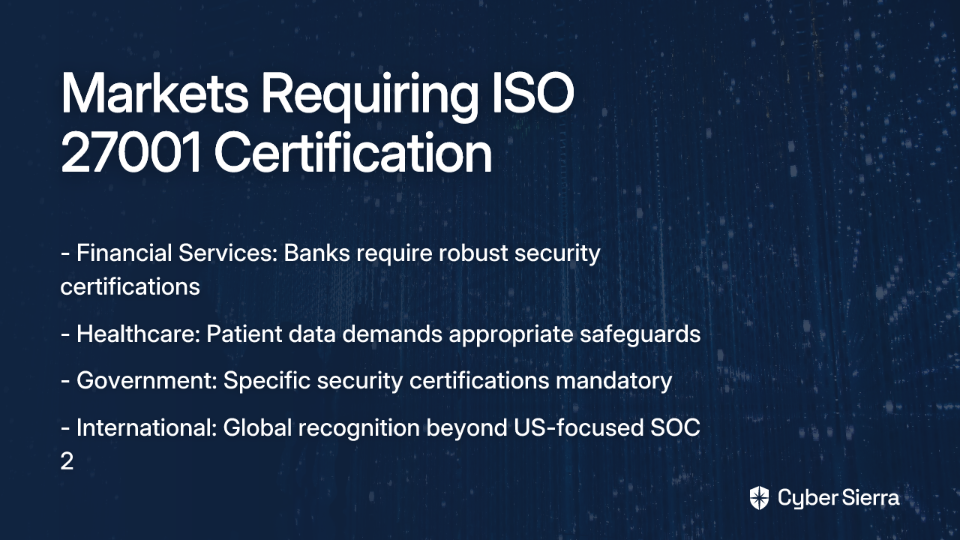
  • Financial Services: Banks and financial institutions typically require vendors to demonstrate robust security practices through certifications.
  • Healthcare: Organizations handling patient data need assurance that their vendors maintain appropriate safeguards.
  • Government Contracts: Many government agencies require contractors to maintain specific security certifications.
  • International Business: While SOC 2 is primarily recognized in the US, ISO 27001 has global recognition, making it essential for international expansion.

As one IT professional explained, "SOC2 is asked for if the company is US-based, but if the company does business outside the US, then SOC2 isn't really recognized, and ISO is preferred."

Gaining Competitive Advantage

When positioned effectively, ISO 27001 certification creates meaningful differentiation in competitive sales situations:

  1. Eliminating Security Objections: When competing against non-certified vendors, your certification removes security concerns as a potential reason to reject your solution.
  2. Demonstrating Organizational Maturity: Certification signals that your organization has the discipline and processes to deliver consistent, quality service.
  3. Creating Objective Differentiation: In markets where products or services have similar features, security certification provides a clear, objective difference between options.

Over 70% of companies believe ISO certification helps them win bids over non-certified competitors, particularly in enterprise deals where security requirements are stringent.

How to Maximize ISO 27001's Sales Impact

Obtaining certification is just the first step. To truly leverage ISO 27001 for sales success:
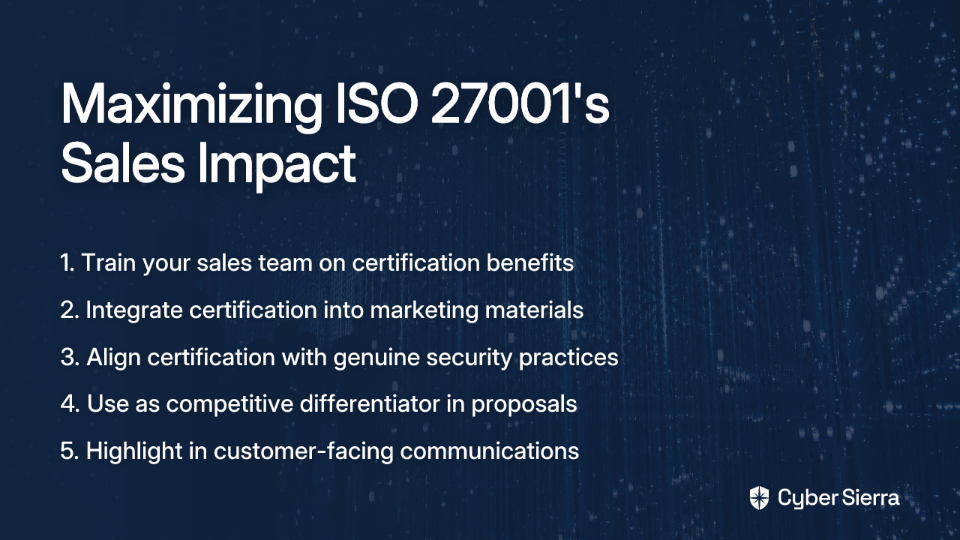
1. Train Your Sales Team

Ensure your sales representatives understand:

  • The basics of ISO 27001 and what it covers
  • How to address common prospect questions about your certification
  • When and how to position certification as a competitive advantage

2. Integrate Certification into Marketing

  • Feature your ISO 27001 certification prominently on your website
  • Include certification logos in sales presentations and proposals
  • Create dedicated content explaining your security commitment
  • Highlight certification in case studies and customer testimonials

3. Align with Your Actual Security Practices

The most effective approach is ensuring your certification reflects genuine security practices. As one professional noted, "compliance is all about what you put into it." Prospects can quickly spot when certification is merely a checkbox rather than a reflection of true security culture.

When ISO 27001 Might Not Drive Sales

While valuable, ISO 27001 isn't a universal sales accelerator. Consider these factors before pursuing certification solely for sales purposes:

  • Target Market Requirements: Some industries or regions place less emphasis on ISO 27001. As one expert advised, "go ask the sales/marketing team and see what your customers are being asked for."
  • Existing Client Demand: If current clients aren't requesting certification, evaluate whether prospective customers will require it.
  • Resource Constraints: The certification process requires significant investment in time, money, and organizational focus that might be better directed elsewhere if sales impact will be minimal.

The Role of Technology in ISO 27001 Compliance

Maintaining ISO 27001 compliance can be resource-intensive, but modern compliance platforms like Cyber Sierra can significantly reduce this burden. Cyber Sierra's Continuous Control Monitoring (CCM) module helps organizations:

  • Build a central controls repository with near real-time updates
  • Automate evidence collection for audits
  • Manage controls across multiple compliance frameworks beyond just ISO 27001
  • Detect exceptions and anomalies in real-time

By streamlining compliance maintenance, these tools free your team to focus on leveraging certification for sales rather than just maintaining it.
Conclusion: From Cost Center to Revenue Driver

ISO 27001 certification represents one of the rare opportunities to transform what many view as a cost center (security and compliance) into a revenue-driving asset.

When implemented properly and positioned strategically, certification can shorten sales cycles, unlock new markets, differentiate your offerings, and build deeper trust with prospects. The key lies in understanding your market's requirements, communicating your certification effectively, and ensuring your security practices genuinely deliver on the promises your certification makes.

Rather than asking if you can afford to pursue ISO 27001 certification, the better question might be: can your sales team afford to compete without it?

Frequently Asked Questions (FAQ)

What is ISO 27001 certification?

ISO 27001 certification is an internationally recognized standard for an Information Security Management System (ISMS). Achieving this certification demonstrates that your organization has implemented a systematic and robust approach to managing sensitive company information, ensuring its confidentiality, integrity, and availability, which is a key concern for prospective customers.

How can ISO 27001 certification help increase sales?

ISO 27001 certification can directly contribute to increased sales by building crucial trust with data-conscious prospects, streamlining lengthy sales cycles through reduced security questionnaires, unlocking access to regulated industries and international markets, and providing a clear competitive advantage over non-certified vendors.

Is ISO 27001 certification expensive to obtain?

Yes, obtaining ISO 27001 certification involves costs, often averaging around $25,000 for audits and technology investments. However, businesses should view this not just as an expense but as a strategic investment that can significantly enhance sales opportunities and market access, potentially offering a strong return.

When is ISO 27001 certification most crucial for winning deals?

ISO 27001 certification is particularly vital for sales success when your business targets enterprise-level clients, operates in heavily regulated sectors like finance or healthcare, bids for government contracts, or aims to expand into international markets where ISO 27001 is a widely accepted benchmark for security.

What is the main difference between ISO 27001 and SOC 2 in a sales context?

The primary difference for sales is geographic recognition: SOC 2 is predominantly recognized and requested by US-based companies, while ISO 27001 holds global prestige. If your company conducts business or seeks to expand outside the US, ISO 27001 certification is often preferred by international prospects and can be more impactful in sales conversations.

How can a company maximize the sales benefits of its ISO 27001 certification?

To maximize the sales impact of ISO 27001, companies should thoroughly train their sales teams on its significance, prominently feature the certification in all marketing materials (like websites and sales presentations), and critically, ensure the certification genuinely reflects strong, ongoing security practices, not just a superficial compliance checkbox.

Can technology help with leveraging ISO 27001 for sales?

Absolutely. Modern compliance platforms can automate and streamline many aspects of achieving and maintaining ISO 27001 compliance, such as evidence collection and continuous control monitoring. This frees up valuable internal resources, allowing your team to focus more on strategically using the certification as a sales enablement tool rather than being bogged down in manual compliance tasks.

Need help achieving or maintaining ISO 27001 compliance? Cyber Sierra's integrated compliance platform helps organizations streamline the certification process while providing continuous monitoring to maintain compliance between audits.
blog-hero-background-image
Governance & Compliance

Bridging Regulatory Agility Gaps: How CISOs Can Overcome Compliance Burdens with AI-Powered Automation

backdrop
Table of Contents

Join thousands of professionals and get the latest insight on Compliance & Cybersecurity.


You've just received notification of yet another regulatory update that impacts your cybersecurity compliance requirements. As you calculate the resources needed to adapt, you feel that familiar weight of dread—more processes to update, more documentation to revise, and more evidence to collect. Your team is already stretched thin managing existing compliance frameworks, and this new change threatens to derail strategic initiatives you've been planning for months.

This scenario has become all too common for Chief Information Security Officers (CISOs) across industries. As cybersecurity threats evolve and regulatory bodies respond with increasingly complex requirements, organizations find themselves caught in a constant scramble to maintain compliance while trying to advance their security posture.

The rapid pace of regulatory changes creates what we call "Regulatory Agility Gaps"—the growing divide between an organization's ability to adapt and the ever-accelerating rate of compliance requirements. These gaps represent significant operational pain points in Governance, Risk, and Compliance (GRC) cybersecurity management, draining resources and adding substantial overhead to already burdened security teams.

The Growing Burden of Regulatory Compliance

The regulatory landscape for cybersecurity has never been more complex or dynamic. According to the 2025 GRC Practitioner Survey, companies are facing mounting compliance overhead costs, with many organizations reporting that they spend upwards of 30% of their security budgets on compliance-related activities alone.

What makes this challenge particularly daunting is the fragmented nature of compliance requirements. Organizations often need to adhere to multiple frameworks simultaneously—GDPR, HIPAA, PCI DSS, NIST, ISO27001, and dozens of others depending on the industry and geographic footprint. Each framework brings its own set of controls, evidence requirements, and reporting cadences.

"We're constantly juggling multiple compliance requirements with overlapping but not identical controls," shared one CISO in a Reddit discussion. "It feels like we spend more time documenting our security than actually improving it."

The challenge is compounded by the unpredictable nature of regulatory updates. When new requirements emerge, security teams must quickly assess the impact, modify their controls, update documentation, and prepare for additional scrutiny during the next audit cycle. This reactive approach creates significant operational inefficiencies.

Key Pain Points in Regulatory Compliance Management

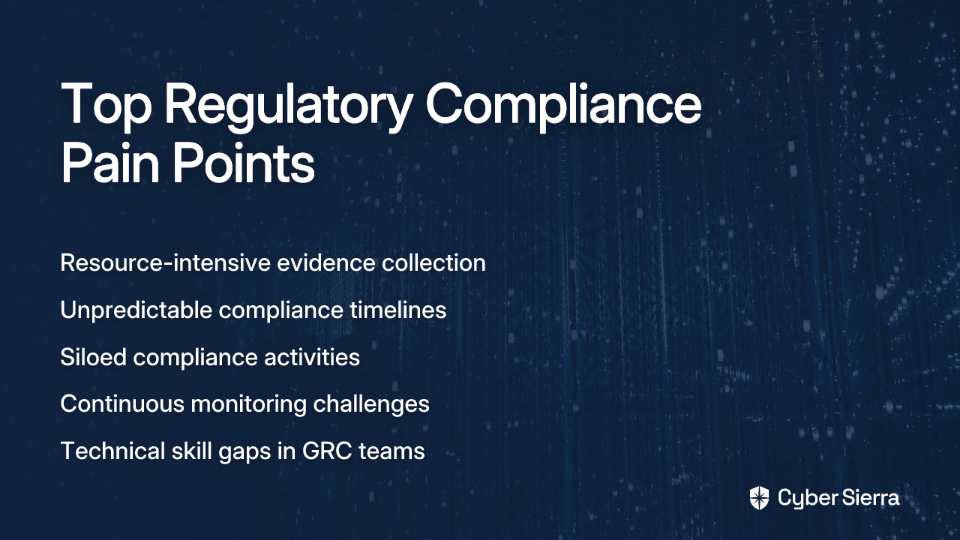
1. Resource-Intensive Evidence Collection

Perhaps the most tedious aspect of compliance is the evidence gathering process. Security teams spend countless hours collecting, organizing, and presenting evidence to demonstrate compliance with hundreds of controls across multiple frameworks.

"The tediousness and time consumption of evidence gathering during audits is soul-crushing," noted a GRC professional in a Reddit thread. "We spend weeks collecting screenshots, logs, and documentation that quickly become outdated."

2. Unpredictable Compliance Timelines

Many organizations struggle with estimating how long it will take to achieve compliance with new regulations. This uncertainty makes resource allocation challenging and can delay strategic initiatives as teams scramble to address compliance gaps.

"Sales representatives making misleading claims about reducing ISO27001 audit times are a major frustration," expressed another CISO. "There's simply no way to guarantee fast compliance when the process depends on so many organizational factors."

3. Siloed Compliance Activities

Traditional compliance processes often operate in silos, with different teams managing different frameworks using different tools and methodologies. This fragmentation leads to duplicated efforts, inconsistent control implementations, and gaps in coverage.

4. Continuous Monitoring Challenges

Compliance isn't a one-time achievement but rather an ongoing state that requires continuous monitoring and maintenance. Many organizations struggle to implement effective continuous monitoring capabilities, leaving them vulnerable to compliance drift between audit cycles.

5. Technical Skill Gaps in GRC Teams

Many GRC professionals come from audit, legal, or risk backgrounds and may lack deep technical understanding of the security controls they're tasked with managing. This knowledge gap can lead to misinterpretation of requirements or ineffective control implementations.

"CISOs often struggle to grasp basic security concepts and differentiate between various cybersecurity elements," noted one security professional in a discussion about GRC leadership. "This makes it challenging to address compliance effectively."

The Promise of AI and Automation in Compliance Management

The good news is that emerging technologies—particularly artificial intelligence, machine learning, and automation—offer promising solutions to these regulatory agility gaps. By leveraging these technologies, organizations can transform their approach to compliance from a reactive, resource-intensive burden to a streamlined, proactive function.

According to MetricStream, 43.12% of GRC professionals are already evaluating AI solutions to enhance compliance efficiency. This shift toward automation is gaining momentum as organizations recognize the substantial benefits it can deliver.

Automating Evidence Collection and Mapping

Modern compliance automation platforms can continuously collect and organize evidence from across the technology stack, dramatically reducing the manual effort required during audits. These systems can automatically map controls to relevant evidence, highlight compliance gaps, and maintain an always-current repository of documentation.

"Automation tools can significantly reduce the manual effort involved in compliance tasks," according to Zluri's blog on compliance automation. "What once took weeks can now be accomplished in days or even hours."

Real-Time Compliance Monitoring

AI-powered monitoring tools can provide continuous visibility into compliance status, alerting teams when controls drift out of alignment with requirements. This real-time insight enables rapid remediation and eliminates the compliance gaps that often develop between audit cycles.

Cross-Framework Control Mapping

Advanced compliance platforms can map controls across multiple frameworks, identifying overlaps and allowing organizations to implement unified controls that satisfy requirements across several regulations simultaneously. This approach, sometimes called "comply once, apply many," dramatically reduces redundant work.

Predictive Compliance Management

Perhaps most exciting is the potential for AI to predict the impact of regulatory changes before they occur. By analyzing regulatory trends, enforcement actions, and industry developments, these systems can help organizations prepare for likely compliance changes, transforming the approach from reactive to proactive.

Cyber Sierra: Pioneering AI-Powered Compliance Automation

Among the companies addressing these regulatory agility gaps, Cyber Sierra stands out with its innovative approach to compliance automation powered by advanced AI and large language models (LLMs).

Cyber Sierra's platform addresses the key pain points identified above through several groundbreaking capabilities:

1. Automated Evidence Collection and Validation

Cyber Sierra's platform connects to your existing security tools, cloud environments, and IT systems to automatically gather compliance evidence in real-time. Rather than scrambling to collect evidence during audit season, the system maintains a continuously updated repository of compliance artifacts, drastically reducing the manual effort required.

"The tediousness of evidence gathering during audits is a significant pain point for organizations," notes one GRC professional in a Reddit discussion. Cyber Sierra directly addresses this challenge by transforming evidence collection from a manual, point-in-time activity to an automated, continuous process.

2. AI-Powered Control Mapping

One of Cyber Sierra's most innovative features leverages large language models to automatically map organizational policies and procedures to specific control requirements across multiple frameworks. This capability eliminates the need for manual crosswalking between frameworks—a traditionally time-consuming and error-prone process.

When regulatory requirements change, the system automatically identifies affected controls and suggests necessary modifications to maintain compliance. This predictive approach helps organizations stay ahead of regulatory changes rather than constantly playing catch-up.

3. Continuous Compliance Monitoring

Unlike traditional approaches that assess compliance only during periodic audits, Cyber Sierra provides real-time visibility into compliance status. The platform continuously monitors control effectiveness and compliance posture, alerting teams to potential issues before they become audit findings.

"Need for constant monitoring to maintain compliance and reduce the stress of audits" is a common pain point identified in compliance discussions. Cyber Sierra transforms this challenge into an opportunity by making continuous monitoring effortless through automation.

4. Integrated Risk Management

Cyber Sierra doesn't treat compliance as an isolated function but integrates it with broader risk management activities. The platform helps organizations understand the risk implications of compliance gaps and prioritize remediation efforts based on actual risk exposure—not just audit schedules.

5. Natural Language Evidence Analysis

Perhaps most impressively, Cyber Sierra's LLM capabilities can analyze unstructured data sources—such as policy documents, meeting minutes, and training records—to identify relevant compliance evidence that might be overlooked in traditional manual processes. This capability uncovers evidence that exists but might not have been formally mapped to compliance requirements.

Real-World Results: Transforming Compliance from Burden to Value

Organizations implementing Cyber Sierra's platform report dramatic improvements in compliance efficiency and effectiveness:

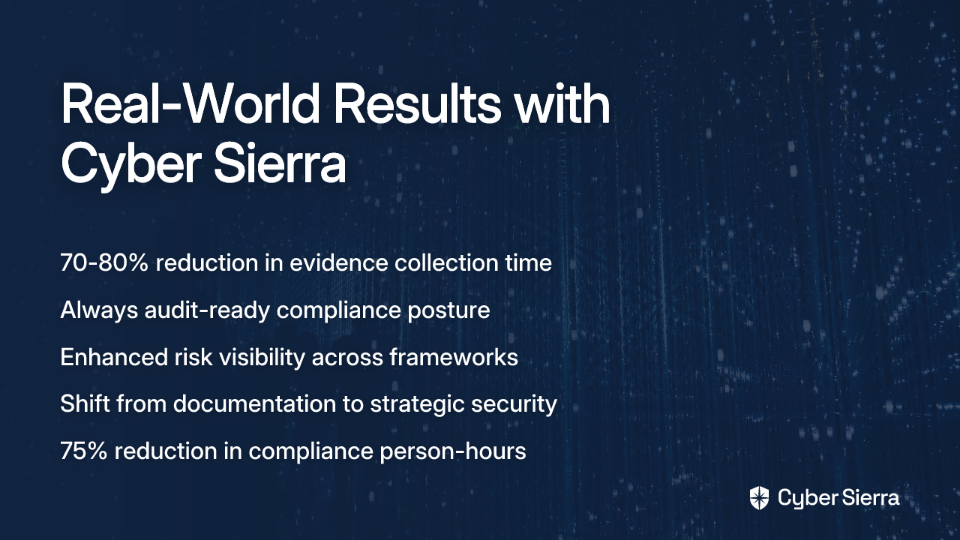
  • Reduced evidence collection time: Teams report 70-80% reductions in time spent gathering and organizing compliance evidence.
  • Improved audit readiness: With continuously maintained evidence repositories, organizations remain audit-ready at all times, eliminating the frantic preparation that typically precedes audits.
  • Enhanced risk visibility: By connecting compliance activities to risk management, organizations gain a clearer understanding of how compliance relates to actual security posture.
  • Resource reallocation: Automation allows security professionals to shift from documentation tasks to strategic security initiatives that actually improve protection.

As one customer testimonial states: "Before implementing Cyber Sierra, we spent approximately 1,200 person-hours annually on ISO27001 compliance activities alone. After implementation, that figure dropped to under 300 hours—a 75% reduction—while simultaneously improving our compliance posture."

Best Practices for Addressing Regulatory Agility Gaps

While technology is a powerful enabler, organizations must also adopt best practices to maximize the benefits of compliance automation:

1. Adopt a Risk-Based Approach to Compliance

Not all compliance requirements carry equal risk. Organizations should prioritize their compliance efforts based on actual risk exposure rather than treating all controls as equally important. This approach ensures that limited resources are directed to the areas with the greatest security impact.

"CISOs face obstacles due to organizational politics when trying to enhance compliance measures," notes one security leader in a Reddit discussion. A risk-based approach provides objective criteria for prioritization, helping overcome political obstacles to effective compliance management.

2. Invest in Knowledge Development

"GRC roles require ongoing training and education to keep up with evolving regulations and technologies," according to security professionals discussing GRC careers. Organizations should invest in continuous education for their compliance teams, ensuring they understand both the regulatory requirements and the technical controls used to address them.

Cyber Sierra supports this need through built-in training modules that help bridge the knowledge gap between compliance requirements and technical implementation.

3. Build Cross-Functional Collaboration

Effective compliance requires collaboration between security, IT, legal, and business teams. Organizations should establish cross-functional working groups to address compliance challenges holistically, breaking down the silos that often impede effective compliance management.

"Frustration over the division between technical security and compliance roles" is a common theme in GRC discussions. By fostering collaboration between technical and compliance teams, organizations can overcome this division and build more effective security governance.

4. Establish Clear Compliance Metrics

Organizations should define clear, measurable objectives for their compliance programs. These metrics might include time to evidence collection, number of control gaps identified, or time to remediate compliance issues. By measuring these factors, organizations can demonstrate the value of their compliance investments and identify areas for improvement.

The Future of Compliance Management: AI-Driven and Value-Oriented

As regulatory requirements continue to evolve, the organizations that thrive will be those that embrace AI-driven automation to transform compliance from a burden to a value driver. By automating routine compliance tasks, organizations can redirect resources toward activities that actively improve security posture rather than merely documenting it.

Looking ahead, we can expect even greater integration between compliance and broader security operations. Advanced AI systems will not only automate evidence collection but also provide predictive insights into emerging compliance requirements and suggest proactive measures to address them before they become regulatory mandates.

The goal isn't just efficient compliance—it's leveraging compliance activities as a catalyst for meaningful security improvements. When approached strategically and supported by advanced automation, compliance can drive security maturity rather than distracting from it.

Conclusion: From Regulatory Burden to Strategic Advantage

Regulatory agility gaps represent a significant challenge for today's CISOs, creating substantial operational overhead and diverting resources from strategic security initiatives. However, by embracing AI-powered automation tools like Cyber Sierra, organizations can transform their approach to compliance management.

The future belongs to organizations that view compliance not as a checkbox exercise but as an integral component of their security and risk management strategy. By leveraging automation to handle routine compliance tasks, security leaders can redirect their focus toward activities that genuinely improve security outcomes—ultimately turning compliance from a burden into a strategic advantage.

As one CISO aptly put it: "We used to spend all our time documenting security. Now we spend our time improving it, and the documentation happens automatically." That transformation—from documentation-focused to improvement-focused—represents the true promise of AI-powered compliance automation.

For organizations ready to bridge their regulatory agility gaps, platforms like Cyber Sierra offer a compelling path forward—reducing compliance overhead, improving security outcomes, and transforming the role of the CISO from compliance manager to strategic security leader.

Frequently Asked Questions

What are "Regulatory Agility Gaps" in cybersecurity compliance?

Regulatory Agility Gaps describe the widening difference between an organization's ability to quickly adapt to new cybersecurity compliance rules and the increasing speed at which these regulations are introduced or updated. These gaps create significant operational challenges and resource drains. Security teams often find themselves in a constant scramble to update processes, revise documentation, and collect new evidence for multiple frameworks (e.g., GDPR, HIPAA, PCI DSS). This reactive approach can derail strategic security initiatives and increase overall risk.

Why is managing cybersecurity regulatory compliance so challenging?

Managing cybersecurity regulatory compliance is challenging due to the escalating volume and complexity of global and industry-specific regulations, the resource-intensive nature of manual compliance tasks, and the difficulty in maintaining continuous adherence. Key difficulties include:

  • Resource-intensive evidence collection: Manually gathering, organizing, and presenting proof for hundreds of controls is extremely time-consuming.
  • Unpredictable timelines: Estimating the effort for new regulations is hard, disrupting planning.
  • Siloed activities: Different teams managing different frameworks often leads to duplicated work.
  • Continuous monitoring difficulties: Ensuring ongoing compliance between audits is a major hurdle.
  • Technical skill gaps: GRC teams may lack deep technical understanding of controls.

How does AI and automation improve cybersecurity compliance processes?

AI and automation streamline cybersecurity compliance by automating repetitive tasks, providing real-time insights, and enabling a more proactive approach to managing regulatory requirements. Specifically, AI can:

  • Automate evidence collection: Continuously gather data from security tools and systems.
  • Enhance control mapping: Automatically map internal controls to various regulatory frameworks, identifying overlaps and gaps.
  • Enable real-time monitoring: Continuously track compliance status and alert teams to deviations.
  • Predict regulatory impact: Analyze trends to help organizations prepare for upcoming changes. This shifts compliance from a periodic, manual burden to an efficient, ongoing process.

What features should I look for in an AI-powered compliance automation platform like Cyber Sierra?

When evaluating an AI-powered compliance automation platform, look for features such as automated evidence collection and validation, AI-driven control mapping across multiple frameworks, continuous compliance monitoring, integrated risk management, and the ability to analyze unstructured data for evidence. For example, Cyber Sierra leverages Large Language Models (LLMs) to automatically map policies to control requirements and can analyze documents like meeting minutes for compliance evidence. It also integrates compliance with broader risk management, helping prioritize based on actual risk. Such features aim to significantly reduce manual effort, ensure audit readiness, and provide a clear view of the compliance posture.

What are the key best practices for effectively addressing regulatory agility gaps?

Effectively addressing regulatory agility gaps involves combining technology with strategic operational practices, including adopting a risk-based approach, investing in team knowledge, fostering cross-functional collaboration, and establishing clear compliance metrics.

  • Risk-Based Approach: Prioritize compliance efforts based on the actual risk exposure certain gaps represent.
  • Knowledge Development: Continuously train GRC and security teams on evolving regulations and technologies.
  • Cross-Functional Collaboration: Break down silos between security, IT, legal, and business units for a holistic compliance strategy.
  • Clear Metrics: Define and track key performance indicators (KPIs) for your compliance program to measure effectiveness and demonstrate value. While AI tools provide the mechanism for agility, these practices ensure the organization can fully leverage that technology.
blog-hero-background-image
Governance & Compliance

Regulatory Compliance for Fintech: A Complete Guide

backdrop
Table of Contents

Join thousands of professionals and get the latest insight on Compliance & Cybersecurity.


As the fintech industry continues to revolutionize financial services with a global valuation of approximately $340 billion, regulatory compliance has become the cornerstone of sustainable growth and market credibility. For founders, CISOs, and senior leadership teams in fintech companies, navigating the complex regulatory landscape is no longer optional—it's existential.

You've likely experienced the overwhelming flood of regulatory information that seemingly changes overnight. You've felt the frustration of trying to interpret how new regulations specifically apply to your innovative products. Perhaps you've even had the disheartening experience of completing a bank integration only to have the partnership dissolved due to regulatory concerns.

This comprehensive guide cuts through the noise to provide clarity on the regulatory frameworks that govern fintech operations in the United States and the Middle East, offering practical solutions to the compliance challenges that keep you up at night.

Understanding the Regulatory Landscape

The U.S. Regulatory Framework

If you're operating in the United States, you're navigating one of the most complex regulatory environments in the world. The U.S. approach to fintech regulation is notoriously fragmented, involving multiple federal agencies and state-level requirements:

  • Office of the Comptroller of the Currency (OCC): Regulates national banks and federal savings associations
  • Consumer Financial Protection Bureau (CFPB): Oversees consumer financial products and services
  • Securities and Exchange Commission (SEC): Regulates securities markets and investment activities
  • Federal Trade Commission (FTC): Enforces consumer protection and anti-competitive practices
  • State Regulatory Authorities: Issue Money Transmitter Licenses (MTLs) and other state-specific requirements

This multi-layered approach creates significant challenges. As one fintech leader noted in a recent industry forum: "The real pain is interpreting how new regs apply to our specific products." This sentiment resonates with 93% of fintech companies that report struggling with compliance requirements, according to research by Empaxis.

The Middle East: Emerging Fintech Hub

The Middle East, particularly the United Arab Emirates (UAE), is rapidly establishing itself as a global fintech hub. This growth is driven by government initiatives designed to diversify economies beyond oil and attract international investment in technology sectors.

In the UAE, fintech companies typically choose between two main regulatory jurisdictions:

  1. Dubai International Financial Centre (DIFC): Offers prestige and established regulatory frameworks but comes with longer processing times and higher costs
  2. Abu Dhabi Global Market (ADGM): Generally preferred for startups focused on fundraising, as noted by industry participants: "If you're going to fund raise, go with ADGM."

Despite the region's forward-looking approach, digital banking adoption remains relatively low, with only 17% of Middle Eastern consumers currently engaging with digital banking services. This presents both a challenge and an opportunity for fintech companies targeting this market.

Common Compliance Challenges in Fintech

Interpreting Complex Regulations

For fintech leaders, the most significant challenge is often understanding how regulations apply to specific products and services. Traditional financial regulations weren't designed with innovative technologies in mind, creating gray areas that require careful navigation.

As one fintech executive shared in a Reddit discussion: "Biggest pain point is sorting what's relevant and what's not—too much info, not enough clarity." This challenge is exacerbated when launching products that cross multiple regulatory domains, such as payment processing services that must comply with banking regulations, data privacy laws, and consumer protection requirements simultaneously.

Fragmented Information Sources

The lack of a centralized source for regulatory updates creates significant inefficiencies. Most fintech companies still rely on outdated systems to track compliance changes:

"Most firms still track regulatory changes through email alerts, newsletters, or manual checks with regulators' websites, which gets messy fast," noted a compliance officer in a recent industry forum.

This fragmentation increases the risk of missing critical updates and creates inconsistencies in compliance approaches across the organization.

Integration with Traditional Financial Institutions

Forming partnerships with established banks is often essential for fintech growth, but these relationships come with their own compliance challenges. Traditional institutions may have concerns about the security and regulatory compliance of fintech partners.

One fintech founder described this challenge: "Spending time integrating with banks has to be complex and frustrating... I have had a bank sign a contract, commit to and complete integration and then pull out saying that new management has made a strategic decision not to work over Open APIs with 3rd parties."

This institutional inertia can significantly hamper growth plans and waste valuable resources, especially when banks become more cautious following industry fraud incidents.

Economic Uncertainty

The current economic climate adds another layer of complexity to compliance efforts. As interest rates fluctuate and market conditions remain unpredictable, both fintechs and their customers become more risk-averse:

"The high rate environment and sketchy small business environment. Less confidence and higher rates. Tough environment. People are anxious and hesitating," observed a B2B fintech leader.

This uncertainty makes it harder to justify investments in compliance infrastructure, despite its critical importance.

Key Regulations and Best Practices

Foundational Compliance Requirements

Regardless of your fintech's specific niche, certain regulatory requirements are universal:

1. Know Your Customer (KYC) and Anti-Money Laundering (AML)

These regulations require financial institutions to verify customer identities and monitor transactions for suspicious activities. Effective KYC/AML compliance involves:

  • Implementing robust identity verification processes
  • Maintaining comprehensive customer records
  • Establishing transaction monitoring systems
  • Reporting suspicious activities to relevant authorities

2. Data Privacy Regulations

Fintechs handle vast amounts of sensitive consumer data, making compliance with privacy regulations essential:

  • General Data Protection Regulation (GDPR): Though European in origin, GDPR impacts any fintech serving European customers
  • California Consumer Privacy Act (CCPA): Sets standards for businesses operating in California
  • Other state-specific regulations: An increasing number of states are implementing their own data privacy frameworks

3. Consumer Protection Regulations

Various consumer protection laws apply to fintechs offering consumer financial products:

  • Truth in Lending Act (TILA): Requires disclosure of loan terms and costs
  • Equal Credit Opportunity Act (ECOA): Prohibits discrimination in lending
  • Electronic Fund Transfer Act (EFTA): Governs electronic money transfers
  • Telephone Consumer Protection Act (TCPA): Regulates telemarketing practices

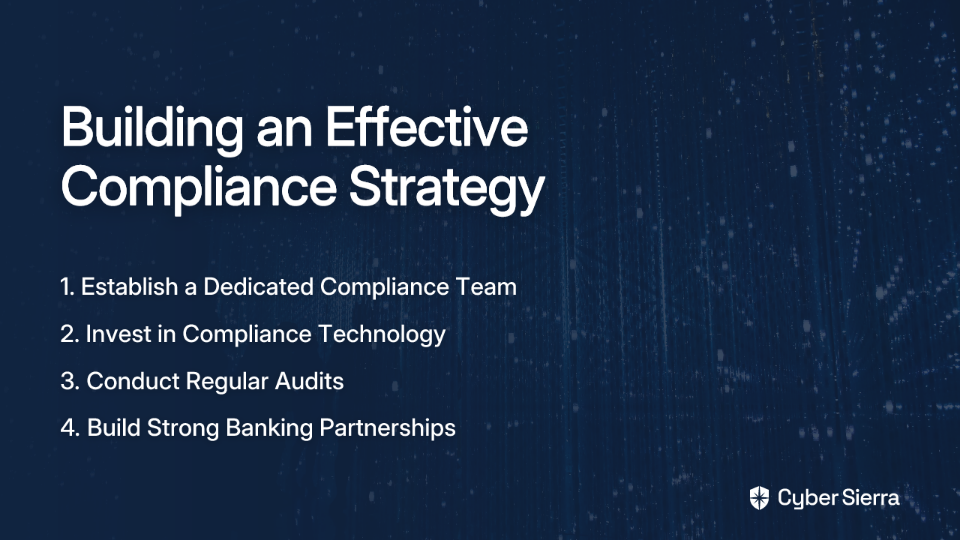
Building an Effective Compliance Strategy

To navigate these regulatory requirements effectively, consider implementing these best practices:

1. Establish a Dedicated Compliance Team

Even small fintechs need dedicated compliance personnel who understand both regulatory requirements and the company's products. This team should:

  • Monitor regulatory changes
  • Conduct regular risk assessments
  • Develop and maintain compliance policies
  • Train other team members on compliance requirements

2. Invest in Compliance Technology

Modern regulatory technology (RegTech) solutions can significantly reduce the burden of compliance management:

  • Automated Monitoring Tools: Tools like Winnow provide searchable databases of state laws with regular updates on regulatory changes
  • Compliance Management Systems: Platforms like Smartria and ComplySci help track compliance activities and deadlines
  • Real-time Alert Systems: Customized alerts can provide tailored summaries of regulatory changes relevant to your business

As one compliance officer noted: "Real-time alerts with summaries would be a huge help, especially if they're tailored by region or business type."

3. Conduct Regular Audits

Regular compliance audits help identify gaps before they become regulatory issues:

  • Schedule quarterly internal compliance reviews
  • Consider annual third-party audits for objectivity
  • Document all audit findings and remediation efforts
  • Use audit results to improve compliance processes

4. Build Strong Banking Partnerships

Given the challenges of bank integration, a proactive approach to these relationships is essential:

  • Demonstrate your compliance expertise early in discussions
  • Be transparent about your security measures
  • Understand the bank's regulatory concerns
  • Establish clear communication channels for addressing compliance questions

Innovations in Regulatory Compliance

Regulatory Sandboxes

Regulatory bodies are increasingly creating "sandboxes" that allow fintech companies to test innovative products in a controlled environment with regulatory oversight but without full compliance burdens. These initiatives are particularly active in:

  • United States: States like Arizona and Wyoming have established sandbox programs
  • United Arab Emirates: Both DIFC and ADGM offer regulatory sandboxes
  • Saudi Arabia: The Saudi Central Bank (SAMA) has implemented a sandbox for fintech testing

Global Financial Innovation Network (GFIN)

The GFIN is an international network of financial regulators committed to supporting financial innovation. It provides:

  • Cross-border testing opportunities for innovative financial products
  • Collaboration between regulators on emerging technologies
  • Shared approaches to common regulatory challenges

Regional Focus: U.S. vs. UAE Regulatory Approaches

United States: Navigating Regulatory Fragmentation

The U.S. regulatory landscape presents unique challenges due to its fragmented nature.

Unlike many countries with a single financial regulator, the U.S. has multiple federal agencies with overlapping jurisdictions, plus state-level requirements.

This fragmentation creates several practical challenges:

  1. Multiple Licensing Requirements: Fintechs often need licenses from numerous states, each with different requirements and application processes. Money Transmitter Licenses (MTLs) are particularly burdensome, as they must be obtained state by state.
  2. Inconsistent Interpretations: Different regulators may interpret similar regulations differently, creating compliance uncertainty.
  3. Continuous Evolution: U.S. regulations are constantly changing, with new interpretations and guidance issued regularly. As technologies like AI and cryptocurrencies advance, regulators are racing to catch up.
  4. Enforcement-Driven Regulation: U.S. regulators often clarify expectations through enforcement actions rather than clear guidance. This approach forces fintechs to learn from others' mistakes.

To navigate this environment effectively, U.S.-focused fintechs should:

  • Maintain Regulatory Relationships: Establish open lines of communication with relevant regulators
  • Monitor Enforcement Actions: Stay informed about actions against similar companies
  • Participate in Industry Groups: Join fintech associations that advocate for clearer regulations
  • Consider a Regulatory Partner: Many fintechs partner with banks or established financial institutions to leverage their existing regulatory frameworks

UAE: An Emerging Fintech Hub

The UAE has positioned itself as a forward-thinking regulatory environment for fintech innovation, with Dubai and Abu Dhabi emerging as key centers.

The Open Finance Framework

In April 2024, the Central Bank of the UAE (CBUAE) gazetted the new Open Finance Regulation, marking a significant development for fintech companies operating in the region. This framework:

  • Establishes mandatory participation requirements for licensed banks and insurance companies
  • Creates new licensing categories for Open Finance Providers
  • Sets standards for data sharing and customer consent
  • Prohibits data scraping practices

The technical implementation includes:

  1. API Hub: A central infrastructure for secure data access
  2. Trust Framework: Standards for secure communication between parties
  3. Customer Consent Management: Protocols for obtaining and managing customer permissions

Choosing the Right Jurisdiction

Fintech companies establishing a presence in the UAE must choose between the two main financial free zones:

  1. Dubai International Financial Centre (DIFC)
    • Advantages: Prestigious location, well-established regulatory framework
    • Challenges: Longer processing times, higher costs
    • Best for: Established fintechs looking for regional prestige and companies with significant capital
  2. Abu Dhabi Global Market (ADGM)
    • Advantages: Preferred by investors for fundraising, generally more flexible
    • Challenges: Less established than DIFC
    • Best for: Early-stage startups focused on fundraising and growth

As one UAE-based fintech founder advised: "If you're going to fund raise, go with ADGM."

Practical Recommendations for Fintech Leaders

1. Stay Informed on Regulatory Changes

The volume of regulatory information is overwhelming, but targeted strategies can help you stay informed without drowning in details:

  • Subscribe to regulatory updates specific to your business model and target markets
  • Utilize tools that provide tailored summaries rather than unfiltered regulatory text
  • Establish a regular cadence for reviewing regulatory developments with your team
  • Consider using specialized services like Winnow to track changes that specifically affect your products

2. Build Compliance into Product Development

Rather than treating compliance as an afterthought, integrate it into your product development process:

  • Include compliance team members in product planning sessions
  • Conduct regulatory impact assessments during the design phase
  • Create a compliance checklist for new features
  • Document compliance considerations for future reference

3. Engage Local Legal Expertise

Particularly in regions like the UAE where regulatory frameworks are evolving rapidly, local legal expertise is invaluable:

  • Retain counsel familiar with local regulatory nuances
  • Establish relationships with regulators when possible
  • Participate in local fintech communities for shared insights
  • Consider regulatory consulting services for specific compliance projects

4. Balance Innovation and Compliance

The most successful fintechs find ways to innovate while maintaining regulatory compliance:

  • Focus on areas where regulations provide clear guidance
  • Use regulatory sandboxes to test innovative ideas
  • Develop compliance-driven innovation that solves regulatory challenges
  • Document your compliance rationale for innovative approaches

5. Prepare for Cross-Border Compliance

If your fintech has global ambitions, prepare for cross-border regulatory challenges:

  • Map the regulatory requirements in each target market
  • Identify common compliance elements that can be standardized
  • Build flexibility into your compliance systems to accommodate regional variations
  • Consider a phased expansion approach based on regulatory complexity

6. Invest in Security and Privacy

Security and privacy compliance are foundational for fintech credibility:

  • Implement robust identity and access management systems
  • Conduct regular security audits and penetration testing
  • Develop clear data governance policies
  • Train all team members on security and privacy best practices

As one fintech security professional noted: "The audit, compliance, and security aspects. Audit evidence is a big part of my job, as is general security work, patching, firewalls, bastion boxes, etc."

7. Create a Compliance Culture

Effective compliance requires organization-wide commitment:

  • Clearly communicate compliance expectations to all team members
  • Recognize and reward compliance-conscious behavior
  • Incorporate compliance metrics into performance evaluations
  • Provide regular training on relevant regulations

Conclusion: Turning Compliance into Competitive Advantage

Regulatory compliance in fintech is not merely about avoiding penalties—it's about building customer trust, creating sustainable business models, and enabling innovation that solves real problems within regulatory boundaries.

The fintech companies that thrive in the coming years will be those that view compliance not as a burden but as a strategic advantage. By understanding the regulatory landscape, implementing robust compliance processes, and leveraging technology to reduce compliance costs, these companies will earn the trust of customers, partners, and regulators alike.

Whether you're operating in the complex regulatory environment of the United States or the emerging fintech hub of the UAE, the principles remain the same: stay informed, be proactive, invest in compliance infrastructure, and build relationships with regulators.

By following the guidance in this comprehensive guide, fintech leaders can navigate the regulatory maze with confidence, allowing them to focus on what matters most—building innovative financial products that improve lives and transform industries.

Frequently Asked Questions

What are the primary regulatory challenges fintechs face?

Fintechs primarily struggle with interpreting complex and often outdated regulations for novel products, managing fragmented information sources for regulatory updates, and navigating difficult integrations with traditional financial institutions concerned about compliance. These challenges are compounded by economic uncertainty, which can make justifying compliance investments difficult despite their critical importance, and the sheer volume of information that needs to be processed to determine relevance.

How can fintechs effectively manage compliance in the US and UAE?

Fintechs can effectively manage compliance by establishing dedicated compliance teams, investing in RegTech solutions for automation and monitoring, conducting regular internal and external audits, and building strong, transparent partnerships with banking institutions. Additionally, staying informed on regulatory changes specific to their product and region, and integrating compliance into the product development lifecycle are crucial for both the US (with its fragmented system) and the UAE (with its evolving frameworks like Open Finance).

Why is investing in compliance technology (RegTech) crucial for fintechs?

Investing in RegTech is crucial because it automates and streamlines complex compliance processes, reduces the risk of human error, and helps fintechs stay updated with rapidly changing regulations across different jurisdictions. Tools like automated monitoring systems for regulatory changes, compliance management platforms for tracking activities, and real-time alert systems can significantly lessen the administrative burden, improve accuracy, and allow teams to focus on core business activities while maintaining robust compliance.

What are the key differences between fintech regulation in the US and the UAE?

The key difference lies in their structure and approach: U.S. fintech regulation is highly fragmented, involving multiple federal agencies (like OCC, CFPB, SEC, FTC) and state-level authorities, often leading to complex licensing requirements (e.g., state-by-state Money Transmitter Licenses) and inconsistent interpretations. In contrast, the UAE, particularly in financial free zones like DIFC and ADGM, offers a more centralized and often forward-looking regulatory environment, including recent initiatives like the Open Finance Regulation, aiming to foster innovation through clear frameworks and sandboxes while ensuring stability.

How can fintech startups build a strong compliance foundation from the beginning?

Fintech startups can build a strong compliance foundation by integrating compliance considerations into their product development process from day one ("compliance by design"), establishing a dedicated compliance function (even if initially small or outsourced), and investing early in scalable compliance technology (RegTech) to manage obligations efficiently. Seeking local legal expertise, especially when entering new or complex markets like the US or UAE, and fostering a company-wide culture where compliance is viewed as everyone's responsibility are also vital steps for long-term success and risk mitigation.

What are regulatory sandboxes and how do they benefit fintech innovation?

Regulatory sandboxes are controlled environments established by regulatory bodies that allow fintech companies to test innovative products, services, or business models for a limited time with real consumers, under regulatory supervision but without the immediate burden of full licensing or all compliance requirements. They benefit fintech innovation by enabling companies to experiment and gather data in a live market setting, significantly reducing the time and cost of bringing new solutions to market, while simultaneously allowing regulators to understand new technologies and adapt regulatory frameworks accordingly, fostering a more collaborative approach to innovation. Both the US (at state levels) and the UAE (DIFC, ADGM, SAMA) offer such programs.

Additional Resources

For fintech leaders looking to deepen their understanding of regulatory compliance, these resources provide valuable insights:

By leveraging these resources and implementing the strategies outlined in this guide, fintech companies can navigate the regulatory landscape effectively, turning compliance challenges into opportunities for growth and differentiation.

blog-hero-background-image
Governance & Compliance

How to Conduct an ISO 27001 Gap Assessment

backdrop
Table of Contents

Join thousands of professionals and get the latest insight on Compliance & Cybersecurity.


You've been tasked with achieving ISO 27001 certification for your organization. You've heard it's a rigorous process, but clients are demanding it, and management wants it done yesterday. The problem? You have limited experience with information security management systems, uncertain where to start, and leadership thinks it's just "a couple of forms and you're done."

Sound familiar?

The reality is that ISO 27001 certification requires methodical preparation, especially for organizations without dedicated security expertise. The good news? A properly conducted gap assessment provides a clear roadmap to certification, helping you identify exactly where you stand and what needs to be done.

This guide will walk you through conducting an ISO 27001 gap assessment that works for organizations of all sizes – even those with limited security resources.

What is an ISO 27001 Gap Assessment?

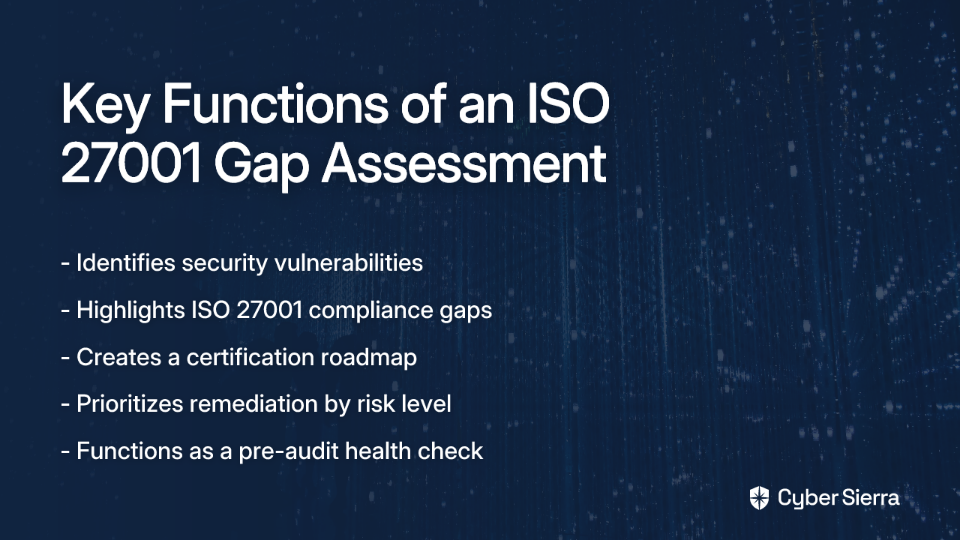
A gap assessment evaluates your organization's current information security practices against ISO 27001 requirements. It's essentially a diagnostic tool that:

  • Identifies vulnerabilities in your security management systems
  • Highlights discrepancies between current practices and ISO requirements
  • Provides a clear roadmap for achieving compliance
  • Helps prioritize remediation efforts based on risk levels

Think of it as a pre-audit health check that prevents surprises during your actual certification audit.

Why Conduct a Gap Assessment?

Many organizations underestimate the complexity of ISO 27001 compliance. As one frustrated security professional noted: "Leadership above me is clueless and has people around them that they trust keep telling them it is no big deal – a couple forms, and you are done."

In reality, ISO 27001 certification is a comprehensive process that typically costs upwards of $50,000 (even on the "extreme cheap") and requires significant time investment.

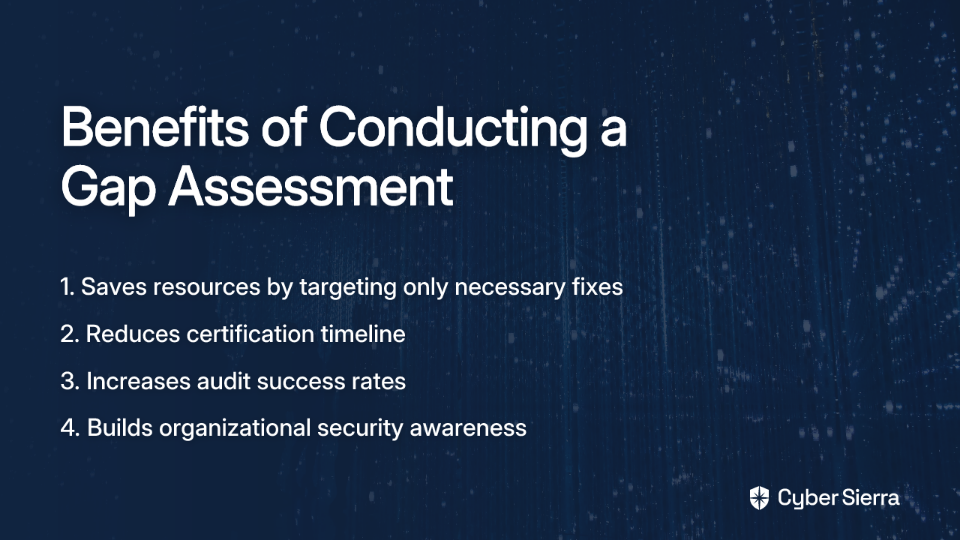
A proper gap assessment:

  1. Saves resources: By identifying only what needs to be fixed rather than rebuilding everything
  2. Reduces certification time: By creating a focused remediation plan
  3. Increases certification success rates: By addressing issues before formal audits
  4. Builds organizational security awareness: By involving key stakeholders in the assessment process

Steps to Conduct an ISO 27001 Gap Assessment

Step 1: Obtain the ISO 27001 Standard

The foundation of any gap assessment is understanding what you're measuring against. Purchase the official ISO/IEC 27001:2022 standard document from the International Organization for Standardization.

As one ISO implementer advises: "Buy the official document with the ISO/IEC 27001:2022 requirements. This is the first thing to complete."

While the cost (approximately $200) might seem high for a document, it's an essential investment that provides the authoritative requirements against which your organization will be assessed.

Step 2: Understand ISO 27001's Structure

Before conducting your assessment, familiarize yourself with the structure of ISO 27001:

  • Clauses 4-10: These contain the mandatory requirements for an Information Security Management System (ISMS)
  • Annex A: Contains 93 security controls organized into 14 sections (with ISO/IEC 27002 providing implementation guidance)

Pay particular attention to the "shall" statements within clauses 4-10, as these indicate mandatory requirements. For example, clause 6.1.2 mandates that organizations "shall define and apply an information security risk assessment process."

Step 3: Create Your Assessment Framework

Develop a structured assessment framework that includes:

  1. Control identification: List all applicable ISO 27001 requirements
  2. Assessment criteria: Define how you'll evaluate compliance (typically using a scale such as: Compliant, Partially Compliant, Non-Compliant, Not Applicable)
  3. Evidence requirements: Specify what documentation or demonstration will satisfy each control
  4. Gap documentation: Create a method to record findings and required remediation steps

Many organizations use a spreadsheet with separate tabs for clauses 4-10 and Annex A controls. For a more user-friendly approach, consider using a question-based format that mirrors what an auditor would ask.

"Both templates are totally free and fully customizable. I also share my views on when to use a gap assessment vs. a maturity assessment and why I used a questions-based approach," notes one security practitioner who created templates for community use.

Step 4: Form Your Assessment Team

Assemble a cross-functional team that includes:

  • Information security specialists (if available)
  • IT personnel familiar with systems and infrastructure
  • Business process owners who understand operational requirements
  • Legal/compliance representatives to address regulatory considerations

If your organization lacks internal expertise, consider bringing in an external consultant for this phase. As one professional advises: "Too many companies think they can do it by themselves, but I always recommend reaching out to an expert."

Step 5: Conduct the Assessment

With your team and framework in place, begin the assessment process:

  1. Review documentation: Examine existing policies, procedures, and records
  2. Interview key personnel: Discuss current practices with staff responsible for security controls
  3. Observe operations: Verify that documented procedures match actual practices
  4. Test controls: Where possible, verify that technical controls function as intended

Document both conformities and non-conformities, collecting evidence for each finding. Be particularly thorough with the mandatory documentation requirements of ISO 27001, which include:

  • Scope of the ISMS
  • Information security policy and objectives
  • Risk assessment and treatment methodology
  • Statement of Applicability (SoA)
  • Risk treatment plan

One auditor emphasizes documentation's importance with a stark scenario: "What if the person responsible for the process gets hit by a bus, how are they going to be able to train their replacement?"

Step 6: Analyze Findings and Create a Gap Closure Plan

After completing your assessment:

  1. Categorize findings: Group gaps by severity and type (policy, procedural, technical)
  2. Prioritize remediation: Focus first on mandatory requirements in clauses 4-10 before addressing Annex A controls
  3. Assign responsibility: Determine who will address each gap
  4. Establish timelines: Create realistic deadlines for remediation activities
  5. Allocate resources: Ensure sufficient budget and staffing for implementation

Your gap closure plan should be a living document that tracks progress and adjusts as implementation proceeds.

Step 7: Implement Risk Assessment and Treatment

A robust risk assessment process is foundational to ISO 27001 compliance. As one security professional explains: "Risk Assessment helps us recognize potential threats, gauge their likelihood, and determine their impact on our organization."

Your risk assessment should:

  1. Identify information assets within your ISMS scope
  2. Identify threats and vulnerabilities to those assets
  3. Assess likelihood and impact of potential security breaches
  4. Calculate risk levels based on your assessment methodology
  5. Determine risk treatments (accept, mitigate, transfer, or avoid)

The risk assessment directly informs your Statement of Applicability (SoA), which documents which Annex A controls you're implementing and why.

Step 8: Leverage Technology Wisely

While technology can't replace human judgment in gap assessments, compliance platforms can streamline the process. Solutions like Drata, Vanta, Secureframe, or Cybersierra's Continuous Control Monitoring (CCM) module can help:

  • Automate evidence collection
  • Track control implementation
  • Maintain documentation repositories
  • Monitor ongoing compliance

However, remember that "the tools don't do the compliance for you. The tools simply try to help you find your compliance gaps." One organization even reported they "decided to go back to 'human' preparation" after finding automated tools inadequate for their needs.

For organizations with complex third-party relationships, Cybersierra's Third-Party Risk Management (TPRM) module can also help assess vendor security compliance, which is often a blind spot in ISO 27001 implementations.

Step 9: Prepare for Internal and External Audits

After implementing your gap closure plan, conduct an internal audit to verify remediation effectiveness before proceeding to certification. This should:

  1. Verify control implementation: Confirm that all identified gaps have been addressed
  2. Test ISMS operation: Ensure that security processes are functioning as designed
  3. Review documentation: Confirm all required documents are complete and approved
  4. Identify remaining issues: Address any outstanding non-conformities

Once your internal audit confirms readiness, engage an accredited certification body for the formal audit process, which typically includes:

  • Stage 1 Audit: Documentation review and preliminary assessment
  • Stage 2 Audit: In-depth evaluation of ISMS implementation and effectiveness

Common Challenges in ISO 27001 Gap Assessments

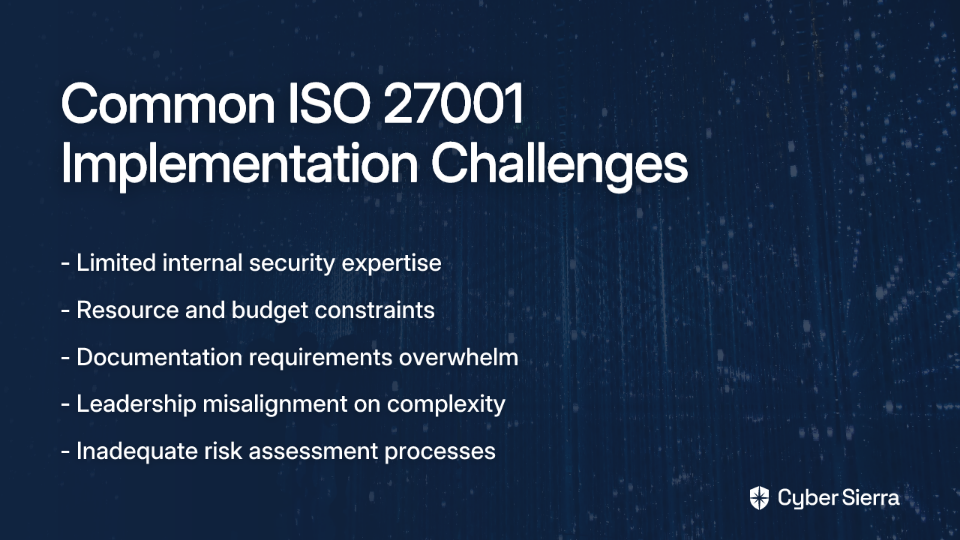
Limited Internal Expertise

Many organizations, especially smaller ones, lack dedicated information security specialists. As one professional admitted: "I'm from the company's business side, and I have a tech background but no prior ISM experience."

Solution: Consider ISO 27001 professional certification training for key personnel to build internal capabilities. External consultants can also provide targeted guidance without taking over the entire project.

Resource Constraints

ISO 27001 implementation requires significant time and budget commitments. "It appears to be a time-consuming process to obtain the certificate," notes one implementer.

Solution:

  • Use your gap assessment to focus resources on critical areas
  • Implement a phased approach rather than attempting everything simultaneously
  • Leverage existing security investments where possible
  • Consider compliance automation tools to reduce manual effort

Documentation Overload

The documentation requirements of ISO 27001 often overwhelm organizations. "I find that it makes life a lot easier if you have something documented," advises one security professional.

Solution:

  • Start with templates to reduce the burden of creating documents from scratch
  • Focus on quality over quantity – documents should be usable, not just audit artifacts
  • Implement a document management system to maintain version control
  • Include documentation in regular business processes rather than treating it as a separate activity

Leadership Misalignment

When leadership doesn't understand the complexity of ISO 27001, they may set unrealistic expectations. "The leadership above me is clueless," laments one security professional.

Solution:

  • Use your gap assessment results to educate leadership on the actual state of compliance
  • Provide clear cost and resource estimates based on identified gaps
  • Highlight business benefits beyond certification (improved security, competitive advantage)
  • Secure executive sponsorship to ensure adequate support throughout the project

Beyond the Gap Assessment: Building a Sustainable ISMS

While certification is often the primary goal, remember that ISO 27001 is about establishing an effective Information Security Management System that continues to protect your organization. A successful implementation should:

  1. Integrate security into business processes rather than treating it as an add-on
  2. Build a security-aware culture across the organization
  3. Establish continuous monitoring of security controls
  4. Implement regular reviews and improvements to adapt to changing threats

Conclusion

An ISO 27001 gap assessment is not merely a compliance exercise but a valuable tool for understanding and improving your organization's security posture. By methodically identifying discrepancies between your current practices and ISO requirements, you create a clear roadmap for certification and enhanced security.

Remember that while tools and templates can assist, successful implementation ultimately depends on building internal capabilities and fostering a security-conscious culture. As one practitioner wisely noted about automation tools: "It's still up to you to implement the controls to become compliant, and a big part of the ISO audits is showing the proof that you're following your processes and proof that your technical controls are in place."

Whether you're a small business just beginning your ISO 27001 journey or a larger organization seeking to streamline your certification process, a well-executed gap assessment provides the foundation for success.

Frequently Asked Questions

What is the primary purpose of an ISO 27001 gap assessment?

The primary purpose is to identify discrepancies between your organization's current information security practices and the requirements of the ISO 27001 standard. This assessment acts as a diagnostic tool, highlighting vulnerabilities and providing a clear roadmap to help you prepare for certification by showing exactly what needs to be addressed.

Why should my organization conduct an ISO 27001 gap assessment before seeking certification?

Conducting a gap assessment before seeking certification is crucial because it saves resources, reduces certification time, and increases success rates. It allows you to proactively identify and fix issues, preventing costly surprises during the formal audit and ensuring your efforts are focused on areas that genuinely require improvement.

How long does it typically take to conduct an ISO 27001 gap assessment?

The time it takes can vary significantly depending on the size and complexity of your organization, the scope of your ISMS, and the resources available; however, for many small to medium-sized businesses, it can range from a few weeks to a couple of months. A thorough assessment involves document review, interviews, and potentially some control testing, so allocating sufficient time is essential for accuracy.

Who needs to be involved in conducting an effective ISO 27001 gap assessment?

An effective gap assessment requires a cross-functional team, including IT personnel, business process owners, information security specialists (if available), and legal/compliance representatives. Involving diverse stakeholders ensures a comprehensive understanding of current practices and helps build organizational buy-in for the subsequent remediation efforts.

What are the most common challenges organizations face when performing an ISO 27001 gap assessment?

Common challenges include limited internal security expertise, resource and budget constraints, the overwhelming nature of documentation requirements, and misalignment with leadership on the complexity and importance of the process. Addressing these challenges often involves training, strategic resource allocation, using templates, and clear communication with leadership about the assessment's findings and value.

Can we use software tools for an ISO 27001 gap assessment?

Yes, software tools and compliance platforms can significantly streamline an ISO 27001 gap assessment by automating evidence collection, tracking control implementation, and managing documentation. However, it's important to remember that these tools assist the process; they don't replace the human judgment and effort required to interpret findings and implement controls effectively.

What is the immediate next step after completing an ISO 27001 gap assessment?

The immediate next step is to analyze the findings and create a detailed gap closure plan. This plan should prioritize remediation activities based on risk, assign responsibilities for addressing each identified gap, establish realistic timelines, and allocate the necessary resources to implement the required changes.


Need help automating your ISO 27001 compliance journey? Cybersierra's Continuous Control Monitoring platform provides automated control testing, validation, and reporting that simplifies gap assessments and ongoing compliance management. With features designed for organizations of all security maturity levels, Cybersierra helps transform security from periodic checks to continuous, automated monitoring – making your ISO 27001 implementation more efficient and sustainable.

blog-hero-background-image
Governance & Compliance

Vendor Qualification and Risk Mitigation: A Critical Step in the Pre-Contract Phase of the Vendor Lifecycle

backdrop
Table of Contents

Join thousands of professionals and get the latest insight on Compliance & Cybersecurity.


You've been tasked with managing your organization's growing vendor relationships. But as you dive into the process, you realize there's no real "system" in place—just the owner's experience and intuition guiding supplier decisions. You're constantly wondering: "Is this the right way to evaluate vendors? Are we missing critical risk factors? Where does qualification even fit in the vendor management lifecycle?"

This ad-hoc approach might have worked when your company was smaller, but as operations expand and supplier relationships grow more complex, the lack of structure becomes increasingly concerning. All it takes is one bad audit, and the growth your company has experienced could be severely compromised.

Understanding Where Vendor Qualification Belongs in the Vendor Lifecycle

Vendor qualification and risk mitigation are foundational elements that belong specifically in the pre-contract phase of the vendor lifecycle. This positioning is critical because it represents your organization's first line of defense against potential supplier-related issues.

The vendor lifecycle typically consists of four main phases:

  1. Pre-contract phase (where qualification and risk assessment happen)
  2. Contracting phase
  3. Performance management phase
  4. Renewal or termination phase

By placing rigorous qualification processes at the beginning of this lifecycle, you establish a critical filter that prevents problematic vendors from entering your supply chain in the first place. This proactive approach is far more effective than trying to manage issues after contracts are signed and dependencies are established.

The Current State of Vendor Qualification in Many Organizations

The reality in many growing businesses mirrors what one procurement professional described on Reddit: "The current system isn't really a system, and is basically the owner's experience and intuition in dealing with suppliers." This reliance on "tribal knowledge" rather than documented processes creates significant vulnerabilities.

As another industry expert noted, "We need to systematize things." This sentiment reflects the growing recognition that as organizations scale, their approach to vendor qualification must evolve from intuitive to systematic.

The consequences of maintaining an informal approach can be severe. As one manufacturing professional warned, "All it takes is one bad audit and all the growth and expansion your company has experienced may be ruined or stunted."

What Exactly Is Vendor Qualification?

Vendor qualification is a systematic evaluation process that assesses potential suppliers against predefined criteria to determine their capability, reliability, and compatibility with your organization's requirements and standards. It serves as a quality control mechanism defined by the client organization.

During qualification, vendors are thoroughly evaluated through:

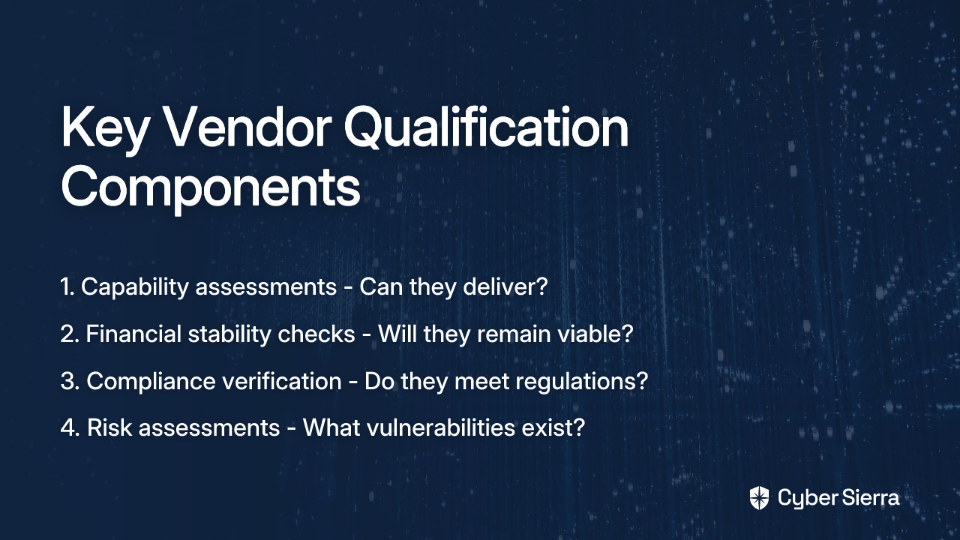
  1. Capability assessments - Can they deliver what they promise?
  2. Financial stability checks - Will they remain viable throughout the contract?
  3. Compliance verification - Do they meet industry regulations and standards?
  4. Risk assessments - What potential vulnerabilities might they introduce?

The output of this process is typically an evaluation report that classifies suppliers into appropriate categories based on their performance against these criteria.

Why Qualification Must Happen Before Contracting

Placing qualification in the pre-contract phase is not arbitrary—it's strategically essential. Here's why:

Risk Mitigation Starts Early

When qualification occurs before contracts are signed, organizations can identify potential risks and implement mitigation strategies from the outset. This proactive approach prevents the costly and complex process of addressing issues after dependencies have been established.

As one cybersecurity expert explains, "Risk Mitigation is when we put controls in place to reduce or eliminate a risk." In the context of vendor management, these controls must be established before contractual commitments are made.

Legal Protection

The pre-contract qualification process provides an opportunity to ensure that all legal requirements and protections are in place. As one engineering professional noted, "you went through our legal department for approval, and then we (engineers) built out individual contracts for different work that also went through legal to get the company to agree to terms etc."

This multi-layered approval process is essential for protecting your organization from legal vulnerabilities that could arise from vendor relationships.

Resource Efficiency

Qualifying vendors before contracting saves significant resources by preventing investments in relationships that may ultimately fail. By filtering out unsuitable vendors early, organizations avoid the costs associated with contract negotiations, onboarding, and potential contract terminations for vendors who cannot meet requirements.

Key Activities in the Pre-Contract Qualification Process

The pre-contract qualification phase consists of several critical activities that help organizations thoroughly assess potential vendors:

1. Assessing Vendor Capabilities and Reliability

This involves evaluating what vendors can provide and their track record in delivering similar products or services. Methods include:

  • Reviewing vendor portfolios and case studies
  • Examining technical specifications and capabilities
  • Requesting and checking customer references
  • Conducting capability demonstrations or trials

These assessments help determine if vendors can realistically meet your organization's requirements and expectations.

2. Financial Stability Checks

Financial health is a critical indicator of a vendor's long-term viability. Organizations should:

  • Review financial statements and annual reports
  • Check credit ratings and history
  • Evaluate business longevity and stability
  • Assess the vendor's client portfolio diversity

Financial instability in a vendor can lead to service disruptions, quality issues, or even complete failure to deliver, making this assessment crucial for risk management.

3. Regulatory Compliance Verification

Ensuring vendors meet all relevant regulatory requirements protects your organization from compliance risks. This includes:

  • Verifying industry-specific certifications (e.g., ISO standards)
  • Confirming adherence to data protection regulations (e.g., GDPR, HIPAA)
  • Checking for appropriate licensing and permits
  • Reviewing environmental compliance records

For regulated industries, this step is particularly critical. As noted in FDA guidelines for supplier qualification, "Supplier qualification is required for FDA compliance," with specific steps including "defining requirements, compiling candidates, evaluating candidates, performing audits, and routine re-qualification."

4. Comprehensive Risk Assessments

This activity identifies potential vulnerabilities in the vendor relationship through:

  • Security assessments (particularly for IT vendors)
  • Business continuity and disaster recovery planning
  • Geographic and geopolitical risk analysis
  • Supply chain vulnerability assessments
  • On-site audits where necessary


A comprehensive vendor management process includes qualification in the pre-contract phase

The Essential Vendor Qualification Checklist

Based on industry best practices and expert recommendations, here's a checklist for the pre-contract qualification process:

  • Insurance verification: Confirm vendors have appropriate coverage for liability, errors and omissions, cyber security, and other relevant areas
  • Background checks: Assess vendor integrity, including leadership history and past performance
  • Intellectual property protection: Ensure vendors have appropriate measures to protect your IP
  • Business licenses and certifications: Verify all required credentials are current and valid
  • Worker payment practices: Review to ensure fair compensation and avoid co-employment risks
  • Information security controls: Assess data protection measures, especially for vendors handling sensitive information
  • Business continuity plans: Evaluate disaster recovery capabilities and backup systems
  • Subcontractor management: Understand how vendors manage their own suppliers
  • Environmental and social responsibility: Review sustainability practices and corporate responsibility standards

Risk Mitigation Strategies in the Pre-Contract Phase

Once potential vendors have been qualified, the next critical step in the pre-contract phase is implementing effective risk mitigation strategies. Risk mitigation involves taking concrete actions to reduce the likelihood and impact of identified risks.

Common Vendor-Related Risks Requiring Mitigation

1. Operational Risks

These include disruptions in vendor services that could compromise your supply chain efficiency or service delivery. As organizations become increasingly dependent on vendors, operational failures can have cascading effects throughout the business.

Mitigation strategies include:

  • Developing contingency plans for critical vendor services
  • Establishing clear performance metrics and expectations
  • Creating backup vendor relationships for essential services

2. Compliance Risks

Non-compliance with industry regulations or standards can lead to costly legal ramifications, penalties, and reputational damage.

Mitigation strategies include:

  • Regular compliance audits of vendor operations
  • Contractual clauses requiring ongoing compliance reporting
  • Clear documentation of all compliance requirements

3. Reputational Risks

A vendor's actions or failures can directly impact your organization's reputation in the market. This is particularly true for customer-facing services or products.

Mitigation strategies include:

  • Thorough vetting of vendor public relations history
  • Clear brand guidelines and expectations
  • Escalation protocols for potential reputational issues

Implementing Effective Risk Mitigation

Continuous Monitoring

Risk mitigation isn't a one-time activity but requires ongoing assessment throughout the vendor relationship. As noted by the Prevalent blog on vendor risk management, "Continuous monitoring and intelligent automation are key strategies for enhancing risk management."

Regular assessments of vendor performance ensure alignment with contractual obligations and help identify emerging risks before they become significant problems.

Intelligent Automation

Automating risk assessments can enhance the efficiency of evaluations and ensure timely updates of vendor statuses. This is particularly valuable for organizations managing large numbers of vendors.

Automation tools can:

  • Schedule regular risk assessments
  • Flag vendors that fall below defined thresholds
  • Track remediation efforts
  • Document compliance activities

Clear Communication of Roles and Responsibilities

One significant challenge in vendor management is confusion about roles. As one procurement professional noted on Reddit, "I get that procurement is probably about sourcing and buying goods or services but what exactly does vendor management include?"

This confusion can lead to gaps in oversight and accountability. To address this:

  • Clearly define who is responsible for vendor qualification and risk management
  • Document these responsibilities in organizational procedures
  • Provide training on vendor qualification processes
  • Establish cross-functional teams for vendor oversight when necessary

The Benefits of Effective Pre-Contract Qualification and Risk Mitigation

Organizations that implement robust vendor qualification and risk mitigation in the pre-contract phase experience significant benefits:

1. Reduced Operational Disruptions

By identifying potential issues before they arise, organizations can maintain smoother operations with fewer vendor-related disruptions.

2. Stronger Compliance Posture

Thorough pre-contract qualification ensures vendors meet all necessary regulatory requirements, reducing compliance risks for the organization.

3. Cost Savings

Although qualification requires upfront investment, it prevents the much larger costs associated with vendor failures, contract disputes, and emergency vendor replacement.

4. Enhanced Decision-Making

The structured data gathered during qualification provides valuable insights that inform better vendor selection and management decisions.

5. Competitive Advantage

Organizations with strong vendor qualification processes can leverage more reliable supplier networks, potentially gaining advantages in quality, innovation, and market responsiveness.

Moving Beyond the Pre-Contract Phase

While qualification and risk mitigation are centered in the pre-contract phase, they lay the groundwork for all subsequent stages of the vendor lifecycle:

  • Contracting phase: Qualification findings inform contract terms, service level agreements, and performance metrics.
  • Performance management phase: The baseline established during qualification becomes the standard against which ongoing performance is measured.
  • Renewal or termination phase: Historical qualification data informs decisions about continuing or ending vendor relationships.

Conclusion: Establishing Your Qualification System

As your organization grows, transitioning from ad-hoc vendor management to a structured qualification system becomes increasingly important. As one Reddit user advised, "Create a supplier qualification system document with procedures and supplier classification methods to formalize the vendor qualification process."

For organizations lacking internal expertise, external support may be valuable. Another industry professional suggested to "hire a consultant to audit and implement a proper quality management system to enhance vendor qualification."

Organizations might also consider:

  • Adopting vendor management software to streamline the qualification process
  • Implementing third-party vendor risk management (TPRM) frameworks
  • Engaging with managed service providers (MSPs) for vendor qualification support
  • Developing industry-specific qualification criteria that address unique sector requirements

By prioritizing vendor qualification and risk mitigation in the pre-contract phase, organizations establish a solid foundation for successful vendor relationships. This proactive approach not only protects against potential risks but also creates opportunities for more strategic and valuable vendor partnerships.

Remember: The strength of your vendor network is determined largely by how well you qualify and mitigate risks at the beginning of the relationship. Investing in robust pre-contract processes pays dividends throughout the entire vendor lifecycle.

Frequently Asked Questions

What is vendor qualification?

Vendor qualification is a systematic evaluation process organizations use to assess potential suppliers against predefined criteria. This process determines a vendor's capability, reliability, financial stability, and compliance with your organization's specific requirements and industry standards before entering into a contract.

Why is vendor qualification crucial in the pre-contract phase?

Performing vendor qualification in the pre-contract phase is crucial because it acts as a primary defense mechanism against potential supplier-related risks. It allows organizations to identify and mitigate risks, ensure legal protections are in place, and prevent investment in relationships that may ultimately fail, thus saving resources and avoiding future complications.

What are the main activities in pre-contract vendor qualification?

The main activities include assessing vendor capabilities and reliability (e.g., reviewing portfolios, checking references), conducting financial stability checks (e.g., reviewing financial statements, credit ratings), verifying regulatory compliance (e.g., industry certifications, data protection adherence), and performing comprehensive risk assessments (e.g., security assessments, business continuity planning).

What are the risks of neglecting vendor qualification?

Neglecting vendor qualification can lead to severe consequences such as operational disruptions from unreliable suppliers, financial losses due to vendor instability or non-performance, compliance breaches resulting in legal penalties, and reputational damage if a vendor's actions negatively impact your organization. It can also lead to wasted resources on managing problematic vendor relationships.

How can an organization start or improve its vendor qualification process?

Organizations can start or improve their vendor qualification by first documenting their current processes (or lack thereof) and then establishing a formal system. This includes defining clear qualification criteria, creating a standardized checklist, assigning responsibilities, and potentially leveraging vendor management software or consulting services to implement best practices and ensure consistency.

Who is typically responsible for vendor qualification?

Responsibility for vendor qualification can vary but often involves a collaborative effort. Procurement or sourcing departments usually lead the process. However, input from legal, finance, IT (especially for technology vendors), and the specific departments that will use the vendor's services is crucial for a comprehensive evaluation. Clearly defining these roles is key to an effective system.


References:

blog-hero-background-image
Governance & Compliance

What is POAM? How do I Create One?

backdrop
Table of Contents

Join thousands of professionals and get the latest insight on Compliance & Cybersecurity.


You've just landed a government contract or are eyeing one, and suddenly you're faced with requirements mentioning NIST 800-171, DFARS compliance, and something called a "POAM." Your IT team is showing you spreadsheets with hundreds of security controls, and management is asking about timelines and costs. Sound familiar?

If you're feeling overwhelmed by compliance requirements and unsure where to start, you're not alone. Many organizations struggle with understanding what a Plan of Action and Milestones (POAM) is and how to create one that satisfies federal requirements.

What is a Plan of Action and Milestones (POAM)?

A Plan of Action and Milestones (POAM) is a document that identifies tasks that need to be accomplished to address security weaknesses in your information systems. It details the resources required to accomplish these tasks and establishes milestones for their implementation.

In the context of NIST 800-171 and Defense Federal Acquisition Regulation Supplement (DFARS) compliance, a POAM serves as:

  • A formal record of identified security deficiencies
  • A management tool for tracking remediation activities
  • Evidence of your commitment to addressing cybersecurity gaps
  • A compliance requirement for organizations handling Controlled Unclassified Information (CUI)

As one Reddit user explained: "if you had the SSP and the POAM filled out and you were working towards full deployment you were technically in compliance with DFARS 7012." This highlights the importance of POAMs as compliance documentation.

Why POAMs Matter for Federal Contractors

For organizations working with the Department of Defense (DoD) or other federal agencies, POAMs aren't just good practice—they're often contractually required. The DFARS clause 252.204-7012 mandates that contractors handling CUI must implement NIST SP 800-171 security requirements, and POAMs are a critical component of demonstrating this compliance.

POAMs matter because:

  1. They demonstrate due diligence: Even if you haven't implemented all security controls, a POAM shows you've identified gaps and have a plan to address them.
  2. They help prioritize security investments: By documenting and tracking security weaknesses, you can allocate resources more effectively.
  3. They're required for SPRS score submission: When submitting your NIST SP 800-171 assessment score to the Supplier Performance Risk System (SPRS), you must reference your POAMs.

The Relationship Between POAMs, SSPs, and Compliance

A POAM works in conjunction with your System Security Plan (SSP). While the SSP documents your security controls and how they're implemented, the POAM addresses any gaps where requirements aren't fully met.

Many organizations struggle with understanding exactly how POAMs fit into overall compliance. As one Reddit user asked: "I am trying to see if they would accept the SSP and POAM as being in compliance like the DOD did/does so I can have some backup to reference."

The DoD has clarified this relationship in various guidance documents. According to the Cyber DFARS FAQ, contractors can be considered compliant with DFARS 252.204-7012 if they have:

  1. Completed an SSP that describes how the specified security requirements are implemented
  2. Created POAMs that identify and describe how any unimplemented security requirements will be met
  3. A clear timeline for implementing the remaining requirements

This approach recognizes that achieving 100% compliance is often a journey, not an immediate destination.

Key Components of an Effective POAM

A properly structured POAM contains several essential components:

1. Weakness Identification

Each security weakness or deficiency should be clearly documented with:

  • A unique identifier (ID number)
  • The specific security control that's not fully implemented
  • A detailed description of the weakness
  • The source that identified the weakness (self-assessment, audit, etc.)

2. Remediation Plan

For each identified weakness, you need:

  • A description of the planned remediation actions
  • The specific milestones to achieve resolution
  • The resources required (budget, personnel, tools)
  • The office or individual responsible for implementation

3. Timeline and Deadlines

Your POAM must include:

  • Scheduled completion dates for each milestone
  • Original completion dates (if revised)
  • Status indicators (not started, in progress, completed, etc.)

4. Risk Assessment

Each weakness should be assessed for:

  • Severity level (high, moderate, low)
  • Potential impact on operations or data security
  • Risk acceptance documentation (if applicable)

How to Create a POAM: Step-by-Step Guide

Creating a comprehensive POAM may seem daunting, especially if you're new to federal compliance requirements. The following step-by-step process will help you develop an effective POAM that meets NIST 800-171 and DFARS requirements.

Step 1: Conduct a Gap Assessment

Before you can create a POAM, you need to identify your security gaps.

  1. Review NIST SP 800-171 requirements: Familiarize yourself with all 110 security requirements across the 14 control families.
  2. Perform a self-assessment: For each requirement, determine if your organization is:
  • Fully compliant
  • Partially compliant
  • Non-compliant
  1. Document findings: Record detailed observations about each control gap, including current state and what's needed for compliance.

Many organizations struggle at this stage due to limited expertise. As one Reddit user noted: "I am not an IT expert and was wondering about solutions to become compliant in a quick turnaround time?" If you lack in-house expertise, consider bringing in a cybersecurity consultant to assist with this assessment.

Step 2: Prioritize Security Weaknesses

Not all security gaps present the same level of risk. Prioritize based on:

  1. Severity and impact: Focus on high-risk vulnerabilities that could lead to data breaches or system compromise.
  2. Implementation difficulty: Consider which controls can be addressed quickly versus those requiring significant resources.
  3. Regulatory requirements: Prioritize controls explicitly mentioned in your contract clauses.

A common challenge is balancing immediate needs with long-term infrastructure improvements. As one user explained: "How do I get management to get past 'It still works why do we need to change it' when we have 10 year old servers? This is stopping upgrades to ERP system."

When making your case to management, focus on the business risks of non-compliance, including potential contract loss and cybersecurity incidents.

Step 3: Develop Detailed Remediation Plans

For each identified weakness:

  1. Define specific actions: Outline exactly what needs to be done to implement the control.
  2. Assign responsibilities: Designate who will be accountable for implementing each action.
  3. Establish realistic timelines: Set target completion dates that are achievable but demonstrate progress.
  4. Identify required resources: Document what you'll need in terms of budget, personnel, and technology.

Remember that NIST 800-171 compliance is not an overnight process. As one experienced professional noted: "Starting from zero, NIST 800-171 compliance is a 12-18 month endeavor (with no major funding or human resource constraints)."

Step 4: Document in the POAM Template

While there's no single required format for POAMs, they typically include the following columns:

  • Control ID: The NIST 800-171 control reference (e.g., 3.1.1)
  • Control Description: The text of the security requirement
  • Weakness: Description of the specific deficiency
  • Risk Level: High, Moderate, or Low
  • Remediation Plan: Specific actions to address the weakness
  • Resources Required: Budget, personnel, tools needed
  • Responsible Party: Person or team accountable
  • Scheduled Completion Date: Target date for implementation
  • Status: Not Started, In Progress, Completed, etc.
  • Comments: Additional notes or context

Step 5: Implement Tracking and Reporting Mechanisms

A POAM is a living document that requires regular updates and management attention:

  1. Establish review cadence: Schedule regular meetings (monthly or quarterly) to review POAM progress.
  2. Update status and milestones: As work progresses, update the status of each item and adjust timelines if necessary.
  3. Document evidence of completion: Maintain records of completed remediation activities as evidence for audits or assessments.
  4. Report to stakeholders: Provide regular updates to management and contractual authorities as required.

Many organizations seek tools to streamline this process. One Reddit user mentioned: "I am trying to look for a good software to help me automate POAMs." While there are specialized compliance tools available, your approach should match your organization's size and complexity.

Tools and Solutions for POAM Management

The right tools can significantly reduce the administrative burden of creating and maintaining POAMs:

Spreadsheet Solutions

For smaller organizations or those just starting their compliance journey, spreadsheet solutions may be sufficient:

  • Microsoft Excel: Create custom templates that can be shared and updated by your team.
  • Google Sheets: Enables real-time collaboration on POAM documentation.
  • SmartSheets: As one Reddit user suggested, "If you want it to be web-enabled or something, you can try SmartSheets. But it's just a spreadsheet. No need for much that's fancy."

Dedicated POAM Tools

For more complex environments or organizations seeking greater automation:

  • FutureFeed: Recommended by cybersecurity professionals for automating POAMs and compliance tracking.
  • RegScale: Offers compliance automation including POAM management.
  • ZenGRC: Provides comprehensive governance, risk, and compliance management.

Project Management Integration

Some organizations integrate POAM tracking with existing project management tools:

  • JIRA: Can be configured to track remediation tasks and deadlines.
  • Microsoft Planner/Teams: Useful for assigning and tracking POAM-related tasks.

When selecting a tool, consider your specific needs and constraints. As one Reddit commenter cautioned about certain solutions: "Their autogenerated SSP is terrible." It's important to evaluate any tool's outputs to ensure they meet your quality requirements.

Common POAM Challenges and Solutions

Challenge 1: Unclear Contract Requirements

Many organizations struggle to determine exactly what's required for compliance. As one user expressed: "Honestly it does surprise me that they added this since there is no CUI to perform this contract."

Solution: Carefully review contract language and don't hesitate to seek clarification from your contracting officer. The DFARS clause applies specifically to the handling of CUI, so understanding your data classification is critical.

Challenge 2: Resource Constraints

Compliance efforts can strain limited resources, especially for small businesses. One Reddit user shared: "We just finished our SSP. It was a 12 month engagement between four experienced IT admins."

Solution:

  • Prioritize control implementation based on risk
  • Consider cloud solutions that offer built-in compliance features
  • Explore shared services models for certain security functions
  • Investigate Small Business Innovation Research (SBIR) grants or other funding assistance for cybersecurity improvements

Challenge 3: Management Buy-In

Getting leadership support for necessary upgrades can be difficult. As one user lamented: "How do I get management to get past 'It still works why do we need to change it' when we have 10 year old servers?"

Solution:

  • Frame compliance as a business opportunity rather than just a cost
  • Quantify the potential financial impact of contract loss
  • Highlight competitive advantages of strong security posture
  • Present a phased approach with clear ROI milestones

Challenge 4: Tracking and Reporting Progress

Maintaining an up-to-date POAM can become administratively burdensome without the right processes.

Solution:

  • Embed POAM reviews in existing governance processes
  • Designate a compliance coordinator responsible for POAM maintenance
  • Use automation tools to reduce manual updates
  • Establish clear metrics for measuring and reporting progress

Best Practices for POAM Success

1. Be Realistic and Honest

Your POAM should reflect what you can actually achieve, not what you wish you could do. Unrealistic timelines undermine your credibility and set your organization up for failure.

2. Provide Sufficient Detail

Vague remediation plans like "implement better password policies" are inadequate. Instead, specify exactly what actions will be taken: "Develop and implement a password policy that requires minimum 12-character passwords with complexity requirements, changed every 60 days, with account lockout after 3 failed attempts."

3. Align with Your System Security Plan (SSP)

Ensure your POAM directly references your SSP and that both documents use consistent terminology and control references. Your SSP and POAM work together to tell a complete compliance story.

4. Document Compensating Controls

If you can't implement a control exactly as specified, document your alternative approach. Explain how your compensating control provides equivalent protection and reference industry standards where applicable.

5. Communicate Proactively

Don't wait for an audit or assessment to disclose POAM delays. If you encounter obstacles that will extend your timeline, communicate this proactively to stakeholders and contracting officials.

Conclusion

Creating and maintaining a POAM is a fundamental component of NIST 800-171 and DFARS compliance. While it requires dedication and resources, a well-developed POAM demonstrates your organization's commitment to cybersecurity and can help maintain your eligibility for government contracts.

Remember that compliance is a journey, not a destination. As one experienced professional noted: "Starting from zero, NIST 800-171 compliance is a 12-18 month endeavor." By following the steps outlined in this article and leveraging appropriate tools, you can develop a POAM that satisfies regulatory requirements while enhancing your overall security posture.

Frequently Asked Questions

What is a POAM and why is it important for government contractors?

A Plan of Action and Milestones (POAM) is a document outlining how an organization will correct identified security weaknesses in its systems. It's crucial for government contractors, especially those handling Controlled Unclassified Information (CUI), as it demonstrates a commitment to achieving NIST 800-171 compliance and is often a contractual requirement under DFARS. The POAM serves as a roadmap for remediation, a management tool for tracking progress, and evidence of due diligence. It details specific tasks, resources needed, and timelines for addressing security gaps.

How does a POAM relate to a System Security Plan (SSP) for NIST 800-171 compliance?

A System Security Plan (SSP) describes how an organization implements the required NIST 800-171 security controls, while a POAM documents any controls that are not yet fully implemented and the plan to address these gaps. The SSP outlines your current security posture and how you meet (or intend to meet) each control. The POAM complements the SSP by specifically detailing the weaknesses, the actions to correct them, and the timelines for doing so. Together, they provide a comprehensive picture of your compliance status and your plan to achieve full compliance.

What are the essential components of an effective POAM?

An effective POAM must include detailed weakness identification, a comprehensive remediation plan for each weakness, clear timelines with specific milestones, a risk assessment for each identified weakness, and assigned responsibilities for implementation. Specifically, this means unique IDs for weaknesses, descriptions of the control gaps, planned corrective actions, resources needed (budget, personnel), scheduled completion dates, status tracking, and the severity or risk associated with each deficiency.

How do I start creating a POAM for DFARS compliance?

To start creating a POAM for DFARS compliance, you must first conduct a thorough gap assessment against NIST SP 800-171 requirements to identify all security weaknesses. This involves reviewing all 110 security controls, determining your current compliance status for each (fully, partially, or non-compliant), and documenting these findings. Once gaps are identified, you can then prioritize them, develop remediation plans, and document everything in a POAM template.

Can my organization be considered DFARS compliant if we have unimplemented security controls listed in a POAM?

Yes, under certain conditions, an organization can be considered to be working towards DFARS 252.204-7012 compliance if it has a complete System Security Plan (SSP), a POAM detailing how unimplemented NIST SP 800-171 security requirements will be met, and a timeline for their implementation. The DoD recognizes that achieving full compliance can be a process. Having a robust SSP and a detailed, actionable POAM demonstrates your commitment and plan to secure CUI, which is a key aspect of compliance. However, the expectation is that you are actively working to close these gaps as outlined in your POAM.

How often should a POAM be updated?

A POAM is a living document and should be updated regularly, typically on a monthly or quarterly basis, or whenever significant changes occur in your remediation efforts or security posture. Regular reviews and updates are crucial to ensure the POAM accurately reflects your progress in addressing security weaknesses. This includes updating the status of remediation tasks, revising timelines if necessary, and documenting any newly identified weaknesses or completed actions. Consistent updates are essential for effective management and for demonstrating ongoing due diligence.

For additional guidance, consult the Cyber DFARS FAQ, which provides valuable insights on compliance requirements and expectations.

Whether you're just starting your compliance journey or looking to improve your existing processes, understanding POAM requirements and implementing best practices will position your organization for success in the federal marketplace.

blog-hero-background-image
Governance & Compliance

Inherent Risk in Risk Management - Factors & Mitigation Techniques

backdrop
Table of Contents

Join thousands of professionals and get the latest insight on Compliance & Cybersecurity.


You've spent countless hours developing your risk management framework, yet somehow, unexpected issues continue to emerge, draining resources and threatening your organization's stability. What's missing in your approach? The answer likely lies in your understanding and management of inherent risk.

Understanding the Foundation: What is Inherent Risk?

Inherent risk represents the baseline level of risk that exists in a process or activity before any controls are implemented. According to the FAIR Institute, it's essentially the "raw" risk level present in your operations before any mitigation efforts. This differs significantly from residual risk, which is what remains after controls have been put in place. Understanding this distinction is crucial because each requires different management approaches:

"Control risk and inherent risk are their own things. Combined, they help the auditor arrive at the acceptable level of detection risk, but they don't really influence each other."

Many risk management professionals struggle with this fundamental concept, often focusing solely on residual risk without properly addressing the underlying inherent risks. This oversight can lead to ineffective control strategies and wasted resources.

Why Inherent Risk Assessment Matters

Proper inherent risk assessment provides the foundation for all subsequent risk management activities. Without understanding your baseline risk level, you cannot:

  • Accurately prioritize risk mitigation efforts
  • Allocate resources efficiently
  • Develop appropriate control strategies
  • Establish meaningful benchmarks for performance

A MetricStream study emphasizes that organizations with mature inherent risk assessment processes demonstrate significantly greater resilience during disruptions and achieve better strategic outcomes.

Key Factors Determining Inherent Risk

Several critical factors influence your organization's inherent risk profile:

1. Industry Type and Regulatory Environment

Some industries inherently carry higher risk profiles due to regulatory requirements, operational complexity, or potential impact. Financial services, healthcare, and energy sectors typically face heightened inherent risks due to:

  • Strict regulatory oversight
  • Complex compliance requirements
  • Potential for significant harm from failures

2. Technological Dependencies

As organizations increasingly rely on technology, their inherent risk profiles shift. Modern technological dependencies introduce risks related to:

  • Cybersecurity vulnerabilities
  • System failures and downtime
  • Data privacy concerns
  • Integration complexities

3. Operational Complexity

Organizations with intricate operational structures face higher inherent risks:

  • Multiple handoffs increase error potential
  • Complex processes create more failure points
  • Interdependencies between systems can cascade failures
  • Communication challenges in complex structures

4. Management Quality and Risk Culture

The competence of management and the organization's risk culture significantly impact inherent risk:

"Generally misadventures happen when the business has a cultural lack of discipline."

Poor management practices that increase inherent risk include:

  • Inadequate oversight
  • Unclear responsibilities
  • Insufficient training
  • Lack of accountability
  • Resistance to risk management processes

5. External Environment

Economic conditions, market volatility, and geopolitical factors all contribute to inherent risk profiles:

  • Unstable economic environments increase financial risks
  • Market volatility affects investment and trading operations
  • Geopolitical tensions impact supply chains and global operations

Measuring Inherent Risk Effectively

To manage what you can't measure is impossible. Effective inherent risk assessment involves a structured approach:

Impact and Likelihood Assessment

Risk measurement typically involves evaluating two key dimensions:

  1. Impact: The potential consequences if a risk materializes
    • Financial loss
    • Operational disruption
    • Reputational damage
    • Regulatory penalties
  2. Likelihood: The probability of occurrence without controls
    • Historical data analysis
    • Industry benchmarks
    • Expert judgment
    • Scenario analysis

Calculating Inherent Risk Scores

The standard approach multiplies impact by likelihood to create a risk score: Inherent Risk Score = Impact × Likelihood

This quantification helps prioritize risks and allocate resources appropriately. According to LogicGate, organizations should focus mitigation efforts on risks with high inherent scores to maximize the efficiency of their control investments.

Effective Mitigation Strategies for Inherent Risk

Once you've identified and measured inherent risks, the next step is implementing appropriate mitigation strategies:

1. Establish Clear Control Expectations

Before testing controls, establish clear expectations for their effectiveness:

"You have to first build an expectation on the operating effectiveness of controls. If the control isn't operating effectively, why bother to test the control? Plus in order to test the control, you need expectations or benchmarks to compare it to."

This approach ensures you're not wasting resources testing ineffective controls and provides a baseline for improvement.

2. Implement Rigorous Testing for High Inherent Risks

When inherent risk is high, control testing becomes even more critical:

"Inherent risk being high means you need really good internal controls. If you really need them and you are going to rely on them, you best test them even more when IR is high."

For areas with low inherent risk, simpler verification may suffice, allowing you to focus resources where they matter most.

3. Control Scope Creep

One of the most significant risks in project management is scope creep, which can derail even well-planned initiatives:

"I've seen more projects fail due to scope creep from badly defined scopes and a lack of disciplined change control than any other cause."

To mitigate this risk:

  • Define project boundaries clearly from the outset
  • Implement formal change control processes
  • Empower team members to flag scope changes
  • Regularly review project scope against original parameters

As one project manager noted: "Scope creep is terrible. It is good to have front line workers that recognize it but also encouraged to stop work if they see it happening."

4. Choose Appropriate Risk Response Strategies

Based on your inherent risk assessment, select the most appropriate response:

  • Accept: For low inherent risks within your tolerance levels
  • Avoid: Eliminate activities that generate unacceptable inherent risks
  • Reduce: Implement controls to minimize risk exposure
  • Transfer: Use insurance, contracts, or outsourcing to shift financial impact

5. Monitor and Adapt

Risk environments are dynamic, requiring continuous monitoring and adaptation:

  • Regularly reassess inherent risk levels
  • Evaluate control effectiveness
  • Adjust strategies based on changing conditions
  • Document lessons learned

Common Pitfalls in Inherent Risk Management

Even experienced risk professionals encounter challenges in managing inherent risk effectively. Awareness of these common pitfalls can help you avoid them:

Overreliance on Box-Ticking Exercises

Many professionals see risk assessments as compliance exercises rather than valuable tools:

"Been doing various types of risk assessment for over 10 years in 3 companies and don't get its importance. Except for box ticking during audits, I don't find it useful in anyway."

To overcome this perception:

  • Link risk assessments to strategic objectives
  • Demonstrate the value of prevention through case studies
  • Show how proper assessment improves resource allocation

Creating New Risks During Mitigation

Sometimes well-intentioned mitigation efforts introduce new risks:

"You may inadvertently create new risks when trying to mitigate existing ones."

Always assess the potential consequences of control implementations before proceeding.

Neglecting the Human Element

Technology and processes are important, but the human element remains crucial:

"Humans using AI will replace humans not using it."

While emerging technologies like AI offer powerful risk management capabilities, they must be implemented with appropriate governance and human oversight.

Conclusion: Building Resilience Through Effective Inherent Risk Management

Managing inherent risk effectively isn't just about compliance—it's about organizational resilience. By understanding your baseline risk profile, you can develop targeted controls that provide maximum protection with optimal resource utilization. Remember that inherent risk management should be viewed as an ongoing journey rather than a destination. As your organization evolves, so too will your inherent risk profile, requiring continuous assessment and adaptation. By establishing clear control expectations, implementing rigorous testing for high-risk areas, managing scope creep, choosing appropriate risk responses, and maintaining vigilant monitoring, you can transform inherent risk from an invisible threat to a manageable aspect of your operations. Like a skilled navigator who understands the inherent risks of sailing but proceeds with appropriate precautions, your organization can navigate successfully through uncertain waters with a proper understanding of its inherent risk landscape.

Frequently Asked Questions

What is inherent risk in simple terms?

Inherent risk is the raw, baseline level of risk present in an activity or process before any controls or mitigation efforts are applied. It's the natural risk that exists simply by engaging in a particular operation or existing in a specific environment. Understanding this "starting point" of risk is fundamental to effective risk management.

How does inherent risk differ from residual risk?

Inherent risk is the risk before controls are implemented, while residual risk is the risk that remains after controls have been put in place. Think of inherent risk as the gross risk and residual risk as the net risk. Distinguishing between them is crucial because they require different management strategies and inform the effectiveness of your controls.

Why is assessing inherent risk crucial for a business?

Assessing inherent risk is crucial because it provides the foundation for all subsequent risk management activities. Without understanding your baseline risk, you cannot accurately prioritize mitigation efforts, allocate resources efficiently, develop appropriate control strategies, or establish meaningful benchmarks for measuring the performance of your risk management program. It helps organizations focus on the most significant threats first.

What are the main factors that influence an organization's inherent risk?

Several key factors influence an organization's inherent risk profile, including:

  • Industry Type & Regulatory Environment: Some sectors (e.g., finance, healthcare) naturally face higher risks due to regulations and operational nature.
  • Technological Dependencies: Increased reliance on technology introduces risks like cybersecurity threats and system failures.
  • Operational Complexity: More complex operations with multiple handoffs and interdependencies tend to have higher inherent risk.
  • Management Quality & Risk Culture: The competence of leadership and the organizational attitude towards risk significantly impact baseline risk levels.
  • External Environment: Economic conditions, market volatility, and geopolitical factors can also elevate inherent risks.

How can inherent risk be measured effectively?

Inherent risk is typically measured by assessing two key dimensions: the potential Impact if a risk materializes and the Likelihood of its occurrence without any controls. A common method is to calculate an Inherent Risk Score by multiplying Impact by Likelihood (Inherent Risk Score = Impact × Likelihood). This quantification helps prioritize risks and direct resources to areas of highest concern.

What are some common mistakes to avoid when managing inherent risk?

Common pitfalls include treating risk assessments merely as box-ticking exercises rather than strategic tools, inadvertently creating new risks while trying to mitigate existing ones, and neglecting the human element by over-relying on processes and technology without adequate human oversight and a strong risk culture. Another frequent issue is failing to properly define scope, leading to scope creep in mitigation projects.

Can mitigating one risk create new inherent risks?

Yes, mitigation efforts can sometimes inadvertently introduce new risks. For example, implementing a new technology to reduce an operational risk might introduce new cybersecurity or data privacy risks. It's essential to assess the potential secondary effects of any control or mitigation strategy before implementation to ensure it doesn't create more problems than it solves.

blog-hero-background-image
Governance & Compliance

What are the NIST Implementation Tiers?

backdrop
Table of Contents

Join thousands of professionals and get the latest insight on Compliance & Cybersecurity.


You've been tasked with implementing the NIST Cybersecurity Framework (CSF) in your organization, but you're struggling to understand what those "implementation tiers" actually mean and how they apply to your security program. Are they just arbitrary ratings, or do they provide meaningful guidance for your cybersecurity journey? The reality is that without properly understanding NIST Implementation Tiers, you might invest significant resources into security controls that don't actually align with your organization's risk management capabilities and strategic needs.

Understanding the NIST Implementation Tiers

The NIST Cybersecurity Framework includes four Implementation Tiers that serve as benchmarks to evaluate your organization's approach to cybersecurity risk management. These tiers describe the degree to which your cybersecurity risk management practices exhibit the characteristics defined in the Framework. It's important to note that these tiers do not represent maturity levels. As NIST explicitly states, "Tiers are meant to support organizational decision making about how to manage cybersecurity risk, as well as which dimensions of the organization are higher priority and could receive additional resources." Let's explore each tier in detail:

Tier 1: Partial (Ad-hoc)

Organizations at Tier 1 operate with cybersecurity practices that are largely reactive and implemented on an ad-hoc basis. This means:

  • Risk management processes are not formalized and are often implemented irregularly when issues arise
  • There's limited awareness of organizational cybersecurity risks
  • The organization doesn't have a comprehensive understanding of its role in the larger ecosystem
  • There's minimal external information sharing about threats and vulnerabilities
  • Cybersecurity activities occur without coordination or collaboration

As one security professional on Reddit noted: "Without a structured approach, achieving effective compliance is nearly impossible. When you're reacting to every security event without a formal process, you're constantly fighting fires rather than preventing them." Organizations at this tier typically have:

  • No documented security policies or procedures
  • Minimal budget allocated to cybersecurity
  • No formal risk assessment process
  • Security decisions made primarily by IT staff without executive involvement
  • Little to no visibility into their security posture

Tier 2: Risk Informed

At Tier 2, organizations have begun to formalize their cybersecurity practices, but implementation remains inconsistent. Key characteristics include:

  • Risk management processes and practices are approved by management but may not be established as organizational-wide policy
  • Prioritization of cybersecurity activities may not be directly informed by organizational risk objectives or the threat environment
  • There's an awareness of role in the broader ecosystem, but formal collaboration is limited
  • The organization understands its dependencies and partners but hasn't formalized information sharing capabilities
  • Cybersecurity information is shared within the organization on an informal basis

"Organizations at this tier recognize their cybersecurity posture but lack integration into processes, resulting in security gaps," explains a compliance manager in a recent discussion. "I've seen many organizations with well-written policies that aren't actually implemented in day-to-day operations." Common pitfalls at this tier include:

  • Failure to document processes effectively, leading to miscommunication about compliance status
  • Inconsistent application of security controls across different departments
  • Limited collaboration between IT, security, and business units
  • Reactive approach to new threats despite having formalized policies

Tier 3: Repeatable

Organizations at Tier 3 have formalized practices and policies that are consistently implemented throughout the organization. This tier represents significant maturity:

  • Risk management practices are formally approved and expressed as policy
  • Regular updates to cybersecurity practices based on changes to business/mission requirements and evolving threats
  • Consistent and effective responses to changes in risk environment
  • The organization understands its dependencies and partners and receives information from these partners enabling collaboration and risk-based management decisions
  • Formal mechanisms exist for information sharing internally and with external partners

"At Tier 3, we finally achieved clarity in our processes," notes an IT manager. "Our security team can efficiently track and respond to evolving threats because everyone understands their role and follows consistent procedures." Organizations at this tier typically demonstrate:

  • Documented policies and procedures regularly reviewed and updated
  • Formal risk assessment processes integrated into business decisions
  • Security metrics reported to executive leadership
  • Integrated security awareness training throughout the organization
  • Regular communication with external partners about security threats and practices

Tier 4: Adaptive

At the highest tier, organizations have sophisticated cybersecurity risk management practices that are adaptive and proactive:

  • Cybersecurity risk management is part of the organizational culture and evolves from an awareness of previous activities and continuous monitoring
  • The organization adapts its cybersecurity practices based on lessons learned and predictive indicators
  • Continuous improvement incorporating advanced technologies and practices
  • Active management of risk and sharing of information with partners
  • The organization can quickly and efficiently account for changes to business/mission requirements and landscape

"Organizations at Tier 4 benefit from a truly proactive risk management approach," according to cybersecurity experts at CyberSaint. "They don't just respond to threats—they anticipate them." A CISO from a financial services company shared on Reddit: "It's crucial for organizations to leverage the comprehensive security metrics at this tier to justify budgets and engage stakeholders. When security becomes part of the culture, everyone from the board to frontline employees understands their role." Tier 4 organizations typically feature:

  • Cybersecurity integrated into the enterprise risk management process
  • Executive leadership actively involved in cybersecurity decisions
  • Continuous monitoring and improvement of security controls
  • Advanced threat intelligence capabilities
  • Automation of security processes where possible
  • Regular participation in information sharing communities

Why Implementation Tiers Matter

Understanding your organization's current implementation tier provides several critical benefits:

1. Realistic Self-Assessment

The tiers help organizations honestly evaluate their cybersecurity capabilities without the subjective bias that often occurs in self-evaluations. As one Reddit user pointed out: "If you get 2 different auditors from the same company - even then the numbers will be different because they see things differently." Implementation tiers provide a more objective framework for assessment.

2. Strategic Resource Allocation

Knowing your current tier enables more informed decisions about where to allocate limited security resources. Organizations can prioritize investments that help them progress from their current tier to the desired tier.

3. Meaningful Communication with Leadership

Tiers provide a common language to discuss cybersecurity maturity with executives and board members who may not have technical backgrounds. This facilitates more productive conversations about risk and security investments.

4. Regulatory Compliance Guidance

While the tiers themselves are not compliance requirements, they help organizations understand how their current practices align with various regulatory expectations and provide a roadmap for improvement.

5. Benchmarking Against Industry Peers

Organizations can use the tiers to gauge how their cybersecurity practices compare to industry standards and peers, helping identify areas where they may be lagging behind.

Transitioning Between Tiers

Moving from one tier to the next requires thoughtful planning and implementation. Here are key recommendations for organizations looking to advance their cybersecurity maturity:

Moving from Tier 1 to Tier 2

  1. Formalize Risk Assessment Processes: Implement structured risk assessment methodologies that align with your business objectives.
  2. Develop Basic Policies and Procedures: Create foundational documentation for security practices, ensuring management approval.
  3. Establish Security Governance: Form a security committee or assign responsibility for security oversight to specific roles.
  4. Begin Security Awareness Training: Implement basic security awareness training for all employees.
  5. Allocate Dedicated Resources: Ensure there's a specific budget and personnel assigned to security functions.

Moving from Tier 2 to Tier 3

  1. Standardize Implementation: Ensure consistent application of security controls across all departments.
  2. Integrate Security with Business Processes: Embed security considerations into business decision-making processes.
  3. Establish Metrics and Reporting: Implement regular security metrics reporting to leadership.
  4. Formalize External Information Sharing: Develop structured processes for sharing and receiving threat intelligence.
  5. Implement Regular Testing: Conduct regular assessments of security controls to verify effectiveness.

Moving from Tier 3 to Tier 4

  1. Automate Security Processes: Implement automation for routine security tasks and monitoring.
  2. Develop Predictive Capabilities: Move beyond reactive measures to anticipate and prepare for emerging threats.
  3. Create Adaptive Policies: Ensure policies can quickly evolve in response to changing threats and business requirements.
  4. Cultivate Security Culture: Foster a security-minded culture throughout the organization where security becomes everyone's responsibility.
  5. Establish Advanced Analytics: Implement sophisticated security analytics to identify patterns and anomalies.

Common Implementation Challenges and Solutions

Organizations frequently encounter several obstacles when working with NIST Implementation Tiers:

Challenge 1: Subjective Scoring

"Just having someone look at the control and the definition of the numeric score, then enter a number results in numbers that cannot be compared," notes a security professional on Reddit. Different evaluators often produce inconsistent ratings.

Solution: Implement a structured, evidence-based assessment approach that clearly defines what constitutes each tier for each control. The tiered scoring system (1-4) helps minimize subjectivity compared to more granular scales.

Challenge 2: Resource Constraints

Many organizations struggle to allocate sufficient resources to advance to higher tiers, particularly smaller businesses.

Solution: Prioritize advancements based on risk assessment. Focus on the most critical areas first, and consider using compliance automation tools like Drata, Vanta, or OneTrust to enhance efficiency.

Challenge 3: Stakeholder Engagement

"What would be your approach to a department which doesn't want to change their way of working (it has been identified as insecure)?" asked one Reddit user, highlighting the common challenge of resistance to security improvements.

Solution: Organize regular discussions with relevant teams to go over each control, explaining its significance and value. Tie security improvements to business objectives and highlight the potential costs of security incidents.

Challenge 4: Framework Complexity

Some organizations find the NIST CSF overwhelming, particularly with "poorly placed subcategories" and "repetitive subcategories" as mentioned by users online.

Solution: Start with a simplified approach focusing on high-priority areas. Consider using tools that help organize and visualize the framework requirements. Cyber Sierra's Continuous Control Monitoring (CCM) tool can help manage controls across multiple compliance frameworks, including NIST, by centralizing your control repository and providing near real-time updates on your security posture.

How Cyber Sierra Supports NIST Implementation Tiers

For organizations seeking to advance through the NIST Implementation Tiers, Cyber Sierra's platform offers several capabilities that align with tier progression:

  • Centralized Control Repository: Cyber Sierra's Continuous Control Monitoring (CCM) module helps organizations move beyond ad-hoc practices by establishing a central repository for security controls across multiple frameworks, including NIST.
  • Automated Evidence Collection: The platform automates the collection and validation of control evidence, helping organizations establish the consistent practices required for higher implementation tiers.
  • Real-time Risk Intelligence: With actionable risk intelligence and continuous monitoring capabilities, organizations can develop the adaptive responses to changing threats characteristic of higher tiers.
  • Multi-framework Management: For organizations managing multiple compliance requirements beyond NIST, Cyber Sierra simplifies the process by mapping controls across frameworks and reducing duplicate efforts.

Conclusion

NIST Implementation Tiers provide a valuable framework for organizations to assess their current cybersecurity risk management practices and chart a course for improvement. Rather than viewing them as a compliance checklist or maturity assessment, organizations should use the tiers as a strategic tool to guide investment and development of their cybersecurity program. By understanding the characteristics of each tier and implementing a structured approach to advancement, organizations can build more resilient cybersecurity programs that effectively protect their critical assets and respond to evolving threats. Remember that the appropriate tier for your organization depends on your specific risk profile and business requirements. Not every organization needs to achieve Tier 4 across all areas—the key is to align your cybersecurity capabilities with your organization's strategic objectives and risk tolerance.

Frequently Asked Questions (FAQ)

What are NIST Implementation Tiers?

NIST Implementation Tiers are benchmarks used to evaluate an organization's approach to cybersecurity risk management. They describe the degree to which an organization's cybersecurity risk management practices exhibit the characteristics defined in the NIST Cybersecurity Framework (CSF), ranging from Tier 1 (Partial) to Tier 4 (Adaptive).

Why are NIST Implementation Tiers important for my organization?

NIST Implementation Tiers are important because they help organizations conduct realistic self-assessments of their cybersecurity capabilities, guide strategic resource allocation for security investments, and facilitate meaningful communication about cybersecurity posture with leadership. They also provide a roadmap for improving alignment with regulatory expectations and benchmarking against industry peers.

How do I determine the right Implementation Tier for my organization?

The right Implementation Tier for your organization is determined by your specific risk profile, business objectives, and regulatory requirements, not by aiming for the highest tier by default. You should assess your current practices against the tier descriptions and decide on a target tier that aligns with your organization's operational needs, risk tolerance, and available resources.

Are NIST Implementation Tiers the same as maturity levels?

No, NIST Implementation Tiers are not maturity levels. NIST explicitly states that Tiers are intended to support organizational decision-making about managing cybersecurity risk and prioritizing resources, rather than serving as a strict progression of maturity that all organizations must achieve.

What are the key differences between NIST Tier 2 (Risk Informed) and Tier 3 (Repeatable)?

The key difference is that organizations at Tier 2 (Risk Informed) have approved risk management practices, but these may not be established as organization-wide policy and implementation can be inconsistent. In contrast, Tier 3 (Repeatable) organizations have formally approved policies and procedures that are consistently implemented and regularly updated, with a more structured approach to collaboration and information sharing.

How can my organization transition to a higher NIST Implementation Tier?

Transitioning to a higher tier involves a structured approach. For example, moving from Tier 1 to Tier 2 requires formalizing risk assessments and developing basic policies. Advancing from Tier 2 to Tier 3 involves standardizing implementation across departments and integrating security into business processes. Progressing to Tier 4 focuses on automation, predictive capabilities, and cultivating a pervasive security culture. Each step requires planning, resource allocation, and continuous improvement.


Additional Resources

blog-hero-background-image
Governance & Compliance

How to Be Compliant with HIPAA's Omnibus Rule

backdrop
Table of Contents

Join thousands of professionals and get the latest insight on Compliance & Cybersecurity.


In today's healthcare landscape, protecting patient information isn't just good practice—it's the law. For CISOs, IT Compliance Managers, and Data Protection Officers navigating the complexities of HIPAA compliance can feel overwhelming. The HIPAA Omnibus Rule, which expanded and strengthened the original regulations, presents particular challenges for organizations handling protected health information (PHI). This comprehensive guide will walk you through the essential steps to achieve and maintain compliance with HIPAA's Omnibus Rule, helping you protect sensitive health information while avoiding costly penalties.

Understanding the HIPAA Omnibus Rule: A Foundation for Compliance

The HIPAA Omnibus Rule, finalized in 2013 by the Department of Health and Human Services (HHS), significantly strengthened the privacy, security, and breach notification regulations established under HIPAA. This update was designed to address gaps in the original legislation and integrate requirements from the Health Information Technology for Economic and Clinical Health (HITECH) Act.

Key Changes Introduced by the Omnibus Rule

  1. Enhanced Patient Rights
    • Patients gained greater control over their health information
    • New restrictions on using PHI for marketing or fundraising
    • Expanded right to electronic copies of health records
  2. Modified Breach Notification Requirements
    • Eliminated the "harm threshold" for reporting breaches
    • Created a presumption that all unauthorized uses/disclosures of PHI are reportable breaches
    • Required a four-factor risk assessment to determine exceptions
  3. Expanded Business Associate Liability
    • Direct liability for HIPAA violations extended to business associates
    • Required updates to Business Associate Agreements (BAAs)
    • Expanded definition of business associates to include subcontractors
  4. Increased Penalties for Non-Compliance
    • Penalties increased to a maximum of $1.5 million per violation
    • Tiered penalty structure based on level of negligence
  5. Genetic Information Protection
    • Genetic information classified as protected health information
    • Prohibited use of genetic information for underwriting purposes

"Most people misunderstand the Health Insurance Portability and Accountability Act because they've never read it," notes one legal expert in a recent discussion of compliance challenges. This highlights a critical first step: truly understanding what the law requires.

Essential Compliance Steps for Covered Entities and Business Associates

Based on the HIPAA Omnibus Rule requirements, here are the critical steps every organization must take to achieve compliance:

1. Determine Your Organization's Status

Before implementing compliance measures, determine whether your organization is a Covered Entity, Business Associate, or neither under HIPAA.

  • Covered Entities: Healthcare providers, health plans, and healthcare clearinghouses that transmit health information electronically
  • Business Associates: Entities that perform services for covered entities involving access to PHI (including subcontractors)

"Your business is not a covered entity so HIPAA does not apply to you," is a common misconception. Even organizations outside healthcare may be business associates if they handle PHI on behalf of covered entities.

2. Conduct a Comprehensive Risk Assessment

"HIPAA really should start with performing a risk assessment of all assets storing/processing/transmitting PHI," advises a cybersecurity professional in a forum discussion. This foundational step is mandated by the Security Rule and provides the basis for your compliance program. Your risk assessment should:

  • Identify where PHI is stored, received, maintained, or transmitted
  • Document potential threats and vulnerabilities to PHI
  • Assess current security measures
  • Determine the likelihood of threat occurrence
  • Evaluate the potential impact of security incidents
  • Assign risk levels to guide prioritization

The HHS offers guidance through its Security Risk Assessment Tool, which can help structure this critical process.

3. Implement and Document Security Safeguards

Based on your risk assessment, implement appropriate administrative, physical, and technical safeguards: Administrative Safeguards:

  • Designate a Privacy Officer and Security Officer
  • Develop and implement policies and procedures
  • Provide regular workforce training
  • Establish sanctions for violations
  • Implement a security incident response plan

Physical Safeguards:

  • Implement facility access controls
  • Create workstation use and security policies
  • Establish device and media controls
  • Develop proper disposal procedures for PHI

Technical Safeguards:

  • Implement access controls (including MFA where appropriate)
  • Establish audit controls to track PHI access
  • Ensure integrity of PHI through mechanisms that prevent improper alteration
  • Use transmission security measures like encryption

4. Revise and Implement Privacy Practices

The Omnibus Rule significantly modified privacy requirements. To comply:

  • Update your Notice of Privacy Practices (NPP) to reflect Omnibus Rule changes
  • Revise authorization forms to meet new marketing and fundraising requirements
  • Implement processes for handling patient requests for electronic PHI
  • Create procedures for restricting disclosures to health plans when patients pay in full
  • Establish protocols for handling genetic information

5. Update Breach Notification Procedures

The Omnibus Rule's revised breach notification standards require:

  • A presumption that unauthorized PHI access, use, or disclosure is a breach
  • Implementation of a documented breach risk assessment process using the four-factor test:
    1. Nature and extent of PHI involved
    2. Who accessed or used the PHI
    3. Whether PHI was actually acquired or viewed
    4. Extent to which risk has been mitigated
  • Notification procedures aligned with regulatory timelines (60 days to individuals; HHS notification based on breach size)
  • Documentation of all breach-related activities and decisions

6. Review and Update Business Associate Relationships

"You being HIPAA compliant is required by law if you're in business with any type of Covered Entity," explains an IT professional in an online discussion. The Omnibus Rule significantly expands business associate compliance responsibilities, making this a critical area of focus. Take these steps to ensure compliance:

  • Identify all vendors and contractors with access to PHI
  • Execute updated Business Associate Agreements (BAAs) that reflect Omnibus Rule requirements
  • Establish a process for assessing business associate security practices
  • Implement ongoing monitoring of business associate compliance
  • Create procedures for responding to business associate security incidents

One common area of confusion is cloud service providers. As one IT administrator noted, "For starters you need a BAA with Microsoft" when using Microsoft 365 for handling PHI. This applies to all cloud providers that may access PHI, including email providers, EHR systems, and data storage services.

7. Train Your Workforce

Comprehensive training is essential for HIPAA compliance. Even the most robust policies and procedures are ineffective if your workforce doesn't understand and follow them. Your training program should:

  • Cover all aspects of HIPAA compliance relevant to job functions
  • Be provided to all new workforce members
  • Include regular refreshers and updates when regulations or policies change
  • Document attendance and comprehension
  • Address common scenarios and risk areas specific to your organization

Common HIPAA Compliance Challenges and Solutions

Organizations frequently struggle with specific aspects of HIPAA compliance. Here are solutions to some of the most common challenges:

Challenge 1: Determining What Constitutes PHI

Many organizations struggle with identifying what information is considered PHI under HIPAA.

Solution: Remember that PHI includes any identifiable health information that relates to:

  • An individual's past, present, or future physical or mental health condition
  • The provision of healthcare to an individual
  • The payment for healthcare

This includes obvious identifiers like patient names and less obvious ones like appointment dates when linked to a healthcare provider. When in doubt, treat information as PHI if it connects an individual to healthcare services. As one forum participant questioned: "Is billing information that only includes a person's name considered PHI?" The answer is yes—if it connects that person to a healthcare provider, it constitutes PHI.

Challenge 2: Managing Business Associate Relationships

The expanded liability for business associates under the Omnibus Rule creates significant compliance challenges. Solution:

  • Maintain a comprehensive inventory of all business associates
  • Implement a standardized BAA review process
  • Create a vendor management program that includes security assessments
  • Use tools like SecurityScorecard or UpGuard to continuously monitor vendor security postures
  • Consider implementing a third-party risk management (TPRM) solution to automate assessment and monitoring processes

Challenge 3: Implementing Technical Safeguards

Many organizations struggle with implementing appropriate technical safeguards, particularly in complex or hybrid environments. Solution:

  • Prioritize encryption for data at rest and in transit
  • Implement strong access controls with role-based access
  • Deploy multi-factor authentication (MFA) for all systems containing PHI
  • Establish comprehensive audit logging and monitoring
  • Consider automated compliance monitoring tools to continuously validate security controls

Challenge 4: Documenting Compliance Efforts

Demonstrating compliance during audits or investigations requires thorough documentation. Solution:

  • Maintain detailed policies and procedures that reflect actual practices
  • Document all risk assessments and mitigation decisions
  • Keep records of all security incidents and breach investigations
  • Maintain training records with content, dates, and attendees
  • Implement a document management system to organize compliance documentation

Organizations using integrated GRC (Governance, Risk, and Compliance) platforms can significantly reduce the burden of documentation by centralizing policies, evidence, and compliance activities in a single system.

The Role of Technology in HIPAA Compliance

While HIPAA compliance fundamentally depends on appropriate policies and practices, technology plays an increasingly important role in both achieving and demonstrating compliance with the Omnibus Rule.

Key Technology Solutions for HIPAA Compliance

  1. Encryption Technologies
    • Implement end-to-end encryption for emails containing PHI
    • Deploy disk encryption for all devices that may store PHI
    • Use secure messaging platforms for clinical communications
  2. Access Control Systems
    • Implement role-based access control (RBAC)
    • Deploy multi-factor authentication
    • Utilize single sign-on solutions with appropriate security controls
  3. Monitoring and Auditing Tools
    • Implement security information and event management (SIEM) solutions
    • Deploy user activity monitoring tools
    • Use file integrity monitoring to detect unauthorized changes
  4. Automated Compliance Platforms
    • Consider integrated GRC platforms to manage multiple compliance requirements
    • Implement continuous control monitoring to validate security measures
    • Deploy vendor risk management solutions to assess and monitor business associates

For organizations struggling with manual compliance processes, platforms like CyberSierra can streamline HIPAA compliance through automated evidence collection, continuous monitoring, and integrated vendor management. CyberSierra's Governance, Risk & Compliance (GRC) module specifically addresses HIPAA requirements by automating data collection, risk assessments, and control monitoring—transforming compliance from periodic, manual checks to continuous, automated validation.

Consequences of Non-Compliance

The Omnibus Rule significantly increased penalties for HIPAA violations, making compliance more critical than ever. Penalties follow a tiered structure based on the level of negligence:

  1. Tier 1 - Unknown Violation: $100-$50,000 per violation
  2. Tier 2 - Reasonable Cause: $1,000-$50,000 per violation
  3. Tier 3 - Willful Neglect (Corrected): $10,000-$50,000 per violation
  4. Tier 4 - Willful Neglect (Not Corrected): $50,000 per violation

All tiers are subject to a maximum penalty of $1.5 million per identical violation per year. Beyond financial penalties, non-compliance can result in:

  • Mandated corrective action plans
  • Ongoing monitoring by HHS
  • Reputational damage
  • Loss of patient/customer trust
  • Civil litigation from affected individuals

Creating a Culture of Compliance

Sustainable HIPAA compliance requires more than policies and technologies—it demands a culture where privacy and security are valued throughout the organization. To create this culture:

  1. Lead by Example: Ensure leadership demonstrates commitment to compliance
  2. Integrate Compliance into Workflows: Make security and privacy part of routine operations
  3. Reward Compliance: Recognize and reward staff who exemplify good privacy practices
  4. Provide Resources: Ensure staff have the tools, training, and time to comply with requirements
  5. Encourage Reporting: Create non-punitive avenues for reporting concerns or potential violations

Conclusion

Compliance with HIPAA's Omnibus Rule requires a comprehensive approach combining policy development, technical safeguards, workforce training, and ongoing monitoring. By understanding the requirements, implementing appropriate measures, and fostering a culture of compliance, organizations can protect sensitive health information while avoiding costly penalties and reputational damage.

For organizations struggling with the complexity of HIPAA compliance, automated solutions like CyberSierra's HIPAA compliance tools can provide significant advantages by streamlining evidence collection, automating control validation, and simplifying vendor management. Remember that HIPAA compliance is not a one-time project but an ongoing process requiring continuous attention and improvement. By investing in robust compliance practices now, you'll not only meet regulatory requirements but also build trust with patients and partners while protecting sensitive health information from increasingly sophisticated threats.

Frequently Asked Questions

1. What is the HIPAA Omnibus Rule and why is it important?

The HIPAA Omnibus Rule is a final rule issued in 2013 that significantly expanded and strengthened the privacy, security, and breach notification requirements of the original HIPAA regulations. It's critically important because it updated HIPAA to address new technologies and risks, integrated requirements from the HITECH Act, increased patient rights, and extended direct liability to business associates, making compliance more stringent and penalties for non-compliance more severe.

2. Who needs to comply with the HIPAA Omnibus Rule?

Both Covered Entities (healthcare providers, health plans, healthcare clearinghouses) and their Business Associates (including subcontractors) must comply with the HIPAA Omnibus Rule. The rule expanded the definition of Business Associates and made them directly liable for HIPAA violations, meaning any organization that creates, receives, maintains, or transmits Protected Health Information (PHI) on behalf of a Covered Entity is subject to these regulations.

3. What are the biggest changes introduced by the HIPAA Omnibus Rule?

The HIPAA Omnibus Rule introduced several major changes, including significantly enhanced patient rights (like more control over their PHI and access to electronic copies), stricter breach notification requirements (removing the "harm threshold"), direct liability for Business Associates and their subcontractors, and increased penalties for non-compliance (up to $1.5 million per violation type per year). It also classified genetic information as PHI.

4. How does the Omnibus Rule affect Business Associates?

The Omnibus Rule dramatically changed the landscape for Business Associates by making them directly liable for complying with HIPAA's Security Rule, relevant parts of the Privacy Rule, and breach notification requirements. Previously, liability was primarily contractual through Covered Entities. Now, Business Associates (and their subcontractors handling PHI) must implement their own HIPAA compliance programs, update their Business Associate Agreements (BAAs), and face direct enforcement actions and penalties from HHS for violations.

5. What is the first step towards HIPAA Omnibus Rule compliance?

The first essential step towards HIPAA Omnibus Rule compliance is to conduct a comprehensive and thorough risk assessment. This assessment helps identify where PHI is stored, processed, or transmitted, pinpoint potential threats and vulnerabilities to that PHI, evaluate existing security measures, and determine the likelihood and impact of potential breaches. The findings from this risk assessment form the foundation for developing and implementing appropriate security safeguards and policies.

6. What are the consequences of not complying with the HIPAA Omnibus Rule?

Non-compliance with the HIPAA Omnibus Rule can lead to severe consequences, including substantial financial penalties (up to $1.5 million per identical violation per year, tiered by negligence), mandated corrective action plans, ongoing HHS monitoring, significant reputational damage, loss of patient or customer trust, and potential civil lawsuits from individuals affected by a breach.

7. How can technology help with HIPAA Omnibus Rule compliance?

Technology plays a crucial role by enabling organizations to implement necessary safeguards and automate compliance processes. Key technologies include encryption for data at rest and in transit, access control systems with multi-factor authentication, security information and event management (SIEM) tools for monitoring and auditing, and automated GRC (Governance, Risk, and Compliance) platforms. These tools can help streamline tasks like evidence collection, continuous control monitoring, risk assessment, and vendor risk management, making it easier to achieve and maintain compliance.

Additional Resources

This article is provided for informational purposes only and is not intended as legal advice. Organizations should consult with qualified legal counsel to ensure compliance with HIPAA and other applicable regulations.

blog-hero-background-image
Governance & Compliance

Key Changes in NIST CSF 2.0: A Comprehensive Guide

backdrop
Table of Contents

Join thousands of professionals and get the latest insight on Compliance & Cybersecurity.


You've set up your cybersecurity program following the NIST Cybersecurity Framework. But just when you thought you had everything under control, NIST releases version 2.0 with significant changes. Now you're faced with potentially updating numerous policies and procedures, all while preparing for upcoming audits that may use these new standards. The National Institute of Standards and Technology (NIST) released the finalized Cybersecurity Framework 2.0 in February 2024, marking the first major update since the framework's initial publication in 2014. This revision introduces substantial changes aimed at expanding its applicability and addressing evolving cybersecurity challenges. For security professionals and compliance managers, understanding these changes is crucial to maintaining effective security programs and ensuring regulatory compliance. This article breaks down the key changes in NIST CSF 2.0 and what they mean for your organization.

Introduction to NIST CSF 2.0

The NIST Cybersecurity Framework has become a cornerstone for organizations seeking to build robust cybersecurity programs. As a voluntary framework, it provides a set of guidelines and best practices to help organizations manage and reduce cybersecurity risk. CSF 2.0 builds upon the previous version's foundation while introducing significant enhancements to address feedback from users and the evolving threat landscape. The main objective remains helping organizations understand and manage cybersecurity risks effectively, but with greater emphasis on governance and enhanced adaptability for various organizational structures and sizes. Many users have expressed confusion about understanding NIST controls and concerns about inaccuracies in compliance documentation. As one security professional noted on Reddit, "I find myself frequently questioning whether or not I actually comprehended what I just read and what the control is asking for." This underscores the need for clarity in guidance—something NIST has attempted to address with version 2.0.

Key Change #1: Introduction of the Govern Function

Perhaps the most significant addition to CSF 2.0 is the introduction of the Govern function. This new core function elevates cybersecurity as a significant enterprise risk alongside financial and reputational concerns, emphasizing governance outcomes for managing cybersecurity risks. The Govern function includes three main categories:

  1. Organizational Context (GV.OC): Understanding how cybersecurity fits into your organization's overall mission and objectives
  2. Oversight (GV.OV): Ensuring leadership visibility and accountability for cybersecurity
  3. Risk Management Strategy (GV.RM): Establishing and maintaining your organization's strategy for managing cybersecurity risk

This addition is particularly valuable as it bridges the communication gap between technical teams and executive leadership. As one cybersecurity professional commented, "The governance aspect really rounds out this framework. Love it to bits. To me the govern functions will help highlight each of the other phases to business units who aren't directly involved with cyber functions, specifically those in executive-level roles that will be able to flow up information to C-suites and board." By integrating governance directly into the framework, NIST CSF 2.0 helps organizations establish clearer lines of responsibility and accountability for cybersecurity across all levels of the organization. This addresses a common pain point where cybersecurity was often treated as exclusively an IT issue rather than an enterprise-wide concern requiring executive oversight.

Key Change #2: Expanded Scope and Applicability

While the original CSF was primarily targeted at critical infrastructure, version 2.0 has been designed to be applicable to organizations of all sizes and across all sectors. This expanded scope makes the framework more accessible and relevant to a broader range of organizations, including:

  • Small and medium-sized businesses with limited cybersecurity resources
  • Non-profit organizations
  • Educational institutions
  • Government agencies at all levels
  • Healthcare providers
  • Financial services companies

The updated framework provides more flexible implementation guidance, acknowledging that organizations have different resources, capabilities, and risk tolerances. This addresses feedback that the previous version was too rigid or prescriptive for some organizations. CSF 2.0 also introduces refined implementation tiers to help organizations assess their cybersecurity program maturity:

  • Tier 1: Partial - Cybersecurity risk management practices are not formalized, and risk is managed in an ad hoc manner
  • Tier 2: Risk-Informed - Risk management practices are approved but may not be established as organizational-wide policy
  • Tier 3: Repeatable - The organization's risk management practices are formally approved and expressed as policy
  • Tier 4: Adaptive - The organization adapts its cybersecurity practices based on lessons learned and predictive indicators

These tiers aren't meant to be maturity levels that organizations should necessarily strive to climb. Instead, they help organizations determine the appropriate level of rigor for their cybersecurity programs based on their specific needs and risk appetite.

Key Change #3: Enhanced Supply Chain Security Focus

CSF 2.0 places significantly more emphasis on supply chain risk management than its predecessor. This reflects the growing recognition that many cybersecurity breaches occur through third-party vendors and suppliers. The updated framework includes expanded guidance on:

  • Identifying and assessing supply chain risks
  • Establishing security requirements for suppliers
  • Verifying that suppliers meet security requirements
  • Responding to supply chain security incidents

This enhanced focus aligns with other NIST publications, such as NIST SP 800-161 (Cybersecurity Supply Chain Risk Management Practices for Systems and Organizations), creating a more cohesive approach to supply chain security across NIST's guidance. Organizations that have already invested in third-party risk management programs will find these additions helpful in validating and potentially enhancing their existing approaches. For those just beginning to address supply chain risks, CSF 2.0 provides valuable guidance on where to start.

Key Change #4: Enhanced Tools and Resources

NIST has significantly expanded the tools and resources available to help organizations implement CSF 2.0. One of the most valuable additions is the searchable reference tool, which allows organizations to customize their cybersecurity profiles and map to over 50 other cybersecurity documents.
This tool, available at the NIST CSF website, addresses a common pain point expressed by security professionals: the challenge of mapping between different frameworks and standards. As one Reddit user noted, "I like using 800-53 and would like to have a true mapping from 2.0 to 800-53 version whatever to make it easier to verify with less time invested." Other new resources include:

  • Community profile templates: Pre-configured profiles that organizations can use as starting points
  • Quick start guides: Simplified guidance for organizations just beginning their CSF implementation journey
  • Implementation examples: Real-world examples of how organizations have implemented the CSF
  • Mapping resources: Tools to help organizations map the CSF to other frameworks and standards they may be using

These resources are particularly valuable for organizations with limited cybersecurity expertise or resources, as they provide practical guidance and templates that can be adapted to specific organizational needs.

Key Change #5: Enhanced Incident Response Focus

CSF 2.0 includes enhanced guidance on cybersecurity incident response, reflecting the reality that despite best efforts, security incidents will occur. The framework emphasizes integrating cybersecurity incident response into overall risk management practices. The updated framework includes expanded guidance in the Respond and Recover functions, including:

  • Response Planning: Improved processes to ensure response actions are executed during or after an incident
  • Communications: Enhanced guidance on coordinating response activities with internal and external stakeholders
  • Analysis: More detailed approaches for effectively understanding the impact of incidents
  • Mitigation: Expanded strategies for containing incidents and preventing expansion
  • Improvements: More robust processes for incorporating lessons learned into future response activities

This enhanced focus on incident response aligns with NIST's other publications, such as the updated Special Publication 800-61r3 (Computer Security Incident Handling Guide), creating a more cohesive approach to incident management across NIST's guidance.

Key Change #6: Alignment with International Standards

CSF 2.0 strengthens its alignment with international cybersecurity standards, making it easier for global organizations to achieve compliance across multiple frameworks. This includes better alignment with:

  • ISO/IEC 27001 (Information Security Management Systems)
  • COBIT (Control Objectives for Information Technologies)
  • The European Union's NIS2 Directive
  • Various sector-specific frameworks and regulations

This enhanced alignment reduces the compliance burden for organizations operating in multiple jurisdictions or required to comply with multiple frameworks. It allows organizations to leverage their CSF implementation to support compliance with other frameworks, rather than starting from scratch with each new requirement.

Implementation Challenges and Recommendations

While CSF 2.0 brings significant improvements, organizations may face challenges when transitioning from the previous version or implementing the framework for the first time.

Challenge: Mapping Between Versions

One significant challenge is the lack of a direct, one-to-one mapping between CSF 1.1 and CSF 2.0. As one security professional noted, "There are enough changes that 2.0 does not even come close to mapping 1:1 with CSF ver 1.1. There are too many multiple mappings from ver 1.1 to vers 2.0 so it's not a great mapping."

Recommendation: Rather than trying to force a direct mapping, organizations should take this opportunity to reassess their cybersecurity program holistically against CSF 2.0. Start by understanding the new Govern function and how it impacts your overall approach, then work through the remaining functions methodically.

Challenge: Understanding Control Requirements

Many users still find it challenging to interpret exactly what specific controls are asking for. As one Reddit user expressed, "Last thing I want to do is write up a bunch of controls just to find out that what I wrote was completely inaccurate/off point."

Recommendation: Leverage the expanded implementation examples and guidance provided with CSF 2.0. Additionally, consider:

  • Mapping CSF controls to your existing internal policies, as one practitioner suggested: "Pull up your internal policies and standards and have a crack at mapping to those... Stick in a reference to the relevant policy/standard paragraph against each element of the CSF."
  • Consulting NIST's supplementary publications that provide more detailed guidance on specific topics
  • Participating in industry forums and communities of practice to learn from others' experiences

Challenge: Resource Constraints

Smaller organizations may still find it challenging to implement the framework due to limited resources and expertise.

Recommendation: Take advantage of the new quick start guides and community profiles, which provide streamlined guidance for organizations with limited resources. Focus initially on the highest-priority areas based on your risk assessment, then gradually expand your implementation as resources allow.

How Cyber Sierra Simplifies CSF 2.0 Implementation

For organizations seeking to streamline their implementation of NIST CSF 2.0, platforms like Cyber Sierra can significantly reduce the complexity and resource requirements.

Cyber Sierra's Continuous Control Monitoring (CCM) module is particularly relevant for organizations implementing CSF 2.0, as it:

  • Builds a central controls repository that maps directly to CSF 2.0 and other frameworks
  • Provides near real-time visibility into your security posture through continuous monitoring
  • Delivers actionable risk intelligence to help prioritize remediation efforts
  • Manages controls across multiple compliance frameworks simultaneously
  • Automates control testing and validation, reducing manual effort

The platform's Governance, Risk & Compliance (GRC) module directly addresses the new Govern function in CSF 2.0 by:

  • Automating data collection for governance-related controls
  • Supporting policy management aligned with governance requirements
  • Generating comprehensive reports for executive oversight
  • Maintaining detailed audit trails for compliance documentation

By leveraging a platform like Cyber Sierra, organizations can more efficiently implement CSF 2.0 while also supporting compliance with other frameworks and standards.

Conclusion: Embracing the Evolution

The transition from CSF 1.1 to CSF 2.0 represents a significant evolution in NIST's approach to cybersecurity guidance. The introduction of the Govern function, expanded scope, enhanced supply chain focus, and improved tools and resources all contribute to a more comprehensive and adaptable framework. While the transition may present challenges, particularly for organizations that have heavily invested in the previous version, the benefits of CSF 2.0's enhanced approach to cybersecurity risk management make it worth the effort. Organizations should approach the transition as an opportunity to reassess and strengthen their cybersecurity programs, rather than simply mapping from one version to another. By embracing the changes and leveraging the expanded resources and tools available, organizations can build more resilient cybersecurity programs that better protect their assets and support their missions.

For ongoing updates and community engagement, visit the NIST Cybersecurity Framework official site.

Frequently Asked Questions (FAQ) about NIST CSF 2.0

What is NIST CSF 2.0?

NIST CSF 2.0 is the latest version of the National Institute of Standards and Technology's Cybersecurity Framework, officially released in February 2024. It provides a voluntary set of guidelines, standards, and best practices to help organizations of all types and sizes manage and reduce cybersecurity risk. This version marks the first major update since 2014, building upon the original foundation with significant enhancements to address the evolving threat landscape and user feedback.

Why was the NIST Cybersecurity Framework updated to version 2.0?

The NIST Cybersecurity Framework was updated to version 2.0 primarily to address the evolving cybersecurity landscape, incorporate extensive feedback from users across various sectors, and expand its applicability beyond its original focus on critical infrastructure. Key motivations included the need for stronger integration of cybersecurity governance, enhanced focus on supply chain risk management, and providing more adaptable guidance for a broader range of organizations, including small and medium-sized businesses.

What is the most significant change in NIST CSF 2.0?

The most significant change in NIST CSF 2.0 is the introduction of the new "Govern" function. This addition elevates cybersecurity risk management to a strategic enterprise-level concern, emphasizing leadership oversight, organizational context, and the establishment of a clear cybersecurity risk management strategy. The Govern function aims to bridge the gap between technical cybersecurity operations and executive decision-making.

Who can benefit from using NIST CSF 2.0?

NIST CSF 2.0 is designed for organizations of all sizes, sectors, and levels of cybersecurity maturity, representing a significant expansion from its predecessor's focus on critical infrastructure. This includes small and medium-sized businesses (SMBs), non-profit organizations, educational institutions, and government agencies at all levels. The framework's updated guidance and resources, such as quick start guides, make it more accessible and adaptable to diverse organizational needs and capabilities.

How does NIST CSF 2.0 address supply chain security?

NIST CSF 2.0 significantly enhances the focus on supply chain risk management (SCRM) compared to version 1.1. It provides more detailed guidance on identifying, assessing, and managing cybersecurity risks associated with third-party vendors and suppliers. This includes establishing security requirements for suppliers, verifying their compliance, and planning for and responding to supply chain security incidents, aligning with other NIST guidance like SP 800-161.

What are common challenges when implementing or transitioning to NIST CSF 2.0?

Common challenges when implementing or transitioning to NIST CSF 2.0 include the lack of a direct one-to-one mapping from version 1.1, making it necessary to reassess programs holistically. Organizations may also find it challenging to fully interpret specific control requirements and may face resource constraints, particularly smaller entities. It's recommended to leverage NIST's new tools, focus on a risk-based approach, and consider the new Govern function's impact early in the process.

How can organizations simplify the implementation of NIST CSF 2.0?

Organizations can simplify NIST CSF 2.0 implementation by utilizing the new resources provided by NIST, such as quick start guides, community profiles, and the searchable online reference tool. Starting with a thorough understanding of the Govern function and its implications for overall strategy is crucial. Additionally, platforms like Cyber Sierra can streamline the process by automating control mapping, providing continuous monitoring, and assisting with GRC (Governance, Risk & Compliance) activities, reducing manual effort and complexity.

Additional Resources

toaster icon

Thank you for reaching out to us!

We will get back to you soon.