Join thousands of professionals and get the latest insight on Compliance & Cybersecurity.
Thank you for subscribing us!
Please check your email to confirm your email address.
Share via
You've found the perfect SaaS tool to supercharge your startup's operations. It ticks all the boxes functionally, and the price is right. But when you ask about their SOC 2 compliance, you're met with an awkward silence or vague promises about "security being a priority." Sound familiar?
For growing startups, this scenario creates a genuine dilemma: do you walk away from an otherwise perfect vendor, or do you take on unknown security risks that could come back to haunt you?
The SOC 2 Gold Standard (And Why It Falls Short)
SOC 2 (System and Organization Controls 2) has become the de facto security framework for SaaS companies. Developed by the American Institute of Certified Public Accountants (AICPA), it's based on five Trust Services Criteria:
Confidentiality (protection of sensitive information)
Privacy (personal information handling)
A SOC 2 Type I report provides a snapshot of controls at a point in time, while a Type II report (the more valuable one) assesses controls over 3-12 months.
When a vendor has SOC 2 compliance, it signals that an independent auditor has verified their security practices. That's why many enterprises won't even consider vendors without it.
The Problem: SOC 2 Isn't Everything It Seems
Despite its status as a gold standard, SOC 2 has limitations that savvy security professionals understand:
As one security professional on Reddit notes: "Many vendors jump through hoops doing the bare minimum and haven't actually implemented a secure system."
SOC 2 reports "can be manipulated to meet certain narratives" since they're essentially audit reports, not compliance certificates.
The scope matters enormously: "You need to ask more questions if the stuff that is handling your data isn't in the SOC 2 audit scope."
This skepticism is healthy. A SOC 2 report is a useful data point, but it's not a security guarantee. And for startups working with newer, smaller vendors, SOC 2 compliance might not be available at all.
A Risk-Based Framework for Vendor Assessment
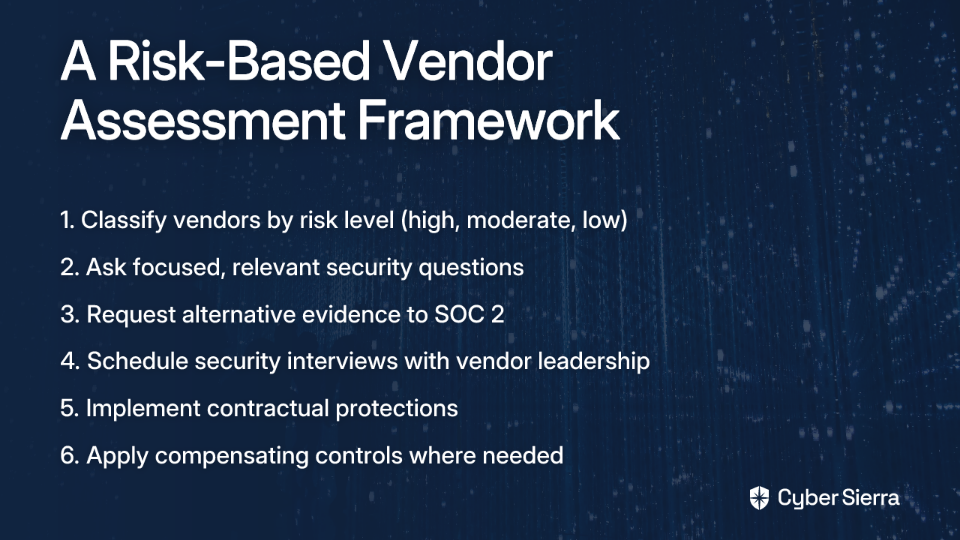
Rather than treating SOC 2 as a binary yes/no decision, startups need a more nuanced approach to vendor risk management. Here's a practical framework that balances security with business needs:
Step 1: Classify Your Vendor by Risk Level
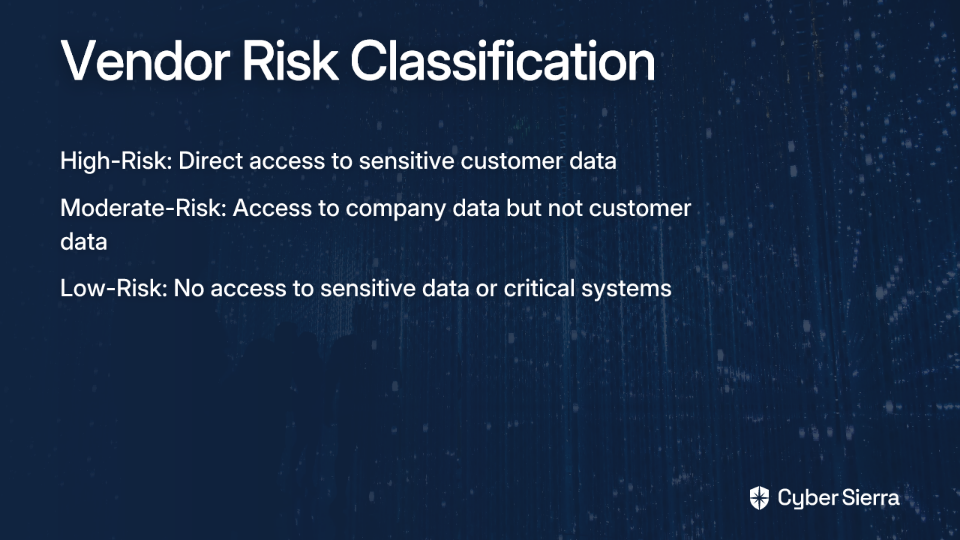
Not all vendors pose the same level of risk. Your assessment efforts should be proportional to the potential damage a security incident might cause:
High-Risk/Critical Vendor: Has direct access to or processes sensitive customer data (PII, financial information), or their failure would significantly disrupt your service.
Moderate-Risk Vendor: Interacts with your systems or accesses less sensitive company data, but not customer data. Their failure would be inconvenient but not catastrophic.
Low-Risk Vendor: Provides ancillary services with no access to sensitive data or critical systems (e.g., office supplies, certain marketing tools).
This classification helps you focus your limited resources on the vendors that matter most.
Step 2: Ask Focused, Relevant Questions
Vendors often reject lengthy, generic security questionnaires because "it's just not scalable" to answer custom questions for every client. Instead, create a short, focused questionnaire tailored to the vendor's risk level and the specific services they provide.
For high-risk vendors without SOC 2, your questions should cover the spirit of the Trust Services Criteria:
Information Security & Access Control:
How do you enforce access controls to systems that would process our data?
Do you have a formal information security policy? Can we review it?
What security awareness training do your employees receive?
Availability & Business Continuity:
What are your uptime SLAs?
Do you have a documented disaster recovery plan? When was it last tested?
Confidentiality & Data Handling:
How is our confidential information protected? Do employees sign NDAs?
What are your data encryption practices (both in transit and at rest)?
Vulnerability Management & Incident Response:
Do you perform regular vulnerability scanning and penetration testing?
What is your policy for vulnerability notification? How and when will you inform us of security incidents?
What is your process for emergency patching of critical vulnerabilities?
Step 3: Request Alternative Evidence
If a vendor can't provide a SOC 2 report, ask what they can provide as evidence of their security maturity:
ISO 27001 certification: Another globally recognized security standard
Penetration test results: Even redacted summaries can provide valuable insights
Cyber liability insurance: Proof they've at least been vetted by an insurer
Internal documentation: Their information security policy, incident response plan, or vendor management policy
Security whitepapers: Detailed explanations of their security architecture
Step 4: Schedule a Security Interview
As one security professional noted, "a call can be more productive than a questionnaire." For any high-risk vendor, schedule a 30-45 minute call with their CISO, Head of Engineering, or security lead.
This direct conversation allows you to:
Ask follow-up questions about their security practices
Gauge their security culture and maturity
Build a relationship with their security team
The way a vendor responds to security questions often reveals more than the answers themselves. Evasiveness or defensiveness may be red flags, while transparency and detailed explanations suggest a mature security posture.
Mitigating the Risk: Contracts and Compensating Controls
Once you've assessed a vendor, you need to formalize protections and implement additional safeguards.
Leverage Your Vendor Contract
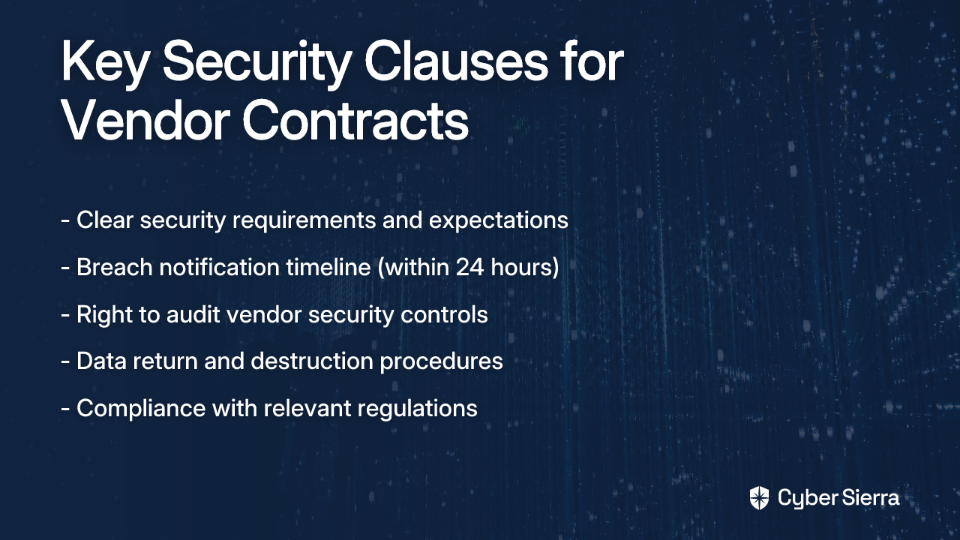
Your contract is your most powerful tool for managing vendor risk. Even when a vendor lacks SOC 2, you can include clauses that require:
Clear security expectations: Specify requirements like data encryption, access controls, and personnel security.
Breach notification: Define the timeline for notifying you of a breach (e.g., within 24 hours).
Right to audit: Include a clause that gives you the right to assess their security controls, especially following a security incident.
Data return and destruction: Outline procedures for securely returning or destroying your data upon contract termination.
Compliance with relevant regulations: Ensure they agree to comply with regulations applicable to your business (e.g., HIPAA, GDPR, PCI DSS).
Implement Compensating Controls
If a vendor has specific security weaknesses, determine if you can mitigate them on your end:
Can you encrypt sensitive data before sending it to the vendor?
Could you implement additional monitoring for that vendor's access?
Is it possible to limit the scope of data they can access?
Document Everything for Your Compliance
This entire process isn't just about vetting vendors; it's about building your own defensible vendor risk management program. This documentation becomes critical if your own company undergoes a SOC 2 audit, as AICPA Criterion CC9.2 specifically requires that "the entity assesses and manages risks associated with vendors and business partners."
From Risk Aversion to Risk Intelligence
A vendor lacking a SOC 2 report isn't necessarily a deal-breaker. It's a signal to perform deeper, more hands-on due diligence. By taking a risk-based approach that classifies vendors, asks focused questions, seeks alternative evidence, and secures contractual protections, startups can make informed decisions about which vendors to trust.
Building a robust vendor risk management process is a sign of a mature startup. It protects your data, your reputation, and your customers while enabling you to partner confidently with the vendors you need to succeed.
Remember: effective security isn't about saying no to every vendor without a compliance certificate. It's about understanding the real risks, applying appropriate scrutiny, and making deliberate decisions about which risks you're willing to accept – and which ones you're not.
Frequently Asked Questions
What is SOC 2 and why is it important for SaaS vendors?
SOC 2 is a security framework that demonstrates a vendor's ability to securely manage and protect customer data based on five Trust Services Criteria: Security, Availability, Processing Integrity, Confidentiality, and Privacy. It's considered a gold standard because it involves an independent audit of a company's security controls over a period of time (for a Type II report). For many enterprises, SOC 2 compliance is a mandatory requirement as it provides a baseline level of assurance about their security posture.
Why shouldn't a startup automatically reject a vendor without SOC 2?
Startups should not automatically reject vendors without SOC 2 because many innovative or newer tools may not have undergone the lengthy and expensive audit process yet, and a SOC 2 report itself is not a complete guarantee of security. A rigid, SOC 2-only policy can limit your access to valuable tools that could accelerate your growth. Instead of a simple yes/no, a better approach is to use a risk-based framework to evaluate the actual risk the vendor poses and perform due diligence proportional to that risk.
How can I assess a vendor's security without a SOC 2 report?
You can assess a vendor's security without a SOC 2 report by adopting a four-step risk-based framework: classify the vendor's risk level, ask focused security questions, request alternative evidence of security, and conduct a direct security interview. First, determine if the vendor is high, moderate, or low risk based on the data they will handle. Then, ask targeted questions about their security policies and incident response plans. Request alternative proof like ISO 27001 certification or penetration test results. Finally, a direct conversation with their security lead can provide crucial insights into their security maturity.
What are the most important security questions to ask a high-risk vendor?
For a high-risk vendor, you should focus your questions on the core principles of security, availability, and data handling. Key questions include how they enforce access controls, protect confidential data with encryption, and their process for responding to security incidents. It's also crucial to ask about their disaster recovery plans, employee security training, and vulnerability management processes, such as how they perform scanning and handle emergency patching. These questions get to the spirit of the SOC 2 criteria without requiring the report itself.
What are some acceptable alternatives to a SOC 2 report?
Acceptable alternatives to a SOC 2 report include other security certifications like ISO 27001, recent penetration test results, proof of cyber liability insurance, and internal documentation like their information security policy or incident response plan. These documents serve as valuable evidence of a vendor's security posture. For example, a summary of a recent penetration test shows they are proactively testing their defenses, while an ISO 27001 certification is another globally recognized standard for security management.
How can I legally protect my company when using a vendor without SOC 2?
You can legally protect your company by incorporating specific security requirements and clauses into your vendor contract. This is your most powerful tool for managing risk when a formal certification is absent. Your contract should clearly define expectations for data protection, such as encryption standards and access controls. It must include a strict breach notification clause (e.g., notification within 24 hours), a right-to-audit clause, and procedures for secure data return or destruction when the contract ends.
Error: Contact form not found.
Third Party Risk Management
Microsoft Purview vs. Custom Risk Solutions: A Startup Guide
Join thousands of professionals and get the latest insight on Compliance & Cybersecurity.
Thank you for subscribing us!
Please check your email to confirm your email address.
Share via
You've built your startup from the ground up, pouring countless hours into developing proprietary technology and acquiring valuable customer data. But as your team grows, so does an uncomfortable reality: your most valuable assets are increasingly vulnerable to insider threats.
Your anxiety grows as you realize your company lacks adequate security boundaries. You worry about disgruntled employees walking out with your customer list or proprietary code. Even worse, you feel completely lost on where to begin with data governance efforts that could prevent these scenarios.
You're not alone. Insider threats have surged dramatically, with a 44% increase in related security incidents from 2020 to 2022, according to Ponemon Institute research. Even more concerning, Solutioned.com reports that concern over malicious insiders has jumped from 60% in 2019 to a staggering 74% in 2024.
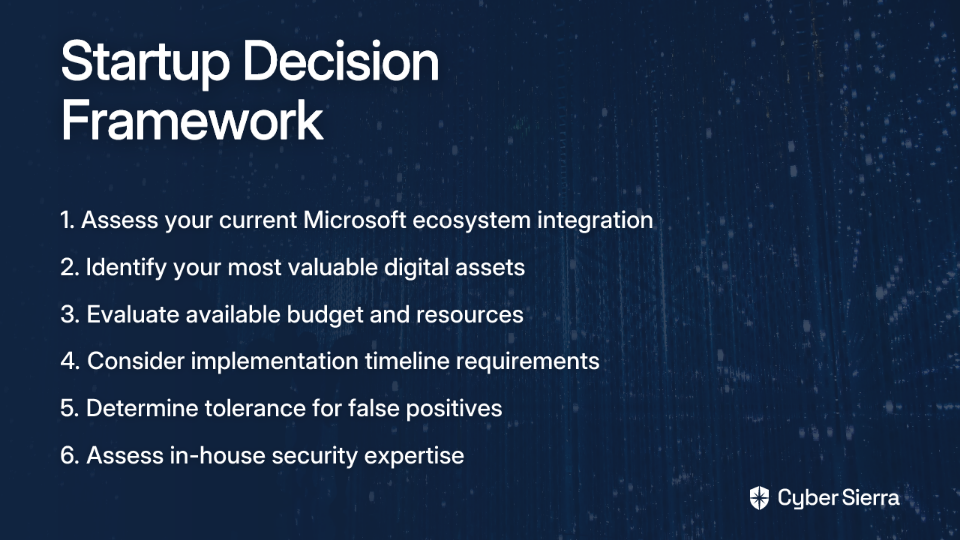
For startups wrestling with this challenge, two primary options emerge: Microsoft Purview, an integrated data governance platform, or a custom-built insider risk solution. Making the right choice means carefully weighing factors like cost, implementation time, and your specific security needs.
Understanding the Enemy Within: What is an Insider Threat?
Before evaluating solutions, it's crucial to understand exactly what you're protecting against. An insider threat comes from individuals who already have authorized access to your systems and data—employees, contractors, or vendors with legitimate credentials.
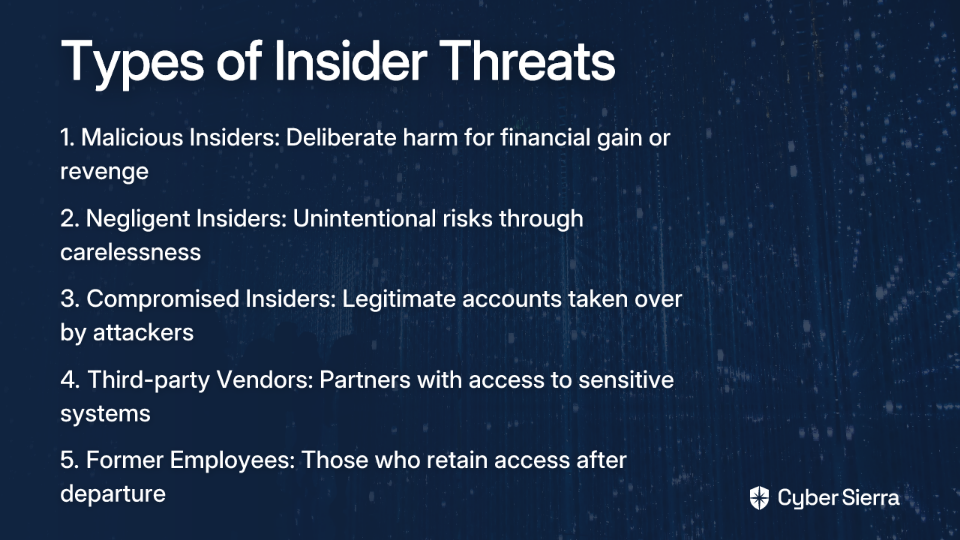
These threats typically fall into two categories:
Malicious Insiders: These are individuals who deliberately cause harm, often motivated by financial gain, revenge, or competitive advantage. Imagine your lead engineer downloading your entire codebase before joining a competitor, or a sales manager taking your client list to start their own business.
Negligent Insiders: These pose an unintentional but equally serious risk. According to Solutioned.com, a staggering 53% of IT professionals identify careless insiders as their greatest security threat. Think of the marketing team member who accidentally shares sensitive financial projections on a public Slack channel, or an employee who falls for a phishing attack.
What makes these threats particularly challenging is that traditional security measures focus on keeping external attackers out. Insiders, however, already have legitimate access and understand your security protocols, making detection significantly harder.
Option 1: Microsoft Purview - The All-in-One Data Governance Powerhouse
Microsoft Purview is a comprehensive, unified platform designed for data governance, protection, and compliance management. It provides visibility and control over your entire data estate, with specific tools targeting insider risk management.
Key Features for Insider Risk Management
Insider Risk Management Module: At its core, Purview offers behavioral analysis capabilities that can detect both accidental leaks and malicious data exfiltration. As one IT professional noted on Reddit, it's a "great tool that uses behavioral analysis to look for accidentally leaked data or data egressed maliciously by an employee." The system can even analyze communication patterns for hostile language that might indicate an employee becoming a risk.
Data Loss Prevention (DLP): These policies help prevent sensitive information from leaving your organization. You can create rules to block users from sending, sharing, or copying certain types of data. According to a Microsoft 365 administrator, "DLP policies can be created for 365 or on the end user computing device itself to limit egress of data based on its type, content, location, or classification."
Information Protection & Sensitivity Labels: This feature addresses the common pain of unclear data labeling requirements. You can classify data (e.g., Public, Internal, Confidential) and apply protection policies like encryption. The powerful auto-labeling capability can automatically classify files containing sensitive information like PII or financial data.
Communication Compliance: This monitors communications across platforms like Teams and Exchange for policy violations, such as sharing confidential information or inappropriate conduct.
Pros for a Startup
Integrated Ecosystem: If you're already using Microsoft 365, Purview extends naturally, offering a single dashboard for security management.
Unified Platform: Beyond insider risk management, you get solutions for e-discovery, data lifecycle management, and compliance—significant value for startups with limited resources.
Rapid Deployment: You can configure and deploy policies relatively quickly compared to building custom solutions.
Backed by Microsoft: You benefit from continuous updates, threat intelligence, and support from a major vendor. Gartner gives it a solid 4.4/5 rating.
Cons for a Startup
Complexity & Underutilization: Many organizations struggle with Purview's complexity. As one user complained on Reddit, "Microsoft Purview's capabilities are often underutilized" due to the overwhelming number of features.
Licensing Costs: This is a significant concern for cash-conscious startups. Advanced features like Insider Risk Management typically require higher-tier licenses (E5/A5/G5 or add-ons), which can strain a startup's budget.
Template Limitations: The policies, while powerful, are template-based and may not cover every unique scenario specific to your startup's workflow or tech stack.
Option 2: The Custom-Built Solution - A Tailored Suit of Armor
A custom insider risk solution is developed specifically for your organization's unique environment and threat model. It uses AI technology and deep integration with your existing tools to provide highly contextual alerts and protection.
Key Features & Process
AI-Driven Anomaly Detection: Custom solutions excel at establishing baselines of normal user behavior and flagging deviations with high accuracy, reducing false positives that plague many security tools.
Deep Integration: They can pull data from sources beyond the Microsoft ecosystem—your AWS infrastructure, custom SaaS apps, GitHub repositories—for truly comprehensive protection.
The Building Process typically involves:
Assess: A deep dive into your business needs and security challenges
Build: Development of a customized detection model
Implement: Integration with minimal disruption to workflows
Monitor & Tune: Continuous refinement to improve accuracy and value
Pros for a Startup
Unmatched Precision: Solutions tailored to your specific "crown jewels" and workflows lead to higher-fidelity alerts.
Flexibility: They integrate with your exact tech stack, whether you use Google Workspace, AWS, Slack, or a combination of tools.
Lower False Positives: Custom-tuned AI can lead to "improved efficiency of response teams, reducing mean-time-to-detect and mean-time-to-remediate," according to Solutioned.com.
Cons for a Startup
Cost & Resources: This is the biggest barrier. Custom solutions require significant upfront investment and ongoing resources for development, maintenance, and tuning.
Time to Value: Building and refining a custom solution takes much longer than configuring an off-the-shelf product.
Expertise Required: You need access to data scientists and cybersecurity experts—a major commitment for a young company.
Making the Call: A Decision Framework for Startups
It's important to note that this isn't just an IT decision. As one experienced professional emphasized on Reddit, "Purview and data classification should not be led by IT but by senior leadership with input from business units, HR, and legal." This applies to any insider risk management strategy.
Choose Microsoft Purview if...
You're heavily invested in the Microsoft 365 ecosystem (Teams, SharePoint, OneDrive)
Your primary risks center around Office documents, email, and Teams communications
You need a "good enough" solution now and can't wait for lengthy development
You want a unified platform that also handles broader data governance needs
Your budget aligns better with predictable subscription costs than large capital expenditures
Consider a Custom Solution if...
Your "crown jewels" live in a diverse, non-Microsoft tech stack
You have highly specific, unique insider threat scenarios that standard policies don't cover
You have access to the necessary technical talent and security maturity
Your tolerance for false positives is extremely low
You can absorb significant upfront costs for long-term benefits
Many startups find that a hybrid approach works best: using Purview for broad coverage while implementing targeted custom solutions for their highest-risk areas.
Start with a Plan, Not Just a Product
Regardless of which solution you choose, the first step remains the same: define your objectives and create a data taxonomy policy. As recommended by security professionals, you must "get the company to define what they want to do... and create a data taxonomy policy" before any technology implementation.
Protecting against insider threats is a journey, not a destination. By starting with a clear strategy and choosing the right tool for your current stage, you can build a resilient security culture that grows with your startup—safeguarding your most valuable assets without hampering the innovation and agility that make startups successful in the first place.
Frequently Asked Questions
What is an insider threat?
An insider threat is a security risk that originates from within an organization, typically from current or former employees, contractors, or partners who have authorized access to company data and systems. These threats can be either malicious, where an individual intentionally steals data or causes harm, or negligent, where an employee accidentally exposes sensitive information through carelessness or a mistake.
Why is insider risk management important for startups?
Insider risk management is crucial for startups to protect their most valuable assets, such as proprietary technology, source code, and customer data, from being stolen or leaked by employees. As startups grow, the risk of both intentional theft and accidental data exposure increases. A lack of security boundaries can lead to significant financial loss, competitive disadvantage, and reputational damage, making a proactive strategy essential for survival and growth.
What is the main difference between Microsoft Purview and a custom solution?
The main difference is that Microsoft Purview is a comprehensive, off-the-shelf platform with a broad set of integrated tools, while a custom solution is a specialized, tailor-made system built specifically for a company's unique technology stack and risk profile. Purview offers rapid deployment and a unified dashboard, especially for companies within the Microsoft 365 ecosystem. A custom solution provides higher precision and flexibility to integrate with diverse, non-Microsoft tools, but requires significantly more time, cost, and expertise to build and maintain.
How much does Microsoft Purview cost for a startup?
The cost of Microsoft Purview for a startup depends entirely on the required licensing tier, as its advanced insider risk management features are typically included only in premium plans like Microsoft 365 E5 or as a separate add-on. Startups must carefully evaluate their budget against the features they need. While lower-tier plans may be affordable, they often lack the core behavioral analysis and data loss prevention capabilities necessary for robust insider threat detection.
When should a startup choose Microsoft Purview over a custom solution?
A startup should choose Microsoft Purview when it is heavily invested in the Microsoft 365 ecosystem, needs a "good enough" solution quickly, and its primary risks are tied to Office documents, email, and Teams. Purview is ideal if your budget aligns with predictable subscription costs and you value a unified platform that also handles broader compliance and data governance needs.
Who should be responsible for implementing an insider risk strategy?
The responsibility for implementing an insider risk strategy should be led by a company's senior leadership, not just the IT department. Creating an effective strategy requires input and buy-in from various departments, including business units, HR, and legal. This collaborative approach ensures that the defined policies, such as data classification, align with business objectives and are adopted across the entire organization.
Join thousands of professionals and get the latest insight on Compliance & Cybersecurity.
Thank you for subscribing us!
Please check your email to confirm your email address.
Share via
You've been tasked with managing your organization's vendor relationships, and the responsibility feels overwhelming. Spreadsheets overflow with vendor information, questionnaires pile up unanswered, and you're constantly worried about missing critical security issues that could lead to a breach. Meanwhile, your leadership keeps asking for clear reporting on your third-party risk posture, but you struggle to provide actionable insights.
Sound familiar? You're not alone.
"We had similar frustrations when trying to validate actual controls and processes inside vendors," shares one cybersecurity professional on Reddit. Another laments that many tools "do not do a good job at repeat findings that have been remediated" – a common pain point when trying to track improvement over time.
The reality is that managing third-party risk has become increasingly complex. As organizations expand their digital ecosystems, the number of vendors with access to sensitive data multiplies exponentially. Manual processes simply can't keep pace with the scale and complexity of modern supply chains, especially when regulatory requirements like GDPR add additional compliance pressures.
Fortunately, specialized Third-Party Risk Management (TPRM) software has evolved to address these challenges. These platforms can transform your vendor risk program from a reactive, spreadsheet-heavy burden into a streamlined, proactive security function.
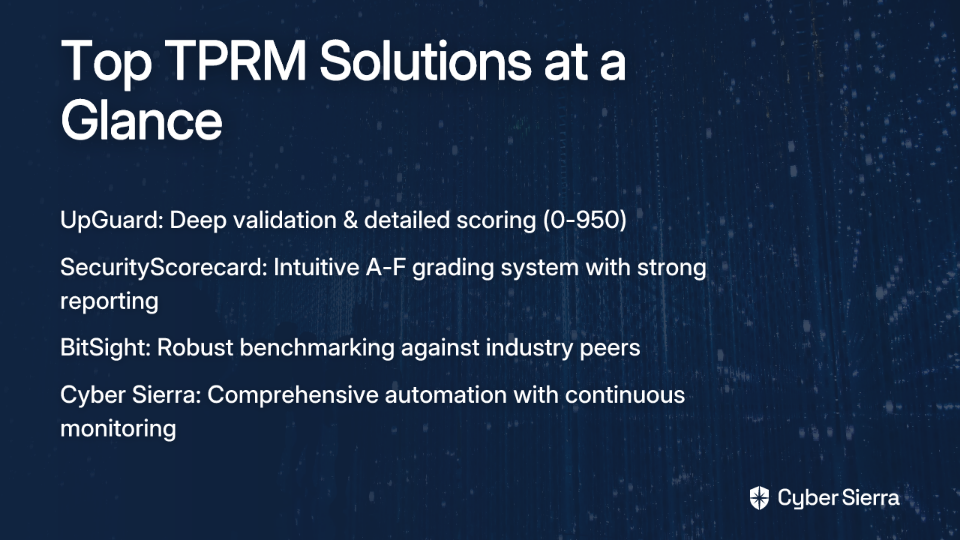
In this article, we'll examine the top three TPRM solutions—UpGuard, SecurityScorecard, and BitSight—to help you choose the right fit for your organization.
What to Look for in a TPRM Solution
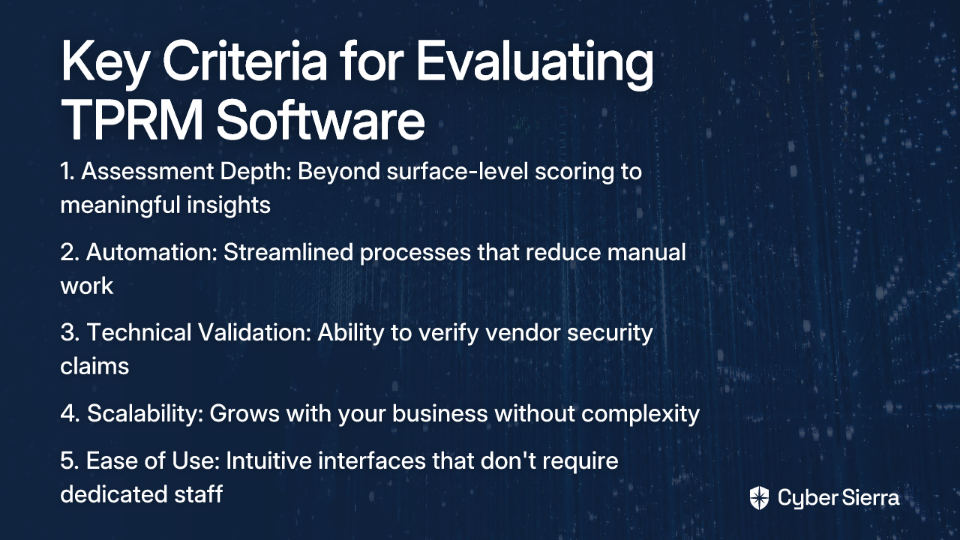
Before diving into specific products, let's establish the key criteria for evaluating TPRM software based on common pain points:
Depth of Assessment vs. Superficial Scores
Many tools provide an "outside-in view" with basic security ratings but fail to deliver meaningful insights. As one professional notes, they "don't tell you whether your third parties are doing code review or have an employee offboarding policy." Look for solutions that combine external scanning with detailed assessment capabilities.
Automation and Efficiency
Manual processes drain resources and create bottlenecks. One user described their current tool as "slow with thousands of vendors, lack of easy automation (reassigning vendors is manual and cannot be done en masse) and generally awful." Effective TPRM software should automate repetitive tasks and scale efficiently.
Validation of Technical Claims
It's crucial to verify vendor claims about their security practices. A cybersecurity professional highlighted this value: "Super helpful to check if a vendor says they've patched X, you can see if that's reflected in their external exposure." The best tools cross-reference questionnaire responses against observable security data.
Scalability and Ease of Use
Your TPRM solution should grow with your business without becoming unwieldy. Many organizations struggle with complex tools that "have the tendency to have overly complex workflow that will take a bit too much time to use," sometimes requiring "at least one dedicated employee" just for management.
Now, let's examine how the top three TPRM platforms address these needs.
The Top 3 TPRM Software Solutions
1. UpGuard Vendor Risk
UpGuard offers a comprehensive third-party risk management platform focused on data-driven security ratings and continuous monitoring.
Key Features:
Security Ratings (0-950 scale): Assesses vendors against 70+ attack vectors, providing a credit-like score for cybersecurity posture. This quantitative approach helps prioritize vendor risks objectively.
Continuous Monitoring & Attack Surface Scanning: Automatically tracks vendor security controls and emerging threats in real-time. This directly addresses the need for validation by comparing vendors' claims against their observable external security posture.
Automated Questionnaires: Features AI-enhanced responses and autofill capabilities to streamline the assessment process. Supports customizable questionnaires aligned with standards like GDPR, ISO 27001, and PCI DSS.
Remediation Tracking: Helps prioritize and monitor remediation efforts, solving the common pain of tools that "do not do a good job at repeat findings that have been remediated."
How It Solves Common Pains:
UpGuard excels at providing both depth and efficiency. Its continuous monitoring validates vendors' security claims against real-world data, while the remediation tracking ensures progress is documented. The platform strikes a balance between comprehensive assessment and streamlined processes, helping avoid the analysis paralysis that comes with overly complex questionnaires.
SecurityScorecard provides an intuitive platform with an easy-to-understand A-F letter-grade rating system that simplifies complex security data.
Key Features:
Letter-Grade Rating System: Employs a simple scorecard with A-F grades that highlight key risk areas and represent breach likelihood. This visual approach makes security concepts accessible to non-technical stakeholders.
Risk Visualization & Reporting: Offers clear visual dashboards and generates "cyber board summary reports" to aid in executive-level discussions and decision-making.
Compliance Focus: Provides strong oversight for compliance with standards like NIST 800-171, helping organizations meet regulatory requirements.
Questionnaire Management: Automates the distribution, collection, and analysis of vendor questionnaires to improve efficiency.
How It Solves Common Pains:
SecurityScorecard's strength lies in its simplicity and stakeholder communication capabilities. The letter-grade system translates technical security concepts into business language, making it easier to secure executive buy-in. The platform's visualizations help communicate risk effectively to non-technical audiences, addressing the challenge of demonstrating TPRM value to leadership.
3. BitSight
BitSight pioneered the security ratings space and offers continuous third-party risk monitoring with strong benchmarking capabilities.
Key Features:
Real-Time Security Ratings: Provides dynamic risk scores that help organizations gauge vendor risk as it evolves over time.
Benchmarking: Allows businesses to compare their vendors against industry standards and peers, providing crucial context for risk evaluation.
Attack Surface Management: Combines compliance tracking with attack surface monitoring to create a comprehensive risk profile for third parties.
TPRM Workflow Support: Supports the entire vendor lifecycle, from onboarding to ongoing risk management.
How It Solves Common Pains:
BitSight's robust benchmarking helps organizations understand vendor risk in context, addressing the challenge of managing "brokered and purchased data to score companies." The platform's industry-specific insights enable more nuanced risk assessments, particularly valuable for organizations in heavily regulated sectors.
Honorable Mentions
While the above three lead the market, two additional solutions deserve recognition:
LogicGate: A strong performer in the Governance, Risk, and Compliance (GRC) space, recognized as a Leader in the Forrester Wave for GRC Platforms. Customers report 77% time savings in vendor onboarding and over $250,000 in annual savings. It integrates with security rating providers like SecurityScorecard, centralizing intelligence.
Venminder: A comprehensive platform used by over 1,200 customers that offers unique outsourced due diligence services (Vendiligence™) and continuous monitoring (Venmonitor™). This can help organizations with resource constraints, addressing a common pain point from user research where one organization was "using OneTrust for 2 suppliers (for more, they did not have resources)."
How to Choose the Right TPRM Software for Your Organization
Start with Your "Why"
As one Reddit user wisely advised, "Always need to start the conversation with what exactly you want to accomplish with the TPRM program first - is this for privacy/GDPR, financial regs, some other sort of requirements?" Define your goals before looking at features.
Are you primarily concerned with:
Regulatory compliance (GDPR, HIPAA, etc.)
Cybersecurity risk reduction
Operational resilience
All of the above
Your primary objectives will guide which features matter most in your evaluation.
Avoiding Common Pitfalls
Integration Capabilities
Don't overlook how well the tool will integrate with your existing systems. A TPRM solution that operates in isolation creates data silos and additional work.
User Experience
Complex tools often require dedicated resources just to manage them. As one user noted, "You'll likely need at least one dedicated employee to manage ServiceNow for configuration and customization at an enterprise level." Assess whether you have the resources to support complex solutions.
Scalability
Consider future growth. Will the tool handle 10x your current vendor count efficiently? This is particularly important if you anticipate significant business expansion.
Pro Tips for Evaluation
Try Before You Buy: Always take advantage of free trials or demos to ensure the platform fits your team's workflow.
Check User Reviews: Use platforms like G2 to get unbiased feedback on usability, support, and feature performance.
Talk to Peers: Connect with other professionals in forums or user groups to hear first-hand experiences with different platforms.
Conclusion: Making an Informed Decision
Choosing the right third-party risk management software isn't just about features—it's about finding a solution that aligns with your organization's specific needs, resources, and objectives.
To summarize the strengths of our top three solutions:
UpGuard excels with deep validation of vendor claims, comprehensive remediation tracking, and detailed risk assessment (0-950 score).
SecurityScorecard offers exceptional ease of use and powerful reporting with its A-F grading system, making it ideal for stakeholder communication.
BitSight provides strong benchmarking capabilities and dynamic ratings for organizations that need to compare vendors against industry peers.
The right TPRM tool will transform your vendor management from a reactive checkbox exercise into a proactive, strategic function that genuinely reduces risk. By carefully evaluating your options against your specific needs, you can select a platform that not only addresses your current pain points but scales with your organization's growth.
Remember, effective third-party risk management isn't just about having the right software—it's about implementing processes that create a sustainable, value-adding program. The best TPRM solution is the one that enables your team to work smarter, not harder, in protecting your organization from third-party risks.
Frequently Asked Questions
What is Third-Party Risk Management (TPRM) software?
TPRM software is a specialized platform designed to help organizations identify, assess, and mitigate risks associated with their external vendors and suppliers. These tools automate the process of managing vendor relationships, moving beyond manual spreadsheets to provide continuous monitoring, security ratings, and streamlined questionnaire management to protect your organization from supply chain data breaches.
Why is managing third-party risk so important?
Managing third-party risk is crucial because vendors with access to your sensitive data can introduce significant security vulnerabilities and compliance gaps. A failure in a vendor's security can lead to financial loss, reputational damage, and regulatory fines for your organization. Effective TPRM ensures your entire supply chain adheres to your security standards.
What are the key features to look for in a TPRM solution?
The key features to look for in a TPRM solution include deep security assessments, automation of repetitive tasks, validation of technical claims, and scalability. A strong platform combines external security ratings with detailed questionnaires, automates workflows to save time, and cross-references vendor claims against observable data to ensure accuracy.
How do I choose the right TPRM software for my business?
To choose the right TPRM software, you should first define your primary goals—such as compliance or cyber risk reduction—and then evaluate solutions based on their features, scalability, and ease of use. Start by identifying what you want to accomplish with your TPRM program. Always request demos, check user reviews, and consider how the tool integrates with your existing systems before making a decision.
What is the difference between security ratings and security questionnaires?
Security ratings provide an "outside-in," objective score of a vendor's security posture based on external data, while security questionnaires provide an "inside-out" view based on the vendor's self-attested answers. Security ratings are data-driven and continuously updated by scanning a vendor's external attack surface. Questionnaires allow you to ask specific questions about internal policies. The most effective TPRM solutions combine both to validate claims.
How can TPRM software help with compliance like GDPR?
TPRM software helps with compliance like GDPR by providing tools to assess vendor adherence to regulatory requirements and maintain necessary documentation. Platforms often include pre-built questionnaires mapped to specific regulations like GDPR, HIPAA, or PCI DSS. This centralizes your compliance evidence, helps you document due diligence, and demonstrates a proactive approach to managing third-party regulatory risk.
Join thousands of professionals and get the latest insight on Compliance & Cybersecurity.
Thank you for subscribing us!
Please check your email to confirm your email address.
Share via
You've just discovered that one of your key SaaS vendors is using your company's data to train their machine learning models. The contract you signed didn't explicitly prohibit this, and now you're facing potential regulatory exposure and intellectual property risks. Sound familiar?
Welcome to the new reality of vendor risk management in the age of AI.
The Shadow AI Problem
"It's not shadow IT anymore. It's shadow AI. And it's growing faster than any policy can keep up." This sentiment, shared by a frustrated GRC professional, captures the challenge many organizations face today. Employees are using AI tools without proper vetting, and traditional governance approaches are failing to keep pace.
The explosion of AI functionality across SaaS platforms has created a perfect storm for Governance, Risk Management, and Compliance (GRC) teams:
Employees freely use AI tools without seeking approval
Vendors provide vague answers about their data usage practices
Standard Data Loss Prevention (DLP) solutions can't effectively monitor or control AI-related data flows
Traditional governance platforms assume a world where "employees actually ask for permission" - a fantasy in today's fast-paced business environment
As one GRC professional put it, "We went through the struggle of asking ALL of our vendors to tell us if and how they use our data for ML or AI. And ALL came back with a 'yes, but we.....'." This lack of transparency creates significant challenges for organizations attempting to manage third-party AI risk.
This checklist will help you cut through the ambiguity and ensure your organization isn't blindly exposing itself to AI-related risks through vendor relationships.
Understanding the Modern AI Risk Landscape
Before diving into the assessment checklist, it's important to understand the unique risks that AI and ML technologies introduce to vendor relationships.
Economic Context
While AI presents significant risks, we must acknowledge its enormous economic potential. McKinsey estimates that generative AI could add trillions to the global economy. This makes wholesale prohibition impractical - the goal is to enable safe, governed use.
Key AI Risk Categories
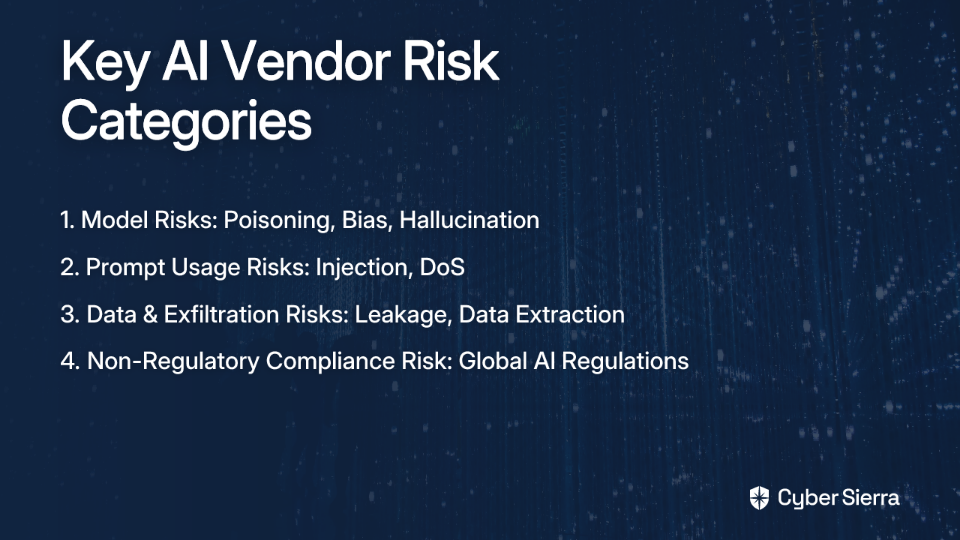
When assessing vendors using AI technologies, consider these four major risk categories:
Model Risks
Model Poisoning: Malicious actors injecting misleading data into training datasets
Bias: Prejudiced outputs stemming from discriminatory assumptions or imbalanced data
Hallucination: The model generating coherent but factually incorrect information
Prompt Usage Risks
Prompt Injection: Manipulating inputs to bypass safety controls
Prompt DoS: Overloading AI systems with complex prompts to cause failures
Data & Exfiltration Risks
Data Leakage: The model inadvertently revealing sensitive information
Exfiltration: Attackers crafting prompts to extract sensitive training data
Non-Regulatory Compliance Risk
Failure to comply with emerging global AI regulations like the EU AI Act
Potential penalties and reputational damage from non-compliance
Understanding these risks provides the foundation for effective vendor assessment. With this context in mind, let's establish a framework for your internal AI governance.
Establishing Your Internal AI Governance Foundation
Before you can effectively assess vendors, you need to establish internal AI governance foundations. A checklist is a valuable tool, but it must be part of a larger strategy.
Risk Assessment Methodology
Adopt a structured approach to evaluate and score vendor risk consistently. This could be:
Qualitative: Based on subjective assessments (low, medium, high)
Quantitative: Using numerical scoring systems
Hybrid: Combining both approaches for comprehensive assessment
Not all AI vendors pose the same level of threat. Categorize them based on:
Sensitivity of data they access
Criticality of business processes they support
Depth of integration with your systems
Potential impact of service disruption
Three Lines of Defense Model
Implement this proven risk management model to create clear accountability:
First Line (Business Units):
Own vendor relationships and perform initial risk identification
Responsible for day-to-day management of vendor relationships
Second Line (Support Functions):
GRC, Legal, and IT Security teams provide oversight and specialized assessment
Develop policies, procedures, and controls for vendor risk management
Third Line (Internal Audit):
Provides independent assurance that risk management processes are effective
Identifies gaps in the vendor management program
AI Model Discovery & Mapping
You can't govern what you don't know. Create and maintain an inventory of all AI models in use, including those from vendors. Map these models to:
The data they process
The compliance obligations associated with that data
The business processes they support
With these foundations in place, let's move to the core assessment checklist.
The Core Assessment Checklist: Critical Questions for Your AI Vendor
This comprehensive checklist is organized into three key sections to help you thoroughly evaluate AI vendors.
Understanding the AI Model & Its Origins
Technology & Architecture:
Can you provide a high-level overview of the AI technology you use?
Is your solution built on a third-party foundational model (e.g., via API calls to OpenAI, Anthropic, Google)? If so, which one(s)?
What are the data retention and usage policies of the underlying foundational models you use?
How does your system handle inter-process communication between AI components?
Training Data Integrity:
What were the specific sources of data used for the initial training of your model?
If web scraping was used, how do you ensure compliance with terms of service, copyright law, and data protection regulations?
How do you ensure your training data is diverse and has been vetted to minimize inherent bias?
Do you use web content filtering to screen problematic content from your training data?
Your Data, Their Model: The Critical Questions
Use of Customer Data (Production Data):
The crucial question: Do you use our company's inputs (Production Data) or the Outputs generated by the model for us, to train, retrain, or fine-tune your AI model(s) for any purpose?
If yes, is this an opt-in or opt-out process? Where is this choice documented and configured?
If you claim our data is "de-identified" or "anonymized" before use, please provide your specific methodology and technical/policy safeguards that prevent re-identification.
Do you have a user management API that allows us to control which of our employees can access the AI features?
Data Governance and Privacy:
How do you handle our data in compliance with privacy regulations like GDPR and CCPA?
Where will our Production Data be stored and processed geographically?
What are your data retention policies for our inputs and the generated outputs?
What specific data usage practices do you employ to ensure the security of our information?
Security, Privacy, and Model Guardrails
Security Posture & Audits:
Can you provide documentation of your security certifications (e.g., SOC 2 Type II reports, ISO 27001 certification)?
Do you have a documented incident response plan and disaster recovery plan?
Can you share details on how you have handled past security incidents?
What DLP controls do you have in place to prevent unauthorized data exfiltration?
Model Safety & Integrity:
What specific guardrails, policies, and review processes (including human-in-the-loop) are in place to test for and mitigate bias, accuracy issues, and hallucinations?
What measures are in place to prevent prompt injection attacks from other tenants or malicious actors?
How do you ensure ML models maintain their integrity when processing our data?
What controls exist to prevent Shadow AI development within your organization?
Decoding the Truth: Interpreting Vague Answers and Contractual Red Flags
Interpreting Vague Answers
When vendors provide ambiguous responses, it's essential to probe further and verify their claims. Here's how to handle common evasive answers:
The "Trust but Verify" Principle:
If a vendor says: "We use a variety of public and proprietary data sources." Your follow-up: "Please provide documentation of your data licensing and a list of your main public data sources. How do you vet them?"
If a vendor says: "We may use customer data to improve our services." Your follow-up: "Please specify exactly what customer data is used, how it's used, and what opt-out mechanisms are available."
If a vendor says: "We have robust security measures in place." Your follow-up: "Please share your most recent security audit reports and certifications."
Actionable Step: Never accept verbal assurances. Always request written documentation, including:
Data processing agreements (DPAs)
Data management policies
Security whitepapers
Copies of audit reports
Detailed descriptions of their AI governance frameworks
Contractual Red Flags
When reviewing vendor contracts, be vigilant for these warning signs:
Ambiguous Definitions:
Red Flag: The contract lacks clear, precise definitions for key terms.
Look for definitions of: Solution, Training Data, Production Data (your inputs), Output (results), and Evolution (how the model changes).
Better Alternative: Insist on precise definitions that clearly distinguish between your data and the vendor's pre-existing intellectual property.
Weak Data Ownership and Usage Rights:
Red Flag: The contract fails to state explicitly that you (the customer) own your Production Data and the Outputs generated from it.
Red Flag: Broad, ambiguous language granting the vendor rights to use your data for "service improvement," "analytics," or "research" without an explicit opt-out.
Better Alternative: Clearly state that you retain ownership of your data and any outputs, with specific, limited licenses granted to the vendor only for providing the contracted service.
Red Flag: The vendor only indemnifies you against claims arising from their core platform, but not from the Outputs it generates.
Red Flag: The vendor refuses to indemnify you against claims arising from their use of Training Data.
Better Alternative: Comprehensive indemnification covering both the platform and any outputs it generates, plus protection against claims related to the vendor's training data sources.
Lack of Compliance & Security Guarantees:
Red Flag: Absence of a clause obligating the vendor to comply with specific data protection laws.
Red Flag: No clear service level agreements (SLAs) for accuracy, error rates, and scalability.
Better Alternative: Explicit commitments to comply with relevant regulations and measurable performance standards.
Poor Termination Clauses:
Red Flag: The contract does not include a clear process for the secure and certified deletion or return of all your data upon termination.
Better Alternative: Detailed termination procedures including certified data deletion, transition assistance, and continuing confidentiality obligations.
Beyond the Checklist: Continuous Monitoring and Lifecycle Management
Assessment is not a one-time event. A vendor's risk profile constantly evolves as they update their models, change policies, or undergo organizational changes like acquisitions. Implement these practices for ongoing governance:
Regular Review Schedule
Implement a schedule for regular reviews of:
Updated SOC 2 or other audit reports
Reports of data breaches or security incidents
Changes to the vendor's terms of service or privacy policy
Updates to their AI models or training methodologies
As UpGuard recommends, the frequency of these reviews should correspond to the criticality and risk level of the vendor.
Manage the Full Vendor Lifecycle
Effective AI governance requires a systematic approach across the entire vendor relationship:
Qualification:
Initial vetting using the comprehensive checklist provided
Verification of security certifications and compliance documentation
Thorough contract review with legal counsel experienced in AI issues
Engagement & Onboarding:
Secure vendor onboarding with clear contractual terms
Implementation of necessary technical controls
User access management configuration
Employee training on appropriate use
Information Security Management:
Continuous monitoring throughout the relationship
Regular reassessment based on changing business requirements
Tracking of incident reports and resolution
Monitoring for Shadow AI usage within the organization
Termination:
Secure offboarding process
Verification that all contractual obligations are met
Certified destruction of data
Transition to alternative solutions if necessary
Technology-Enabled Monitoring
Consider leveraging specialized AI-powered third-party risk management (TPRM) platforms to automate and scale continuous monitoring. These tools can provide:
Real-time alerts about vendor security incidents
Continuous scanning for contractual compliance
Automated questionnaire distribution and tracking
Integration with GRC platforms for holistic risk management
Conclusion: From Risk Mitigation to Informed Partnership
The rise of shadow AI and the ambiguity of vendor data practices have made proactive, detailed assessment essential for modern GRC teams. Traditional DLP solutions and governance approaches are insufficient to address the unique challenges posed by AI and ML technologies.
By implementing this comprehensive checklist, you can:
Gain clarity on how vendors use your data in their ML models
Identify contractual vulnerabilities before they become problems
Create a foundation for ongoing vendor governance
Enable your organization to leverage AI safely and effectively
Remember that the goal isn't to find a "perfect" AI vendor – they likely don't exist. Instead, aim to make fully informed decisions based on a clear understanding of each vendor's technology, data practices, and commitment to security. This allows you to implement appropriate controls and contractual protections tailored to your organization's risk tolerance and compliance requirements.
In the rapidly evolving AI landscape, this checklist serves as more than a compliance exercise – it's a tool to drive transparency and establish partnerships with vendors who respect your data sovereignty and share your commitment to responsible AI use.
By taking a proactive, structured approach to vendor AI risk assessment, GRC teams can move beyond being "the police" and become strategic enablers, helping their organizations safely harness the transformative power of artificial intelligence while protecting against its unique risks.
Frequently Asked Questions
What is "Shadow AI" and why is it a significant risk?
Shadow AI refers to employees using AI tools and services without official approval or vetting from their organization. It's a significant risk because it introduces unmanaged security vulnerabilities, potential data leaks, and compliance violations that traditional governance processes can't track. Unlike "shadow IT," shadow AI involves feeding sensitive company data into external models, which can lead to intellectual property loss and regulatory fines without the knowledge of GRC and security teams.
How can I find out if a SaaS vendor uses my data for AI training?
The most direct way is by asking them pointed questions and reviewing your contract. You should explicitly ask: "Do you use our company's inputs (Production Data) or the Outputs generated by the model for us, to train, retrain, or fine-tune your AI model(s) for any purpose?" This question forces a clear "yes" or "no" answer and helps you avoid vague language like "to improve our services." Ensure all terms are clearly defined and documented in a legally binding data processing agreement (DPA).
What are the most critical red flags to look for in an AI vendor's contract?
The most critical red flags are ambiguous definitions of data, weak data ownership clauses that grant the vendor broad rights to your data, and inadequate IP indemnification that doesn't cover the AI-generated outputs. A solid contract will explicitly state that you own your data and the outputs. Be wary of any language that allows the vendor to use your information for "research" or "analytics" without a clear opt-out mechanism.
Why aren't my existing security tools, like DLP, enough to manage AI risks?
Traditional Data Loss Prevention (DLP) tools are often insufficient because they struggle to monitor the nuanced data flows to and from AI services, especially those integrated within approved SaaS platforms via APIs. DLP solutions may not be configured to inspect this traffic for sensitive content or distinguish between legitimate use and data being sent for model training. Furthermore, they can't address AI-specific risks like prompt injection attacks, which require a different set of controls.
Who is responsible for AI vendor risk management within an organization?
AI vendor risk management is a shared responsibility, best managed using a "Three Lines of Defense" model. Business units are the first line, GRC and security teams are the second, and internal audit is the third. In this model, the first line (business users) owns the vendor relationship. The second line (GRC, Legal, IT Security) provides expert oversight and sets policies. The third line (Internal Audit) provides independent assurance that the process is working effectively.
Is it realistic to prohibit vendors from using our data for any AI training?
While a complete prohibition is the safest stance, it may not always be realistic. The key is to make an informed decision and have contractual control. Instead of a blanket "no," the goal should be to achieve full transparency. This means ensuring any data usage is strictly opt-in, the data is properly anonymized (with proof), and the vendor's security practices meet your standards. The decision to allow it should be based on a thorough risk assessment, not a vendor's default setting.
This checklist should be customized to your organization's specific industry requirements, risk tolerance, and regulatory environment. Consider consulting with legal counsel experienced in AI governance to adapt these recommendations to your particular needs.
Join thousands of professionals and get the latest insight on Compliance & Cybersecurity.
Thank you for subscribing us!
Please check your email to confirm your email address.
Share via
You've carefully vetted your organization's security measures, implemented robust systems, and trained your staff on best practices. But then you discover a data breach has occurred - not through your systems directly, but through a vendor you trusted with access to your data. This scenario has become increasingly common, with studies revealing that 80% of organizations have experienced a data breach caused by a third party, while nearly 31% of third-party vendors could cause significant damage if breached.
Understanding Third-Party Risks
Third-party risk refers to any potential threats posed to your organization by external entities such as vendors, suppliers, contractors, and partners who have access to your systems, data, or facilities. As businesses increasingly outsource operations and integrate third-party solutions into their workflows, the attack surface expands dramatically, creating vulnerabilities that cybercriminals are eager to exploit.
The challenge isn't just about technical vulnerabilities. Many organizations find themselves in a bind: "There is no silver bullet," as one cybersecurity professional put it, highlighting the absence of a one-size-fits-all solution for third-party risk management (TPRM).
Types of Third-Party Risks
Understanding the diverse nature of third-party risks is crucial for developing comprehensive mitigation strategies:
Financial Risks: When vendors face financial instability, it can directly impact their ability to deliver services, potentially disrupting your operations. A vendor's bankruptcy could leave your organization scrambling to find alternatives on short notice.
Reputational Risks: Your brand's reputation can be significantly damaged by a third party's actions or failures. If a vendor experiences a public scandal or security breach, your organization might face guilt by association in the public eye.
Compliance Risks: Regulatory violations by your vendors can result in legal consequences for your organization. Many regulations (like GDPR or HIPAA) hold companies accountable for the actions of their vendors.
Operational Risks: Service disruptions from vendor failures can severely impact business continuity. These might range from temporary outages to complete failure to deliver critical services.
Strategic Risks: Poor vendor selection or management can undermine business objectives and growth plans. This is particularly concerning when vendors are integral to core business functions.
Cybersecurity Risks: Perhaps the most prominent in today's digital landscape, these risks involve data breaches, ransomware attacks, or other security incidents caused by third-party vulnerabilities.
Real-World Examples of Third-Party Risks
Third-party risks aren't merely theoretical concerns. Consider these common scenarios:
A cloud service provider experiences a significant outage, rendering your customer-facing applications inaccessible for hours.
A software vendor's product contains vulnerabilities that allow hackers to access your internal systems.
A supplier fails to implement proper security controls, resulting in a data breach that exposes your customers' personal information.
A contractor inadvertently posts sensitive company information on social media or public forums.
A financially troubled vendor suddenly shuts down operations, leaving your supply chain in disarray.
Assessing Third-Party Risks with Vendors
Effective third-party risk management begins with thorough assessment. Here's how to approach this critical process:
Vendor Risk Assessment
Start by categorizing vendors based on the level of risk they pose to your organization. Consider factors such as:
The sensitivity of data they can access
Their role in your critical business processes
The regulatory requirements applicable to their services
Their access level to your systems and networks
Many organizations use a tiered approach, classifying vendors as high, medium, or low risk to determine the appropriate level of scrutiny.
Essential Security Questions to Ask Vendors
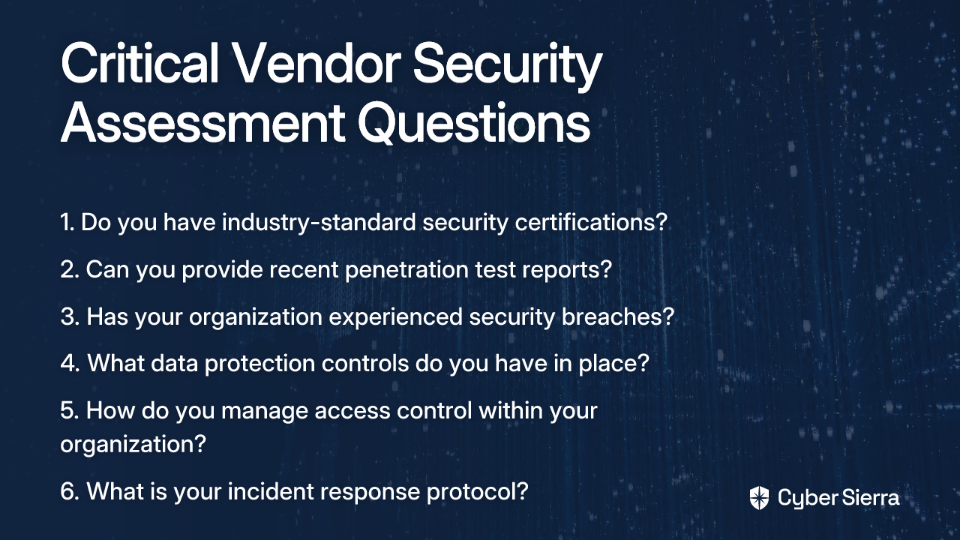
When evaluating vendors, these questions can provide valuable insights into their security posture:
Do you have any industry-standard security certifications (e.g., SOC2 Type II, ISO 27001)?
Can you provide a recent penetration test report?
Has your organization experienced a security breach in the past?
What security controls do you have in place to protect data?
How do you manage access control within your organization?
What is your incident response plan in case of a security breach?
However, there's growing skepticism about the effectiveness of standardized questionnaires. As one security professional noted, "The questionnaire is a relatively trivial and superficial and won't get you where you want to go if you're serious about discovering and managing your third-party risk appetite."
Effective Strategies for Mitigating Third-Party Risks
Implementing a comprehensive third-party risk management framework is essential for protecting your organization:
1. Establish Clear TPRM Policies and Procedures
Start by developing strong, achievable policies that clearly outline:
Vendor selection criteria
Due diligence requirements
Ongoing monitoring expectations
Incident response procedures
Contract termination conditions
As one cybersecurity expert emphasized, you need to "have strong and achievable policies and standards in place" as the foundation of your TPRM program.
2. Implement a Rigorous Vendor Onboarding Process
Before engaging with any new vendor:
Conduct thorough background checks
Verify security certifications and compliance standards
Review financial stability
Assess their security controls and incident response capabilities
The goal is to identify potential issues before entering into a business relationship.
3. Negotiate Strong Contracts
Your contracts should include:
Clearly defined security requirements
Data protection obligations
Right-to-audit clauses
Service level agreements (SLAs)
Incident notification requirements
Provisions for regular security assessments
Many organizations have found that "at best, TPRM is an exercise largely of due diligence," with contracts serving as the primary protection mechanism.
4. Implement Continuous Monitoring
Rather than relying solely on point-in-time assessments, establish ongoing monitoring of your vendors:
Track security news and breach notifications
Monitor for changes in vendor ownership or financial status
Conduct periodic reassessments
Review compliance certifications upon renewal
"Audit your 3rd party relationships regularly and on-time to ensure they're doing what they've agreed to," advises one TPRM professional. "Keep up with the news on 3rd party breaches."
5. Develop a Vendor Exit Strategy
For each critical vendor, create a contingency plan addressing:
Alternative providers
Data retrieval procedures
Transition timelines
Business continuity measures
This preparation ensures you're not left vulnerable if a vendor relationship must be terminated quickly.
Special Challenges with Smaller Vendors
A common dilemma in third-party risk management involves smaller vendors that may struggle with compliance requirements. As one professional explained, "The only issue I see with this stance is a case where you may have a vendor who is tiny and the cost of attaining such compliance would be cost prohibitive for them."
When dealing with smaller vendors that cannot meet your standard requirements, consider:
Risk-Based Exceptions
Implement a formal exception process that:
Documents the specific requirements the vendor cannot meet
Assesses the actual risk posed to your organization
Identifies compensating controls that can be implemented
Requires executive approval for acceptance of higher risk
Phased Compliance Approach
Rather than immediate compliance, consider allowing smaller vendors time to achieve it:
Set realistic timelines for meeting requirements
Establish milestones and progress checkpoints
Implement additional monitoring during the compliance period
However, remember this critical principle: "DO NOT compromise on your security controls if a 3rd Party cannot meet your minimum requirements." Sometimes, the risk simply isn't worth taking, regardless of other business considerations.
Best Practices for Effective TPRM
To enhance your third-party risk management program:
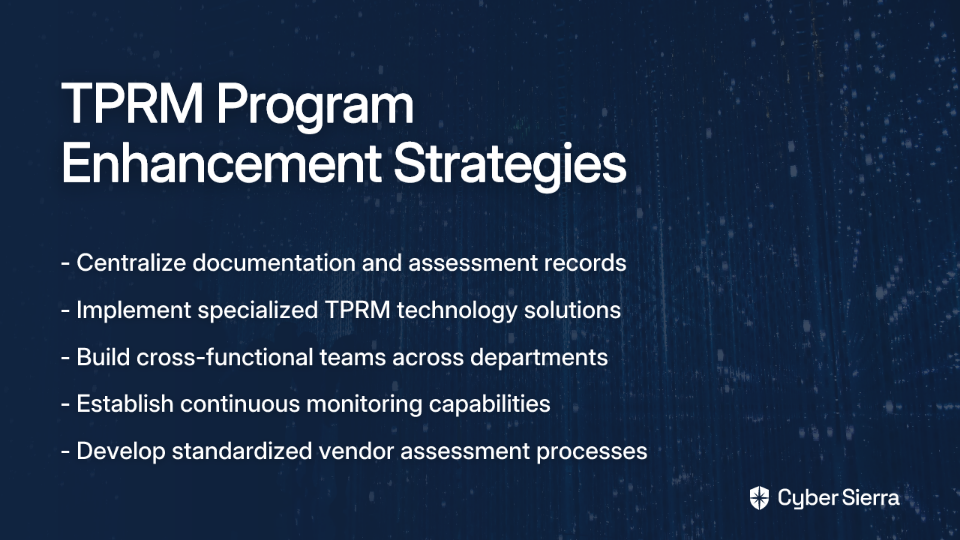
1. Centralize Your TPRM Documentation
Develop a repository of:
Standard responses to common security questions
Current certifications and compliance documentation
Security assessment reports
Risk acceptance records
This approach can significantly reduce the burden of responding to customer inquiries and streamline your internal processes.
2. Leverage Technology Solutions
Consider implementing specialized TPRM tools that offer:
Automated vendor risk assessments
Continuous monitoring capabilities
Integration with threat intelligence feeds
Centralized documentation management
Streamlined workflow for approvals and exceptions
3. Build a Cross-Functional TPRM Team
Effective third-party risk management requires input from various departments:
Information Security
Legal
Procurement
Compliance
Business Units
Involving stakeholders from across the organization ensures a balanced approach to risk assessment and management.
Conclusion
In today's interconnected business environment, third-party risks represent a significant vulnerability for organizations of all sizes. The challenge isn't simply identifying these risks but developing a comprehensive approach to managing them effectively.
By implementing a structured TPRM program that includes thorough vendor assessments, strong contractual protections, continuous monitoring, and clear policies for exceptions, you can significantly reduce the likelihood and impact of third-party incidents.
Remember that there is no one-size-fits-all solution for third-party risk management. As one security professional aptly put it, "Risk management is about understanding your organizational risk tolerance, assessing the risks you're facing, and then deciding how to deal with that risk." Your TPRM approach must be tailored to your organization's specific needs, risk appetite, and resources.
With the right strategies in place, you can confidently leverage third-party relationships to enhance your business capabilities while keeping your organization secure.
Frequently Asked Questions (FAQ)
What is third-party risk?
Third-party risk refers to the potential threats introduced to your organization by external entities like vendors, suppliers, contractors, and partners who have access to your systems, data, or facilities. As businesses increasingly rely on third parties, their attack surface expands, creating vulnerabilities that can be exploited if not managed properly.
Why is managing third-party risk important for businesses?
Managing third-party risk is crucial because a significant number of data breaches originate from third-party vendors; studies show 80% of organizations have experienced such a breach. Failure to manage these risks can lead to financial losses, reputational damage, compliance violations, operational disruptions, and cybersecurity incidents.
What are the common types of third-party risks?
The common types of third-party risks include:
Financial Risks: Arising from a vendor's financial instability.
Reputational Risks: Damage to your brand due to a vendor's actions.
Compliance Risks: Legal consequences from a vendor's regulatory violations.
Operational Risks: Business disruptions due to vendor service failures.
Strategic Risks: Undermining business objectives due to poor vendor management.
Cybersecurity Risks: Data breaches or security incidents stemming from third-party vulnerabilities.
How can an organization assess risks associated with its vendors?
Organizations can assess vendor risks by first categorizing vendors based on the level of risk they pose (e.g., high, medium, low) considering factors like data sensitivity, role in critical processes, and system access. Then, they should ask essential security questions about certifications, penetration test results, breach history, security controls, access management, and incident response plans.
What are effective strategies for mitigating third-party risks?
Effective strategies include establishing clear TPRM policies, implementing a rigorous vendor onboarding process, negotiating strong contracts with security clauses, continuously monitoring vendor performance and security posture, and developing a comprehensive vendor exit strategy for critical suppliers.
How should a company handle a small vendor that cannot meet standard compliance requirements?
A company should use a risk-based exception process for small vendors struggling with compliance. This involves documenting unmet requirements, assessing the actual risk, identifying compensating controls, and obtaining executive approval for any risk acceptance. A phased compliance approach, allowing vendors time to meet standards with set milestones, can also be considered, but minimum security controls should not be compromised.
What is the first step to building a Third-Party Risk Management (TPRM) program?
The first step to building a TPRM program is to establish clear and achievable policies and procedures. These policies should outline vendor selection criteria, due diligence requirements, ongoing monitoring expectations, incident response protocols, and contract termination conditions, forming the foundation of the program.
Join thousands of professionals and get the latest insight on Compliance & Cybersecurity.
Thank you for subscribing us!
Please check your email to confirm your email address.
Share via
In today's increasingly regulated and threat-laden digital landscape, organizations face significant challenges in managing cybersecurity risks effectively. Whether you're Sarah, a CISO at a mid-sized fintech company trying to ensure regulatory compliance while protecting sensitive data, or David, an IT Compliance Manager struggling with multiple frameworks across expanding operations, understanding risk management frameworks is essential.
The NIST Risk Management Framework (RMF) stands as one of the most comprehensive and adaptable frameworks available to organizations seeking to improve their security posture. This guide aims to demystify the RMF and provide practical insights for implementation, regardless of your organization's size or industry.
What is the NIST Risk Management Framework?
The NIST Risk Management Framework is a structured approach to managing information security and privacy risks developed by the National Institute of Standards and Technology. Unlike prescriptive checklists, the RMF provides a flexible, risk-based methodology that can be tailored to an organization's specific needs, size, and risk tolerance.
The RMF was originally developed to help federal agencies implement effective information security programs, but it has since been widely adopted across various industries, including healthcare, finance, manufacturing, and technology due to its comprehensive nature and adaptability.
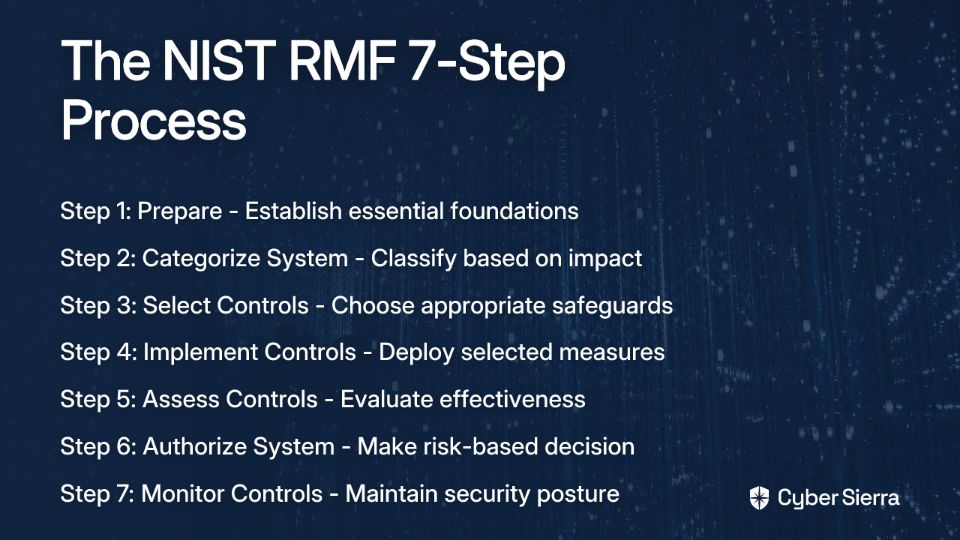
At its core, the RMF consists of seven fundamental steps that form a continuous cycle of assessment, implementation, and monitoring. These steps guide organizations from preparation through to ongoing monitoring of security controls.
Key Components of NIST RMF
The RMF addresses five critical components of effective risk management:
Identification: Understanding and identifying various types of risks, including legal, security, and strategic risks inherent to the organization.
Measurement and Assessment: Establishing processes for measuring and assessing these identified risks to determine their potential impact.
Mitigation: Developing comprehensive plans to mitigate significant risks through appropriate security controls.
Reporting and Monitoring: Creating effective reporting mechanisms and monitoring efforts to gauge the effectiveness of mitigation actions.
Governance: Instituting robust governance policies to ensure ongoing compliance with risk management policies and procedures.
NIST RMF vs. NIST CSF: Understanding the Difference
A common source of confusion for many professionals is the distinction between the NIST RMF and the NIST Cybersecurity Framework (CSF).
The NIST RMF is a comprehensive methodology for managing organizational risk that covers the entire risk management lifecycle. It provides detailed guidance on categorizing information systems, selecting and implementing controls, conducting assessments, and maintaining ongoing authorization.
The NIST CSF focuses primarily on cybersecurity risks and provides a set of industry standards and best practices to help organizations manage cybersecurity risks. It's organized around five core functions: Identify, Protect, Detect, Respond, and Recover.
While both frameworks can complement each other, the RMF provides a more detailed, process-oriented approach to risk management, while the CSF offers a more accessible entry point for organizations beginning their cybersecurity journey.
The 7 Steps of the NIST RMF Process
The NIST RMF follows a structured 7-step process that guides organizations through the complete lifecycle of security risk management:
Step 1: Prepare
The preparation step lays the foundation for effective risk management by ensuring that organizations have the necessary resources, information, and capabilities in place.
Key Activities:
Identify and document risk management roles and responsibilities
Develop a risk management strategy aligned with organizational objectives
Identify and document common controls across the organization
Establish a comprehensive risk assessment process
Implement an organization-wide risk management program
Real-world Tip: "The preparation phase is often overlooked, but it's critical for success," notes a CISO from a healthcare provider. "Spend time getting stakeholder buy-in and establishing clear roles before rushing to implementation."
Step 2: Categorize System
This step involves categorizing the information system and the information processed, stored, and transmitted by the system based on an impact analysis.
Key Activities:
Document the characteristics of the information system
Categorize the system based on potential impact levels (Low, Moderate, High)
Document the security categorization results
Review and approve the security categorization
The categorization is typically based on the potential impact of a security breach on three security objectives:
Confidentiality: Preserving authorized restrictions on information access and disclosure
Integrity: Guarding against improper information modification or destruction
Availability: Ensuring timely and reliable access to and use of information
Implementation Tip: When categorizing systems, be sure to consider all information types that will be processed, not just the primary data. Often, metadata or user information can raise the sensitivity level of the whole system.
Step 3: Select Controls
Based on the system categorization, organizations select and tailor security controls to protect the system.
Key Activities:
Identify the baseline security controls based on the security categorization
Apply tailoring guidance to customize controls
Document the security control selection and tailoring rationale
Create a security plan documenting how controls will be implemented
NIST Special Publication 800-53 provides a comprehensive catalog of security controls organized into 20 families, including Access Control, Audit and Accountability, Risk Assessment, and System and Communications Protection.
Common Challenge: "I find myself frequently questioning whether or not I actually comprehended what I just read and what the control is asking for," shares an IT professional on Reddit. "The last thing I want to do is write up a bunch of controls just to find out that what I wrote was completely inaccurate."
To address this challenge, refer to NIST SP 800-171A which provides detailed explanations and guidance for implementing NIST controls.
Step 4: Implement Controls
After selecting appropriate controls, organizations implement them according to the security plan.
Key Activities:
Implement the selected security controls
Document the security control implementation details
Update the security plan with implementation specifics
Develop a continuous monitoring strategy
During implementation, it's crucial to consider the technical, operational, and management controls necessary to secure your systems. These might include:
Technical controls: encryption, access control systems, firewalls
Implementation Challenge: One of the biggest challenges organizations face during implementation is the "documentation burden." Controls must not only be implemented but also documented properly to demonstrate compliance during assessments.
Step 5: Assess Controls
The assessment phase evaluates whether security controls are implemented correctly, operating as intended, and producing the desired results.
Key Activities:
Develop an assessment plan
Assess the security controls per the assessment procedures
Document the assessment results
Create a plan of action for addressing any deficiencies
Assessment methods typically include:
Examine: Review of documents, records, and system configurations
Interview: Discussions with personnel to determine understanding and compliance
Test: Technical testing of control implementation (penetration tests, vulnerability scans)
Real-world Insight: "For effective assessments, split controls randomly across twelve months and establish a continuous monitoring program," recommends a compliance specialist in a Reddit discussion. "Use tools like Jira to manage compliance check tasks on a scheduled basis, making the process more manageable."
Step 6: Authorize System
In this critical step, a senior official makes a risk-based decision to authorize the information system to operate.
Key Activities:
Prepare the authorization package (security assessment report, plan of action and milestones, security plan)
Determine risk based on assessment results
Make the authorization decision
Communicate the authorization decision to appropriate personnel
The authorization decision reflects the organization's risk tolerance and evaluates whether the identified risks are acceptable.
Authorization Challenge: Authorization decisions often become bottlenecks in the process, especially when multiple stakeholders with different risk perspectives are involved. Establishing clear criteria for acceptable risk levels can streamline this process.
Step 7: Monitor Controls
The final step involves continuous monitoring of security controls to maintain the security posture over time.
Key Activities:
Implement the continuous monitoring strategy
Assess a subset of security controls on an ongoing basis
Conduct ongoing impact analyses of changes to the system
Report the security status to appropriate stakeholders
Review the security status on a regular basis
Update the security plan, security assessment report, and plans of action and milestones based on monitoring activities
Monitoring Challenge: "I'm searching for a better way to deal with reviewing and monitoring risk assessments," notes an IT professional on Reddit. "How would you monitor identified risks effectively?"
Effective monitoring requires:
Regular review schedules for different control families
Automated tools where possible to reduce manual effort
Clear metrics to assess control effectiveness
Processes for handling control failures when detected
Benefits of Implementing the NIST RMF
Organizations that successfully implement the NIST RMF can realize significant benefits:
1. Customizable Risk Management
The RMF is designed to be tailored to the specific needs, size, and risk tolerance of each organization. Whether you're a small business with limited resources or a large enterprise with complex systems, the RMF can be adapted to fit your requirements.
2. Comprehensive Coverage
The framework addresses all aspects of security risk management, from preparation and planning through implementation and ongoing monitoring. This comprehensive approach helps ensure that no critical aspects of security risk management are overlooked.
3. Integration with Other Frameworks
The RMF can be integrated with other security frameworks and standards, such as ISO 27001, COBIT, and the NIST Cybersecurity Framework. This flexibility allows organizations to leverage existing investments in security programs while enhancing their overall risk management capabilities.
4. Compliance Alignment
For organizations in regulated industries, the RMF provides a structured approach to meeting compliance requirements for regulations such as HIPAA, PCI DSS, FISMA, and GDPR. By implementing the RMF, organizations can establish a foundation for compliance with multiple regulatory requirements.
5. Proactive Risk Management
Rather than reacting to security incidents after they occur, the RMF enables organizations to proactively identify, assess, and mitigate risks before they result in security breaches or compliance violations. This proactive approach can significantly reduce the potential impact of security incidents.
Challenges in Implementing the NIST RMF
While the benefits of implementing the NIST RMF are substantial, organizations often face significant challenges during implementation:
1. Resource Intensity
Implementing the RMF requires significant time, effort, and resources. Organizations often struggle with allocating sufficient resources to properly implement all aspects of the framework, especially smaller organizations with limited security staff.
Mitigation Strategy: Start small by focusing on your most critical systems first, then gradually expand the scope as you develop expertise and refine your processes.
2. Complexity and Learning Curve
The RMF is comprehensive but can be complex to understand and implement, especially for organizations without significant security expertise. The terminology, concepts, and processes can be overwhelming for newcomers.
Mitigation Strategy: Invest in training for key personnel, leverage external expertise when needed, and use available NIST guidance documents to build understanding.
3. Maintaining Momentum
After initial implementation, organizations often struggle to maintain the ongoing monitoring and assessment activities required for effective risk management. The day-to-day pressures of operations can take precedence over security activities.
Mitigation Strategy: Integrate security activities into existing business processes and use automation where possible to reduce the ongoing burden.
4. Documentation Burden
The RMF requires extensive documentation throughout the process. Creating and maintaining this documentation can be time-consuming and can divert resources from actual security improvements.
Mitigation Strategy: Use templates and tools designed specifically for RMF documentation, and look for opportunities to automate documentation where possible.
5. Organizational Resistance
Implementing the RMF often requires changes to established processes and additional responsibilities for staff. This can lead to resistance from personnel who may view security requirements as obstacles to their primary job functions.
Mitigation Strategy: Focus on building a security culture through awareness programs and executive support, and demonstrate how security activities contribute to overall organizational success.
Case Studies: RMF in Action
University of Kansas Medical Center
The University of Kansas Medical Center (KUMC) successfully implemented the NIST Cybersecurity Framework, which complements the RMF, to enhance their cybersecurity program. By focusing on the framework's core functions, KUMC was able to:
Improve communication about cybersecurity risks among stakeholders
Foster shared responsibility for cybersecurity across departments
Enhance security awareness throughout the organization
Better align security efforts with business objectives
The implementation helped KUMC develop a more comprehensive understanding of their cybersecurity risks and establish more effective controls to mitigate those risks.
Multi-State Information Sharing and Analysis Center (MS-ISAC)
The MS-ISAC leveraged the NIST frameworks to develop a standardized approach to cybersecurity risk management across member organizations. By implementing key aspects of the RMF, the MS-ISAC was able to:
Standardize the assessment process across multiple state and local government entities
Establish common metrics for evaluating cybersecurity effectiveness
Facilitate information sharing about threats and vulnerabilities
Improve the overall security posture of participating organizations
These case studies demonstrate that while implementing the RMF can be challenging, the benefits in terms of improved risk management and security posture can be substantial.
Best Practices for NIST RMF Implementation
Based on experiences from organizations that have successfully implemented the RMF, here are key best practices to consider:
1. Secure Executive Support
Successful RMF implementation requires commitment from senior leadership. Ensure executives understand the benefits of the framework and provide necessary resources and authority.
Implementation Tip: Develop a business case that demonstrates how the RMF aligns with organizational objectives and contributes to risk reduction.
2. Start with Critical Systems
Rather than attempting to implement the RMF across all systems simultaneously, begin with your most critical systems that process sensitive data or support essential functions.
Implementation Tip: Use the categorization process to identify high-impact systems that should be prioritized for RMF implementation.
3. Leverage Automation
Look for opportunities to automate aspects of the RMF process, particularly in the areas of control assessment, continuous monitoring, and documentation.
Implementation Tip: Modern GRC platforms like Cybersierra can automate evidence collection and control monitoring, significantly reducing the manual burden typically associated with RMF implementation.
4. Integrate with Existing Processes
Rather than treating the RMF as a separate, standalone initiative, integrate it with existing business processes, such as system development lifecycle, change management, and vendor management.
Implementation Tip: Map RMF activities to existing organizational processes to identify integration opportunities and reduce duplication of effort.
5. Develop Clear Documentation
Create clear, comprehensive documentation of your RMF implementation, including system categorizations, control selection decisions, assessment results, and authorization decisions.
Implementation Tip: Develop templates for key RMF documents to ensure consistency and completeness across different systems and assessments.
6. Invest in Training
Provide training for personnel involved in RMF activities to ensure they understand the framework, their responsibilities, and how to effectively implement and assess controls.
Implementation Tip: Tailor training to different roles within the organization, focusing on the specific aspects of the RMF that are most relevant to each role.
7. Implement Continuous Monitoring
Develop and implement a robust continuous monitoring program that provides ongoing visibility into the effectiveness of security controls.
Implementation Tip: "Just establish a continuous monitoring program for the organization. One spreadsheet, split the controls randomly across twelve months," advises a security professional. This approach makes the ongoing assessment process more manageable.
8. Engage Stakeholders
Involve key stakeholders throughout the RMF process, including system owners, IT personnel, security staff, and business representatives.
Implementation Tip: Establish a regular cadence of meetings to review RMF progress, address challenges, and ensure alignment with organizational objectives.
Tools and Resources for NIST RMF Implementation
Implementing the NIST RMF can be facilitated by leveraging appropriate tools and resources:
NIST Publications
NIST provides extensive guidance through various Special Publications:
NIST SP 800-171A - Detailed explanations for NIST controls implementation
GRC Platforms
Governance, Risk, and Compliance (GRC) platforms can streamline RMF implementation through automation:
Cybersierra GRC Platform: Automates data collection, risk assessments, control monitoring, and reporting for various frameworks including NIST RMF. The platform's Continuous Control Monitoring (CCM) capability transforms security from periodic checks to continuous, automated monitoring, providing a single source of truth for controls and enabling proactive risk management.
Legacy GRC Platforms: Solutions like ServiceNow GRC, RSA Archer, and MetricStream provide comprehensive capabilities but may require significant customization and investment.
Point Solutions: Tools like AuditBoard and LogicGate offer more focused capabilities for specific aspects of the RMF.
Assessment and Monitoring Tools
Various tools can support the assessment and monitoring phases:
Vulnerability Scanners: Tools like Tenable Nessus, Qualys, and Rapid7 InsightVM for identifying technical vulnerabilities
Configuration Management Tools: Chef InSpec, Tripwire, and CIS-CAT Pro for assessing system configurations against benchmarks
SIEM Solutions: Splunk, QRadar, and Microsoft Sentinel for log collection and security monitoring
Continuous Monitoring Platforms: Specialized tools like Cybersierra's CCM module that automate control testing and validation, detect exceptions in real-time, and provide actionable risk intelligence
Third-Party Risk Management Tools
For organizations concerned with supply chain risks, dedicated TPRM tools can help:
Vendor Assessment Platforms: Solutions like Cybersierra TPRM, SecurityScorecard, and UpGuard that facilitate vendor questionnaires and risk assessments
Security Rating Services: Tools that provide external security ratings for vendors based on observable security practices
Modernizing Your Approach to NIST RMF
As cybersecurity threats and technologies evolve, organizations must modernize their approach to implementing the NIST RMF:
Shift from Manual to Automated
Traditional RMF implementations often rely heavily on manual processes for control assessment and documentation. A modern approach leverages automation to reduce the manual burden and provide more timely, accurate information about control effectiveness.
"I'm searching for a better way to deal with reviewing and monitoring risk assessments," notes an IT professional. Automation tools like Cybersierra's CCM can transform this process from manual spreadsheet tracking to continuous, automated monitoring.
From Point-in-Time to Continuous
Traditional security assessments provide point-in-time snapshots of security controls. Modern implementations focus on continuous monitoring that provides ongoing visibility into control effectiveness.
When assessing vendors, for example, rather than relying solely on annual questionnaires or SOC 2 reports, organizations can implement continuous monitoring of vendor security postures through external assessments and real-time risk intelligence.
From Siloed to Integrated
Traditional security programs often operate in silos, with separate teams handling different aspects of security. A modern approach integrates security risk management across the organization, ensuring that security considerations are embedded in all relevant processes.
From Compliance-Focused to Risk-Focused
While compliance with regulations and standards is important, a modern approach to the RMF focuses primarily on effectively managing security risks rather than simply checking compliance boxes.
Addressing Common NIST RMF Questions
How does the NIST RMF relate to other frameworks like SOC 2 and ISO 27001?
The NIST RMF can complement and integrate with other frameworks. For example:
SOC 2: The RMF's control selection and assessment processes align well with SOC 2's Trust Services Criteria. Organizations can map RMF controls to SOC 2 requirements to avoid duplication of effort.
ISO 27001: The RMF's risk management approach aligns with ISO 27001's risk-based methodology. Organizations can implement both frameworks by mapping requirements and developing a unified control framework.
When dealing with vendor assessments, organizations often face challenges in obtaining comprehensive security information. As one security professional notes, "The vendor declined to answer our questions directly and instead provided a SOC 2 report audited by a well-known firm."
In such cases, requesting SOC 2 Type 2 or ISO 27001 reports can provide a foundation for vendor trust, but should be supplemented with additional information as needed.
How can small organizations with limited resources implement the NIST RMF effectively?
Small organizations can take a phased approach to RMF implementation:
Focus on critical systems - Identify and prioritize systems that process sensitive data or support essential functions.
Leverage existing controls - Document and assess controls already in place before implementing new ones.
Use available templates - NIST provides templates for key RMF documents that can be adapted for small organizations.
Consider cloud services - Cloud providers often have robust security controls that small organizations can leverage.
Automate where possible - Even small organizations can benefit from automation tools that reduce the manual burden of RMF activities.
How can organizations maintain RMF compliance over time?
Maintaining RMF compliance requires a sustainable approach:
Integrate with change management - Ensure security considerations are part of all system changes.
Regular reassessments - Schedule periodic reviews of security controls and risk assessments.
Document everything - Maintain comprehensive documentation of all RMF activities and decisions.
Leverage automation tools - Use tools like Cybersierra's CCM to automate evidence collection and control validation, making continuous compliance more manageable.
Conclusion: Building a Resilient Security Program with NIST RMF
The NIST Risk Management Framework provides a comprehensive, flexible approach to managing information security and privacy risks. By following the seven-step process and implementing best practices, organizations can develop a resilient security program that protects critical assets, meets compliance requirements, and adapts to evolving threats.
Key takeaways for successful RMF implementation include:
Tailor the framework to your organization's specific needs, size, and risk tolerance.
Secure executive support to ensure necessary resources and authority.
Start with critical systems rather than attempting to implement across all systems simultaneously.
Leverage automation to reduce the manual burden and provide more timely, accurate information.
Integrate with existing processes to maximize efficiency and effectiveness.
Implement continuous monitoring to maintain visibility into control effectiveness over time.
By modernizing their approach to the NIST RMF, organizations can transform security from a compliance exercise to a strategic enabler that supports business objectives while effectively managing risks.
Whether you're a CISO looking to enhance your organization's security posture, a compliance manager struggling with multiple regulatory frameworks, or an IT manager seeking to implement effective security controls with limited resources, the NIST RMF provides a structured, flexible approach to managing security and privacy risks in today's challenging threat landscape.
Frequently Asked Questions about NIST RMF
What is the NIST RMF and why is it important?
The NIST Risk Management Framework (RMF) is a comprehensive, seven-step process developed by the National Institute of Standards and Technology to help organizations manage information security and privacy risks. It's important because it provides a structured, flexible, and repeatable methodology for identifying, assessing, mitigating, and monitoring risks, leading to a stronger security posture and better compliance.
Who should use the NIST RMF?
The NIST RMF is primarily designed for U.S. federal agencies but has been widely adopted by organizations across various sectors, including healthcare, finance, and technology, both public and private. Any organization looking to establish a robust, systematic approach to managing cybersecurity and privacy risks can benefit from implementing the RMF, regardless of size.
How does the NIST RMF differ from the NIST Cybersecurity Framework (CSF)?
The NIST RMF provides a detailed, process-oriented methodology for the entire risk management lifecycle, including system categorization, control selection, implementation, assessment, authorization, and monitoring. The NIST CSF, on the other hand, offers a higher-level framework of standards, guidelines, and best practices to manage cybersecurity risk, organized around five core functions: Identify, Protect, Detect, Respond, and Recover. While the RMF is more prescriptive in its process, the CSF is often seen as a more accessible starting point for improving cybersecurity posture. The two frameworks are complementary and can be used together.
What are the main benefits of implementing NIST RMF?
Implementing the NIST RMF offers several key benefits, including customizable risk management tailored to organizational needs, comprehensive coverage of the risk lifecycle, and better integration with other security frameworks. It also aids in compliance alignment with various regulations (e.g., FISMA, HIPAA, PCI DSS) and promotes proactive risk management by identifying and addressing threats before they cause significant impact.
What are the biggest challenges when implementing NIST RMF?
The most common challenges include the resource intensity (time, cost, personnel), the complexity and learning curve associated with the framework, maintaining momentum for ongoing monitoring and assessment, the extensive documentation burden, and potential organizational resistance to new processes and responsibilities.
How can organizations start implementing the NIST RMF?
Organizations can begin implementing the NIST RMF by first securing executive support and understanding the framework's requirements. Key initial steps include focusing on critical systems, identifying and documenting risk management roles, developing a risk management strategy, and leveraging NIST's guidance documents like SP 800-37. Starting small, investing in training, and considering automation tools can also facilitate a smoother implementation.
This article was published by Cybersierra, a provider of AI-enabled cybersecurity solutions including Continuous Control Monitoring, Third-Party Risk Management, and comprehensive GRC tools designed to automate and streamline compliance with frameworks like the NIST RMF. Learn more at https://cybersierra.co/.
Join thousands of professionals and get the latest insight on Compliance & Cybersecurity.
Thank you for subscribing us!
Please check your email to confirm your email address.
Share via
You sit in your office staring at yet another audit request, feeling the weight of regulatory frameworks pressing down on you. GDPR, HIPAA, PCI, ISO 27001, SOC2 - the alphabet soup of compliance requirements seems endless. Your team is stretched thin, executives view your department as a cost center, and the board just wants to know if you're "compliant" without understanding what that really means.
As a CISO, you're caught in the middle - trying to translate complex technical requirements into business language while simultaneously translating business objectives into actionable security controls. And somehow, you're expected to do this with limited resources, constant regulatory changes, and increasing cyber threats.
The painful reality is that traditional approaches to risk compliance no longer work in today's environment. The "checkbox compliance" mentality leaves organizations vulnerable, creates massive inefficiencies, and fails to deliver real business value. Meanwhile, you're left explaining why compliance doesn't equal security to executives who just want the problem to go away.
The Hidden Costs of Fragmented Risk Compliance
When your risk management and compliance efforts exist in disconnected silos, the consequences extend far beyond inefficiency. Many CISOs report spending 60-70% of their time on compliance activities rather than proactive security initiatives. This reactive approach creates multiple points of failure:
Duplicated efforts across teams - The same controls being documented differently for various frameworks
Inconsistent risk assessments - Different methodologies producing conflicting results
Compliance fatigue - Teams becoming desensitized to security requirements
Inability to demonstrate value - No clear connection between compliance activities and business outcomes
As one CISO recently shared in a Reddit discussion: "Many CISOs struggle to grasp basic cybersecurity concepts and terminology," making it nearly impossible to effectively communicate risk to technical teams and business leaders alike.
The truth is that traditional GRC solutions have failed to solve these problems. They're often complex, expensive, difficult to implement, and require specialized expertise to maintain. This leaves many organizations cobbling together spreadsheets, documents, and emails in an attempt to manage their compliance obligations - a recipe for disaster when facing sophisticated threats and rigorous audits.
The Paradigm Shift: Integrated Risk Compliance Solutions
What if compliance activities could actually strengthen your security posture while demonstrating clear business value? What if you could reduce the time spent on documentation by 50% while improving your ability to respond to audits?
This is possible through a fundamental shift in how risk compliance solutions are implemented and utilized. Forward-thinking CISOs are embracing integrated platforms that connect governance, risk management, and compliance into a unified framework.
The Essential Components of Modern Risk Compliance Solutions
Continuous Control Monitoring
Rather than point-in-time assessments, modern solutions like CyberSaint provide real-time visibility into control effectiveness. This transforms compliance from an annual exercise into an ongoing operational function that actively protects the business.
According to CyberSaint's implementation data, organizations using continuous monitoring detect control failures 76% faster than those using traditional methods. This directly translates to reduced risk exposure and fewer successful breaches.
Automated Evidence Collection
Manual evidence gathering is one of the most time-consuming aspects of compliance. Modern solutions integrate with your existing security tools to automatically collect and validate evidence across multiple frameworks.
MetricStream's Connected GRC platform, for example, can reduce evidence collection time by up to 60% through automated workflows and API integrations with security tools.
Risk Quantification
Moving beyond qualitative risk assessments, advanced solutions now incorporate models like FAIR (Factor Analysis of Information Risk) and NIST 800-30 to quantify cyber risk in financial terms that business leaders understand.
As one CISO shared in a discussion about GRC roles: "When I quantified our top risks in dollars rather than using high/medium/low ratings, I finally got budget approval for our security initiatives."
Cross-Framework Mapping
Most organizations must comply with multiple frameworks simultaneously. Modern solutions provide control mapping capabilities that allow a single control implementation to satisfy requirements across NIST CSF, ISO 27001, PCI DSS, GDPR, and other frameworks.
CYRISMA's case studies demonstrate how organizations have reduced their control inventory by 30-40% through effective control mapping, dramatically reducing maintenance overhead.
Executive Dashboards
Translating compliance data into meaningful business metrics is crucial for demonstrating value. Modern solutions provide customizable dashboards that show compliance status, risk trends, and security posture in real-time.
Overcoming Common Implementation Challenges
While the benefits of integrated risk compliance solutions are clear, implementation can be challenging. Here's how successful CISOs are addressing common obstacles:
1. Gaining Executive Buy-In
Many CISOs struggle to secure investment for comprehensive risk compliance solutions because executives see compliance as a cost center rather than a value driver.
Solution: Frame the investment in terms of business risk reduction and operational efficiency. According to Ncontracts case studies, organizations implementing integrated compliance solutions have reduced audit preparation time by up to 75% and avoided regulatory penalties that average $5.5 million per incident.
2. Technical Knowledge Gaps
As revealed in a recent Reddit thread, many CISOs lack sufficient technical knowledge to effectively evaluate and implement complex risk compliance solutions.
Solution: Partner with technical experts within your organization and consider pursuing relevant certifications like CISA or ISO 27001 Lead Implementer to enhance your technical credibility. As one commenter noted, "A CISO works to bridge the business and security needs to the technical team" - this requires sufficient technical understanding to have meaningful conversations with both groups.
3. Integration with Existing Security Stack
Many organizations struggle with implementing solutions that don't integrate well with their existing security infrastructure, leading to duplicated efforts and data silos.
Solution: Prioritize solutions with robust API capabilities and pre-built integrations with common security tools like EDR, MDR, and SIEM systems. For example, Hyperproof's integration approach enables organizations to connect their compliance platform with over 100 security and IT tools.
4. Compliance Staff Burnout
In a discussion on risk compliance roles, many professionals expressed frustration with the "continuous learning treadmill" required to keep up with changing regulations.
Solution: Implement solutions that provide regulatory intelligence and automated updates when frameworks change. This reduces the manual research burden on your team and ensures you're always working with the most current requirements.
Strategic Implementation Roadmap
Implementing an integrated risk compliance solution requires careful planning. Here's a proven approach used by successful CISOs:
Phase 1: Foundation Building (1-3 months)
Control Framework Selection: Choose a primary framework (typically NIST CSF or ISO 27001) as your foundation
Data Inventory: Identify and classify data assets according to sensitivity and regulatory requirements
Gap Assessment: Evaluate current control implementation against selected framework requirements
Phase 2: Solution Implementation (3-6 months)
Platform Selection: Choose a solution that aligns with your specific needs (scale, industry, regulatory landscape)
Integration Planning: Map out connections with existing security tools, identity systems, and business applications
Initial Configuration: Set up your most critical compliance frameworks and control mappings
Phase 3: Expansion and Automation (6-12 months)
Additional Framework Integration: Add secondary frameworks mapped to your primary control set
Automation Enhancement: Implement evidence collection automation and continuous monitoring
Risk Quantification: Begin expressing risks in financial terms using FAIR or similar methodologies
Phase 4: Maturity and Optimization (Ongoing)
Metrics and Reporting: Develop executive dashboards showing compliance posture and risk trends
Process Refinement: Optimize workflows based on efficiency metrics and team feedback
Predictive Capabilities: Leverage analytics to anticipate compliance issues before they occur
Measuring Success: Beyond Checkbox Compliance
Traditional compliance metrics focus on audit findings and control implementation percentages. However, forward-thinking CISOs are adopting more sophisticated measures of success:
Time-to-Evidence: How quickly can you provide evidence for any control across any framework?
Compliance Velocity: How rapidly can you adapt to new regulatory requirements?
Control Rationalization: What percentage of your controls satisfy multiple compliance requirements?
Risk Reduction ROI: How much has residual risk decreased per dollar spent on compliance?
Board Confidence Index: How confident are board members in your compliance program?
Conclusion: From Cost Center to Strategic Partner
The most successful CISOs have transformed their risk compliance function from a reactive cost center into a strategic enabler of business growth. By implementing integrated solutions that provide continuous monitoring, automated evidence collection, and business-centric risk quantification, they've demonstrated measurable value to the organization.
As one CISO shared in a case study with CYRISMA: "When we moved from spreadsheet-based compliance to an integrated platform, we reduced our audit preparation time by 85% and identified control gaps that would have led to a significant breach. The ROI was clear within the first quarter."
The future of risk compliance isn't about checking boxes—it's about creating a dynamic, integrated system that protects the organization while enabling growth. As regulatory requirements continue to expand and cyber threats evolve, CISOs who embrace this approach will find themselves valued as strategic partners rather than cost centers.
By implementing a comprehensive risk compliance solution that addresses the challenges outlined in this article, you can transform your security program from a necessary expense into a competitive advantage.
Frequently Asked Questions (FAQ)
What is an integrated risk compliance solution?
An integrated risk compliance solution is a platform that unifies governance, risk management, and compliance (GRC) activities into a single, cohesive framework. Unlike traditional siloed approaches, these solutions connect various GRC components, automate tasks like evidence collection and control monitoring, and provide a holistic, real-time view of an organization's risk and compliance posture, enabling more strategic decision-making.
Why is traditional "checkbox compliance" no longer effective?
Traditional "checkbox compliance" is no longer effective because it creates a false sense of security, leads to duplicated efforts across teams, and fails to demonstrate real business value. This reactive approach focuses on meeting specific audit requirements at a point in time, rather than fostering a continuous and adaptive security posture, leaving organizations vulnerable to evolving cyber threats and bogged down by inefficiencies.
How can an integrated risk compliance solution help CISOs demonstrate value?
An integrated risk compliance solution helps CISOs demonstrate value by translating technical compliance data into business-centric terms, primarily through risk quantification (expressing cyber risk in financial terms) and executive dashboards that show real-time compliance status and risk trends. By improving operational efficiency, reducing audit preparation time, and clearly linking compliance efforts to risk reduction and business objectives, CISOs can showcase their department as a strategic partner rather than just a cost center.
What are the main advantages of continuous control monitoring?
The main advantages of continuous control monitoring include providing real-time visibility into the effectiveness of security controls, enabling significantly faster detection of control failures, and transforming compliance from a periodic, reactive exercise into an ongoing, proactive operational function. This continuous insight allows organizations to identify and remediate weaknesses promptly, thereby reducing risk exposure and the likelihood of successful breaches.
How do modern risk compliance solutions handle multiple regulatory frameworks?
Modern risk compliance solutions handle multiple regulatory frameworks, such as NIST CSF, ISO 27001, PCI DSS, and GDPR, through a feature called cross-framework mapping. This allows organizations to implement a single control that can satisfy requirements across several different frameworks. This significantly reduces the control inventory, minimizes redundant efforts, streamlines compliance management, and makes it easier to adapt to new or updated regulations.
What is a good starting point for implementing an integrated risk compliance solution?
A good starting point for implementing an integrated risk compliance solution is to build a solid foundation. This typically involves selecting a primary control framework (like NIST CSF or ISO 27001) that aligns with your organization's needs, conducting a thorough data inventory to identify and classify sensitive assets, and performing a gap assessment to understand your current control implementation against the chosen framework’s requirements. This initial phase helps define the scope and priorities for the solution deployment.
Ready to transform your approach to risk compliance? Schedule a consultation with our team to discover how an integrated solution can reduce your compliance burden while strengthening your security posture.
Join thousands of professionals and get the latest insight on Compliance & Cybersecurity.
Thank you for subscribing us!
Please check your email to confirm your email address.
Share via
You've just discovered another vendor suffered a data breach, potentially exposing your sensitive data. As you scramble to assess the damage, you're painfully aware that manual spreadsheets and email questionnaires aren't cutting it anymore. With 62% of data breaches now occurring via third-party vendors according to Verizon's 2022 Data Breach Investigations Report, the stakes have never been higher.
The frustration is real: copying and pasting fields from security questionnaires to create vendor records, struggling with tools that won't integrate with your existing tech stack, and the constant worry about what vulnerabilities might be lurking in your supply chain.
As we move further into 2025, organizations are demanding more intelligent, automated solutions that can effectively manage vendor risks while integrating seamlessly with existing systems.
Why Vendor Risk Management Matters More Than Ever
The average cost of a data breach has risen to a staggering $4.45 million according to IBM's 2023 Cost of a Data Breach Report. Beyond financial impact, regulatory requirements like GDPR, HIPAA, and emerging AI regulations are making robust vendor risk assessment tools non-negotiable.
"The new cloud world's a shared service model. If something goes wrong everyone gets fucked," as one security professional bluntly put it in a Reddit discussion. This reality is pushing organizations to seek better solutions for managing third-party risks.
A robust vendor risk management program delivers clear benefits:
Reduced future risks and resource consumption
Enhanced accountability for both vendors and organizations
Maintained service quality while optimizing costs
Improved operational efficiency and regulatory compliance
Protection against reputational damage
Top 5 Vendor Risk Management Solutions for 2025
After analyzing market trends, user feedback, and technological advancements, here are the top vendor risk management tools that are reshaping the landscape in 2025:
1. CyberSierra
Key Features:
AI-powered continuous vendor monitoring with real-time risk scoring
Automated security questionnaires and assessment workflows
Advanced threat intelligence for proactive risk identification
Why It Stands Out: CyberSierra directly addresses the pain point many organizations face with manual processes. As one frustrated professional shared, "When a vendor submitted a security questionnaire, we had to MANUALLY copy and paste fields to create a vendor record." CyberSierra's automation eliminates this tedious process, saving countless hours and reducing human error.
The platform's AI capabilities provide continuous monitoring rather than point-in-time assessments, allowing security teams to identify emerging risks before they become problems. This addresses the common complaint that traditional assessments only provide a "snapshot view" of vendor security.
Best For: Organizations seeking comprehensive automation of their vendor risk processes with continuous monitoring capabilities.
Detailed security ratings and risk scores for vendors
Continuous monitoring of vendor security postures
Advanced visualization and reporting capabilities
Automated questionnaire management and validation
Extensive compliance mapping across multiple frameworks
Why It Stands Out: SecurityScorecard excels in providing clear, actionable insights into vendor security postures through its intuitive interface and robust reporting features. The platform allows security teams to effectively communicate risk to stakeholders - a critical capability when justifying security investments to executives.
A key differentiator is its ability to monitor vendors' external security postures without requiring their active participation, addressing the challenge of unresponsive vendors or those reluctant to complete detailed security assessments.
Best For: Organizations that need detailed insights and strong visualization capabilities to communicate vendor risks to stakeholders effectively.
Continuous vendor risk monitoring with real-time updates
Comprehensive attack surface visibility
Automated security questionnaire processes
Detailed vendor profiling and risk insights
Financial quantification of cyber risk
Why It Stands Out: Bitsight has evolved from a security ratings platform to a comprehensive vendor risk management solution. Its strength lies in providing continuous monitoring that reduces reliance on manual assessments and questionnaires.
The platform's financial quantification of cyber risk helps translate technical vulnerabilities into business impact, making it easier for security professionals to communicate the importance of vendor risk management to business leaders.
"Different tools have different strengths. Always need to start the conversation with what exactly you want to accomplish with the TPRM program first," noted a security professional in a Reddit discussion. Bitsight excels for organizations focused on measuring and managing vendor risks dynamically.
Best For: Organizations that need comprehensive vendor security monitoring with financial risk quantification.
Hybrid approach combining internal and external assessments
Extensive monitoring of vendor vulnerabilities
Automated assessments and compliance tracking
Customizable risk scoring methodology
Third-party risk intelligence network
Why It Stands Out: Despite some mixed reviews ("Prevalent - it's shit," according to one candid Reddit user), Prevalent continues to be a major player in the vendor risk management space. Its hybrid approach to risk assessment provides a comprehensive view of vendor security postures.
Prevalent's strength lies in its adaptable templates for compliance with various regulations, making it suitable for organizations in highly regulated industries. Its third-party risk intelligence network also provides valuable insights into vendor risks that might not be captured through traditional assessments.
Best For: Organizations in regulated industries needing comprehensive vendor risk assessments with strong compliance mapping capabilities.
User-friendly interface with minimal training required
Robust automation capabilities
Flexible reporting and dashboards
Strong integration capabilities
Why It Stands Out: "Onspring is extremely easy to use and has a very capable TPRM solution," according to a recommendation from a Reddit user. In a landscape where many tools are criticized for being overly complex or difficult to integrate, Onspring stands out for its user-friendly approach and flexibility.
The platform's strong integration capabilities address a common pain point expressed by users: "If you are looking for platforms that integrate with the rest of your tech stack don't do eramba." Onspring's focus on seamless integration with existing systems makes it a valuable option for organizations looking to avoid siloed solutions.
Best For: Organizations that prioritize ease of use and flexibility in their vendor risk management processes.
Regardless of which tool you choose, implementing these best practices will strengthen your vendor risk management program:
1. Maintain an Updated Vendor Inventory
Track all third-party vendors and categorize them based on the type of data they access and their criticality to your operations.
2. Assess and Segment Vendors by Risk
As one security professional advised on Reddit: "Have them complete a mandatory risk assessment if they have access to any of our data, and control how they can access our environment." Prioritize your attention on high-risk vendors that handle sensitive data or provide critical services.
3. Establish Minimum Security Standards
"Leaning on a minimum certification standard can help. SOC2 (Type2) or ISO27001:2022 are not perfect by any standard but they can be used as a filter of sorts," suggests another security professional. While these certifications aren't perfect, they provide a baseline for vendor security practices.
4. Implement Continuous Monitoring
Move beyond point-in-time assessments to continuous monitoring of vendor security postures. This shift addresses the limitations of traditional questionnaire-based approaches and provides real-time insights into emerging risks.
Conclusion: The Future of Vendor Risk Management
As we navigate the increasingly complex vendor landscape of 2025, the tools and approaches for managing third-party risk continue to evolve. The most effective vendor risk assessment tools now combine automation, continuous monitoring, and integration capabilities to provide a comprehensive view of vendor risks.
CyberSierra's TPRM module exemplifies this evolution, offering continuous control monitoring that transforms security from periodic checks to automated, near real-time oversight. This approach is particularly valuable for organizations struggling with the manual processes and integration challenges that have historically plagued vendor risk management.
The shift from questionnaire-based assessments to continuous monitoring represents the future of vendor risk management - providing organizations with the real-time insights needed to protect against an ever-evolving threat landscape.
By selecting the right tool and implementing best practices, organizations can not only mitigate risks but also build stronger, more resilient vendor relationships that support their business objectives while maintaining robust security postures.
Frequently Asked Questions
What is vendor risk management (VRM) and why is it crucial in 2025?
Vendor Risk Management (VRM) is the process of identifying, assessing, and mitigating risks associated with third-party vendors. It's crucial in 2025 because reliance on vendors has increased, and a significant portion of data breaches (62% according to Verizon's 2022 report) originate from these third-party relationships, leading to high financial and reputational costs for organizations.
How can automated vendor risk management tools improve upon manual processes?
Automated vendor risk management tools significantly improve upon manual processes by reducing errors, saving time, and enabling continuous monitoring. Manual methods like spreadsheets and email questionnaires are inefficient and prone to human error, whereas automated tools can streamline workflows, such as automatically ingesting questionnaire data, scoring risks in real-time, and integrating with existing tech stacks, as highlighted by platforms like CyberSierra.
What are the key features to look for in a top vendor risk management solution?
Key features to look for in a top vendor risk management solution include AI-powered continuous monitoring, automated security questionnaires and assessment workflows, comprehensive TPRM modules, GRC integration, and advanced threat intelligence. These features, found in leading tools for 2025, help organizations proactively identify and manage risks, moving beyond static, point-in-time assessments.
How does continuous monitoring enhance vendor risk management?
Continuous monitoring enhances vendor risk management by providing real-time insights into a vendor's security posture, rather than relying on periodic, often outdated, assessments. This proactive approach allows organizations to detect and respond to emerging threats and vulnerabilities in their supply chain much faster, significantly reducing the window of exposure and addressing the limitations of traditional questionnaire-based methods.
What are some best practices for implementing an effective vendor risk management program?
Some best practices for an effective vendor risk management program include maintaining an updated vendor inventory, assessing and segmenting vendors by risk level, establishing minimum security standards (like SOC2 or ISO27001), and implementing continuous monitoring. These practices help prioritize resources, ensure vendors meet baseline security requirements, and maintain ongoing visibility into potential risks.
Why is it important to segment vendors by risk level?
Segmenting vendors by risk level is important because it allows organizations to prioritize their resources and apply appropriate levels of due diligence. Not all vendors pose the same threat; those handling sensitive data or providing critical services require more stringent oversight. This targeted approach ensures that the most significant risks are managed most closely, optimizing security efforts and resource allocation.
How do vendor risk management tools help with regulatory compliance?
Vendor risk management tools help with regulatory compliance by automating the collection of evidence, mapping controls to various frameworks (like GDPR, HIPAA), and maintaining audit trails. Many solutions offer features like customizable templates and compliance tracking, which simplify the process of demonstrating adherence to legal and industry standards concerning third-party data handling and security.
Error: Contact form not found.
Third Party Risk Management
The Integration Challenge: Balancing Automation and Human Oversight in Third-Party Risk Management
Join thousands of professionals and get the latest insight on Compliance & Cybersecurity.
Thank you for subscribing us!
Please check your email to confirm your email address.
Share via
You've implemented a robust cybersecurity program within your organization, but something keeps you up at night: your growing network of third-party vendors with access to your systems and data. Despite your internal controls, you realize your security is only as strong as your weakest vendor link. And with 43% of organizations lacking standardized methods to assess vendor cybersecurity postures, you're far from alone in this concern.
As your supply chain grows more complex and IoT devices proliferate throughout your industrial environments, the traditional "check-the-box" approach to vendor assessments feels increasingly inadequate. You need a more sophisticated strategy—one that leverages automation while preserving the crucial human judgment that technology alone cannot replicate.
This growing complexity is creating a perfect storm of risk exposure that threatens even the most security-conscious organizations. The challenge is clear: how do you effectively manage an expanding universe of third-party relationships without drowning in manual processes or placing blind faith in fully automated solutions?
Understanding the Third-Party Risk Management Challenge
Third-party risk management (TPRM) has evolved from a compliance checkbox into a critical component of organizational cybersecurity strategy. According to Hyperproof, several key trends are reshaping TPRM requirements:
Increased application reliance: Organizations now depend on a vast ecosystem of third-party applications, dramatically expanding potential attack surfaces.
Complex partner networks: The typical enterprise collaborates with hundreds or thousands of vendors, contractors, and service providers—each representing a potential vulnerability.
Regulatory pressure: Government and industry regulations increasingly hold organizations accountable for third-party security failures, adding compliance pressure to security concerns.
These trends create a complex risk landscape where traditional approaches—manual questionnaires, annual reviews, and static assessments—simply cannot scale effectively. The pain is acute: security teams spend countless hours on vendor reviews while still missing critical risks, and leadership struggles to quantify and communicate the actual risk exposure from third-party relationships.
"Difficulty in finding effective risk mitigation standards for third-party vendors" is one of the most common complaints, according to discussions among cybersecurity professionals. Many express "skepticism about the effectiveness of third-party risk management measures" and note a dangerous "reliance on contracts rather than robust risk management for third-party partnerships."
The Automation-Human Oversight Balance
The core challenge in modern TPRM lies in finding the right balance between automation and human judgment. Both elements are essential, yet organizations frequently overemphasize one at the expense of the other.
Scalability: Managing hundreds or thousands of vendor relationships becomes feasible.
Consistency: Every vendor is evaluated against the same criteria with minimal variability.
Efficiency: Dramatic reduction in manual effort for routine assessments.
Continuous monitoring: Real-time alerts when vendor risk profiles change.
According to TrustCloud, "Automating vendor assessments is essential to manage increasing complexities and compliance needs." When implemented correctly, automation enables organizations to proactively identify risks, improving both financial and cybersecurity management.
However, automation alone is insufficient. A Reddit discussion on trusting vendor responses highlights a critical concern: "The necessity to trust vendor responses despite potential inadequacies in assessments." Automated tools typically accept vendor-provided information at face value, potentially missing deception or misrepresentation.
The Critical Role of Human Oversight
Human experts bring essential capabilities that technology cannot replicate:
Context awareness: Understanding the business importance of each relationship.
Nuanced judgment: Reading between the lines of vendor responses.
Relationship management: Building trust and encouraging transparency.
Specialized expertise: Applying domain knowledge to identify subtle red flags.
The most effective TPRM programs maintain what cybersecurity professionals call a "trust but verify" approach—accepting vendor claims while systematically validating critical assertions. As one professional noted, "Always cross-check vendor responses with independent sources or evidence to ensure reliability, especially in regards to sensitive data access."
Implementation Framework for Balanced TPRM
To effectively balance automation with human oversight, organizations should consider this implementation framework:
Define clear objectives and criteria for vendor assessments based on your specific risk profile.
Assess existing manual processes to identify inefficiencies and areas suitable for automation.
Select an automation platform that integrates well with your existing systems and provides customizable workflows.
Pilot the program with a subset of vendors before full deployment.
Establish governance structures and processes for human review of automated assessments.
Train staff on both the technical aspects of the automation platform and the critical thinking skills needed for effective oversight.
This structured approach enables organizations to leverage automation's efficiency while preserving the human judgment essential for truly effective risk management.
Quantifying IoT-Related Cyber Risk Exposure
The proliferation of IoT devices in industrial settings creates unique challenges for third-party risk management. Unlike traditional IT assets, IoT devices often:
Have limited computing resources for security functions
Run proprietary firmware with irregular update cycles
Connect physical systems to digital networks
Are deployed in hard-to-access locations
Remain in service for decades rather than years
These characteristics make IoT devices particularly vulnerable to exploitation and difficult to secure through conventional means. According to the Ponemon Institute's report on IoT and third-party risk, 78% of organizations foresee potential data breaches from unsecured IoT devices, and 76% predict distributed denial-of-service (DDoS) attacks originating from compromised devices.
Assessing IoT Risk Exposure
Quantifying IoT risk exposure requires a multifaceted approach that goes beyond traditional IT security frameworks:
Device Inventory and Classification: Maintain an accurate inventory of all IoT devices, categorizing them by function, connectivity, access privileges, and potential impact if compromised.
Vulnerability Assessment: Regularly scan devices for known vulnerabilities, including firmware versions, default credentials, and insecure protocols.
Network Behavior Analysis: Monitor network traffic patterns for anomalies that might indicate compromise or misuse.
Physical Security Evaluation: Assess the physical protection of devices against tampering or unauthorized access.
Supply Chain Risk Assessment: Evaluate the security practices of device manufacturers, from design and development to maintenance and support.
Organizations should develop a comprehensive risk scoring methodology that considers these factors and assigns appropriate weights based on their specific operational context. This enables quantitative comparison of risks across different device types and manufacturers.
Implementing IoT Security Controls
Based on discussions among cybersecurity professionals on Reddit, two control strategies stand out as particularly effective for managing IoT security risks:
Network Segmentation: "Network Segmentation is going to be a key component in your security posture as you are limited on what type of applications or configurations you can make to many IoT devices to patch, update, or secure them." By isolating IoT devices on separate network segments with strictly controlled access, organizations can limit the potential impact of a compromised device.
Secure Boot: "Some kind of Secure Boot to prevent anyone other than you to run a bootloader or kernel that you have not signed. It's using asymmetric cryptography." This ensures that devices only run authorized firmware, reducing the risk of malicious code execution.
Additional controls include intrusion detection systems (IDS) specifically designed for IoT environments, such as Nozomi Networks, which "have robust detections and threat intelligence specifically for IoT, IIoT, and OT environments."
Building an Integrated TPRM Framework
To address the dual challenges of balancing automation with human oversight and managing IoT-related risks, organizations need a comprehensive TPRM framework. According to Hyperproof, such a framework should integrate risk governance, cybersecurity, and compliance into a continuous process.
Key Elements of an Effective TPRM Framework
Updated Data Maps: Include all third parties to understand exactly what data they access and process. This creates visibility into your entire vendor ecosystem.
Framework Definition: Establish a clear, repeatable process for vendor risk assessment that scales across your organization.
Industry Standards Adoption: Leverage established frameworks like SOC 2 (Type 2) and ISO 27001:2022 to structure your assessments and ensure thoroughness.
Structured Onboarding/Offboarding: Implement rigorous processes to ensure vendors meet security standards before gaining access and are properly deprovisioned when relationships end.
Continuous Monitoring: Deploy security ratings and monitoring tools to maintain real-time awareness of vendor security postures, rather than relying solely on point-in-time assessments.
Timely Implementation: Begin using frameworks early in vendor relationships and adapt them as circumstances change.
Rigorous Vendor Selection: Maintain thorough criteria for vetting vendors before engagement, with security as a primary consideration.
Clear Contractual Standards: Outline security responsibilities explicitly in contracts, including incident notification requirements, audit rights, and remediation obligations.
Best Practices for Implementation
Based on insights from cybersecurity professionals and industry experts, these best practices can enhance the effectiveness of your TPRM program:
Have strong and achievable policies: As recommended in Reddit discussions, "Develop clear and realistic policies that dictate security standards for working with third-party vendors. This may include minimum certification standards such as SOC2 or ISO27001."
Look beyond compliance: "It's important to host a sanity check on how much exposure to risk remains in areas that regulatory compliance is not able to address." Compliance with standards is necessary but not sufficient for comprehensive risk management.
Conduct regular due diligence: Implement ongoing vendor performance reviews to identify emerging risks before they materialize into security incidents.
Develop internal audit processes: Conduct your own audits to identify risks before external examinations reveal them, allowing for proactive remediation.
Conclusion
Third-party risk management sits at the intersection of cybersecurity, business operations, and regulatory compliance. As organizations increasingly depend on external partners and adopt IoT technologies, the need for sophisticated, balanced approaches to TPRM grows more urgent.
By developing frameworks that combine automation's efficiency with human judgment's nuance, organizations can scale their vendor assessment processes without sacrificing effectiveness. Similarly, by implementing specialized controls and monitoring for IoT devices, they can quantify and mitigate the unique risks these technologies introduce.
The most successful TPRM programs share common characteristics: they're comprehensive without being unwieldy, adaptable to changing circumstances, and grounded in a clear understanding of business objectives. They balance technological solutions with human expertise, and they recognize that security is not a one-time achievement but an ongoing process.
As you refine your own approach to third-party risk management, remember that perfect security is unattainable. The goal is to implement reasonable, risk-based controls that enable your organization to leverage the benefits of vendor relationships and IoT technologies while maintaining an acceptable level of security. As one cybersecurity professional aptly noted, there are "no perfect solutions, only varying degrees of effectiveness."
By adopting the balanced approach outlined in this article, you can dramatically improve your organization's third-party risk posture and sleep a little easier knowing that you've transformed your vendor relationships from potential vulnerabilities into well-managed components of your overall security strategy.
Frequently Asked Questions
What is Third-Party Risk Management (TPRM) and why has it become so critical?
Third-Party Risk Management (TPRM) is the process of identifying, assessing, and mitigating risks associated with an organization's use of third-party vendors, suppliers, and partners. It has become critical due to increased reliance on third-party applications, complex partner networks, growing regulatory pressure, and the proliferation of IoT devices, all of which expand an organization's attack surface and potential vulnerabilities.
Why is a balance between automation and human oversight essential for effective TPRM?
A balance between automation and human oversight is essential in TPRM because while automation offers scalability, consistency, and efficiency for routine assessments, human judgment is irreplaceable for context awareness, nuanced decision-making, and verifying vendor-provided information. Automation alone can miss deception or misrepresentation, while purely manual processes cannot scale to manage the vast number of modern vendor relationships effectively.
How can organizations quantify and manage cyber risks associated with third-party IoT devices?
Organizations can quantify and manage IoT-related cyber risks by first creating a comprehensive device inventory and classification, conducting regular vulnerability assessments, analyzing network behavior for anomalies, evaluating physical security, and assessing the supply chain risks of these devices. Effective management strategies include network segmentation to isolate IoT devices and limit potential breach impact, and implementing secure boot processes to ensure firmware integrity and prevent unauthorized code execution.
What are the core components of a comprehensive TPRM framework?
The core components of a comprehensive TPRM framework include: maintaining updated data maps to understand third-party data access; defining a clear, repeatable, and scalable vendor risk assessment process; adopting industry standards (like SOC 2 or ISO 27001); implementing structured vendor onboarding and offboarding procedures; enabling continuous monitoring of vendor security postures; establishing clear contractual security standards and responsibilities; and maintaining rigorous vendor selection criteria.
What are the first steps an organization should take to improve its TPRM program?
The first steps to improving a TPRM program involve defining clear objectives and criteria for vendor assessments tailored to your organization's specific risk profile. Next, assess existing manual processes to identify inefficiencies and areas suitable for automation. Concurrently, develop and enforce strong, achievable policies that dictate security standards for all third-party collaborations, including minimum certification requirements.
How often should vendor risk assessments be performed?
Vendor risk assessments should incorporate continuous monitoring rather than being solely point-in-time events to maintain real-time awareness of vendor security postures. While comprehensive, in-depth reviews might be conducted annually or biennially based on vendor criticality and risk level, ongoing monitoring tools and processes should be active to dynamically detect changes in a vendor's risk profile. Critical vendors or those with access to sensitive data should be assessed more frequently and rigorously.
Error: Contact form not found.
Governance & Compliance
Risk Management vs Compliance - What's the Difference?
Join thousands of professionals and get the latest insight on Compliance & Cybersecurity.
Thank you for subscribing us!
Please check your email to confirm your email address.
Share via
You've been tasked with implementing a new governance framework at your organization. As you research, you keep seeing "risk management" and "compliance" mentioned as separate functions, yet they both seem to deal with organizational risks and controls. The job boards list them as distinct roles with different requirements, adding to your confusion.
"Why are these separate departments when they both deal with risk?" you wonder. "And how do I know which one my organization needs to prioritize?"
This confusion is common among professionals across industries. The overlap between risk management and compliance can blur their distinct purposes, leaving many uncertain about how to effectively implement either function.
What is Risk Management?
Risk management is the systematic process of identifying, assessing, and mitigating potential threats to an organization's capital, earnings, and operations. It's forward-looking and proactive, focused on what could happen and how to prepare for it.
Think of risk management as your organization's strategic radar system, constantly scanning the horizon for potential storms and helping you navigate around them before they hit.
The Risk Management Process
Effective risk management follows a structured approach:
Identification: Recognizing potential risks from both internal and external sources
Analysis: Evaluating the likelihood and potential impact of each risk
Planning: Developing strategies to address identified risks
Mitigation: Implementing controls and measures to reduce exposure
Monitoring: Continuously reviewing and adjusting the risk management strategy
As one risk manager on Reddit explains, "A risk assessment should be followed by a continuity plan that details what actions are taken if the risk is realized." This highlights the forward-thinking nature of risk management.
Types of Risks Managed
Risk management addresses a broad spectrum of potential threats:
Strategic risks: Threats to business objectives and competitive position
Operational risks: Disruptions to day-to-day business activities
Financial risks: Threats to financial stability and asset values
Compliance risks: Potential violations of laws and regulations
Reputational risks: Threats to public perception and brand value
The Value of Risk Management
Effective risk management delivers several key benefits:
Protection of assets and reputation: By identifying potential threats before they materialize
Enhanced decision-making: Through a clearer understanding of risk implications
Improved operational efficiency: By reducing unexpected disruptions
Competitive advantage: Through calculated risk-taking that enables innovation
Consider Netflix's strategic pivot from DVD rentals to streaming. This was a calculated risk that transformed not just the company but an entire industry. According to Statista, the video streaming market is now projected to reach $139.60 billion in 2024, largely due to companies willing to take managed risks in digital transformation.
What is Compliance?
Compliance refers to the act of adhering to laws, regulations, standards, and internal policies that govern an organization's operations. Unlike risk management's proactive nature, compliance is primarily reactive, responding to established requirements.
If risk management is your radar system, compliance is your navigational rulebook—ensuring you follow established waterways and avoid restricted zones as you sail.
As one professional puts it, "Compliance is generally like 30% technical, and much more about business process." This highlights that compliance is not just about implementing technical controls but about ensuring that organizational processes align with regulatory requirements.
Key Components of Compliance Programs
An effective compliance program typically includes:
Policies and procedures: Documented guidelines that align with laws and regulations
Training and awareness: Education for employees about compliance requirements
Monitoring and auditing: Regular checks to ensure ongoing compliance
Reporting mechanisms: Systems for identifying and addressing potential violations
Enforcement and discipline: Consequences for non-compliance
Common Regulatory Frameworks
Organizations typically must comply with multiple regulatory frameworks, depending on their industry and location:
Sarbanes-Oxley Act (SOX): Financial reporting and corporate governance requirements
General Data Protection Regulation (GDPR): Data privacy requirements for organizations operating in the EU
Health Insurance Portability and Accountability Act (HIPAA): Healthcare data privacy and security standards
Payment Card Industry Data Security Standard (PCI DSS): Requirements for organizations that handle credit card information
The Value of Compliance
While sometimes viewed as a burden, compliance delivers significant benefits:
Legal protection: Avoiding fines, penalties, and legal action
Operational stability: Preventing disruptions from regulatory intervention
Ethical culture: Fostering an environment of integrity
However, as one cybersecurity professional cautions, "Being compliant to an external standard doesn't make you secure." This underscores that compliance is meeting a minimum standard, not necessarily achieving optimal protection.
Key Differences Between Risk Management and Compliance
Understanding the fundamental differences between risk management and compliance helps clarify their distinct yet complementary roles:
1. Focus and Approach
Risk Management:
Proactive identification of potential threats
Forward-looking assessment of what might happen
Strategic decision-making about risk tolerance
Continuous adaptation to changing risk landscapes
Compliance:
Reactive adherence to established rules
Current-state evaluation of what is happening
Tactical implementation of required controls
Periodic assessment based on regulatory cycles
2. Scope and Coverage
Risk Management:
Addresses all types of risks (strategic, operational, financial, etc.)
Tailored to the organization's specific risk profile
Prioritizes risks based on impact and likelihood
May go beyond regulatory requirements
Compliance:
Focuses specifically on regulatory and legal requirements
Standardized based on industry and regulatory frameworks
Treats all compliance requirements as mandatory
Limited to established rules and regulations
3. Organizational Positioning
Risk Management:
Often integrated with strategic planning
May report to the CEO or board level
Cross-functional collaboration across departments
Influences business decision-making
Compliance:
Typically operates within legal or regulatory affairs
Usually reports to legal counsel or dedicated compliance officer
Focused interaction with regulatory bodies
Ensures business decisions meet regulatory requirements
Common Misconceptions and Challenges
Organizations often struggle with several misconceptions that hamper effective implementation of both risk management and compliance:
Misconception 1: Compliance Equals Security
"Compliance is not security" is a common refrain among cybersecurity professionals. As one Reddit user noted, "I've seen more people agree with this statement than not, even those that are in this field."
Meeting compliance requirements provides a baseline level of protection, but true security requires a comprehensive risk management approach that goes beyond regulatory minimums. Compliance tells you what you must do; risk management helps you determine what you should do.
Misconception 2: Risk Management is Just Paperwork
Some professionals struggle to see the value of risk assessments. One risk manager with over 10 years of experience confessed, "Been doing various types of risk assessment for over 10 years in 3 companies and don't get its importance."
This perception often stems from organizations treating risk management as a documentation exercise rather than an integral part of decision-making. When risk assessments are conducted but their recommendations ignored, the process becomes performative rather than protective.
As one frustrated professional noted, "If anything happens they can say 'Look we did a risk assessment and made recommendations' then if the business ignores the recommendation and you get popped it's not my fault!'"
Misconception 3: Compliance is a One-Time Project
Many organizations approach compliance as a checklist to complete rather than an ongoing process. This misunderstanding leads to periodic scrambles to meet audit requirements rather than embedding compliance into daily operations.
"Compliance is not just a checklist; it's a mindset and culture shift needed in organizations," explained one GDPR professional. This cultural dimension is often overlooked in compliance programs.
Integrating Risk Management and Compliance
The most effective organizations don't treat risk management and compliance as isolated functions but integrate them into a cohesive governance framework. This integration, often called Governance, Risk, and Compliance (GRC), provides several advantages:
Benefits of Integration
Elimination of redundant efforts: Coordinated risk and compliance activities reduce duplication
Comprehensive risk coverage: Ensures regulatory compliance while addressing broader risks
Consistent approach: Harmonized methodologies and terminology across functions
Strategic alignment: Links risk and compliance activities to business objectives
Enhanced resource allocation: Prioritizes efforts based on both regulatory requirements and risk exposure
Best Practices for Integration
Establish a unified governance structure: Create clear reporting lines and responsibilities
Adopt integrated technology solutions: Implement GRC platforms that support both functions
Develop a common risk language: Ensure consistent terminology across the organization
Align assessment methodologies: Coordinate risk and compliance assessment approaches
Foster a risk-aware culture: Promote awareness of both risk and compliance responsibilities
Frequently Asked Questions
What is the main difference between risk management and compliance?
The main difference lies in their focus and approach: risk management is proactive and strategic, focusing on identifying and mitigating potential future threats across the organization, while compliance is reactive and tactical, centered on adhering to existing laws, regulations, and standards. Risk management asks "what could happen?" whereas compliance asks "are we following the rules now?"
Why is risk management considered proactive while compliance is reactive?
Risk management is considered proactive because it involves looking ahead to anticipate potential problems and opportunities, and then developing strategies to manage them before they materialize. It's about shaping the future. Compliance, on the other hand, is reactive because it responds to established external rules and internal policies, ensuring the organization meets current obligations and standards.
Does being compliant mean an organization is secure?
No, being compliant does not automatically mean an organization is secure. Compliance typically sets a minimum baseline of requirements. True security often requires a more comprehensive, tailored approach driven by risk management, which addresses threats specific to the organization that may go beyond regulatory mandates. Compliance is a part of security, but not the entirety of it.
What are the key benefits of integrating risk management and compliance?
Integrating risk management and compliance, often under a GRC framework, offers several benefits, including eliminating redundant efforts, providing comprehensive risk coverage, ensuring a consistent approach to governance, strategically aligning these functions with business objectives, and optimizing resource allocation. This holistic view helps organizations operate more efficiently and effectively.
How do risk management and compliance contribute to an organization's overall governance?
Both risk management and compliance are crucial components of an organization's overall governance structure. Risk management contributes by informing strategic decisions and ensuring the organization is prepared for potential uncertainties, thereby protecting its assets and objectives. Compliance contributes by ensuring the organization operates ethically and within legal boundaries, maintaining its license to operate and stakeholder trust. Together, they support informed decision-making and responsible operations.
When should an organization prioritize risk management over compliance, or vice-versa?
Neither should be chronically prioritized over the other as both are essential; however, their immediate focus can shift. Organizations must always meet compliance obligations to avoid legal penalties. Beyond that, risk management should drive strategic decisions, identifying where to invest resources for optimal protection and opportunity, which may exceed compliance minimums. In stable environments with well-defined regulations, compliance might seem more prominent day-to-day, but risk management underpins long-term resilience and strategic success.
Conclusion
While risk management and compliance serve different purposes, they are complementary functions that work best when integrated. Risk management provides the forward-looking strategic approach to identifying and mitigating potential threats, while compliance ensures adherence to mandatory regulatory requirements.
The most successful organizations recognize that neither function alone is sufficient. As one Reddit user aptly summarized the relationship: "Risk management is about making informed decisions about what could go wrong and how to handle it. Compliance is about ensuring you're following the rules that have been established."
By understanding the distinct roles of each function and implementing them in a coordinated manner, organizations can both protect their assets and meet their regulatory obligations. The key is moving beyond viewing either function as mere paperwork exercises and instead embedding them into the organization's decision-making processes and culture.
Whether you're implementing these functions for the first time or looking to enhance existing programs, start by clarifying their distinct purposes while exploring opportunities for integration. This balanced approach will help your organization navigate both the known waters of regulatory requirements and the uncharted territories of emerging risks.
Remember that "getting your head around the difference between the letter of the law and the practical implications of it" takes time and effort, but the investment pays dividends in organizational resilience and sustainable growth.
Error: Contact form not found.
From Periodic to Continuous
Discover key insights from our latest report on
Continuous Control Monitoring