Join thousands of professionals and get the latest insight on Compliance & Cybersecurity.
Thank you for subscribing us!
Please check your email to confirm your email address.
Share via
You've just discovered that one of your critical vendors experienced a data breach, potentially exposing your sensitive customer data. Your stomach drops as you realize this could have been prevented with proper SOC 2 compliance verification. This scenario is all too real - just look at the recent LoanDepot ransomware attack that affected 16.9 million customers and cost $27 million in recovery efforts.
In today's interconnected business landscape, your organization's security is only as strong as your weakest vendor. Yet, many businesses struggle with vendors who are reluctant to share their SOC 2 reports or provide transparent compliance documentation. According to recent discussions in the cybersecurity community, this lack of transparency has become a significant red flag that can't be ignored.
The good news? You can protect your organization by mastering the art of SOC 2 compliance verification in your vendor management process. This comprehensive guide will walk you through everything you need to know about navigating SOC 2 compliance, from requesting reports to establishing trust through proper documentation.
Why SOC 2 Compliance Matters in Vendor Selection
When you're evaluating potential vendors, SOC 2 compliance isn't just another checkbox - it's a critical indicator of a vendor's commitment to security and operational maturity. A SOC 2 report, particularly Type 2, provides an unbiased, third-party validation of a vendor's security controls over time.
Consider these compelling reasons why SOC 2 compliance should be at the forefront of your vendor selection process:
Risk Mitigation: SOC 2 compliance helps prevent costly security incidents. The MGM Resorts cyberattack resulted in over $100 million in losses - a stark reminder of what's at stake when vendor security falls short.
Trust Establishment: A vendor's willingness to share their SOC 2 report under an NDA demonstrates transparency and commitment to security. As highlighted in recent community discussions, reluctance to share these reports often signals underlying issues.
Operational Efficiency: Working with SOC 2 compliant vendors streamlines security assessments and reduces the need for extensive custom security questionnaires.
Regulatory Alignment: For organizations in regulated industries, working with SOC 2 compliant vendors helps maintain compliance with broader regulatory requirements.
The impact of choosing non-compliant vendors can be severe. Beyond the immediate financial risks, you're exposing your organization to:
Reputational damage
Loss of customer trust
Regulatory penalties
Business disruption
Legal liabilities
How to Request and Evaluate SOC 2 Reports
Securing and analyzing SOC 2 reports from vendors requires a structured approach. Here's your step-by-step guide to managing this crucial process:
1. Initiating the Request
Start by formally requesting the vendor's most recent SOC 2 Type 2 report. According to industry experts, this should be one of your first steps in vendor evaluation. Here's how to do it right:
Send a formal request specifying the type of report needed (Type 2 is preferred as it covers controls over time)
Be prepared to sign an NDA - this is standard practice for accessing these confidential documents
Request access to their security portal (like Vanta) if available
Reluctance or refusal to share the full report, even under NDA
Providing only a summary or attestation letter
Excessive delays in responding to requests
Claims that their SOC 2 audit is "in progress" for extended periods
Unwillingness to discuss specific controls or findings
3. Evaluating the Report
Once you receive the SOC 2 report, focus on these key areas:
Scope and Timeline:
Verify the report's date and coverage period
Ensure all relevant services and systems are included
Check if any critical components are excluded from scope
Controls Assessment:
Review the auditor's opinion - look for "unqualified" opinions
Examine any noted exceptions or deficiencies
Pay special attention to controls relevant to your use case
Verify that complementary user entity controls (CUECs) align with your capabilities
Follow-up Actions:
Document any concerns or questions
Schedule a call with the vendor to discuss findings
Request evidence of remediation for any identified issues
Building Trust Through NDAs and Documentation
Establishing trust with vendors requires more than just reviewing their SOC 2 reports - it demands a comprehensive approach to documentation and confidentiality. Here's how to build and maintain that trust effectively:
Creating Robust NDAs
Your NDA should be specifically tailored for SOC 2 report access. Include these critical elements:
Scope of Confidentiality:
Explicit coverage of SOC 2 reports and related materials
Definition of permitted uses and users
Clear handling requirements for sensitive information
Duration and Obligations:
Specific timeframes for confidentiality obligations
Requirements for destroying or returning confidential information
Provisions for breach notification
Special Considerations:
Include provisions for subcontractors and professional services
Address data deletion requirements upon contract termination
Specify audit rights and compliance verification processes
Maintaining Compliance Documentation
Create a systematic approach to managing vendor compliance documentation:
Document Repository:
Maintain a centralized location for all vendor compliance documents
Include version history and review dates
Track expiration dates and renewal requirements
Regular Review Schedule:
Set up quarterly or annual review cycles
Document any changes in vendor compliance status
Keep records of all compliance-related communications
Incident Response Planning:
Establish clear procedures for handling vendor security incidents
Define escalation paths and communication protocols
Maintain templates for incident documentation
Real-World Impact of Proper Documentation
Consider these recent examples that highlight the importance of proper documentation:
LoanDepot Incident (2024):
The breach affected 16.9 million customers
Proper documentation could have identified security gaps earlier
Highlighted the need for robust vendor security documentation
Demonstrated the importance of continuous compliance monitoring
Best Practices for Ongoing Vendor Management
Success in vendor management requires continuous attention and proactive measures. Here are proven strategies to maintain effective vendor relationships while ensuring compliance:
1. Implement a Vendor Management Program
Create a structured approach to managing vendor relationships:
Develop clear policies and procedures for vendor assessment
Establish a vendor risk rating system
Create a schedule for regular compliance reviews
Document all vendor interactions and decisions
2. Leverage Technology Solutions
Utilize modern tools to streamline vendor management:
Implement vendor management platforms
Use automated compliance monitoring tools
Set up alert systems for certification expiration
Maintain digital audit trails of all compliance activities
3. Regular Communication and Review
Maintain ongoing dialogue with vendors:
Schedule quarterly business reviews
Conduct annual compliance assessments
Keep open channels for security discussions
Document all significant communications
Conclusion: Building a Culture of Compliance
Successfully navigating SOC 2 compliance in vendor management requires a balanced approach of trust and verification. As community discussions show, transparency and proper documentation are crucial for building lasting vendor relationships.
Remember these key takeaways:
Trust but Verify: Always request and thoroughly review SOC 2 reports
Document Everything: Maintain comprehensive records of all compliance-related activities
Stay Proactive: Regular monitoring and communication prevent compliance gaps
Learn from Others: Study real-world incidents to improve your processes
By following these guidelines and maintaining rigorous standards, you can build a robust vendor management program that protects your organization while fostering strong business relationships.
Join thousands of professionals and get the latest insight on Compliance & Cybersecurity.
Thank you for subscribing us!
Please check your email to confirm your email address.
Share via
You've implemented firewalls, trained employees, and conducted vulnerability assessments—yet you still feel exposed to cyber threats. The reality is that no matter how robust your security measures are, some risks simply cannot be eliminated. This is where risk transference becomes a critical component of your cybersecurity strategy.
What is Risk Transference in Cybersecurity?
Risk transference is the strategic process of shifting the financial responsibility for potential cybersecurity losses to another party, typically through mechanisms like insurance policies or contractual agreements. Unlike risk avoidance or mitigation, which focus on preventing incidents, risk transference acknowledges that some threats are inevitable and prepares your organization to handle their financial impact.
As one frustrated cybersecurity professional noted in a Reddit discussion: "Not all risks can be avoided, that is why we have to 'accept' some risk." This sentiment captures the essence of why risk transference has become an essential part of modern cybersecurity frameworks.
Why Risk Transference Matters
In today's complex threat landscape, organizations face numerous challenges:
Inevitability of Some Threats: Despite your best efforts, certain risks remain unavoidable due to factors beyond your control.
Financial Protection: A significant cyber incident can cost millions in remediation, legal fees, and reputation damage—potentially threatening your organization's survival.
Resource Optimization: By transferring certain risks, you can focus your limited resources on addressing threats that you can directly control.
Regulatory Compliance: Many industries require organizations to demonstrate adequate risk management strategies, including transference options.
According to recent studies, the average cost of a data breach reached $4.45 million in 2023, highlighting the critical need for financial protection mechanisms like risk transference.
Key Methods of Risk Transference
1. Cybersecurity Insurance
The most common form of risk transference is through specialized cybersecurity insurance policies. These policies are designed to cover financial losses resulting from data breaches, ransomware attacks, business interruption, and other cyber incidents.
Types of Coverage:
First-party coverage: Protects against direct losses to your organization
Data breach response and notification costs
Business interruption losses
Digital asset restoration
Cyber extortion payments
Third-party coverage: Protects against claims made by others
Privacy liability
Network security liability
Media liability
Regulatory defense costs
However, many organizations have encountered challenges with insurance claims. As one IT professional shared on Reddit: "I have had several customers who had cyber risk insurance, made a claim as a result of a breach of their horribly insufficient security posture (going against my advice) and then were denied renewal of their policy."
This underscores the importance of understanding policy requirements and maintaining adequate security measures to ensure claims are honored.
2. Service Level Agreements (SLAs) and Contracts
Organizations can transfer certain risks to vendors and service providers through carefully crafted contractual agreements:
Indemnification clauses: Require vendors to compensate your organization for losses they cause
Limitation of liability provisions: Cap your financial exposure
Security requirements: Mandate specific security controls that vendors must maintain
Breach notification obligations: Ensure timely awareness of incidents
3. Managed Security Service Providers (MSSPs)
Outsourcing security operations to specialized providers is another effective risk transference strategy:
24/7 security monitoring
Incident response services
Threat intelligence
Vulnerability management
By partnering with MSSPs, organizations transfer the operational risks associated with maintaining complex security infrastructure and staffing security teams.
4. Cloud Service Providers
Moving operations to reputable cloud platforms transfers some infrastructure security risks:
Physical security of data centers
Platform security updates and patching
Network security controls
Compliance with industry standards
However, it's crucial to understand the shared responsibility model—while providers secure the infrastructure, you remain responsible for data security and access management.
Real-World Case Studies of Risk Transference
The WannaCry Ransomware Attack
The WannaCry ransomware attack in 2017 affected more than 200,000 computers across 150 countries, causing estimated damages of billions of dollars. Organizations with comprehensive cyber insurance policies were able to recover more quickly, while those without faced significant financial strain.
Key lessons from WannaCry:
Organizations with cyber insurance received funds for system restoration and business interruption
Many policies covered the costs of forensic investigations and legal advice
The attack highlighted the importance of specific ransomware coverage in insurance policies
Change Healthcare Ransomware Attack (2024)
In February 2024, Change Healthcare, a major healthcare technology company, suffered a devastating ransomware attack that disrupted healthcare payments across the United States. According to Cybersecurity Dive, the attack stemmed from compromised credentials and lack of multi-factor authentication.
Insurance implications:
The incident is expected to result in one of the largest cyber insurance claims in history
Estimated insured losses range between $300 million and $1.5 billion
The attack demonstrates how risk transference through insurance can provide financial protection against catastrophic incidents
Financial Fitness Group and Risk Transference
Financial Fitness Group, an educational technology provider, partnered with a cyber compliance firm to implement security protocols that helped them qualify for cyber insurance. This partnership allowed them to:
Transfer specific risks to their insurance provider
Meet regulatory requirements for data protection
Reduce premiums through documented security improvements
Focus on their core business while experts managed their security posture
The Evolving Role of Cyber Insurance
Cyber insurance has transformed from a niche product to an essential component of risk management. However, the landscape is changing rapidly:
Market Trends
Rising Premiums: As cyber incidents increase in frequency and severity, premiums have risen sharply. One professional noted on Reddit: "Get ready for 6 figure policies though."
Stricter Underwriting: Insurers now require robust security controls before offering coverage. Common requirements include:
Multi-factor authentication (MFA)
Endpoint detection and response (EDR) solutions
Regular security awareness training
Data backup and recovery capabilities
Incident response planning
Coverage Limitations: Many policies now exclude certain types of attacks or impose sub-limits for specific incidents.
Incident Response Expertise: Many policies include access to forensic specialists, legal counsel, and PR firms.
Security Improvement: The underwriting process often identifies security gaps that organizations can address.
Regulatory Compliance: Insurance can help meet regulatory requirements for financial protection.
A Forrester report found that organizations with cyber insurance detected threats 15 days faster on average than those without it, highlighting how insurance can drive security improvements.
Best Practices for Effective Risk Transference
1. Conduct Thorough Risk Assessments
Before transferring any risk, you must understand what you're transferring:
Identify valuable assets: Determine what needs protection
Assess threats and vulnerabilities: Understand what could go wrong
Quantify potential impacts: Calculate potential losses using methodologies like Annual Loss Expectancy (ALE)
Prioritize risks: Focus on high-impact, high-likelihood scenarios first
2. Select the Right Insurance Coverage
Working with knowledgeable insurance brokers is crucial. As one professional advised on Reddit: "The key is finding an agent/broker that specializes in cyber (there are a handful that do it well)."
When evaluating policies:
Match coverage to your risk profile: Ensure the policy addresses your specific threats
Understand exclusions and conditions: Know what isn't covered
Verify incident response services: Confirm the quality of included services
Review claim requirements: Understand what documentation you'll need
Consider regulatory requirements: Ensure the policy helps with compliance obligations
3. Negotiate Strong Vendor Contracts
When transferring risk to vendors:
Clearly define security responsibilities: Document who's responsible for what
Include specific security requirements: Mandate controls aligned with your policies
Establish right-to-audit provisions: Maintain visibility into vendor security
Define incident notification timeframes: Ensure timely awareness of breaches
Require cyber insurance: Mandate that vendors maintain appropriate coverage
4. Document Everything
Maintain comprehensive documentation to support potential claims:
Security controls inventory: Document all implemented safeguards
Compliance evidence: Maintain proof of regulatory compliance
Security testing results: Keep records of vulnerability assessments and penetration tests
Incident response plans: Document and regularly test your procedures
Employee training records: Track security awareness program participation
Common Pitfalls in Risk Transference
1. Misunderstanding Policy Coverage
Many organizations discover coverage gaps only when filing claims. As one business owner shared: "Computer was breached, money was stolen. FBI was involved, etc. At the time we had a 'Small Business Computing' insurance policy that turned out to be pretty worthless." This real experience highlights the importance of understanding exactly what your policy covers.
2. Neglecting Internal Controls
Risk transference is not a substitute for strong security practices. Insurance companies increasingly deny claims when organizations fail to maintain basic security controls.
3. Assuming Complete Protection
No risk transference strategy provides complete protection. Organizations must maintain a balanced approach that includes:
The total cost of risk transference extends beyond premiums:
Administrative overhead
Compliance documentation
Security control implementation
Vendor management
The Future of Risk Transference in Cybersecurity
The risk transference landscape continues to evolve:
1. Parametric Insurance
Traditional insurance requires proving damages, which can be time-consuming. Parametric insurance automatically pays out when predefined conditions are met, such as:
Detection of specific malware
System downtime exceeding thresholds
Public disclosure of breaches
2. Captive Insurance
Large organizations are increasingly forming their own insurance companies (captives) to:
Customize coverage for unique risks
Reduce premium costs over time
Access reinsurance markets
Gain tax advantages
3. Risk Pools
Industry-specific risk pools allow organizations to share cyber risks:
Healthcare Information Trust Alliance (HITRUST)
Financial Services Information Sharing and Analysis Center (FS-ISAC)
Energy Sector Security Consortium (EnergySec)
Conclusion
Risk transference is an indispensable component of comprehensive cybersecurity risk management. By strategically shifting financial responsibility for certain risks, organizations can protect themselves from catastrophic losses while focusing on their core business objectives.
As cyber threats continue to evolve in sophistication and impact, so too must your risk transference strategies. This requires:
Regular reassessment of your risk profile
Continuous evaluation of insurance coverage adequacy
Diligent vendor management and contract enforcement
Integration of risk transference into your broader security program
Remember that effective risk transference isn't about avoiding responsibility—it's about acknowledging that some risks are best managed financially rather than technically. By combining strong security practices with strategic risk transference, organizations can build resilience against the inevitable cyber incidents of the future.
For deeper insights into risk quantification methodologies, consider reading How to Measure Anything in Cybersecurity Risk, which provides valuable frameworks for understanding and communicating cyber risks in financial terms.
Join thousands of professionals and get the latest insight on Compliance & Cybersecurity.
Thank you for subscribing us!
Please check your email to confirm your email address.
Share via
In today’s rapidly changing business environment, success is often a matter of who you know – or in many cases, who you work with. Third-party relationships can be a boon, opening doors and enabling innovation. However, they can also be a complex web, a vast network that can introduce a host of risks, especially cybersecurity risks.
Understanding the gravity of these risks is crucial. The vulnerability of third-party connections presents a formidable challenge for organizations navigating the cybersecurity landscape. This underscores the critical importance of implementing a proactive and strategic Third-Party Risk Management (TPRM).
This TPRM blogpost will help demystify TPRM, explain why it’s important, and provide best practices to fortify your organization against these risks.
What is Third-party Risk Management (TPRM)?
Third-party risk management (TPRM) is a strategic process of identifying, assessing, monitoring, and mitigating risks associated with collaborating with third parties such as external vendors, suppliers, service providers, or contractors. This involves evaluating potential risks to security, compliance, and operational efficiency that third parties may pose to an organization.
An effective third-party risk management program ensures that businesses can safeguard sensitive data, maintain regulatory compliance, and protect their reputation by continuously monitoring and managing these external relationships.
TPRM helps organizations understand the third parties they work with, how they are used, and what safeguards the third parties have in place. The scope and requirements of TPRM vary from one organization to another based on industry, regulations, and other factors, but many best practices are universal. TPRM can be thought of as a broader discipline that includes vendor risk management (VRM), supplier risk management, and supply chain risk management. By implementing a robust TPRM program, organizations can reduce the likelihood of disruptions to their operations and protect their reputation, data, and assets.
Importance of Third-party Risk Management (TPRM) in 2024
In 2024, Third-Party Risk Management (TPRM) continues to be critical for organizations across various industries due to the evolving threat landscape, increasing reliance on third-party vendors, and rising regulatory scrutiny. According to Deloitte, last year 62% of global leaders identified cyber information and security risk to be the top third-party risk. At the same time, almost half (42%) of them believe that their third parties play a more important role than ever in driving revenue compared to three years ago. This highlights the significant challenges and responsibilities faced by third-party risk management and security teams in identifying, managing, and mitigating the varied risks associated with integrating them into their IT environment.
1. Increased regulatory scrutiny:
The increasing focus on data protection and privacy regulations like GDPR, MAS TRM, and CCPA has led to a greater scrutiny of third-party outsourcing. Regulators worldover, like those in the EU and the US, are demanding tighter governance and accountability, particularly in AI and cloud services. Rules like DORA, NYDFS, and NIS2 mandate mapping third-party assets, evaluating criticality, and adopting proactive risk management strategies, including third-party risk assessments. This shift requires organizations to ensure TPRM practices align with evolving regulations.
2. Evolving threat landscape:
With businesses increasingly leveraging cloud services, the potential attack surface has grown. TPRM is crucial in identifying and mitigating these emerging risks by implementing and monitoring effective cybersecurity measures. However, enterprises must consider the shared responsibility model of cloud infrastructure systems like AWS, which shifts certain responsibilities to SaaS providers. This shift complicates data security and can lead to vulnerabilities, as seen in the 2015 Uber breach. Companies must implement best practices and maintain strong oversight of their cloud services and third-party relationships.
Examples of Third-Party Risks
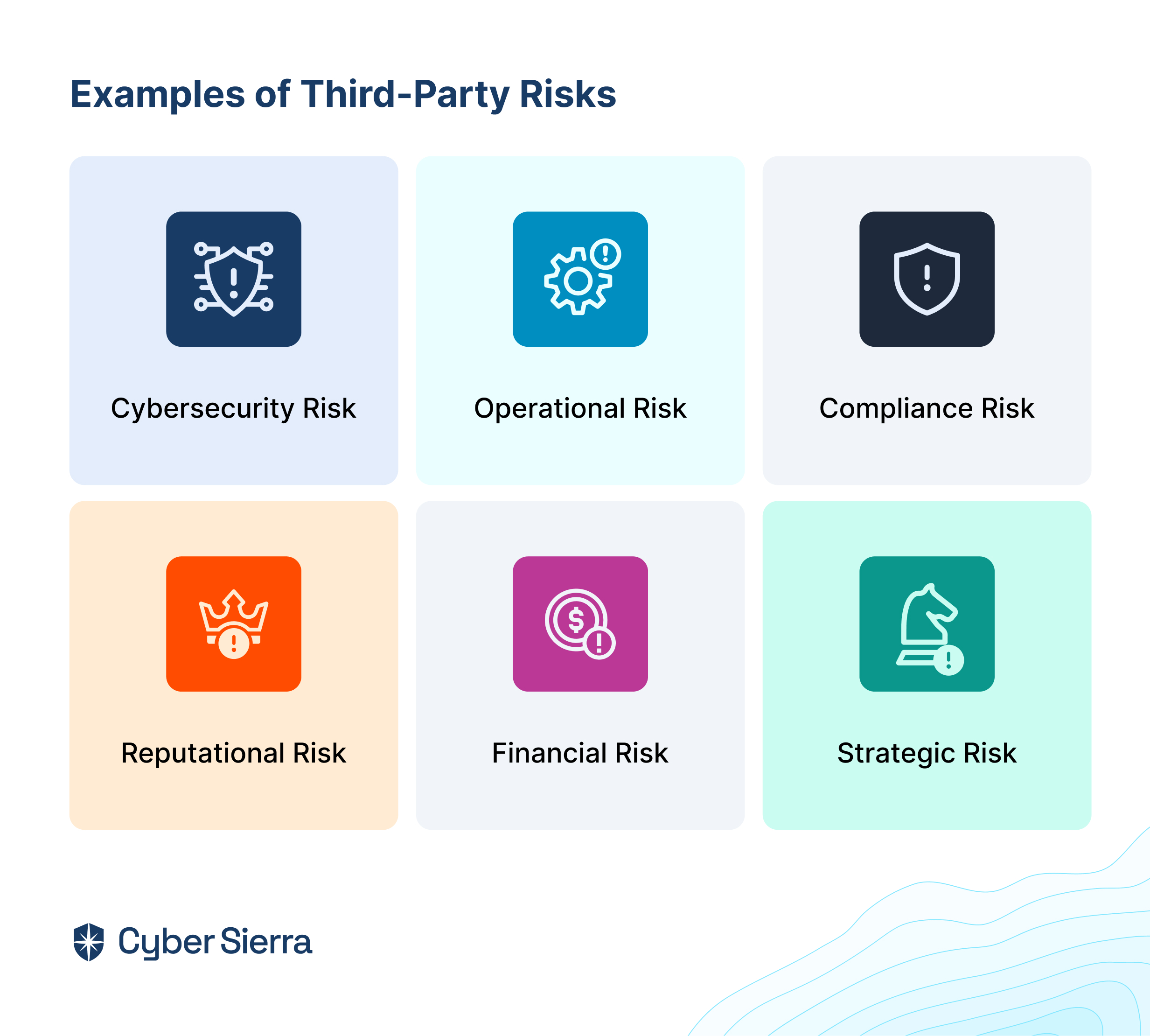
Organizations face various third-party security risks, some of which are mentioned below:
Cybersecurity Risk: The association with third parties can result in many kinds of cyber threats, including data breaches or even data loss. Routine evaluation of vendors and tracking of their activities is one of the measures aimed at minimizing this risk.
Operational Risk: Third-party initiatives and disruptions can prevent business operations from going normal. To eliminate this, companies usually implement SLAs (service level agreements) with vendors and prepare backup plans for the sustenance of business continuity.
Compliance Risk: Third-party activities can increase an organization’s risk of noncompliance with established standards or contractual agreements. This area is particularly sensitive for companies that operate in industries with a high degree of regulation, such as banking, telecom, government, and the health sector.
Reputational Risk: Any organization working with third parties faces potential reputational risks from adverse incidents. Such incidents involve security failures, data breaches, or unethical behavior. They can damage customer trust loss, brand reputation, and overall business quality.
Financial Risk: Inadequate management of third-party relationships can also cause financial difficulties for companies. A third party with inadequate security measures may attract fines and legal fees, further damaging the company’s financial stability.
Strategic Risk: Furthermore, third-party risks can be detrimental to an organization’s strategic objectives. If not addressed adequately, they can impede business success.
These risks often converge – for example, a breach can lead to loss of customer data, posing simultaneous risks to operations, brand reputation, finances, and compliance
Third-Party Risk Management (TPRM) Lifecycle
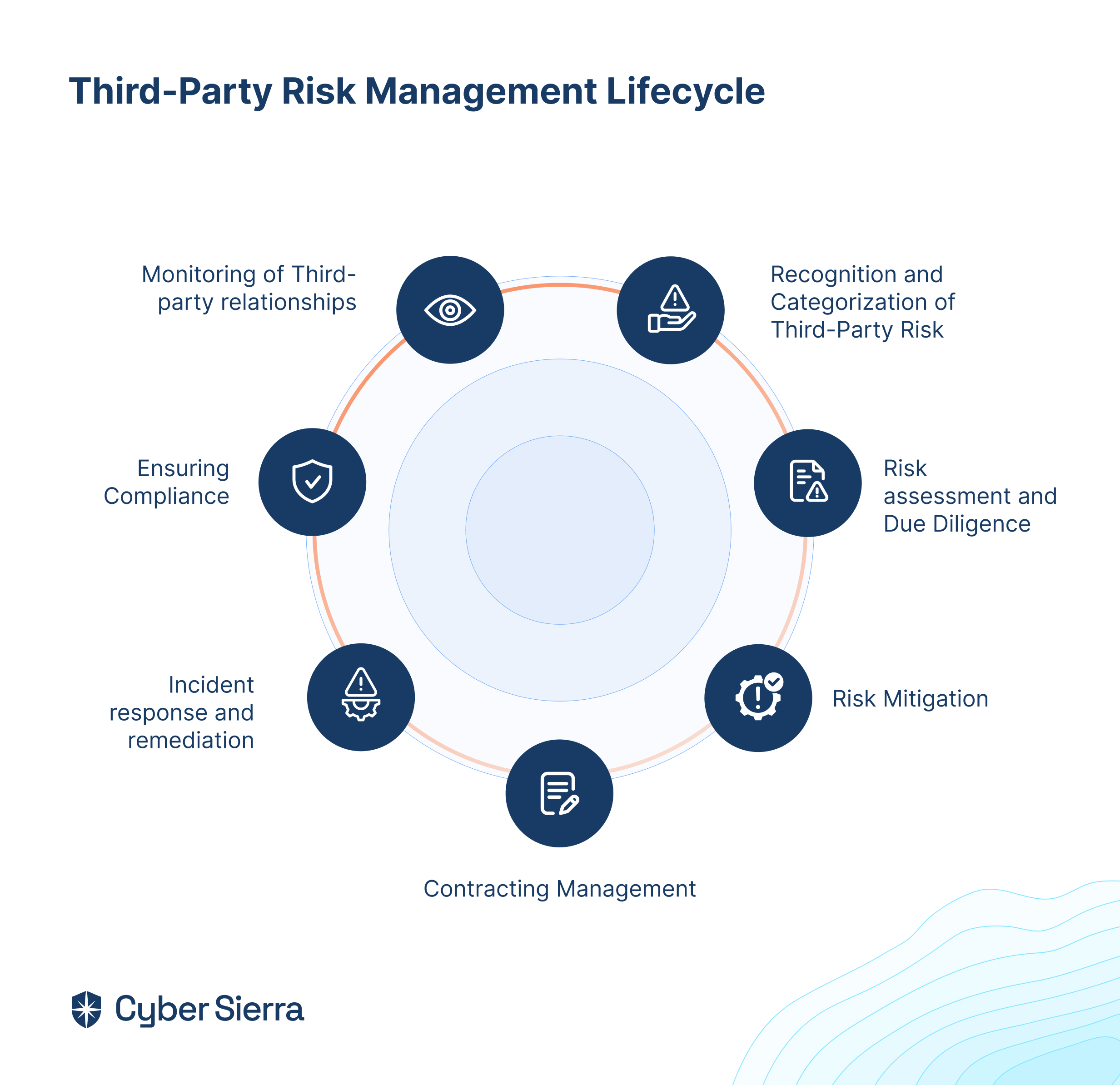
1. Recognition and Categorization of Third-Party Risk
Effective third-party risk management starts with understanding and categorizing the risks posed by different third-party relationships. This involves creating a complete inventory of all vendors, suppliers, contractors, partners, and other third-party entities that an organization engages with. Here are several factors to consider when categorizing these relationships:
Determine access level: Providers with high levels of access to sensitive data or systems are the ones considered to be at high risk.
Relationship type: Providers that take a rather meaningful part in the enterprise are thought of as higher-risk ones.
Industry or sector: Particular industries or sectors could be more prone to risks, such as fraud or data breaches.
Regulatory compliance: Ensure clarity and alignment with regulatory expectations by categorizing third-party risks according to specific compliance mandates and industry regulations.
Financial stability: The providers with financial instability are likely to raise the risk levels of organizations.
Categorizing third-party relationships based on these factors can help organizations prioritize their risk management efforts and allocate resources more effectively to mitigate potential risks. It also provides a framework for ongoing monitoring and assessment of these relationships.
2. Risk assessment and Due Diligence
In the second stage of the TPRM lifecycle, organizations conduct a comprehensive risk assessment and due diligence to ensure the reliability and compliance of their third-party relationships with their security requirements.
Risk assessment involves:
Identifying the third-party risk associated with each outsourced relationship
Measuring the probability and potential impact of these risks, which may involve financial stability, operational resilience, regulatory compliance, and safe use of data.
Due diligence involves:
Assessing the provided information by the third parties for reliability and capabilities of the provider, which may include reviewing the financial data and documents, among others.
Creating policies and procedures for when outside parties are involved, such as making sure external agents are obligated to follow the security standards and provisions of the company, including data encryption and access controls.
This step of the TPRM lifecycle should be aimed at ensuring that the organization fully understands the risks that the third-party relationships will bring and acts in response to them, mitigating each to a possible minimum. It also serves as a reference for the constant monitoring and testing of the ties to guarantee that the actions are compliant and secure.
3. Risk Mitigation
After the assessment of risks and fulfillment of due diligence, the next step in the TPRM lifecycle is risk mitigation and management. This means that policies, controls, and processes must be developed to mitigate existing risks in the first stages of third-party risk management and expose the organization to lesser third-party risks.
Risk mitigation and control strategies may include:
Contractual clauses: Incorporating specific clauses that are meant to outline the duties of each party in the third-party agreement, the privacy, data security, compliance, and indemnification clauses.
Continuous monitoring:Developing the process of long-term surveillance of third-party actions to ascertain that they comply with the security requirements and conduct regular audits, activities, and periodic reports.
Data protection: Implementing enforcement measures, which include access restrictions, data encryption, and regular backups.
Incident response: Ensuring a quick response strategy focused on security incidents including protocols for alerts, incident management, and post-incident assessments.
4. Contracting Management
In the modern business landscape, organizations frequently look to external vendors for a whole host of services – financial services, marketing, and technology, for example. While these relationships can drive substantial benefits, they’re not without risk – risk that must be managed effectively. This is where contractual and relationship management practices come into play.
Establish SLAs: Service level agreements (SLAs) are contracts that set performance benchmarks and service level standards between an organization and a third-party provider. Critical services must have SLAs that include benchmarks for response times, availability, and the timeframe for resolving problems. These metrics should be frequently reviewed and adjusted as required to ensure they meet current business needs and goals.
Manage relationships: It is essential to have a dedicated relationship management team or point of contact to manage third-party partnerships effectively. This team or individual should be responsible for monitoring the third-party provider’s performance, addressing any issues or concerns, and ensuring that the organization’s expectations are being met. Establishing regular channels of communication, status updates, and conducting periodic evaluations are also critical.
Ensure compliance: Third-party providers must comply with all contractual obligations. This requires ongoing monitoring of the provider’s performance and ensuring that all service-level agreements and other contractual requirements are being met. Additionally, regular audits and assessments should be conducted to ensure compliance with relevant laws, regulations, industry standards, and best practices.
Perform regular review: Contracts with third-party providers should be reviewed and updated regularly to ensure they remain relevant and effective. This includes updating SLAs and other performance metrics to account for changes in business requirements or advancements in technology. Moreover, contracts should be reviewed to ensure they comply with all relevant rules and regulations.
5. Incident response and remediation
In the TPRM life cycle, incident response and remediation features are prominent since they are the safety nets for handling unknown cybersecurity risks. Although organizations use several preventive actions, security incidents can still turn up unexpectedly. Rapid acts of decisiveness are very important since they help mitigate the damage and avoid similar problems in the future.
Here are the key steps in handling security incidents:
Establishing incident response plans: All the parties involved should be well familiar with the roles analysis and the existing incident response plan. The plan should be detailed, identifying and addressing each task from start to finish, and should also cover communications with the key stakeholders and analysis of the incident aftermath.
Addressing third-party involvement: If it is a third-party provider that has been involved, steps should be retained to notify the provider and ascertain their part in the incident. This involves investigating the provider’s security policies and determining if they follow the compliance of any legal requirements and industry standards.
Implementing corrective actions: Once the situation is contained the organizations leverage corrective action to prevent similar incidents from happening again in the future. A new security framework may include: enhancing security measures, updating policies and procedures, and providing additional training and guidance to authorities.
Conducting post-event evaluations: It is essential to conduct a holistic review of the outcomes after the incident to identify areas of improvement. In this evaluation, the focus is on reviewing and improving the security measures, enhancing controls, and reinforcing employee education procedures.
Essentially the relationship between incident response and remediation is an integral part of the TPRM cycle as they function as reactive as well as proactive measures to avoid unexpected risks and secure the data and assets. The establishment of proper and effective incident response protocols can help to ensure the management of risks efficiently and maintain the company’s reputation as well as business continuity.
6. Ensuring Compliance
Compliance is an essential part of the Third-Party Risk Management (TPRM) lifecycle. Compliance efforts ensure that all aspects of the TPRM program align with industry standards and provide a framework for continuous monitoring and improvement, helping organizations adapt to changing regulatory landscapes and emerging threats. This stage includes:
Monitoring and validating third-party compliance with contractual obligations, regulatory requirements, and industry standards.
Conducting regular audits and assessments to identify any compliance gaps or areas for improvement.
Implementing corrective actions or strategies to address compliance issues and improve overall compliance posture.
Providing ongoing training and support to third parties on compliance-related matters.
Reviewing and updating compliance policies and procedures in response to changes in regulations or industry standards.
Ensuring that all aspects of the TPRM program, including risk assessments, due diligence, and relationship management, adhere to compliance guidelines.
7. Monitoring of Third-party relationships
While third-party partnerships offer significant benefits, they also come with inherent risks that need to be managed effectively. This is where sound third-party relationship management practices come into play. This includes:
Establishing clear service level agreements (SLAs) to set performance expectations between an organization and its third-party provider. This includes defining response times, availability, and problem resolution timeframes.
Assigning a dedicated relationship management team or point of contact is essential for the effective management of third-party partnerships. They are responsible for monitoring the provider’s performance, addressing concerns, and ensuring that expectations are met.
Conducting regular audits and evaluations of contracts to ensure ongoing compliance with relevant laws and regulations, as well as alignment with organizational goals and standards.
Best Practices of Third-Party Risk Management
1. Segmentation
Divide third-party relationships into separate groups based on their risk levels, significance, data access, and regulation status.
Prioritize dealing with risks based on the profile of each group so as to use resources wisely.
Conduct ongoing and monitoring of high-risk groups while periodically reviewing low-risk ones.
2. Continuous Monitoring
Maintain an updated inventory of all third-party relationships, including vendors, suppliers, and contractors.
Establish a process for continuous monitoring of third-party relationships to ensure they meet security standards.
Regularly perform security assessments, audits, and compliance checks to identify and address emerging risks promptly.
3. Establish Clear Policies and Procedures:
Develop and enforce clear policies and procedures for managing third-party risks.
Identify the roles and responsibilities of the individuals who are part of maintaining the vendor relationships.
Review and refresh permissions when business needs and risks change.
4. Collaborate with Internal and External Auditors:
Collaborate with the internal and external auditors to build a strong third-party risk management program.
Get help and support from auditors and compliance experts to meet the industry standards and regulatory rules.
Form cross-functional teams of critical stakeholders and auditors from multiple departments to resolve issues and enhance third-party risk management processes.
5. Leverage automation for TPRM:
Utilize automation tools to streamline the collection, analysis, and reporting of TPRM data, enabling real-time insights into vendor risk profiles, compliance status, and performance metrics.
Implement customizable dashboards and automated reporting functionalities to visualize key risk indicators, trends, and compliance gaps, facilitating informed decision-making and strategic planning.
Challenges in Third Party Risk Management (TPRM)
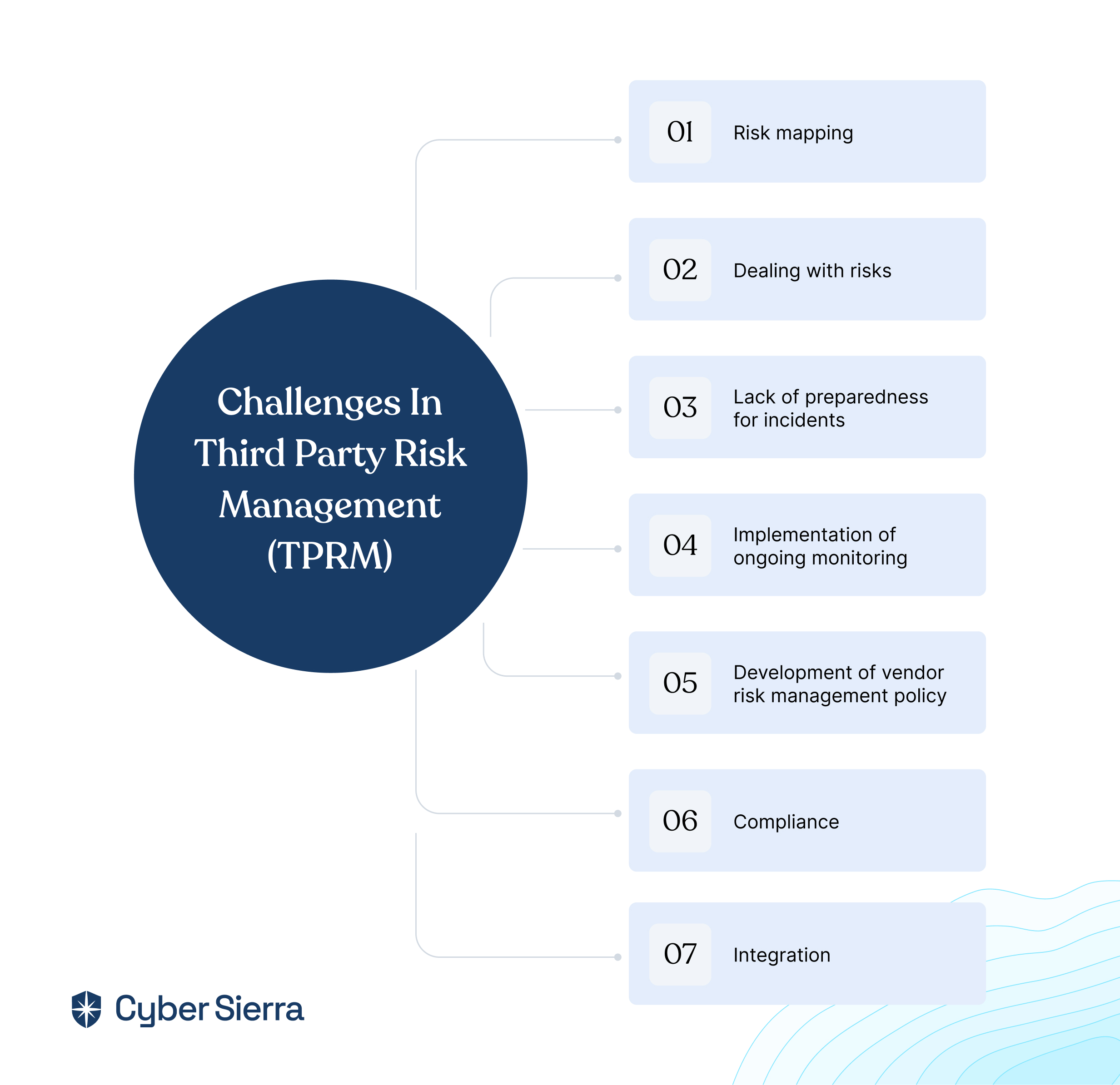
Risk mapping: Organizations face difficulties in developing an overview of their vendor networks. This can result in a lack of visibility into risks and an increase in overall risks.
Dealing with risks: The risk landscape is constantly changing, requiring organizations to be adaptable and proactive in recognizing and handling emerging risks within their third-party partnerships. However many organizations struggle to keep pace with these changes, leaving them susceptible to threats.
Lack of preparedness for incidents: Despite having risk management strategies in place security incidents involving third parties can still occur. To minimize the impact, companies need incident response plans. Nevertheless, many organizations are not adequately prepared to respond effectively to incidents and lack readiness.
Implementation of ongoing monitoring: Most assessment methods used in TPRM offer a view of a vendor’s risk at a specific moment. This can be limiting. But there are some TPRM platforms, such as Cyber Sierra that allow for near real-time monitoring of the vendors’ security controls
Development of vendor risk management policy: Crafting a Vendor Risk Management (VRM) policy is essential for TPRM. This involves outlining compliance standards responsibilities in the event of a breach, acceptable vendor controls, response protocols, and oversight mechanisms.
Compliance: Ensuring compliance with regulations and industry frameworks is crucial for managing third-party risks. However, staying abreast of the evolving environment can pose challenges. It can get challenging for companies to guarantee that their third-party partnerships adhere to all the relevant regulations.
Integration: TPRM should be an integral part of an organization’s overall risk management strategy. However, companies often struggle to integrate TPRM into their existing business processes, leading to disjointed risk management efforts and potential gaps in risk coverage.
Leverage an Automated Third-party Risk Management program
In general, TPRM is one of the necessary components of a comprehensive risk management program. It helps organizations protect themselves, their customers, and their assets while meeting regulatory compliance, reducing cost, and improving efficiency. Through responsible policies and timely monitoring, organizations can reduce the impact of third-party risks. The right tools enable preparation and forge deals that stimulate growth and success. That said, while you can mitigate third-party risks, it is impossible to eliminate them completely.
This is where Cyber Sierra comes in. Our TPRM solution simplifies complex third-party relationships and strengthens an organization’s security posture. It provides a comprehensive view of the third-party ecosystem, identifies and prioritizes risks, and deploys targeted risk mitigation strategies. What’s more, it gives you a dashboard view of your vendor’s security posture at any time, instead of the static, one-time snapshot from traditional security questionnaires.
Schedule a demo now to see how Cyber Sierra can streamline your TPRM processes. Our platform effectively mitigates third-party risks so you can focus on driving business growth through strategic partnerships.
FAQs
1. Who falls under the category of a third party?
A third party or vendor can be broadly defined as an external entity with which an organization has entered into a contract or agreement to provide a good, product, or service. This can include suppliers, contractors, service providers, partners, or any other entity outside the organization’s immediate scope that contributes to or impacts its operations.
2. Why is third-party risk management (TPRM) important?
The importance of third-party risk management (TPRM) lies in safeguarding organizations from cybersecurity threats, supply chain disruptions, and potential data breaches that could lead to reputational damage. It’s not just a matter of best practice; it’s increasingly becoming a regulatory requirement.
3. Why is continuous monitoring of third-party relationships crucial?
Continuous monitoring of third-party relationships is critical because it allows organizations to identify and address emerging risks in near real-time. It provides ongoing insights into a vendor’s security posture and compliance, ensuring that the organization remains vigilant and proactive in managing potential risks associated with its third-party ecosystem.
Third Party Risk Management
CISOs
CTOs
Cybersecurity Enthusiasts
Enterprise Leaders
Startup Founders
Srividhya Karthik
Srividhya Karthik is a seasoned content marketer and the Head of Marketing at Cyber Sierra. With a firm belief in the power of storytelling, she brings years of experience to create engaging narratives that captivate audiences. She also brings valuable insights from her work in the field of cybersecurity and compliance, possessing a deep understanding of the challenges and pain points faced by customers in these domains.
Join thousands of professionals and get the latest insight on Compliance & Cybersecurity.
Thank you for subscribing us!
Please check your email to confirm your email address.
Share via
What are TPRM Tools?
A third-party risk management tool is purpose-built software that helps organizations automate the process of identifying, assessing, and mitigating risks associated with third-party vendors, service providers, and partners.
TPRM tools streamline processes such as vendor onboarding and ongoing monitoring, ensuring compliance with regulations and safeguarding sensitive data. By automating risk assessments and consolidating vendor information, TPRM tools help organizations minimize operational, financial, and reputational risks, ultimately enhancing their overall security posture and resilience against potential disruptions.
Best Third-Party Risk Management (TPRM) Tools - Safeguarding Your Business Relationships
Searching for a Third-Party Risk Management (TPRM) tool that can help manage your security posture as well as business relationships?
The market offers a myriad of TPRM tools, each promising to maintain order.
But where does one start, and how do you know which solution is the right fit for your business?
In this guide, we’ll break it down for you. We’ll explain the nuances of TPRM and how it can effectively oversee your business relationships.
We’ll also give you some pointers on choosing the right TPRM tool for your business so you can start managing risks today!
Let’s get started.
What is Third-Party Risk Management (TPRM)?
Third-party risk management (TPRM) is a process that helps organizations identify, assess, and manage risks associated with their business relationships with third-parties. This includes the vendors, contractors, suppliers, distributors, and other parties that you work with to grow your business.
TPRM is an important part of enterprise risk management, and helps identify and manage risks associated with business operations. Third-party risk management tools can help enterprises analyze, assess, and manage these risks.
Your organization can also use TPRM tools to minimize legal liability and financial loss risks. It’s a crucial part of any security program that aims to prevent data breaches, cyber-attacks, and other threats related to information security.
Why Do You Need Third-Party Risk Management Tools?
TPRM tools extend beyond risk assessment and monitoring. They provide a comprehensive, data-driven framework for risk management, while also automating processes. This automation not only reduces the likelihood of human errors but also greatly expedites operational workflows.
Here are some essential reasons why you should use third-party risk management tools:
1. Assessing and Monitoring Risks
Third-party risk management tools play a pivotal role in evaluating and overseeing risks that can stem from diverse origins, including legal obligations, operational interruptions, and cyber vulnerabilities.
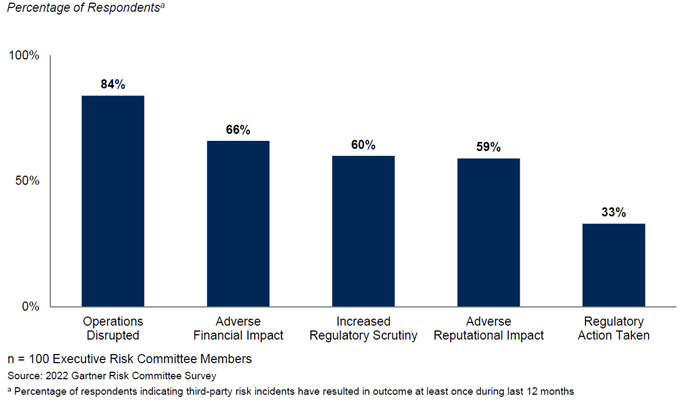
In the Gartner survey of 100 executive risk committee members in September 2022, 84% said third-party risks resulted in disruptions in operations.
A ‘miss’ occurs when a third-party risk incident results in at least one of the outcomes as shown below.
This shows how organizations that adopt third-party risk management tools can better assess, monitor, and manage their risks.
2. Automation and Efficiency
The automation provided by TPRM tools can
Save valuable resources,
Reduce human error, and
Accelerate operations.
Automation offers a more uniform approach to managing third-party risks by eliminating individual biases and ensuring all third parties are scrutinized to the same degree.
3. Complexity in Supply Chain Processes
The increased reliance on third-party vendors and global sourcing has added multiple layers of complexity to the supply chain.
As a result, it has become difficult for businesses to manage the associated risks without the assistance of TPRM tools.
A 2023 report fromKPMG revealed that 82% of businesses faced a supply chain disruption due to third-party risk, emphasizing the importance of TPRM tools.
4. Regulatory Compliance
Heightened regulatory requirements mandate companies to manage third-party risks effectively. TPRM tools can help businesses achieve regulatory compliance by providing clear visibility into the third-party risk landscape.
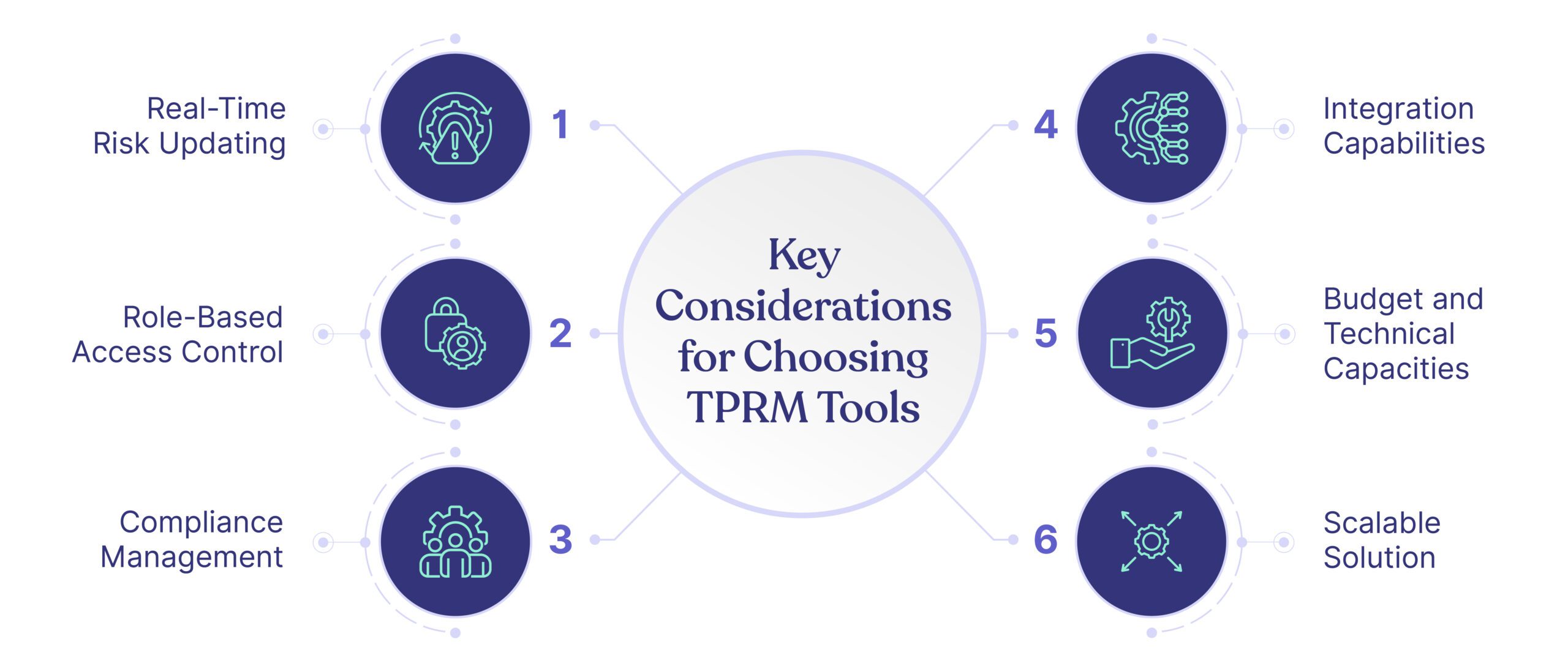
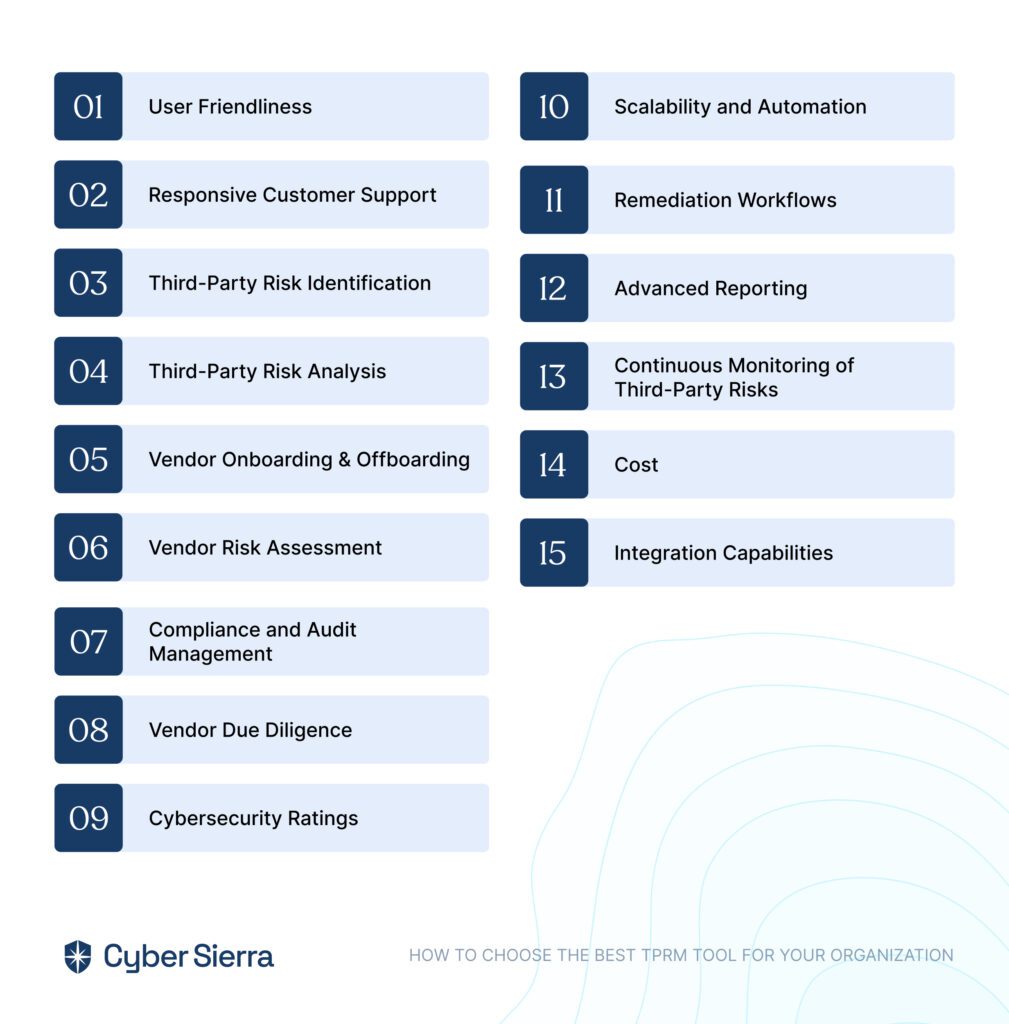
Key Considerations for Choosing TPRM Tools
Selecting the optimum Third-Party Risk Management (TPRM) tool isn’t a task one should take lightly.
Multiple vital aspects must be considered to ensure the tool aligns well with your business dynamics while offering substantial value in risk management.
These include:
1. Real-Time Risk Updating
Consider a sudden data breach at a third-party vendor; how promptly would you know?
Risks can emerge in the blink of an eye. Quick visibility into such risks is crucial.
Thus, a TPRM tool should be able to update risk assessments in real time, providing immediate visibility into vulnerabilities.
Such a feature enables businesses to respond promptly and effectively to emerging threats and manage their third-party risks proactively.
2. Role-Based Access Control
What would happen if sensitive data falls into the wrong hands within your own organization due to loosely controlled access rights? Preventing such scenarios is where role-based access control becomes invaluable.
Role-based access control is a vital feature in a TPRM tool and allows you to assign specific access privileges based on user roles and control permissions. Doing this ensures that critical information is only accessible to those needing it, enhancing data security and reducing the chance of internal data breaches.
3. Compliance Management
The terrain of regulatory compliance is increasingly complex and dynamic. Companies are expected to keep pace with constantly evolving local and global standards, which can result in costly penalties or irreparable reputational damage. This is where having a TPRM tool with a robust compliance management feature becomes pivotal.
A robust TPRM tool should equip the enterprise to respond to compliance requirements and manage compliance as an ongoing initiative, aligning with local and global regulations.
Whether it’s GDPR for data protection, SOC 2 Control for service organizations, or ISO27001 for information security management, your TPRM tool should be capable of managing compliance with these diverse standards.
The tool should employ measures to track your company’s compliance status regularly, issuing reminders for mandatory assessments, audits, or reporting.
4. Integration Capabilities
Integration capabilities ensure the tool synergizes well with your existing systems. A TPRM tool that integrates smoothly with other platforms (such as your CRM, ERP, or ITSM) enhances data-sharing, process synchronization, and overall operational efficiency.
5. Budget and Technical Capacities
Lastly, businesses must strike a balance between the offered features and the cost of the TPRM tool. Evaluate if the tool provides good value for the price and aligns with your budgetary constraints.
At the same time, assess your team’s technical prowess and readiness to implement and use the tool to its fullest. You should also look for a tool that offers employee training and support, as this reduces the overall learning curve.
6. Scalable solution
Look for a TPRM tool that is scalable and can accommodate your organization’s growth, increasing vendor relationships, and expanding risk landscape. This flexibility ensures that the TPRM tool remains effective and relevant as your business continues to flourish.
Top 5 Third-Party Risk Management Tools for 2024
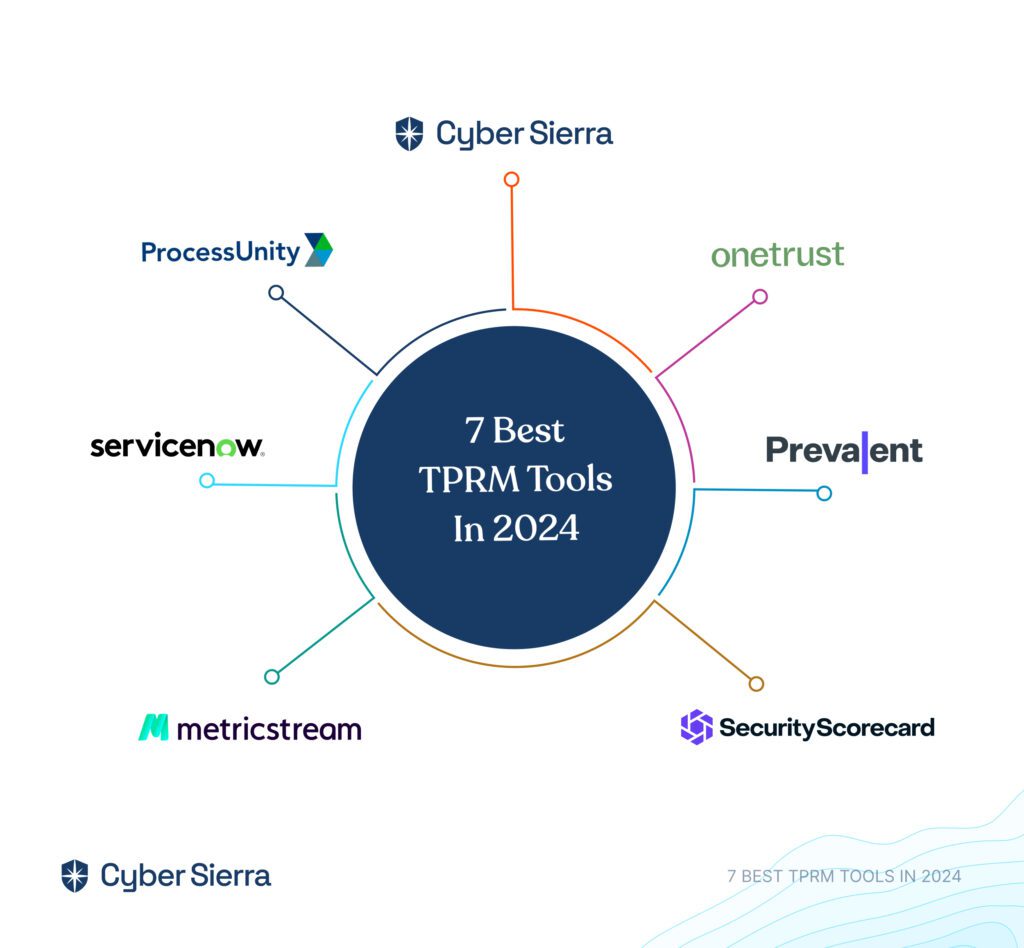
Numerous quality tools are available for Third-Party Risk Management. Based on the functionality, user reviews, and reputation within the industry, the top contenders for 2024 are:
Cyber Sierra TPRM program empowers enterprises to evaluate, mitigate, and monitor third-party vendor risks.
https://cybersierra.co/
Here are the key features of Cyber Sierra:
Identify third-party risks: Gain insight into the key risks associated with third-party vendors and develop an understanding of how to identify them
Remediate & manage vendor risks: Implement a structured framework to evaluate, assess, and automate your third-party risk management processes
Prioritize your vendor inventory: Categorize vendors by risk level to allocate resources efficiently and prioritize high-risk vendors for focused attention
Continuously monitor all your vendors: Get near real-time 24*7 visibility of all your vendors’ security compliance with alerts and correction actions on a need basis
These key features are built around being proactive in threat detection and swiftly managing risks to provide organizations with an efficient and robust solution.
Cyber Sierra’s TPRM program is customizable to the needs of different industries and ensures compliance with region-specific regulations, such as Singapore’s PDPA, Australia’s CIRMP, Europe’s GDPR, and USA’s CCPA, HIPAA, and PCI DSS, to name a few.
It also comes with a training module to equip employees with awareness on various security topics.
What’s good: Cyber Sierra stands out for its vendor risk assessment and due diligence, intuitive interface, and powerful risk management and reporting.
BitSight specializes in security ratings and risk management. Its features include automated risk prioritization, detailed analytics, and robust third-party risk management capabilities.
https://www.bitsight.com/
Here are the key features of BitSight:
Security Ratings: Get objective and quantifiable measurements for your cybersecurity posture and vendors.
Atlas Platform: Get a user-friendly 360-degree risk view, enabling risk segmentation and peer comparison.
Peer Benchmarking: Benchmark your organization and vendors against industry peers.
This gives you a broad perspective of your organization’s risk landscape, enabling you to effectively understand and prioritize your risk mitigation efforts.
What’s good: BitSight’s strength lies in its detailed risk assessments, comprehensive security ratings, and ability to simplify complex data points into actionable insights.
OneTrust TPRM is a part of OneTrust’s larger privacy, information security, and governance platform, facilitating a holistic approach to risk management. Some notable features are its automation capabilities, central repository for third-party data, and risk identification tools.
Unified Privacy, Governance, and Risk Platform: Access a comprehensive platform that covers privacy, information security, and governance.
AI-Powered Risk Analysis: Employ artificial intelligence for identifying and prioritizing relevant risks.
Scope Wizard: Automatically determine which assessments to perform on each vendor based on collected information.
What’s good: OneTrust integrates smoothly with various management systems, ensuring consistency in data collection, analysis, and reporting. It also helps streamline vendor assessments with its automation features.
UpGuard combines a comprehensive solution with third-party risk management, security posture management, and data leak detection. It provides scores to indicate the cybersecurity risk level of vendors and helps maintain continual visibility and control over data.
https://www.upguard.com/
Here are the top features of UpGuard:
Continuous Assessment: Get real-time updates on your vendors’ cyber risks, enabling your organization to react promptly to emerging or changing risks.
BreachSight: Proactively detect data leaks or exposed credentials to prevent severe data breaches, protecting your company’s reputation and finances.
Actionable Remediation Guidance: Get specific guidance to quickly and effectively rectify identified security issues, enhancing your overall cybersecurity posture.
What’s good: UpGuard has a robust risk scoring system, ability to discover and remediate data leaks, and offers consistent monitoring of every vendor.
Venminder offers a robust TPRM solution with services including contract management, due diligence and risk assessments, questionnaires, and ongoing monitoring capabilities. You can store all third-party risk data and information in one place, simplifying audits and reporting.
https://www.venminder.com/
Here are the top features of Venminder:
Managed Services: Reduce your internal team’s workload, allowing them to focus on core business tasks.
Third-Party Expert Evaluations: Get expert evaluations that provide reliable and accurate assessments to help you make informed and confident decisions about your vendors.
Regulatory Compliance Focus: Ensure your vendor relationships meet regulatory standards to avoid fines and other negative consequences of non-compliance.
What’s good: Venminder’s focus on ongoing monitoring and its excellent regulatory compliance capabilities, which can be essential for businesses in regulated industries.
How TPRM Tools Improve Vendor Performance Monitoring?
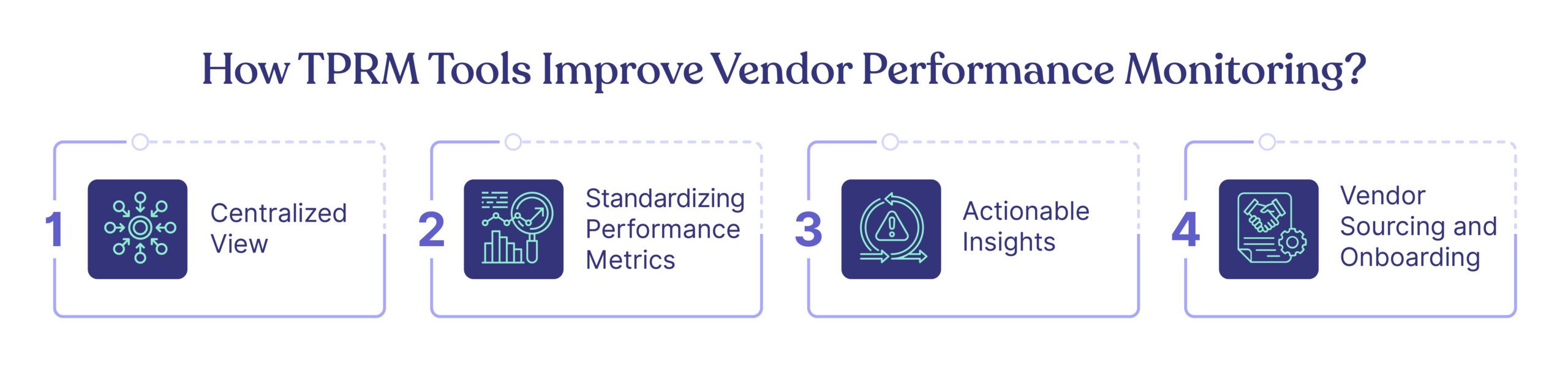
TPRM tools play a pivotal role in enhancing the monitoring of vendor performance through a multitude of key mechanisms.
1. Centralized View
TPRM tools consolidate and present your vendor data within a single centralized platform. This capability fosters a more streamlined and effective approach to vendor management. The integration of all data into one location guarantees your continuous awareness of any alterations or potential risks linked to your vendors.
Consider this scenario: if a vendor displays early indications of a potential data breach, a TPRM tool would promptly notify you, enabling swift and decisive responses.
Likewise, instances of vendors consistently falling short of performance benchmarks become readily identifiable and manageable through this centralized viewpoint.
2. Standardizing Performance Metrics
TPRM tools provide standardized metrics to track vendor performance. Standardization can reduce confusion and miscommunication, as everyone involved clearly understands the benchmarks for performance.
You could establish Key Performance Indicators (KPIs) such as quality of service, delivery time, data security standards, or anything relevant to your business that a vendor needs to deliver on.
The ability to easily track these KPIs over time helps compare vendors and choose who should continue being part of your business based on their consistent performance.
3. Actionable Insights
TPRM tools often provide advanced analytics and reporting functionality. This enables you to carry out deeper analysis and gain valuable insights into your vendors’ overall performance and the risks they pose.
They can highlight patterns and trends that may be less visible in day-to-day operations. Consequently, these insights allow you to move from reactive to proactive – you don’t need to wait for problems to occur but stop them before they happen.
These insights can also guide decision-making processes for contract renewals, renegotiations, and vendor selection.
4. Vendor Sourcing and Onboarding
Some TPRM tools offer unique features to help with vendor sourcing, selection, and onboarding. They may come with capabilities to perform an initial assessment of potential vendors, ranking them based on the organization’s specific needs and requirements.
This ensures a smooth and systematic onboarding process and sets the tone for what is expected from vendors.
It helps kick-start the vendor’s journey on the right foot — knowing exactly what performance metrics they’ll be judged upon, minimizing future surprises, and ensuring optimal performance.
Over time, this can transform your relationships with your vendors, resulting in better collaboration and performance.
Enhancing Vendor Due Diligence with TPRM Tools
Vendor due diligence is a critical aspect of the procurement process. TPRM tools help to automate, streamline, and improve this process by providing rigorous risk assessment protocols, tracking vendor interaction, and providing real-time insights to make informed decisions.
The right TPRM tool will enhance your performance, minimize risks, and help maintain successful and secure business relationships.
Though all the tools can help you with vendor due diligence, the one that is best for your organization will depend on your business needs and the type of procurement processes you have. Look for solutions that meet your current and future needs.
Cyber Sierra, for instance, grants you much more than an ordinary TPRM solution. Its comprehensive suite leapfrogs the limitations of conventional point solutions by offering a platform with a unified cybersecurity approach. With Cyber Sierra, you also get:
Regular security awareness training for employees,
Compliance with the dynamic regulatory landscape,
Prompt resolution of cloud misconfigurations,
Simplified management and renewal of cyber insurance policies.
Schedule a demo now to see how Cyber Sierra can streamline your TPRM processes. Our platform effectively mitigates third-party risks so you can focus on driving business growth through strategic partnerships.
Third Party Risk Management
CISOs
CTOs
Cybersecurity Enthusiasts
Enterprise Leaders
Startup Founders
Srividhya Karthik
Srividhya Karthik is a seasoned content marketer and the Head of Marketing at Cyber Sierra. With a firm belief in the power of storytelling, she brings years of experience to create engaging narratives that captivate audiences. She also brings valuable insights from her work in the field of cybersecurity and compliance, possessing a deep understanding of the challenges and pain points faced by customers in these domains.
Join thousands of professionals and get the latest insight on Compliance & Cybersecurity.
Thank you for subscribing us!
Please check your email to confirm your email address.
Share via
Steps to Effective Third-Party Risk Management - Safeguarding Your Business Partnerships
‘You’re only as strong as your weakest link’. In today’s interconnected business landscape, this adage carries more weight than ever before.
Why, you might ask?
Because third-party partnerships, for all their benefits, could very well become that weak link when not properly safeguarded.
Does your organization have a robust third-party risk management program in place?
If the answer gives you pause, you are not alone. Many businesses grapple with the challenge of managing third-party risks effectively.
In this guide, you will learn how to set up a third-party risk management program to help avoid costly mistakes and legal entanglements.
Let’s dive in.
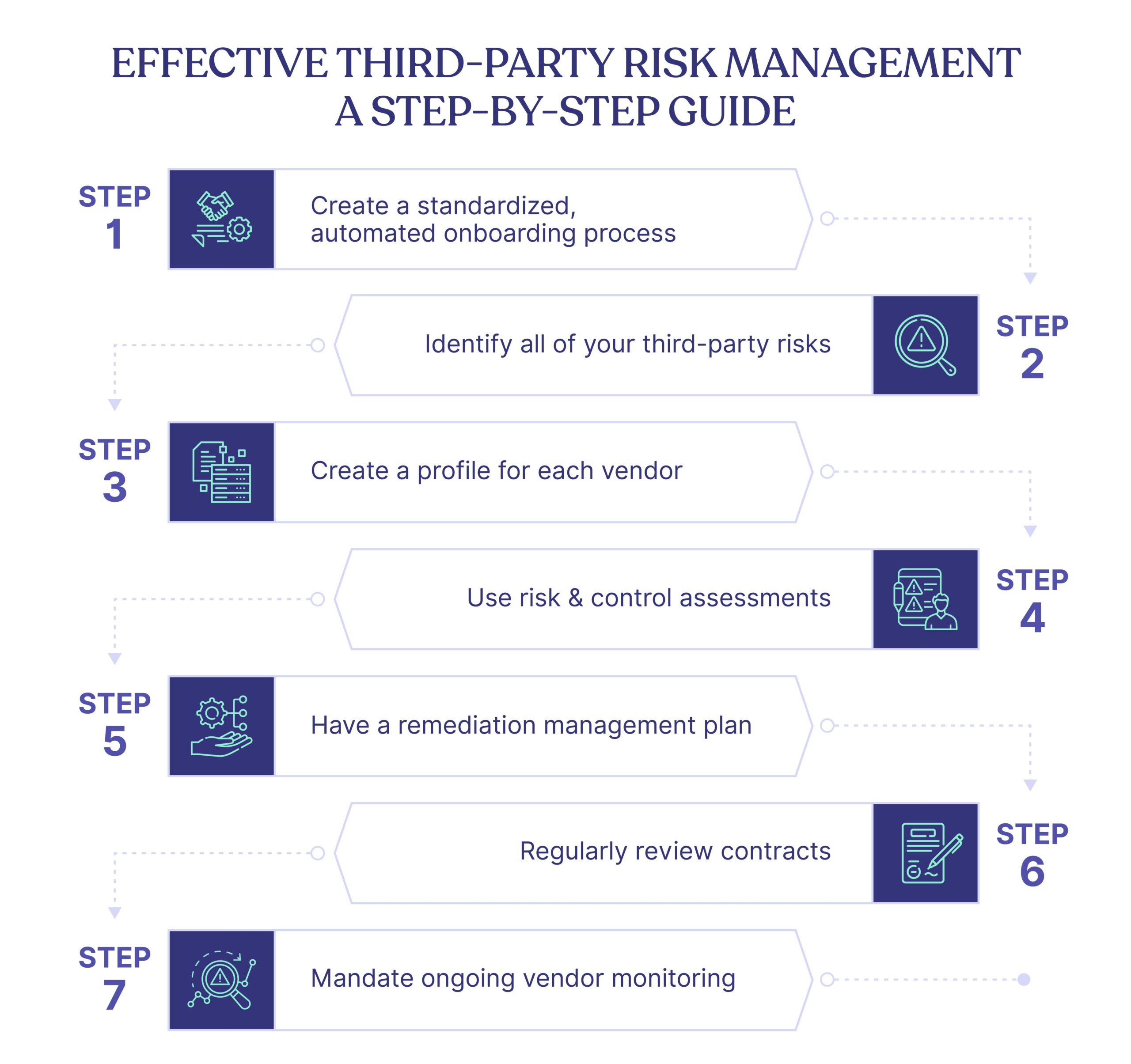
Effective third-party risk management - a step-by-step guide
To effectively manage third-party risks, you should take a step-by-step approach. The following section guides how to set up a robust program that includes the following seven key components:
1. Create a standardized, automated onboarding process
Upon onboarding, thoroughly evaluate any existing and potential third-party risks associated with new vendors. This process includes identifying financial, legal, operational, cybersecurity, and reputational risks.
Financial risks require understanding a third party’s financial stability, which is crucial to ensure uninterrupted service delivery.
Legal risks encompass potential litigation or regulatory sanctions due to the third party’s actions. You must ensure your partner’s adherence to regulations and laws to safeguard your legal position.
Operational risks involve potential losses due to the third party’s failed internal processes, people, or systems.
Cybersecurity risks, prevalent and growing, relate to potential data breaches and cyber threats.
Lastly, reputational risks can cause significant damage due to a third party’s unethical or controversial actions.
To address each risk effectively, you should collaborate with stakeholders from different departments to gain insight into every aspect of the third-party relationship.
3. Create a profile for each vendor
Establishing a complete vendor profile helps maintain an organized database of all current and prospective vendors.
Each vendor profile should include essential information such as company details, risk assessments, contracts, performance reviews, and other relevant documentation. A comprehensive vendor profile enables you to make informed decisions about your partnerships while evaluating risk and adjusting as needed.
4. Use risk & control assessments
Risk and control assessments are vital for efficient third-party risk management. They evaluate vendors’ compliance with your organization’s policies, procedures, and relevant regulations.
Risk assessments identify vulnerabilities, estimate threats’ probability and impact, and measure associated risks with each vendor. Control assessments focus on the effectiveness of vendors’ measures to mitigate acknowledged risks, including procedures to prevent or manage threats.
Tailor assessments to each third-party relationship, considering the specific services, industry context, and unique risks. Assessments should be iterative, reflecting changes in the business risk profile, vendor operations, or relevant laws and regulations.
These assessments’ results inform risk management decisions, such as avoidance, transfer, mitigation, or acceptance. They offer insights into vendor performance and improvement opportunities, guiding decisions like contract renewals or terminations and aiding in enhancing vendors’ risk management practices.
5. Have a remediation management plan
A remediation management plan is crucial in third-party risk management as it addresses risks and issues identified during risk and controls assessments.
This plan should clearly outline the required actions for each risk, assigning responsibilities to specific individuals or teams. Deadlines should be set to ensure timely implementation. Additionally, monitoring the progress of the remediation plan is essential.
Regular reporting and follow-ups should be built into the plan to hold vendors accountable for mitigating the risks per the agreed timelines. Doing so assures proactive management of issues before they manifest into tangible problems affecting your operations or reputation.
For instance, Cyber Sierra offers a continuous monitoring system that can help identify vulnerabilities in near real-time and guides steps to overcome them.
6. Regularly review contracts
Third-party contracts need regular reviews to ensure they remain current and effective in the light of evolving business requirements, regulatory environment, or identified risks.
This practice helps incorporate new standards or regulations into existing agreements, thereby ensuring compliance.
In this way, contract reviews turn into a preventive measure, minimizing the probability of unanticipated risks and safeguarding your organization’s interests.
7. Mandate ongoing vendor monitoring
Ongoing vendor monitoring helps detect and manage emerging risks in third-party relationships in real time. This process validates that vendors uphold their agreed-upon performance levels and continually meet your organization’s risk management objectives.
Effective vendor monitoring may comprise periodic assessments, performance evaluations, and regular audits. Not only does this practice help identify potential issues early, but it also triggers timely actions to prevent any negative impact.
Consequently, ongoing monitoring strengthens business partnerships, maintains operational stability, and fosters trust and reliability between your organization and its vendors.
The Cyber Sierra platform integrates seamlessly into your systems, allowing for ongoing monitoring of potential threats. It provides a robust solution for real-time vendor risk monitoring, empowering your organization to meet its third-party risk management objectives proactively.
Wrapping Up
Implementing a robust third-party risk management program is indispensable in today’s business environment. Not only does it establish secure business partnerships, but it also guards the very future of your organization. An effective program can build trust, increase resilience, and offer a competitive edge despite potential risks and uncertainties.
However, addressing third-party risk management’s complexity requires an integrated, comprehensive solution.
This is whereCyber Sierra can make a difference. With the ability to connect the dots across your entire organization, Cyber Sierra provides a comprehensive risk management solution to help you identify and manage third-party risks.
Schedule a demo now to see how Cyber Sierra can streamline your TPRM processes. Our platform effectively mitigates third-party risks so you can focus on driving business growth through strategic partnerships.
Third Party Risk Management
CISOs
CTOs
Cybersecurity Enthusiasts
Enterprise Leaders
Startup Founders
Srividhya Karthik
Srividhya Karthik is a seasoned content marketer and the Head of Marketing at Cyber Sierra. With a firm belief in the power of storytelling, she brings years of experience to create engaging narratives that captivate audiences. She also brings valuable insights from her work in the field of cybersecurity and compliance, possessing a deep understanding of the challenges and pain points faced by customers in these domains.
Join thousands of professionals and get the latest insight on Compliance & Cybersecurity.
Thank you for subscribing us!
Please check your email to confirm your email address.
Share via
In today’s business landscape, operating without a third-party vendor can be challenging. Therefore, organizations often seek the strategic advantage of third-party vendors. But unfortunately, outsourcing third parties comes with inherent risks that must be actively managed.
Compliance leaders frequently note that organizations often face unforeseen risks following the initial onboarding and due diligence processes. This underscores the inherent complexity of third-party connections and highlights the critical need for comprehensive Third-party Risk Management (TPRM) strategies. While it is not possible to eliminate all third-party risks, establishing a comprehensive third-party risk management framework will help mitigate potential risks associated with each vendor.
“To build pervasive security across that third-party ecosystem, you not only need to know who those third parties are and what they’re doing for you,” said Edna Conway, chief security officer, global value chain at Cisco, “you had best understand the leadership and the operational processes utilized in your own enterprise that manage the commercial relationship with those third parties.” –
It is, therefore, imperative to understand your third-party risks. So, in this blog post, we will detail how to create a suitable third-party risk management framework for your organization and their associated benefits. Let’s get started right away!
What is a TPRM Framework?
A TPRM framework evaluates and mitigates potential security risks associated with outsourcing to third-party vendors, partners, suppliers, or service providers. The framework provides a road map for organizations to build customizable risk management programs per their industry best practices.
A TPRM aims to comprehensively evaluate the risk landscape to minimize the likelihood of data breaches and vulnerabilities, and enhance the overall cyber resilience against threats from third-party vendor associations. The evaluation could range from access to your intellectual property to operational, legal, financial, and compliance risks.
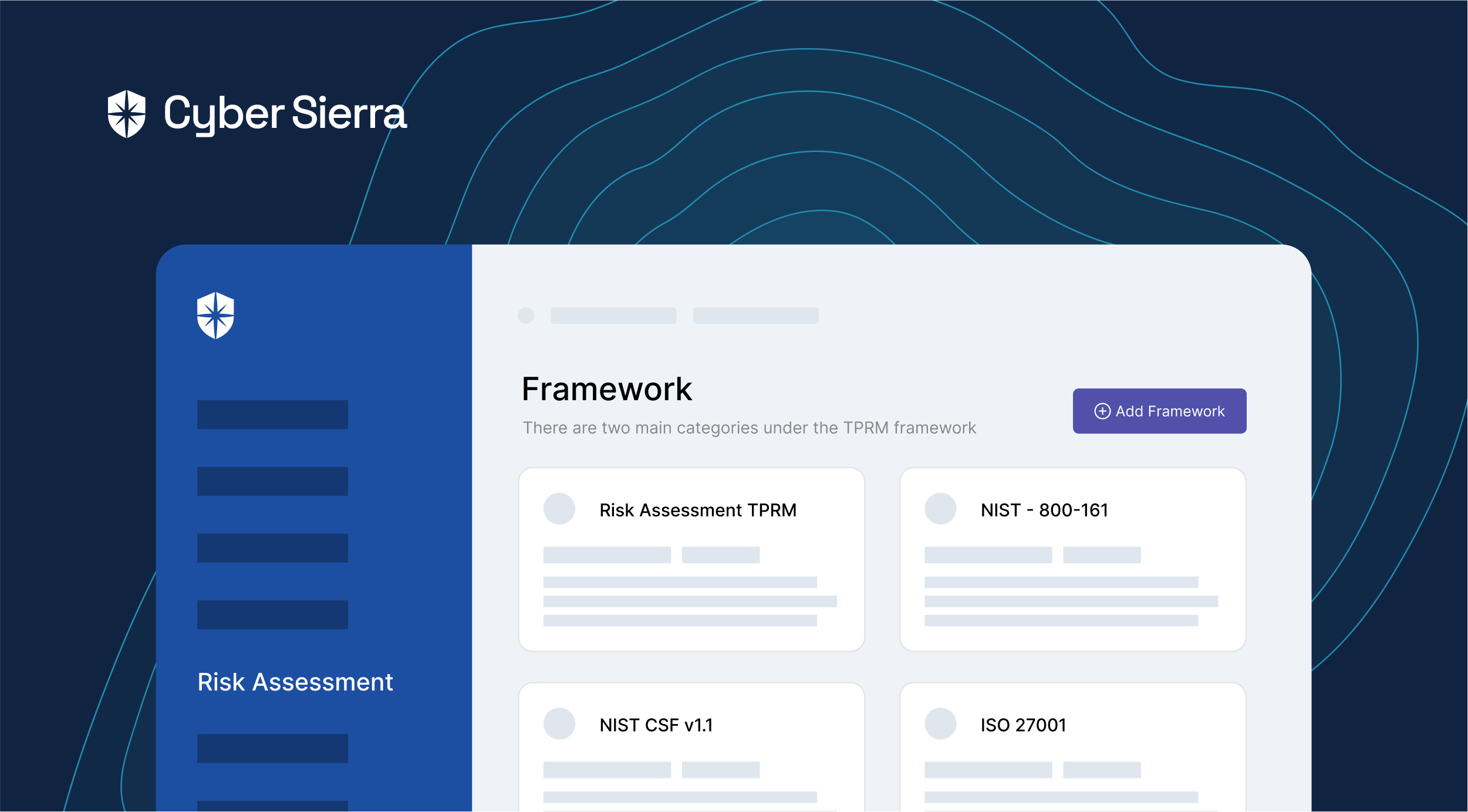
There are two main categories under the TPRM framework— 1) Tailored specifically for TPRM or Supply Chain Risk Management program (SCRM) like Shared Risk Assessment TPRM framework and NIST – 800-161. 2) Supplementary information security programs that enhance the TPRM program or assist in vendor risk management questionnaires, such as NIST CSF v1.1. ISO 27001, and ISO 27036. These standards outline building an effective infosec program by effectively managing controls associated with third-party risks.
Why do you need a TPRM Framework?
While most organizations focus on securing endpoints such as servers, routers, and firewalls mostly, it is worth noting that they are not the only threat actors. There could be potential risks from unfamiliar sources such as the networks of trusted third parties too. These connections can become the vulnerabilities that hackers use to infiltrate your defenses! Hence it is important to come up with a holistic third-party risk management framework.
By employing a TPRM framework, companies can increase their understanding of risks and gain insight into the risk profiles of their suppliers and service providers. This way, the business can make conscious decisions on whether it should partner with a given entity or terminate its relationship to safeguard its operations.
Recent research reveals that a startling 62% of data breaches originate from vulnerabilities in third-party vendor relationships. This indicates just how vital having a TPRM framework is for protecting sensitive organizational information. A properly instituted TPRM program enables organizations to consistently uncover and address potential risks, as well as provide a structured approach for developing and deploying effective risk mitigation tactics.
Regulatory bodies demand rigorous third-party risk management report . Start with a thorough due diligence, meet contractual obligations, implement internal security controls, and ensure ongoing compliance with security standards throughout the vendor management lifecycle.
A comprehensive TPRM framework is an essential catalyst for meeting these requirements by providing guidelines to comply with the prescribed security standards and regulatory obligations.
Failure to mitigate third-party risks can result in legal repercussions, reputational and financial losses, and more importantly, erosion of customer trust. A TPRM framework acts as a credibility amplifier that protects your business from vendor risks, safeguards your resources and assets, and maintains your trust and reputation in your marketplace.
Subscribe to Secure My Software Weekly
Join thousands of CISOs, CTOs, and security pros getting actionable tips for security their software biweekly.
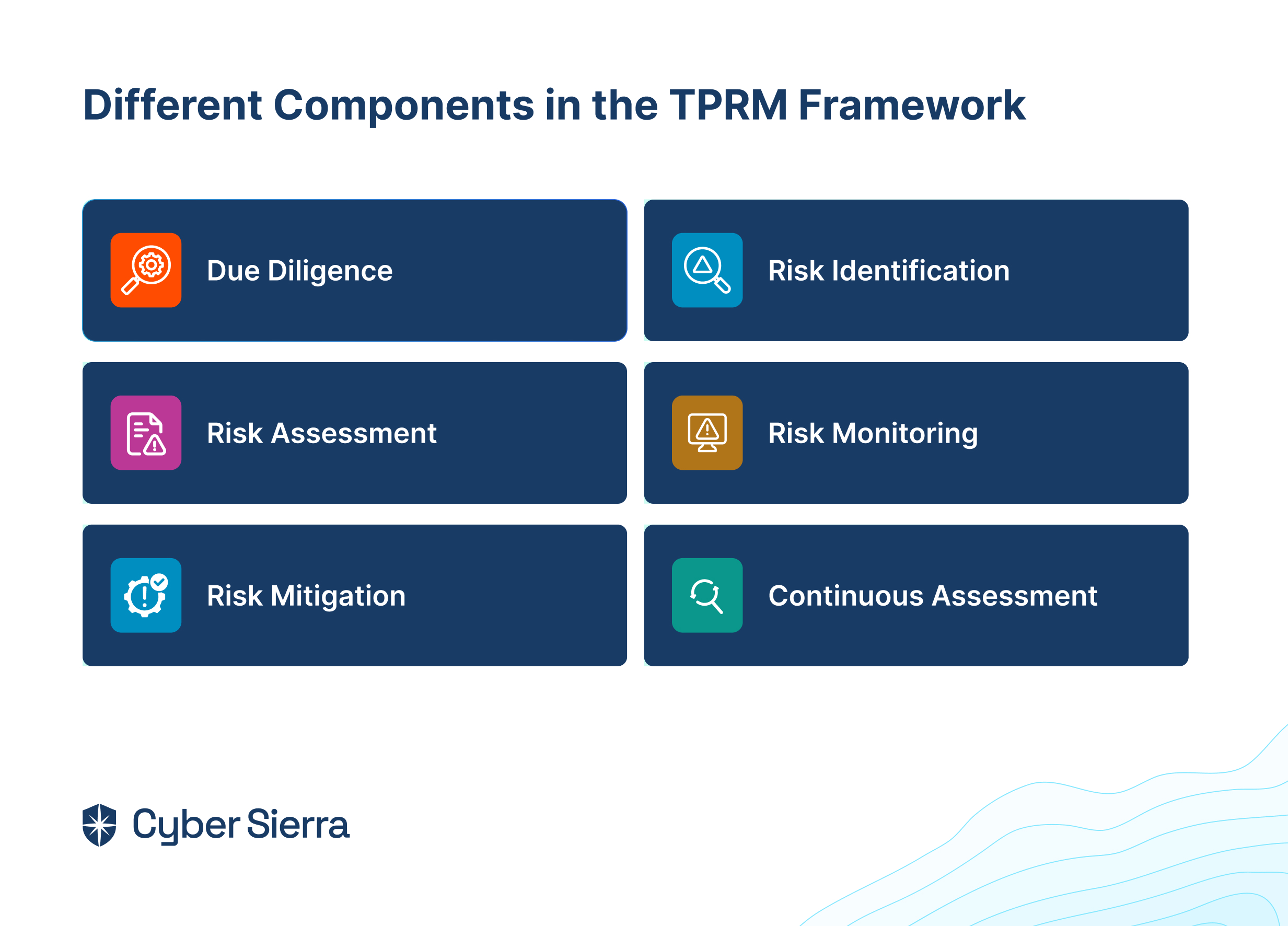
Different Components in the TPRM Framework
There is no one-size-fits-all TPRM program; you can customize your TPRM framework based on your business needs.This can be accomplished by either utilizing a TPRM automation software or developing a fully integrated risk management solution. Any effective TPRM approach should incorporate these six essential elements:
1. Due diligence
Third-party due diligence is a critical step in risk management, allowing companies to evaluate vendors before engaging in a business relationship. This involves conducting background checks and mitigating risks associated with conflict of interest, legal, cyber security, or compliance issues, ensuring these external partners are legitimate, reliable, and won’t harm the company’s reputation or finances.
2. Risk identification
The next step in choosing a TPRM framework is recognizing and assessing potential risks related to third-party vendors. Here, you evaluate the nature of the risks, such as operational, compliance, or data privacy risks, the scope of the risk, and the involved parties.
3. Risk assessment
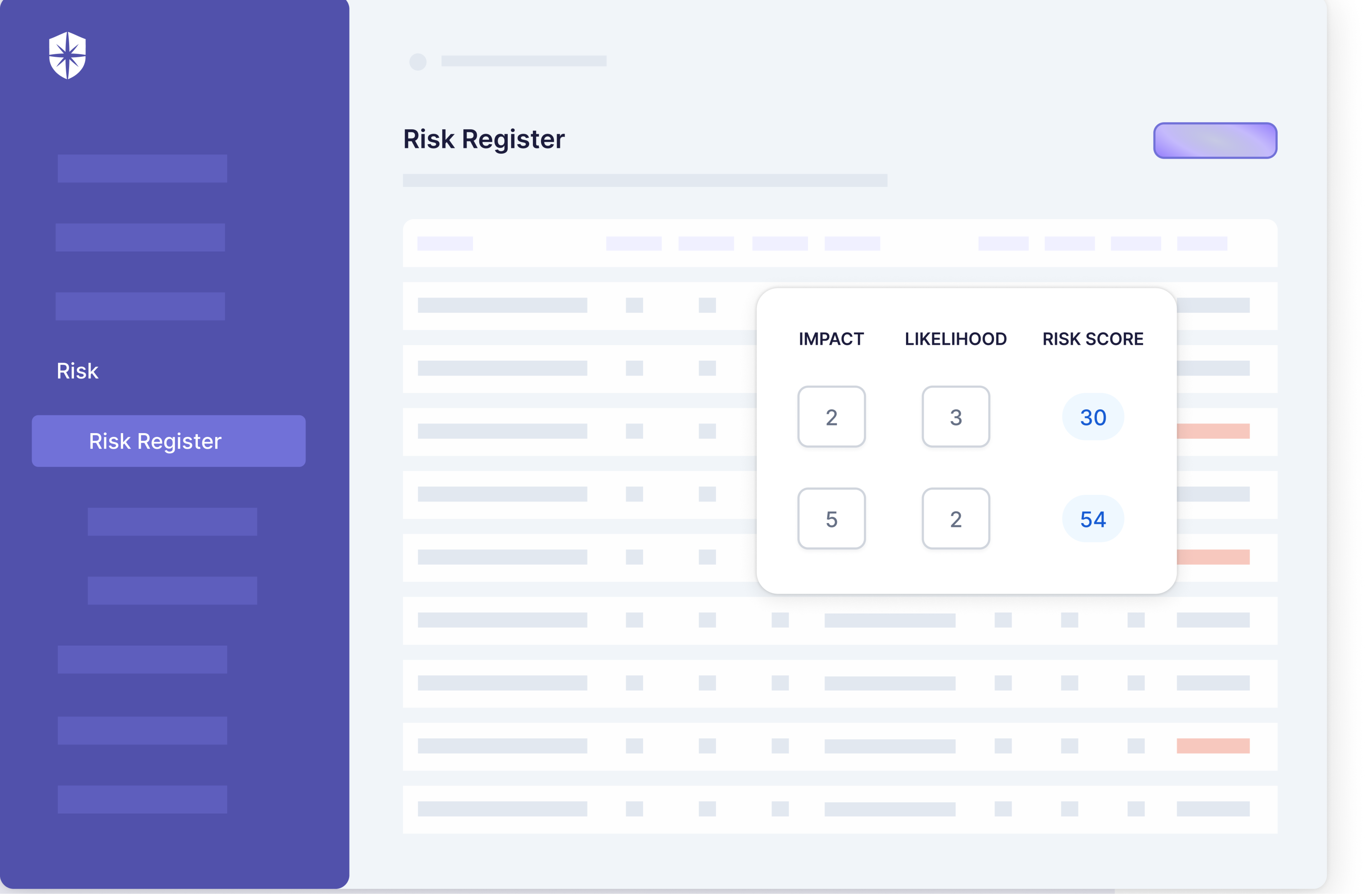
Following risk identification, this phase involves determining the impact of the likelihood of identified risks. By analyzing the severity and probability of various risks, organizations can prioritize them and allocate resources accordingly to manage and mitigate the highest priority risks.
4. Risk monitoring
Risk monitoring is a sustained practice utilizing specialized tools and procedures to track, assess, and analyze risk factors continuously. This ongoing process enables organizations to stay abreast of changes in the risk landscape, swiftly identify emerging risks, and proactively address potential vulnerabilities in their third-party relationships.
5. Risk mitigation
This phase centers on mitigating identified risks to an acceptable level. Strategies may involve implementing internal controls, establishing well-defined contractual agreements, conducting routine audits, formulating contingency plans, and fostering transparent communication with third parties. The objective is to minimize the impact of risks, ensuring the ongoing integrity and security of the organization’s operations within the context of the third-party relationship.
6. Continuous assessment
Continuous vendor monitoring and risk assessments help you align with the industry best practices. It is essential to establish procedures for security incidents related to third-party vendors. This includes reporting, investigating, and remediating any possible security incidents.
How to Choose a Third-Party Risk Management Framework
When choosing a third-party risk management framework for your company, it’s important to carefully assess your company’s specific needs and risk exposure profile. This includes regulatory requirements, tolerance limits on risk, compliance requirements, vendor dependence, and many organizational considerations. Some key matters to consider are outlined below:
1. Regulatory Compliance & Risk Appetite:
Consider the prevailing regulations in addition to your organization’s risk tolerance
Ensure the framework aligns with regulatory requirements as well as reflects your risk appetite.
2. Dependence on Third Parties
Determine to what extent your organization depends on third parties Examine growing threats related to outsourcing and usage of technologies such as cloud services.
3. Core Business Functions Performed by Vendors
Understand that tasks previously handled by internal employees are now carried out by third parties.
Be aware of how the disruptions or failures caused by vendors can affect you. Increased reliance on vendors can amplify risks
Characteristics of TPRM Frameworks to consider:
Vendor risk assessment program: Ensure that it provides a structured approach within which vendors’ risks can be assessed using custom features based upon the nature of the relationships and the significance of services rendered.
Third-party vulnerability detection: Look for mechanisms that identify vulnerabilities, including cybersecurity gaps, and have features that enable vulnerability scanning, penetration testing, and continuous monitoring of third-party environments.
Compliance gap detection: Assess whether the framework enables continuous compliance monitoring with relevant regulations and industry-specific requirements. Look for functionalities that identify compliance gaps and deviations from established standards.
Risk assessment questionnaire: Evaluate if the framework offers automation capabilities for administering security questionnaires and collecting information from third-party vendors. Look for functionalities that streamline the assessment process, automate responses, and provide detailed risk analyses.
Remediation program: Check if the framework supports developing and implementing remediation plans to address identified risks and vulnerabilities. Check for availability of features that facilitate stakeholder collaboration, tracking of remediation progress, and help prioritize corrective actions based on risk severity.
Reporting: Ensure the framework includes reporting capabilities to communicate TPRM activities to stakeholders. Look for customizable reporting templates, dashboards, and metrics that provide insights into risk exposure and mitigation efforts.
Some cyber frameworks that align well with TPRM requirements and security controls include NIST CSF, ISO 27001, ISO 27002, ISO 27019, ISO 27036, and NIST RMF 800-37. These frameworks provide structured approaches to addressing cybersecurity risks and can be tailored to support your organization’s third-party risk management initiatives. By taking into account these elements and establishing a robust TPRM framework, organizations can adeptly handle third-party risks while optimizing the value gained from these partnerships.
How to Create a TPRM Framework
A strong third-party risk management framework helps avoid potential hazards and ensures vendor complexities do not derail a business. It safeguards assets, ensures regulatory compliance, and protects the company’s reputation. Here is an easy process for creating a third-party risk management framework:
1. Engage your stakeholders
The first step towards developing the TPRM framework is putting together a cross-functional team. It’s important to involve representatives from departments like risk management, operations, procurement, finance, IT, cybersecurity, legal, and compliance. This achieves alignment and allows each group to contribute their perspective and expertise in managing vendor risks effectively.
2. Group your third-parties
List down all your third-party service providers. Categorize them based on—the nature of the service or product offered, types of data accessed, the extent of data access and its necessity, and any fourth-party providers availed by the vendor.
Evaluate how important each third-party relationship is for the accomplishment of your organization’s goals. Also, consider geographic location of vendors for regulatory differences or geopolitical instability.
3. Define scope and risk tolerance
After thoroughly categorizing the vendors, define the scope of the TPRM framework by identifying the type of third parties involved and the risk factors to be considered. In addition, determine the organization’s acceptable level of risks.
Determine the organization’s risk appetite and tolerance levels, including cybersecurity, compliance, and operational disruptions. Account for industry-specific regulations and standards when defining the scope of the TPRM framework.
You can implement a risk matrix to categorize all the identified risks based on their criticality. This allows identifying risk thresholds.
4. Establish a TPRM process
Start by drafting vendor onboarding guidelines and pre-screening processing to categorize the vendors per their risk profile. Establish third-party risk assessment questionnaires to gather information on vendors’ internal controls, security practices, compliance, and industry-specific standards and best practices.
These questionnaires should cover areas like data encryption, access controls, regulatory compliance, and financial health, aligning with your organizational needs. Standardized or customized questionnaires can be used depending on our preferences and prevailing practices in our industry.
5. Risk identification and mitigation
Implementing a strong TPRM framework requires identifying and assessing risks systematically. This involves categorizing risks based on their potential impact and likelihood, and then conducting assessments to prioritize mitigation efforts.
Next, effective mitigation strategies, such as implementing security controls or enhancing contractual provisions, are defined. By following these steps, organizations can proactively manage third-party risks and safeguard their operations.
6. Due diligence
Before entering into third-party relationships, you must carry out a robust due diligence to thoroughly assess potential partners’ suitability and reliability. This involves monitoring and evaluating vendor performance, verifying their compliance with the required regulations, and adherence to contractual obligations. By staying vigilant and proactive in vendor management, organizations can develop fruitful partnerships and effectively mitigate risks over time.
7. Incident response plans
Develop corrective action or incident response plans to address security and data breaches, or other incidents involving third-party vendors. Also, establish business continuity and contingency plans to mitigate the impact on organizational operations, in the event of such disruptions or failures in third-party relationships.
8. Compliance
Ensure compliance with the applicable laws and regulations, industry benchmarks, and contractual obligations governing your third-party relationships. Establish open channels of communication with stakeholders, such as executive management, board members, and regulators on TPRM activities, results and risk status.
9. Continuous improvement
Ongoing monitoring and evaluation mechanisms must be implemented for the TPRM framework. This helps in identifying lessons learned from past experiences and highlights emerging risks or changes in the business environment to enhance policies, procedures, and risk assessment methodologies.
10. Training
Develop training modules and awareness sessions to educate employees about their roles and responsibilities in managing third-party risks. Doing this fosters a security-first culture and promotes risk awareness and accountability throughout the organization.
Best practices to maintain third-party risk management framework
A TPRM framework requires continuous monitoring and adoption to changing business conditions. Essential practices to ensure effective risk management in vendor relationships includes:
1. Develop standards and frameworks for third-party monitoring
Establish standardized operating procedures to be used throughout the organization.
Utilize established risk management frameworks such as NIST and ISO to complement the assessment process and ensure comprehensive coverage of third-party risks.
2. Risk cataloging and assessment
Catalog cybersecurity risks posed by third-party vendors and assess them based on potential impact and likelihood.
Adjust risk profiles per the changes in vendor operations, the scope of services provided, or any relevant regulations.
Segment vendors based on identified risks and prioritize mitigation efforts according to your organization’s risk appetite.
3. Conduct due diligence
Conduct annual audits to review the effectiveness of your risk management efforts
Compare performance against pre-defined risk tolerance thresholds.
Identify key security controls and monitor its adherence by the vendors.
4. Continuous improvement
Implement mechanisms to monitor third-party relationships, including performance, compliance, and risk indicators.
Develop incident response plans to ensure effective responses to security breaches or other incidents involving third-party vendors.
Provide training programs to educate employees and stakeholders on TPRM best practices and emerging risks.
5. Utilize automation tools for improvement
Leverage technology to automate evaluations and oversights, where possible.
Ensure continuous monitoring and improvement of third-party management processes.
Establish clear success criteria aligned to the level of risk tolerance.
Act on lessons and observations from incidents, audit findings, or best practices in the industry to strengthen due diligence processes.
How does Cyber Sierra help you manage third-party risk?
As emphasized, conducting thorough checks on third-party partners is crucial for businesses. It goes beyond merely ticking a checkbox; it’s an ongoing effort filled with inherent risks.
Developing a robust Third-Party Risk Management (TPRM) program may seem daunting without a dedicated solution. Fortunately, your team can streamline critical processes of your vendor risk management program with Cyber Sierra.
Our unified cybersecurity platform empowers your team to assess, onboard, and manage your vendors’ security and compliance posture in near real-time, enabling you to mitigate vendor risks much faster. Ultimately, Cyber Sierra serves as a proactive partner, integrating governance, risk management, and cybersecurity adherence into a complete cybersecurity solution.
Schedule a demo now to see how Cyber Sierra can streamline your TPRM processes. Our platform effectively mitigates third-party risks so you can focus on driving business growth through strategic partnerships.
FAQs
1. How can a TPRM framework benefit your organization?
A TPRM framework provides several benefits, including enhanced risk awareness, better decision-making regarding vendor partnerships, improved regulatory compliance, and protection of organizational assets and reputation. By systematically managing third-party risks, organizations can minimize the likelihood of vulnerabilities, data breaches, financial losses, and disruptions to operations, thereby safeguarding their overall resilience and competitiveness in the market.
2. How often should you conduct third-party risk assessment?
It is recommended to assess new third parties during onboarding, before audits, upon contract renewals, during incidents, during termination of partnerships, and also periodically whenever there are changes in the control environments.
3. Is there software for conducting third-party risk assessments?
Yes. There are specialized third-party risk management software and tools to perform risk assessment. These tools enable you to conduct assessments following a questionnaire, automate tasks, manage data, and offer insights into risks, streamlining the entire third-party risk management process.
Third Party Risk Management
CISOs
CTOs
Cybersecurity Enthusiasts
Enterprise Leaders
Startup Founders
Srividhya Karthik
Srividhya Karthik is a seasoned content marketer and the Head of Marketing at Cyber Sierra. With a firm belief in the power of storytelling, she brings years of experience to create engaging narratives that captivate audiences. She also brings valuable insights from her work in the field of cybersecurity and compliance, possessing a deep understanding of the challenges and pain points faced by customers in these domains.
Join thousands of professionals and get the latest insight on Compliance & Cybersecurity.
Thank you for subscribing us!
Please check your email to confirm your email address.
Share via
In the digital age, third-party risk management has become a critical concern for organizations. Top companies are taking proactive measures to protect themselves from potential cyber attacks and data breaches caused by their vendors and partners.
To tackle this issue, they are adopting several best practices, including getting cyber insurance to mitigate financial losses, ensuring compliance certifications of their third-party vendors, vendor due diligence, and periodic risk assessments to strengthen their security posture. These measures help organizations to minimize their exposure to cyber threats and ensure the integrity and confidentiality of their data.
We asked business heads how they tackle third-party risk management when they work with vendors, and here are the top three answers!
Get Cyber Insurance
ISO 27001, SOC 2, and PCI DSS
Implementation of Two-factor Authentication Policies
Read on to know more on why they believe these to be an effective way to tackle third-party risks.
Get Cyber Insurance
Cybercriminals often target third-party vendors because they don’t have the same level of security as the company they work for. A good indicator of whether a vendor has adequate cybersecurity is whether they have signed up for a cyber insurance policy.
Matthew Ramirez
CEO, Rephrasely
“When you work with third-party vendors, it’s essential that they have a solid cybersecurity program in place. Cybercriminals often target third-party vendors because they don’t have the same level of security as the company they work for. A good indicator of whether a vendor has adequate cybersecurity is whether they have signed up for a cyber insurance policy. This shows that they have taken steps to protect themselves from any financial fallout from a data breach.”
By assessing vendors against these security frameworks, businesses can gain assurance that the vendor has implemented appropriate security controls and processes to protect against cybersecurity risks.
Brad Cummins
Founder, Insurance Geek
When working with vendors, one critical cybersecurity marker to look for is their compliance with industry-standard security frameworks and certifications, such as ISO 27001, SOC 2, and PCI DSS. These frameworks provide a comprehensive set of security controls and best practices that vendors can deploy to ensure the security and privacy of their systems and data.
By assessing vendors against these security frameworks, businesses can gain assurance that the vendor has implemented appropriate security controls and processes to protect against cybersecurity risks. Additionally, compliance with these frameworks can be used to establish security and privacy requirements in contracts and service-level agreements (SLAs). It is important to note that compliance with security frameworks does not guarantee complete security; it demonstrates that the vendor has taken steps to protect their systems and data.
Implementation of Two-factor Authentication Policies
Implementing the 2FA process makes life harder for hackers, preventing passwords from being stolen or guessed.
Jose Gomez
CTO and Founder, Evinex
Two-factor authentication (2FA) adds extra layers of complexity and security to the login process by going a step beyond simply entering usernames and passwords. Rather, two-factor identification requires an additional PIN code, token, or fingerprint to verify our identity.
This process makes life harder for hackers, essentially preventing situations where passwords may be stolen or guessed. It significantly reduces the chances of someone outside our organization gaining unauthorized access.
Schedule a demo now to see how Cyber Sierra can streamline your TPRM processes. Our platform effectively mitigates third-party risks so you can focus on driving business growth through strategic partnerships.
Third Party Risk Management
CTOs
Enterprise Leaders
Startup Founders
Srividhya Karthik
Srividhya Karthik is a seasoned content marketer and the Head of Marketing at Cyber Sierra. With a firm belief in the power of storytelling, she brings years of experience to create engaging narratives that captivate audiences. She also brings valuable insights from her work in the field of cybersecurity and compliance, possessing a deep understanding of the challenges and pain points faced by customers in these domains.
Join thousands of professionals and get the latest insight on Compliance & Cybersecurity.
Thank you for subscribing us!
Please check your email to confirm your email address.
Share via
Risk governance is a critical component of any organization's risk management strategy. It helps to ensure risks are proactively identified, assessed and mitigated effectively to protect the organization's assets and achieve its objectives.
A well-designed risk governance framework provides a structured approach to managing risk, fostering a culture of risk awareness and accountability throughout the organization.
By establishing clear roles, responsibilities, and processes, a risk governance framework enables organizations to proactively identify and address potential risks, ultimately enhancing their resilience and competitiveness.
In this article, we will explore the concept of a risk governance framework, and its importance, and provide a step-by-step guide on how to create one that aligns with your organization's unique needs and goals.
What is a Risk Governance Framework?
A risk governance framework is a structured approach to managing and mitigating risks within an organization. It outlines the policies, procedures, and responsibilities necessary to identify, assess, and manage risks effectively.
This framework ensures that risk management is integrated into the organization's overall strategy and decision-making processes.
An effective risk governance framework involves a collaborative effort among various stakeholders, including senior management, risk management teams, and other departments.
Organizations that implement a comprehensive risk governance framework can proactively manage risks, reduce uncertainty, and enhance overall resilience and performance.
Example of Risk Governance Frameworks
While there are several different risk governance frameworks out there, the right framework depends entirely on the needs of your organization.
Here are a few commonly used risk governance frameworks together with their pros and cons:
1. Cybersecurity Maturity Model Certification (CMMC)
The Cybersecurity Maturity Model Certification (CMMC) is a framework mandated by the U.S. Department of Defense (DoD) for contractors handling Controlled Unclassified Information (CUI).
It aims to enhance cybersecurity across the defense industrial base by enforcing specific cybersecurity practices. CMMC requires organizations to undergo third-party assessments to validate their cybersecurity maturity level, which ranges from basic cyber hygiene to advanced practices.
Risk mitigation: Addresses cybersecurity risks specific to federal contracting.
Standardized assessment: Provides a structured approach to assessing and improving cybersecurity maturity.
Clear requirements: Establishes clear security requirements based on organizational risk profiles and the sensitivity of handled information.
Cons:
Implementation costs: Can be resource-intensive, especially for smaller contractors.
Complexity: Requires understanding and implementation of multiple maturity levels and associated controls.
Scalability challenges: Tailoring requirements to fit various organizational sizes and types can be challenging.
Dependency on third-party assessors: Success depends on the availability and competence of accredited assessors.
2. NIST 800 - 53 & NIST CFS
NIST 800-53 and the Cybersecurity Framework (CSF) provide comprehensive guidance to federal agencies, contractors as well as organizations on securing information systems and responding to cyber threats.
NIST 800-53 offers a catalog of security and privacy controls for federal information systems and organizations that handle sensitive information, tailored to various risk profiles and compliance requirements.
Pros:
Comprehensive controls: Provides a robust set of controls addressing a wide range of cybersecurity risks.
Adaptability: Can be tailored to fit different types of organizations and business environments.
Integration with Other standards: Aligns well with other frameworks and regulatory requirements.
Continuous improvement: Offers mechanisms for ongoing risk assessment and mitigation.
Cons:
Complexity: Implementing all controls can be daunting and resource-intensive.
Maintenance overhead: Requires continuous updates and adjustments to keep pace with evolving threats.
Initial implementation costs: Costly to implement initially, especially for smaller organizations.
Lack of flexibility: Some organizations may find it rigid and difficult to customize.
3. ISO 27001 & ISO 27002
ISO 27001 is an international standard for information security management systems (ISMS), providing a systematic approach to managing sensitive company information.
On the other hand, ISO 27002 offers a set of guidelines and best practices for implementing the controls outlined in ISO 27001.
Pros:
Global recognition: The frameworks are accepted internationally and aid compliance efforts across different markets.
Risk-based approach: Focus on risk assessment and mitigation and can be tailored to organizational needs.
Continuous improvement: Encourage ongoing evaluation and improvement of security measures.
Management support: Require commitment from senior management which fosters a compliant culture.
Cons:
Resource intensive: Implementation can be costly and time-consuming.
Complex certification process: Certification requires rigorous audits and compliance with strict criteria.
Organizational resistance: Requires buy-in from all levels of the organization to be effective.
Interpretation variability: Interpretation of standards may vary, leading to inconsistencies in implementation.
4. AICPA SOC 2
SOC 2 (Service Organization Control 2) is an auditing standard developed by the AICPA (American Institute of CPAs) for technology and cloud computing organizations. The risk governance framework focuses on controls relevant to security, availability, processing integrity, confidentiality, and privacy.
Pros:
Trust assurance: Provides assurance to customers regarding the security of their data.
Flexibility: Allows organizations to define and implement controls based on specific business processes.
Market differentiation: Enhances marketability by demonstrating a commitment to security and privacy.
Continuous monitoring: Requires ongoing monitoring of security controls to maintain compliance.
Cons:
Complexity: Requires understanding of audit requirements and adherence to rigorous standards.
Costs: Audits and compliance efforts can be costly, especially for smaller organizations.
Limited applicability: Primarily benefits service providers and may not be relevant to all organizations.
Dependency on auditors: Success depends on the competence and availability of certified auditors.
5. EBIOS
EBIOS (Expression des Besoins et Identification des Objectifs de Sécurité) is a risk management methodology developed by the French National Agency for Information Systems Security (ANSSI).
It is used primarily by French public organizations and critical infrastructure sectors to identify and manage information security risks.
Pros:
Tailored approach: Adaptable to different types of organizations and sectors.
Risk-centric: Focuses on identifying and prioritizing risks based on business processes.
Integration with French regulations: Aligns with French regulatory requirements and guidelines.
Collaborative process: Involves stakeholders at various levels of the organization in risk assessment and mitigation.
Cons:
Limited international recognition: Primarily used within France, which may limit its applicability globally.
Resource intensive: Requires significant resources for implementation and maintenance.
Training requirements: Requires training and expertise to effectively use the methodology.
Documentation overhead: Documentation requirements can be extensive and time-consuming.
Risk Governance Framework Components
A Risk Governance Framework typically consists of several key components that organizations use to manage risks effectively. These components can vary slightly depending on the industry and specific organizational needs, but generally include the following:
1. Risk Culture and Awareness
Risk culture and awareness refer to the shared values, beliefs, and behaviors regarding risk within an organization. It encompasses how risk is perceived, discussed, and integrated into decision-making across all levels.
A strong risk culture ensures that all employees understand their role in managing risks and are proactive in identifying and mitigating them. Awareness involves ongoing education and communication to ensure everyone understands the importance of risk management.
This component also includes fostering an environment where employees feel safe to report risks and mistakes without fear of repercussions.
2. Risk Appetite and Tolerance
Risk appetite defines the amount and type of risk an organization is willing to pursue or retain to achieve its objectives. It is often set by the board and articulated in a board-approved policy that aligns with the organization's strategic goals.
Risk tolerance, on the other hand, establishes the acceptable level of variation in performance relative to the achievement of objectives. Together, they guide organizations in making decisions that balance risk and reward.
These components require ongoing assessment and adjustment to ensure alignment with changing business conditions, regulatory requirements, and stakeholder expectations.
3. Risk Identification
Risk identification involves the systematic process of recognizing and describing risks that could potentially affect the achievement of objectives. It is an essential aspect of business processes as it allows organizations to proactively assess potential threats and opportunities.
Risk identification methods may include workshops, surveys, scenario analysis, and review of historical data. In sectors like the financial and defense sectors, where compliance requirements and cyber threats are prevalent, robust risk identification practices are crucial.
This component ensures that all relevant risks, including those related to compliance efforts and cyber threats, are identified and evaluated for their potential impact on the organization.
4. Risk Assessment and Evaluation
Risk assessment and evaluation involve analyzing identified risks to determine their likelihood and potential impact on business objectives. This process helps prioritize risks based on their significance and develop appropriate responses.
It involves assessing risks against predefined criteria, such as compliance requirements, financial implications, operational disruptions, and strategic alignment.
In sectors with stringent compliance environments, such as financial and defense sectors, risk assessment must adhere to accuracy requirements and common controls.
5. Risk Response and Treatment
Risk response and treatment refer to the development and implementation of strategies to manage and mitigate identified risks. This component aims to reduce the likelihood or impact of risks to an acceptable level while maximizing opportunities.
Responses may include risk avoidance, mitigation, sharing, or acceptance, depending on the organization's risk appetite and the nature of the risk.
Effective risk response requires clear roles and responsibilities, adequate allocation of company resources, and integration with existing business processes.
In sectors facing cyber threats or stringent compliance processes, proactive risk response measures are crucial to safeguarding sensitive data and ensuring regulatory compliance.
6. Risk Monitoring and Reporting
Risk monitoring and reporting involve tracking identified risks, evaluating the effectiveness of risk treatments, and communicating this information to stakeholders. It ensures that risks are managed within acceptable limits and that any emerging risks are promptly addressed.
Monitoring activities include regular risk reviews, performance indicators, and scenario analysis to assess changes in risk profiles.
Reporting provides stakeholders, including the board and regulators in compliance-driven sectors, with transparent and timely information on the organization's risk exposure and management efforts.
7. Risk Communication
Risk communication involves the exchange of information about risks between the organization and its stakeholders. It ensures that relevant parties are informed about potential risks, risk management strategies, and their impact on business objectives.
Effective communication promotes understanding, facilitates decision-making, and fosters a collaborative approach to risk management. In sectors like finance and defense, where compliance processes and stakeholder expectations are high, clear and concise risk communication is essential.
It helps build credibility and transparency, enabling stakeholders to make informed decisions and align their expectations with the organization's risk management practices.
8. Risk Management Oversight
Risk management oversight refers to the governance structure and processes established by the board and senior management to direct and oversee the organization's risk management activities.
It includes defining roles and responsibilities, setting strategic objectives, and ensuring compliance with applicable laws and regulations. Oversight ensures that risk management practices are effective, integrated into business operations, and aligned with the organization's risk appetite.
9. Continuous Improvement
Continuous improvement involves regularly reviewing and enhancing the effectiveness of the risk governance framework. It includes evaluating the efficiency of risk management processes, identifying areas for improvement, and implementing necessary changes.
Continuous improvement provides guidance to organizations in adapting to evolving business environments, emerging risks, and regulatory changes. It ensures that risk management practices remain relevant, responsive, and aligned with strategic objectives.
These components collectively provide guidance to organizations in navigating the complexities of risk management, benefiting from enhanced resilience, and achieving sustainable growth.
Why Do You Need a Risk Governance Framework?
A well-implemented risk governance framework not only helps organizations navigate uncertainties but also strengthens their overall operational resilience and strategic decision-making capabilities.
Here are more reasons why your organization needs a risk governance framework
Risk identification and assessment: A robust risk governance framework helps organizations systematically identify and assess potential risks across various operational facets. By formalizing this process, organizations can anticipate challenges, proactively manage uncertainties, and prioritize resources effectively to mitigate potential negative impacts on strategic objectives and operational continuity.
Decision making and accountability: Clear risk governance structures clarify roles and responsibilities for risk management at all organizational levels. This ensures that decision-makers have access to timely and accurate risk information, enabling informed choices aligned with the organization's risk appetite and strategic goals. Furthermore, accountability mechanisms within the framework promote transparency and discipline in managing risks, fostering a culture of responsible decision-making.
Compliance and regulatory requirements: In many industries, regulatory compliance is mandatory and closely tied to effective risk management practices. A well-defined risk governance framework helps organizations meet these compliance obligations by establishing standardized processes for risk assessment, monitoring, and reporting. By adhering to regulatory requirements, organizations mitigate legal and reputational risks while demonstrating commitment to ethical business practices and stakeholder expectations.
Enhanced stakeholder confidence: Effective risk governance instills confidence among stakeholders, including investors, customers, and employees. By demonstrating a structured approach to identifying and managing risks, organizations showcase their commitment to sustainable growth and resilience. This can lead to enhanced trust and credibility in the market, attracting investment, fostering customer loyalty, and maintaining a positive reputation even amidst uncertainties and challenges.
How to Create a Risk Governance Framework?
Now that you understand what a risk governance framework and its components are, how do you create one for your organization?
Creating a risk governance framework involves systematic steps to identify, assess, mitigate, and monitor risks across an organization.
Follow these eight simple steps to create a comprehensive risk government framework that systematically manage risks, enhances decision-making, and supports long-term resilience and success:
1. Define Objectives and Scope
This step establishes the foundation for understanding what risks need to be managed and the extent of the governance framework.
Start by defining the specific goals of the governance framework, such as improving risk oversight or ensuring regulatory compliance. Clearly articulate these objectives to align with the organization’s strategic vision. Then determine the scope by identifying which organizational units, processes, and activities will be covered. Include key stakeholders and their roles in the framework.
2. Establish Risk Appetite and Tolerance
Define the organization’s risk appetite, specifying the level of risk it is willing to accept to achieve its objectives. This should reflect both qualitative and quantitative aspects, such as financial thresholds and strategic priorities.
Establish risk tolerance levels for various risk types, considering factors like operational, financial, and reputational impact. This provides a benchmark against which risks can be evaluated, ensuring that risk-taking aligns with the organization’s capacity and willingness to bear risk.
3. Conduct Risk Assessment
This step provides a detailed understanding of the risk landscape and helps prioritize risk management efforts.
Once you have established risk appetite and tolerance, perform a comprehensive risk assessment to identify potential risks across the organization. You can utilize tools like risk registers, heat maps, and scenario analysis to gather data from various departments.
Also engage stakeholders through workshops and interviews to gain insights into potential risks and their implications. Ensure you assess the likelihood and impact of identified risks, prioritizing them based on their potential effect on the organization’s objectives.
4. Develop Risk Management Policies
After risk assessment, formulate detailed risk management policies and procedures. These should outline the processes for risk identification, assessment, mitigation, and monitoring. Clearly define the roles and responsibilities of key stakeholders, including risk owners and governance committees.
Establish protocols for reporting and escalation to ensure timely risk communication. These policies provide a consistent and structured approach to managing risks across the organization, ensuring that all stakeholders understand and adhere to the framework.
5. Implement Risk Mitigation Strategies
This step focuses on reducing the likelihood and impact of risks to acceptable levels, enhancing the organization’s resilience and stability.
Develop and implement specific risk mitigation strategies based on the prioritized risks identified. Assign responsibility for each mitigation action to appropriate individuals or teams.
Ensure that these strategies align with the organization’s risk appetite and tolerance levels. Ensure you utilize resources effectively to address high-priority risks while balancing cost and benefit.
6. Establish Monitoring and Reporting Mechanisms
Implement systems to continuously monitor identified risks and the effectiveness of mitigation strategies. Develop key risk indicators (KRIs) to track changes in risk levels and trigger alerts for potential issues.
Establish regular reporting mechanisms to provide updates to senior management and relevant stakeholders. This includes setting up dashboards, periodic risk reports, and review meetings. Continuous monitoring and reporting ensure that risks are managed proactively and adjustments are made in response to changing conditions.
7. Communicate and Educate
Effective communication and education promote a unified approach to managing risks and enhance the overall risk culture within the organization.
Communicate the components of the risk governance framework throughout the organization and ensure that all employees understand their roles in risk management through clear communication and documentation.
Also conduct training sessions and awareness programs to build a risk-aware culture. Finally, encourage employees to report potential risks and contribute to risk management activities.
8. Evaluate and Improve
Lastly, evaluate the risk governance framework’s effectiveness regularly through audits, assessments, and stakeholder feedback. Review the outcomes of risk management activities and identify areas for improvement. Ensure you stay informed about emerging risks and regulatory changes that may affect the organization.
Continuously update and refine the framework to address new challenges and enhance its effectiveness. This ongoing evaluation ensures that the framework remains robust, adaptive, and aligned with the organization’s evolving risk landscape and strategic objectives.
How can Cybersierra help in creating a Comprehensive Risk Governance Framework?
Cyber Sierra’s AI-powered cybersecurity platform helps in creating a comprehensive risk governance framework by providing a centralized platform for governance, risk, and compliance management. Besides, the tool has pre-built NIST and ISO controls as well.
The platform’s comprehensive suite of tools and expertise in cyber risk management helps organizations to:
Identify and assess risks: The platform allows users to identify and assess all risks across all asset categories. This enables organizations to understand potential problems or uncertainties that could affect them.
Develop and implement controls: The platform helps develop and implement controls to mitigate identified risks and also create measures to lessen the impact of those risks.
Monitor effectiveness: Cyber Sierra enables continuous monitoring of the effectiveness of implemented controls and security posture while providing updates and information to relevant teams about governance, risk, and compliance efforts.
Report to stakeholders: The platform facilitates reporting on GRC activities to stakeholders, ensuring transparency and compliance with regulatory requirements.
Compliance with regulations: Cyber Sierra supports compliance with various regulations, including GDPR, HIPAA, PCI DSS, ISO27001, SOC2, and others, by providing pre-made policy templates and controls.
Streamlined processes: The platform automates tracking and monitoring, saving time and reducing complexity in compliance and risk management processes.
Overall, Cyber Sierra’s suite of tools and features help organizations to create a comprehensive risk governance framework that integrates risk management, compliance, and cybersecurity governance, ensuring a robust and secure risk management strategy.
Schedule a demo now to see how Cyber Sierra can streamline your TPRM processes. Our platform effectively mitigates third-party risks so you can focus on driving business growth through strategic partnerships.
Third Party Risk Management
CISOs
CTOs
Cybersecurity Enthusiasts
Enterprise Leaders
Startup Founders
Srividhya Karthik
Srividhya Karthik is a seasoned content marketer and the Head of Marketing at Cyber Sierra. With a firm belief in the power of storytelling, she brings years of experience to create engaging narratives that captivate audiences. She also brings valuable insights from her work in the field of cybersecurity and compliance, possessing a deep understanding of the challenges and pain points faced by customers in these domains.
Join thousands of professionals and get the latest insight on Compliance & Cybersecurity.
Thank you for subscribing us!
Please check your email to confirm your email address.
Share via
From compliance and financial risks to cybersecurity and operational risks, modern organizations have a ton of risks to manage.
Without a well-documented risk management plan, navigating potential risks effectively can be a tough task.
By implementing a robust risk management program, organizations can proactively identify, assess, and manage potential risks effectively.
But where do you begin?
In this guide, you will learn how to implement an enterprise risk management framework.
Specifically, we’ll discuss what enterprise risk implementation is and the most common types of ERM frameworks. We’ll then explore the challenges of implementing a successful ERM program.
Finally, we’ll show you how Cybersierra can help with successful enterprise risk management implementation.
Let’s get started.
What is ERM Implementation?
Enterprise risk management (ERM) is a comprehensive approach to managing potential risks that an organization may face. It involves a top-down approach to identifying, assessing, and mitigating various risks, both internal and external, that could impact the organization's objectives.
ERM implementation starts with establishing a risk management program that identifies the organization's risk profile. This includes analyzing potential risks and developing a risk mitigation strategy to address them efficiently.
Risk managers play a crucial role in implementing ERM, working closely with top-level executives to ensure a comprehensive approach.
This includes engaging with external stakeholders, such as customers and suppliers, to understand their risk concerns and incorporate them into the organization's risk management plan.
Effective ERM implementation helps organizations anticipate and prepare for future risks. This enhances their resilience and ability to adapt to a constantly evolving business environment.
Generally, there are six types of business risks covered by ERM which are:
Compliance risks: Compliance risks refer to risks that arise from legal or regulatory violations that can result in fines, penalties, or reputational damage. These critical risks stem from a company's failure to adhere to relevant laws, regulations, and industry standards. Effective ERM helps organizations develop a strong risk culture and implement robust compliance management strategies.
Legal risks: Legal risks encompass the potential for lawsuits, contractual disputes, and other legal issues that can have significant financial and operational consequences for a business. ERM enables organizations to proactively identify and mitigate these individual risks, ensuring compliance with relevant laws and protecting the company's interests.
Strategic risks: Strategic risks are those that threaten a company's ability to achieve its long-term objectives. These can include market shifts, competitive threats, and changes in customer preferences. ERM helps organizations assess and respond to these wide-ranging strategic risks, allowing them to make informed decisions and maintain a competitive edge.
Operational risks: Operational risks are internal risks that arise from the day-to-day functioning of a business, such as system failures, human errors, or supply chain disruptions. A successful ERM program enables organizations to identify and mitigate these types of business risks, ensuring the continuity of operations and protecting against financial and reputational damage.
Security risks: Security risks encompass risks such as cyber-attacks, data breaches, and other threats to an organization's information systems and assets. Effective enterprise risk management strategy helps organizations develop robust security measures, implement risk management strategies, and maintain a strong risk culture to protect against these critical risks.
Financial risks: Financial risks are those that can impact a company's financial performance, such as currency fluctuations, interest rate changes, and credit risks. ERM enables organizations to assess and manage these risks, ensuring financial stability and supporting the achievement of strategic objectives.
Phases of Successful ERM Implementation
Successful ERM implementation is crucial for effective risk management. It encompasses the following key phases:
Phase 1: Context Understanding and Criteria Definition
In the initial phase, organizations must establish a clear understanding of the ERM context and criteria. This involves defining strategic objectives and understanding the risk landscape.
Management integrates current and potential risk exposures, recruits an ERM team, and sets the foundation for a risk control environment. This phase ensures alignment between ERM strategies and business objectives, facilitating a comprehensive approach to risk management.
Phase 2: Risk Identification and Assessment
The second phase focuses on the risk identification process and assessment. Organizations adopt various risk management tools and methods to uncover potential risks, including compliance risks, operational threats, and strategic challenges.
Leveraging industry standards, regulations, and risk management solutions, they calibrate their risk "yardstick" and use tools like Risk and Control Self-Assessment and Key Risk Indicators to evaluate impacts on performance.
Phase 3: Integration into Business Practices
During the third phase, ERM practices are integrated into daily business operations. This integration aligns with corporate strategy and risk criteria to ensure that ERM activities are prioritized in strategic planning, business process design, and overall business objectives.
Organizations need to establish monitoring and reporting structures to embed ERM into the organizational fabric. This helps to create a seamless connection between risk management and business functions.
Phase 4: Establishing ERM as an Ongoing Discipline
The final phase emphasizes that ERM is a continuous process, not a one-time exercise. It involves creating a culture where ERM practices are ingrained at all levels of the organization.
Management regularly assesses ERM capabilities and performance, adjusting practices to reflect the evolving risk landscape. This ongoing process supports a proactive stance towards future risks and enhances the organization’s ability to adapt and thrive amidst uncertainties.
Examples of ERM Frameworks
Here are examples of leading enterprise risk management frameworks that offer effective and sustainable ways for organizations to manage complex and unexpected risks:
1. NIST Cybersecurity Framework
NIST CSF is a risk management framework developed by the National Institute of Standards and Technology to enhance the cybersecurity of critical infrastructure.
It provides a comprehensive set of guidelines and practices for organizations to identify, protect, detect, respond, and recover from cybersecurity risks.
The framework enhances visibility into potential impacts, aligning cybersecurity activities with strategic goals and strategic planning.
Setting industrial benchmarks can help organizations standardize their cybersecurity measures. Board of directors uses it to oversee the implementation process and ensure that cybersecurity risks are adequately managed.
NIST CSF's importance lies in supporting the creation of a risk management plan that covers risk exposure and risk acceptance while fostering an organization's risk strategyand action plans to mitigate identified risks effectively.
2. ISO 27001
ISO 27001 is an international standard for information security management systems (ISMS). It provides a systematic approach to managing sensitive company information so that it remains secure.
This ERM framework emphasizes an implementation process involving the development of a risk management framework that identifies information security risks and implements controls to mitigate them.
ISO 27001 is crucial for achieving compliance and reducing risk exposure to data breaches, thereby enhancing customer service. Its guidelines aid organizations in aligning their risk management activities with their overall strategic goals and developing comprehensive risk plans.
3. ISO 31000:2018
ISO 31000:2018 provides principles, a framework, and a process for managing risk. It can be applied to any organization regardless of size, activity, or sector. This framework helps organizations integrate risk management into their overall strategic planning and operational processes.
It promotes a consistent approach to risk management activities by establishing a solid risk management plan that addresses various types of risks, from strategic to operational.
ISO 31000 emphasizes the importance of a thorough risk management framework for identifying potential risks and developing action plans to mitigate them.
4. The COBIT ERM Framework
The COBIT ERM Framework (Control Objectives for Information and Related Technologies) focuses on aligning IT risk management with corporate governance and business goals.
It provides a comprehensive structure for integrating IT governance with enterprise risk management, facilitating a risk strategy that supports overall strategic goals. COBIT helps in managing IT-related risks and improving customer service by ensuring IT systems’ reliability and efficiency. It sets industrial benchmarks for IT governance, allowing the board of directors to oversee IT risk effectively.
COBIT's implementation process involves detailed risk management activities such as identifying IT risks, assessing risk exposure, and creating action plans for mitigation.
It offers a structured approach to developing a risk management plan that ensures IT risks are systematically managed and aligned with the organization’s broader risk management framework.
5. Committee of Sponsoring Organizations of the Treadway Commission (COSO) ERM Framework
COSO ERM Framework provides a robust approach to identifying, assessing, managing, and monitoring enterprise risks. It aligns risk management with strategic planning, ensuring that risk management supports an organization’s strategic goals.
COSO offers a detailed implementation process for developing a comprehensive risk management plan, addressing risk exposure, and formulating risk acceptance criteria.
It emphasizes the role of the board of directors in overseeing risk management and ensuring that risk strategies are integrated into the organization’s overall governance framework.
By fostering a culture of risk awareness and proactive management, COSO enhances visibility into the potential impacts of risks and helps organizations achieve industrial benchmarks in risk management.
This framework is crucial for creating action plans that address risks comprehensively, and supporting customer service through improved resilience and operational effectiveness.
6. The Risk Management Society (RIMS) ERM Framework
The RIMS ERM Framework provides a structured approach for organizations to manage risks across various domains. It focuses on integrating risk management into an organization’s culture and operations, ensuring that risk considerations are part of the strategic planning and decision-making processes.
RIMS offers a detailed methodology for creating risk management plans that address diverse risks, promoting a holistic risk management activity that covers the identification, assessment, mitigation, and monitoring of risks.
This framework helps in enhancing visibility into potential impacts and ensuring that risk strategies are aligned with the organization’s strategic goals.
Each framework provides a unique approach to ERM, helping organizations to align risk management with their strategic objectives, enhance visibility into potential risks, and improve overall resilience and performance.
ERM Implementation Challenges
Implementing an effective enterprise risk management plan is crucial for organizational success but the process isn’t without its challenges. Here are the common challenges organizations face in implementing ERM programs
Siloed Risk Management Practices
ERM implementation often faces challenges due to siloed risk management practices within an organization. This can lead to a lack of coordination and visibility across different departments, making it difficult to identify and mitigate prevalent threats such as cyber threats.
Limited Visibility into Risks
Organizations struggle to gain a comprehensive understanding of their risks due to limited visibility into the various risk factors. This can hinder the development of effective risk management strategies and resource allocation, ultimately impacting the organization's overall resilience.
Inconsistent Risk Management Processes
Inconsistent risk management processes across different departments can lead to inefficiencies and a lack of standardization. This can result in inadequate resources being allocated to address key stakeholder expectations and achievable objectives.
Lack of Qualified Personnel
ERM implementation requires specialized skills and expertise. The lack of qualified personnel can hinder the development of effective risk management strategies and the implementation of adequate resources to address prevalent threats.
Difficulties in Defining/Quantifying Risks
Defining and quantifying risks can be a significant challenge for organizations. This can lead to difficulties in establishing clear action items and resource allocation, ultimately impacting the organization's ability to address stakeholder expectations.
Challenging Regulatory Environment
Organizations must navigate a complex regulatory environment, which can be challenging and time-consuming. This can divert resources away from addressing key stakeholder expectations and achievable objectives.
Resistance to Change
ERM implementation often requires significant changes to an organization's processes and culture. Resistance to change can hinder the adoption of new risk management strategies and the allocation of adequate resources to address prevalent threats.
Here are a few tips to avoid these challenges:
Ensure a single goal for ERM implementation to drive coordination and visibility.
Provide abundant resources to support qualified personnel.
Develop consistent risk management processes to address stakeholder expectations.
Establish clear action items and resource allocation to address prevalent threats.
Address regulatory challenges by maintaining adequate audit trails.
How to Implement an Effective ERM Program
Setting up and running an effective ERM program encompasses following a step-by-step process.
Here are crucial steps for successful ERM implementation.
Step 1. Establish a Risk Governance Structure
Establishing a risk governance structure is crucial for defining accountability and authority within the risk management framework.
The governance framework facilitates the alignment of risk management with business strategy and ensures that adequate resources are allocated to manage accessible risks. Besides, it also promotes a culture of risk awareness, ensuring that all risk scenarios are systematically addressed and managed.
Start by assigning clear roles and responsibilities to key stakeholders to oversee various aspects of risk management.
This structure should integrate with the organizational hierarchy, ensuring that risk considerations permeate all levels of decision-making. Appoint a risk committee or designate a Chief Risk Officer (CRO) to coordinate risk management activities, from risk identification to mitigation.
Step 2. Define Risk Appetite and Strategy
Defining your organization's risk appetite and strategy involves determining the level of risk you are willing to accept to achieve your objectives.
Begin by assessing the potential impact of various risk scenarios and align them with your business strategy and goals. From there, establish a clear risk appetite to guide decision-making and resource allocation.
This will ensure actions taken align with the organization's tolerance for risk.
Also develop a risk management strategy that outlines how to approach and manage different types of risks, including positive risks that offer growth opportunities. This strategic alignment ensures that your organization remains resilient against threats while capitalizing on potential opportunities.
Step 3. Identify and Assess Risks
Once you have defined your organization’s risk appetite and strategy, implement a thorough risk identification process to uncover potential threats. This could be cyber threats, compliance risks, human errors, and natural disasters.
You can use a combination of tools such as risk assessments, scenario analysis, and risk management platforms to evaluate these risks comprehensively.
Once identified, assess each risk to understand its potential impact and likelihood, prioritizing them based on their severity and relevance to your business operations. This continuous risk assessment enables you to pinpoint accessible risks and develop strategies to address them effectively.
Ensure you engage key stakeholders in this process to make sure diverse perspectives are considered. This can lead to a more comprehensive understanding of potential risks.
Step 4. Establish Risk Assessment Methodology
The next step is to develop a standardized risk assessment methodology that provides a consistent framework for evaluating and prioritizing risks. This methodology should include criteria for rating risks based on their impact and probability, aligning with established risk management standards.
Define processes for assessing both qualitative and quantitative aspects of risks to ensure a balanced approach. This helps in objectively evaluating risk scenarios and facilitates effective decision-making regarding risk mitigation and resource allocation.
Implementing a robust risk assessment methodology also supports compliance with regulatory requirements by providing a clear audit trail of how risks are assessed and managed, enhancing the credibility and reliability of your risk management process.
Step 5. Develop Risk Mitigation Strategies
Next, create detailed risk mitigation strategies to address and manage identified risks effectively. These strategies should include preventive measures to minimize the likelihood of risk occurrence and contingency plans to reduce the impact if risks materialize.
Ensure you tailor your mitigation approaches to different types of risks, considering both adverse risks and positive risks that may offer opportunities for gain.
Also, ensure that these strategies are integrated into the business strategy and operational workflows to maintain a holistic approach to risk management. Effective risk mitigation also involves regular review and updating of strategies to reflect changes in the risk landscape and organizational priorities.
Step 6. Implement Risk Monitoring and Reporting
In this step, you need to establish robust systems for continuous risk monitoring to detect emerging threats and changes in existing risks promptly. Implement risk management platforms that provide real-time data and analytics to enhance your ability to track risks and measure the effectiveness of mitigation strategies.
You need to develop clear reporting requirements that align with internal and external regulatory needs, ensuring that key stakeholders receive timely and relevant risk information.
Regular risk reporting supports transparency and accountability which allows for proactive adjustments to risk management strategies based on current data. This ongoing process helps maintain alignment with business objectives and compliance standards, ensuring comprehensive risk oversight.
Step 7. Integrate Risk Management into Business Processes
Once done, embed risk management into daily business processes to ensure it becomes a fundamental part of your organization's operations. Use a risk management platform to seamlessly integrate risk activities with operational workflows, enabling continuous attention to risks as part of routine tasks.
This integration promotes a proactive approach to managing risks, ensuring that risk considerations influence decision-making and resource allocation across all business units.
Also, foster a culture of risk awareness by providing training and communication that emphasize the importance of risk management in achieving business goals. A holistic approach to integration ensures that risk management is not an isolated function but an integral aspect of organizational effectiveness.
Step 8. Conduct Independent Reviews
Next, schedule regular independent reviews of your risk management process to provide objective assessments and identify areas for improvement. Engage external auditors or internal audit teams to evaluate the effectiveness of your risk management strategies and compliance with risk management standards.
These reviews should examine all aspects of risk management, from risk identification and assessment to mitigation and monitoring. Independent reviews offer valuable insights into potential weaknesses or gaps in your current practices, helping you refine your strategies and enhance overall risk management.
This continuous process ensures that your risk management remains robust and aligned with best practices and regulatory requirements.
Step 9. Stay Abreast of Regulatory Requirements
Lastly, stay informed about evolving regulatory requirements to ensure your risk management practices comply with applicable laws and standards.
Ensure you implement mechanisms to monitor changes in regulations that affect your industry and integrate these updates into your risk management platform and processes.
Also, engage with regulatory developments proactively to mitigate compliance risk and align your organization’s risk management decisions with current legal expectations.
To address new reporting requirements and maintain adherence to regulatory compliance, review and update your compliance strategies regularly. This approach ensures that your organization remains resilient against legal challenges and continues to operate within a compliant and secure framework.
Note that, without the right tool, implementing an effective ERM program can be challenging.
This is where Cybersierra becomes useful.
How can Cybersierra help in ERM Implementation
Cybersierra’s AI-powered cybersecurity platform enhances enterprise risk management (ERM) by offering comprehensive tools and services tailored to modern cyber risk landscapes.
The platform provides a centralized platform for risk identification which enables organizations to uncover and evaluate a broad spectrum of risks, including cyber threats and compliance risks.
Additionally, it integrates advanced risk assessment methodologies to accurately rate risks and prioritize them based on their impact and likelihood.
Furthermore, the platform’s robust monitoring and reporting capabilities facilitate continuous risk assessment and generate detailed audit trails to help organizations maintain compliance with evolving regulatory requirements.
Schedule a demo now to see how Cyber Sierra can streamline your TPRM processes. Our platform effectively mitigates third-party risks so you can focus on driving business growth through strategic partnerships.
Third Party Risk Management
CISOs
CTOs
Cybersecurity Enthusiasts
Enterprise Leaders
Startup Founders
Srividhya Karthik
Srividhya Karthik is a seasoned content marketer and the Head of Marketing at Cyber Sierra. With a firm belief in the power of storytelling, she brings years of experience to create engaging narratives that captivate audiences. She also brings valuable insights from her work in the field of cybersecurity and compliance, possessing a deep understanding of the challenges and pain points faced by customers in these domains.
Join thousands of professionals and get the latest insight on Compliance & Cybersecurity.
Thank you for subscribing us!
Please check your email to confirm your email address.
Share via
From business affiliates and contractors to partners and suppliers, most organizations utilize third-party relationships to run their day-to-day activities. This exposes them to more third-party risks that can be complex to manage without the right tools.
For instance, on May 31, 2023, MOVEit, a third-party file transfer software owned by Progress, a NASDAQ listed software company, that’s used by thousands of private and government organizations to transfer and receive data was attacked by a group of cybercriminals. The attack enabled cybercriminals to access and download files belonging to a handful of agencies in the State of Maine.
These widespread attacks can impact organizations due to the hefty costs and fines they come with. According to a report by IBM, the global average cost of data breaches increased by 2.3% from USD 4.35 million in 2022 to USD 4.45 million in 2023.
To avoid these insane costs, organizations need to invest in powerful third-party risk management software that can help implement a robust risk management program.
Sadly, most organizations still rely on outdated third-party risk management solutions that leave them vulnerable to data breaches and compliance issues.
Let's face it – using outdated or inadequate software only exposes your organization to more vulnerabilities and hefty fines.
If you are looking to safeguard your business from third-party risks, this blog explores the top 7 third-party risk management platforms that can help your organization better assess, monitor, and mitigate risks associated with external partners and vendors.
But before that, let’s clear out a few things.
What is Third-Party Risk Management Software?
Third-party risk management software is a set of tools that can help organizations identify, analyze, and mitigate the external challenges posed by their service providers, IT vendors, contractors, and other third parties.
These tools enable organizations to assess the risks associated with these entities and take appropriate measures to rectify and remediate them, thus safeguarding against institutional and reputational damage.
One of the primary roles of third-party risk management tools is to assess the potential risks in engaging with third-party vendors.
By evaluating factors such as financial stability, security protocols, regulatory compliance, and past performance, organizations can make informed decisions regarding the selection and initial onboarding of third parties.
The software also facilitates ongoing monitoring of these entities to ensure that they continue to meet the necessary standards and requirements.
In the event of identifying risks or issues, the software plays a vital role in guiding organizations through rectification and remediation efforts.
It assists in implementing corrective actions, ensuring that the third party addresses the identified vulnerabilities promptly.
Investing in a third-party risk management system can be beneficial for organizations in many ways including:
Automated vendor risk management which leads to increased efficiency
Enhanced visibility of each activity in the lifecycle and centralization of your processes and data, which improves collaboration across your organization
Better contract management
Reduced errors often found in manual processes
Ease of reporting
Improved risk management
Enhanced compliance
Better decision-making
7 Best TPRM Tools in 2024
Here are the top 7 best third-party risk management platforms.
Best for: Large enterprises looking for innovative, customizable solutions with advanced risk assessment methodologies and scalability. The platform however can be tailored to suit the needs of mid-sized organizations also.
Cyber Sierra’s third-party risk management tool is a comprehensive solution designed to help organizations effectively manage the risks associated with their third-party relationships.
With a range of key features and benefits, this solution empowers users to take control of their third-party cyber risk management.
The tool is a game-changer in the realm of safeguarding against cyber risks from external partners. With its robust capabilities, it outshines competitors like MetricStream, Prevalent, and others.
The software excels in managing third-party risk by providing a comprehensive suite of tools for supplier assessments, risk identification, and continuous monitoring. Its key feature lies in offering real-time insights into vendor risks, allowing organizations to stay ahead of potential threats.
One standout aspect is its integration capabilities, seamlessly connecting with existing systems to streamline workflows. This ensures that risk management teams have a complete picture of vendor risks to launch effective risk mitigation strategies.
Cyber Sierra’s solution empowers users to take control of their third-party cyber risk assessments by providing intuitive user experiences and collaborative platforms. It goes beyond mere compliance management by offering advanced features for ongoing monitoring and risk mitigation.
Here's what sets Cyber Sierra apart:
Streamlined workflows: Cyber Sierra boasts an intuitive user experience that simplifies tasks for your risk management teams.
Real-time monitoring: The software continuously monitors the security posture of your vendors to give you a complete picture of their current risk profile.
Customization: Every company's needs are different. The platform lets you tailor your risk assessments and compliance management programs to fit your industry and regulatory requirements.
Comprehensive cyber risk check: Unlike its competitors, Cyber Sierra offers a deep dive into cybersecurity risk factors associated with third-party vendors. Its advanced algorithms analyze a multitude of risk factors to provide users with a thorough understanding of potential security risks.
Robust third-party risk analysis: The tool goes beyond basic risk assessments by providing industry-leading third-party risk analysis capabilities. It not only identifies risks but also offers insights into the root causes which empowers organizations to make informed decisions about risk mitigation strategies.
Efficient remediation efforts: With Cyber Sierra, organizations can efficiently streamline their remediation efforts. The software not only identifies vulnerabilities but also provides actionable recommendations for addressing them effectively. This ensures that organizations can quickly resolve security issues and minimize potential damage. The platform also helps get cyber insurance in case of risk transfer.
Pricing
Cyber Sierra’s pricing is customizable based on your needs and available upon request.
Ideal for: Organizations seeking a third-party risk assessment and management solution to streamline data processing and compliance reporting.
OneTrust's third-party risk management solution facilitates third-party risk assessment and management. It provides out-of-the-box templates for building custom assessments, simplifying the process of evaluating third-party risks.
This solution aids users in managing third-party risk by automating various aspects of the risk management process. It enables organizations to automate third-party risk assessments, streamline third-party onboarding, and implement risk mitigation strategies effectively.
OneTrust helps reduce reputational risk by providing out-of-the-box mitigation recommendations and workflows. It allows users to maintain a comprehensive third-party inventory and track risk exposure across the vendor ecosystem.
Even though OneTrust boasts powerful tools for automating third-party risk management programs, it can lack some of the unique features that Cyber Sierra provides.
For instance, Cyber Sierra simplifies complex data and provides actionable insights through features like dashboards or automated reporting. Besides, while both likely offer TPRM features, Cyber Sierra includes regular security awareness training for employees. This could be a valuable addition depending on your overall security strategy.
Key features
Automated workflows: The platform automates and streamlines workflows for vendor onboarding, risk assessment, remediation, and ongoing monitoring to enhance efficiency and consistency in third-party risk management processes.
Build an inventory of third parties and track the information you care about most: OneTrust third-party risk management helps you build an inventory of third parties and track the information you care about most.
Continuous monitoring: It continuously monitors the security posture and compliance status of third-party vendors throughout the vendor lifecycle to enable organizations to proactively identify and address emerging risks and vulnerabilities.
Ideal for: Companies seeking a comprehensive TPRM solution with a focus on post-contract due diligence and inherent risk.
Prevalent is a prominent SaaS platform offering a handy third-party risk management platform to help organizations streamline vendor and supplier risk management.
With the Prevalent third-party risk management platform, users can evaluate and manage third-party risks efficiently. Besides, the software allows users to onboard third-party vendors, conduct risk assessments, and perform post-contract due diligence.
One notable feature is its auto-inherent risk scores, which provide users with insights into the inherent risk associated with each vendor. This allows organizations to prioritize their risk management efforts and focus on vendors with higher inherent risk profiles.
Prevalent enables users to take control of their third-party risk assessment and management by streamlining the vendor onboarding process and automating risk assessments. By providing a structured approach to vendor risk management, the platform helps organizations identify and mitigate potential risks effectively.
While Prevalent offers valuable capabilities for managing third-party risks, it's important to consider how it aligns with the specific needs and priorities of the organization.
If your organization requires highly customized workflows, assessments, or reporting capabilities, Cyber Sierra might offer a more flexible and customizable platform compared to Prevalent.
Key features
Inherent risk assessment: Prevalent provides auto-inherent risk scores, allowing users to quickly assess the inherent risk associated with each third-party vendor.
Streamlined vendor onboarding: The platform facilitates seamless third-party onboarding, simplifying the process for both vendors and organizations.
Post-contract due diligence: The software supports post-contract due diligence activities, helping organizations monitor and manage ongoing vendor relationships effectively. This feature is valuable for organizations seeking to continuously evaluate and mitigate risks throughout the vendor lifecycle.
Contract process integration: The platform seamlessly integrates with the contract process, enabling organizations to incorporate risk management considerations into contract negotiations and agreements.
Designed for: Cybersecurity teams looking for a third-party cyber risk management solution to monitor and manage the cybersecurity of their extensive vendor networks and improve their security posture
SecurityScorecard offers a comprehensive third-party risk management solution that supports the overall cybersecurity risk management workflow.
It provides organizations with the necessary tools and insights to effectively assess, monitor, and mitigate cyber risks associated with their third-party vendors.
This solution begins by conducting an initial assessment of all third-party vendors based on various risk factors. It analyzes the security posture of each vendor, evaluating factors such as their network security, patching cadence, endpoint security, DNS health, and other critical indicators.
The gathered data is then used to generate a risk score for each vendor, which aids in prioritizing risk mitigation efforts.
Once the risk assessment is complete, the software continuously monitors the security posture of third-party vendors.
It alerts organizations to any changes or incidents that may impact the security of the organization's data or systems. This allows organizations to proactively identify and address potential risks before they escalate into major security incidents.
While SecurityScorecard may offer valuable functionalities for managing third-party cyber risks, it may lack the advanced capabilities offered by Cyber Sierra.
For instance, Cyber Sierra’s third-party risk management solution offers a more comprehensive risk assessment by integrating various data sources and factors.
The software performs deep scanning of networks, supplier-specific risk profiles, and real-time threat intelligence, providing a more holistic view of third-party risks.
Key features
Continuous monitoring: The tool provides ongoing assessment and monitoring of third-party vendors' cybersecurity posture.
Evidence locker: It securely stores documentation and evidence related to third-party assessments, audits, and compliance.
Score & action plans: SecurityScorecard generates risk scores for each vendor based on various factors, along with actionable insights and customized mitigation plans to address identified vulnerabilities and improve overall security posture.
Pricing
SecurityScorecardpricing is available upon request.
Suitable for: Best for larger organizations with intricate vendor networks.
MetricStream third-party risk management (TPRM) software offers a range of capabilities for managing vendor relationships and mitigating associated risks.
The software facilitates initial onboarding and ongoing management of third-party vendors, covering the complete vendor lifecycle from onboarding to risk management.
Key features include dynamic questionnaires and a library of questionnaire templates, allowing users to assess cybersecurity performance and compliance with security standards effectively.
This enables organizations to gain insights into vendor risk profiles and make informed decisions regarding risk mitigation strategies.
MetricStream provides tools for seamless onboarding to risk management processes. It enables organizations to streamline vendor assessments and ensure compliance with regulatory requirements.
While MetricStream offers robust capabilities for third-party risk management, it's important to note that it doesn’t offer customization capabilities as Cyber Sierra does. Furthermore, the software may be more complex and expensive for smaller businesses due to its broader feature set–Cyber Sierra’s TPRM can support small, mid and large enterprises.
Key features
Streamlined third-party lifecycle management: MetricStream facilitates managing the entire third-party relationship, from onboarding and due diligence through ongoing monitoring and eventual offboarding.
Dynamic questionnaires: The software offers dynamic questionnaires tailored to assess cybersecurity performance and compliance with security standards.
Library of questionnaire templates: MetricStream provides a library of pre-built questionnaire templates, saving time and effort in creating assessments. These templates cover various risk domains and regulatory requirements, providing a solid foundation for vendor risk monitoring and assessments.
Suitable for: Organizations looking to continuously monitor critical vendors so they can evaluate, mitigate, and remediate risks.
ServiceNow offers a robust third-party risk management platform in its suite of products to support users in managing third-party risks. The platform facilitates the organization's ability to track and assess risks associated with external vendors.
This solution helps users with third-party risk management by centralizing information and workflows related to vendor risk assessments. It allows organizations to streamline processes such as vendor onboarding, risk assessments, and risk mitigation efforts.
In addition, ServiceNow enables users to automate various aspects of third-party risk management to improve efficiency and accuracy in risk assessment processes. It also offers functionalities for tracking and monitoring vendor performance over time.
Note that even though ServiceNow and Cyber Sierra offer capabilities for third-party risk management, some key features set them apart. For instance, Cyber Sierra offers highly customizable vendor risk assessment templates that can be tailored to specific industries, regulatory requirements, or organizational preferences.
Key features
Full lifecycle support: ServiceNow handles onboarding, renewals, and offboarding. The platform helps you gather info and assess risks throughout the entire dance with your third parties.
Third-party portal: The software provides a centralized platform for third parties to interact with the organization, submit documentation, and communicate on risk-related matters.
Risk intelligence and ongoing monitoring: ServiceNow utilizes intelligence tools to assess and monitor risks associated with third parties continuously, helping to identify potential issues proactively.
Third-party portfolio management: It enables organizations to manage their entire portfolio of third-party relationships efficiently, including categorization, tracking, and analysis.
Developed for: Companies looking to automate the third-party lifecycle and reduce risks from third parties, vendors, and suppliers.
ProcessUnity for third-party risk management is designed to safeguard companies from risks posed by third parties, vendors, and suppliers.
TPRM extends risk management beyond internal operations to encompass any external entity that could potentially threaten an organization's security or reputation.
The software offers key functions such as risk assessment, vendor onboarding, and ongoing monitoring. It enables users to centralize vendor information, conduct risk assessments, and track vendor performance over time.
Additionally, ProcessUnity provides out-of-the-box templates and customizable workflows to streamline the risk management process.
This solution aids users in managing third-party risk by providing a comprehensive view of vendor relationships and associated risks. It helps organizations identify and prioritize risks, implement mitigation strategies, and monitor vendor compliance with security standards and regulations.
ProcessUnity is particularly beneficial for organizations seeking to enhance their vendor risk management processes. It allows users to automate various aspects of third-party risk management, improving efficiency and accuracy in risk assessment processes.
Key features
Vendor due diligence & ongoing monitoring: ProcessUnity facilitates thorough due diligence on vendors by providing tools for assessing their risk profiles and ongoing monitoring capabilities.
Vendor onboarding: The platform streamlines the vendor onboarding process, making it efficient and effective.
Risk domain screening: ProcessUnity offers risk domain screening functionality, allowing organizations to assess vendors across various risk domains such as cybersecurity, financial stability, compliance, and reputation.
Inherent risk scores and vendor criticality tiers: The platform offers inherent risk scoring functionality to assess the inherent risk associated with each vendor based on factors such as industry, geography, and the nature of the services provided.
Pricing
ProcessUnity pricing is available upon request.
How to Choose the Best TPRM Tool for Your Organization
Selecting the right third-party risk management software can significantly impact your organization's security and resilience. However, this isn’t always easy for most people.
Here are some of the most important features to look for in your chosen TPRM software.
1. User Friendliness
The tool should be intuitive and easy to navigate for everyone involved, from technical experts to occasional users. This ensures ease of use and efficient adoption and reduces training time.
2. Responsive Customer Support
Opt for a provider that offers responsive and knowledgeable customer support, promptly addressing any issues or questions that may arise during tool implementation and usage. Look for vendors with multiple support channels and a proven track record of resolving customer issues effectively.
3. Third-Party Risk Identification
Look for software equipped with robust capabilities to proactively identify and catalog third-party risks across various categories and levels for comprehensive risk management.
4. Third-Party Risk Analysis
Select a tool that goes beyond basic risk identification to provide an in-depth analysis of identified risks, including their potential impact and likelihood, enabling the prioritization of mitigation efforts effectively.
5. Vendor Onboarding & Offboarding
Ensure the tool streamlines the process of onboarding new vendors and offboarding discontinued ones while maintaining data integrity and compliance with organizational policies and regulations.
6. Vendor Risk Assessment
Choose a tool that facilitates a comprehensive assessment of vendor risks through customizable questionnaires, scoring mechanisms, and risk rating methodologies, enabling informed decision-making regarding vendor relationships.
7. Compliance and Audit Management
Prioritize tools that offer features to manage compliance requirements and facilitate audit processes seamlessly, including tracking regulatory changes and ensuring adherence to industry standards.
8. Vendor Due Diligence
Opt for third-party risk management software that supports thorough due diligence processes, including background checks, financial assessments, and legal reviews, to evaluate vendor reliability and trustworthiness effectively.
9. Cybersecurity Ratings
Consider tools that integrate cybersecurity ratings from reputable sources to assess the security posture of third-party vendors accurately for overall risk assessment and management efforts.
10. Scalability and Automation
Look for TPRM software capable of scaling your organization's growth and automating repetitive tasks such as data collection, analysis, and monitoring to improve operational efficiency and reduce manual effort.
11. Remediation Workflows
Choose a tool with built-in workflows to manage remediation efforts, assign tasks, track progress, and ensure timely resolution of identified risks to streamline the risk mitigation process effectively.
12. Advanced Reporting
Prioritize tools that offer customizable reporting functionalities, including real-time dashboards, executive summaries, and detailed reports to facilitate informed decision-making and communication at all levels of the organization.
13. Continuous Monitoring of Third-Party Risks
Select a tool capable of providing ongoing monitoring of third-party activities and changes in risk factors, enabling the prompt identification of emerging threats and vulnerabilities for proactive risk management.
14. Cost
Evaluate the total cost of ownership, including licensing fees, implementation costs, and ongoing maintenance expenses, to ensure the chosen tool aligns with your budget constraints and provides value for money in addressing your organization's risk management needs.
15. Integration Capabilities
Look for a third-party risk management system with robust integration capabilities, allowing seamless connectivity with existing systems such as enterprise resource planning (ERP), customer relationship management (CRM), and security information and event management (SIEM) solutions.
This ensures data synchronization and workflow automation across platforms, streamlining risk management processes and enhancing overall operational efficiency.
Additionally, prioritize tools that support integration with third-party APIs and offer flexibility to adapt to evolving technology ecosystems, enabling future-proofing and scalability of your risk management infrastructure.
Use Cyber Sierra for Robust Third-Party Risk Management Program
While most of the third-party risk management tools we’ve highlighted above can be helpful for any organization, Cyber Sierra stands out for its comprehensive features and automation capabilities.
Here are Cyber Sierra’s unique features that make it ideal for your organization’s third-party risk management needs:
Vendor assessment and due diligence: Cyber Sierra offers advanced features for assessing and evaluating third-party vendors before engaging in business relationships. Better yet, it automates the process of collecting information about vendors' security practices, certifications, and compliance with industry standards.
Continuous monitoring: TPRM involves continuously monitoring third-party vendors for any changes in their security posture or potential risks. Cyber Sierra provides functionalities for real-time monitoring of vendors' networks, systems, and activities to detect any anomalies or security breaches promptly.
Risk scoring and prioritization: An effective third-party risk management program requires prioritizing vendors based on the level of risk they pose to the organization. Cyber Sierra offers capabilities for assigning risk scores to vendors based on factors such as the sensitivity of the data they handle, their security controls, and any past security incidents.
Automated alerts and notifications: In TPRM, timely detection of security incidents or vulnerabilities is crucial. Cyber Sierra includes automated alerting and notification features to promptly notify users about any security issues or changes in vendors' risk profiles.
Integration with existing systems: Seamless integration with existing security systems and tools is essential for TPRM effectiveness. Cyber Sierra offers integrations with other cybersecurity solutions such as threat intelligence platforms, security information and event management (SIEM) systems, and vulnerability management tools.
Compliance management: TPRM often involves ensuring that third-party vendors comply with relevant regulatory requirements and industry standards. Cyber Sierra assists in managing compliance assessments, audits, and documentation to ensure that vendors meet the necessary security and privacy standards.
Incident Response and remediation: In the event of a security incident involving a third-party vendor, the software provides capabilities for facilitating incident response activities and coordinating remediation efforts to mitigate the impact of the incident on the organization.
Advanced artificial intelligence and machine learning algorithms: CS' AI-powered platform monitors security risks and offers suggestions on mitigating them. The platform also helps in getting cyber insurance in case the risk needs to be transferred.
FAQs
Let’s answer a few questions asked by users of TPRM tools
1. What is the best third-party risk management software?
There's no single "best" TPRM tool, as the ideal choice depends on your specific needs and budget. When choosing software for your organization, look for one that offers comprehensive features for risk identification, assessment, and mitigation tailored to various industries and compliance standards.
2. What is third-party risk management?
Third-party risk management involves identifying, assessing, and mitigating risks associated with outsourcing tasks, services, or operations to external parties, such as vendors, suppliers, or contractors. It aims to safeguard an organization from potential harm or disruptions caused by the actions or shortcomings of third parties, ensuring business continuity and resilience.
3. Who is responsible for third-party risk management?
Responsibility for third-party risk management typically falls on various stakeholders within an organization, including executives, risk management professionals, compliance officers, and procurement teams. Each contributing expertise and oversight to effectively mitigate risks associated with external partners.
Schedule a demo now to see how Cyber Sierra can streamline your TPRM processes. Our platform effectively mitigates third-party risks so you can focus on driving business growth through strategic partnerships.
Error: Contact form not found.
From Periodic to Continuous
Discover key insights from our latest report on
Continuous Control Monitoring