



Automated Regulatory Compliance for Healthcare: HIPAA & HITECH Guide

Join thousands of professionals and get the latest insight on Compliance & Cybersecurity.
Summary
- With healthcare data breaches up 8.4% in early 2024, reliance on manual HIPAA compliance is proving ineffective and costly.
- Manual, point-in-time audits create dangerous security gaps; automation shifts compliance to a continuous, proactive process that minimizes risk.
- Key areas to automate include Continuous Control Monitoring (CCM) for real-time visibility, risk assessments, and evidence collection to stay perpetually audit-ready.
- Cyber Sierra's GRC platform automates up to 80% of these manual tasks, enabling teams to focus on strategic security instead of spreadsheets.
In healthcare, protecting patient data isn't just good practice—it's the law. Yet with healthcare data breaches increasing by 8.4% in early 2024, traditional manual approaches to HIPAA compliance are proving dangerously inadequate.
If you're like most healthcare organizations, your compliance team is likely overwhelmed by manual evidence collection, point-in-time assessments, and the constant fear of those $80,000-per-incident fines that can result from compliance failures. The problem? HIPAA and HITECH compliance is an ongoing process, not a one-time project—and manual approaches simply can't keep up with today's dynamic threat landscape.
Automation offers a powerful solution—not by replacing human expertise, but by enhancing it. While "full plug-and-play HIPAA automation is still a myth," as one compliance professional notes, modern platforms can handle 70-80% of the "grunt work," freeing your compliance team to focus on strategic decision-making rather than spreadsheet management.
This guide will show you how to leverage automation to transform HIPAA compliance from a reactive checkbox exercise into a proactive, continuous security program that protects patient data and keeps you perpetually audit-ready.
The HIPAA & HITECH Landscape: More Than a Checklist
Before diving into automation strategies, it's essential to understand what these regulations require.
HIPAA (Health Insurance Portability and Accountability Act) establishes national standards to safeguard the confidentiality, integrity, and availability of Protected Health Information (PHI).
HITECH (Health Information Technology for Economic and Clinical Health Act) strengthened HIPAA's privacy and security rules, increased penalties for violations, and introduced breach notification requirements.
Together, these regulations mandate three categories of safeguards:
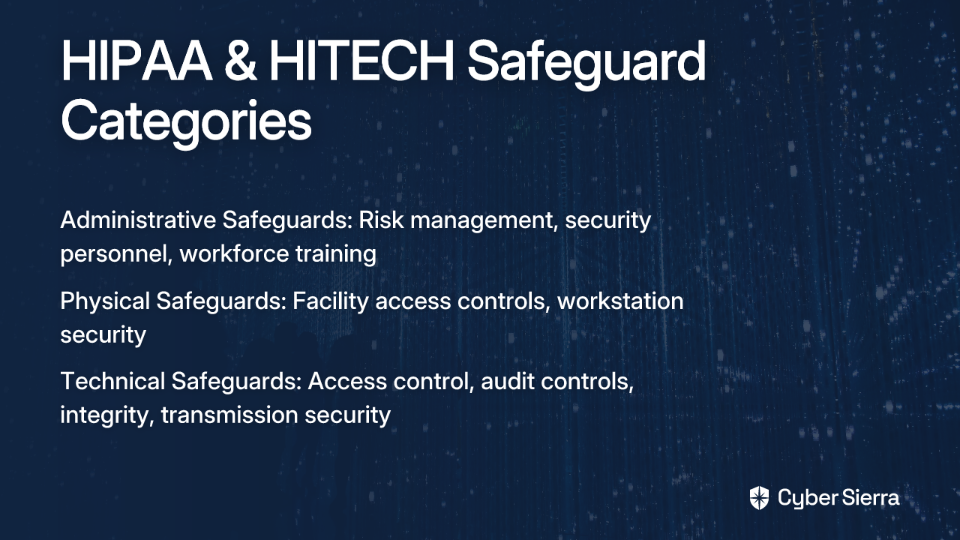
Administrative Safeguards
- Security Management Process: A comprehensive risk analysis and management program
- Assigned Security Responsibility: A designated security official (compliance lead)
- Workforce Security & Training: Procedures for authorizing workforce members and implementing security awareness programs
Physical Safeguards
- Facility Access Controls: Limiting physical access to systems where ePHI is stored
- Workstation Use & Security: Policies governing workstations that access ePHI
Technical Safeguards
- Access Control: Technical policies allowing access only to authorized persons
- Audit Controls: Mechanisms that record and examine activity in systems containing ePHI
- Integrity Controls: Policies protecting ePHI from improper alteration
- Transmission Security: Measures guarding against unauthorized access during transmission
While all three categories are crucial, technical safeguards particularly benefit from automation—providing the continuous monitoring and enforcement that manual processes simply cannot deliver.
The Cracks in Manual Compliance: Where Healthcare Organizations Falter
Despite best intentions, manual approaches to HIPAA compliance leave healthcare organizations vulnerable in several critical areas:
Point-in-Time Vulnerability
Manual audits provide only a snapshot of compliance at a specific moment. Between audit cycles, configuration drifts, unauthorized changes, and emerging threats often go undetected—creating dangerous compliance gaps that can lead to breaches.
Operational Inefficiency and Human Error
Manual evidence collection is notoriously tedious, often relying on "cumbersome spreadsheets" that consume hundreds of hours annually. Beyond the inefficiency, these manual processes are inherently prone to human error, which can create serious compliance gaps and security incidents.
Weak and Infrequent Risk Management
The HIPAA Security Rule requires regular risk assessments, but manual approaches typically result in infrequent evaluations that fail to keep pace with rapidly changing IT environments. This leads to the "weak risk management" and "poor monitoring" that are root causes of many healthcare data breaches.
Vendor Risk Blind Spots
Managing third-party vendors (Business Associates) is a critical HIPAA requirement. Manually tracking Business Associate Agreements (BAAs), conducting due diligence, and monitoring vendor security is complex and frequently falls through the cracks—creating a significant vulnerability in your security posture.

Automating HIPAA Compliance: A Practical Framework
Shifting from manual to automated compliance isn't about replacing your compliance team—it's about empowering them with tools that handle routine tasks while enabling more strategic focus. Here's a practical framework for implementing automated regulatory compliance in healthcare:
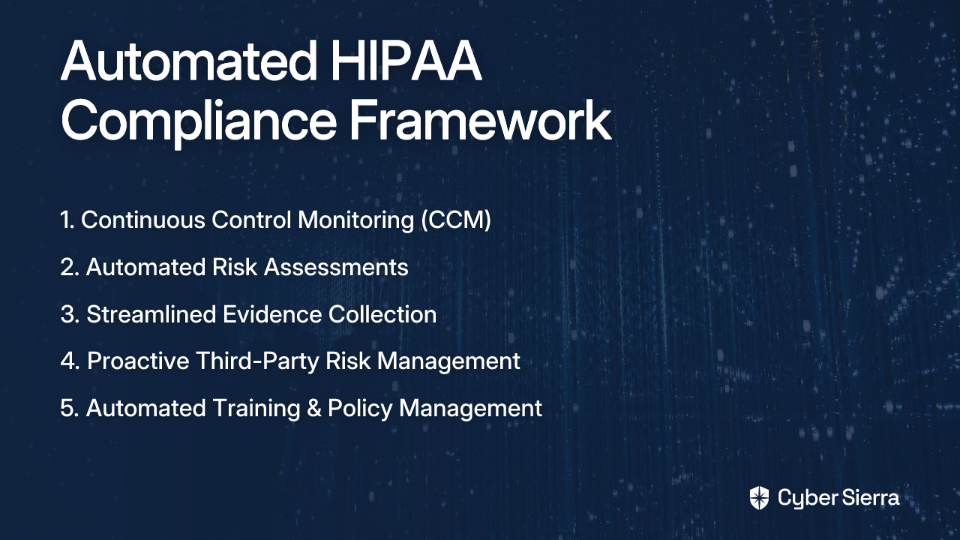
1. Continuous Control Monitoring (CCM): The Foundation of Modern Compliance
What it is: The practice of using automated tools to test, verify, and monitor the effectiveness of security controls in near real-time.
Why it matters for HIPAA: It provides ongoing assurance for critical Technical Safeguards like access control, system integrity, and audit mechanisms—moving compliance from a reactive to a proactive state.
How to implement: Cyber Sierra's Continuous Control Monitoring (CCM) platform builds a central controls repository with pre-mapped HIPAA controls, provides clear visibility into security posture through a unified dashboard, and delivers actionable intelligence to remediate gaps before they can be exploited.
2. Automated Risk Assessments and Management
What it is: Automating the data collection and analysis required for HIPAA-mandated risk assessment processes.
Why it matters for HIPAA: It ensures risk assessments are thorough, repeatable, and frequent. While automation handles data gathering, human oversight remains essential for "interpreting the risk assessments and making judgment calls."
How to implement: Leverage platforms like Cyber Sierra's Governance, Risk & Compliance (GRC) module to automate data collection for risk assessments. This can be complemented by vulnerability scanning tools that feed real-world data into your risk model, empowering your compliance team to focus on risk strategy rather than manual data entry.
3. Streamlined Evidence Collection and Audit Readiness
What it is: Automatically gathering and organizing documentation (logs, screenshots, policy documents) to prove compliance.
Why it matters for HIPAA: Dramatically reduces the time and stress of preparing for audits, ensuring you're always ready for regulatory scrutiny.
How to implement: GRC platforms like Cyber Sierra's automate evidence collection from integrated systems, maintain detailed audit trails, and generate comprehensive reports—ensuring your organization is perpetually audit-ready rather than scrambling when auditors arrive.
4. Proactive Third-Party Risk Management (TPRM)
What it is: Using automation to manage the entire lifecycle of vendor risk, from onboarding and due diligence to continuous monitoring.
Why it matters for HIPAA: Ensures all Business Associates are meeting their contractual and regulatory obligations to protect PHI.
How to implement: Cyber Sierra's Third-Party Risk Management (TPRM) module automates vendor assessments, simplifies the management of BAAs, and provides near real-time visibility into vendor security compliance—going beyond point-in-time questionnaires to deliver continuous assurance.
5. Managing the Human Element: Automated Training and Policy Management
What it is: Leveraging platforms to automate the assignment, delivery, and tracking of security awareness training and policy acknowledgments.
Why it matters for HIPAA: Security awareness training is a required Administrative Safeguard, and human error remains a leading cause of breaches.
How to implement: Solutions like Cyber Sierra's Employee Security Training platform empower employees with interactive modules, quizzes, and simulated phishing campaigns to build a strong "human firewall" while providing auditable proof of training completion.
Your Implementation Roadmap: From Manual to Automated
Ready to transform your HIPAA compliance program? Follow this step-by-step roadmap, adapted from Cyber Sierra's research, to implement automated regulatory compliance:
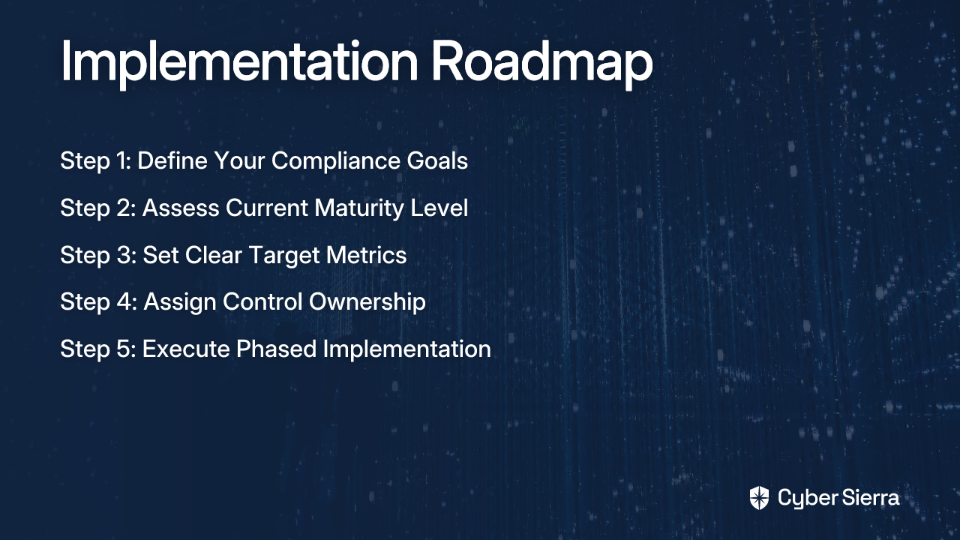
Step 1: Define Your Goals
Start by identifying your organization's key compliance and risk management objectives for HIPAA and HITECH. Are you primarily concerned with audit readiness, breach prevention, or streamlining operations? Clear goals will guide your technology choices.
Step 2: Assess Current Maturity
Use automated discovery tools to get a baseline of your current control environment and identify critical gaps. This assessment will help prioritize your automation efforts for maximum impact.
Step 3: Set a Target Maturity
Establish clear, measurable goals for your automation program. What does "good" look like for your organization? Define specific metrics for success, such as reduced time spent on evidence collection or faster audit response times.
Step 4: Empower Compliance Owners
Assign clear accountability and ownership for specific controls and compliance initiatives to your compliance team. Remember that automation supports human expertise—it doesn't replace it.
Step 5: Execute Your Tactical Plan
Develop a phased project plan that outlines key milestones, responsibilities, and the GRC/CCM tools to be deployed. Start with high-impact, low-complexity automation opportunities to build momentum.
Strengthen Your Defenses with Intelligent Compliance Automation
Achieving and maintaining HIPAA compliance in today's threat environment requires a strategic shift from manual, periodic activities to a continuous, automated approach. While full "plug-and-play" compliance automation remains aspirational, modern platforms can dramatically reduce manual effort while enhancing security.
The key is understanding that automation is not about replacing your compliance lead—it's about empowering them. By automating the "mechanical tasks," you free up your experts to focus on interpreting findings, defining risk strategy, and handling complex edge cases that require human judgment.
Ready to move beyond the checklist and build a proactive, automated HIPAA compliance program? Cyber Sierra's AI-enabled platform provides the Continuous Control Monitoring, GRC automation, and Third-Party Risk Management you need to streamline efforts, provide continuous visibility, and keep patient data secure.
In a healthcare landscape where breaches are rising and regulatory scrutiny is intensifying, automated regulatory compliance isn't just a convenience—it's a competitive necessity. Explore how Cyber Sierra makes you perpetually audit-ready and helps you build a resilient security posture that protects what matters most: your patients' sensitive information and your organization's reputation.
Learn more about Cyber Sierra's GRC solutions and take the first step toward intelligent, automated HIPAA compliance today.
Frequently Asked Questions
What is HIPAA compliance automation?
HIPAA compliance automation uses software to continuously monitor security controls, streamline evidence collection, and manage risks, replacing manual, point-in-time checks. It helps healthcare organizations maintain an "always-on" compliance posture by automating tasks related to Technical Safeguards, risk assessments, vendor management, and employee training. This approach doesn't replace human experts but handles 70-80% of repetitive tasks, allowing them to focus on high-level strategy.
Why is manual HIPAA compliance no longer effective?
Manual HIPAA compliance is no longer effective because it provides only a point-in-time snapshot of security, is highly prone to human error, and cannot keep pace with the dynamic nature of modern cyber threats. This outdated approach leads to dangerous compliance gaps between audits, operational inefficiencies, weak risk management, and blind spots with third-party vendors, all of which increase the risk of costly data breaches and regulatory fines.
How can a healthcare organization start automating HIPAA compliance?
A healthcare organization can start automating HIPAA compliance by following a five-step roadmap: 1) define clear compliance goals, 2) assess your current security maturity, 3) set measurable targets, 4) assign control ownership, and 5) execute a phased implementation plan. Begin by focusing on high-impact areas like continuous control monitoring or evidence collection, using a GRC platform to build momentum and demonstrate value quickly.
What are the key areas of HIPAA that can be automated?
The key areas of HIPAA that benefit most from automation include Technical Safeguards, risk assessments, audit evidence collection, third-party risk management (TPRM), and employee security training. Automation platforms can continuously monitor access controls and system integrity, gather data for risk analysis, automatically collect logs and screenshots for audits, track vendor compliance, and manage employee training records, significantly reducing the manual burden across all safeguard categories.
Does automation replace the need for a compliance team?
No, automation does not replace the need for a compliance team. Instead, it acts as a force multiplier, enhancing their capabilities by handling the time-consuming, repetitive tasks associated with compliance management. While software can automate evidence gathering and control monitoring, human expertise remains essential for interpreting risk assessments, making strategic decisions, managing exceptions, and handling the complex judgment calls that are part of any robust security program.
What is Continuous Control Monitoring (CCM) and why is it important for HIPAA?
Continuous Control Monitoring (CCM) is an automated process that continuously tests and verifies the effectiveness of security controls in near real-time. It is critically important for HIPAA because it provides ongoing assurance that Technical Safeguards are consistently enforced, moving beyond periodic manual checks. Unlike manual audits that offer only a snapshot, CCM identifies configuration drifts, unauthorized changes, and other vulnerabilities as they happen, enabling a proactive approach to prevent compliance gaps and potential breaches.
