PCI DSS WAF Implementation Guide for Engineers


Join thousands of professionals and get the latest insight on Compliance & Cybersecurity.
You've just been informed that your organization needs a Web Application Firewall (WAF) for PCI DSS 4.0 compliance by March 2025. Your stomach sinks as you imagine the fallout: engineers pushing back against another security tool, project timelines derailed, and a rush of emergency meetings to figure out what exactly this new requirement entails.
"The technology required to satisfy these requirements has not been on peoples' radars," as one compliance professional recently noted. If you're feeling overwhelmed by this sudden mandate and worried about how to implement it without disrupting your engineering workflow, you're not alone.
This guide will help you navigate PCI DSS 4.0's WAF requirements with a practical, engineering-friendly approach that strengthens security without creating unnecessary friction.
The New Mandate: Why a WAF is No Longer Optional for PCI DSS 4.0
PCI DSS 4.0 marks a significant shift in how organizations must protect web applications. Unlike version 3.2.1, which allowed either a WAF or regular code reviews, version 4.0's Requirement 6.4.2 makes automated protection mandatory for public-facing web applications.
The timeline creates urgency:
- PCI DSS v3.2.1 was retired on March 31, 2024
- All new requirements in v4.0 must be implemented by March 31, 2025

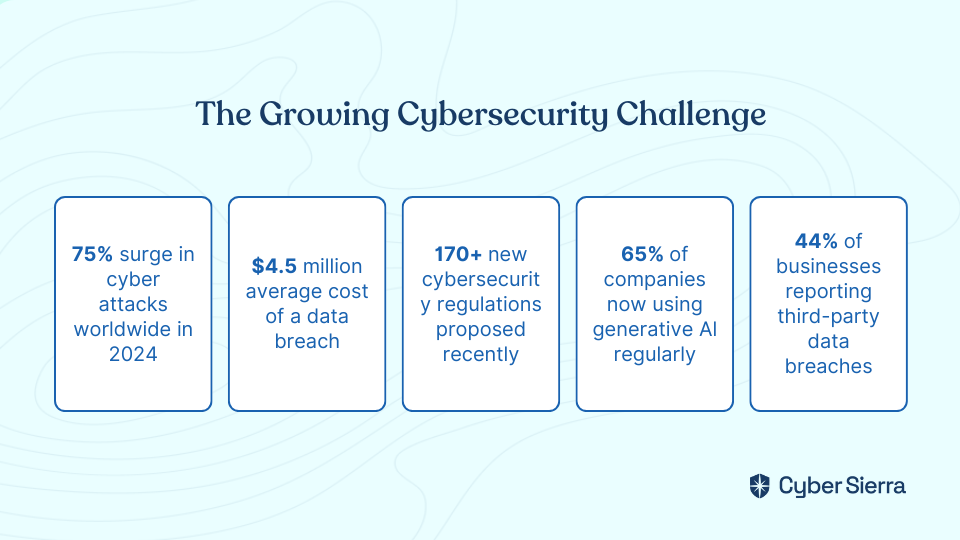
This isn't just bureaucratic box-checking. Web application attacks are the second most common cause of data breaches, according to Verizon's Data Breach Investigations Report. A properly configured WAF acts as a Layer 7 filter, protecting against common attacks like SQL injection, Cross-Site Scripting (XSS), and Cross-Site Request Forgery (CSRF).
The business impact is equally compelling: 62% of organizations report monthly downtime due to attacks, directly impacting revenue and customer trust.
Decoding Requirement 6.4: What PCI DSS 4.0 Really Demands from Your WAF
Many organizations are "just now realizing the tech gaps" in their compliance programs, particularly around WAF implementation. Let's clarify what PCI DSS 4.0 actually requires:
Beyond Basic Blocking
PCI DSS 4.0 emphasizes a positive security model (allowlisting) over a purely negative one (blocklisting). While a blocklist WAF denies known bad traffic, an allowlist WAF only permits pre-approved traffic patterns—a more proactive, "zero-trust" approach that PCI DSS 4.0 favors.
Client-Side Protection Requirements
Two often-overlooked requirements that your WAF strategy needs to address:
- Requirement 6.4.3: Mandates a method to ensure the integrity of scripts that execute on the payment page in a consumer's browser. This fights against form-jacking attacks that exploit third-party JavaScript.
- Requirement 11.6.1: Requires a tamper-detection mechanism to alert on unauthorized changes to HTTP headers and payment page content.
API Security Is Essential
Organizations must discover and analyze all API endpoints to protect against data leakage and Business Logic Attacks (BLAs). This is particularly important as modern applications increasingly rely on APIs for data exchange.
Choosing Your WAF: Balancing Compliance, Cost, and Engineering Sanity
The type of WAF you choose dramatically impacts your engineering team's workload and morale. Here's a comparison focused on engineering effort and operational overhead:
Network-based WAF
- Pros: Minimizes latency, high performance
- Cons: High cost, requires physical maintenance, significant engineering overhead for setup and management
- Engineering impact: Requires substantial time for initial configuration and ongoing maintenance
Host-based WAF
- Pros: Highly customizable, integrated with application
- Cons: Consumes local server resources, complex to manage
- Engineering impact: Requires deep engineering involvement and expertise
Cloud-based WAF
- Pros: Easy to implement, minimal upfront cost, continuously updated by vendor
- Cons: Less granular control over specific configurations
- Engineering impact: Often the best choice for reducing internal workload and minimizing disruption
WAF Selection Checklist
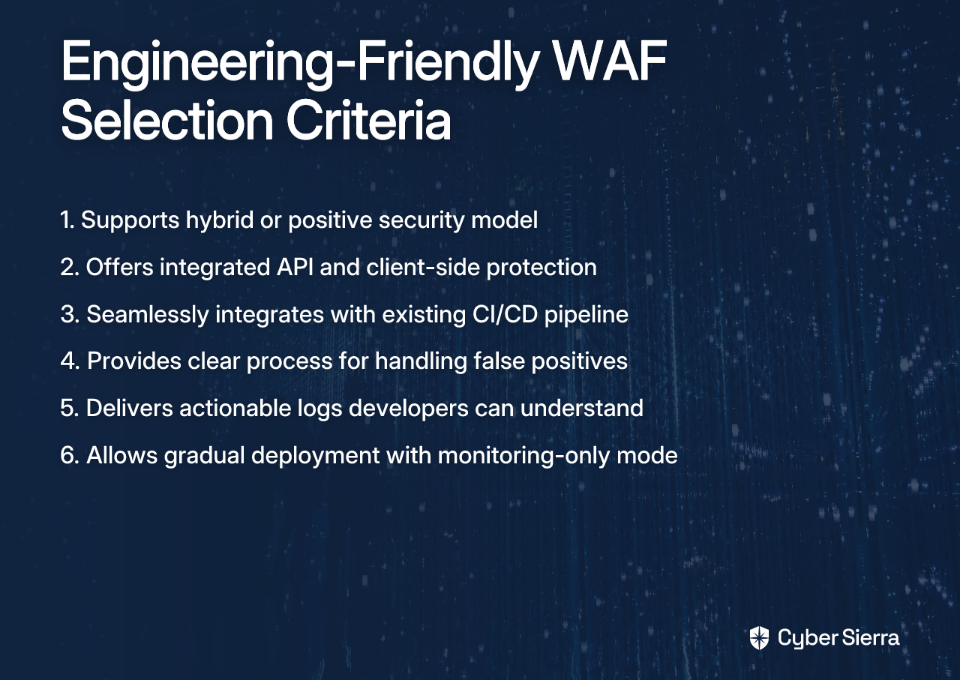
When evaluating WAF solutions, consider these engineering-friendly criteria:
- Does it support a hybrid or positive security model?
- Does it offer integrated API and client-side protection?
- How easily does it integrate with your existing CI/CD pipeline?
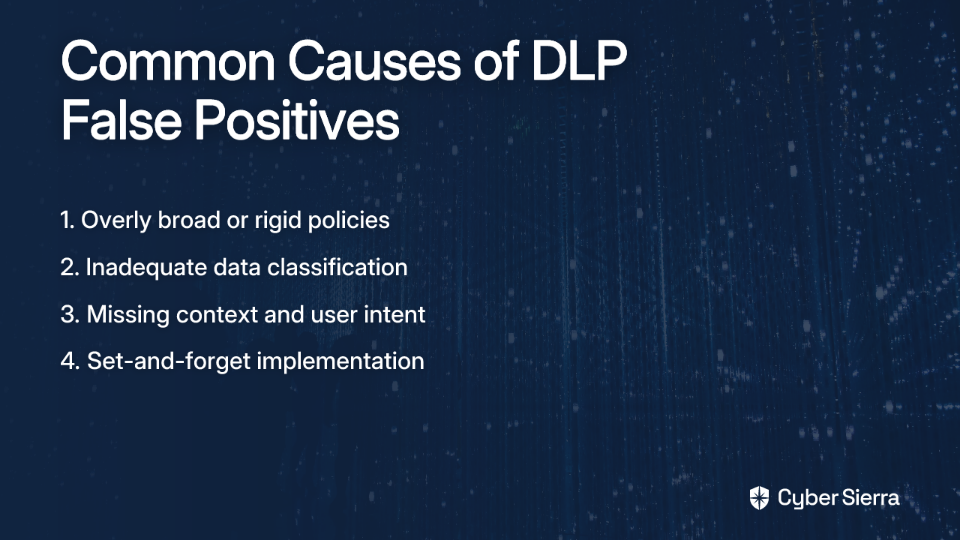
- What's the process for handling false positives and tuning rules?
- Does it provide clear, actionable logs that developers can understand?
- Can it be deployed gradually with a monitoring-only mode?
The Collaborative Implementation Playbook: Rollout Without the Rollback
A successful WAF implementation is as much about project management as it is about technology. Here's a four-step approach that minimizes disruption:
Step 1: Start with a Collaborative Gap Analysis
Many find that "it's complicated to perform the gap analysis" for PCI compliance. Make it easier by:
- Involving security, engineering leads, and product managers from the beginning
- Defining clear acceptance criteria for the WAF project, addressing the common pain of "gaps in the acceptance criteria"
- Ranking requirements as "must-have vs. nice-to-have" to focus efforts
Step 2: Execute a Phased Rollout
Starting with a "big bang" implementation is a recipe for resistance. Instead:
- Begin by deploying the WAF in logging/monitoring mode only. This lets your team see what would be blocked without impacting production traffic
- Gradually introduce blocking rules, starting with low-risk, high-confidence patterns (e.g., basic SQL injection from the OWASP Top Ten)
- Roll out to staging environments or less critical applications before deploying to your Cardholder Data Environment (CDE)
Step 3: Tune, Test, and Automate
A WAF isn't "set-it-and-forget-it" technology. Create sustainable processes by:
- Integrating WAF alerts directly into your team's existing workflow tools (Jira, Slack, etc.)
- Establishing a clear, low-friction process for engineers to report false positives
- Automating rule updates when possible to reduce manual overhead
Step 4: Empower the Team with Training
Reduce fear and resistance by:
- Providing training on how the WAF works and how to interpret its logs
- Creating documentation that explains common alerts and troubleshooting steps
- Celebrating security wins and improvements that the WAF enables
Beyond the Firewall: Embedding Security into Your Culture
While a WAF is critical for PCI DSS 4.0 compliance, it's part of a larger "Defense in Depth" strategy. Other important controls include:
- Managed Detection and Response (MDR): For proactive threat identification
- Data Loss Prevention (DLP): To protect sensitive data from exfiltration
- Regular Security Testing (Req 11): Continuous vulnerability scanning and penetration testing
- Strong Access Controls (Req 7, 8, 9): Enforcing "need-to-know" access to the CDE
Case Study: Payment Processor Success Story
A mid-sized payment processor facing the PCI DSS 4.0 deadline took the following approach:
- They selected a cloud-based WAF with API security features
- Deployed in monitoring-only mode for 30 days to gather data on traffic patterns
- Created a Slack channel for WAF alerts and engineering feedback
- Implemented blocking rules incrementally, starting with high-confidence OWASP Top 10 protections
- Achieved full compliance three months ahead of deadline with minimal disruption
The key to their success? Close collaboration between security and engineering teams from day one, with a focus on minimizing false positives.
Conclusion: Security as a Partnership, Not a Roadblock
PCI DSS 4.0's WAF requirement doesn't have to be a source of friction between security and engineering. By choosing the right solution and implementing it collaboratively, you can strengthen your security posture while maintaining engineering velocity.
Remember that a thoughtful, phased WAF implementation is an opportunity to modernize your security practices and foster stronger partnerships across teams. Start your gap analysis now, consult with a Qualified Security Assessor (QSA) for tailored guidance, and approach this requirement as a chance to build a more resilient organization.
The March 2025 deadline may seem distant, but organizations that start now will avoid the last-minute scramble and achieve not just compliance, but genuine security improvement.

Frequently Asked Questions
What are the new WAF requirements in PCI DSS 4.0?
PCI DSS 4.0 Requirement 6.4.2 mandates that all public-facing web applications must be protected by a Web Application Firewall (WAF) to detect and prevent web-based attacks. Unlike previous versions that allowed either a WAF or manual code reviews, the new standard makes this automated protection a baseline requirement. This also includes related requirements for ensuring the integrity of scripts on payment pages (6.4.3) and implementing tamper-detection mechanisms (11.6.1).
When is the deadline to implement a WAF for PCI DSS 4.0?
The deadline for implementing all new requirements in PCI DSS 4.0, including the mandatory WAF, is March 31, 2025. As PCI DSS v3.2.1 was retired on March 31, 2024, all organizations must be fully compliant with version 4.0 by this 2025 date. It is highly recommended to start the implementation process as soon as possible to allow for proper testing and tuning.
Why is a WAF now mandatory for PCI DSS compliance?
A WAF is now mandatory because web application attacks are consistently one of the top causes of data breaches. The PCI Security Standards Council recognized that with the increasing sophistication of cyber threats, periodic code reviews alone are insufficient. A WAF provides a necessary layer of real-time, automated defense against common attacks like SQL injection, cross-site scripting (XSS), and other vulnerabilities that could expose cardholder data.
How should we handle WAF false positives without disrupting our engineers?
Handling WAF false positives effectively requires a combination of phased implementation, rule tuning, and establishing clear feedback channels. The best practice is to first deploy the WAF in a non-blocking "monitoring" or "logging-only" mode. This allows you to see what traffic would be blocked without impacting users. Then, create a simple, low-friction process (e.g., a dedicated Slack channel or Jira workflow) for engineers to report issues, enabling the security team to quickly tune rules and minimize disruption.
What is the difference between a positive and negative security model for a WAF?
A negative security model (or "blocklisting") works by identifying and blocking known malicious traffic and attack signatures. A positive security model (or "allowlisting") is more restrictive; it defines what traffic is allowed and blocks everything else. PCI DSS 4.0 favors a positive security model because it provides a more proactive, "zero-trust" defense that can protect against new and unknown (zero-day) attacks, not just previously identified threats.
Which type of WAF is best for minimizing engineering workload?
For most organizations looking to minimize the burden on internal engineering teams, a cloud-based WAF is often the best choice. Unlike on-premise network or host-based WAFs that require significant setup, maintenance, and resource management, cloud WAFs are managed by the vendor. This means easier implementation, continuous threat intelligence updates, and scalability without demanding extensive time from your engineers.
This article is for informational purposes only and should not be construed as legal advice. Always consult with a qualified security assessor for guidance specific to your environment.