blog-hero-background-image
Cyber Security

Crosswalk Document Template for Cybersecurity - How to Establish Mappings for Different Standards

backdrop
Table of Contents

Join thousands of professionals and get the latest insight on Compliance & Cybersecurity.


You've been tasked with managing compliance across multiple cybersecurity frameworks. Your inbox is flooded with requests from different departments asking which controls satisfy which standards. Your team is drowning in spreadsheets trying to manually map NIST controls to ISO requirements, and executives are demanding visibility into your compliance posture across all frameworks. Sound familiar?

If you're struggling with compliance chaos, you're not alone. Cybersecurity professionals across industries are desperate for efficient ways to map between frameworks without duplicating assessment efforts or drowning in documentation.

The Compliance Mapping Nightmare

"Is there a NIST document where the NIST framework is crosswalked to other major frameworks?" asks a frustrated security professional on Reddit. Another laments, "I cannot find anything that maps ISO 27001 to other standards, particularly NIST CSF."

These voices echo a common pain: organizations are expected to comply with multiple frameworks simultaneously, but the connections between these frameworks often remain unclear. One Reddit user sums it up perfectly: "Without a good website to give me that 101 intro and comparison, it's really hard."

The documentation burden is crushing many teams, with some experts suggesting "you should be contemplating 300-500 pages of documentation" for proper compliance. No wonder security teams feel overwhelmed!

The Power of Crosswalk Document Templates

A crosswalk document template is the secret weapon of efficient compliance management. At its core, a crosswalk is a systematic mapping that shows how controls in one framework correspond to controls in another.

For example, a well-designed crosswalk document template allows you to see that a control in NIST 800-53 like AC-2 (Account Management) maps directly to control A.9.2.1 in ISO 27001 (User registration and de-registration).

The transformative insight? Once you've implemented and assessed one control, you can demonstrate compliance with all its mapped equivalents across other frameworks without duplicating your work.

Creating an Effective Cybersecurity Crosswalk Template

To create an effective crosswalk document template for mapping cybersecurity frameworks, follow these essential steps:

1. Establish a Clear Structure

Your crosswalk document template should include these key components:

  • Source Framework Control ID and Title: Clearly identify each control from your primary framework
  • Source Control Description: Include the full description to ensure proper understanding
  • Destination Framework Mappings: List all equivalent controls in target frameworks
  • Mapping Confidence Level: Indicate whether the mapping is exact, partial, or interpretive
  • Implementation Notes: Document any framework-specific nuances for implementation
  • Evidence Requirements: Specify what documentation satisfies multiple frameworks

For example, a row in your crosswalk might show that NIST CSF ID.AM-2 (Software platforms and applications are inventoried) maps directly to ISO 27001 A.8.1.1 (Inventory of assets) and CMMC AC.L1-3.1.20 (External systems are identified).

2. Leverage Authoritative Sources

Don't reinvent the wheel. Start with official crosswalks published by standards organizations:

"NIST has provided a crosswalk for CSF to ISO and other frameworks," notes one cybersecurity professional. These authoritative sources form the foundation of your crosswalk document template.

3. Address Gaps and Nuances

No crosswalk is perfect. Your template should include a methodology for handling:

  • One-to-Many Mappings: When one control in Framework A satisfies multiple controls in Framework B
  • Many-to-One Mappings: When multiple controls in Framework A are needed to satisfy one control in Framework B
  • Partial Mappings: When controls overlap but don't completely satisfy each other
  • Framework-Specific Requirements: Unique elements that don't have equivalents

4. Make It Collaborative and Maintainable

The most effective crosswalk document templates are living documents that:

  • Allow multiple stakeholders to provide input based on their domain expertise
  • Include version control to track changes as frameworks evolve
  • Provide clear ownership of different sections
  • Enable regular reviews and updates

Implementing Your Crosswalk Methodology

Once you've created your crosswalk document template, implementation follows these best practices:

1. Start with Core Controls

Begin by mapping the foundational controls that appear in most frameworks. These typically include:

  • Access control
  • Asset management
  • Risk assessment
  • Security awareness training
  • System protection
  • Data protection

This approach creates quick wins by establishing mappings for approximately 60-70% of your controls, as these core areas have significant overlap across frameworks.

2. Use a Phased Approach

Don't try to map everything at once. Break the process into manageable phases:

Phase 1: Map core controls between your two most critical frameworks Phase 2: Expand to include additional frameworks Phase 3: Address framework-specific controls and nuances Phase 4: Implement continuous review and maintenance

As one Reddit user advises, "The SCF has a huge crosswalk with some information in it as well, and the SCF site has some interesting introductory information." This resource can help guide your phased implementation.

3. Validate Through Assessment

The true test of your crosswalk is in practical application. Validate your mappings by:

  1. Conducting an assessment using your primary framework
  2. Using your crosswalk to translate the results to secondary frameworks
  3. Conducting a limited verification assessment against the secondary frameworks
  4. Refining your mappings based on any discrepancies

4. Automate Where Possible

Modern governance, risk, and compliance (GRC) platforms offer automated crosswalking capabilities. These tools can:

  • Maintain up-to-date mappings as frameworks evolve
  • Provide visualizations of your compliance posture across frameworks
  • Generate compliance reports tailored to different stakeholders
  • Track evidence collection that satisfies multiple frameworks simultaneously

CyberStrong's automated crosswalking functions and similar tools can dramatically reduce the manual effort involved in maintaining crosswalks.

Overcoming Common Crosswalking Challenges

Even with a solid template and methodology, you'll face challenges in your crosswalking journey:

Challenge 1: Framework Evolution

Cybersecurity frameworks constantly evolve. Your crosswalk document template must account for version changes and updates. Establish a process to review and update your crosswalks whenever a referenced framework changes.

Challenge 2: Interpretation Differences

Different auditors may interpret the same control differently. Address this by:

  • Documenting your interpretation rationale in your crosswalk
  • Consulting with certified auditors for each framework
  • Adding implementation notes that clarify your approach

Challenge 3: Evidence Management

One piece of evidence might satisfy multiple controls across frameworks, but keeping track of this relationship is complex. Your crosswalk should include evidence mapping that shows how documentation satisfies requirements across frameworks.

The Future of Framework Crosswalking

The cybersecurity industry recognizes the burden of compliance with multiple frameworks. Look for these developments to ease your crosswalking efforts:

  1. Greater Standardization: Standards bodies are increasingly collaborating to align their frameworks
  2. Built-in Mappings: New framework versions are being published with official mappings to other common standards
  3. AI-Assisted Mapping: Emerging tools use artificial intelligence to suggest and validate control mappings

Conclusion

A well-designed crosswalk document template transforms compliance from a series of disconnected efforts into an integrated program that efficiently demonstrates your security posture across multiple frameworks.

By following the structured approach outlined in this article—establishing a clear template structure, leveraging authoritative sources, addressing gaps and nuances, and implementing a phased methodology—you'll create crosswalks that save time, reduce documentation burden, and provide clear visibility into your compliance status.

Remember the ultimate goal: "you can't protect what you don't know exists." A comprehensive crosswalk gives you visibility into your security controls across all frameworks, ensuring nothing falls through the cracks. Start building your crosswalk document template today, and transform your compliance program from a fragmented struggle to a strategic asset.
Frequently Asked Questions (FAQ)

What is a cybersecurity crosswalk document template and why is it essential?

A cybersecurity crosswalk document template is a structured tool for systematically mapping controls from one cybersecurity framework to corresponding controls in others. It's essential because it streamlines compliance efforts by identifying overlaps, which reduces redundant work and provides a clear, consolidated view of how implemented controls satisfy multiple standards simultaneously, saving significant time and resources.

How can a crosswalk document template simplify multi-framework compliance?

A crosswalk document template simplifies multi-framework compliance by clearly showing how a single control or piece of evidence can satisfy requirements across multiple standards (e.g., NIST, ISO 27001, CMMC). This allows organizations to avoid duplicating assessment efforts and documentation, making it easier to manage and demonstrate adherence to numerous cybersecurity frameworks efficiently.

What are the key steps to create an effective cybersecurity crosswalk template?

To create an effective cybersecurity crosswalk template, you should: 1. Establish a clear structure that includes source and destination control IDs, descriptions, mapping confidence, and implementation notes. 2. Leverage authoritative sources like NIST or CISA for initial mappings. 3. Systematically address gaps, nuances, and different mapping types (one-to-many, many-to-one). 4. Ensure the template is collaborative and regularly maintained to reflect framework updates.

Where can I find reliable pre-existing mappings for cybersecurity frameworks?

Reliable pre-existing mappings for cybersecurity frameworks can often be found directly from standards organizations like NIST, which publishes crosswalks to ISO 27001 and other standards. Government bodies such as HHS (for NIST to HIPAA) and agencies like CISA also provide authoritative mappings. Additionally, some comprehensive industry resources like the Secure Controls Framework (SCF) offer extensive crosswalk information.

What common challenges should I anticipate when using a crosswalk for cybersecurity compliance?

Common challenges when using a crosswalk include: 1. Keeping pace with framework evolution, as standards are frequently updated, requiring ongoing maintenance of your mappings. 2. Addressing interpretation differences, as auditors or teams might interpret control requirements differently across frameworks. 3. Managing evidence effectively to clearly link a single piece of documentation to multiple controls across various frameworks.

How does automation improve the process of crosswalking cybersecurity frameworks?

Automation, typically through Governance, Risk, and Compliance (GRC) platforms, significantly improves crosswalking by maintaining up-to-date mappings as frameworks evolve. These tools can also provide visualizations of compliance posture across multiple standards, generate tailored reports for different stakeholders, and streamline the tracking of evidence that satisfies requirements in several frameworks, thereby reducing manual effort and increasing accuracy.

blog-hero-background-image
Cyber Security

Top 20 Cyber Security Tools for Cybersecurity Professionals in 2025

backdrop
Table of Contents

Join thousands of professionals and get the latest insight on Compliance & Cybersecurity.


In today's rapidly evolving digital landscape, cybersecurity professionals face an unprecedented challenge: protecting critical systems against increasingly sophisticated threats while managing complex compliance requirements. With the cybercrime economy projected to cost the global economy a staggering $10.5 trillion annually by 2025, having the right security tools isn't just important—it's essential.

But as many security professionals have experienced, finding reliable, up-to-date information about effective tools can be frustrating. As one security practitioner noted, "All of the tools I come across in pentesting books are all no longer supported." This article aims to solve that problem by providing a current, comprehensive overview of the most valuable cybersecurity tools for 2025.

The Evolving Cybersecurity Landscape

Before diving into specific tools, it's important to understand the context in which these tools operate. The cybersecurity field is experiencing significant growth, with:

  • Cybersecurity spending projected to exceed $1.75 trillion from 2021 to 2025
  • Employment for information security analysts expected to grow by 32% from 2022 to 2032
  • Average data breach costs reaching $4.88 million in 2024

As one security professional wisely observed, "Perfectly secure environments don't exist." This reality makes selecting the right mix of tools even more crucial.

Types of Cybersecurity Tools

Rather than focusing solely on individual products, let's first examine the categories of tools that form a comprehensive security strategy. As one experienced practitioner advised: "I would worry less about specific tools and maybe focus more on the type of tools, such as IDS/IPS, WAF, VM (vulnerability management), WAS (web app scanning), SIEM (security information event management), EDR (endpoint detect and response)."

Key cybersecurity tool categories include:

  1. Vulnerability Assessment Tools: Identify security weaknesses in systems and networks
  2. Network Monitoring Tools: Provide visibility into network traffic and potential threats
  3. Penetration Testing Platforms: Test defenses through simulated attacks
  4. Security Information and Event Management (SIEM): Aggregate and analyze security data
  5. Governance, Risk, and Compliance (GRC) Tools: Manage security policies and regulatory requirements
  6. Endpoint Protection Platforms: Secure individual devices accessing the network
  7. Cloud Security Solutions: Protect cloud-based infrastructure and applications

Top 20 Cybersecurity Tools for 2025

Now, let's explore the specific tools that security professionals should have in their arsenal for 2025:

1. Wireshark

  • Category: Network Security Monitoring
  • Usage: This powerful network protocol analyzer captures and examines data packets in real-time, enabling security professionals to identify suspicious traffic patterns and potential network vulnerabilities.
  • Cost: Open-source (Free)
  • Why it's essential: Wireshark remains the gold standard for network analysis, with continuous updates keeping it relevant in modern environments.

2. Metasploit

  • Category: Penetration Testing
  • Usage: Facilitates the discovery, exploitation, and validation of vulnerabilities through an extensive database of exploits.
  • Cost: Community edition (Free), Professional (Subscription-based)
  • Why it's essential: "I can't believe I had to scroll down so far to see Metasploit," noted one security professional, highlighting its continued importance in the security toolkit.

3. Nmap (Network Mapper)

  • Category: Network Security
  • Usage: Scans networks to discover hosts, services, and potential vulnerabilities.
  • Cost: Open-source (Free)
  • Why it's essential: Provides comprehensive network visibility, essential for security assessments and monitoring.

4. Burp Suite

  • Category: Web Application Security
  • Usage: Tests web application security through scanning, analyzing, and exploiting vulnerabilities.
  • Cost: Community edition (Free), Professional (Subscription-based)
  • Why it's essential: Industry-standard for web application security testing with powerful automated and manual testing capabilities.

5. Kali Linux

  • Category: Security Platform
  • Usage: Linux distribution packed with hundreds of security tools for penetration testing, digital forensics, and security research.
  • Cost: Open-source (Free)
  • Why it's essential: Provides an all-in-one platform for security professionals, regularly updated with the latest tools.

6. Nessus

  • Category: Vulnerability Scanning
  • Usage: Identifies vulnerabilities, configuration issues, and malware that attackers could exploit.
  • Cost: Nessus Essentials (Free for limited use), Professional (Subscription-based)
  • Why it's essential: As one practitioner noted, "Nessus Essentials is free" and provides valuable vulnerability scanning capabilities for organizations of all sizes.

7. Splunk

  • Category: SIEM
  • Usage: Collects, analyzes, and correlates security events across an organization's environment.
  • Cost: Free version (limited data), Enterprise (Subscription-based)
  • Why it's essential: Provides powerful search and analytics capabilities for security monitoring and incident response.

8. OSSEC

  • Category: Host-based Intrusion Detection
  • Usage: Monitors system logs, checks file integrity, and detects rootkits.
  • Cost: Open-source (Free)
  • Why it's essential: Offers comprehensive host-based security monitoring capabilities for multiple platforms.

9. OpenSCAP

  • Category: Compliance and Vulnerability Management
  • Usage: Performs automated vulnerability scanning and security compliance checks against various security benchmarks.
  • Cost: Open-source (Free)
  • Why it's essential: Provides standardized security configuration validation, though some users note confusion about its full capabilities: "I use OpenSCAP at work and didn't know it could do web-app scanning."

10. Security Onion

  • Category: Network Security Monitoring
  • Usage: Combines multiple security tools for intrusion detection, network monitoring, and log management.
  • Cost: Open-source (Free)
  • Why it's essential: "Try setting up a home lab like Security Onion," recommends one professional, highlighting its value as both a learning tool and a practical security solution.

11. CyberSierra

  • Category: Integrated Security Compliance Platform
  • Usage: Automates security compliance, risk management, and continuous control monitoring across multiple frameworks.
  • Cost: Subscription-based
  • Why it's essential: Addresses a critical pain point in modern cybersecurity—the need to align security with business objectives while managing complex compliance requirements across multiple frameworks (NIST, ISO 27001, PCI DSS, etc.).

12. YARA

  • Category: Malware Detection and Classification
  • Usage: Creates pattern-matching rules to identify and classify malware samples.
  • Cost: Open-source (Free)
  • Why it's essential: Provides powerful, customizable malware detection capabilities.

13. Suricata

  • Category: Network IDS/IPS
  • Usage: Detects and prevents network intrusions through real-time traffic analysis.
  • Cost: Open-source (Free)
  • Why it's essential: Offers high-performance network security monitoring with extensive rule support.

14. SQLMap

  • Category: Web Application Security
  • Usage: Automates the detection and exploitation of SQL injection vulnerabilities.
  • Cost: Open-source (Free)
  • Why it's essential: Remains a crucial tool for identifying database vulnerabilities in web applications.

15. John the Ripper

  • Category: Password Auditing
  • Usage: Tests password strength and recovers passwords from hashes.
  • Cost: Open-source (Free)
  • Why it's essential: Helps organizations identify weak passwords that could be exploited by attackers.

16. Wazuh

  • Category: Security Monitoring
  • Usage: Provides threat detection, integrity monitoring, and compliance management.
  • Cost: Open-source (Free)
  • Why it's essential: Delivers enterprise-grade security monitoring without subscription costs.

17. Hashcat

  • Category: Password Recovery
  • Usage: Performs advanced password recovery attacks using GPU acceleration.
  • Cost: Open-source (Free)
  • Why it's essential: Industry-standard for password recovery with unmatched performance.

18. OWASP ZAP

  • Category: Web Application Security
  • Usage: Finds security vulnerabilities in web applications during development and testing.
  • Cost: Open-source (Free)
  • Why it's essential: Provides accessible web application security testing for organizations of all sizes.

19. Zeek (formerly Bro)

  • Category: Network Analysis
  • Usage: Monitors network traffic for suspicious activities and security relevant events.
  • Cost: Open-source (Free)
  • Why it's essential: Offers deep network visibility and analytics capabilities.

20. CrowdStrike Falcon

  • Category: Endpoint Protection
  • Usage: Provides AI-powered endpoint protection, threat intelligence, and response capabilities.
  • Cost: Subscription-based
  • Why it's essential: Delivers advanced endpoint protection with minimal performance impact.

Beyond the Tools: The Human Element

While tools are essential, many security professionals emphasize that technology alone isn't enough. As one practitioner noted: "Every answer here focuses on damn tech. Hell, you could basically teach a monkey how to use Nessus, Burp and whatnot." The most effective security professionals understand both the tools and the underlying principles.

As another security expert wisely stated, "The most important step is to actually learn why you do certain stuff, not how." This underscores the importance of building a solid foundation in security concepts alongside technical proficiency.
Conclusion

The cybersecurity landscape continues to evolve rapidly, with threats becoming more sophisticated and regulatory requirements growing more complex. The tools listed above represent some of the most valuable resources for security professionals in 2025, but remember that no single tool provides complete protection.

For organizations seeking to streamline compliance requirements while maintaining strong security posture, integrated platforms like CyberSierra can help simplify the process through automated control monitoring, third-party risk management, and comprehensive GRC capabilities.

As you evaluate and implement these tools, remember that security will always be seen as a mere expenditure unless you can align it with business objectives. The right combination of tools, expertise, and strategy will help you build a resilient security program that not only protects your organization but also demonstrates clear business value.

Frequently Asked Questions (FAQ)

What are the most crucial types of cybersecurity tools for an organization?

The most crucial types of cybersecurity tools include those for Vulnerability Management (VM), Network Security Monitoring (e.g., IDS/IPS), Security Information and Event Management (SIEM), Endpoint Detection and Response (EDR), and Web Application Security (WAS). A comprehensive security strategy typically involves a layered approach, utilizing a combination of these tool categories to address various attack vectors and provide defense in depth.

How do I choose the right cybersecurity tools for my specific needs?

To choose the right cybersecurity tools, you should first assess your organization's specific risks, compliance requirements, budget, and existing IT infrastructure. Then, evaluate tools based on their features, ease of integration with your current systems, scalability, vendor support, and user reviews. Prioritize tools that address your most significant vulnerabilities and help meet your security goals effectively.

Are free and open-source cybersecurity tools effective for professional use?

Yes, many free and open-source cybersecurity tools are highly effective and widely used by professionals. Tools like Wireshark, Nmap, Kali Linux, and OSSEC are industry standards. While they may sometimes require more technical expertise to configure and manage compared to commercial alternatives, they offer excellent capabilities, flexibility, and strong community support, making them valuable assets for any security toolkit.

Why is the "human element" so important in cybersecurity, even with advanced tools?

The "human element" is critical because tools are only as effective as the professionals who deploy, manage, and interpret their outputs. Skilled cybersecurity professionals understand the underlying security principles, can critically analyze tool-generated data, adapt to novel threats not yet covered by automated defenses, and develop strategic security plans. Technology supports human expertise; it doesn't replace the need for critical thinking and experience.

Is there a single "best" cybersecurity tool for 2025?

No, there isn't a single "best" cybersecurity tool, as the ideal toolkit depends on an organization's unique environment, risks, and requirements. Effective cybersecurity relies on a defense-in-depth strategy, employing a combination of different tools covering various aspects like network security, endpoint protection, vulnerability management, and incident response, rather than relying on one solution.

How does compliance affect the selection of cybersecurity tools?

Compliance requirements (such as NIST, ISO 27001, PCI DSS, HIPAA) significantly affect tool selection by often mandating specific security controls and reporting capabilities. Organizations must choose tools that can help them meet these regulatory obligations, such as those providing robust logging, auditing, vulnerability scanning against compliance benchmarks, and automated GRC (Governance, Risk, and Compliance) functionalities.

Sources:

blog-hero-background-image
Cyber Security

Bridging the Cybersecurity Confidence Gap: Becoming the Risk Manager Your Organization Desperately Needs

backdrop
Table of Contents

Join thousands of professionals and get the latest insight on Compliance & Cybersecurity.


You're sitting in yet another executive meeting, watching eyes glaze over as your team tries to explain the latest cybersecurity threat using technical jargon that might as well be a foreign language. Despite your organization spending millions on the latest security tools, you can't shake the nagging feeling that you're still vulnerable. Upper management nods along, but you know they don't truly understand what they're agreeing to—or worse, they see cybersecurity as a necessary evil rather than a strategic advantage.

Sound familiar? You're not alone.

Organizations today face an expanding digital attack surface, evolving compliance regulations, and a widening skills gap that leaves them exposed. Meanwhile, executives want simple answers to complex questions: "Are we secure?" and "Are we spending our money wisely?"

The disconnect between technical security teams and executive leadership creates a dangerous vulnerability that no firewall can protect against.

The Organizational Cybersecurity Crisis

Many organizations suffer from a fundamental disconnect: technical teams struggle to communicate security concepts in business terms, while executives lack the technical understanding to make informed decisions about risk.

As one cybersecurity professional bluntly put it on Reddit: "Upper management doesn't know shit about Cybersecurity." This gap isn't just frustrating—it's dangerous.

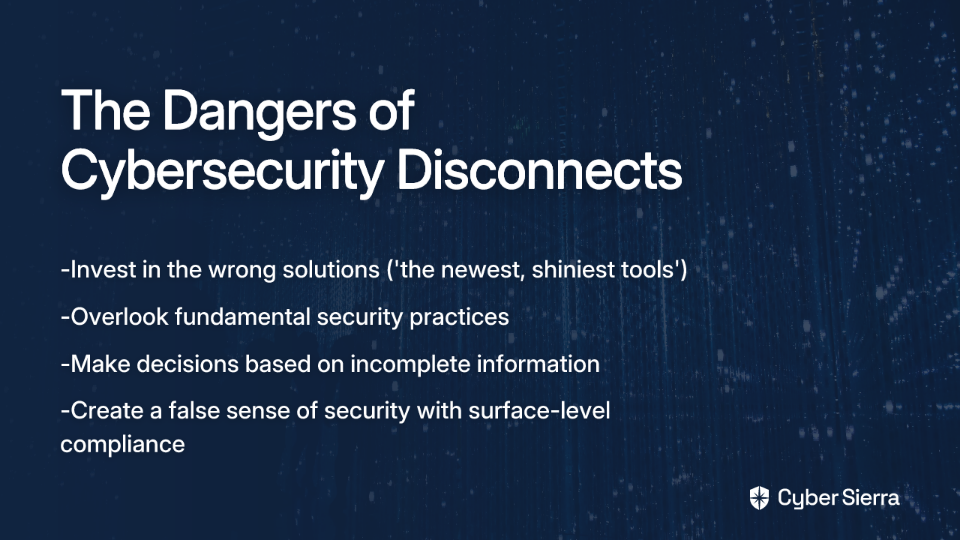
When organizations don't properly understand their cyber risks, they:

  • Invest in the wrong solutions ("the newest, shiniest tools")
  • Overlook fundamental security practices
  • Make decisions based on incomplete information
  • Create a false sense of security with surface-level compliance

Meanwhile, cyber threats continue to evolve, compliance regulations shift frequently, and the skills gap widens, leaving most organizations perpetually behind the curve.

The Missing Link: A True Cyber Risk Manager

What organizations desperately need isn't more tools or certifications—it's someone who can bridge the gap between technical security realities and business decisions. This is where a skilled Cyber Risk Manager becomes invaluable.

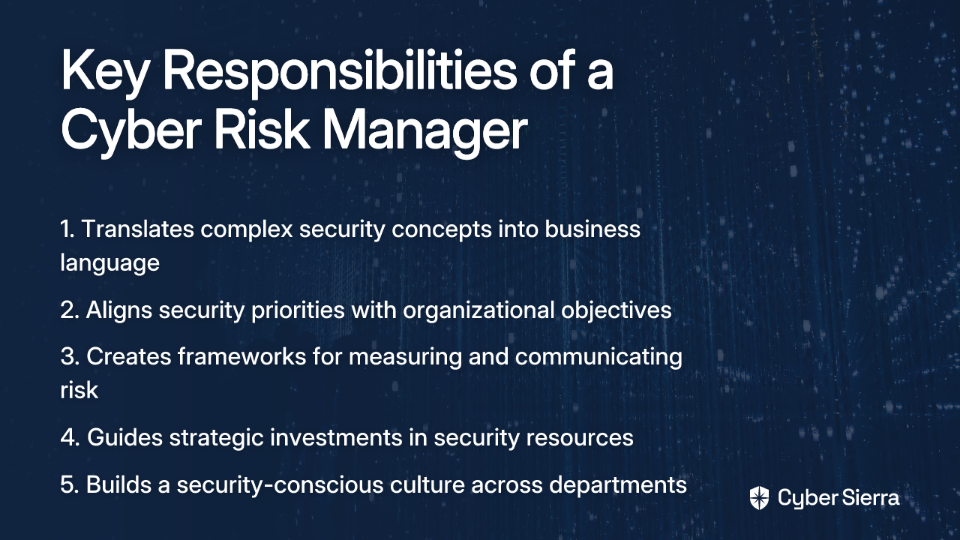
Unlike purely technical roles, an effective Cyber Risk Manager:

  1. Translates complex security concepts into business language
  2. Aligns security priorities with organizational objectives
  3. Creates frameworks for measuring and communicating risk
  4. Guides strategic investments in security resources
  5. Builds a security-conscious culture across departments

This role requires a unique blend of technical knowledge, business acumen, and communication skills that few professionals possess naturally. Yet developing these capabilities can transform both your organization's security posture and your career trajectory.

The Real-World Challenges of Cyber Risk Management

Before diving into how to excel as a Cyber Risk Manager, it's important to understand the unique challenges of this role:

1. The Maturity Gap

"A company with a strong, mature program is going to feel fairly easy with well-defined policies, standards, KRIs, operational metrics, etc. A company with a weak program is going to have the opposite of all that which makes it extremely difficult to accurately measure and report cyber risk," explains one risk management professional on Reddit.

The effectiveness of your risk management approach will vary dramatically based on your organization's security maturity. Trying to implement advanced risk metrics at a company still struggling with basic security hygiene is like building a penthouse on a crumbling foundation.

2. The Political Dimension

"There is a level of subjectivity to risk management which can venture into political aspects of an organization," notes another cybersecurity professional.

Risk management isn't purely technical—it involves navigating organizational politics, competing priorities, and differing risk appetites among stakeholders. Your ability to build relationships and influence decisions often matters more than your technical expertise.

3. The Communication Challenge

"People think cyber is magic and overcomplicate to the point that people don't take them seriously," observes a frustrated security professional.

Many technical experts inadvertently sabotage their own effectiveness by drowning stakeholders in jargon and technical details rather than focusing on business impacts and practical solutions.

4. The Resource Reality

"Small and mid-sized companies often lack the same resources and expertise in cybersecurity as larger organizations," points out another industry professional.

Organizations with limited resources face difficult trade-offs between security investments and other business priorities. Cyber Risk Managers must be creative in maximizing security value while working within these constraints.

Building Your Cyber Risk Management Framework

Despite these challenges, you can develop an effective risk management approach by following these core principles:

1. Establish a Clear Risk Assessment Methodology

Begin by adopting an established framework like NIST CSF or CIS Controls, which provide structured approaches to identifying, assessing, and managing cybersecurity risks.

These frameworks offer several advantages:

  • They're based on industry best practices
  • They provide a common language for discussing security
  • They help prioritize efforts based on risk impact
  • They create defensible rationales for security decisions

For example, the NIST Cybersecurity Framework breaks down security into five core functions (Identify, Protect, Detect, Respond, Recover), making it easier to assess your current capabilities and identify gaps.

2. Develop Business-Aligned Risk Metrics

"Despite spending a lot, companies don't get what they seek in cybersecurity," notes one professional on Reddit. This disconnect often stems from measuring the wrong things.

Effective metrics should:

  • Connect directly to business outcomes
  • Be understood by non-technical stakeholders
  • Demonstrate security's value and progress
  • Guide decision-making about investments

Instead of reporting on technical metrics like "number of vulnerabilities patched," focus on business-relevant metrics like "percentage of critical systems meeting security standards" or "mean time to detect and respond to incidents."

3. Build a Risk-Aware Culture

Technical solutions alone won't protect your organization if people don't understand their role in managing risk.

"Cultural gap since many orgs don't see through our lenses for security," explains one cybersecurity professional, highlighting the importance of building understanding throughout the organization.

To develop a risk-aware culture:

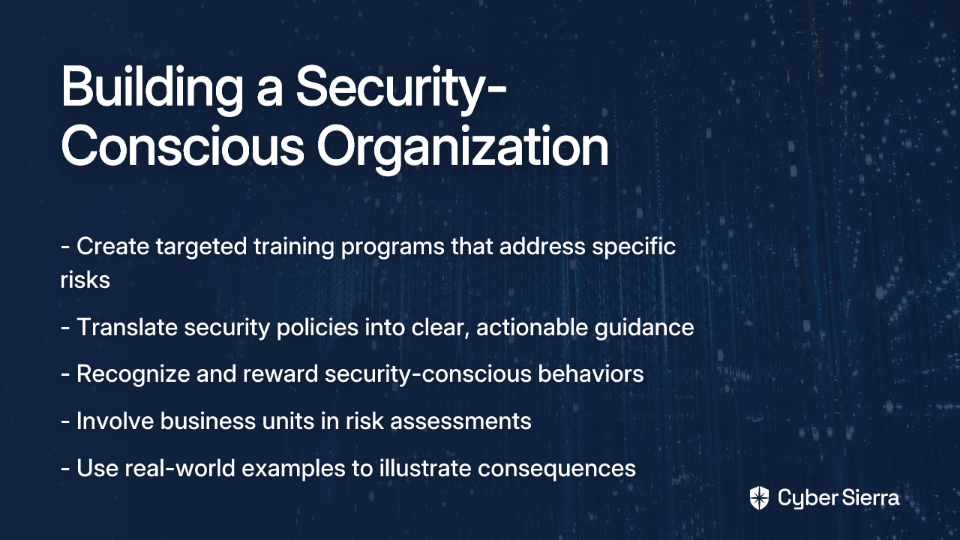
  • Create targeted training programs that address specific risks relevant to different roles
  • Translate security policies into clear, actionable guidance
  • Recognize and reward security-conscious behaviors
  • Involve business units in risk assessments related to their operations
  • Use real-world examples to illustrate the consequences of security lapses

The goal isn't to turn everyone into security experts, but to help them understand how their actions affect organizational risk.

4. Develop a Strategic Vendor Risk Management Approach

Third-party relationships represent a significant risk area that many organizations underestimate.

"It's amazing how bad some vendors are - they assume that a crappy SOC2 is all they need, but that's just a tiny part of the work," shares a frustrated security professional on Reddit.

Another adds: "Many companies don't understand how easy it is to get a SOC2 certification so they think a vendor having one is a golden ticket."

Effective vendor risk management requires:

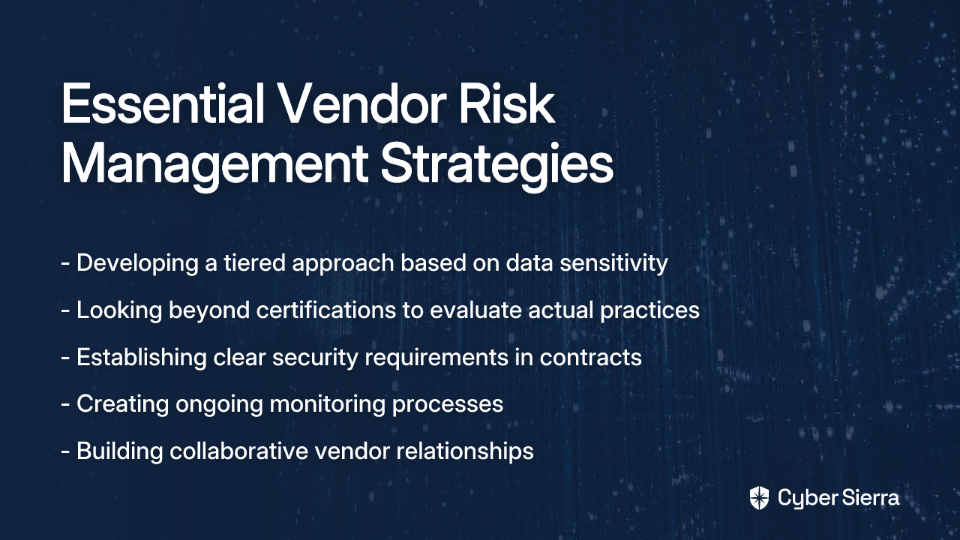
  • Developing a tiered approach based on data sensitivity and access
  • Looking beyond certifications to evaluate actual security practices
  • Establishing clear security requirements in contracts
  • Creating ongoing monitoring processes rather than point-in-time assessments
  • Building collaborative vendor relationships focused on continuous improvement

Becoming an Indispensable Cyber Risk Manager

To excel in this role and advance your career, focus on developing these key capabilities:

1. Expand Your Technical Foundation

While risk management may be "less technical" than some cybersecurity specialties, you still need solid technical knowledge to assess risks accurately and communicate credibly.

Consider pursuing the CRISC certification (Certified in Risk and Information Systems Control), which multiple professionals in the field recommend as a valuable credential for risk managers.

Stay current on emerging threats and security technologies through continuous learning. Resources like the SANS Institute and OWASP offer specialized training on security topics.

2. Master the Art of Security Communication

Your effectiveness hinges on your ability to translate complex security concepts for different audiences:

  • For executives: Focus on business impacts, risk scenarios, and decision points
  • For technical teams: Connect security requirements to their specific work context
  • For employees: Provide clear, actionable guidance without technical jargon

Avoid what one professional calls "blasting us with marketing lingo" by using concrete examples and plain language whenever possible.

3. Develop Business Acumen

Understanding your organization's business model, objectives, and constraints is crucial for effective risk management. Take time to learn about:

  • Your industry's regulatory environment
  • Your organization's revenue streams and business priorities
  • The competitive landscape and market pressures
  • Key operational processes and dependencies

This knowledge allows you to align security priorities with business goals and make compelling cases for security investments.

The Path Forward: From Technical Expert to Strategic Advisor

As organizations face increasingly complex cyber threats and regulatory requirements, the demand for skilled Cyber Risk Managers will only grow. Those who can effectively bridge the gap between technical security and business strategy will be invaluable.

The SEC's recent cybersecurity disclosure requirements for public companies further underscore the strategic importance of this role. As one professional notes, "the biggest pro I can think of is any company that is publicly traded is now in scope for the very recent SEC cyber guidelines."

By developing your skills as a Cyber Risk Manager, you position yourself to address one of the most critical challenges organizations face today: transforming cybersecurity from a technical problem into a strategic business advantage.

Don't just secure systems—secure your organization's future by becoming the bridge between technical security realities and strategic business decisions.


Frequently Asked Questions

What is a Cyber Risk Manager and why is this role crucial for organizations?

A Cyber Risk Manager is a professional who bridges the gap between technical cybersecurity measures and an organization's business objectives. This role is crucial because it translates complex security data into understandable business risks, enabling informed decision-making by leadership and ensuring security investments align with strategic goals, ultimately protecting the organization from the financial and reputational damage of cyber threats.

What are the main challenges a Cyber Risk Manager typically faces?

The main challenges include dealing with varying levels of organizational security maturity, navigating internal politics, effectively communicating complex risks to non-technical stakeholders, and securing adequate resources, especially in smaller organizations. Overcoming these requires a blend of technical knowledge, communication skills, and business acumen.

How can an organization begin to build an effective cyber risk management framework?

An organization can start by adopting an established framework like the NIST Cybersecurity Framework (CSF) or CIS Controls. These provide a structured approach to identify, assess, and manage cybersecurity risks, offering a common language for discussing security and helping prioritize efforts based on potential impact. The next steps involve developing business-aligned risk metrics and fostering a risk-aware culture.

What are the most important skills for a successful Cyber Risk Manager?

The most important skills include a solid technical foundation in cybersecurity, exceptional communication abilities to translate technical jargon for various audiences, and strong business acumen to understand organizational goals and context. Additionally, the ability to build relationships and influence decision-making is key.

Why is vendor risk management so critical in cybersecurity today?

Vendor risk management is critical because third-party relationships can introduce significant vulnerabilities if not properly managed. Many organizations rely on vendors for various services, and a security lapse on a vendor's side can directly impact the organization. Effective vendor risk management involves assessing vendors beyond mere certifications, setting clear security requirements, and continuous monitoring.

How do new regulations, like the SEC's cybersecurity disclosure rules, impact the role of a Cyber Risk Manager?

New regulations like the SEC's cybersecurity disclosure rules significantly increase the demand and strategic importance of Cyber Risk Managers. These rules require public companies to be more transparent about their cybersecurity risks and incident reporting, making it essential to have professionals who can accurately assess, manage, and articulate these risks to both internal leadership and external regulatory bodies.


Additional Resources:

blog-hero-background-image
Cyber Security

What is the NYDFS Cybersecurity Regulation?

backdrop
Table of Contents

Join thousands of professionals and get the latest insight on Compliance & Cybersecurity.


You've been tasked with implementing a new cybersecurity regulation for your financial institution, but as you sift through the dense legal language of official documents, you find yourself increasingly frustrated. The requirements are complex, deadlines seem confusing, and you're not even sure where to begin documenting your compliance efforts.

If this scenario sounds familiar, you're not alone. Many financial services professionals struggle with understanding and implementing the New York Department of Financial Services (NYDFS) Cybersecurity Regulation, formally known as 23 NYCRR Part 500.

Understanding 23 NYCRR Part 500: The Essentials

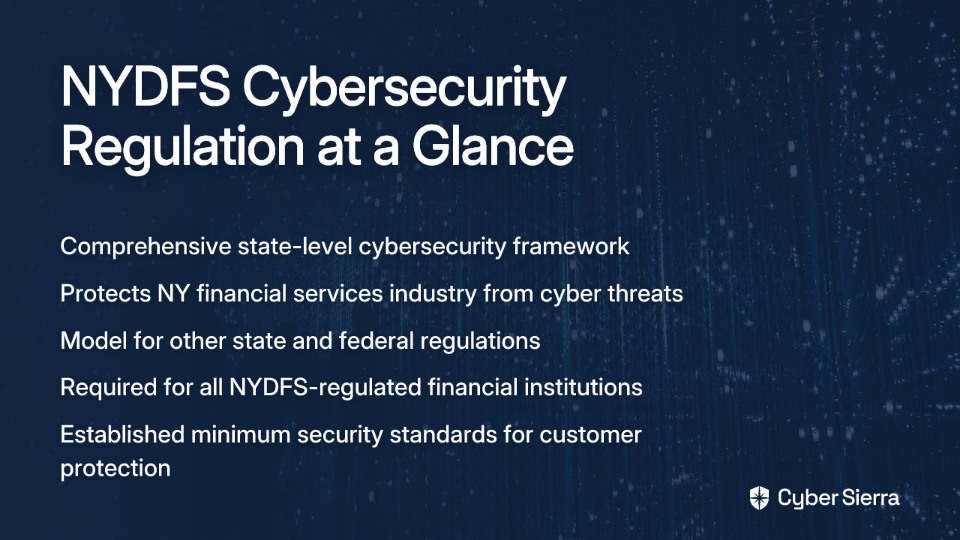
The NYDFS Cybersecurity Regulation represents one of the most comprehensive and stringent state-level cybersecurity regulations in the United States. Introduced in 2017, it was designed to protect New York's financial services industry and consumers from the growing threats of cyberattacks.

Key aspects to understand:

  • Effective Date: Initially effective March 1, 2017, with a phased implementation approach
  • Covered Entities: Banks, insurance companies, mortgage brokers, and other financial services institutions regulated by the NYDFS
  • Core Purpose: To establish minimum cybersecurity requirements for financial services companies that protect customer information and the information technology systems of regulated entities

What makes this regulation particularly significant is that it has become a model for other states and even federal regulations. Even if you're not directly subject to NYDFS oversight, understanding these requirements can help prepare your organization for similar regulations that may apply to you now or in the future.

Key Requirements of the NYDFS Cybersecurity Regulation

1. Establish a Comprehensive Cybersecurity Program

The foundation of compliance is developing, implementing, and maintaining a robust cybersecurity program designed to:

  • Identify and assess internal and external cybersecurity risks
  • Use defensive infrastructure to protect information systems and nonpublic information
  • Detect cybersecurity events
  • Respond to identified cybersecurity events
  • Recover from cybersecurity events and restore normal operations
  • Fulfill applicable regulatory reporting requirements

For CISOs like Sarah Chen, this means moving beyond point solutions to create an integrated security strategy that addresses the entire attack lifecycle.

2. Implement a Written Cybersecurity Policy

Covered entities must maintain a written policy addressing:

  • Information security
  • Data governance and classification
  • Access controls
  • Business continuity planning
  • Systems operations and availability
  • Systems and network security
  • Systems and application development
  • Physical security and environmental controls
  • Customer data privacy
  • Vendor and third-party service provider management
  • Risk assessment
  • Incident response

For compliance managers like David Lee, this requires extensive documentation that is regularly reviewed and approved by a Senior Officer or board.

3. Designate a Chief Information Security Officer (CISO)

Organizations must appoint a qualified CISO responsible for:

  • Overseeing and implementing the cybersecurity program
  • Enforcing the cybersecurity policy
  • Reporting to the Board of Directors at least annually on:
    • The organization's cybersecurity posture
    • Material cybersecurity risks
    • Critical cybersecurity events
    • Recommendations for remediation

The CISO role can be filled by an internal resource or by an external service provider, providing flexibility for smaller organizations that may not have the resources to maintain a full-time executive-level security position.

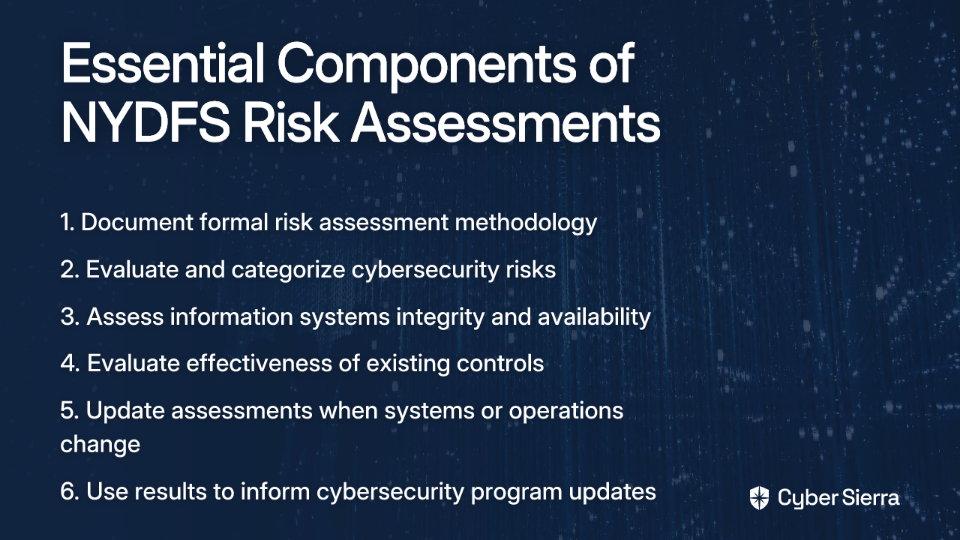
4. Conduct Regular Risk Assessments

The regulation requires periodic risk assessments that:

  • Evaluate and categorize cybersecurity risks
  • Assess the confidentiality, integrity, and availability of information systems
  • Evaluate existing controls in the context of identified risks
  • Inform the cybersecurity program and policies

These assessments must follow a formal, documented methodology and must be updated as necessary to address changes in information systems, nonpublic information, or business operations.

5. Implement Strong Access Controls

Covered entities must limit user access privileges to information systems that contain nonpublic information and periodically review these access privileges. This includes:

  • Multi-factor authentication for external access to the network
  • Risk-based authentication for accessing internal networks
  • Regular review of access privileges
  • Timely termination of access following departures or role changes

For Third-Party Risk Managers like Ben Carter, this extends to ensuring vendors with access to your systems have similar controls in place.

6. Deploy Cybersecurity Tools and Controls

The regulation mandates specific technical controls including:

  • Penetration testing and vulnerability assessments
  • Audit trail systems to reconstruct financial transactions and detect cybersecurity events
  • Application security procedures, including security testing
  • Data encryption of nonpublic information both in transit and at rest
  • Secure disposal of nonpublic information that's no longer necessary

Security professionals like Priya Sharma need to ensure these controls are not only in place but continuously monitored for effectiveness.

7. Develop an Incident Response Plan

Covered entities must establish a written incident response plan designed to:

  • Respond to and recover from cybersecurity events
  • Define clear roles and responsibilities
  • Include external and internal communications plans
  • Identify requirements for remediating weaknesses
  • Document lessons learned
  • Establish reporting procedures

This plan must be tested and updated regularly to ensure its effectiveness.

8. Manage Third-Party Service Provider Security

The regulation places significant emphasis on third-party risk management, requiring covered entities to:

  • Develop written policies and procedures for vendor risk management
  • Identify and risk-assess all service providers with access to nonpublic information
  • Establish minimum cybersecurity practices required of service providers
  • Perform due diligence in evaluating service providers' cybersecurity practices
  • Periodically assess service providers based on the risk they present

These requirements are particularly challenging for businesses with extensive vendor ecosystems, as noted by procurement specialists who must manage hundreds or thousands of vendor relationships.

9. Report Cybersecurity Events

One of the most stringent aspects of the regulation is the requirement to notify the NYDFS Superintendent of certain cybersecurity events within 72 hours. This includes:

  • Events that require notice to any government body, regulatory agency, or self-regulatory agency
  • Events that have a reasonable likelihood of materially harming the normal operations of the covered entity
  • Extortion payments related to a cybersecurity event, which must be reported within 24 hours

The 2023 amendments added additional requirements related to ransomware and extortion payments, reflecting the growing threat of these attacks.

10. Annual Compliance Certification

Covered entities must submit an annual certification of compliance to the NYDFS, confirming that they are in compliance with the requirements. If there are areas of noncompliance, the entity must identify those areas and document remediation plans.

2023 Amendments: What's Changed

In November 2023, the NYDFS finalized significant amendments to the cybersecurity regulation, creating more stringent requirements, particularly for larger entities. Key changes include:

  1. Creation of "Class A Companies" - Organizations with at least $20 million in gross annual revenue in New York and either:
    • Over 2,000 employees worldwide, or
    • Over $1 billion in gross annual revenue in each of the last two fiscal years
  2. Enhanced Requirements for Class A Companies:
    • Independent audit of cybersecurity programs
    • Systematic monitoring, including endpoint detection and response solutions
    • Privileged access management
    • Password management
    • Automated vulnerability scans
  3. Additional Requirements for All Covered Entities:
    • Asset management and periodic data classification
    • Enhanced access controls
    • Cloud security assessments
    • Updated incident response plans that address ransomware
    • Stronger governance with annual approval of policies by senior management
    • More comprehensive risk assessments

These amendments reflect the evolving threat landscape and provide more specific guidance on what constitutes adequate cybersecurity controls.

Common Challenges in NYDFS Compliance

Despite the regulation being in effect for several years, organizations continue to face significant challenges in achieving and maintaining compliance:

1. Difficulty Accessing User-Friendly Documentation

As one compliance professional noted in a recent discussion: "I was surprised to see that the regulations are not laid out in a fairly digestible format (e.g. spreadsheet with requirements) and are presented in a PDF format on the official NYDFS website."

This accessibility issue creates unnecessary barriers for teams trying to systematically track and manage compliance requirements.

2. Resource Constraints and Expertise Gaps

Many organizations lack dedicated compliance expertise. As one Reddit user mentioned, "my vCISO has declared that he is 'not a compliance guy' lol." This expertise gap often forces companies to rely heavily on external consultants, which can be cost-prohibitive, especially for smaller institutions.

3. Tight Implementation Timelines

The phased implementation approach and subsequent amendments have created confusion around deadlines. "I know that the deadline passed for reporting but my company just went through this for the first time and we ran into the same issue," reported one compliance manager, highlighting the pressure organizations face when navigating these requirements for the first time.

4. Manual Evidence Collection and Documentation

For IT teams already stretched thin, the documentation requirements of NYDFS can be overwhelming. Manual evidence collection across disparate systems creates inefficiency and increases the risk of incomplete or inaccurate compliance documentation.

5. Third-Party Risk Management at Scale

For organizations with extensive vendor ecosystems, managing third-party risk according to NYDFS requirements presents a significant operational challenge, especially when relying on spreadsheets and manual questionnaire processes.

Best Practices for NYDFS Compliance

To address these challenges, forward-thinking organizations are adopting several best practices:

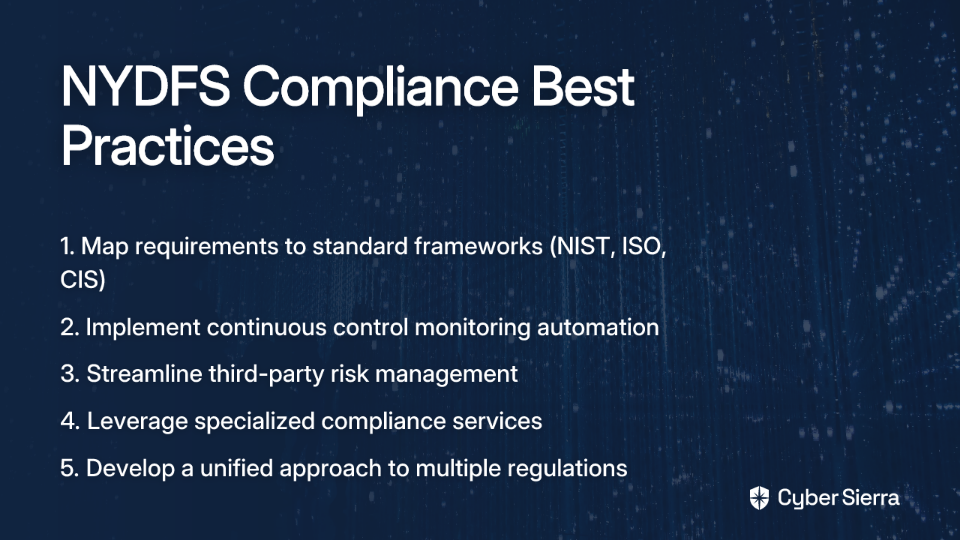
1. Use Standardized Frameworks and Mappings

"The Secure Controls Framework has it mapped against a billion things, including NIST, ISO, and CIS," noted one practitioner. Leveraging these established frameworks can help translate the NYDFS requirements into actionable controls and simplify compliance efforts.

2. Implement Continuous Control Monitoring

Rather than point-in-time assessments, leading organizations are implementing continuous monitoring of security controls. This approach not only supports compliance but also improves overall security posture by enabling rapid detection and remediation of control failures.

Modern platforms like CyberSierra's Continuous Control Monitoring (CCM) module can significantly streamline this process by automating evidence collection across multiple systems and providing real-time visibility into control effectiveness. This is particularly valuable for organizations subject to multiple regulatory frameworks beyond just NYDFS.

3. Automate Third-Party Risk Management

Given the emphasis on vendor security in the NYDFS regulation, automating the vendor assessment process can yield significant efficiency gains. Tools that streamline questionnaire distribution, track remediation efforts, and provide continuous monitoring of vendor security posture can transform this traditionally manual process.

4. Consider Specialized Compliance Services

For smaller organizations with limited resources, specialized compliance services can provide a cost-effective alternative to building in-house expertise or engaging large consulting firms. As one Reddit user shared, "we used Cyber Pop-up and got it done in a week (and didn't cost an arm and a leg like the big 4 consulting companies)."

5. Develop a Unified Compliance Approach

Rather than treating NYDFS compliance as a standalone initiative, integrate it into a broader compliance program that addresses multiple frameworks. This unified approach reduces duplication of effort and creates a more sustainable compliance program.

The Future of NYDFS and Financial Cybersecurity Regulation

The NYDFS regulation has already influenced other regulatory frameworks, including the Federal Trade Commission's Safeguards Rule for financial institutions and various state-level regulations. As cyber threats continue to evolve, we can expect further refinements to the NYDFS requirements and greater harmonization across regulatory frameworks.

For organizations subject to NYDFS oversight, investing in automation, continuous monitoring, and integrated compliance solutions will provide not only immediate compliance benefits but also prepare them for the evolving regulatory landscape.

Conclusion

The NYDFS Cybersecurity Regulation (23 NYCRR Part 500) represents a significant regulatory mandate for financial institutions, establishing comprehensive requirements for cybersecurity programs, policies, and controls. While compliance presents challenges, particularly around documentation, expertise, and resource constraints, a structured approach leveraging frameworks, automation, and specialized tools can significantly reduce the compliance burden.

By implementing continuous control monitoring, automating third-party risk management, and adopting a unified compliance approach, organizations can not only achieve NYDFS compliance but also strengthen their overall security posture and prepare for future regulatory requirements.

For organizations needing to streamline their NYDFS compliance efforts, platforms like CyberSierra offer integrated solutions that automate evidence collection, simplify control mapping across multiple frameworks, and provide continuous visibility into compliance status. By moving from manual, point-in-time assessments to automated, continuous monitoring, security and compliance teams can focus more on strategic security improvements and less on documentation exercises.

Frequently Asked Questions (FAQ)

What is the NYDFS Cybersecurity Regulation (23 NYCRR Part 500)?

The NYDFS Cybersecurity Regulation (23 NYCRR Part 500) is a set of rules from the New York Department of Financial Services mandating cybersecurity standards for financial institutions. Its core purpose is to protect customer data and the IT systems of regulated entities from cyber threats. First effective in 2017, this regulation is significant for establishing comprehensive minimum requirements and has influenced other cybersecurity regulations.

Who must comply with 23 NYCRR Part 500?

Compliance with 23 NYCRR Part 500 is mandatory for all financial services institutions regulated by the New York Department of Financial Services (NYDFS). This broad category includes entities such as banks, insurance companies, mortgage brokers, and other financial service providers operating under an NYDFS license or charter in New York State.

What are the key requirements of the NYDFS Cybersecurity Regulation?

Key requirements include establishing a comprehensive cybersecurity program, implementing a detailed written cybersecurity policy, and appointing a Chief Information Security Officer (CISO). Organizations must also conduct regular risk assessments, enforce strong access controls, utilize specific cybersecurity tools (like penetration testing and encryption), develop a robust incident response plan, manage third-party vendor risks, report cybersecurity incidents within 72 hours, and submit an annual compliance certification to NYDFS.

How did the 2023 amendments impact the NYDFS Cybersecurity Regulation?

The 2023 amendments significantly updated the regulation by introducing more stringent requirements, especially for larger "Class A Companies," which now face obligations like independent cybersecurity program audits and systematic threat monitoring. For all covered entities, the amendments expanded requirements related to asset management, access controls, cloud security, ransomware-inclusive incident response plans, governance (requiring annual policy approval by senior management), and the comprehensiveness of risk assessments.

What are common challenges organizations face with NYDFS compliance?

Organizations commonly struggle with the lack of easily digestible official documentation, internal resource limitations and shortages of cybersecurity expertise, and pressure from tight implementation deadlines. Further challenges include the burden of manual evidence collection and documentation across various systems, and the operational complexity of managing third-party service provider risks at scale, especially for those with extensive vendor networks.

How can businesses best approach NYDFS compliance?

Businesses can best approach NYDFS compliance by mapping the regulation's requirements to established cybersecurity frameworks (like NIST, ISO 27001, or CIS Controls), which can translate legal language into actionable controls. Implementing continuous control monitoring and automation can streamline evidence collection and provide real-time visibility. Additionally, automating third-party risk management, considering specialized compliance services for expertise gaps, and developing a unified compliance strategy that addresses NYDFS alongside other regulations are crucial best practices.

The most effective approach treats NYDFS compliance not as a checkbox exercise but as an opportunity to build a more resilient and mature security program that protects both the organization and its customers in an increasingly threatening digital landscape.

blog-hero-background-image
Cyber Security

Beyond Excuses: Confronting Skill Shortages and Knowledge Gaps in GRC Cybersecurity

backdrop
Table of Contents

Join thousands of professionals and get the latest insight on Compliance & Cybersecurity.


You're a CISO staring at yet another alarming report on your desk. The global cybersecurity workforce gap has expanded to 4.8 million professionals—a staggering 19% increase from last year. Meanwhile, your team is stretched thin, struggling to keep pace with evolving compliance requirements and mounting security threats.

Sound familiar? You're not alone.

In boardrooms across industries, skill shortages and knowledge gaps in Governance, Risk, and Compliance (GRC) cybersecurity have become the standard explanation for security lapses and compliance failures. But in today's high-stakes environment, where the average data breach costs $4.88 million, these challenges can no longer serve as acceptable excuses for inaction.

The Reality of Cybersecurity Talent Scarcity

The statistics paint a sobering picture. According to the ISC2 Cybersecurity Workforce Study 2023, the global active cybersecurity workforce stands at 5.5 million professionals, while the actual need is closer to 10.2 million—leaving a gaping hole of 4.8 million unfilled positions.

This shortage is particularly acute in specialized areas like GRC, where professionals need a unique blend of technical knowledge, regulatory expertise, and business acumen. As one industry professional noted in a recent forum: "Finding people interested in learning regulatory requirements, having the soft skills for the job, and handling the definite boredom that can happen is not easy."

The impact of these shortages is far-reaching:

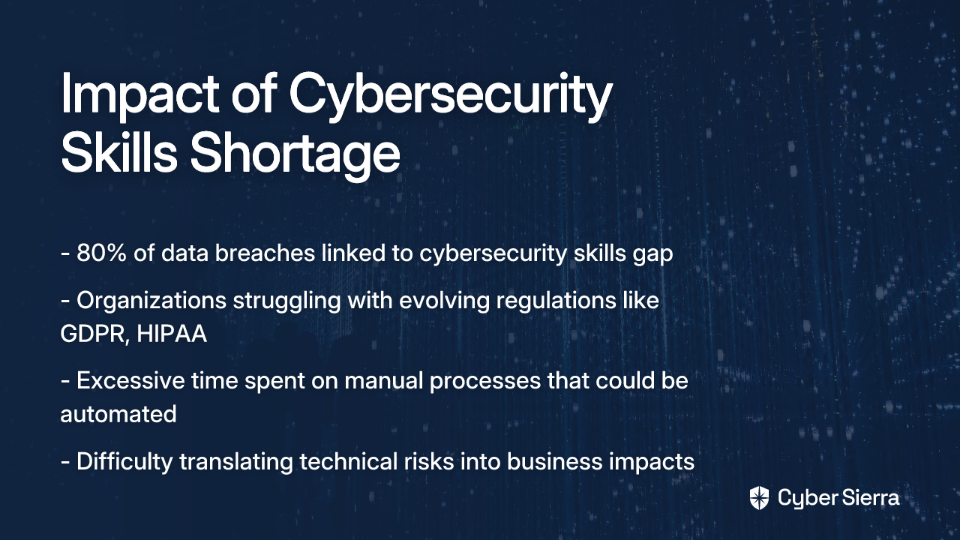
  • Increased security vulnerabilities: 80% of data breaches can be directly attributed to the cybersecurity skills gap
  • Compliance lapses: Organizations scramble to keep up with evolving regulations like GDPR, HIPAA, and SEC disclosure rules
  • Operational inefficiencies: Security teams spend excessive time on manual processes that could be automated
  • Strategic blindspots: Without proper expertise, organizations struggle to translate technical risks into business impacts

But here's the hard truth: While the talent shortage is real, it's no longer a valid excuse for security and compliance failures. Forward-thinking organizations are finding innovative ways to overcome these challenges.

Why Skills Shortages and Knowledge Gaps Are Not Valid Excuses

Despite the undeniable challenges, organizations can no longer hide behind talent shortages to justify inadequate security postures. Here's why:

1. Technology Has Evolved to Bridge the Gap

Today's GRC solutions leverage automation and artificial intelligence to perform tasks that once required specialized human expertise. These technologies can:

  • Automate compliance workflows: Reducing the manual burden of documentation, evidence collection, and reporting
  • Continuously monitor controls: Providing real-time visibility into security posture without constant human intervention
  • Generate actionable insights: Helping teams prioritize remediation efforts based on risk impact and likelihood
  • Streamline audits: Reducing preparation time and stress on limited resources

As noted in the State of GRC 2025 report, 96% of companies attribute their increased focus on GRC to high-profile breaches, with emerging technologies becoming critical to addressing talent gaps.

2. External Expertise Is More Accessible Than Ever

The rise of specialized security service providers has democratized access to GRC expertise:

  • Managed security service providers (MSSPs): Offer economies of scale and specialized knowledge
  • Virtual CISOs: Provide strategic guidance without the cost of a full-time executive
  • GRC consultants: Help implement frameworks and prepare for audits
  • Security awareness training platforms: Upskill existing staff to recognize and respond to threats

3. Regulators and Customers Are Unforgiving

Most importantly, neither regulators nor customers accept staffing challenges as justification for security lapses:

  • Regulatory penalties continue to increase: GDPR violations can cost up to 4% of global annual revenue
  • Board liability is growing: Directors face personal liability for cybersecurity oversight failures
  • Customer trust, once lost, is difficult to regain: 60% of small businesses close within six months of a cyberattack

The Real Issue: Strategic Prioritization

Beneath the surface, what appears as a skills shortage often reveals a more fundamental problem: strategic misalignment.

As one industry forum participant bluntly stated: "There's definitely a shortage in the sense that most companies don't have enough qualified cybersecurity staff, but the problem is that they aren't willing to hire to make up for the gap." Another added, "They think they can get by with less, and as long as they don't get breached and/or cybersecurity insurance will pay, they're fine taking the risk of running skeleton crews."

This mindset reflects a deeper issue—treating cybersecurity as a cost center rather than a business enabler. Organizations that view security investments this way inevitably understaff and underfund their security programs, creating a self-fulfilling prophecy of inadequate protection.

How Cyber Sierra's Platform Addresses the Skills and Knowledge Gap

In this challenging landscape, Cyber Sierra's GRC platform emerges as a comprehensive solution specifically designed to address the skills and knowledge gaps that plague cybersecurity teams. By leveraging cutting-edge technology and intelligent automation, Cyber Sierra enables organizations to maintain robust security postures despite talent shortages.

AI-Enabled Automation: Multiplying Your Team's Capabilities

Cyber Sierra's platform features sophisticated AI that automates time-consuming GRC processes, effectively extending your team's capabilities without additional headcount:

  • Automated Data Collection & Risk Assessments: The platform automatically gathers evidence across your technology stack, eliminating manual collection processes that typically consume 40-60% of compliance efforts
  • Continuous Control Monitoring: Rather than point-in-time assessments, Cyber Sierra provides real-time visibility into control effectiveness, alerting teams only when intervention is needed
  • Multi-Framework Management: The system maps controls across multiple regulatory frameworks (SOC2, GDPR, HIPAA, etc.), allowing teams to achieve compliance with various standards simultaneously without duplicative efforts

Bridging Knowledge Gaps Through Guided Workflows

Even with limited GRC expertise, teams can successfully navigate complex compliance requirements through Cyber Sierra's guided workflows:

  • Contextual Guidance: Built-in explanations and best practices help teams understand the "why" behind compliance requirements
  • Templated Policies and Procedures: Pre-configured templates based on industry best practices eliminate the need to create documentation from scratch
  • Risk-Based Prioritization: AI-powered analytics help identify and prioritize the most critical risks, ensuring teams focus their limited resources where they matter most

Transforming Raw Data into Actionable Intelligence

Cyber Sierra doesn't just collect data—it transforms it into actionable intelligence that enables informed decision-making:

  • Executive Dashboards: Translate technical compliance metrics into business-relevant insights for leadership
  • Trend Analysis: Identify patterns and emerging risks before they become critical issues
  • Benchmarking: Compare your organization's security posture against industry peers to identify improvement opportunities

Real-World Impact

Organizations using Cyber Sierra have reported significant operational improvements:

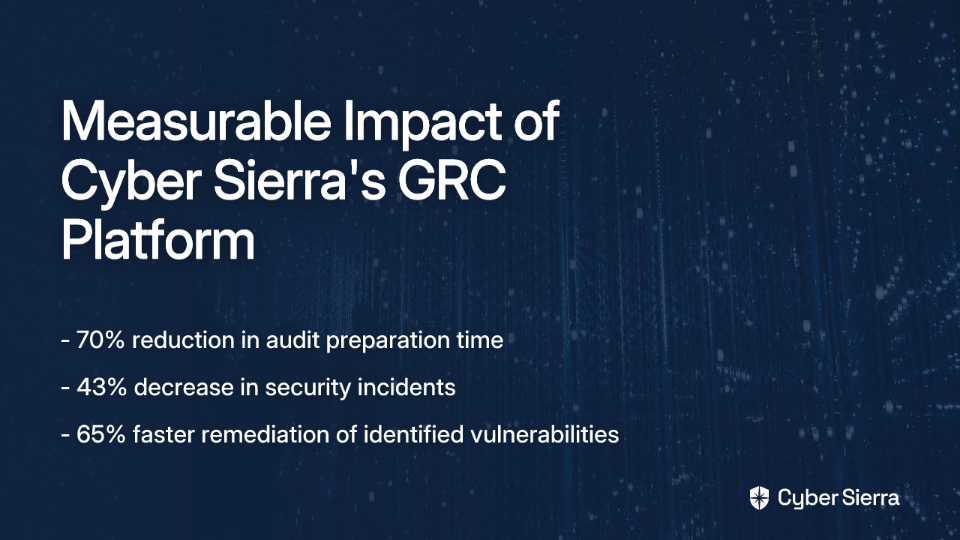
  • 70% reduction in time spent preparing for audits
  • 43% decrease in the number of security incidents due to improved visibility and proactive risk management
  • 65% improvement in time-to-remediation for identified vulnerabilities

Taking Action: Beyond Excuses to Solutions

While skill shortages and knowledge gaps in GRC cybersecurity are legitimate challenges, they cannot become permanent excuses for inadequate security and compliance. Here's how forward-thinking CISOs can take action:

  1. Conduct an honest assessment of your current GRC capabilities, identifying specific knowledge gaps and process inefficiencies
  2. Explore technology solutions like Cyber Sierra that can automate routine tasks and provide guided workflows for less experienced staff
  3. Invest in targeted training for existing team members to upskill them in critical GRC competencies
  4. Foster a culture of shared responsibility for security and compliance across the organization
  5. Partner with specialized service providers to supplement internal capabilities where needed

Conclusion: From Challenge to Opportunity

The cybersecurity skills shortage isn't disappearing anytime soon. But with platforms like Cyber Sierra, organizations can transform this challenge into an opportunity to build more efficient, effective security programs.

By leveraging intelligent automation, guided workflows, and actionable analytics, CISOs can ensure their organizations maintain robust security postures and regulatory compliance—regardless of staffing constraints. In doing so, they not only protect their organizations from threats but also position security as a strategic business enabler rather than a cost center.

The question is no longer whether you have enough security experts on staff, but whether you're leveraging the right tools and approaches to maximize the effectiveness of your existing team.

Frequently Asked Questions

What is the GRC cybersecurity skills gap?

The GRC cybersecurity skills gap refers to the significant shortfall of qualified professionals needed to manage Governance, Risk, and Compliance in the cybersecurity sector. The ISC2 Cybersecurity Workforce Study 2023 highlights a global deficit of 4.8 million professionals. This shortage is especially pronounced in GRC, which requires a unique mix of technical, regulatory, and business knowledge, leading to increased security vulnerabilities and compliance issues.

Why is the cybersecurity skills shortage no longer a valid excuse for security failures?

The cybersecurity skills shortage is no longer a valid excuse because organizations now have multiple avenues to mitigate this challenge. Firstly, advanced GRC technologies leverage automation and AI to handle tasks previously requiring specialized human expertise. Secondly, external expertise through MSSPs, virtual CISOs, and GRC consultants is more accessible than ever. Lastly, regulators and customers have increasingly high expectations and are unforgiving of security lapses, regardless of staffing issues.

How can technology help bridge the GRC skills gap?

Technology, particularly AI-enabled GRC platforms, can significantly help bridge the GRC skills gap by automating and simplifying complex processes. These platforms can automate compliance workflows, continuously monitor security controls in real-time, generate actionable insights for risk prioritization, and streamline audit preparations. This allows smaller teams or those with less specialized GRC knowledge to manage compliance effectively, essentially multiplying their capabilities.

What is the real underlying issue often misidentified as a skills shortage in cybersecurity?

The real underlying issue often misidentified as a skills shortage is a lack of strategic prioritization and investment in cybersecurity by organizations. Many companies are unwilling to hire adequate cybersecurity staff or invest in necessary tools, viewing cybersecurity as a cost center rather than a critical business enabler. This mindset leads to understaffed and underfunded security programs, creating a self-inflicted vulnerability.

How does a GRC platform like Cyber Sierra address GRC challenges for teams with limited staff?

A GRC platform like Cyber Sierra addresses challenges for teams with limited staff by leveraging AI-enabled automation, guided workflows, and actionable intelligence. It automates time-consuming tasks like data collection and risk assessments, provides continuous control monitoring, and helps manage multiple compliance frameworks efficiently. Guided workflows and contextual guidance assist less experienced staff, while executive dashboards translate technical data into business-relevant insights, enabling even constrained teams to maintain robust security and compliance.

What practical steps can CISOs take to address GRC skill shortages?

CISOs can take several practical steps to address GRC skill shortages within their organizations. These include:

  1. Conducting an honest assessment of current GRC capabilities to identify specific gaps.
  2. Exploring and implementing technology solutions, like GRC platforms, to automate tasks and guide staff.
  3. Investing in targeted training to upskill existing team members in critical GRC areas.
  4. Fostering a culture where security and compliance are shared responsibilities across the organization.
  5. Partnering with specialized external service providers to supplement internal capabilities where necessary.

Ready to move beyond excuses and embrace solutions? Learn more about how Cyber Sierra's GRC platform can help your organization overcome skill shortages and knowledge gaps in GRC cybersecurity.

blog-hero-background-image
Cyber Security

AI and Automation Uncertainties in GRC Cyber Security Implementation

backdrop
Table of Contents

Join thousands of professionals and get the latest insight on Compliance & Cybersecurity.


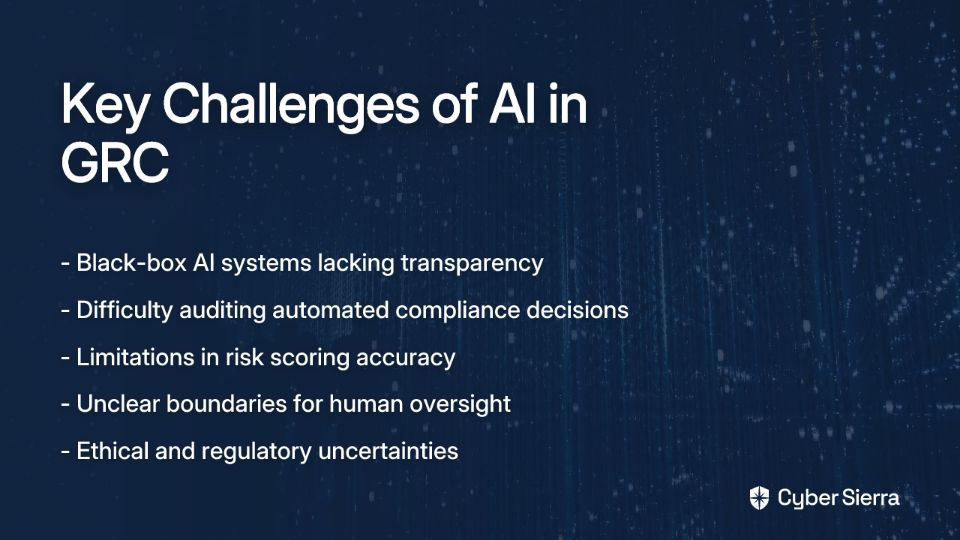
You've invested in cutting-edge AI-powered GRC (Governance, Risk, and Compliance) solutions with promises of seamless automation, reduced workload, and enhanced compliance. Yet, weeks after implementation, your team is struggling to validate the AI's compliance decisions, questioning its risk scoring accuracy, and uncertain about where human oversight should begin and end. The black-box nature of these systems leaves you wondering: how can we trust what we can't fully understand?

This growing scenario reflects a critical challenge in modern cybersecurity: as organizations rapidly adopt AI and automation into their GRC frameworks, they face significant unresolved technical and ethical uncertainties that threaten to undermine the very benefits these technologies promise.

The Opacity Challenge: Auditing AI-Driven Compliance Decisions

Imagine receiving an automated compliance report flagging critical vulnerabilities across your organization's infrastructure. The AI system has prioritized them based on complex algorithms – but can you trust these assessments? Can you explain them to auditors or regulators?

This represents one of the most pressing challenges in AI-driven GRC implementation: the lack of transparency in model architectures that makes auditing AI decisions nearly impossible. According to GRC World Forums, stakeholders express growing concerns about the "black-box" nature of AI systems where decisions are made without clear explanations of the underlying reasoning.

"AI cannot build relationships and gain executive buy-in," notes a cybersecurity professional in a recent discussion. "Legal liability in auditing must remain with humans, not AI."

The challenge exists on multiple levels:

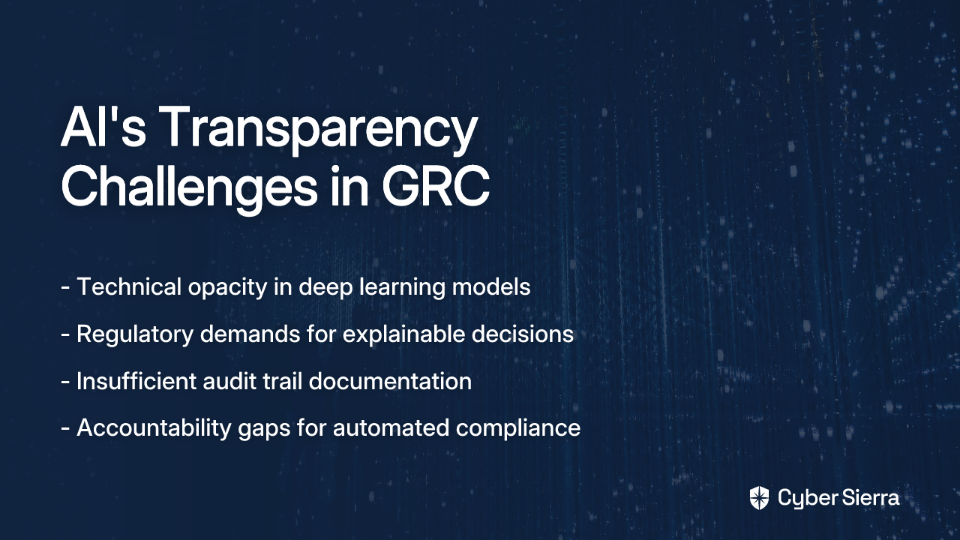
  1. Technical Opacity: Many advanced AI models, particularly deep learning systems, operate as "black boxes" where even their developers cannot fully explain how specific decisions are reached.
  2. Regulatory Requirements: Compliance frameworks increasingly demand explainability in decision-making, with regulations like GDPR explicitly establishing a "right to explanation" for automated decisions affecting individuals.
  3. Audit Trail Deficiencies: Traditional audit methodologies rely on clear documentation of decision-making processes – something many AI systems aren't designed to provide.
  4. Accountability Gaps: Without transparency, organizations struggle to assign responsibility for AI-driven compliance decisions that prove incorrect or harmful.

The fundamental question remains: How can organizations maintain appropriate audit trails and verification mechanisms for compliance decisions made by systems whose inner workings remain opaque?

Risk Scoring in Complex Environments: Can AI Keep Up?

Your automated risk scoring system has assigned low-risk ratings to several third-party vendors, but fails to flag a supplier in a region experiencing sudden political instability. By the time your team manually identifies the risk, it's too late – a supply chain disruption has already impacted operations.

This scenario highlights another critical uncertainty: can automated risk scoring systems adequately account for geopolitical instability or novel attack vectors that haven't appeared in training data?

"AI lacks the nuanced understanding of organizational risk appetite and regulatory implications," notes a GRC specialist in industry discussions. This limitation becomes particularly problematic when dealing with:

  1. Geopolitical Dynamics: Regional conflicts, trade sanctions, or political shifts can rapidly alter risk profiles for international operations. AI systems often struggle to assess these complex, fluid situations without explicit human input.
  2. Novel Attack Vectors: Zero-day vulnerabilities and emerging attack methodologies present risks that, by definition, aren't represented in historical training data. AI systems may miss these threats entirely until they've been documented and incorporated into training datasets.
  3. Context-Specific Risk Interpretations: What constitutes acceptable risk varies dramatically across industries, organizational cultures, and regulatory environments. AI systems often lack the contextual understanding to make these nuanced judgments.
  4. Rapidly Changing Regulatory Landscapes: With 23% of cybersecurity regulations updated annually according to industry research, automated systems struggle to keep pace with compliance requirements.

According to research from Certa.ai, "Organizations need dynamic risk scoring systems that can adapt to geopolitical scenarios," yet building such adaptability into automated systems remains challenging.

The Ethical Dimensions of Automated GRC

Beyond technical limitations, AI in GRC processes raises profound ethical questions that organizations must navigate. These concerns include:

Algorithmic Bias and Fairness

AI systems inherit biases present in their training data, potentially leading to unfair or discriminatory outcomes in risk assessments. For example, an AI might consistently assign higher risk scores to smaller businesses or those from certain geographical regions based on historical patterns, regardless of their actual security posture.

As noted by Evolve Security, "Key ethical concerns cover data integrity and the importance of transparency in data collection practices."

Privacy vs. Security Tradeoffs

The effectiveness of AI in GRC often correlates with the breadth and depth of data it can access. This creates tension between comprehensive security monitoring and respecting privacy boundaries. According to the ISC² insights, organizations face significant "trade-offs between privacy and security, and issues of bias in AI algorithms."

Accountability and Human Oversight

Perhaps most critically, AI implementation raises questions about responsibility and accountability. If an AI system fails to identify a significant compliance gap, who bears responsibility – the developers, the organization implementing it, or the compliance team that relied on it?

Toward Solutions: Bridging the AI-Human GRC Partnership

Despite these challenges, the integration of AI into GRC functions offers tremendous potential benefits, from processing vast datasets to identifying patterns invisible to human analysts. The path forward lies not in abandoning AI adoption but in developing frameworks that address these uncertainties while leveraging AI's strengths.

1. Explainable AI (XAI) for Transparent Compliance

Explainable AI approaches offer a promising solution to the auditing challenge by designing systems that can articulate their decision-making processes in human-understandable terms.

Organizations implementing GRC automation should:

  • Demand explainability features: When evaluating GRC solutions, prioritize those that provide clear explanations for risk assessments and compliance determinations.
  • Implement layered validation: Create multi-tiered validation processes where AI recommendations are reviewed through progressively more rigorous human oversight as risk levels increase.
  • Document AI decision parameters: Maintain comprehensive documentation of the factors and weights used in automated decision-making to support audit inquiries.

The National Institute of Standards and Technology (NIST) has developed an AI Risk Management Framework that provides guidance on developing and deploying trustworthy AI systems, including for GRC applications.

2. Hybrid Intelligence for Dynamic Risk Assessment

To address limitations in automated risk scoring, organizations are increasingly adopting hybrid intelligence approaches that combine AI analysis with human expertise:

  • Continuous human feedback loops: Implement systems where human risk analysts can flag missed factors or incorrect assessments, feeding this information back to improve the AI's performance.
  • Scenario planning augmentation: Use AI to generate potential risk scenarios based on emerging threats, then involve human experts to evaluate their plausibility and potential impact.
  • Geopolitical risk integration: Incorporate external data feeds on political stability, regulatory changes, and emerging threats to enhance automated risk assessments.

According to Caro Robson, UK Ambassador for the Global AI Association, "The future of GRC relies on complementary human-AI partnerships rather than replacement of either element." This perspective recognizes that while AI excels at data processing and pattern recognition, human judgment remains essential for contextual understanding.

3. Ethical Frameworks for AI Governance

Addressing ethical concerns requires deliberate governance structures that establish boundaries and oversight for AI deployments in GRC:

  • AI ethics committees: Establish cross-functional teams responsible for reviewing proposed AI applications against ethical guidelines before deployment.
  • Regular bias auditing: Conduct periodic assessments to identify and mitigate potential biases in AI-driven compliance and risk systems.
  • Clear accountability chains: Develop explicit frameworks that define human responsibility for AI-assisted decisions at each level of the organization.

"The complexity of GRC processes cannot be easily automated," notes a security professional in industry discussions, highlighting why human oversight remains crucial.

Implementation Best Practices: Balancing Innovation with Governance

Organizations seeking to navigate the uncertainties of AI in GRC implementation should consider these pragmatic approaches:

1. Start with Low-Risk, High-Transparency Applications

Begin AI implementation in GRC areas where decisions have lower risk implications and where transparency is more easily achieved:

  • Automated policy distribution and acknowledgment tracking
  • Regulatory change monitoring and notification
  • Initial data classification and categorization
  • Compliance documentation management

These applications provide valuable efficiency gains while minimizing risk until more sophisticated governance mechanisms are established.

2. Develop Comprehensive AI Validation Protocols

Create structured processes to validate AI-driven compliance determinations:

  • Benchmark testing: Compare AI assessments against known, pre-validated cases to measure accuracy
  • Adversarial testing: Challenge AI systems with edge cases designed to identify potential blind spots
  • Human sampling: Randomly select a percentage of AI decisions for human review to maintain quality control
Visual representation of automated compliance processes

3. Upskill GRC Teams for the AI Era

As GRC processes incorporate more AI elements, teams need new skill sets to effectively oversee and collaborate with these systems:

  • Train compliance professionals to understand AI capabilities and limitations
  • Develop expertise in interpreting AI-generated risk reports
  • Build capacity to translate regulatory requirements into machine-readable rules

"Smart GRC analysts will seek to transition to a BISO type role, advising the business on managing risk," notes a participant in industry discussions, highlighting how roles will evolve rather than disappear.

The Future Landscape: Emerging Solutions and Approaches

The field of AI in GRC is rapidly evolving, with several promising developments on the horizon:

1. Regulatory Technology (RegTech) Standardization

Industry and regulatory bodies are working toward standardized approaches for implementing and auditing AI in compliance functions, which will help address current uncertainties.

2. Model Cards and AI Assurance

Emerging practices like "model cards" – standardized documentation of AI model properties, limitations, and intended uses – are helping organizations better understand the AI systems they deploy in GRC processes.

3. Continuous Validation Frameworks

Rather than point-in-time validations, organizations are developing continuous monitoring systems that constantly evaluate AI performance against evolving compliance requirements and risk landscapes.

Conclusion: Human-Centered AI for Effective GRC

The integration of AI into GRC cyber security implementation presents both significant opportunities and serious challenges. The current uncertainties around auditing AI decisions and ensuring appropriate risk assessment in complex environments won't be resolved through technology alone.

The most effective approach combines technological innovation with human expertise and oversight. As one security professional aptly noted, "Hopefully AI will help simplify a lot of GRC. But first we have to worry about applying GRC to the AI."

Organizations that succeed in navigating these uncertainties will be those that:

  1. Embrace transparency in their AI implementations, prioritizing explainable models and clear decision trails
  2. Maintain human judgment at critical decision points, especially where contextual understanding is essential
  3. Establish clear accountability frameworks that define responsibility for AI-assisted decisions
  4. Invest in continuous learning systems that improve through feedback and adaptation
  5. Apply ethical principles consistently in the design and deployment of automated GRC systems

The future of GRC isn't about AI replacing human expertise – it's about creating powerful partnerships between human judgment and machine intelligence that enhance organizations' ability to govern effectively, manage risks comprehensively, and maintain compliance efficiently in an increasingly complex digital landscape.

By thoughtfully addressing the current uncertainties in AI implementation, organizations can build GRC systems that deliver on the promise of automation while maintaining the human insight and ethical judgment that remain essential to effective cyber security governance.

Frequently Asked Questions

What are the main challenges of using AI in GRC?

The main challenges include the opacity or "black-box" nature of many AI systems, which makes auditing decisions difficult, and the limitations of AI in accurately scoring risks in complex, dynamic environments, such as those involving geopolitical shifts or novel attack vectors. Additionally, ethical concerns like algorithmic bias, data privacy, and defining accountability for AI-driven decisions pose significant hurdles.

Why is auditing AI-driven GRC decisions so difficult?

Auditing AI-driven GRC decisions is difficult primarily due to the technical opacity of many advanced AI models, where the reasoning behind a specific decision isn't clear even to developers. This lack of transparency clashes with regulatory requirements for explainability (like GDPR's "right to explanation"), leads to deficiencies in traditional audit trails, and creates accountability gaps when AI decisions are incorrect.

How can organizations address the limitations of AI in risk scoring?

Organizations can address AI risk scoring limitations by adopting hybrid intelligence approaches that combine AI's analytical power with human expertise. This involves implementing continuous human feedback loops to refine AI models, using AI to augment scenario planning evaluated by human experts, and integrating external data feeds on factors like political instability and regulatory changes to enhance the context for automated assessments.

Will AI replace human professionals in GRC roles?

No, AI is not expected to replace human GRC professionals but rather to augment their capabilities and handle repetitive tasks. The consensus is that GRC requires nuanced understanding, ethical judgment, and relationship-building—qualities where human expertise remains indispensable. The future points towards a human-AI partnership, where AI assists with data processing and pattern recognition, allowing professionals to focus on strategic oversight and complex decision-making.

What is Explainable AI (XAI) and why is it important for GRC?

Explainable AI (XAI) refers to AI systems designed to provide clear, human-understandable explanations for their decisions and outputs. XAI is crucial for GRC because it helps overcome the "black-box" problem, enabling organizations to validate and trust AI-driven compliance decisions, meet regulatory demands for transparency, improve auditability, and assign accountability more effectively.

What are practical first steps for implementing AI in GRC?

Practical first steps include starting with low-risk, high-transparency applications such as automated policy distribution, regulatory change monitoring, or initial data classification. It's also vital to develop comprehensive AI validation protocols, including benchmark and adversarial testing, and to invest in upskilling GRC teams to understand AI's capabilities and limitations, enabling them to work effectively with these new tools.

How can ethical concerns like algorithmic bias be managed in AI for GRC?

Ethical concerns such as algorithmic bias can be managed by establishing AI ethics committees to review AI applications, conducting regular bias audits on AI systems, and developing clear accountability frameworks that define human responsibility for AI-assisted decisions. Prioritizing data integrity, ensuring transparency in data collection, and fostering a culture of ethical AI use are also essential.


This article addresses key uncertainties in AI and automation within GRC cyber security implementation, focusing on auditing challenges with non-transparent AI models and the limitations of automated risk scoring systems in handling complex, dynamic threat environments.

blog-hero-background-image
Cyber Security

How to Budget for Risk Management in Your Sector

backdrop
Table of Contents

Join thousands of professionals and get the latest insight on Compliance & Cybersecurity.


You've analyzed the risks, created comprehensive contingency plans, and implemented robust security measures for your organization. But when it comes time to justify your risk management budget to the finance team, you're met with skepticism: "Why do we need to allocate so many resources to something that might never happen?"

This is the perennial challenge of risk management budgeting—convincing stakeholders to invest in preventing problems they can't yet see while balancing competing priorities for limited resources.

Understanding the Fundamentals of Risk Management Budgeting

Risk management isn't just about avoiding disasters—it's about making strategic investments to protect your organization's future. A well-structured risk management budget serves multiple purposes:

  • It allocates resources efficiently to address the most pressing threats
  • It demonstrates regulatory compliance and due diligence
  • It provides financial protection against potential losses
  • It creates operational resilience in the face of disruptions

Before diving into specific budgeting strategies, it's essential to clarify key terminology that will frame our discussion:

  • Risk Management Plan (RMP): The overarching document that outlines your organization's approach to identifying, assessing, and responding to risks.
  • Risk Register (RR): A detailed inventory of identified risks, their potential impacts, and mitigation strategies. While related to the RMP, the risk register exists as a separate project document that evolves throughout your risk management process.

As one practitioner clarified in a project management forum: "The Risk Management Plan details how to manage risks overall (how to identify, assess, respond, and monitor)," while the risk register contains the actual documented risks and response strategies.

The ABC Approach to Risk Management Budgeting

When developing your risk management budget, consider following the ABC model—Assessment, Budgeting, and Controls—as outlined by financial risk management experts at CBM CPA:

1. Assessment: Identifying and Quantifying Your Risks

The foundation of effective risk management budgeting begins with a comprehensive assessment:

Identify Sector-Specific Risks: Different industries face unique challenges:

  • Financial services: Credit defaults, market volatility, fraud
  • Healthcare: Patient data breaches, regulatory compliance failures, malpractice
  • Manufacturing: Supply chain disruptions, workplace safety incidents, quality control issues
  • Technology: Data breaches, IP theft, service outages

Quantify Potential Impacts: For each identified risk, estimate:

  • Direct financial losses
  • Operational downtime costs
  • Remediation expenses
  • Regulatory penalties
  • Reputational damage (often the hardest to quantify but potentially most devastating)

Prioritize Based on Likelihood and Impact: Not all risks are created equal. Use a risk matrix to categorize threats based on:

  • Probability of occurrence
  • Severity of potential impact
  • Time horizon (immediate vs. long-term)

Many organizations struggle with this prioritization step. As one risk professional noted in an online forum: "Those small, seemingly insignificant risks that have a 5% chance of occurring might not seem worth addressing, but when they add up to thousands of dollars over time, they can't be ignored."

2. Budgeting: Allocating Resources Strategically

Once you've assessed your risks, it's time to translate that understanding into a financial plan:

Align with Business Objectives: Your risk management budget should support your organization's strategic goals, not compete with them. This alignment makes it easier to justify investments to leadership.

Create a Multi-Tiered Budget Structure:

  • Essential/Non-Negotiable Expenditures: Regulatory compliance requirements, critical infrastructure protection, and minimum insurance coverage
  • Risk-Reduction Investments: Preventative measures that significantly decrease the likelihood of common threats
  • Contingency Reserves: Dedicated funds for responding to incidents that occur despite prevention efforts
  • Opportunity Fund: Resources for addressing emerging risks or taking advantage of new risk management technologies

Consider Both Capital and Operational Expenses:

  • One-time investments in security infrastructure or systems
  • Ongoing costs for maintenance, monitoring, training, and personnel
  • Insurance premiums and risk transfer mechanisms

Implement Zero-Based Budgeting: Rather than simply adjusting last year's budget, justify each risk management expenditure based on current assessments. This approach, known as "zero-based budgeting," helps eliminate unnecessary spending while ensuring adequate coverage for evolving threats.

3. Controls: Implementing and Monitoring Your Risk Management Budget

With your budget allocated, the next critical step is establishing controls to ensure effective implementation:

Establish Internal Controls: Implement checks and balances such as:

  • Segregation of duties for financial approvals
  • Regular audits and reconciliations
  • Clear documentation of risk management expenditures

Develop and Enforce Financial Policies: Create clear guidelines for:

  • Spending authorization levels
  • Reimbursement procedures
  • Management of reserve funds
  • Reporting requirements

Regular Monitoring and Adjustment:

  • Conduct ongoing assessment of your financial landscape
  • Track actual spending against budgeted amounts
  • Adjust allocations based on emerging risks or changing conditions

As emphasized in best practices for budgeting success, "Ongoing monitoring and forecasting are essential for making timely budget adjustments."

Sector-Specific Risk Management Budgeting Considerations

While the ABC approach provides a general framework, effective risk management budgeting must be tailored to your specific sector:

Financial Services

Key Budget Considerations:

  • Regulatory compliance costs (GDPR, PCI DSS, SOX, etc.)
  • Fraud prevention and detection systems
  • Business continuity and disaster recovery
  • Cybersecurity infrastructure

Budgeting Approach: Financial institutions typically allocate 5-10% of their IT budget specifically to cybersecurity, with larger percentages for companies handling particularly sensitive data or subject to stringent regulations.

Emerging Trend: With the rise of AI in risk assessment, financial institutions are increasingly budgeting for both AI tools and human expertise to interpret results, creating a hybrid approach that maximizes effectiveness.

Healthcare

Key Budget Considerations:

  • Patient data protection (HIPAA compliance)
  • Clinical risk management
  • Professional liability insurance
  • Disaster and emergency preparedness

Budgeting Approach: Healthcare organizations often implement a "continuum of protection" model, where budgeting for risk management spans multiple departments rather than existing as a standalone function.

Emerging Trend: The increase in ransomware attacks specifically targeting healthcare has led many organizations to increase their cybersecurity budgets by 15-20% year-over-year, with particular emphasis on backup systems and recovery capabilities.

Manufacturing and Supply Chain

Key Budget Considerations:

  • Workplace safety and compliance
  • Supply chain disruption mitigation
  • Product liability and recall reserves
  • Environmental risk management

Budgeting Approach: Manufacturing companies often use a "risk-adjusted return on investment" model, prioritizing investments that provide the greatest risk reduction per dollar spent.

Emerging Trend: Following recent global supply chain disruptions, many manufacturers are increasing budgets for supplier diversification and redundancy, viewing these expenses as essential insurance against future disruptions.

Technology and SaaS

Key Budget Considerations:

  • Data security and privacy compliance
  • Business continuity and service reliability
  • Intellectual property protection
  • Third-party vendor risk management

Budgeting Approach: Technology companies frequently adopt an "agile risk budgeting" approach, allocating smaller amounts to multiple initiatives with regular reassessment rather than large, fixed allocations.

Emerging Trend: With the shift to cloud infrastructure, tech companies are increasingly focused on "cloud sprawl" management—budgeting for tools that optimize cloud resource usage while maintaining security controls.

Tools and Resources for Effective Risk Management Budgeting

Modern risk management budgeting leverages various tools to improve accuracy and efficiency:

Risk Assessment and Management Platforms

Integrated platforms like Cyber Sierra's Continuous Control Monitoring (CCM) module can transform how organizations approach risk budgeting by:

  • Building a central controls repository with near real-time updates
  • Providing clear visibility into security posture through continuous monitoring
  • Delivering actionable risk intelligence for data-driven remediation

This continuous monitoring approach allows for more dynamic budget adjustments based on actual risk conditions rather than periodic assessments.

Financial Management Tools

For tracking risk management expenditures and measuring ROI:

  • Enterprise resource planning (ERP) systems with dedicated risk management modules
  • Specialized GRC (Governance, Risk, and Compliance) platforms
  • Business intelligence tools like Power BI for visualizing risk management spending patterns

Data Analytics and Forecasting

Advanced analytics tools can help predict future risk landscapes and budget needs:

  • Predictive modeling software
  • Scenario analysis tools
  • Monte Carlo simulations for complex risk interdependencies

Many organizations are now using these tools to move from reactive to proactive risk management budgeting. As one finance leader noted, "We've shifted from asking 'How much did we spend on risk management last year?' to 'What risks are on the horizon, and how should we prepare financially?'"

Common Challenges in Risk Management Budgeting and How to Overcome Them

Despite its importance, risk management budgeting faces several persistent challenges:

Challenge 1: Justifying "Insurance" Expenses

The Problem: Risk management investments can be difficult to justify because their success often means "nothing happens"—a non-event that's hard to quantify.

Solution: Frame risk management as business enablement rather than just protection. Demonstrate how proper risk management allows the organization to pursue opportunities with confidence. Use case studies from your industry where inadequate risk management led to significant losses.

Challenge 2: Balancing Competing Priorities

The Problem: Limited resources mean risk management competes with other strategic initiatives for funding.

Solution: Integrate risk considerations into all budgeting discussions rather than treating risk management as a separate, competing priority. Demonstrate how risk management supports other business objectives by preventing disruptions to strategic initiatives.

For organizations struggling with this challenge, Cyber Sierra's Governance, Risk & Compliance (GRC) module can help by automating data collection and risk assessments, allowing teams to focus resources on the most critical areas rather than spreading them too thin.

Challenge 3: Tracking ROI on Risk Management

The Problem: Traditional ROI calculations are challenging to apply to preventative measures.

Solution: Adopt alternative metrics like:

  • Risk reduction per dollar spent
  • Cost of compliance vs. cost of non-compliance
  • Reduction in insurance premiums due to improved controls
  • Comparison to industry benchmarks and peer spending

Challenge 4: Adapting to Emerging Risks

The Problem: Risk landscapes evolve rapidly, making static annual budgets quickly obsolete.

Solution: Implement a rolling budget approach with quarterly reassessments. Maintain a dedicated contingency fund specifically for emerging risks that weren't anticipated during the initial budgeting process.

Best Practices for Risk Management Budgeting

Based on insights from industry experts and successful organizations, here are key best practices to implement:

1. Involve Cross-Functional Stakeholders

Risk management isn't solely the responsibility of a dedicated team. Involve leaders from across the organization in the budgeting process to ensure comprehensive coverage and buy-in.

2. Focus on Cash Flow, Not Just Profitability

As highlighted in budgeting best practices, "A focus on cash flow management ensures that you have enough liquidity to cover potential risks." Even profitable organizations can face cash flow challenges that limit their ability to respond to unexpected risks.

3. Implement a Tiered Approach to Risk Management Budgeting

Categorize risks and associated budgets into tiers:

  • Tier 1: Critical risks requiring immediate attention and substantial resources
  • Tier 2: Significant risks warranting planned mitigation strategies
  • Tier 3: Moderate risks that can be addressed through procedural changes or training
  • Tier 4: Low-level risks that are accepted and monitored

This approach ensures that resources are allocated proportionally to risk severity.

4. Plan for Both Prevention and Response

Allocate budget not just for preventing risks but also for responding to incidents that occur despite preventative measures. This dual approach acknowledges that some level of risk is inevitable and ensures organizational resilience.

5. Leverage Technology for Efficiency

Modern risk management tools can significantly improve the efficiency of your risk management spending. For example, Cyber Sierra's Third-Party Risk Management (TPRM) solution automates vendor assessments and continuously monitors third-party compliance, reducing manual effort while providing more comprehensive coverage.

Conclusion: Building a Mature Risk Management Budgeting Process

Effective risk management budgeting is not a one-time exercise but an evolving process that matures alongside your organization. As you refine your approach:

  • Move from reactive to proactive budgeting
  • Shift from compliance-driven to value-driven risk management
  • Transition from periodic assessments to continuous monitoring
  • Evolve from siloed risk management to an integrated, enterprise-wide approach

By applying the ABC framework—Assessment, Budgeting, and Controls—and tailoring it to your specific sector, you can develop a risk management budget that not only protects your organization from threats but also enables strategic growth and resilience.

Remember that in today's rapidly changing business environment, the biggest risk might be inadequate investment in risk management itself. As one CISO aptly put it, "We don't budget for risk management because we can afford to; we budget for it because we can't afford not to."

Frequently Asked Questions

What is risk management budgeting?

Risk management budgeting is the process of allocating financial resources to identify, assess, mitigate, and monitor potential risks to an organization. It involves creating a structured financial plan to support your overall risk management strategy, ensuring funds are available for preventative measures, security controls, contingency plans, and recovery efforts. This strategic investment aims to protect the organization's assets, reputation, and operational continuity.

Why is effective risk management budgeting crucial for businesses?

Effective risk management budgeting is crucial because it helps businesses proactively protect their assets, ensure operational resilience, and maintain financial stability by strategically investing in preventative measures. It allows organizations to allocate resources efficiently to address the most pressing threats, demonstrate regulatory compliance, provide financial protection against potential losses, and ultimately support the achievement of strategic business objectives by minimizing disruptions.

What is the ABC approach to risk management budgeting?

The ABC approach to risk management budgeting involves three key stages: Assessment, Budgeting, and Controls. First, Assessment involves identifying and quantifying potential risks specific to your organization and industry. Next, Budgeting focuses on strategically allocating financial resources based on these assessments, aligning with business objectives, and creating a multi-tiered budget structure. Finally, Controls ensure the effective implementation and monitoring of the budget through internal checks, financial policies, and regular adjustments.

How can organizations justify risk management expenses that prevent "non-events"?

Organizations can justify risk management expenses by framing them as business enablers that allow for confident pursuit of opportunities, rather than solely as "insurance" against unseen events. Demonstrating how robust risk management supports strategic goals, maintains operational continuity, and protects brand reputation can shift the perception from a cost center to a value driver. Using industry-specific case studies where inadequate risk management led to significant losses can also powerfully illustrate the return on investment.

How often should a risk management budget be reviewed and adjusted?

A risk management budget should be reviewed and adjusted regularly, ideally more frequently than a static annual cycle, to adapt to the rapidly evolving risk landscape. Many organizations are adopting a rolling budget approach with quarterly reassessments. Continuous monitoring of the financial landscape, tracking actual spending against budgeted amounts, and maintaining a contingency fund for emerging risks are crucial for ensuring the budget remains relevant and effective.

What are some common challenges in risk management budgeting?

Common challenges include justifying expenses for preventative measures, balancing risk management with other competing priorities, accurately tracking the ROI of risk initiatives, and adapting budgets to new and emerging risks. Overcoming these often involves integrating risk considerations into all budgeting discussions, using alternative ROI metrics like risk reduction per dollar spent, and implementing flexible budgeting approaches with regular reviews to address the dynamic nature of threats.

blog-hero-background-image
Cyber Security

Future of Compliance via Multi-Agent Automation

backdrop
Table of Contents

Join thousands of professionals and get the latest insight on Compliance & Cybersecurity.


You've spent countless hours gathering evidence for compliance audits, manually tracking multiple frameworks, and still worry that you're missing critical security gaps. The tedious back-and-forth with auditors drains your resources, and the constant worry about maintaining compliance between audit cycles keeps you up at night. What if your compliance program could run itself with minimal human intervention while providing better coverage than ever before?

The Evolution of Compliance: From Manual Processes to Intelligent Automation

Traditional compliance processes have long been characterized by labor-intensive manual work—spreadsheets tracking hundreds of controls, endless email chains requesting evidence, and point-in-time assessments that quickly become outdated. This approach is not only inefficient but also leaves organizations vulnerable to compliance gaps between audit cycles. As regulatory requirements grow more complex and cybersecurity threats evolve, organizations find themselves stretched thin trying to maintain compliance across multiple frameworks like SOC 2, ISO 27001, NIST, and PCI-DSS. The manual approach simply doesn't scale, and compliance fatigue is a real concern for teams trying to keep pace.

"The efficiency of the audit process can be improved significantly by alleviating the burden of evidence gathering," notes a cybersecurity professional on Reddit, highlighting a pain point experienced by compliance teams worldwide.

Enter Multi-Agent Automation: A New Paradigm

Multi-agent automation represents the next frontier in compliance management—a paradigm shift that promises to transform how organizations approach regulatory requirements and security posture management.

What Are Multi-Agent Systems?

A multi-agent system (MAS) comprises multiple AI agents working together autonomously to achieve compliance objectives. Unlike single AI solutions that might handle one aspect of compliance, multi-agent systems distribute specialized tasks across multiple agents that collaborate, communicate, and coordinate their activities.

According to IBM's research on multi-agent systems, these systems offer several key advantages:

  • Specialization and expertise: Different agents can specialize in specific compliance domains or frameworks
  • Resilience: If one agent fails, others can continue functioning
  • Scalability: Systems can grow to accommodate more complex compliance requirements
  • Adaptive learning: Agents can learn from each other and enhance their collective intelligence

However, there's notable skepticism about whether these systems offer significant advantages over single powerful AI solutions. As one technology professional questioned on Reddit: "Do we actually need multi-agent AI systems? Couldn't a single powerful AI handle the same tasks more efficiently?"

How Multi-Agent Systems Transform Compliance

Despite the skepticism, multi-agent systems are poised to revolutionize compliance in several key ways:

1. Continuous Control Monitoring Instead of Point-in-Time Assessments

Traditional compliance relies on periodic assessments that provide only a snapshot of compliance status. Multi-agent systems enable continuous control monitoring by deploying specialized agents to:

  • Monitor control effectiveness in real-time
  • Detect anomalies and control failures immediately
  • Generate automated evidence of control operation
  • Provide near real-time compliance dashboards

This shift from periodic to continuous monitoring is transformative. According to Secureframe's compliance automation trends, continuous compliance monitoring "allows organizations to maintain an active understanding of their compliance posture at all times, rather than scrambling to prepare for annual assessments."

2. Automated Evidence Collection and Management

One of the most time-consuming aspects of compliance is gathering and organizing evidence for audits. Multi-agent systems can automate this process through:

  • Specialized evidence collection agents that interface with various systems
  • Documentation agents that organize and standardize evidence
  • Validation agents that verify evidence completeness and accuracy
  • Presentation agents that package evidence for auditor consumption

"The tedious and inefficient evidence gathering process during audits" is a major pain point identified by compliance professionals. Automation in this area alone can dramatically reduce the burden on compliance and IT teams.

3. Intelligent Third-Party Risk Management

As organizations rely more heavily on third-party vendors, managing vendor compliance becomes increasingly complex. Multi-agent systems can transform this process through:

  • Vendor assessment agents that automate questionnaire distribution and analysis
  • Continuous monitoring agents that track vendor security postures
  • Risk assessment agents that evaluate vendor risk levels
  • Remediation agents that track vendor compliance issues to resolution

4. Predictive Compliance Management

Perhaps the most exciting capability of multi-agent systems is their potential for predictive compliance management. By analyzing patterns and trends, these systems can:

  • Predict potential compliance failures before they occur
  • Identify emerging regulatory requirements that may impact the organization
  • Recommend proactive measures to maintain compliance
  • Optimize resource allocation for compliance activities

Lucinity's research on AI in compliance suggests that "proactive compliance monitoring transitions the focus from reactive to proactive compliance strategies," enabling organizations to stay ahead of regulatory requirements rather than constantly playing catch-up.

Challenges and Limitations

Despite their potential, multi-agent systems for compliance face several significant challenges:

Integration Complexity

"The majority of existing companies have legacy systems that may not integrate well with multi-agent architectures," notes one industry observer. This integration challenge is a major hurdle for organizations considering multi-agent compliance solutions. Integration issues can manifest as:

  • Difficulties connecting with legacy systems that lack modern APIs
  • Data format inconsistencies between systems
  • Authentication and authorization complexities
  • Performance bottlenecks when systems interact

Cost and Resource Requirements

The high cost of implementing sophisticated multi-agent systems is another barrier to adoption. As one cybersecurity professional noted, "High costs and complexity of compliance automation tools make them less appealing," particularly for smaller organizations with limited budgets.

Balancing Automation with Human Oversight

There are legitimate "concerns about AI disrupting established control systems and the dependency on human intervention." Any successful multi-agent compliance system must maintain appropriate human oversight while still delivering automation benefits.

As one industry professional expressed on Reddit: "There will always be a need for human intervention in these systems, especially when they malfunction or face unexpected scenarios."

Skepticism About AI Reliability

Many compliance professionals remain skeptical about AI's ability to handle compliance tasks accurately. This skepticism is not unfounded—AI systems can make mistakes, particularly when dealing with nuanced regulatory requirements or unusual situations.

A financial compliance expert noted: "Skepticism about the ability of AI to accurately handle compliance tasks without errors" remains a significant concern in regulated industries.

Best Practices for Implementation

For organizations looking to leverage multi-agent automation for compliance, consider these best practices:

1. Start Simple and Scale Gradually

Rather than attempting to implement a complex multi-agent system all at once, start with simpler automation solutions that address specific pain points:

  • Implement evidence collection automation first
  • Add continuous monitoring capabilities incrementally
  • Gradually introduce more sophisticated agents as your organization adapts

This approach aligns with the recommendation to "explore simpler compliance automation solutions that integrate well with existing systems to reduce manual workload and costs."

2. Prioritize Integration Capabilities

When evaluating multi-agent compliance solutions, prioritize those with robust integration capabilities:

  • Look for pre-built connectors to common enterprise systems
  • Ensure the solution has a well-documented API
  • Verify compatibility with your existing technology stack
  • Test integration thoroughly before full deployment

3. Maintain Human Oversight

Design your multi-agent compliance system to include appropriate human oversight:

  • Implement approval workflows for critical compliance decisions
  • Establish clear escalation paths for unusual situations
  • Provide transparency into agent decision-making processes
  • Train staff to work effectively with automated systems

Real-World Applications: Cyber Sierra's Approach

Cyber Sierra exemplifies the application of multi-agent principles in its AI-enabled cybersecurity platform. By seamlessly integrating specialized modules that function like coordinated agents, it addresses multiple facets of compliance management:

  • The Continuous Control Monitoring (CCM) module acts as a specialized agent that provides real-time visibility into security controls, transforms manual checks into automated monitoring, and creates a unified source of truth for control effectiveness.
  • Their Third-Party Risk Management (TPRM) component functions as a dedicated agent for vendor risk, automating assessments and providing continuous monitoring of third-party security postures—directly addressing the growing complexity of supply chain compliance.
  • The Governance, Risk & Compliance (GRC) module serves as a coordinator agent that automates data collection across multiple compliance frameworks (SOC2, ISO 27001, HIPAA, etc.), eliminating the manual burden of maintaining multiple framework mappings.

This integrated approach demonstrates how specialized agents can work together to transform compliance from a periodic, manual effort into a continuous, automated process.

The Future of Compliance: Human-AI Collaboration

The future of compliance isn't about replacing humans with multi-agent systems—it's about creating effective human-AI collaborations that leverage the strengths of both:

  • AI agents handle routine, repetitive tasks, data collection, and continuous monitoring
  • Human experts focus on strategic decisions, unusual cases, and relationship management
  • The combined approach delivers more comprehensive compliance coverage with less effort

As Gartner's Future of Compliance 2030 research suggests, the most successful compliance programs will be those that effectively blend human expertise with technological capabilities.

Conclusion

Multi-agent automation represents the next evolution in compliance management, offering organizations the potential to transform from reactive, labor-intensive approaches to proactive, continuous compliance monitoring. While skepticism about these systems is understandable, the potential benefits—reduced manual effort, continuous compliance visibility, and proactive risk management—make them worth exploring for organizations seeking to modernize their compliance programs. By starting with simple automation, prioritizing integration capabilities, and maintaining appropriate human oversight, organizations can begin to realize the benefits of multi-agent compliance automation while mitigating the associated risks and challenges. The future of compliance isn't just automated—it's intelligently orchestrated by specialized agents working in harmony with human experts to deliver more effective, efficient, and comprehensive compliance management than ever before.

Frequently Asked Questions

What is multi-agent automation in the context of compliance?

Multi-agent automation in compliance refers to a system where multiple specialized AI agents work collaboratively to manage and streamline regulatory requirements and security posture. Unlike a single AI solution, these systems distribute tasks like continuous control monitoring, evidence collection, and risk assessment across different agents, each an expert in its domain, to achieve comprehensive compliance objectives.

How can multi-agent systems enhance compliance efficiency?

Multi-agent systems significantly enhance compliance efficiency by automating traditionally manual and time-consuming tasks. They enable continuous control monitoring instead of periodic checks, automate the collection and management of audit evidence, streamline third-party risk management, and can even predict potential compliance failures, allowing for proactive interventions. This reduces manual effort, minimizes human error, and provides real-time visibility into compliance status.

What are the primary challenges when adopting multi-agent systems for compliance?

The primary challenges include integration complexity with existing legacy systems, the initial cost and resource requirements for implementation, and the need to balance automation with essential human oversight. Additionally, skepticism about AI reliability and its ability to handle nuanced compliance tasks accurately without errors can be a hurdle.

How can a business begin implementing multi-agent compliance automation?

A business can begin by starting simple and scaling gradually. Instead of a full-scale overhaul, focus on automating specific high-pain areas first, such as evidence collection or continuous monitoring for a single framework. Prioritize solutions with strong integration capabilities to work with existing systems and ensure that human oversight is maintained throughout the process.

Will multi-agent systems replace human compliance professionals?

No, multi-agent systems are not intended to replace human compliance professionals but rather to augment their capabilities. The future of compliance lies in human-AI collaboration, where AI agents handle routine, data-intensive tasks, and human experts focus on strategic decision-making, managing exceptions, interpreting complex regulations, and stakeholder engagement. This synergy leads to more effective and comprehensive compliance.

Why use multi-agent systems for compliance instead of a single, powerful AI?

Multi-agent systems offer advantages like specialization, resilience, and scalability that can be more beneficial for complex compliance environments than a single AI. Different agents can specialize in specific compliance domains (e.g., SOC 2, ISO 27001) or tasks (e.g., evidence gathering, log analysis). This distributed approach can also offer more resilience, as the failure of one agent may not cripple the entire system, and it allows for more targeted and scalable deployment of AI capabilities.

blog-hero-background-image
Cyber Security

Zero Trust Implementation in NIST: A CISO's Comprehensive Guide

backdrop
Table of Contents

Join thousands of professionals and get the latest insight on Compliance & Cybersecurity.


In today's rapidly evolving threat landscape, traditional perimeter-based security models have become increasingly inadequate. As a Chief Information Security Officer (CISO), you're likely facing mounting pressure to adapt your security strategy to address both external and internal threats. The National Institute of Standards and Technology (NIST) offers a robust framework for implementing Zero Trust Architecture (ZTA) through Special Publication 800-207, providing a blueprint for modern security architectures that assumes no implicit trust, regardless of location.

Understanding Zero Trust: Beyond the Marketing Hype

Zero Trust is not merely a buzzword or product—it's a strategic approach to cybersecurity that eliminates implicit trust and continuously validates every stage of digital interaction. But what does this mean in practice?

As one security professional aptly noted, "Just because something is on the internal network does not mean it can be inherently trusted." This fundamental shift in thinking challenges the conventional wisdom that once relied heavily on perimeter defenses.

Zero Trust operates on the principle that threats exist both inside and outside traditional network boundaries. Rather than assuming that everything behind the corporate firewall is safe, Zero Trust requires verification for anyone trying to access resources, regardless of their location.

NIST's Approach to Zero Trust Architecture

NIST Special Publication 800-207 provides the authoritative guidance on Zero Trust Architecture, defining it as an approach where:

  • No implicit trust is granted based on network location or asset ownership
  • Authentication and authorization are required before establishing access
  • All resource access is determined by dynamic policy, including the observable state of client identity, application, and the requesting asset
  • All communication is secured regardless of network location

The publication outlines several core tenets that form the foundation of any successful Zero Trust implementation:

Core Tenets of Zero Trust According to NIST

  1. All data sources and computing services are considered resources - This includes networks, infrastructure, devices, APIs, and data.
  2. All communication is secured regardless of network location - Network location alone is not sufficient for determining trust. Communications must be encrypted and authenticated.
  3. Access to resources is granted on a per-session basis - Trust in the requester is evaluated continuously, not just at login.
  4. Access to resources is determined by dynamic policy - Policies incorporate multiple attributes including user identity, device health, service or workload, data classification, and anomalies.
  5. The enterprise monitors and measures the integrity and security posture of all owned and associated assets - Monitoring must be continuous and comprehensive.
  6. Resource authentication and authorization are dynamic and strictly enforced before access - This is a constant cycle of access, verification, and continuous validation.
  7. The enterprise collects as much information as possible about the current state of assets, network infrastructure, and communications - This information feeds into improving security posture.

Common Implementation Challenges

Many CISOs encounter significant challenges when implementing Zero Trust principles. Based on feedback from security professionals, several common concerns emerge:

Access Control and User Experience

"Won't this mess with how easily employees can get stuff done?" This question reflects a legitimate concern about the potential impact on productivity. Implementing strict verification can create friction for users accustomed to seamless access.

Solution: A phased approach is crucial. Begin with critical systems and gradually expand. Invest in technologies that balance security with usability, such as single sign-on (SSO) solutions that minimize authentication fatigue while maintaining security.

Understanding the NIST Framework

Security professionals often report: "My biggest problem: I find myself frequently questioning whether or not I actually comprehended what I just read and what the control is asking for."

The complexity of NIST documentation can be overwhelming, with controls that sometimes provide limited context for implementation.

Solution: Leverage interpretive guides and communities of practice. The Children's Guide to Zero Trust offers simplified explanations, while professional forums can provide practical insights from peers who have successfully navigated implementation.

Cloud Environment Challenges

"Cloud environments are dynamic, scalable, and often shared across multiple teams and services. Without robust security, they are vulnerable to misconfigurations, unauthorized access, and insider threats."

This observation highlights the unique challenges of implementing Zero Trust in cloud environments, where traditional network boundaries are even more fluid.

Solution: Implement cloud-specific Zero Trust controls including:

  • Cloud workload protection platforms (CWPPs)
  • Cloud access security brokers (CASBs)
  • Identity and access management (IAM) with strong governance
  • Continuous compliance monitoring

Practical Implementation Steps for Zero Trust

Following NIST guidelines, here's a pragmatic approach to implementing Zero Trust Architecture in your organization:

1. Identify Actors and Assets

Begin by conducting a comprehensive inventory of:

  • Users and identities (both human and non-human)
  • Devices (managed and unmanaged)
  • Applications and services
  • Data assets and their classification
  • Network flows and dependencies

This inventory forms the foundation of your Zero Trust strategy by establishing what needs protection and verification.

2. Develop Policies Based on Business Processes

Create fine-grained policies that reflect:

  • Who should access what resources
  • Under what conditions access should be granted
  • How access should be authenticated and authorized
  • What level of monitoring is appropriate for different resources

These policies should be aligned with business objectives while enforcing security requirements.

3. Implement a Robust Identity Framework

Identity is the new perimeter in Zero Trust. Implement:

  • Strong multi-factor authentication (MFA)
  • Risk-based conditional access policies
  • Just-in-time and just-enough access provisioning
  • Continuous authentication throughout sessions

As one practitioner noted, "IP address is not an identity and is not a form of authentication." Modern Zero Trust approaches must move beyond network-based controls to focus on identity verification.

4. Deploy Micro-segmentation

Implement network segmentation that:

  • Isolates critical assets
  • Restricts lateral movement
  • Enforces least-privilege access
  • Provides granular visibility into east-west traffic

Micro-segmentation creates security boundaries around specific resources rather than relying on perimeter defenses.

5. Enable Continuous Monitoring and Validation

Establish systems for:

  • Real-time visibility into all resource access attempts
  • Continuous assessment of device security posture
  • Behavioral analytics to detect anomalies
  • Automated policy enforcement based on risk signals

This continuous validation approach transforms security from periodic assessment to constant vigilance.

How Cyber Sierra Can Support Your Zero Trust Journey

For organizations seeking to streamline their Zero Trust implementation, Cyber Sierra's platform offers several capabilities aligned with NIST's framework:

Continuous Control Monitoring

Cyber Sierra's Continuous Control Monitoring (CCM) module directly addresses a key challenge in Zero Trust implementation by providing real-time visibility into security controls. This capability:

  • Centralizes your control repository with near real-time updates
  • Delivers actionable risk intelligence for data-driven remediation
  • Automates control testing against NIST standards
  • Detects exceptions and anomalies that could indicate compromise

This continuous monitoring approach is essential for the dynamic policy enforcement required by Zero Trust.

Third-Party Risk Management

Zero Trust principles must extend to your supply chain. Cyber Sierra's Third-Party Risk Management (TPRM) module enables:

  • Continuous monitoring of vendor security posture
  • Automated assessment of third-party compliance with Zero Trust principles
  • Prioritization of vendor risks based on access levels and data sensitivity
  • Streamlined onboarding and ongoing verification of partners

This capability addresses the often-overlooked extension of Zero Trust to third parties with access to your systems and data.

Conclusion: Beyond Implementation to Maturity

Implementing Zero Trust is not a one-time project but an evolutionary journey. NIST's SP 800-207 provides the architectural foundation, but successful implementation requires continuous refinement and adaptation.

As you progress in your Zero Trust journey:

  1. Start with critical assets - Identify your crown jewels and implement Zero Trust controls around them first.
  2. Measure and communicate success - Track improvements in security posture and communicate wins to stakeholders.
  3. Iterate and expand - Gradually extend Zero Trust principles across your environment.
  4. Maintain business alignment - Ensure security controls enhance rather than impede business operations.

By following NIST's guidance and leveraging appropriate technology solutions, your organization can build a security architecture that meets today's challenges while remaining adaptable for tomorrow's threats.

Remember that Zero Trust is ultimately about shifting from "trust but verify" to "never trust, always verify" - a principle that, when properly implemented, can significantly reduce your attack surface and enhance your organization's security posture in an increasingly complex threat landscape.

Frequently Asked Questions (FAQ)

What is Zero Trust in simple terms?

Zero Trust is a cybersecurity strategy that assumes no user or device should be inherently trusted, regardless of whether they are inside or outside the corporate network. It requires continuous verification of every access request. This means that instead of relying on traditional perimeter defenses like firewalls, Zero Trust scrutinizes every interaction, demanding authentication and authorization for each resource access attempt based on dynamic policies.

Why is NIST SP 800-207 important for implementing Zero Trust?

NIST Special Publication 800-207 is important because it provides an authoritative and standardized framework for Zero Trust Architecture (ZTA). It offers a common language, core tenets, and logical components for designing and implementing ZTA, helping organizations move beyond marketing hype to a structured approach. This guidance is crucial for CISOs aiming to build a robust and consistent security posture based on verified principles.

What are the main challenges when adopting a Zero Trust model?

The main challenges include potential impacts on user experience due to increased verification, the complexity of understanding and applying frameworks like NIST SP 800-207, and adapting Zero Trust principles to dynamic cloud environments. Organizations often struggle with balancing security with productivity, interpreting detailed guidelines, and ensuring comprehensive visibility and control in distributed systems.

How can Zero Trust impact employee productivity?

Zero Trust can initially impact employee productivity if implementation is not carefully planned, as stricter verification processes might seem cumbersome. However, this can be mitigated by adopting a phased rollout, starting with critical systems, and investing in user-friendly technologies like Single Sign-On (SSO) and adaptive multi-factor authentication (MFA). The goal is to make security as seamless as possible while maintaining a strong posture.

What is the recommended first step for implementing Zero Trust according to NIST guidelines?

The recommended first step is to identify all actors (users, systems) and assets within your organization. This involves creating a comprehensive inventory of users, devices, applications, services, and data, along with understanding their network flows and dependencies. This foundational step is crucial for defining the scope of your Zero Trust strategy and developing appropriate access policies.

Is Zero Trust a specific product or technology?

No, Zero Trust is not a single product or technology that can be purchased and deployed. It is a strategic approach and a security framework that involves a combination of principles, processes, and various technologies working together. These technologies can include identity and access management (IAM), multi-factor authentication (MFA), micro-segmentation, endpoint security, and continuous monitoring tools, all configured to enforce Zero Trust principles.

How does Zero Trust apply to cloud environments?

Zero Trust is particularly crucial for cloud environments because they are inherently dynamic, often involve shared responsibility, and lack traditional network perimeters. Applying Zero Trust in the cloud involves implementing strong identity and access management (IAM), using cloud workload protection platforms (CWPPs), cloud access security brokers (CASBs), enforcing micro-segmentation for cloud resources, and ensuring continuous monitoring and compliance for all cloud assets and communications.


For more information on implementing Zero Trust architecture following NIST guidelines, refer to the official NIST Special Publication 800-207.

blog-hero-background-image
Cyber Security

Integrating Contextual Data in Security Alerts: A Game Changer for SOC Teams

backdrop
Table of Contents

Join thousands of professionals and get the latest insight on Compliance & Cybersecurity.


In today's increasingly cloud-centric world, Security Operations Center (SOC) teams face mounting pressure to effectively monitor and respond to an ever-growing volume of security alerts. Yet many struggle with a critical gap: security analysts often lack the specialized skills needed to handle cloud security effectively, leading to delayed responses and increased risk.

"Every cloud alert just meant pinging the cloud or DevOps teams," shared one security professional in a recent discussion. This dependency not only creates bottlenecks but also leaves organizations vulnerable during critical security events.

The solution? Integrating rich contextual data into security alerts—essentially transforming raw, often cryptic notifications into actionable intelligence that even less specialized team members can effectively prioritize and address. This approach is revolutionizing how SOC teams operate in cloud-heavy environments.

The Cloud Security Challenge: By the Numbers

The scale of the challenge is significant:

  • 94% of organizations now rely on public cloud services, with 84% employing multi-cloud strategies
  • A concerning 92% of organizations have active cloud security gaps
  • 47% of detected threats involve compromised cloud components

These statistics highlight why effective cloud security monitoring isn't just important—it's essential. Yet SOC teams face significant obstacles in achieving this goal.

Alert Fatigue: The Silent Productivity Killer

"Have you faced the problem of tracking and managing alerts from 10+ scanning tools? It is overwhelming. Things fall through the crack," noted a cybersecurity professional in an online forum. This sentiment reflects a widespread challenge: alert fatigue.

When analysts are bombarded with hundreds or thousands of alerts daily—many of which turn out to be false positives—their ability to identify and respond to genuine threats diminishes dramatically. One skeptical security professional commented, "These numbers seem a bit unrealistic, right? I can't imagine a SOC team handling that unless they've got an army of bots."

The Cloud Skills Gap

Traditional SOC teams often lack specialized knowledge in cloud technologies and security frameworks. As one practitioner bluntly stated, "the SOC just didn't have the skillset." This knowledge gap becomes particularly problematic when dealing with:

  • Cloud-native vulnerabilities and misconfigurations
  • Complex identity and access management issues
  • Container security concerns in environments like GKE (Google Kubernetes Engine)
  • Compliance requirements specific to cloud environments (such as NIST compliance)

The Configuration Complexity Challenge

Cloud environments introduce layers of configuration complexity that can lead to security vulnerabilities. Misconfigurations in RBAC (Role-Based Access Control) or SBAC (Security-Based Access Control) settings can create serious security gaps, while transitive dependencies in cloud applications introduce vulnerabilities that may not be immediately apparent.

"The primary issue is that your identity is your first perimeter," explained one cloud security expert. "If you go into cloud with the idea of 'it's just a data center' and build up security like you do in a data center, you are going to be constantly fighting with your dev teams over rate of change."

The Power of Context: Transforming Alert Management

In the face of these challenges, contextual data emerges as a vital component in modern security operations. But what exactly does "context" mean in cloud security?

Defining Contextual Data in Cloud Security

Contextual data refers to the supplementary information that surrounds a security alert, providing critical details about:

  • The affected assets and their business importance
  • Existing vulnerabilities and misconfigurations that may impact the severity
  • Historical patterns related to the alert
  • User behavior analytics that might indicate anomalies
  • Potential attack paths and accessibility of vulnerable resources

As one security professional explained: "There's often extra telemetry or context needed to really understand what you're looking at." This additional information transforms isolated alerts into comprehensive intelligence that enables informed decision-making.

How Contextual Data Transforms Alert Response

When properly integrated, contextual data serves as a lens that brings clarity to otherwise ambiguous security signals. For instance, a vulnerability in an internet-facing workload with admin privileges represents a significantly higher risk than the same vulnerability in an isolated internal system.

By incorporating this contextual understanding, security tools can:

  1. Prioritize alerts based on actual risk rather than generic severity ratings
  2. Reduce false positives by correlating alerts with environmental factors
  3. Identify attack paths that might otherwise remain hidden
  4. Streamline remediation efforts by providing actionable context

The Game-Changing Benefits of Contextual Integration

Enhanced Prioritization and Reduced Alert Fatigue

Perhaps the most immediate benefit of contextual data is its ability to cut through the noise. By automatically filtering and prioritizing alerts based on actual risk rather than generic severity ratings, SOC teams can focus their attention where it matters most.

"I'd focus more time on identifying what assets, entities, etc. need protecting and developing high fidelity detections for those specific assets," advised one security professional. This focused approach becomes possible when alerts are enriched with contextual data about asset criticality, accessibility, and business impact.

Improved Cross-Team Collaboration

When cloud security alerts include sufficient context, the traditional barriers between SOC, cloud, and DevOps teams begin to dissolve. As one expert noted, "the most important thing is to strictly separate your misconfiguration alerts, vulnerabilities, and active exploits."

This separation, made possible through contextual enrichment, enables:

  • Clear ownership of different types of security issues
  • More effective handoffs between teams
  • Reduced friction in the remediation process

Faster Time to Resolution

Contextual data dramatically reduces the investigation time needed to understand and respond to alerts. Instead of manually gathering information about affected resources, potential impacts, and remediation options, analysts can immediately access this context within the alert itself.

A CNAPP (Cloud Native Application Protection Platform) or CWPP (Cloud Workload Protection Platform) that integrates contextual data can provide SOC analysts with immediate insights into:

  • The specific vulnerability or misconfiguration details
  • Which workloads are affected and their exposure level
  • Recommended remediation steps
  • Business impact assessment

Implementing Contextual Data Integration: Practical Strategies

Effectively integrating contextual data into security alerts requires a strategic approach that combines the right technologies, processes, and skills. Here are key strategies that leading organizations are implementing:

1. Unify Telemetry Collection Across Cloud Environments

The foundation of contextual security is comprehensive telemetry collection. This requires deploying solutions that can gather data across multiple dimensions:

  • Infrastructure telemetry: Configuration states, access patterns, and resource relationships
  • Workload telemetry: Runtime behavior, processes, and network communications
  • Identity telemetry: Authentication events, permission changes, and access patterns
  • Data telemetry: Sensitive data movements, access attempts, and encryption states

"Figure out how to aggregate logs using cloud native tools," advised one cloud security expert, highlighting the importance of leveraging built-in capabilities of platforms like AWS Security Hub and Azure Sentinel for efficient data collection.

2. Implement Machine Learning for Context-Aware Detection

Machine learning algorithms can significantly enhance contextual understanding by:

  • Establishing behavioral baselines for users, workloads, and systems
  • Identifying anomalous activities that deviate from these baselines
  • Correlating seemingly unrelated events that may indicate attack patterns
  • Learning from analyst feedback to continuously improve detection accuracy

These capabilities are particularly valuable in MDR (Managed Detection and Response) services, where automated systems must make intelligent decisions about which alerts warrant human attention.

3. Develop Asset Criticality Frameworks

Not all assets are created equal from a security perspective. Implementing a formal framework for classifying assets based on their business importance allows security tools to appropriately weigh risks. This framework should consider:

  • Business criticality of the asset
  • Data sensitivity
  • Regulatory requirements
  • Connectivity and exposure
  • Potential blast radius in case of compromise

"I'd focus more time on identifying what assets, entities, etc. need protecting," emphasized one security professional, highlighting the importance of this targeted approach.

4. Integrate Vulnerability Context with Active Threat Intelligence

Vulnerability data becomes significantly more actionable when combined with real-time threat intelligence. This integration helps security teams understand:

  • Which vulnerabilities are being actively exploited in the wild
  • Whether specific threat actors are targeting your industry or technology stack
  • The likelihood of exploitation based on attacker behavior patterns
  • Potential attack vectors and techniques

This combined view transforms static vulnerability management into dynamic threat prevention.

5. Create Clear Separation Between Alert Types

"The most important thing is to strictly separate your misconfiguration alerts, vulnerabilities, and active exploits," noted one security expert. This separation helps SOC teams focus on active threats while ensuring that other issues are routed to the appropriate teams for remediation.

An effective classification system might include:

  • Active threats: Requiring immediate SOC response
  • Vulnerabilities: Requiring prioritized patching by IT or development teams
  • Misconfigurations: Requiring correction by cloud or platform teams
  • Compliance issues: Requiring policy adjustments or documentation

6. Develop Skills and Processes in Tandem with Technology

While technology enables contextual security, people and processes remain essential. Organizations should:

  • Invest in training: "Massively train your SOC on your cloud infra," recommended one expert, emphasizing the importance of cloud-specific security skills
  • Establish clear workflows: Define how different types of alerts should be handled, by whom, and with what priority
  • Foster collaboration: Break down silos between security, cloud, and development teams
  • Measure effectiveness: Track metrics like mean time to detect (MTTD) and mean time to respond (MTTR) to gauge improvement

Real-World Application: Contextual Alert Integration in Action

To illustrate the transformative power of contextual data, consider these practical examples of how organizations are applying these principles:

Case Study: Vulnerability Prioritization with Attack Path Analysis

A financial services company was struggling with thousands of vulnerabilities across their cloud infrastructure. By implementing a CNAPP solution with contextual prioritization, they transformed their approach:

Before: All critical vulnerabilities required investigation, regardless of exposure or exploitability.

After: The security team focused on vulnerabilities that:

  • Existed in internet-exposed workloads
  • Had exploit code available
  • Were part of potential attack paths to critical assets
  • Affected applications with sensitive data

This contextual approach reduced their critical vulnerability backlog by 87% while improving their actual security posture.

Case Study: SOC Alert Enrichment

A healthcare organization integrated their SIEM with cloud security telemetry to provide contextual enrichment for security alerts:

Before: SOC analysts received generic alerts about suspicious activities and had to manually investigate the cloud context, often requiring assistance from cloud teams.

After: Alerts automatically included:

  • The affected workload's security posture
  • Recent configuration changes
  • Normal behavior patterns for the resource
  • Compliance implications (particularly NIST compliance requirements)
  • Recommended response actions

This integration reduced their mean time to respond by 65% and dramatically improved the effectiveness of their SOC team despite limited cloud-specific expertise.

Future Trends in Contextual Security

As cloud environments grow increasingly complex, several emerging trends are shaping the future of contextual security:

1. AI-Driven Context Generation

Advanced AI systems are beginning to generate security context autonomously by:

  • Analyzing relationships between different cloud resources
  • Predicting potential attack paths based on configuration states
  • Automatically assessing the business impact of security findings
  • Generating natural language explanations of complex security issues

These capabilities will make security intelligence more accessible to analysts with varying levels of cloud expertise.

2. Shift-Left Context Integration

Rather than waiting for security issues to manifest in production, organizations are integrating contextual security earlier in the development lifecycle:

  • Development environments are being monitored for security context
  • CI/CD pipelines include contextual vulnerability assessment
  • Infrastructure-as-Code templates are evaluated for security implications with full context

This approach addresses the "if you build it, you own it" philosophy mentioned by one expert, ensuring that security context is available throughout the application lifecycle.

3. Cross-Cloud Contextual Correlation

As multi-cloud strategies become the norm (84% of organizations according to recent statistics), security tools are evolving to provide unified contextual understanding across different cloud providers:

  • Normalizing security findings across AWS, Azure, GCP, and other platforms
  • Identifying cross-cloud attack paths that might otherwise remain hidden
  • Providing consistent prioritization regardless of where resources are hosted

Conclusion: The Transformative Impact of Contextual Security

The integration of contextual data into security alerts represents a fundamental shift in how organizations approach cloud security. By moving beyond isolated alerts to comprehensive, context-aware security intelligence, SOC teams can overcome the challenges of alert fatigue, skills gaps, and cross-team collaboration.

As one security professional aptly noted, "you could build a higher order function" on top of basic security data—and that's precisely what contextual integration accomplishes. It creates a higher-order security function that enables more informed, efficient, and effective responses.

Organizations that successfully implement contextual security gain several competitive advantages:

  • Reduced security risk through better prioritization and faster response
  • More efficient use of limited security resources
  • Improved collaboration across security, cloud, and development teams
  • Enhanced ability to demonstrate compliance and security posture to stakeholders

In an era where 92% of organizations have active cloud security gaps and 47% of threats involve cloud components, contextual security isn't just a nice-to-have—it's an essential capability for modern security operations.

By investing in the technologies, processes, and skills needed to integrate contextual data effectively, organizations can transform their security operations from reactive alert management to proactive threat prevention, ultimately achieving the resilience needed to thrive in today's complex threat landscape.

Frequently Asked Questions

What is contextual data in cloud security and why is it important?

Contextual data in cloud security is supplementary information that enriches raw security alerts, making them understandable and actionable. It's crucial because it transforms cryptic notifications into clear intelligence, enabling SOC teams to prioritize and respond effectively even without deep cloud specialization. This data includes details about affected assets (and their business importance), existing vulnerabilities, historical alert patterns, user behavior analytics, and potential attack paths. Without this context, alerts are often just noise, leading to delays and increased risk as teams struggle to understand the true significance of a notification.

How does contextual data help reduce alert fatigue for SOC teams?

Contextual data helps reduce alert fatigue by enabling automated and accurate prioritization of alerts based on actual risk, not just generic severity. This allows SOC teams to focus on the most critical threats first. By enriching alerts with information like asset criticality, exploitability, and potential business impact, systems can filter out low-risk notifications or false positives. This significantly cuts down the sheer volume of alerts analysts need to manually review, preventing burnout and ensuring that genuine threats receive timely attention.

What are the main challenges SOC teams face with cloud security alerts?

The main challenges SOC teams face with cloud security alerts include overwhelming alert volume (alert fatigue), a lack of specialized cloud security skills (the cloud skills gap), and the inherent complexity of cloud configurations. These challenges often lead to delayed responses and an increased risk of security breaches. Alert fatigue desensitizes analysts to real threats. The skills gap means SOC teams may not understand the nuances of cloud-native vulnerabilities or misconfigurations, forcing them to rely on other teams. Configuration complexity in areas like IAM and network settings can create hidden vulnerabilities that are hard to detect from raw alerts alone.

How can organizations implement contextual data integration for their security alerts?

Organizations can implement contextual data integration by unifying telemetry collection, leveraging machine learning for context-aware detection, developing asset criticality frameworks, integrating vulnerability data with threat intelligence, clearly separating alert types, and investing in both skills and processes alongside technology. This involves deploying solutions to gather comprehensive data (infrastructure, workload, identity, data telemetry), using ML to identify anomalies and correlate events, classifying assets by business importance, combining vulnerability information with active threat feeds, and categorizing alerts (e.g., active threats, misconfigurations) for proper routing. Crucially, technology alone isn't enough; upskilling teams and refining workflows are essential.

What is the impact of the cloud skills gap on SOC performance?

The cloud skills gap significantly hampers SOC performance by making it difficult for analysts to understand, prioritize, and effectively respond to cloud-specific security alerts. This often leads to dependencies on specialized cloud or DevOps teams, causing delays. Traditional SOC analysts may lack knowledge of cloud-native vulnerabilities, complex IAM structures, container security, or cloud-specific compliance. When an alert arises related to these areas, they may not grasp its severity or know the appropriate remediation steps, leading to bottlenecks as they escalate issues to other teams who possess the necessary cloud expertise. This ultimately increases the Mean Time to Respond (MTTR).

Why is separating alert types (e.g., misconfigurations, vulnerabilities, active threats) crucial for effective cloud security?

Separating alert types is crucial because it allows organizations to route different security issues to the appropriate teams for efficient handling and ensures that SOC teams can focus their immediate attention on active, exploitable threats. Not all security alerts require the same response. Active threats need immediate SOC intervention. Vulnerabilities might need to be patched by IT or development teams. Misconfigurations often fall to cloud or platform engineering teams. By clearly categorizing alerts based on context, organizations can streamline workflows, assign clear ownership, and reduce friction, ensuring each issue is addressed by the team best equipped to handle it, while the SOC maintains focus on imminent dangers.

What are some future trends in contextual security for the cloud?

Future trends in contextual security include more advanced AI-driven context generation, integrating security context earlier in the development lifecycle ("shift-left"), and enhanced cross-cloud contextual correlation for multi-cloud environments. AI will play a larger role in autonomously analyzing resource relationships, predicting attack paths, and even explaining complex issues in natural language. "Shift-left" initiatives will embed contextual security assessments into CI/CD pipelines and infrastructure-as-code. As multi-cloud adoption grows, tools will increasingly need to normalize and correlate security data across different cloud providers to provide a unified view of risk.

Further Reading

toaster icon

Thank you for reaching out to us!

We will get back to you soon.