blog-hero-background-image
Governance & Compliance

Top GRC Platforms for Enterprise Compliance in 2025

backdrop
Table of Contents

Join thousands of professionals and get the latest insight on Compliance & Cybersecurity.


You've spent the night before an audit frantically gathering screenshots and exporting logs from a dozen systems. Your inbox overflows with vendor security questionnaires as news breaks about a major supplier's data breach. Meanwhile, your board is demanding evidence that compliance controls are working continuously—not just during the annual audit scramble.

Sound familiar? You're not alone.

"A poorly defined process can make any GRC tool ineffective," notes one cybersecurity professional in a recent Reddit discussion. Another points out that "inadequate knowledge about needs can lead to poor choices in GRC platform selection."

In 2025, enterprise compliance is no longer about checkbox exercises or point-in-time assessments. According to AWS, Governance, Risk, and Compliance (GRC) is a structured approach to align IT with business goals, manage enterprise risk, and meet regulatory requirements. Modern GRC platforms have evolved into sophisticated ecosystems that provide continuous monitoring, automation, and integrated risk management capabilities.

This guide will help you navigate the increasingly complex GRC landscape to find the platform that best suits your organization's unique needs.

Why Modern GRC Platforms Are Business-Critical in 2025

The compliance landscape has fundamentally shifted. According to AWS, three key factors are driving the critical need for robust GRC solutions:
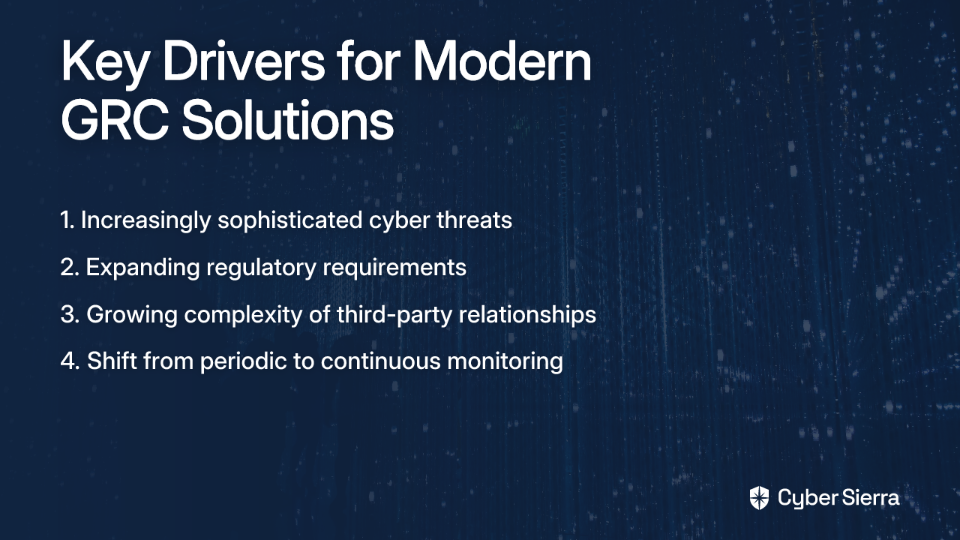
  1. Increasingly sophisticated cyber threats require enhanced data protection
  2. Expanding regulatory requirements across jurisdictions (GDPR, CCPA, industry standards like PCI DSS and HIPAA)
  3. Growing complexity of third-party business relationships introducing supply chain risks

Perhaps the most significant evolution has been the shift from periodic, point-in-time compliance to continuous monitoring. Continuous Control Monitoring (CCM) has emerged as a foundational concept—defined as "a technology-driven approach to consistently monitor compliance, risk management, and security controls."

This shift delivers substantial benefits:

  • Increased compliance efficiency through automated evidence gathering
  • Cost reduction by identifying control gaps early
  • Enhanced decision-making with real-time risk overview
  • Reduced breach risk through proactive vulnerability identification

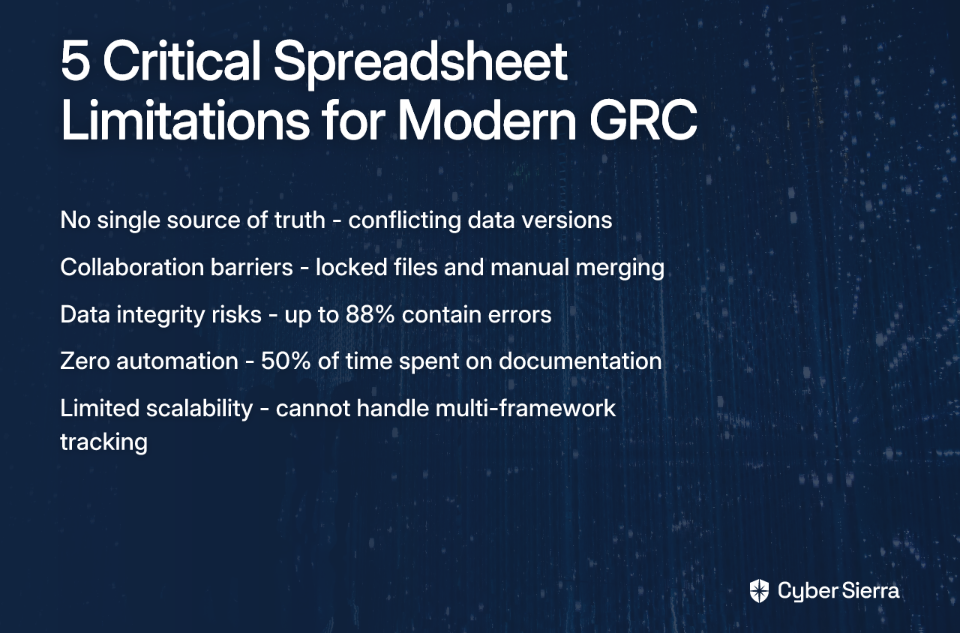
As compliance requirements multiply and cyber risks escalate, manual spreadsheet-based approaches simply can't keep pace. Modern enterprises need intelligent platforms that transform compliance from a periodic burden into a continuous, value-adding business function.
Key Capabilities of Top-Tier GRC Platforms in 2025

When evaluating GRC platforms for enterprise compliance, these are the non-negotiable capabilities to demand:

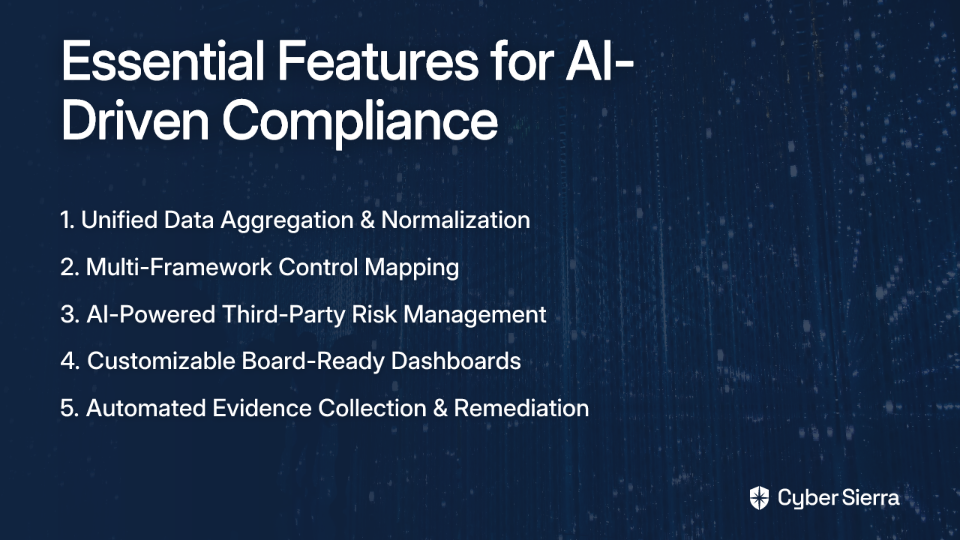
1. Automation & Continuous Control Monitoring

The days of "audit season dread" should be behind us. Look for platforms that connect directly to your tech stack—cloud providers, identity management systems, endpoint security—to automatically test controls and collect evidence.

According to Vanta, implementing effective CCM requires:

  • Identifying key processes and controls
  • Defining clear control objectives and performance benchmarks
  • Setting up automated tests that run at high frequency
  • Establishing monitoring systems with alerts and Key Risk Indicators (KRIs)

Cyber Sierra's Continuous Control Monitoring (CCM) module exemplifies this approach, creating a central controls repository with near real-time updates across frameworks like NIST, ISO 27001, and PCI DSS.

2. Integrated Third-Party Risk Management

Supply chain risk has become a primary attack vector. Leading platforms now include robust Third-Party Risk Management (TPRM) capabilities that go far beyond static questionnaires.

Key TPRM features identified by UpGuard include:

  • Automated questionnaire distribution and analysis
  • Continuous external scanning and security ratings
  • Complete workflows from detection through remediation tracking

Cyber Sierra's TPRM platform addresses this need by providing continuous vendor monitoring and automated assessments to identify supply chain risks before they become incidents.

3. Unified Framework & Policy Management

With enterprises often needing to comply with multiple regulatory frameworks simultaneously, a unified control library is essential. Look for platforms that map a single control to multiple frameworks—creating a "test once, comply many" approach that dramatically improves efficiency.

The platform should also serve as a central repository for policy management, including version control and attestation tracking.

4. Usability, Customization, and Integrations

Reddit users consistently highlight that "overly complex processes can frustrate users" and "dependence on developers for GRC tools creates bottlenecks." The most effective platforms now offer:

  • No-code/low-code workflow builders
  • Customizable dashboards tailored to different stakeholders
  • Robust APIs for integration with existing security tools
  • Intuitive user interfaces that encourage adoption

As one Reddit user wisely advised: "Make sure you really know what you want before buying any of them."

Top GRC Platforms for 2025

For Large, Complex Enterprises

MetricStream Recognized as a leader by both Gartner and Forrester, MetricStream offers an integrated approach to risk, compliance, audit, and cybersecurity. Its AI capabilities (AiSPIRE) and strong ESG management features set it apart. According to MetricStream's own analysis, the platform excels in providing enterprise-wide visibility and advanced analytics.

ServiceNow GRC Organizations already embedded in the ServiceNow ecosystem will find its GRC module particularly powerful. Its strengths include seamless integration of incident response into GRC workflows and no-code playbooks. This platform shines in environments where IT service management and security operations need to work in lockstep with compliance.

Archer A longtime player in the space, Archer is known for deep customization capabilities and an integrated risk management focus. However, be aware of potential challenges with complex setup requirements and a less intuitive UI, as noted by both MetricStream and Drata.

For Mid-Market & High-Growth Companies

Drata A leader in compliance automation, Drata excels at automated evidence collection across 20+ frameworks including SOC 2, ISO 27001, and HIPAA. According to Drata's analysis, the platform scales effectively from startup to enterprise, making it ideal for high-growth organizations.

LogicGate Praised for its flexibility and user-friendly drag-and-drop workflow builder, LogicGate offers advanced analytics for creating tailored risk management programs. Its intuitive interface addresses the pain point that "the effectiveness of GRC tools is often related to their usability and customization options."

AuditBoard Offering intuitive functionality specifically designed to streamline audit and compliance management, AuditBoard provides a strong collaborative workspace for sharing documents and managing processes. This directly addresses the challenge of "users often juggling multiple GRC platforms, leading to confusion and inefficiency."

Platforms with Specialized Focus

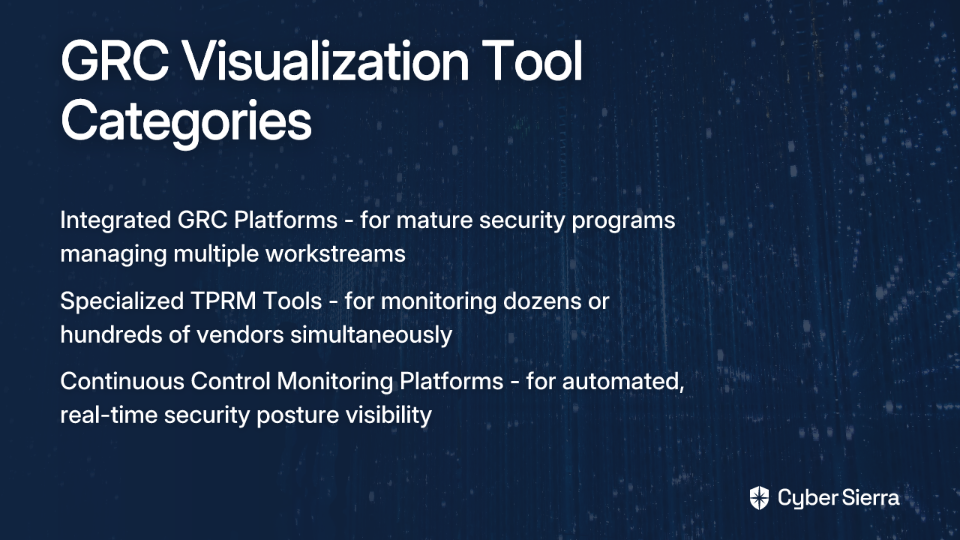
For organizations prioritizing vendor risk management, specialized TPRM platforms like UpGuard, SecurityScorecard, and BitSight provide deep insights into third-party security postures through external security ratings and continuous monitoring.

The Unified Security Approach

The most forward-thinking organizations are breaking down silos between GRC, security operations, and threat intelligence. This integrated approach recognizes that compliance status should be informed by real-time threats and control effectiveness.

Cyber Sierra exemplifies this next-generation approach with its comprehensive cybersecurity platform that combines:

This integrated approach directly addresses the need for a unified security posture view while managing risk effectively within budget constraints.

How to Choose the Right GRC Platform

When selecting a GRC platform, consider these key factors identified by Drata:

  1. Urgency: What's driving your GRC initiative? An upcoming audit, customer requirement, or strategic initiative?
  2. Compliance Program Maturity: Are you starting from scratch or optimizing an existing program?
  3. Internal Support & Resources: Do you have dedicated personnel for implementation?
  4. Integration Requirements: Which systems must your GRC platform connect with?
  5. Value Timeline: How quickly do you need to demonstrate ROI?

For successful implementation, AWS recommends:

  • Defining clear goals before selection
  • Assessing existing procedures to understand your starting point
  • Securing engagement from top management for necessary resources and support

Always request demos and consider pilot programs before making a final decision.

From Compliance Burden to Strategic Advantage

The GRC platform of 2025 is not a static database but a dynamic, automated engine for risk management. The shift toward continuous monitoring, integrated platforms, and data-driven decision-making transforms compliance from a costly burden into a strategic advantage.

Organizations ready to move beyond siloed tools and embrace a unified, proactive security posture should explore integrated platforms that align with their specific needs and maturity level. With the right solution, you can build trust with customers, partners, and regulators while protecting your organization from evolving threats.

The spreadsheet compliance era is over. The age of intelligent, continuous, integrated GRC has arrived.
Frequently Asked Questions

What is a GRC platform?

A GRC (Governance, Risk, and Compliance) platform is a centralized software solution that helps organizations align their IT operations with business goals, manage enterprise-wide risks, and comply with legal and regulatory requirements. These platforms move beyond simple checklists, offering a structured approach to integrate and manage these three critical business functions in a unified way.

Why is continuous control monitoring essential for modern GRC?

Continuous Control Monitoring (CCM) is essential because it transforms compliance from a periodic, point-in-time exercise into an automated, ongoing process. This technology-driven approach provides real-time visibility into whether security controls are working effectively, which helps organizations reduce breach risk, increase compliance efficiency, and make better-informed decisions based on current data rather than outdated audit reports.

What are the key features of a top-tier GRC platform in 2025?

A top-tier GRC platform in 2025 must include several key capabilities: automation and continuous control monitoring to automatically gather evidence, integrated third-party risk management (TPRM) to secure the supply chain, unified framework management to map controls across multiple regulations, and a user-friendly interface with robust integrations to ensure broad adoption and seamless operation.

How do I choose the right GRC platform for my organization?

To choose the right GRC platform, you should evaluate your organization's specific needs by considering several key factors: the urgency driving the initiative (like an upcoming audit), the maturity of your current compliance program, the internal resources available for implementation, and the essential integrations required with your existing tech stack. Always request demos and define clear goals before making a final selection.

How do GRC platforms help manage supply chain risk?

Modern GRC platforms help manage supply chain risk through integrated Third-Party Risk Management (TPRM) modules. These features automate the process of sending and analyzing vendor security questionnaires, provide continuous external security scanning of your suppliers, and offer complete workflows to track risks from detection through to remediation, securing your business from vulnerabilities within your supply chain.

blog-hero-background-image
Governance & Compliance

How to Build a Continuous Compliance Roadmap for 2026

backdrop
Table of Contents

Join thousands of professionals and get the latest insight on Compliance & Cybersecurity.


You're all too familiar with the scene: the panicked scramble two weeks before an audit. The frantic hunt for documentation. The discovery of security gaps that should have been addressed months ago. The growing mountain of technical debt that keeps you awake at night.

If you're nodding in recognition, you're not alone. As compliance requirements grow increasingly complex and cloud environments expand, the traditional "point-in-time" approach to compliance is breaking under its own weight.

The solution? Continuous compliance - a strategic shift from periodic, reactive audits to proactive, real-time, and automated monitoring that makes compliance an ongoing part of daily operations.

This article provides a clear, actionable 7-step roadmap to help your organization build a mature continuous compliance program by 2026. The urgency is real: non-compliance penalties cost organizations approximately 2.7 times more than maintaining compliance.

The Inevitable Shift: Why Continuous Compliance is No Longer Optional

The Driving Forces

Several factors are accelerating the move toward continuous compliance:

  • Regulatory Complexity: The web of regulations like GDPR, HIPAA, SOC 2, and ISO 27001 continues to grow more intricate.
  • Technological Acceleration: Rapid cloud adoption introduces new compliance challenges that manual processes simply can't handle.
  • Sophisticated Cyber Threats: Evolving threats demand a proactive security posture rather than reactive measures.

The Business Case & Benefits

Continuous compliance delivers tangible benefits that directly address common pain points:

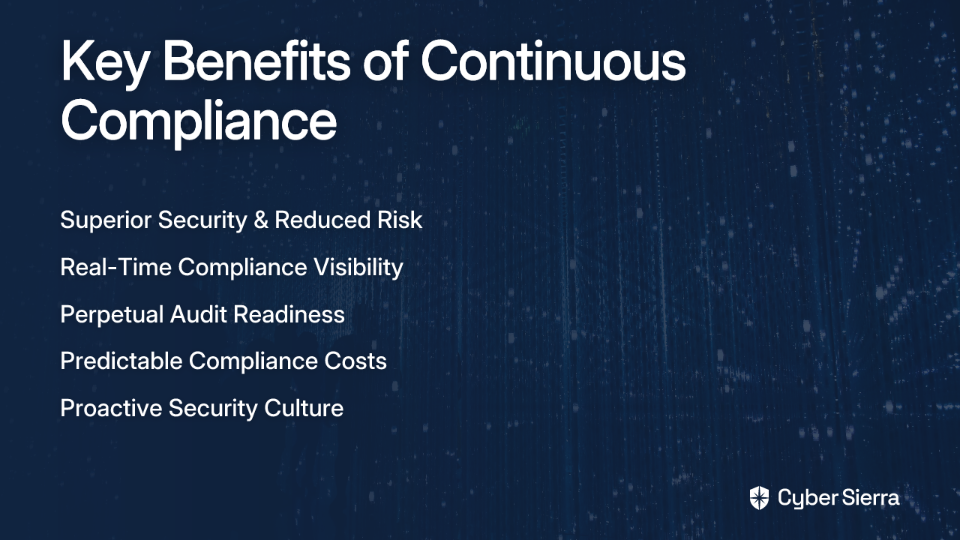
  • Superior Security & Reduced Risk: Move beyond checkbox compliance to active policy enforcement, addressing constant worries about exposed assets.
  • Real-Time Visibility: Gain an immediate understanding of your compliance status at any moment.
  • Perpetual Audit Readiness: Eliminate fire drills by integrating compliance into daily workflows, creating the simplification and ease in audit reporting that teams desperately want.
  • Predictable Costs: Address compliance issues as they arise, avoiding expensive emergency remediation and making resource planning more effective.
  • Proactive Culture: Shift your organization's mindset from reactive to proactive, establishing a strong information security culture.

Your 7-Step Roadmap to Continuous Compliance for 2026

Step 1: Foundational Assessment & Goal Setting

Establish Culture First: Before implementing any tool or process, cultivate an organization-wide commitment to information security. As Kelsercorp emphasizes, a strong security culture forms the foundation for all compliance efforts.

Perform a Compliance Assessment: Identify all applicable regulations (e.g., SOC 2, ISO 27001, HIPAA) and conduct a thorough gap analysis to "surface all the messed up security debt that's been accumulating," as one IT professional candidly put it in a recent forum discussion.

Define Clear Objectives: Involve stakeholders from legal, IT, and business units to define goals for your GRC automation initiative and build a solid business case that resonates with leadership.

Step 2: Document, Plan, and Prioritize

Create the Roadmap: Document the gaps from your assessment and develop a prioritized plan with clear timelines and owners. This becomes your blueprint for the next two years.

Develop Policies and Processes: Update internal policies to align with regulatory standards. Crucially, establish a "robust change management policy and procedure" as recommended by cybersecurity professionals. This ensures that every change post-audit is documented, maintaining continuous compliance rather than point-in-time adherence.

Document Workflows: Create standardized processes for continuous monitoring, incident response, and internal audits that will serve as the operational backbone of your program.

Step 3: Implement the Right Tools & Technologies

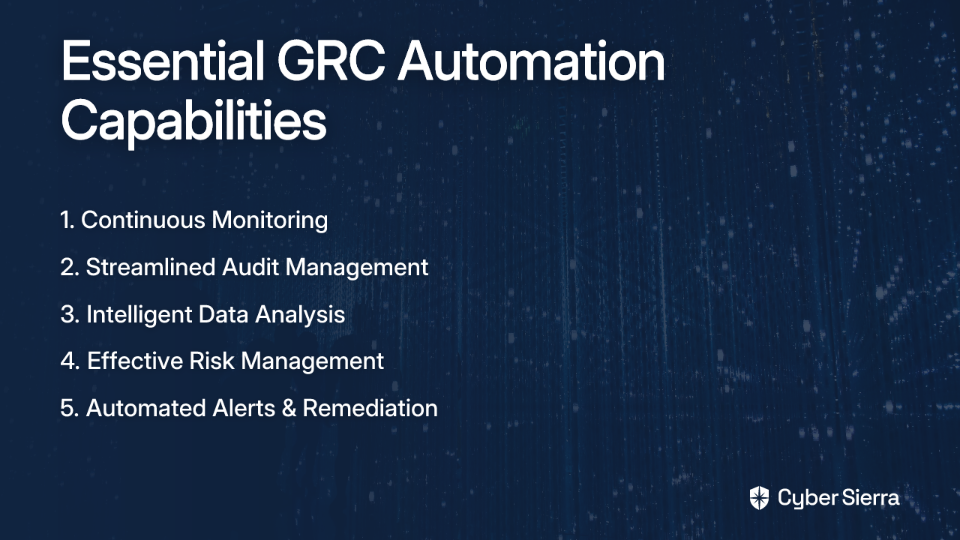
Key Selection Criteria: When choosing a compliance automation tool, look for these five essential capabilities:

  1. Continuous Monitoring: For real-time status updates
  2. Audit Management: To streamline evidence collection
  3. Data Analysis: To detect patterns and risks
  4. Effective Risk Management: To assess and prioritize risks
  5. Automated Alerts and Remediation: To notify stakeholders of violations

According to research from Zluri, these capabilities form the foundation of effective compliance automation.

Introduce GRC/CCM Platforms: This is where you centralize your efforts. Platforms like Cyber Sierra's Governance, Risk & Compliance (GRC) and Continuous Control Monitoring (CCM) modules automate data collection from your tech stack, build a central controls repository, and provide a single source of truth for your security posture across multiple frameworks, making you audit-ready at all times.

Step 4: Integrate and Automate GRC Processes

Configuration and Customization: Configure your chosen platform to fit your organization's specific needs, controls, and frameworks. Conduct pilot tests before a full rollout to ensure adoption.

Deep Integration: Ensure the technology integrates with your existing IT infrastructure, especially your cloud environments, to provide complete coverage of your digital assets.

Unlock Efficiency: Embrace the power of automation to transform compliance. As users have experienced, tasks that "took days now take minutes," freeing up your team for more strategic work rather than tedious documentation.

Step 5: Empower Your People: Training & Awareness

Address the Human Element: Technology alone isn't enough. Address the common pain of teams feeling unprepared by implementing a continuous training program that builds security awareness.

Conduct Regular Training: Ensure all employees understand their compliance responsibilities and stay current on the latest threats. Security is everyone's responsibility, not just the IT department's.

Fostering a security-conscious culture is a continuous effort. Solutions like Cyber Sierra's Employee Security Training help build this "human firewall" through interactive modules and simulated phishing campaigns that reinforce learning and measure your team's security quotient.

Step 6: Widen the Lens: Integrate Third-Party Risk Management (TPRM)

Why TPRM Matters: Your compliance boundary extends to your vendors. A data breach from a third party is still your problem. According to BlueVoyant, TPRM involves identifying, assessing, and controlling these supply chain risks that could impact your security posture.

Key TPRM Steps:

  1. Vendor Evaluation: Assess risks before onboarding new vendors
  2. Risk Tiering: Classify vendors by criticality to focus resources
  3. Continuous Monitoring: Move beyond point-in-time questionnaires to ongoing assessment of vendor security postures

Manually tracking hundreds of vendors is impossible. Modern Third-Party Risk Management (TPRM) platforms from providers like Cyber Sierra automate vendor assessments, provide 24/7 visibility into their security posture, and streamline the entire due diligence process.

Step 7: The Continuous Loop: Monitor, Improve, and Repeat

Establish a Feedback Loop: Use the data and reports from your GRC platform to evaluate the effectiveness of your compliance program and identify areas for improvement.

Conduct Regular Internal Audits: Proactively find and fix issues before external auditors do. This dramatically reduces audit stress and potential findings.

Continuously Improve: Compliance is not a "one-and-done" project. As Kelsercorp advises, you must "Repeat Steps 2-6" to adapt to new regulations, technologies, and threats. This creates a cycle of continuous improvement that addresses the "recurring compliance issues" that frustrate so many teams.

Navigating the Roadblocks: Overcoming Common Hurdles

Challenge 1: Lack of Management Support

This is consistently cited as a top frustration in user research. The solution? Build a strong business case. Use data on the high cost of non-compliance and the operational efficiencies gained through automation.

Highlight the growth of the GRC market—valued at USD 32.2 billion in 2021 with a projected 14.5% CAGR through 2030—to show it's a strategic imperative, not just a cost center.

Challenge 2: Organizational Silos

GRC is a team sport, yet many organizations struggle with departmental silos. The solution? Emphasize that effective GRC requires cross-departmental collaboration between IT, security, legal, and procurement. Your GRC platform should serve as the central hub for this collaboration, breaking down information barriers.

Challenge 3: Skepticism About New Tools

Security professionals are understandably wary of tools that promise more than they deliver. Address this pain point by starting with a pilot program or a comprehensive demo to prove the tool's value and build trust. Let the results speak for themselves.

Conclusion: From Compliance Chaos to Continuous Confidence

Building a continuous compliance roadmap for 2026 is more than a technical project—it's a strategic journey toward business resilience. By following the seven-step roadmap outlined here, you can transform compliance from a source of stress and risk into a competitive advantage that enables trust and growth.

Getting started on your 2026 roadmap today will save you from the fire drills of tomorrow. With the right strategy and a unified platform, achieving continuous compliance is within reach.

Platforms like Cyber Sierra are designed to simplify this journey by integrating GRC, Continuous Control Monitoring, TPRM, and Threat Intelligence into a single, automated system.

The result? A resilient, audit-ready organization where compliance becomes a business enabler rather than a burden.

Frequently Asked Questions

What is continuous compliance?

Continuous compliance is a proactive approach where organizations continuously monitor, assess, and enforce compliance with regulatory and security standards in real-time. Instead of treating compliance as a periodic event (like an annual audit), it integrates automated checks and controls directly into daily operations, ensuring the organization remains audit-ready at all times.

Why is continuous compliance important?

Continuous compliance is important because it significantly reduces security risks, lowers the high cost of non-compliance, and eliminates the stress of last-minute audit preparation. By providing real-time visibility into your security posture, it allows you to address issues as they arise, maintain perpetual audit readiness, and foster a proactive security culture. This approach turns compliance from a reactive burden into a strategic business advantage.

What are the first steps to starting a continuous compliance program?

The first steps to starting a continuous compliance program are to perform a foundational assessment and set clear goals. This involves identifying all applicable regulations (like SOC 2, HIPAA, or ISO 27001), conducting a gap analysis to understand your current security posture, and defining clear objectives with key stakeholders from legal, IT, and business departments.

How is continuous compliance different from a traditional audit?

Continuous compliance is an ongoing, proactive process, while a traditional audit is a reactive, "point-in-time" assessment. Traditional audits provide a snapshot of your compliance status on a specific date, often leading to frantic preparation and leaving security gaps unaddressed between audits. Continuous compliance embeds monitoring and policy enforcement into daily workflows, providing constant visibility and ensuring you are always prepared for an audit.

What kind of tools do I need for continuous compliance?

To effectively implement continuous compliance, you need specialized tools like Governance, Risk & Compliance (GRC) and Continuous Control Monitoring (CCM) platforms. These tools automate evidence collection, centralize control management, and provide real-time alerts. Key features to look for include continuous monitoring, audit management, risk assessment, and automated remediation capabilities.

How does continuous compliance help with third-party vendor risk?

Continuous compliance extends to your supply chain by integrating Third-Party Risk Management (TPRM). Instead of relying on static, point-in-time vendor questionnaires, a continuous approach involves ongoing monitoring of your vendors' security postures. This allows you to identify and mitigate risks from third parties in real-time, protecting your organization from breaches originating within your supply chain.

blog-hero-background-image
Governance & Compliance

How to Prove Continuous Compliance

backdrop
Table of Contents

Join thousands of professionals and get the latest insight on Compliance & Cybersecurity.


Are you tired of the last-minute scramble before an audit? Frustrated by recurring compliance issues and growing technical debt that never seems to get management's attention? If your security team is overwhelmed by the complexity of maintaining compliance in cloud-centric environments, you're not alone.

The traditional approach to compliance—periodic, point-in-time audits—is increasingly inadequate in today's dynamic threat landscape. What you need is continuous compliance: the ongoing process of monitoring your company's security posture to ensure it meets regulatory requirements and industry best practices without the stress of periodic audits.

Proving continuous compliance requires a strategic shift towards automation, real-time monitoring, and a holistic approach to risk management. When implemented correctly, this approach not only strengthens security but makes your organization perpetually audit-ready.

The Problem with "Point-in-Time" Compliance

Traditional compliance models rely on annual or quarterly audits—snapshots that quickly become outdated in today's rapidly evolving digital environments. This approach creates several critical challenges:

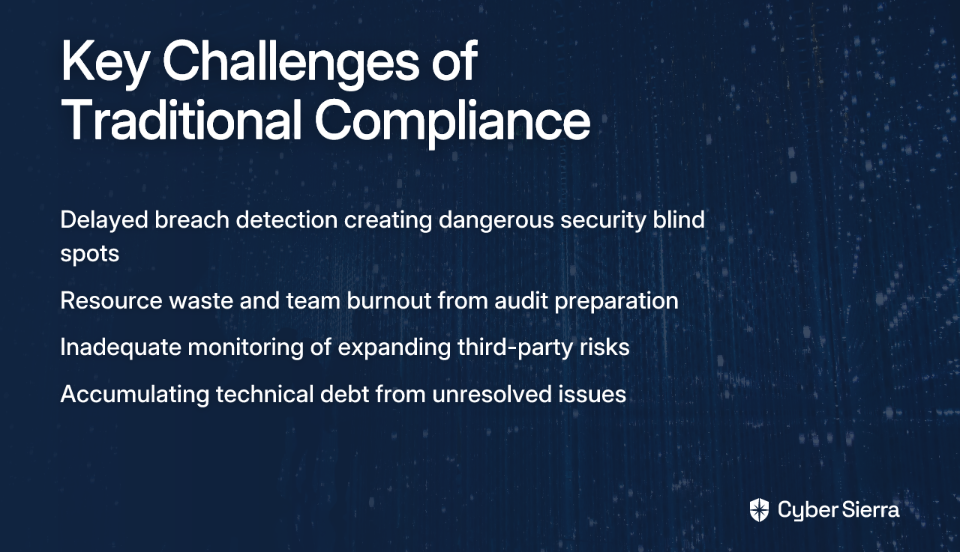
Delayed Breach Detection

The gap between audits creates blind spots where vulnerabilities can remain undetected for months. According to the Cloud Security Alliance, these delays significantly increase the potential damage from security incidents.

Resource Waste & Audit Fatigue

The mad dash to gather evidence before an audit consumes enormous resources and creates unnecessary stress. Teams often drop other critical work to prepare documentation, only to repeat the same exhausting process months later. As one compliance manager noted in a recent discussion, "The stress and necessity of preparation before audits to avoid last-minute chaos is overwhelming."

Expanding Attack Surface & Third-Party Risk

Modern organizations rely on numerous third-party vendors, each representing potential security risks. According to Hyperproof, 46% of organizations experience third-party data breaches impacting their operations, and a staggering 62% of system intrusion incidents derive from partnerships. Annual assessments simply can't keep pace with these evolving risks.

Growing Technical Debt

Unaddressed compliance issues accumulate over time, creating technical debt that becomes increasingly difficult to resolve. As one security professional lamented, "It's all too common for security teams with oversight-only roles to keep raising the exact same issues month after month, and the tech debt keeps climbing as new issues are found."

The Core Pillars of Proving Continuous Compliance

Proving compliance isn't about implementing a single tool but developing a comprehensive strategy built on three fundamental pillars:

Pillar 1: Continuous Controls Monitoring (CCM)

Continuous Controls Monitoring is a technology-driven approach that automates the ongoing tracking of compliance, risk management, and security controls. A control is any safeguard implemented to detect, prevent, and mitigate vulnerabilities.

CCM establishes a central repository of controls with near real-time updates, providing consistent visibility across your organization. According to the Cloud Security Alliance, the benefits are substantial:

  • Increased Efficiency: Dramatically reduces manual evidence gathering
  • Cost Reduction: Cuts remediation costs and risk of penalties
  • Better Decision-Making: Provides data-backed overviews of risks
  • Reduced Risk of Breaches: Proactively identifies vulnerabilities

Pillar 2: Integrated Risk Management (Internal & Third-Party)

Comprehensive risk management must address both internal systems and third-party relationships. This includes:

  • Vulnerability Management: Identifying and remediating security weaknesses
  • Incident Management: Responding to and documenting security events
  • Data Management: Ensuring proper handling of sensitive information

Particularly critical is Third-Party Risk Management (TPRM), the process of analyzing and controlling risks associated with outsourcing and service providers. Hyperproof reports that 60% of firms anticipate unresolved audit findings related to third-party risk due to inadequate resources. Without a formal framework for assessing vendor security, organizations remain vulnerable regardless of their internal controls.

Pillar 3: Automated Governance and Documentation

The final pillar focuses on governance—the policies, procedures, and documentation that formalize your compliance efforts:

  • Policy Management: Regularly updating internal rules and external regulations
  • Change Management: As one security professional recommended, "A robust change management policy and procedure is one of the best tools you can implement" to document all changes post-audit
  • Centralized Documentation: Maintaining clear, accessible records of all compliance activities to be perpetually audit-ready

When these three pillars work in concert, they create a continuous compliance system that transforms security from a periodic checkbox exercise into an ongoing, proactive function.

A Practical 4-Step Guide to Implementing and Proving Continuous Compliance

Step 1: Define Your Compliance Universe

Begin by understanding the regulatory landscape that applies to your business:

  1. Understand Compliance Standards: Learn and stay updated on relevant laws and regulations for your industry (e.g., SOC 2, ISO 27001, HIPAA, GDPR, PCI DSS)
  2. Identify Critical Assets: Determine what data, systems, and processes need protection and how to safeguard them
  3. Identify Key Processes and Controls: Use historical audit data to focus on critical processes. Prioritize controls based on risk scores, complexity, and data availability

Step 2: Automate Control Testing and Monitoring

Automation is essential for continuous monitoring:

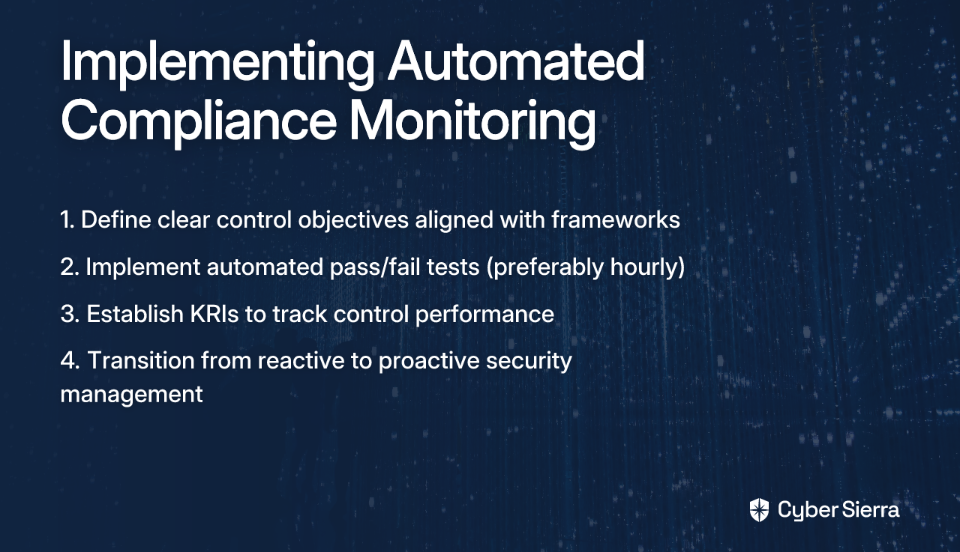
  1. Define Control Objectives: Align control objectives with business goals and specific compliance frameworks
  2. Set Up Automated Tests: Implement pass/fail tests for control objectives. The recommended frequency should be high, "preferably hourly," to provide real-time visibility
  3. Establish Monitoring and Reporting: Use Key Risk Indicators (KRIs) to track control performance and assess weaknesses, transitioning your team from reactive to proactive security management

Step 3: Integrate Third-Party Risk Management (TPRM)

Extend your compliance efforts to include vendors and partners:

  1. Data Mapping: Maintain an updated map of all consumer data handled by vendors
  2. Defined Risk Assessment Framework: Set clear policies for assessing vendors before engagement
  3. Structured Onboarding/Offboarding: Ensure vendors understand security requirements from day one
  4. Ongoing Due Diligence: Regularly assess vendor performance and security compliance, moving beyond a one-time check

Step 4: Establish Continuous Reporting and Documentation

Create systems for ongoing documentation and reporting:

  1. Enable Continuous Insights: Use automation to find vulnerabilities and generate reports on demand, addressing the desire for "simplification and ease in audit reporting"
  2. Maintain Documentation: Keep clear, automated records of compliance efforts and outcomes—this is the "proof" in "proving continuous compliance"

As one security professional noted, with the right automation tools in place, "What took days now takes minutes."

The Role of Automation Platforms in Simplifying Compliance

Given the complexity of continuous compliance, automation platforms have become essential. According to Zluri, the key factors to consider when choosing a compliance automation tool include:

  1. Continuous monitoring capabilities
  2. Comprehensive audit management
  3. Advanced data analysis
  4. Effective risk management
  5. Automated alerts and remediation

Cyber Sierra offers a comprehensive platform that addresses these needs through several integrated modules:

  • Continuous Control Monitoring (CCM): Builds a central controls repository with near real-time updates, automates control testing, and helps manage multiple compliance frameworks (NIST, ISO 27001, PCI DSS, etc.)
  • Governance, Risk & Compliance (GRC): Automates data collection, risk assessments, and reporting for various frameworks, making enterprises audit-ready faster and reducing compliance fatigue
  • Third-Party Risk Management (TPRM): Provides near real-time visibility into vendor security compliance, moving beyond static questionnaires

Conclusion

Proving continuous compliance is not about passing an annual audit; it's about embedding security and compliance into the daily operations of your business. The benefits are substantial: real-time compliance monitoring, enhanced security, efficient audit preparation, and improved reputation with customers and partners.

By implementing the four-step approach outlined in this article and leveraging automation platforms like Cyber Sierra, your organization can transform compliance from a stressful, reactive exercise into a proactive, strategic advantage that strengthens your security posture and builds trust with stakeholders.

The future of compliance is automated, integrated, and continuous. Organizations that embrace this approach will not only stay secure but gain a competitive edge in an increasingly regulated digital landscape.

Frequently Asked Questions

What is continuous compliance?

Continuous compliance is the ongoing, real-time process of monitoring a company's systems and controls to ensure they consistently meet regulatory and security standards. Unlike traditional audits that provide a snapshot in time, this approach embeds compliance into daily operations. It uses automation and continuous monitoring to proactively identify and remediate vulnerabilities, making an organization perpetually audit-ready and more secure against evolving threats.

Why is traditional "point-in-time" compliance insufficient today?

Traditional point-in-time compliance is insufficient because it creates dangerous blind spots between audits, leaving organizations vulnerable to undetected security breaches. This outdated model leads to delayed breach detection, audit fatigue from the last-minute scramble to gather evidence, and an inability to manage the growing risks from third-party vendors. It also allows technical debt from unaddressed compliance issues to accumulate, making the organization less secure over time.

What are the main components of a continuous compliance strategy?

A successful continuous compliance strategy is built on three core pillars: Continuous Controls Monitoring (CCM), Integrated Risk Management, and Automated Governance. CCM involves using technology to automate the tracking of security controls. Integrated Risk Management addresses both internal vulnerabilities and third-party vendor risks (TPRM). Finally, Automated Governance ensures that policies, procedures, and documentation are always up-to-date and accessible.

How can a company start implementing continuous compliance?

A company can start implementing continuous compliance by first defining its specific regulatory requirements and identifying all critical assets and controls that need protection. After mapping this "compliance universe," the next steps involve automating the testing of these controls, integrating third-party risk management into the process, and establishing systems for continuous reporting and documentation. This structured approach moves the organization from a reactive to a proactive security posture.

What role does automation play in continuous compliance?

Automation is essential to continuous compliance as it replaces manual, error-prone tasks with efficient, real-time monitoring and evidence gathering. Compliance automation platforms can continuously test security controls, manage vendor risks, centralize documentation, and generate on-demand reports. This not only dramatically reduces the time and resources spent preparing for audits but also provides immediate insights into potential vulnerabilities, enabling teams to remediate issues before they become major problems.

blog-hero-background-image
Governance & Compliance

Top Board Reporting Dashboards for Risk & Compliance Leaders in 2025

backdrop
Table of Contents

Join thousands of professionals and get the latest insight on Compliance & Cybersecurity.


In boardrooms across industries, risk and compliance leaders face a common frustration: creating security dashboards that genuinely inform decision-making rather than simply looking pretty. As one security professional bluntly puts it, "Management loves flashy colors. But I'll be damned if they know what any of it means."

This disconnect between appealing visuals and actionable insights isn't just annoying—it's dangerous. By 2025, with cyber threats more sophisticated and regulations more stringent than ever, boards need more than just "pretty pictures." They need actionable risk intelligence that drives strategic decisions.

Why Most Board-Level Dashboards Fail: The Vanity Metrics Trap

Many dashboards fail because they prioritize appearance over substance. They're filled with what security professionals call "vanity metrics"—impressive-looking numbers that don't actually drive decisions or reduce risk.

For example, consider the classic "total vulnerability count" metric. As one Reddit user points out: "What happens when someone looks the day after Patch Tuesday and the number spikes? Does that mean security is worse? Of course not."

The truth is stark: "Dashboards are great to throw on a big screen for visitors, but I'm yet to see one prevent an actual attack in any meaningful way," notes another security professional. This sentiment reflects the widespread frustration with dashboards that impress but don't protect.

Effective dashboards must answer the critical question: "What action can each metric help produce?" Every data point should spark a specific decision or intervention; otherwise, as one expert puts it, "showing numbers just because does a disservice to your effort."

Anatomy of an Effective Board Reporting Dashboard

A truly valuable risk and compliance dashboard goes beyond aesthetics to deliver actionable intelligence. According to MetricStream, effective dashboards transform "compliance data into actionable intelligence for better risk management."

Essential features that every board-level dashboard should include:

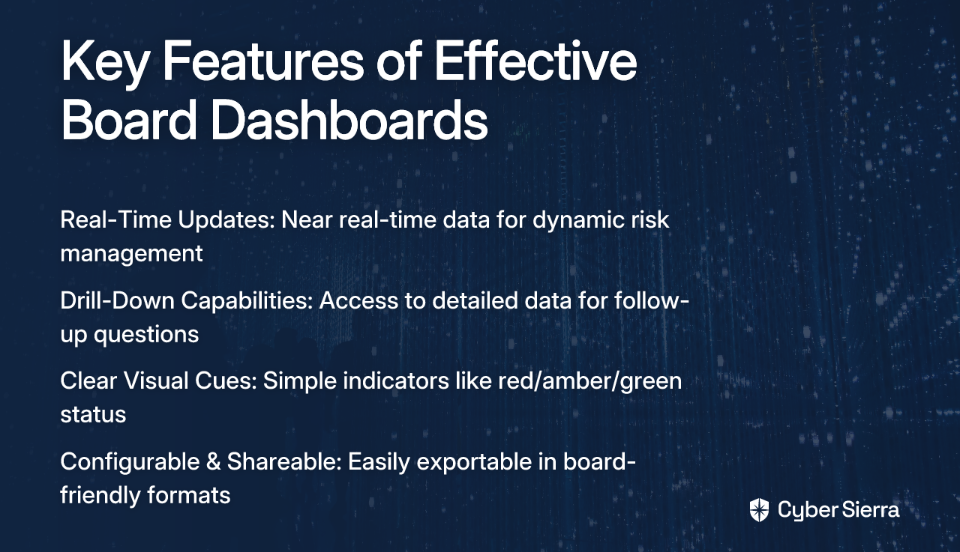
  • Real-Time Updates: For regulated industries, monthly or quarterly updates are insufficient. Near real-time data is essential for dynamic risk management.
  • Drill-Down Capabilities: The board needs high-level summaries, but your team must be able to instantly access detailed data to answer follow-up questions.
  • Clear Visual Cues: Simple indicators like red/amber/green status help "quickly identify compliance issues" without overwhelming the board with technical details.
  • Configurable & Shareable: Dashboards must be easily exportable in formats suitable for board packs and presentations.

Now, let's examine the four essential dashboards every risk and compliance leader should include in their 2025 board pack.

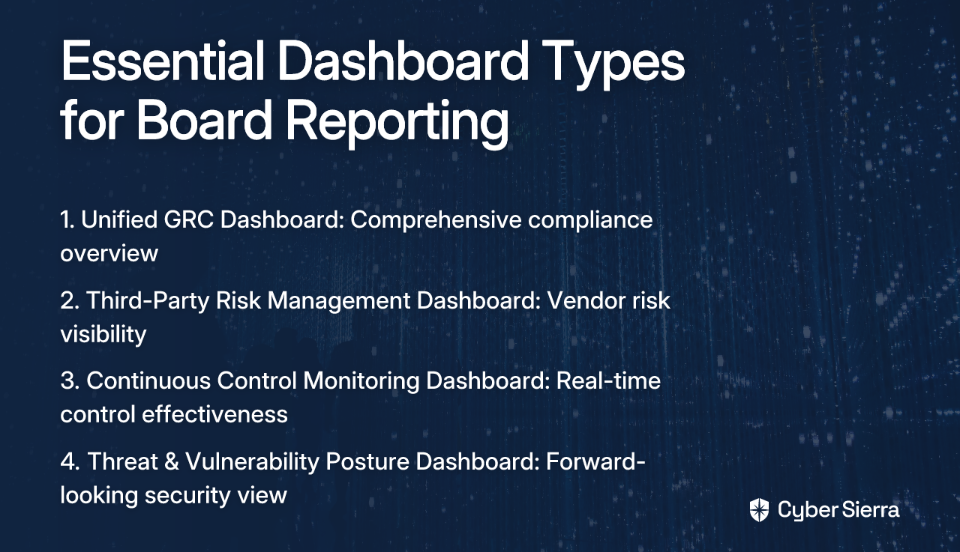
The 4 Essential Dashboards for Your 2025 Board Pack

1. The Unified Governance, Risk, and Compliance (GRC) Dashboard

Purpose: Provides a single-pane-of-glass view of your organization's compliance with key regulations and internal policies.

Key Metrics to Include:

  • Overall Compliance Posture: A high-level score or red/amber/green status that immediately communicates your organization's compliance health.
  • Compliance Level by Regulator/Framework: Visual breakdown showing adherence across different standards (GDPR, HIPAA, SOC 2, ISO 27001) to identify specific areas of non-compliance.
  • Policy & Training Compliance: Employee policy acknowledgment and security training completion rates. As one security professional notes, "Training compliance and awareness is probably the most effective [metric] honestly."
  • Open Issues & Violations: Track outstanding compliance issues with clear ownership and remediation timelines.

2. The Third-Party Risk Management (TPRM) Dashboard

Purpose: To identify, assess, and monitor risks posed by vendors and partners. This is increasingly critical as "35% of directors are worried about third-party data breaches," according to research from PwC.

Key Metrics to Include:

  • Vendor Risk Heatmap: Visually prioritize vendors based on criticality and risk exposure.
  • Average Risk Rating by Vendor Tier: Strategic view of risk across different vendor categories.
  • Vendor Assessment Status: Track the progress of vendor onboarding and periodic reviews against required timelines.
  • Fourth-Party Risk Exposure: Highlight critical subcontractors or dependencies within your supply chain.
3. The Continuous Control Monitoring (CCM) & Audit Readiness Dashboard

Purpose: To shift from manual, point-in-time audit evidence collection to automated, continuous validation of security controls.

Key Metrics to Include:

  • Control Operating Effectiveness: Real-time status (effective, ineffective, needs review) of critical security controls.
  • Control Failures & Exceptions: Immediate alerts on control anomalies or failures.
  • Audit Finding Remediation: Track the status of corrective actions from internal and external audits.
  • Evidence Collection Automation Rate: Measure the percentage of compliance evidence gathered automatically versus manually, demonstrating efficiency gains.

4. The Proactive Threat & Vulnerability Posture Dashboard

Purpose: To provide a forward-looking view of the organization's attack surface and vulnerability management effectiveness.

Key Metrics to Include:

  • Top 10 Risks (Inherent vs. Residual): Show the board where the biggest risks lie and how effective your mitigating controls are.
  • Mean Time to Remediate (MTTR) by Criticality: Measure the speed of patching for vulnerabilities by severity level.
  • Vulnerability Age Distribution: Chart showing how many critical vulnerabilities are over 30, 60, or 90 days old.
  • Overall Security Scorecard: A consolidated score that provides a holistic view of your organization's attack surface and security posture.

From Data to Decisions: How to Implement Actionable Dashboards

Creating truly effective dashboards requires more than technical know-how—it demands strategic alignment with business objectives. Here's how to build dashboards that drive decisions, not just discussions:

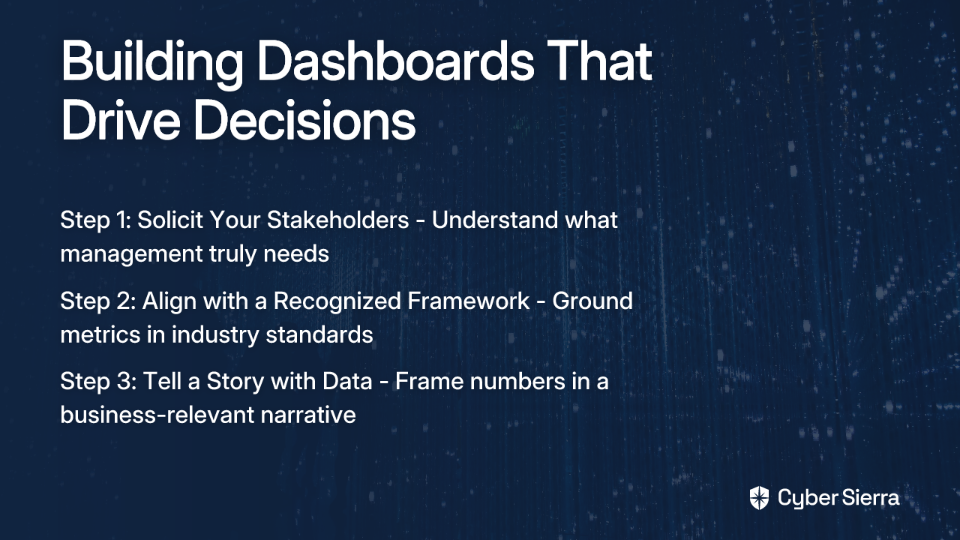
Step 1: Solicit Your Stakeholders Before building anything, follow this key advice from the cybersecurity community: "Go solicit your stakeholders (management) for what they need." Ask board members what business risks keep them up at night—then design dashboards that address those specific concerns.

Step 2: Align with a Recognized Framework Ground your metrics in industry standards like NIST, ISO 27001, or CIS. This provides credibility and ensures you're measuring what matters from a compliance perspective.

Step 3: Tell a Story with Data Don't just present numbers—frame them in a narrative that explains what the data means for business objectives and risk appetite. Your dashboard should help educate the board while providing actionable insights.

The Future is Integrated: Why Spreadsheets and Siloed Tools Fall Short

Many organizations, especially smaller ones, resort to spreadsheets for GRC tracking. As one professional notes: "You can build risk registers, checklists and process trackers in your spreadsheet of choice." But this approach creates significant problems:

  • Creates data silos between departments
  • Relies on manual updates that are error-prone
  • Offers zero real-time visibility
  • Provides no automated alerting capabilities

An integrated platform breaks down these silos, providing a single source of truth where data flows into cohesive, interconnected dashboards.

This is where solutions like Cyber Sierra become valuable. As an AI-enabled cybersecurity platform, it unifies the various components needed for comprehensive board reporting:

  • The GRC module automates data collection and reporting for frameworks like SOC 2 and ISO 27001, populating the GRC dashboard automatically.
  • The TPRM module offers continuous vendor monitoring beyond static questionnaires, providing live data for the third-party risk dashboard.
  • The Continuous Control Monitoring (CCM) module maintains a central controls repository with near real-time updates, making audit readiness a continuous state rather than a frantic project.
  • The Threat Intelligence module performs ongoing vulnerability scanning to power a dynamic view of your attack surface.

Conclusion: Empowering the Board with True Risk Insight

The era of static, "pretty picture" dashboards is over. In 2025, effective leadership demands dynamic, actionable, and integrated risk intelligence. The goal is to move from merely reporting on the past to actively shaping your organization's future resilience.

By focusing on actionable KPIs, leveraging automation, and adopting a unified platform approach, risk and compliance leaders can transform their board reporting from a tactical burden into their most powerful strategic tool.

Remember what one security professional wisely observed: "Risk reduction velocity is what actually matters. Most metrics are vanity numbers if they don't translate to fewer exploitable attack paths." The dashboards outlined in this guide are designed to deliver exactly that: measurable risk reduction that the board can understand and act upon.

Frequently Asked Questions (FAQ)

What is the main problem with most security dashboards?

The main problem is that they focus on "vanity metrics"—numbers that look impressive but don't provide actionable insights to reduce risk. For example, a raw count of vulnerabilities can be misleading without context. Effective dashboards shift the focus to actionable metrics that help leaders make specific decisions to improve security posture.

What are the essential components of an effective board-level dashboard?

An effective board-level dashboard provides a high-level, real-time view of risk, includes clear visual cues like color-coding (red/amber/green), and allows users to drill down for more detail when needed. It should also be configurable and easy to share in formats suitable for board presentations.

How can I make my security metrics understandable to a non-technical board?

To make security metrics understandable, frame them as business risks and tell a story with the data. Instead of just presenting numbers, explain what they mean for the company's risk appetite and strategic goals. Aligning your metrics with a recognized framework like NIST or ISO 27001 also adds credibility and context that a board can appreciate.

Why is a unified GRC platform better than using spreadsheets for risk management?

A unified GRC platform is better than spreadsheets because it provides a single source of truth, automates data collection, offers real-time visibility, and eliminates error-prone manual updates. Unlike spreadsheets, which create data silos, an integrated platform connects different risk areas to provide a cohesive, accurate, and always-current view of your compliance and security posture.

What are the four key dashboards every board needs to see in 2025?

The four essential dashboards for 2025 provide a comprehensive view of risk and cover: 1) Unified Governance, Risk, and Compliance (GRC) for overall compliance health, 2) Third-Party Risk Management (TPRM) to monitor vendor risk, 3) Continuous Control Monitoring (CCM) for automated control validation, and 4) Proactive Threat & Vulnerability Posture to manage the attack surface.

How do I get started with building actionable security dashboards?

The first and most critical step is to solicit your stakeholders, particularly board members and management, to understand what business risks they are most concerned about. Once you know their priorities, you can design dashboards that directly address those concerns, ensuring the information you present is relevant and drives strategic decisions.

Ready to build board reports that drive decisions, not just discussions? Schedule a demo with Cyber Sierra to see how an integrated platform can provide a single source of truth for your risk and compliance program.

blog-hero-background-image
Governance & Compliance

Top AI-Powered GRC Trends to Watch in 2026

backdrop
Table of Contents

Join thousands of professionals and get the latest insight on Compliance & Cybersecurity.


You've heard the whispers in conference rooms and seen the debates in professional forums: "Will AI take my job in GRC?" The reality is more nuanced than the headlines suggest. As one cybersecurity professional aptly put it, "AI won't replace GRC workers. GRC workers using AI will replace GRC workers who don't."

By 2026, artificial intelligence won't just be an add-on feature to governance, risk, and compliance tools—it will be their beating heart. This fundamental shift reflects a broader trend of rapid AI adoption, with 72% of companies reporting its use by early 2024. It comes at a critical time as organizations face mounting pressure from complex regulations, expanding digital ecosystems, and increasingly sophisticated threats.

But this evolution doesn't spell the end for GRC professionals. Rather, it marks the beginning of a powerful partnership where AI handles the scale and speed, while humans provide the judgment, context, and accountability that machines simply cannot replicate.

Let's explore the top AI-powered GRC trends that will define the landscape by 2026, and how forward-thinking organizations are already preparing for this transformation.

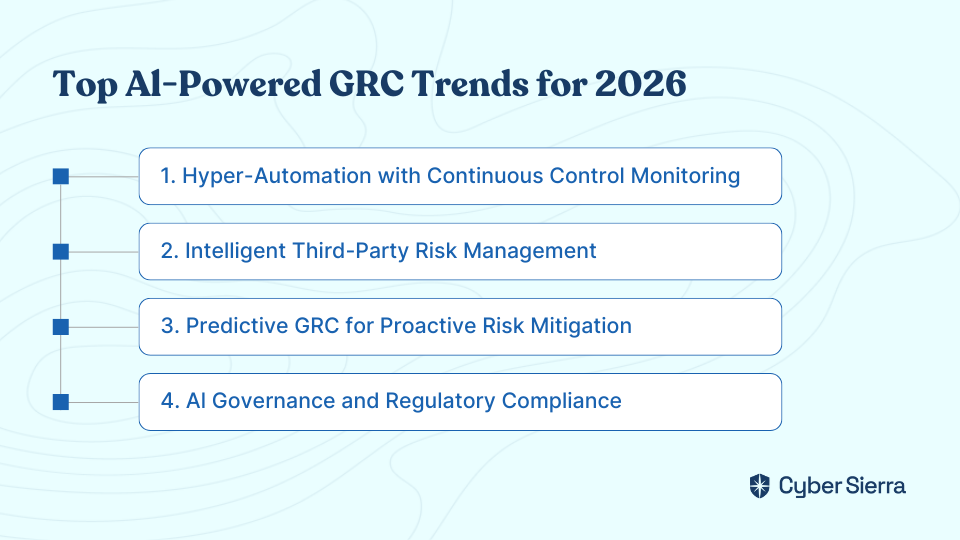
Trend 1: The Dawn of Hyper-Automation with Continuous Control Monitoring (CCM)

Traditional GRC approaches rely on point-in-time snapshots—periodic audits and assessments that create significant visibility gaps where risks can emerge undetected. This "check the box" approach is not only ineffective against modern threats but also creates the audit fatigue that plagues compliance teams.

By 2026, AI-powered Continuous Control Monitoring (CCM) will have transformed this landscape entirely.

The Evolution of Control Monitoring

CCM represents the shift from periodic checks to ongoing visibility into security controls, allowing teams to proactively fix gaps rather than reactively address failures. AI supercharges this approach by:

  • Automating Control Testing: AI algorithms can continuously monitor controls, detect exceptions, and flag potential compliance issues in real-time without human intervention.
  • Providing Predictive Analytics: By analyzing historical control performance data, AI can forecast future compliance risks, helping teams prioritize their efforts on the most critical areas.
  • Improving Accuracy: Machine learning models reduce false positives by learning the normal operational baseline and adapting to changing conditions.
  • Enabling Dynamic Regulatory Adaptation: AI tools can interpret new regulatory updates and automatically adjust monitoring parameters to ensure continuous compliance.

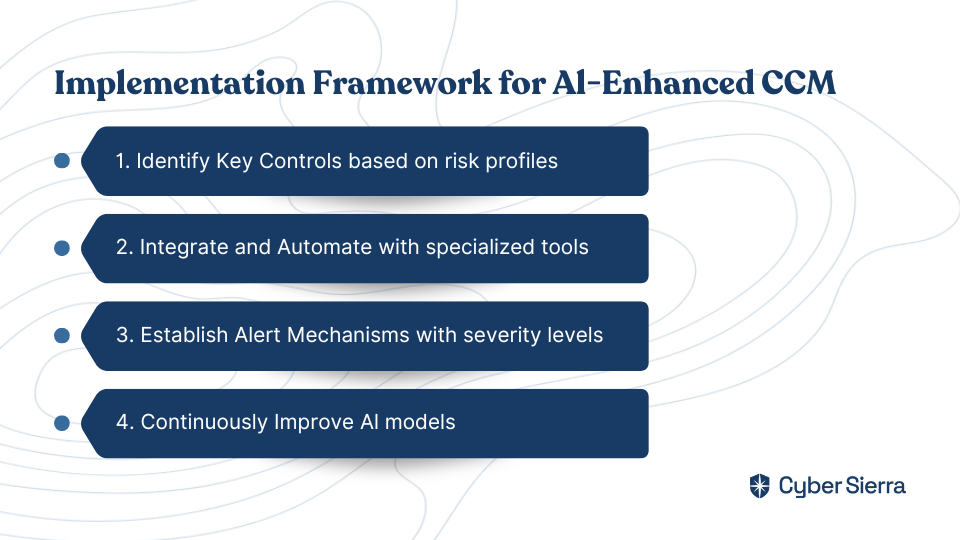
Implementation Framework for AI-Enhanced CCM

For organizations looking to implement this trend:

  1. Identify Key Controls: Focus on critical controls based on risk profiles and regulatory requirements (e.g., access controls for GDPR, payment processing for PCI DSS).
  2. Integrate and Automate: Leverage specialized tools to build a central controls repository and develop automated tests that run continuously.
  3. Establish Alert Mechanisms: Create a structured response plan for control failures with defined alert severity levels to ensure timely remediation.
  4. Continuously Improve: Regularly refine AI models based on feedback and emerging threats to maintain their effectiveness.

Platforms like Cyber Sierra are already pioneering this approach with their Continuous Control Monitoring module that automates data collection and control testing across frameworks like NIST, ISO 27001, and PCI DSS, providing a single source of truth for compliance teams.

Trend 2: Intelligent Third-Party Risk Management (TPRM) Beyond the Questionnaire

The modern enterprise isn't an island—it's an interconnected ecosystem of vendors, suppliers, and partners. This complexity dramatically increases operational and cybersecurity risks, with cyberattack losses having more than doubled since the pandemic.

GRC professionals know the pain all too well: "GRC is 80% getting the vendor to do the required tasks and 20% actual assessment." This manual follow-up is inefficient, error-prone, and leaves organizations vulnerable to risks that emerge between assessments.

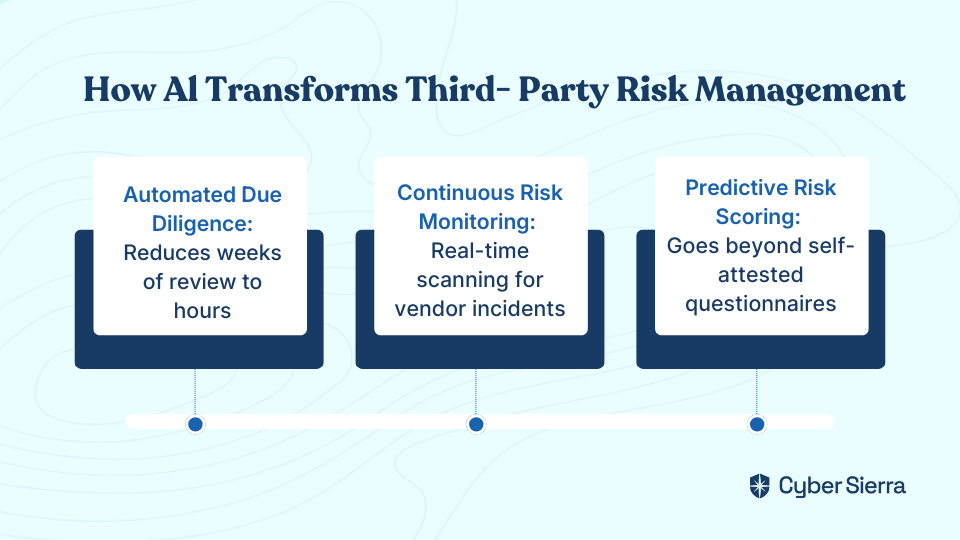
AI's Transformation of TPRM

By 2026, AI will have transformed TPRM from static, point-in-time questionnaires to dynamic, continuous monitoring. According to the 2025 EY Global Third-Party Risk Management Survey, 57% of organizations are centralizing TPRM to gain a holistic view of risk. AI accelerates this transition through:

  • Automated Due Diligence: Rapidly analyzing vendor documents (SOC 2 reports, security policies) to extract key information and flag risks, reducing weeks of manual review to hours.
  • Continuous Risk Monitoring: Scanning news, financial data, dark web mentions, and security ratings in real-time to provide predictive warnings of potential vendor incidents.
  • Predictive Risk Scoring: Using predictive analytics to score vendors based on a wide range of data points, going far beyond self-attested answers to identify genuine risks.

This approach allows organizations to focus resources on genuine risks rather than chasing paperwork. Cyber Sierra's TPRM platform embodies this trend by simplifying vendor risk management through automation and providing near real-time visibility into vendor security posture.

Trend 3: Predictive GRC - From Reactive Reporting to Proactive Risk Mitigation

Traditional GRC is reactive—it reports on what has already happened. By 2026, AI-powered predictive GRC will flip this paradigm, allowing organizations to forecast and mitigate risks before incidents occur.

How AI Enables Predictive GRC

AI analyzes vast datasets—internal control data, external threat feeds, vulnerability scans, and regulatory changes—to identify patterns and precursors to risk. This enables organizations to:

  • Forecast Compliance Issues: Predict potential compliance gaps before they become audit findings.
  • Prioritize Remediation Efforts: Direct limited resources to the most critical vulnerabilities based on exploitation likelihood and business impact.
  • Simulate Risk Scenarios: Run "what-if" analyses to understand the potential impact of emerging threats or regulatory changes.

This trend is closely linked to proactive threat management. AI can correlate vulnerabilities found on the attack surface with active threats in the wild to prioritize patching efforts. Cyber Sierra's Threat Intelligence module exemplifies this approach by providing a security scorecard, conducting network and cloud infrastructure vulnerability scanning, and helping teams manage vulnerabilities with an outside-in approach.

Trend 4: The Rise of AI Governance and Navigating the New Regulatory Maze

AI is a double-edged sword for GRC. While it's a powerful tool for defense, it's also being used by attackers to create sophisticated threats like deepfakes and AI-powered malware. This necessitates strong governance over how AI is used internally.

The Regulatory Wave is Coming

By 2026, the EU Artificial Intelligence Act will be fully enforced, categorizing AI systems by risk level and imposing fines of up to €35 million or 7% of global revenue for non-compliance. Other global frameworks like Canada's AIDA and sector-specific guidelines are emerging, creating a complex and inconsistent regulatory landscape.

Organizations that proactively establish robust AI governance frameworks—including clear usage policies, oversight committees, and transparency in AI decision-making—will not only ensure compliance but also build trust with customers and partners. As noted in industry analyses, those who treat compliance proactively will stand out in the AI economy.

The Unchanged Core: The Human-in-the-Loop Remains Critical

Despite these technological advances, certain aspects of GRC remain stubbornly human. As one GRC professional emphatically stated, "The G in GRC requires a LOT of building relationships and buy in at executive leadership levels. This cannot be done by an AI."

This sentiment reflects a broader truth about the limits of AI in GRC:

  • Legal Accountability: "A machine cannot be held legally liable. A human must be responsible for this." AI can provide recommendations, but accountability must ultimately rest with human decision-makers.
  • Understanding Organizational Context: Each organization has a unique "risk appetite" that requires human judgment to interpret and apply appropriately. AI cannot fully grasp the nuances of organizational culture and strategic priorities.
  • Distinguishing Compliance from Security: "You need a human to figure out if someone had done something to 'pass the test' vs 'actually secure'." AI struggles with intent and can be fooled by superficial compliance.
  • Building Relationships and Trust: The "governance" in GRC is fundamentally about human relationships—convincing executives to invest in security, negotiating with business units, and fostering a culture of compliance.

The GRC Professional as a Strategic Co-pilot

Rather than replacing GRC professionals, AI will elevate their role. AI automates the "what" (data collection, control testing, risk identification), allowing the human expert to focus on the "so what" and "now what" (interpreting the data, contextualizing risk, and defining the strategic response).

By 2026, the role of GRC professionals will evolve from data gatherers to strategic risk advisors, Business Information Security Officers (BISOs), or compliance strategists. This evolution makes the job "less boring" by eliminating rote tasks and emphasizing high-value activities.

Preparing for the Future of GRC

To thrive in this AI-augmented future of GRC, organizations and professionals should:

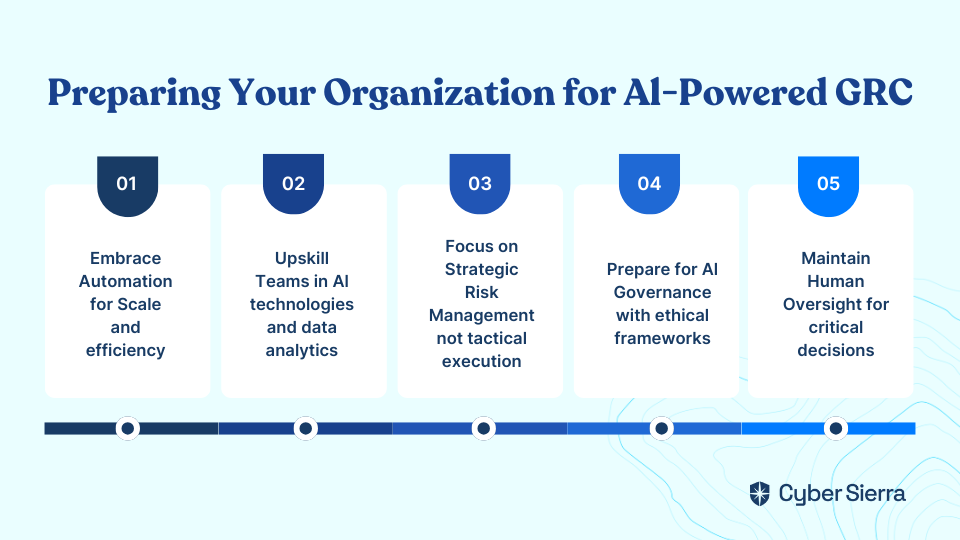
  1. Embrace Automation for Scale: Adopt platforms that automate routine GRC tasks, like Cyber Sierra's integrated GRC tools that streamline data collection, risk assessments, and reporting.
  2. Upskill for the AI Era: Develop expertise in AI technologies, data analytics, and risk modeling to effectively leverage and oversee AI-powered GRC tools.
  3. Focus on Strategic Value: Shift focus from tactical execution to strategic risk management, emphasizing the uniquely human aspects of GRC that AI cannot replicate.
  4. Prepare for AI Governance: Establish frameworks for responsible AI use, ensuring that AI deployments align with ethical principles and emerging regulations.
  5. Maintain the Human Element: Remember that "at the end of the day someone has to make decisions." Keep humans in the loop for critical risk judgments and final accountability.

Conclusion

The future of GRC lies not in replacing human expertise but in augmenting it with AI's speed, scale, and analytical power. By 2026, the most successful GRC programs will be those that effectively blend AI-driven automation with irreplaceable human judgment.

As we navigate this transformation, one thing remains clear: AI won't replace GRC workers. GRC workers using AI will replace GRC workers who don't. The time to prepare for this future is now.

Frequently Asked Questions

How is AI changing the future of GRC?

AI is changing the future of GRC by shifting the focus from manual, reactive tasks to automated, proactive risk management. Instead of replacing GRC professionals, AI acts as a powerful partner, automating routine work like control testing and data collection. This allows human experts to concentrate on strategic activities such as interpreting data, providing contextual judgment, and building relationships, ultimately making GRC more efficient and forward-looking.

What is Continuous Control Monitoring (CCM) in GRC?

Continuous Control Monitoring (CCM) is an automated approach that provides ongoing, real-time visibility into the effectiveness of security and compliance controls. Unlike traditional audits that offer only a point-in-time snapshot, AI-powered CCM continuously tests controls against frameworks like NIST or ISO 27001. This allows organizations to detect and remediate compliance gaps as they happen, rather than discovering them months later during an audit.

How does AI improve Third-Party Risk Management (TPRM)?

AI improves Third-Party Risk Management (TPRM) by automating due diligence and enabling continuous monitoring of vendor risks beyond static questionnaires. AI algorithms can rapidly analyze vendor security documents, scan for negative news or data breach mentions, and monitor security ratings in real-time. This provides a dynamic and predictive view of vendor risk, allowing teams to focus on high-risk partners instead of manually chasing paperwork from every vendor.

Will AI replace GRC professionals?

No, AI is not expected to replace GRC professionals. Instead, it will augment their capabilities and automate repetitive tasks. The consensus is that GRC professionals who leverage AI will replace those who do not. Core human skills like strategic decision-making, interpreting organizational context, building executive buy-in, and bearing legal accountability cannot be replicated by machines. AI handles the scale and speed of data analysis, freeing up humans to focus on these high-value strategic functions.

Why is AI Governance important for organizations?

AI Governance is important because it establishes the necessary rules, policies, and frameworks to ensure that artificial intelligence is used responsibly, ethically, and in compliance with emerging regulations. With powerful new laws like the EU AI Act imposing significant fines for non-compliance, a strong governance framework is essential for mitigating legal and financial risks. It also builds trust with customers and partners by demonstrating a commitment to transparency and accountability in how AI systems make decisions.

What skills should a GRC professional develop for an AI-driven future?

GRC professionals should develop skills in data analytics, AI technology fundamentals, and strategic risk communication. To thrive, professionals need to understand how to interpret AI-driven insights, oversee the performance of GRC tools, and communicate complex risks to executive leadership. The focus will shift from manual data gathering to becoming a strategic advisor who can translate data into actionable business strategy.

Cyber Sierra provides an AI-enabled cybersecurity platform that embodies these trends through its integrated suite of GRC tools. From Continuous Control Monitoring to Third-Party Risk Management and predictive threat intelligence, Cyber Sierra helps organizations automate routine GRC tasks while empowering human experts to focus on strategic risk management. Learn more at cybersierra.co.

blog-hero-background-image
Governance & Compliance

Top Practical Steps for Building a Resilience-Driven GRC Program in 2025

backdrop
Table of Contents

Join thousands of professionals and get the latest insight on Compliance & Cybersecurity.


You've set up a comprehensive GRC program with all the right frameworks, but your risk intelligence reports are collecting dust in executives' inboxes. When you try to discuss business risks, you're met with glazed eyes or claims that other priorities take precedence. Despite your meticulous work, your GRC initiative has devolved into a checkbox exercise that feels increasingly disconnected from actual business operations.

This frustration is all too common. As one GRC professional bluntly put it, "Most people don't give a flying fuck about business risks. They are both too big to comprehend and too... inconsequential for most people at the helm." At all times, risk intelligence competes with countless other data streams for attention in an already overcrowded information environment.

The solution isn't just more data or better tools—it's a fundamental shift in how we approach GRC. In 2025 and beyond, the winners won't be those with the most comprehensive compliance checklists, but those who build resilience-driven GRC programs that adapt to changing conditions and directly support business objectives.

The Foundational Shift: From Compliance Rituals to Principled Performance

Without a strong security awareness component and business alignment, "GRC programs devolve into checklisting exercises, which progressively become less useful over time." This observation from a seasoned GRC professional highlights the central challenge: compliance-focused programs often miss the bigger picture of organizational resilience.

A resilience-driven GRC program is built on the concept of "Principled Performance" - a framework developed by OCEG that focuses on three key elements:

  1. Achieving objectives - GRC must support business goals, not hinder them
  2. Addressing uncertainty - Programs must be forward-looking, not just reflective
  3. Acting with integrity - Fostering accountability and ethical behavior

To make this shift, two foundational pillars must be established:

Pillar 1: Break Down Silos

Siloed GRC activities lead to costly duplication of effort and critical gaps in risk visibility. When governance, risk, and compliance functions operate independently, the organization lacks a unified view of its risk posture. Effective resilience requires integration where these functions collaborate seamlessly, avoiding fragmentation that creates blind spots.

Pillar 2: Align GRC with Business Objectives

This alignment is the key to securing leadership buy-in. When GRC professionals can translate technical risks into business impact language, suddenly those "inconsequential" risks become relevant to decision-makers. As one expert noted, high management stakeholders have an acute sense of personal risks—the secret is connecting organizational risks to their personal and professional success metrics.

The 5 Practical Steps to Building Your Resilience-Driven GRC Program

Step 1: Establish an Autonomous and Integrated GRC Function

To build true resilience, your GRC function must have both independence and integration. Research from ISACA recommends that the GRC function should be autonomous from IT and report directly to senior management to ensure objective oversight and authority.

Practical actions:

  • Create a cross-functional GRC steering committee with representatives from key business units
  • Establish clear reporting lines to senior leadership, preferably with the CISO having a direct line to the board
  • Implement "committee work" as a facilitation technique to get departments talking about risk in a structured environment

Step 2: Adopt a Continuous, Forward-Looking Risk Management Process

Traditional point-in-time assessments no longer suffice in today's rapidly evolving risk landscape. Organizations need to move from periodic, disconnected assessments to a continuous cycle of risk management.

Practical actions:

  • Implement a structured risk identification process that involves stakeholders across the organization
  • Develop a standardized risk assessment methodology that balances quantitative measures with qualitative insights
  • Transition from manual evidence gathering to automated, continuous control monitoring
  • Create dashboards that provide real-time visibility into risk posture for both technical and executive audiences

Continuous Control Monitoring (CCM) is particularly crucial for breaking free from the audit-time scramble for evidence. Platforms like Cyber Sierra's CCM module help automate control testing and validation across frameworks like NIST and ISO 27001, providing near real-time updates rather than point-in-time snapshots. This transforms security from a periodic checkbox exercise into a proactive, continuous process.

Step 3: Fortify Your Supply Chain with Robust Third-Party Risk Management (TPRM)

The modern enterprise doesn't operate in isolation—it's an ecosystem of partners, vendors, and service providers. This extended enterprise introduces significant risks that a resilient GRC program must address.

Third-party vendors are a major source of cybersecurity, operational, and compliance risks. According to BlueVoyant research, 98% of organizations have experienced some form of breach through their supply chain. A robust TPRM program should include:
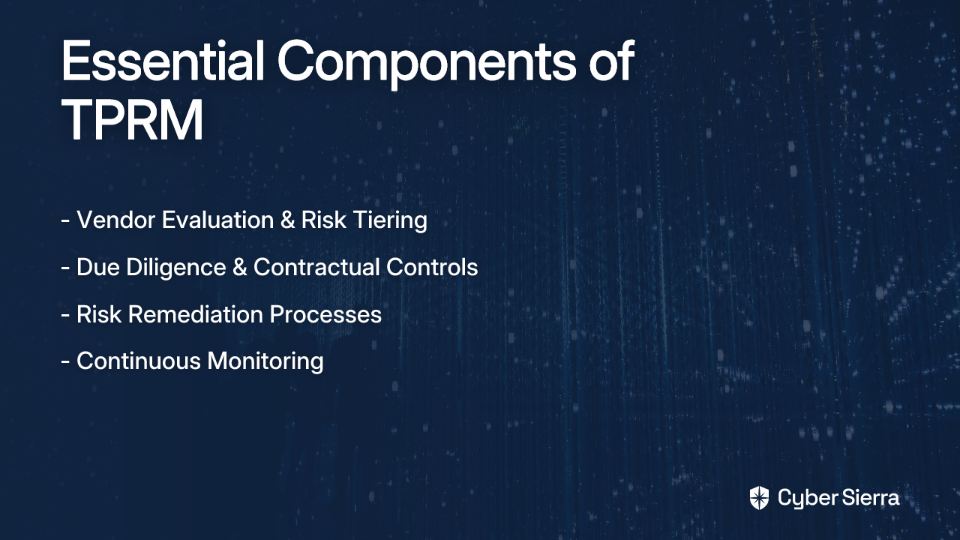
  1. Vendor Evaluation & Risk Tiering: Assess risks before onboarding and classify vendors based on criticality and access to sensitive data
  2. Due Diligence and Contractual Controls: Establish security and compliance requirements in contracts
  3. Risk Remediation: Work with vendors to address unacceptable risks before engagement
  4. Continuous Monitoring: Implement real-time monitoring of vendor security posture—point-in-time questionnaires are insufficient

Managing this process manually is a significant burden. Modern TPRM platforms, such as the one from Cyber Sierra, automate vendor assessments, streamline onboarding, and provide 24/7 visibility into vendor compliance, ensuring your supply chain remains secure without overwhelming your team.

Step 4: Leverage Technology and Automation Intelligently

GRC professionals have long complained that "every single GRC tool I tried out has the same failing. Difficult to use, opaque for the end user, and frustratingly time-consuming." This frustration highlights that technology should simplify GRC, not complicate it.

The global GRC market is projected to grow at a CAGR of 14.5% from 2022 to 2030, driven by the need for better automation and integration. But technology alone isn't the answer—it must be implemented thoughtfully.

Follow these steps when adopting automation:

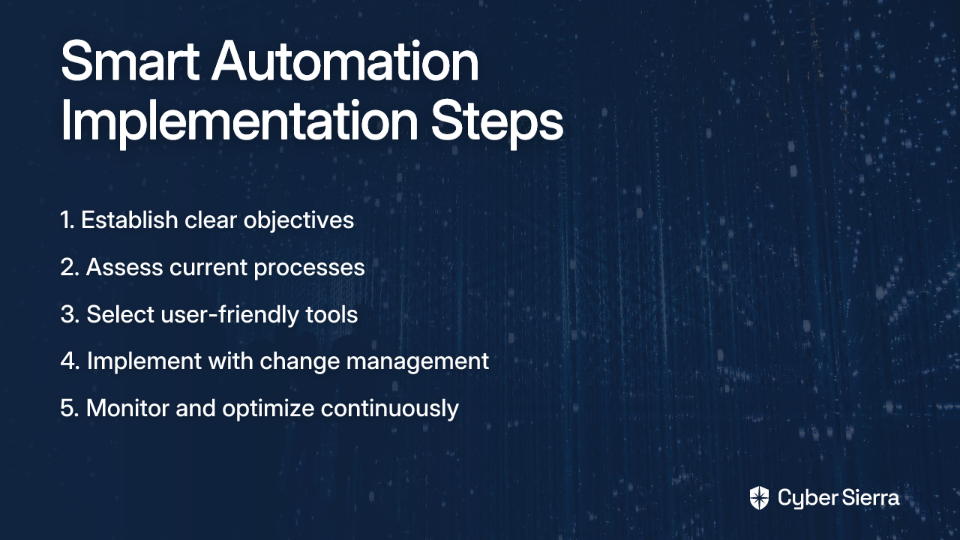
  1. Establish Clear Objectives: Define specific goals (e.g., reducing audit preparation time by 50%)
  2. Assess Current Processes: Identify bottlenecks in existing workflows before automating
  3. Select the Right Tools: Choose scalable platforms that are user-friendly for non-technical staff
  4. Implement with Change Management: Ensure clear communication and training
  5. Monitor and Optimize: Use KPIs to track performance and continuously improve

An integrated Governance, Risk & Compliance (GRC) platform can centralize these efforts. For instance, Cyber Sierra automates data collection, risk assessments, and reporting for frameworks like SOC2 and HIPAA, simplifying complex requirements and reducing audit fatigue.

Step 5: Build a Strong Human Firewall Through Effective Security Awareness

Security awareness training is often criticized as a "mandated two hours of attention per year" that serves merely as a checkbox exercise. Yet a strong security awareness program is essential for a resilient GRC program.

Effective security awareness must go beyond compliance training to build a security culture:

  • Replace generic training with role-based, scenario-driven content
  • Implement micro-learning approaches that deliver small, frequent lessons
  • Use simulated phishing campaigns to provide practical experience
  • Measure behavior change, not just completion rates
  • Connect security concepts directly to employees' personal and professional lives

To move beyond checkbox compliance, organizations can use platforms that offer interactive Employee Security Training. Running simulated phishing campaigns and providing continuous learning modules, as offered by Cyber Sierra, helps build a truly security-conscious culture and strengthen the human element of your defense.

Looking Ahead: Key GRC Trends for 2025 and Beyond

As you implement these practical steps, keep an eye on these emerging trends that will shape GRC in 2025 and beyond:

Greater Board Involvement: Boards will demand clearer, data-driven insights into risk posture, requiring GRC programs to translate technical metrics into business impact language. Your integrated GRC function (Step 1) will be crucial for this communication.

Focus on Data Privacy: Regulations like GDPR and emerging state-level privacy laws will continue to drive compliance needs. Your continuous monitoring approach (Step 2) and TPRM program (Step 3) will help navigate this complex landscape.

Integration of AI and Machine Learning: These technologies will become standard for proactive risk identification and management. The automation strategies outlined in Step 4 lay the groundwork for more advanced AI implementations.

Cyber Insurance Integration: As the cyber insurance market matures, insurers will increasingly require evidence of robust GRC practices. Your resilience-driven approach will position you favorably for coverage and potentially reduce premiums.

Building a GRC Program That Thrives on Change

A resilience-driven GRC program is not a project with an end date but a continuous strategic capability. It requires a cultural shift away from siloed compliance towards integrated, business-aligned risk management.

By implementing the five practical steps outlined above, organizations can move from a reactive posture to a proactive, value-driven one. This approach addresses the common frustration that "risk intel competes with all the other data streams for attention" by making risk information more relevant, accessible, and actionable for decision-makers.

Organizations that successfully build a resilient GRC framework will be better equipped to navigate the complexities, uncertainties, and regulatory challenges of 2025 and beyond. They'll transform GRC from a cost center to a strategic enabler that helps the business achieve its objectives while managing uncertainty and acting with integrity.

To see how an integrated, AI-enabled platform can accelerate this journey, consider exploring solutions that automate and unify your GRC, TPRM, and security awareness efforts, allowing your team to focus on strategic risk management rather than administrative compliance tasks.

Frequently Asked Questions

What is a resilience-driven GRC program?

A resilience-driven GRC program is a strategic approach that focuses on building an organization's ability to adapt to changing conditions and support business objectives, rather than simply meeting compliance requirements. Unlike traditional GRC, which can become a "checkbox exercise," a resilience-driven model is built on the concept of "Principled Performance." This means it actively works to help the business achieve its goals, proactively addresses uncertainty, and fosters a culture of integrity.

Why do many GRC programs fail to get business buy-in?

Many GRC programs fail to get business buy-in because they are disconnected from business operations and communicate risk in technical terms that executives don't find relevant to their priorities. When GRC is siloed and focused purely on compliance checklists, its value isn't clear to leadership. To gain support, GRC professionals must align their efforts with business objectives and translate technical risks into measurable business impacts.

What is the most important first step to building a better GRC program?

The most important first step is to establish an autonomous and integrated GRC function that breaks down existing organizational silos. This foundational step involves creating a cross-functional steering committee and establishing clear reporting lines to senior leadership, which gives the GRC program the authority and visibility needed to align with business objectives and drive meaningful change.

How can automation improve GRC processes?

Automation can significantly improve GRC processes by replacing time-consuming manual tasks with efficient, continuous monitoring and reporting, allowing teams to focus on strategic risk management. GRC platforms can automate evidence collection for audits, conduct continuous control monitoring for frameworks like ISO 27001, and provide real-time dashboards for risk visibility. This reduces audit fatigue and transforms compliance from a periodic event into a proactive, ongoing process.

What role does employee training play in a modern GRC framework?

In a modern GRC framework, employee security awareness training is crucial for building a "human firewall," transforming the workforce from a potential liability into a key part of the organization's defense. Effective training moves beyond a simple annual compliance checkbox to create a strong security culture through role-based, continuous learning and practical exercises like simulated phishing campaigns. This empowers employees to act with integrity and strengthens the organization's overall resilience.

blog-hero-background-image
Governance & Compliance

Top Tools to Visualize Risk & Compliance KPIs

backdrop
Table of Contents

Join thousands of professionals and get the latest insight on Compliance & Cybersecurity.


You've set up a compliance program, implemented security controls, and assembled a risk management framework. But when it comes time to communicate your security posture to executives, you're drowning in spreadsheets, wrestling with 17 different tools, and spending half your time just documenting what you already know rather than acting on it.

Sound familiar? You're not alone.

"So many spreadsheets. And needing to add updates but Joe has it open. Teams-Joe, I need the Tech Review sheet when you're done. Multiple times per day," laments one GRC professional in a recent discussion on Reddit.

The problem isn't a lack of data—it's transforming that mountain of information into clear, actionable insights that drive decision-making. Raw compliance metrics and risk scores might satisfy auditors, but they don't effectively communicate risk to stakeholders or help you prioritize remediation efforts.

The solution? Modern visualization tools that transform complex GRC data into intuitive dashboards, enabling you to move from reactive, periodic checks to proactive, continuous risk management.

The Breaking Point: Why Spreadsheets Fail for Modern GRC

Let's acknowledge reality: Excel remains the most widely used GRC tool across organizations of all sizes. Its familiarity and flexibility are undeniable, leading many to believe that "Excel can solve everything."

But in today's dynamic risk landscape, spreadsheets create significant bottlenecks:

  1. No single source of truth: Multiple versions lead to conflicting data and confusion about which file contains the "real" information.
  2. Collaboration nightmares: As the earlier quote illustrates, locked files and manual merging create significant friction in team environments.
  3. Data integrity issues: Manual data entry introduces errors, with research showing up to 88% of spreadsheets contain mistakes.
  4. Zero automation: Documentation and communication consume "about 50% of total time spent" on security tasks, according to security professionals in a Reddit discussion.
  5. Limited scalability: Spreadsheets buckle under the weight of modern security programs that must track thousands of controls across multiple frameworks like NIST, ISO 27001, and SOC 2.

As one frustrated user put it after an expensive GRC tool failed to deliver: "We're getting by with excel, planner, sharepoint, and azure devops." But "getting by" isn't enough when security breaches and compliance failures carry increasingly severe consequences.

Anatomy of an Effective GRC Dashboard: Key Features to Demand

Before exploring specific solutions, let's establish what makes a powerful GRC visualization tool. Whether you're evaluating vendors or building internal dashboards, demand these essential capabilities:

1. Real-Time Tracking & Actionable Insights

Static reports quickly become outdated in today's fast-moving threat landscape. Effective dashboards display KPIs and KRIs (Key Risk Indicators) in near real-time, including:

  • Number of open remediation tasks
  • Overdue items and approaching deadlines
  • Overall compliance health scores
  • Risk posture metrics

As Onspring notes, "GRC dashboards serve as the primary interface" for overseeing all governance, risk, and compliance activities, enabling visibility into your program's effectiveness.

2. Rich Visualization Types

Different data requires different visualization approaches:

  • Risk Heatmaps: Essential for categorizing risks by severity and likelihood, helping stakeholders quickly grasp your risk landscape.
  • Compliance Scorecards: Color-coded representations of your status against specific regulations or standards (NIST, CIS, etc.).
  • Trend Charts: Showing progress over time for metrics like incident response times or vulnerability remediation rates.

3. Integration and Centralization

One security professional expressed a desire for "a SolarWinds on steroids" approach that overlays "information about vulnerability, compliance, risk, resiliency, and ATT&CK" in a unified view.

The best platforms break down information silos by connecting to your existing security, IT, and business tools through APIs and agentless connectors. They create a centralized repository for controls, metrics, and vendor data.

4. Automation and AI

Modern platforms leverage automation and artificial intelligence to:

  • Generate scheduled reports tailored to different stakeholders
  • Automatically populate questionnaire responses from existing documentation
  • Use natural language processing (NLP) for intuitive data access
  • Identify patterns and anomalies that might escape human analysis

5. Customization and Filtering

As one security analyst noted, finding the crucial "grain of sand" in massive datasets is often the challenge. Look for dashboards that allow users to filter by specific criteria, creating tailored views for different roles and responsibilities.

A Landscape of Solutions: Top Tools for Visualizing Your KPIs

Let's explore the leading platforms across three distinct categories, each addressing different organizational needs and maturity levels.

Category 1: Integrated GRC Platforms

These comprehensive solutions are designed for organizations with mature security programs needing to manage multiple GRC workstreams.

SAI360 provides an enterprise-grade analytics suite with powerful visualization capabilities. Its dashboard combines AI-enhanced analytics with natural language processing, transforming complex data into actionable insights. SAI360's approach breaks down information silos while enabling custom, visually compelling operational risk dashboards.

Onspring positions its dashboard as the central hub for all GRC activities. Its user-friendly interface helped the University of Kansas Health System improve cybersecurity compliance through automated task management and clear visualization of security metrics.

Category 2: Specialized Third-Party Risk Management (TPRM) Tools

Supply chain risk presents unique visualization challenges, with organizations needing to monitor dozens or hundreds of vendors simultaneously.

AuditBoard, recognized as a Gartner Magic Quadrant leader, excels at TPRM visualization by unifying vendor information in centralized dashboards. Its platform uses AI to automate assessments while providing continuous monitoring integrations for early threat detection. One InComm Payments user praised it for "eliminating manual processes previously necessary to evaluate third-party risks."

Category 3: Continuous Control Monitoring (CCM) Platforms

CCM tools represent the future of compliance and risk visualization—moving from periodic, point-in-time assessments to automated, continuous observation of security controls.

Panaseer automates the measurement of security control metrics against policies like NIST and CIS. With over 50 out-of-the-box dashboards and 200+ metrics, it translates complex data into intuitive scorecards that help stakeholders understand your security posture at a glance.

Cyber Sierra offers an AI-enabled platform designed specifically to simplify and automate security compliance visualization. Its CCM module stands out by providing:

  • A central controls repository with near real-time updates
  • Clear visibility into security posture through continuous monitoring
  • Actionable risk intelligence for data-driven remediation decisions

This approach transforms security from periodic manual checks into a proactive, automated process, providing a single source of truth for control effectiveness across frameworks like ISO 27001, PCI DSS, and NIST. Furthermore, this real-time control data feeds directly into Cyber Sierra's broader GRC module, streamlining evidence collection and making enterprises audit-ready faster.

From Implementation to Insight: A 5-Step Best Practice Guide

Selecting the right tool is just the beginning. To maximize the value of your visualization platform, follow this proven framework adapted from Onspring's methodology:

Step 1: Define Your Goals

Before implementing any tool, clearly answer: "What problem are you trying to solve?" Are you monitoring compliance against a specific framework? Tracking task progress? Assessing overall risk posture? Your goals will determine which metrics and visualizations matter most.

Step 2: Identify Your Metrics (KPIs & KRIs)

Select metrics that genuinely reflect progress toward your goals. Common examples include:

  • Incident response time
  • Cost of remediation
  • Risk exposure by business unit
  • Compliance adherence percentage
  • Vendor risk scores

Step 3: Gather Your Data

Compile comprehensive data from all relevant sources—internal audits, vulnerability scans, risk assessments, vendor questionnaires, and HR systems. The quality of your visualization depends entirely on the quality of your underlying data.

Step 4: Implement and Deploy

Configure your dashboard with the necessary filters, alerts, and visualizations. Crucially, train users on how to navigate and interpret the data effectively. The most beautiful dashboard is worthless if stakeholders don't understand what they're seeing.

Step 5: Monitor and Maintain

A dashboard is not a "set it and forget it" tool. Regularly revisit and update it to ensure it remains relevant and effective as your organization's risk landscape evolves.

The Future of Risk & Compliance Visualization

The days of wrestling with spreadsheets for GRC are numbered. Modern platforms are defined by integration, automation, and continuous monitoring—providing real-time visibility that simply wasn't possible even a few years ago.

The right visualization tool doesn't just display KPIs; it empowers your team to move beyond reporting on risk and start proactively managing it. Platforms like Cyber Sierra help organizations make this transition by building a foundation of continuous monitoring and automated compliance, turning security data into a strategic asset.

Because ultimately, effective risk management isn't about making pretty graphs—it's about enabling faster, smarter security decisions that protect your organization, satisfy regulators, and drive business value.

Whether you choose an integrated GRC platform, specialized TPRM tool, or continuous control monitoring solution, the goal remains the same: transform complex data into clear insights that help you identify risks early and address them before they become incidents.

Frequently Asked Questions

Why should our organization stop using spreadsheets for GRC?

Your organization should stop using spreadsheets for GRC because they create data silos, are prone to manual errors, lack automation, and cannot scale to meet the demands of modern risk management. While familiar, spreadsheets lead to collaboration issues and consume excessive time in manual documentation, preventing proactive risk management.

What are the most important features to look for in a GRC dashboard?

The most important features for a GRC dashboard are real-time tracking of KPIs, a variety of visualization types like heatmaps and scorecards, and seamless integration with your existing security tools. Additionally, look for strong automation capabilities to reduce manual work and customization options that allow different stakeholders to filter data for their specific needs.

How does a Continuous Controls Monitoring (CCM) platform differ from a traditional GRC tool?

A Continuous Controls Monitoring (CCM) platform differs from traditional GRC tools by providing automated, near real-time observation of security controls, whereas traditional tools often rely on periodic, manual assessments. CCM platforms automatically gather evidence and measure control effectiveness against frameworks like NIST or ISO 27001, enabling a proactive and continuously compliant security posture.

What is the first step to creating an effective GRC dashboard?

The first step is to clearly define your goals by answering the question, "What problem are you trying to solve?" Before selecting tools or metrics, you must identify your primary objective, whether it's monitoring compliance for a specific framework, tracking remediation tasks, or assessing your overall risk posture. This goal-oriented approach ensures your dashboard delivers actionable insights rather than just data.

How can GRC visualization tools help with compliance frameworks like NIST or ISO 27001?

GRC visualization tools streamline compliance with frameworks like NIST and ISO 27001 by centralizing control data and automating evidence collection. They provide clear, color-coded scorecards showing your adherence to specific controls and requirements, making it easy to identify gaps, prioritize remediation, and generate reports for auditors, significantly reducing the manual effort involved in compliance management.

blog-hero-background-image
Governance & Compliance

Top Cybersecurity Compliance Challenges for Fintech in 2026

backdrop
Table of Contents

Join thousands of professionals and get the latest insight on Compliance & Cybersecurity.


Are you struggling with disjointed security efforts across teams? Feeling overwhelmed by the complexity of building a structured security program that keeps pace with both innovation and regulation? You're not alone. Fintech leaders across the industry are grappling with these exact challenges as they prepare for an increasingly complex regulatory landscape.

The fintech sector stands at a critical crossroads. On one side lies the boundless potential of technological innovation—digital wallets, open banking APIs, AI-powered fraud detection. On the other side looms an unprecedented wave of cybersecurity threats and regulatory requirements that threaten to stifle that innovation.

As we look toward 2026, fintech companies face four major compliance challenges that demand immediate attention: rapidly evolving regulations, expanding third-party risks, technology-specific vulnerabilities, and internal operational complexities. Let's explore each of these challenges and the strategies needed to overcome them.

1. Navigating the Labyrinth of Rapidly Evolving Regulations

Gone are the days when compliance was a simple checkbox exercise. Regulators worldwide are now demanding continuous, demonstrable proof of security effectiveness, and the stakes couldn't be higher.

The global regulatory landscape has become an intricate patchwork of frameworks—GDPR, PCI-DSS, PSD2, and more—each with unique requirements. For fintechs operating across multiple jurisdictions, this creates an almost impossible manual tracking burden.

What's more concerning is that regulations are becoming increasingly prescriptive. Consider these upcoming requirements:

  • The New York Department of Financial Services (NYDFS) now requires covered entities to notify regulators within 24 hours of making a ransomware payment
  • By November 2024, CISOs must provide annual reports on material cybersecurity issues
  • By November 2025, multi-factor authentication will be mandatory for all individual access to information systems

Similarly, the FTC Safeguards Rule amendments require financial institutions to report unauthorized acquisition of customer information affecting 500+ individuals within 30 days. Crucially, if an encryption key is accessed by an unauthorized party, the FTC considers the data unencrypted, placing the burden of proof on the fintech company.

With such detailed requirements, attempting to track compliance using spreadsheets and manual processes is no longer sustainable. The only viable solution is automation and centralization of compliance activities.

This is where platforms like Cybersierra's Governance, Risk & Compliance (GRC) module become essential. By automating data collection, risk assessments, control monitoring, and reporting for multiple frameworks simultaneously, such solutions dramatically reduce the manual effort required for compliance while providing the continuous visibility regulators now demand.

2. The Expanding Attack Surface of Third-Party Risk

Modern fintechs rarely operate in isolation. Instead, they function within a deeply interconnected ecosystem, relying on numerous third-party vendors for everything from cloud infrastructure to payment processing APIs. Each vendor represents a potential entry point for attackers, and regulators have taken notice.

The NYDFS has issued specific guidance emphasizing robust due diligence, ongoing monitoring, and clear contractual obligations for third-party vendors. This isn't merely theoretical—the Bank of America breach in February 2024 was caused by a third-party vendor, exposing sensitive customer information and highlighting the critical vulnerabilities within the supply chain.
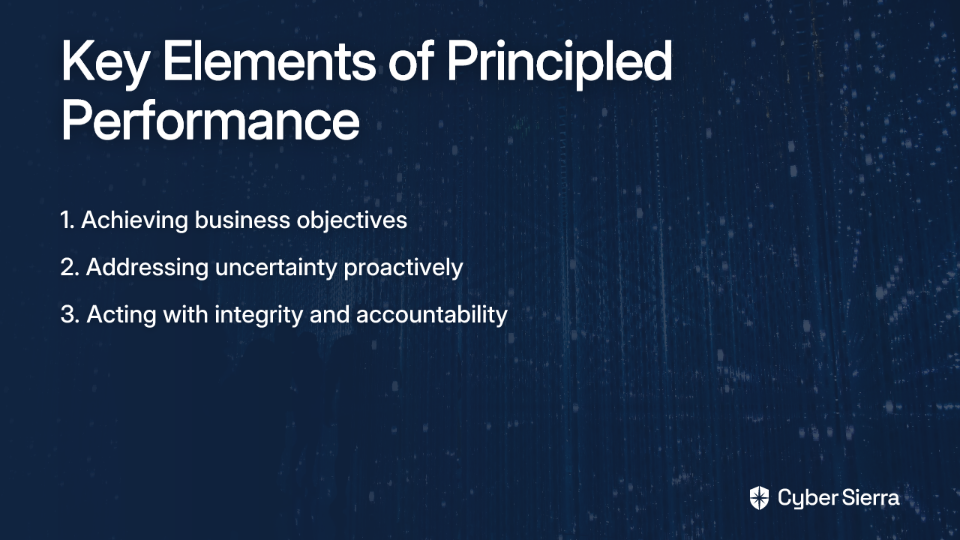
Cybersecurity incidents now often include those occurring at affiliates or third-party service providers, expanding reporting obligations and liability. A single vulnerable vendor can compromise an otherwise robust security posture, and fintechs are increasingly being held accountable for their vendors' security practices.

To address this challenge, fintechs need a comprehensive Third-Party Risk Management (TPRM) program that goes beyond point-in-time assessments. This should include:

  • Identifying and prioritizing vendors based on risk levels
  • Automating vendor assessments using standardized frameworks
  • Implementing continuous monitoring of vendor security postures
  • Establishing clear security requirements in vendor contracts
  • Developing incident response plans that account for vendor breaches

Cybersierra's TPRM module is designed specifically for this purpose, helping fintech companies evaluate, mitigate, and continuously monitor third-party security compliance and risks. By providing near real-time visibility into vendor security compliance and streamlining vendor due diligence processes, such solutions enable fintechs to manage third-party risk at scale.

3. The Double-Edged Sword of Technological Innovation

The technologies that drive fintech's success—AI, mobile apps, digital wallets, and open banking APIs—also introduce novel security vulnerabilities and expand the attack surface.

New technologies often outpace security controls, creating gaps that attackers are quick to exploit. The Microsoft Azure phishing attacks in February 2024 that compromised executive accounts demonstrate the persistent threat of cloud vulnerabilities. Meanwhile, AI-powered tools are increasingly being used by attackers to craft more sophisticated phishing campaigns and automate attacks.

This constant technological evolution makes it challenging to identify priority areas for security improvement, a key pain point expressed by many security professionals. The traditional approach of periodic security assessments is no longer sufficient in this rapidly changing landscape.

What's needed is a proactive defense strategy built on continuous visibility. This means moving from periodic security checks to ongoing monitoring of all digital assets and controls across the entire technology stack—from on-premises networks to cloud environments.

Effective solutions combine:

  • Network vulnerability scanning to identify potential entry points
  • Cloud infrastructure scanning to detect misconfigurations
  • Continuous control monitoring to verify security measures are functioning as intended
  • Real-time threat intelligence to identify emerging risks

Cybersierra's Continuous Control Monitoring (CCM) platform builds a central controls repository with near real-time updates, transforming security from periodic checks to continuous, automated monitoring. Combined with their Threat Intelligence module, which provides an outside-in scanning approach to manage vulnerabilities, this creates a comprehensive solution for addressing technology-specific risks.

4. Overcoming Operational Complexity and the Human Element

Many organizations suffer from a "lack of a unified security approach," "ambiguity in ownership," and "disjointed efforts," leading to inefficiencies and security gaps. These internal operational challenges can be just as damaging as external threats.

Fintechs often struggle to balance rapid innovation with rigorous compliance requirements. The most effective approach is "Compliance by Design," where security controls are integrated into the development lifecycle from the start. However, this requires significant coordination across teams and a clear understanding of responsibilities.

Additionally, the human element remains one of the greatest cybersecurity vulnerabilities. Phishing attacks, social engineering, and insider threats continue to be major vectors for data breaches. According to the World Economic Forum's Global Cybersecurity Outlook, human error remains a leading cause of security incidents despite technological advances.

Addressing these operational challenges requires a two-pronged approach:

  1. Adopt a unified platform to break down silos between security, compliance, and IT operations. This provides a single source of truth for security posture, clearly delineates responsibilities, and enables consistent risk management across the organization.
  2. Implement continuous employee training to strengthen the "human firewall." This should include regular security awareness sessions, simulated phishing exercises, and role-specific training for developers, administrators, and other key personnel.

Cybersierra's integrated platform addresses the first challenge by providing consolidated security insights across teams. Their Employee Security Training module tackles the second challenge by empowering employees to become the first line of defense through interactive training, quizzes, and simulated phishing campaigns, helping to build a security-conscious culture throughout the organization.

Preparing for the Future of Fintech Compliance

As we look toward 2026, it's clear that a reactive, manual, and siloed approach to cybersecurity compliance is unsustainable for fintechs. The challenges we've explored—rapidly evolving regulations, expanding third-party risks, technological vulnerabilities, and operational complexities—require a fundamentally different approach.

The future of fintech compliance must be:

  • Proactive, not reactive—anticipating regulatory changes and emerging threats
  • Automated, not manual—leveraging technology to scale compliance activities
  • Integrated, not siloed—embedding security and compliance into the fabric of the organization
  • Continuous, not periodic—providing real-time visibility into security posture

Fintechs that embrace this approach will not only reduce compliance costs and risks but also gain a competitive advantage. They'll be able to innovate more quickly and confidently, knowing their security foundation is solid.

To achieve this state, consider evaluating your current compliance posture:

  • How much time does your team spend on manual compliance activities?
  • Do you have real-time visibility into your security controls and third-party risks?
  • Can you quickly adapt to new regulatory requirements?
  • Is security integrated into your development and operational processes?

If your answers reveal gaps, it may be time to explore modern solutions designed to tackle these future-facing challenges. Platforms like Cybersierra provide a comprehensive approach to security and compliance, helping fintechs instill automation, continuity, and intelligence into their cybersecurity programs.

By moving from periodic, manual checks towards proactive, near real-time risk management, fintechs can not only meet the compliance challenges of 2026 but turn security and compliance into a competitive advantage that enables rather than restricts innovation.

The fintech companies that will thrive in this complex landscape will be those that view security and compliance not as a cost center or a checkbox exercise, but as a strategic enabler of trust and growth in an increasingly digital financial ecosystem.

Frequently Asked Questions

What are the main compliance challenges fintech companies face leading up to 2026?

Fintech companies face four primary compliance challenges: rapidly evolving regulations, expanding risks from third-party vendors, new vulnerabilities from technological innovation, and internal operational complexities. These issues demand a shift away from manual, periodic compliance checks toward a more automated and continuous approach. The regulatory landscape is becoming more prescriptive, the reliance on vendors expands the attack surface, new technologies introduce novel risks, and internal disjointed efforts can create significant security gaps.

How can fintechs effectively manage rapidly changing regulations?

Fintechs can effectively manage changing regulations by adopting automation and centralization for their compliance activities. Traditional methods like spreadsheets are insufficient for tracking the complex web of global regulations like GDPR, PSD2, and new NYDFS rules. A centralized Governance, Risk & Compliance (GRC) platform automates data collection, risk assessments, and reporting, providing the continuous visibility that regulators now require and dramatically reducing manual effort.

Why is third-party risk management (TPRM) so crucial for the fintech industry?

Third-party risk management is crucial because fintech companies operate in a deeply interconnected ecosystem where a single compromised vendor can lead to a major data breach, regulatory penalties, and loss of customer trust. Regulators increasingly hold fintechs accountable for their vendors' security. A comprehensive TPRM program that includes continuous monitoring, automated assessments, and clear contractual requirements is essential to protect the supply chain.
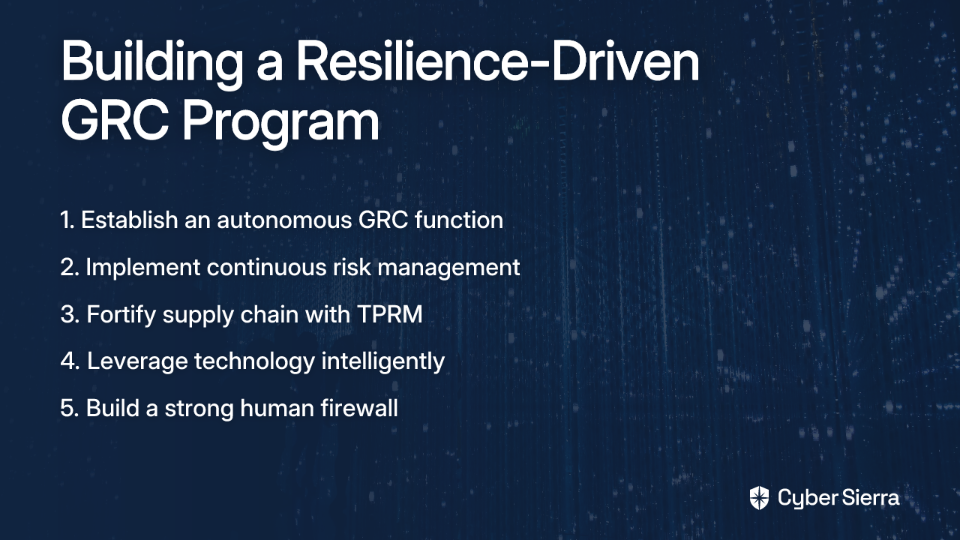
How does technological innovation create new security risks for fintechs?

Technological innovations like AI, mobile apps, and open banking APIs create new security risks by expanding the attack surface and often outpacing the development of security controls. While these technologies drive growth, they also introduce novel vulnerabilities that attackers can exploit. To counter this, fintechs need a proactive defense strategy built on continuous monitoring of all digital assets, from cloud environments to on-premises networks, to identify and remediate risks as they emerge.

What is "Compliance by Design" and why is it important for fintechs?

"Compliance by Design" is the practice of integrating security and compliance controls directly into the development lifecycle of products and services from the very beginning. This approach is vital for fintechs as it helps balance rapid innovation with stringent regulatory requirements. By building security in from the start, companies can prevent vulnerabilities, reduce future remediation costs, and ensure new products are launched securely and compliantly.

What is the most effective cybersecurity approach for a modern fintech company?

The most effective approach is a proactive, automated, and integrated cybersecurity strategy that provides continuous, real-time visibility into the company's security posture. This involves moving away from outdated periodic checks and leveraging unified platforms to consolidate security insights, automate control monitoring, manage third-party risk, and conduct ongoing employee training. This turns security from a cost center into a competitive advantage that enables safe innovation.
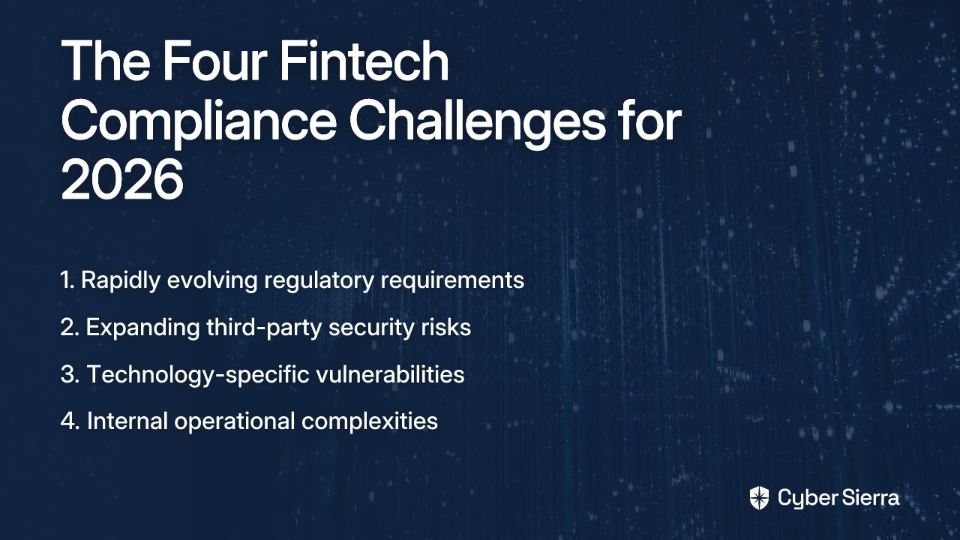
blog-hero-background-image
Governance & Compliance

Top AI-Driven Continuous Monitoring Tools for CISOs in 2025

backdrop
Table of Contents

Join thousands of professionals and get the latest insight on Compliance & Cybersecurity.
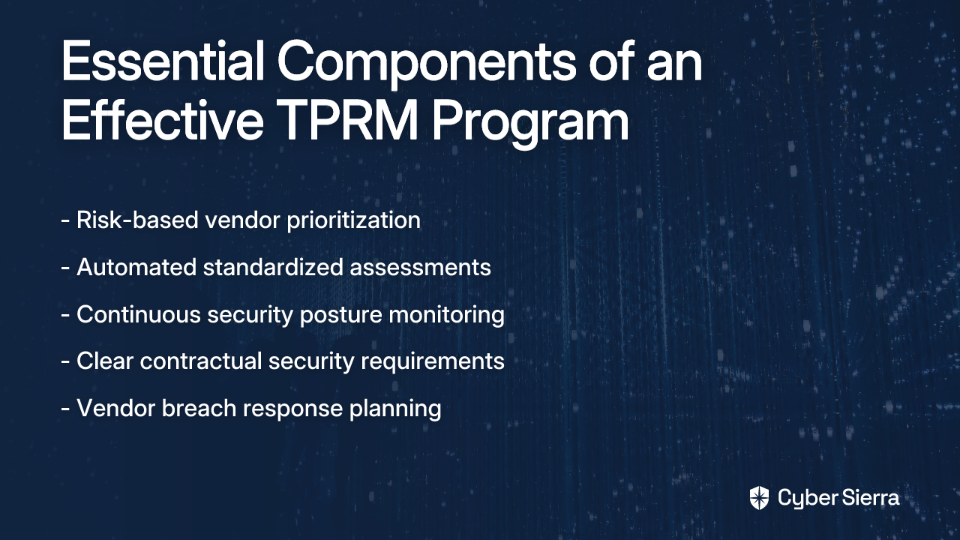

Sarah Chen stared at her dashboard in frustration. An alert about a potential vendor breach flashed red while her calendar reminded her of the upcoming PCI DSS audit. Her compliance manager David was buried in spreadsheets, chasing evidence for ISO 27001 certification. Meanwhile, Ben from Third-Party Risk Management was drowning under hundreds of vendor questionnaires with no standardized way to assess their responses.

If this scenario sounds painfully familiar, you're not alone.

The End of Spreadsheet Compliance

"If only I could thin down the herd of vendors and find solutions backed by real experience," is a common refrain among security leaders. The challenge isn't just finding tools—it's finding the right ones that solve your specific pain points without requiring a complete infrastructure overhaul.

The stark reality? Large organizations spend up to 10% of their total IT budget on compliance activities, often with little to show for it beyond point-in-time snapshots that are outdated before the audit report is even finalized.

Enter the era of the "Augmented CISO"—where artificial intelligence doesn't replace human expertise but dramatically enhances it by automating the tedious, manual work of continuous compliance monitoring.

This article cuts through the marketing noise to compare the top AI-driven platforms that help security leaders:

  • Automate evidence collection across disparate systems
  • Continuously monitor third-party risks in real time
  • Create a unified, always-current view of their security posture

Why Continuous Monitoring is the New Standard for 2025

Traditional compliance approaches are fundamentally broken. Point-in-time assessments—those screenshots, log exports, and configuration reviews—create a false sense of security. They're outdated the moment they're captured and utterly inadequate for modern cloud environments.

Gartner defines Continuous Controls Monitoring (CCM) as technology that "reduces business losses and audit costs by continuously monitoring controls in financial and other business processes." But in 2025, with the integration of AI, CCM has evolved beyond simple automation into intelligent assurance.

AI-driven continuous monitoring can reduce manual audit workloads by up to 60%, freeing security teams to focus on strategic initiatives instead of chasing evidence.

The AI Advantage:

  1. Dynamic Anomaly Detection: AI-driven tools establish baselines of normal activity and use machine learning to detect deviations. This reduces the mean time to detect incidents by over 7 minutes—critical time for security operations teams.
  2. Intelligent Risk Assessment: Rather than treating all vulnerabilities equally, AI helps prioritize them based on potential impact to regulatory compliance and critical business assets.
  3. Automated Root Cause Analysis: By correlating data from SIEMs, cloud logs, and EDRs, AI can pinpoint the source of a control failure, drastically reducing troubleshooting time for security teams.

The growing regulatory landscape (DORA, NIS2, GDPR) and the expansion of cloud environments and supply chains have made continuous monitoring not just a nice-to-have but an operational necessity.

The CISO's Checklist: 5 Must-Have Features in an AI Monitoring Platform

Before diving into specific tools, let's establish what makes a truly effective AI-driven continuous monitoring platform in 2025:

1. Unified Data Aggregation & Normalization

A platform's value is directly proportional to the data it can ingest. Look for solutions with pre-built, agentless connectors for your entire security stack:

  • SIEM solutions (Splunk, Microsoft Sentinel)
  • EDR platforms (CrowdStrike, SentinelOne)
  • Vulnerability Management tools (Qualys, Tenable)
  • CSPM solutions (Wiz, Prisma Cloud)
  • ITSM platforms (ServiceNow, Jira)

Panaseer's approach of using "intelligent data connectors to collect, normalize, and correlate data" represents the gold standard here—allowing for a comprehensive view without requiring additional agents or complex deployments.

2. Multi-Framework Control Mapping & Management

For compliance managers like David, manually mapping controls across frameworks is a nightmare. Your platform should provide:

  • Out-of-the-box mappings for major frameworks (NIST CSF, ISO 27001, PCI DSS, HIPAA, GDPR)
  • Ability to customize and map internal policies
  • Automated evidence collection linked directly to specific control requirements

Platforms like CyberSaint's CyberStrong specialize in framework alignment and evidence collection, turning months of manual work into automated processes.

3. AI-Powered Third-Party Risk Management (TPRM)

For third-party risk managers like Ben and privacy officers like Anjali, modern TPRM must go beyond static questionnaires:

  • Real-time security ratings integration from services like BitSight and SecurityScorecard
  • AI-driven assessment of vendor responses to identify inconsistencies and red flags
  • Automatic mapping of vendor risks to compliance obligations
  • Continuous monitoring for changes in vendor security posture

4. Customizable, Board-Ready Dashboards

CISO Sarah needs to translate complex security metrics into business language for the board. The ideal platform should offer:

  • Customizable dashboards that aggregate granular control data into high-level business metrics
  • Risk quantification capabilities that translate technical risks into financial impact
  • Historical trending to show improvement over time
  • The ability to drill down from high-level metrics to underlying evidence

Panaseer's "Scorecard Presentation" exemplifies this approach by converting complex cybersecurity data into easily understandable metrics for non-technical stakeholders.

5. Automated Evidence Collection & Remediation Workflows

The "continuous" in continuous monitoring hinges on automation. Your platform should:

  • Automatically pull evidence from source systems on a scheduled or real-time basis
  • Link evidence directly to specific controls and compliance requirements
  • Create tickets in your existing workflow tools (Jira, ServiceNow) when controls fail
  • Track remediation efforts to closure
  • Maintain an audit trail of all control testing and remediation activities

A Curated List of Top Tools for 2025

Based on the features above, here's a categorized list of the leading AI-driven continuous monitoring platforms for 2025:

Category 1: Comprehensive GRC & Continuous Controls Monitoring

Panaseer

  • Strengths: Exceptional cyber asset management as the foundation for monitoring. Creates a unified inventory and provides board-level metrics using agentless data connectors.
  • Ideal For: CISOs like Sarah who need a single source of truth about assets and control effectiveness for reporting upwards.
  • Consideration: Best suited for larger enterprises with mature security programs.

CyberSaint (CyberStrong)

  • Strengths: AI-powered automation for continuous compliance. Integrates real-time telemetry to validate control effectiveness against frameworks like NIST and ISO 27001. Strong risk quantification capabilities.
  • Ideal For: Compliance managers like David and internal auditors like Kenichi who need to automate manual evidence gathering.
  • Consideration: Implementation requires clear mapping of your security program to standard frameworks.

Category 2: AI-Powered Observability for Security Operations

Coralogix

  • Strengths: Built for complex cloud-native environments. Excels at dynamic anomaly detection and automated root cause analysis. Offers AI-SPM (Security Posture Management).
  • Ideal For: Security analysts like Priya who need deep visibility to detect configuration drift and investigate control failures in real-time.
  • Consideration: Strongest for organizations with significant cloud footprints.

Datadog / New Relic

  • Strengths: Comprehensive observability platforms with strong security modules. Powerful for organizations already invested in their ecosystem.
  • Consideration: Can have complex pricing models and may require significant configuration compared to more specialized security tools.

Category 3: Specialized Third-Party Risk Management

OneTrust Vendorpedia

  • Strengths: Market leader with deep AI-powered assessment capabilities and continuous monitoring. Extensive templates and workflow automation. Strong privacy focus for managing DPIAs and DPAs.
  • Ideal For: TPRM managers like Ben and DPOs like Anjali at large organizations with complex vendor landscapes.
  • Consideration: It can be costly with a steep learning curve for smaller teams.

UpGuard Vendor Risk / LogicGate Risk Cloud

  • Strengths: More agile and customizable. UpGuard is known for real-time scoring and fast implementation. LogicGate offers no-code risk automation with highly customizable workflows.
  • Ideal For: Organizations that need powerful but more flexible and potentially more cost-effective TPRM solutions.
  • Consideration: May require more configuration to achieve the same depth as enterprise solutions.

Best Practices for Implementing Your Continuous Monitoring Strategy

Selecting the right tool is just the beginning. Here are key best practices for success:

1. Set Clear Objectives

define SMART goals for your implementation. Start with a specific pain point: "Automate evidence collection for our next PCI audit" or "Reduce vendor onboarding time by 30%."

2. Standardize on a Foundational Framework

Adopt a standard like NIST CSF as your baseline. This provides a common language for controls across security, IT, and audit teams, making automation more effective.

3. Integrate, Don't Rip-and-Replace

Your CCM platform should be a "manager of managers" that integrates with existing tools. Focus on solutions that enhance rather than duplicate your current workflows.

4. Foster a Culture of Continuous Assurance

As highlighted in the "Augmented CISO" article, the technology is just one piece. The goal is a cultural shift where security and compliance are continuous, collaborative processes, not annual fire drills.

Becoming the Augmented CISO

In 2025, the most effective CISOs aren't those with the largest teams or budgets—they're the ones who leverage AI to transform security from a reactive, compliance-driven cost center into a proactive, risk-aware business enabler.

As regulatory pressures mount and security landscapes grow more complex, manual spreadsheet-based approaches become increasingly untenable. AI-driven continuous monitoring isn't just about efficiency—it's about gaining visibility that was previously impossible with manual approaches.

Stop chasing spreadsheets. Start by identifying your most acute "hair on fire" problem—whether it's audit preparation, vendor risk, or real-time control validation—and explore a platform that can solve it. This is your first step to becoming an Augmented CISO in 2025.

Frequently Asked Questions

What is AI-driven continuous compliance monitoring?

AI-driven continuous compliance monitoring is an approach that uses artificial intelligence to automatically and perpetually test and validate security controls against regulatory frameworks like ISO 27001, PCI DSS, and NIST CSF. Unlike traditional point-in-time audits, which provide a snapshot of compliance, this method offers a real-time, dynamic view of an organization's security posture, significantly reducing manual effort and improving accuracy.

How does AI enhance traditional compliance processes?

AI enhances traditional compliance by automating evidence collection, detecting anomalies in real-time, and intelligently prioritizing risks. Machine learning algorithms can analyze vast amounts of data from various security tools (like SIEMs, EDRs, and cloud logs) to identify control failures and potential threats far faster than human teams. This transforms compliance from a manual, periodic activity into a proactive, continuous process, freeing up security professionals to focus on strategic risk management.

What are the most important features to look for in a continuous monitoring platform?

The most critical features include unified data aggregation with pre-built connectors for your existing security stack, multi-framework control mapping (e.g., NIST, ISO), AI-powered third-party risk management, customizable board-ready dashboards, and automated remediation workflows. A platform's ability to ingest and normalize data from all your systems without requiring new agents is a key differentiator for achieving a single, accurate view of your security posture.

How do I get started with implementing a continuous monitoring strategy?

The best way to start is by setting clear, specific objectives and focusing on a single, high-priority pain point. Instead of a complete overhaul, identify a pressing issue, such as "automating evidence collection for our upcoming PCI audit." Then, select a foundational framework like the NIST CSF to standardize your controls and choose a tool that integrates with your existing security ecosystem to solve that specific problem first.

Will AI replace the jobs of compliance and security professionals?

No, AI is not expected to replace compliance and security professionals but rather to augment their capabilities. The concept of the "Augmented CISO" highlights this partnership, where AI handles the repetitive, data-intensive tasks of monitoring and evidence collection. This allows human experts to dedicate their time to more strategic functions like risk analysis, incident response planning, and communicating security posture to business leaders.

blog-hero-background-image
Governance & Compliance

How to Build a Risk Heatmap That Drives Decisions

backdrop
Table of Contents

Join thousands of professionals and get the latest insight on Compliance & Cybersecurity.


You've spent hours identifying risks, filled out countless spreadsheets, and created a color-coded heatmap that technically ticks all the compliance boxes. Yet somehow, when it's time for critical decisions, your carefully crafted risk visualization sits unused while executives rely on gut feelings or the loudest voice in the room.

Sound familiar? You're not alone. Many risk managers feel overwhelmed by the sheer number of risks they need to track and struggle to prioritize which ones truly need immediate attention. Even worse, what should be a valuable strategic tool often feels like a subjective, box-ticking exercise that fails to drive real action.

"We have this beautiful risk heatmap, but nobody references it when making important decisions," a frustrated risk manager recently shared. "It's like we're creating it just to say we have one."

The good news? It doesn't have to be this way. A properly constructed risk heatmap can transform from a static compliance artifact into a dynamic decision-making engine that cuts through complexity and drives strategic action.

Why Your Current Heatmap Isn't Working

Before diving into building an effective heatmap, it's worth understanding why traditional approaches often fail to influence decisions:

The Subjectivity Trap

Most risk heatmaps rely heavily on qualitative assessments using vague terms like "High," "Medium," and "Low." These subjective labels mean different things to different people, creating inconsistency across teams and making it impossible to truly compare risks.

As noted in Safe Security's analysis, this decreased consistency undermines the credibility of your entire risk management process.

The "Red Box" Problem

When multiple critical risks all end up in the same "red" high-risk box, how do you decide which one to tackle first? Without more granular differentiation, your heatmap fails at its most fundamental job: helping you prioritize.

Lack of Defensibility

Qualitative assessments are difficult to defend under scrutiny. When a board member or executive asks, "Why is this risk red while that one is yellow?" an answer of "because we felt it was more severe" simply doesn't hold water in data-driven organizations.

The Foundation: What Is a Risk Heatmap?

At its core, a risk heatmap is a visual tool used in Enterprise Risk Management (ERM) that displays risks on a grid. According to ISACA, the standard format includes:

  • X-axis: Risk Likelihood (the probability of the risk occurring)
  • Y-axis: Risk Impact (the potential consequences if the risk materializes)
  • Color Coding: Typically using a "stoplight" system where green indicates low risk, yellow indicates medium risk, and red indicates high risk

The fundamental formula underlying every risk heatmap is:

Risk = Potential Impact × Probability of Occurrence

This simple equation forms the basis for prioritizing risks and allocating resources. But as we'll see, how you define and measure these components makes all the difference between a perfunctory exercise and a powerful decision-making tool.

Step-by-Step Guide to Building a Decision-Driving Risk Heatmap

Step 1: Identify and Catalog Your Risks

The foundation of any good risk heatmap is comprehensive risk identification. This isn't a solo activity for the risk manager – it requires collaboration across departments and levels.

Actionable Tips:

  • Conduct cross-functional workshops that include both leadership and frontline staff
  • Review historical incidents and near-misses to identify patterns
  • Consider external factors like regulatory changes, market shifts, and emerging technologies
  • Create a standardized risk register to document each risk

Remember that risk identification is not a one-time exercise. As one Reddit user noted, "We don't have a standardized process for updating risk registers," which is a common pitfall. Establish a regular cadence for reviewing and updating your risk catalog.

Step 2: Define Your Axes - Moving Beyond "High, Medium, Low"

The power of your heatmap lies in clearly defined, consistent scales for both impact and likelihood. Instead of vague qualitative terms, create specific definitions that everyone in your organization understands the same way.

For example, instead of simply "High Impact," define what that means in concrete terms:

Impact Scale Example:

  1. Insignificant: Financial loss <$10K, no regulatory implications, minimal operational disruption (<2 hours)
  2. Minor: Financial loss $10K-$50K, potential regulatory notice, brief operational disruption (2-8 hours)
  3. Moderate: Financial loss $50K-$250K, regulatory fine possible, significant operational disruption (8-24 hours)
  4. Major: Financial loss $250K-$1M, serious regulatory penalties, extended operational disruption (1-3 days)
  5. Catastrophic: Financial loss >$1M, severe regulatory action, prolonged operational failure (>3 days)

Similarly, define likelihood in concrete terms:

  1. Rare: <1% chance annually (less than once in 100 years)
  2. Unlikely: 1-10% chance annually (once in 10-100 years)
  3. Possible: 10-50% chance annually (once in 2-10 years)
  4. Likely: 50-90% chance annually (once in 1-2 years)
  5. Almost Certain: >90% chance annually (more than once per year)

These specific definitions create a "common language for risks" across your organization, as recommended by ISACA.

Step 3: Quantify Your Risks for True Prioritization

This is where transformative risk heatmaps diverge from traditional approaches. Moving beyond subjective assessments to quantitative analysis provides the objectivity and granularity needed for meaningful prioritization.

To quantify effectively:

  1. Adopt a Standard Risk Analysis Model: Consider using a vetted methodology like FAIR™ (Factor Analysis of Information Risk) to provide structure and consistency.
  2. Translate Vague Risks into Specific Scenarios: Instead of "Data Breach" as a general risk, define a specific scenario: "A malicious external actor breaches our customer database via a SQL injection vulnerability, resulting in the exposure of PII."
  3. Gather Real Data: Use internal incident logs, vulnerability scans, industry benchmarks, and expert estimates to inform your analysis.
  4. Apply Monte Carlo Simulation: Rather than single-point estimates, use simulation to model a range of potential outcomes, providing a more realistic view of possible losses.

The result is a quantified risk measured in financial terms (e.g., Annual Loss Expectancy), which allows for much more precise prioritization than traditional red/yellow/green classifications.

Step 4: Visualize and Plot the Heatmap

With quantified risks in hand, you can now create a truly informative heatmap. Map your quantitative ranges back to your color-coded grid:

  • Green (Low Risk): Annual Loss Expectancy < $50,000
  • Yellow (Medium Risk): Annual Loss Expectancy $50,000 - $250,000
  • Red (High Risk): Annual Loss Expectancy > $250,000

This approach provides the simple visual communication benefits of a heatmap while being backed by robust, quantitative data.

Pro tip: Consider adding sizing to your risk dots on the heatmap to represent a third dimension, such as control effectiveness or speed of onset. This adds another layer of decision-relevant information to your visualization.

Step 5: From Visualization to Action - Developing Mitigation Strategies

A heatmap that doesn't drive action is just a pretty picture. For each high-priority risk (red/yellow), define a clear mitigation strategy:

  1. Identify Root Causes: Determine why a risk is significant to implement the most effective control
  2. Define Response Options: Consider whether to accept, transfer, mitigate, or avoid each risk
  3. Assign Ownership: Designate responsible parties for implementing mitigation measures
  4. Set Deadlines and Milestones: Create a timeline for implementation and risk reduction
  5. Allocate Resources: Ensure sufficient budget and personnel are dedicated to high-priority risks

This step transforms your heatmap from a passive visualization into an active project management tool that drives concrete actions.

Best Practices for a Living, Breathing Heatmap

Get Senior Management Buy-In

Ensure top-level management understands and supports your risk management framework. Present the heatmap in executive meetings and demonstrate how it can inform strategic decisions.

Revisit the Heatmap Periodically

A risk landscape is not static. Schedule regular reviews (quarterly at minimum) to update your heatmap with new threats, changes in the business environment, and the effectiveness of implemented controls.

Use as a Communication Tool

Leverage the heatmap in board meetings and stakeholder updates to clearly communicate the organization's risk posture. The visual nature makes complex risk information accessible to non-technical stakeholders.

Supercharge Your Heatmap with Automation and Real-Time Data

While the quantitative approach described above is powerful, it can be data-intensive and difficult to maintain manually. This is where modern risk management platforms can transform your approach.

Solutions like Cyber Sierra's Governance, Risk & Compliance (GRC) platform can automate much of the data collection and analysis needed for an effective risk heatmap:

  • Automated Data Collection: Instead of manually gathering information, platforms like Cyber Sierra automate data collection from your systems, providing an accurate foundation for risk assessments.
  • Continuous Control Monitoring: Your risk levels are directly tied to the effectiveness of your security controls. Cyber Sierra's Continuous Control Monitoring provides near real-time visibility into whether your controls are working as intended, allowing your heatmap to reflect your actual security posture, not just a point-in-time assessment.
  • Real-Time Threat Intelligence: A dynamic heatmap must account for emerging threats. Cyber Sierra's Threat Intelligence module performs continuous vulnerability scanning and provides a security scorecard, feeding live data about your attack surface directly into your risk calculations.

By integrating these automated data streams, your risk heatmap becomes a dynamic dashboard that supports truly informed decision-making rather than a static report that quickly becomes outdated.

Conclusion: Your Strategic Compass

A well-constructed risk heatmap should be more than a compliance artifact. By moving from a subjective, qualitative model to a data-driven, quantitative approach backed by automation, your heatmap becomes a powerful tool for strategic planning and resource allocation.

Remember, the goal isn't to create a perfect picture – it's to foster better conversations, allocate resources more effectively, and make defensible decisions that protect and grow your business.

Take the first step today by better defining your risk criteria or exploring how automation can provide the real-time data needed for a truly effective heatmap. Your future self (and your executive team) will thank you when critical decisions are backed by clear, data-driven risk intelligence rather than gut feelings or the loudest voice in the room.

Frequently Asked Questions

What is a risk heatmap and what is it used for?

A risk heatmap is a visual tool used in risk management to represent risks on a two-dimensional grid, typically mapping the likelihood of a risk occurring against its potential impact. Its primary purpose is to help organizations prioritize risks by providing a quick, visual overview of the most significant threats. By color-coding risks (usually red for high, yellow for medium, and green for low), stakeholders can easily identify which issues require immediate attention and resources.

Why are traditional risk heatmaps often ineffective?

Traditional risk heatmaps often fail because they rely on subjective, qualitative labels like "High," "Medium," and "Low," which are interpreted differently by various stakeholders. This subjectivity leads to inconsistency and makes it difficult to compare risks accurately. Furthermore, multiple critical risks often get clustered in the same "red box," failing to provide the granular detail needed for true prioritization.

How can you make a risk heatmap more objective?

To make a risk heatmap more objective, you should replace vague qualitative terms with specific, quantitative scales for both risk impact and likelihood. This involves defining impact in concrete financial terms (e.g., "Financial loss >$1M") and likelihood with statistical probabilities (e.g., ">90% chance annually"). This quantitative approach provides a solid, data-driven basis for prioritization that is both defensible and actionable.

How often should an organization update its risk heatmap?

An organization should review and update its risk heatmap on a regular basis, at a minimum of once per quarter. The business and threat landscapes are constantly changing, so a static heatmap quickly becomes outdated. Regular reviews are necessary to incorporate new threats, account for changes in the business environment, and reflect the effectiveness of newly implemented controls.

What is the most important step in building an effective risk heatmap?

The most crucial step is defining clear, consistent, and preferably quantitative scales for the impact and likelihood axes. This foundational step transforms the heatmap from a subjective exercise into an objective decision-making tool. When everyone in the organization uses the same concrete definitions for what constitutes a "Major" impact or a "Likely" occurrence, it creates a common language for risk that drives meaningful action.

toaster icon

Thank you for reaching out to us!

We will get back to you soon.