Top 6 Signs Your GRC Program Needs Automation


Join thousands of professionals and get the latest insight on Compliance & Cybersecurity.
Summary
- Despite a rapidly growing GRC market, 60% of professionals still rely on manual processes like spreadsheets, which leads to errors, inefficiency, and burnout.
- Key signs that your GRC program needs automation include persistent audit fatigue, a lack of real-time risk visibility, and wasting expert talent on repetitive data entry.
- Strategic automation aims to eliminate low-value tasks, freeing up GRC experts to focus on complex risk analysis and decision-making where their judgment is critical.
- Cyber Sierra's GRC platform provides a unified view of risk by automating evidence collection and centralizing control monitoring, making your team audit-ready at all times.
You're drowning in spreadsheets. Your team scrambles for evidence during every audit. You can't remember the last time you had a clear view of your risk posture. If this sounds familiar, you're not alone. While many GRC professionals believe that certain activities like "review of documentation, manual controls review, and following up on filled questionnaires" simply can't be automated, the reality lies somewhere in the middle.
As one GRC practitioner astutely points out, "Automation is not the objective. Never was, never will be. Cost saving is." This perspective cuts to the heart of the matter – strategic automation isn't about replacing human judgment but about eliminating the manual toil that prevents your experts from applying their expertise where it truly matters.
The stakes are significant. The global GRC market was valued at $32.2 billion in 2021 and is projected to grow at a CAGR of 14.5% through 2030, highlighting the increasing complexity and reliance on GRC solutions. Meanwhile, a Coalfire report found that 60% of GRC professionals still manage risk manually using spreadsheets and email.
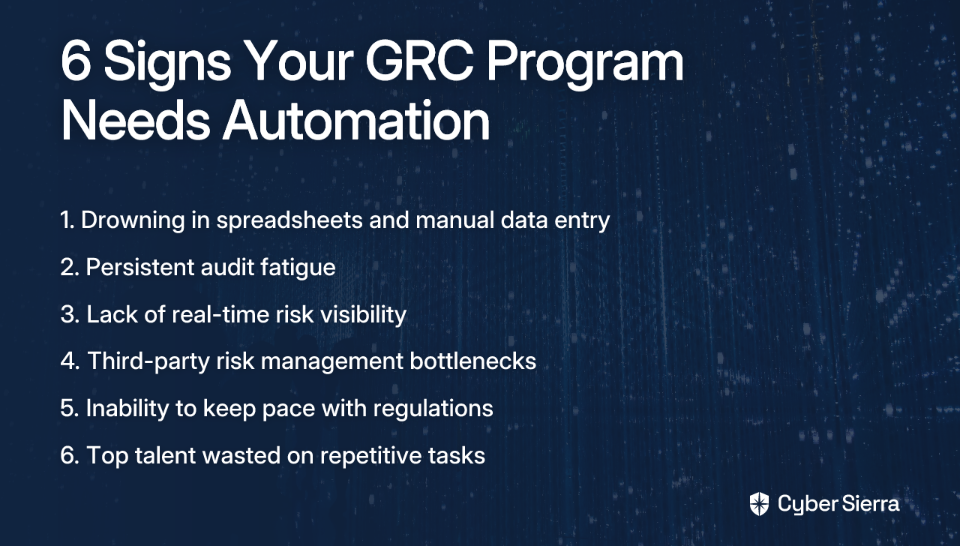
Here are the six unmistakable signs that your GRC program has outgrown manual processes and needs strategic automation to scale efficiently and manage risk effectively.
Sign 1: Your Team is Drowning in Spreadsheets and Manual Data Entry
The spreadsheet nightmare is real. If your team spends hours copying data between documents, manually updating control statuses, and piecing together information from disparate sources, you're facing a clear indicator that your processes have outgrown your tools.
Manual data handling doesn't just waste time – it's inherently error-prone. A single mistyped cell can cascade into faulty risk assessments or compliance gaps. The impact is measurable: one mid-sized bank found that 80% of its GRC staff's time was spent on document management alone, while another company required 200 hours to compile a single board report due to scattered data.
While automation requires initial investment in data integration, the payoff is substantial. A modern GRC platform centralizes information, reduces human error, and creates the "clean data" and "clean rules" needed for reliable automation. The key is ensuring you maintain a "human in the loop" for critical judgment calls while eliminating repetitive data tasks.
Sign 2: "Audit Fatigue" Has Become a Permanent State
If your team perpetually scrambles to collect evidence for audits, leading to burnout and duplicate work, your GRC program is stuck in a reactive cycle rather than a proactive stance.
The manual burden of evidence collection, updating controls, and responding to requests from auditors creates a continuous state of audit fatigue. Teams often find themselves gathering the same evidence repeatedly for different frameworks, wasting valuable resources that could be directed toward actual risk mitigation.
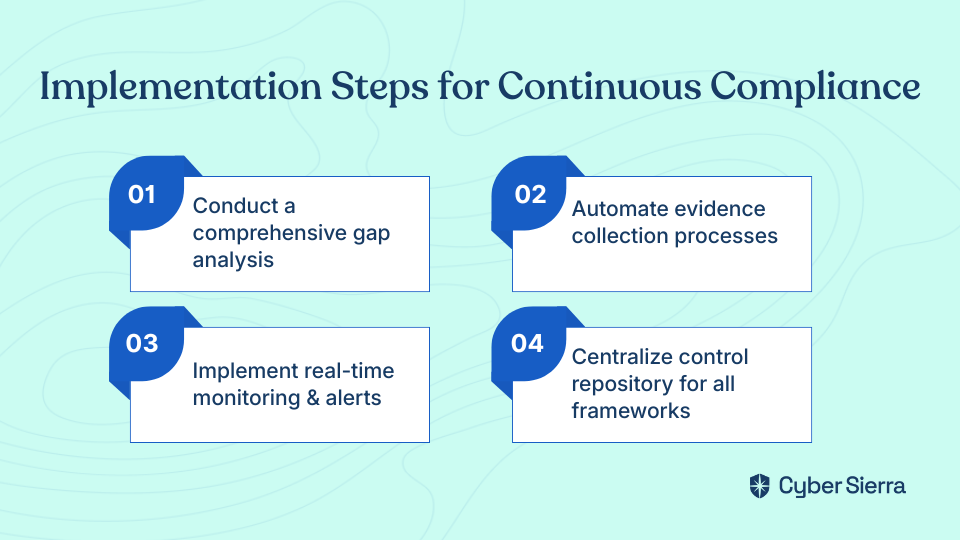
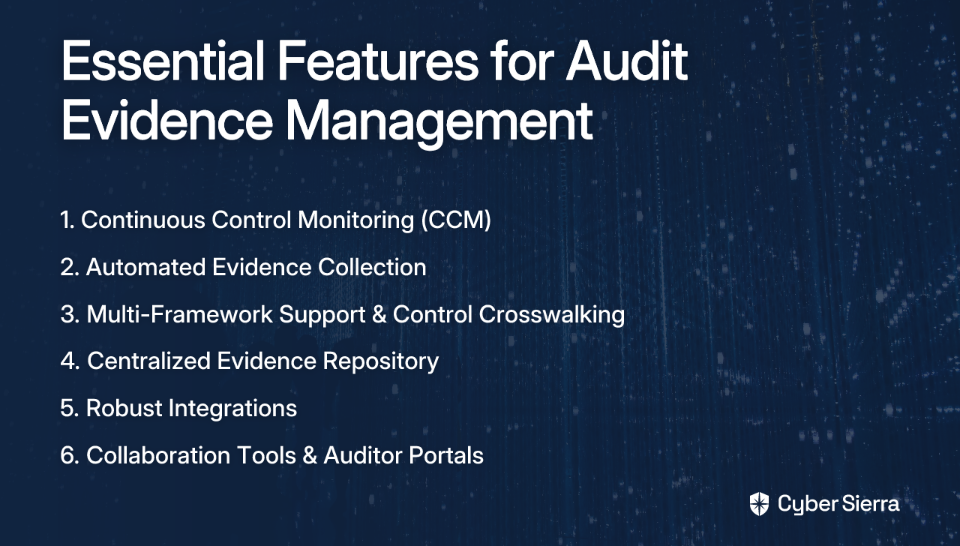
This is where Continuous Control Monitoring (CCM) becomes invaluable. Instead of periodic, manual checks, CCM provides ongoing, automated validation of controls. A platform like Cyber Sierra's CCM module integrates with your cloud and security tools to automatically gather evidence in near real-time, creating a central repository that makes you "audit-ready" at all times. This transforms a painful, cyclical process into a continuous, manageable one – while still allowing for the critical "manual controls review" that many practitioners insist cannot be automated.
Sign 3: You Lack a Real-Time, Unified View of Your Risk Posture
When your risk data lives in silos – spreadsheets, emails, departmental tools, and even individual laptops – it's impossible to obtain an accurate, up-to-the-minute picture of your organization's risk exposure. Decisions end up being made on outdated or incomplete information.
This fragmentation leads to an unclear state of controls and risks, resulting in incomplete reports and uncertainty about which controls are effective. Manual systems fail to reflect operational realities in real-time, which significantly impacts strategic decision-making and your ability to respond to emerging threats.
An automated GRC platform functions as a single source of truth, integrating data streams to provide high-quality information and live visibility through dashboards. Cyber Sierra's GRC platform provides this unified view, enabling real-time risk monitoring and generating comprehensive reports that give stakeholders the clarity they need for informed decisions.
As one GRC professional noted, "The amount of automation that can be done is proportionally related to how clean the data are and how clean the rules are." A modern platform creates the foundation for this data clarity.
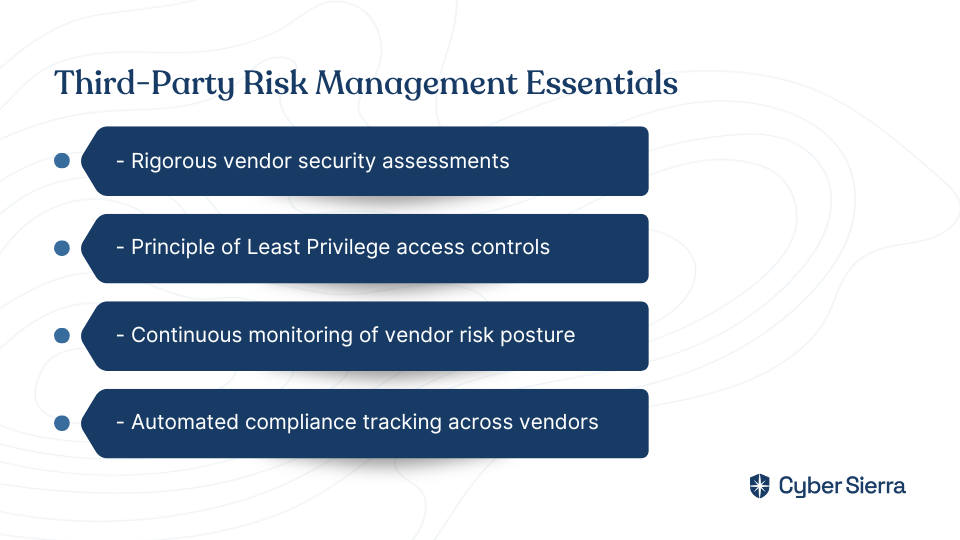
Sign 4: Managing Third-Party Risk Has Become a Major Bottleneck
If your team spends excessive time sending, chasing, and evaluating third-party questionnaires, your vendor risk management process is not only inefficient but likely missing critical risks.
As supply chains grow more complex, manually assessing every vendor becomes an unmanageable burden. The result is often a backlog of assessments, incomplete vendor profiles, and a significant risk exposure that goes unaddressed.
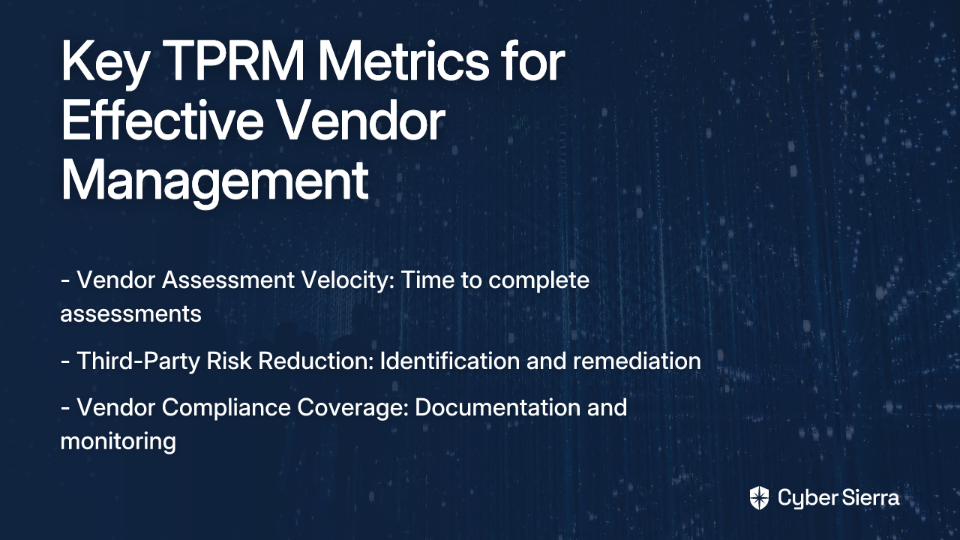
Third-Party Risk Management (TPRM) automation streamlines this entire process. While the final risk classification may require human expertise (as Reddit users rightly point out), the workflow around it can be dramatically improved. A TPRM tool automates the distribution and collection of questionnaires, scores responses based on predefined criteria, and provides continuous monitoring of your vendors' security posture.
Cyber Sierra's TPRM module simplifies this entire lifecycle, from onboarding to ongoing assessment, allowing you to prioritize vendors based on risk and focus your attention where it's needed most.
Sign 5: Your Program Struggles to Keep Pace with Regulatory Changes
As your business grows and regulations evolve (GDPR, HIPAA, PCI DSS, etc.), a manual GRC program simply cannot scale. Mapping controls across multiple frameworks becomes an unmanageable task, and keeping up with regulatory updates becomes nearly impossible.
Organizations expanding into new markets or facing new compliance requirements quickly find that manual processes become inadequate, hindering compliance efforts and the ability to adapt to new regulations. This leaves them vulnerable to non-compliance penalties and reputational damage.
Modern GRC platforms come with pre-built templates for major frameworks and automate the process of mapping a single control to multiple requirements. This "test once, comply many" approach saves enormous amounts of time while ensuring nothing falls through the cracks.
Platforms like Cyber Sierra allow you to manage multiple frameworks like SOC2, ISO 27001, and HIPAA in a centralized system, ensuring that as regulations change, your compliance posture can be updated efficiently without rebuilding from scratch.
Sign 6: Your Best People are Bogged Down by Low-Value, Repetitive Tasks
Your most valuable asset is your team's expertise. If your skilled GRC and security professionals are spending their days on administrative tasks like chasing data and formatting reports, you're misallocating resources and burning out your talent.
When compliance teams are constantly overwhelmed with manual processes, it's a clear sign of process inefficiency. A Thomson Reuters survey found that 65% of compliance professionals believe automation can reduce complexity in their roles, freeing them to focus on strategic work.
This directly connects to the cost-saving objective mentioned in user forums. Calculate the cost of your experts' time spent on manual work versus the investment in a tool that automates it. The ROI comes from freeing up experts to perform high-value risk classification and strategic analysis that truly moves the needle on your security posture.
As one practitioner put it, "There is always a point when the answer is yes, let's stop [automating]." The goal isn't 100% automation – it's strategic automation of the right processes.
Making the Shift: A Pragmatic Approach to GRC Automation
Successful GRC automation is strategic, not indiscriminate. To avoid common pitfalls, consider this pragmatic approach:

- Define Your Scope: Don't try to automate everything at once. Start with your biggest pain point, whether it's audit evidence collection or vendor questionnaires. As Reddit users suggest, some processes may still require manual oversight – and that's okay.
- Avoid Siloed Tools: Ensure any new platform can integrate with your existing systems to create a unified data flow. Adding disconnected point solutions will only fragment your data further.
- Secure Leadership Buy-In: A GRC automation project needs a champion in leadership to secure resources and drive adoption. Frame the project in terms of risk reduction and efficiency gains rather than technology.
- Prioritize Change Management: An automation tool is useless if the team doesn't adopt it. Involve your team from the start and provide proper training to ensure buy-in.
Conclusion: The Human-Machine Partnership
The signs are clear: spreadsheet overload, audit fatigue, no unified visibility, vendor risk bottlenecks, compliance scaling challenges, and misallocated talent all point to a GRC program that needs strategic automation.
But remember – GRC automation isn't about replacing human judgment. As one security professional noted, "A human in the loop is more adaptable. They're faster to identify, find, and fix flaws in logic and implementation." The goal is to create a human-machine partnership where automation handles the repetitive tasks, and your experts apply their judgment to complex risk decisions.
If these signs resonate with your experience, it might be time to explore a modern GRC platform. Cyber Sierra's AI-enabled platform helps organizations move from periodic, manual checks to proactive, near real-time risk management. By automating data collection, centralizing control monitoring, and streamlining vendor risk, we empower teams to focus on what truly matters: securing the enterprise.
Learn more about our integrated GRC solutions and how they can help your team escape the spreadsheet nightmare while maintaining the critical human oversight your program requires.
Frequently Asked Questions
What is GRC automation?
GRC automation is the use of technology to streamline and automate governance, risk management, and compliance processes. It replaces manual, repetitive tasks like data collection, control testing, and reporting with automated workflows, allowing GRC professionals to focus on strategic analysis and decision-making instead of administrative toil.
How does GRC automation help with compliance audits?
GRC automation significantly helps with compliance audits by providing continuous, automated evidence collection and a centralized repository for all control-related data. This approach, often called Continuous Control Monitoring (CCM), makes your organization "audit-ready" at all times. It eliminates the last-minute scramble for evidence, reduces audit fatigue, and allows you to map a single piece of evidence to multiple compliance frameworks like SOC 2 or ISO 27001.
Can GRC automation replace GRC professionals?
No, GRC automation is not designed to replace GRC professionals but to augment their capabilities. The goal is to create a human-machine partnership where technology handles low-value, repetitive tasks. This frees up human experts to apply their critical judgment to complex risk analysis, strategic planning, and exception handling—areas where human expertise remains irreplaceable.
What are the first steps to implementing GRC automation?
The first step to implementing GRC automation is to identify and prioritize your most significant pain points. Rather than trying to automate everything at once, start with a specific area like audit evidence collection or third-party risk management. From there, define your scope, secure leadership buy-in by focusing on risk reduction, and choose an integrated platform that can scale with your needs.
How does an automated GRC platform improve risk visibility?
An automated GRC platform improves risk visibility by consolidating data from disparate sources (like spreadsheets, emails, and various security tools) into a single, unified dashboard. It breaks down data silos to provide a real-time, accurate picture of your organization's risk exposure. This enables stakeholders to make informed, strategic decisions based on up-to-the-minute information rather than outdated reports.
What is the ROI of GRC automation?
The ROI of GRC automation comes from significant cost savings, improved operational efficiency, and reduced risk exposure. It reduces the hours your skilled professionals spend on manual administrative tasks, minimizes the risk of costly compliance fines and data breaches, and accelerates business decisions by providing real-time risk intelligence. The primary value is in freeing up your experts to focus on high-value strategic initiatives that strengthen the organization's security posture.