How CISOs Can Translate Technical Risk into Board-Level KPIs


Join thousands of professionals and get the latest insight on Compliance & Cybersecurity.
Your security team has patched hundreds of vulnerabilities and blocked thousands of threats this quarter, but in the boardroom, the questions remain frustratingly the same: "Are we secure?" and "What's the ROI on our cybersecurity spend?" Many cybersecurity teams feel undervalued, often seen as blockers rather than enablers of business, with their accomplishments lacking recognition despite significant effort.
The core problem? The language of cybersecurity (vulnerabilities, patches, alerts) doesn't align with the language of the boardroom (revenue, risk, reputation, ROI). This communication gap creates a serious business vulnerability of its own.
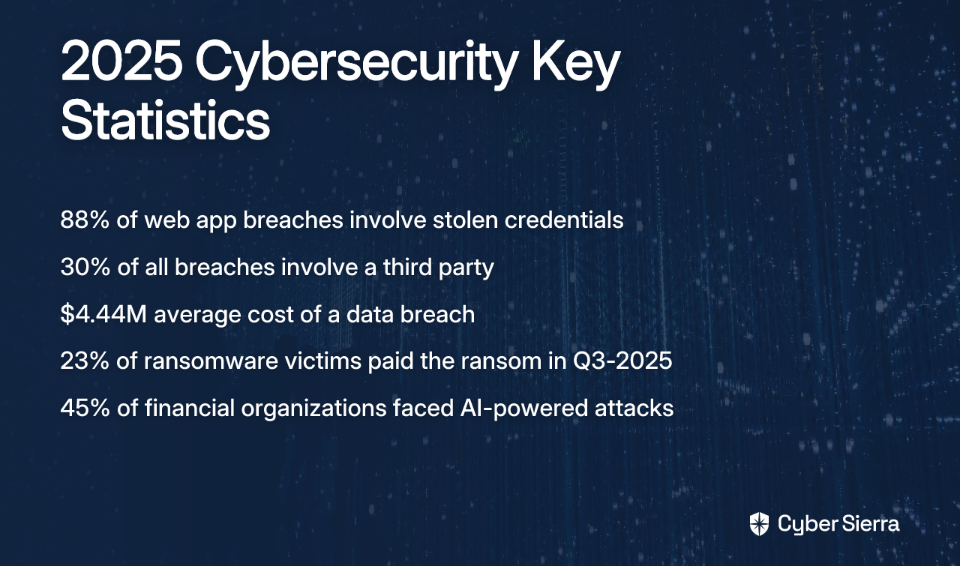
In 2022, a staggering 83% of organizations suffered more than one data breach. With ransomware attacks surging by 13% – a rise "equivalent to the last five years combined" – effective security communication has never been more critical.
This article provides a practical framework and specific, actionable KPIs for CISOs to effectively translate technical risk into a business narrative that resonates with senior leadership and the board.
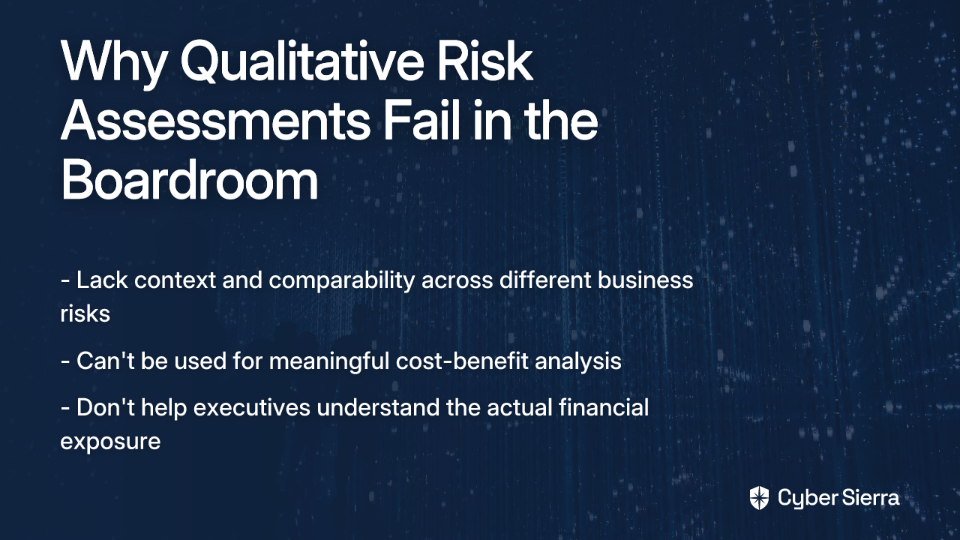
The Great Disconnect: Why Technical Metrics Fail in the Boardroom
The board doesn't speak in terms of patch velocity or IDS alerts; they speak the language of financial, reputational, operational, and strategic risk. "Cybersecurity has evolved from focusing solely on technology risks to broader business risks."
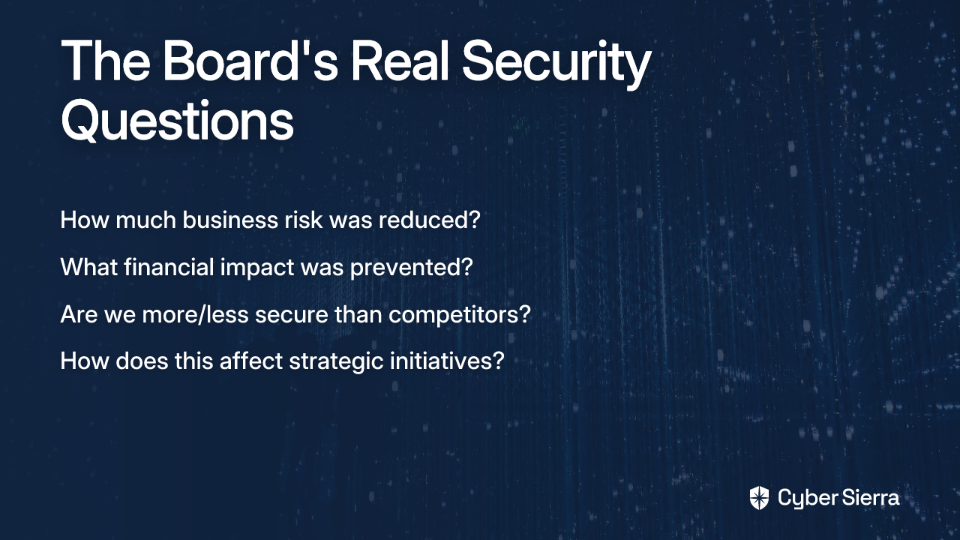
When a CISO proudly reports that "10,000 threats were blocked this quarter," it's an impressive number, but it fails to answer the board's real questions:
- How much actual business risk was reduced?
- What financial impact did we prevent?
- Are we more or less secure than our competitors?
- How does this affect our strategic initiatives?
Many senior managers seek "a clear understanding of risks and financial impacts rather than technical metrics," as expressed by security professionals. Technical metrics without business context are like reporting a car's engine temperature without mentioning if you'll reach your destination.
This disconnect doesn't just frustrate CISOs – it creates genuine business risk by preventing effective security investment decisions and undermining the strategic value of cybersecurity efforts.
The CISO as a Business Translator: Shifting the Mindset
The evolution of the CISO role requires moving beyond technical reporting to become a key advisor on business risk. This transformation demands a fundamental shift in mindset: viewing yourself not just as a security expert, but as a translator between technical realities and business implications.
To bridge this gap, CISOs must position themselves as business risk advisors who happen to specialize in cyber domains. The US NIST Cybersecurity Framework (CSF) 2.0 provides an excellent foundation for aligning security activities with business objectives. This framework helps create a common language to discuss risk appetite in the context of the broader business landscape.
Another effective approach is establishing "fusion centers" or cross-functional teams that combine technical and business personnel to develop a shared risk taxonomy. These teams help ensure security stays aligned with actual business goals rather than theoretical technical perfection.
When speaking with the board, frame security initiatives not as costs, but as protectors of revenue and enablers of innovation. Rather than discussing the technical details of a new security tool, focus on how it reduces the likelihood of a business-disrupting event or enables the company to safely pursue growth opportunities.
The Ultimate KPI Playbook: 10 Categories of Board-Ready Security Metrics
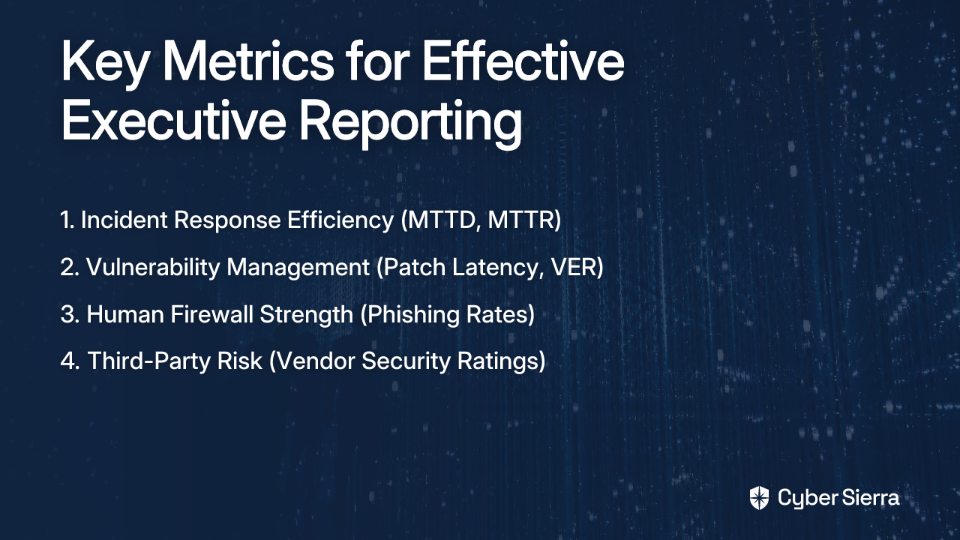
Now for the practical part – translating technical metrics into business-focused KPIs. Based on research from DarkReading, here are 10 categories of metrics that effectively communicate security's business value:
1. Data Protection Metrics
Raw Metric: Percentage of critical data encrypted, backup and recovery success rate
Board Translation: "We have encrypted 95% of our critical customer PII, significantly reducing the financial and reputational impact of a potential breach. Our recovery tests show we can restore critical systems in under 4 hours, ensuring business continuity."
2. Financial Protection Metrics
Raw Metric: Value of financial losses from cyber incidents
Board Translation: "Our new email security controls have led to a 70% reduction in successful business email compromise attempts this quarter, directly protecting approximately $2M in potential losses."
3. Human Factor Metrics
Raw Metric: Percentage of employees who click on phishing simulations
Board Translation: "Our security awareness training is showing a strong return. Phishing simulation click-through rates have dropped from 20% to 5%, strengthening our human firewall and reducing our single largest attack vector."
4. Third-Party Risk Metrics
Raw Metric: Percentage of critical vendors meeting security standards
Board Translation: "We continuously monitor our top 50 critical vendors. 85% currently meet our security requirements, and we have active remediation plans for the remaining 15%, reducing our supply chain risk exposure."
5. Infrastructure Security Metrics
Raw Metric: Percentage of servers with critical vulnerabilities patched within SLA
Board Translation: "We are meeting our goal of patching 98% of critical infrastructure vulnerabilities within 30 days, proactively closing the window of opportunity for attackers to exploit known weaknesses in our core systems."
6. Endpoint Protection Metrics
Raw Metric: Number of threats detected and prevented by endpoint solutions
Board Translation: "Our endpoint protection platform successfully blocked over 500 malware and ransomware attempts on employee laptops this month, preventing potential operational downtime and data loss."
7. Emerging Technology Risk Metrics
Raw Metric: Number of unpatchable IoT devices on the network
Board Translation: "We've identified 150 legacy IoT devices in our manufacturing plant. By segmenting them onto an isolated network, we've contained the risk they pose to our core business operations without requiring a costly rip-and-replace."
8. Application Security Metrics
Raw Metric: Average time to patch critical application vulnerabilities
Board Translation: "By integrating security checks earlier in our development lifecycle, we've reduced the number of critical vulnerabilities in new application releases by 40%, making our products safer for customers and reducing future remediation costs."
9. Security Posture Testing Metrics
Raw Metric: Penetration test findings and external security ratings
Board Translation: "Our latest independent penetration test revealed 2 critical findings, both of which were remediated within 48 hours. Our external security score places us in the top 10% of our industry, demonstrating a strong and mature security posture."
10. Incident Response Metrics
Raw Metric: Mean Time to Detect (MTTD) and Mean Time to Contain (MTTC)
Board Translation: "Our investment in our Security Operations Center has reduced our average time to detect a threat from 24 hours to just 2 hours. This speed is critical to containing an incident before it can cause significant business damage."
Automating the Message: Streamlining Board Reporting with GRC Platforms
Manually collecting, correlating, and presenting these KPIs is time-consuming, error-prone, and often results in outdated reports. This reflects a common pain point of depending on "outdated tools" which "hinder efficiency" in security management.
Governance, Risk, and Compliance (GRC) platforms with Continuous Control Monitoring (CCM) capabilities offer a solution by centralizing data and automating reporting. These tools provide several key benefits:
- Efficiency: Saves hundreds of hours in data collection for audits and reporting
- Accuracy: Reduces human error in compliance tracking
- Proactive Risk Management: Provides near real-time visibility into security gaps
Platforms like Cyber Sierra address this exact challenge. Their GRC module automates data collection and risk assessments across multiple frameworks such as SOC2 and ISO 27001, providing a single source of truth.

Meanwhile, their Continuous Control Monitoring (CCM) module offers interactive dashboards with near real-time updates on security controls, allowing CISOs to walk into board meetings with current, accurate views of the organization's security posture.
For supplier risk (Category 4 above), Cyber Sierra's TPRM platform automates vendor assessments and provides ongoing visibility into third-party security compliance, transforming a cumbersome manual process into clear, quantifiable risk metrics for board presentations.
Your Board Presentation Checklist
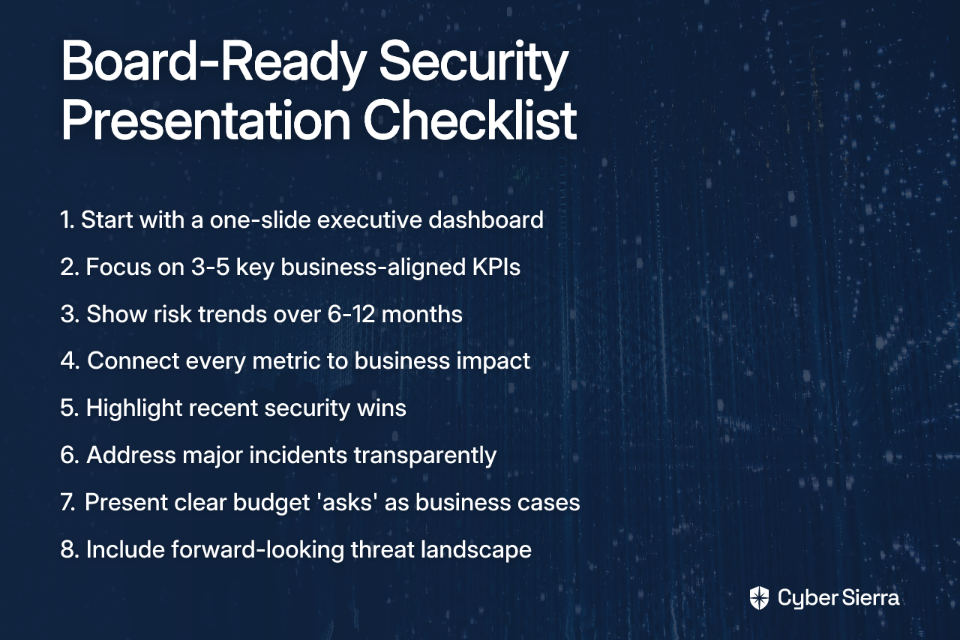
To ensure your security metrics resonate with the board, use this practical checklist based on insights from security leaders:
- [ ] Executive Summary (The First 60 Seconds): Start with a one-slide "at-a-glance" dashboard showing overall risk posture, key trends, and top 3 risks.
- [ ] Focus on 3-5 Key KPIs: Don't overwhelm them. Select the most impactful metrics that tell a clear story for the current quarter.
- [ ] Show Trends Over Time: A single data point is useless. Show graphs illustrating improvement or emerging challenges over the last 6-12 months.
- [ ] Connect to Business Impact: For every metric, explicitly state the business implication (e.g., "This reduction in MTTR saved an estimated $X in potential downtime").
- [ ] Highlight a Recent Win: Briefly describe a recent incident that was successfully prevented or contained, demonstrating the value of your security program.
- [ ] Address Major Incidents (If Applicable): Be transparent. Clearly articulate what happened, the business impact, lessons learned, and the remediation plan.
- [ ] Present Clear 'Asks': If you need budget or a decision, frame it as a business case: "We are asking for $Y to implement Z, which will reduce our risk of a data breach by an estimated X%."
- [ ] Look Ahead: Briefly touch on the emerging threat landscape and your strategic plan to address it over the next 6-12 months.
Conclusion
Effective communication is as critical as technical defense. By translating technical risk into board-level KPIs, CISOs transform their function from a cost center into a strategic business partner. This approach solves the core problems of gaining recognition, justifying budget, and earning a strategic voice in the organization's future.
Remember: Stop reporting on security activities; start communicating business value. Your technical expertise is only as valuable as your ability to translate it into language that drives business decisions.
The most successful CISOs aren't just security experts—they're business leaders who specialize in managing cyber risk. Implementing these board-ready KPIs is your first step toward earning that strategic recognition.
Frequently Asked Questions
Why do technical cybersecurity metrics often fail to resonate with the board?
Technical cybersecurity metrics fail because they don't connect to the board's primary concerns: financial performance, strategic goals, and overall business risk. Reporting metrics like "vulnerabilities patched" or "threats blocked" without context doesn't answer their key questions, such as "How much risk did we reduce?" or "What was the potential financial impact we avoided?" This creates a communication gap where security efforts are seen as technical costs rather than strategic investments.
What are the most important security metrics for a board report?
The most important metrics are those that directly translate security performance into business value and risk reduction. Instead of focusing on a large volume of data, select 3-5 key KPIs that tell a compelling story. Excellent examples include Financial Protection Metrics (e.g., dollars saved by preventing BEC attacks), Incident Response Metrics (e.g., reduced time to contain threats, minimizing potential downtime costs), and Third-Party Risk Metrics that quantify supply chain exposure.
How can CISOs effectively translate technical cyber risk into business impact?
CISOs can translate technical risk by shifting their mindset from a technology expert to a business risk advisor. This involves framing security discussions around the potential financial, reputational, and operational consequences of a cyber incident. Use analogies the board understands and leverage frameworks like the NIST CSF to create a shared language. For every technical metric, provide a "Board Translation" that clearly states the business outcome, such as, "Our patch management program reduced our exposure to critical vulnerabilities by 98%, protecting our core revenue-generating systems from known exploits."
How do GRC platforms help with cybersecurity reporting to the board?
Governance, Risk, and Compliance (GRC) platforms help by automating the collection, correlation, and visualization of security data from various sources. This provides a centralized, near real-time view of the organization's security posture and risk landscape. For board reporting, this means CISOs can present accurate, up-to-date dashboards that clearly show risk trends and control effectiveness, saving hundreds of manual hours and replacing static, quickly outdated spreadsheets with dynamic, data-driven insights.
What are the key components of an effective cybersecurity presentation for the board?
An effective cybersecurity board presentation should be concise, business-focused, and forward-looking. Key components include a one-page executive summary with an at-a-glance risk posture, a focus on 3-5 key KPIs that show trends over time, a clear connection between security metrics and business impact, and a transparent discussion of any major incidents and lessons learned. Crucially, any requests for budget or resources should be presented as a clear business case with an expected ROI in terms of risk reduction.
How can you demonstrate the ROI of cybersecurity investments?
Demonstrating cybersecurity ROI involves tying security spending to specific business outcomes and potential loss avoidance. This can be done by quantifying the financial impact of prevented incidents, such as calculating the potential cost of a data breach that was averted due to new security controls. Another method is to show how security acts as a business enabler; for example, a robust application security program allows the company to innovate and release new products faster and more safely, directly contributing to revenue growth.