blog-hero-background-image
Governance & Compliance

PCI DSS Compliance Checklist & Guide for Automating the Process

backdrop
Table of Contents

Join thousands of professionals and get the latest insight on Compliance & Cybersecurity.


What is PCI DSS Compliance Checklists?

The PCI DSS (Payment Card Industry Data Security Standards) checklist is a comprehensive tool designed to help organizations fulfill PCI DSS requirements and ensure compliance with security standards for handling cardholder data.

It includes 12 core requirements, such as implementing firewalls, encryption, and access controls, aimed at protecting sensitive payment information. By following this checklist, organizations can enhance their security posture, mitigate risks of data breaches, and maintain customer trust while avoiding penalties associated with non-compliance.

PCI DSS Compliance Checklist & Guide for Automating the Process

Staying compliant to the Payments Card Industry Data Security Standard (PCI DSS) can be overwhelming. To give you a clue, about 60.5% of PCI DSS requirements were unmet by organizations when they suffered a data breach, per SecurityMetrics’ 2021 study:
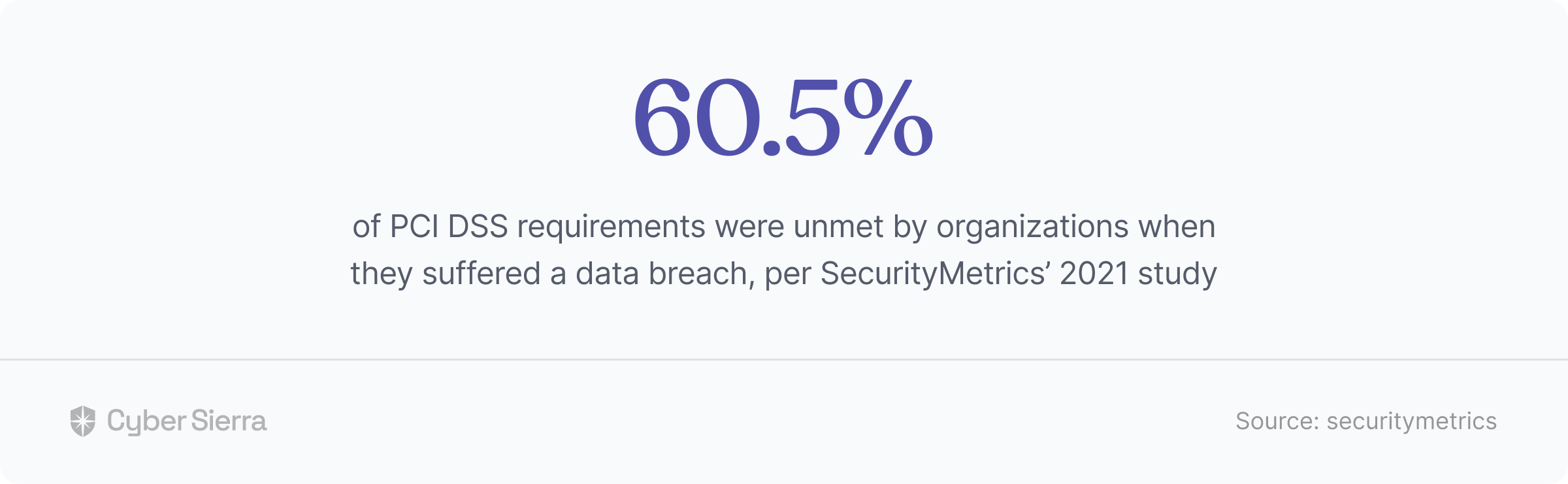
about 60.5% of PCI DSS requirements were unmet by organizations when they suffered a data breach, per SecurityMetrics’ 2021 study

This data confirms three things: 

  1. As the dynamics of processing, storing, and transmitting customers’ payments and credit card info evolve, the potential for data breaches also increases.
  2. Meeting PCI DSS requirements is difficult. 
  3. You should automate the process of implementing controls to stay compliant, even after meeting initial requirements. 

So when seeking a checklist, consider one that covers automating the implementation of controls post PCI DSS compliance. For this, CTOs and IT executives must start by…

Knowing the PCI DSS Controls & Requirements

PCI DSS has over 300+ security controls. So much so that learning all can take days, as observed by a Security Policy Lead at Stripe: 
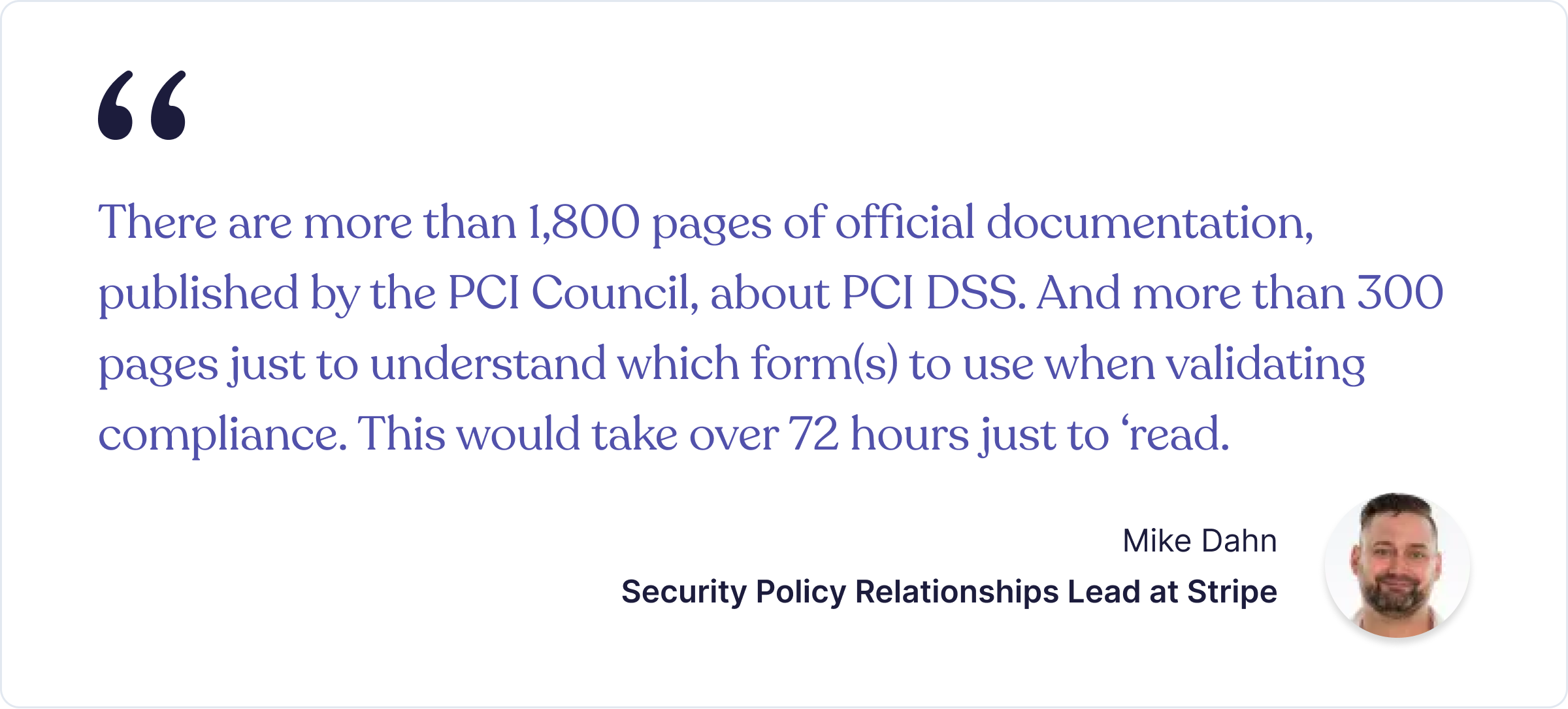
Mike Dahn - Quote

To help, the PCI Council organized these controls into six objectives, along with their corresponding compulsory requirements. 

As illustrated below: 
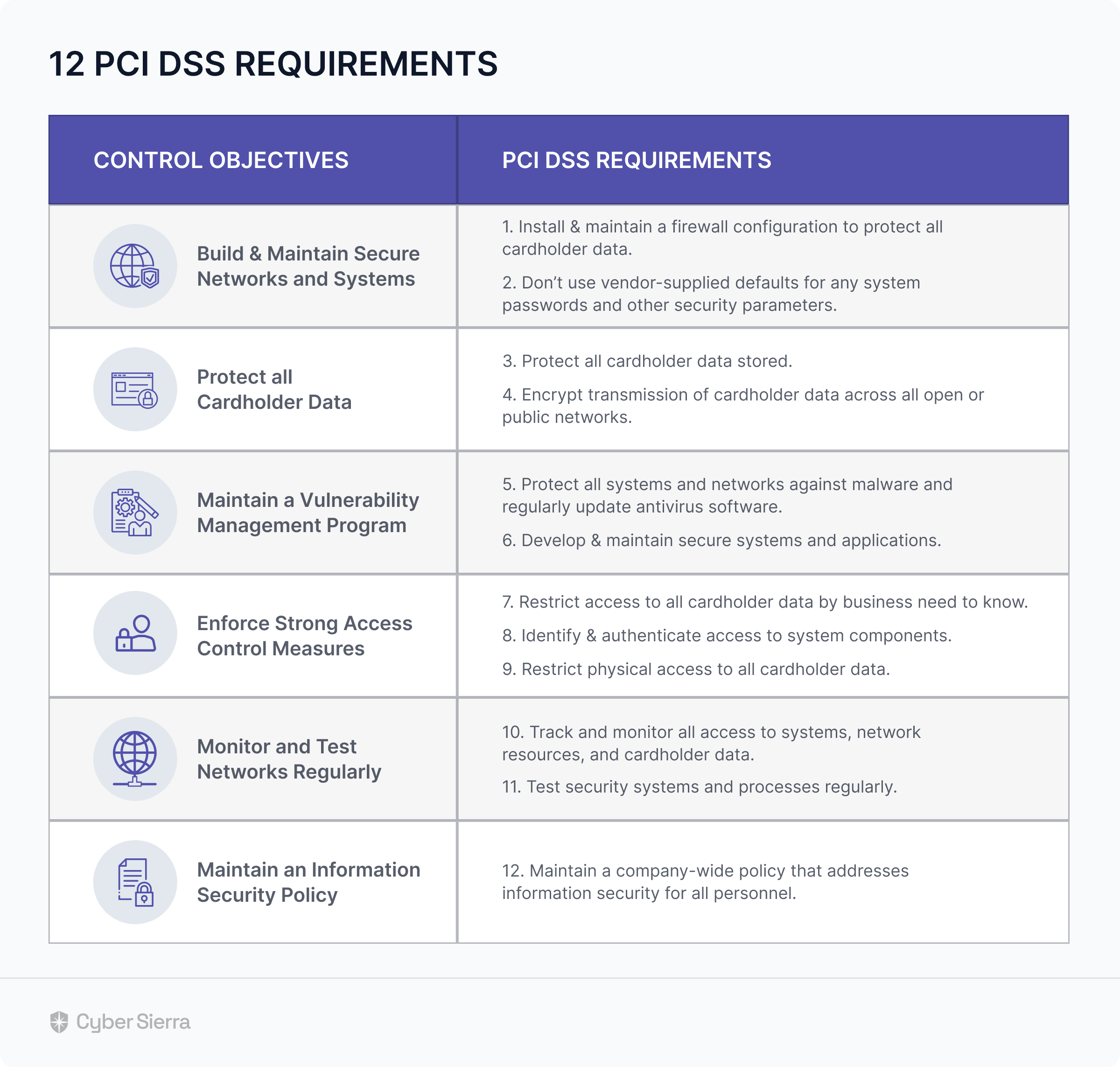
12 PCIDSS requirements

With the mandatory control objectives and their corresponding requirements outlined, to become and stay compliant teams must: 

  • Adhere to the core PCI DSS requirements per control group
  • Automate their implementation to save time & money. 

This checklist guide (you can download it below) will help you achieve both. As we go through it, you’ll also see how Cyber Sierra automates their implementation to save you time and money:

illustration background

PCI DSS Compliance Certification Checklist

A checklist to help you automate the implementation of PCI DSS control and requirements.
card image

The 8-Step PCI DSS Compliance Checklist

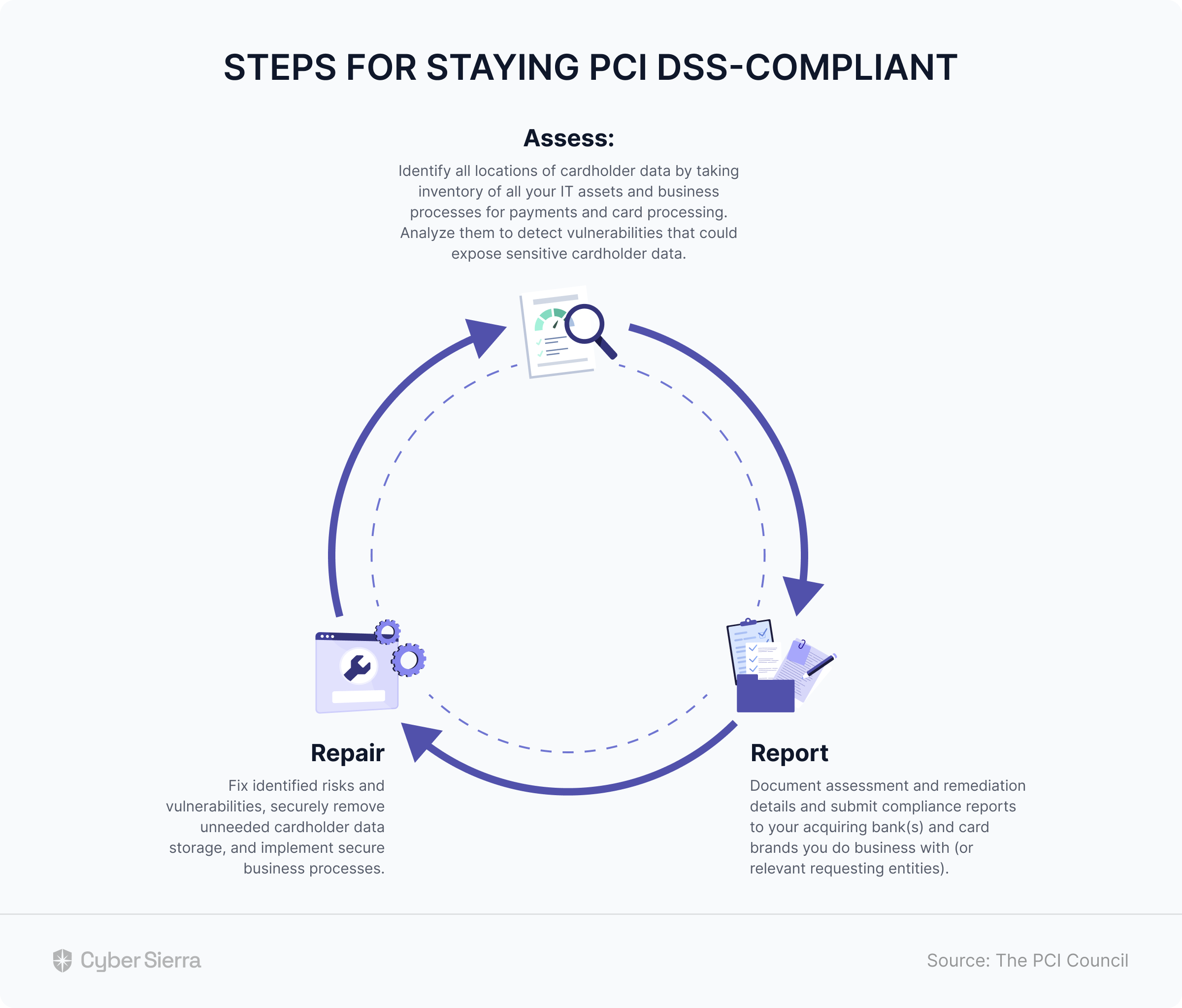
The PCI Council’s official reference guide outlined three steps for ongoing adherence and compliance to the PCI DSS. The steps are:

  1. Assess: Identify all locations of cardholder data by taking inventory of all your IT assets and business processes for payments and card processing. Analyze them to detect vulnerabilities that could expose sensitive cardholder data. 
  2. Repair: Fix identified risks and vulnerabilities, securely remove unneeded cardholder data storage, and implement secure business processes. 
  3. Report: Document assessment and remediation details and submit compliance reports to your acquiring bank(s) and card brands you do business with (or relevant requesting entities):
steps for staying PCI DSS compliant

This 8-step checklist is designed to help you adhere to these ongoing requirements, as they are crucial to earning PCI DSS certification. 

1. Determine PCI Level

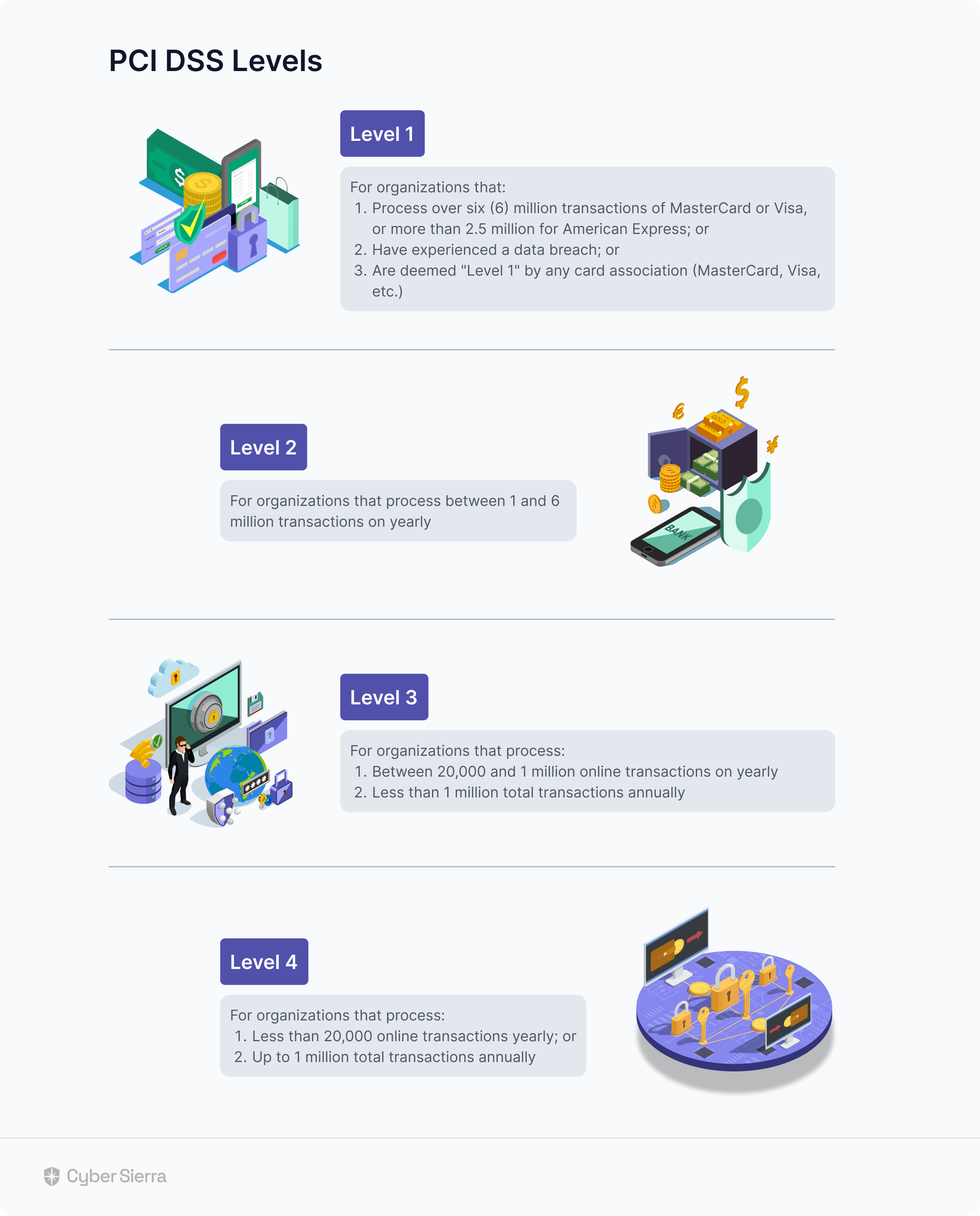
Achieving PCI DSS compliance starts with knowing what PCI level your organization falls under. It could be one of four levels typically ranked based on credit card transactions:
Determine PCI Level

2. Map All Cardholder Data Flows

Three things your team should do here are: 

  1. Detect all customer-facing areas involved in processing payment transactions across your organization. This could include online shopping carts, over-the-phone orders, in-store payment terminals via credit/debit cards, etc.
  2. Pinpoint the various ways cardholder data is handled across your company’s business units. Importantly, outline where the data is stored and everyone in your organization with access to it. 
  3. Identify internal systems and technologies involved in payments and transactions processing. This should include your cloud assets, network systems, data centers, and others. 

These three to-dos above are crucial. 

And that’s because it creates a comprehensive map of network systems, connections, and applications interacting with all credit card data across your organization. 

3. Perform Internal Security Assessment

Once you’ve mapped all organization-wide network systems interacting with credit card data, assess them to spot vulnerabilities not aligned with the PCI DSS security controls. 

You can do this with Cyber Sierra. 

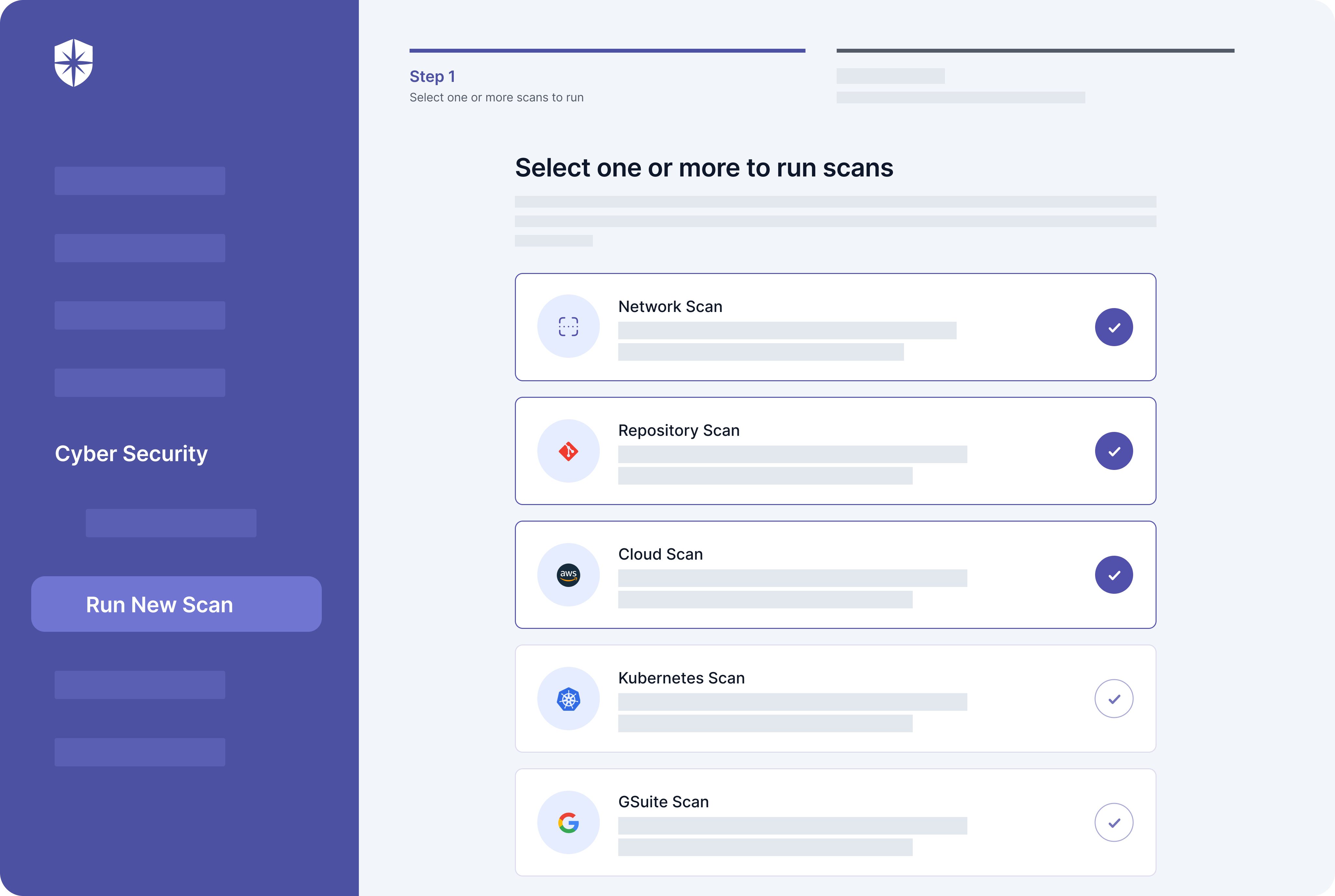
Initiate a scan of all technologies and network systems mapped to be interacting with cardholder data. For instance, you scan your Kubernetes, Repository, Networks, and Cloud environments: 
Perform Internal Security Assessment

Once you initiate a scan, Cyber Sierra will:

  1. Continuously monitor all network systems and cloud assets interacting with credit card payment transactions 
  2. Automatically assess and detect critical risks you should prioritize to stay aligned with PCI DSS security controls
  3. Highlight tips guiding your team to remediate detected risks and vulnerabilities as they emerge. 

You can also assign the remediation of these risks as tasks to relevant members of your security team on the same pane:
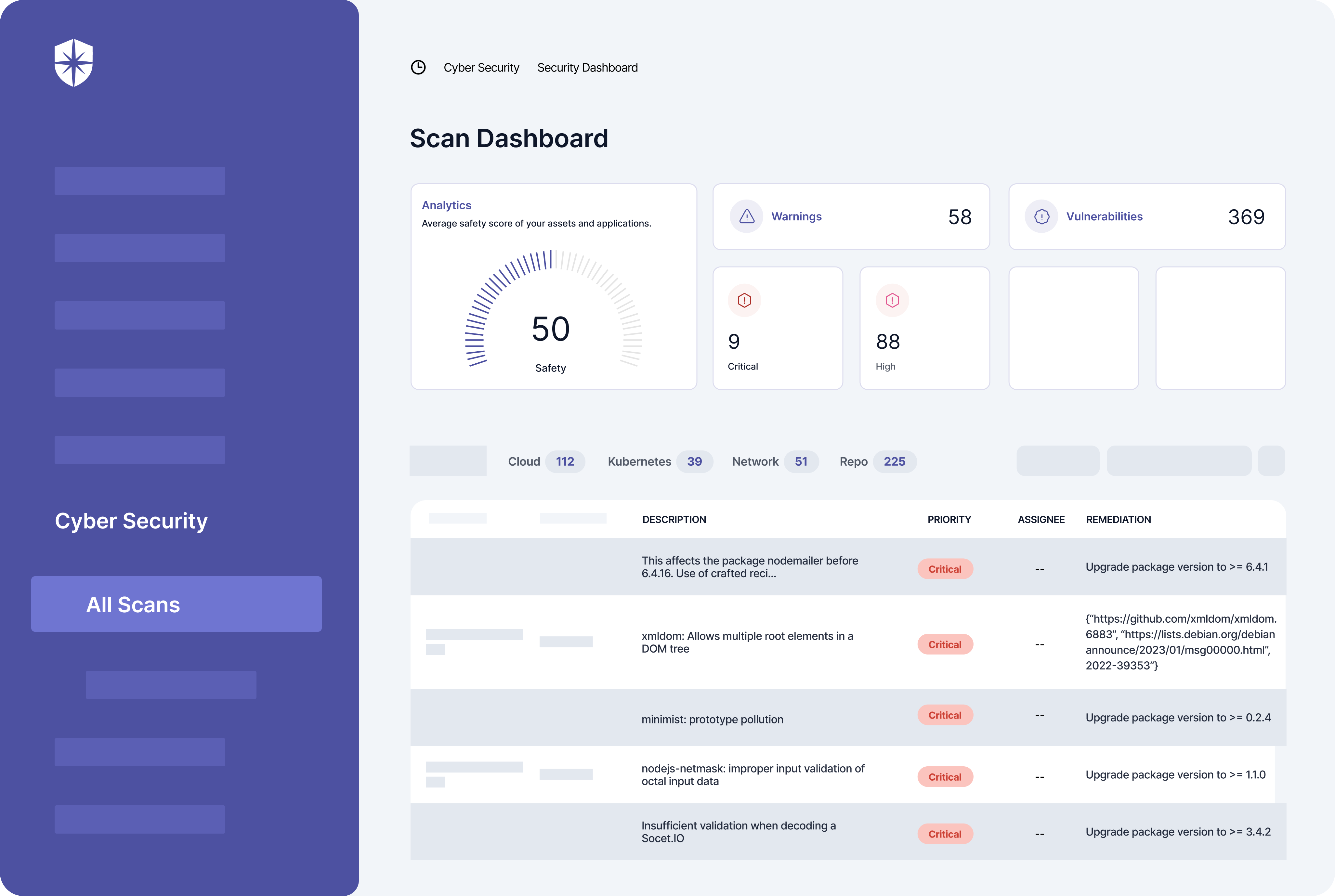
assign the remediation of these risks

illustration background

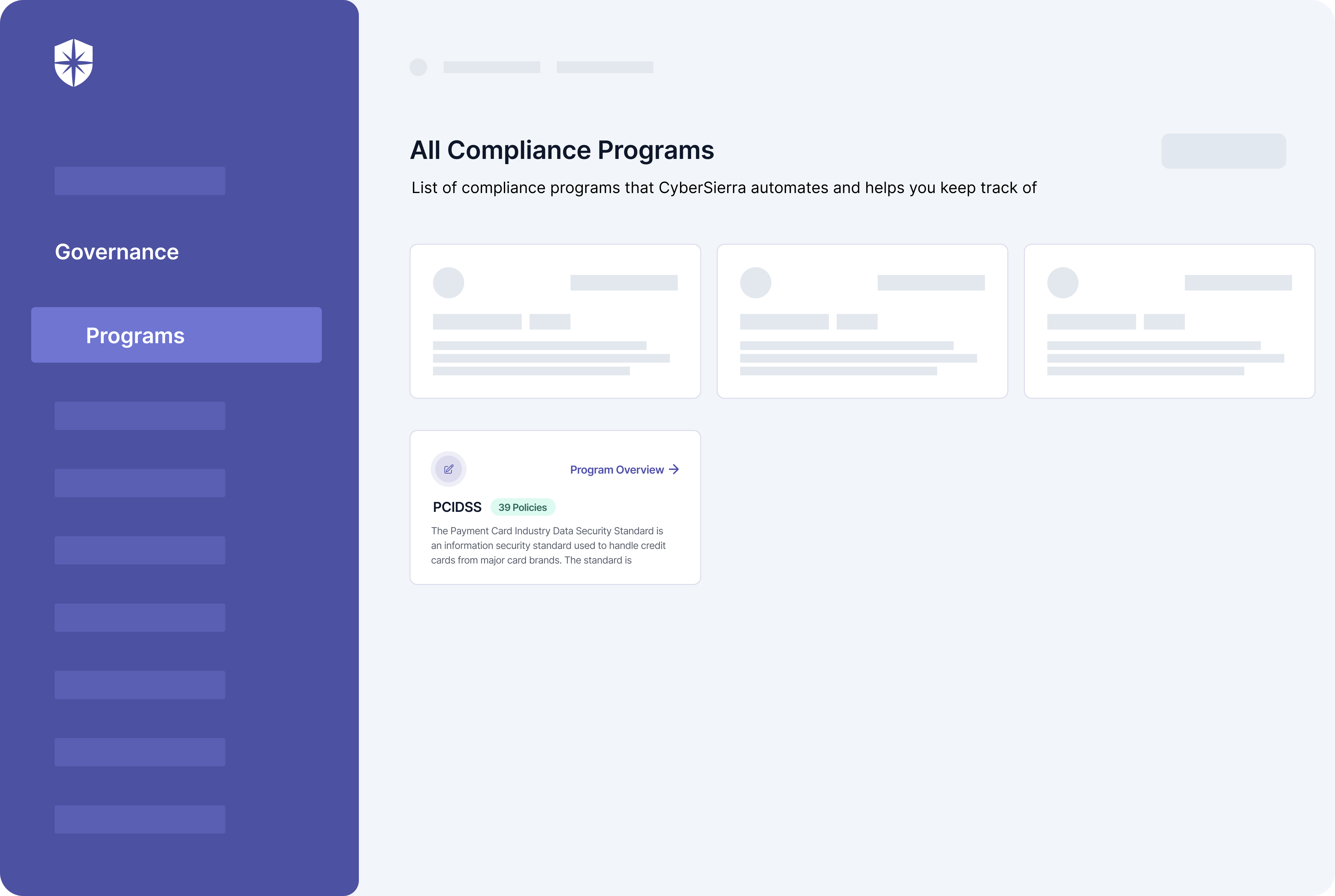
Automate PCI DSS compliance.

Scan systems interacting with cardholder data, remediate risks, and continuously monitor PCI security controls from one place.
card image

4. Fill Out Self-Assessment Questionnaire (SAQ)

The SAQ records the result of the internal security assessment performed to gauge your company’s compliance with PCI DSS. The particular SAQ to fill out depends on your organization’s PCI Level transaction types relevant to your business environment. 

As captured in this chart by the PCI Council: 
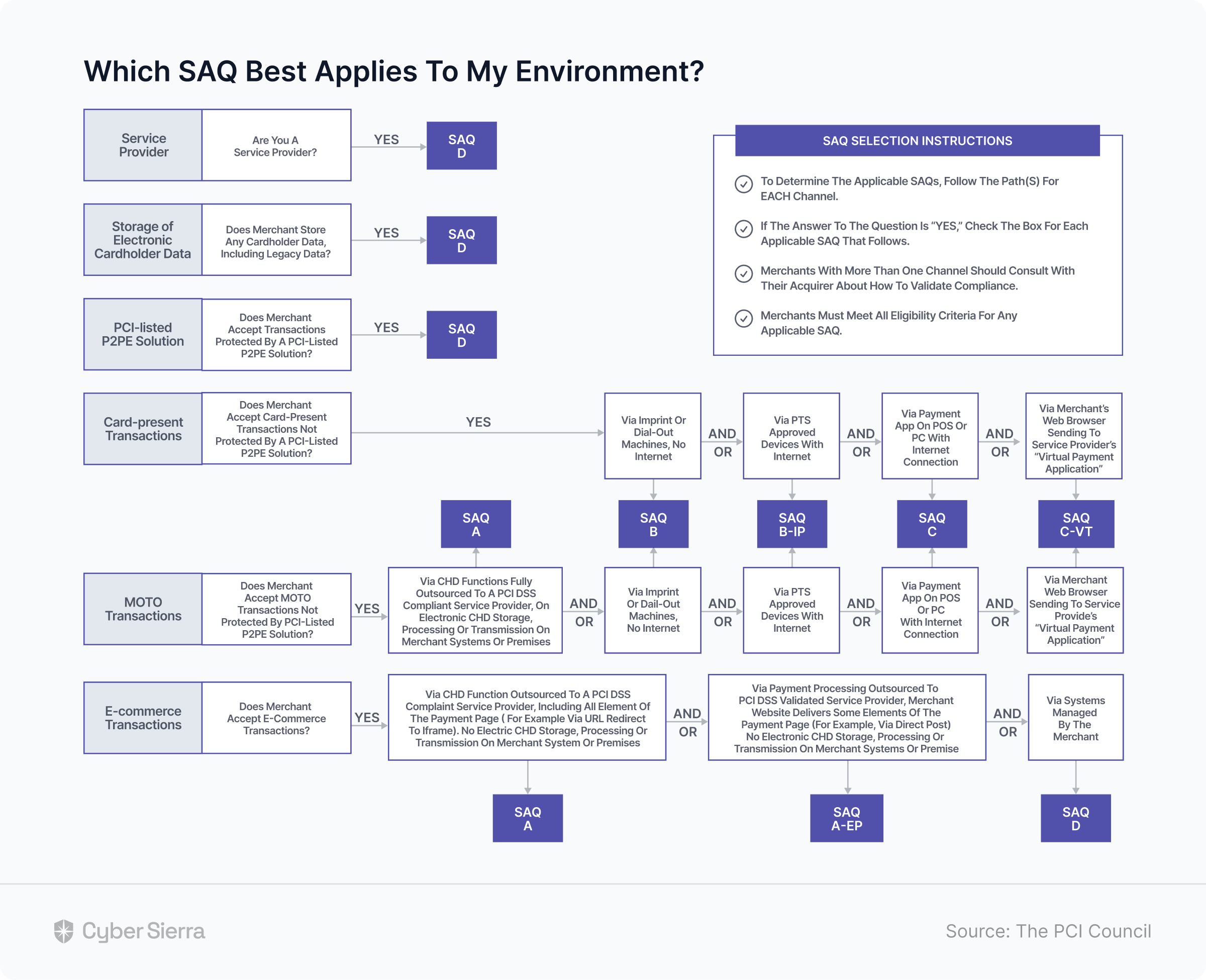
 Fill Out Self-Assessment Questionnaire (SAQ)

5. Conduct External Vulnerability Scans

This step prepares you for compliance.

After the internal security assessment performed and self-assessment questionnaire filled out, hire PCI DSS approved scanning vendors (ASVs) to conduct another round of scans. These experts ensure that you’ve met all required PCI DSS standards before proceeding. 

Noah Stahl shared why this is crucial: 
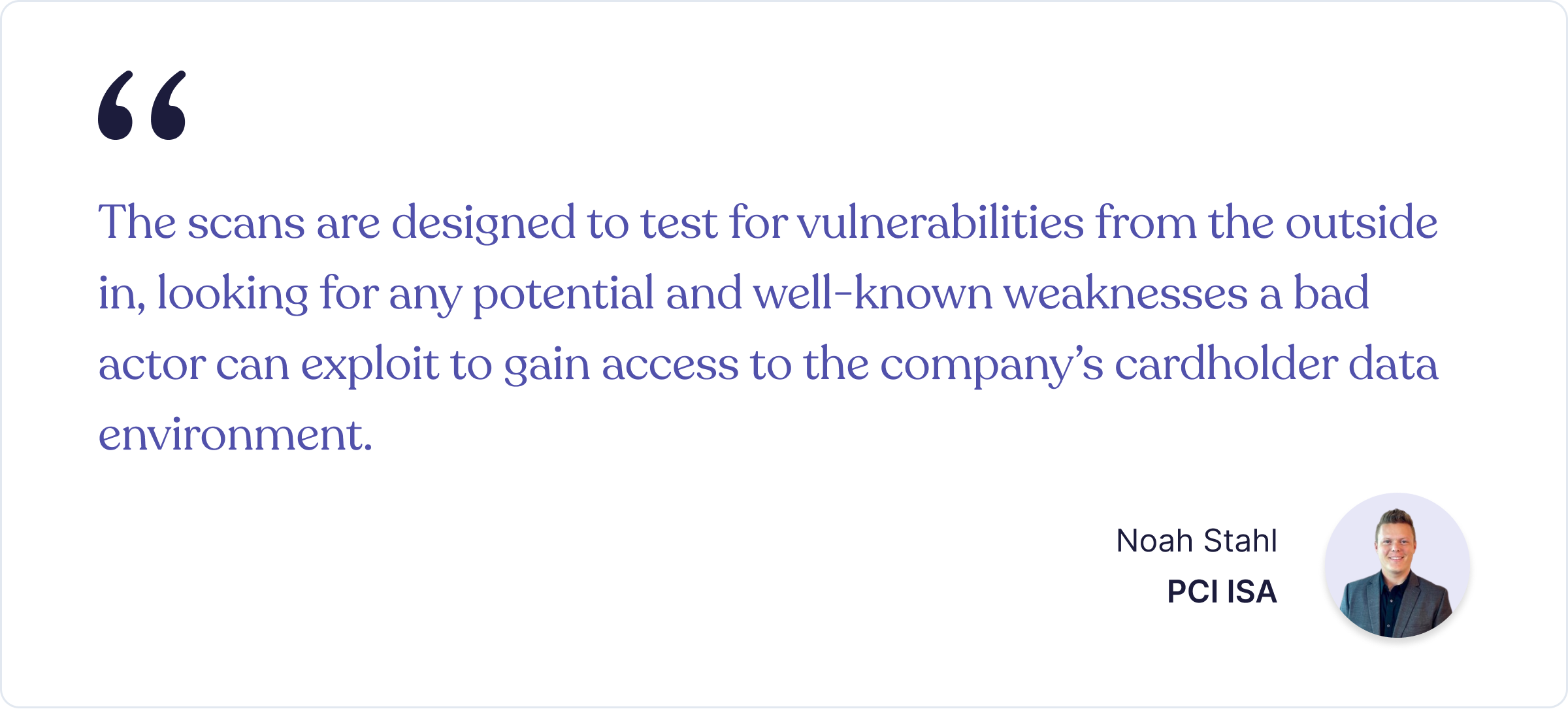
Noah Stahl - Quote

6. Complete the Attestation of Compliance (AoC)

The Attestation of Compliance (AoC) declares your company’s compliance with PCI DSS. As a mandatory step toward PCI DSS compliance certification, this document must be completed by a Qualified Security Assessor (QSA). 

Because it serves as evidence that your organization’s security posture, network systems, and practices can effectively protect against cardholder data threats. 

Preview a sample of the document here

7. Submit Filled Out PCI DSS Documents

Submit filled out forms in the previous steps, including: 

  • Approved Scanning Vendors (ASVs) report
  • Self-Assessment Questionnaire (SAQ), and
  • Attestation of Compliance (AoC). 

Once submitted, a PCI DSS accredited auditor reviews, vets them, and finalizes the PCI DSS compliance certification process for your company. 

But it doesn’t end there. 

8. Implement Continuous Monitoring

PCI DSS compliance is no one-time affair. 

To understand why, recall this guide’s introduction. I cited data showing that about 60.5% of organizations didn’t meet PCI DSS requirements when they suffered a data breach. 

Here’s how you avoid that.  

Continuously monitor your organizations’ adherence to the PCI DSS security controls, even after achieving initial compliance. Cyber Sierra’s continuous control monitoring suite automates this. 

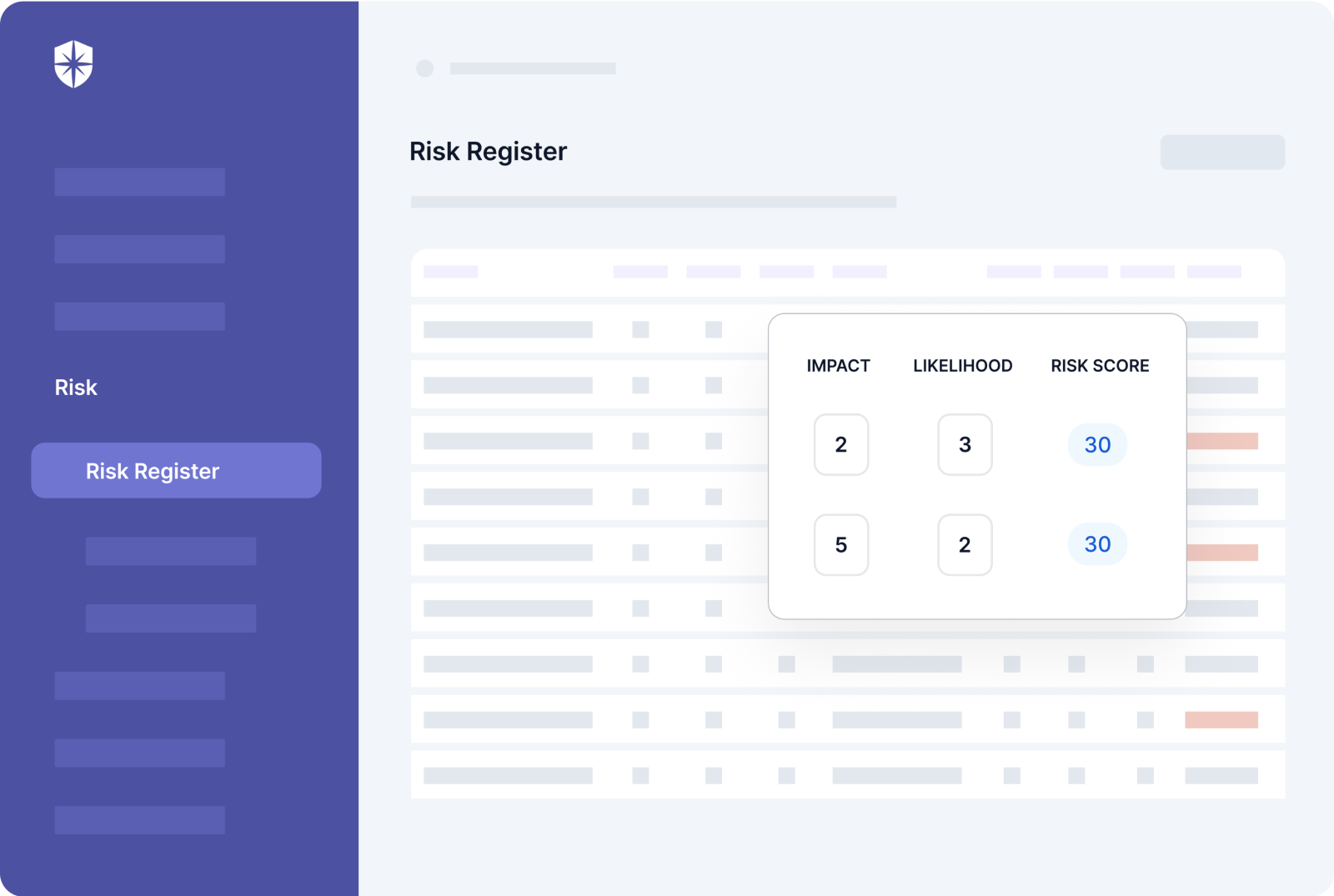
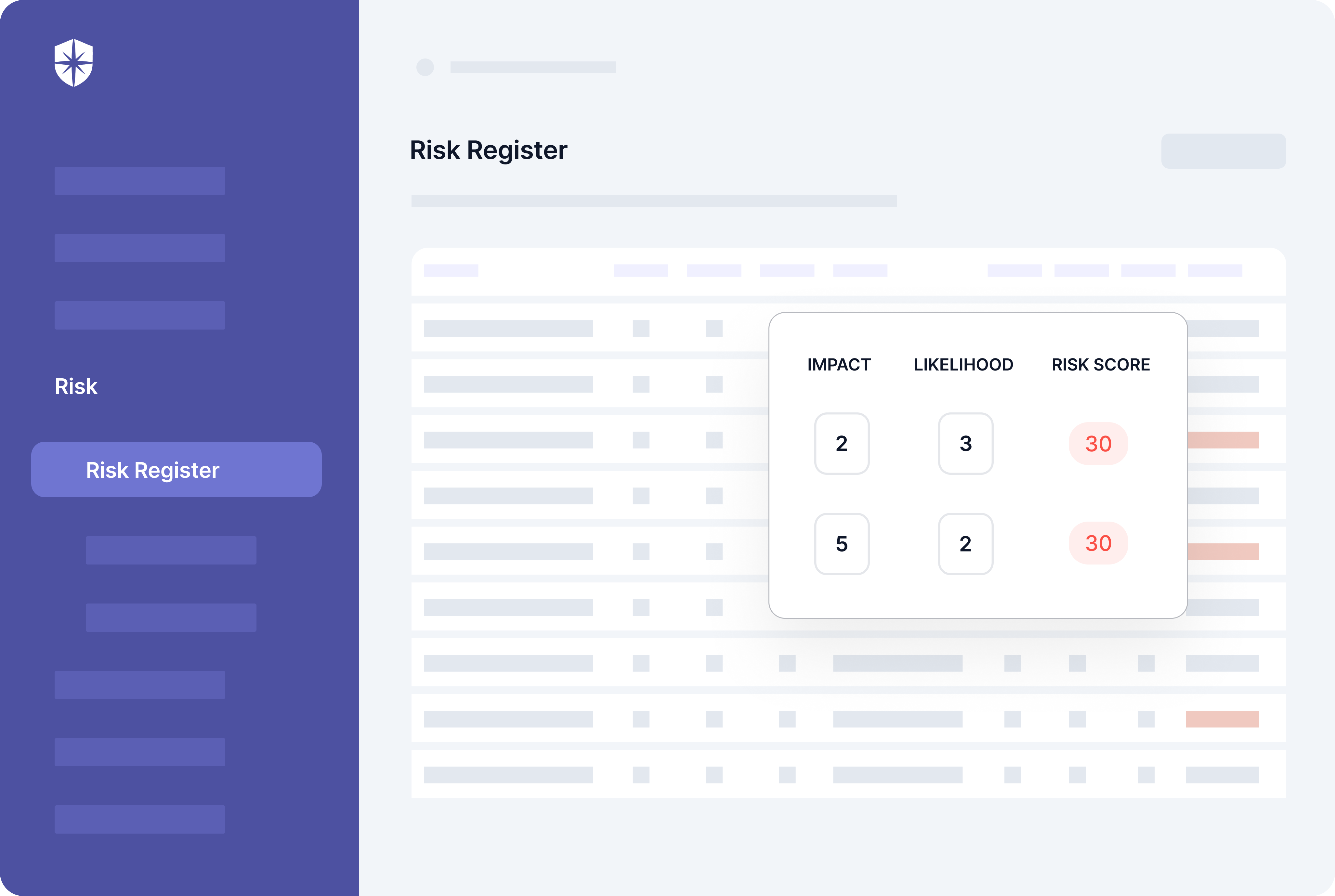
Our platform streamlines identifying and rating risks, automating the process of maintaining compliance with PCI DSS. Our prebuilt, auto-updated Risk Register, for instance, will help your team identify and know what risks to prioritize.

…all at a glance from one dashboard: 
Conduct Risk Assessments

Automate Becoming PCI DSS Compliant

Becoming PCI DSS compliant, as this checklist shows, can be overwhelming and time-consuming. First, knowing what to implement from the 300+ controls to meet the 12 PCI requirements is hard, and depends on accurate internal security assessment. 

Continuously monitoring your company’s cybersecurity posture to detect and remediate threats can also be daunting. But this is crucial to avoid getting penalized even after meeting initial compliance. 

And it doesn’t end there. 

The back and forth of sharing compliance documents between teams and external auditors can be a thorn in the flesh if done manually. But with a centralized platform, you can automate these processes, achieve compliance faster, and remain compliant. 

This is where Cyber Sierra comes in: 

ALL COMPLIANCE PROGRAM

illustration background

Automate PCI DSS compliance.

Scan systems interacting with cardholder data, remediate risks, and continuously monitor PCI security controls from one place.

card image
  • Governance & Compliance
  • CISOs
  • CTOs
  • Cybersecurity Enthusiasts
  • Enterprise Leaders
  • Startup Founders
Pramodh Rai

Meet Pramodh Rai, a technology aficionado and Cyber Sierra's co-founder, whose zest for innovation is fuelled by a cupboard stacked with zero-sugar Redbull. With a nimble footwork through the tech tulips across Asia Pacific, he's donned hats at Hmlet (the proptech kind) and Funding Societies | Modalku, building high-performing teams and technologies. A Barclays prodigy with dual degrees from Nanyang Technological University, Pramodh is a treasure trove of wisdom, dad jokes, and everything product/tech. He's the Sherpa in sneakers you need.

A weekly newsletter sharing actionable tips for CTOs & CISOs to secure their software.


Thank you for subscribing!

Please check your email to confirm your email address.

Find out how we can assist you in
completing your compliance journey.
blog-hero-background-image
Governance & Compliance

HIPAA Compliance Checklist Guide for Automating the Process

backdrop
Table of Contents

Join thousands of professionals and get the latest insight on Compliance & Cybersecurity.


HIPAA Compliance Checklist Guide for Automating the Process

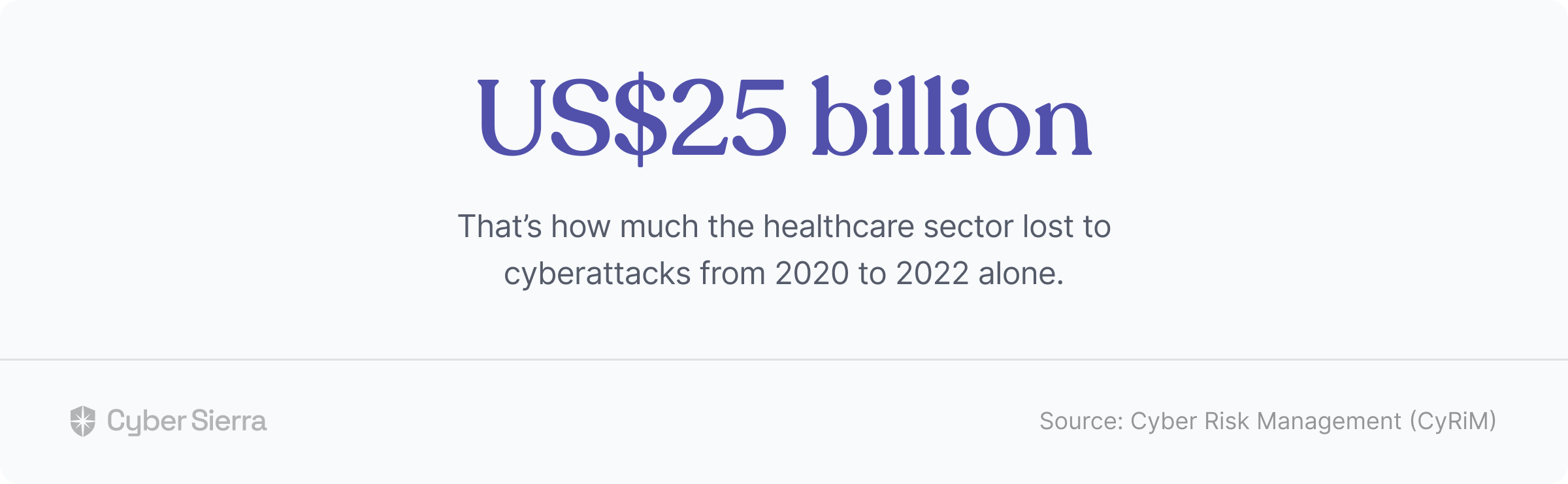
US$25 billion with a ‘b:’


25 billion dollars lost by healthcare sector


The healthcare sector lost all that to cyberattacks from 2020 to 2022 alone. To curb such losses, the Health Insurance Portability and Accountability Act (HIPAA) emerged in 1996. Unfortunately, almost two decades later, cybercriminals have only gotten smarter. 

So responding to the growing threat landscape, the Office for Civil Rights (OCR) continues to tighten enforcement with heftier fines. As a result, it no longer ends at attaining initial HIPAA compliance. 

Security officers must now also automate the gruesome post-HIPAA compliance process to stay compliant and avoid fines.

And a good starting point is to…


Know the HIPAA Compliance Requirements


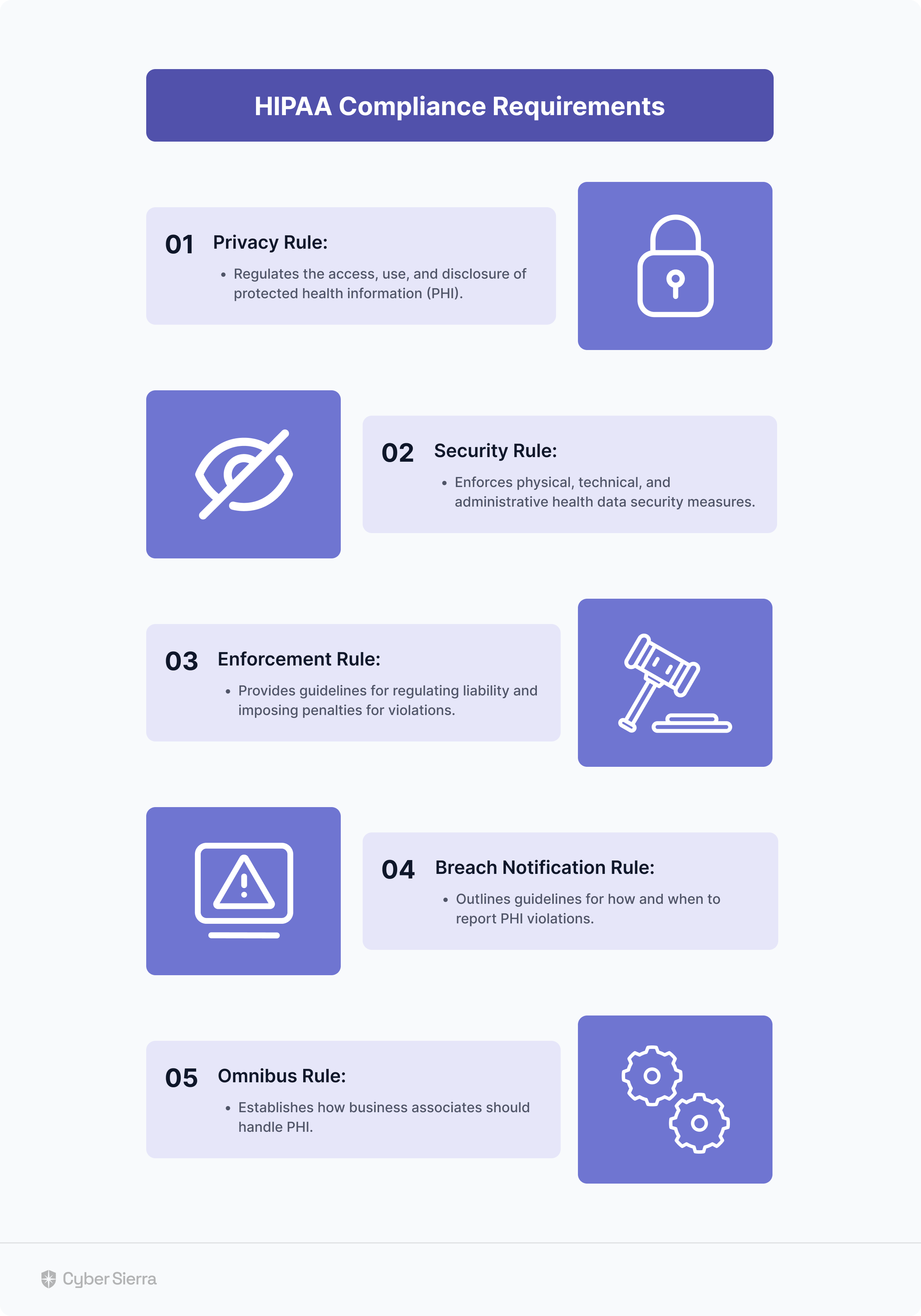
Being a US federal law, the HIPAA regulation has many requirements grouped under five main components or HIPAA rules. 

As illustrated below:


HIPPA compliance


Correct implementation of requirements under each rule demonstrates that a company directly or indirectly accessing protected health information (PHI) is keeping it safe and secure. However, as earlier noted, you must continuously implement them to (1) become and (2) stay HIPAA-compliant.

This checklist guide walks you through how to achieve both. As we proceed, you’ll also see how Cyber Sierra automates implementation of crucial HIPAA rules and requirements.

Download your copy to follow along:

illustration background

HIPAA Compliance Checklist

Become and stay HIPAA – compliant with our continuous HIPAA implementation checklist.

card image

The 8-Step HIPAA Compliance Checklist


From determining HIPAA rules to developing policies and implementing safeguards, HIPAA compliance can be overwhelming. To help, we’ve broken the many moving parts into eight actionable steps in this checklist. 

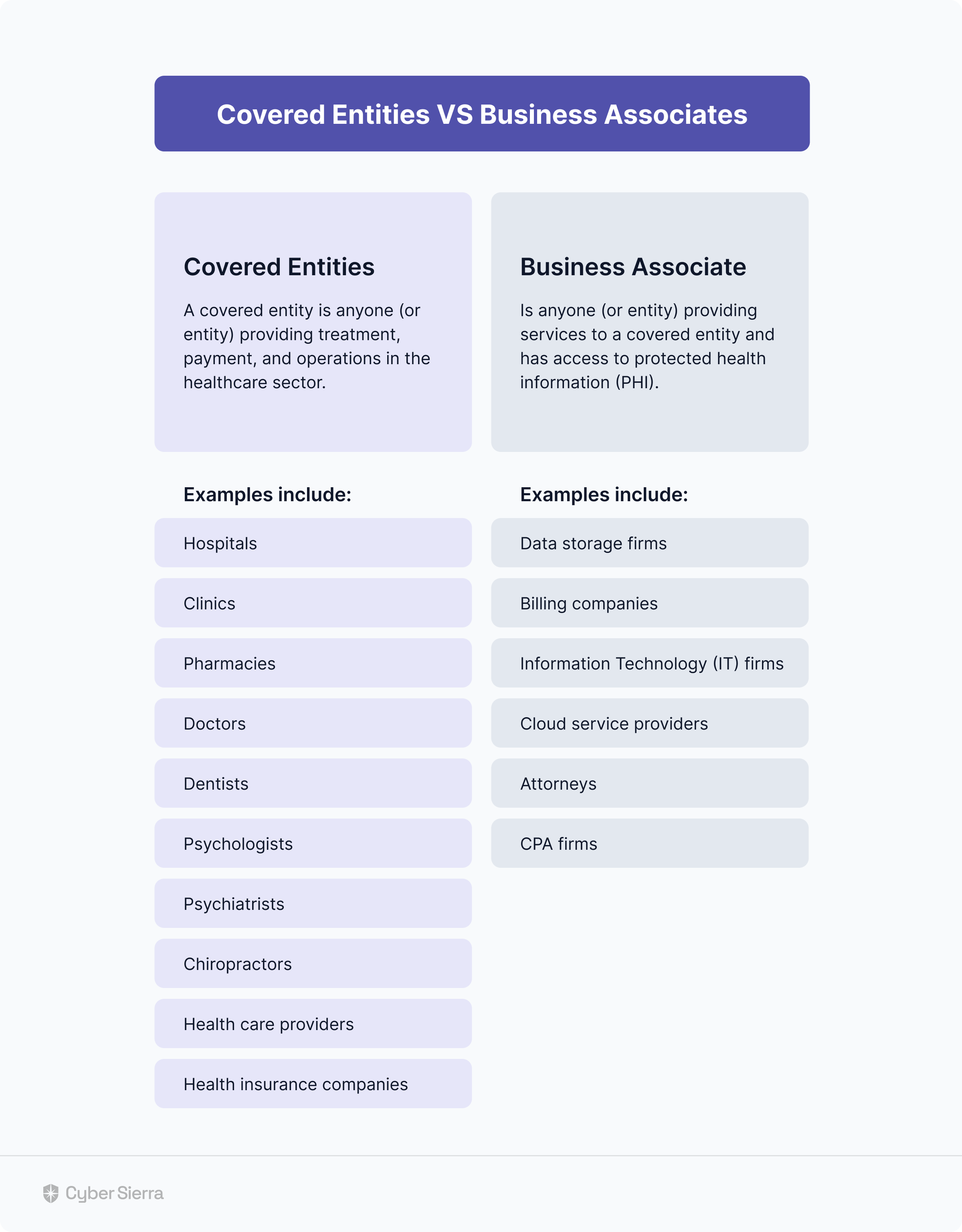
But before diving in, there are two company types —Covered Entities and Business Associates— that must comply with HIPAA regulations. 

This infographic illustrates:


covered entities


As you’ll see throughout this checklist guide, where you fall into is crucial for gauging your company’s HIPAA compliance readiness.

Let’s dive in. 


1. Determine What HIPAA Rules Applies to You


HIPAA’s Privacy Rule and Security Rule details what companies must do to protect PHI and electronic protected health information (ePHI). The Breach Notification Rule, on the other hand, details remediation steps organizations must take in response to a breach. 

But not all companies must comply with them.  

Covered Entities, for instance, must implement all safeguards dictated by the Privacy Rule and Security Rule. They are also mandated to protect both PHI and ePHI. This isn’t the case for Business Associates, even though some Privacy Rule requirements apply to them. 

So the first step towards HIPAA compliance readiness is knowing what HIPAA rules apply to your organization. 

Three things you should do are: 

  1. Understand the intention of each rule’s requirements. 
  2. Review the technical specifications required for each rule.
  3. Outline the correct procedures, safeguards, and policies you should create and implement for your organization.


2. Appoint a HIPAA Compliance Officer


If that first step looks complex, it’s because it is. 

Hence, the need to appoint someone on your security team to spearhead your company’s HIPAA compliance process. Some things this appointed officer (or consultant) will oversee include: 

  • Determining applicable HIPAA rules and regulations
  • Ensuring the right controls and policies are in place
  • Conducting risk assessment to detect vulnerabilities
  • Training employees on HIPAA implementation
  • Enforcing the implementation of security controls and policies
  • Investigating incidents and data breaches
  • Developing action plans for remediating breaches
  • Implementing continuous monitoring to ensure that your organization stays HIPAA-compliant always. 

Before we proceed…

Imagine your appointed HIPAA compliance officer (or maybe, you) could do most things highlighted above from one place. Imagine you had an interoperable cybersecurity platform that brings all the features for achieving the things above from one platform. 

That’s where software like Cyber Sierra comes in: 

illustration background

Become ( and Stay) HIPAA – Compliant From One Place

Conduct risk assessments, train employees, implement controls, automate HIPAA compliance, and much more.

card image

3. Develop Your HIPAA Compliance Policies 


All HIPAA rules have mandatory requirements. 

So for each rule that applies to your company, you need policies and procedures to show you meet those requirements. In other words, you must develop documentation that will prove your employees are handling PHI and ePHI data safely.

Across the three main HIPAA rules, some compulsory policies are:


develop your HIPAA compliance


Managing all these policy documents through email threads or spreadsheets can be draining. 

But imagine a central place where you can:

  1. Create policy documents 
  2. Upload evidence easily, and
  3. Assign the implementation of each policy.

 You can do all three things and more to automate most HIPAA compliance processes with Cyber Sierra: 


HIPAA compliance dashboard


4.  Manage Business Associates with Access to PHI


The HIPAA Security Rule mandates that Covered Entities working with a Business Associate or vice versa have a legally binding agreement. Known as a business associate agreement (BAA), this is to ensure the protection of PHI and ePHI accessed by both parties. 

A BAA should cover all relevant topics. Examples of topics include permitted uses of PHI and ePHI, reporting unauthorized disclosures and uses, processes to return or remove PHI when terminating, etc. 

We created a template to help with this. 

Download (and customize) it to start creating your own BAA below: 

illustration background

Grab our customizable business associate agreement (BAA), free.

5. Implement HIPAA Security Rule Safeguards


Only the HIPAA Security Rule has over 50 implementation specifications. This makes complying with the rule a complex hurdle, requiring necessary safeguards. And the HIPAA groups these safeguards into three —administrative, physical, and technical. 

Implementing them is a must. Without this, you can’t demonstrate your company protects PHI properly or become HIPAA-compliant. 

So let’s briefly discuss each. 

Administrative safeguards

These safeguards are needed to: 

  • Train employees about PHI protections.
  • Resolve security incidents that may threaten PHI.
  • Protect PHI or ePHI during emergency situations.


Physical safeguards

These are safeguards to protect physical points of access to PHI. They outline how employees should manage their devices and workstations to keep sensitive health info secured. Company-wide, this safeguard enforces the use of surveillance technology and other measures for protecting physical access to PHI. 


Technical safeguards

These are safeguards mandated to protect against unauthorized access or alteration to stored PHI or ePHI. Antivirus, data encryption, and multifactor authentication software are some common technical safeguard enforcement tools. 


6. Conduct HIPAA Risk Assessments 


This step of the HIPAA compliance process ensures the proper implementation of the HIPAA Security Rule safeguards —administrative, physical, and technical. It’s also how to identify vulnerabilities across your cloud and network environments. 

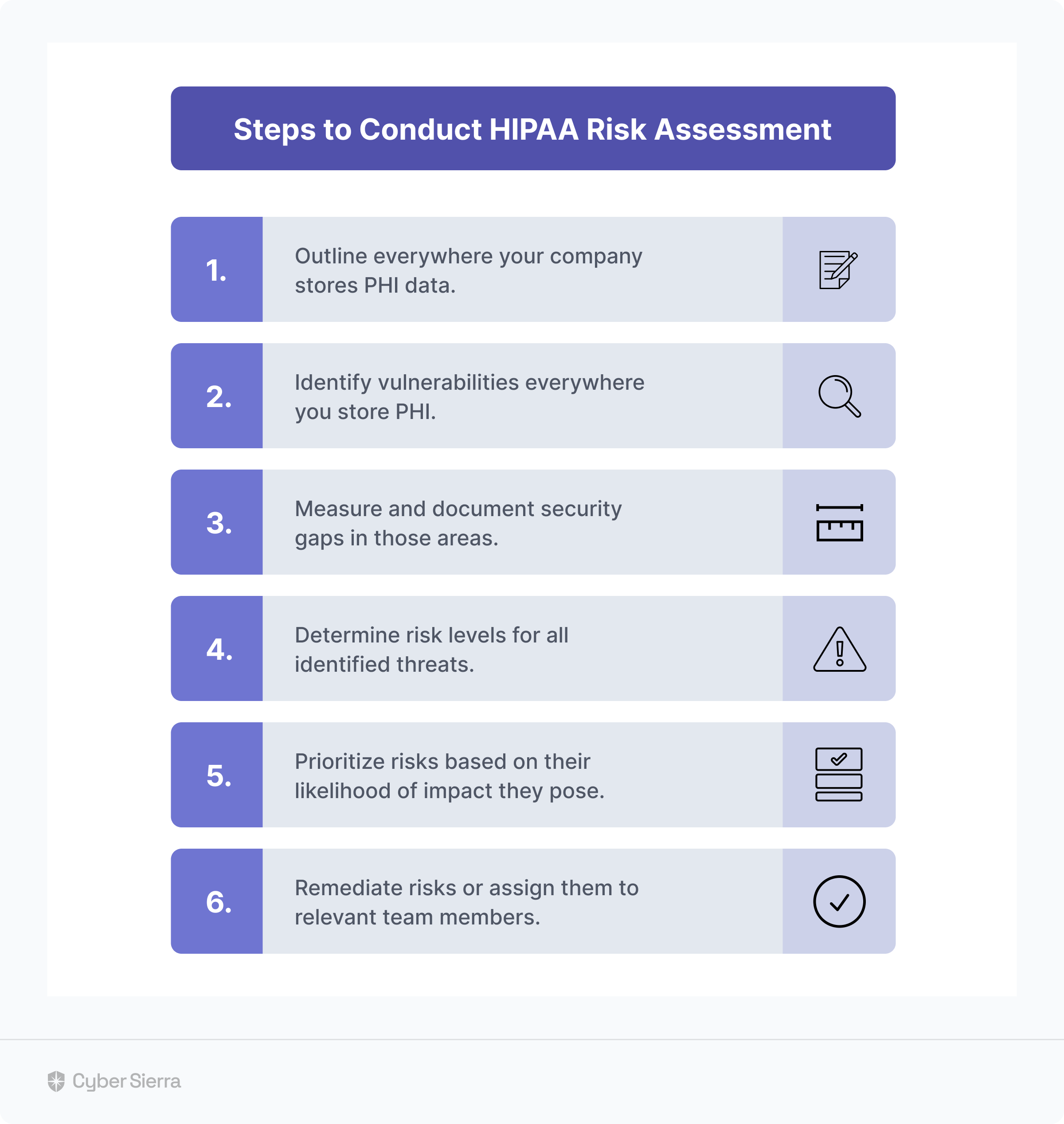
Follow these steps to conduct a HIPAA risk assessment:


steps to conduct HIPAA assessment


Again, doing all these manually can be daunting, if not impossible. But with an interoperable cybersecurity platform like Cyber Sierra, you can breeze through the steps above from one place. 

Connect your cloud assets, Kubernetes, repository, and network systems to Cyber Sierra, and our software will: 

  • Automatically scan all connected tools and assets.
  • Detect risks and vulnerabilities to PHI data in real-time 
  • Prioritize critical risks based on their likely threat levels. 
  • Enable you to assign remediation tasks to members of your security team with tips on how they are to remediate risks: 


Conduct HIPAA Risk Assessments  Dashboard


7. Train Employees on HIPAA Risk Mitigation & Procedures


It takes a team to become HIPAA-compliant. 

First, from implementing procedures to mitigating and remediating risks, you’re better off collaborating with a team of specialists. Also, any employee who accesses or handles PHI or ePHI is mandated to complete HIPAA compliance training. Both scenarios make training employees on HIPAA risk mitigation and procedures a necessity. 

In short, the Department of Health and Human Services (HHS) recommends ongoing refresher training for all employees. 

With other compliance automation software, ticking off this crucial step of the HIPAA process requires investing in a separate tool. But with Cyber Sierra, you can launch ongoing employee security training on HIPAA risk mitigation and procedures from the same place.

Here’s a peek: 


training employees


8. Implement Continuous Monitoring of HIPAA Controls


If you think becoming HIPAA-compliant is tough, you’re right. However, staying HIPAA-compliant is even tougher. 

That’s because the process doesn’t stop when you pass audit reviews and become HIPAA-compliant. Cybercriminals don’t care that you’re compliant. They are always devising new tricks to breach your systems and steal PHI data in your company’s possession. 

And you’ll face violation penalties from the OCR and pay fines should they succeed, despite being HIPAA-compliant in the past. 

To avoid this, continuously: 

  • Monitor HIPAA safeguards, controls and policy implementations
  • Track if employees and business associates are monitoring safeguards and completing refresher risk-mitigation training. 
  • Detect, score, prioritize, and remediate emerging threats. 

You can do all these with Cyber Sierra. 

Take detecting and remediating threats as they emerge. Our Risk Register feature works round the clock to help you achieve this. It continuously scans and monitors all your connected cloud systems. 

You get an always-updated dashboard with detected threats that have also been scored, and prioritized based on likelihood to cause havoc: 


Conduct Risk Assessments


You also get steps for remediating each risk or assigning a remediation task to teammates. This way, you can continuously monitor HIPAA controls, mitigate risks, and stay HIPAA-compliant. 


Automate HIPAA Compliance


HIPAA compliance can be overwhelming. 

So if you end up with more unchecked boxes than checked ones, don’t panic. From creating policies, implementing HIPAA safeguards and controls, to conducting risk assessments, training employees, and continuous monitoring, there’s a lot to be managed.

Still, it goes beyond managing them to achieve initial compliance. HIPAA also requires organizations to maintain logs of their risk assessments, employee training, and other controls and compliance for a minimum of 6 years. 

All of that is easier with an interoperable cybersecurity and compliance automation platform. By automating most processes needed, you can become (and stay) HIPAA-compliant. 

That’s where software like Cyber Sierra comes in: 

illustration background

Become ( and Stay) HIPAA – Compliant From One Place

Conduct risk assessments, train employees, implement controls, automate HIPAA compliance, and much more.

card image
  • Governance & Compliance
  • CISOs
  • CTOs
  • Cybersecurity Enthusiasts
  • Enterprise Leaders
  • Startup Founders
Pramodh Rai

Meet Pramodh Rai, a technology aficionado and Cyber Sierra's co-founder, whose zest for innovation is fuelled by a cupboard stacked with zero-sugar Redbull. With a nimble footwork through the tech tulips across Asia Pacific, he's donned hats at Hmlet (the proptech kind) and Funding Societies | Modalku, building high-performing teams and technologies. A Barclays prodigy with dual degrees from Nanyang Technological University, Pramodh is a treasure trove of wisdom, dad jokes, and everything product/tech. He's the Sherpa in sneakers you need.

A weekly newsletter sharing actionable tips for CTOs & CISOs to secure their software.


Thank you for subscribing!

Please check your email to confirm your email address.

Find out how we can assist you in
completing your compliance journey.
blog-hero-background-image
Governance & Compliance

GRC in Cyber Security: 5 Reasons to Consolidate Cyber Security, Governance, Risk, Compliance, and Insurance

backdrop
Table of Contents

Join thousands of professionals and get the latest insight on Compliance & Cybersecurity.


GRC in Cyber Security: 5 Reasons to Consolidate Cyber Security, Governance, Risk, Compliance, and Insurance

Cybersecurity is an indispensable requirement for businesses today. With the uptick of cybercrimes due to the pandemic, there is an apparent need to secure computer networks and data from hackers. Unfortunately, it has even been predicted that global cybercrime damages will amount to $10.5 trillion annually by 2025.

Given the plethora of threats and attacks, it stands to reason that the GRC framework in cyber security is needed now more than ever.

slider

What is GRC in Cybersecurity?

What is GRC in Cybersecurity?


CIO explains that the GRC in cybersecurity is a strategy for managing an organization’s overall governance, enterprise risk management, and compliance with regulatory requirements. It aligns information technology (IT) with business goals to effectively manage cyber risk.  

Breaking it down further:

  • Governance: This relates to the organizational plan for cyber and information security.
  • Risk management: Any gaps, vulnerabilities, and security risks will be identified and strengthened through a comprehensive IT risk management process.
  • Compliance: Following the industry’s cybersecurity rules and requirements, such as the NIST Framework or ISO 27001.

To ensure the implementation of the GRC, organizations utilize some form of cyber insurance. Cyber insurance offers a safety net for businesses against cybercrimes. Likewise, it ensures data security and cybersecurity compliance, by requiring these to be in place.

Unfortunately, there is a problem.

Since managing cybersecurity is getting more difficult because of reasons such as the digitalization of businesses and the increasing number of Internet of Things (IoT) devices being connected to the business’ network, around 47% of enterprise organizations use 11 or more cybersecurity technology vendors and 25 or more different cybersecurity products.

This unbundled governance, security, compliance, and insurance offerings from different vendors make people and organizations waste time and energy weathering problems like interoperability issues and high costs.

As such, it would be better to take a consolidated approach to cybersecurity by limiting the number of cybersecurity vendors an organization does business with.

5 Reasons to Take a Consolidated Approach to Your Security:

Consolidating your approach to security would not only limit cybersecurity problems but also ensure that your GRC framework is implemented and you are insured. Thus, here are 5 reasons to take a consolidated approach.


5 Reasons to Take a Consolidated Approach to Your Security-


  1. Ease of Use

Choosing certain vendors that would provide the best possible security to your business will increase its ease of use as interoperability issues are curbed. In addition, having fewer vendors/products can simplify the end-user experience. As such, buying from vendors like Cyber Sierra would be beneficial as they have a solution for interoperability issues. Thus, simplifying the end-user experience.

  1. Threat Detection Will Be Much More Efficient

An IBM study found that companies that utilize more than 50 cybersecurity tools scored 8% lower in their ability to mitigate threats and 7% lower in their defensive capabilities. As such, by consolidating your approach to security, reporting security incidents would be streamlined, and threat detection would be much more efficient. In addition, you would increase your organization’s overall security as you limit the chances of exploitable vulnerabilities.

  1. Faster Response to Threats and Attacks

In a 2018 study, an average enterprise handles at least 174,000 weekly threat alerts. Unfortunately, they can only respond to 12,000, rendering at least 90% to be left uninvestigated. This can cause serious harm to the organization. As such, organizations can better respond to risks, threats, and attacks by limiting and choosing security vendors that encompass a broad range of tools.

  1. Lower the Cost of Security

Paying for too many security vendors can accumulate and raise the cost of security. Unfortunately, it fails to provide businesses with the best protection against attacks. IBM reported that data breaches on businesses could amount to $3.92 million per attack. As such, having your cybersecurity streamlined and integrated can lower the products’ costs and mitigate breaches/attacks.

  1. Tighter Protection

Overall, through a consolidated approach, you can be assured that your system and data privacy are protected as vulnerabilities are exposed, threats are contained, and attacks are dealt with. Fortunately, vendors like Cyber Sierra champion a consolidated approach to security. As such, you will receive optimal protection to safeguard your business from costly breaches.

Final Thoughts

Given the volatility of the threat landscape, organizations must maintain a high level of cyber resilience. Through GRC in cybersecurity, organizations can ensure that their data and systems are secure from threats and attacks. That said, given the state of how companies tackle their cyber security, it poses some problems. As such, it is key to take an integrated approach to security to maximize its protection.

This is where Cyber Sierra comes in. With its consolidated approach to cybersecurity, GRC in cybersecurity is assured. Given that Cyber Sierra tailors its products to suit your organization’s needs, you can be assured that all compliance regulations will be met, employees will be trained, risks will be mitigated, and data will be protected. Essentially, with Cyber Sierra, all your key security needs will be looked out for.


  • Governance & Compliance
Srividhya Karthik

Srividhya Karthik is a seasoned content marketer and the Head of Marketing at Cyber Sierra. With a firm belief in the power of storytelling, she brings years of experience to create engaging narratives that captivate audiences. She also brings valuable insights from her work in the field of cybersecurity and compliance, possessing a deep understanding of the challenges and pain points faced by customers in these domains.

Find out how we can assist you in completing your compliance journey.

blog-hero-background-image
Governance & Compliance

Why CISOs are Ditching the Regular for Smart GRC Software

backdrop
Table of Contents

Join thousands of professionals and get the latest insight on Compliance & Cybersecurity.


Legacy GRC tools get a bad rap.


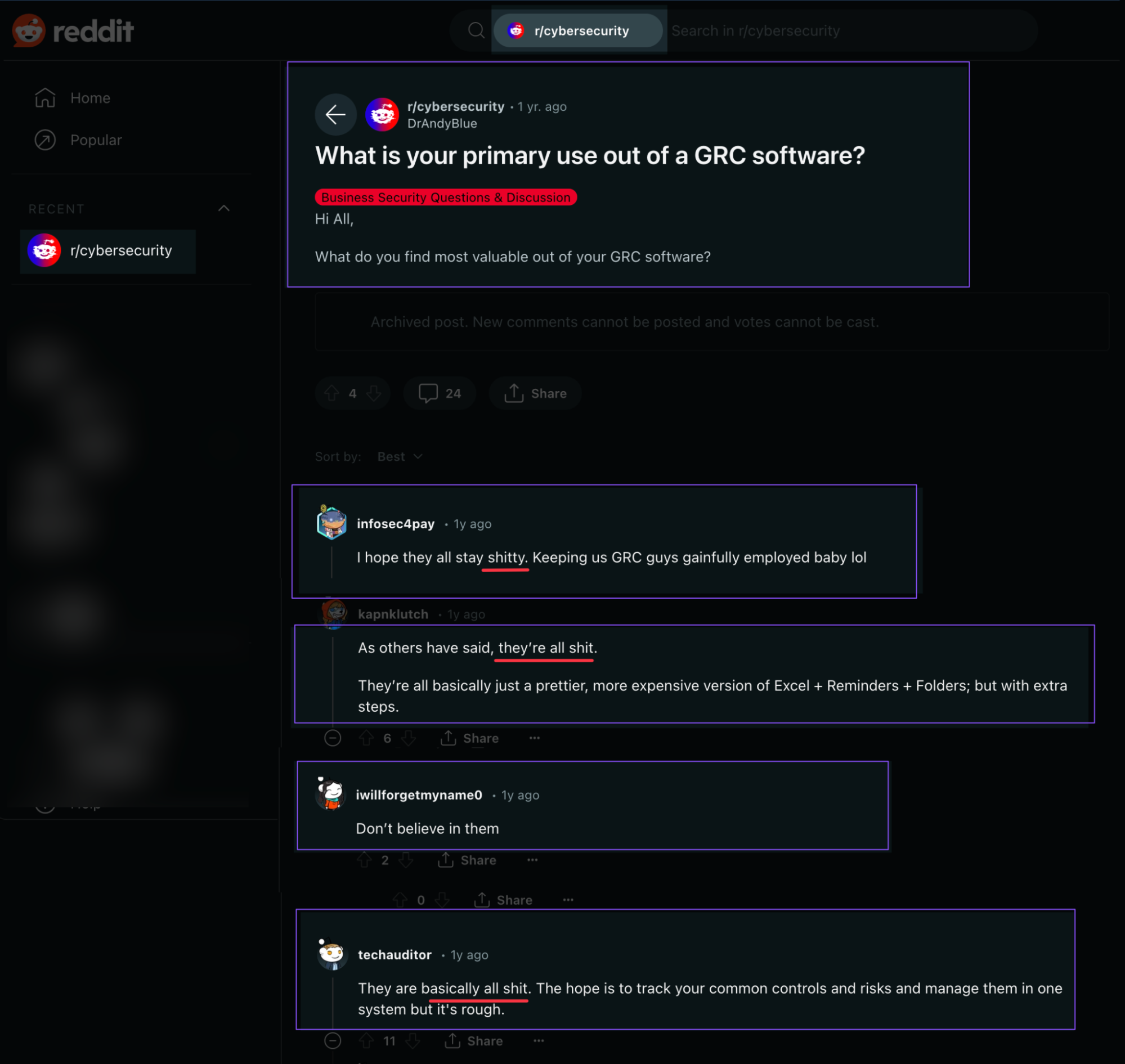
For instance, when someone asked members of the r/cybersecurity subreddit community for their primary use of GRC software, the overwhelming response was negative. As you can see below, most respondents called the GRC tools they’ve used ‘shitty:’


GRC software


Wondering why many people think GRC tools are ‘shitty,’ I dug deeper. My findings can be summarized by one of the many comments to the Reddit post above. The second comment, to be specific. As noted, most legacy GRC tools are basically prettier, more expensive versions of Excel spreadsheets with reminders and folders.


Smart GRC software is different.


But what exactly is it, you ask?


A smart, enterprise GRC solution is purposefully designed as one, unified cybersecurity governance, risk management, and compliance regulatory (GRC) suite. Across these tenets, an excellent one works interoperably. This means that you, your security team, and teams across your company can use it to automate mundane GRC processes while getting near real-time, actionable cybersecurity insights.


Chief Information Security Officers (CISOs) opt for them because exceptional ones fill the voids of legacy GRC tools. Specifically, instead of a prettier spreadsheet with basic reminders, smart GRC consolidates the entire enterprise cybersecurity infrastructure under one technology roof, enabling your core team, organization, and security processes to work in sync.


And to cut the long story short…


It’s How You Create a Strong GRC Program


A major challenge in enterprise organizations is the presence of silos, where the core security team and teams across other departments work independently. This often leads to misalignment and inefficiencies in implementing holistic cyber risk measures.


Smart GRC software reduces such unwanted silos. This enables company-wide perspective and real-time implementation of programs across governance, risk management, and regulatory compliance. More importantly, it helps your team evolve with the ever-growing threat landscape, creating a strong GRC program.


But what makes GRC software smart?


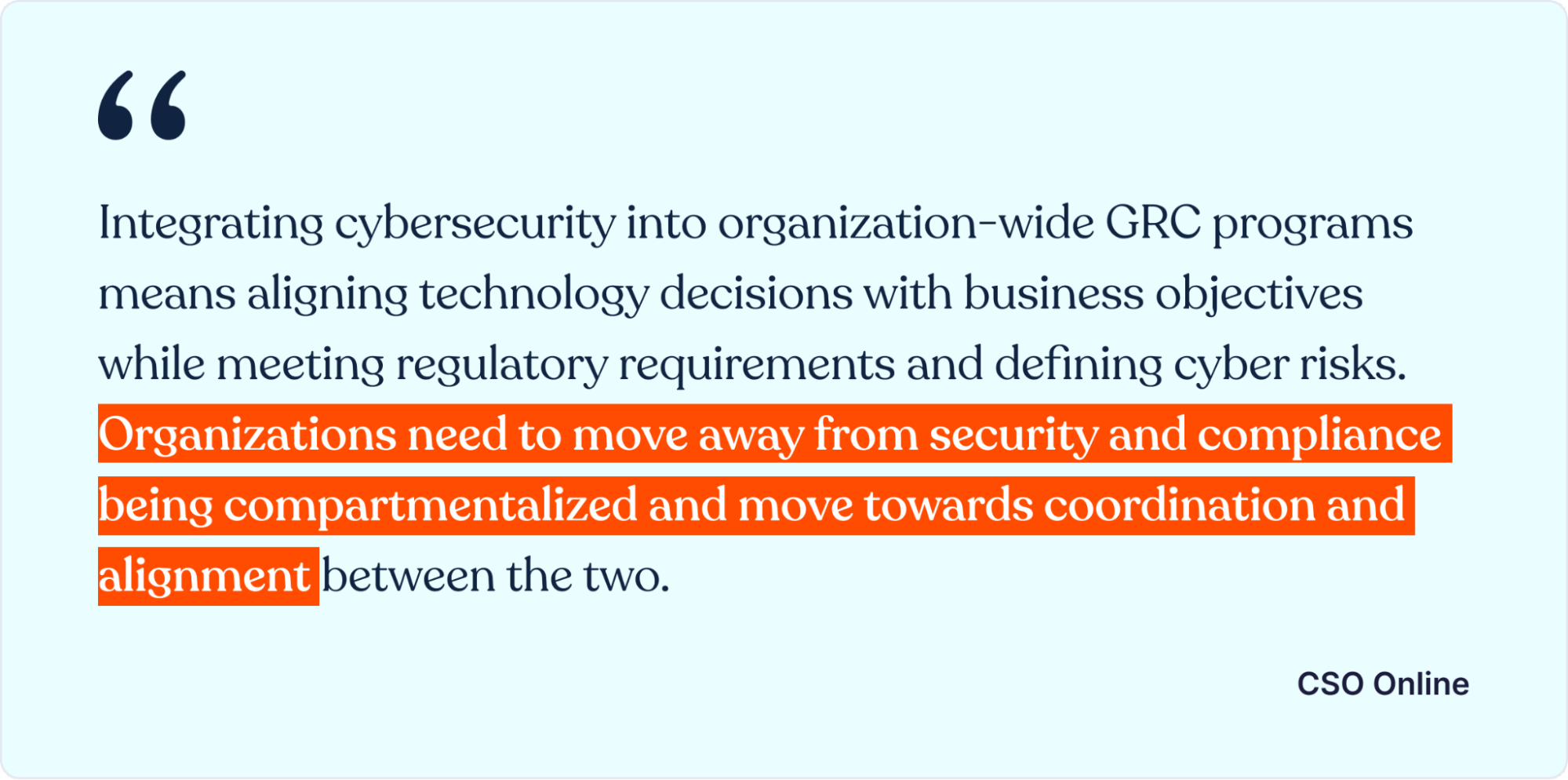
According to CSO’s report, smart GRC is one with integrated cybersecurity capabilities, resulting in company-wide alignment:


what makes GRC software smart


Based on this, the rest of this article will explore benefits of adopting smart GRC software. In the end, you’d also see why the interoperable nature of Cyber Sierra makes it a more reliable, smart GRC platform for tackling enterprise cybersecurity holistically.


Benefits of Smart GRC in Enterprise Cybersecurity


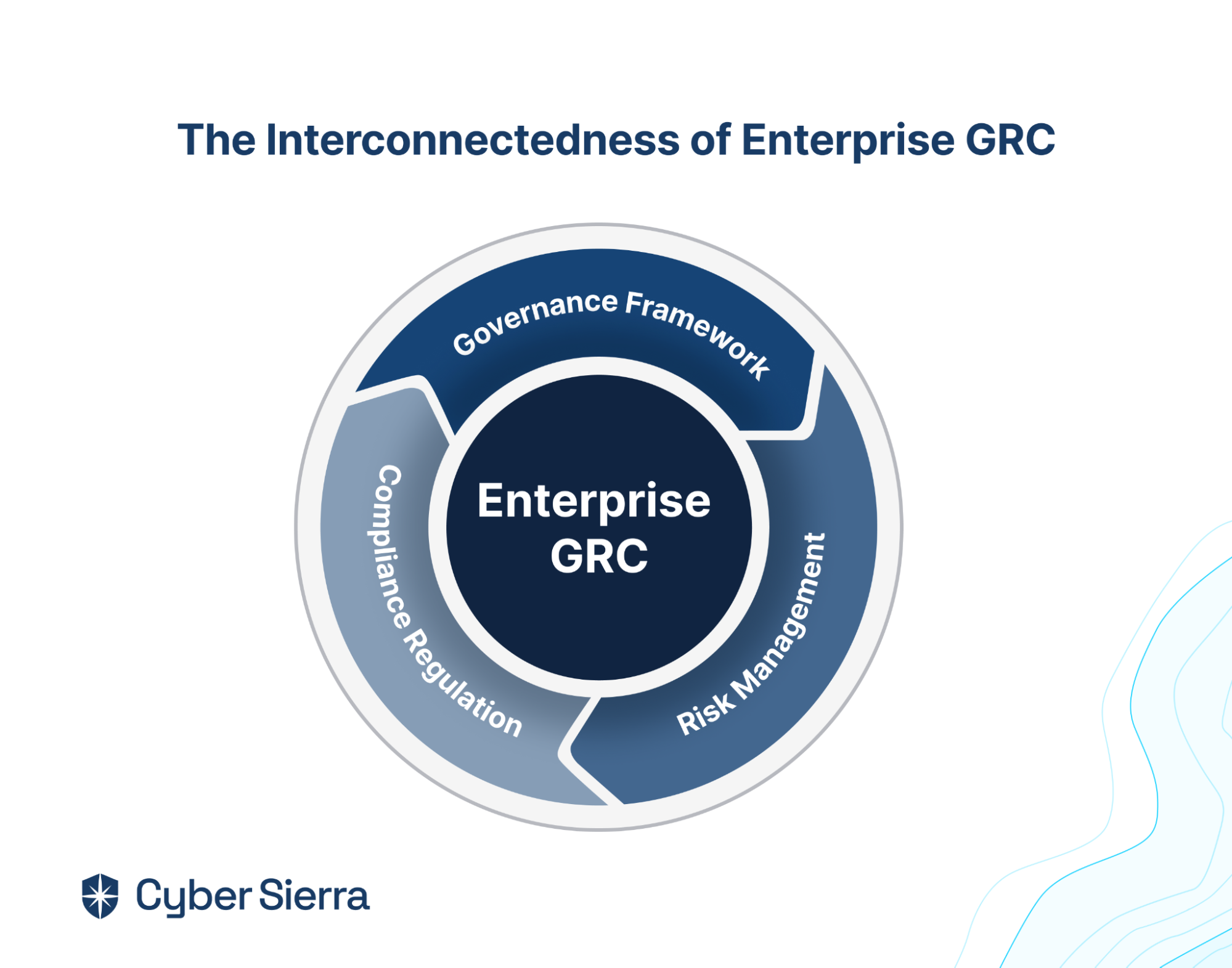
Consider this illustration:


Smart GRC Software Benefits


As shown, due to the interconnectedness of enterprise GRC, a core benefit of smart GRC software (like Cyber Sierra) is its interoperability. Meaning that from implementing governance frameworks to ongoing risk management measures and compliance regulations, your enterprise security team and organization can achieve everything below from one place.


1. Centralized, Optimized Workflows


Getting everyone involved —from stakeholders who provide executive oversight to your core cybersecurity team and employees across the organization— is a crucial benefit of smart GRC software.


But centralization is only the starting point.


The real value is that you’re also able to create, manage, and optimize critical cybersecurity workflow processes collaboratively. This gives you, the executive or security leader, a more comprehensive view of your company’s tech infrastructure and cybersecurity processes.


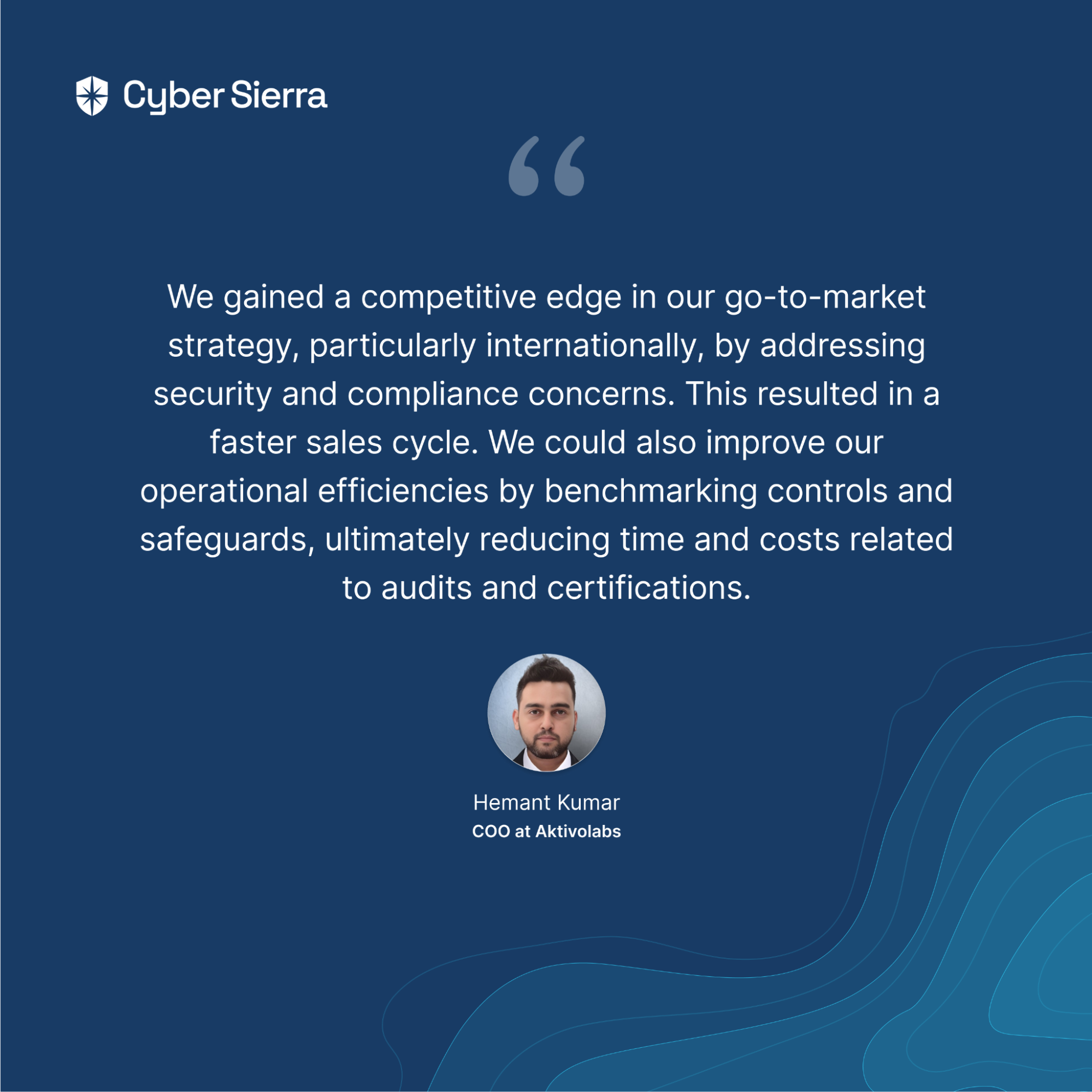
As was the case with Hemant Kumar, COO at Aktivolabs.


More on that later.


2. No Cumbersome Spreadsheet Versioning


Excel can’t handle modern GRC complexities.


But most people don’t realize this until there are multiple sheets with multiple tabs and hundreds of columns and rows to deal with. At which point you either have to deal with cumbersome versioning problems or train your team to become spreadsheet ninjas.


Because smart GRC software is unified, it solves most, if not all, manual errors and frustrations from using Excel or its cloud-based alternative, Google Sheets. For instance, leveraging a smart GRC platform removes:


  • The risk of users overwriting various critical data
  • Leadership forgetting to change access permissions when employees leave your company, and
  • Dealing with data breaches due to the inherent lack of security on spreadsheets generally.


In addition to eliminating these inefficiencies, smart GRC software also offers massive scalability advantages. Say your organization was expanding and you needed to comply with various new compliance regulations. With a smart GRC platform, for instance, no need to create and manage new versions of sheets manually.


An excellent one comes pre-built with popular compliance programs, giving your team a streamlined process of becoming compliant.


3. Seamless Policy Creation & Maintenance


Across governance, risk management, and regulatory compliance are hundreds, and in many cases, dozens of hundreds of policies to be created and maintained with timely updates. Attempting to do any of the three —create, maintain, and update— with traditional word documents introduces lots of inefficiencies.


For instance, important policy documents may be spread across multiple employees’ computers and not accessible by others on your security team when needed. This creates inaccuracy, redundancy, and policy violations if, say, you needed to update such inaccessible policy documents to keep your company compliant.


Smart GRC solution solves this.


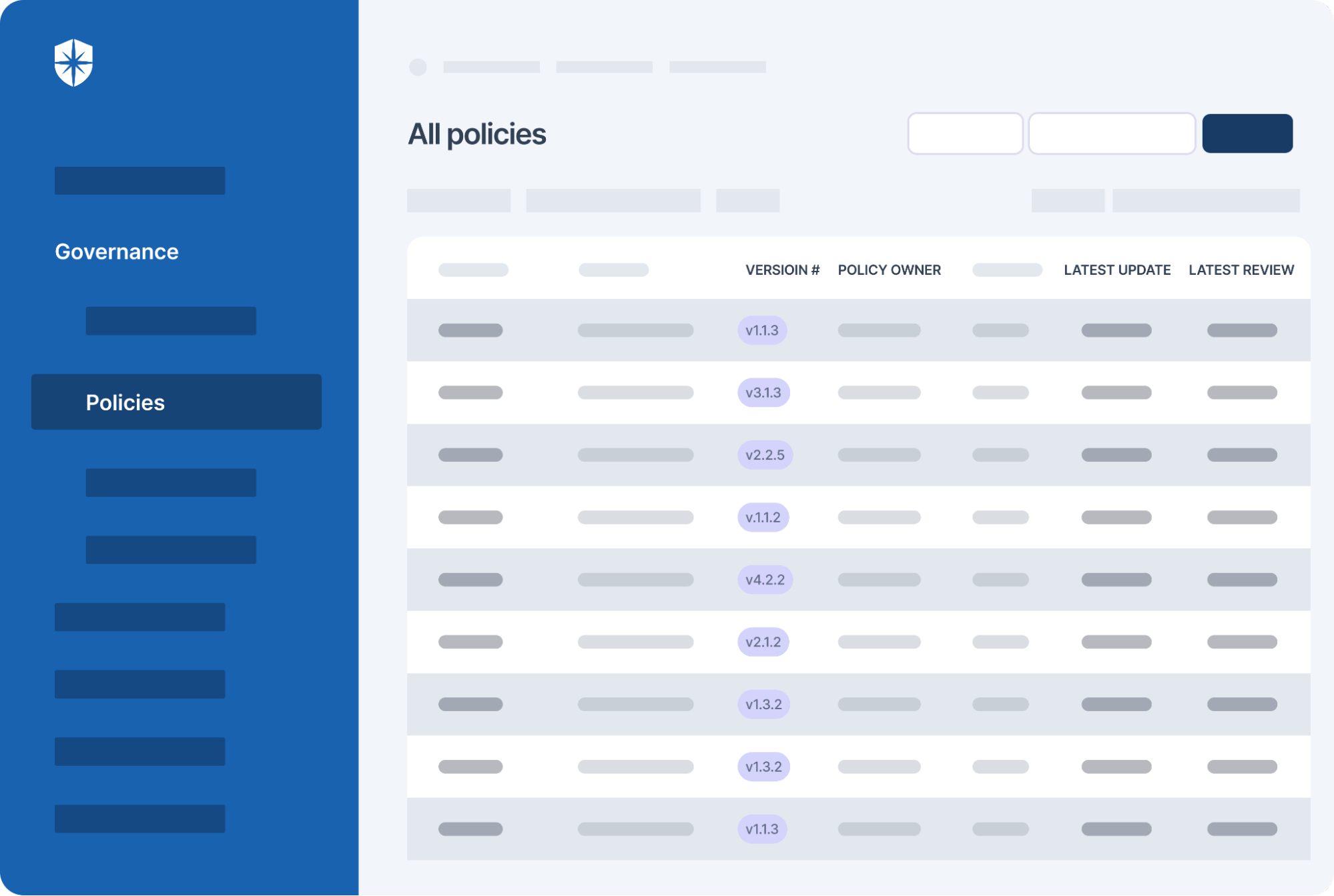
For instance (with Cyber Sierra), all policies across governance, risk management, and compliance are created and consolidated into a unified view automatically. This gives you, your security team, and relevant stakeholders across your organization a centralized pane for creating, managing, and updating policy documents.


With everything in one place, you can see who was assigned a specific policy document, the current version, the last time it was updated, the last time it was reviewed by leadership, and much more.


4. Real-time Cybersecurity Controls’ Audit Logs


Post-GRC implementation effectiveness is as, if not more, crucial as centralizing pre-GRC implementation. It’s how your security team ensures implemented GRC controls are all functioning effectively.


Failure to swiftly identify and fix broken cybersecurity controls across governance, risk management, and regulatory compliance programs can lead to data breaches and hefty fines. This creates a dire need for real-time cybersecurity controls’ audit logs with the goal of spotting and fixing control breaks as they happen.


Smart GRC software streamlines the process.


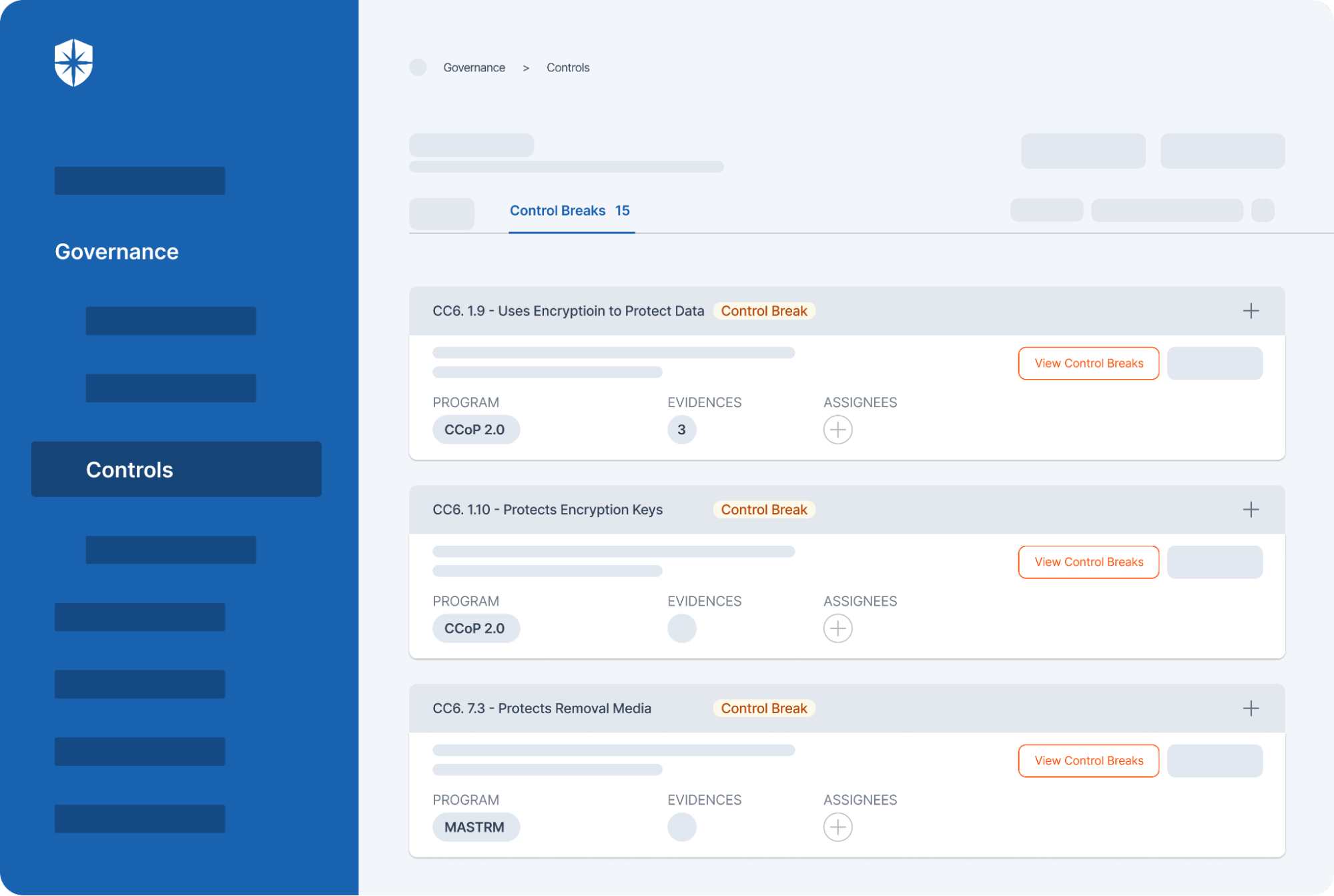
It can log, audit, and monitor all cybersecurity controls in near real-time. It also gives your team a dedicated view where all control breaks can be immediately tracked and remediated. More importantly, with an exceptional one, you can assign remediation tasks to members of your security team from the same pane.


Crucial Steps In Implementing Enterprise GRC


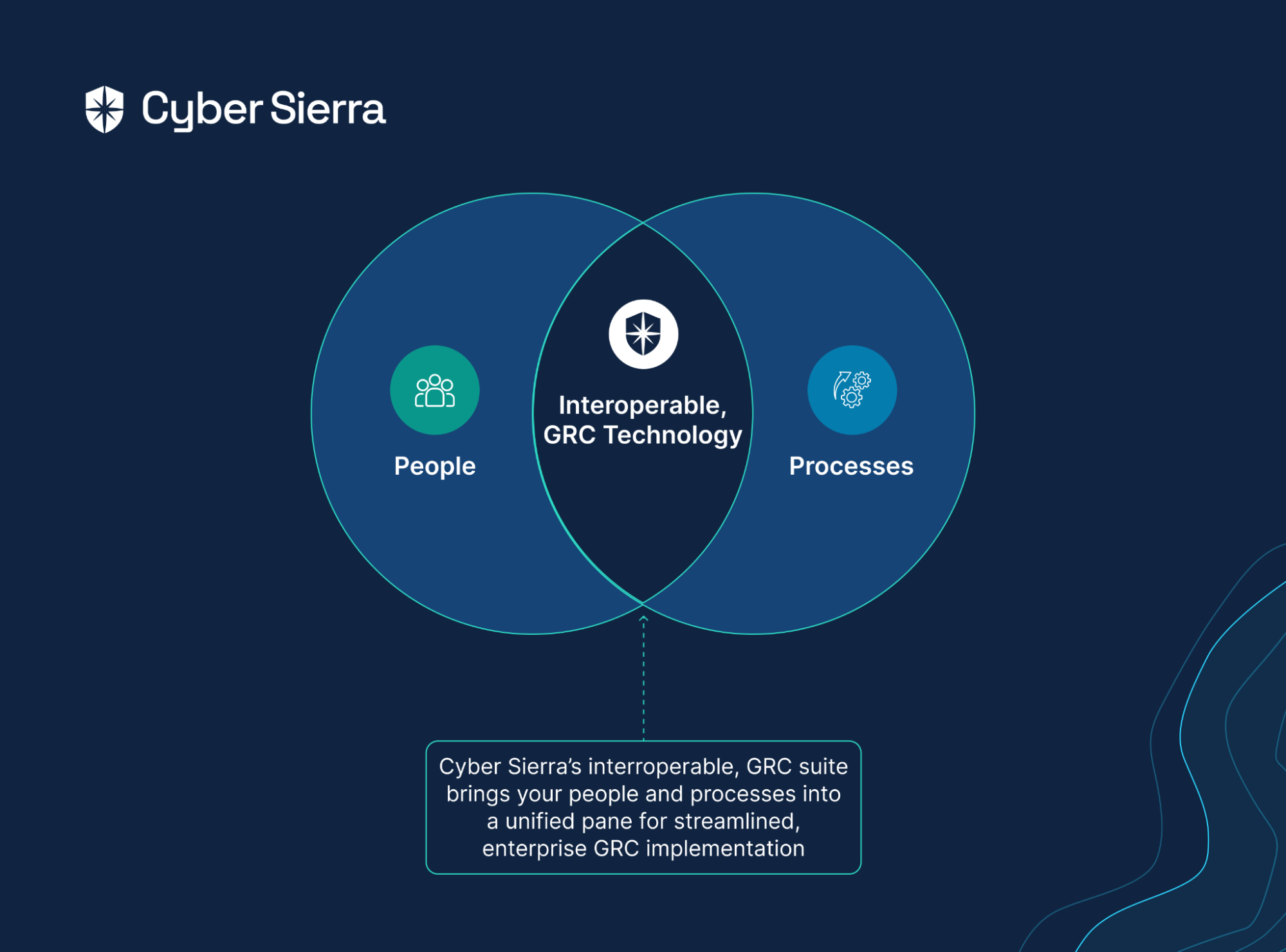
Get the right people —executive stakeholders and core cybersecurity team— involved, and implementing enterprise GRC comes down to creating and training them on critical processes. Next, empower them with an interoperable, GRC platform, and they will more easily streamline the work involved collaboratively.


As illustrated below:


Crucial Steps In Implementing Enterprise GRC


People


People, as they say, are your first line of cybersecurity defense. This saying applies so much to enterprise GRC implementation because you need the combined efforts of:


  • Executives experienced in choosing the right GRC governance frameworks and providing leadership oversight
  • Cybersecurity operators versed in implementing and maintaining implemented GRC frameworks, and
  • Employees trained on doing their bits to avoid data breaches that could lead to GRC implementation failures and hefty fines.


Smart GRC software brings you and everyone needed to implement and maintain your GRC program into one centralized pane. But to ensure this, the platform must be pre-built with major GRC frameworks and compliance programs like SOC2, PCI DSS, and others across the US, Europe, and Asia. This is crucial because it makes choosing GRC frameworks and initiating the process of implementing your GRC program a few clicks for members of your leadership team.


Another benefit of a smart GRC platform is that you can train your core cybersecurity team and employees across the company on GRC implementation best practices from the same place. This is crucial, as it helps to keep everyone aligned on necessary security awareness.


Processes


Creating and managing policies, which can be dozens or hundreds, in many cases, forms the bulk of enterprise GRC implementation. Typically, your team must create, upload, and provide evidence of corresponding cybersecurity controls for each policy.


As you can imagine, the processes involved can be overwhelming if done manually. But with a smart, interoperable GRC platform, the processes and steps involved are all streamlined.


Each GRC policy your team needs to implement gets a unified view for streamlining all processes and steps involved. For instance:


  1. Details of the policy,
  2. Evidence of controls, and
  3. Version history


…will all be in one place.


Consolidating everything related to each GRC policy this way reduces the implementation processes required to a few clicks. Say you wanted to assign the implementation of a policy to one person and its corresponding controls to others in your team.


It takes just a few clicks to do that.


Why Choose Cyber Sierra’s Smart GRC Platform?


Enterprise organizations choose a smart GRC platform like Cyber Sierra for its inbuilt interoperability. Essentially, this means, instead of point cybersecurity tools for different GRC implementation steps, you and your team can do everything from one place.


Why Choose Cyber Sierra’s Smart GRC Platform?


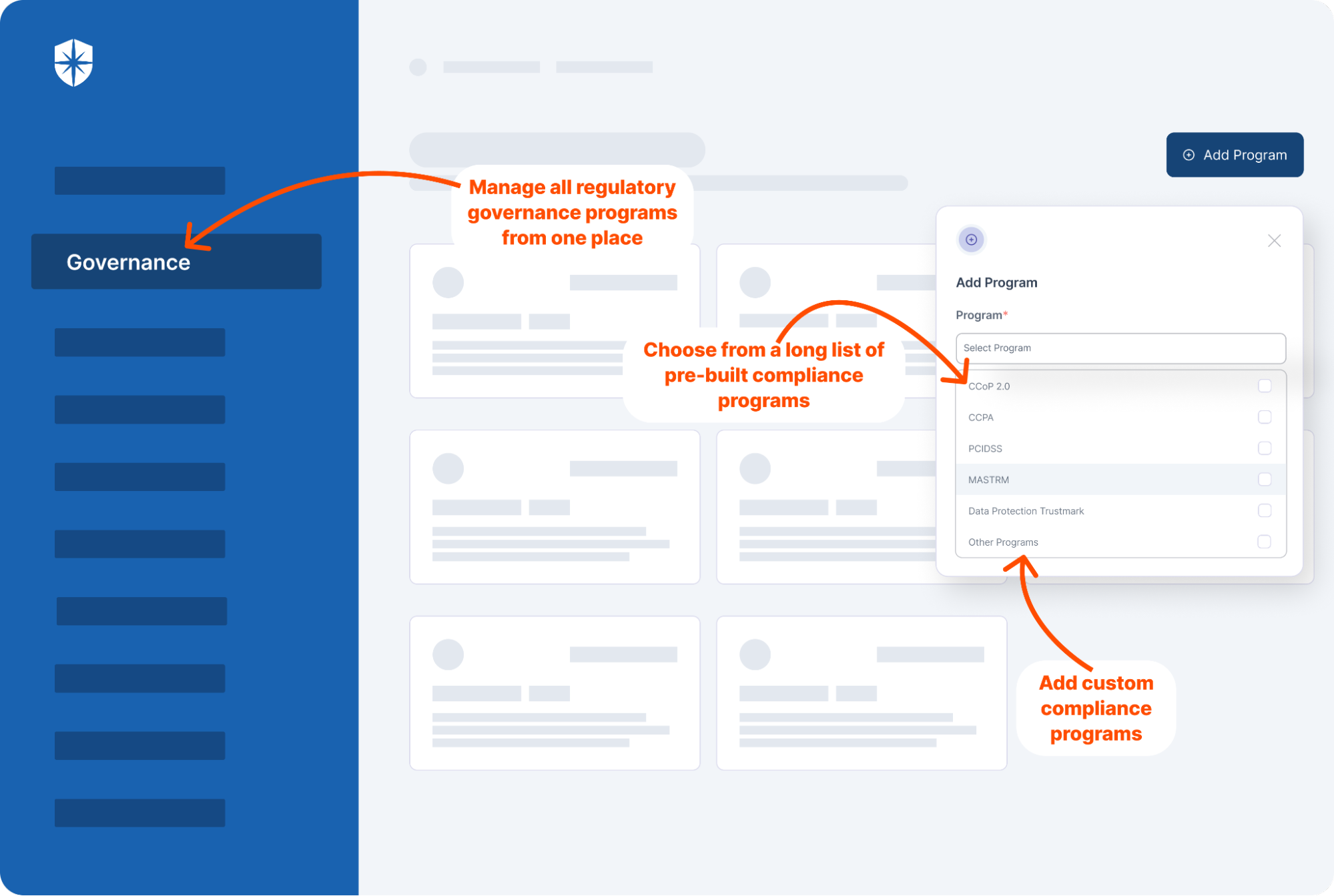
Starting with cybersecurity governance.


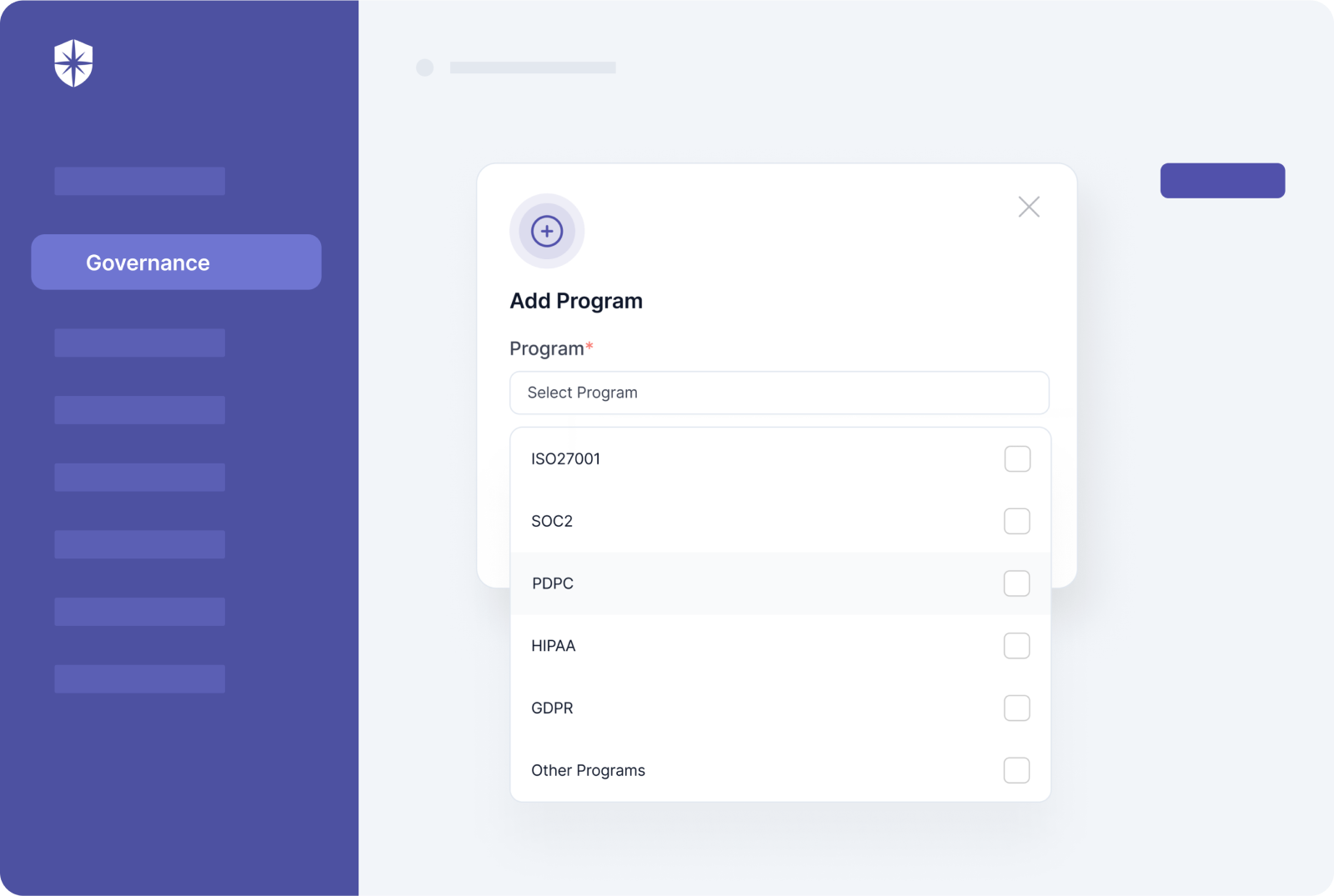
Our platform has various compliance programs across the main global jurisdiction pre-built. With this, your team can just choose a program (or add a custom one) and have the entire process of becoming compliant streamlined from one place:


But becoming compliant is just a start.


Your team will often need to track and update policies, identify and remediate compliance control breaks to stay compliant to ever-changing regulations. Doing these requires two things:


  • A centralized pane for managing all policies:


A centralized pane for managing all policies

  • Near real-time audit logs for identifying and remediating cybersecurity compliance control breaks:


cybersecurity compliance control breaks


As shown above, these crucial capabilities are all pre-built into Cyber Sierra’s interoperable, smart GRC suite.


Scalability is another reason we often see. Growing organizations using Cyber Sierra are able to implement international security and compliance regulations as they emerge and become inevitable.


One example is Aktinolabs:


One example is Aktinolabs

  • Governance & Compliance
  • CISOs
  • CTOs
  • Cybersecurity Enthusiasts
  • Enterprise Leaders
  • Startup Founders
Pramodh Rai

Meet Pramodh Rai, a technology aficionado and Cyber Sierra's co-founder, whose zest for innovation is fuelled by a cupboard stacked with zero-sugar Redbull. With a nimble footwork through the tech tulips across Asia Pacific, he's donned hats at Hmlet (the proptech kind) and Funding Societies | Modalku, building high-performing teams and technologies. A Barclays prodigy with dual degrees from Nanyang Technological University, Pramodh is a treasure trove of wisdom, dad jokes, and everything product/tech. He's the Sherpa in sneakers you need.

A weekly newsletter sharing actionable tips for CTOs & CISOs to secure their software.


Thank you for subscribing!

Please check your email to confirm your email address.

Find out how we can assist you in
completing your compliance journey.
blog-hero-background-image
Governance & Compliance

How Compliance With Cybersecurity Frameworks Improves Business Functioning

backdrop
Table of Contents

Join thousands of professionals and get the latest insight on Compliance & Cybersecurity.


Compliance with cybersecurity frameworks can improve business functioning by reducing the risk of data breaches, protecting customer information, and enhancing reputation. Frameworks such as NIST, PCI DSS, GDPR, CCPA, and ISO/IEC 27001 provide guidelines for managing cybersecurity risks and implementing appropriate security controls. Compliance can demonstrate a business’ commitment to cybersecurity and privacy, which can improve customer trust and loyalty. 

We spoke to business heads across industries and here’s what they had to say on the adoption of cybersecurity frameworks and how it has had a transformative effect on their businesses. 

TL;DR

Here are the five ways compliance with cybersecurity frameworks has helped businesses:

  • Upgraded control and understanding
  • Enhanced data privacy awareness
  • Improved data protection and enhanced trust among stakeholders
  • Opened opportunities for growth and development
  • Increased operations visibility
slider

Upgraded Our Control and Understanding

We now have a level of understanding and control we have never had. It has improved not only our security but also our business processes. Going through this process has made me realize cybersecurity is a crucial area I should focus on as CEO.

Paul Blunden
Founder and CEO, UX247 Ltd
quote_by

We are a small UX agency, but with blue-chip clients like eBay and Shopify, as well as FS clients like NatWest. We needed to improve our security infrastructure in order to comply with the requirements of some of our customers’ master services agreements (MSAs). 

I had also noticed someone had hacked several smaller clients, sometimes with devastating consequences. And we had experienced hacking attempts through WhatsApp messages to new starters and of our website.

It has taken a lot of effort to implement the required policies, and most importantly the practices. It has also cost a lot, in terms of new software, upgrading our Office 365 licensing, and adding a new IT partner and an external consultancy. But it has been worth it.

We now have a level of understanding and control we have never had. It has improved not only our security but also our business processes. Going through this process has made me realize cybersecurity is a crucial area I should focus on as CEO.

Paul Blunden, Founder and CEO, UX247 Ltd

Enhanced Data Privacy Awareness

Compliance with cybersecurity frameworks has enabled us to create awareness of the importance of data privacy and the implementation of other cybersecurity measures.

Liam Liu
Co-founder and CMO, Parcel Panel
quote_by

Compliance with cybersecurity frameworks has enabled us to create awareness of the importance of data privacy and the implementation of other cybersecurity measures. This awareness has not only helped to improve the measures we implement to protect our customer data but has also enhanced their awareness of threats, thus providing more protection for our company systems.”

Liam Liu, Co-founder and CMO, Parcel Panel

Improved Data Protection and Enhanced Trust Among Stakeholders

Compliance with frameworks such as ISO 27001, SOC 2, and GDPR has helped us improve our data protection practices and establish a trust-based relationship with our stakeholders. 

Basana Saha
Founder and Editor, KidsCareIdeas
quote_by

“Compliance with frameworks such as ISO 27001, SOC 2, and GDPR has helped us improve our data protection practices and establish a trust-based relationship with our stakeholders. 

In addition, the implementation of PCI DSS has enabled us to safeguard our customers’ payment card data and enhance their confidence in our services. Compliance with these frameworks has not only improved our cybersecurity posture but also helped us stand out in a competitive marketplace by demonstrating our commitment to safeguarding our customers’ data.”

Basana Saha, Founder and Editor, KidsCareIdeas

Opened Many Doors for Growth and Development

Adopting cybersecurity frameworks reminds organizations that security is a priority and that other vital improvements can be achieved by prioritizing security. And with clients’ trust, many doors for growth and development get opened.

Marco Genaro Palma
Co-founder, TechNews180
quote_by

“Adopting cybersecurity frameworks reminds organizations that security is a priority and that other vital improvements can be achieved by prioritizing security. It is not only important to secure our company’s data but also to conform to global standards and regulations, thereby building clients’ trust. And with clients’ trust, many doors for growth and development get opened.”

Marco Genaro Palma, Co-founder, TechNews180

Increased Operations Visibility

Implementing these frameworks has helped increase visibility into our operations and help identify potential risks.

Aviad Faruz
CEO, FARUZO
quote_by

“Complying with cybersecurity frameworks has had a positive impact on business by improving our ability to protect data assets and networks from potential threats, maintaining the security of customer information, and ensuring compliance with industry standards for IT systems.

Implementing these frameworks has helped increase visibility into our operations and help identify potential risks.”

Aviad Faruz, CEO, FARUZO

  • Governance & Compliance
Srividhya Karthik

Srividhya Karthik is a seasoned content marketer and the Head of Marketing at Cyber Sierra. With a firm belief in the power of storytelling, she brings years of experience to create engaging narratives that captivate audiences. She also brings valuable insights from her work in the field of cybersecurity and compliance, possessing a deep understanding of the challenges and pain points faced by customers in these domains.

Find out how we can assist you in completing your compliance journey.

blog-hero-background-image
Governance & Compliance

CISOs Checklist for Battling Data Security Risks

backdrop
Table of Contents

Join thousands of professionals and get the latest insight on Compliance & Cybersecurity.


What a time to be a CTO.

Overseeing cloud acceleration already demands a lot —leading IT initiatives, managing legacy systems, sourcing tech talent, etc. Added to these, ensuring data security has leapfrogged into a top challenge.

Tan’s 2023 survey report of Asian-based CTOs corroborates:

Security is arguably one of the top challenges for both CTOs and CIOS as organizations race to the cloud. While misconfiguration is said to be one of the most common reasons for application breaches, insecure APIs have become a new vector of attack, enabling DDoS attacks or undetected access to sensitive company or customer data.

Allan Tan


Group Editor-in-Chief, CXOCIETY
quote_by

Tech leaders have no choice but to adapt…

Because data security threats are only getting worse:

responsive image

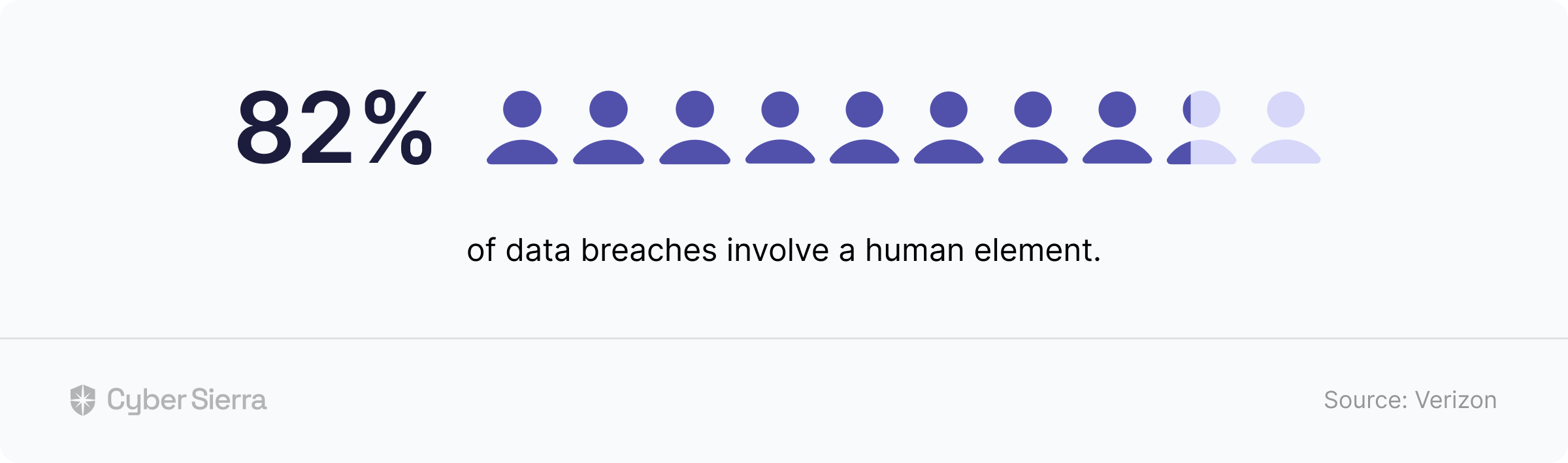
As shown above, between 2020 and 2021, external cyberattack attempts increased by a whopping 50%. But it’s not just external threats. About 82% of the time, data security breaches involve human element, i.e., internal employees’ error or negligence.

These trends beg a crucial question:

Where Should Solving SaaS Data Security Threats Start?

What you focus on is key to solving data security issues.

But with no end to cyber threats like social engineering attacks, phishing, etc., in sight, knowing where to focus isn’t easy. In short, getting it right makes being a CTO harder than ever before.

Even a veteran CTO isn’t finding it easy:

In my 20-plus years working in enterprise security, it's hard to recall a time when it was harder to be a CTO. As a profession, we face so many challenges keeping our organizations secure from attacks in a fast-changing threat landscape that the task can sometimes become overwhelming, leaving us unsure about what to focus on first.

Wei Huang

CTO, Anomali
quote_by

Based on this, here’s our recommendation.

With the fast-changing threat landscape and fact that cyberattacks could be external or from internal mistakes, it’s best to know:

  • Today’s top data security challenges,
  • Their likely impact on your organization, and
  • How to automate tackling them and staying compliant.

This guide (and what should pass as an enterprise CISO data security checklist) will help you do all three:

illustration background

A Checklist for
Solving Data Security Challenges

Get the SaaS CTOs’ checklist guide for tackling SaaS Data security challenges.

card image

Today’s Top 3 Data Security Challenges

We perused analyst reports, polls, and surveys featuring CTOs, CISOs, and relevant security execs. All with one goal: To identify today’s top data security challenges and their likelihood to impact cloud-based tech companies.

In no particular order, they are as follows.

1.Lack of Employees’ Awareness


If you’re like most tech companies, you’ve adopted a hybrid or remote-first work culture. This flexibility has advantages. For CTOs, one is that it makes sourcing tech talent beyond a company’s immediate environs possible.

But it also has disadvantages.

First, it increases a company’s data vulnerability layers. That’s because logging into company networks from remote locations opens more data-breaching rooms. Second, and more important, most employees aren’t always up to date on how to spot and counter new attacks.

This lack of awareness has profound implications.

For context, earlier, I cited a study showing that 82% of the time, it takes an internal negligence for cybercriminals to prevail. Well, a similar study by the WEF puts that number at a staggering 95%. This makes ongoing employee awareness a top challenge.

And technology leaders agree.

Of over 1,900 CISOs, IT professionals, etc., polled, about 87% agreed that without employee training, effective IT security isn’t possible:

responsive image

Solving this problem requires two things.

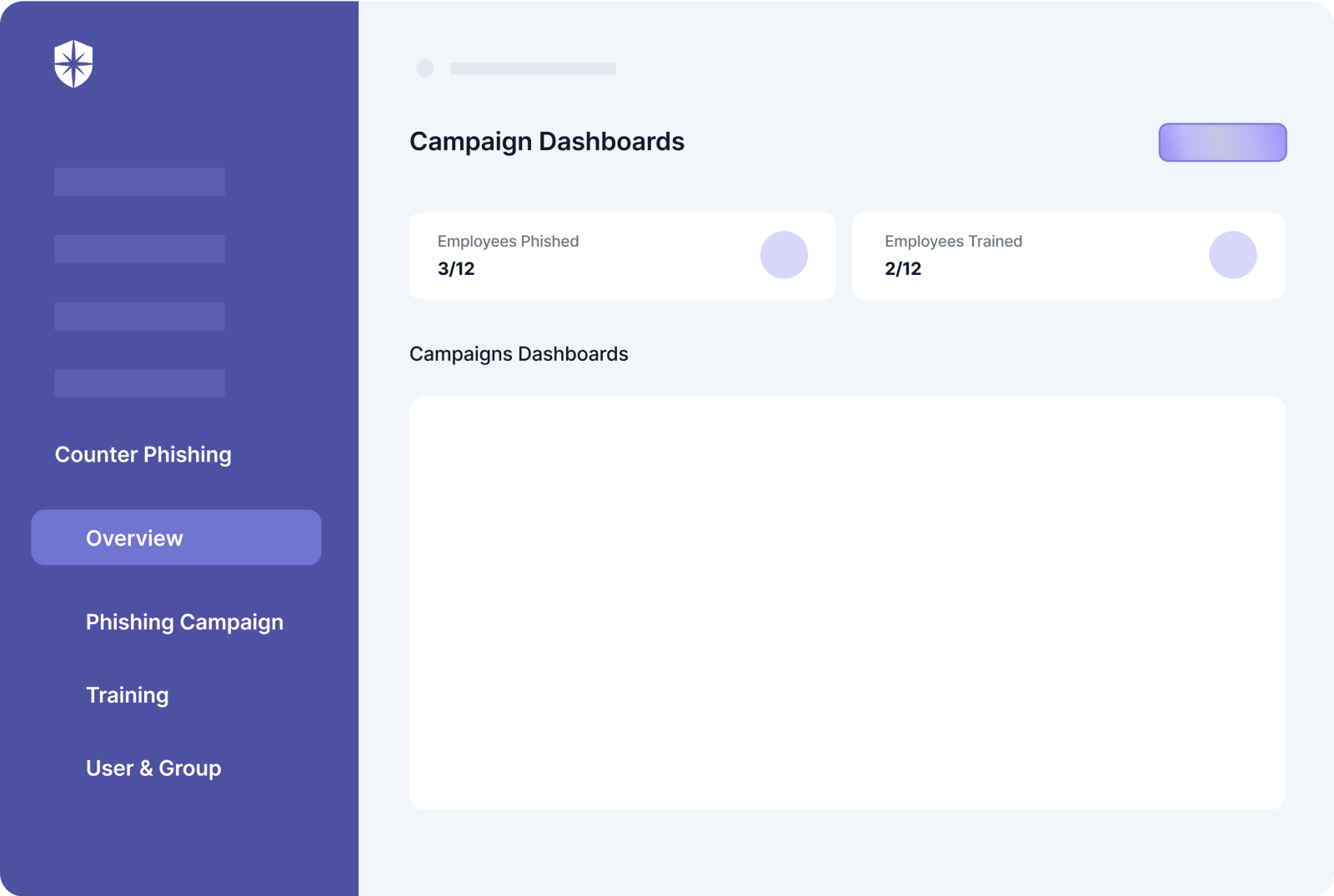
One, you should launch ongoing phishing campaigns and employee awareness training. Second, ensure each training actually gets completed with a platform that gives you a real-time overview of employees who need a nudge to complete their training:

Campaign Dashboards


More on that later.

2. Cloud Misconfigurations


A SecurityIntelligence Analyst succinctly captured why misconfigurations rank high among data security threats.

He wrote: 

Cloud misconfigurations are vulnerabilities waiting to happen. Malicious attackers are always hunting for misconfigured cloud assets because they can be a doorway to the theft of location data, passwords, financial information, phone numbers, health records and other exploitable personal data.

Mike Elgan

Cloud Security Columnist, SecurityIntelligence
quote_by

Let’s put it into perspective.

Imagine you’re the CTO of a US$1 million ARR startup.

According to this VentureBeat report, companies lose 9% of their ARR to network misconfigurations. This means that you could be losing up to US$90,000 yearly to network misconfigurations alone.

And that’s just one type of cloud misconfiguration.

Cybercriminals can also spot data-breaching loopholes in your Kubernetes, cloud, and repository environments. The report by VentureBeat observed why companies are vulnerable to this threat.

Quoting, Tim Keary, the author:

Organizations [are] failing to effectively address misconfigurations due to inconsistent auditing activity. In fact, most organizations are only auditing their devices annually, with switches and routers checked for misconfigurations in just 4% of cases, an approach best described as risk assessment by sampling.

Tim Keary

Senior Cybersecurity Writer, VentureBeat
quote_by

In other words, countering this data security threat starts with regular audit scans. And it should be across all crucial configuration types —cloud, Kubernetes, network, and repository.

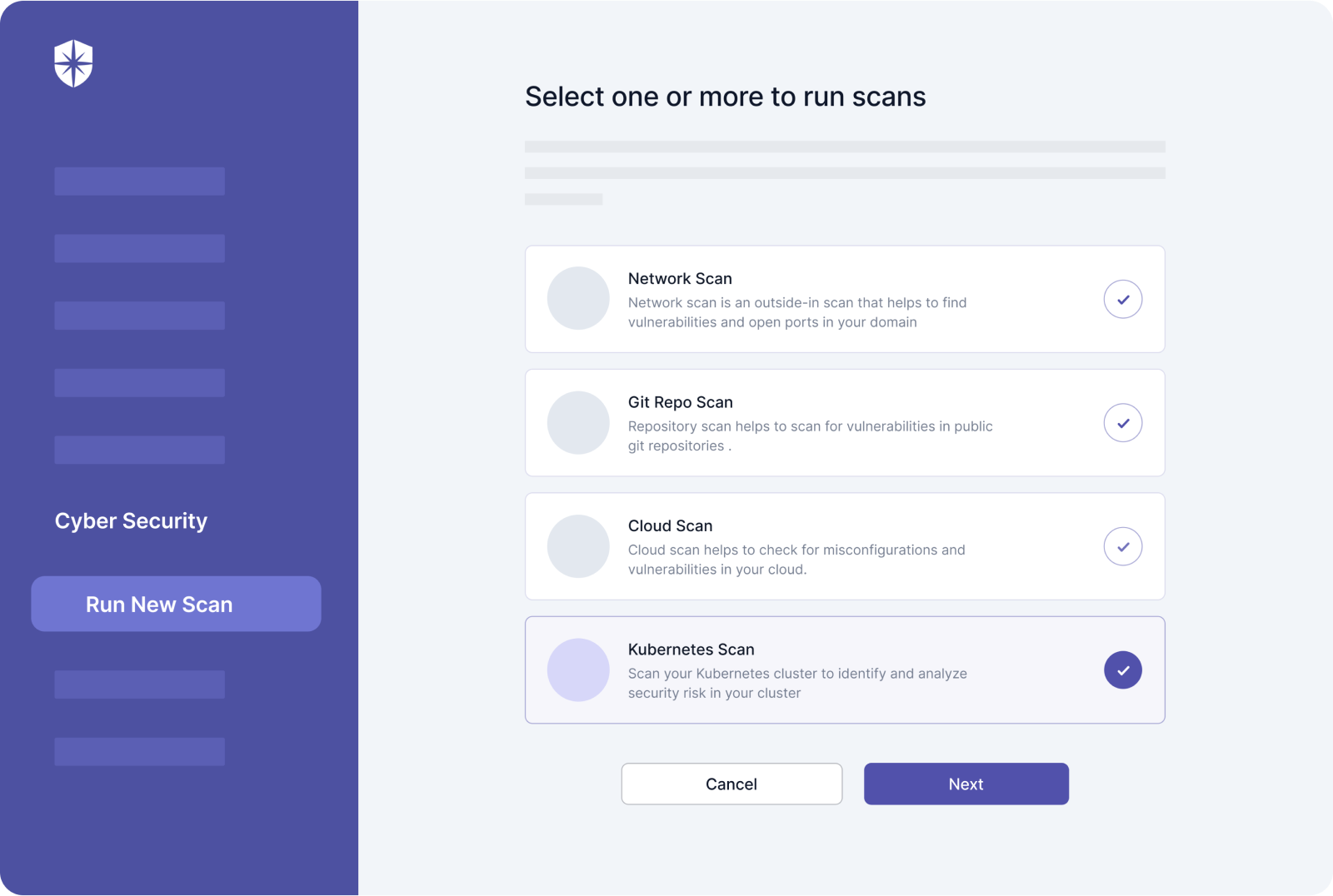
Better if your team can do all that in one place and in a few clicks:

Select one more to run scans

3. Third-Party Vendor Risks


Businesses need other businesses to thrive.

This explains why we increasingly rely on third-party vendor networks of software, services, etc., to deliver effective value to customers.

That’s the upside.

The downside is that giving vendors access to your product or network or accessing theirs poses enormous data security risks. To give you a clue, a 2018 study found that over 59% of companies have experienced a third-party data breach.

What’s more worrying is what the same study revealed: Only 16% of companies can effectively mitigate 3rd-party risks:

responsive image

There’s a reason for this.

Running even one-time security checks on every new vendor takes a lot of manual back and forth. And it’s worse in this ever-evolving threat landscape requiring ongoing security checks on vendors.

But what if you could automate most of the process?

  • Add new vendors in a few clicks,
  • Send mandatory data security assessments,
  • Assign due dates and follow-ups, and
  • Manage multiple vendor types from one dashboard.

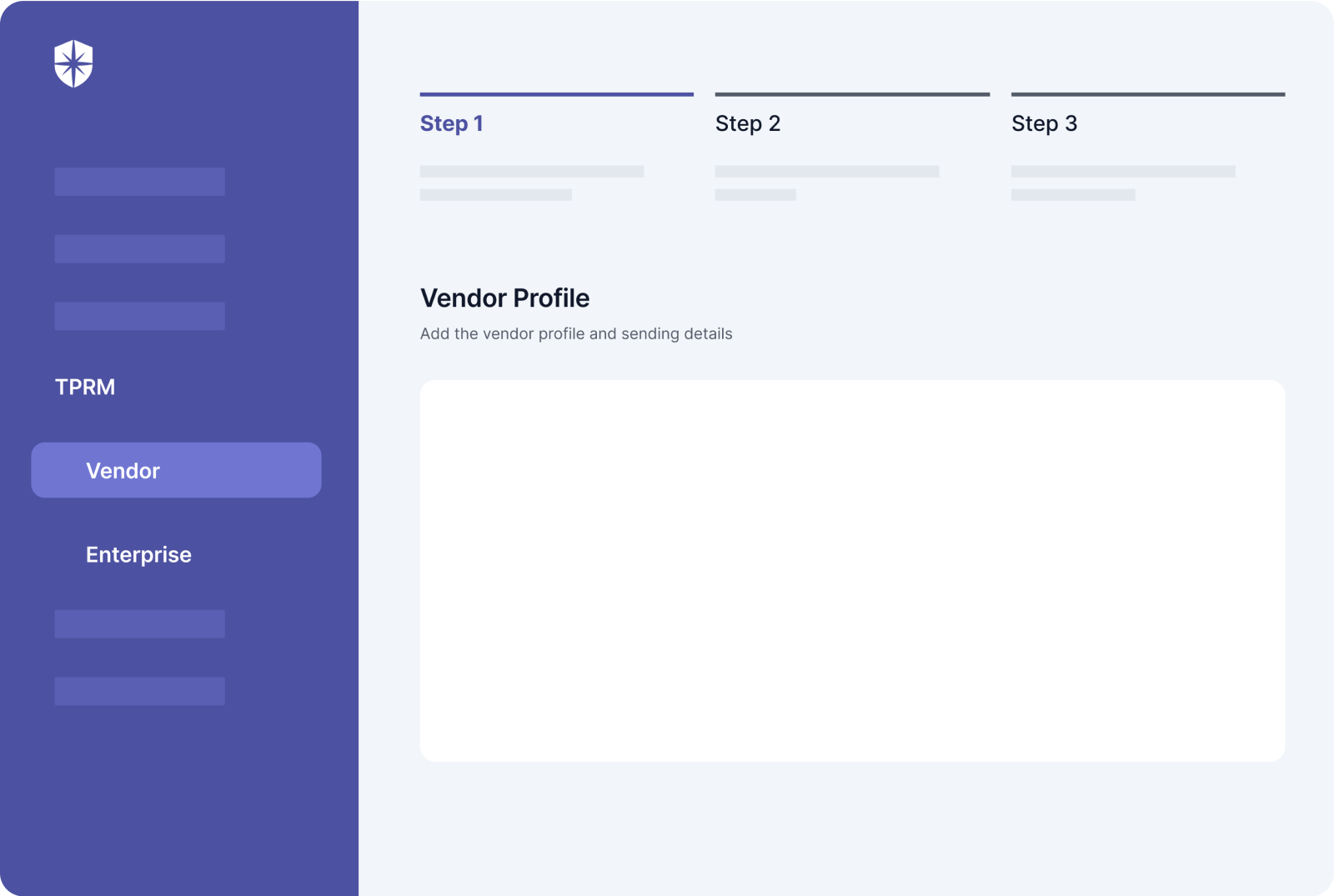
A platform that makes doing all these a simple, 3-step process tech leaders can complete in no time is optimal:

Step By Vendor Profile

Why CTOs Should Automate Solving Data Security Risks

Did you notice a common denominator across the top three SaaS data security risks outlined above? In case you missed it, here goes:

Mitigating each isn’t a one-time affair.

As the threat landscape evolves, there’s need to continuously train employees, scan for cloud misconfigurations, and assess 3rd-party vendor risks. This means that to combat threats, CTOs need to:

  1. Automate each data security risk-mitigating process, and
  2. Integrate these threat-averting processes into modules that speak to each other (i.e., interoperable).

The benefit of this is that, from one dashboard, your team will know overall risk scores and what threats to prioritize. Solving data security issues this way (i.e., with a single suite like Cyber Sierra) has other benefits.

We’ll get to them soon.

First, here’s how our platform makes it all possible. From the ground up, we built it to automate parts of each process. And to solve interoperability issues arising from combating security risks with different tools:

illustration background

Automate Solving Crucial Data Security Threats with One, Interoperable Platform

desktop tablet mobile

How to Automate Mitigating Data Security Challenges

Reality check.

Data breaches arising from failure to mitigate security risks is more likely to happen, per IBM’s recent study. While that’s the reality 87% of companies must deal with, our interest in this study is the role automation plays:

responsive image

In other words, to maximize such time and money savings highlighted above, consider using some form of automation to:

  1. Cut off all unnecessary manual back and forth required to implement each risk-countering process. Examples include ongoing employee awareness training, cloud misconfiguration scans, third-party vendor risk assessments, etc.
  2. Automatically consolidate results from each process into a single view, so stakeholders can see your company’s cyber hygiene in real-time. This simplifies the process of acquiring and renewing compliance certifications and securing cyber insurance.

With Cyber Sierra, achieving both is within reach.

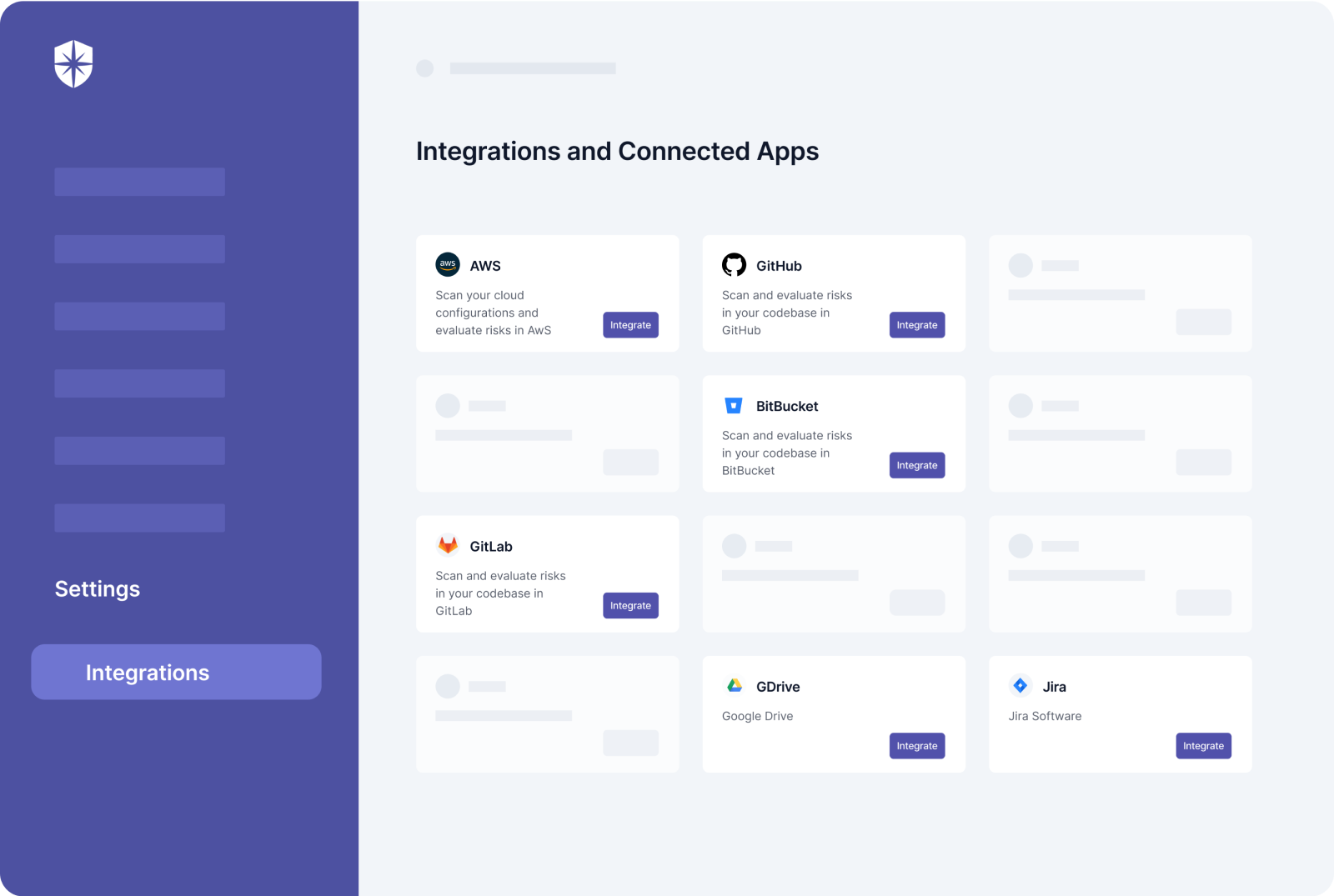
Say you want to automate solving data security threats arising from cloud misconfigurations. It’ll only take two initial steps.

Integrate your company tools (cloud, network, repository, and Kubernetes) directly on the Cyber Sierra platform:


Integrations and Connected Apps

A few clicks after integration scans your company’s cloud, repository, network, or Kubernetes’ environments. And in real-time, you get a risk registry that gets automatically updated.

Here’s what it’ll look like:

Risk Register

The other benefits to tackling data security issues this way are:

1. Detecting Vulnerabilities Early


As shown above, having a real-time risk registry gives your team one view to see and jump on tackling vulnerabilities early. This can have profound data security risk-mitigating and business impact.

For instance, the IBM study cited earlier also found that:

responsive image

Your company could be one of those making such savings.

2. Automating Compliance Certifications


The initial effort and costs of getting crucial compliance certifications (SOC 2, ISO 27001, HIPAA, etc.) depends on one thing: How great your organization’s existing security program is.

Rob Black of Fractional CISO shared this view:

Many clients ask us how much their time/effort is going to cost. The answer is the same… it depends! Do you have a great security program that just needs validation or are you building everything from scratch? The former is going to be a lot less work than the latter.

Rob Black

Founder, Fractional CISO
quote_by

Here’s what this means for you.

Automating parts of the various processes of mitigating data security risks reduces the time, effort, and costs required to get compliance certifications.

And with Cyber Sierra, it doesn’t end there.

All your core security modules live in a single, interoperable platform that works well together. So beyond being much easier to get initial certifications, your team can monitor controls continuously, making the renewal of certificates smoother.

It also means you can apply for new compliance programs faster, and from the same dashboard:

New Compliance program process

3. Securing Cyber Insurance with Ease


To buy life insurance, you must meet certain health conditions.

The same applies to securing cyber insurance to protect your organization, as cybercriminals devise new and more sophisticated data-breaching methods. To get favorable premiums, you need an optimal cyber hygiene posture, which comes from having a mature data security system in place.

Sue from Security Intelligence said it best:

Companies that have a mature cyber security system should be ready to meet the requirements set by cyber insurers. Others with less mature systems or that have struggled to meet risk assessment goals during the pandemic will need to be more proactive.

Sue Poremba

Cybersecurity Writer, SecurityIntelligence
quote_by

As it is with getting and renewing compliance certifications, so it is with securing and renewing cyber insurance. It starts with automating bits of the processes of solving data security threats. This makes your company more eligible for coverage by improving your cyber posture.

Cyber Sierra helps you achieve all that.

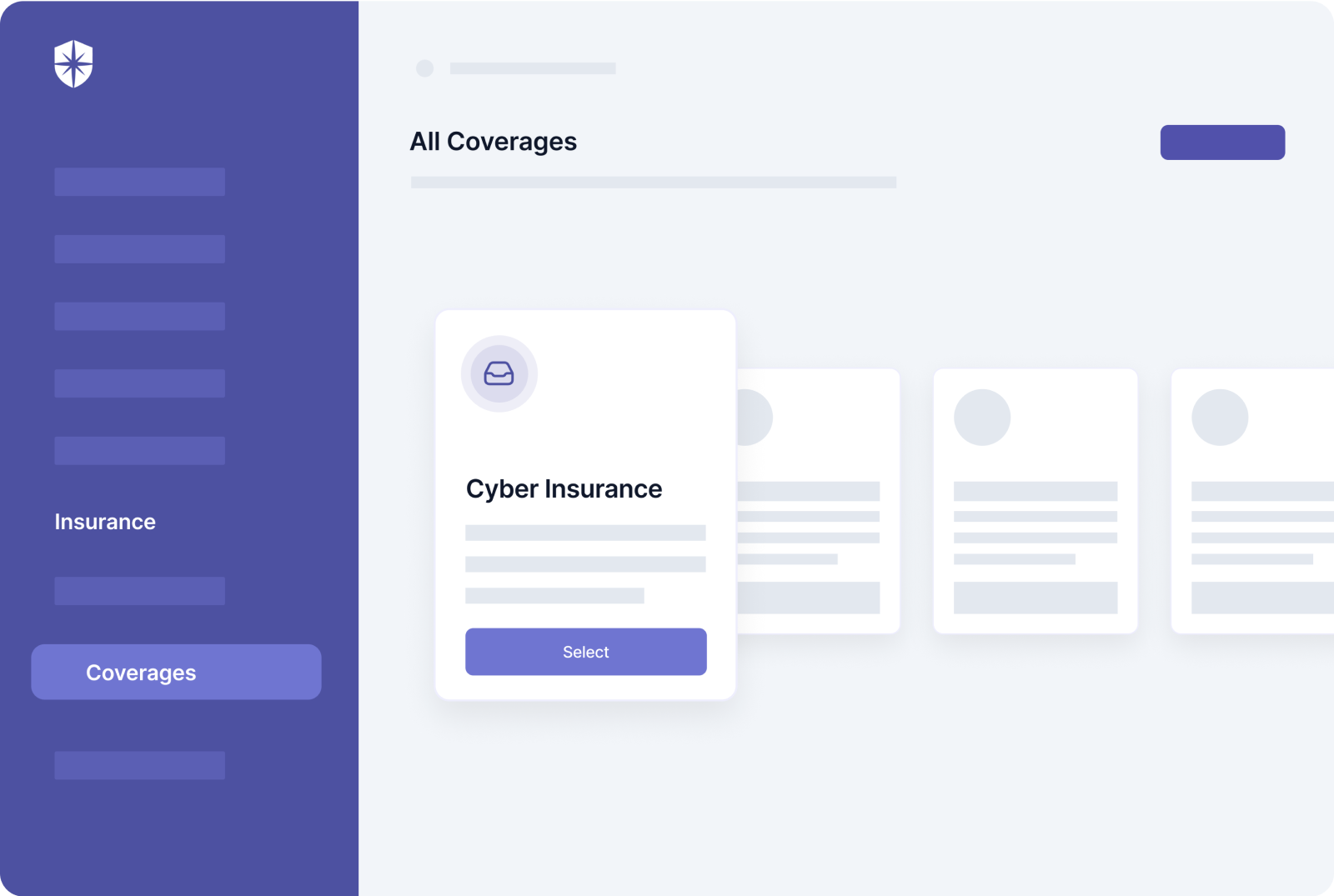
And you can also streamline parts of the process of getting cyber insurance coverage right on our platform:

 all coverages of cyber insurance

Stay In the Know, Always

Here’s a CTO’s advice to CTOs:

The CTO should help create a culture that prioritizes security as the responsibility of the whole organization instead of considering it a function of the IT department alone. This requires analyzing security risks at many different levels and engaging everyone in the organization about the necessity of following organizational security practices.

Deepuk Gupta

CTO & Co-Founder, LoginRadius
quote_by

From this advice comes the question:

How do you create a culture that prioritizes data security as a responsibility of the whole organization?

Our recommendations:

  1. Launch ongoing employee awareness training programs to keep employees in the know of security updates, always. This will protect your company from internal errors and negligence.
  2. Automate ongoing cloud misconfiguration scans to keep your IT team in the know of vulnerabilities to prioritize. This protects you from external actors looking for exploitable data-breaching loopholes.
  3. Automate third-party risk management to keep vendors in the know of data security assessments they must complete to continue working with you. This saves you from getting breached through 3rd parties who access your networks.

All these are easier with Cyber Sierra:

illustration background

Automate Solving Crucial Data Security Threats with One, Interoperable Platform

desktop tablet mobile
  • Governance & Compliance
  • CISOs
  • CTOs
  • Enterprise Leaders
  • Startup Founders
Pramodh Rai

Meet Pramodh Rai, a technology aficionado and Cyber Sierra's co-founder, whose zest for innovation is fuelled by a cupboard stacked with zero-sugar Redbull. With a nimble footwork through the tech tulips across Asia Pacific, he's donned hats at Hmlet (the proptech kind) and Funding Societies | Modalku, building high-performing teams and technologies. A Barclays prodigy with dual degrees from Nanyang Technological University, Pramodh is a treasure trove of wisdom, dad jokes, and everything product/tech. He's the Sherpa in sneakers you need.

A weekly newsletter sharing actionable tips for CTOs & CISOs to secure their software.


Thank you for subscribing!

Please check your email to confirm your email address.

Find out how we can assist you in
completing your compliance journey.
blog-hero-background-image
Governance & Compliance

Here’s How to Automate Enterprise Compliance Management

backdrop
Table of Contents

Join thousands of professionals and get the latest insight on Compliance & Cybersecurity.


What is Enterprise Compliance Management?

Enterprise compliance management is an integrated approach that involves creating compliance frameworks, conducting audits, and training employees to mitigate risks and avoid penalties. Key aspects include understanding relevant regulations, such as GDPR and labor laws, and assigning compliance responsibilities to specific officers within the organization. Effective compliance management minimizes legal risks and enhances operational integrity by systematically addressing regulatory requirements and internal controls.

SOC 2 Control, ISO 27001, GDPR, CCPA, HIPAA, and so on.


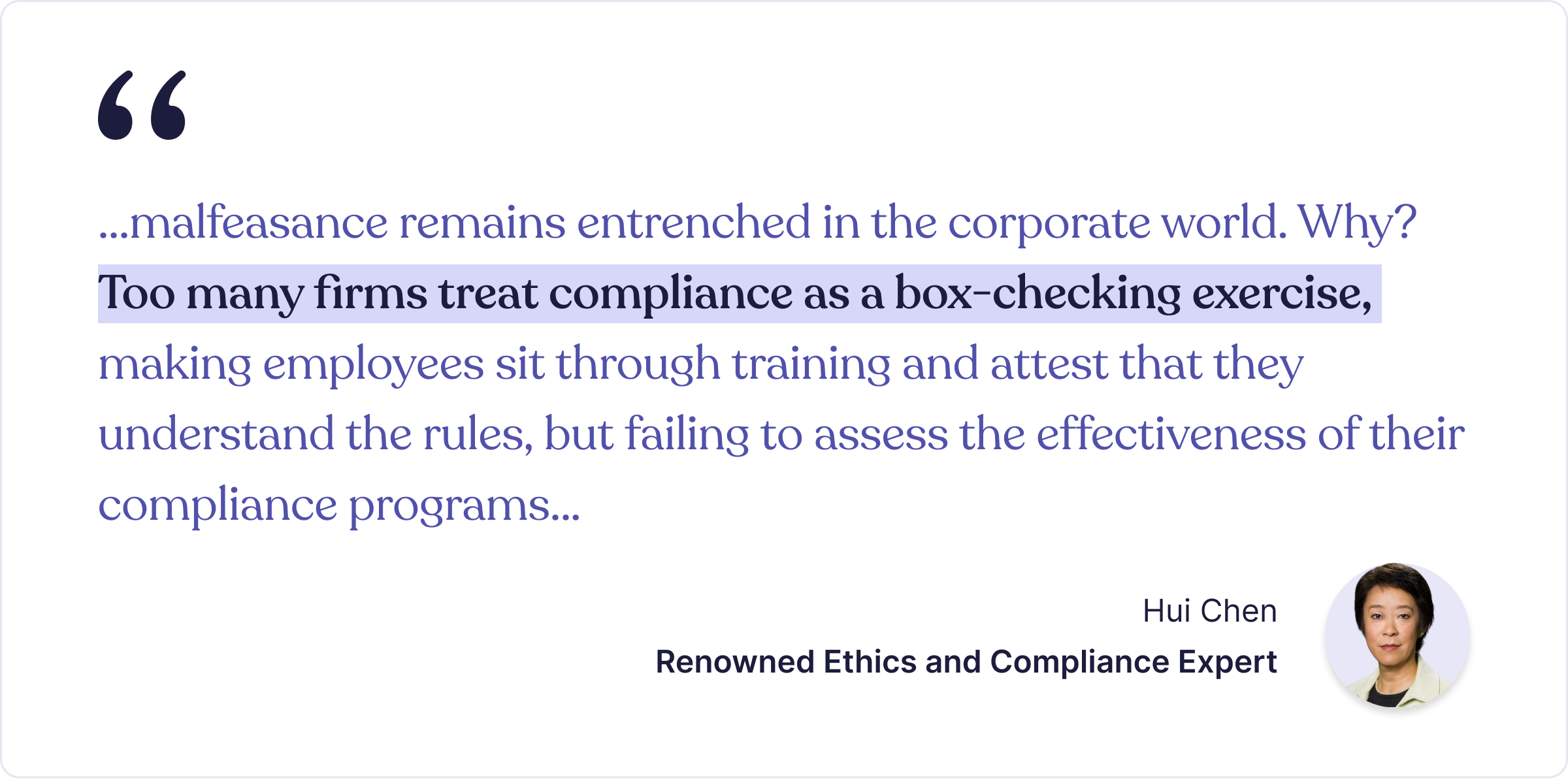
I know. The number of cybersecurity and privacy laws enterprises must attain and stay compliant with can be daunting. Especially if your company operates across multiple jurisdictions. Regardless, Hui Chen, a renowned ethics and corporate compliance leader, advised against treating them like a box-checking exercise. 


Hui’s co-authored piece for HBR noted:


Hui Chen - Quote


You’re probably wondering: 

So how can CISOs and IT Executives achieve effectiveness and stop treating compliance like a box-checking exercise? One such way is implementing and managing your enterprise compliance programs holistically. Experts call it enterprise compliance management


And it has two key areas: 


Key Areas of Enterprise Compliance Management


Starting with its top-level definition


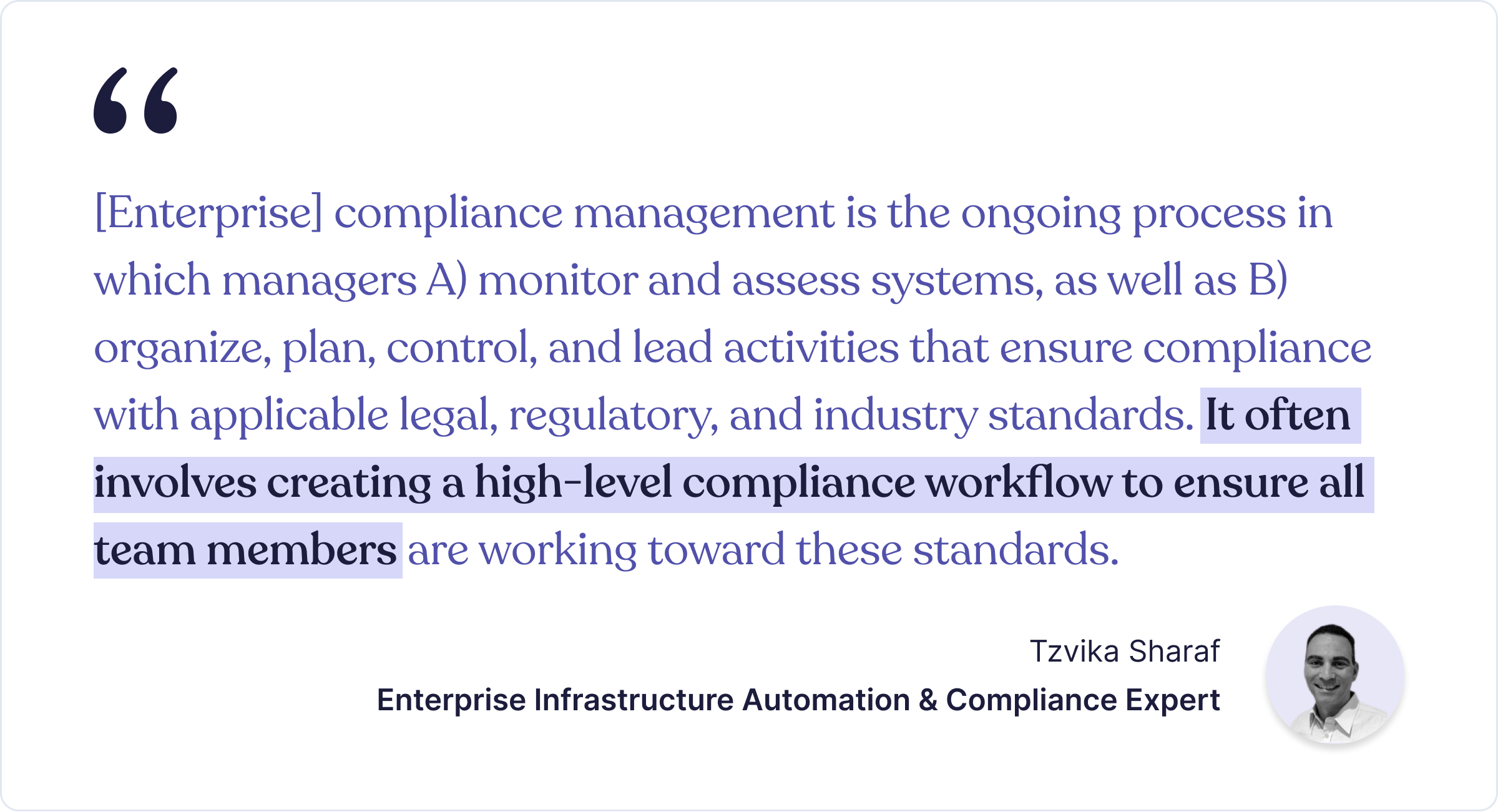
Tzvika Sharaf - Quote


To extend Tzvika Sharaf’s succinct definition, the creation of such high-level workflow must address two key areas: 

  1. External compliance revolves around regulation and rules imposed on a company by the industry or government of the jurisdictions it operates in. For example, per the General Data Protection Regulation (GDPR), if a company misplaces customer personal information from the European Union (EU), they are mandated to provide notification of this mishap within 72 hours.
  2. Internal compliance, on the other hand, is how an enterprise organization responds to and works within the confines of externally imposed compliance regulations. 


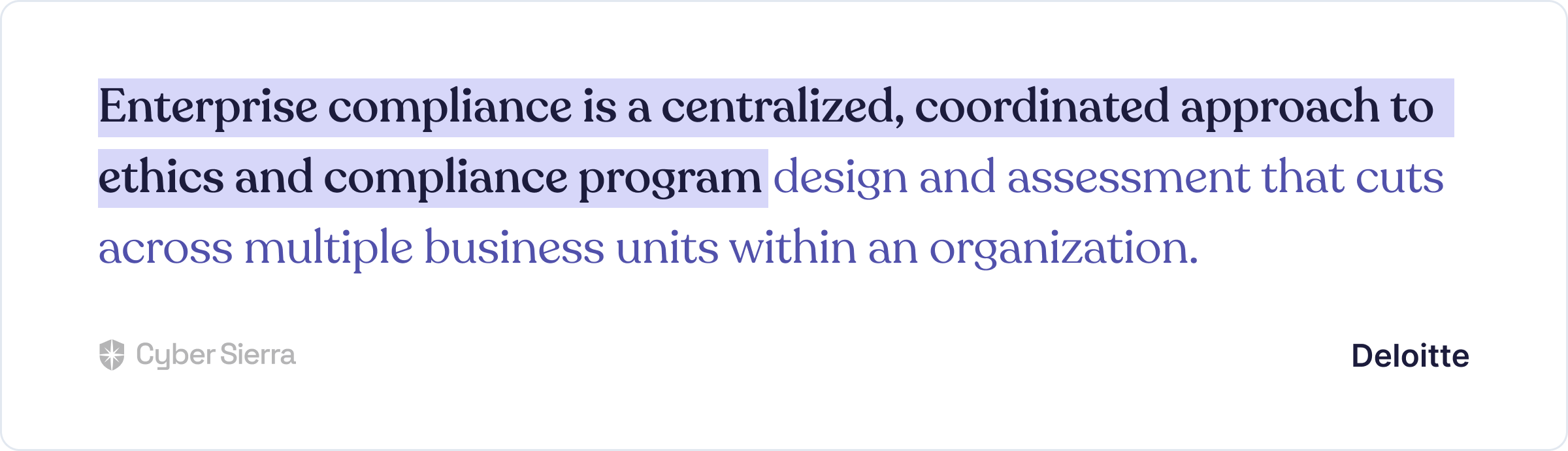
So for effective enterprise compliance management, you don’t just need well-defined procedures and policies. These should address both internal and external requirements peculiar to each compliance program your enterprise company implements. Achieving that requires centralization, according to Deloitte


Deloitte -quote


The second challenge: 


How do you achieve this needed centralization?


For the rest of this guide, I’d walk you through three pillars you should centralize with technology for that. You’ll also see how Cyber Sierra’s governance, risk, and compliance (GRC) suite automates and makes everything seamless.

illustration background

Join SMSW

Join CISOs, CTOs, and enterprise security execs subscribed to Secure My Software Weekly (SMSW) for actionable cybersecurity, risk and compliance insights.

card image

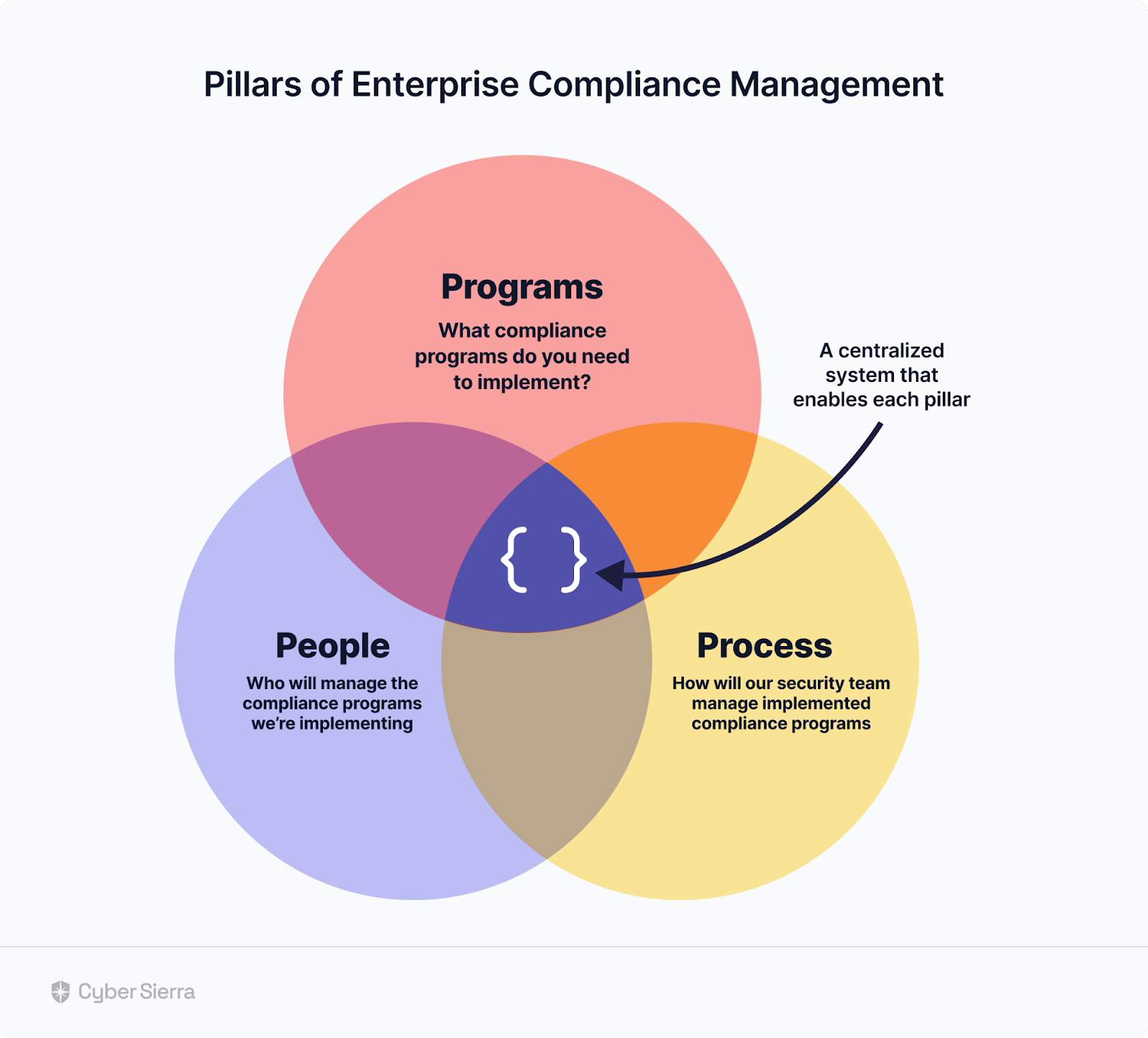
Three Pillars of Enterprise Compliance Management

  1. Programs, 
  2. People, and
  3. Processes. 


Those are the three pillars of enterprise compliance.


Per Deloitte’s report cited above, these pillars must be centralized with a system that enables each to function efficiently and effectively: 


Pillars of Enterprise Compliance Management


1. Programs


The first step in enterprise compliance management is choosing programs to implement and in what order. Both criteria are crucial to avoid treating compliance like a box-checking exercise, as Hui advised against. 


Two reasons for that are: 

  • Choosing the right programs ensures your company adheres to industry- and location-specific compliance regulations.
  • Implementing compliance programs in the right order makes the process easier to navigate and manage for your company.


For instance, if your company handles financial and personal data of European-based customers, PCI DSS and GDPR are a necessity. On the other hand, although ISO 27001 and SOC 2 aren’t compulsory, they are widely recognized and can ease your team’s implementation of other programs. 


The order of importance differs depending on whether your company handles health information of customers. In that case, HIPAA is a compliance program to also prioritize. In some cases, it may be necessary to first implement internal compliance and security controls to guide data security management across your company. 


Navigating all this can be gruesome. 


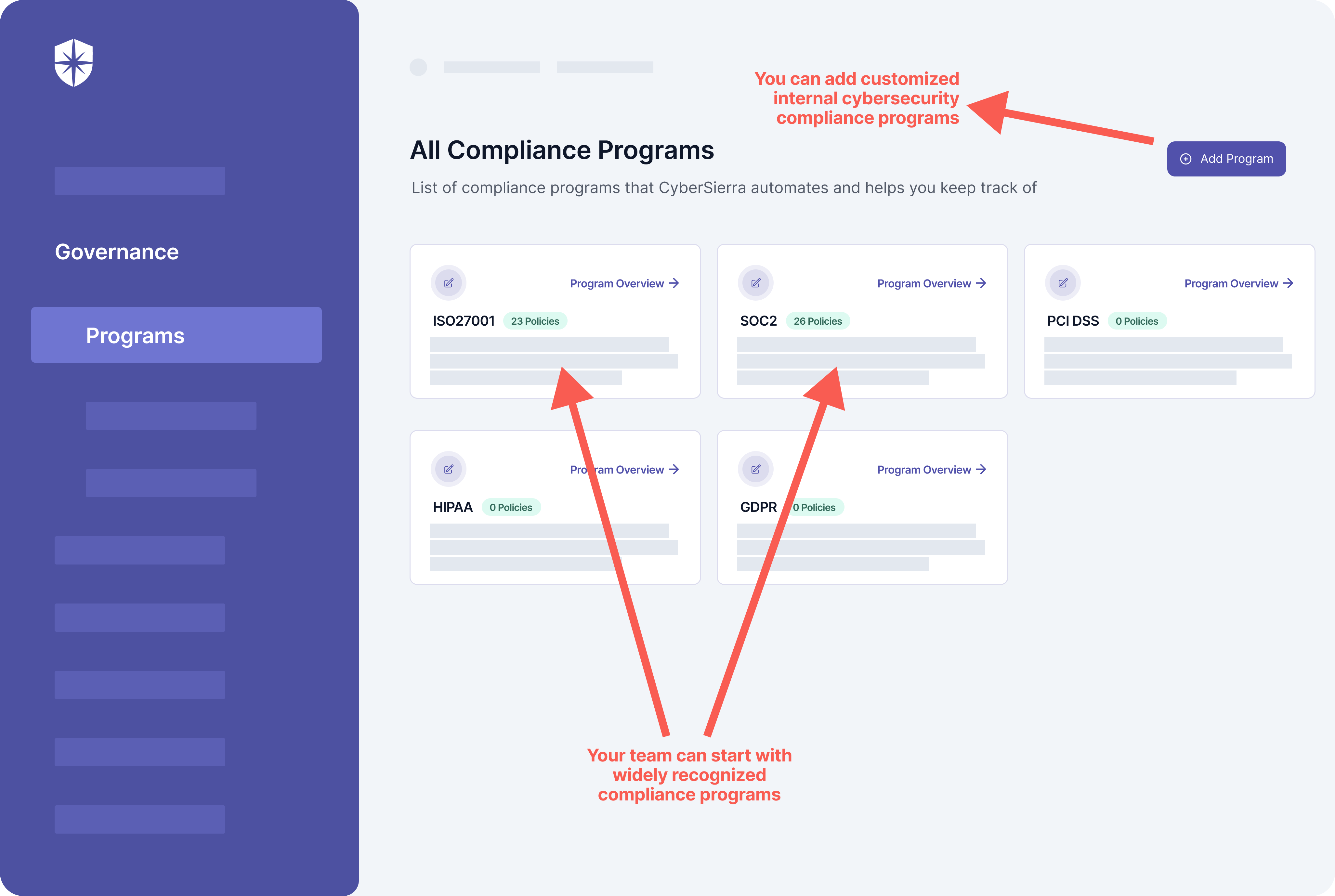
Which is where a tool with extensive GRC capabilities is crucial. With Cyber Sierra, for instance, choosing and implementing enterprise compliance programs is streamlined. You can implement internal cybersecurity compliance controls. And your security team can also start with widely recognized compliance programs like SOC 2 control list , GDPR, and ISO 27001 that ease the implementation of all other programs.


All from one dashboard: 


All from one dashboard - programs


2. People


Effective compliance management starts with people —your security team and employees across the organization. When grounded and empowered to adhere to all cybersecurity compliance requirements, they can be your greatest asset for staying compliant. Otherwise, they can be your biggest burden and window to data security breaches.


To stress the point: 


leading to these data security breaches and compliance failures include:


human element involve in data breach


Per this Verizon study, dominant incidents 


Employees mis-configuring a database and directly exposing information, and

  • Employees making errors that enable cybercriminals to access privileged information in a company’s systems.


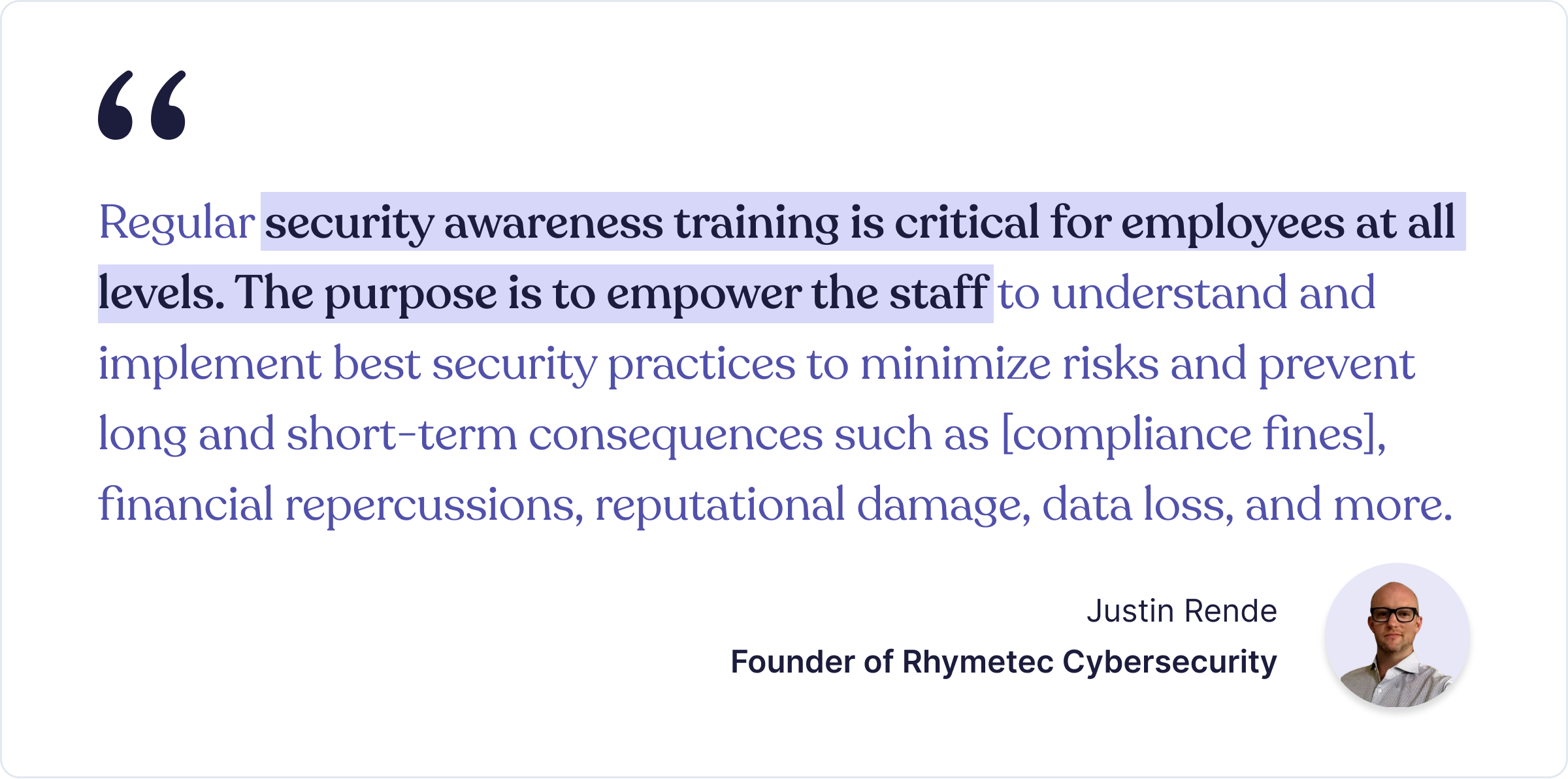
Here’s why I’m addressing the ‘people’ pillar in enterprise compliance management from the angle of your entire company employees. Having a Director of Compliance and managers to oversee the implementation of compliance programs is crucial. However, if all employees aren’t trained on being compliant, the chances of getting breached and facing non-compliance fines remain high.


It’s why in a Forbes article, Justin Rende wrote


Justin Rende - Quote


It is also important for ongoing security awareness training to cut across all implementable compliance programs. This streamlines the training experience for the staff without overwhelming them with new training for each program. 


But that’s not all. 


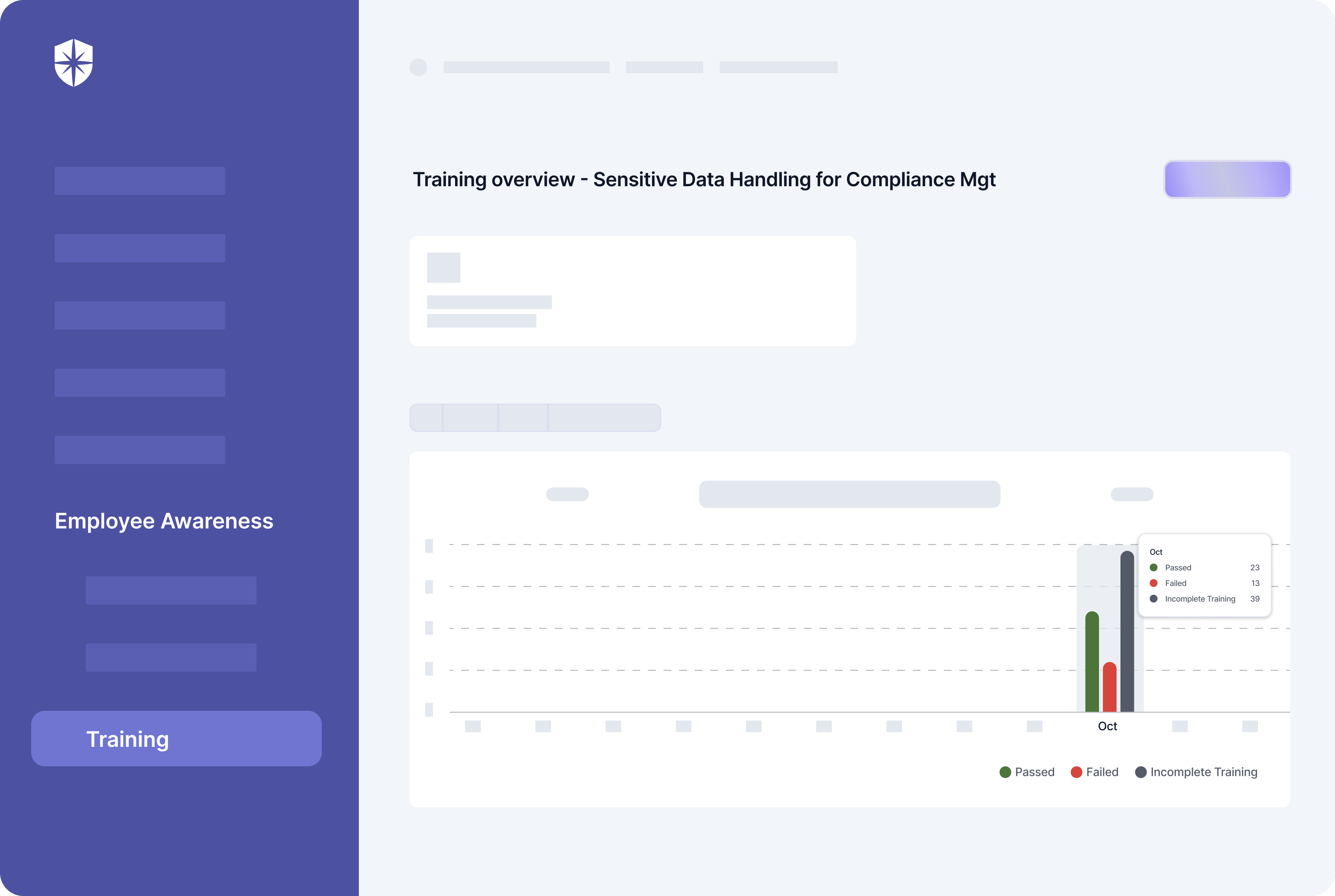
Executives need to track all staff training, so they can follow up and ensure they are being completed. This is where an interoperable cybersecurity platform like Cyber Sierra comes in:


Executives need to track all staff training, so they can follow up and ensure they are being completed


As shown, your team can launch staff-wide ongoing security awareness training that cuts across all compliance programs. More importantly, executives like you get a dashboard to monitor how employees are completing them on our platform, too. 


3. Processes


Processes are crucial for managing enterprise compliance. First, they create a culture of transparency on how to implement programs. Second, processes ensure accountability within your team and promotes a methodical approach to compliance management.  


Essentially, processes guide employees through the decision-making and actions needed to attain and stay compliant. And aid in documenting and creating audit trails required to demonstrate compliance to auditors, stakeholders, and regulators. 


For instance, you need efficient processes for: 

  • Continuous risk assessments 
  • Internal and external security audits 
  • Compliance programs’ policy development 
  • Mapping security controls to each compliance program
  • Ongoing risk monitoring, scoring, mitigation, and so on. 


But each of these processes must be meticulous and adjusted as the regulatory compliance landscape evolves. This is why corporate compliance experts recommend the automation of these processes.


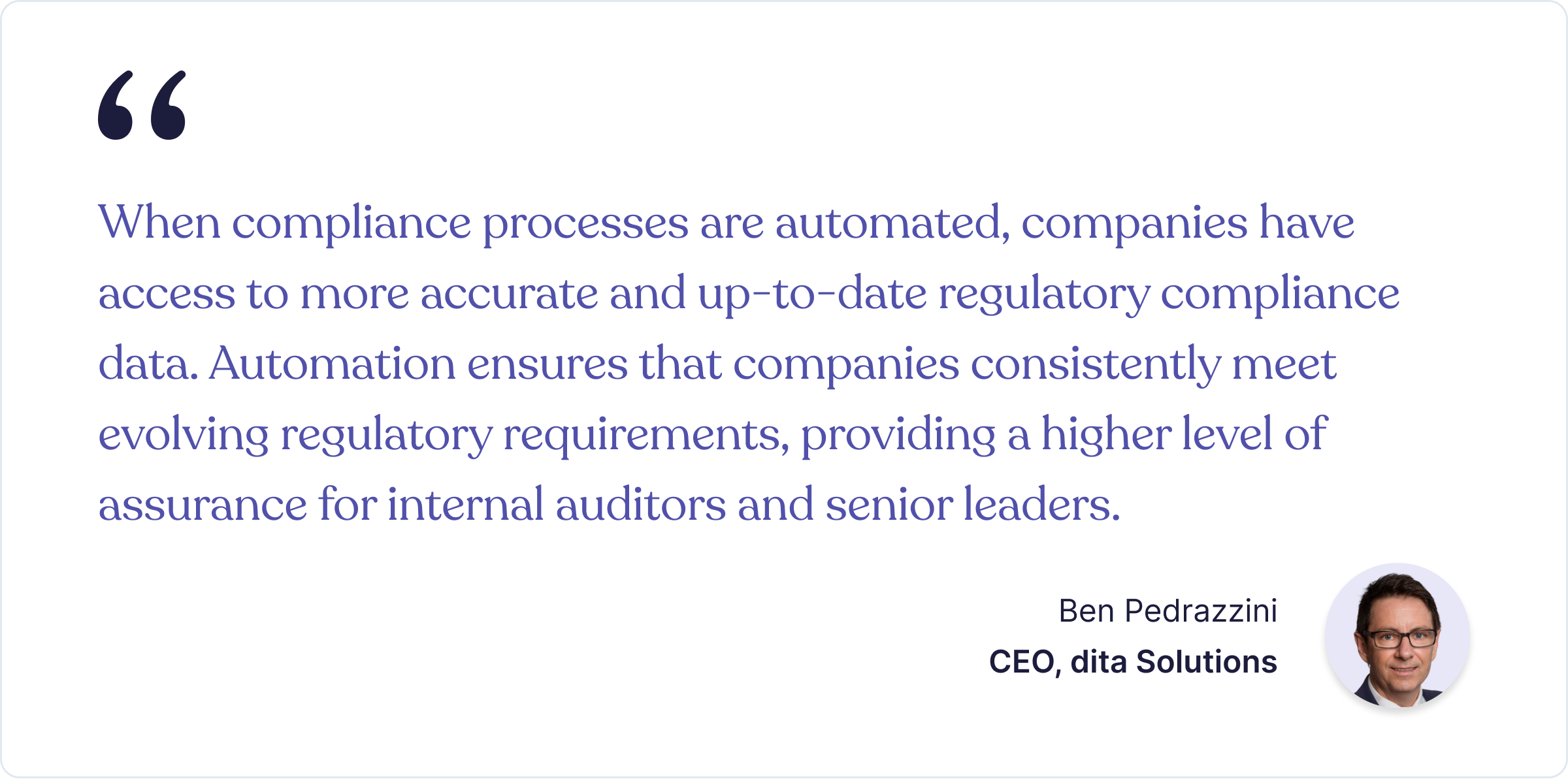
Ben Pedrazzini - Quote


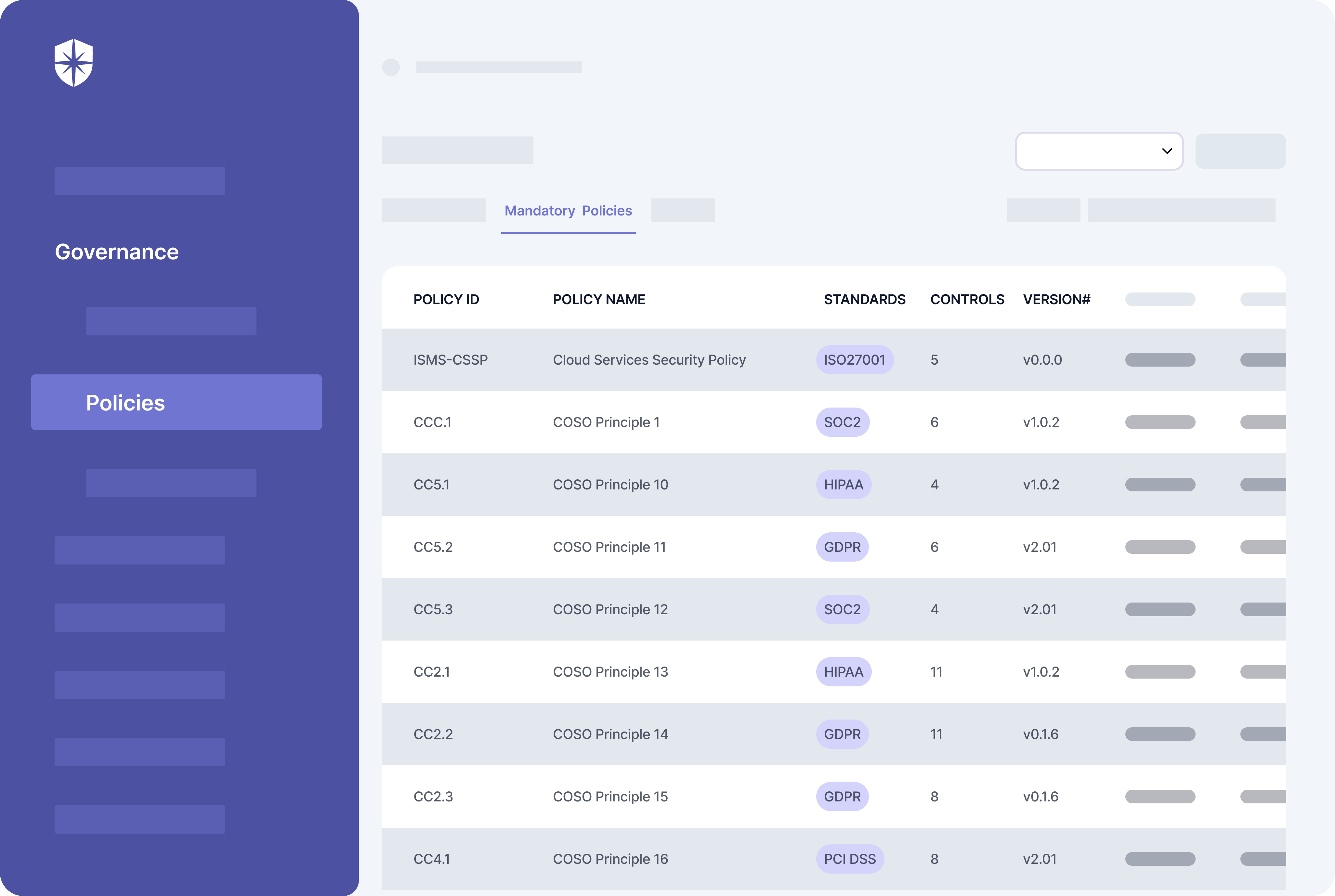
With an intelligent, unified platform like Cyber Sierra, crucial compliance program processes are automated out of the box. For instance, our platform maintains auto-updated versions of policies mapped to different compliance programs: 


platform maintains auto-updated versions of policies mapped to different compliance programs


Having compliance policies in a central place like this cuts off all the gruesome manual work involved in effecting processes for creating, uploading, and maintaining them as the regulatory landscape evolves. 


Other Areas Automation Aids Compliance Management


Having a centralized enterprise compliance management system goes beyond enabling its pillars. Although this is crucial as shown so far, there are other areas where automation streamlines compliance management for the CISO and IT Executives. 


1. Compliance Controls’ Management


Compliance programs have dozens, and for some, hundreds of security controls that must be implemented. And as each compliance program evolves, evidence of each control must be updated to confirm that security measures are in place and avoid fines. 


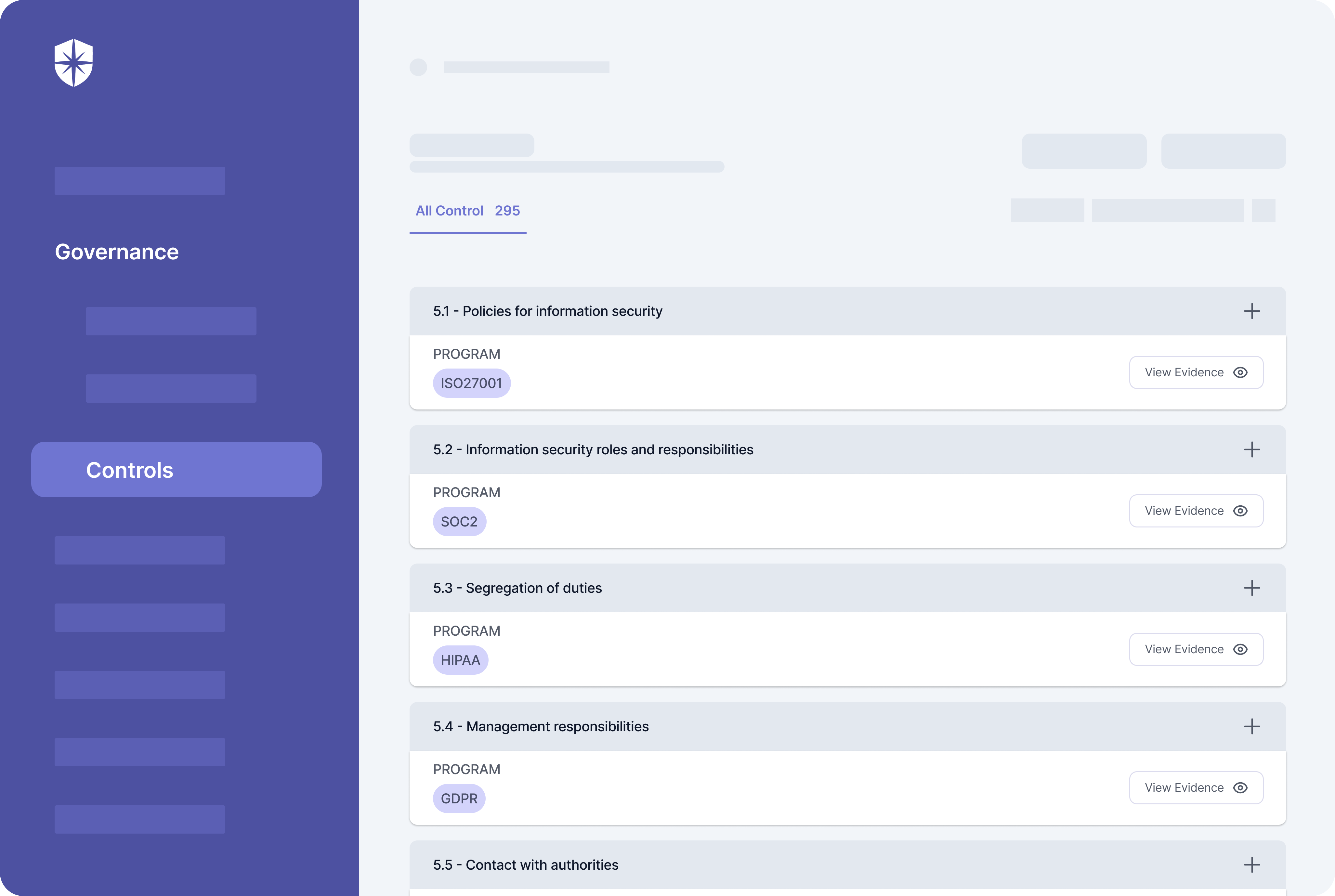
Doing this at scale, considering there are hundreds of controls across compliance programs, requires a central place for tracking them:


Compliance Controls’ Management


As shown, Cyber Sierra has a robust compliance controls’ management dashboard. Having all controls auto-mapped to different programs like this streamlines the steps usually spent tracking and updating evidence in spreadsheets for your team. It also gives you, the executive, a way to monitor and view uploaded compliance controls’ evidence from one view. 


2. Risk Insights and Analysis


Negligence isn’t the sole cause of compliance issues. 


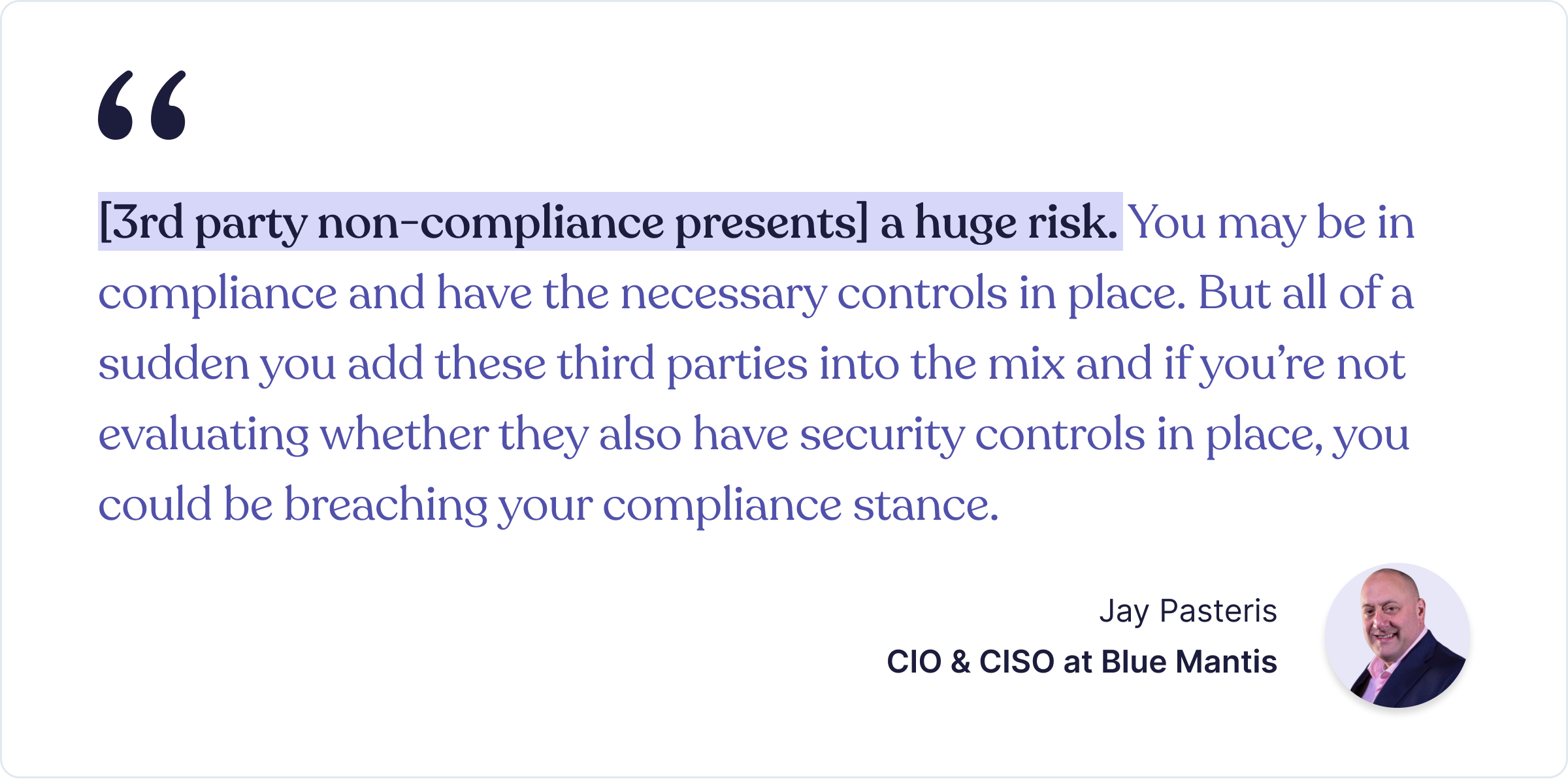
Often, failure to proactively identify and mitigate external risks from third-party vendors can result in breaching your compliance stance. In the words of a veteran CISO, Jay Pasteris


Jay Pasteris - Quote


To avoid this, it helps to manage your company’s compliance programs with an interoperable cybersecurity platform like Cyber Sierra. This is because our platform has capabilities for automating continuous 3rd party risk assessments and ongoing risk monitoring. 


Automate Enterprise Compliance Management


Managing enterprise compliance manually can be time-consuming and extremely challenging, often leading to costly inefficiencies. Also, it takes more than having software that streamlines becoming and staying compliant with specific programs. 


The need to map and manage security controls per compliance program is crucial. And so is the need to automate the process of continuously analyzing, identifying, and mitigating all third-party vendor risks. As shown so far, without these, all efforts toward compliance management could still lead to hefty fines. 


It is therefore necessary to automate the entire enterprise compliance management lifecycle with an interoperable cybersecurity platform like Cyber Sierra. Our platform enables the core pillars of enterprise compliance management and has capabilities for the other areas. 


And we’re on standby to give you a free tour: 

illustration background

Automate Your Entire Enterprise Compliance Management Lifecycle

Book a free demo and see how cyber sierra help CISOs automate enterprise compliance management.

card image
  • Governance & Compliance
  • CISOs
  • CTOs
  • Cybersecurity Enthusiasts
  • Enterprise Leaders
  • Startup Founders
Pramodh Rai

Meet Pramodh Rai, a technology aficionado and Cyber Sierra's co-founder, whose zest for innovation is fuelled by a cupboard stacked with zero-sugar Redbull. With a nimble footwork through the tech tulips across Asia Pacific, he's donned hats at Hmlet (the proptech kind) and Funding Societies | Modalku, building high-performing teams and technologies. A Barclays prodigy with dual degrees from Nanyang Technological University, Pramodh is a treasure trove of wisdom, dad jokes, and everything product/tech. He's the Sherpa in sneakers you need.

A weekly newsletter sharing actionable tips for CTOs & CISOs to secure their software.


Thank you for subscribing!

Please check your email to confirm your email address.

Find out how we can assist you in
completing your compliance journey.
blog-hero-background-image
Governance & Compliance

What Makes a Good Cyber Security Posture Management Vendor?

backdrop
Table of Contents

Join thousands of professionals and get the latest insight on Compliance & Cybersecurity.


What Makes a Good Cyber Security Posture Management Vendor?

Cybersecurity posture management is a facet of information technology that protects sensitive information against cyber criminals. This may include safeguarding an organization’s information system and computer networks from security risks, attacks, threats, intrusions, or other data breaches. With the growing sophistication of cyberattacks, firewalls, and anti-viruses are not enough anymore. There is a need for more robust protection through the help of a good cyber security posture management vendor.

slider

Some General Statistics on Cyber Crimes Since the Pandemic:


Some General Statistics on Cyber Crimes Since the Pandemic:


Based on those statistics, there is a need to have a good cybersecurity posture management vendor to protect ourselves and our businesses online. That said, given the abundance of cybersecurity vendors, it may take time to choose the best one. As such, this article can help you find the best possible vendor for your needs.

Features of a Good Cyber Security Posture Management Vendor


Features of a Good Cyber Security Posture Management Vendor


1) Good Scalability of Solutions

The security vendor you choose should be able to keep pace with the growth of your organization while staying well ahead of any possible threat. As such, as you add new endpoints, expand your network, or integrate additional operational tools and technologies, their products and services will not be rendered obsolete. A good vendor should be committed to developing and releasing new functions and features that combat emerging threats while being flexible enough to adapt to their client’s needs.

2) Customisable Protection 

The vendor should be able to tailor their offerings based on your organization’s needs. Given the rapid evolution of cybercrimes, a ‘one size fits all’ protection from a vendor would be insufficient. Likewise, each organization and needs are different. Some would need overall cybersecurity protection, while others only require an add-on to existing services. 

A good vendor should be able to customize their services based on the customer’s needs. While an out-of-the-box product can provide a certain level of protection, having the ability to customize through modular add-ons can give the best level of protection your business would need.

3) Experienced Cybersecurity Experts

The security team should be experienced in understanding how threats work, knowing how to spot them, and knowing how to prevent them. At its core, cybersecurity is about knowledge. As such, a good vendor should have experienced cybersecurity experts that use data-driven defenses such as Big Data collection or artificial intelligence.

4) Holistic Approach to Security 

With the level of sophistication shown by cybercriminals, protection should also be adequate in response. As such, they should be able to defend every aspect of your IT infrastructure. While phishing, ransomware, and DDoS have overlapping techniques for executing, a good vendor should have a high level of protection against each one of those possible threats. This entails 24/7, 365 days of end-to-end monitoring, detecting, and responding to threats. As such, a good vendor has a holistic approach to your security.

5) Cybersecurity Experts Are Always Accessible

Since cyberattacks are unforecastable, cybersecurity vendors should have tangible and intangible resources to respond to such attacks 24/7. This means that the vendor should have an established protocol that can guarantee that you are protected no matter what.

6) Price of Protection is Cost-Efficient

Since damages from cyberattacks can be expensive, you must be assured that your vendor can protect your organization against such attacks. As such, a good vendor can provide you with a wide range of services and solutions to mitigate damaging cyberattacks at a competitive price. The perceived value of the product should equal its cost.

Final Thoughts

With the uptick of cybercrimes, organizations need to have a chance to protect themselves. With the help of a good cyber security posture management vendor, not only will they have the best possible protection from threats and attacks, but they will also have a good picture of the organization’s security posture.

This is where we at Cyber Sierra come in. Since we know that cyber risks are a significant business concern, we have created an intelligent platform that helps secure businesses from threats. A few capabilities of our platform include periodic scans to proactively identify and fix issues, develop infuse policies to bolster organizational preparedness, run counter-phishing campaigns to prepare your team from phishing attacks, and detect any cloud misconfigurations. Essentially, with our highly skilled experts, you are assured that all your protection needs will be met.

  • Governance & Compliance
Srividhya Karthik

Srividhya Karthik is a seasoned content marketer and the Head of Marketing at Cyber Sierra. With a firm belief in the power of storytelling, she brings years of experience to create engaging narratives that captivate audiences. She also brings valuable insights from her work in the field of cybersecurity and compliance, possessing a deep understanding of the challenges and pain points faced by customers in these domains.

Find out how we can assist you in completing your compliance journey.
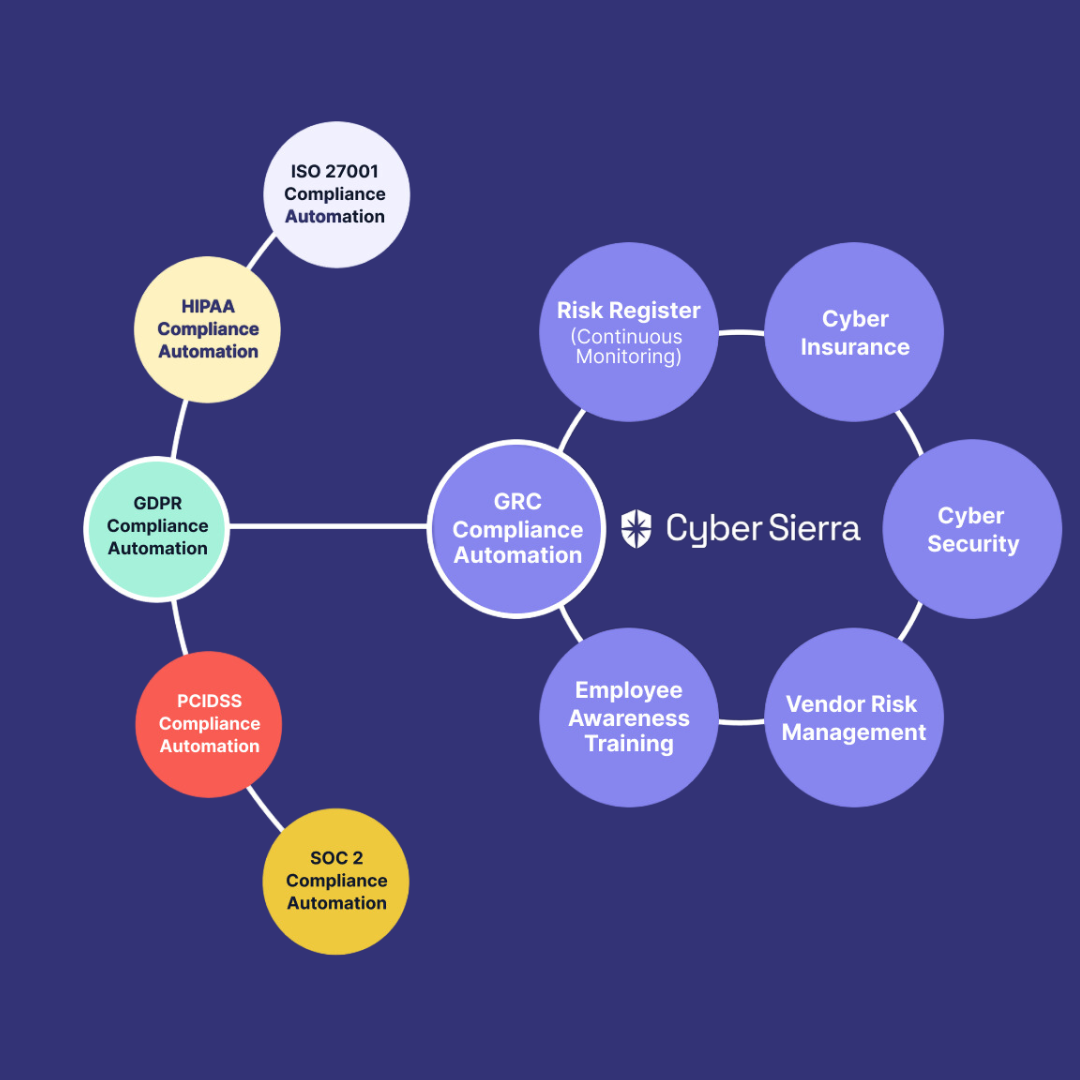
blog-hero-background-image
Governance & Compliance

Why Startups Must Get Serious About Cybersecurity

backdrop
Table of Contents

Join thousands of professionals and get the latest insight on Compliance & Cybersecurity.


I recently met the co-founder of an up-and-coming FinTech startup. During our conversation, he boldly stated, “My company is too small to need comprehensive cybersecurity.” Such a mindset is common in most startups. Many assume that only larger organisations should worry about phishing scams, ransomware attacks, or advanced persistent threats. Yet, the truth is worth noting.

slider

Cybercriminals increasingly target small businesses and startups

Smaller businesses are more likely to be targeted by cyber attackers than larger enterprises. They also suffer more. Per one recent report, smaller companies (<100 employees) experience 350% more social engineering attacks than larger companies. Data breaches at small businesses have also surged by 152% in 2020 and 2021. And larger organisations? By only 75%. The cost of data breaches for small firms has also increased: from $2.35 million in 2020 to $2.98 million in 2021. The increase was much smaller for medium and large organisations during the same period.

Smaller businesses need more funds and human resources to implement robust cybersecurity measures, resulting in weak defences that leave many gaps for bad actors to exploit. Attackers also know that targeting larger firms is more likely to attract the attention of law enforcement. That’s why they prefer to target unprepared smaller businesses. In return, they get a reasonably high payout while keeping a relatively low profile.

How Startups Can Protect Themselves

Since 60% of small businesses fold within six months of a cyberattack, startups must take cybersecurity more seriously. If they don’t, they will become victims and struggle to survive, much less thrive. For one, all startups must implement a cybersecurity strategy, invest in robust security tools, and implement strong procedures to protect their business-critical data.

Startups can also benefit by identifying their most crucial assets and prioritizing their defense areas accordingly. Other protective strategies like next-gen anti-malware/anti-virus tools, multi-factor authentication, strong access controls, data encryption, backup, and regular cybersecurity training can also help to mitigate at least some cyber risks in their business landscape.

A Final Word

The writing is on the wall. Hackers target small businesses and startups as much as – and sometimes more – than established firms. And the sooner startup owners wake up to this reality, the better they can safeguard what matters to them – their digital assets, people, budding reputations, and most importantly, their futures.


  • Governance & Compliance
Srividhya Karthik

Srividhya Karthik is a seasoned content marketer and the Head of Marketing at Cyber Sierra. With a firm belief in the power of storytelling, she brings years of experience to create engaging narratives that captivate audiences. She also brings valuable insights from her work in the field of cybersecurity and compliance, possessing a deep understanding of the challenges and pain points faced by customers in these domains.

Find out how we can assist you in completing your compliance journey.
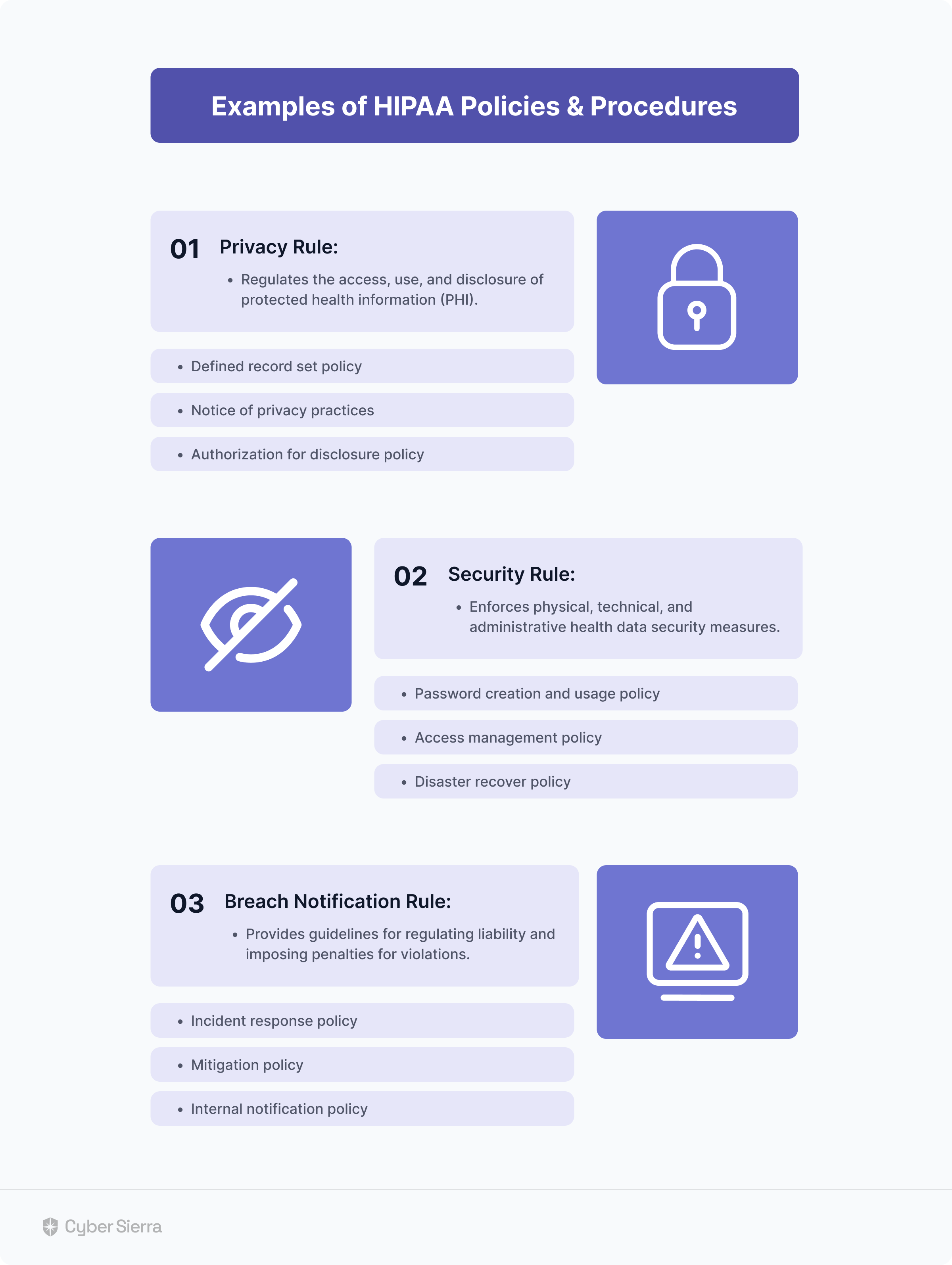
blog-hero-background-image
Governance & Compliance

Benefits of Cyber Security Compliance: Why you should consider investing in ISO 27001 or SOC 2 regardless of your industry segment

backdrop
Table of Contents

Join thousands of professionals and get the latest insight on Compliance & Cybersecurity.


The increasing rate of cybercrime post-pandemic has led many technology leaders, CTOs, and engineering professionals to apply cyber security compliance procedures to their organisations. However, some still assume that compliance only applies to IT and finance businesses, leaving other industries vulnerable to cyberattacks.

As cyberattacks can happen to anyone, this article will go over why businesses, regardless of industry, need to invest in cybersecurity compliance now more than ever, particularly in ISO 27001 and SOC 2 certifications.

slider

What is Cybersecurity Compliance and Why is it Important?

Cybersecurity compliance is defined as meeting the regulatory requirements needed for organisations to protect the confidentiality, integrity, and availability of the information they handle.

Compliance, then, is important as it ensures that firms are equipped with the right tools and systems to proactively mitigate security breaches and maintain good cybersecurity hygiene.

How can my Organisation Achieve Compliance?

To achieve compliance, organisations must get certifications from relevant third-party governing bodies to prove that they are using information systems equipped with the right tools and risk-based security controls to protect sensitive data.

While there are many systems available in the market, organisations should look for those that allow them to:

  • Detect and assess risks and vulnerabilities (technology and human-induced)
  • Manage and mitigate third-party risk, and
  • Conduct periodic scans and create relevant security controls to monitor system performance

In Singapore, 40% of cyberattacks target small and medium businesses (SMBs), with 54 % identifying phishing as the main threat to their business. This scenario makes systems that provide counter-phishing protection, asset scanning capabilities, and risk assessment policies such as Cyber Sierra’s particularly sought after as their protection can cover the most basic threats. 


Features of Cyber Sierra's Platform
Features of Cyber Sierra’s Platform

Which Certification should my organisation get?

There are many cybersecurity frameworks that one can get certified in.

However, most companies consider these two as the best indicator of high-quality information security management: ISO 27001 and SOC 2.

ISO 27001

ISO/IEC 27001 is the leading international standard that outlines the requirements for establishing, implementing, and maintaining a cyber-resilient information security management system (ISMS). An ISMS encompasses the organisation’s whole toolbox (people, processes and procedures, and technology) in managing information security risks.

The key requirement needed to comply with this framework is to develop an ISMS that addresses the following security objectives:

Security objectives ISMS need to address to comply with ISO 27001
Security objectives ISMS need to address to comply with ISO 27001(Source: https://www.itgovernance.eu/blog/en/what-is-an-isms-and-why-does-your-organisation-need-one)
  1. Confidentiality – All sensitive information will only be accessible to parties who have authorisation
  2. Integrity – Only parties with authorisation can alter information in the system
  3. Availability – All necessary information can and should be available to parties with authorisation at all times

Thus, to be ISO 27001 compliant, an ISMS must be capable of keeping sensitive information assets secure and protected.

SOC 2

Meanwhile, SOC 2 is a compliance framework that outlines the data storage, management, and processing criteria that companies must uphold to achieve a good security posture.

The framework operates based on five trust services principles: Security, Availability, Processing Integrity, Confidentiality, and Privacy.

SOC 2 Principles (Source: https://us.aicpa.org/interestareas/frc/assuranceadvisoryservices/aicpasoc2report)
SOC 2 Principles (Source:SOC for Service Organizations: Trust Services Criteria)

What’s interesting about SOC 2 compliance is that implementing the five principles varies depending on the company’s needs and operating models.

  1. Security: Protecting data against unauthorised access. To comply, companies implement stricter access controls, encryption, web application firewalls, and multi-factor authentications (MFA) to prevent security breaches.
  2. Availability: A system’s accessibility to the authorised parties based on the service-level agreement (SLA) they set. Network monitoring systems, disaster recovery plans, and automated security controls are crucial to fulfilling this principle.
  3. Processing Integrity: A system’s or process’ capability to fulfill its design function. For this, performance monitoring and quality assurance procedures are thus recommended.
  4. Confidentiality: Restricting access to data that only select authorised parties have clearance, such as passwords, intellectual properties, business plans, and sensitive financial information. Similar solutions to the security principle can be applied.
  5. Privacy: Adherence to the organisation’s data privacy policy and the AICPA’s generally accepted privacy principles (GAPP) when collecting, storing, processing, and disclosing sensitive information. Rigorous information security controls are then necessary to maintain this principle.

Benefits of Cybersecurity Compliance with ISO 27001 and SOC 2

1) Improves Cybersecurity Posture

According to an article in Business Wire, the pandemic has increased cyber threats to firms and individuals by 81%, thus highlighting the importance of maintaining a stronger cybersecurity posture in recent times.

With this, getting ISO 27001 or SOC 2 compliance can ensure that your business is equipped with the right tools to detect and assess risks and vulnerabilities and combat even more sophisticated attacks such as SQL Injections, MITM, DDoS Attacks, and DNS Spoofing.

2) Boosts Stakeholder Confidence

Due to their high-value reputations, getting ISO 27001 and SOC 2 certifications can boost stakeholders’ confidence in your business as it shows your capacity to implement the highest information security standards.

These certifications often double as trust assurances, with some companies taking it further by only transacting with organisations that have at least either ISO 27001 or SOC 2, making your compliance with both a competitive advantage against those who are uncertified.

3) Prevents Damages Brought by Security Breaches

Lastly, having either ISO 27001 or SOC 2 certification can help your organisation prevent damages that come with security breaches, as both require your systems to have adequate security controls to mitigate breaches at their onset.

Thus, having such certifications can then provide your business with a formidable defense against cyberattacks, especially if the risk is from third-party relationships.

Concluding Thoughts

At Cyber Sierra, we consider our clients’ cybersecurity posture the most important thing to protect their businesses. That is why we built our platform to be ISO 27001 and SOC 2 compliance-ready by integrating tools and controls such as counter-phishing protection, an automated risk register, and third-party risk management (TPRM) policies.

Easily modifiable depending on your business’s needs, Cyber Sierra’s platform is designed to offer the best thought leadership on simplifying customers’ compliance journey so that our clients can focus on achieving business growth without worrying about their cyber hygiene and security posture.

You can contact us here to request a demo of Cyber Sierra’s solutions.

  • Governance & Compliance
Srividhya Karthik

Srividhya Karthik is a seasoned content marketer and the Head of Marketing at Cyber Sierra. With a firm belief in the power of storytelling, she brings years of experience to create engaging narratives that captivate audiences. She also brings valuable insights from her work in the field of cybersecurity and compliance, possessing a deep understanding of the challenges and pain points faced by customers in these domains.

Find out how we can assist you in completing your compliance journey.
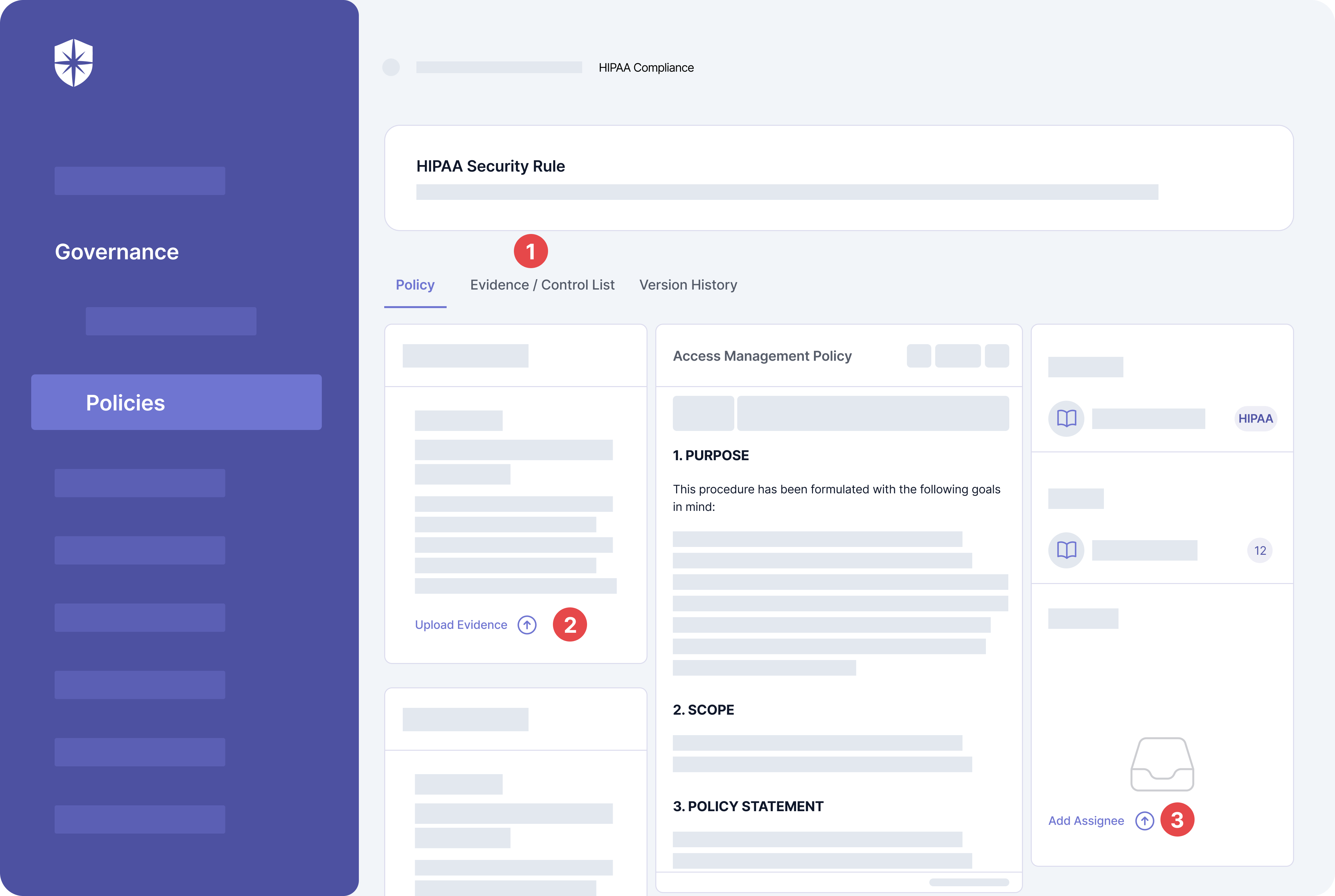
toaster icon

Thank you for reaching out to us!

We will get back to you soon.