Top 5 Governance Risk Compliance Tools With Custom Control Framework Support

Join thousands of professionals and get the latest insight on Compliance & Cybersecurity.
Executive Summary
- Many GRC platforms are too rigid for custom internal policies, forcing teams to manage unique compliance needs with manual workarounds like spreadsheets.
- Custom control frameworks enable a "test once, comply many" strategy, significantly reducing audit fatigue by mapping one control to multiple regulations.
- When selecting a GRC tool, prioritize true customization capabilities over simple template editing, along with broad integrations for automated evidence collection.
- A unified platform like Cyber Sierra’s GRC module helps by combining custom framework support with continuous control monitoring and automated evidence collection to streamline compliance.
You invested in a GRC tool, onboarded your team, and mapped your controls — only to find the platform couldn't accommodate your internal policies or industry-specific requirements. Sound familiar?
The problem often isn't effort — it's the tool. Most Governance, Risk, and Compliance (GRC) platforms are built around fixed framework templates. They handle SOC 2 or ISO 27001 well enough, but the moment you need to layer in a custom internal control or map a regulation specific to your industry, you're stuck.
Custom control framework support isn't a nice-to-have. It's the difference between a governance risk compliance tool that actually fits your organization and one that forces your team to work around its limitations.
This article covers five GRC platforms that get customization right — and what to look for when evaluating them.
Why Standard Frameworks Aren't Always Enough
Frameworks like the NIST Cybersecurity Framework (NIST CSF) and ISO 27001 are designed to be broadly applicable. That's their strength — and their limitation.
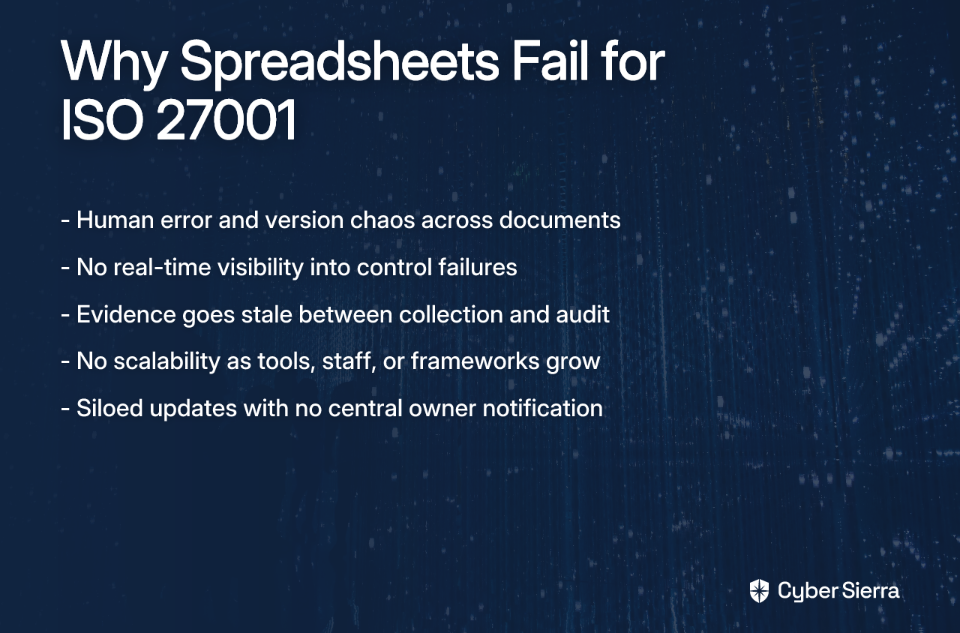
They don't account for your specific technology stack, your contractual obligations to customers, or the operational risks unique to your industry. A fintech company subject to the Monetary Authority of Singapore's Technology Risk Management (MAS TRM) guidelines has requirements that no standard framework template fully covers out of the box. The result is often a patchwork of manual workarounds. As one security professional put it, "We bought a GRC tool and it didn't deliver as promised. So now we're getting by with Excel, Planner, SharePoint, and Azure DevOps."
This is where a custom, unified control framework becomes essential. The idea is straightforward: establish a single internal set of controls, then map those controls outward to multiple compliance requirements simultaneously. SOC 2 and ISO/IEC 27001:2022 share significant overlap — why collect evidence twice? A well-designed GRC platform lets you "test once, comply many," directly reducing the audit preparation burden that causes compliance fatigue.
Custom frameworks also cover what standard ones miss: proprietary data handling requirements, niche contractual obligations, board-level risk appetite statements, or operational controls specific to your sector.
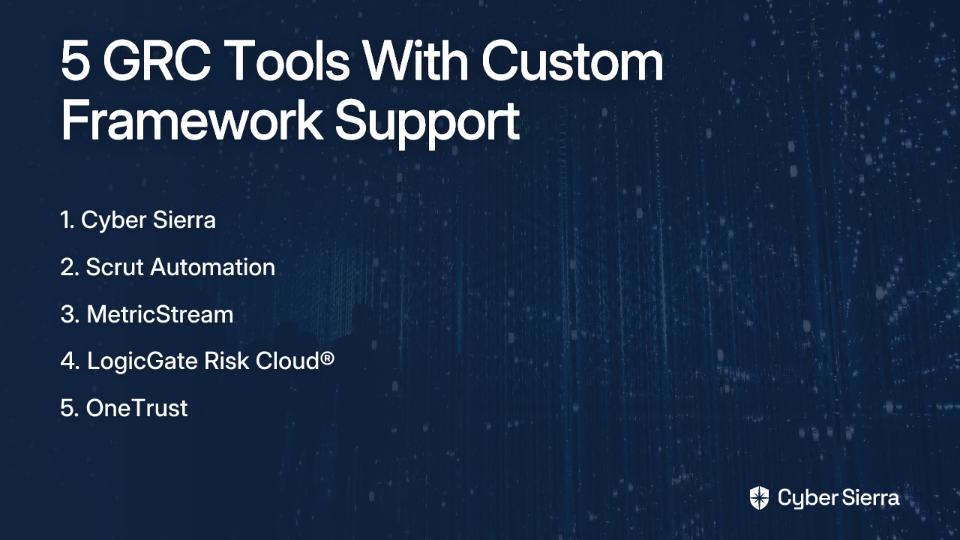
Top 5 GRC Tools With Custom Control Framework Support
The tools below were selected for their ability to go beyond standard framework templates — supporting the flexibility that real compliance programs demand.
1. Cyber Sierra
Best for: Enterprises managing multiple compliance frameworks simultaneously alongside vendor risk and continuous control monitoring.
Supported frameworks: SOC 2, ISO 27001, PCI DSS, GDPR, HIPAA, NIST CSF, and custom control frameworks.
Deployment: Cloud-based, AI-enabled SaaS platform.
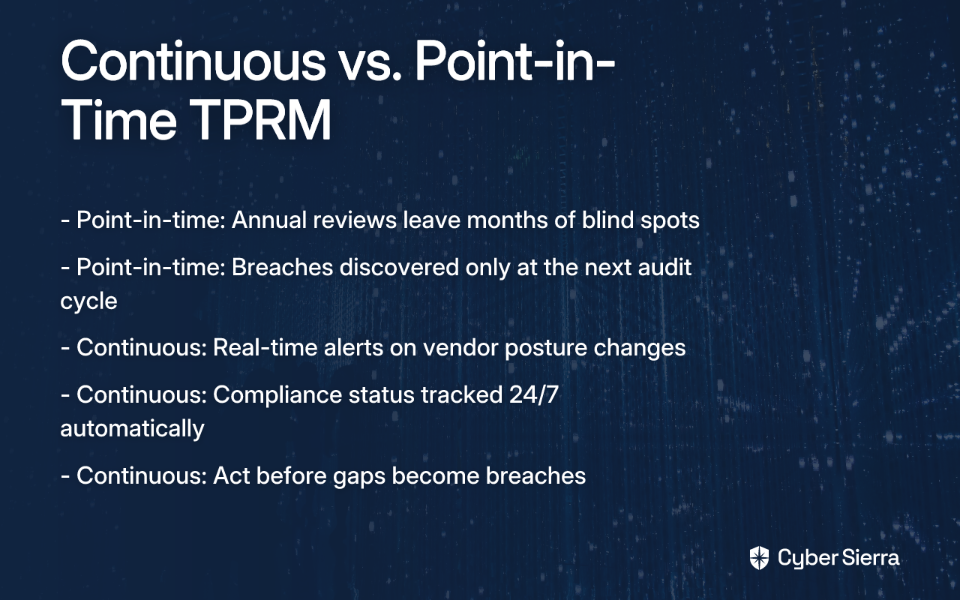
Most GRC tools address compliance in isolation. Cyber Sierra takes a different approach — its GRC module is part of a broader unified platform that also covers Continuous Control Monitoring (CCM), Third-Party Risk Management (TPRM), threat intelligence, employee security training, and cyber insurance. For Chief Information Security Officers (CISOs) tired of toggling between fragmented tools, that single-pane-of-glass view is a meaningful operational shift.
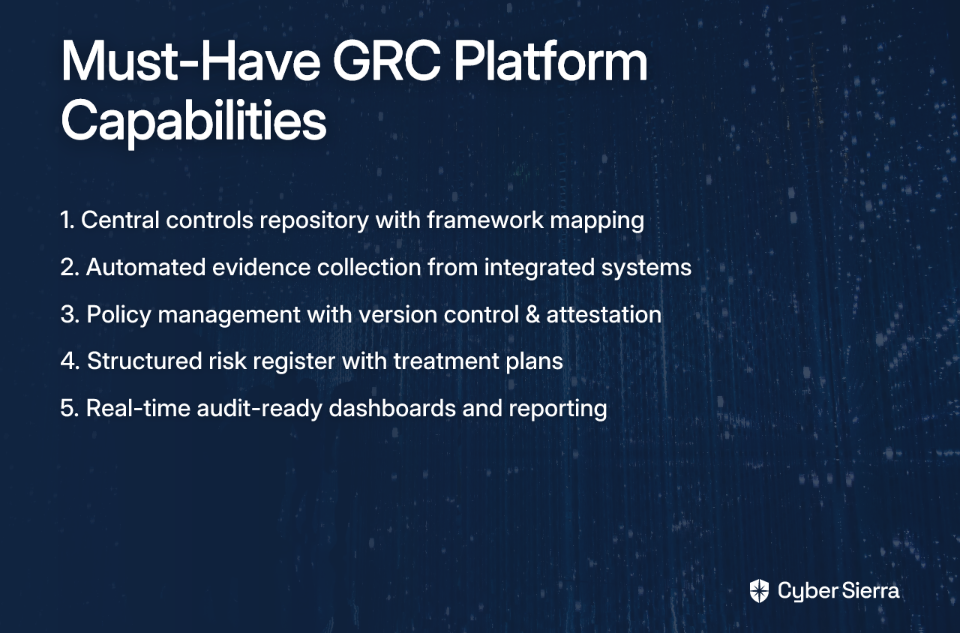
The custom framework capability lets teams build a central control repository aligned to their specific business context, then map those controls across multiple compliance standards. Evidence collected once is applied across relevant frameworks — reducing duplicate audit work and the manual evidence-gathering that consumes hundreds of hours per audit cycle.
Cyber Sierra is recognized as a Sample Vendor in the Gartner® Hype Cycle™ for Cyber-Risk Management, 2024, and is accredited by the Cyber Security Agency of Singapore (CSA) as a trusted service provider.
Key features:
- Unified platform coverage. Manages GRC, CCM, TPRM, threat intelligence, employee training, and cyber insurance from a single dashboard — eliminating the need for multiple point solutions.
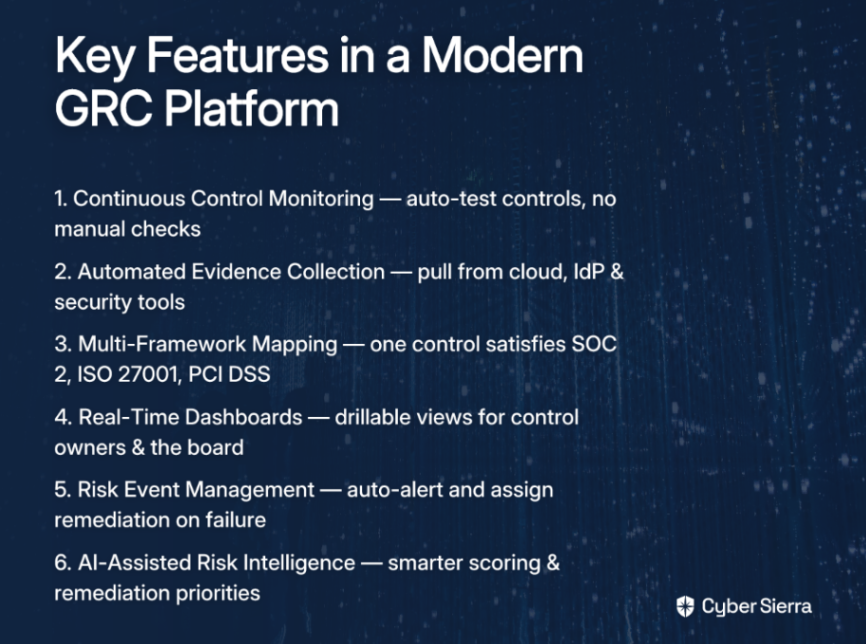
- Continuous control monitoring. Automates control testing and validation in near real-time, providing an always-on compliance posture view rather than point-in-time snapshots.
- Automated evidence collection. Pulls evidence directly from integrated cloud services and security tools, reducing manual collection work.
- Custom framework support. Enables teams to create, manage, and report on bespoke control sets that align with unique business objectives and regulatory overlap.
- AI-powered risk intelligence. Detects control gaps and anomalies automatically, surfacing actionable insights for faster remediation.
2. Scrut Automation
Best for: Growth-stage companies and mid-market enterprises looking for AI-assisted compliance with strong customization flexibility.
Supported frameworks: SOC 2, ISO 27001, GDPR, HIPAA, PCI DSS, and custom frameworks.
Deployment: Cloud-based SaaS.
Scrut Automation positions itself around flexibility — teams can design a security program that reflects their unique business needs, including custom workflows and risk formulas. Its "AI-Powered Teammates" capability assists compliance managers by surfacing risks across cloud environments, vendors, and applications, reducing reliance on manual tracking.
Where Scrut stands out is in its integration-first approach to evidence collection. Rather than chasing control owners for screenshots, the platform connects to your existing tech stack and pulls evidence automatically. This addresses one of the most cited frustrations in the GRC space: the evidence scramble before an audit.
Key features:
- AI-powered teammates. Assists in real-time risk tracking and automates routine compliance management tasks across frameworks.
- Continuous control monitoring. Evaluates control effectiveness around the clock and sends alerts when gaps are detected.
- Custom framework builder. Allows users to create unique security programs with tailored workflows, policies, and control structures.
- Automated evidence collection. Integrates with cloud infrastructure, task management tools, and SaaS applications to streamline audit preparation.
3. MetricStream
Best for: Large enterprises with mature compliance programs requiring deep enterprise integration and comprehensive GRC coverage.
Supported frameworks: SOX, ESG frameworks, ISO 27001, and various industry-specific regulations, with strong customization capabilities.
Deployment: Cloud-based.
MetricStream is a long-established name in enterprise GRC. Its platform integrates risk management, compliance, internal audit, and cybersecurity functions into a centralized system — appropriate for organizations where GRC is a mature, cross-functional discipline rather than a compliance checkbox exercise.
Customization is delivered through low-code/no-code capabilities, allowing GRC teams to build custom workflows and adapt the platform to specific business processes without requiring heavy IT involvement. Its AI-driven regulatory intelligence module helps large organizations track regulatory changes and assess their impact on existing controls — a meaningful capability for enterprises operating across multiple jurisdictions.
Key features:
- Centralized GRC platform. Integrates risk, compliance, and internal audit functions into a single system of record.
- Low-code/no-code customization. Enables users to build custom workflows and adapt the platform without extensive developer resources.
- AI-driven regulatory intelligence. Tracks regulatory changes and maps their impact to existing controls.
- Continuous control monitoring. Supports proactive risk mitigation through automated control testing and exception detection.
4. LogicGate Risk Cloud®
Best for: Organizations that need highly agile, user-configurable risk and compliance workflows without heavy IT dependency.
Supported frameworks: SOC 2, ISO 27001, NIST CSF, and other frameworks via a customizable application library.
Deployment: Cloud-based SaaS.
LogicGate's Risk Cloud® is built around a drag-and-drop workflow builder that allows compliance and risk managers — not just developers — to design, build, and deploy their own GRC applications. As one practitioner noted, "no software can fix an overly complex process." LogicGate's approach leans into that reality by letting teams simplify and customize the process itself, rather than fitting their workflows into a rigid template.
This makes it a strong option for organizations with dynamic risk environments or those building out custom control frameworks for the first time.
Key features:
- Drag-and-drop workflow builder. Empowers compliance and risk managers to create custom GRC applications without writing code.
- Configurable dashboards and analytics. Provides visual insights into risk posture with fully customizable reporting views.
- Pre-built application library. Offers starter templates for common use cases that can be tailored to specific business needs.
- IT security risk management. Includes dedicated capabilities for managing technology-related risks alongside broader compliance requirements.
5. OneTrust
Best for: Enterprises with complex data privacy obligations and a need for modular, regulation-specific compliance management.
Supported frameworks: GDPR, CCPA/CPRA, HIPAA, and global privacy regulations, with highly modular capabilities extending into broader GRC.
Deployment: Cloud-based platform.
OneTrust is best known for privacy management, and that strength carries through to its approach to custom control frameworks — particularly for organizations where data governance is central to the compliance program. Its modularity allows teams to build a compliance structure tailored to specific privacy regulations, then manage and monitor those controls within a single environment.
Its data mapping, consent management, and Data Protection Impact Assessment (DPIA) capabilities are foundational building blocks for organizations that need to construct a bespoke privacy control framework. Beyond privacy, OneTrust extends into vendor risk management, ethics and compliance, and policy management — making it a viable option for organizations where privacy compliance is the starting point for a broader GRC program.
Key features:
- Data mapping and inventory. Automates the discovery and classification of personal and sensitive data to support privacy compliance obligations.
- Privacy and data governance. Manages consent records, data subject access requests (DSARs), and privacy impact assessments.
- Vendor risk management. Assesses third-party compliance with privacy and security regulations, with a focus on data handling practices.
- Ethics and compliance modules. Covers whistleblower hotlines, policy management, and security awareness training.
How To Choose the Right Governance Risk Compliance Tool
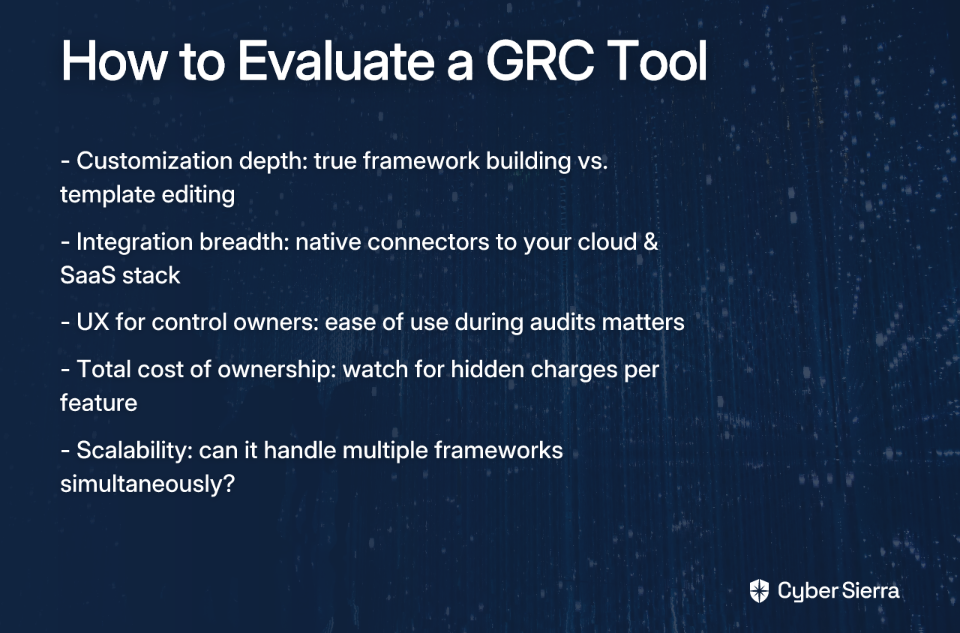
Features matter, but the right governance risk compliance tool is more than a checklist. These evaluation criteria reflect the practical challenges teams encounter after signing the contract:
Your Framework, Your Rules
Stop forcing your compliance program into a box built for someone else. If your GRC tool sends you back to spreadsheets to manage unique internal policies, it’s working against you. The right platform adapts to your business—not the other way around.
The most effective compliance programs are built on two principles:
- A "test once, comply many" strategy that maps a single custom control to multiple frameworks like SOC 2 and ISO 27001, drastically cutting audit prep time.
- Automated evidence collection that pulls proof directly from your tech stack, ending the quarterly scramble for screenshots.
Here’s your next step today: Identify one recurring compliance task your team dreads. Is it chasing down evidence? Tracking a niche regulatory requirement? Pinpoint that manual process.
When you’re ready to eliminate it for good, see how a unified platform changes the game. Cyber Sierra combines custom framework support with continuous control monitoring, turning compliance from a manual burden into an automated, strategic advantage.
See how a GRC platform that fits your business works—book a personalized demo.
Frequently Asked Questions
What is a custom control framework in GRC?
A custom control framework is a unique set of internal controls tailored to your specific business risks, technology stack, and regulatory needs. It lets you create a central control library and map it to multiple compliance frameworks like SOC 2 and ISO 27001, saving significant audit effort.
Why are standard GRC frameworks like ISO 27001 not always enough?
Standard frameworks are generic and don't cover industry-specific regulations, unique operational risks, or contractual obligations. A custom framework bridges these gaps by layering your organization-specific requirements on top of broad best practices for comprehensive coverage.
How does a GRC tool reduce audit fatigue?
A GRC tool with custom framework support reduces audit fatigue by enabling a "test once, comply many" approach. It centralizes controls so that one piece of evidence can satisfy multiple requirements across different frameworks, eliminating redundant evidence collection and manual work.
What should I look for in a GRC tool that supports custom frameworks?
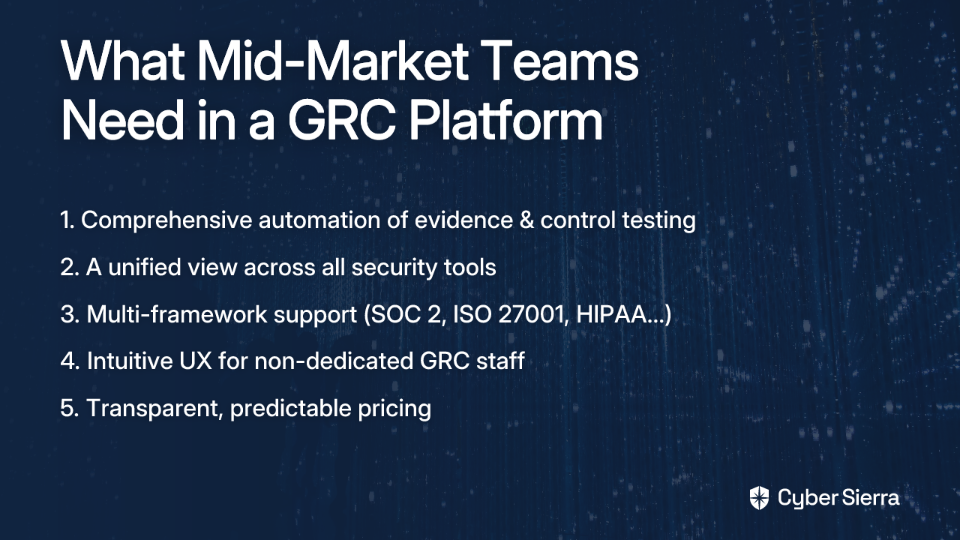
Look for true framework building capabilities, not just template editing. Key features include broad integration with your tech stack for automated evidence collection, continuous control monitoring for real-time visibility, and an intuitive user experience for all stakeholders involved in an audit.
What is the main benefit of a unified GRC platform?
The main benefit is a single, holistic view of your organization's risk and compliance posture. By integrating GRC with vendor risk management (TPRM) and continuous control monitoring (CCM), a unified platform eliminates data silos, reduces tool fatigue, and improves operational efficiency.